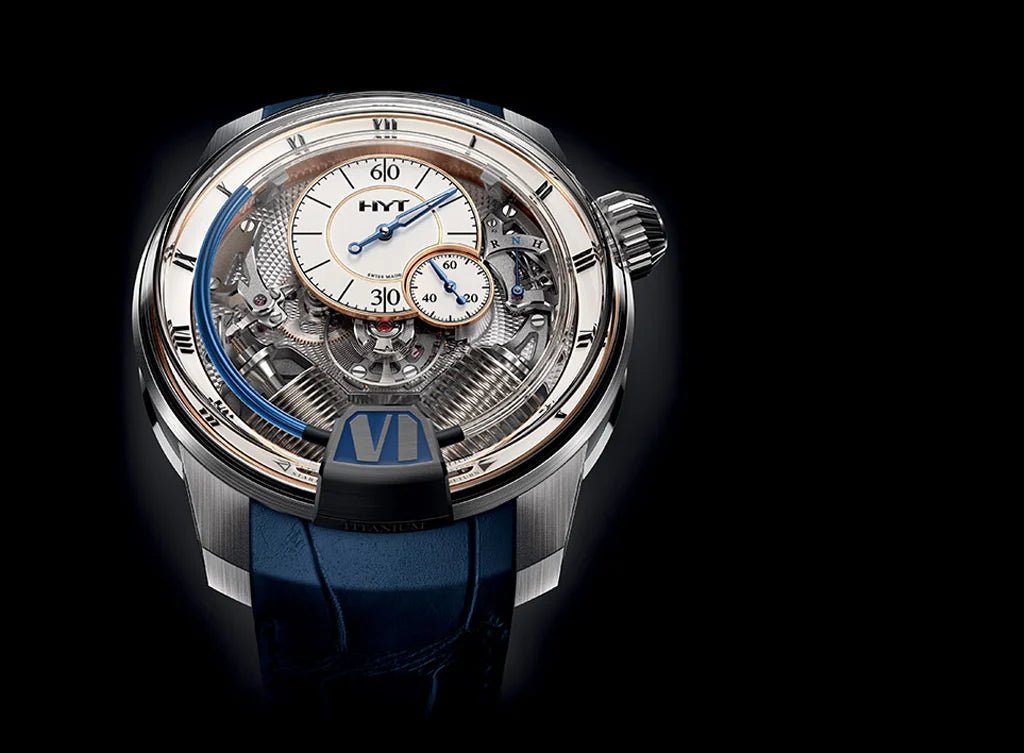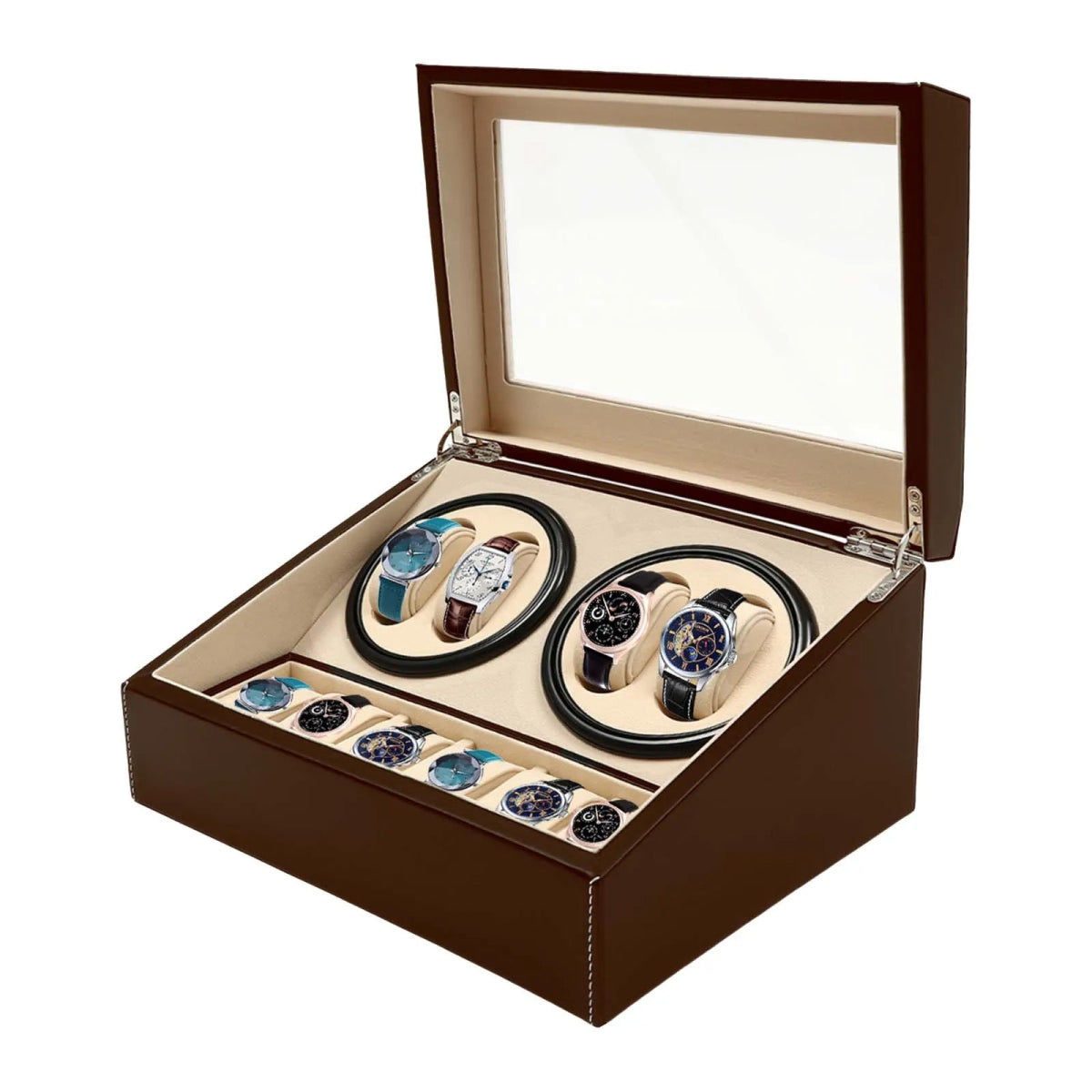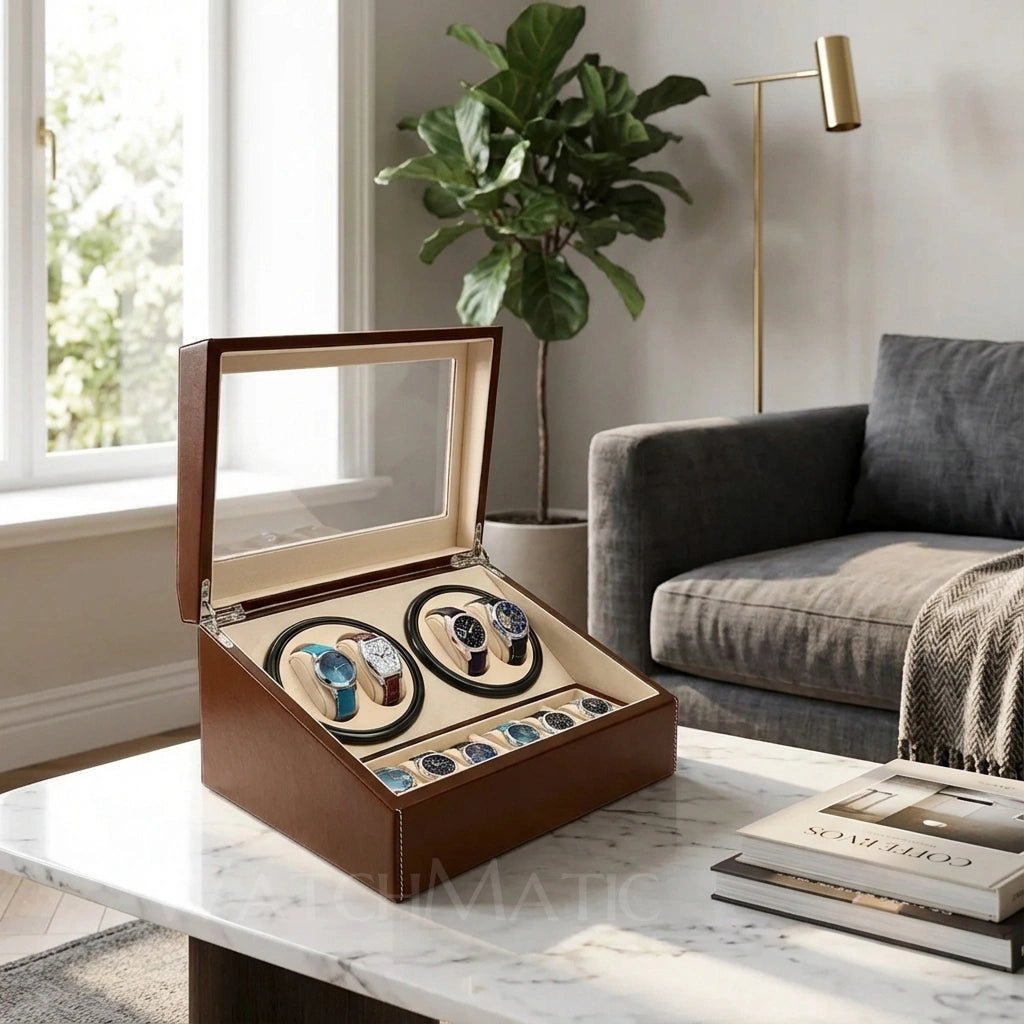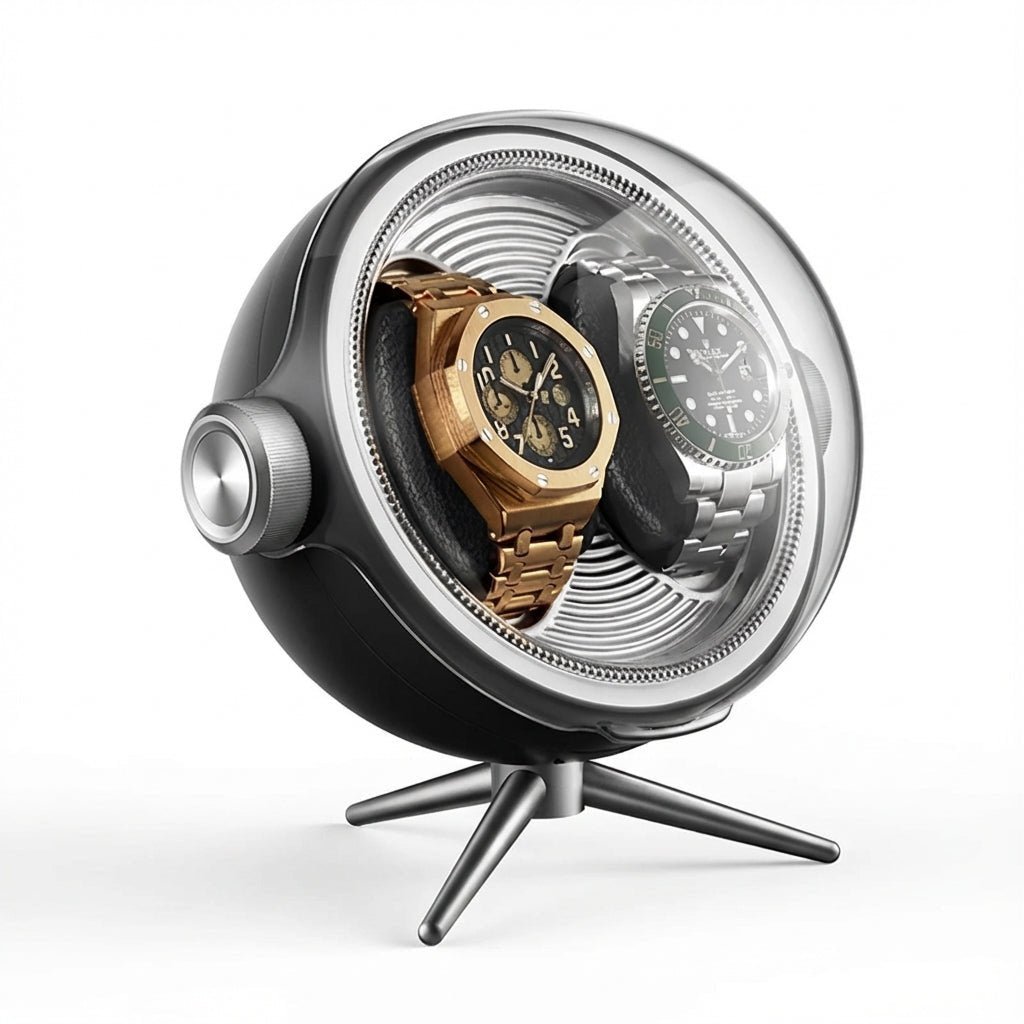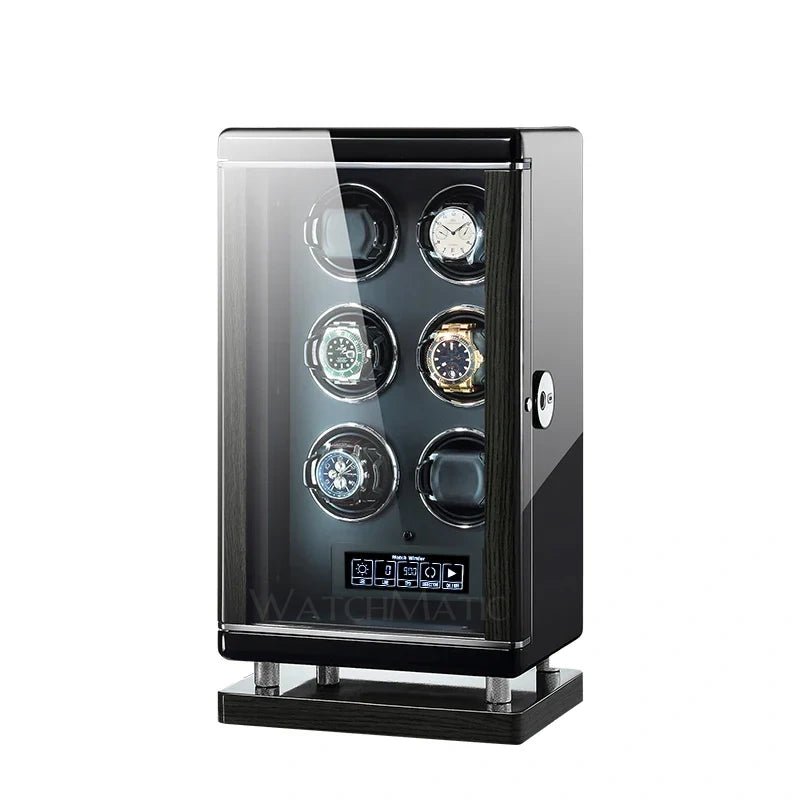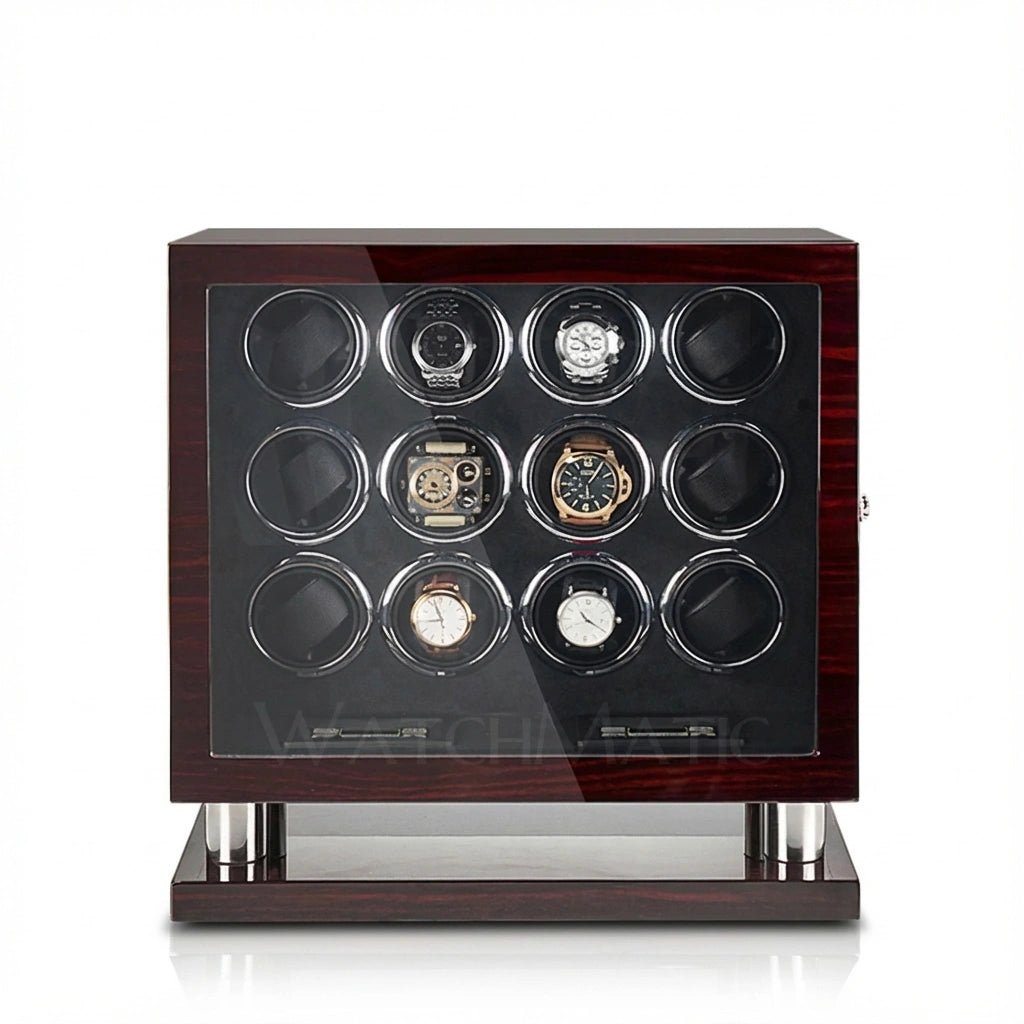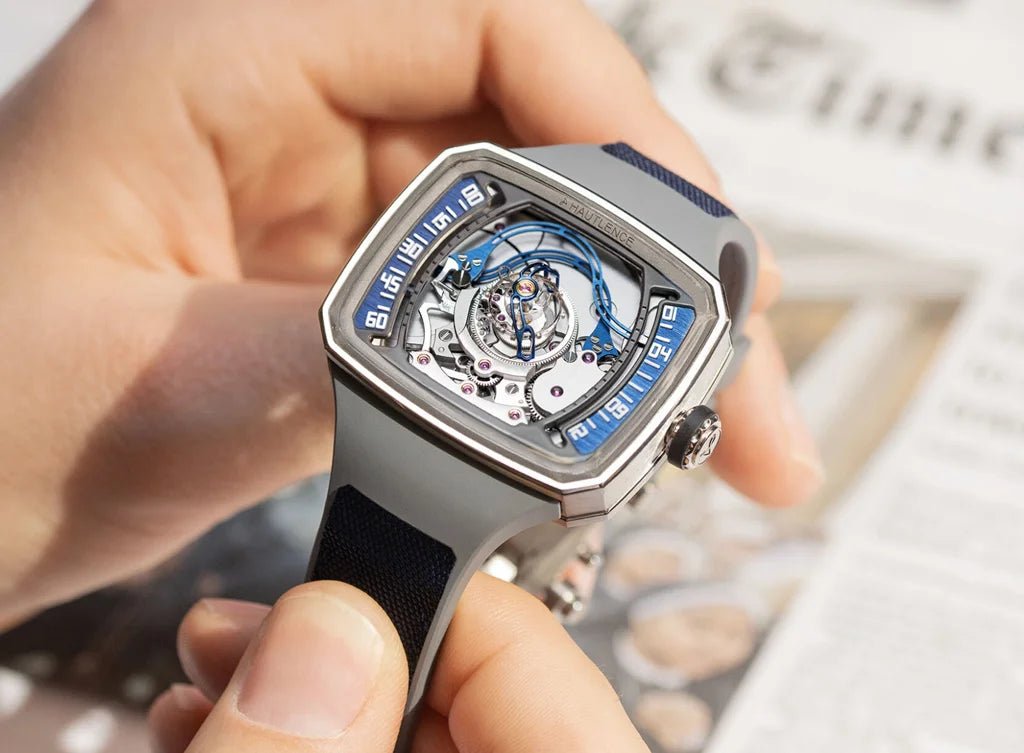
The best watch winder for HAUTLENCE watches is a premium programmable model with adjustable Turns Per Day (TPD), clockwise and counterclockwise rotation options, independent controls, controlled rest cycles, smooth low-vibration operation, and sufficient three-dimensional clearance for HAUTLENCE's rectangular cases, integrated straps, sapphire structures, bracelets, tourbillons, and unusual displays.
However, not every HAUTLENCE mechanical watch belongs on a powered rotor.
Important current automatic examples include:
- Kubera Series 1 — B60
- Vagabonde Series 4 — B30
- Vagabonde Black Badger — B30
- Vagabonde Tourbillon — D30
- Linear — D50
- Helix — D51 micro-rotor
- Retrovision 47 — D20
- Retrovision 85 — D31
- Retrovision 64 — D50
Important manually wound examples include:
- Sphere Series 1 and 2 — A80
- Sphere Series 3 and 4 — A82
- HLXX — A20
This creates the fundamental rule:
Automatic HAUTLENCE → a properly configured conventional watch winder can be useful
Hand-wound HAUTLENCE → a conventional rotating watch winder provides no winding benefit
The correct decision framework is:
Exact Reference → Generation → Caliber → Automatic or Manual → Power Reserve → Complication → Case Geometry → TPD/Direction or Stationary Storage
Does a HAUTLENCE Watch Need a Watch Winder?
No automatic HAUTLENCE mechanically requires a watch winder.
An automatic mechanical movement converts movement of an internal oscillating mass into energy stored in the mainspring.
When the watch remains unworn longer than its available reserve, it eventually stops.
That is normal.
A watch winder is primarily useful for:
- Keeping an automatic HAUTLENCE ready to wear
- Maintaining jumping-hour displays between wears
- Reducing repeated restarting
- Keeping wandering-hour displays synchronized
- Managing automatic tourbillons within a larger collection
- Keeping complicated automatic references ready
- Organizing several independent watches with different calibers
A watch winder should not be treated as:
- A replacement for professional servicing
- A lubrication device
- A guarantee of mechanical longevity
- A reason to keep the watch spinning continuously
For a broader explanation of automatic winding, see the Watch Winder Guide.
Which HAUTLENCE Watches Can Use a Watch Winder?
Representative current references include:
| HAUTLENCE watch | Caliber | Winding type | Approx. power reserve | Conventional winder? |
|---|---|---|---|---|
| Kubera Series 1 | B60 | Automatic | 70+ h | Yes |
| Vagabonde Series 4 | B30 | Automatic | 72 h | Yes |
| Vagabonde Black Badger | B30 | Automatic | 72 h | Yes |
| Vagabonde Tourbillon | D30 | Automatic | 72 h | Yes |
| Linear | D50 | Automatic | 72 h | Yes |
| Helix | D51 | Automatic micro-rotor | 65 h | Yes |
| Retrovision 47 | D20 | Automatic | 72 h | Yes |
| Retrovision 85 | D31 | Automatic | 72 h | Yes |
| Retrovision 64 | D50 | Automatic | 72 h | Yes |
| Sphere Series 1 / 2 | A80 | Manual | 72 h | No |
| Sphere Series 3 / 4 | A82 | Manual | 72 h | No |
| HLXX | A20 | Manual | ~40 h | No |
This table reveals one of the most important HAUTLENCE lessons:
the complexity or amount of visible movement on the dial does not determine whether the watch is automatic.
HAUTLENCE Is a Strong Example of Why Complication Does Not Determine Winding Type
HAUTLENCE specializes in unconventional indications.
Its watches can include:
- Jumping hours
- Wandering hours
- Retrograde minutes
- Linear jumping hours
- Spherical jumping hours
- Flying tourbillons
- Cylindrical hairsprings
- Multi-axis displays
- Peripheral minute indicators
But those complications can sit on either:
automatic
or:
manual
movements.
Therefore:
display architecture ≠ winding architecture.
Current HAUTLENCE Has Two Broad Mechanical Directions
The current collection can be understood broadly as:
Automatic Architecture
B30, B60 and D-series automatic movements powering watches such as:
- Vagabonde
- Kubera
- Linear
- Vagabonde Tourbillon
- Helix
- Retrovision
Manual Architecture
A-series and original HL-family manual movements powering watches such as:
- Sphere
- HLXX
This is only a useful orientation.
The exact caliber still takes priority.
The Move to Schaffhausen Matters
HAUTLENCE's current generation reflects its closer integration with H. Moser & Cie. and the broader Meylan family watchmaking ecosystem.
Several current movements are:
- Assembled by H. Moser & Cie. watchmakers
- Equipped with in-house manufactured hairsprings
- Developed around newer case architecture
- Designed specifically for HAUTLENCE's kinetic displays
That means older HAUTLENCE movement information should not automatically be applied to current releases.
Current Reference Matters More Than Historical Collection Name
A search for:
“HAUTLENCE watch winder settings”
may return information for:
- Older HL references
- Historical Vortex
- Earlier Vagabonde generations
- Current Schaffhausen-era watches
Do not combine those specifications without identifying the exact watch.
HAUTLENCE Kubera Series 1
The Kubera Series 1 is one of the most important new HAUTLENCE watches for 2026.
It uses:
Caliber B60
with a minimum:
70-hour power reserve.
It is:
self-winding.
The movement drives:
- Jumping hours
- Peripheral minutes
- Agenhor-developed display module
- 4 Hz regulating system
- Paramagnetic hairspring
Can HAUTLENCE Kubera Use a Watch Winder?
Yes.
The B60 is an automatic mechanical movement.
A correctly configured conventional winder can therefore maintain the movement between wears.
Best Watch Winder for Kubera
For a Kubera, prioritize:
- Adjustable TPD
- CW/CCW/bidirectional options
- Independent control
- Controlled rest cycles
- Smooth motor operation
- Compressible integrated-bracelet cushion
- Adequate rectangular-case clearance
Kubera Physical Dimensions
Representative dimensions are approximately:
36.0 × 43.8 × 11.3 mm.
Despite its architectural appearance, this makes Kubera relatively compact compared with many HAUTLENCE big-case references.
Integrated Bracelet Fit Matters More Than Case Width
Kubera's integrated steel bracelet creates the more significant winder-fit question.
A closely sized bracelet should not be forced around a large rigid cushion.
Look for:
- Compressible support
- Natural clasp closure
- Stable watch-head positioning
- Minimal first-link tension
70+ Hours Reduces Winder Dependence
The B60 provides almost three days of reserve.
If Kubera is worn regularly, a winder may add little practical benefit.
If it sits within a large independent-watch rotation, it is more likely to stop before being worn again.
Therefore:
longer reserve reduces winder dependence.
Jumping Hours Do Not Mean Higher TPD
Kubera's hour indication changes instantaneously.
That energy comes from the movement's stored mainspring reserve.
It does not create a simple rule:
jumping hour = more TPD.
Peripheral Minutes Do Not Determine Rotation Direction
The peripheral minute mechanism is a display complication.
It does not tell you:
- Rotor direction
- TPD
- automatic winding efficiency
Use B60-specific winding information.
Paramagnetic Hairspring Does Not Change Winder Settings
The hairspring's magnetic resistance is part of the regulating system.
It does not prescribe:
- External rotation direction
- Daily turns
- Winder cycle length
Kubera vs. HLXX
This is an interesting comparison because both explore HAUTLENCE's jumping-hour identity.
Kubera
B60
Automatic
70+ h
Jumping hour + peripheral minutes
Winder compatible
HLXX
A20
Manual
~40 h
Jumping hour + retrograde minutes
No conventional winding benefit
The visual philosophy is related.
The winding architecture is completely different.
HAUTLENCE Vagabonde B30
The current Vagabonde Series 4 and Vagabonde Black Badger use:
B30
with approximately:
72 hours of power reserve.
The movement is:
automatic.
It drives HAUTLENCE's wandering-hours architecture.
Best Watch Winder for Vagabonde
For a B30 Vagabonde, prioritize:
- Adjustable TPD
- Multiple rotation directions
- Controlled rest cycles
- Independent programming
- Integrated-strap compatibility
- Smooth low-vibration motion
Representative dimensions are approximately:
43.0 × 50.8 × 11.9 mm.
Wandering Hours Do Not Require Continuous Operation
The central carousel and rotating satellite-hour display can make the watch appear extremely kinetic.
That does not mean it mechanically needs to run continuously.
Allowing the watch to stop normally is acceptable.
The winder provides convenience.
Complicated Display Does Not Mean Higher TPD
The B30 movement must supply enough energy to:
- Run the base movement
- Drive the wandering-hour mechanism
But that load has already been accounted for in the caliber design.
The owner should not automatically compensate with maximum TPD.
Black Badger Luminous Material Does Not Affect Winding
The photoluminescent inlays affect:
- Night-time appearance
- dial construction
- artistic identity
not:
- Rotor direction
- TPD
- Power reserve
Vagabonde Series 4 vs. Black Badger
Both use B30.
Therefore, the different:
- Dial architecture
- colors
- luminous materials
do not inherently change the movement's winding requirements.
HAUTLENCE Vagabonde Tourbillon D30
The Vagabonde Tourbillon uses:
D30
with approximately:
72 hours of power reserve.
Crucially:
D30 is automatic.
The movement includes:
- Flying tourbillon
- Double hairspring
- Wandering hours
- Central minute architecture
Can Vagabonde Tourbillon Use a Watch Winder?
Yes.
This is an automatic tourbillon.
The presence of a tourbillon does not make the watch manual.
Tourbillon Does Not Determine Winding Type
This is a major HAUTLENCE lesson.
Compare:
Vagabonde Tourbillon D30
Tourbillon
Automatic
72 h
Winder compatible
with:
Sphere A82
Extremely kinetic jumping-hour mechanism
Manual
72 h
No conventional winding benefit
Complexity does not determine whether a rotor exists.
Double Hairspring Does Not Mean Double TPD
D30 uses a double-hairspring architecture.
This relates to the regulating system.
It does not mean:
- Twice the daily turns
- Twice the rotor activity
- Twice the winding direction requirement
Therefore:
double hairspring ≠ double TPD.
Vagabonde Tourbillon Physical Fit
The case remains approximately:
43 × 50.8 × 11.9 mm.
Its elongated rectangular footprint is more important than raw thickness.
Check longitudinal chamber clearance.
100m Water Resistance Does Not Affect TPD
Current Vagabonde Tourbillon cases are rated to approximately 100 meters.
Water resistance and automatic winding are independent systems.
HAUTLENCE Linear D50
The Linear collection uses:
D50
with approximately:
72 hours of power reserve.
It is automatic.
Current Linear references combine:
- Linear retrograde jumping hours
- Minutes
- Flying tourbillon
- Double hairspring
- Agenhor-developed complication module
- Automatic movement architecture
Best Watch Winder for HAUTLENCE Linear
For a Linear, prioritize:
- Adjustable TPD
- Multiple direction modes
- Controlled rest cycles
- Smooth motor operation
- Case-length clearance
- Integrated-rubber-strap support
- Independent control
Representative dimensions are approximately:
43.0 × 50.8 × 12.2 mm.
Linear Jumping Hours Do Not Determine TPD
The linear hour display moves through its own mechanical architecture.
That does not specify how the automatic rotor should be wound.
Retrograde Motion Does Not Need Extra Daily Turns
The fact that the display resets mechanically does not mean an owner should increase TPD each time the complication expends energy.
The movement has already been engineered around its complication load.
Linear D50 vs. Sphere A82
This is perhaps the cleanest current HAUTLENCE watch-winder comparison.
| Feature | Linear | Sphere |
|---|---|---|
| Caliber | D50 | A82 |
| Main display | Linear jumping hours | Spherical jumping hours |
| Complication | Flying tourbillon + jumping hour | Multi-axis spherical hour + retrograde minutes |
| Reserve | 72 h | 72 h |
| Winding | Automatic | Manual |
| Conventional winder | Yes | No |
Both are:
- Kinetic
- unconventional
- 72-hour watches
- mechanically complex
Only one has an automatic rotor.
Same 72 Hours Does Not Mean Same Storage Logic
The power-reserve number describes autonomy.
It does not describe how the mainspring receives energy.
Therefore:
72 h ≠ automatic.
Linear Case Size vs. Winding Requirement
A large rectangular case does not need more daily turns simply because it is physically larger.
Physical dimensions determine:
- Chamber fit
- cushion geometry
The caliber determines:
- TPD
- direction
HAUTLENCE Helix D51
The Helix Series 1 is particularly important for watch-winder research because it uses another automatic architecture:
D51 micro-rotor
with approximately:
65 hours of power reserve.
Its movement includes:
- Micro-rotor automatic winding
- Central tourbillon
- Cylindrical hairspring
- Dual vertical retrograde displays
- Jumping hours
- Retrograde minutes
Can Helix Use a Watch Winder?
Yes.
The D51 incorporates an automatic micro-rotor.
A properly configured watch winder can therefore maintain the movement.
Micro-Rotor Does Not Mean Higher TPD
A smaller rotor does not automatically require more external turns.
The movement is engineered around its micro-rotor architecture.
Use:
D51-specific winding requirement
rather than:
micro-rotor = maximum TPD.
Helix Is a Good Example of a Compact High Complication
Representative dimensions are:
37 × 45 × 11.8 mm.
That makes Helix significantly more compact than:
- Linear
- Large Vagabonde references
- early Sphere cases
Cylindrical Hairspring Does Not Affect Winder Programming
The cylindrical hairspring affects regulation.
It does not tell you:
- External rotation direction
- TPD
- cycle duration
Dual Retrogrades Do Not Require Double TPD
Helix displays:
- Retrograde hours
- Retrograde minutes
Two retrogrades do not mean:
2 × TPD.
The movement's energy architecture accounts for its displays.
Central Tourbillon Does Not Mean Manual
Helix is another counterexample to the assumption that haute-horlogerie tourbillons must be manually wound.
D51 is automatic.
Helix 65h vs. Linear 72h
Helix provides less reserve than D50 Linear.
That does not prove Helix needs more TPD.
It only means it stores less running time when fully wound.
HAUTLENCE Sphere A80
The Sphere Series 1 and Series 2 use:
A80
with approximately:
72 hours of power reserve.
The movement is:
hand-wound.
Does Sphere A80 Need a Watch Winder?
No.
A80 contains no conventional automatic rotor.
It must receive energy through manual crown winding.
The Spherical Display Can Create a False Impression
Sphere is one of the most visibly dynamic HAUTLENCE watches.
Its hour sphere rotates:
- Around multiple axes
- Through a gyroscopic-looking sequence
- Every hour
That motion can make the watch appear almost inherently “self-moving.”
But:
display motion ≠ automatic winding.
Multi-Axis Rotation Does Not Mean Rotor
The spherical hour mechanism uses:
- Conical gears
- Crossed axes
- differential architecture
None of those components is an automatic winding rotor.
72 Hours Does Not Make Sphere Automatic
Sphere provides the same approximate reserve as:
- Vagabonde
- Vagabonde Tourbillon
- Linear
- Retrovision 47
- Retrovision 85
- Retrovision 64
But its A80 movement is manual.
Sphere Series 1 / 2 Physical Dimensions
Representative dimensions are approximately:
43 × 50.8 × 15.6 mm.
The sapphire structure and local dome around the hour sphere make vertical clearance important.
Stationary Storage Makes Physical Fit Easier
Because A80 does not benefit from rotation, the watch can be stored stationary in a compartment designed around:
- Its height
- sapphire structure
- strap geometry
rather than forcing it into a powered chamber.
HAUTLENCE Sphere A82
The newer Sphere Series 3 and Series 4 use:
A82
with approximately:
72 hours of power reserve.
It remains:
hand-wound.
A82 Is Smaller but Still Manual
The newer generation moved to a smaller case:
37 × 45 × 17.4 mm
including the elevated sapphire architecture.
Despite the redesigned movement and case:
manual winding remained.
Generation Change Does Not Necessarily Change Winding Type
Compare:
Sphere A80
Manual
72 h
Larger case
Sphere A82
Manual
72 h
Smaller redesigned case
Generation changed.
Winding architecture did not.
Sphere Height Is the Main Physical Concern
The nominal case is only 37 mm wide.
But the total height reaches approximately:
17.4 mm.
This illustrates why:
case diameter or width alone is insufficient for storage planning.
GPHG Innovation Does Not Determine Winder Compatibility
Sphere's award-winning complication demonstrates mechanical innovation.
Awards, novelty and complication sophistication have no relationship with whether a conventional winder works.
HAUTLENCE HLXX A20
The HLXX is the anniversary reinterpretation of HAUTLENCE's original watchmaking language.
It uses:
A20
and is:
manually wound.
Current manufacturer specifications give approximately:
40 hours of power reserve.
Does HLXX Need a Watch Winder?
No.
The A20 contains no automatic rotor.
It must be wound through the crown.
HLXX Is a Useful Historical Bridge
The watch preserves HAUTLENCE's original movement concept while placing it in a newer titanium case.
That means modern appearance does not imply modern automatic winding.
Jumping Hours and Retrograde Minutes Still Do Not Create Automatic Winding
HLXX includes:
- Jumping hours
- Retrograde minutes
- Mechanical linkage visible from the dial side
- Running indicator
None of these mechanisms winds the mainspring.
HLXX Has the Shortest Reserve in This Current Group
At approximately:
40 hours
HLXX has less autonomy than:
- B60 Kubera — 70+ h
- B30 Vagabonde — 72 h
- D30 Tourbillon — 72 h
- D50 Linear — 72 h
- D51 Helix — 65 h
- A82 Sphere — 72 h
Yet it is also one of the watches where a conventional winder is useless.
This is another clean demonstration that:
short reserve ≠ stronger winder compatibility.
HAUTLENCE Retrovision 47
The Retrovision 47 uses:
D20
with approximately:
72 hours of power reserve.
It is:
automatic.
Its movement includes a flying tourbillon and double hairspring.
Retrovision 47 Is Automatic Despite Its Concept-Watch Appearance
A collector may assume a highly conceptual one-off-style watch uses a manual movement.
That is not the case here.
D20 is self-winding.
Can Retrovision 47 Use a Watch Winder?
Yes.
Provided physical fit is adequate, a conventional programmable winder can maintain the movement.
Hidden Tourbillon Does Not Change Winder Logic
Retrovision 47 places its flying tourbillon behind a speaker-style grille and uses the case as part of its acoustic presentation.
Whether the tourbillon is:
- Visible
- Hidden
has no relevance to automatic winding.
Retrovision 47 Physical Dimensions
Representative dimensions are approximately:
39.2 × 44.4 × 12.1 mm.
This makes it relatively easy to accommodate compared with some other Concept pieces.
HAUTLENCE Retrovision 85
The Retrovision 85 uses:
D31
with approximately:
72 hours of reserve.
It is automatic.
It combines:
- Wandering hours
- Central minute disc
- Flying tourbillon
- Highly unconventional 1980s-inspired case architecture
Can Retrovision 85 Use a Watch Winder?
Mechanically, yes.
Physically, fit must be checked carefully.
Retrovision 85 Is Physically Extreme
Representative dimensions are approximately:
64 × 60 × 11.8 mm.
This is extremely wide for a wristwatch.
A normal four-watch winder chamber may not provide adequate lateral clearance.
Automatic Movement Compatibility Does Not Guarantee Physical Compatibility
This is especially important for HAUTLENCE Concepts.
Retrovision 85 demonstrates the distinction:
movement compatible with rotation
does not necessarily mean:
standard rotor chamber compatible with the case.
Bespoke Storage May Be Better
For unusually wide Concept watches, a configurable safe or oversized stationary/winding compartment may be more appropriate.
HAUTLENCE Retrovision 64
The 2026 Retrovision 64 uses:
D50
with approximately:
72 hours of power reserve.
It is automatic.
Its display includes linear jumping hours in an intentionally retro-futuristic case.
Retrovision 64 Shares D50 Heritage With Linear
That creates an important relationship.
Linear
D50
Automatic
72 h
Linear jumping hours
Retrovision 64
D50
Automatic
72 h
Different Concept architecture
This is an example where dramatically different case design can share the same underlying caliber family.
Same Movement Family Can Mean Similar Winding Logic
If the exact D50 application is confirmed, movement-level winding requirements may be closely related.
However, physical storage requirements can still differ.
Retrovision 64 Physical Dimensions
Representative dimensions are approximately:
61.2 × 41.8 × 15.6 mm.
Length and height deserve particular attention.
Concept Case Shape Does Not Change TPD
The retro-futuristic housing affects:
- Physical fit
- weight distribution
- case clearance
not the underlying automatic winding requirement.
HAUTLENCE Current Movement Comparison
A simplified current picture is:
| Caliber | Representative watch | Winding | Approx. reserve |
|---|---|---|---|
| A20 | HLXX | Manual | ~40 h |
| D51 | Helix | Automatic micro-rotor | 65 h |
| B60 | Kubera | Automatic | 70+ h |
| B30 | Vagabonde | Automatic | 72 h |
| D20 | Retrovision 47 | Automatic | 72 h |
| D30 | Vagabonde Tourbillon | Automatic | 72 h |
| D31 | Retrovision 85 | Automatic | 72 h |
| D50 | Linear / Retrovision 64 | Automatic | 72 h |
| A80 | Sphere 1 / 2 | Manual | 72 h |
| A82 | Sphere 3 / 4 | Manual | 72 h |
The central lesson is immediately visible.
72 Hours Can Mean Automatic or Manual
At HAUTLENCE:
B30 → 72 h → automatic
D20 → 72 h → automatic
D30 → 72 h → automatic
D31 → 72 h → automatic
D50 → 72 h → automatic
while:
A80 → 72 h → manual
A82 → 72 h → manual.
Therefore:
72-hour reserve provides almost no information about winder compatibility.
Tourbillon Can Be Automatic
Current examples include:
- D20
- D30
- D50
- D51
with tourbillon architecture and automatic winding.
Therefore:
tourbillon ≠ manual.
Spherical or Jumping Displays Can Be Manual
The Sphere provides the reverse lesson.
Its display is more kinetic than many conventional automatics.
Yet:
A80/A82 → manual.
Complexity Is Not the Deciding Variable
The deciding question is simple:
Does the movement contain an automatic winding system?
Everything else comes afterward.
HAUTLENCE Watch Winder TPD Settings
TPD means Turns Per Day—the approximate number of full rotations delivered by a watch winder over a programmed daily cycle.
There should not be one universal recommendation such as:
“HAUTLENCE = 650 TPD.”
Current automatic architectures include:
- B30
- B60
- D20
- D30
- D31
- D50
- D51 micro-rotor
The correct process is:
- Identify the exact HAUTLENCE reference.
- Identify the caliber.
- Confirm automatic or manual winding.
- Identify the automatic architecture.
- Verify its winding requirement.
- Select appropriate TPD.
- Select appropriate rotation direction.
- Confirm that reserve is maintained.
For a deeper explanation, see the Watch TPD Guide.
Do Not Infer TPD From 72-Hour Reserve
Several HAUTLENCE automatics share the same approximate reserve.
That does not mean they necessarily share:
- Winding efficiency
- Rotor architecture
- Preferred direction
- Required daily turns
Power reserve and TPD are separate specifications.
Do Not Give Sphere a TPD Setting
A80 and A82 are manual.
There is no useful conventional TPD setting for them.
Do Not Give HLXX a TPD Setting
A20 is manual.
Its shorter reserve does not make a winder effective.
What Rotation Direction Should You Use for HAUTLENCE?
A premium winder should provide:
CW — Clockwise
CCW — Counterclockwise
Bi — Bidirectional
Do not assign one external rotation direction to every HAUTLENCE automatic unless exact caliber documentation confirms it.
Use:
exact caliber → verified winding direction → winder program.
Micro-Rotor D51 Should Be Treated Separately
The Helix D51 uses a micro-rotor.
Its winding architecture is not identical to a conventional full-rotor movement merely because both are automatic.
Do not copy settings from B30 or D50 without verifying D51.
Automatic Tourbillons Should Also Be Treated by Caliber
D20, D30 and D50 all use automatic tourbillon architecture.
They should still be identified individually rather than grouped simply as:
HAUTLENCE tourbillon.
High TPD Is Not Automatically Better
An expensive high complication does not require maximum external motion.
Higher TPD does not automatically:
- Improve accuracy
- Improve lubrication
- Extend service intervals
- Improve a tourbillon
- Improve a jumping-hour mechanism
- Improve a retrograde display
- Increase the stated power reserve
The objective is:
sufficient maintenance winding
not:
maximum rotation.
Does an Automatic HAUTLENCE Need to Run Continuously?
No.
Automatic HAUTLENCE watches can stop normally.
The practical value of a winder depends on:
reserve + wearing frequency + complication + collection size.
Which HAUTLENCE Watches Gain the Most Convenience From a Winder?
Stronger convenience case
- Automatic watches in a large rotation
- Retrovision and Linear references with unusual displays
- Shorter-reserve automatic references if frequently rotated
- Multiple current HAUTLENCE automatics
Moderate convenience case
- B60 Kubera
- B30 Vagabonde
- D30 Vagabonde Tourbillon
due to their relatively long reserves.
No conventional winding benefit
- Sphere A80
- Sphere A82
- HLXX A20
This is not a ranking of quality.
It only describes practical rotor usefulness.
Jumping-Hour Watches May Be Annoying to Reset but Still Can Be Manual
This is important with HAUTLENCE.
A complicated display may create a strong desire to keep the watch running.
But if the movement is manual, that convenience cannot be provided by conventional rotational winding.
Sphere Is the Best Example
Sphere's synchronized:
- Hour jump
- Multi-axis motion
- Retrograde minute reset
make the watch visually sophisticated.
Yet conventional rotation cannot replenish its mainspring.
Convenience Value and Winder Compatibility Are Separate Questions
Ask:
Would keeping this watch running be convenient?
Then separately ask:
Can rotational motion actually wind this caliber?
The answers are not always the same.
Should You Restart a Stopped Automatic HAUTLENCE Before Using a Winder?
A watch winder is generally best treated as a:
maintenance-winding device.
For a fully stopped automatic:
restart correctly → establish initial reserve → set indications → place on programmed winder → maintain
rather than:
stopped movement → maximum TPD.
This Is Particularly Important for Complex Displays
A correctly initialized:
- wandering-hour
- jumping-hour
- retrograde
- tourbillon
watch should be set according to its instructions before relying on a winder to maintain energy.
Physical Fit Is Critical for HAUTLENCE
HAUTLENCE is not as extreme as MB&F or URWERK in every reference, but case geometry matters more than it does for conventional round watches.
Current cases include:
- Wide horizontal rectangles
- Compact horizontal rectangles
- Vertical Kubera architecture
- Tall sapphire Sphere cases
- 60+ mm Concept pieces
- Integrated bracelets
- Integrated rubber straps
Representative HAUTLENCE Dimensions
Examples include approximately:
- Kubera — 36 × 43.8 × 11.3 mm
- Helix — 37 × 45 × 11.8 mm
- HLXX — 37 × 45 × 11.75 mm
- Sphere 3 / 4 — 37 × 45 × 17.4 mm
- Retrovision 47 — 39.2 × 44.4 × 12.1 mm
- Vagabonde — 43 × 50.8 × 11.9 mm
- Linear — 43 × 50.8 × 12.2 mm
- Sphere 1 / 2 — 43 × 50.8 × 15.6 mm
- Retrovision 64 — 61.2 × 41.8 × 15.6 mm
- Retrovision 85 — 64 × 60 × 11.8 mm
This is why:
nominal width alone is not enough.
Check Width, Length and Height
For each reference, confirm:
- Total width
- Total length
- Sapphire height
- Crown projection
- Strap angle
- Door clearance
- Adjacent rotor clearance
Sphere Needs Vertical Clearance
Sphere Series 3/4 looks compact at 37 mm wide.
But approximately 17.4 mm overall height makes sapphire clearance more important than width.
Retrovision 85 Needs Lateral Clearance
At approximately 64 × 60 mm, Retrovision 85 is a special physical-storage case.
A standard multi-watch rotor may simply be too narrow.
Vagabonde and Linear Need Length Clearance
Their 50.8 mm horizontal dimension is manageable but should be checked against:
- chamber walls
- neighboring watches
- door frame
Integrated Straps Need Natural Curvature
Many modern HAUTLENCE watches use integrated rubber straps.
Do not force them around a rigid cushion that distorts:
- strap attachment
- case position
- buckle angle
Kubera Bracelet Requires Compressible Support
Its integrated steel bracelet needs a cushion that can accommodate the actual wrist circumference.
Best Watch Winder for One Automatic HAUTLENCE
For one confirmed automatic HAUTLENCE, choose a premium programmable system offering:
- Adjustable TPD
- CW/CCW/bidirectional operation
- Controlled rest cycles
- Smooth low-vibration motor
- Quiet operation
- Flexible cushion
- Adequate rectangular-case clearance
Suitable automatic-winding options can be explored in the WatchMatic Watch Winder Collection.
Best Watch Winder for Multiple HAUTLENCE Watches
Consider a collection containing:
- Kubera
- Vagabonde
- Linear
- Helix
- Sphere
- HLXX
There are six mechanical HAUTLENCE watches.
Only four benefit from conventional automatic winding.
The logical architecture is:
Kubera + Vagabonde + Linear + Helix → independently programmed winding positions
Sphere + HLXX → secure stationary storage
Mechanical Watch Count Should Not Equal Rotor Count
This matters especially in independent watchmaking.
A collection of six complicated mechanical watches does not necessarily require six powered rotors.
Four Automatic HAUTLENCE Watches Can Also Use Four Different Architectures
For example:
- B60
- B30
- D50
- D51
Even though all four are automatic, a fixed shared program is less desirable than independent control.
Vento Watch Winder for Automatic HAUTLENCE Watches

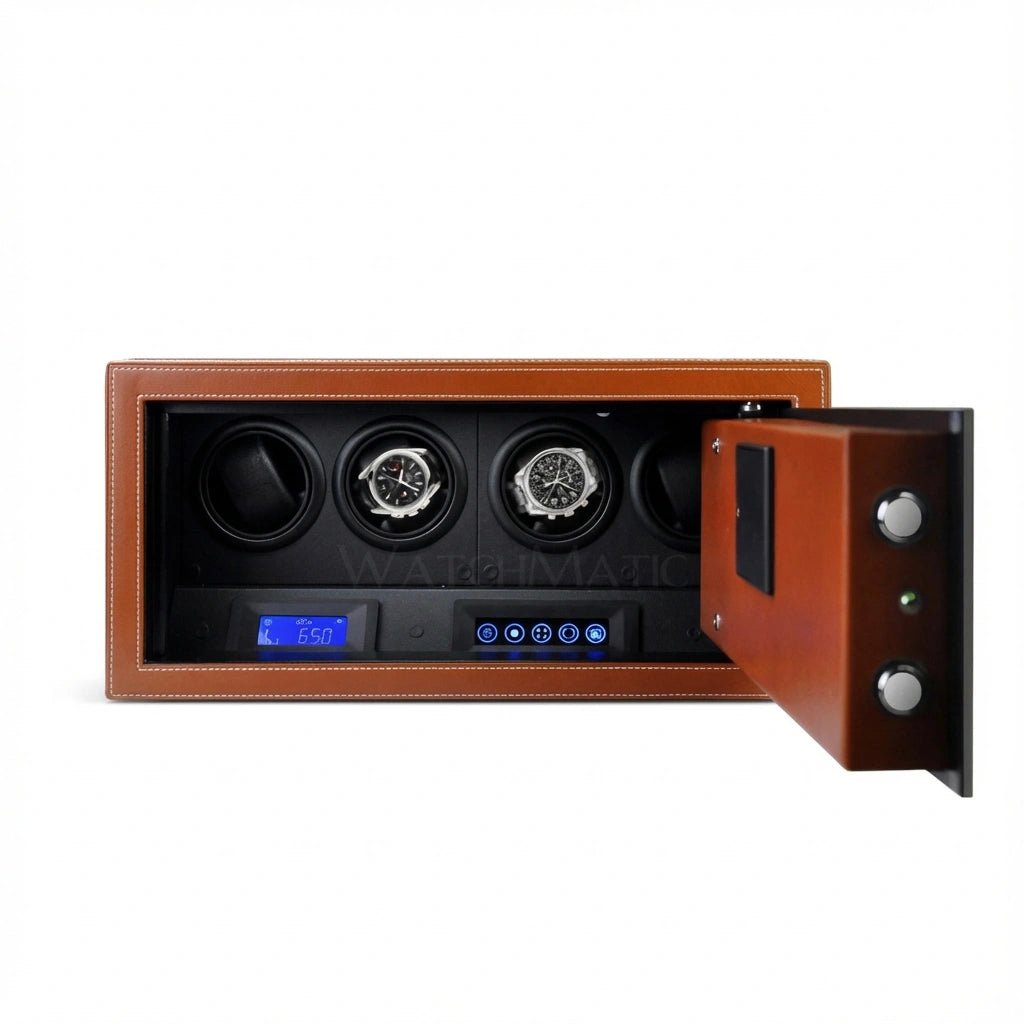
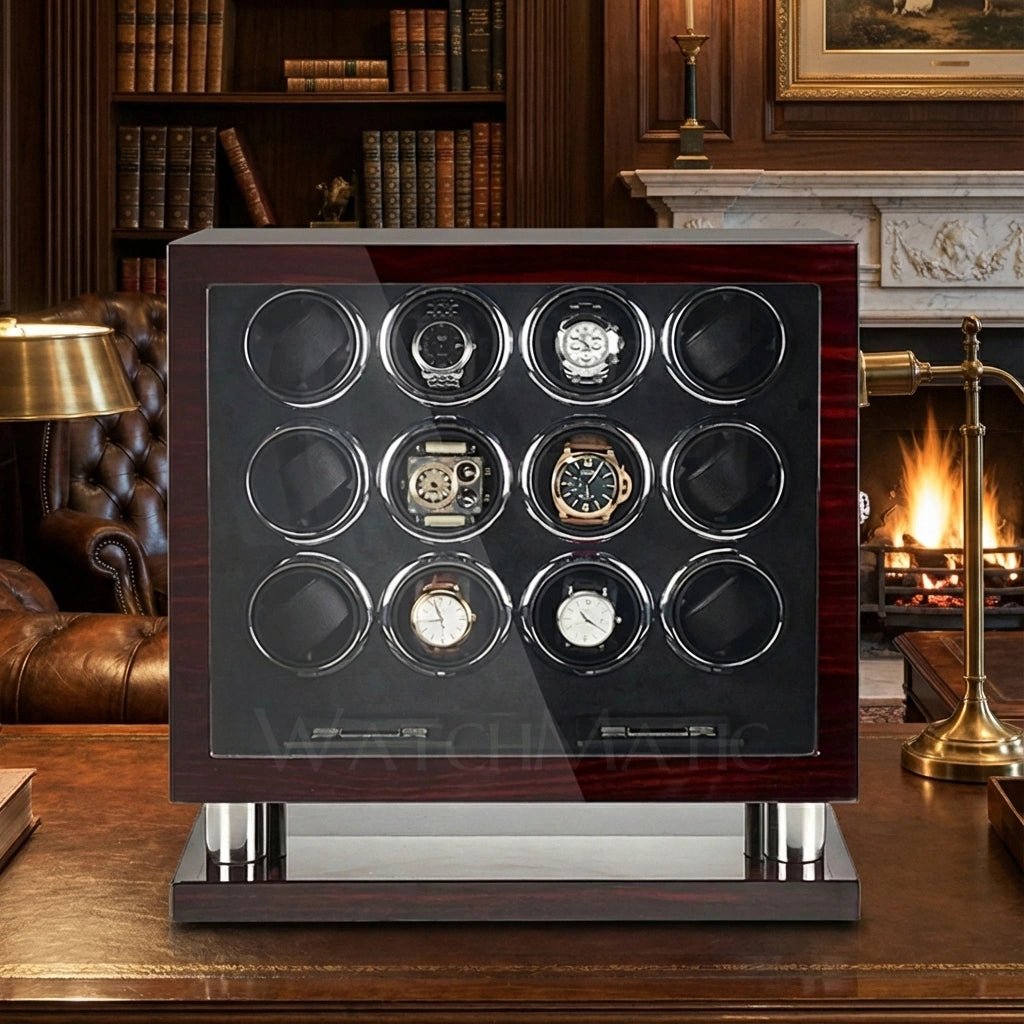
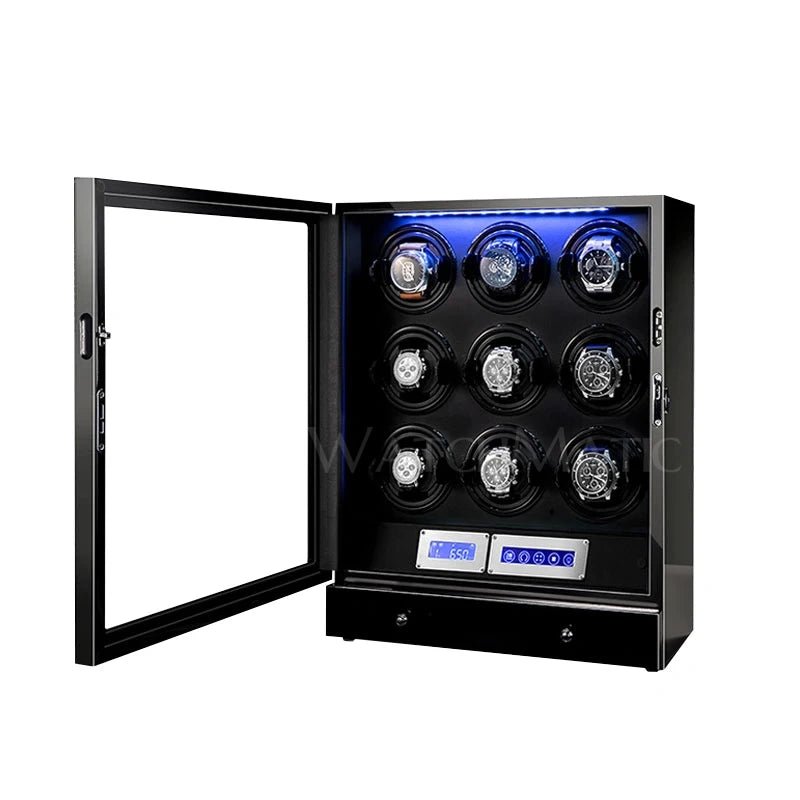
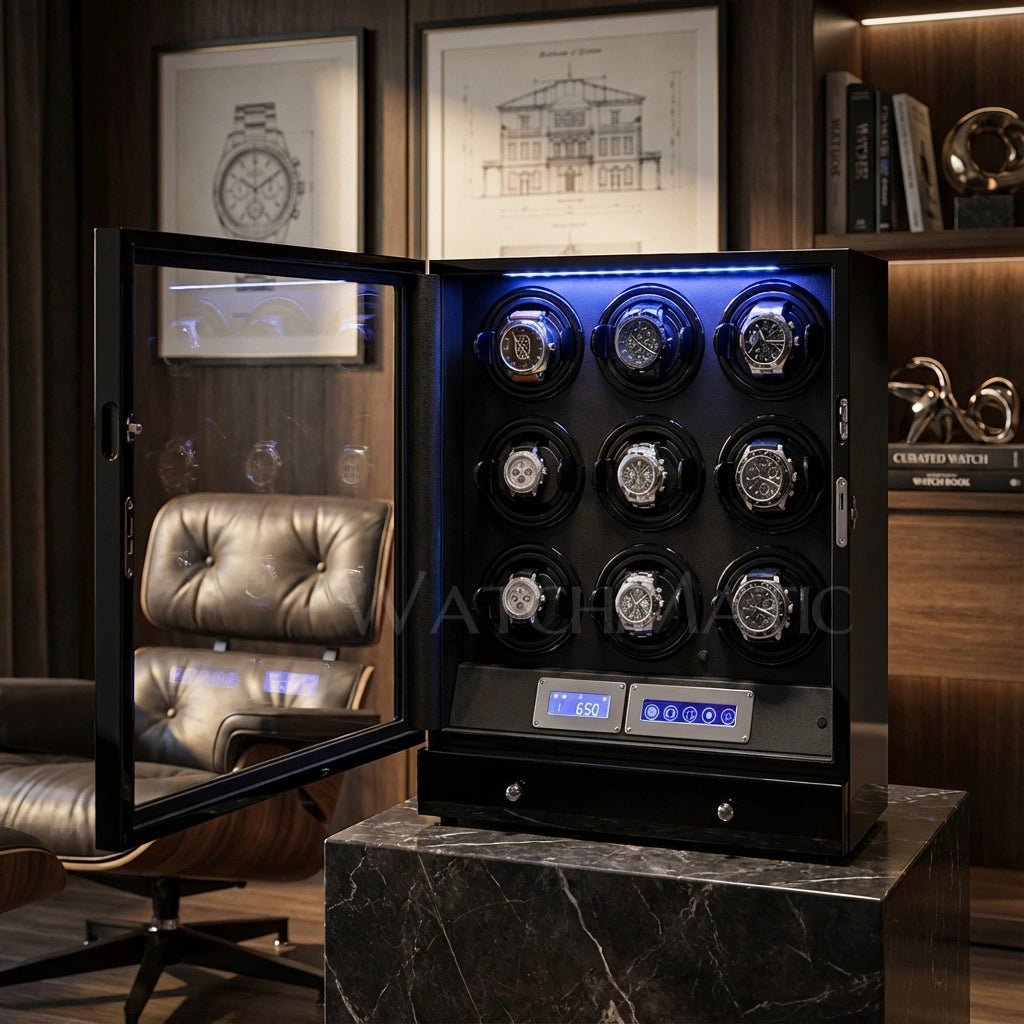
The Vento Luxury Quad Watch Winder is a practical option for a compact group of physically compatible automatic HAUTLENCE watches because it provides four independently controlled winding positions.
A four-watch configuration could include:
- Kubera — B60
- Vagabonde — B30
- Linear — D50
- Helix — D51
Each position can receive its own:
- TPD
- Rotation direction
- Winding mode
rather than forcing four distinct movements onto one shared program.
Why Vento Is a Strong Technical Match for Current HAUTLENCE
The current catalog contains enough automatic references to make all four powered positions genuinely useful.
This differs from brands whose current collections are predominantly manual.
Independent Control Matters Even Among 72-Hour Movements
A collection might include:
- B30 — 72 h
- D30 — 72 h
- D50 — 72 h
The reserve numbers match.
The calibers do not.
Independent control preserves flexibility.
Helix Adds Another Automatic Architecture
D51 contributes:
- Micro-rotor
- 65 h reserve
which further strengthens the case for independently programmed positions.
Physical Fit Must Still Be Verified
Before placing any HAUTLENCE in a compact multi-watch winder, confirm:
- Rectangular length
- sapphire height
- strap position
- door clearance
Retrovision 85 May Need a Different Solution
Its approximately 64 × 60 mm case is far outside conventional proportions.
A standard Vento position should not be assumed suitable without exact fit verification.
Do Not Rotate Sphere or HLXX Merely for Display
A manual watch can physically sit on a powered cushion.
That does not mean rotation supplies useful energy.
Is It Safe to Keep an Automatic HAUTLENCE on a Watch Winder?
A properly configured premium winder can be appropriate for a confirmed automatic HAUTLENCE.
Important factors include:
- Exact reference identification
- Exact caliber identification
- Appropriate TPD
- Appropriate winding direction
- Controlled rest cycles
- Smooth motor operation
- Secure physical fit
- Adequate sapphire and case clearance
If a properly wound watch shows unexpectedly short reserve, professional inspection is preferable to continually increasing TPD.
A Watch Winder Does Not Service a HAUTLENCE
A watch winder does not:
- Regulate a flying tourbillon
- Service a micro-rotor
- Maintain a jumping-hour mechanism
- Service retrograde displays
- Repair spherical gears
- Replace lubricants
- Extend service intervals
- Restore water resistance
- Replace professional maintenance
Its mechanical function is limited to supplying motion to a compatible automatic winding system.
Watch Winder vs. Watch Safe for HAUTLENCE Collectors
HAUTLENCE is particularly suitable for a mixed automatic-and-stationary secure-storage strategy.
| Feature | Standalone Winder | Watch Winder Safe |
|---|---|---|
| Automatic winding | Yes | Yes |
| Independent programming | Available | Available |
| Manual HAUTLENCE storage | Possible | Yes |
| Physical security | Limited | High |
| Controlled access | Limited | High |
| Unusual case storage | Model dependent | More configurable |
| High complications | Limited protection | Strong |
| Larger collection | Moderate | Highly relevant |
Collectors requiring combined winding and security can explore the Watch Winder Safe Collection.
Titan Vault 20 for a HAUTLENCE Collection

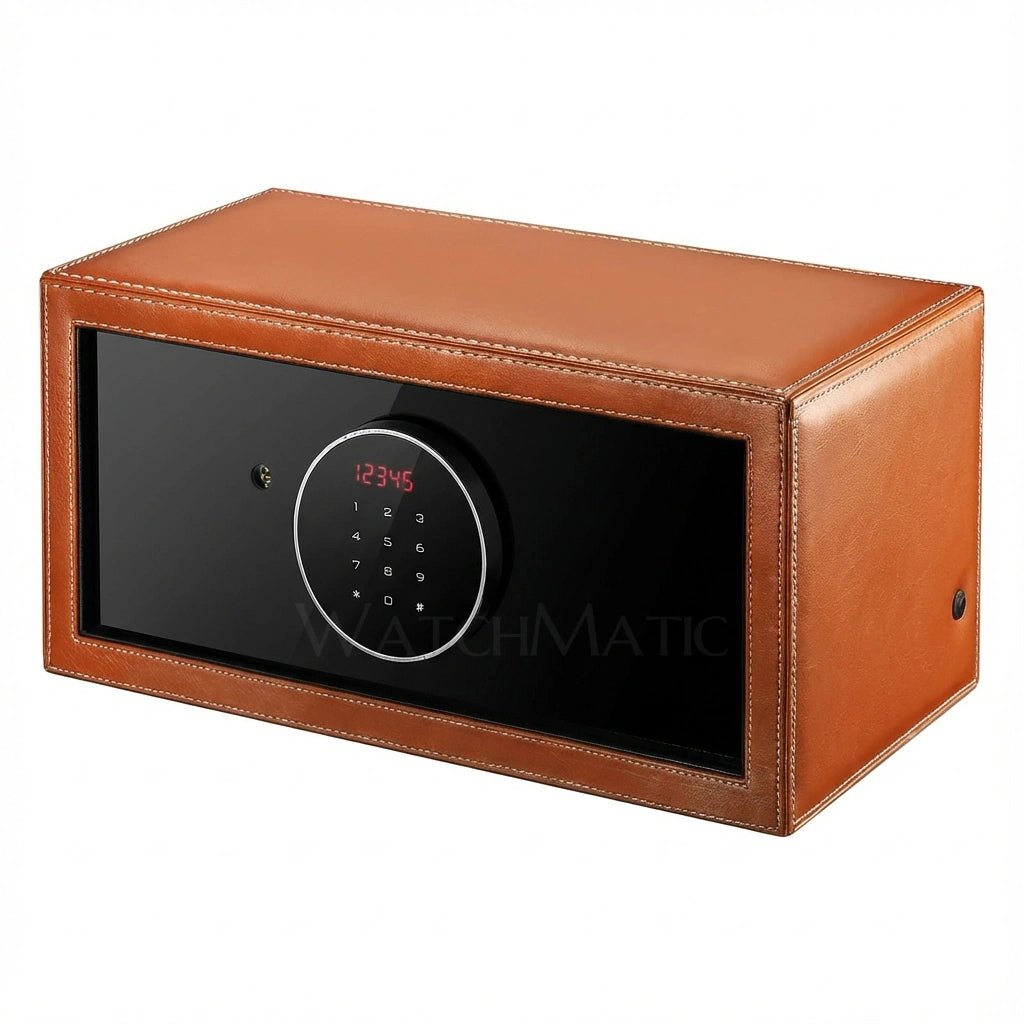
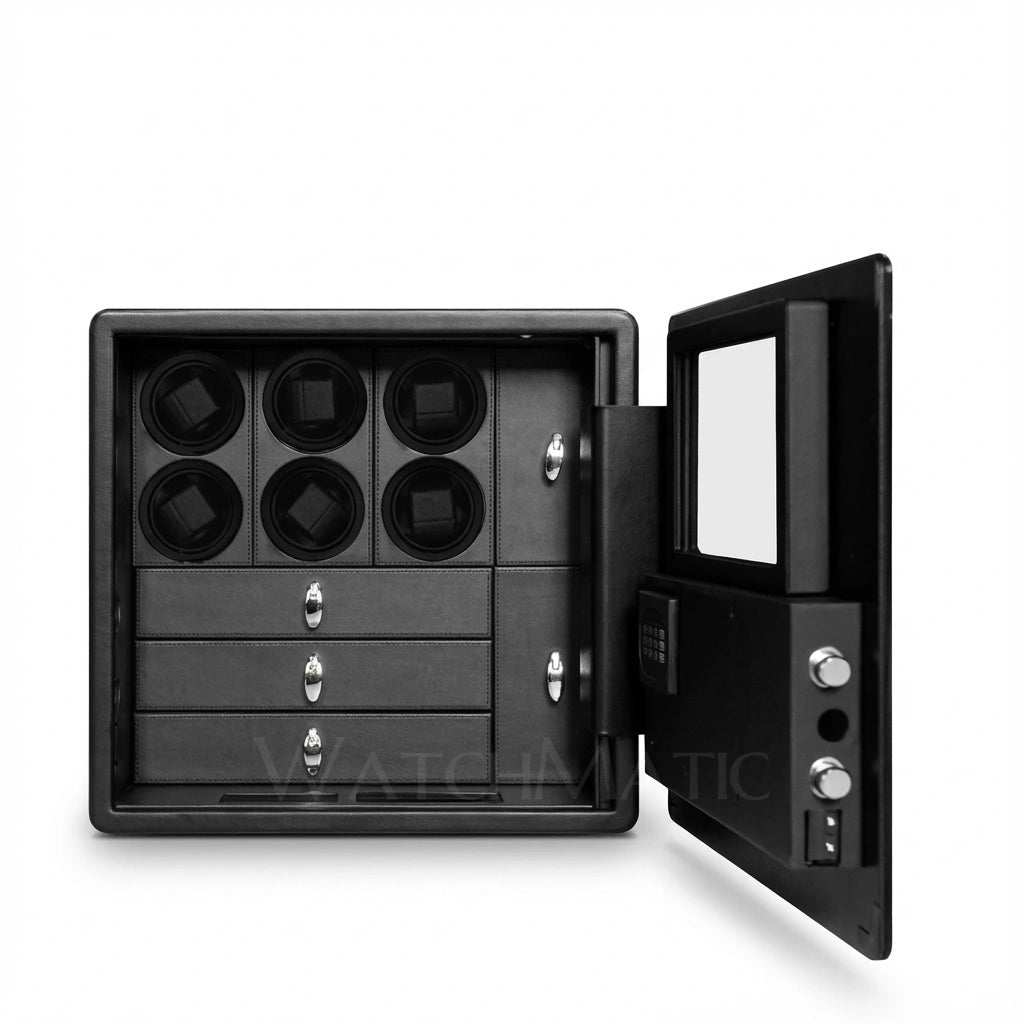
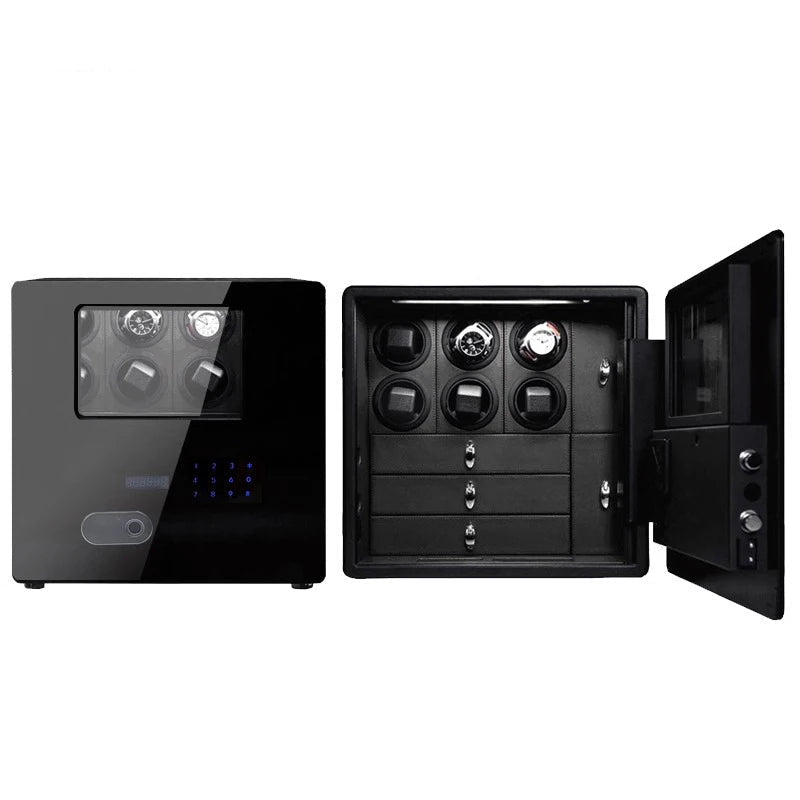
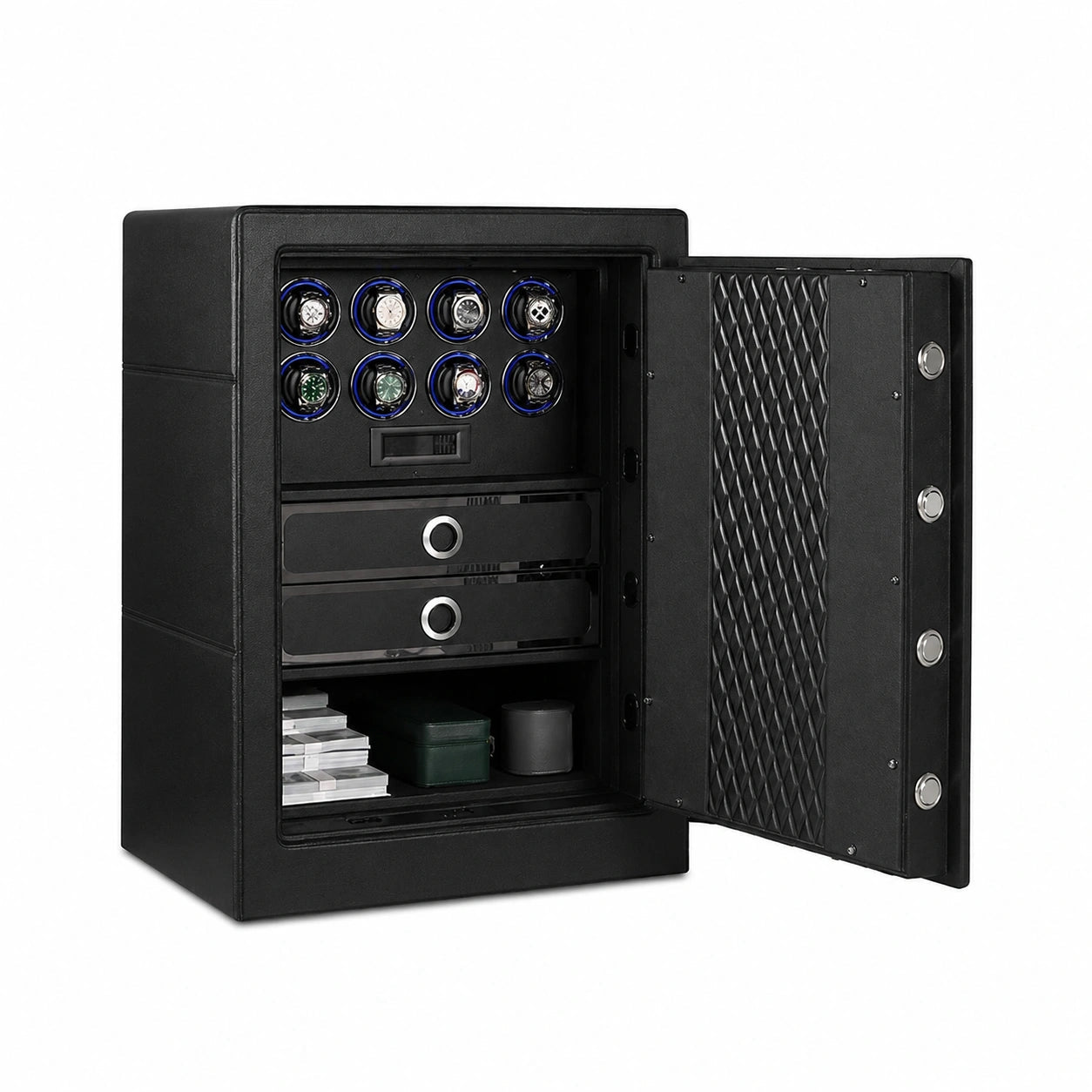
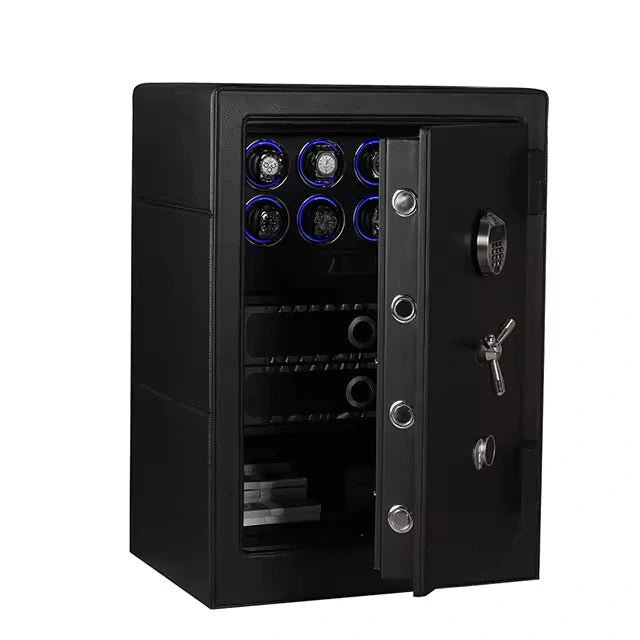
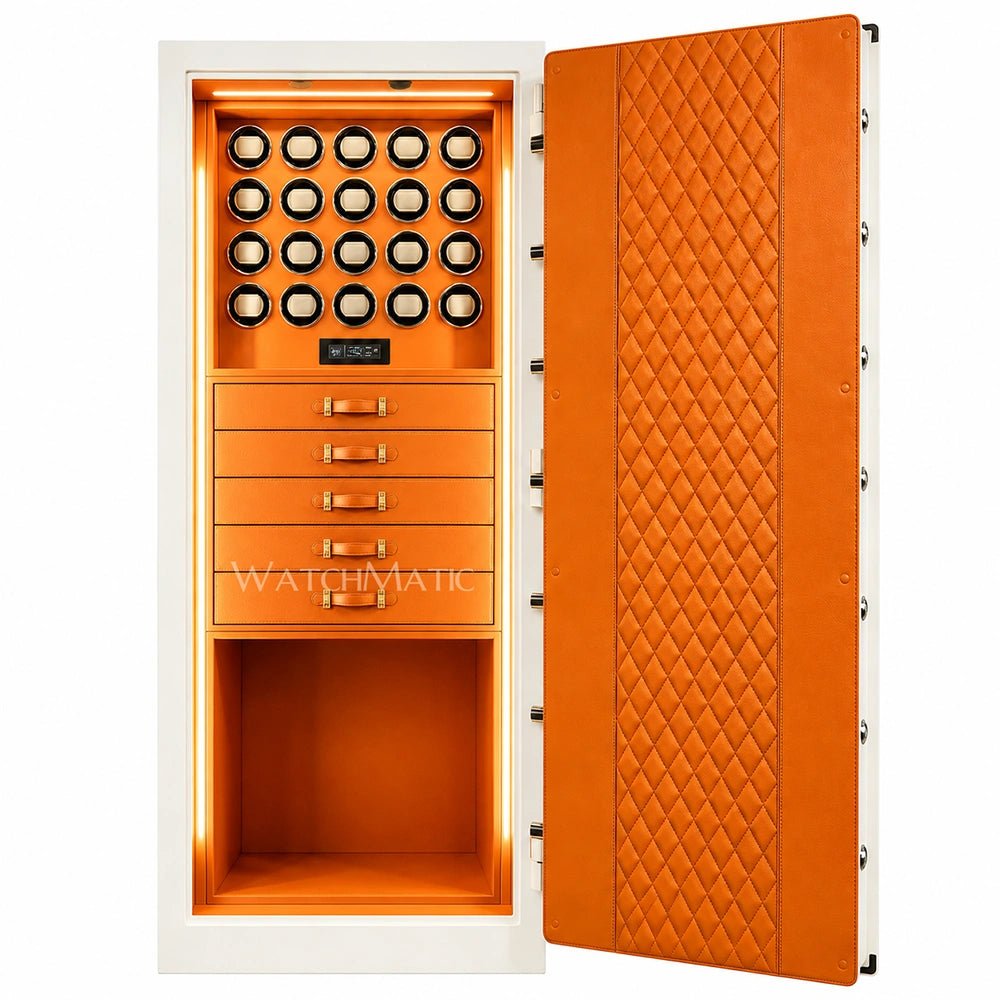
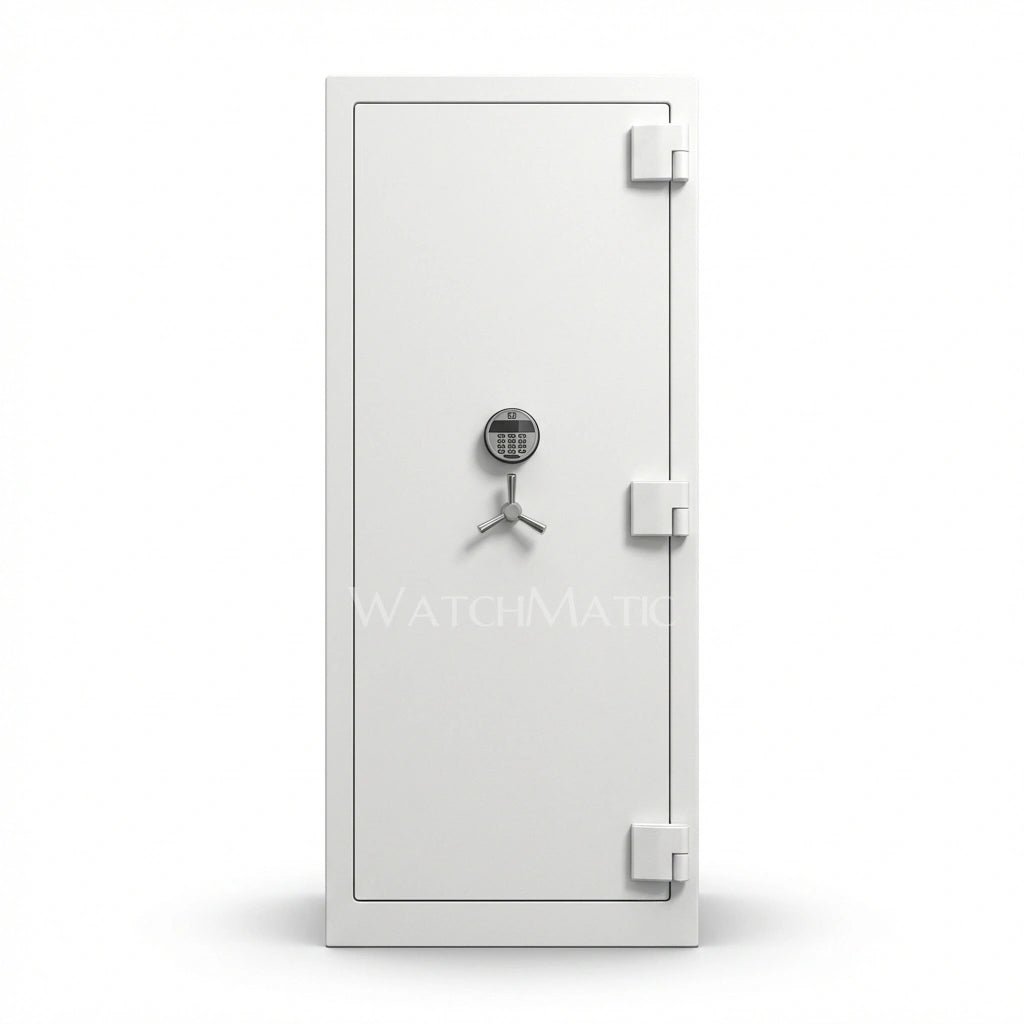
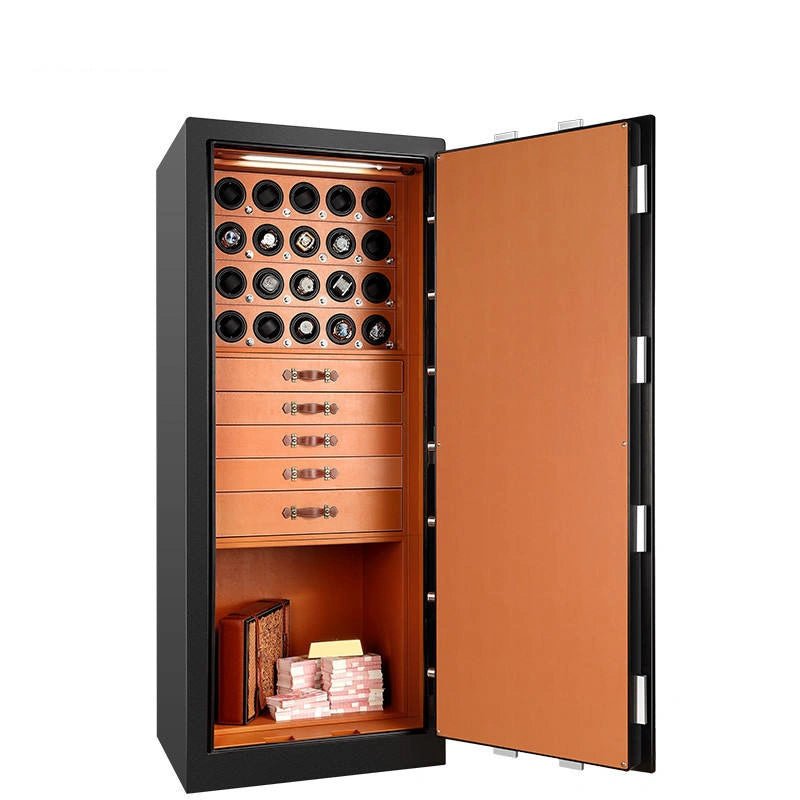
For a larger HAUTLENCE or mixed independent-watch collection, the Titan Vault 20 Watch Winder Safe combines 20 winding positions with secure storage architecture.
Available features include:
- Monolithic solid-steel body
- 10-layer reinforced exterior shell
- Biometric fingerprint access
- Digital passcode
- Manual key access
- Floor anchoring
- LCD touchscreen
- Japanese Mabuchi motors
- Independent winding controls
- Adjustable TPD from 650 to 2200
- CW/CCW/bidirectional operation
- Anti-magnetization protection
- Adjustable interior lighting
- Ultra-quiet operation below 10 dB
- 10-year warranty
EN 15659 LFS 60 P fire certification and UL TL-30 / EN 1143-1 Grade III security certification are available upon request, rather than assumed as standard on every configuration.
Why Titan Vault 20 Is Highly Relevant to HAUTLENCE
HAUTLENCE watches typically sit well above mainstream enthusiast-watch pricing.
Current references can occupy categories around:
- CHF 30,000
- CHF 60,000
- CHF 70,000
- CHF 100,000+
depending on the Machine and edition.
Therefore, physical security is a natural ownership concern rather than a forced product upsell.
Automatic and Manual HAUTLENCE Watches Need Different Storage Roles
A mixed collection could allocate:
automatic B30/B60/D-series references → powered positions
and:
manual A20/A80/A82 references → secure stationary storage.
The Most Mechanically Spectacular Watch May Not Need a Rotor
Sphere is one of the most visually kinetic HAUTLENCE watches.
Yet:
A82 → manual.
Meanwhile a relatively cleaner Vagabonde:
B30 → automatic.
Therefore:
visible complexity ≠ rotor requirement.
Security Relevance Is Independent of Winding Type
A Sphere worth tens of thousands may need no powered position.
It can still justify significantly stronger theft protection than many cheaper automatic watches.
Concept Pieces Strengthen the Security Case
Retrovision references are produced in extremely small numbers.
That increases:
- Replacement difficulty
- collector significance
- security relevance
even if the exact watch uses an automatic movement.
Titan Vault 20 Should Be Configured Around Case Geometry
For HAUTLENCE, do not plan the safe solely around:
20 rotor positions.
Also consider:
- Wide Concept pieces
- Tall Sphere references
- integrated bracelets
- stationary manual-watch compartments
Retrovision 85 May Require Bespoke Interior Planning
Its exceptional width makes it a candidate for:
- Oversized compartment
- stationary drawer
- custom holder
rather than assuming normal rotor geometry.
When Stationary Watch-Safe Storage Is More Appropriate
If a collection is dominated by:
- Sphere
- HLXX
- historical manually wound HAUTLENCE pieces
then rotor count becomes less important.
In that case, the Luxury Watch Safe Collection may be more appropriate than maximizing powered capacity.
HAUTLENCE in a Mixed Independent Haute Horlogerie Collection
HAUTLENCE naturally appears alongside independent brands known for unconventional time displays and manufacture complications.
A mixed collection might include:
HAUTLENCE + H. Moser & Cie. + URWERK + MB&F + De Bethune + Christophe Claret
Related WatchMatic guides include:
Best Watch Winder for H. Moser & Cie. Watches
Best Watch Winder for URWERK Watches
Best Watch Winder for MB&F Watches
Best Watch Winder for De Bethune Watches
Best Watch Winder for Christophe Claret Watches
A collection at this level benefits substantially from:
caliber-specific programming + mixed powered/stationary security
rather than one generic luxury-watch setting.
HAUTLENCE vs. H. Moser & Cie.
The connection between the two manufacturers is especially relevant because current HAUTLENCE watches benefit from technical cooperation and assembly expertise within the same broader ecosystem.
However:
shared watchmaking resources do not mean shared winder settings.
An H. Moser HMC caliber should not be used as a TPD proxy for a HAUTLENCE B30, D30 or D51.
HAUTLENCE vs. URWERK
Both brands specialize in unconventional displays.
But display type does not determine winding architecture.
URWERK has:
- Turbine automatics
- switchable rotors
- manual pieces
HAUTLENCE has:
- conventional/current automatics
- micro-rotor automatics
- manual kinetic displays
Exact caliber remains decisive.
HAUTLENCE vs. MB&F
Both brands demonstrate that visible movement and extreme complication do not predict automatic winding.
An MB&F Machine with enormous visible motion may be manual.
A HAUTLENCE flying tourbillon may be automatic.
HAUTLENCE vs. Christophe Claret
Both brands contain highly complicated automatic tourbillons and manual high complications.
Again:
tourbillon ≠ manual
and:
complication count ≠ TPD.
How to Choose the Best Watch Winder for Your HAUTLENCE
Step 1: Identify the Exact Model
Determine whether the watch is:
- Kubera
- Vagabonde
- Vagabonde Tourbillon
- Linear
- Helix
- Sphere
- HLXX
- Retrovision
- Another historical reference
Step 2: Identify the Generation
This matters particularly for:
- Sphere
- Vagabonde
- Historical HL references
- Concept watches
Step 3: Identify the Caliber
Important current examples include:
- A20
- A80
- A82
- B30
- B60
- D20
- D30
- D31
- D50
- D51
Step 4: Confirm Automatic or Manual
Examples:
B30 → automatic
B60 → automatic
D20 → automatic
D30 → automatic
D31 → automatic
D50 → automatic
D51 → automatic micro-rotor
A20 → manual
A80 → manual
A82 → manual
Step 5: Check Power Reserve
Representative current figures include:
~40 h → A20 manual
65 h → D51 automatic
70+ h → B60 automatic
72 h → multiple automatic and manual calibers
Do not use reserve to infer winding type.
Step 6: Determine Whether TPD Is Relevant
TPD only matters when an automatic winding mass exists.
Do not assign conventional TPD to:
- A20
- A80
- A82
Step 7: Determine Rotation Direction
Use verified caliber-specific winding information.
Choose a winder supporting:
- CW
- CCW
- Bidirectional
Step 8: Consider the Complication
A:
- Jumping hour
- Wandering hour
- Retrograde
- Flying tourbillon
- Spherical display
does not determine automatic vs. manual winding.
Step 9: Check Full Case Geometry
Measure:
- Width
- length
- height
- sapphire dome
- crown projection
- strap position
This is especially important for:
- Sphere
- Retrovision
- Linear
- Vagabonde
Step 10: Match Rotor Capacity to Automatic Watches
Do not equate:
total mechanical HAUTLENCE watches
with:
number of powered positions required.
For broader resources covering winding, TPD, secure storage, and collection protection, visit the WatchMatic Guide Hub.
Best Watch Winder for HAUTLENCE Watches: Final Thoughts
Choosing the best watch winder for a HAUTLENCE requires exact caliber identification.
The current catalog contains a substantial automatic portfolio.
The Kubera B60 is self-winding and provides more than 70 hours of autonomy.
The Vagabonde B30 provides approximately 72 hours and is automatic.
The Vagabonde Tourbillon D30 is also automatic with approximately 72 hours.
The Linear D50 combines automatic winding, a flying tourbillon and linear jumping-hour architecture with approximately 72 hours.
The Helix D51 uses a micro-rotor automatic movement with approximately 65 hours.
The Concept family expands that automatic group through references including Retrovision 47 D20, Retrovision 85 D31 and Retrovision 64 D50.
But other equally important HAUTLENCE watches are manually wound.
The Sphere A80 and A82 movements provide approximately 72 hours but contain no automatic rotor.
The HLXX A20 is also manual, with a substantially shorter reserve of approximately 40 hours.
This creates several unusually strong HAUTLENCE comparisons:
Linear D50 → automatic → 72 h
versus:
Sphere A82 → manual → 72 h.
Vagabonde Tourbillon D30 → flying tourbillon → automatic → 72 h
versus:
Sphere A80/A82 → kinetic multi-axis display → manual → 72 h.
And:
Kubera B60 → jumping hours → automatic → 70+ h
versus:
HLXX A20 → jumping hours → manual → ~40 h.
The central HAUTLENCE lesson is therefore:
collection name, complication, visible motion and power reserve are all insufficient on their own to determine watch-winder compatibility.
For a confirmed automatic HAUTLENCE, prioritize:
- Adjustable TPD
- CW/CCW/bidirectional programming
- Independent controls
- Controlled rest cycles
- Smooth low-vibration operation
- Flexible cushions
- Integrated-bracelet and strap compatibility
- Adequate rectangular-case clearance
- Adequate sapphire height clearance
For Sphere and HLXX references, prioritize premium stationary secure storage instead.
The most reliable framework is:
HAUTLENCE Reference → Generation → Caliber → Automatic or Manual → Power Reserve → Complication → Physical Geometry → TPD/Direction or Stationary Storage
For additional automatic-winding and secure-storage solutions, explore WatchMatic.