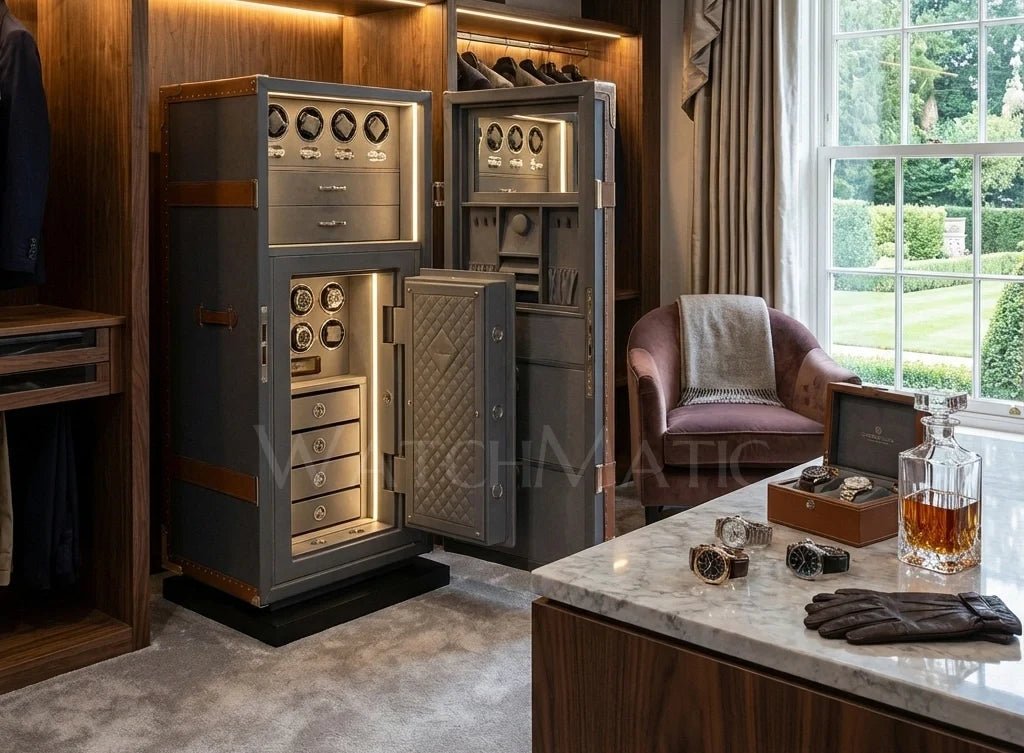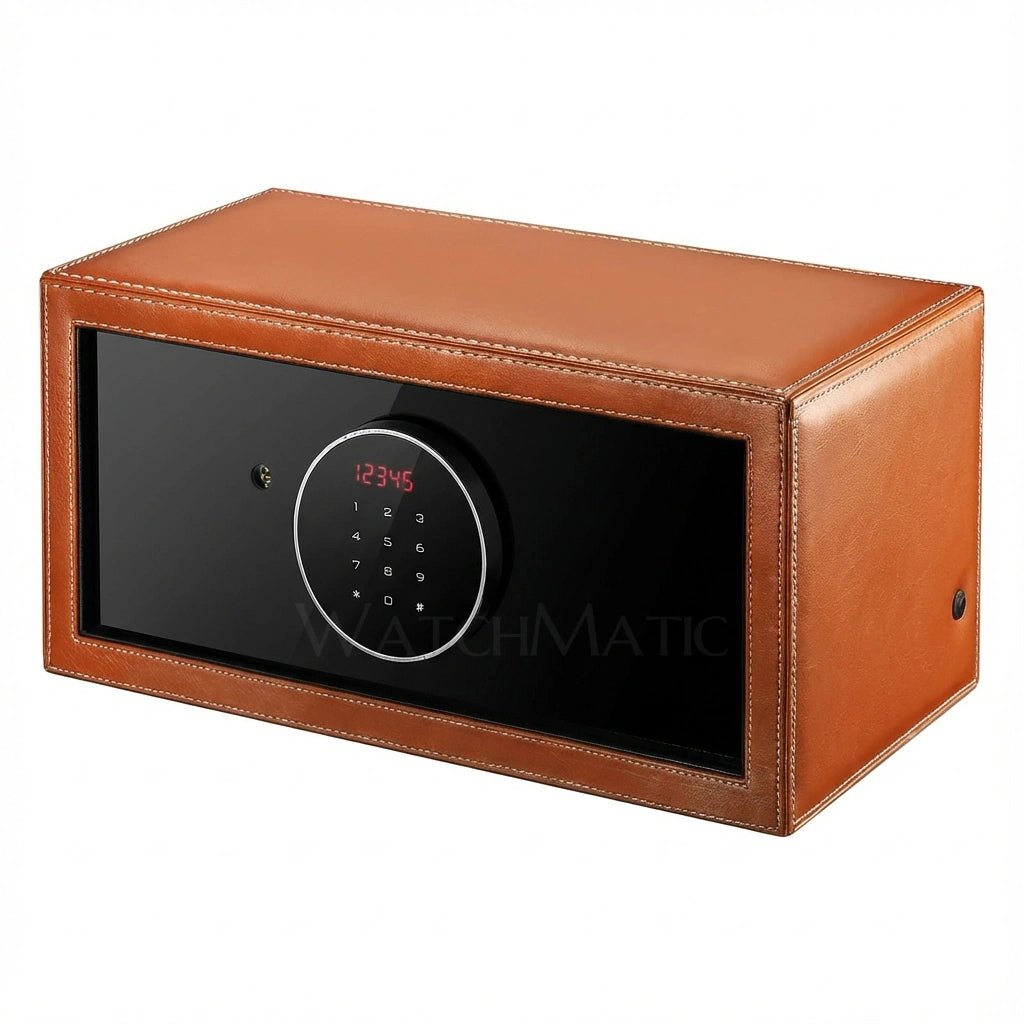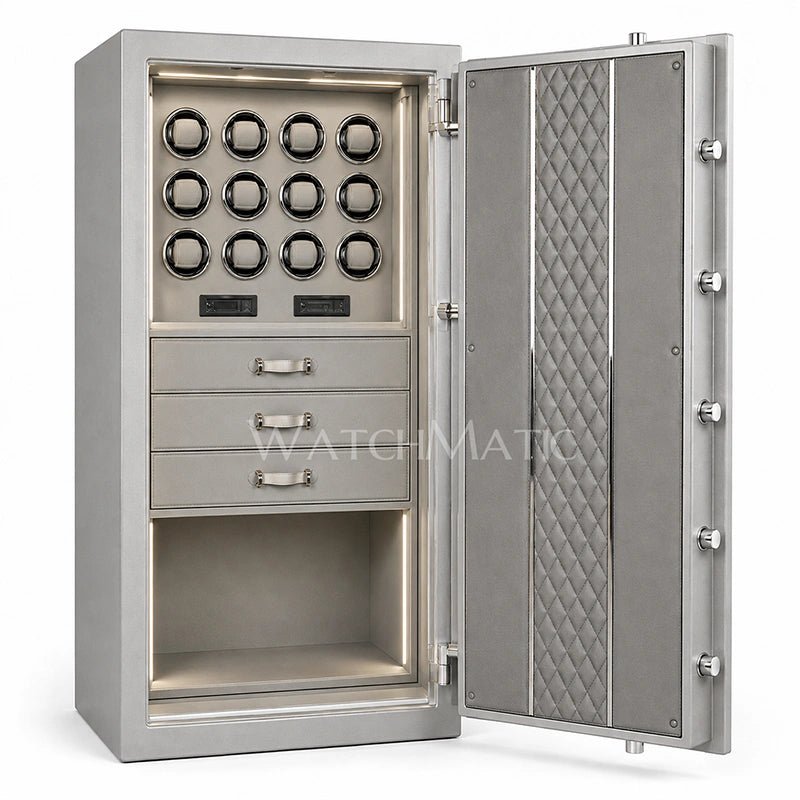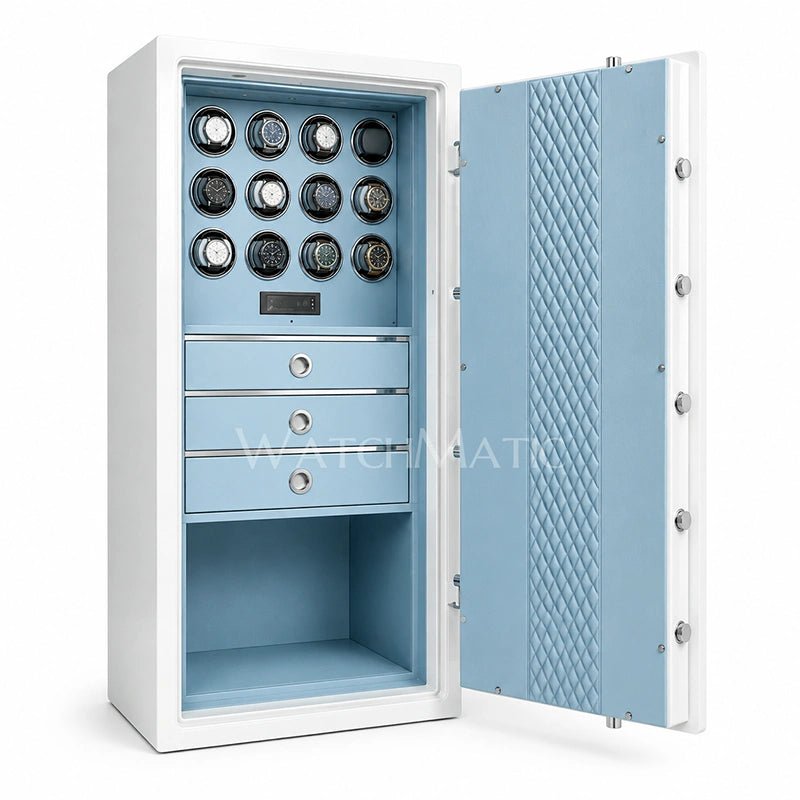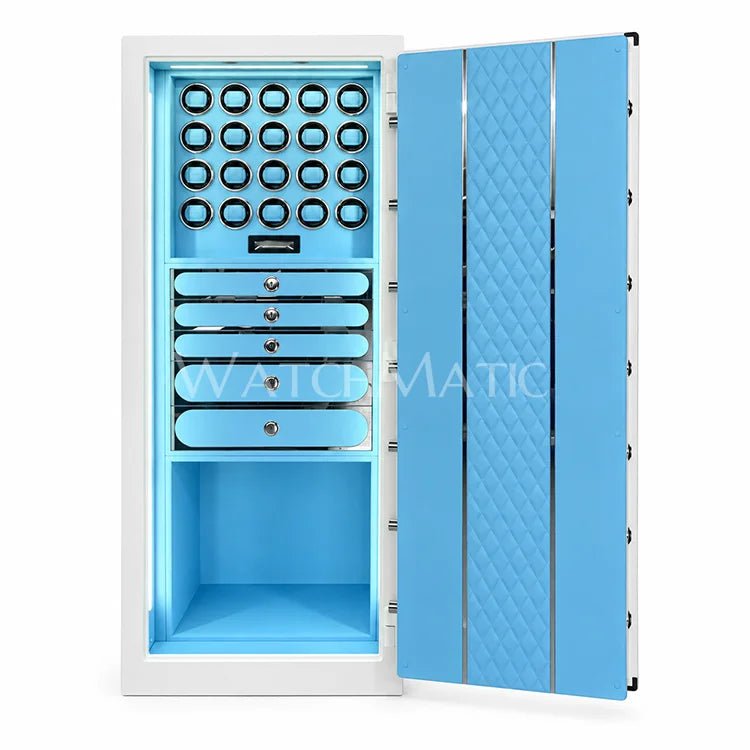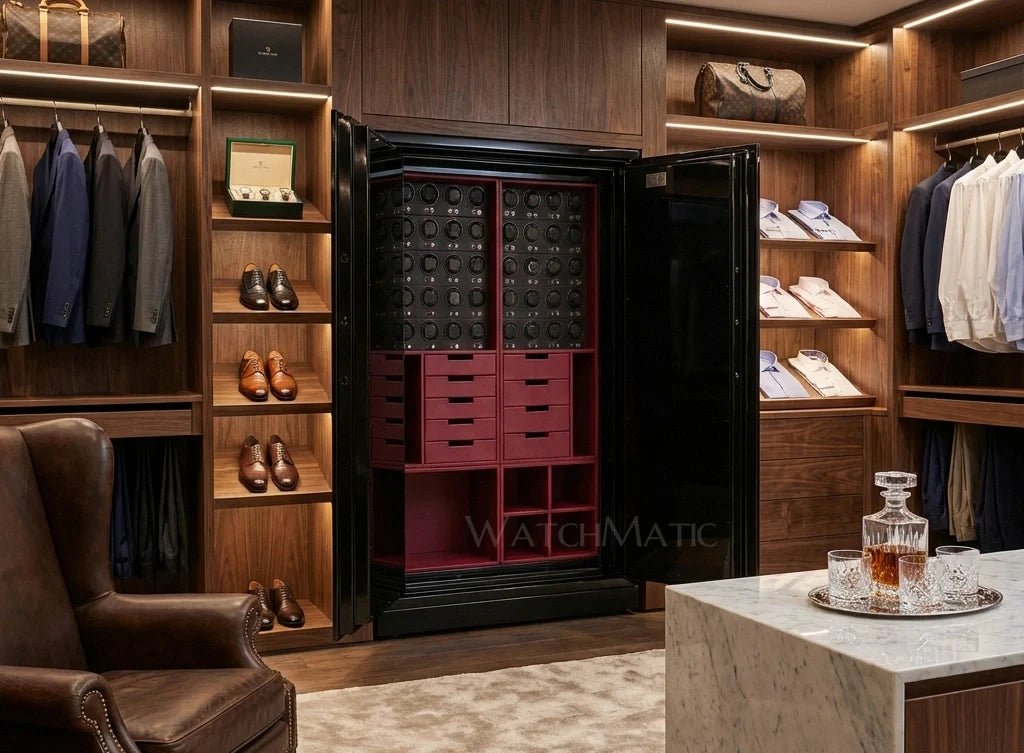
For serious watch collectors, a private watch vault room represents a different approach to ownership. Rather than keeping valuable timepieces scattered across bedroom drawers, display cases, and individual watch winders, a dedicated space brings the collection together in an environment designed for security, organization, and everyday enjoyment.
A well-planned luxury watch room can be as understated as a secure dressing room with a single high-capacity safe or as elaborate as a purpose-designed private vault with integrated winding systems, bespoke cabinetry, controlled lighting, and specialized storage for watches, jewelry, and accessories.
The challenge is finding the right balance between architectural design and practical protection. A beautiful room is not necessarily secure, while a sophisticated safe may be difficult to use if its installation, access, and surrounding environment have not been considered.
This guide explains how to design a private watch vault room at home, from choosing the right location to planning security, lighting, watch winders, storage capacity, and bespoke safe integration.
What Is a Private Watch Vault Room?
A private watch vault room is a dedicated area within a residence designed specifically for storing, organizing, protecting, and accessing a personal watch collection.
Unlike a conventional watch display cabinet, the room is planned around several interconnected requirements:
- Physical security: protection against unauthorized access and theft.
- Collection organization: dedicated storage for different watches, straps, and accessories.
- Environmental stability: consideration of temperature, humidity, direct sunlight, and dust.
- Watch winding: programmable winding systems for selected automatic watches.
- Interior design: materials, lighting, finishes, and cabinetry that complement the residence.
- Long-term flexibility: sufficient capacity for new acquisitions and changing storage needs.
The term "vault room" is often used in luxury residential design, but it is important to distinguish between a room containing high-security safes and a genuinely engineered vault enclosure. A locked room does not automatically provide certified burglary or fire resistance.
For many homeowners, the most practical arrangement is a beautifully designed private watch room with a purpose-built luxury watch safe serving as the primary security enclosure.
1. Start With the Watch Collection, Not the Room
Before selecting cabinetry, lighting, or architectural finishes, begin by understanding what the room needs to accommodate.
A collector with twelve automatic watches and several everyday pieces has different requirements from someone maintaining forty or more high-value timepieces, including rare or limited-production models.
Evaluate Your Current Collection
Document the number of watches, their dimensions, movement types, wearing frequency, approximate values, and any special storage requirements.
Consider separating the collection into four categories:
- Daily rotation: watches worn regularly that should remain conveniently accessible.
- Automatic watches: selected pieces that may benefit from programmable winding.
- Occasional and collectible watches: watches worn infrequently or reserved for special occasions.
- High-value and historically significant pieces: watches that may justify additional physical security and carefully controlled access.
For a mixed collection, not every watch requires an active winding position. Quartz watches, manually wound mechanical watches, and automatic watches intended for long-term storage can often remain stationary in appropriate compartments.
For additional background, see our guide on how to store luxury watches at home.
Plan for Future Acquisitions
A dedicated watch vault room is usually a long-term investment. Design decisions should account for the possibility that your collection will grow or change over the coming years.
Consider future capacity for additional winders, removable trays, adjustable shelving, and different drawer configurations. Reserving some unused storage capacity during the initial project can be more practical than redesigning the room after every major acquisition.
2. Choose the Right Location Inside Your Home
The location of a private watch room influences everything from security and environmental stability to delivery logistics and daily convenience.
Common residential locations include:
Walk-In Closets and Dressing Rooms
A generously sized dressing room is a natural location for a private watch collection. Watches remain close to clothing and accessories, making it easier to select a timepiece as part of a daily routine.
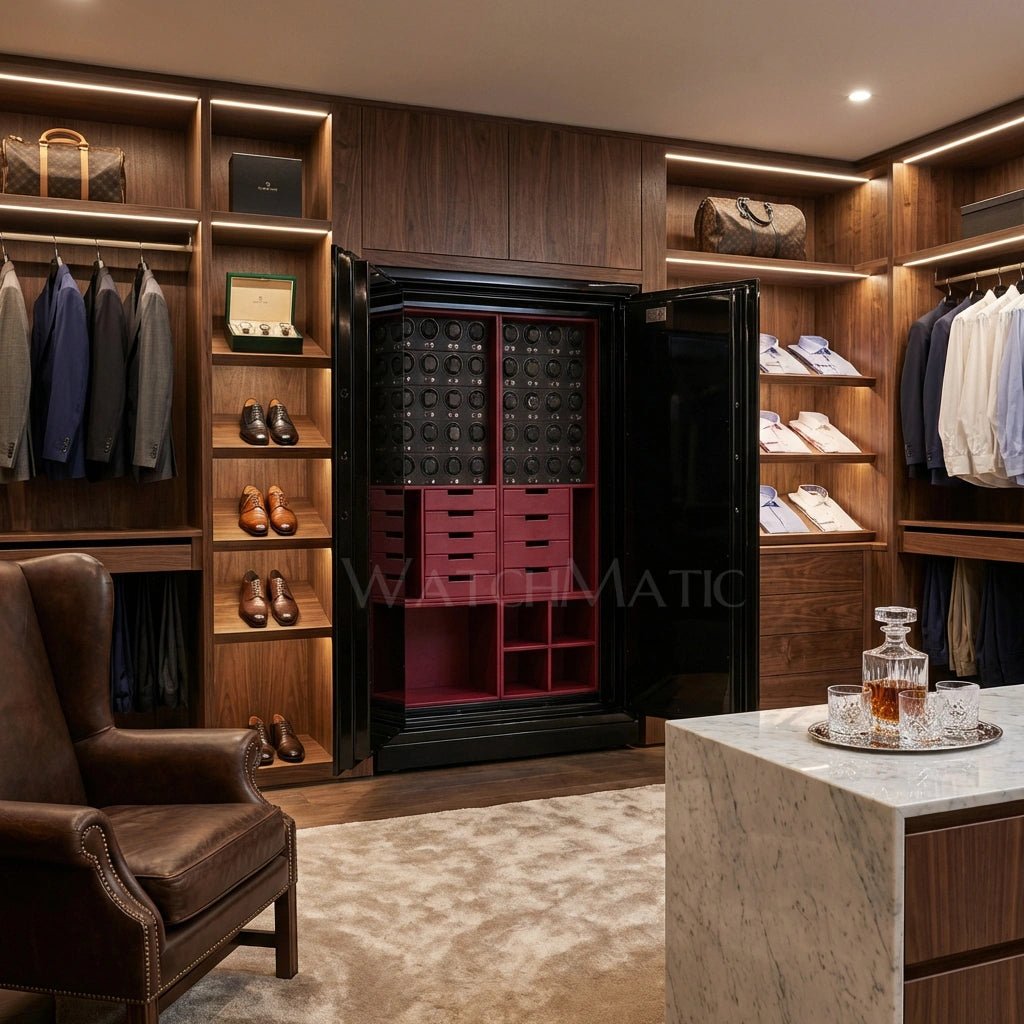
A luxury watch safe can be integrated into a cabinet wall, positioned within a dedicated alcove, or presented as a freestanding centerpiece.
This approach works particularly well when the homeowner wants convenient access without creating an entirely separate room.

Private Home Offices and Studies
A home office offers an alternative for collectors who prefer a dedicated viewing and collection-management area.
Dark wood finishes, leather seating, architectural lighting, and a carefully positioned watch safe can create a more intimate environment for examining watches, changing straps, and reviewing collection records.
Dedicated Rooms
For larger collections, a separate room provides greater freedom to coordinate the architectural layout, secure storage, display areas, and lighting.
Dedicated rooms can accommodate multiple safes, full-height cabinetry, a central viewing table, and separate storage for watch boxes or accessories.
Evaluate Structural and Environmental Conditions
Whatever location you choose, assess the following before proceeding:
- Floor load-bearing capacity, particularly for large steel safes.
- Doorway dimensions, elevator capacity, stair access, and delivery routes.
- Available wall space and safe door-opening clearance.
- Electrical supply and suitable cable routing.
- Exposure to sunlight, moisture, and fluctuating temperatures.
- Privacy, visibility from public areas, and access by visitors or contractors.
Large luxury watch safes can weigh several hundred kilograms before being loaded. An upper-floor installation or unusual floor structure should be evaluated by an appropriately qualified structural professional rather than relying on the apparent strength of the flooring.
3. Build the Room Around a High-Security Watch Safe
The watch safe should be considered early in the design process, not treated as an accessory to be added after the cabinetry is finished.
For valuable collections, the safe becomes the room's principal security element. Its dimensions, weight, door movement, locking system, internal capacity, and installation requirements can determine the overall layout.
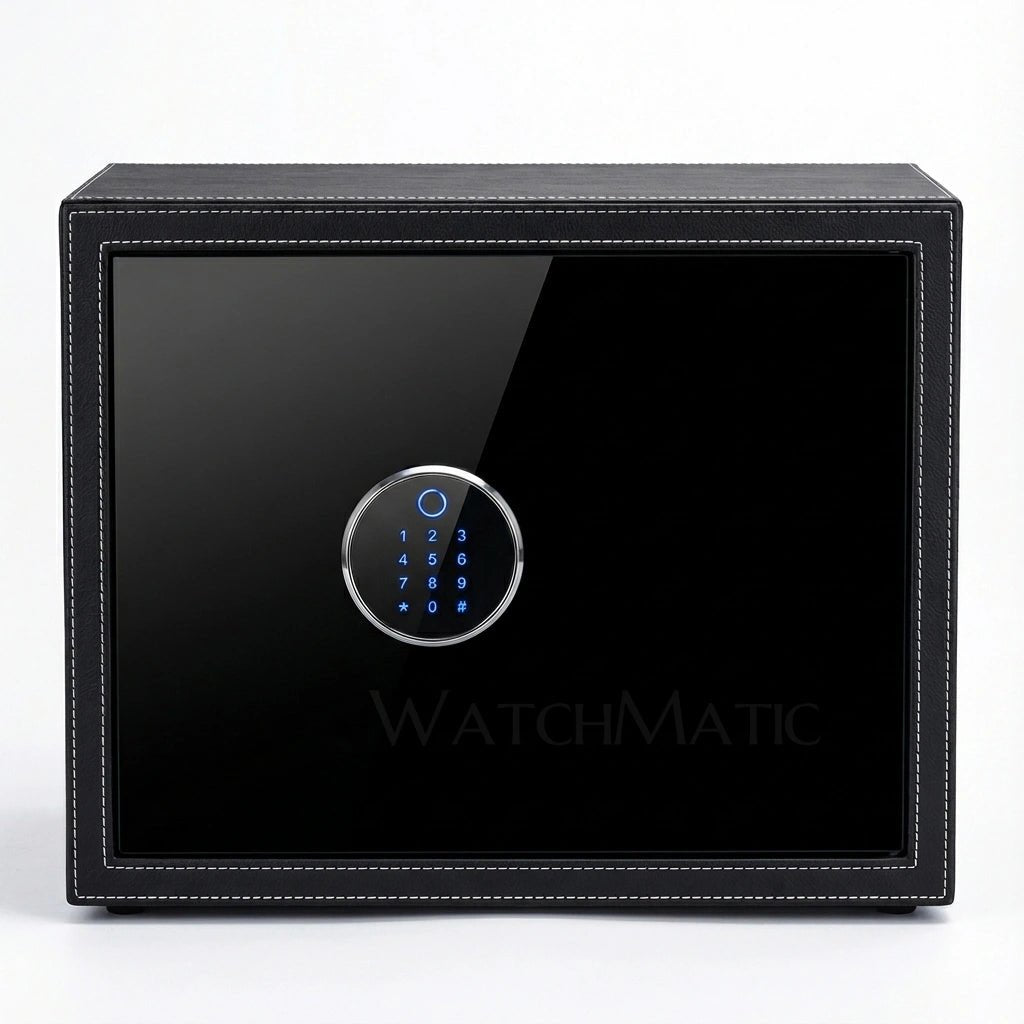
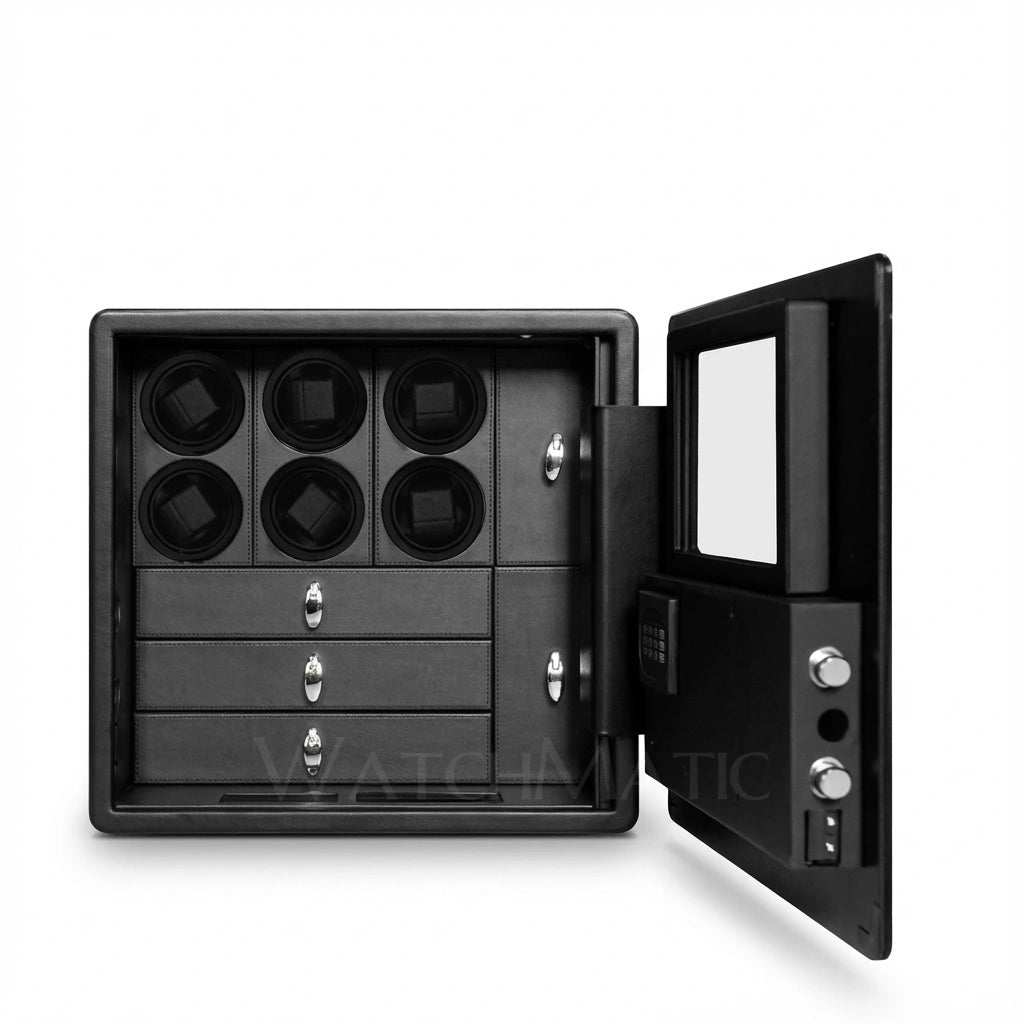
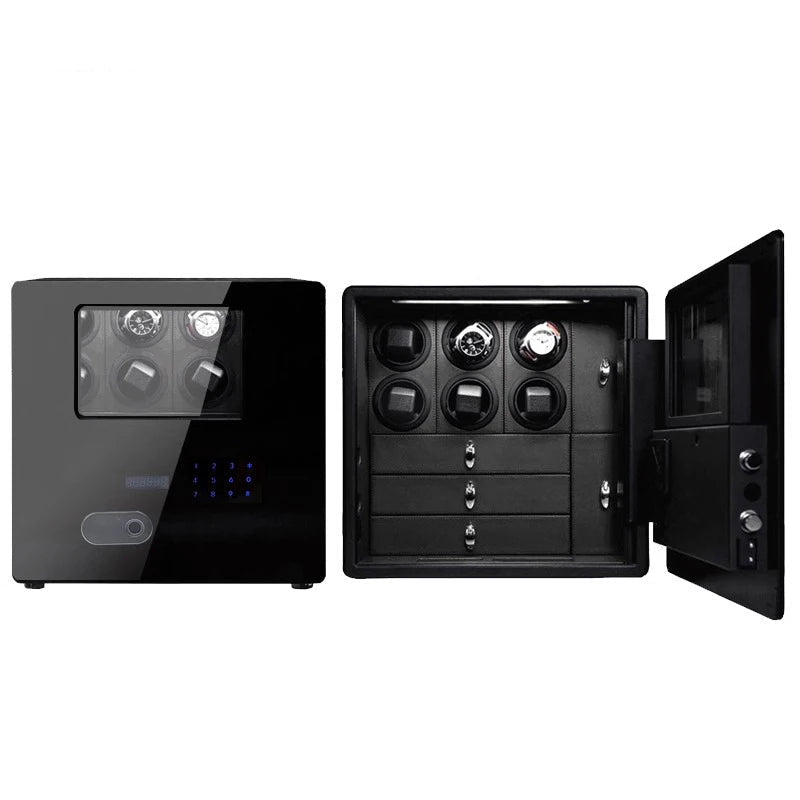
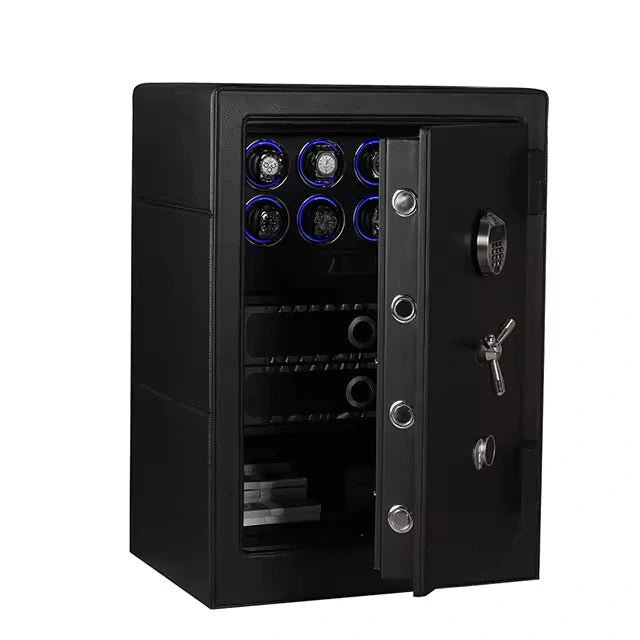
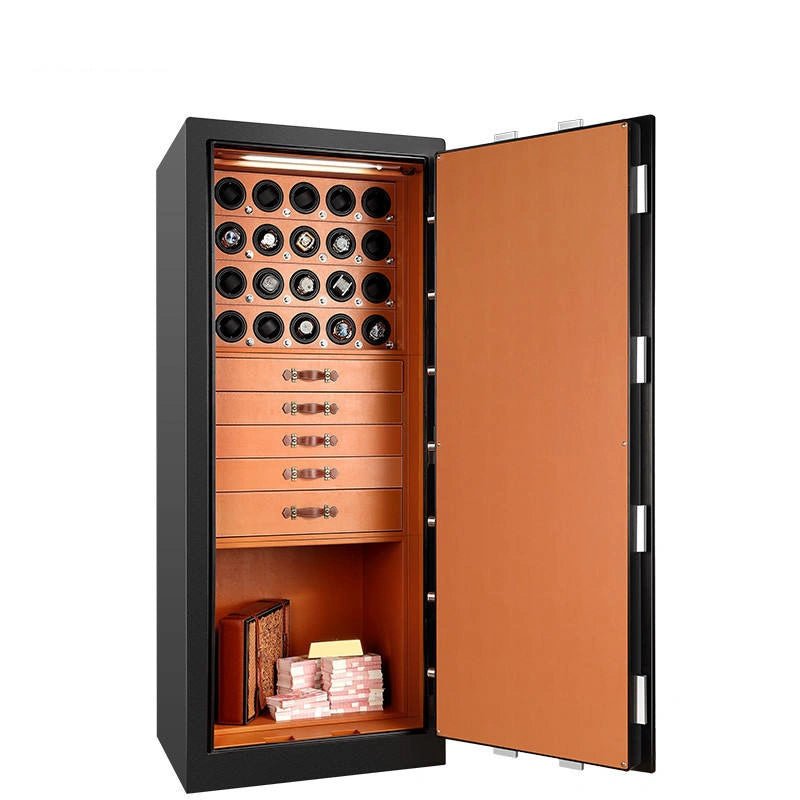
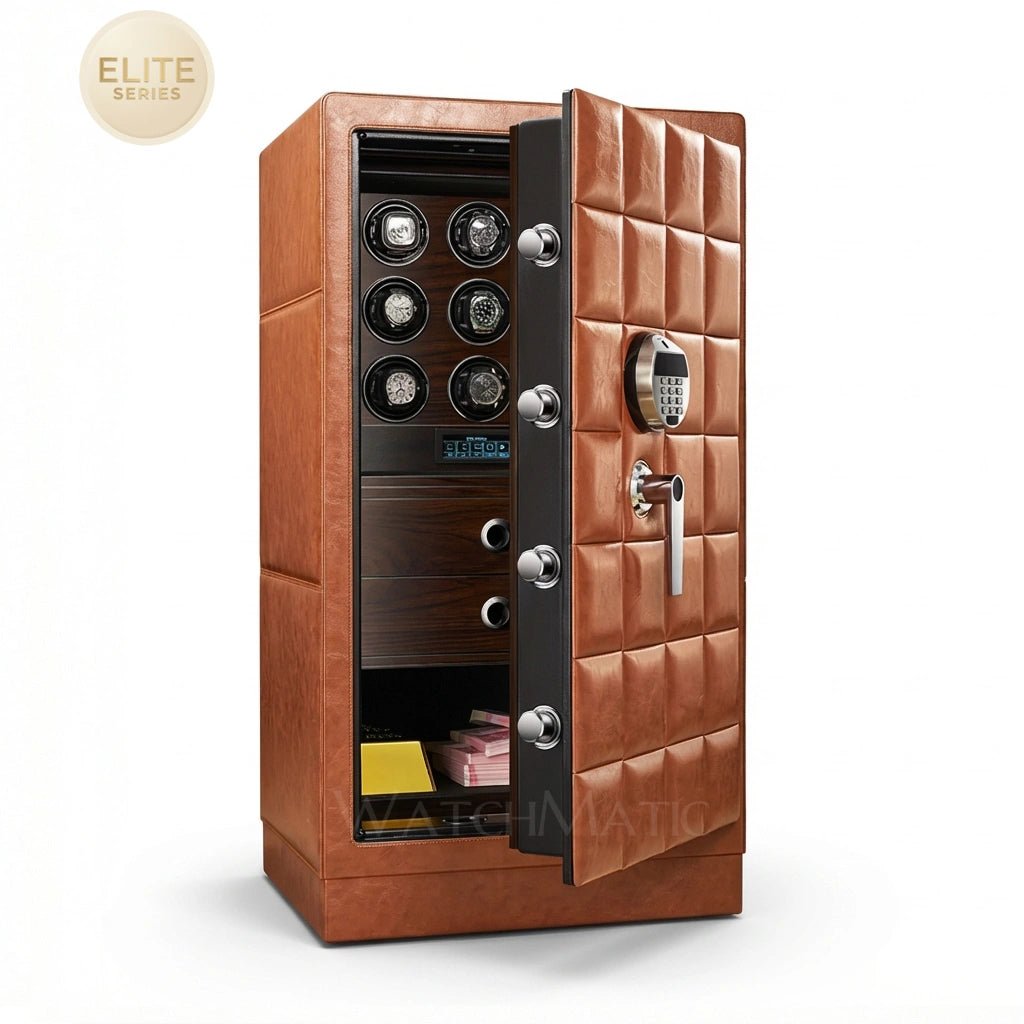
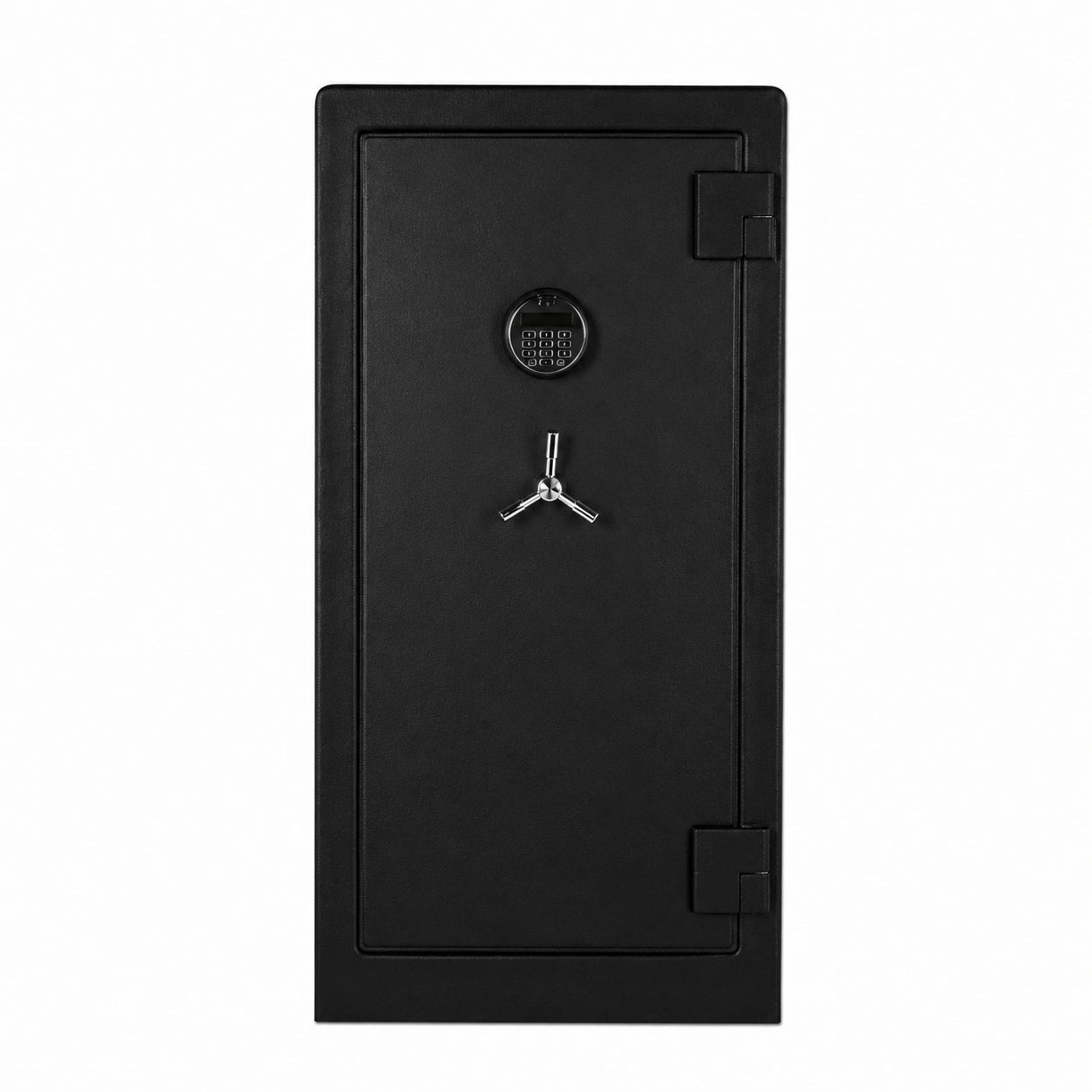
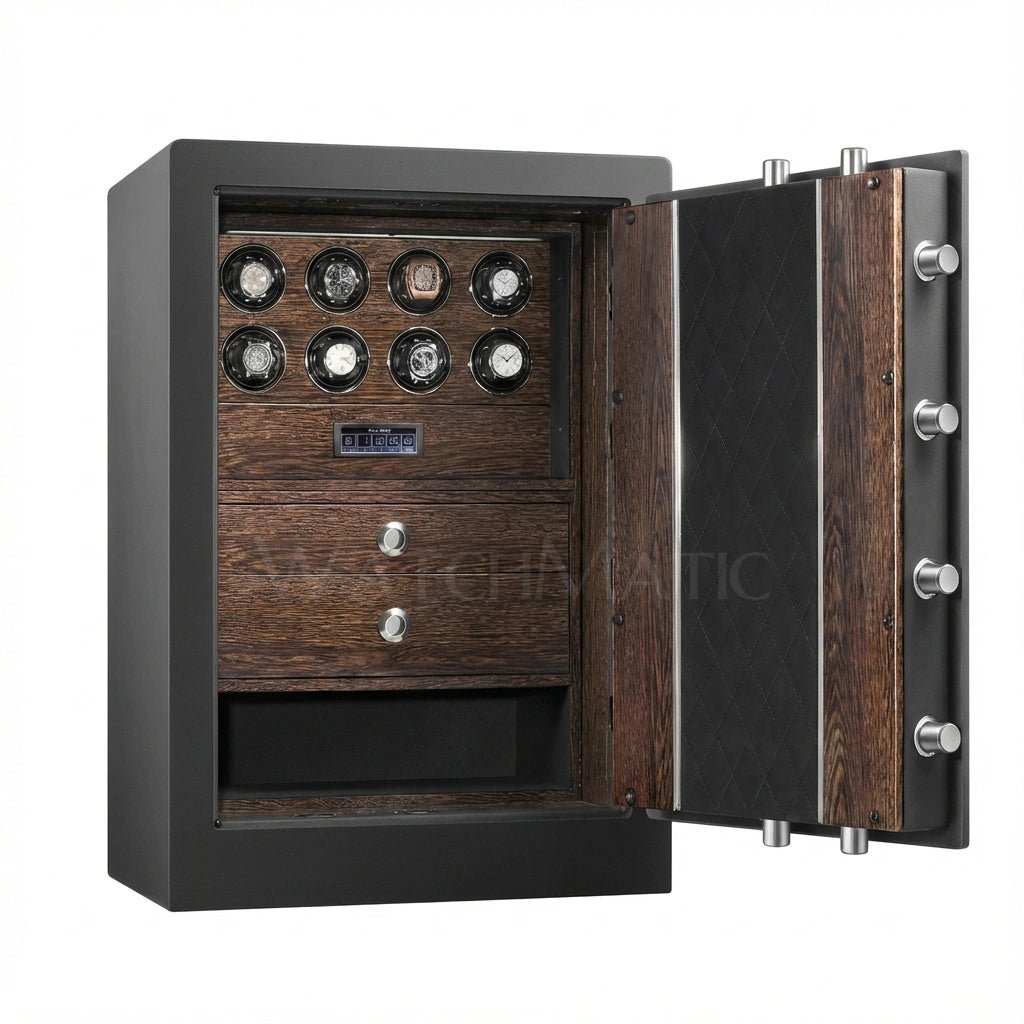
A well-designed luxury watch safe cabinet can combine reinforced construction, controlled access, watch storage, accessory drawers, and premium interior finishes within a single enclosure.
Consider Physical Security Before Appearance
When evaluating a safe, look beyond the exterior design and consider:
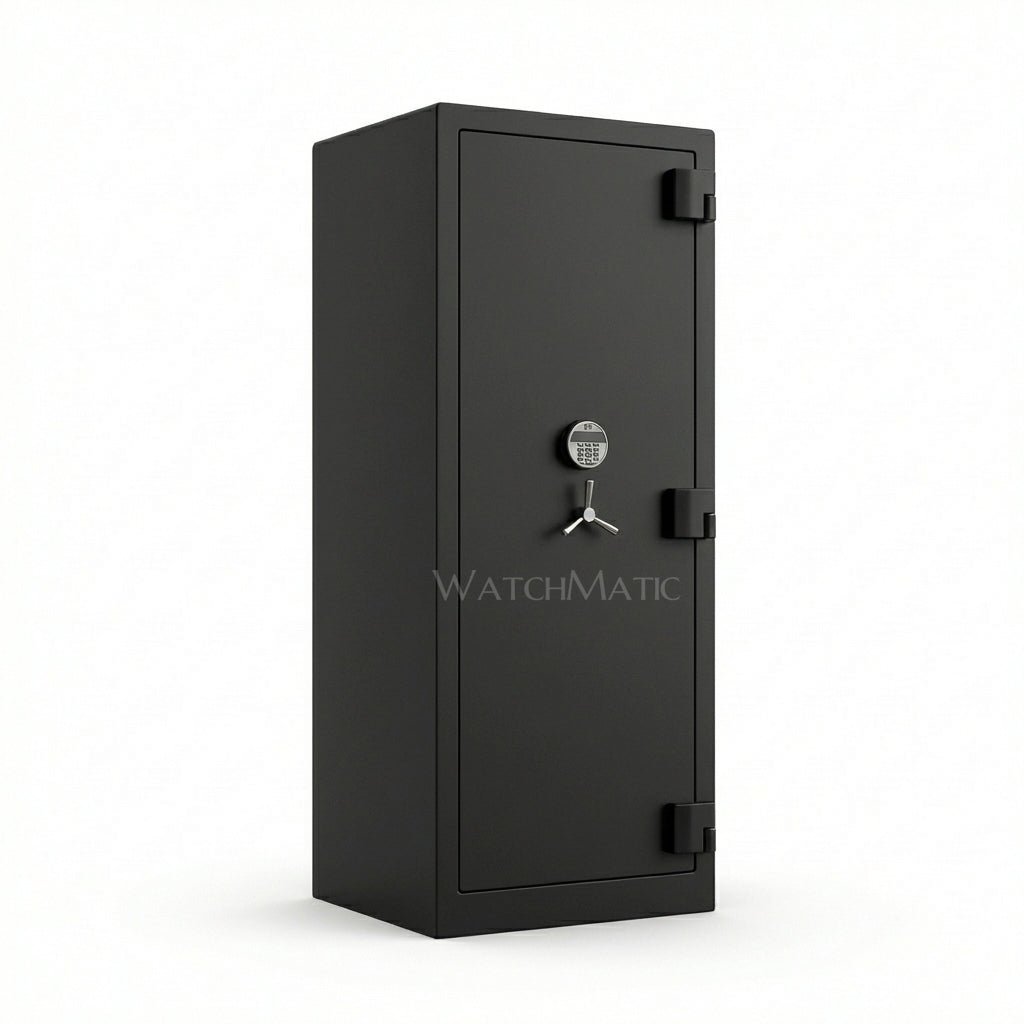
- Steel construction and the overall safe body design.
- Locking system and emergency access arrangements.
- Appropriate anchoring provisions.
- Documented burglary-resistance classifications, where required.
- Tested fire-resistance performance, where available.
- Quality of hinges, door construction, and interior fittings.
- Maintenance access and long-term service support.
For demanding applications, buyers may investigate independently tested burglary classifications such as EN 1143-1 or UL TL-rated safe standards. The precise certification, grade, applicable model, and supporting documentation matter; descriptive terms such as "vault-grade" should not be treated as equivalent to independent certification.
Our comprehensive Watch Safe Guide provides a broader explanation of security construction, protection features, and buying considerations.
Understand the Limits of Room Security
A reinforced room door, access control system, and surveillance equipment can contribute to a layered security strategy. However, they do not replace a properly specified security enclosure for the watches themselves.
The room and the safe should perform different but complementary roles. The room manages access and creates an organized environment; the safe provides the primary physical barrier around the collection.
4. Design Security in Layers
Effective watch vault design considers the entire journey from the residential entrance to the individual watch.
Rather than concentrating on one impressive feature, think about how several protective measures work together.
Controlled Room Access
Consider a lockable entry door, appropriate access permissions, and integration with the home's existing security system. In larger residences, it may be useful to restrict access to a smaller group of authorized individuals.
Safe-Level Access
Depending on the safe configuration, access options may include biometric fingerprint recognition, digital passcodes, mechanical keys, or specialist electronic locking systems.
Choose a system appropriate to the household's access requirements, and establish a secure procedure for emergency access and credential management.
Monitoring and Discretion
Intrusion detection, professionally designed alarm integration, and carefully planned surveillance can provide additional oversight.
Discretion also matters. Avoid unnecessarily exposing the collection to public-facing windows, visitor areas, or social media content that reveals the storage location.
For a more detailed approach, read How to Keep Your Luxury Watch Collection Safe at Home.
5. Integrate Watch Winders Into the Vault Design
For collectors who regularly rotate between several automatic watches, integrated watch winders can be one of the most useful features of a private watch room.
A programmable watch winder turns an automatic watch according to a selected operating program, helping maintain its power reserve when the watch is not being worn.
The winding function is primarily a matter of convenience. Automatic watches do not universally need to remain running during storage, and leaving a watch stationary can be entirely appropriate.
Independent Winding Control
In a collection containing watches from Rolex, Patek Philippe, Audemars Piguet, Omega, Vacheron Constantin, and other manufacturers, winding requirements may differ by movement.
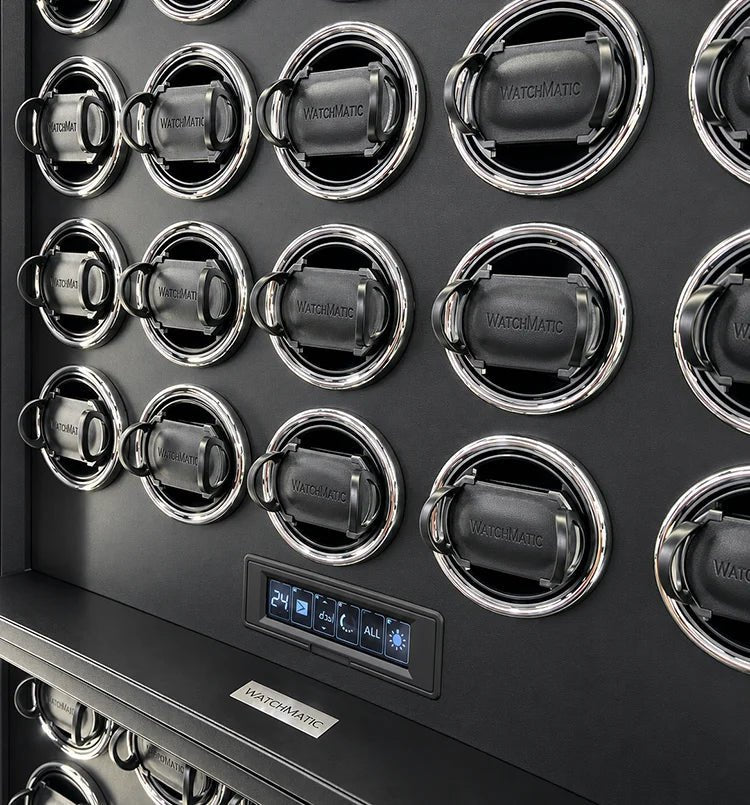
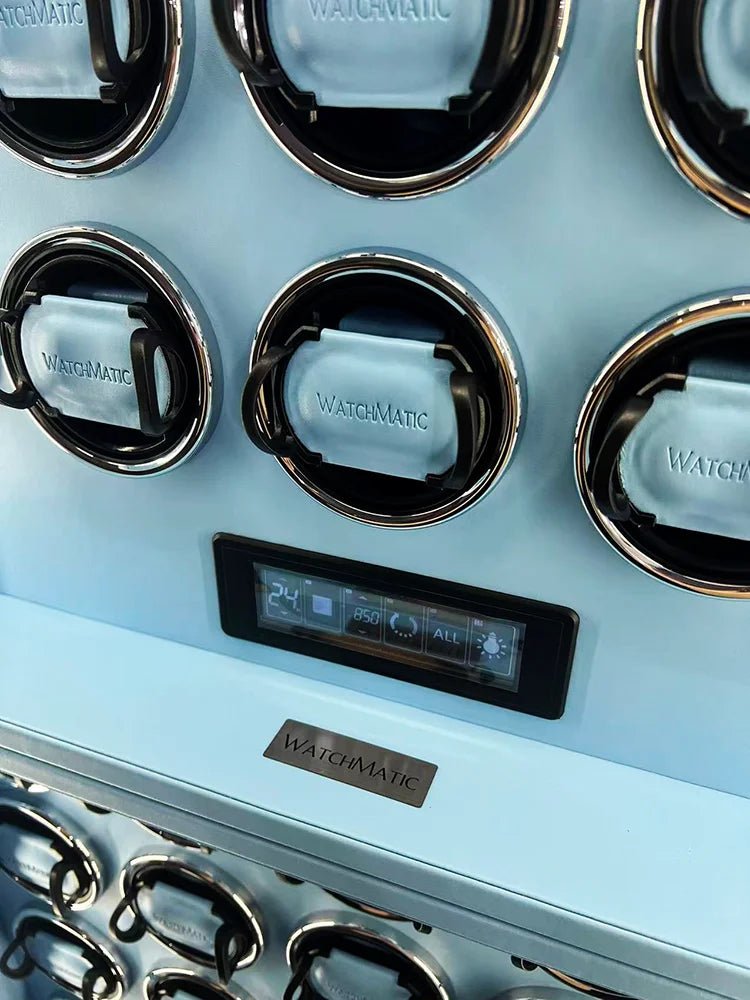
A suitable winding system should allow individual settings where necessary, including:
- Turns Per Day (TPD).
- Clockwise rotation (CW).
- Counterclockwise rotation (CCW).
- Bidirectional winding.
- Operating and rest periods.
Settings should be selected according to the specific movement rather than applying the same program indiscriminately to every watch.
Integrated Watch Winder Safes
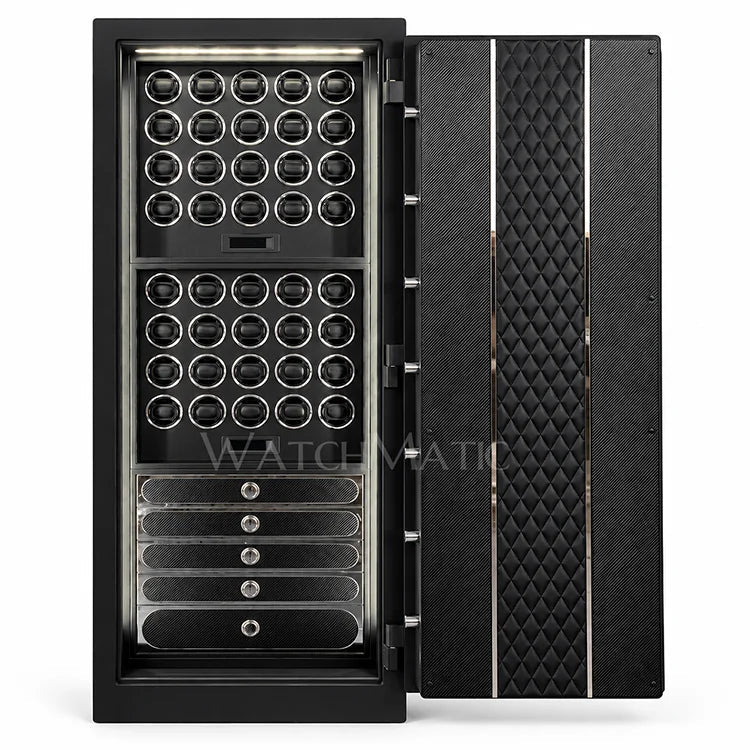
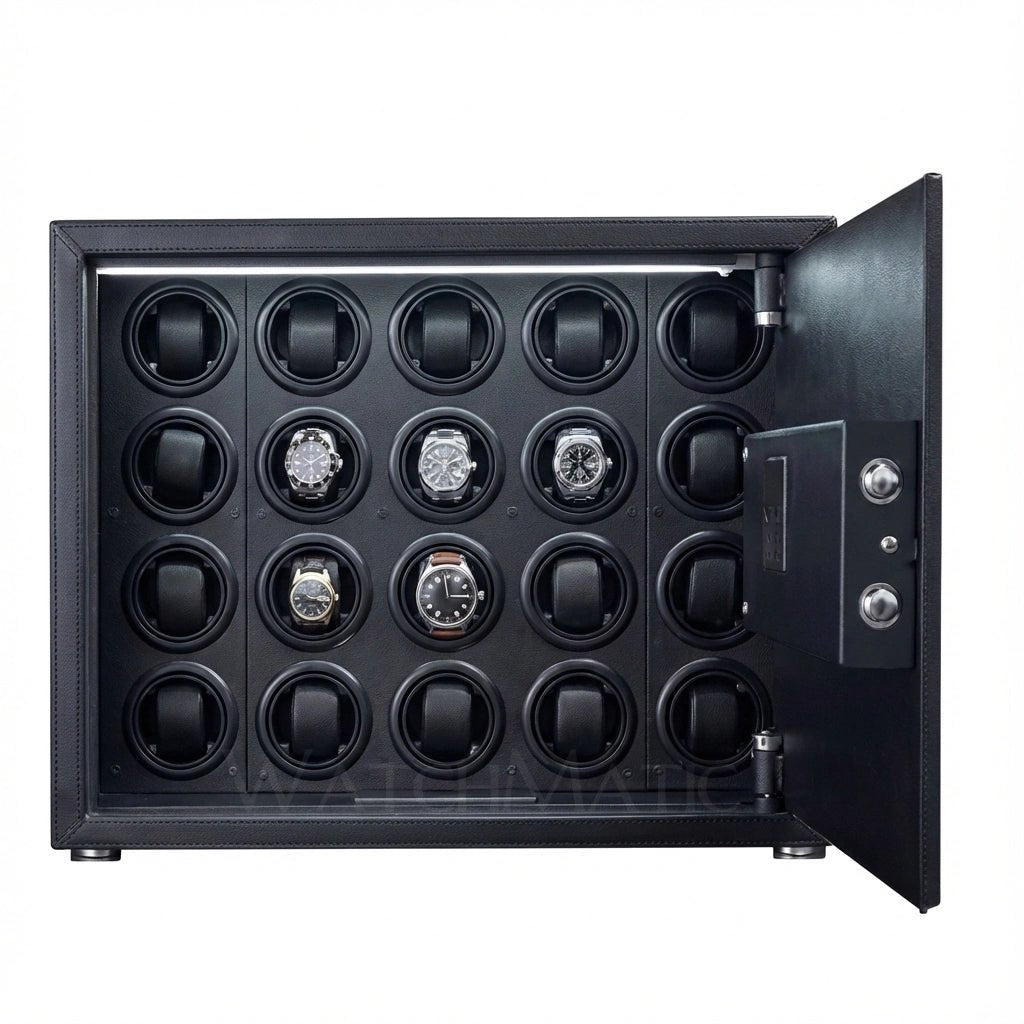
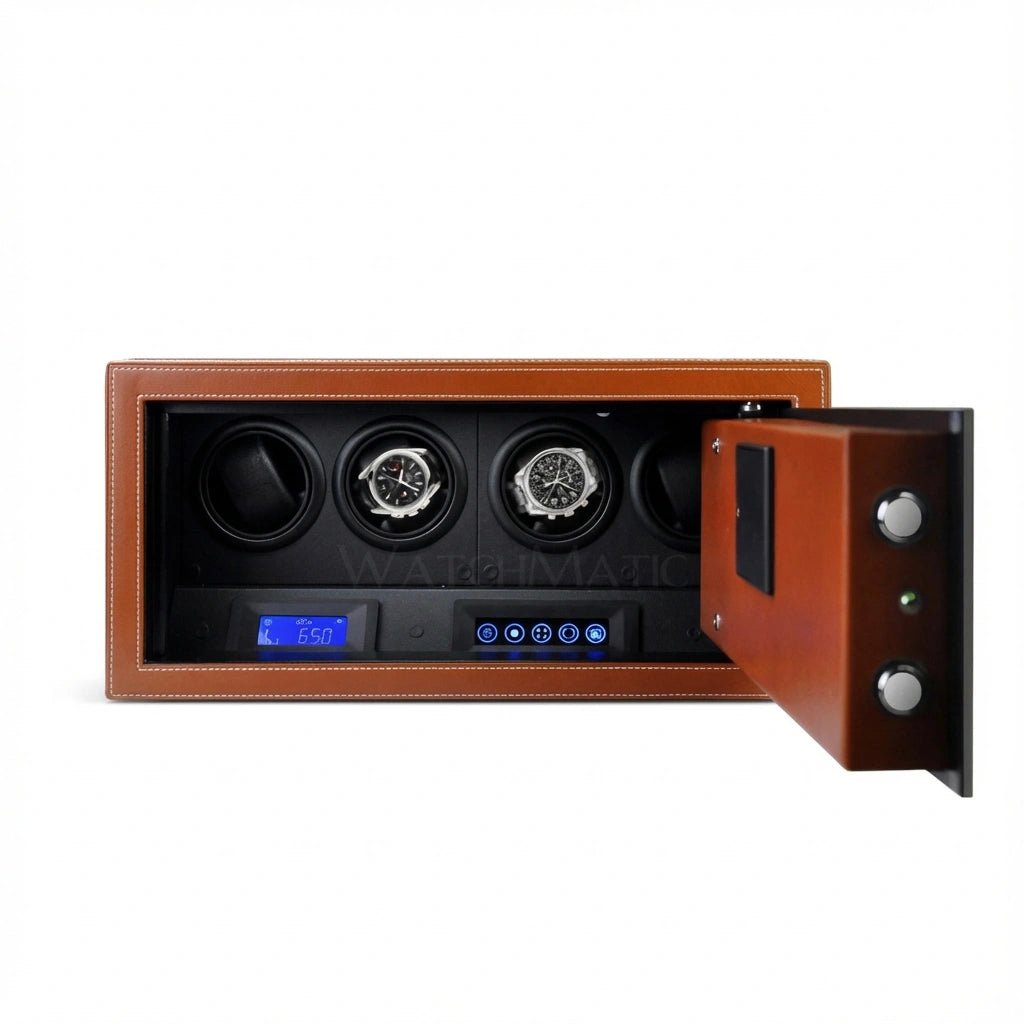
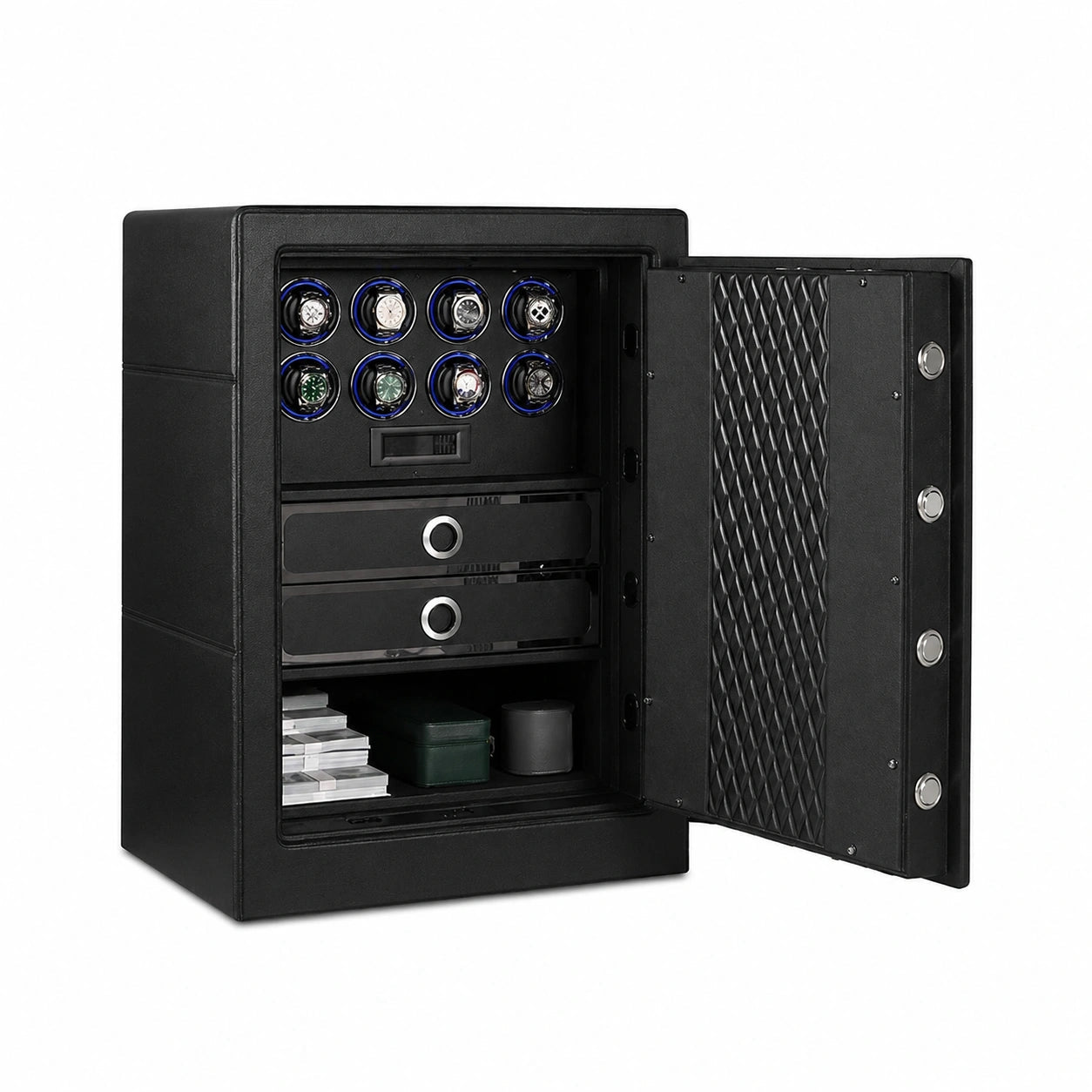
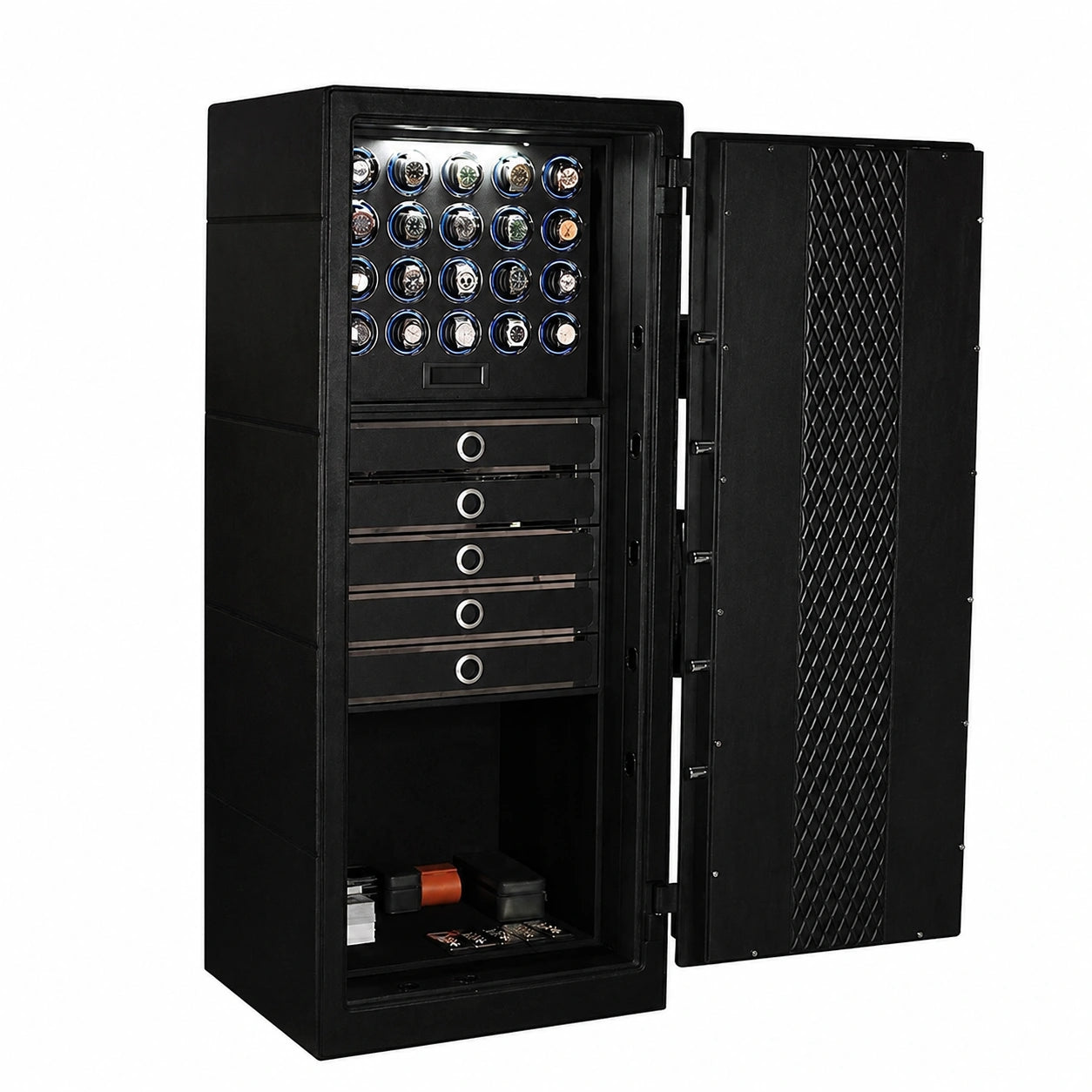
A watch winder safe combines secure watch storage with built-in winding positions, eliminating the need to arrange multiple standalone devices throughout the room.
Depending on the model and configuration, an integrated system may also incorporate soft watch cushions, internal lighting, touchscreen controls, and dedicated accessory drawers.
Standalone Winders for Secondary Storage
Collectors who prefer a separate viewing or preparation area can also use programmable watch winders outside the main safe for selected everyday watches.
These should be viewed as convenient storage devices rather than substitutes for the physical protection of a security-rated safe.
6. Control Temperature, Humidity, and Light Exposure
A private watch vault room should provide a stable indoor environment suitable for fine mechanical watches, leather straps, and other collection materials.
Environmental planning is particularly relevant when watches remain stored for extended periods.
Temperature Stability
Avoid locations subject to excessive heat, rapid temperature changes, or direct sunlight. Stable indoor conditions are generally preferable to spaces such as unconditioned garages, hot attics, or damp basements.
Where appropriate, the home's HVAC system can be used to maintain consistent conditions throughout the watch room.
Humidity Management
Excess moisture can contribute to oxidation, mold growth, and deterioration of leather or storage materials. Extremely dry conditions can also be undesirable for certain organic materials.
Consider using a reliable hygrometer to monitor the room and address persistent moisture problems. Depending on the collection and location, a bespoke safe may also accommodate a dedicated humidity-control system.
The objective is a stable, suitable environment, not an arbitrary humidity setting applied to every collection.
Explore our article on how humidity affects luxury watches for additional guidance.
Lighting and UV Exposure
Direct sunlight should be limited around watch displays, leather straps, and sensitive interior finishes.
Use appropriately specified LED lighting with controlled brightness and low heat output. Interior lighting should make the collection easy to inspect without unnecessarily exposing watches to prolonged light or heat.
Fire Protection
Fire protection should be evaluated separately from burglary resistance.
A safe marketed as fire-resistant may have a particular testing standard, duration, and internal temperature limit. Those characteristics should be reviewed against the collection's requirements.
Remember that fire testing designed around paper records does not automatically guarantee protection against every form of heat, smoke, moisture, or water damage affecting a mechanical watch.
Further considerations are covered in How to Protect Watches from Theft, Fire, and Humidity.
7. Create a Luxury Interior Without Compromising Security
A private watch room should feel coherent with the surrounding architecture. The materials and visual language might be minimalist and contemporary, warm and residential, or inspired by the detailing of traditional private clubs.
However, decorative decisions should never interfere with the practical operation of the safe or the protection of the collection.
Choose a Consistent Material Palette
Consider combinations such as:
- Contemporary minimalist: charcoal cabinetry, matte metal finishes, dark leather, and restrained lighting.
- Classic luxury: walnut or high-gloss wood accents, warm metallic details, and soft neutral upholstery.
- Modern collector's gallery: architectural wall panels, integrated illuminated shelving, and a prominent central watch safe.
- Private club aesthetic: dark timber, tailored leather seating, warm ambient lighting, and discreet storage.
For a steel security safe, exterior finishes and wood treatments must be compatible with the underlying construction. Decorative wood veneers may be better suited to interior panels, cabinetry, or surrounding architectural elements than to the exterior body of a heavy steel safe.
Use Lighting to Create Depth
A considered lighting design may include three layers:
- Ambient lighting: comfortable illumination throughout the room.
- Task lighting: focused light for examining watches, changing straps, or reading documents.
- Accent lighting: controlled illumination around the safe, cabinetry, or selected display areas.
The visual objective is to highlight the craftsmanship of the watches without turning the room into an overly bright retail showroom.
Protect the Watches From Contact Damage
Drawer interiors, watch cushions, and storage trays should be selected with the same care as the visible furniture.
Soft-lined compartments and suitable dividers help reduce accidental contact between polished cases, bracelets, clasps, and other metal accessories.
8. Organize the Room Into Functional Zones
A practical layout makes it possible to move naturally between selecting, examining, wearing, and returning a watch.
For many residential projects, three functional zones provide a useful starting point.
Zone A: Primary Secure Storage
This is the location of the principal watch safe or collection of security enclosures.
It should accommodate the highest-value watches and any integrated winding systems. Provide sufficient space for fully opening the doors, pulling out drawers, and inspecting the contents comfortably.
Zone B: Watch Selection and Preparation
A small table or dedicated counter provides a convenient surface for handling watches.
Depending on the collector's habits, this area may include a soft handling mat, strap-changing tools, a magnifier, and space for temporary watch placement.
Keep tools and loose metal accessories away from unprotected watch surfaces.
Zone C: Accessories and Collection Records
Plan separate storage for:
- Spare leather and rubber straps.
- Bracelets, buckles, and deployant clasps.
- Watch boxes and presentation packaging.
- Warranty cards, purchase receipts, and service records.
- Cleaning accessories and approved maintenance tools.
- Jewelry and other personal valuables where appropriate.
Individual watch boxes can be useful for organizing stationary pieces, travel selections, or watches awaiting service.
For valuable collections, maintain a secure digital inventory with photographs, serial numbers, valuations, and documentation. Avoid keeping the only copy of essential records in the same location as the watches.
9. Select a Watch Safe That Fits the Architecture
One of the most common planning mistakes is choosing a watch safe based exclusively on its internal watch capacity.
In reality, the external dimensions and mechanical operation of the safe can be equally important.
Allow for Door Clearance
A large safe door requires sufficient clearance to open fully without contacting adjacent cabinetry, furniture, or walls.
Consider the hinge side, door swing, handle projection, and the space required to access the interior drawers.
Account for Weight and Installation
The installation plan should consider the safe's total loaded weight, floor construction, delivery route, and any required anchoring.
For heavy or upper-floor installations, professional handling and structural assessment may be necessary.
Plan Electrical Access
Integrated winding systems and lighting generally require electrical power.
Provide an appropriately located power supply, and ensure that routing and ventilation requirements are addressed without compromising the safe's protective construction.
A qualified electrician should assess permanent electrical work. Any alterations to the safe itself should be approved by its manufacturer or a suitably qualified specialist.
Consider the Titan Vault for Larger Collections
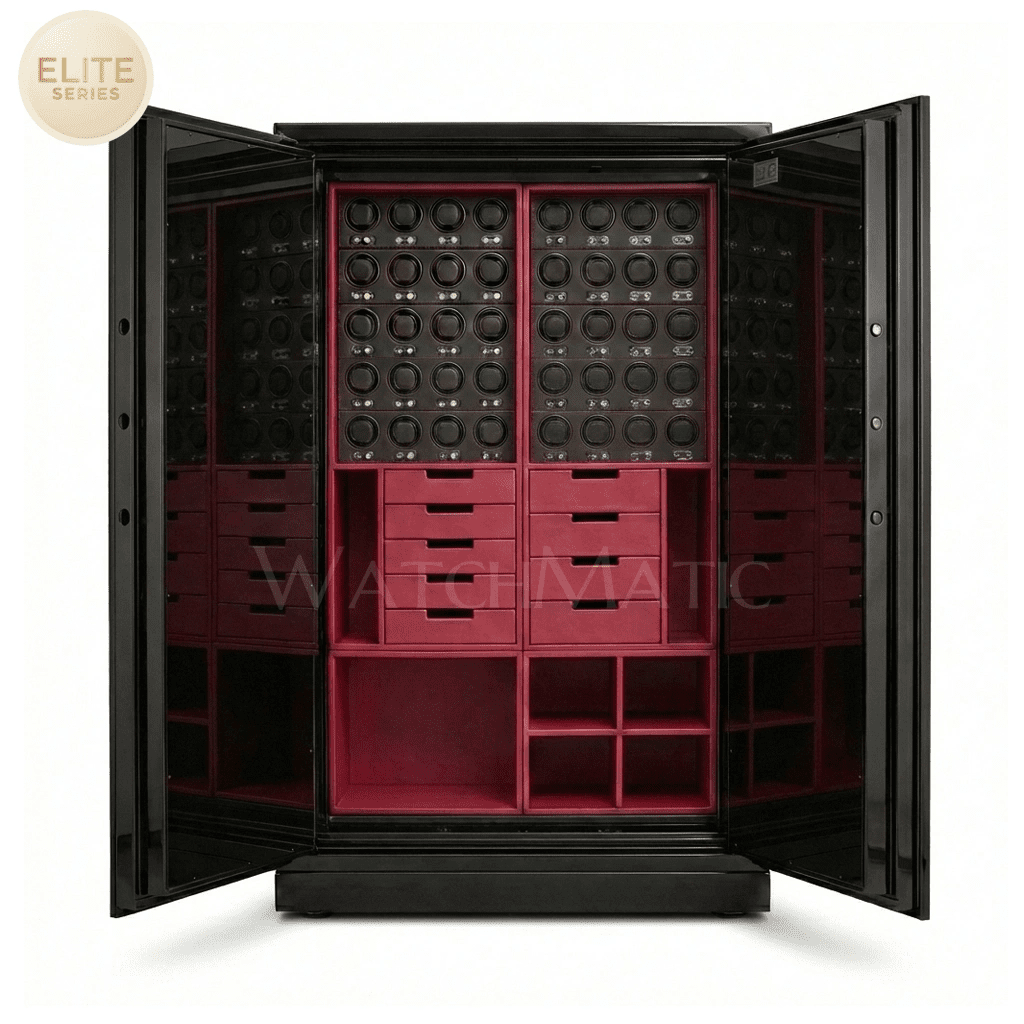
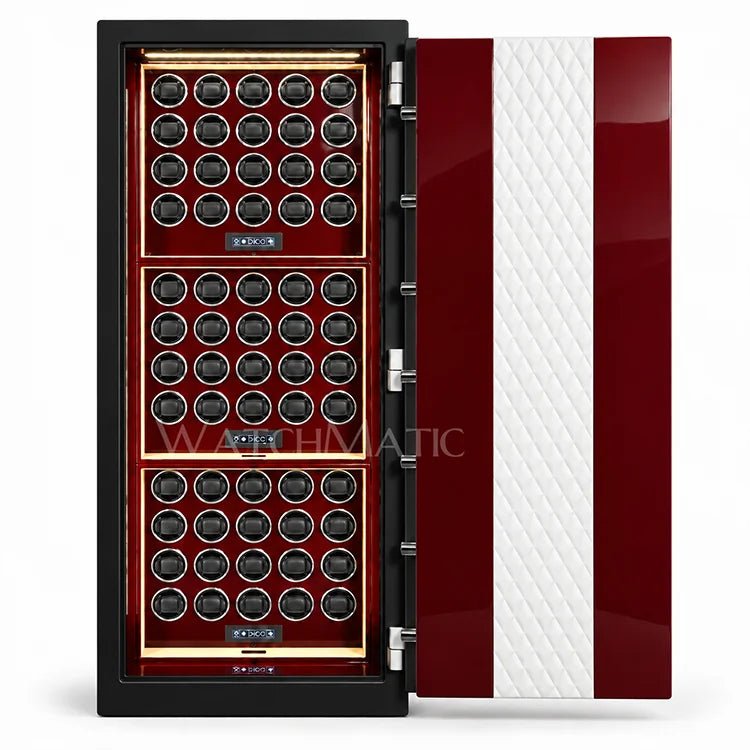
For a room centered on a substantial automatic watch collection, the WatchMatic Titan Vault 40 Watch Winder Safe illustrates an integrated approach.
With forty winding positions, individually configurable winding controls, dedicated interior storage, and a reinforced steel enclosure, it can function as the central storage unit within a private watch room.

Its substantial dimensions and weight also illustrate why structural conditions, delivery access, and installation planning should be evaluated before the surrounding cabinetry is finalized.
10. Explore Three Private Watch Room Design Concepts
The appropriate room configuration depends on the collection, the available residential space, and the degree of security required.
Concept 1: The Discreet Dressing Room Vault
Best suited to: collectors seeking convenient daily access within an existing dressing room or walk-in closet.
A large watch safe is integrated into a carefully planned cabinetry arrangement. The remaining furniture provides organized storage for straps, boxes, and everyday accessories.
The architectural treatment is restrained, allowing the watch storage system to complement the room without dominating it.
Concept 2: The Private Collector's Gallery
Best suited to: collectors who enjoy viewing, studying, and organizing their watches in a dedicated setting.
A prominent safe is combined with comfortable seating, a watch preparation surface, architectural lighting, and selected display cabinetry.
The secure storage remains within the safe, while the surrounding room provides an environment for appreciating the collection.
Concept 3: The High-Capacity Residential Watch Vault
Best suited to: extensive or particularly valuable collections that require substantial secure storage and customized organization.
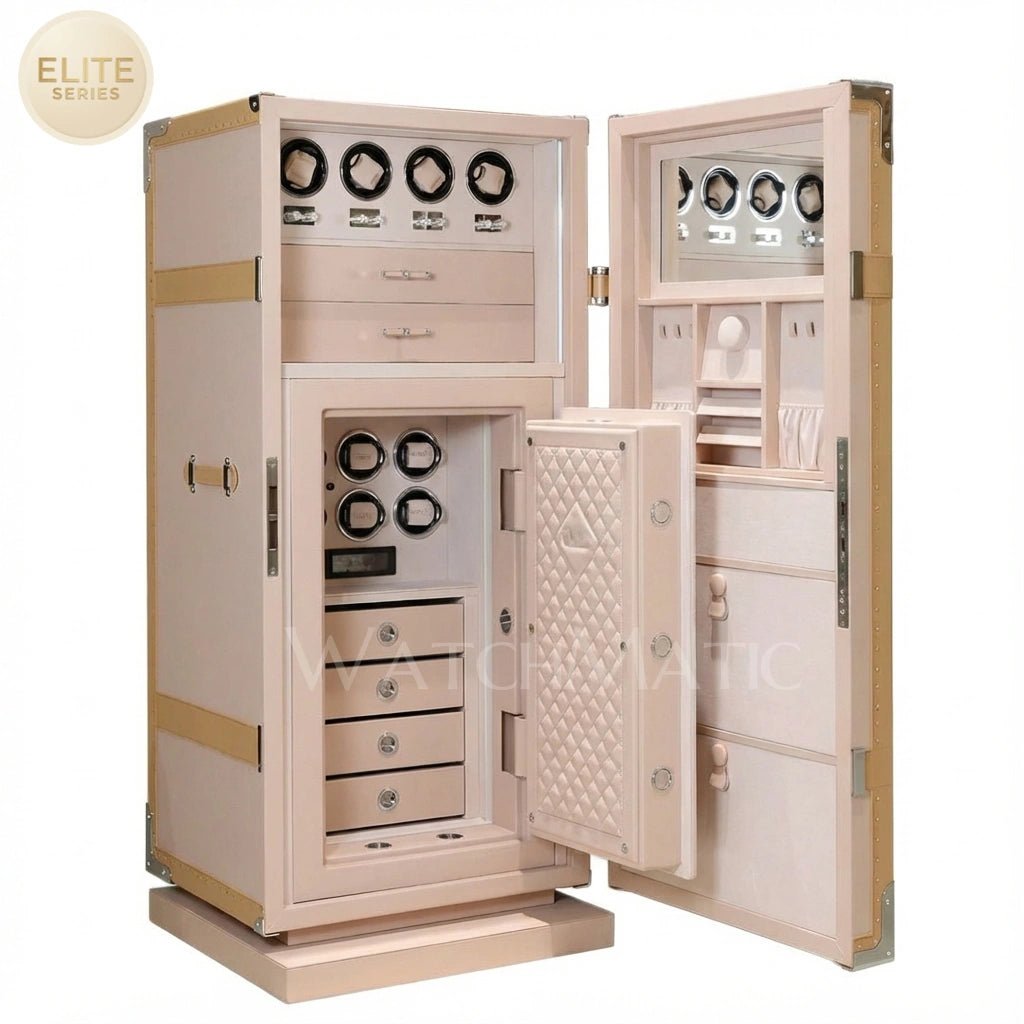
The layout may incorporate multiple high-capacity safes or a bespoke vault cabinet with a large number of integrated winding positions, specialized drawers, and separate compartments for other valuables.
Security requirements, floor loading, access control, and insurance expectations should be established early with the relevant professionals.
11. Consider Bespoke Watch Vault Solutions
Standard watch safes provide a practical starting point, but some collections require dimensions, materials, and interior arrangements that cannot be achieved with an off-the-shelf configuration.
A bespoke solution can be designed around the architecture of the room and the collector's individual requirements.
Customize the Interior
Possible configurations include:
- Custom numbers and arrangements of winding positions.
- Dedicated watch holder drawers.
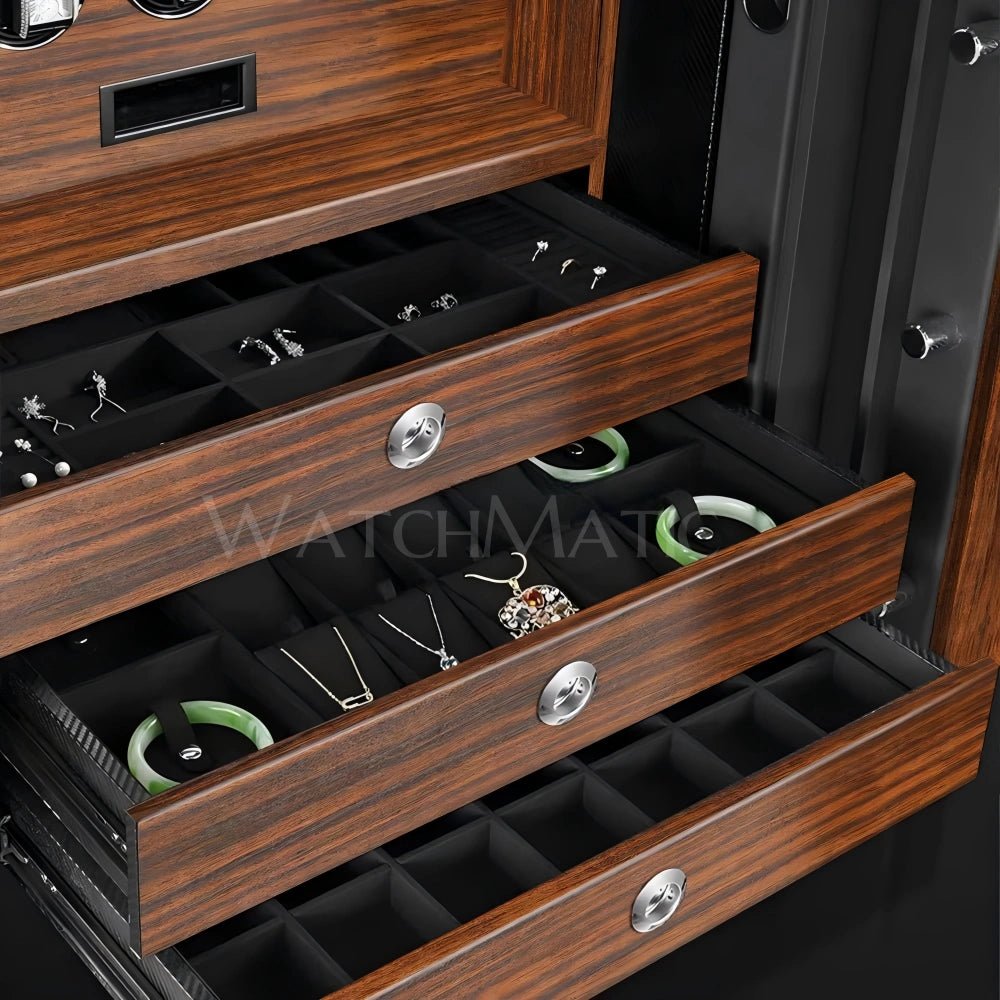
- Jewelry, ring, and necklace compartments.
- Open storage drawers for accessories.
- Custom interior colors and upholstery materials.
- Decorative wood panels and premium interior finishes.
- Integrated lighting and selected environmental-control options.
Customize the Security and Exterior
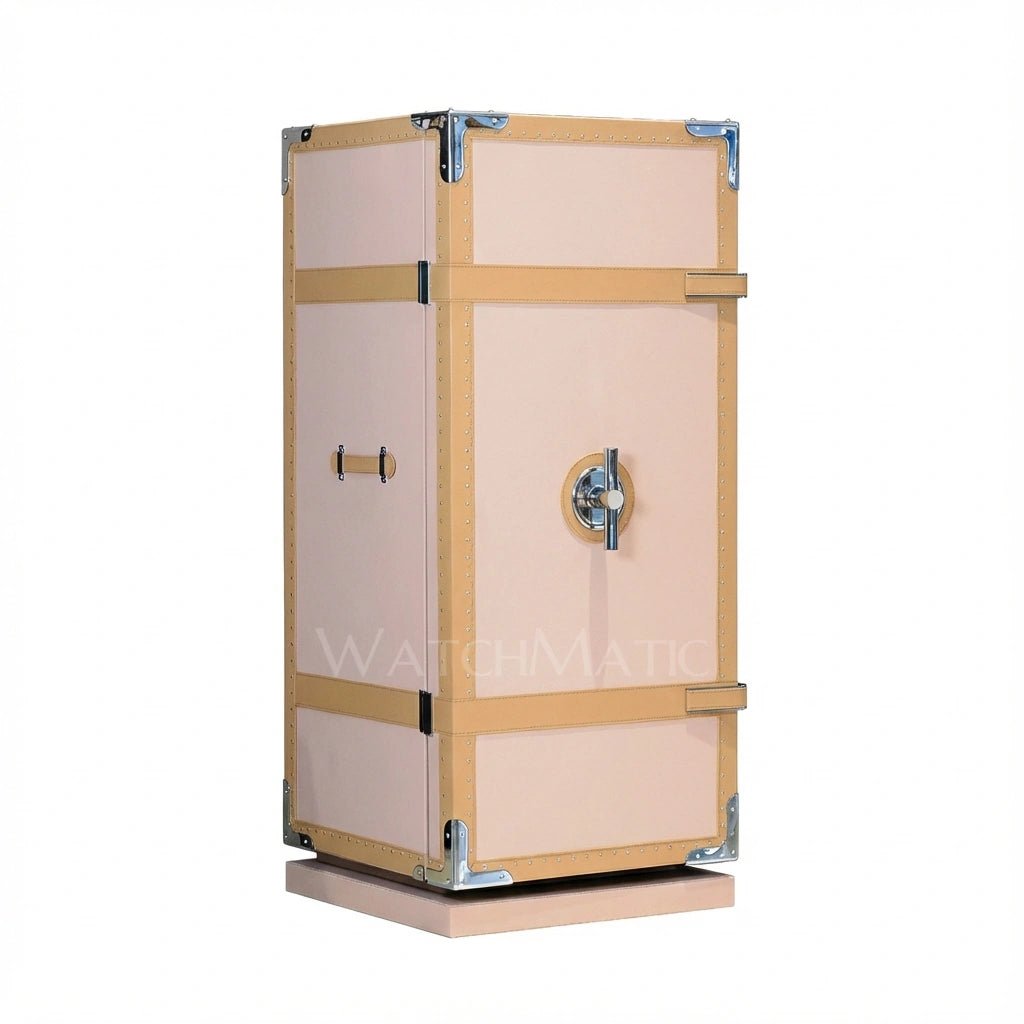
Depending on the engineering and model, available options may include alternative locking systems, exterior colors, leather finishes, hardware details, and enhanced fire or burglary-resistance specifications.
Not every feature can be combined within every enclosure. Security, fire protection, and electrical requirements should be reviewed before approving decorative modifications.
WatchMatic offers bespoke luxury watch safe solutions for private collectors seeking personalized capacity, dimensions, security options, and interior finishes.
12. Plan the Project Before Construction Begins
Integrating a heavy watch safe into a finished room can be significantly more complicated than planning around it from the beginning.
Ideally, the homeowner, interior designer, architect, relevant security professionals, and safe supplier should agree on the principal requirements before cabinetry and finishes are finalized.
Private Watch Vault Room Planning Checklist
| Planning Area | Key Consideration |
|---|---|
| Collection capacity | Current watches, winding requirements, and future acquisitions |
| Room location | Privacy, accessibility, and environmental stability |
| Structural assessment | Safe weight, floor capacity, and installation route |
| Security | Safe construction, verified ratings, access control, and anchoring |
| Interior layout | Door clearance, drawers, display, and preparation surfaces |
| Environment | Temperature, humidity, lighting, and ventilation |
| Power supply | Winder operation, lighting, and electrical safety |
| Long-term management | Insurance, inventory records, servicing, and future expansion |
Before ordering the final safe configuration, confirm the actual delivery and installation conditions. Doorway measurements, lift restrictions, stair dimensions, and the intended installation position should be checked against the manufacturer's technical drawings and logistics requirements.
13. Protect the Collection Beyond the Vault Room
Even a carefully designed watch vault room is only one part of responsible collection management.
Collectors should also review appropriate insurance coverage, professional valuations, service records, and procedures for documenting new acquisitions.
Insurance providers may have particular requirements relating to safes, security ratings, installation, and declared collection values. These conditions should be confirmed before commissioning the project.
Routine maintenance is equally important. Check that the safe's locking system, any electronic controls, integrated winders, and environmental-monitoring equipment continue to operate as intended.
For automatic watches, use winding settings appropriate to their movements, and follow the manufacturers' recommendations regarding servicing and storage.
Frequently Asked Questions About Private Watch Vault Rooms
What is the difference between a watch room and a watch vault room?
A watch room is a dedicated area for storing, displaying, and organizing watches. A private watch vault room typically places greater emphasis on secure storage, controlled access, and physical protection. However, the word "vault" does not itself establish a certified security rating. The actual protection depends on the room construction, installed safes, and security systems.
How much space do you need for a private watch vault room?
There is no universal minimum. A spacious walk-in closet or dressing room may accommodate a single luxury watch safe, while a dedicated room offers greater flexibility for multiple safes, a viewing table, and accessory storage. The critical measurements are the safe's external dimensions, door clearance, servicing access, and safe installation requirements.
Do I need a dedicated room, or is a luxury watch safe enough?
For many collectors, a properly selected luxury watch safe inside a bedroom, dressing room, or home office provides an appropriate balance of security and convenience. A dedicated watch vault room becomes more attractive when the collection requires additional organization, specialized storage, or a separate private area for handling and appreciating watches.
Should every automatic watch be kept on a watch winder?
No. Automatic watches do not need to remain continuously running during storage. A programmable watch winder is useful when a collector wants selected watches ready to wear without repeatedly setting the time, date, or other complications. Watches stored for longer periods may be kept stationary according to the movement manufacturer's guidance.
Can a watch vault room protect watches from fire?
A watch room does not automatically provide fire protection. Properly specified fire-resistant safes or engineered fire-rated enclosures may provide defined levels of protection, but the applicable testing standard, duration, and performance limits should be verified. Fire resistance and burglary resistance are separate considerations.
How do you control humidity in a private watch vault room?
Maintain stable indoor conditions, avoid persistent dampness, and monitor humidity with suitable equipment. If necessary, consider room-level environmental control or a compatible humidity-management option within the watch safe. The appropriate arrangement depends on the location, watch collection, and materials being stored.
Can a heavy watch safe be installed on the second floor?
Potentially, but the installation must be assessed individually. Large watch safes can impose substantial loads, and the floor structure, access route, stairs, elevators, and handling requirements must all be considered. A qualified structural professional and experienced safe-installation team should review the project before delivery.
Can I customize a watch safe to match my interior design?
Yes. Depending on the model, bespoke watch safes can offer customized exterior colors, interior upholstery, drawer arrangements, winding capacity, lighting, and decorative finishes. Technical features such as locks, certified protection, and structural construction must remain compatible with the selected design.
What is the most important feature of a private watch vault room?
The most important feature is an appropriate security strategy for the collection's value and risk profile. A well-designed room should combine secure watch storage, controlled access, suitable environmental conditions, and an efficient layout. Decorative finishes and lighting enhance the experience, but they should support rather than replace these essential functions.
Final Thoughts: Creating a Private Space for Your Watch Collection
Designing a private watch vault room at home is an opportunity to create a more considered relationship with your collection.
The most successful projects begin with the watches themselves: their number, value, movement types, storage requirements, and the way they are worn. From there, the architecture, security systems, safe configuration, and interior finishes can be designed around the collector's actual needs.
A modest dressing room with a properly installed luxury watch safe may be the right solution for one household. Another collector may prefer a purpose-designed gallery or a high-capacity bespoke vault cabinet with dozens of independently controlled winding positions.
Whatever the scale, the objective remains the same: to create a secure, organized, and carefully considered environment where a valuable watch collection can be protected and enjoyed for years to come.
At WatchMatic, we specialize in luxury watch safes, integrated winding systems, and bespoke storage solutions for collectors who require a thoughtful combination of security, precision engineering, and personalized design.