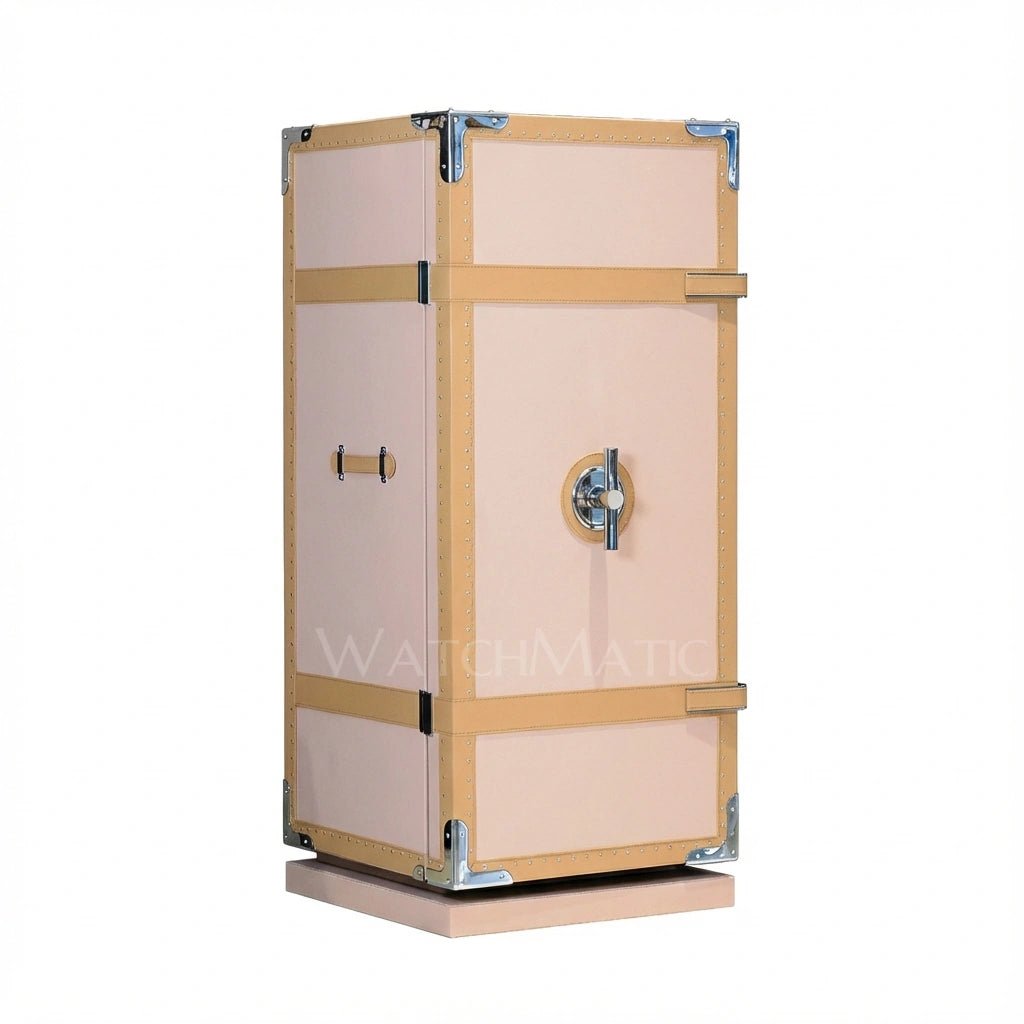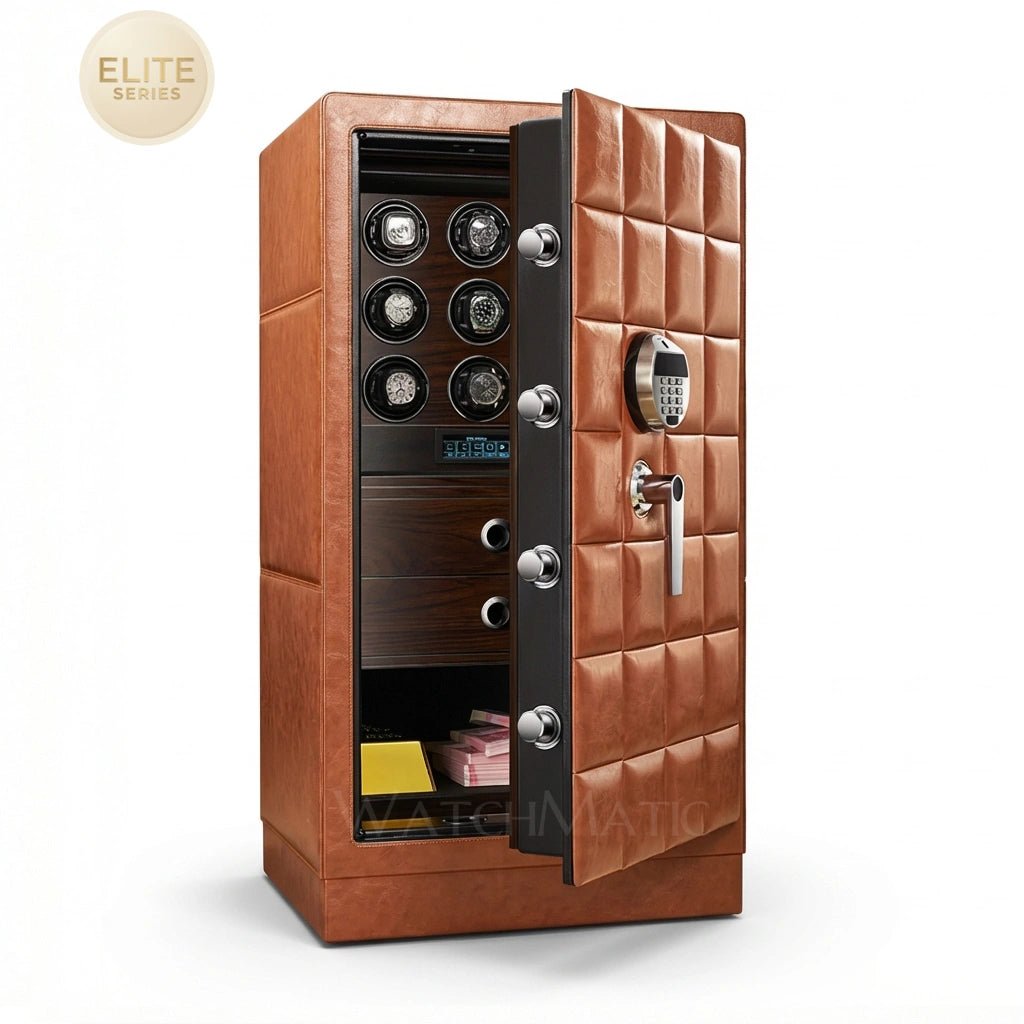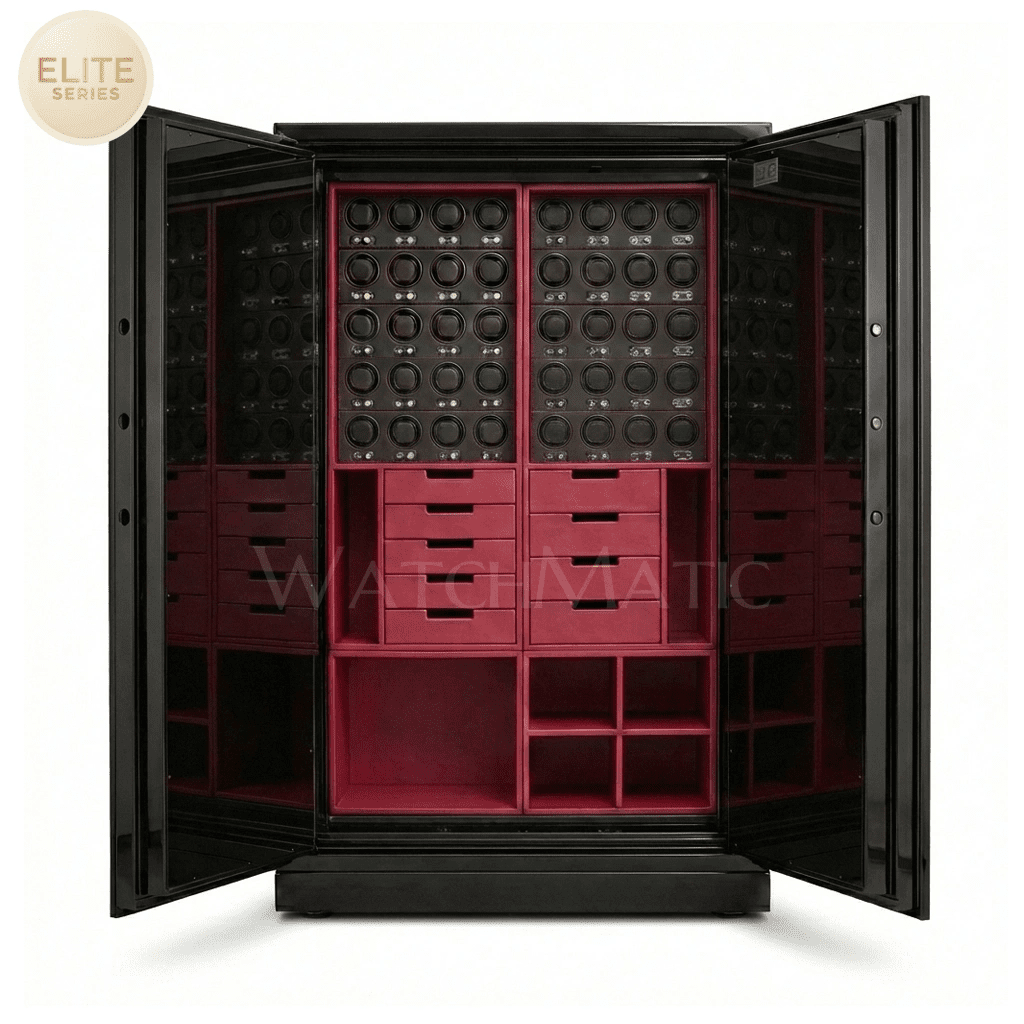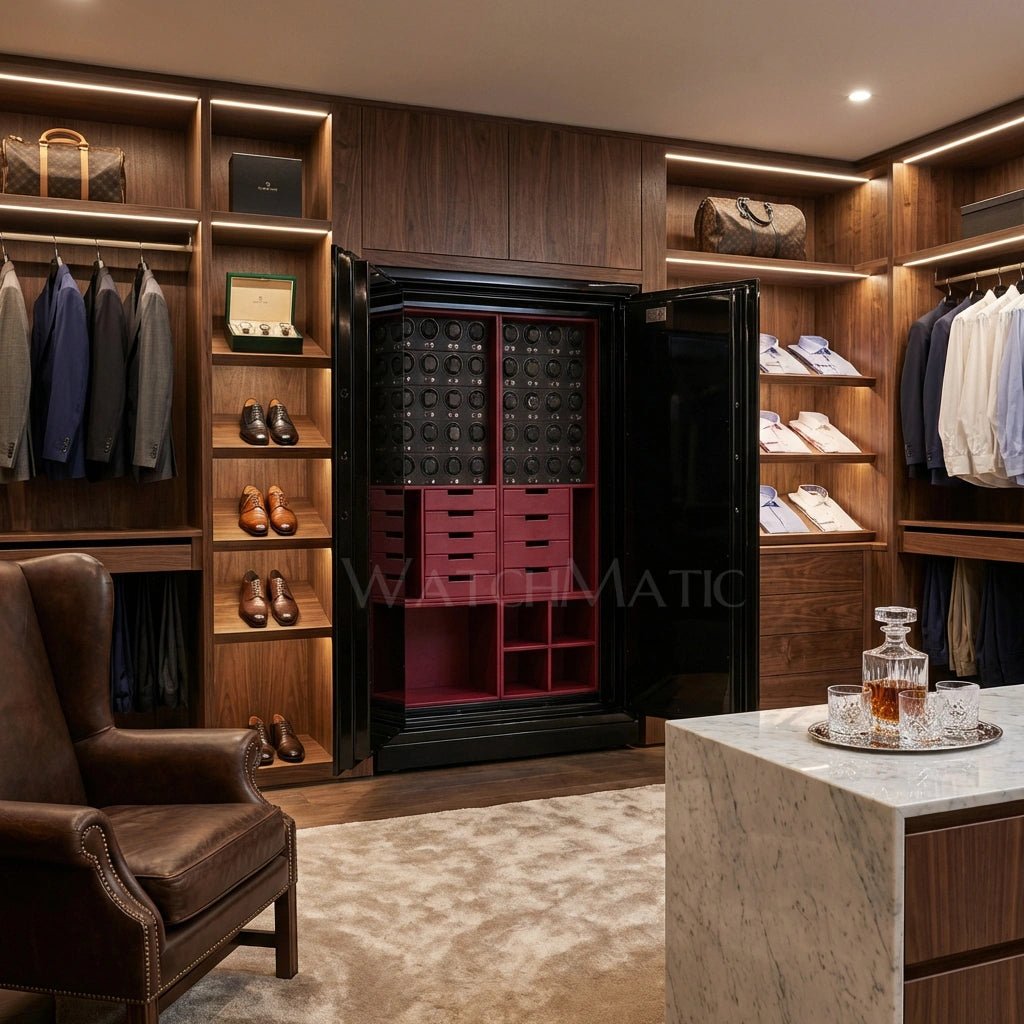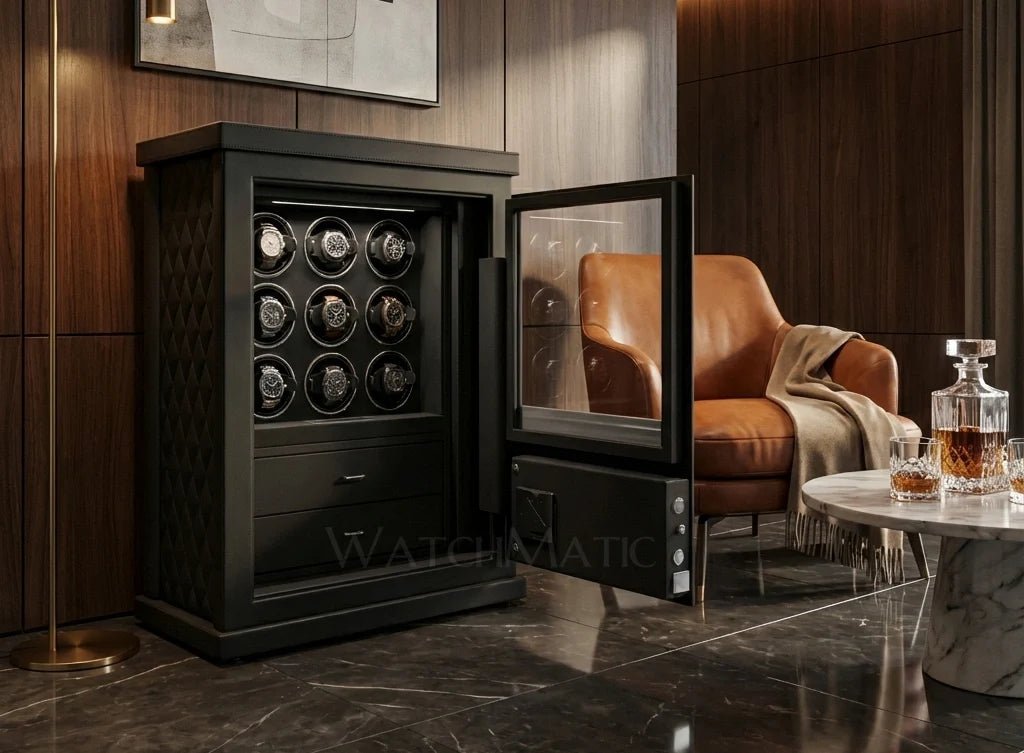
A beautifully designed watch display cabinet can transform a collection into a centerpiece of the home. Glass doors, carefully positioned lighting, premium wood finishes, and individually arranged watch holders create an elegant environment for appreciating fine timepieces.
For collectors who own Rolex, Patek Philippe, Audemars Piguet, Vacheron Constantin, Richard Mille, or other valuable watches, presentation is an important part of the ownership experience.
However, there is a fundamental distinction between displaying a watch collection and protecting it.
A conventional display cabinet may provide organization, visibility, and basic protection from dust or accidental handling. But those features do not necessarily translate into meaningful resistance against theft, fire, unauthorized access, or other risks associated with storing valuable assets at home.
As a collection becomes more financially significant, the limitations of traditional display furniture become increasingly important.
This guide explains why display cabinets are not enough for high-value watches, how they compare with purpose-built watch safes, and how collectors can preserve the beauty of their collections without compromising security.
Are Watch Display Cabinets Secure Enough for Expensive Watches?
For most high-value collections, an ordinary watch display cabinet should not be considered the primary security enclosure.
Display cabinets are primarily designed for presentation and organization. Even models with glass doors, electronic locks, and integrated watch winders may not provide independently tested burglary resistance or fire protection.
A purpose-built watch safe, by comparison, can offer stronger physical barriers, more robust locking mechanisms, controlled access, and model-specific security or fire-resistance options.
The appropriate solution depends on the collection's value, the home's risk profile, insurance requirements, and the level of protection required.
The objective is not to eliminate display cabinets altogether. It is to understand their limitations and use them appropriately.
1. Display Cabinets Are Designed for Presentation, Not Necessarily Security
The appeal of a luxury watch display cabinet is easy to understand.
A well-designed cabinet allows collectors to appreciate different dial colors, case designs, bracelet finishes, and mechanical details without repeatedly removing watches from their storage compartments.
It also creates an organized space for selecting a watch and can complement the overall interior design of a bedroom, dressing room, or private office.
What a Good Display Cabinet Does Well
Depending on its construction, a premium display cabinet may offer:
- Attractive presentation of individual watches.
- Organized compartments and soft watch cushions.
- Protection against everyday dust and accidental contact.
- Convenient access to frequently worn watches.
- Integrated LED lighting and premium furniture finishes.
- Optional winding modules for automatic watches.
- Basic access restriction through cabinet locks.
These are useful features, particularly for collectors who enjoy rotating between several watches.
However, the presence of a lock or substantial-looking cabinet construction should not be interpreted as evidence of independently verified security performance.
Furniture Locks Are Not the Same as Safe Locks
Many traditional display cabinets use furniture-grade locks or electronic latches designed primarily to prevent casual opening.
A purpose-built security safe may incorporate specialized locking systems, reinforced doors, protective barriers, and independently tested components.
The difference lies not simply in how the cabinet opens, but in the engineering of the complete enclosure.
For a broader introduction to these distinctions, explore the WatchMatic Watch Safe Guide.
2. Glass Display Doors Create a Different Security Risk
Glass is one of the most distinctive features of luxury watch display furniture.
It allows collectors to view their watches and creates the refined presentation associated with jewelry boutiques and private collector galleries.
However, conventional glass cabinet doors are not designed to perform the same function as a certified burglary-resistant safe door.
Tempered Glass Is Not Automatically Security-Rated Glass
Tempered glass is widely used in furniture because of its mechanical and safety characteristics. However, it should not be confused with glazing specifically engineered and tested for resistance to forced entry.
Similarly, laminated glass and other strengthened glazing systems vary significantly in construction and performance.
A manufacturer describing a cabinet as having tempered or reinforced glass does not establish a recognized burglary-resistance rating for the complete product.
The Cabinet Frame Matters Too
Even when a display cabinet uses stronger glazing, the overall assembly may still depend on conventional furniture frames, hinges, locks, and mounting hardware.
For security to be meaningful, the door, frame, enclosure, locking system, and installation must work together.
Evaluating the glass alone is insufficient.
Can a Security Safe Have a Glass Door?
Yes. Certain specialist security products incorporate engineered security glazing or transparent display sections.
However, these products should not be confused with ordinary furniture cabinets. Buyers should verify whether the complete safe, including its glazing and door assembly, has been tested to the applicable security standard.
Visibility and security are not necessarily incompatible, but achieving both requires the appropriate engineering.
3. Visible Collections Can Increase Unnecessary Exposure
One of the advantages of a watch display cabinet is that the collection remains visible.
From a security perspective, however, constant visibility is not always desirable.
A valuable collection displayed in an accessible room may be noticed by visitors, contractors, domestic staff, or other individuals who enter the residence.
That does not mean a collector should avoid sharing or enjoying watches. It means the storage strategy should distinguish between private appreciation and unrestricted visibility.
Discretion Is Part of Collection Security
For particularly valuable collections, consider whether the display is visible from:
- Main entrances or reception areas.
- Ground-floor windows.
- Rooms regularly accessed by visitors.
- Areas used by service personnel.
- Photographs or videos published online.
Controlling visibility can reduce unnecessary exposure of the collection and its storage location.
Controlled Access Becomes More Important as Value Increases
Collectors with substantial portfolios may prefer a dedicated dressing room, private office, or watch room where access can be limited.
Within that space, a luxury watch safe can provide an additional physical barrier around the collection.
For more practical guidance, see How to Keep Your Luxury Watch Collection Safe at Home.
4. Display Cabinets Rarely Provide Verified Fire Protection
Fire is another important distinction between conventional display furniture and purpose-built security products.
Watch collectors sometimes assume that because a watch contains substantial metal components, it can tolerate high temperatures without serious damage.
In reality, a luxury mechanical watch contains numerous materials and components that can be affected by heat.
Depending on the level and duration of exposure, potential damage may involve:
- Movement lubricants.
- Gaskets and sealing materials.
- Leather and rubber straps.
- Dial materials and decorative finishes.
- Internal storage cushions and upholstery.
- Electronic components in connected or powered accessories.
Furniture Construction Does Not Establish Fire Resistance
A wooden cabinet, glass enclosure, or metal-framed display case should not be assumed to provide meaningful fire protection simply because it appears substantial.
Fire-resistant security equipment is evaluated according to defined testing conditions and performance requirements.
For example, UL 72 addresses fire-resistance testing for record protection equipment, while European standards such as EN 15659 cover certain classes of fire-resistant storage units.
These classifications have specific scopes and limitations. A rating intended to protect paper records does not automatically guarantee the preservation of every component in a mechanical watch.
Not Every Watch Safe Is Fire-Rated
It is equally important not to assume that every product marketed as a watch safe has certified fire protection.
Fire-resistance specifications may vary by model, and some manufacturers offer enhanced protection only as an optional configuration.
Collectors should request documentation identifying the applicable standard, tested duration, and exact product configuration.
Our guide on protecting watches from theft, fire, and humidity explains these risks in greater detail.
5. Environmental Protection Requires More Than an Enclosed Cabinet
Glass display cabinets can help reduce direct dust exposure, but they do not necessarily provide a stable environment for long-term watch storage.
Temperature, humidity, lighting, and the surrounding room conditions remain important.
Direct Sunlight and UV Exposure
Display cabinets are frequently positioned where their contents can be admired.
However, a position close to a window may expose watches and storage materials to prolonged sunlight.
Direct light can create localized heating, while long-term ultraviolet exposure may contribute to deterioration or discoloration of certain materials.
UV-filtering glass can reduce specific forms of light exposure, but it does not replace thoughtful cabinet placement and controlled lighting.
Humidity and Moisture
Excessive humidity can contribute to corrosion risks, mold, and deterioration of leather straps or interior materials.
A conventional cabinet does not automatically regulate humidity simply because it has enclosed doors.
Likewise, a sealed safe may retain moisture introduced through its contents or surrounding conditions. Environmental monitoring and suitable moisture-management measures remain important.
For long-term storage, stable indoor conditions and appropriate humidity monitoring are preferable to relying on the cabinet alone.
Read How Humidity Affects Luxury Watches for a more detailed explanation.
Dust and Everyday Handling
Even well-maintained cabinets can accumulate dust when frequently opened.
Watch cushions, soft drawer linings, and individual compartments help reduce contact with hard surfaces and other watches.
These features are useful in both display furniture and watch safes, but they do not eliminate the need for careful handling and maintenance.
6. A Watch Winder Cabinet Is Not Necessarily a Watch Safe
One of the most common sources of confusion is the difference between a watch winder cabinet and a watch winder safe.
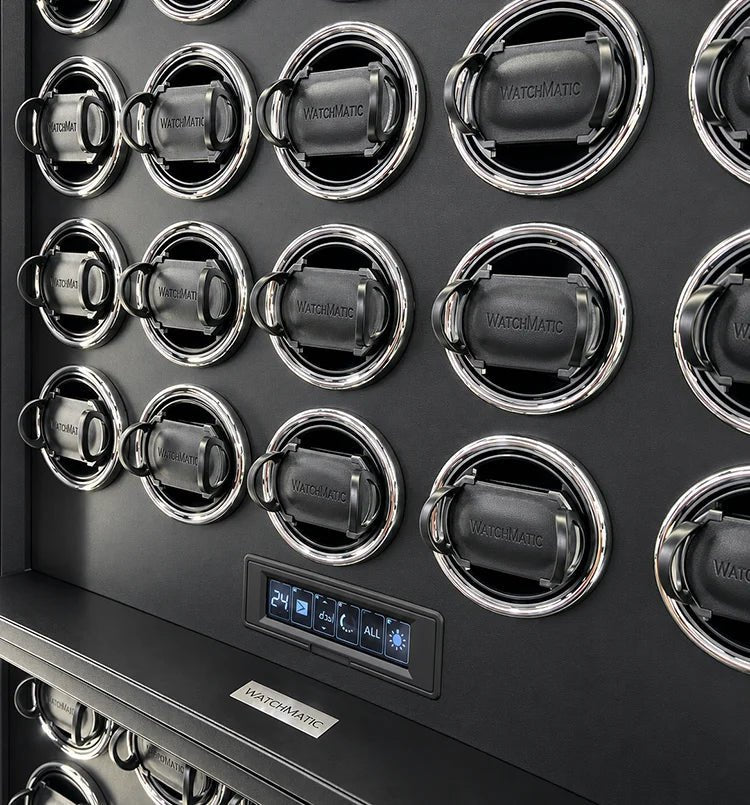
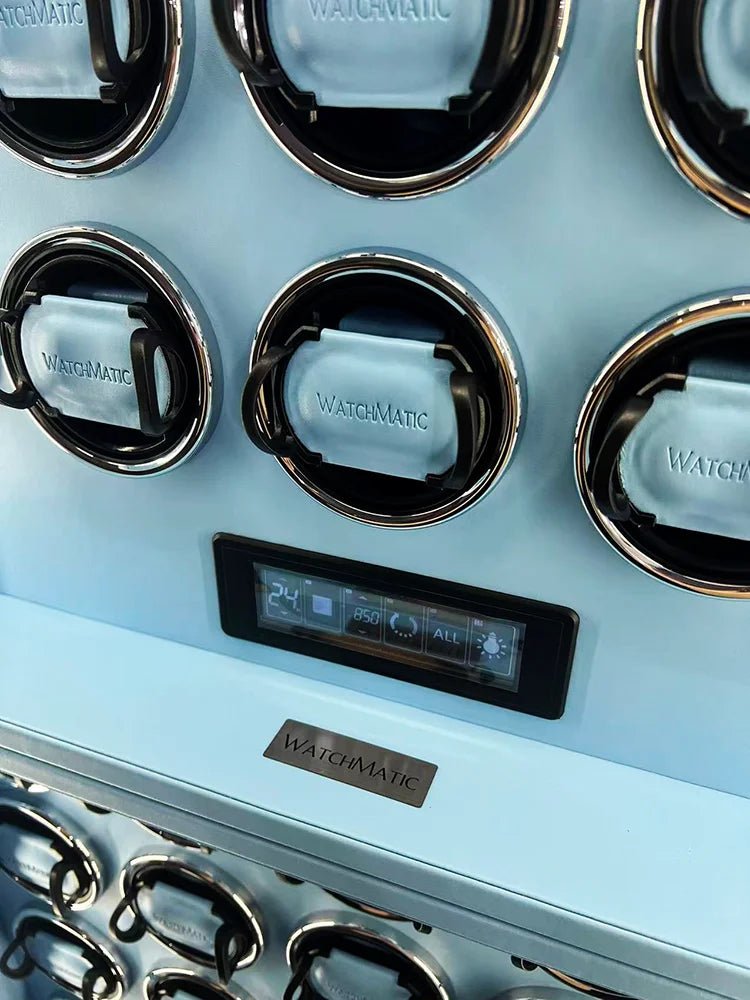
Both products may contain automatic watch winding modules, adjustable rotation programs, premium upholstery, and electronic controls.
However, their primary functions can be very different.
What a Watch Winder Cabinet Does
A watch winder cabinet is designed to organize automatic watches and operate winding programs that help maintain their power reserve when they are not being worn.
Premium models may support individual winding settings, including:
- Turns Per Day (TPD).
- Clockwise rotation.
- Counterclockwise rotation.
- Bidirectional rotation.
- Programmed operating and rest periods.
These functions can be extremely convenient for collectors with multiple automatic watches.
However, winding technology does not establish burglary resistance.
What a Watch Winder Safe Adds
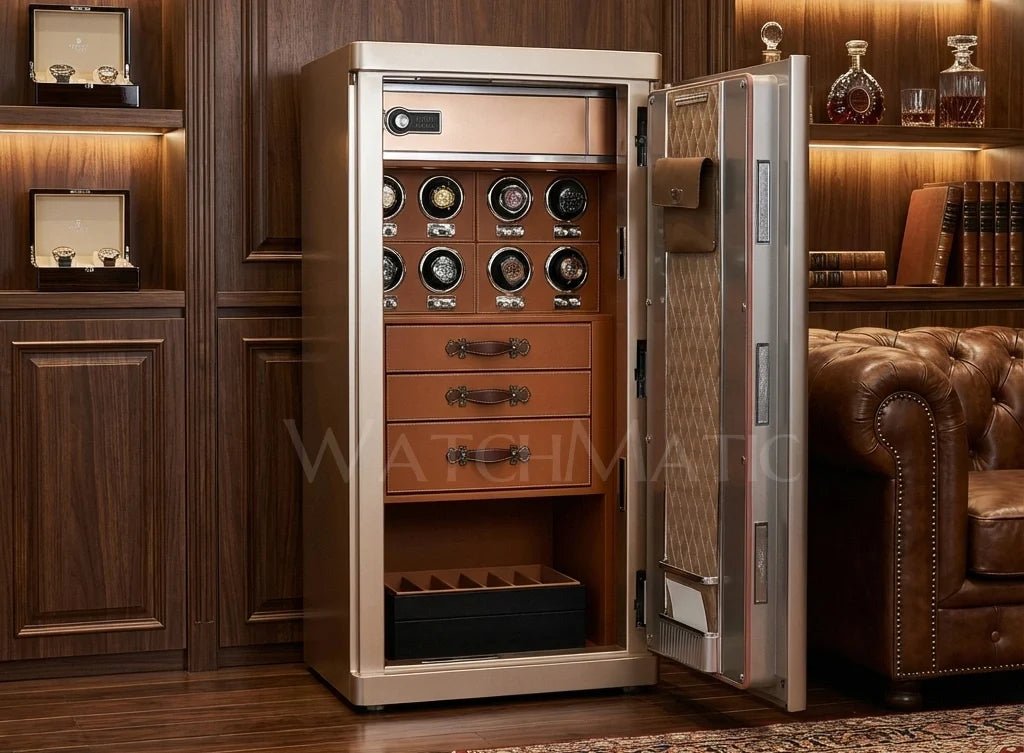
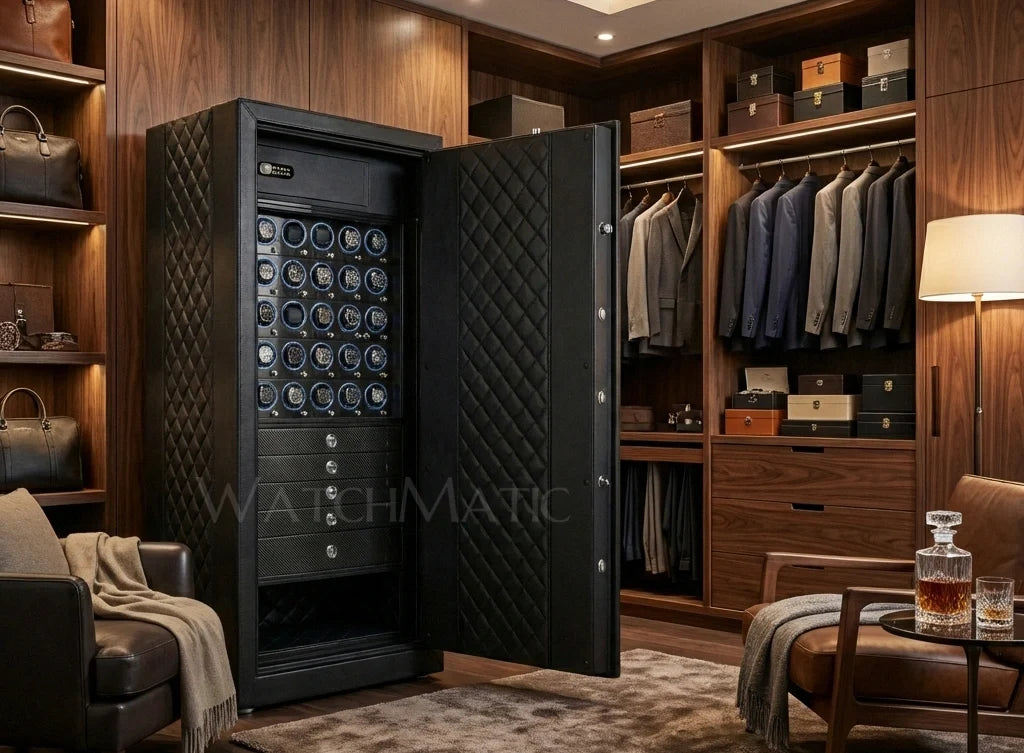
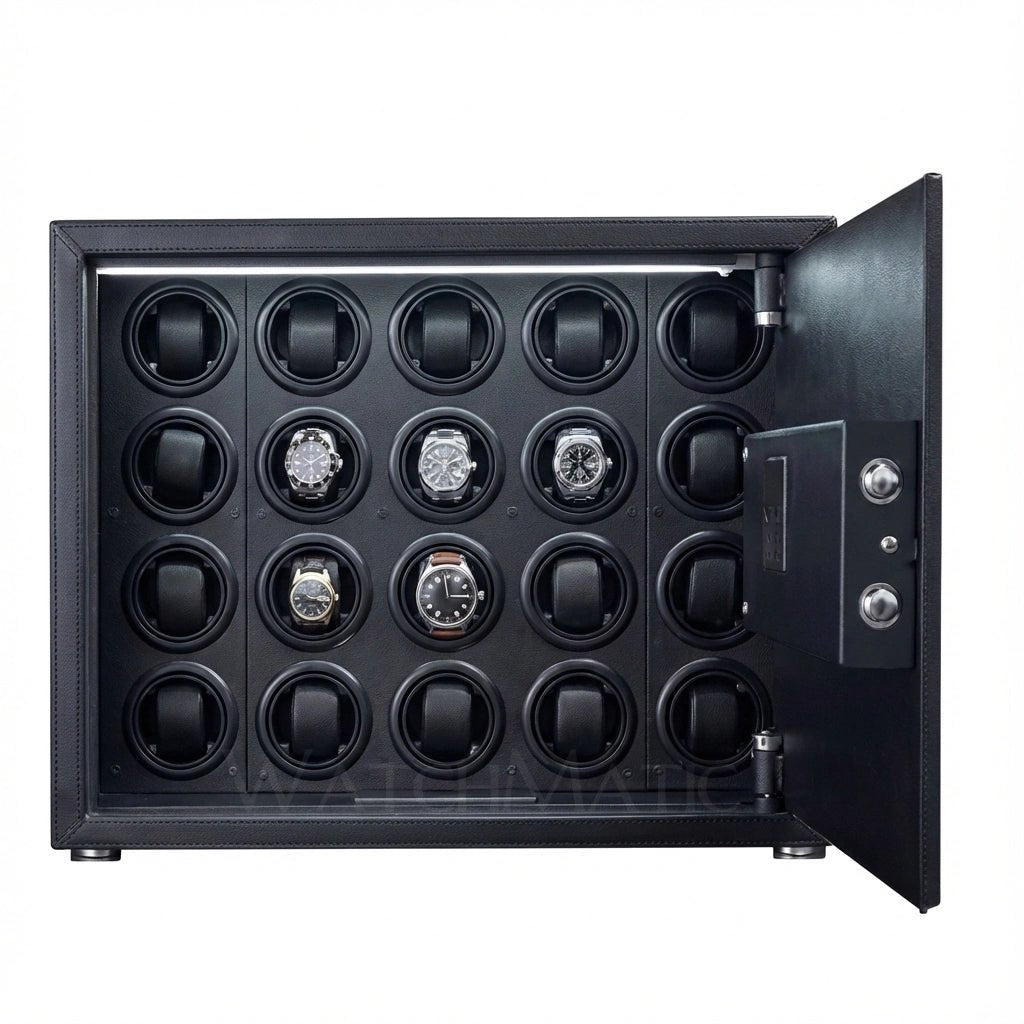
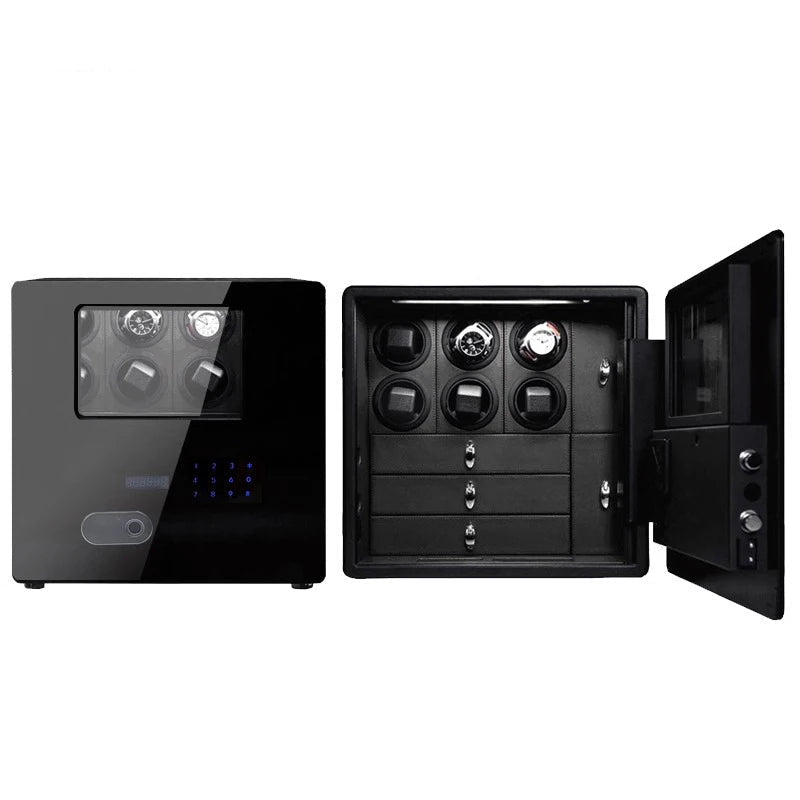
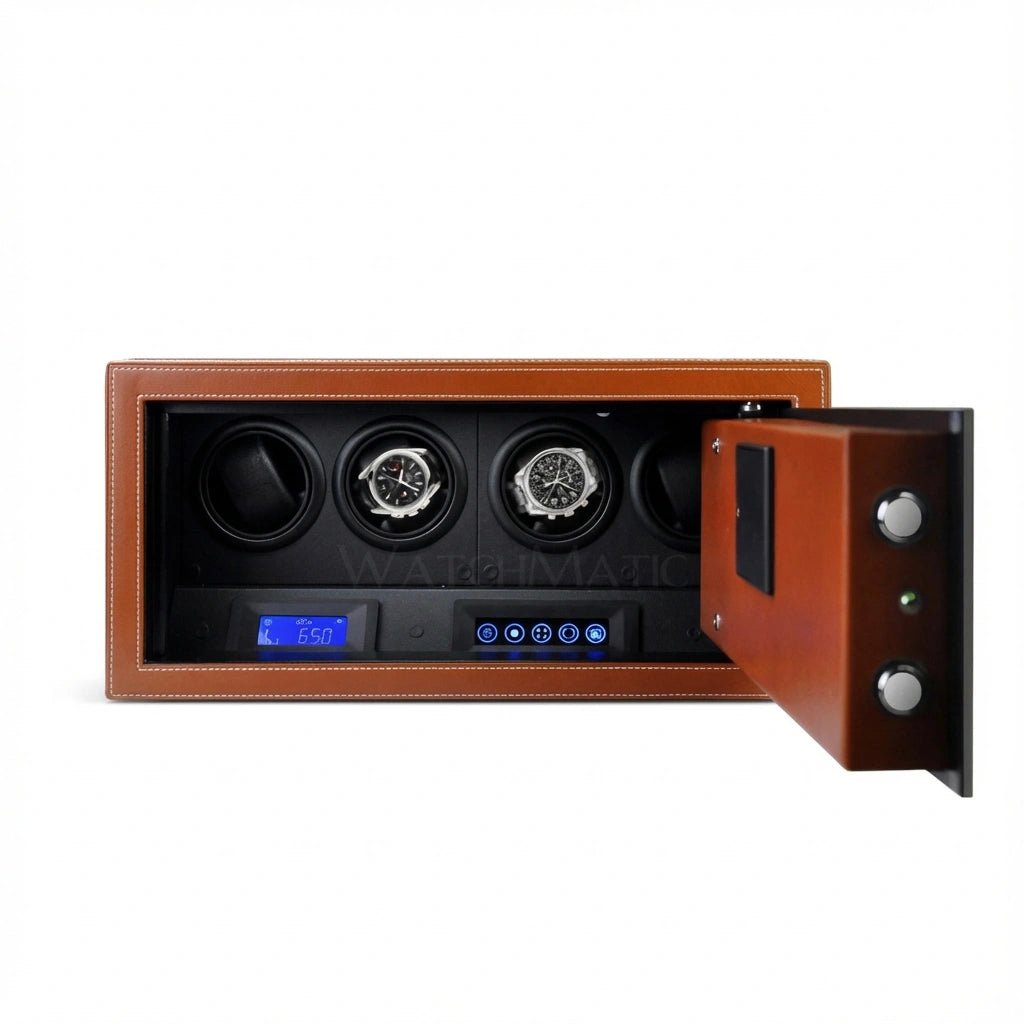
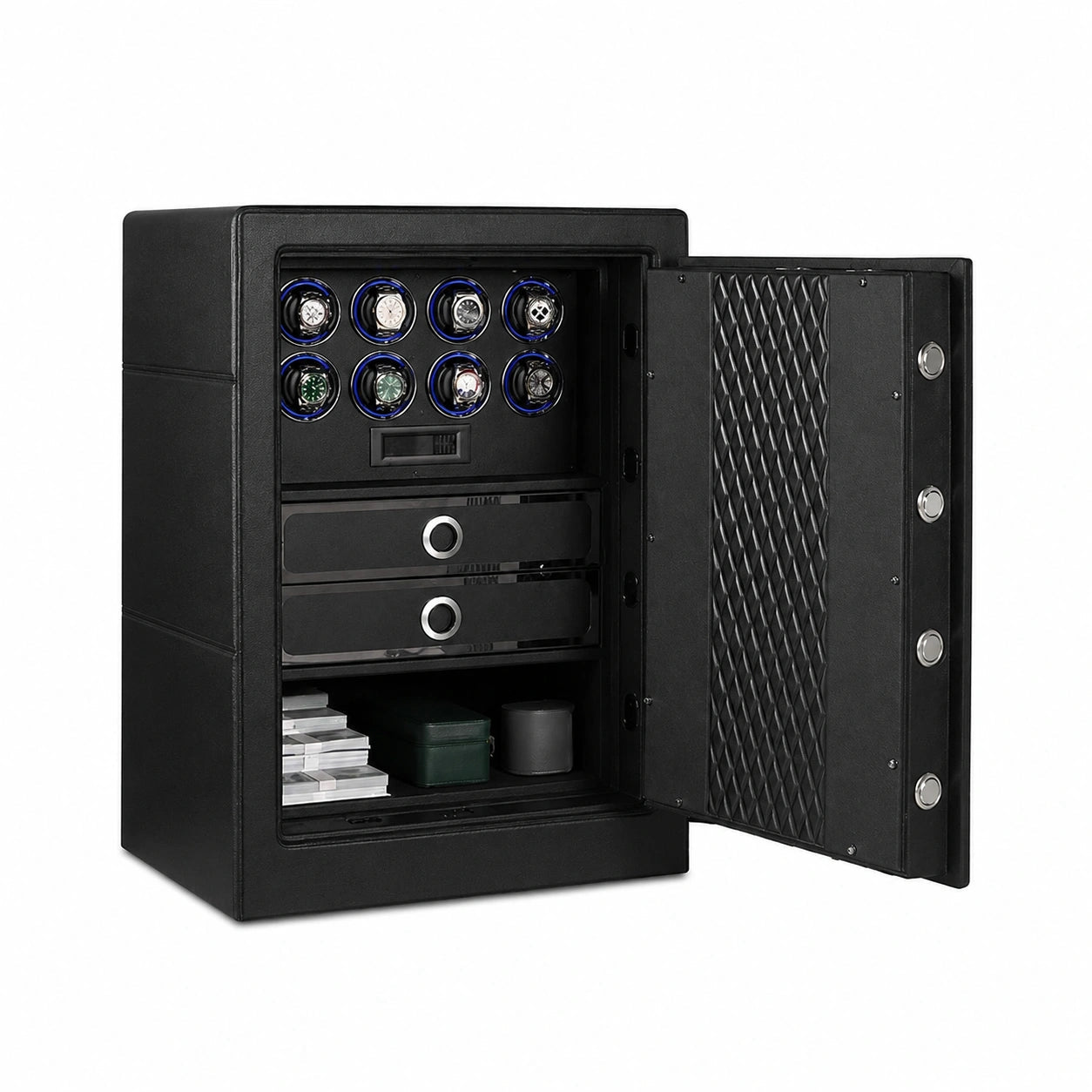
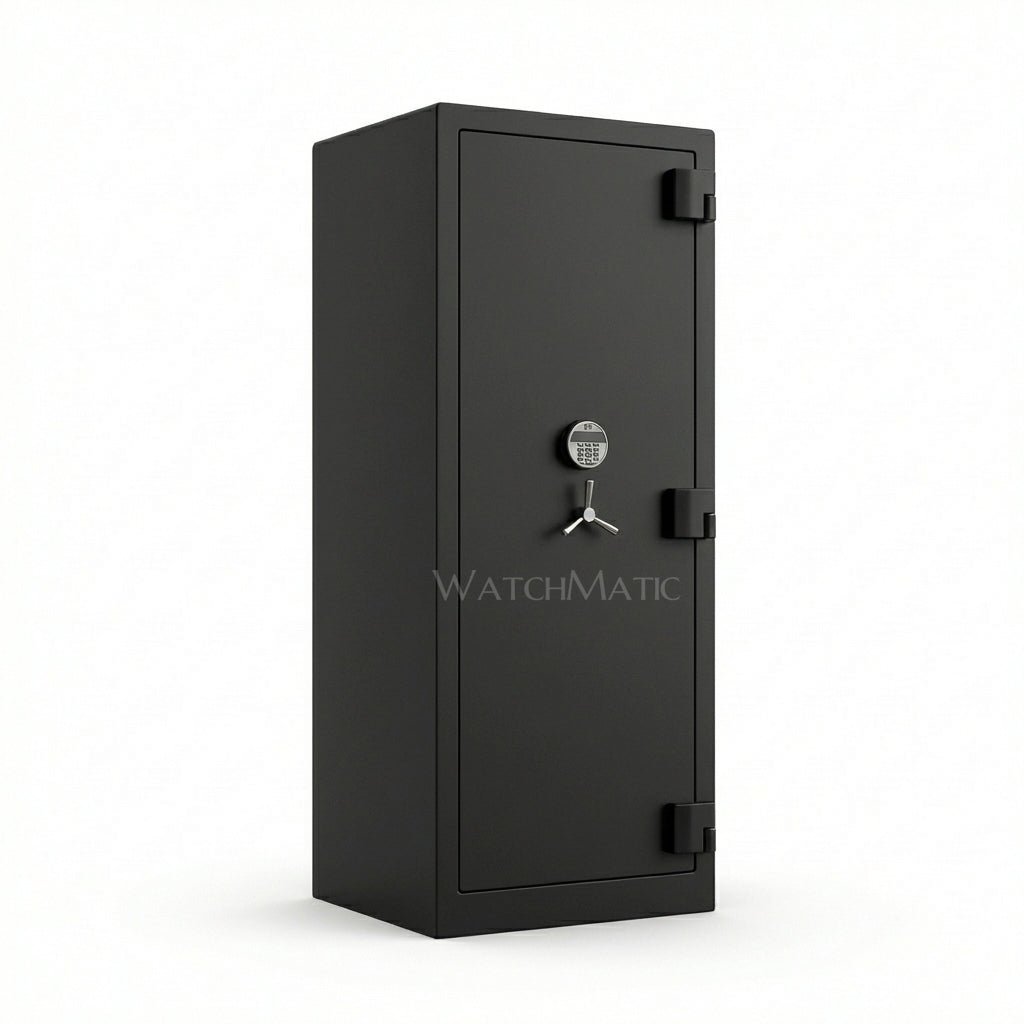
A purpose-built watch winder safe combines winding functionality with a security enclosure designed to provide greater physical protection.
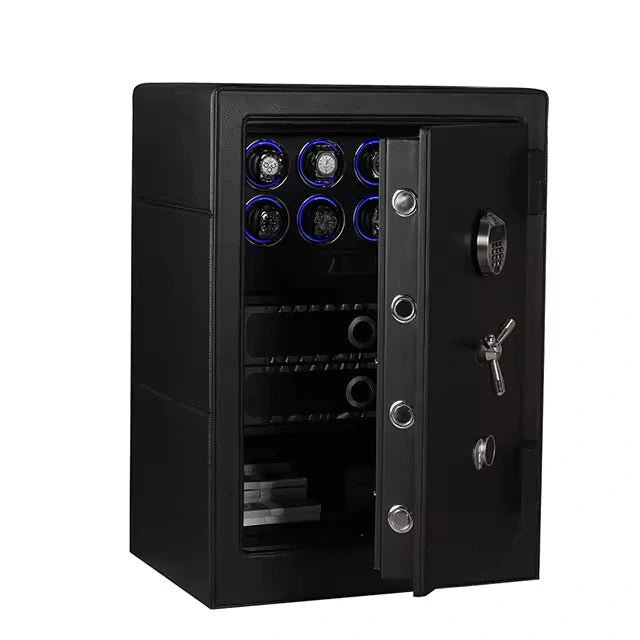
Depending on the model, the safe may incorporate reinforced steel construction, specialized locking systems, secure installation provisions, and optional certified protection features.
Collectors should still verify the exact security specification. The presence of the word "safe" in a product name is not itself evidence of independent certification.
Not Every Automatic Watch Needs Continuous Winding
Automatic watches do not universally need to remain running while stored.
For frequently worn watches with complicated settings, a programmable winder can be convenient. Watches used less often may be stored stationary according to the movement manufacturer's guidance.
The appropriate solution depends on wearing habits, movement requirements, and collection size.

7. Watch Display Cabinet vs. Watch Safe: Key Differences
The following comparison highlights how conventional display cabinets and purpose-built watch safes differ in their intended functions.
| Feature | Typical Display Cabinet | Purpose-Built Watch Safe |
|---|---|---|
| Primary purpose | Presentation and organization | Secure storage and collection protection |
| Construction | Furniture panels, glass, or decorative metal frames | Security enclosure with reinforced construction |
| Locking system | Often furniture-grade lock or electronic latch | Specialized safe locks; options vary by model |
| Burglary resistance | Generally not independently rated | May offer independently certified resistance on qualifying models |
| Fire protection | Usually no tested rating | Model-specific fire-resistant options may be available |
| Watch winding | Optional on selected cabinets | Available on integrated watch winder safes |
| Interior presentation | Often emphasizes continuous visibility | Can include lighting, winding modules, and bespoke finishes |
| Installation | Typically furniture placement or mounting | May require professional handling, structural assessment, and anchoring |
| Typical suitability | Everyday display and lower-risk storage | Valuable collections requiring additional physical security |
These are general product-category differences. A specialized security-rated glass display safe may provide protection that a conventional cabinet does not, while an uncertified watch safe may have limitations that buyers should investigate.
8. What Makes a Watch Safe More Suitable for High-Value Collections?
The main advantage of a properly specified luxury watch safe is that its design begins with physical protection rather than presentation alone.
Its construction can provide a substantially different barrier between the watches and the surrounding environment.
Reinforced Security Construction
Depending on the model, safe bodies may use steel plates, composite security barriers, reinforced doors, and specialized locking mechanisms.
Weight and steel thickness can be relevant, but neither alone establishes a particular level of burglary resistance.
When an insurance requirement or elevated security level applies, independently documented resistance testing is particularly important.
Advanced Locking Options
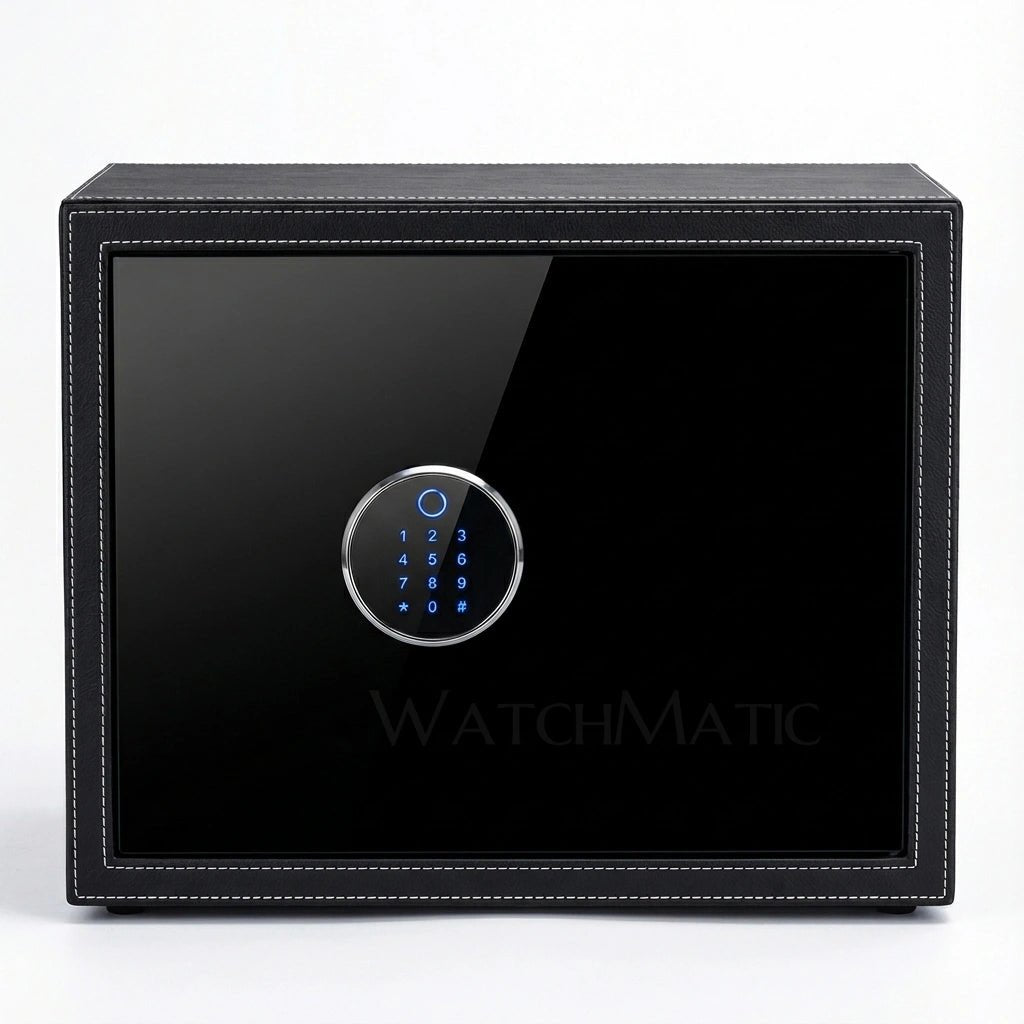
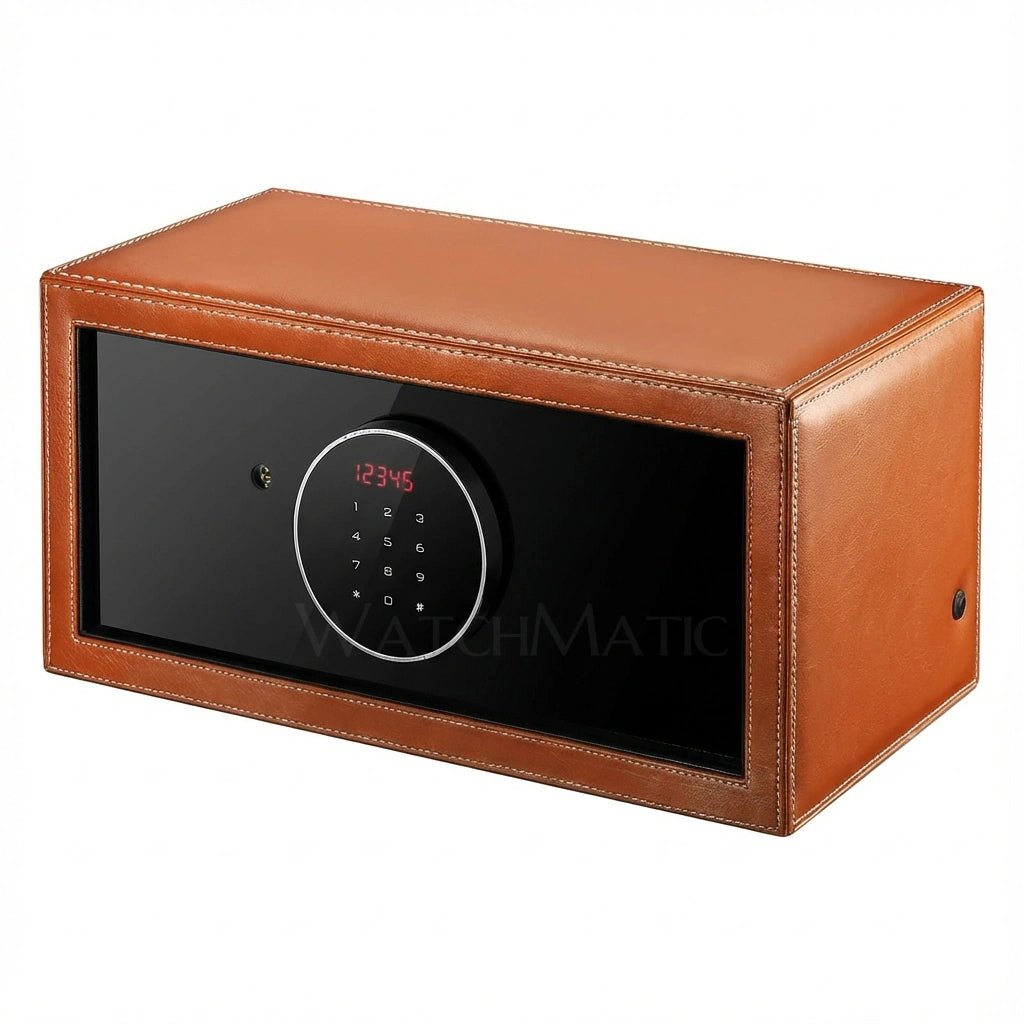
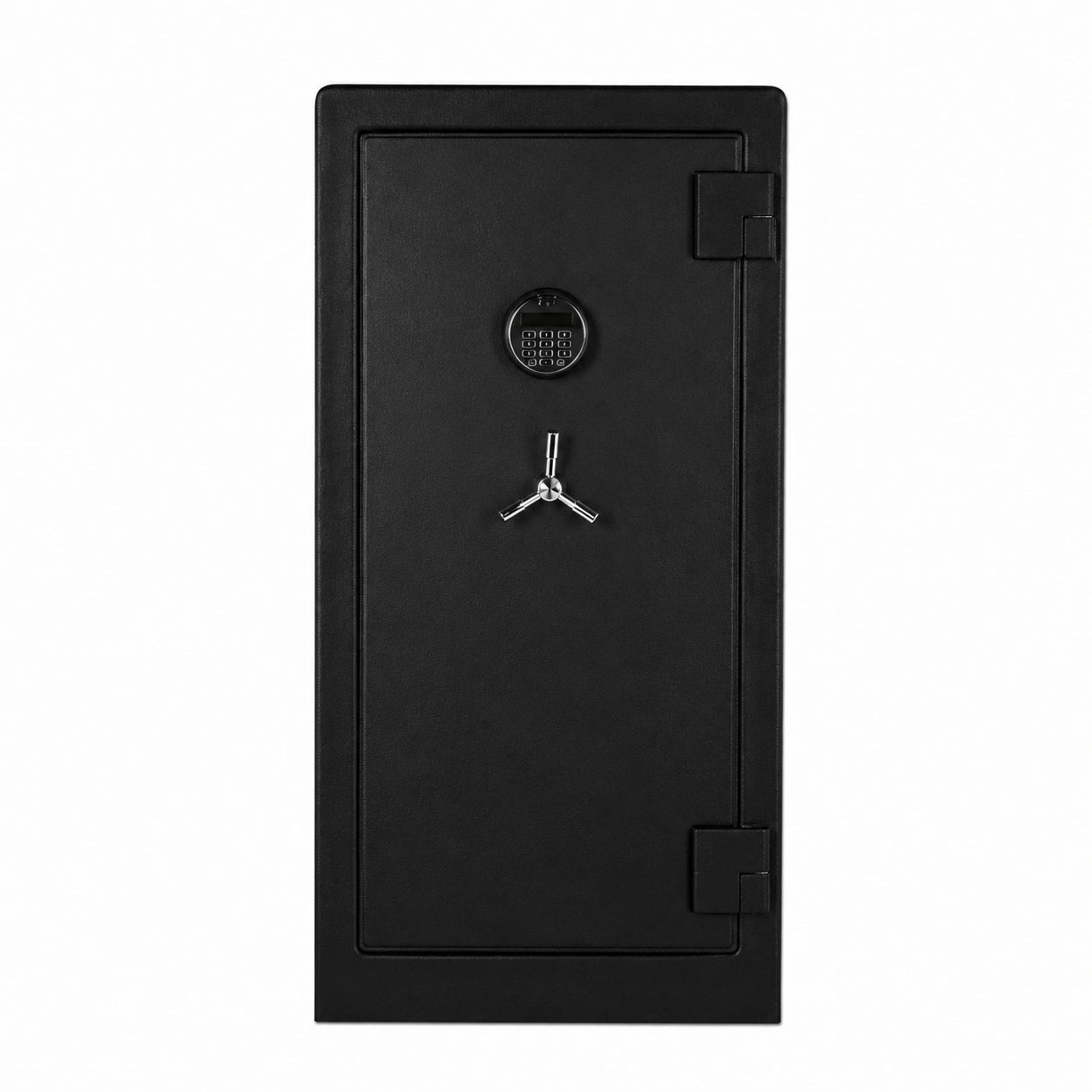
Luxury watch safes may offer electronic keypad locks, biometric fingerprint recognition, mechanical keys, or specialist locking systems.
The appropriate configuration depends on the desired access control, reliability, emergency-access arrangements, and security requirements.
A biometric lock can improve convenience, but it is not a substitute for a properly engineered security enclosure.
Burglary-Resistance Standards
Recognized standards include EN 1143-1 in Europe and UL 687 in the United States.
These standards assess burglary resistance under defined testing conditions and classifications.
Buyers should verify the exact safe model, applicable certification, resistance grade, and any installation requirements.
A product described as "high-security" or "vault-grade" should not be assumed to carry certification without supporting documentation.
Integrated Watch Storage
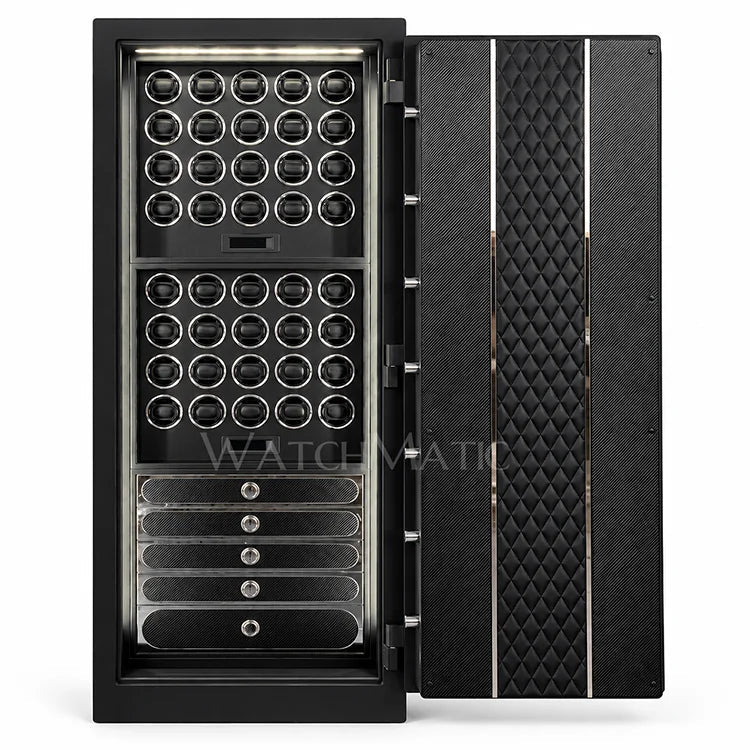
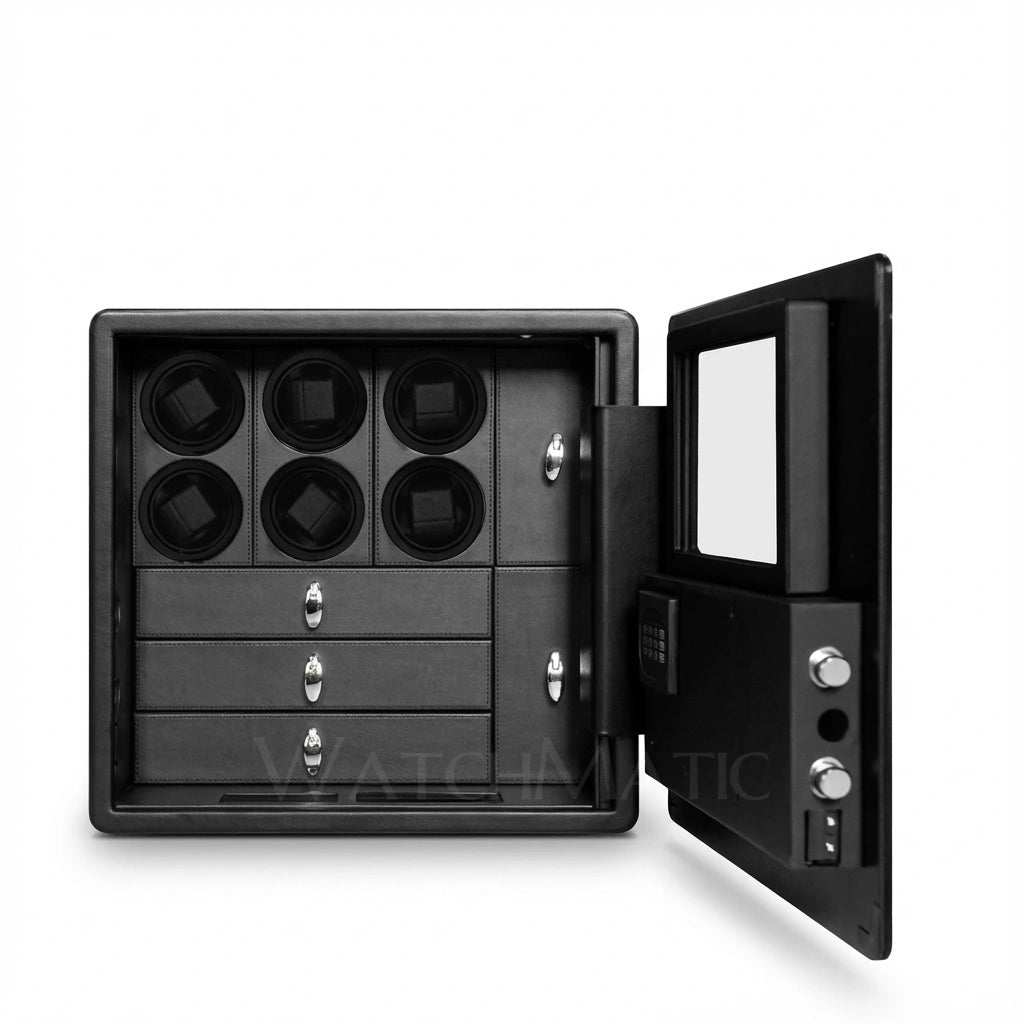
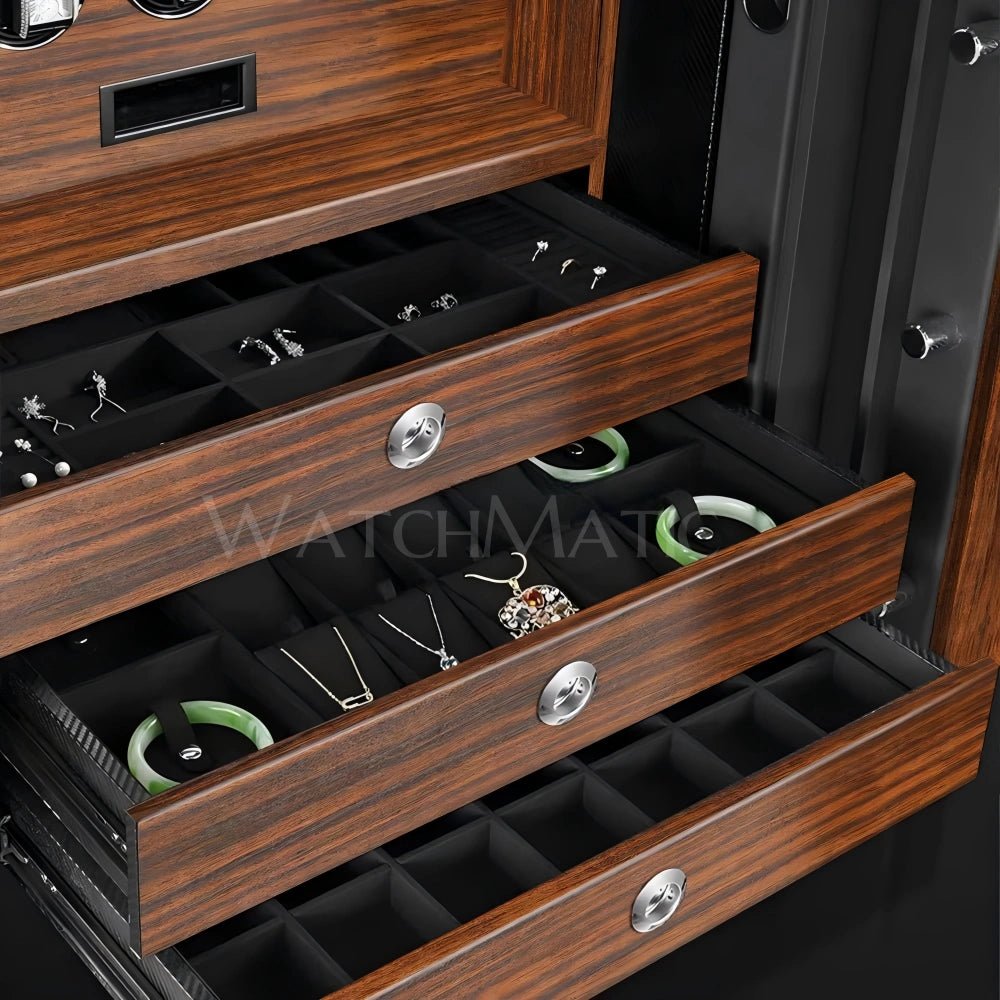
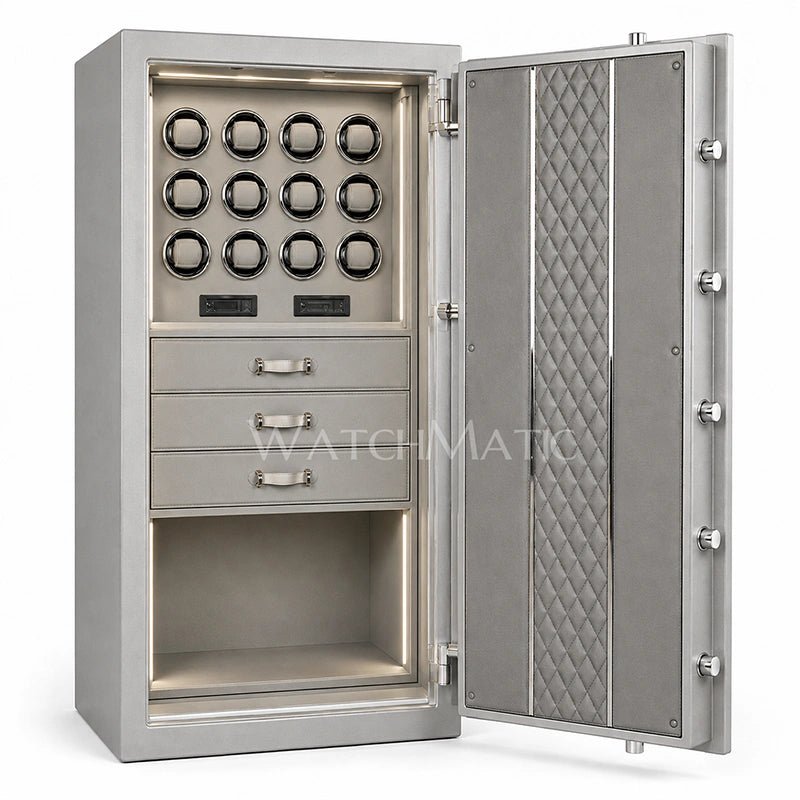
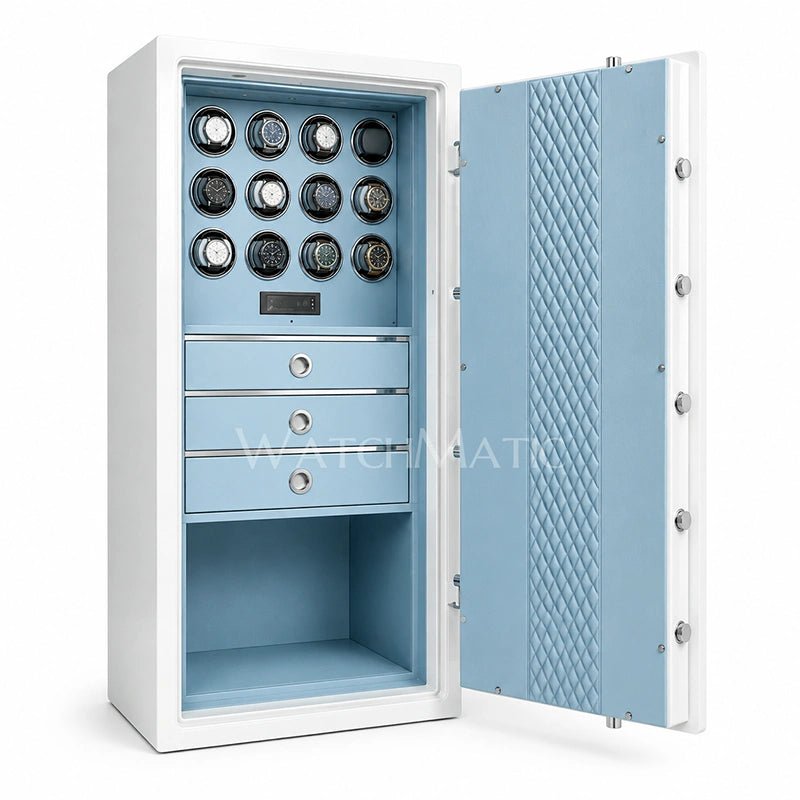
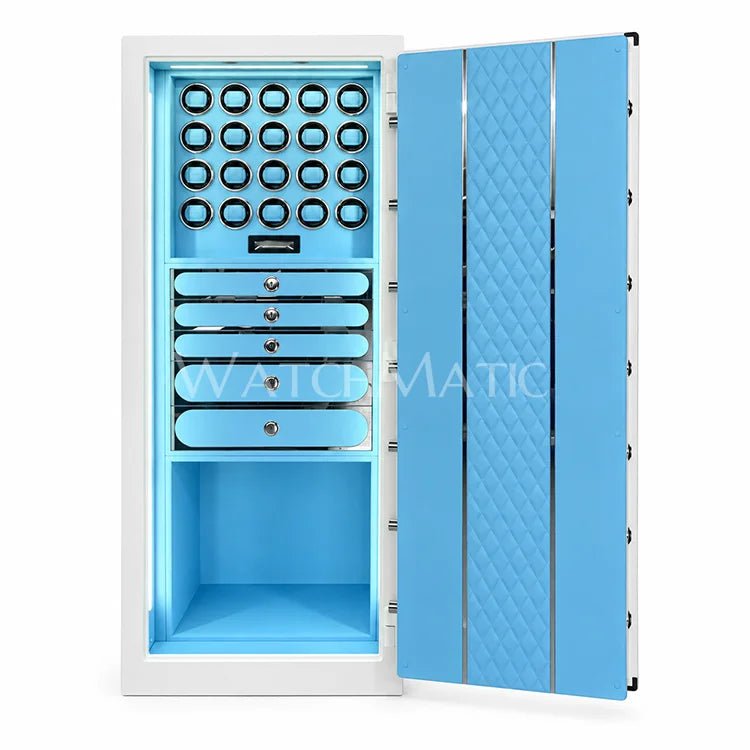
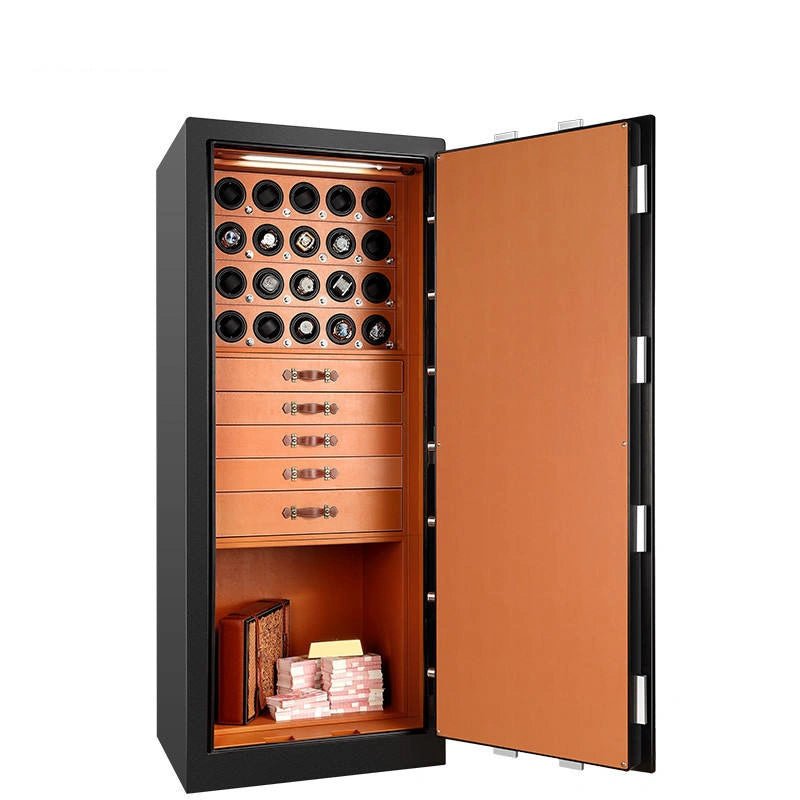
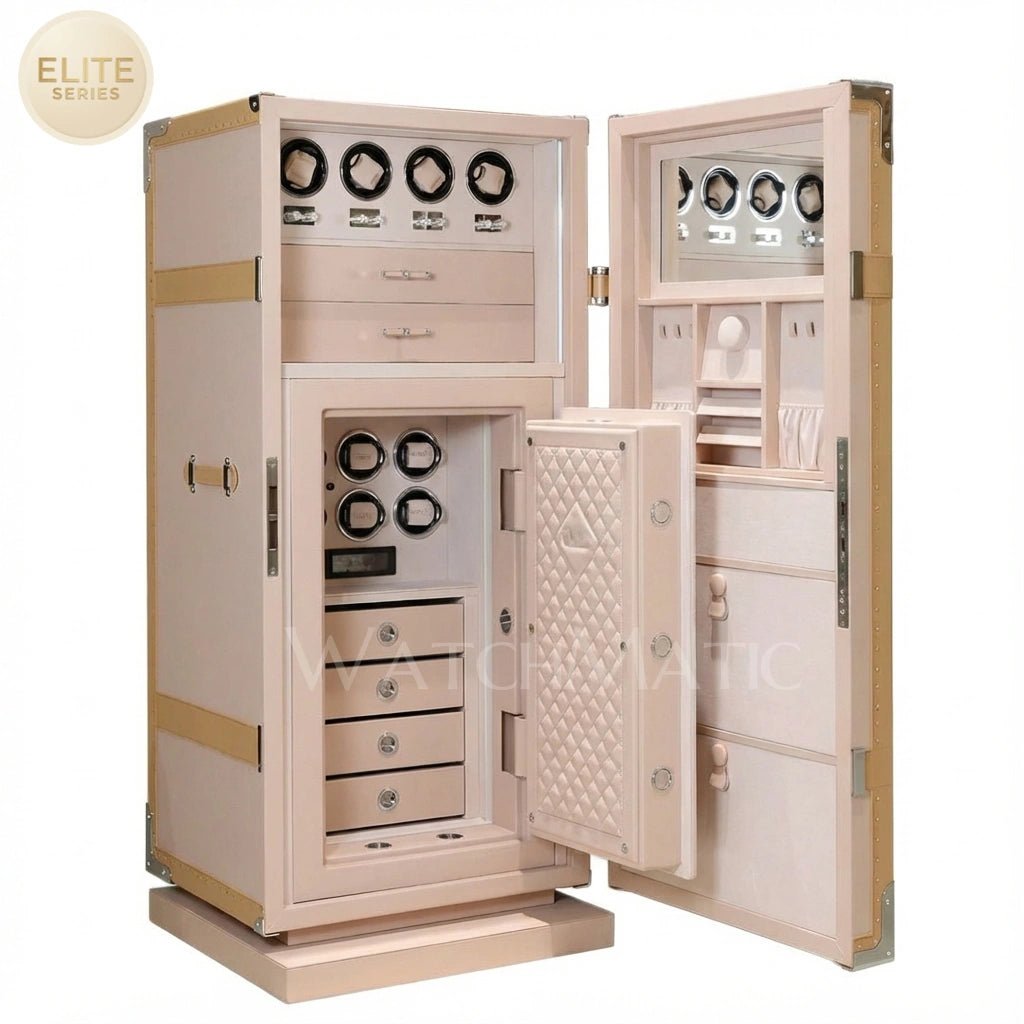
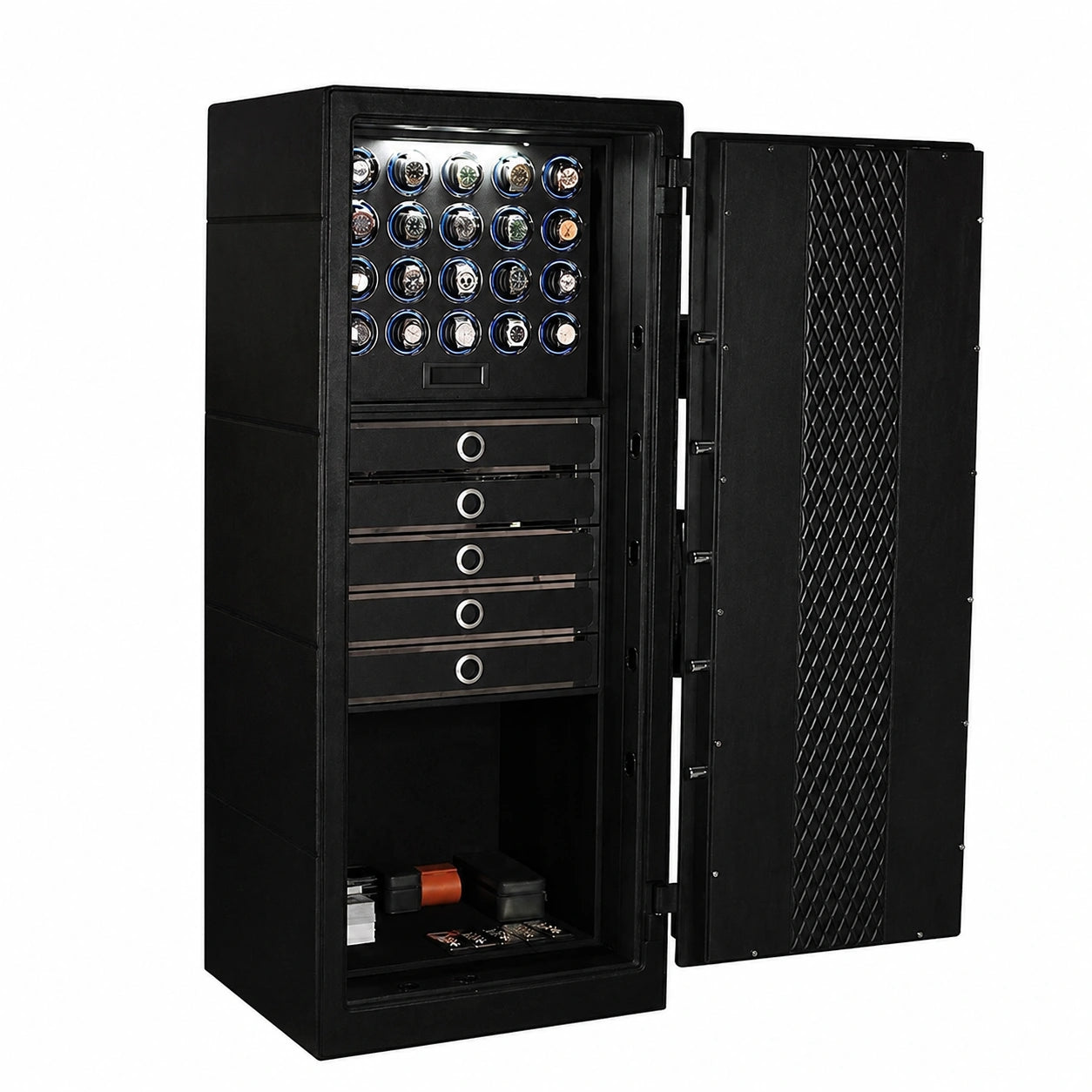
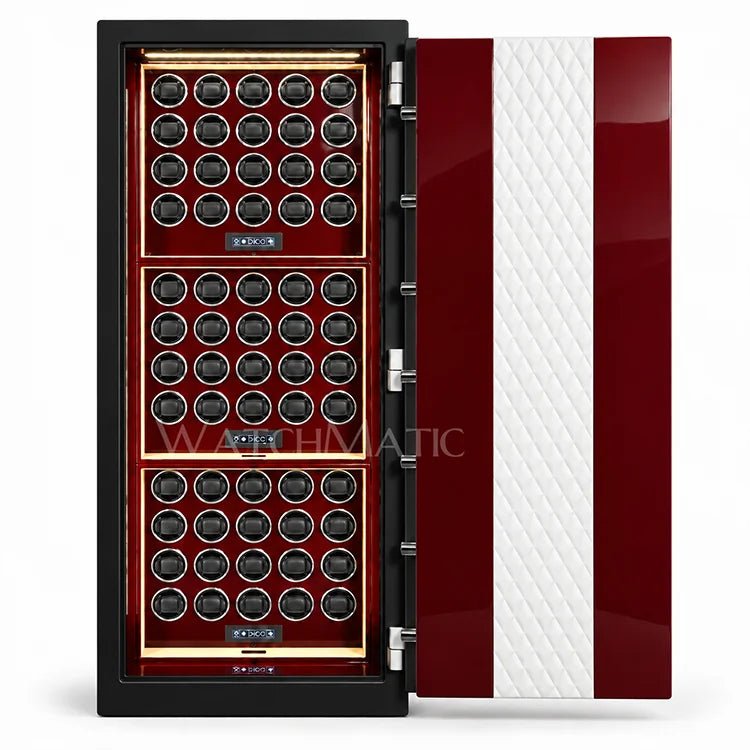
A luxury watch safe can also offer purpose-designed interiors with winding positions, stationary watch holders, soft-lined drawers, lighting, and additional compartments for jewelry or accessories.
This allows collectors to combine organization and presentation with a more robust physical enclosure.
Explore WatchMatic's luxury watch safe cabinets for examples of integrated storage configurations.
9. The Value of Your Collection Should Influence Your Storage Strategy
There is no universal collection value at which every watch owner must purchase a safe.
A collector with three highly valuable watches may require more security than someone who owns fifteen modestly priced timepieces.
The decision should reflect the combined value of the collection, the characteristics of the watches, the household environment, and the consequences of a potential loss.
Consider the Total Collection Value
When watches are stored together, the relevant exposure is not necessarily the value of an individual watch but the combined value of the assets in that location.
A watch cabinet holding several expensive timepieces can represent a significant concentration of value, even if the number of watches is relatively small.
Consider Replacement Difficulty
Some watches may have limited production histories, sentimental significance, unusual specifications, or provenance that makes replacement difficult.
For these pieces, financial valuation is only one aspect of the decision.
Review Insurance Requirements
Insurance policies may impose requirements concerning security ratings, safe installation, alarm systems, declared values, or storage arrangements.
Coverage can also vary depending on whether watches are worn, stored at home, or kept elsewhere.
For example, specialist insurers may review security controls and safe specifications when evaluating valuable watch and jewelry collections.
Before purchasing a safe, confirm the applicable requirements with your insurer rather than assuming that any lockable cabinet or expensive safe automatically qualifies.
10. Can You Combine Beautiful Watch Display With High Security?
Security and luxury interior design do not need to be opposing priorities.
In fact, many modern watch safe designs attempt to deliver both through carefully arranged winding modules, premium finishing materials, and controlled interior lighting.
Luxury Interiors Inside a Security Enclosure
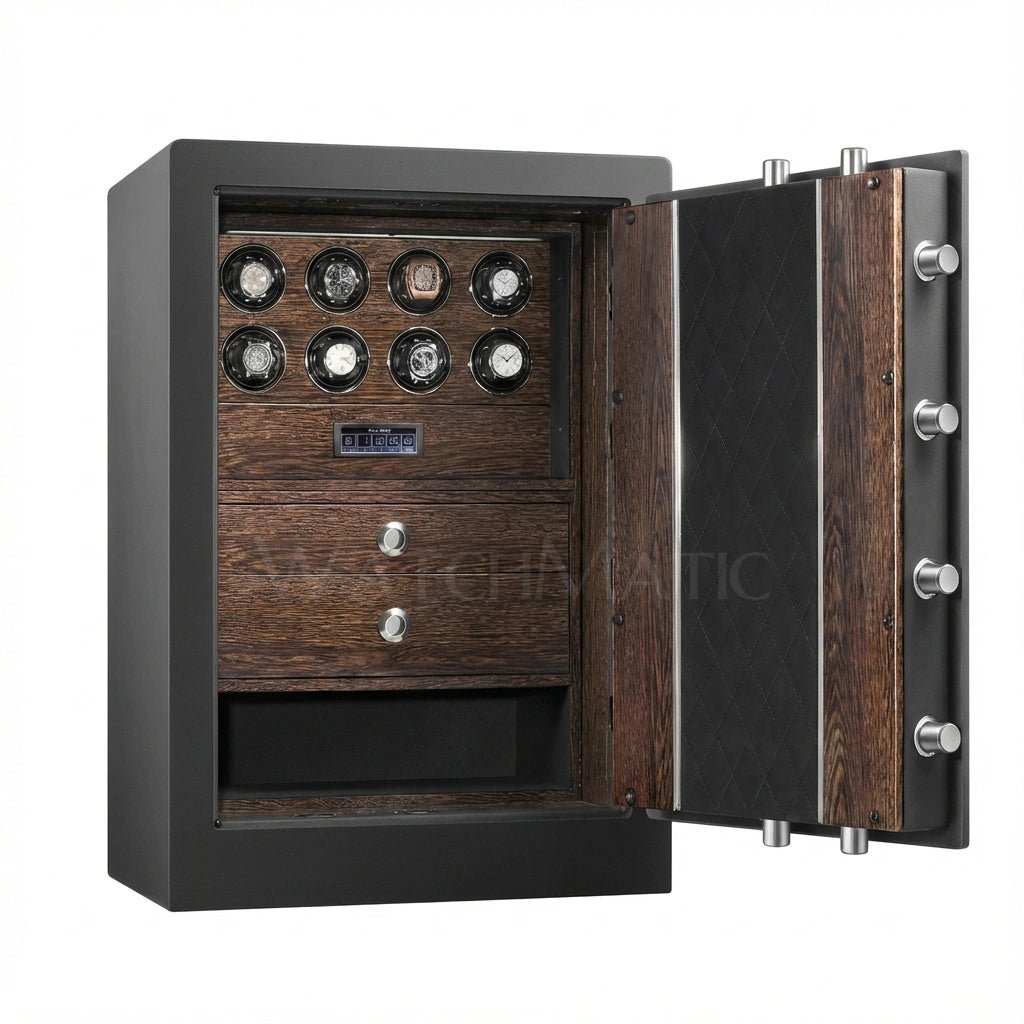
A watch safe may incorporate soft leather or fabric-lined compartments, decorative wood panels, individually mounted watch cushions, and dedicated drawers.
When the door is open, the collection can be presented in a manner comparable to a premium display cabinet.
When the door is closed, the security enclosure provides the physical protection appropriate to its construction and verified specifications.
Architectural Integration
Luxury watch safes can also be incorporated into dressing rooms, private offices, and dedicated watch vault rooms.
Depending on the project, the safe may become a prominent centerpiece or integrate discreetly into the surrounding cabinetry.
The installation should preserve the manufacturer's required operating clearances, anchoring provisions, power access, and any other safety requirements.
Bespoke Watch Safe Configurations
For collectors who want a particular appearance or storage arrangement, bespoke solutions can offer greater flexibility.
Depending on the model and engineering requirements, available customizations may include:
- Exterior colors and decorative finishes.
- Interior leather and upholstery materials.
- Custom winding capacity.
- Dedicated watch holder drawers.
- Jewelry and accessory compartments.
- Interior lighting.
- Alternative locking configurations.
- Selected fire and burglary-resistance options.
WatchMatic provides bespoke luxury watch safes designed around private collections, available installation space, and individual storage requirements.
The goal is to create a system that supports the collector's preferred presentation without sacrificing the security specifications required for the project.
11. When Does a Display Cabinet Still Make Sense?
Despite their limitations, display cabinets remain useful in the right circumstances.
They can provide convenient and attractive storage for watches whose security requirements are adequately addressed through other arrangements.
Everyday Watch Rotation
For lower-risk watches worn frequently, a premium watch box or display cabinet may provide convenient organization and access.
The decision should reflect the value of the individual watches and the surrounding security environment.
Private Viewing Areas
A display cabinet may also function as a secondary presentation area within a private collector's room.
In this configuration, the owner can select watches from secure storage for viewing or temporary display before returning them to the safe.
Collections With Separate Secure Storage
Some collectors prefer to keep their highest-value watches inside a safe while using conventional display furniture for other pieces or accessories.
This creates a more flexible arrangement without expecting a single cabinet to perform every function.
For compact, non-powered storage, explore WatchMatic's watch boxes and cases.
The important point is that display cabinets should complement a security strategy rather than replace one when the collection requires substantial physical protection.
12. How to Upgrade From a Display Cabinet to a Watch Safe
Collectors moving from conventional storage to a dedicated watch safe should begin by identifying which features are truly required.
Step 1: Assess the Collection
Record the number of watches, approximate values, movement types, physical dimensions, and any unusual storage requirements.
Separate watches that require active winding from those that can remain stationary.
Step 2: Establish the Required Security Level
Consider the value of the collection, local security conditions, household access, and insurance requirements.
Where independent certification is necessary, identify the specific standard and grade before choosing the final model.
Step 3: Choose the Right Storage Capacity
Select enough winding positions and stationary compartments to accommodate the collection.
For collectors planning further acquisitions, allow reasonable room for expansion without paying for substantial unused capacity.
Step 4: Confirm the Installation Location
Check the intended room, external safe dimensions, door-opening clearance, and electrical requirements.
For larger safes, evaluate the delivery route, elevator or stair access, and floor-loading capacity with appropriately qualified professionals.
Step 5: Evaluate Long-Term Service
A luxury watch safe may include electronic locks, winding motors, control panels, lighting, and other components that require service over time.
Review the warranty, replacement-parts availability, and technical support arrangements before purchasing.
13. A Practical Watch Storage Decision Guide
Different types of storage can work together within a collection management strategy.
| Your Priority | Storage Solution to Consider | Important Limitation |
|---|---|---|
| Organized everyday display | Watch box or display cabinet | Generally limited physical security |
| Automatic watch winding | Programmable watch winder | Winding does not establish burglary resistance |
| Secure storage for valuable watches | Purpose-built luxury watch safe | Confirm model-specific security specifications |
| Security with automatic winding | Watch winder safe | Not every model is independently certified |
| Documented burglary resistance | Independently certified safe | Verify grade, certificate, and installation conditions |
| Specialized collection and interior design | Bespoke watch safe or integrated vault system | Customization requires technical verification |
No single storage category is universally appropriate for every collector.
However, as the value of a collection increases, physical security should become a more deliberate part of the decision rather than an assumed benefit of attractive storage furniture.
Frequently Asked Questions About Watch Display Cabinets and Safes
Are glass watch display cabinets safe for expensive watches?
A conventional glass watch display cabinet can organize and showcase expensive watches, but it should not automatically be considered a secure storage solution. Standard glass doors and furniture-grade locks generally do not provide the same resistance as a properly specified security safe. Collectors should assess the value of their watches and the security performance of the complete cabinet.
Is a watch display cabinet with a lock secure enough?
Not necessarily. A lock may restrict casual access, but meaningful security depends on the complete cabinet construction, including its doors, frame, locking system, and installation. A furniture lock or electronic latch is not equivalent to an independently tested burglary-resistant safe.
Is tempered glass strong enough to protect luxury watches?
Tempered glass can be stronger than ordinary annealed glass in certain applications, but that does not establish burglary resistance. Security glazing requires specialized construction and testing. Even when a cabinet uses stronger glass, the complete door and enclosure must be evaluated before making security claims.
What is the difference between a watch winder cabinet and a watch winder safe?
A watch winder cabinet primarily provides storage and programmed winding for automatic watches. A watch winder safe additionally incorporates a security enclosure designed for greater physical protection. The exact level of burglary or fire resistance depends on the model and any independently verified certifications.
Do luxury watches need to be stored in a safe?
There is no universal rule requiring every luxury watch to be stored in a safe. The appropriate storage method depends on the watch's value, the collection's total value, household security, insurance requirements, and how frequently the watch is worn. Purpose-built secure storage becomes more relevant as the financial or personal significance of a collection increases.
Can a luxury watch safe display watches beautifully?
Yes. Modern luxury watch safes may feature integrated lighting, premium upholstery, decorative wood panels, individual winding modules, and custom storage drawers. These features allow the collection to be presented elegantly when the safe is open while retaining the protective function of its security enclosure when closed.
Do display cabinets protect watches from fire and humidity?
Most conventional display cabinets do not offer independently tested fire resistance or active humidity control. Enclosed cabinets may reduce dust exposure, but they can still be affected by the surrounding temperature, moisture, and sunlight. Collectors should evaluate environmental conditions separately and verify any claimed protective features.
Does watch insurance require a safe?
Insurance requirements vary by provider, policy, collection value, and location. Some insurers may require or recommend safes with particular security classifications, anchoring, or alarm arrangements. Buyers should obtain the exact requirements from their insurer before selecting a watch safe or storage cabinet.
Is a watch safe better than a display cabinet for Rolex and Patek Philippe watches?
For valuable Rolex and Patek Philippe collections, a properly specified watch safe can provide greater physical protection than a conventional display cabinet. The appropriate choice depends on the particular watches, their combined value, and the security environment. A programmable watch winder can also be incorporated when convenient for compatible automatic movements.
Can I customize a watch safe to replace my existing display cabinet?
Yes. Bespoke watch safes can be designed around specific capacities, interior layouts, exterior finishes, and installation spaces. Depending on the model, options may include automatic winding positions, stationary watch holders, jewelry drawers, lighting, and specialized locking systems. Structural and certified protection requirements should be verified before customization.
Final Thoughts: Display Your Watches, but Protect Their Value
Luxury watches deserve to be enjoyed, and an elegant display cabinet can make that experience more rewarding.
However, a cabinet designed primarily for presentation should not automatically be trusted to protect a valuable collection against theft, fire, or other risks.
As collections grow in value, the priorities change. Secure construction, controlled access, appropriate storage conditions, and documented protection become increasingly important.
A purpose-built luxury watch safe offers a different approach: combining watch-specific organization and refined presentation with a physical enclosure designed around security.
For automatic watch collectors, integrated winding systems can provide further convenience without requiring separate display winders throughout the room.
At WatchMatic, we develop watch winder safes, luxury watch safe cabinets, and bespoke storage solutions for collectors who want to combine security, precision winding, and personalized design.
The objective is not to choose between displaying your watches and protecting them. It is to create a storage environment where both priorities can coexist.
Explore our Watch Winder Safes or discover WatchMatic's luxury watch safe cabinets to find a solution suited to your collection and home.