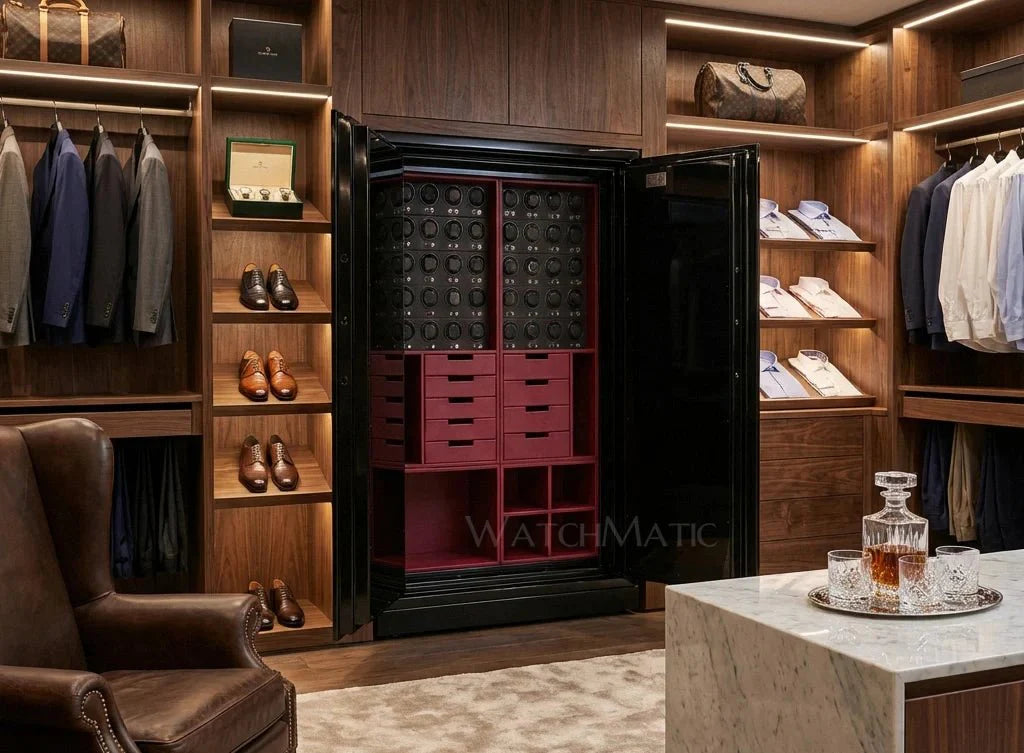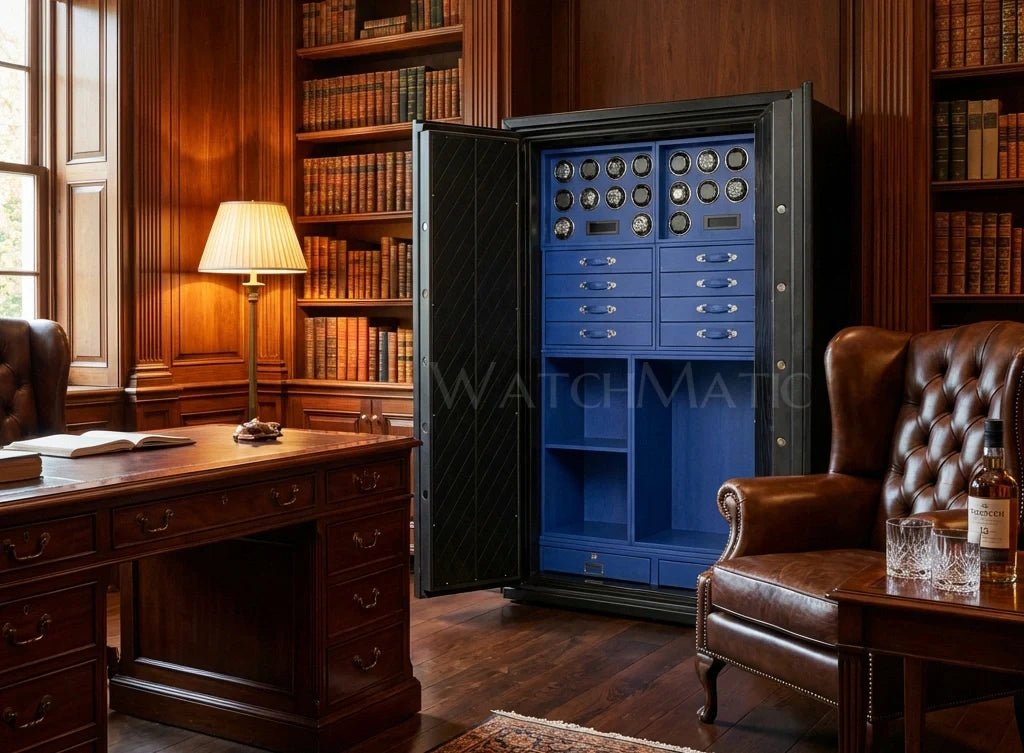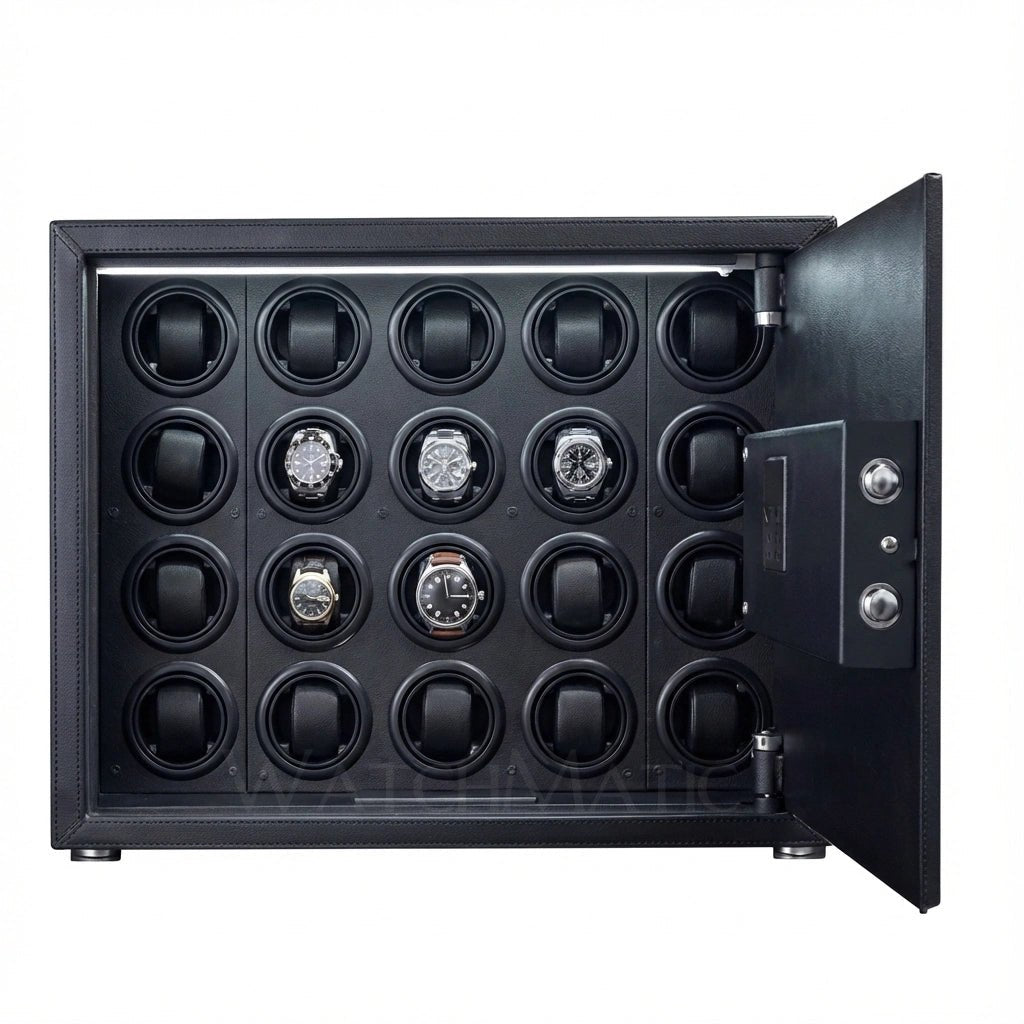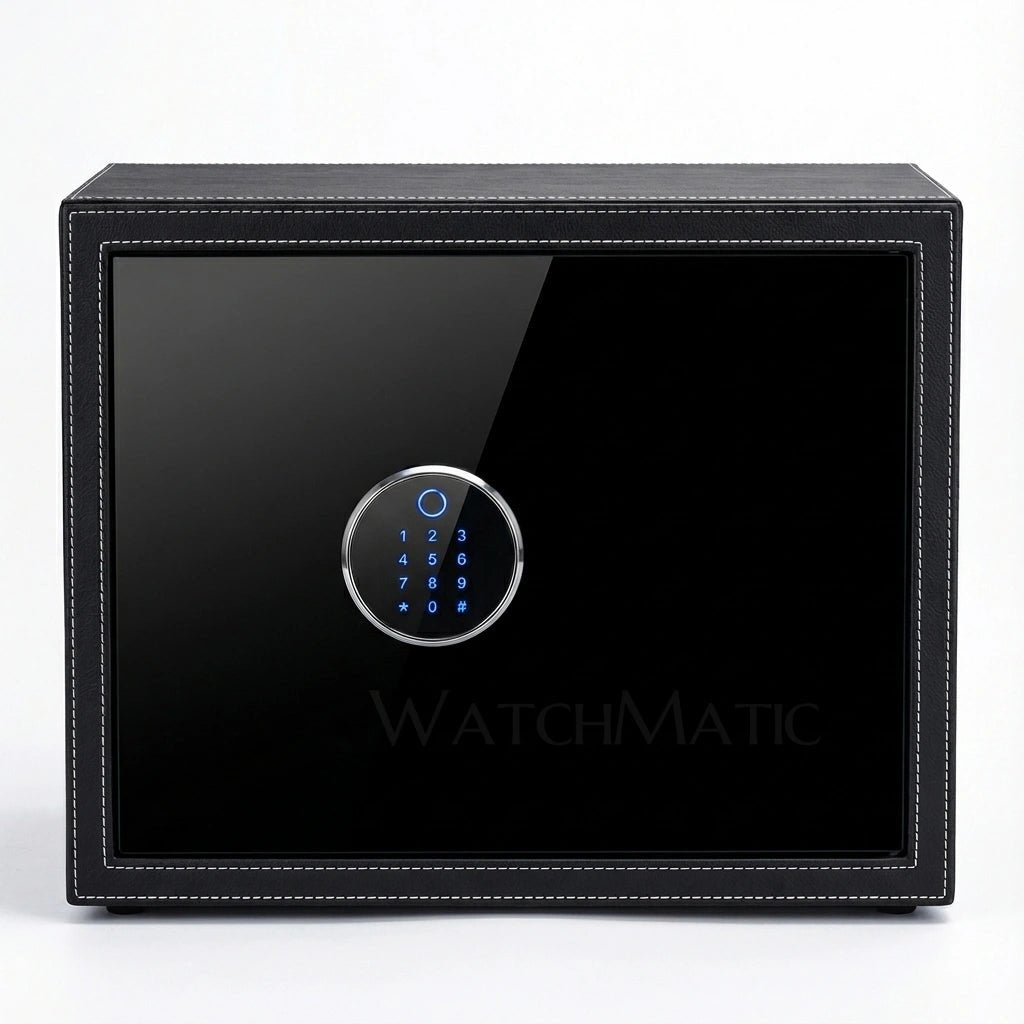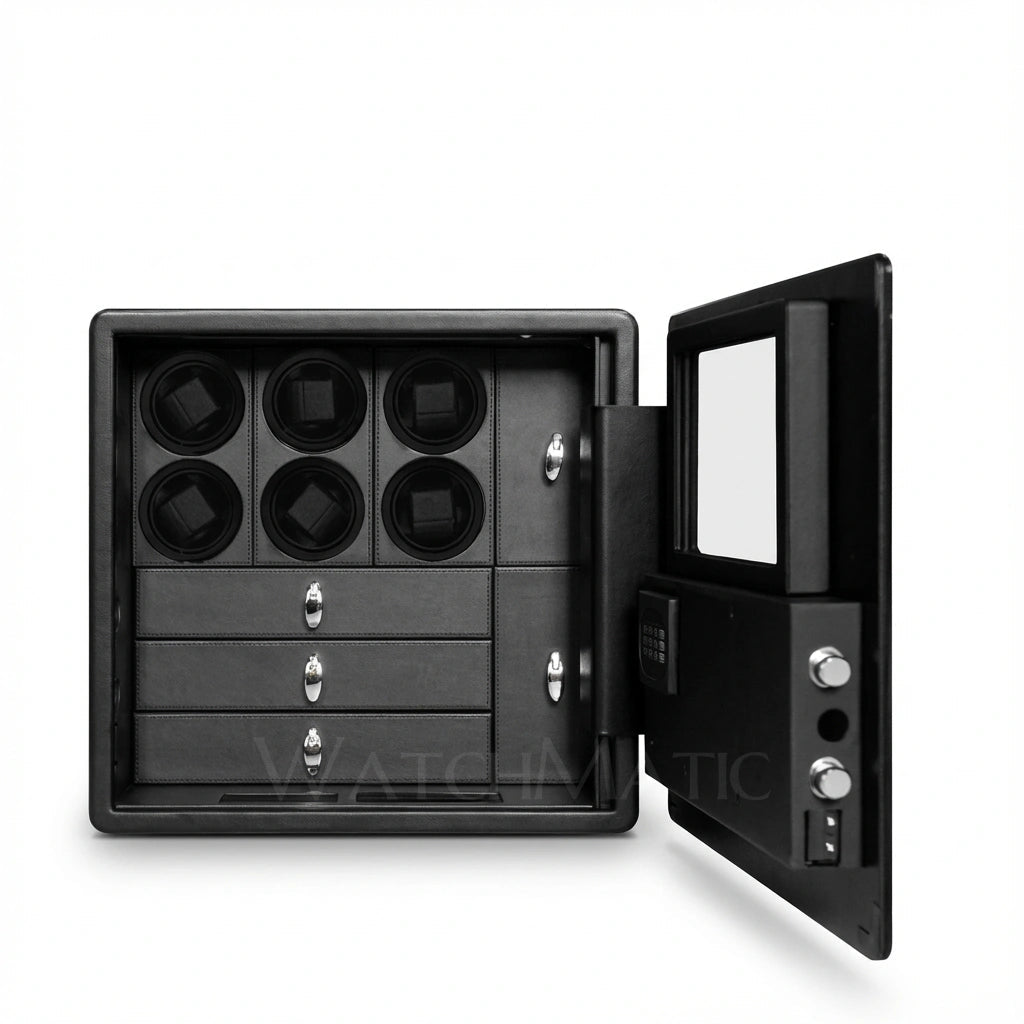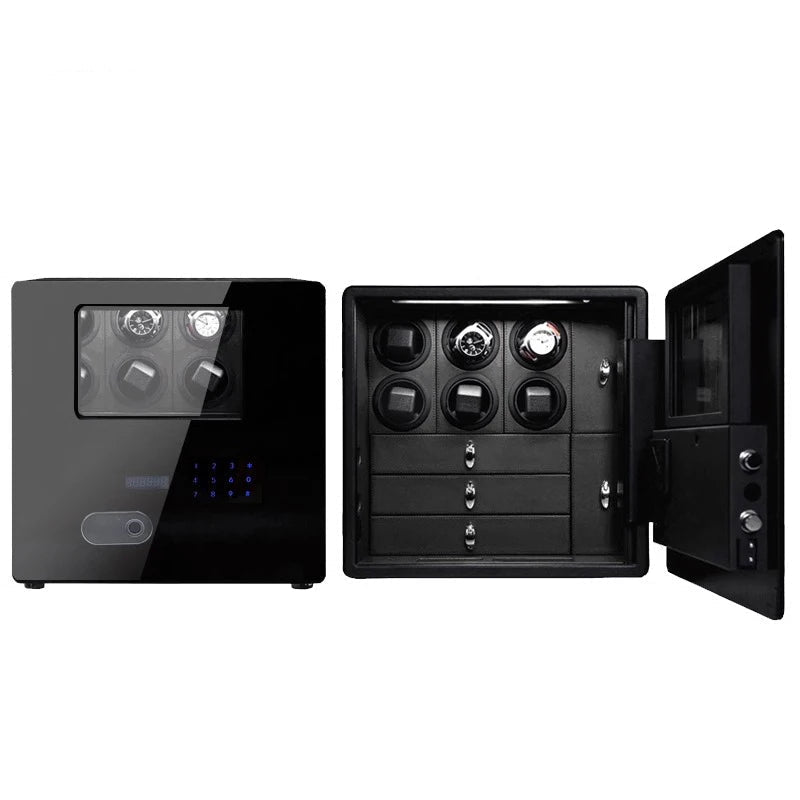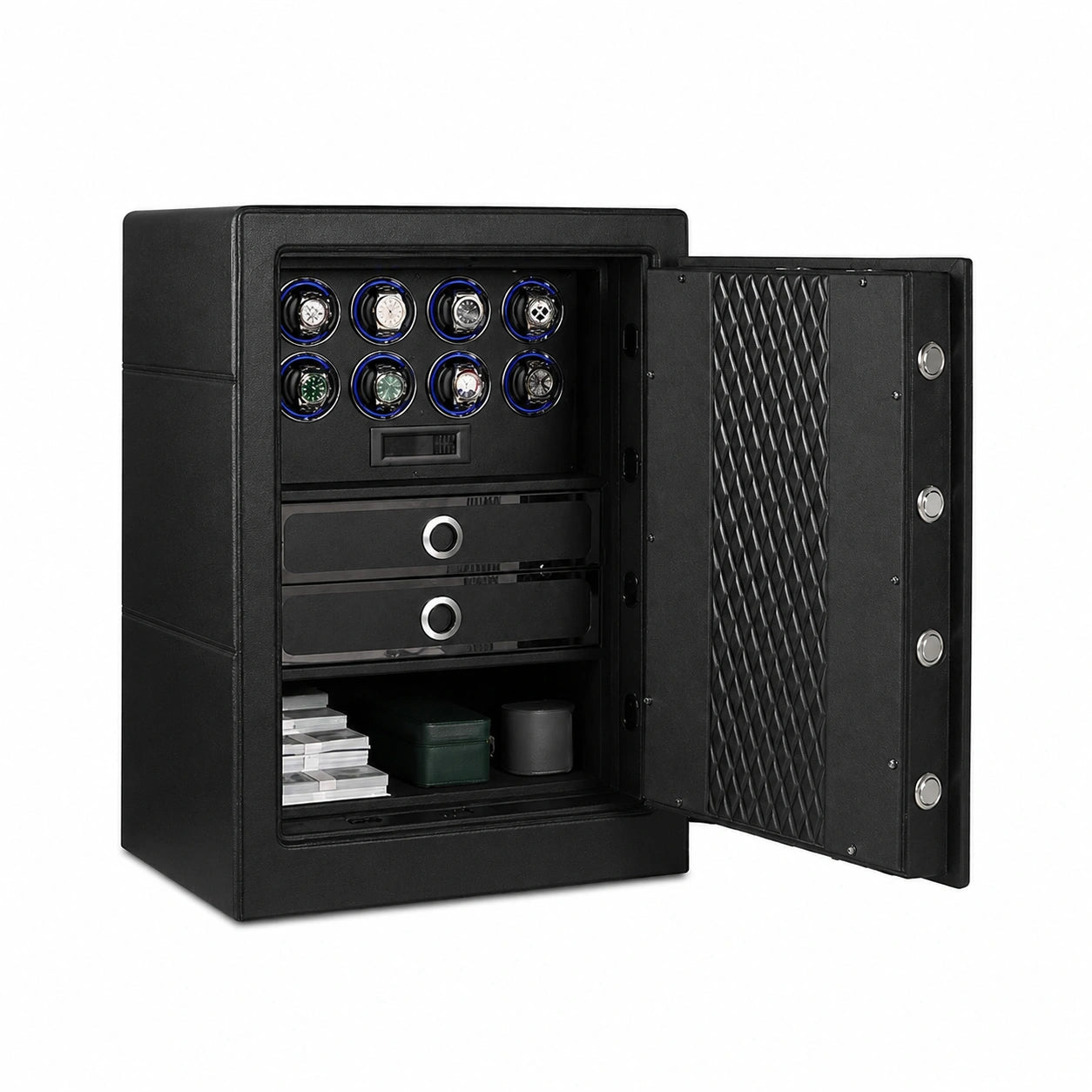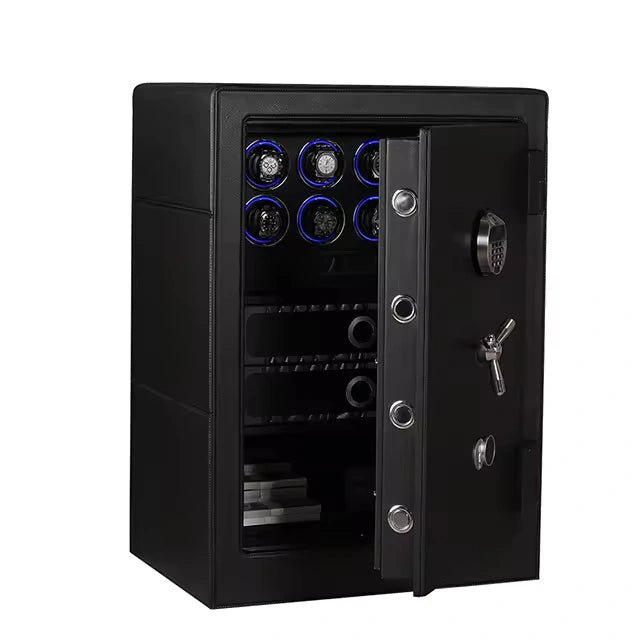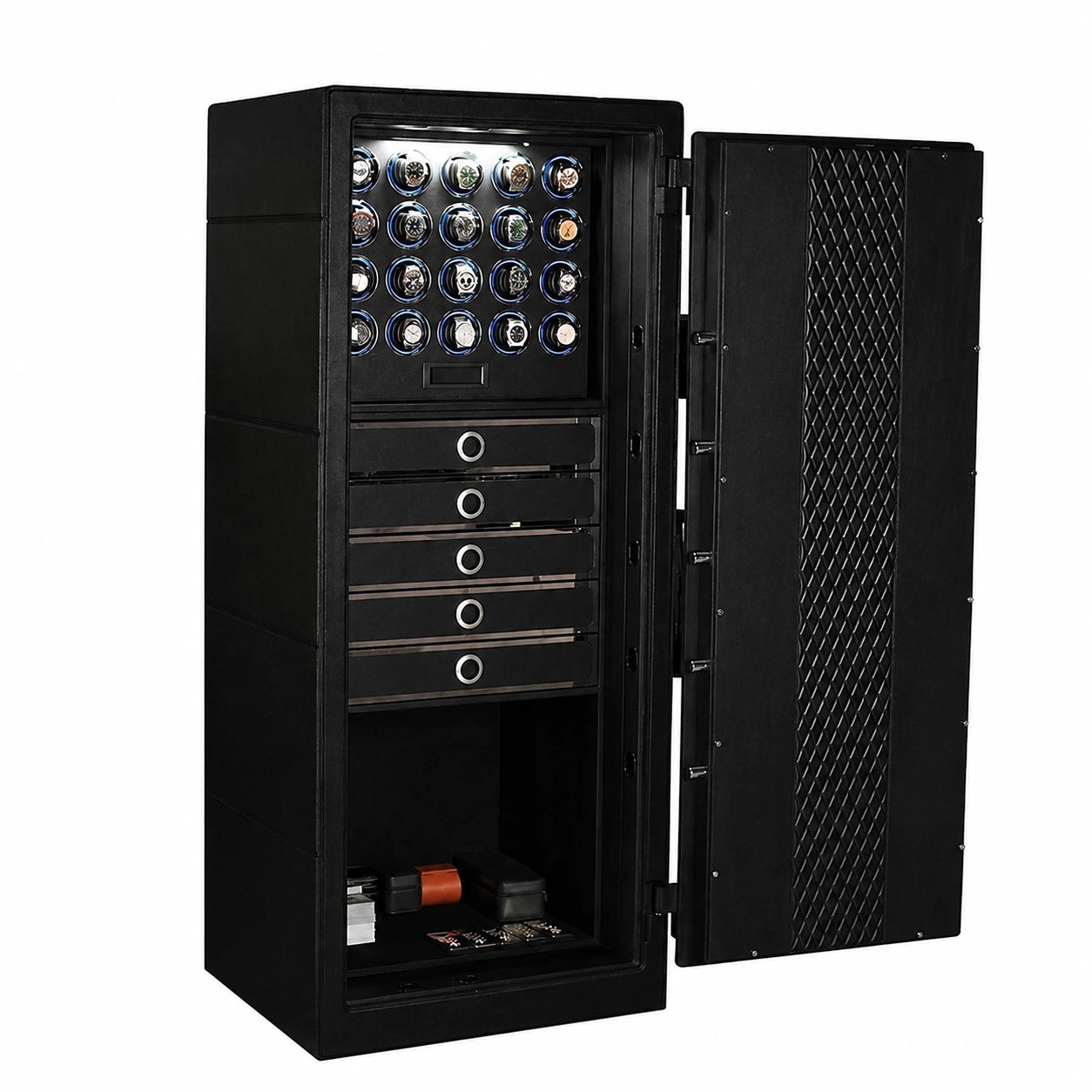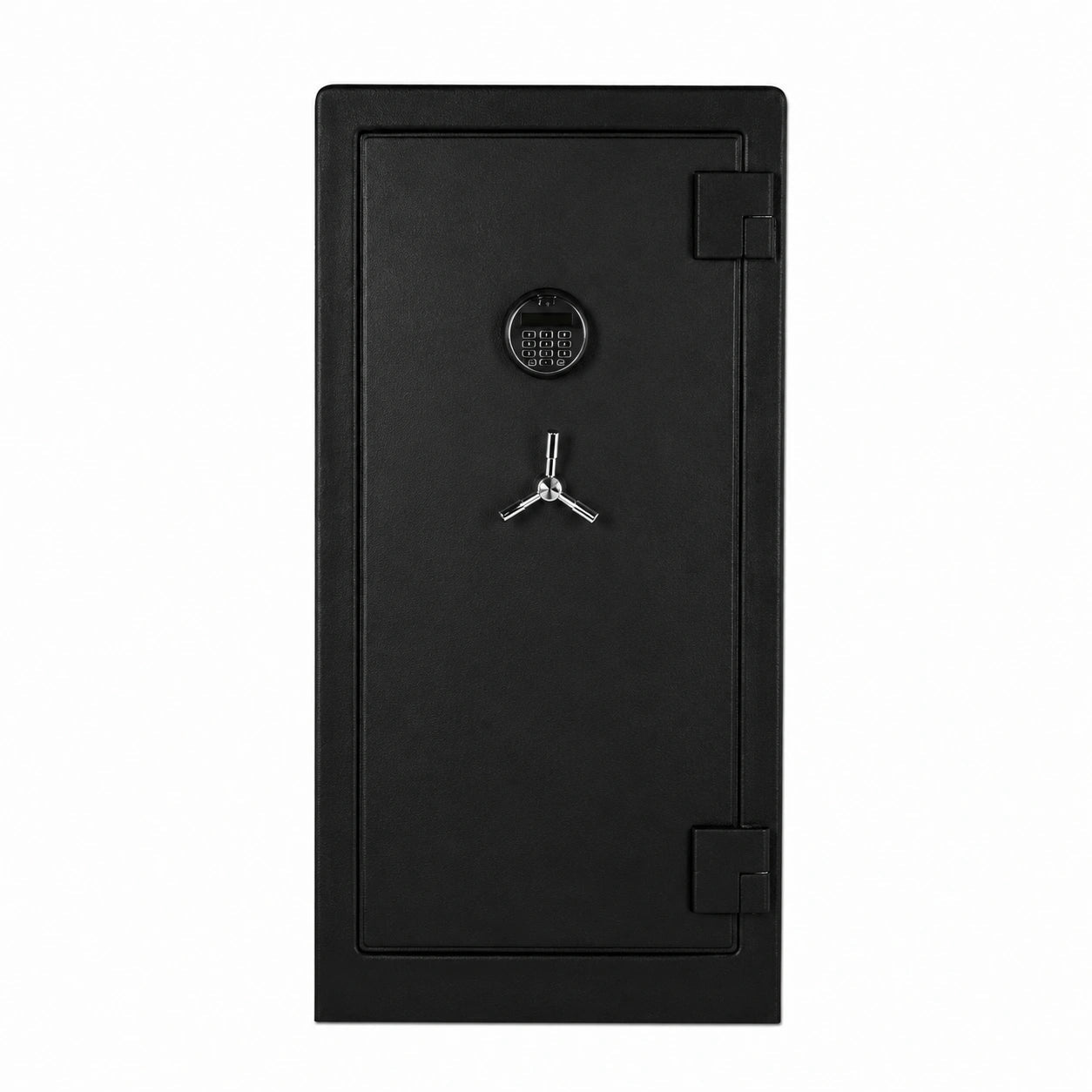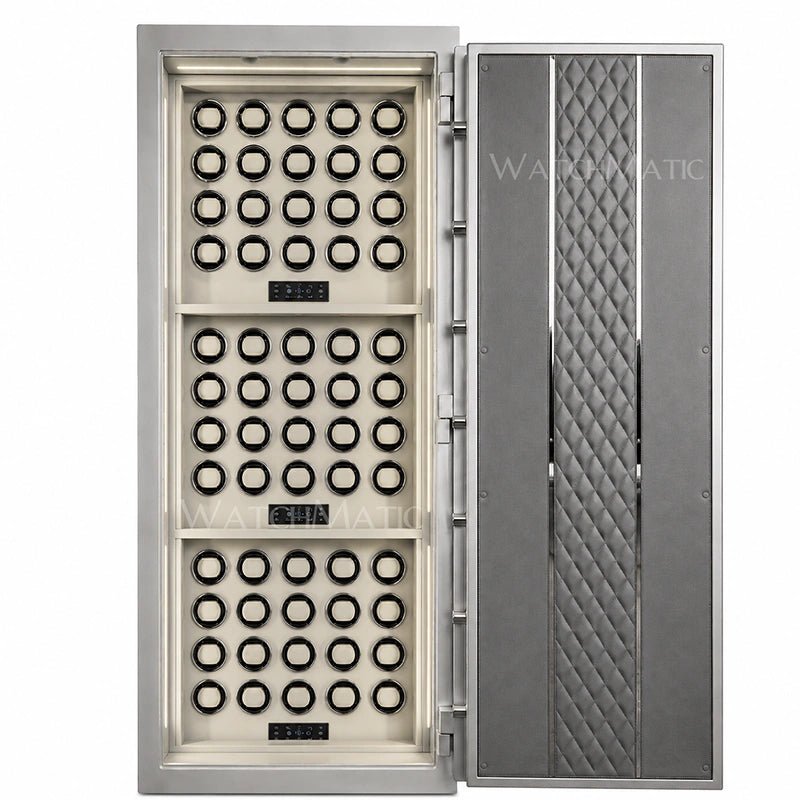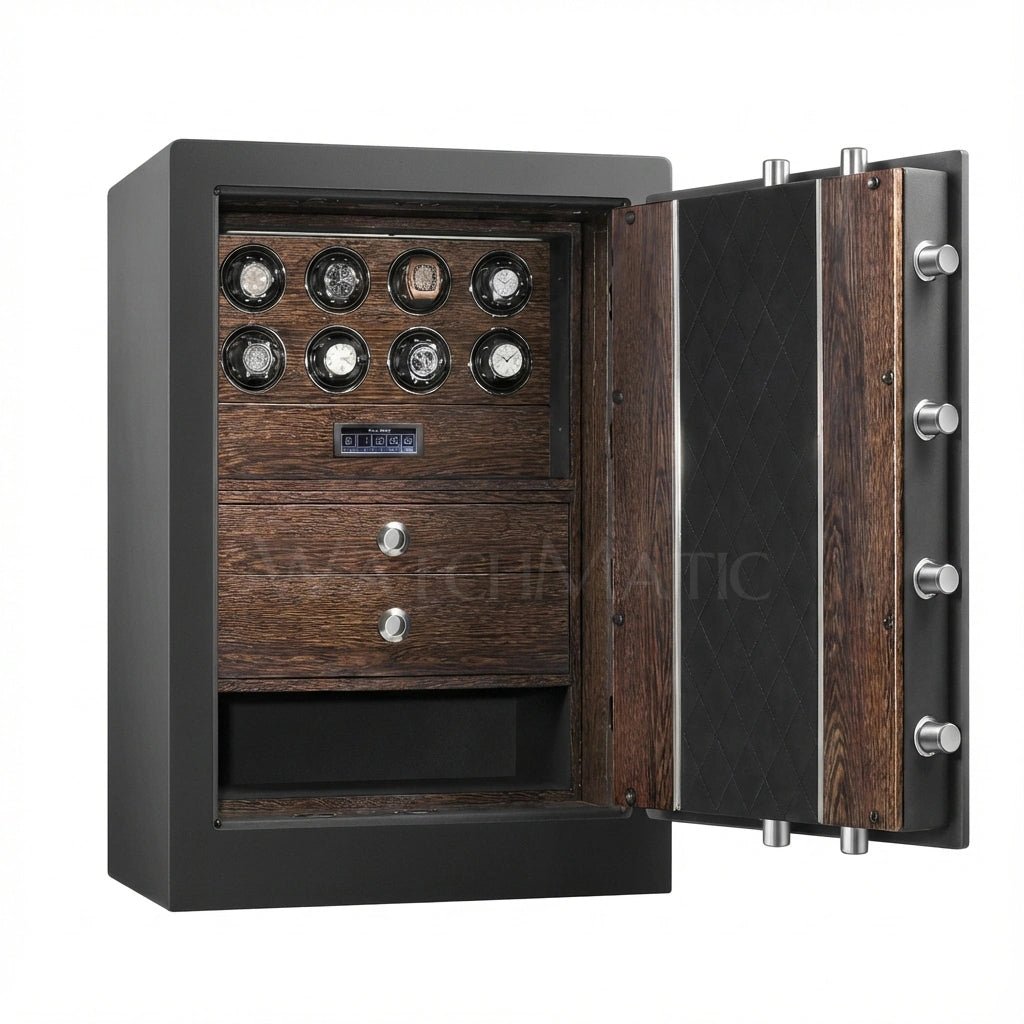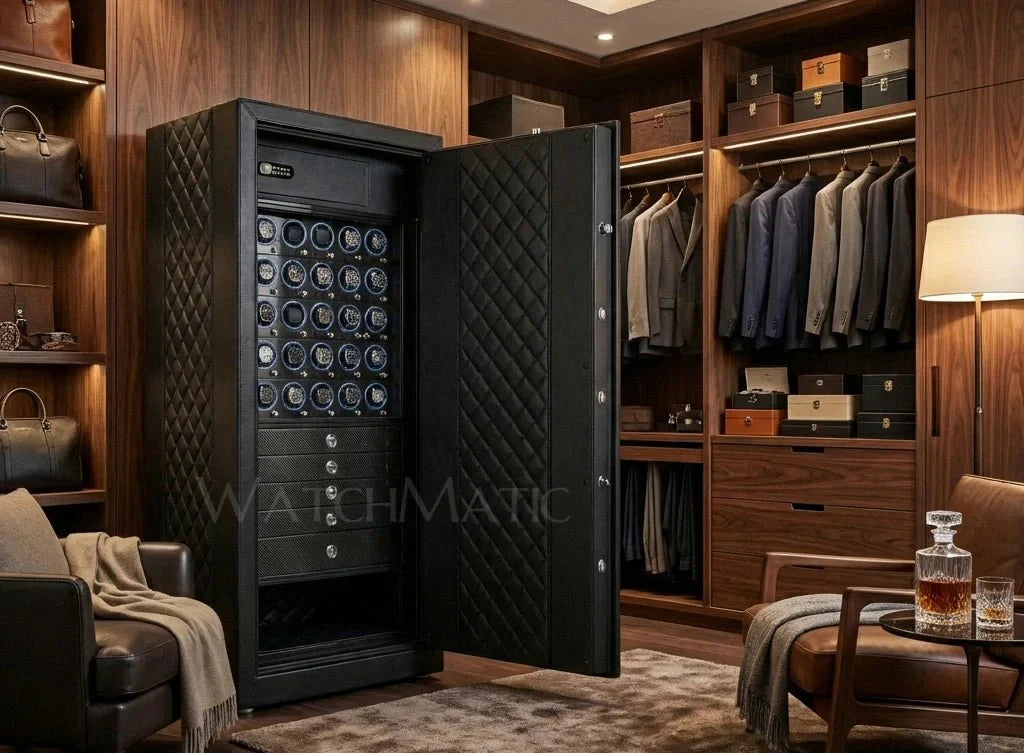
Luxury watch safes are not designed to be “power-tool proof.” They are engineered to slow down and complicate forced entry attempts, especially within the short time window typical of residential burglaries.
In real-world scenarios, resistance to power tools depends on:
- Multi-layer steel body construction
- Reinforced door structure (including 10mm structural steel panels)
- Lock protection architecture
- Overall mass (150–650 kg) limiting removal
The objective is delay, not indestructibility.
When structural mass and layered steel architecture work together, they increase the time, noise, and effort required to breach the enclosure — often beyond what opportunistic intruders are willing to risk.
What “Resistant to Power Tools” Really Means
The term often creates unrealistic expectations.
No residential security enclosure is engineered to withstand unlimited industrial assault with unlimited time. The relevant question is:
Can it be breached quickly, quietly, and within the short duration typical of a home burglary?
Most residential break-ins are time-bound. Extended use of loud equipment such as angle grinders dramatically increases detection risk. Intruders operate under pressure — from alarms, neighbors, and response time.
Security engineering therefore focuses on:
- Increasing breach time
- Increasing noise output
- Reducing favorable working conditions
- Forcing abandonment
Resistance is about shifting probability.
How Multi-Layer Steel Changes the Equation
A single sheet of steel behaves differently from a composite structure.
In a properly engineered floor-standing watch safe:
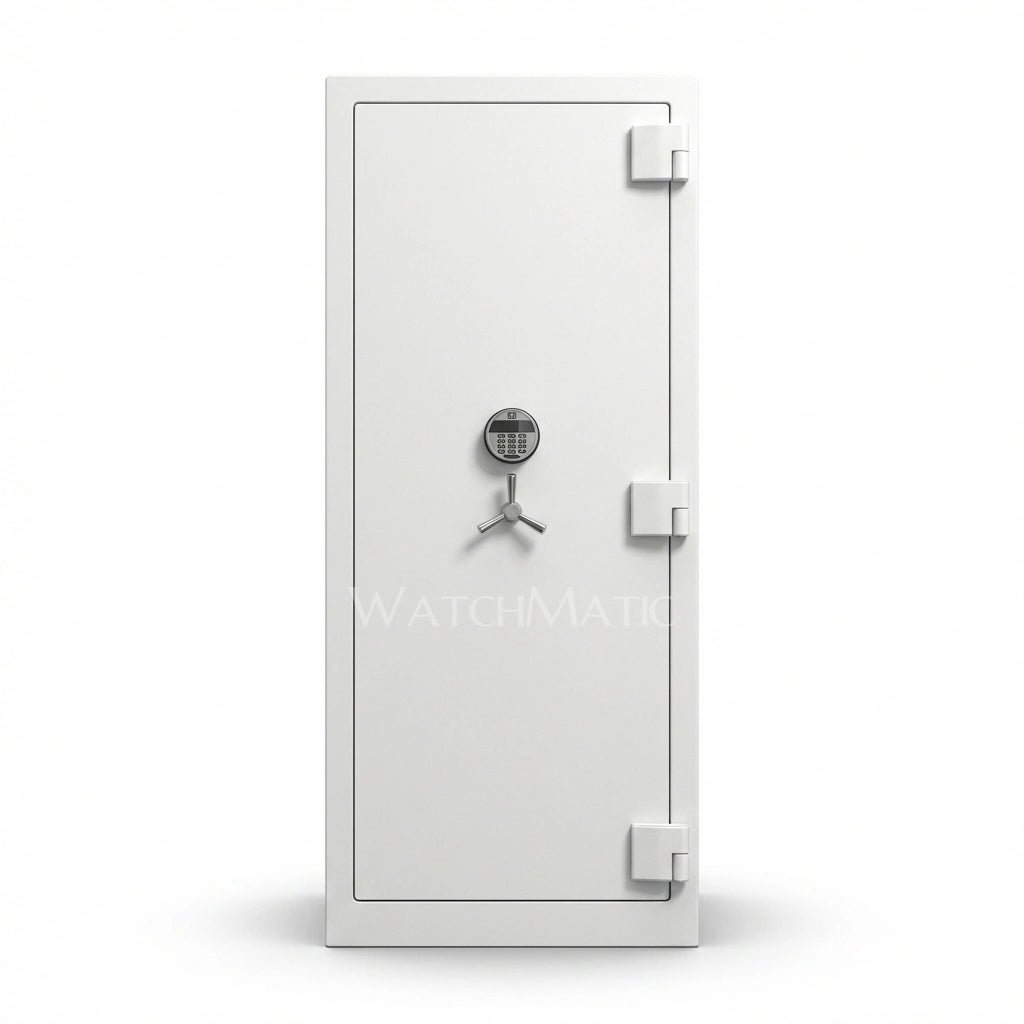
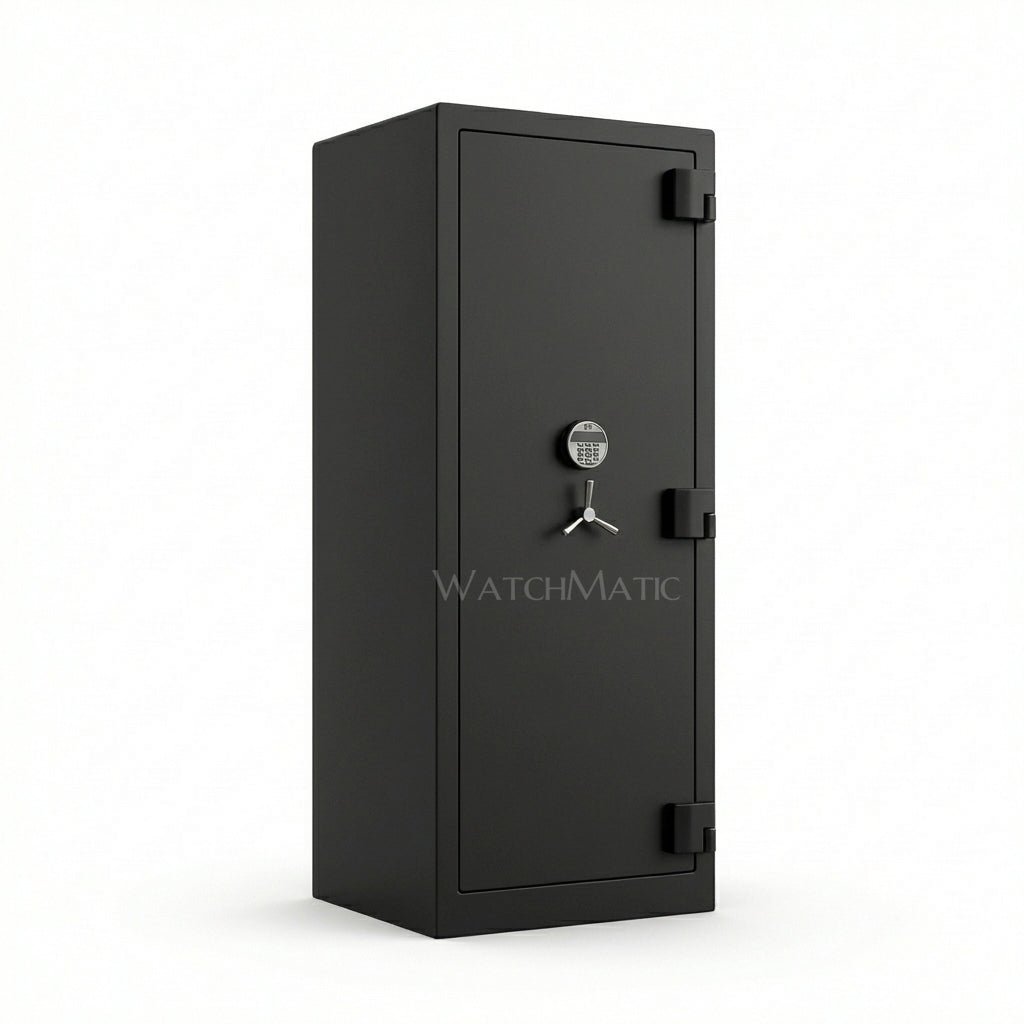
- The door integrates reinforced 10mm structural steel within a multi-layer body architecture.
- Internal layers distribute and absorb concentrated mechanical force.
- Locking zones are shielded behind hardened reinforcement plates.
- Door-to-frame tolerances are minimized to reduce pry leverage.
This configuration prevents a simple, single-cut penetration. Even if the outer layer is compromised, additional internal barriers must still be defeated.
From an engineering standpoint, that sequential resistance increases tool wear and extends attack duration.
Why Weight Is a Defensive Variable
Power tool resistance is not only about thickness.
A lightweight cabinet can be removed and opened off-site with unlimited time. A floor-standing unit weighing 300–600 kg behaves differently.
Within the WatchMatic product architecture, structural mass is intentionally integrated into the defensive strategy.
Our high-security cabinet lineup consists of floor-standing models engineered between 150–650 kg. Due to their mass and stable footprint, these units do not require bolt-down anchoring under standard residential conditions.
Weight denies mobility.
Limited mobility restricts time.
Restricted time alters outcome.
What Happens During a Grinder Attempt?
In practical attack scenarios, grinders typically target:
- Door edges
- Locking areas
- Hinge zones
However, effective cutting requires stable positioning and uninterrupted operation. In a residential setting, both are difficult to maintain.
Multi-layer steel construction slows penetration speed. Internal reinforcement prevents immediate access even if outer material is breached. The process becomes progressive rather than instantaneous.
That delay often determines whether an attempt continues or is abandoned.
For collectors storing timepieces from brands such as Rolex, Patek Philippe, or Audemars Piguet, risk should be evaluated within realistic residential parameters — not extreme theoretical scenarios.
The Strategic Perspective
A luxury watch safe is not built to defeat every conceivable tool indefinitely.
It is engineered to:
- Resist concentrated mechanical assault
- Increase breach time
- Reduce removal feasibility
- Complicate attack execution
When reinforced 10mm door architecture, multi-layer steel layering, and substantial structural mass converge, rapid forced entry becomes significantly less practical under typical residential conditions.
Security is not absolute.
It is engineered delay — applied intelligently.
If you want to see how these technical considerations apply in real-world scenarios, refer to our Watch Safe Guide for a comprehensive breakdown.