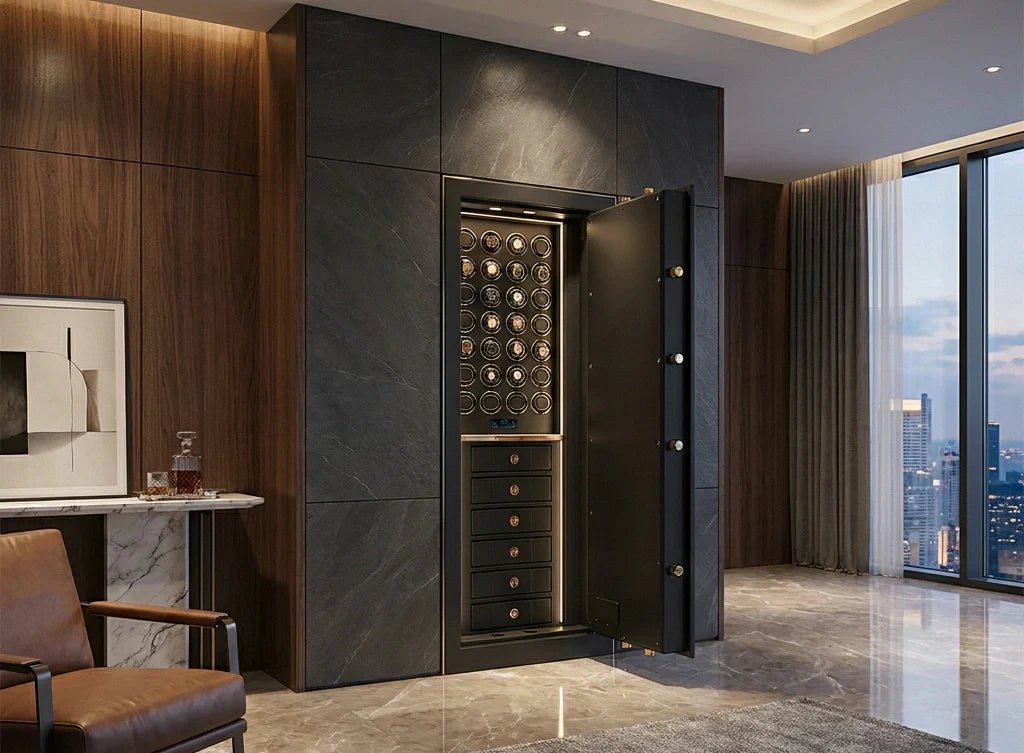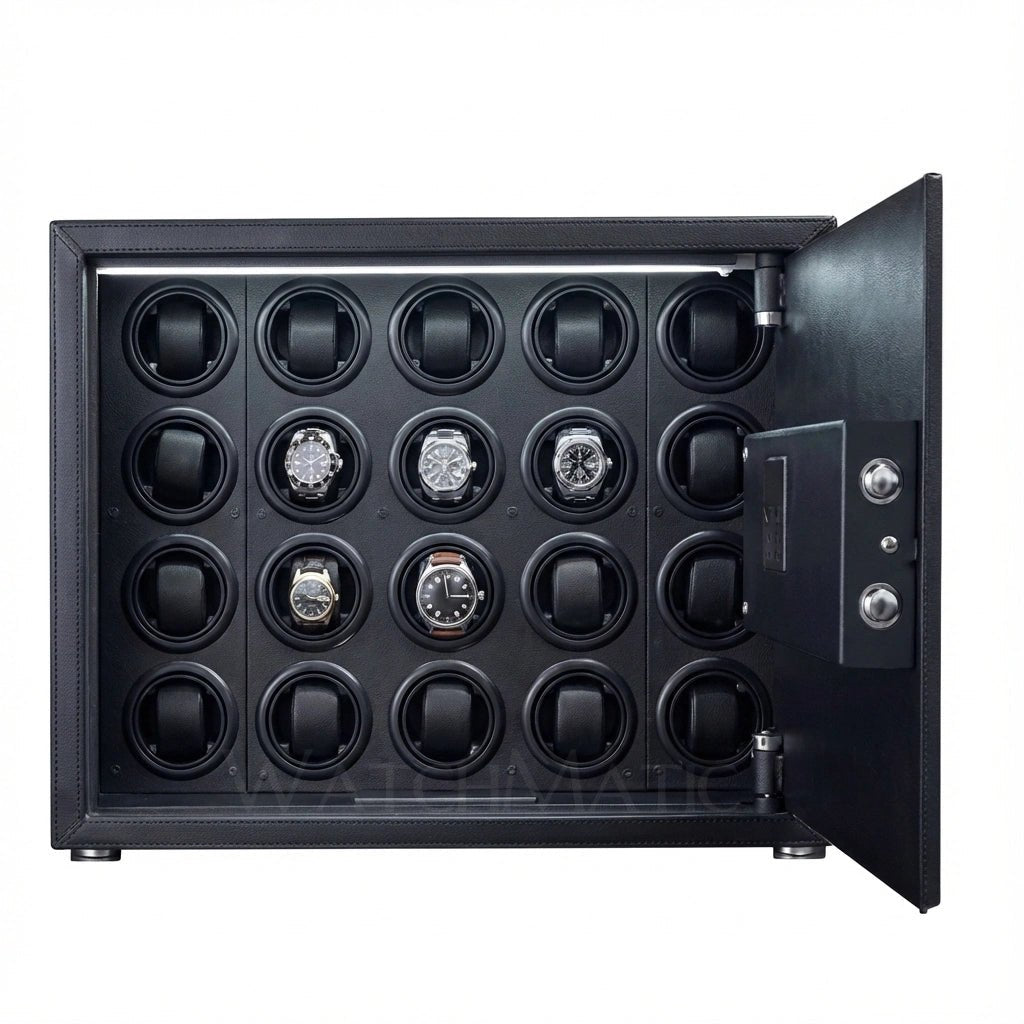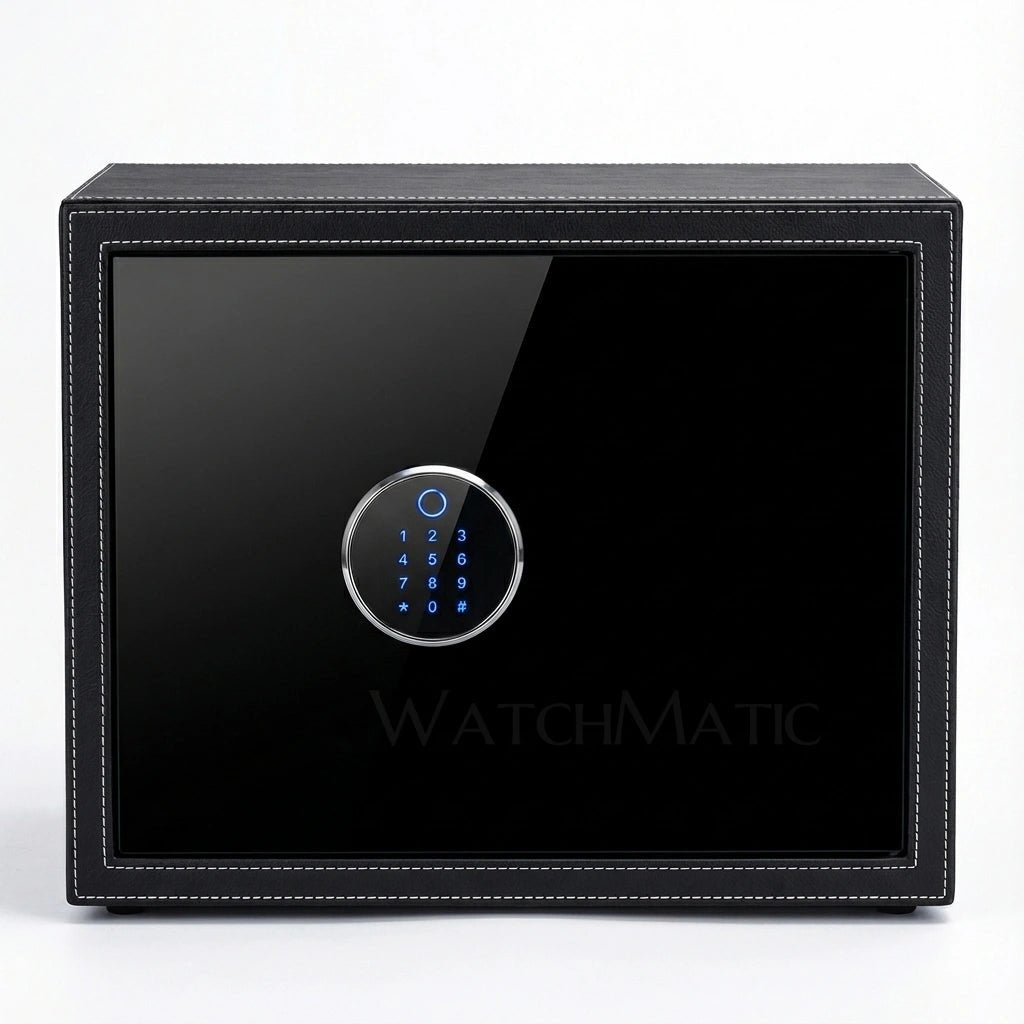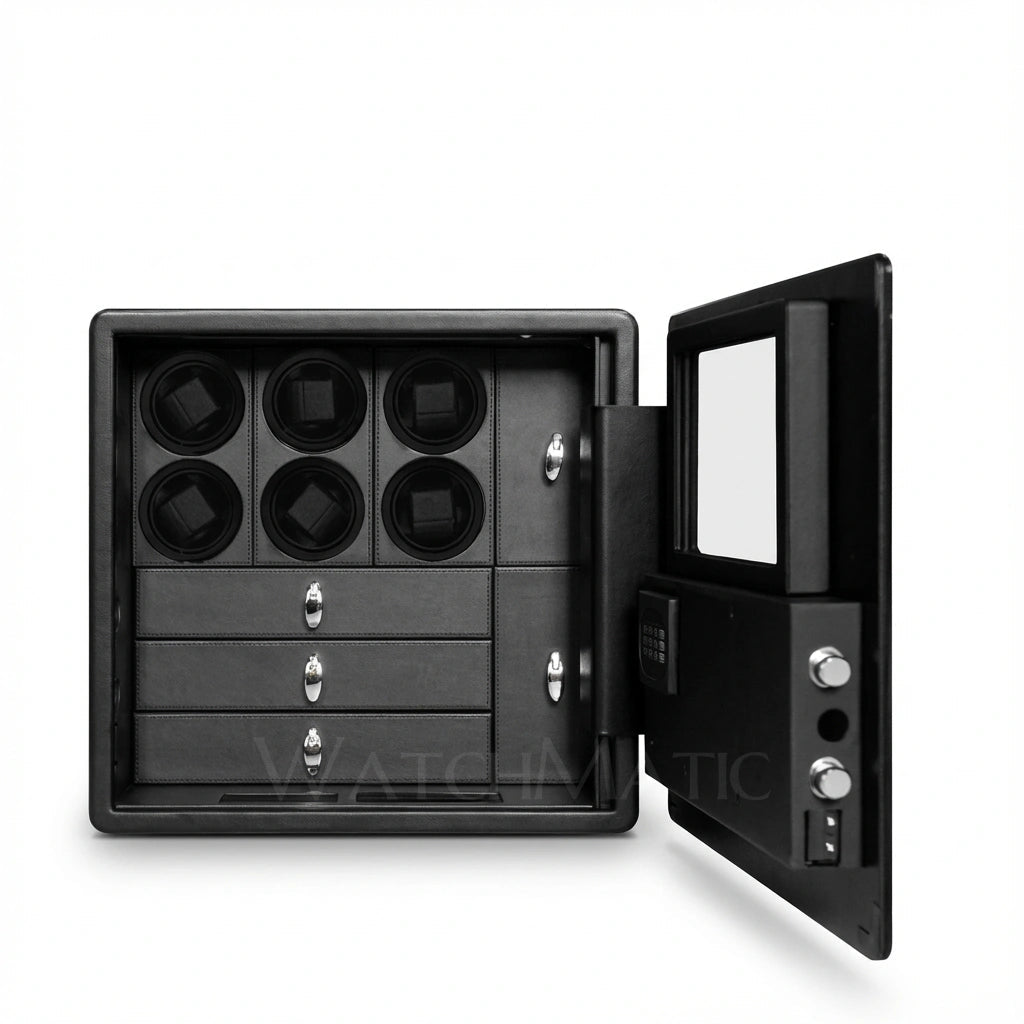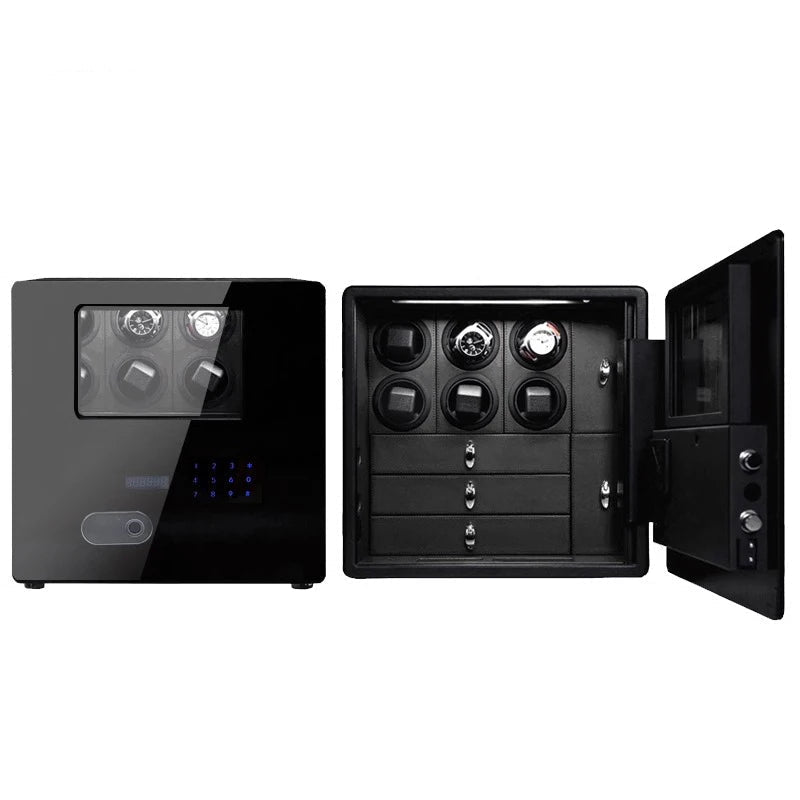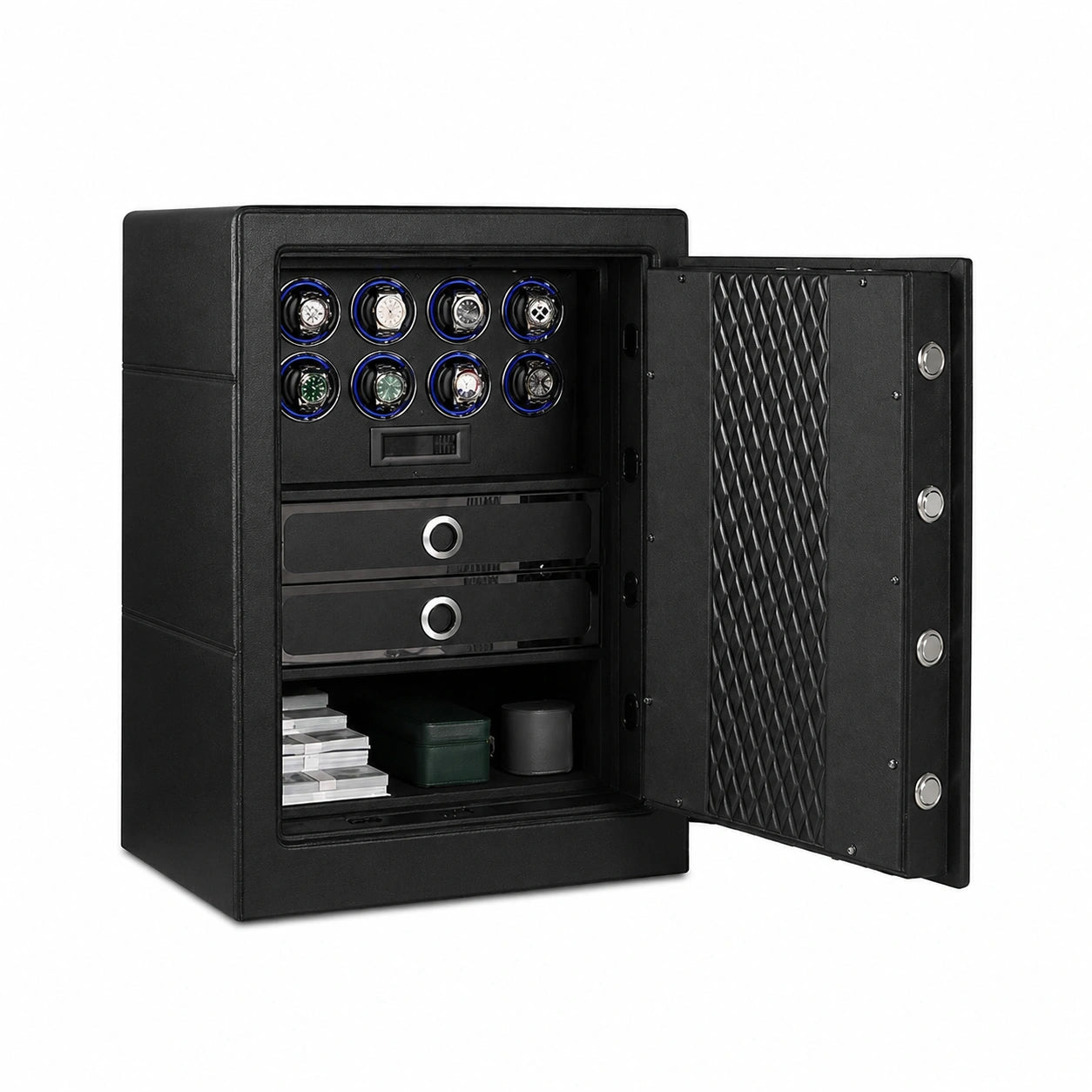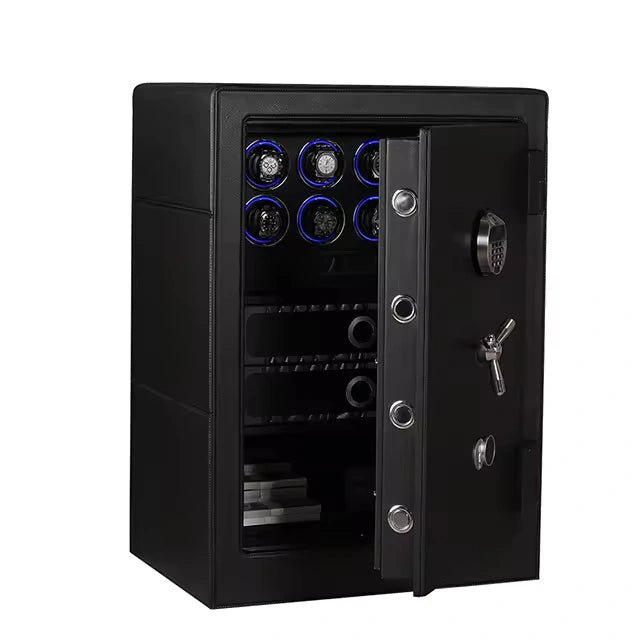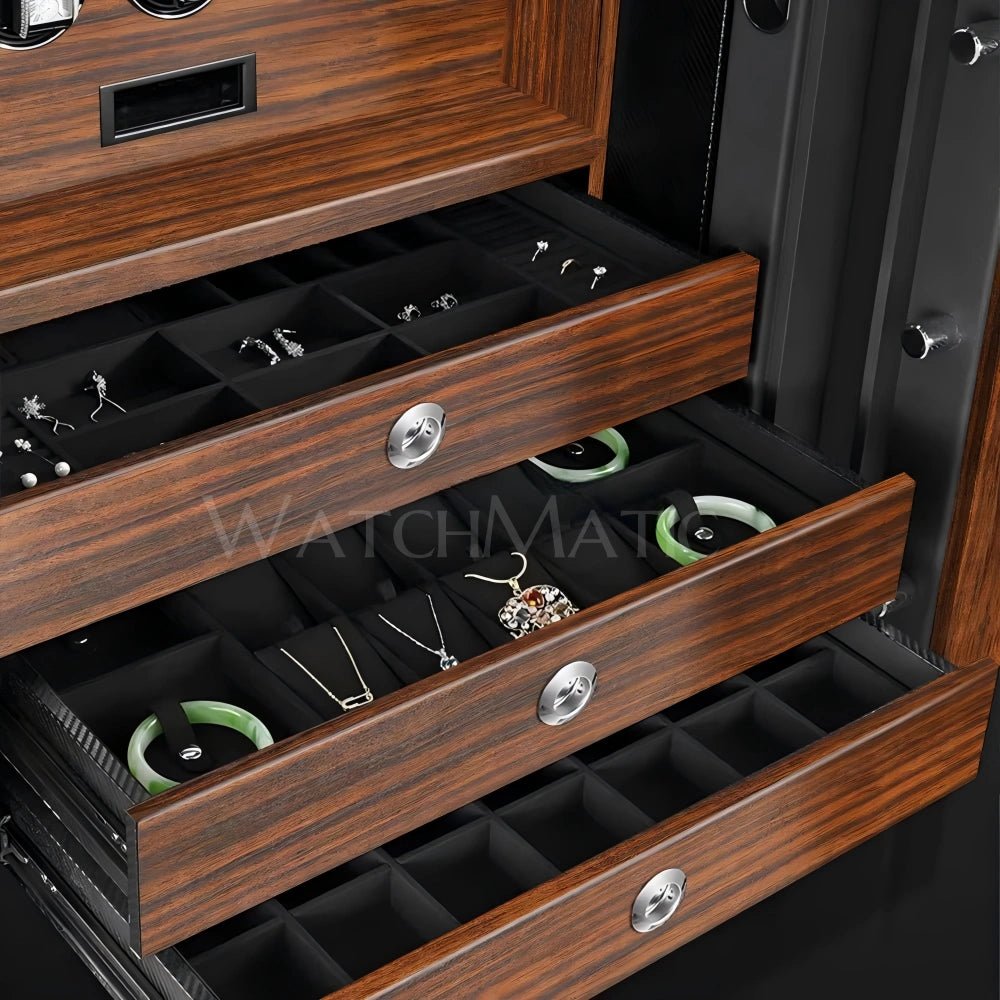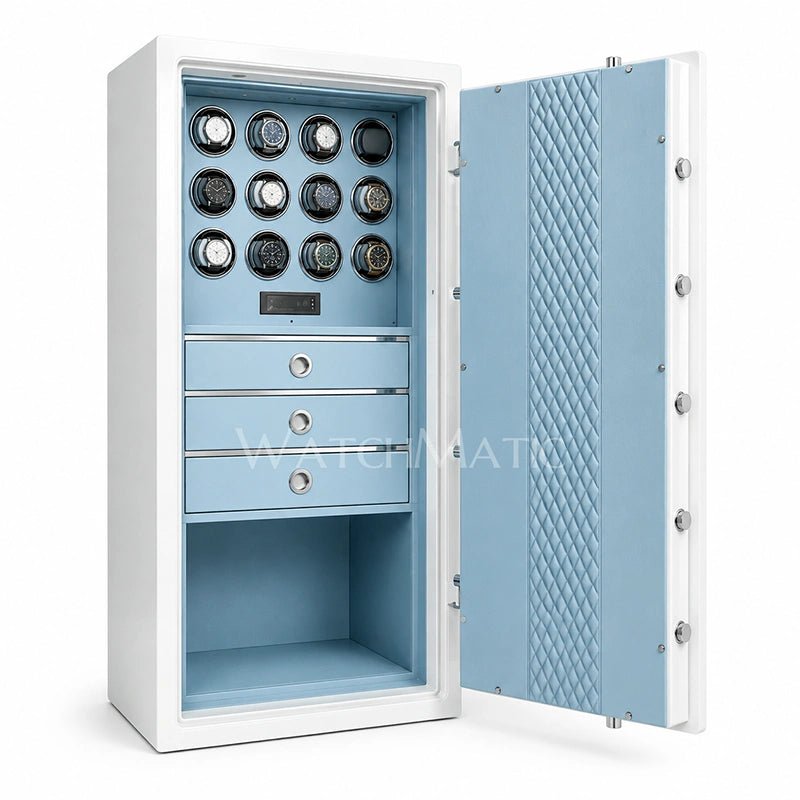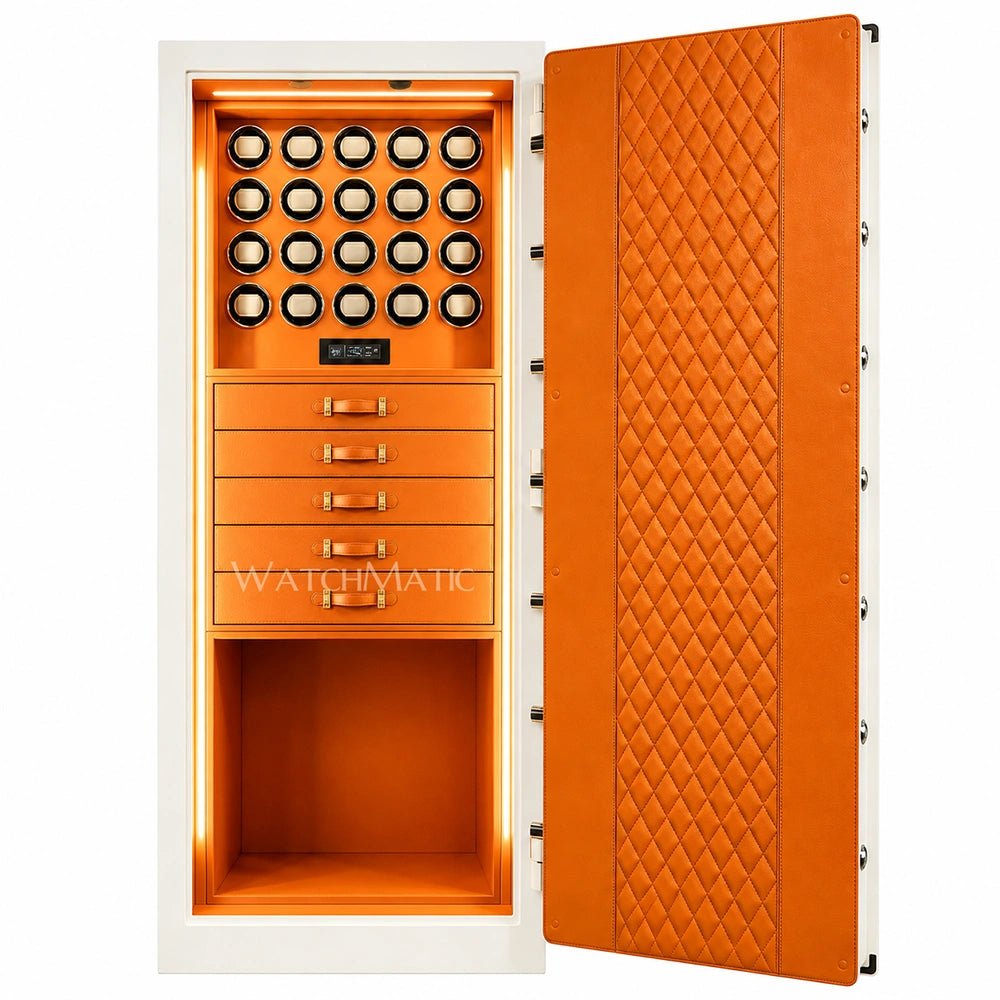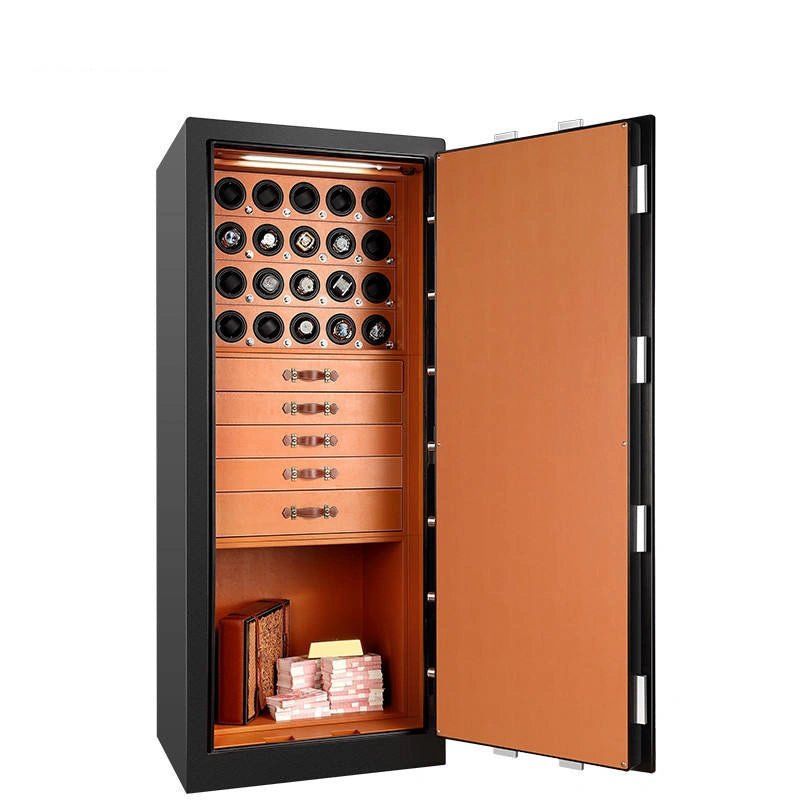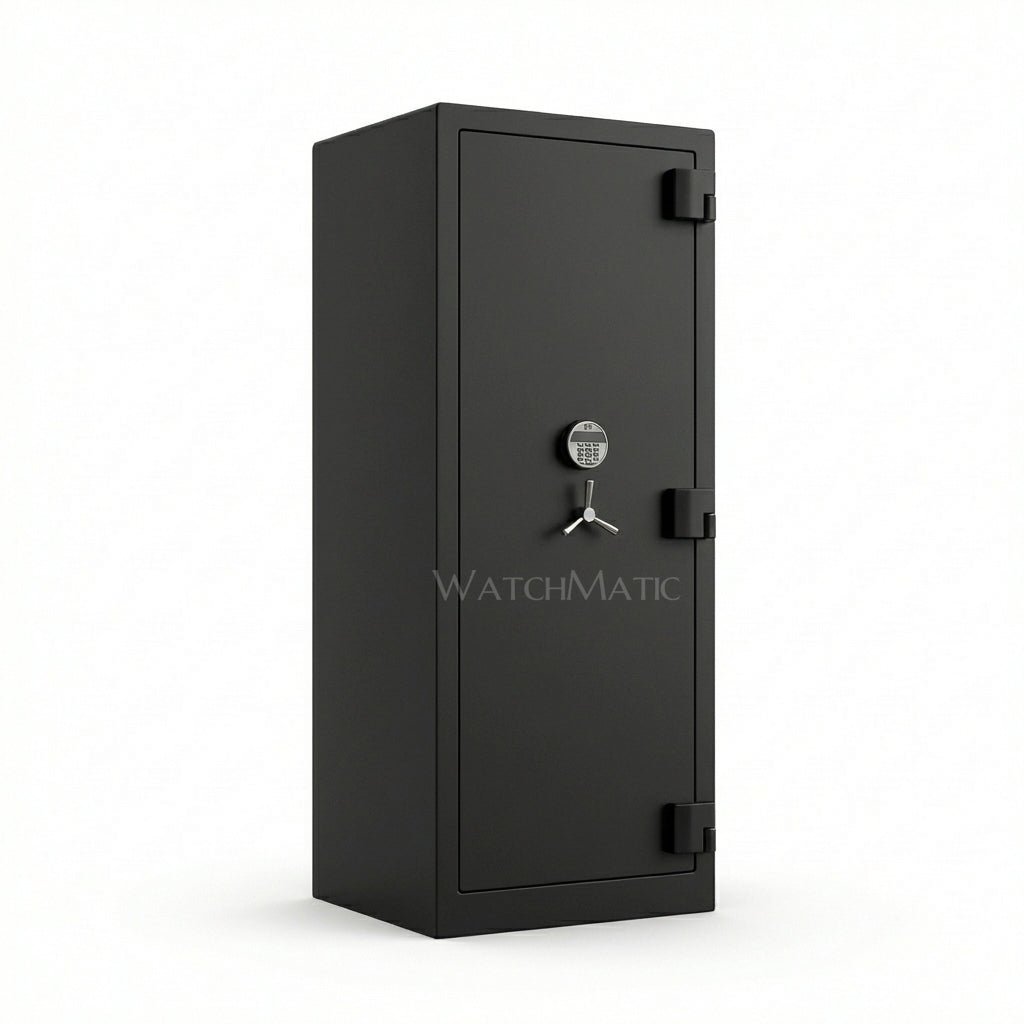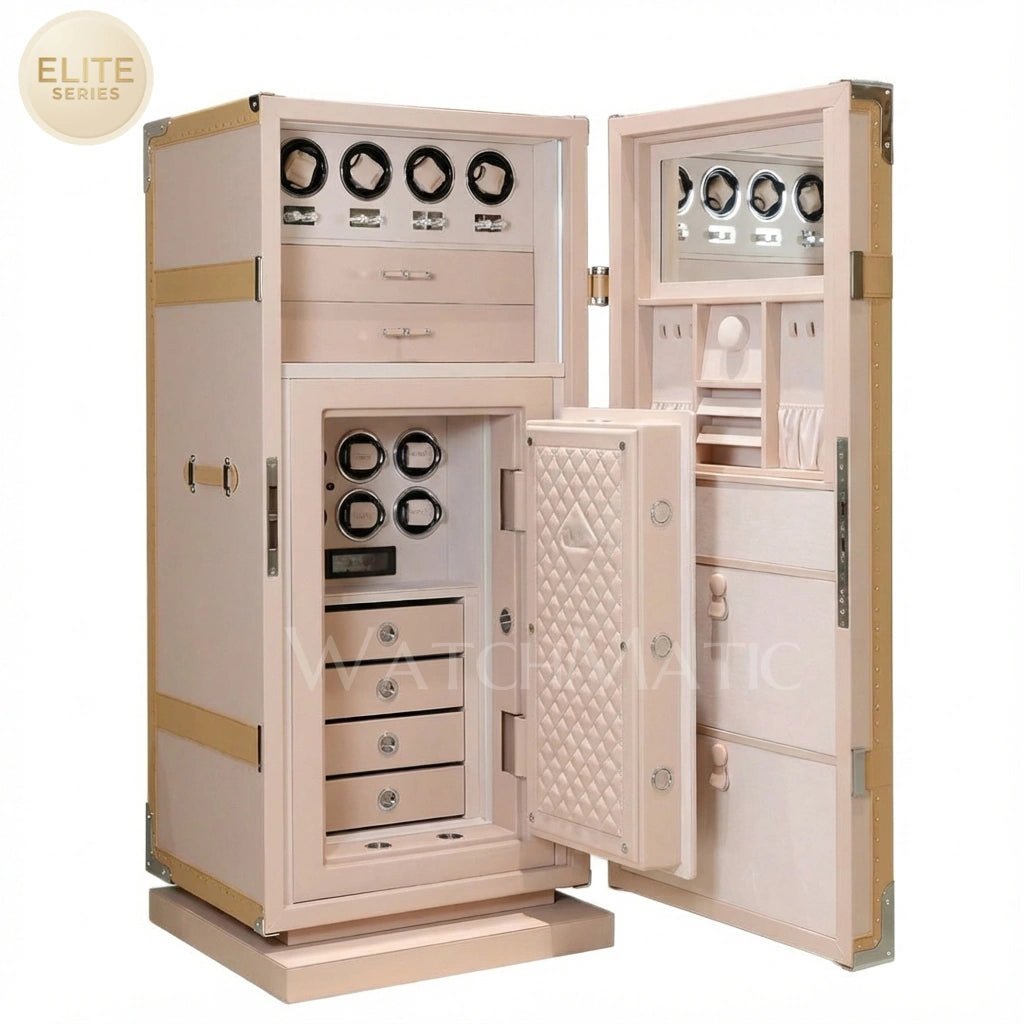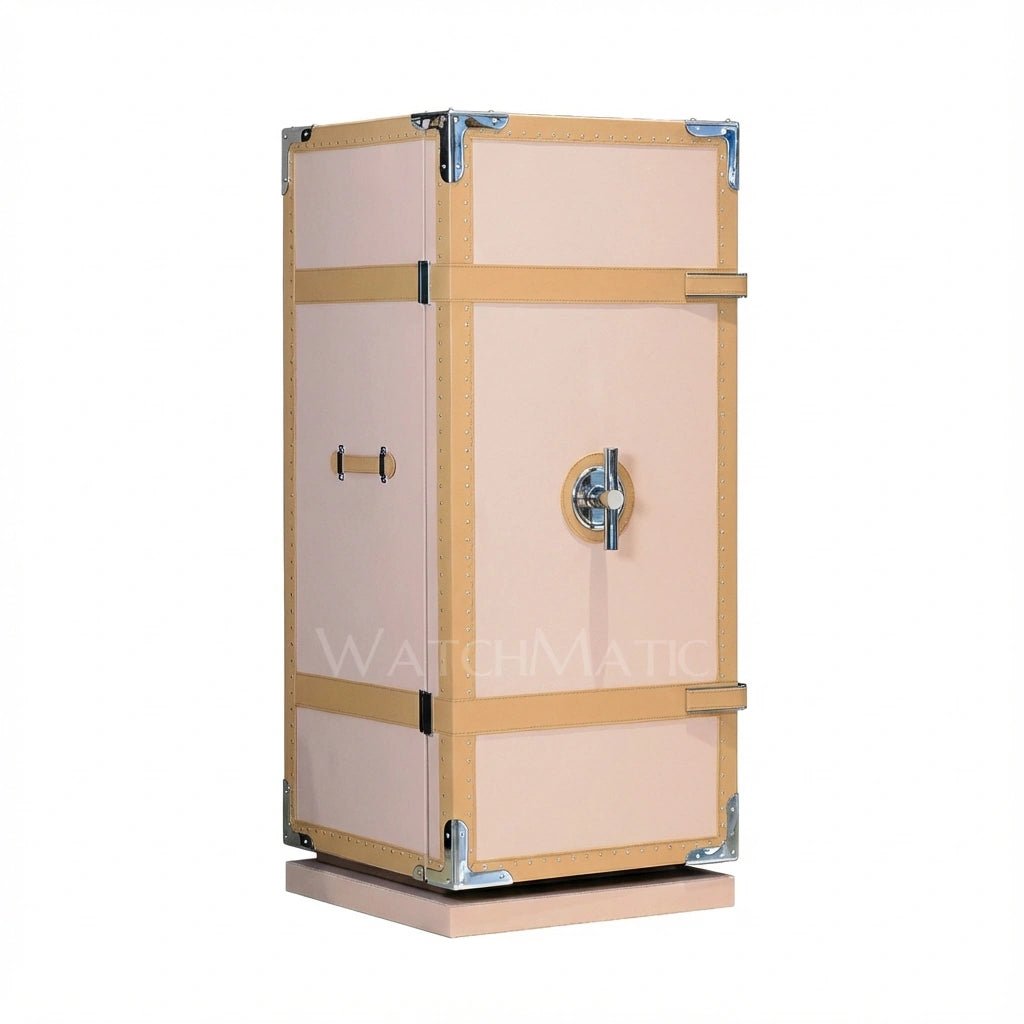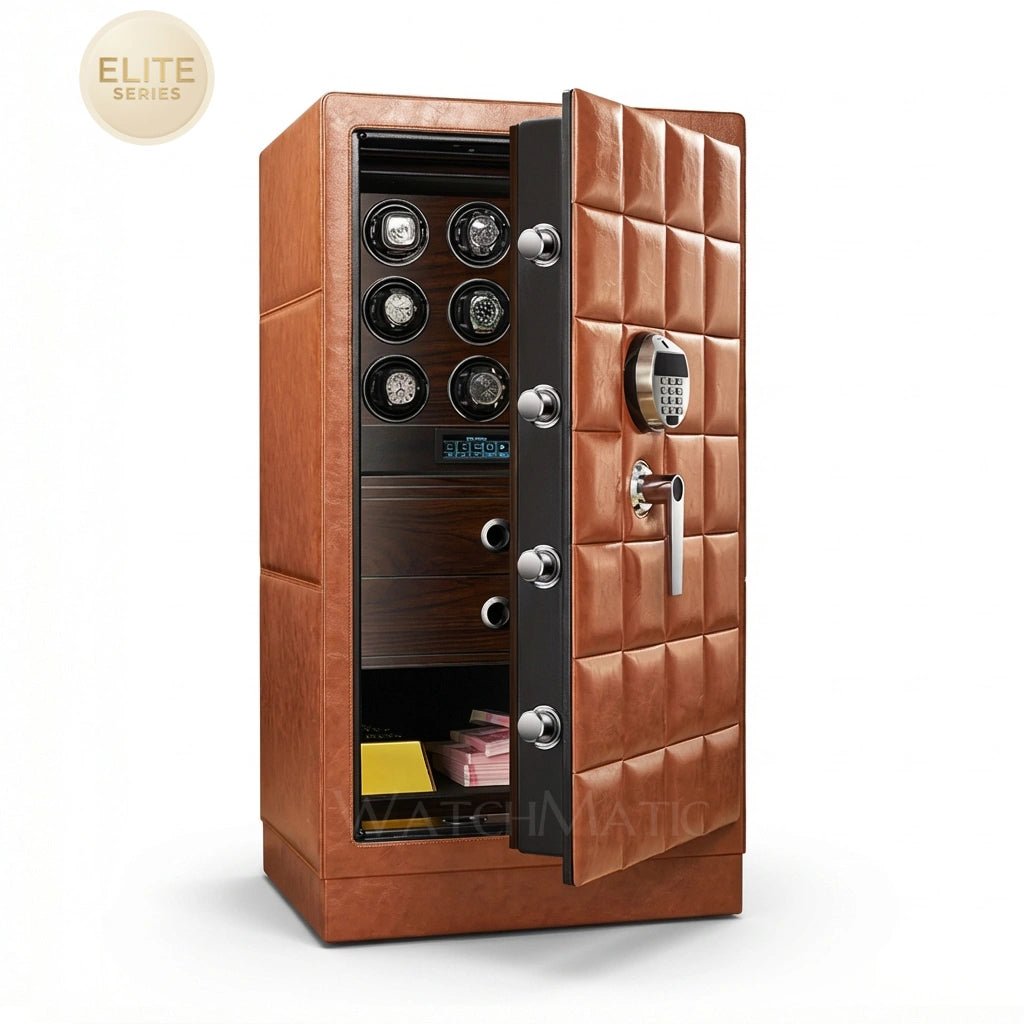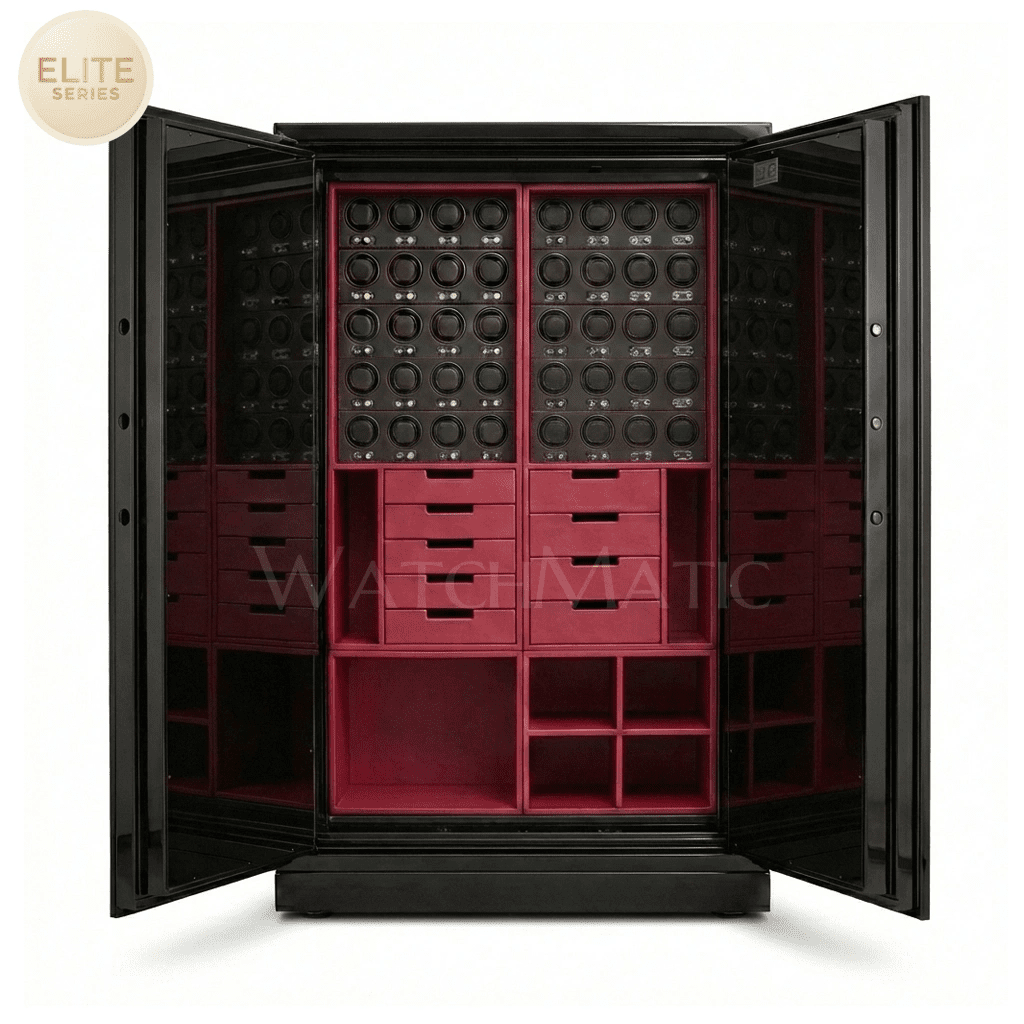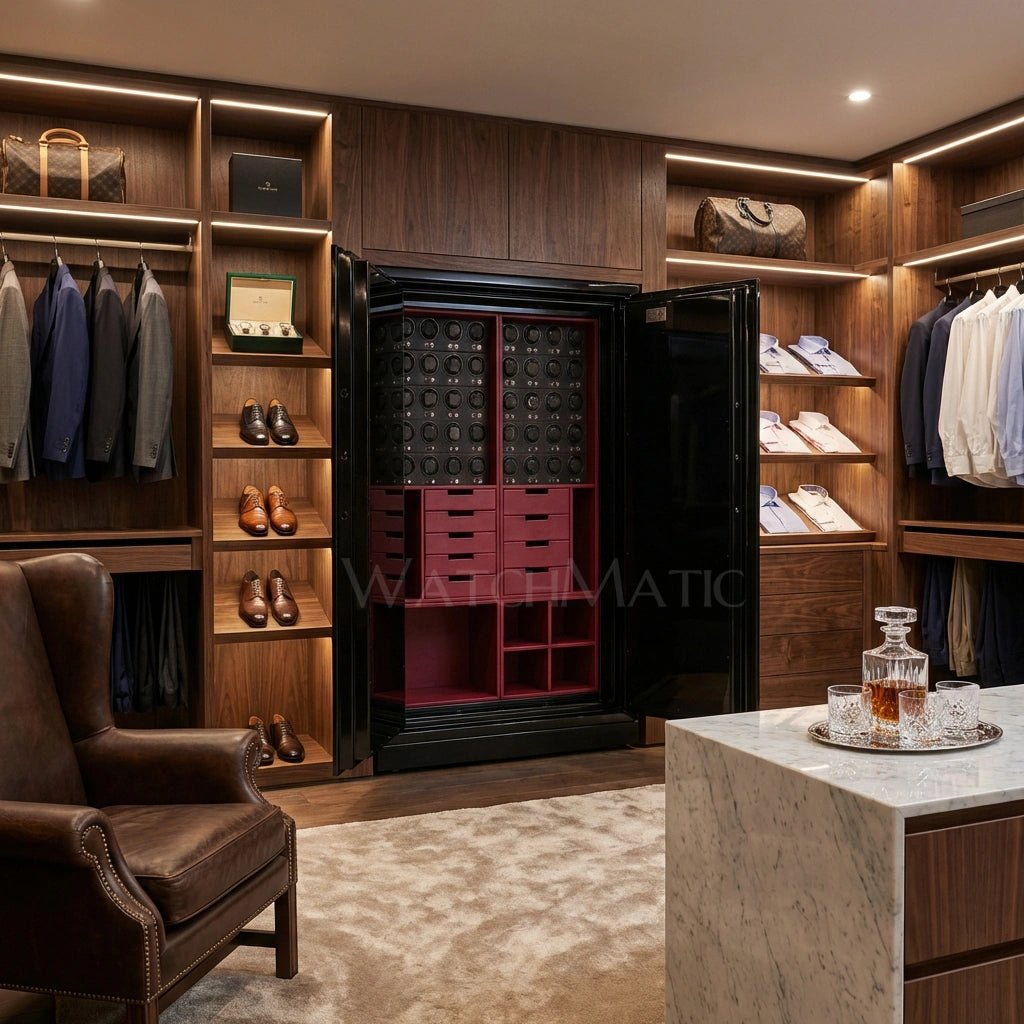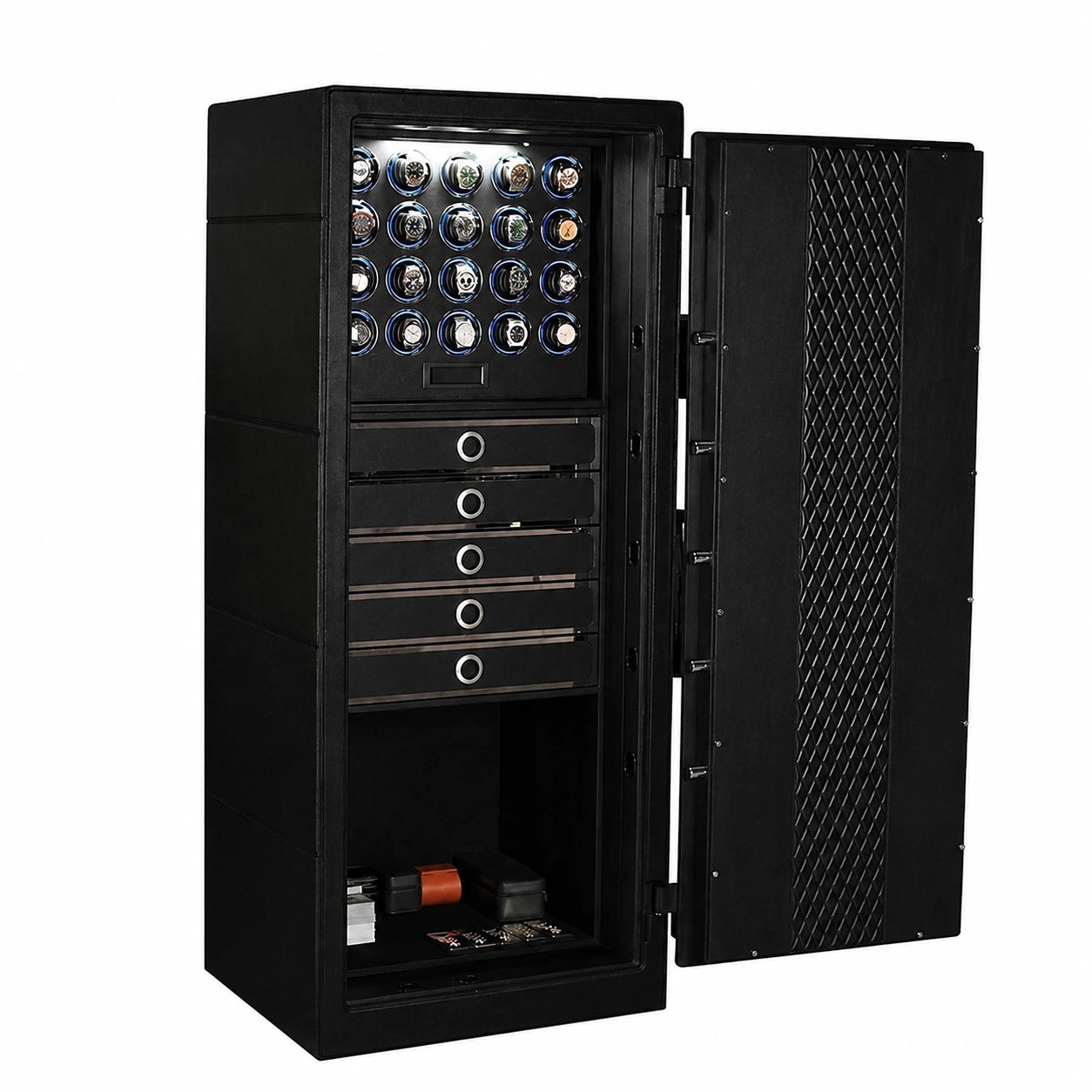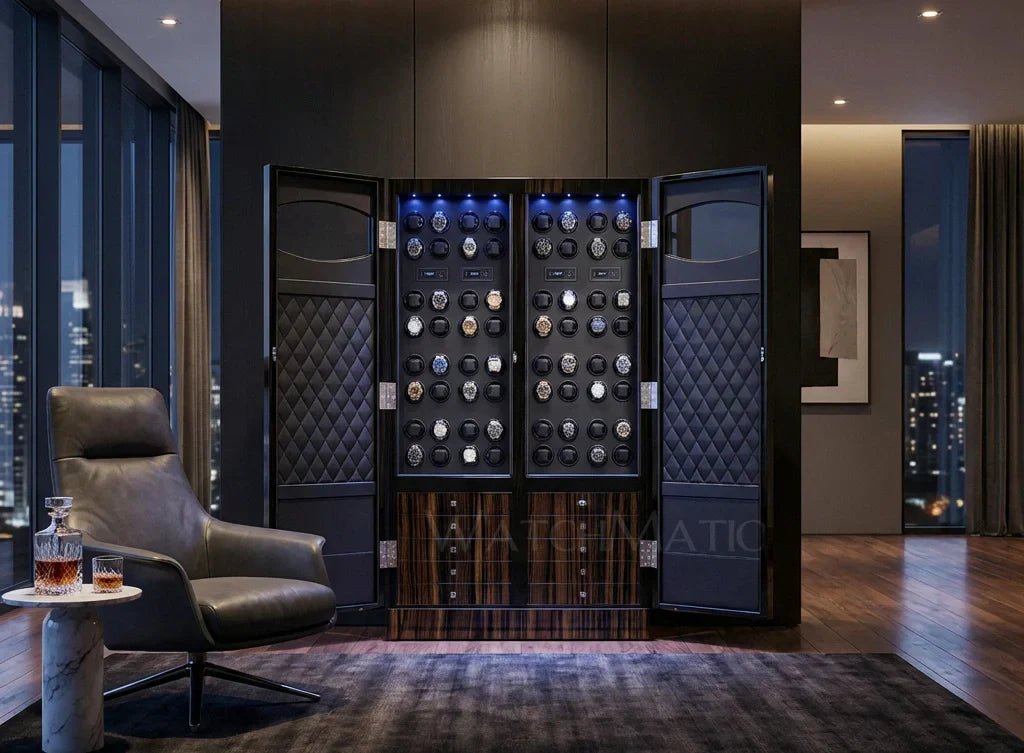
Storing grand complications from Patek Philippe requires more than standard safe storage. These timepieces combine perpetual calendars, minute repeaters, split-seconds chronographs, and tourbillons — all of which demand:
- Stable environmental conditions (temperature & humidity control)
- Certified fire resistance (EN 15659 LFS 30 P or LFS 60 P)
- Structural security and anchoring strategy
- High-capacity configuration to accommodate collection growth
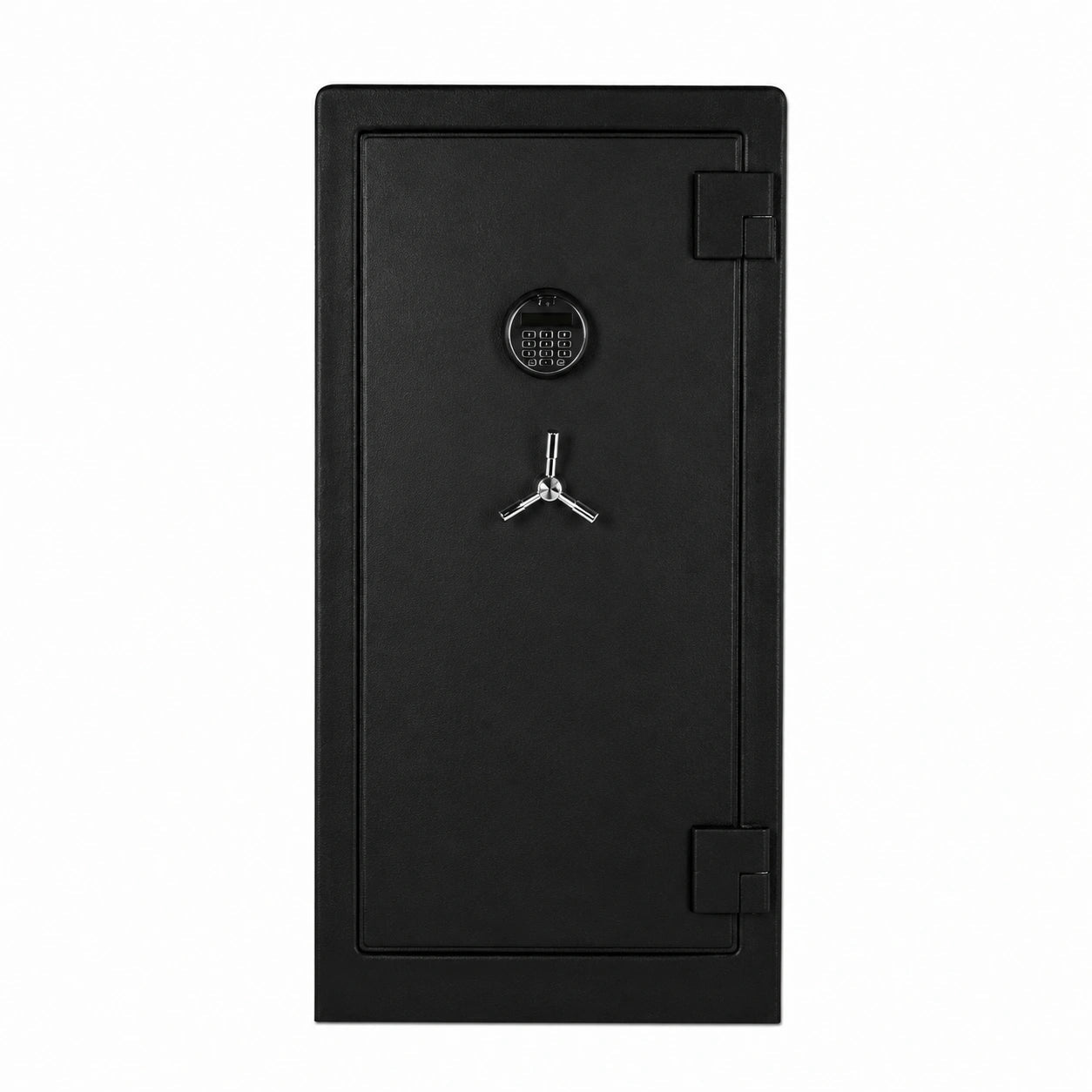
A high-capacity watch safe for grand complications must prioritize movement preservation, mechanical stability, and long-term asset protection, not just burglary resistance.
This guide explains what serious collectors should evaluate when protecting some of horology’s most complex creations.
Why Grand Complications Require a Different Standard of Protection
A three-hand sports watch and a grand complication are fundamentally different mechanical ecosystems.
Grand complications may include:
- Perpetual calendar modules
- Minute repeater assemblies
- Split-seconds chronograph mechanisms
- Multi-layered gear trains
- High-density hand stacks
Through years of observing automatic movements stored in both humid and dry climates, we’ve seen that complex calibers are significantly more sensitive to environmental fluctuation than simpler movements.
Preserving these pieces is not about “locking them away.”
It is about maintaining mechanical equilibrium.
Capacity Planning for Serious Patek Philippe Collectors
Collectors of grand complications rarely stop at one piece.
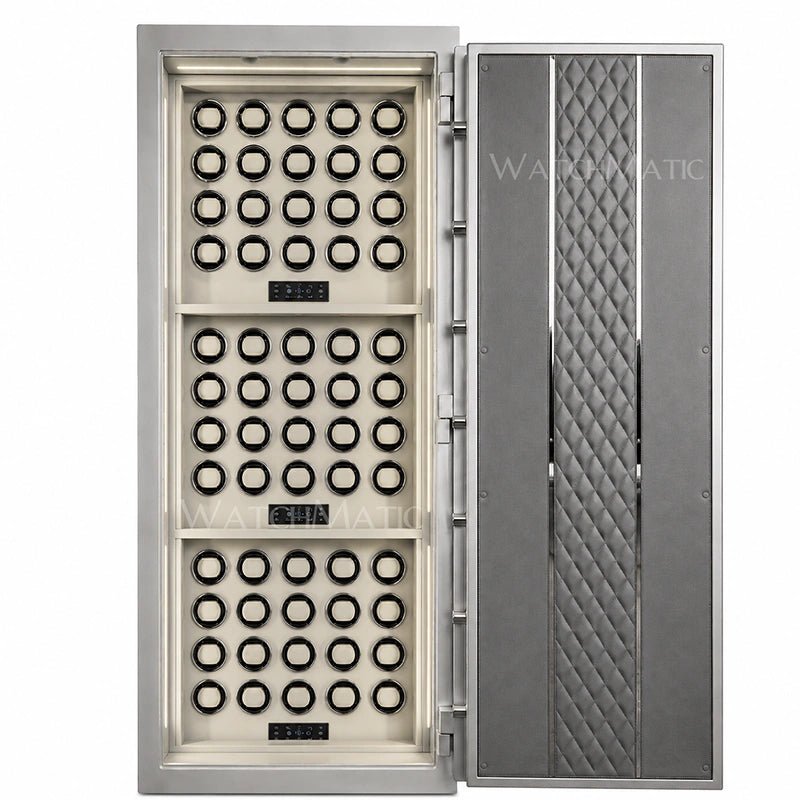
High-capacity safes should account for:
- Current collection size
- Future acquisitions
- Physical clearance between oversized cases
- Rotor integration (if applicable)
Practical Capacity Framework
| Collection Profile | Recommended Safe Size |
|---|---|
| 3–5 grand complications | Medium-capacity system |
| 6–12 high complications | Large-capacity configuration |
| 12+ investment-grade pieces | Executive / bespoke safe build |
Oversized cases and display backs require greater spacing than standard sports models.
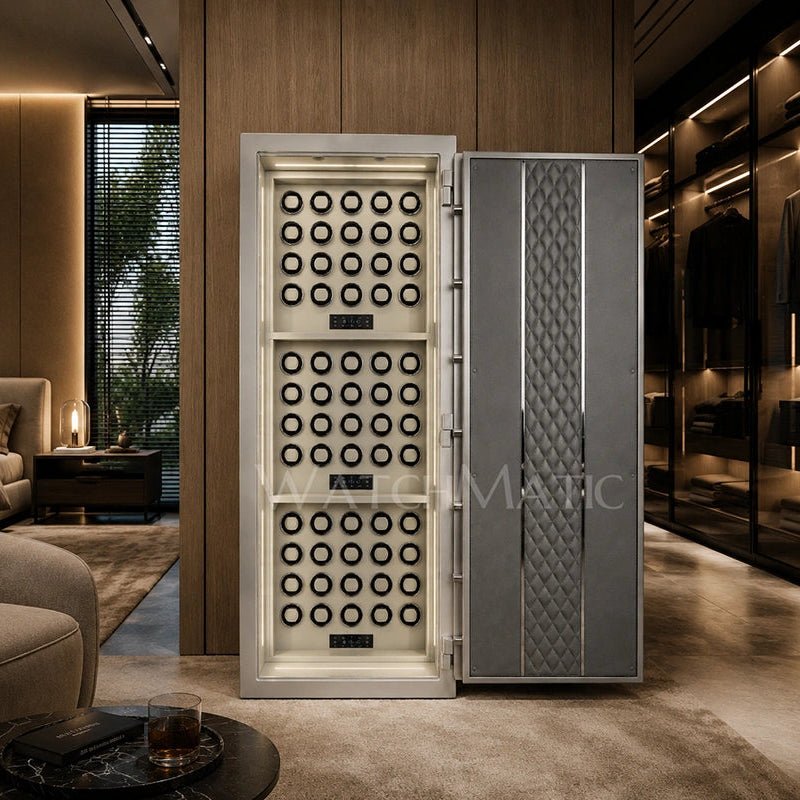
When evaluating large systems within a certified <a href="/collections/luxury-watch-safes">executive-grade watch safe collection</a>, interior layout flexibility becomes critical.
Fire Protection: Why Certification Matters
Grand complications represent substantial capital value.
Safes certified under EN 15659 – LFS 30 P or LFS 60 P provide independently tested fire resistance under controlled exposure.
Based on our engineering standards, thermal stability is essential for:
- Lubricant viscosity preservation
- Dial material stability
- Spring integrity
- Movement geometry consistency
For estate properties or wildfire-exposed regions, LFS 60 P certification provides extended protection.
For a detailed explanation of fire duration differences, see our technical breakdown of 30 vs 60 vs 120-minute watch safe fire ratings.
Environmental Stability & Humidity Control
Humidity is an often overlooked risk.
Grand complications contain:
- High part density
- Multi-layered calendar discs
- Fine tolerances between components
Even minor corrosion can affect long-term performance.
At WatchMatic, we’ve found that serious collectors increasingly request:
- Integrated humidity management
- Stable internal air environment
- Climate-consistent storage zones
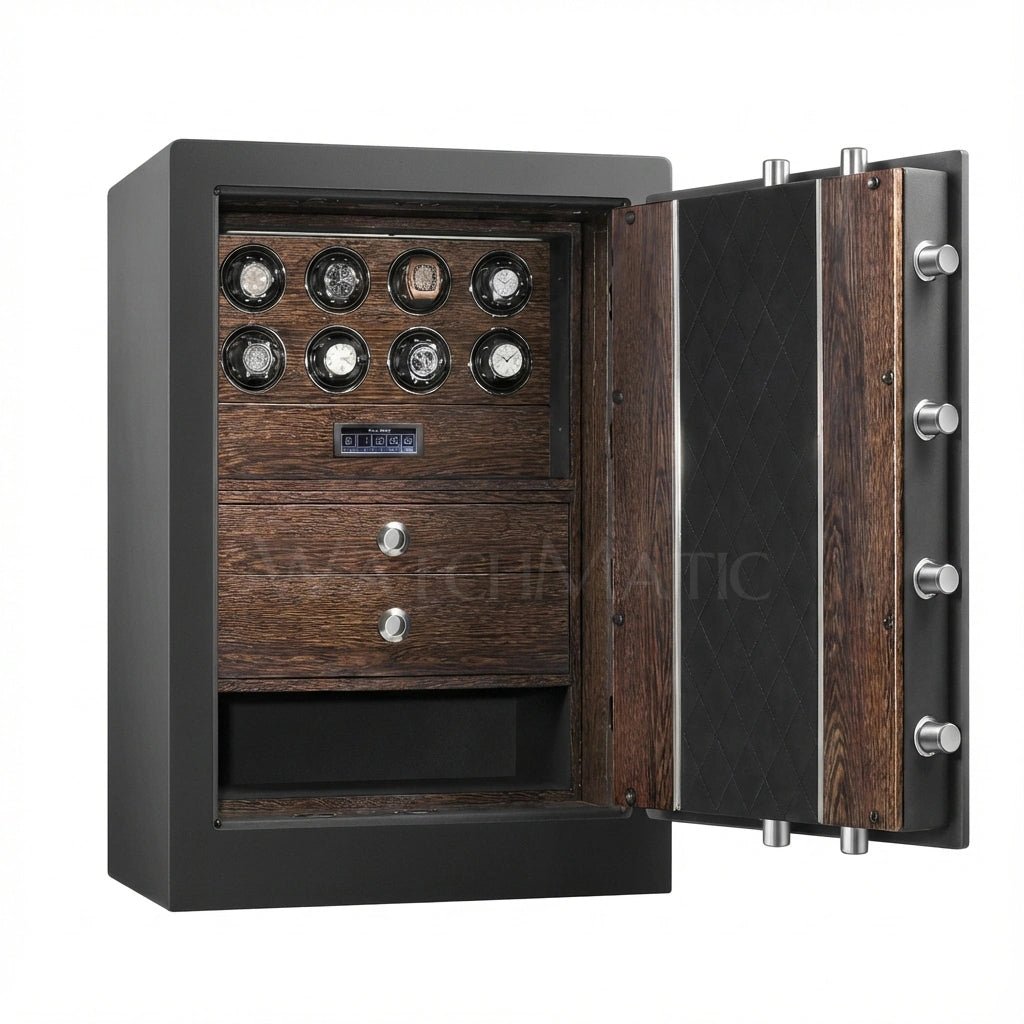
For collectors requiring custom compartment dimensions and environmental control integration, a bespoke winding safe configuration may be appropriate depending on usage patterns.
Rotor Integration: Should Grand Complications Be Kept Winding?
Not all grand complications benefit from constant winding.
Consider:
- Perpetual calendars require careful date setting
- Minute repeaters do not need continuous rotation
- Some collectors prefer manual winding for preservation
Based on practical observation, we often advise selective rotor integration rather than full-collection constant winding.
High-capacity safes should allow:
- Configurable rotor zones
- Non-winding compartments
- Adjustable rotation cycles
Flexibility protects both mechanical integrity and convenience.
Structural Considerations for Large Safes
High-capacity safes often exceed:
- 400–800 kg depending on configuration
Installation planning must consider:
- Concrete slab thickness
- Load distribution plates
- Anchoring depth
- Property type (estate vs high-rise)
In real-world installations, we routinely evaluate floor load prior to delivery — particularly for penthouse environments.
Security Architecture Beyond Size
Grand complications are highly liquid in the secondary market.
Security considerations include:
- Multi-directional locking bolts
- Reinforced door construction
- Internal hinge protection
- Professional anchoring
As a bespoke watch safe provider, WatchMatic designs high-capacity systems with layered structural integrity rather than relying solely on external thickness.
Free worldwide shipping and a 10-year warranty support long-term ownership planning, but the engineering architecture remains the true determinant of protection.
When Bespoke Configuration Becomes Necessary
Bespoke configuration may be appropriate when:
✔ Collection includes oversized minute repeaters
✔ Custom interior color is desired
✔ Unique rotor quantity required
✔ Dedicated humidity control requested
✔ Aesthetic integration with private office or vault room needed
Build-from-scratch configurations are often justified when the collection becomes an asset class rather than a hobby.
Expert Perspective: Storage vs Preservation
At WatchMatic, we’ve found that collectors of grand complications eventually transition from thinking about “storage” to thinking about “preservation.”
Preservation considers:
- Environmental stability
- Mechanical stress minimization
- Controlled fire exposure protection
- Long-term capital security
A high-capacity safe for Patek Philippe grand complications is not simply a larger cabinet — it is a precision-controlled protection system.