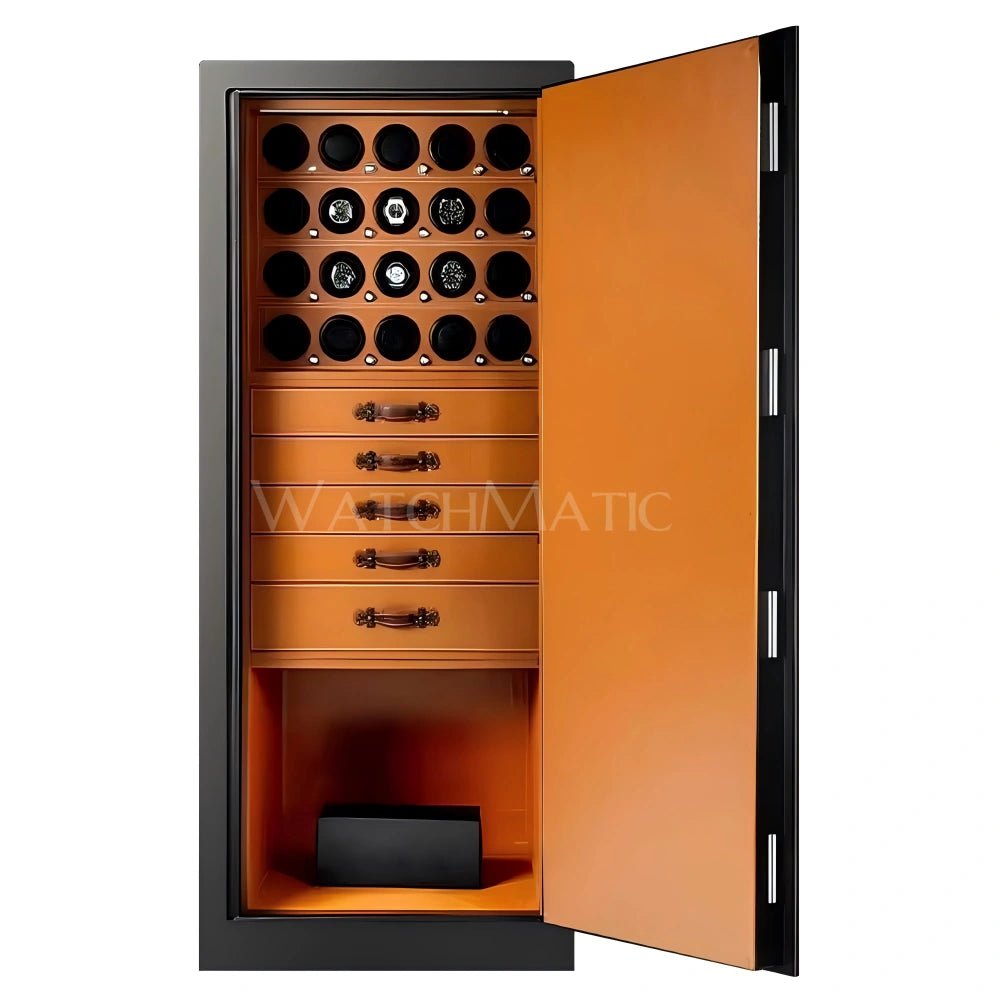
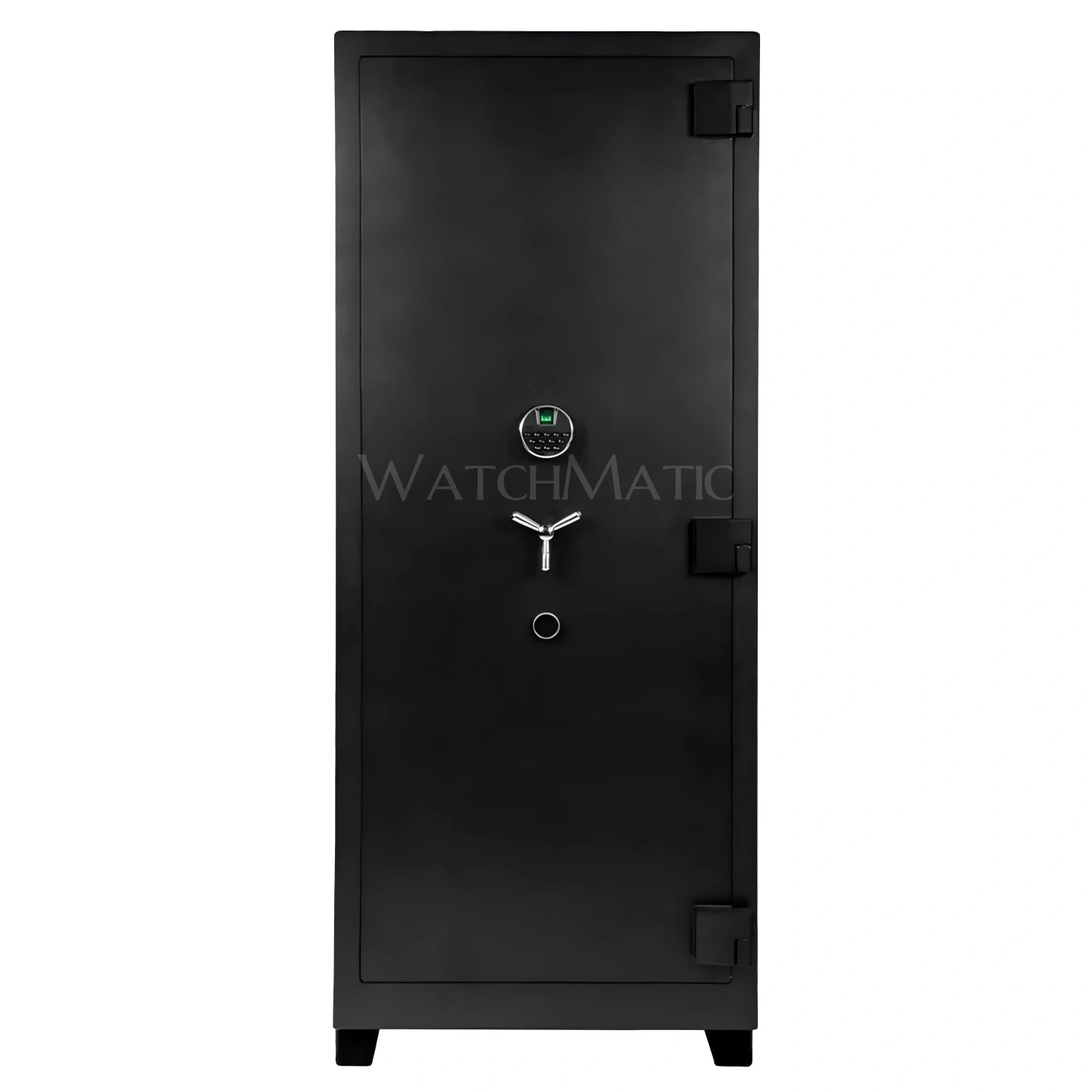
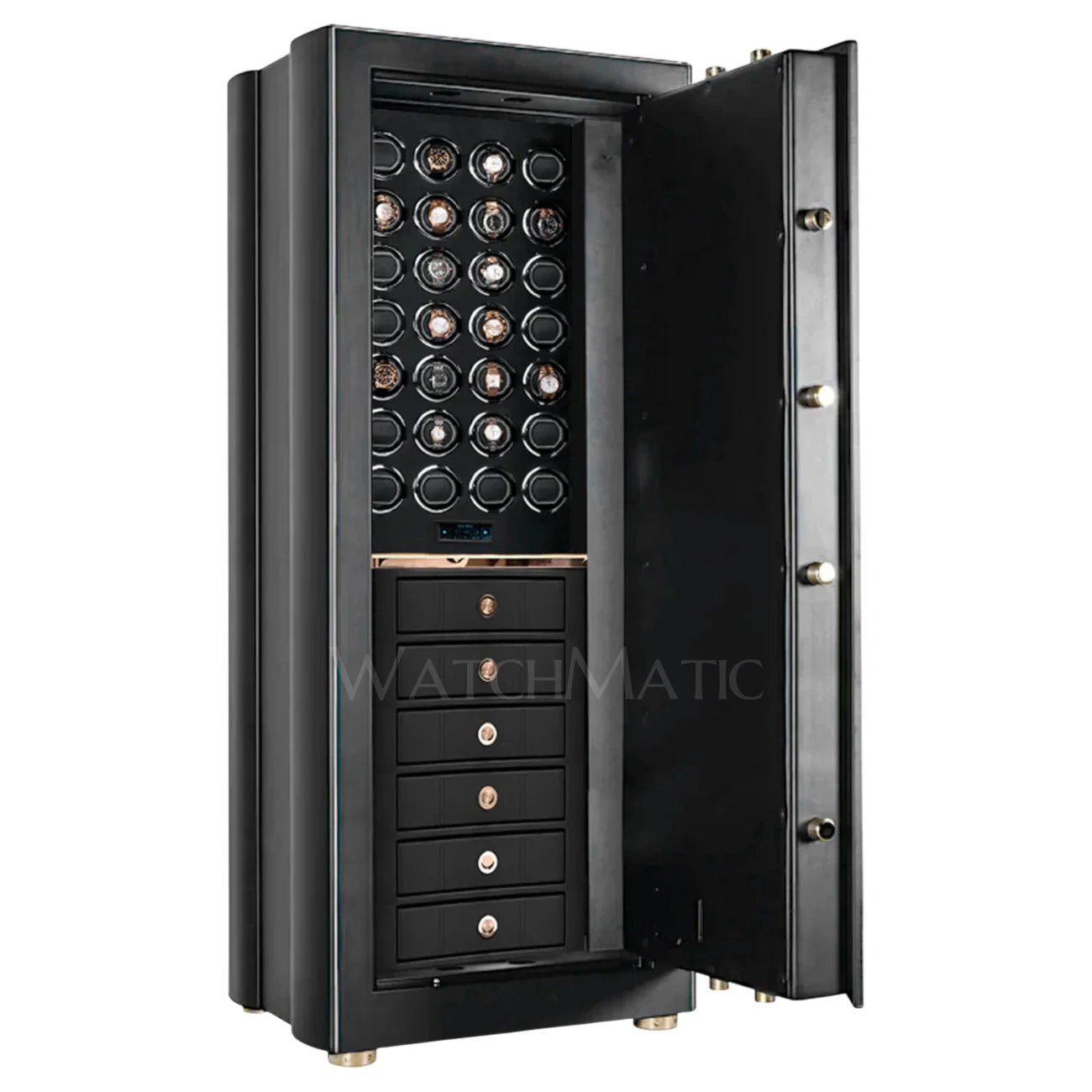
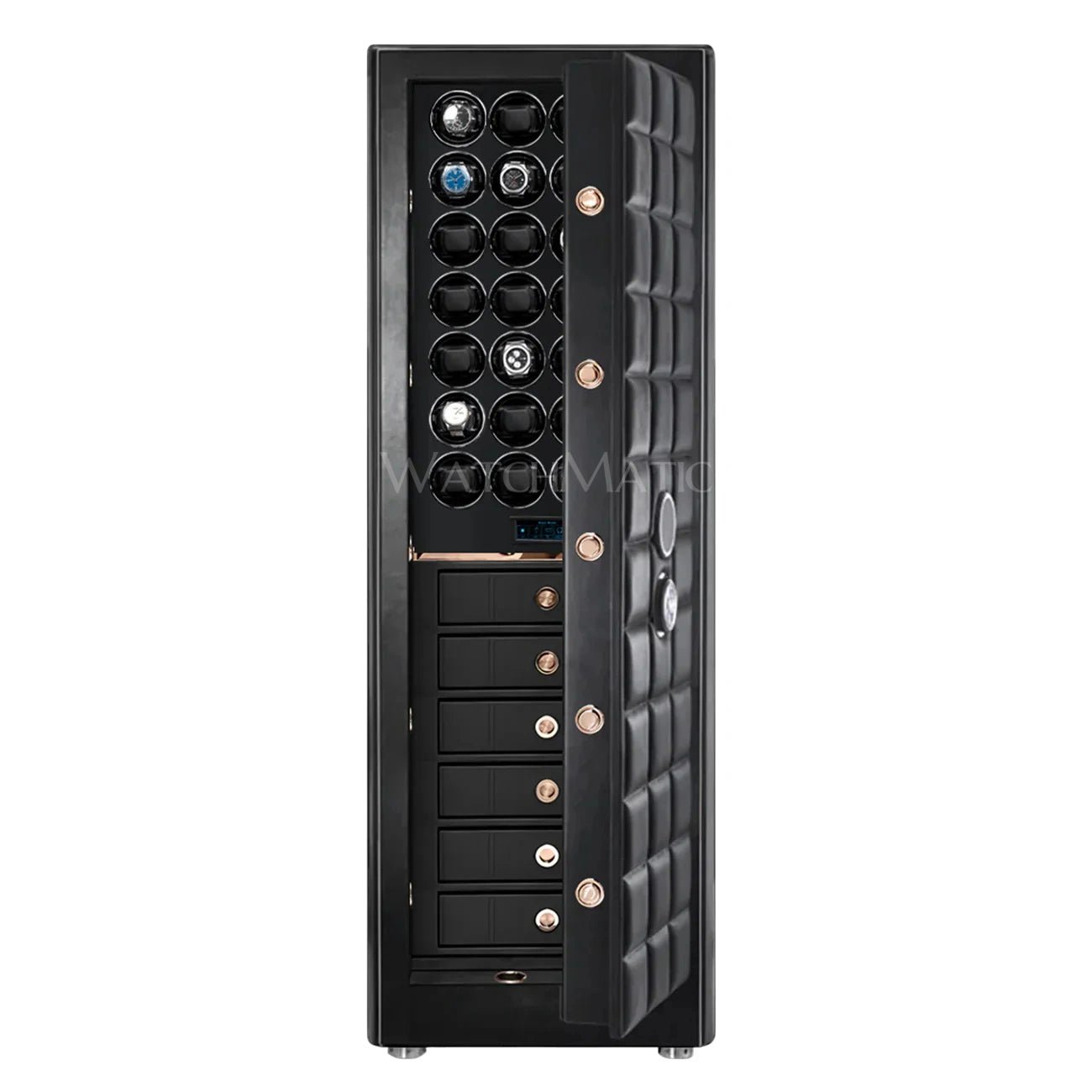
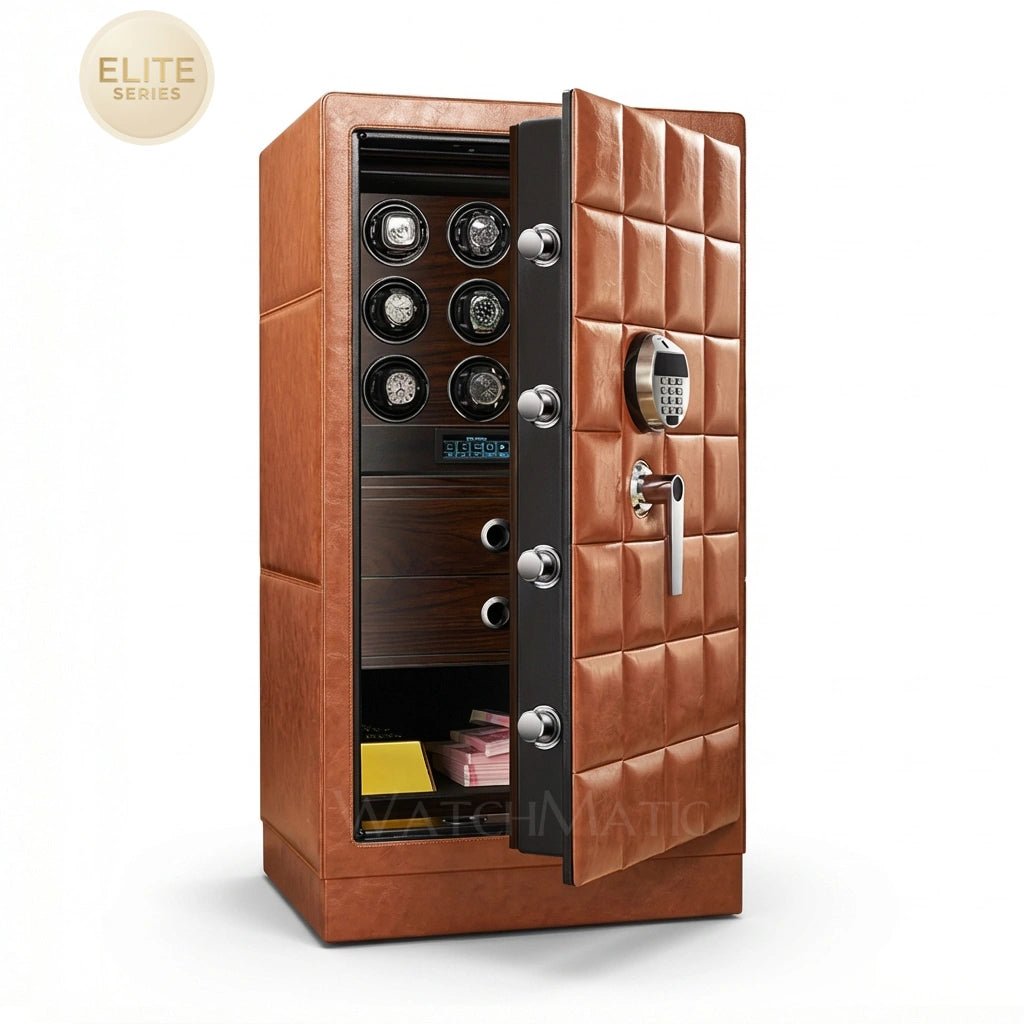
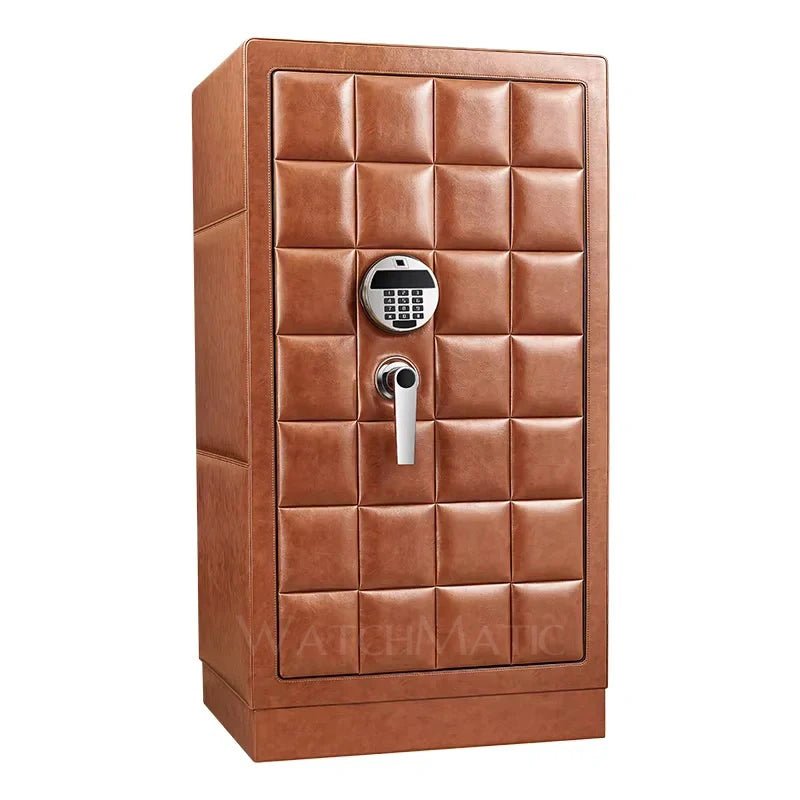
Buying a luxury watch safe in the United States requires aligning five critical factors:
- Certified burglary resistance (RSC minimum; TL-15 or TL-30 for serious collections)
- 60–120 minute fire protection, depending on regional wildfire or structural risk
- Professional bolt-down installation into reinforced flooring
- Insurance-compliant documentation for six-figure or seven-figure coverage
- White-glove delivery coordination, particularly in condos and high-rise buildings
For collectors of Rolex, Patek Philippe, and Audemars Piguet, a properly specified safe is not simply storage — it becomes part of long-term asset protection strategy, insurance underwriting alignment, and architectural planning.
This guide reflects practical advisory experience working with U.S. estate homes, urban condominiums, and executive penthouse installations.
Understanding the U.S. Risk Landscape for Watch Collectors
The United States presents a unique combination of:
- A highly liquid secondary market for luxury watches
- Regional wildfire, hurricane, and seismic exposure
- Diverse residential construction (concrete slab, wood frame, steel high-rise)
- Insurance underwriting variation by carrier and state
In advisory work with collectors, two risks are most commonly underestimated:
- Displacement risk — where a safe is physically removed during burglary
- Insurance compliance gaps — where the installed safe does not meet policy expectations
A properly engineered luxury watch safe system must address both structural anchoring and insurance defensibility, not just burglary resistance.
Step 1: Selecting the Appropriate Security Rating
Burglary resistance classifications in the U.S. are defined by Underwriters Laboratories.
What TL Ratings Actually Mean
- TL = Tool Resistant
- Net working time measures sustained tool contact
- Testing simulates professional-grade attack
| Collection Value | Recommended Rating |
|---|---|
| <$150,000 | High-grade RSC (baseline) |
| $150k–$500k | TL-15 |
| $500k+ | TL-30 |
From a practical standpoint, TL-30 construction is increasingly preferred for metropolitan installations where burglary sophistication is higher.
For readers wanting a deeper technical explanation of rating differences, our analysis of TL security classifications provides additional context.
Step 2: Matching the Safe to Your Property Type
Estate Homes (Concrete Slab Foundations)
Estate homes offer the greatest flexibility:
- Reinforced slab foundations enable secure bolt-down anchoring
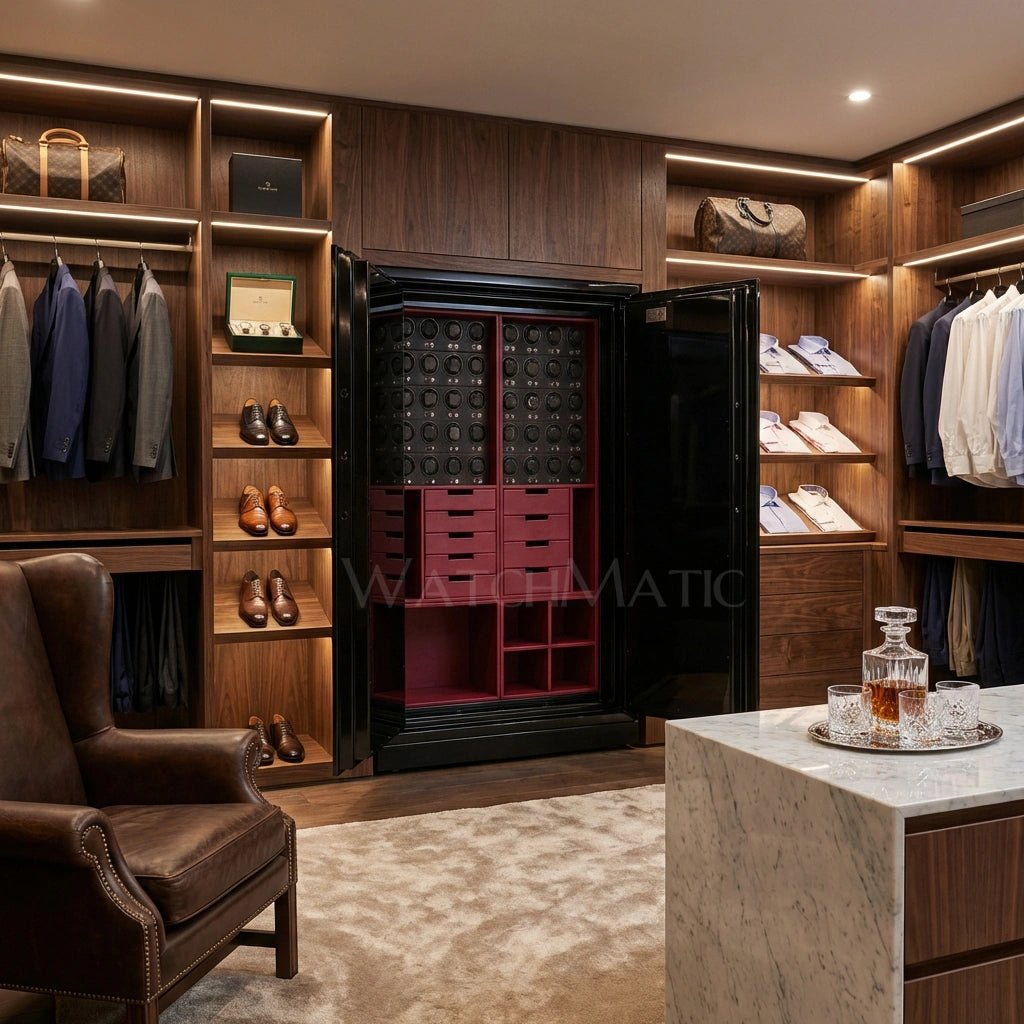
- Concealed installations behind custom cabinetry are feasible
- Larger footprints support high-capacity systems
In wildfire-prone states such as California, upgrading beyond minimum fire rating is strongly advisable.
Condominiums
Condo installations require additional planning:
- HOA or board approval
- Freight elevator scheduling
- Structural load confirmation
- Delivery window coordination
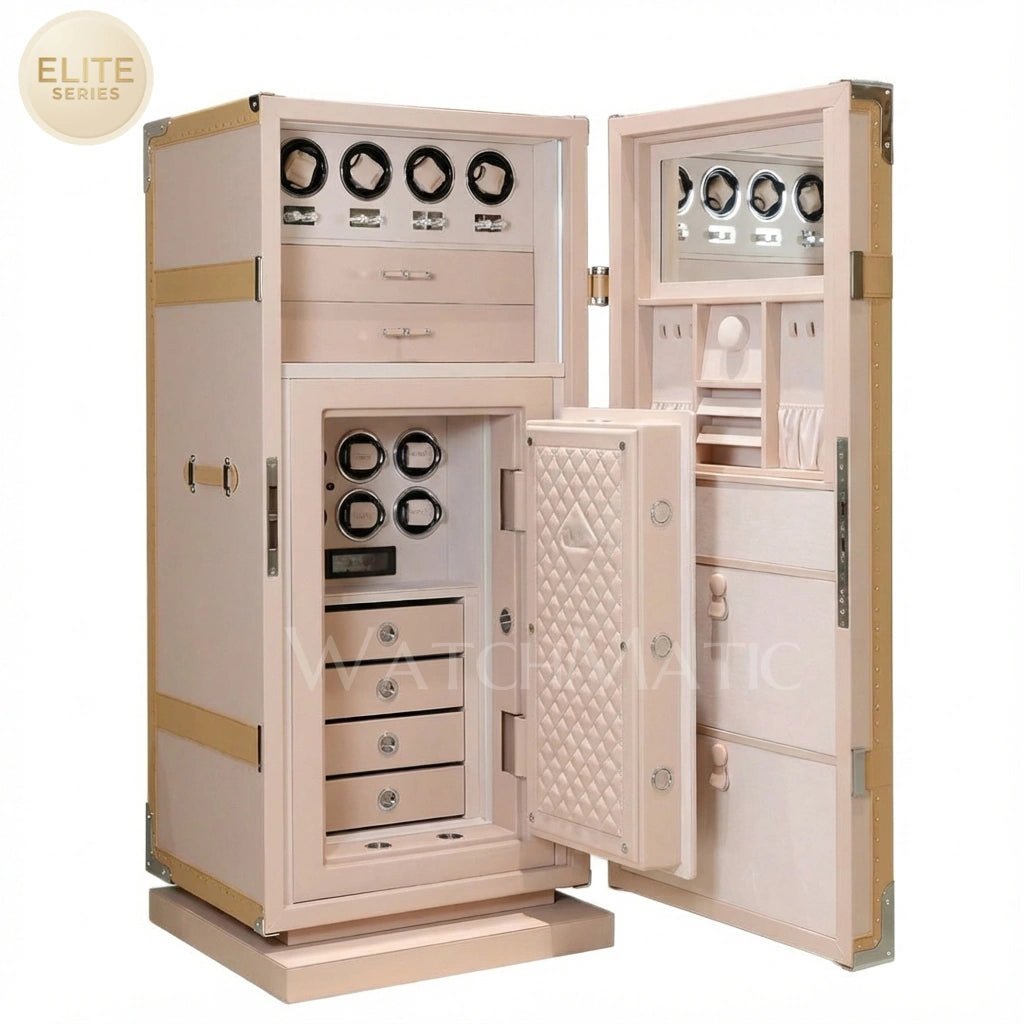
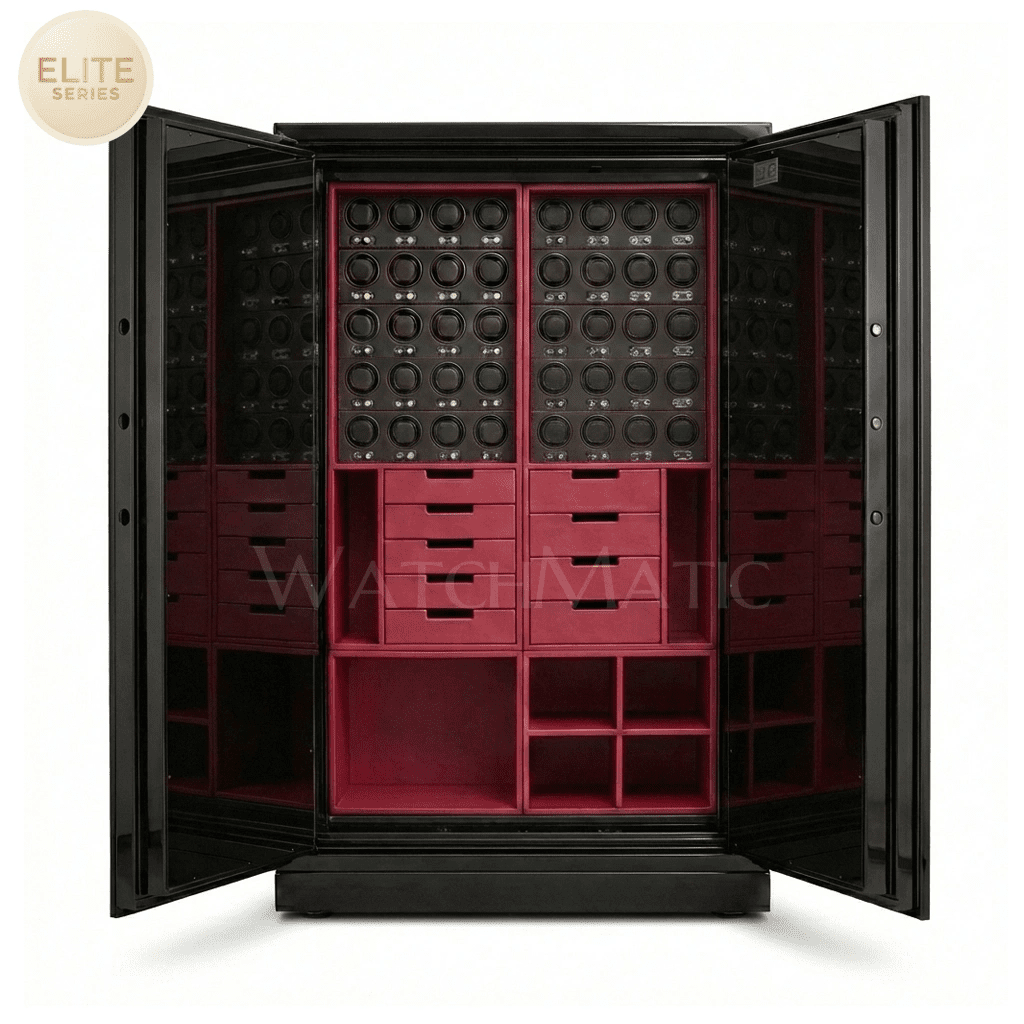
When installing heavier models from a premium high-security watch safe collection, floor load evaluation and anchoring feasibility should be confirmed before purchase.
Penthouses & High-Rise Units
High-rise installations often involve:
- Elevator weight capacity restrictions
- Load distribution plates
- Building insurance requirements
- Noise sensitivity for bedroom installations
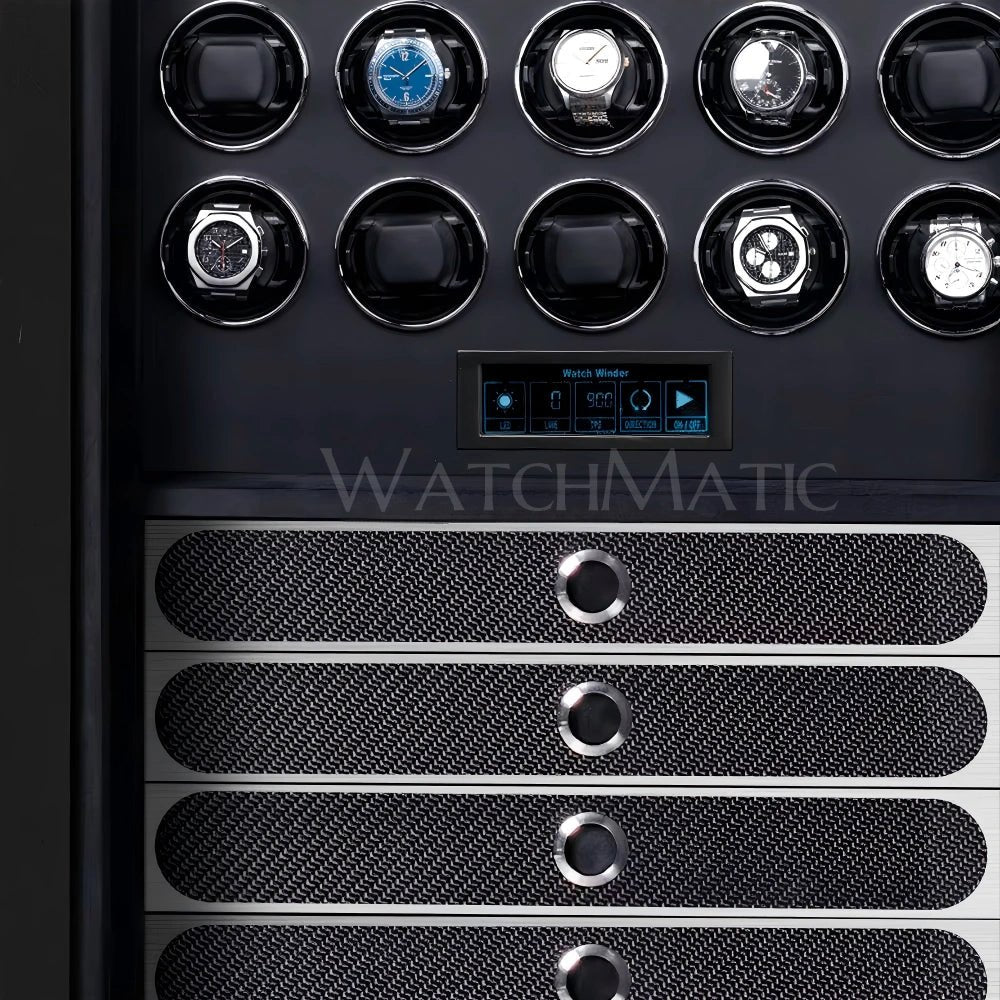
In these environments, integrated low-decibel winding systems become particularly important, especially when safes include automatic watch rotation features.
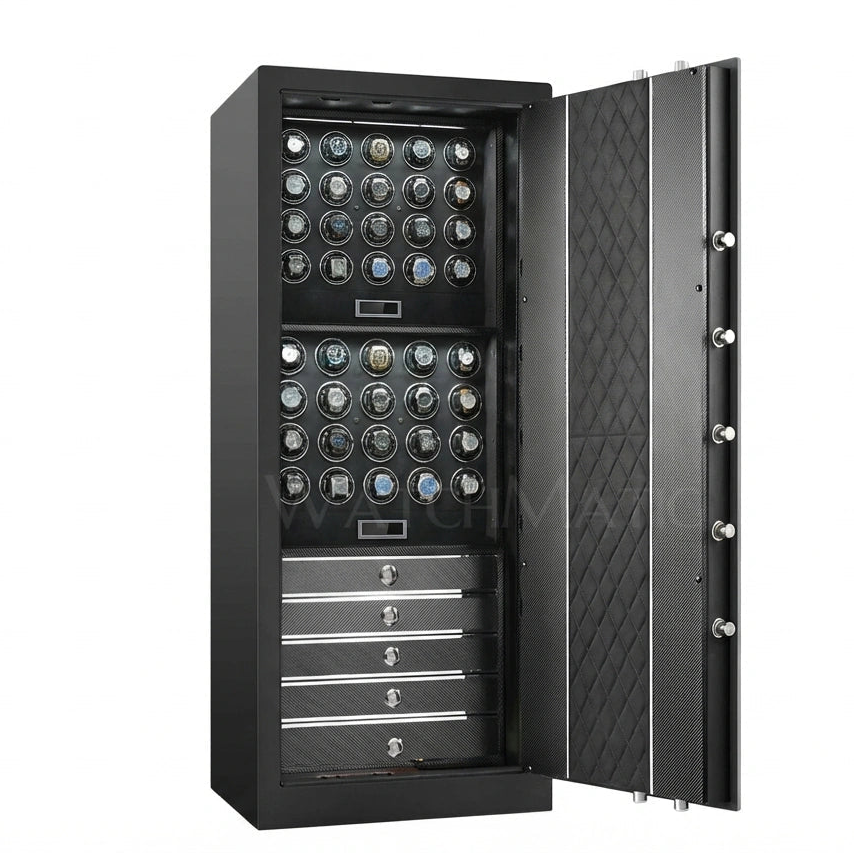
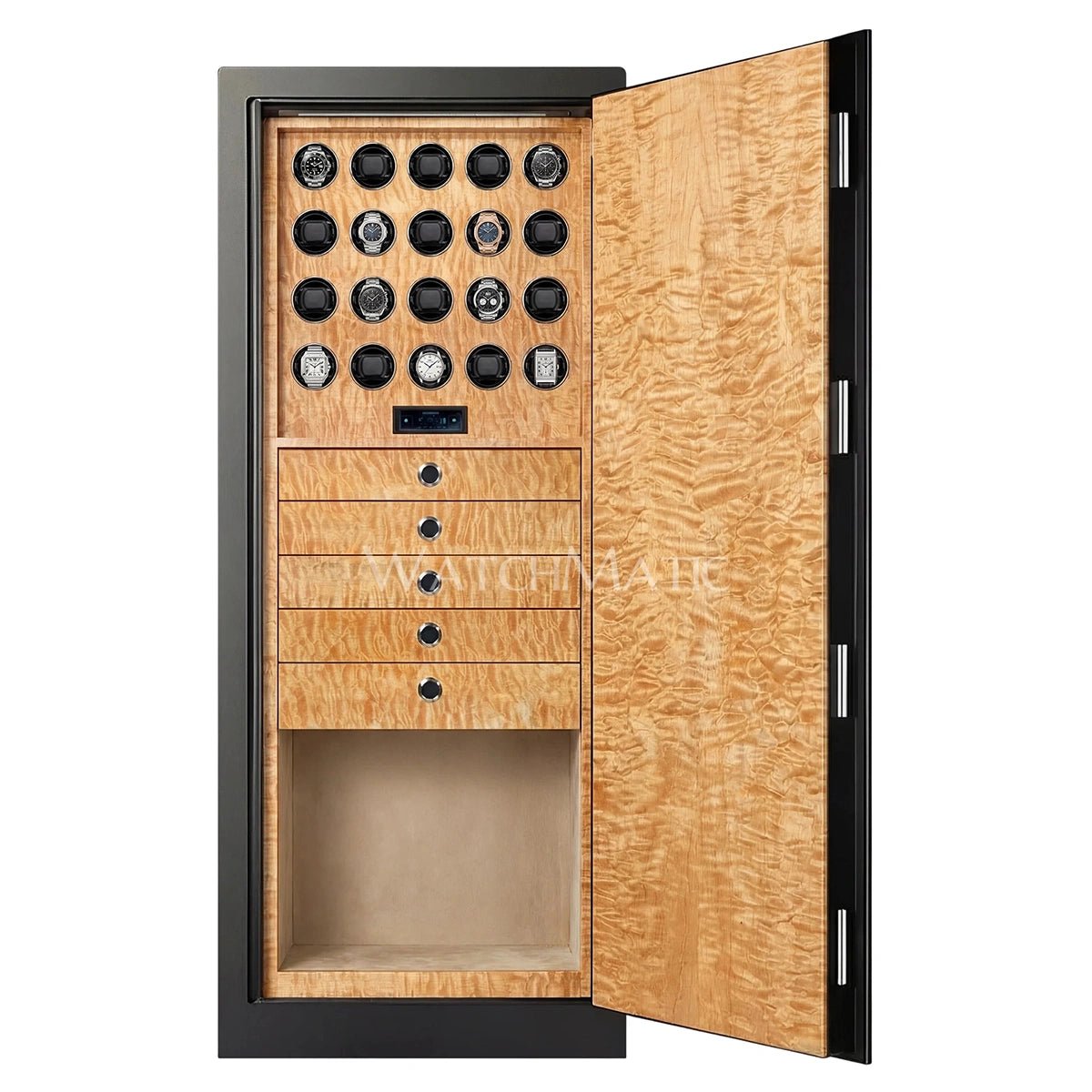
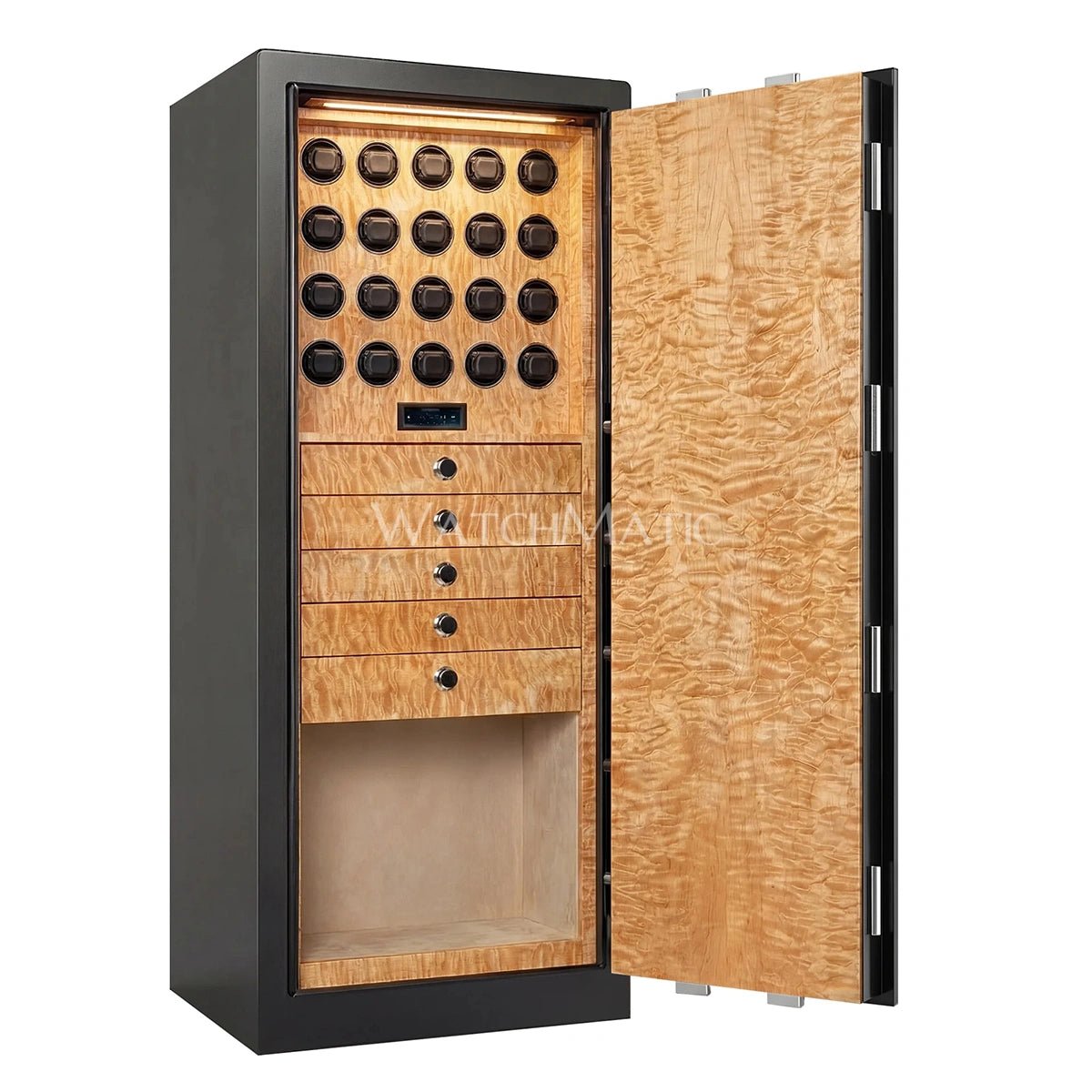
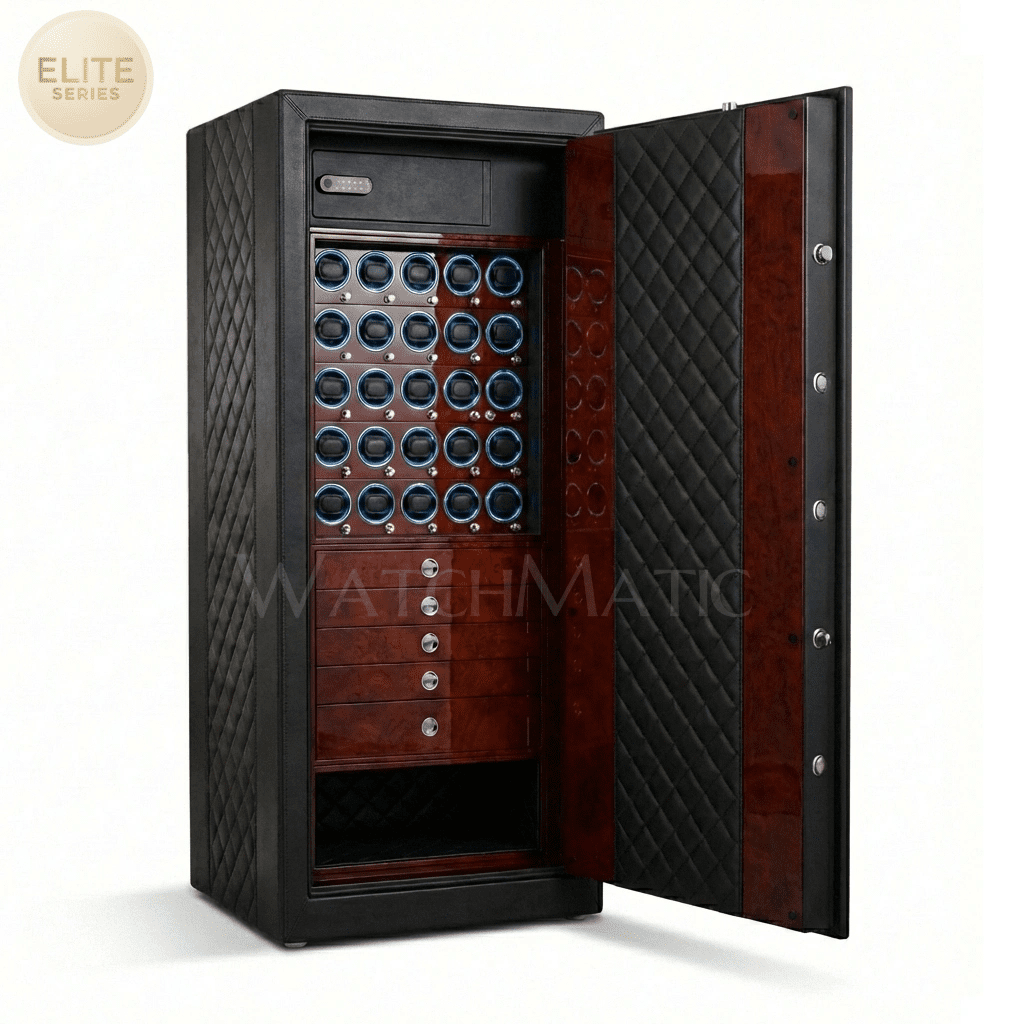
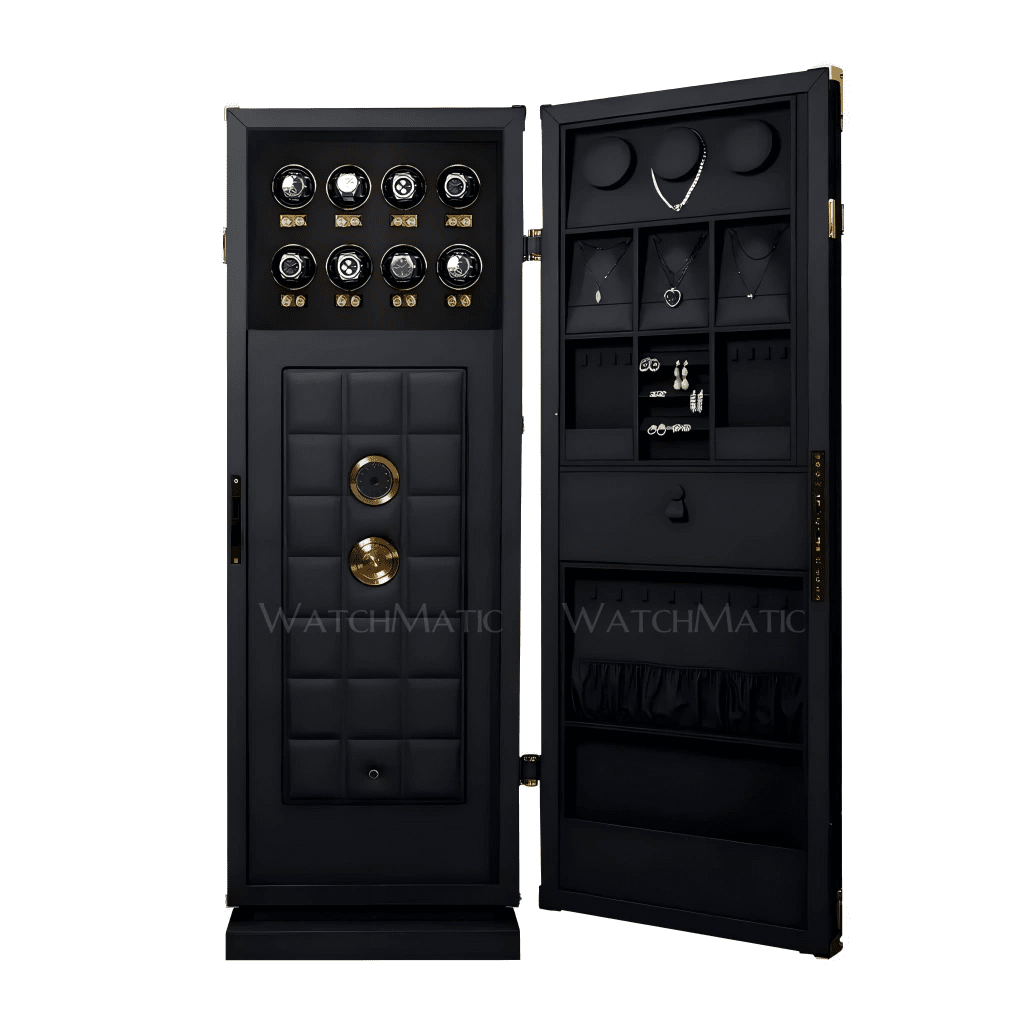
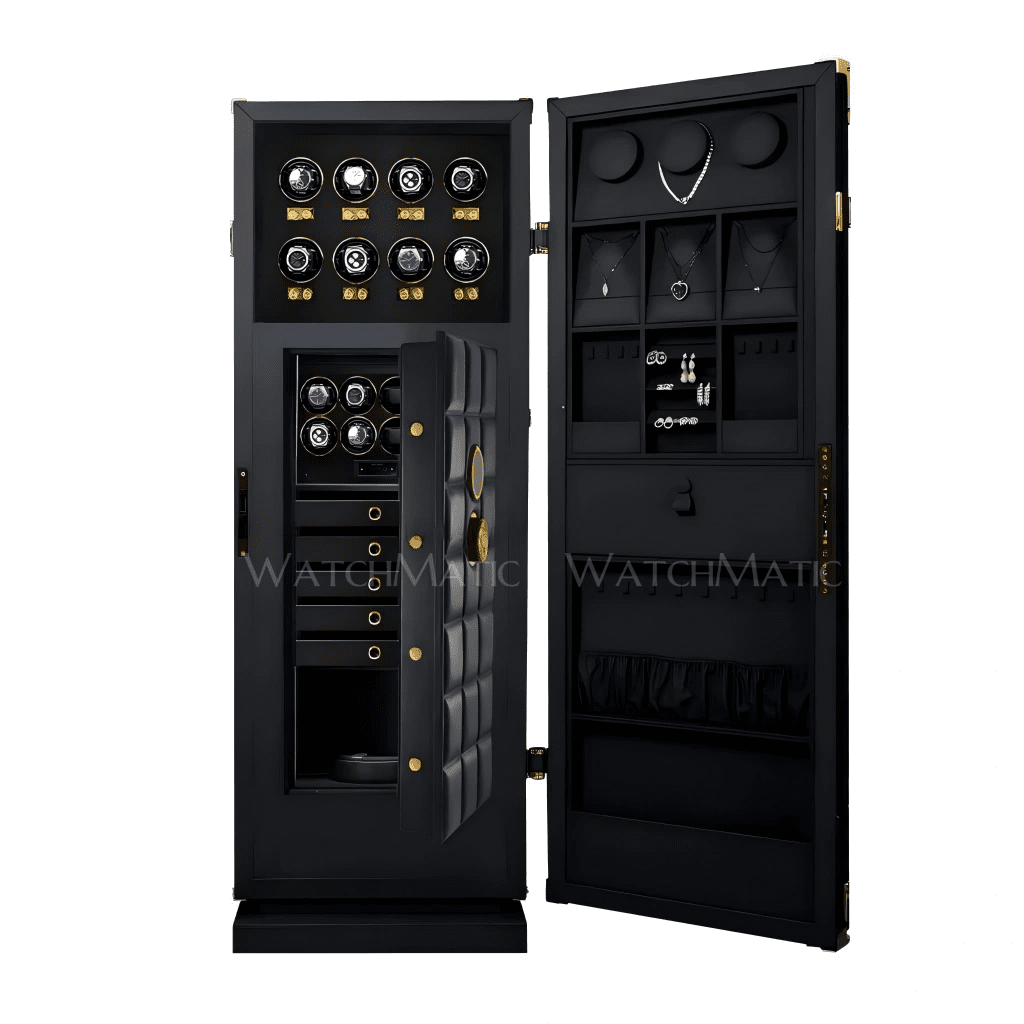
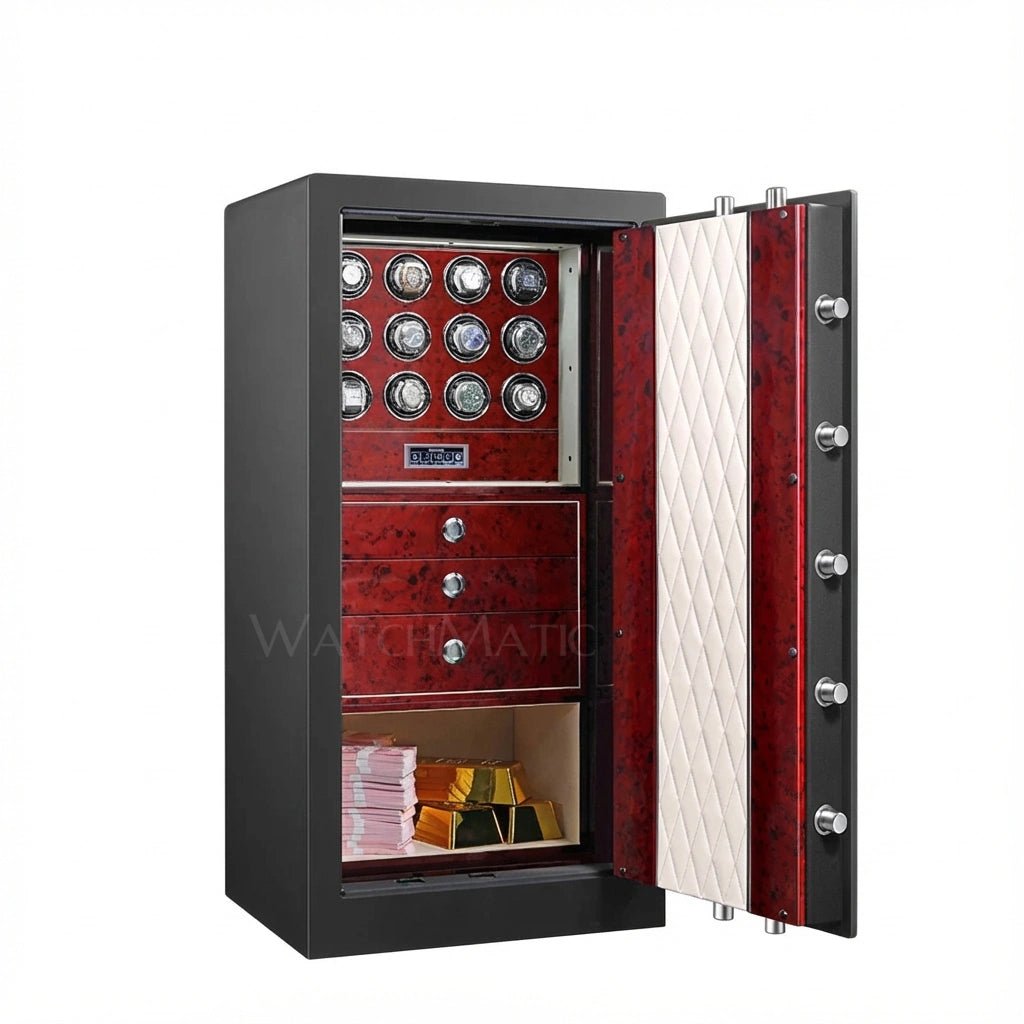
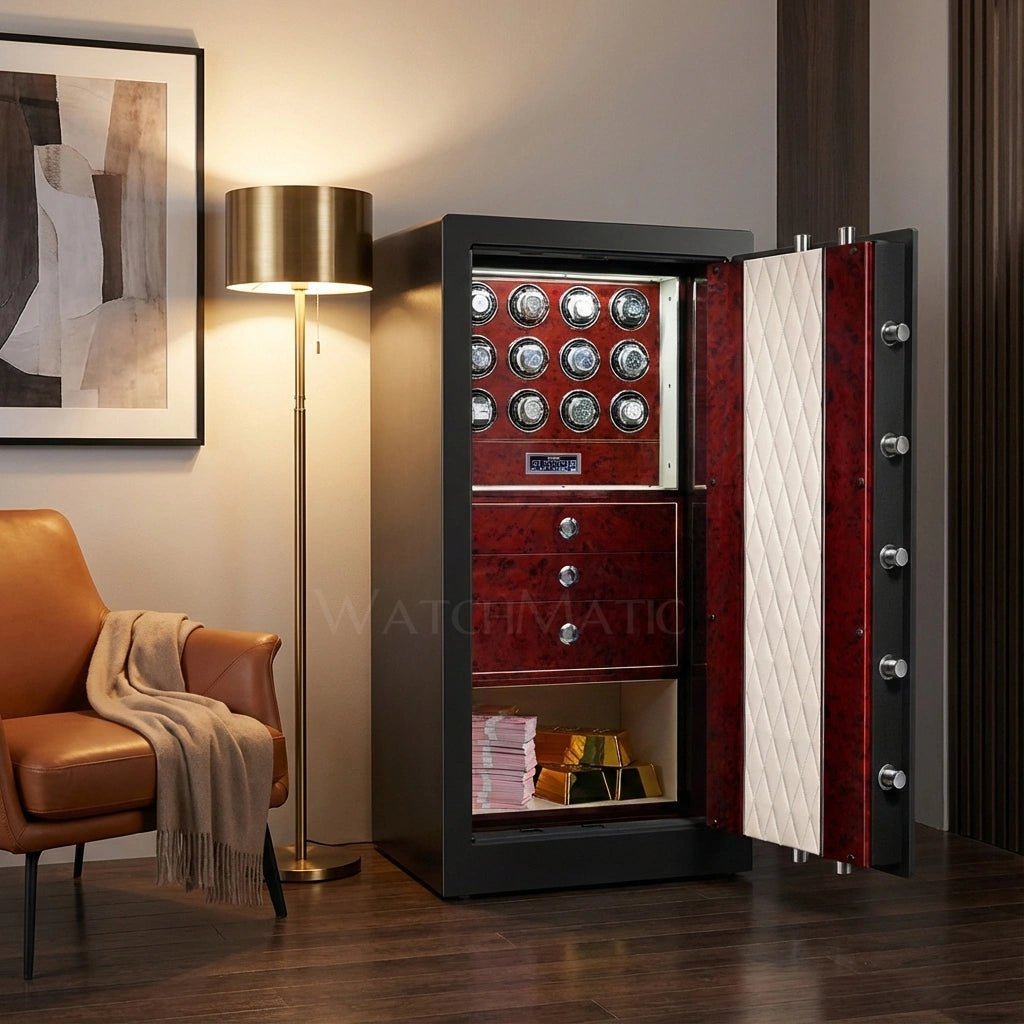
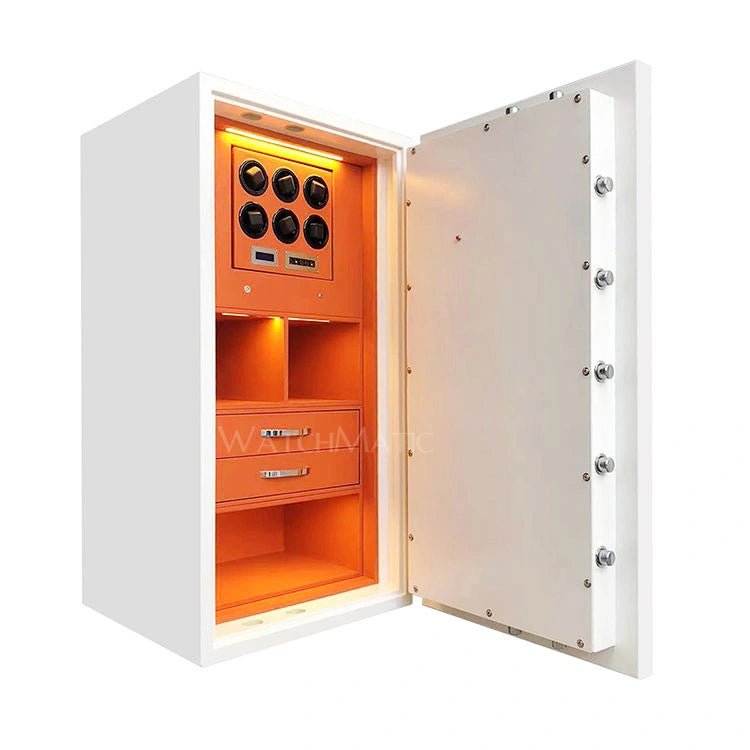
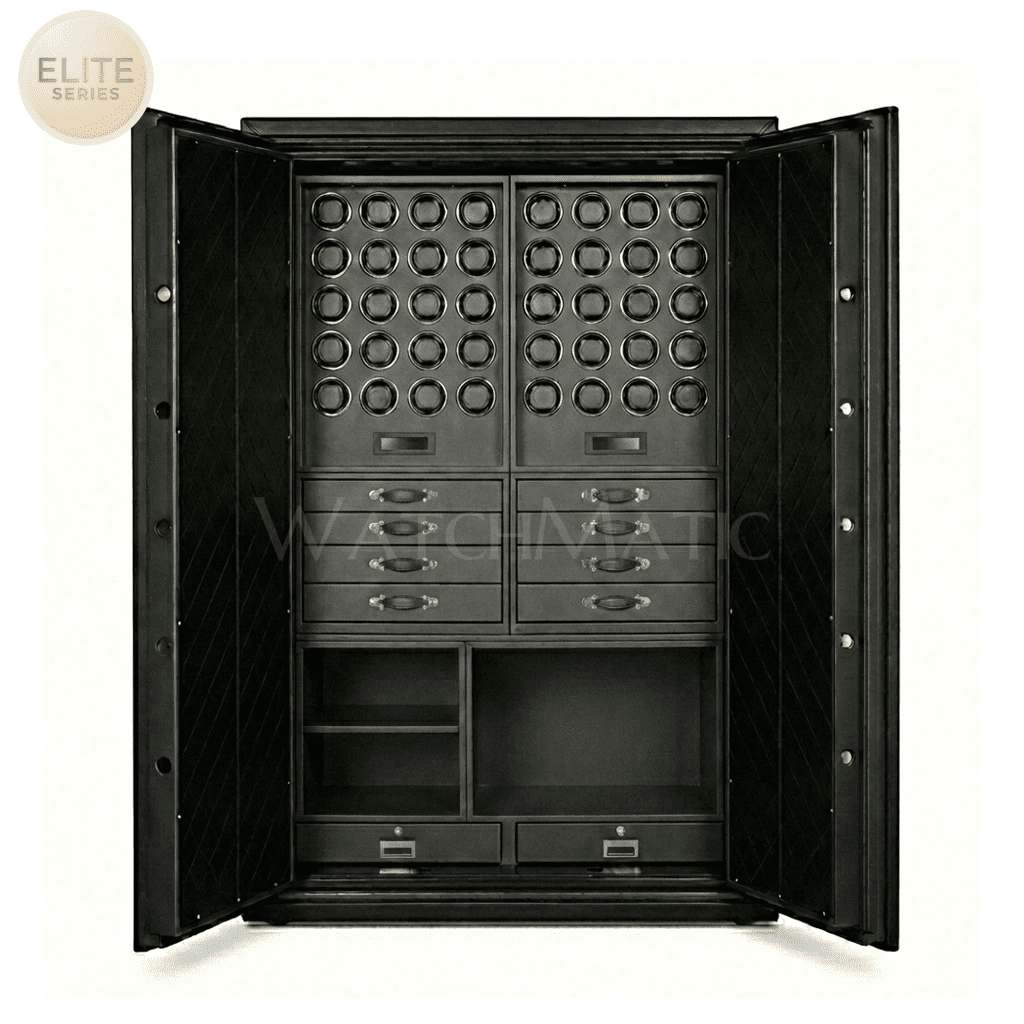
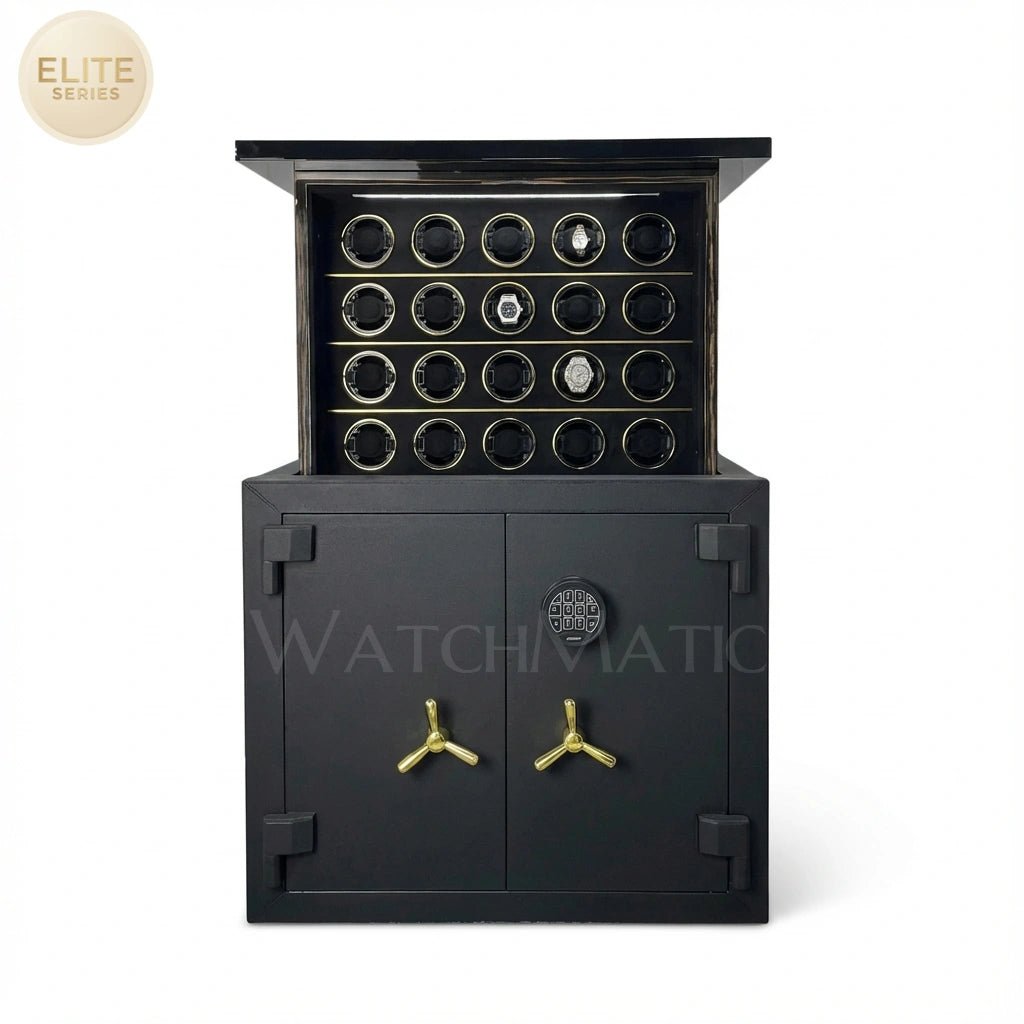
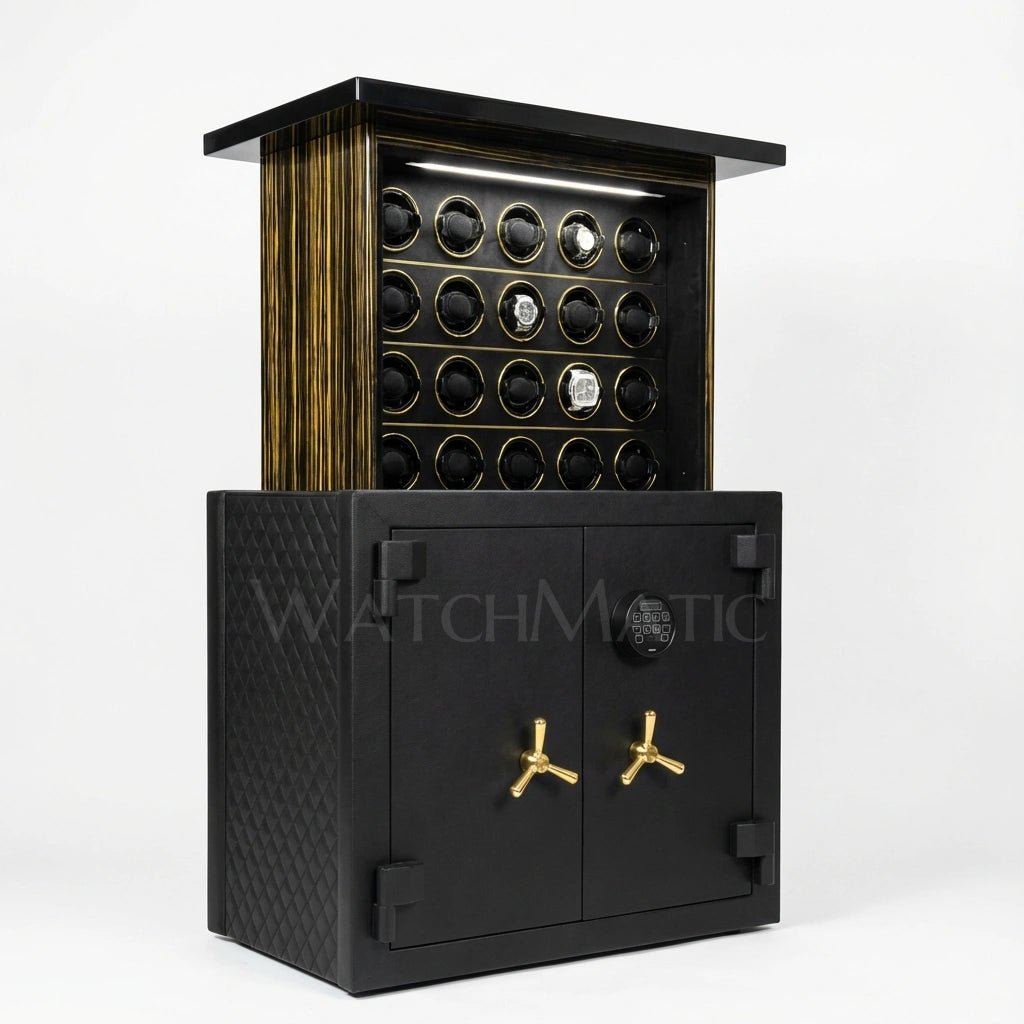
For collectors seeking combined storage and winding, a properly configured watch winder safe system ensures both mechanical continuity and security protection.
Fire Protection: Planning Beyond Code Compliance
Building codes establish minimum compliance — but serious collectors plan for real-world exposure.
Mechanical watches are vulnerable to:
- Lubricant breakdown
- Seal degradation
- Thermal shock
| Region | Recommended Fire Rating |
|---|---|
| Wildfire Zones (CA, CO) | 90–120 minutes |
| Florida Coastal | 60–90 minutes |
| Midwest / Northeast | 60–90 minutes |
| Urban High-Rise | 60 minutes |
In wildfire-prone regions, extended burn duration — not just flame resistance — determines survivability.
For a detailed explanation of fire rating classifications, our fire resistance breakdown provides additional technical clarity.
Structural Floor Considerations: The Engineering Layer
Luxury safes weighing 300–800 kg introduce structural considerations:
- Slab thickness
- Wood-frame reinforcement
- Point load concentration
- Anchoring depth
Even heavy safes can be removed if not bolted down. Anchoring into reinforced concrete significantly reduces displacement risk and strengthens insurance defensibility.
Collectors evaluating removal scenarios often underestimate how quickly an unanchored safe can be transported.
White-Glove Delivery & Installation
Professional installation in the United States typically includes:
- Site inspection
- Coordinated freight delivery
- Protected interior transport
- Final placement
- Bolt-down anchoring
- Lock and winder calibration
- Documentation for insurer submission
In high-rise buildings, elevator reservation and building management coordination are mandatory.
As a luxury watch safe specialist, WatchMatic integrates installation planning with engineering review to minimize risk during delivery. For international buyers relocating to the U.S., free worldwide shipping and structured white-glove coordination simplify logistics, while a 10-year warranty provides long-term assurance without creating unnecessary commercial emphasis.
Insurance Expectations in the United States
High-value watch collections are typically insured through:
- Scheduled personal property riders
- Standalone jewelry policiesHigh-net-worth specialty insurers
Underwriters commonly evaluate:
- Safe burglary rating
- Fire rating
- Anchoring method
- Alarm integration
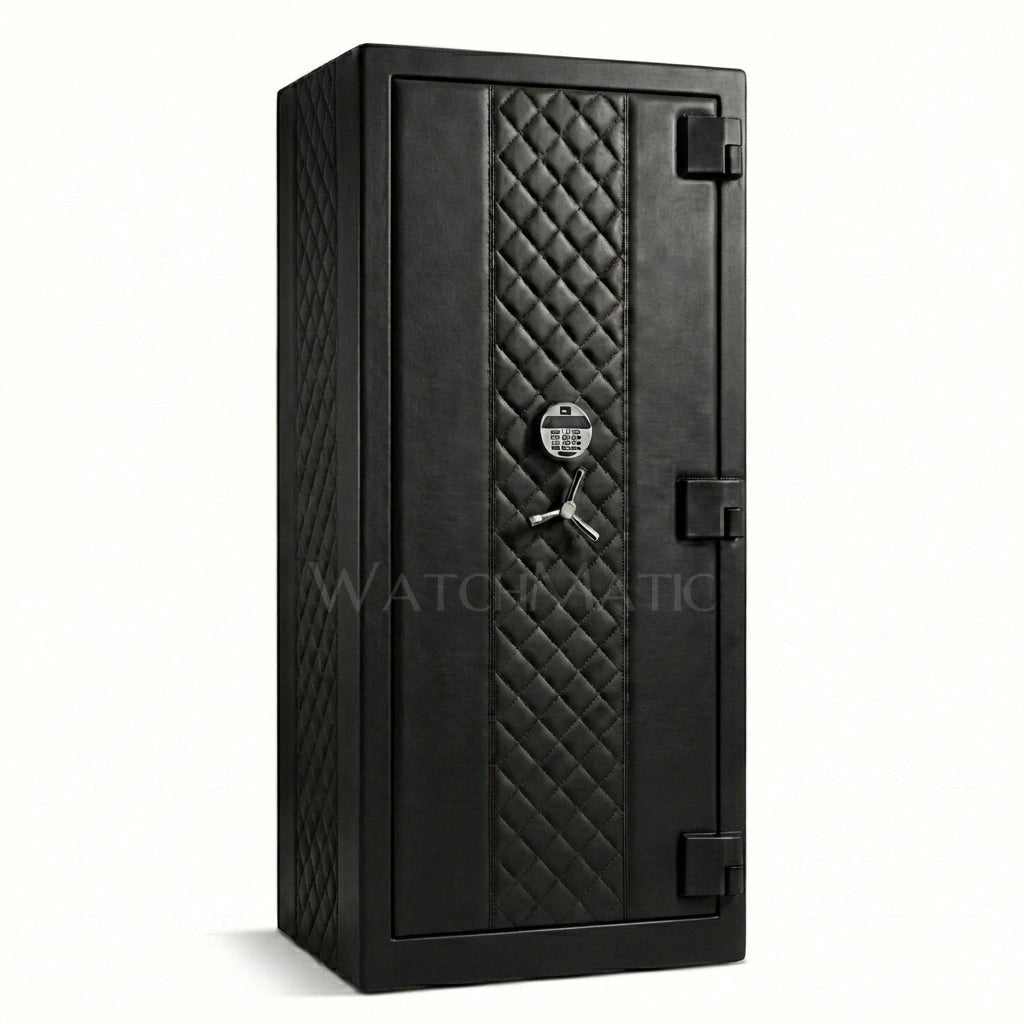
Proper documentation of a certified TL-rated luxury watch safe strengthens underwriting defensibility and reduces claim friction.
Collectors should confirm requirements before finalizing purchase to avoid post-installation policy adjustments.
Timeline & Planning Expectations
In practical terms, acquisition typically follows:
- Specification & configuration
- Production (if bespoke)
- Domestic freight scheduling
- Installation coordinationI
- nsurance documentation submission
Urban installations frequently require scheduling weeks in advance to align with building restrictions.
Executive Buyer Checklist
Before confirming purchase, ensure:
✔ Security rating aligns with collection value
✔ Fire protection matches regional exposure
✔ Structural load assessment completed
✔ Insurance compliance confirmed
✔ White-glove delivery coordinated
✔ Capacity accommodates projected growth
A properly specified safe integrates architecture, insurance alignment, and long-term asset protection into a single system.