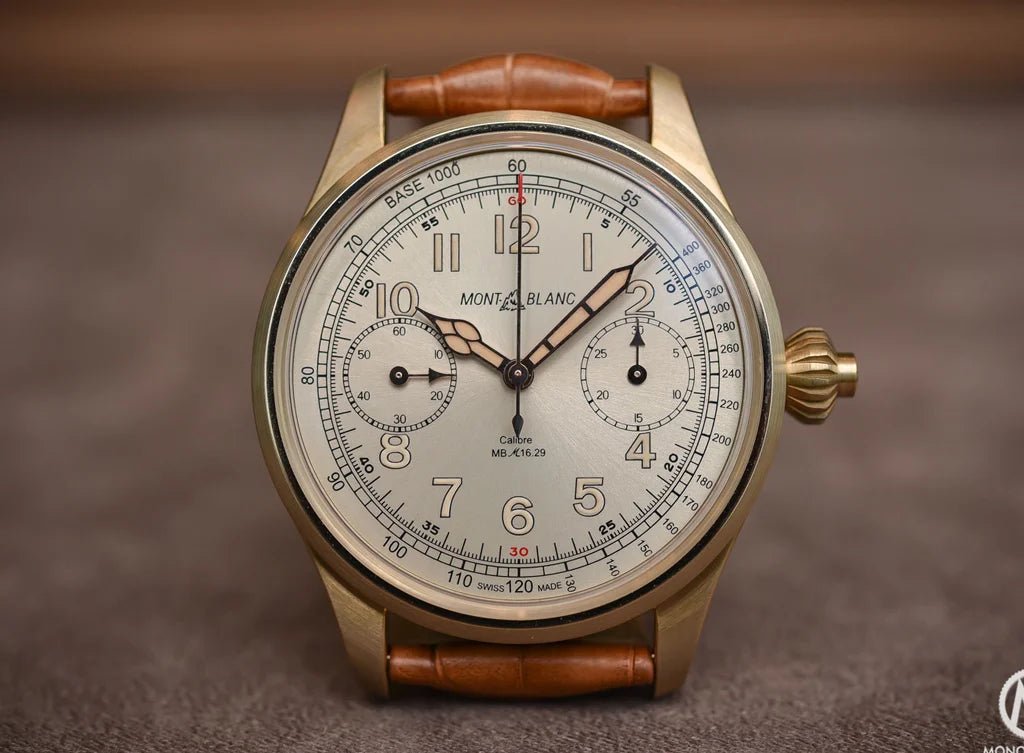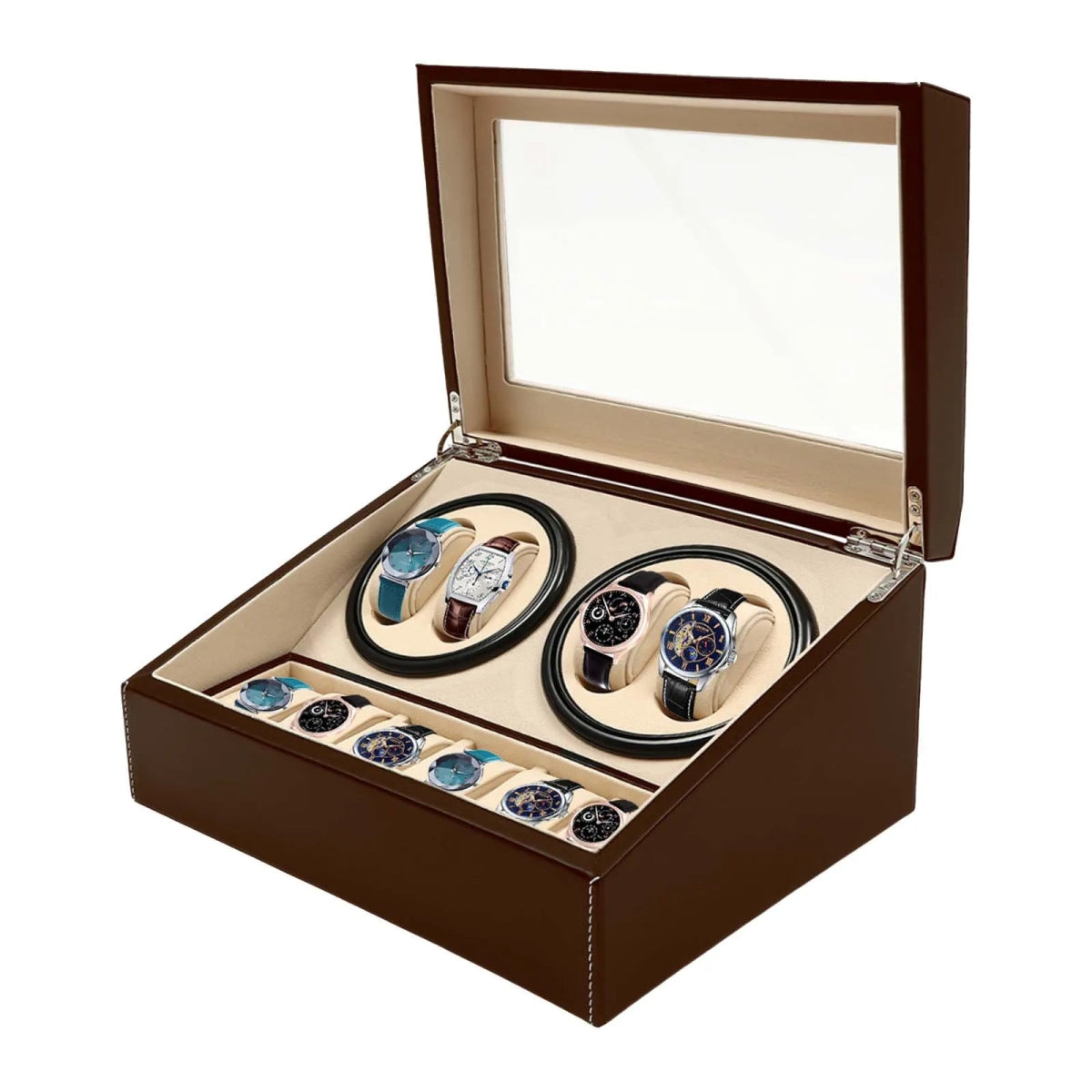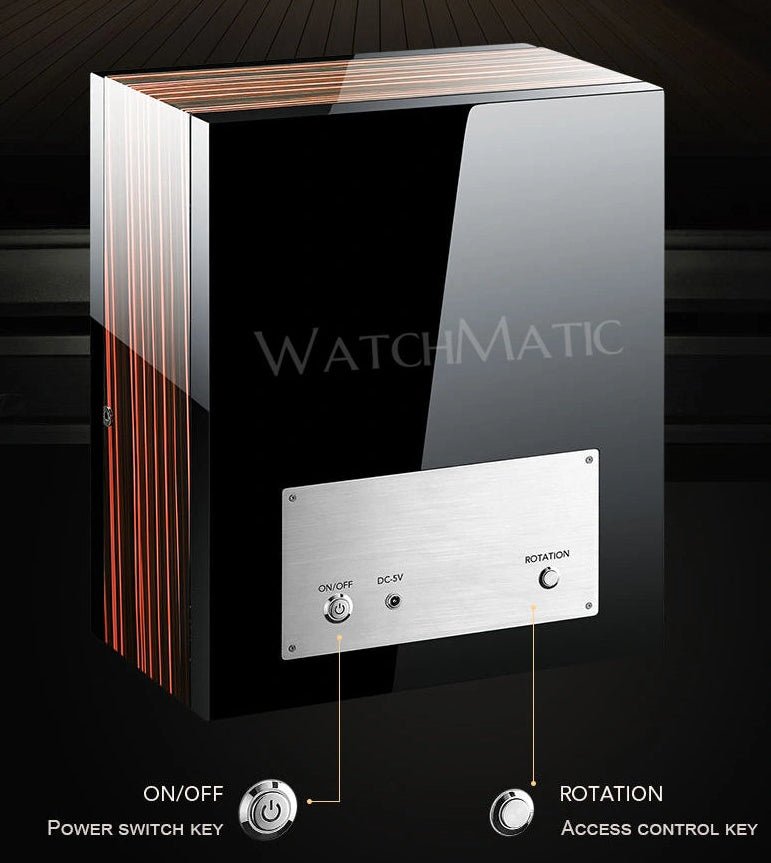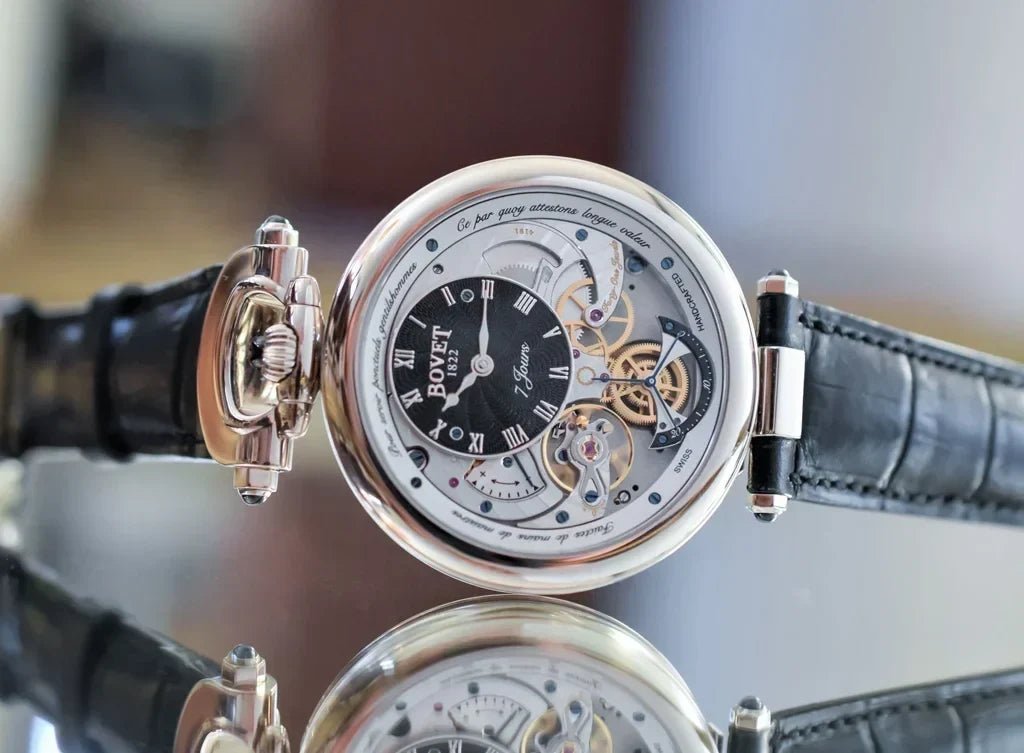
The best watch winder for BOVET watches is a premium programmable model with adjustable Turns Per Day (TPD), selectable clockwise and counterclockwise rotation, controlled winding and rest cycles, quiet operation, and secure watch support.
However, BOVET requires more careful movement identification than most luxury-watch brands.
Although BOVET produces several automatic watches, many of the Maison's signature high-horology pieces use manually wound manufacture movements with exceptionally long power reserves.
Current automatic examples include the BOVET Récital 23, Récital 30, and Miss Audrey. By contrast, watches such as the 19Thirty, Récital 26 Chapter Two, Récital 27, Récital 28 Prowess 1, and Orbis Mundi use hand-wound manufacture movements.
That distinction is fundamental:
Automatic BOVET → a conventional watch winder can be useful
Manual-wind BOVET → a conventional rotating watch winder provides no winding benefit
The correct process is therefore:
Reference → Movement Type → Automatic or Manual → Power Reserve → Winding Requirements → Storage or Winder Program
Does a BOVET Watch Need a Watch Winder?
No BOVET automatic mechanically requires a watch winder.
A self-winding movement receives energy through motion of its oscillating weight while the watch is being worn. If it remains unworn long enough, the stored energy eventually runs down and the watch stops.
A watch winder is therefore primarily a convenience and collection-management device.
It can help:
- Keep an automatic BOVET running between wears
- Maintain the time
- Preserve moon-phase indications
- Keep worldtime information synchronized
- Reduce repeated resetting
- Keep an active collection ready to wear
However, the answer changes completely for a manually wound BOVET.
A hand-wound manufacture movement receives its energy through manual winding of the crown. Rotating the watch in a conventional automatic winder does not wind that movement.
For a broader explanation of how automatic winding works, see the Watch Winder Guide.
Which BOVET Watches Can Use a Watch Winder?
Current BOVET watches should first be separated by winding architecture.
| BOVET watch | Movement type | Published power reserve | Conventional winder? |
|---|---|---|---|
| Récital 30 | Automatic High Watchmaking | 62 hours | Yes |
| Récital 23 | Automatic High Horology | 62 hours | Yes |
| Miss Audrey | Automatic High Watchmaking | Not currently specified | Yes |
| 19Thirty | Hand-wound manufacture | 168 hours / 7 days | No |
| Orbis Mundi | Hand-wound manufacture | 168 hours / 7 days | No |
| Récital 26 Chapter Two | Hand-wound manufacture | 120 hours / 5 days | No |
| Récital 27 | Hand-wound manufacture | 168 hours / 7 days | No |
| Récital 28 Prowess 1 | Hand-wound manufacture | 240 hours / 10 days | No |
This table reveals one of the most important facts about BOVET ownership:
Many of the Maison's most complicated watches are not automatic.
Their complexity, value, tourbillons, worldtime systems, long power reserves, or perpetual-calendar functions do not make them candidates for conventional automatic winding.
BOVET Automatic vs. Manufacture Movements
BOVET makes an unusually important distinction.
The Maison states that its manufacture movements are manually wound.
At the same time, certain current watches use what BOVET describes as Automatic High Watchmaking or Automatic High Horology movements.
This means the word "BOVET" alone tells you very little about whether a watch belongs on a winder.
A collector may own:
Récital 30 → automatic
and simultaneously own:
Récital 28 Prowess 1 → hand-wound
Both are sophisticated contemporary BOVET watches.
Only one receives a winding benefit from conventional rotational winding.
Why BOVET Is Different From Many Other Luxury Brands
At many watch manufacturers, the default modern mechanical watch is automatic.
BOVET is different.
Long manual-winding power reserves are a defining part of the Maison's modern engineering philosophy.
BOVET's manufacture movements can provide power reserves starting at approximately five days and extending far beyond the conventional 40–70-hour range commonly found in mechanical watches.
That changes the watch-winder conversation considerably.
For many BOVET collectors, the correct storage question is not:
"Which watch winder should I buy?"
but:
"Which of my BOVET watches are actually automatic, and which should simply be stored securely?"
Best Watch Winder for BOVET Récital 30
The Récital 30 is one of the most important current BOVET watches for watch-winder owners because it uses an Automatic High Watchmaking Movement.
BOVET specifies approximately 62 hours of power reserve.
The watch is centered around a highly unusual worldtime architecture with:
- 24 city rollers
- A time-period roller
- A worldtime roller
- Central 24-hour worldtime display
- Day/night indication
- Hours and minutes
- Offset minute indication
The worldtime system can account for seasonal time changes across different regions, making the Récital 30 substantially more complicated to display and configure than a conventional three-hand watch.
For an owner who regularly rotates this watch, keeping it running can therefore provide meaningful convenience.
For a Récital 30, prioritize:
- Programmable TPD
- CW/CCW/bidirectional operation
- Controlled rest cycles
- Very quiet motor operation
- Stable support for the 42 mm case
- Independent programming
- Soft interior surfaces
Why the Récital 30 Is a Strong Candidate for a Watch Winder
The Récital 30 provides a good example of how complication complexity can matter more than raw power reserve.
A 62-hour reserve already allows the watch to remain running for more than two days away from the wrist.
That reduces the immediate need for a winder.
However, the watch also carries a sophisticated worldtime display.
If a simple watch stops, resetting it may take less than a minute.
If a complicated worldtime watch stops and remains unused for an extended period, the owner may prefer to avoid repeatedly resetting multiple indications.
The practical equation is therefore:
Longer power reserve → reduces dependence on a winder
but:
Greater complication complexity → increases convenience value of a winder
Best Watch Winder for BOVET Récital 23
The Récital 23 is another current automatic BOVET.
It uses an Automatic High Horology Movement with approximately 62 hours of power reserve.
Its indications include:
- Hours
- Minutes
- Precision moon phase
The precision moon-phase display provides a stronger convenience argument for keeping the watch running.
A basic time-only automatic is easy to reset after stopping.
A moon-phase watch contains an additional astronomical indication that the owner may prefer to keep synchronized.
For a Récital 23, look for:
- Adjustable TPD
- Multiple rotation directions
- Controlled rest periods
- Quiet operation
- Soft strap support
- Stable positioning for the asymmetric Dimier Writing Desk case
Precision Moon Phase and Winder Convenience
The Récital 23's precision moon phase is designed to require extremely infrequent astronomical correction when kept operating correctly.
That does not mean the movement must run continuously for mechanical health.
However, there is a practical distinction between:
accuracy of the moon-phase mechanism while running
and:
having to reset the display after the entire watch has stopped
A watch winder can help preserve the latter convenience.
It should not be marketed as mechanically necessary for the moon-phase mechanism.
Best Watch Winder for BOVET Miss Audrey
The Miss Audrey is one of the clearest BOVET automatic watches.
Current models use an Automatic High Watchmaking Movement with hours, minutes, and selected date configurations.
The watch measures approximately 36 mm and frequently incorporates:
- Diamond-set cases
- Precious decorative dials
- Alligator straps
- BOVET's distinctive Fleurier bow
- Amadeo convertible architecture
For a Miss Audrey, physical fit is especially important.
A good watch winder should provide:
- Compressible cushion
- Support for smaller wrist circumferences
- Soft contact surfaces
- Low strap tension
- Quiet operation
- Smooth rotation
A large rigid cushion designed primarily for 44 mm sports watches may be inappropriate even if its motor programming is technically suitable.
Miss Audrey and the Amadeo System
The Miss Audrey also introduces an unusual consideration that few other watch-winder guides need to address.
BOVET's Amadeo system allows selected watches to transform without tools between different configurations, including a wristwatch, pendant, and table-clock format.
That versatility does not change the movement's winding architecture.
If the Miss Audrey is an automatic reference, it can benefit from a conventional watch winder when stored in an appropriate wristwatch configuration.
However, the convertible mechanism means the owner should pay particular attention to:
- Proper attachment configuration
- Strap positioning
- Cushion compatibility
- Secure retention during rotation
The winder should never place pressure on the bow, conversion hardware, or decorative elements.
BOVET Watch Winder TPD Settings
TPD means Turns Per Day—the approximate number of rotations delivered by a watch winder during its programmed daily cycle.
There should not be one universal recommendation such as:
"BOVET = X TPD."
The first question must be:
Is the watch automatic at all?
For BOVET, that question eliminates many important watches immediately because they are manually wound.
For an automatic model, the correct process is:
- Identify the exact BOVET reference.
- Confirm that its movement is automatic.
- Identify the movement or movement architecture where reliable information is available.
- Determine its winding requirements.
- Select an appropriate TPD.
- Select an appropriate rotation direction.
- Confirm that the watch maintains sufficient reserve.
For more information about Turns Per Day, see the Watch TPD Guide.
What Rotation Direction Should You Use for a BOVET Watch?
Programmable watch winders commonly offer:
CW — Clockwise
CCW — Counterclockwise
Bi — Bidirectional
The correct rotation direction should be matched to the exact automatic movement.
BOVET publicly identifies current watches such as the Récital 23, Récital 30, and Miss Audrey as automatic, but does not provide a universal consumer watch-winder direction across the brand.
A premium winder offering all three options is therefore preferable to a fixed-direction device.
For a high-value collection, the flexibility is particularly useful because a collector may own several BOVET automatics plus automatic watches from other manufacturers.
Why You Should Not Use a Universal BOVET TPD Setting
A generic brand-level TPD answer is especially misleading for BOVET.
Suppose a collector owns:
- Récital 30
- Récital 27
- Miss Audrey
- 19Thirty
Only two of those watches are automatic.
The Récital 27 and 19Thirty could sit on a rotating holder all day without receiving their intended manual winding energy.
Therefore, before discussing 650, 750, 850, or any other TPD value, the most important compatibility check is:
automatic or manual?
This is more important than the numerical TPD setting itself.
Can a BOVET 19Thirty Use a Watch Winder?
A conventional automatic watch winder does not wind the BOVET 19Thirty.
The 19Thirty uses an:
In-House, Hand-Finished Hand-Wind Manufacture Movement
with approximately:
7 days / 168 hours of power reserve
from a single manual winding cycle.
It also incorporates a power-reserve indication so the owner can monitor the amount of stored energy remaining.
This is a particularly clear example of why long power reserve and watch-winder compatibility are unrelated concepts.
The 19Thirty has far more autonomy than many automatic watches.
Yet because it is manually wound, rotational movement does not provide the intended winding action.
For a 19Thirty, prioritize:
secure stationary storage rather than a powered winding position.
Can a BOVET Orbis Mundi Use a Watch Winder?
No conventional automatic winder is required for the Orbis Mundi because it uses a manually wound manufacture movement.
The Orbis Mundi provides approximately:
7 days / 168 hours of power reserve
while combining that long reserve with a sophisticated worldtime display covering global time zones.
From a convenience perspective, the temptation to keep such a complicated watch continuously running is understandable.
But a conventional automatic winder cannot achieve that because there is no self-winding rotor to convert rotational movement into mainspring energy.
The correct approach is manual winding according to the watch's design.
Can a BOVET Récital 26 Chapter Two Use a Watch Winder?
The Récital 26 Chapter Two is another manually wound BOVET manufacture watch.
It provides approximately:
5 days / 120 hours of power reserve
from a single barrel and incorporates sophisticated functions including a flying tourbillon, moon phase, and additional time-zone display.
Despite its extreme complexity, a conventional rotating winder provides no winding benefit.
This reinforces an important rule:
Complication level does not determine watch-winder compatibility.
Only the movement's winding architecture does.
Can a BOVET Récital 27 Use a Watch Winder?
The Récital 27 also uses an in-house, hand-finished, manually wound manufacture movement.
Its power reserve is approximately:
7 days / 168 hours
and its indications include:
- Local time
- Second time zone
- Third time zone
- Day/night indication
- Precision moon phase
- Power-reserve indicator
This is precisely the kind of highly complicated watch where keeping the indications synchronized is convenient.
Nevertheless, a conventional rotating watch winder cannot provide that energy.
The watch must be wound manually.
Can a BOVET Récital 28 Prowess 1 Use a Watch Winder?
No.
The Récital 28 Prowess 1 uses a manually wound manufacture movement with approximately:
10 days / 240 hours of power reserve
Its functions include:
- Worldtime system
- Multiple seasonal time-period configurations
- Perpetual calendar
- Retrograde date
- Month
- Leap-year indication
- Day display
- Flying tourbillon
- Power-reserve indication
Despite being one of the most complicated modern BOVET watches, it does not receive winding energy from conventional automatic rotation.
For a Récital 28 owner, high-security stationary storage may be substantially more relevant than buying another motorized winding position.
BOVET's Long Manual Power Reserves Change the Storage Strategy
BOVET's manufacture philosophy creates a fundamentally different storage strategy from many automatic-dominated brands.
Consider:
Récital 26 Chapter Two → 5 days
19Thirty → 7 days
Récital 27 → 7 days
Orbis Mundi → 7 days
Récital 28 → 10 days
All of these watches use manually wound manufacture movements.
This means a large BOVET collection may contain extremely valuable mechanical watches where secure stationary storage is more important than winding capacity.
A collector should therefore not determine storage capacity simply by counting watches.
Instead, count:
automatic watches requiring optional winding
separately from:
manual watches requiring secure non-rotating storage
Automatic BOVET vs. Hand-Wound BOVET
| Feature | Automatic BOVET | Hand-wound BOVET |
|---|---|---|
| Mechanical movement | Yes | Yes |
| Rotor/self-winding system | Yes | No |
| Conventional watch winder useful | Yes, optionally | No |
| Manual winding possible | Movement dependent | Yes |
| Can stop when reserve expires | Yes | Yes |
| Secure stationary storage useful | Yes | Yes |
| Example | Récital 30 | Récital 28 |
This is the most important technical distinction in the article.
A watch can be:
- Mechanical
- Extremely complicated
- Very expensive
- Equipped with a tourbillon
- Capable of a 10-day power reserve
and still receive zero winding benefit from a conventional automatic watch winder.
BOVET Manufacture Movements and the 5–22 Day Power Reserve Range
BOVET states that its manufacture movements are manually wound and that its manufacture power reserves span approximately:
120 hours to 528 hours
or:
5 days to 22 days
This is far beyond the approximately 40–70-hour reserve commonly associated with many conventional automatic watches.
That engineering philosophy reduces the need to wind the watch frequently.
It also means that for much of the BOVET manufacture catalog, the relevant storage product is not necessarily a watch winder.
It may instead be:
- A watch box
- A display cabinet
- A secure watch safe
- A watch-winder safe with both rotating and stationary positions
Does a BOVET Automatic Need to Run All the Time?
No.
A self-winding BOVET can stop normally after its stored energy is exhausted.
There is no general mechanical requirement to keep an automatic watch running continuously.
The decision to use a winder should instead consider:
Power reserve + complication complexity + wearing frequency + collection size
For example:
Récital 30
62-hour reserve and a sophisticated worldtime display.
A winder can provide substantial convenience in a large collection.
Récital 23
62-hour reserve and precision moon phase.
Keeping the watch running can help avoid resetting the lunar indication.
Miss Audrey
Automatic movement, but often a simpler time/date configuration.
If it is worn frequently, a winder may provide relatively little additional benefit.
Should a BOVET Be Fully Wound Before Going on a Winder?
A watch winder is generally better understood as a maintenance-winding device rather than a substitute for intentionally winding a completely depleted watch.
If an automatic BOVET has stopped completely, follow the appropriate starting procedure for that exact reference before expecting the winder to maintain it.
Avoid the approach of simply selecting the maximum available TPD until the watch starts.
The more appropriate sequence is:
restart correctly → establish sufficient reserve → place on programmed winder → maintain
What to Look for in a Watch Winder for BOVET
BOVET's price positioning, complications, unusual case structures, precious metals, gemstone setting, and métiers d'art make winder quality particularly important.
Adjustable TPD
A premium unit should offer several winding programs.
Avoid fixed-speed devices.
CW, CCW and Bidirectional Rotation
All three options provide maximum compatibility.
Independent Winding Positions
This is particularly important for a mixed BOVET and haute-horlogerie collection.
Each automatic watch should be independently configurable.
Controlled Rest Cycles
Continuous uninterrupted rotation is unnecessary.
The winder should divide the programmed turns across active and resting periods.
Smooth Motor Operation
Movement should start and stop progressively rather than abruptly.
This is particularly appropriate for unusually shaped or high-value watches.
Very Quiet Motors
A premium winding system may be installed in:
- A master bedroom
- Dressing room
- Private office
- Walk-in wardrobe
- Collector room
Low operational noise is therefore important.
Flexible Cushions
The holder must accommodate different case sizes and wrist circumferences.
This is particularly relevant for the 36 mm Miss Audrey.
Soft Contact Surfaces
BOVET watches can incorporate:
- 18K gold
- Platinum
- Titanium
- Diamond setting
- Hand engraving
- Miniature painting
- Guilloché
- Highly finished clasps
The watch should not repeatedly contact hard internal surfaces during rotation.
BOVET Writing Desk Cases and Winder Fit
Many Récital watches use BOVET's distinctive Dimier Writing Desk case, which is asymmetrical rather than shaped like a conventional flat round watch.
This creates another physical consideration.
A suitable winder should hold the watch based on its strap or bracelet—not force the case itself against the holder or surrounding structure.
Check:
- Clearance around the tilted case
- Crown clearance
- Strap curvature
- Stability during rotation
- Contact between case and winder surround
Electronic compatibility alone does not make a winder suitable if the unusual case shape cannot rotate freely.
BOVET Fleurier Bow and Cushion Clearance
Fleurier watches use BOVET's distinctive bow and crown architecture at 12 o'clock.
For an automatic Fleurier model such as Miss Audrey, ensure that the cushion and winding chamber provide sufficient clearance.
The bow should not repeatedly touch:
- The surrounding frame
- Glass doors
- Adjacent watch positions
- Cushion hardware
This is particularly important when using compact multi-watch winders.
Best Watch Winder for One Automatic BOVET
For one automatic BOVET, a premium programmable winding position is usually sufficient.
Prioritize:
- Adjustable TPD
- CW/CCW/bidirectional modes
- Controlled rest cycles
- Quiet operation
- Smooth rotation
- Flexible watch cushion
- Adequate case clearance
- Soft interior surfaces
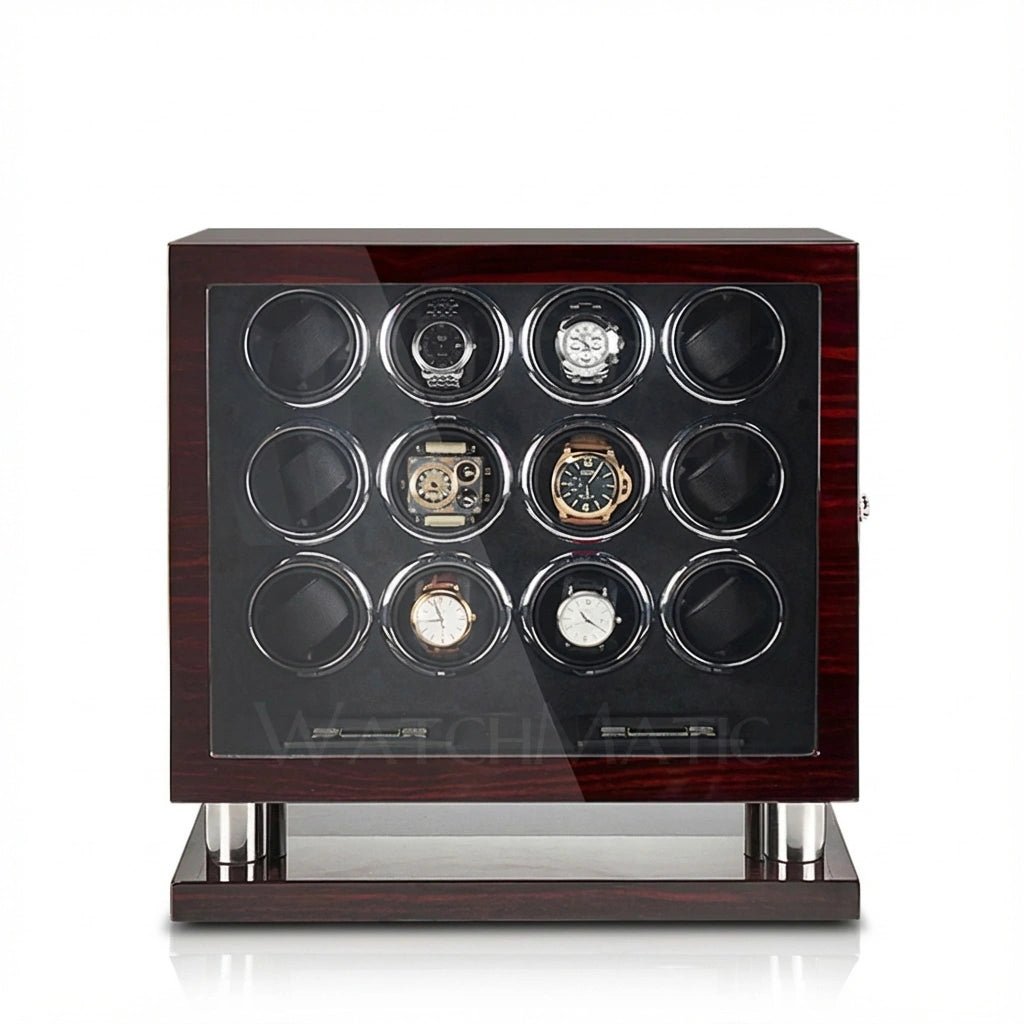
Suitable single-watch and multi-watch configurations can be explored in the WatchMatic Watch Winder Collection.
Best Watch Winder for Multiple BOVET Watches
A serious BOVET collector may own:
- Récital 30 Automatic
- Récital 23 Automatic
- Miss Audrey Automatic
- 19Thirty Manual
- Orbis Mundi Manual
- Récital 27 Manual
- Récital 28 Manual
- Additional tourbillons and bespoke pieces
That collection should not be organized on the assumption that every mechanical watch belongs on a rotor.
A better architecture is:
Automatic BOVET watches → independently programmable winding positions
Manual BOVET watches → premium stationary storage
This distinction can significantly reduce unnecessary motorized capacity.
LuxGuard for BOVET Automatic Watches

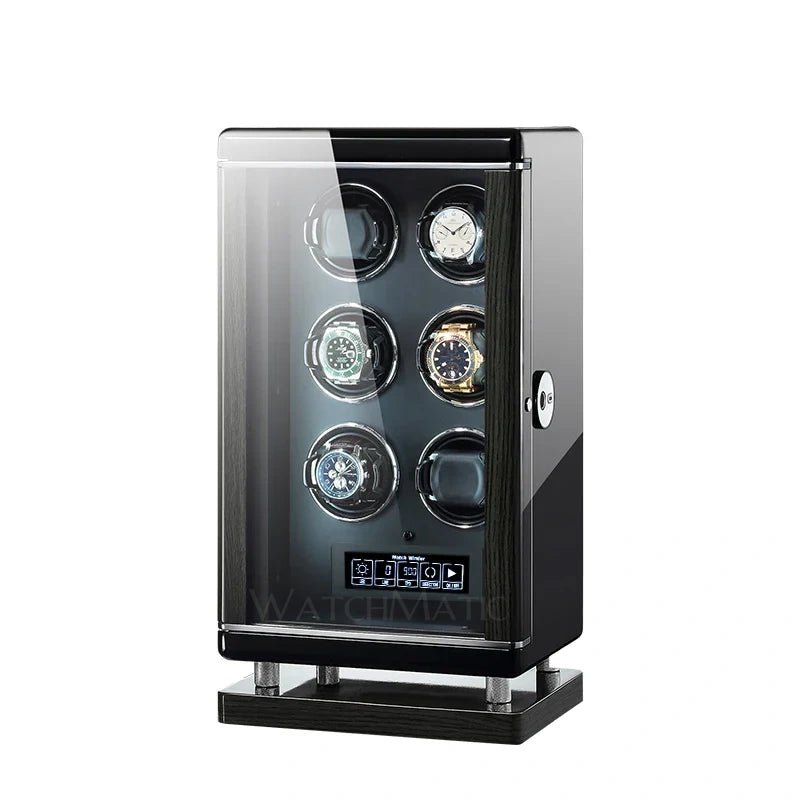
A multi-position LuxGuard Watch Winder can be suitable for collectors managing several automatic BOVET watches or combining them with other automatic haute-horlogerie pieces.
Depending on configuration, features include:
- Independent winding controls
- Multiple rotation modes
- Japanese Mabuchi motors
- Quiet operation
- Anti-magnetization protection
- Interior illumination
- Secure individual watch positions
Independent control is especially relevant because only selected BOVET watches require automatic winding.
A Récital 30 could occupy an active programmed rotor while a hand-wound manufacture watch should be stored separately rather than unnecessarily rotated.
Is It Safe to Keep a BOVET on a Watch Winder?
A properly configured high-quality winder can be used with a confirmed automatic BOVET.
Important factors include:
- Confirming the movement is self-winding
- Determining appropriate TPD
- Selecting appropriate direction
- Providing controlled rest cycles
- Maintaining clearance around unusual cases
- Supporting the watch securely
- Avoiding unnecessary magnetic exposure
- Using smooth, low-vibration motors
A watch winder should never be used to compensate for abnormal mechanical behavior.
If an automatic BOVET receives sufficient winding but repeatedly stops or shows unusual performance, professional inspection is more appropriate than simply increasing TPD.
Watch Winder vs. Watch Safe for BOVET Collectors
BOVET is one of the clearest examples where a watch safe can become more relevant than a conventional large watch winder.
The reason is simple:
Many important BOVET watches are manually wound.
| Feature | Watch Winder | Watch Winder Safe |
|---|---|---|
| Automatic winding | Yes | Yes |
| Independent winding | Model dependent | Available |
| Manual-watch storage | Possible | Yes |
| High-security storage | Limited | High |
| Precious-metal protection | Basic | High |
| Jewelry/accessory storage | Limited | Available |
| Mixed automatic/manual collection | Moderate | High |
Collectors who require both powered winding and protected stationary positions can explore the Watch Winder Safe Collection.
Titan Vault for a BOVET Collection

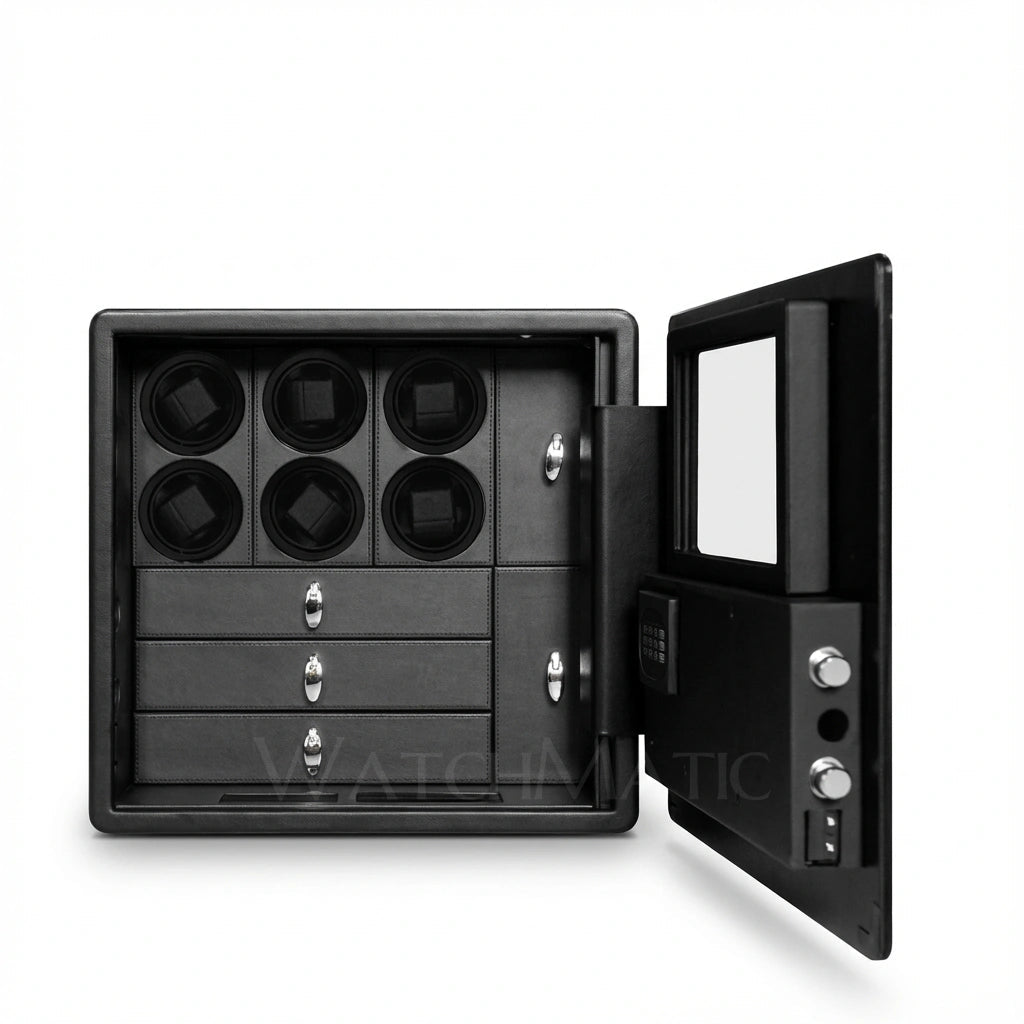
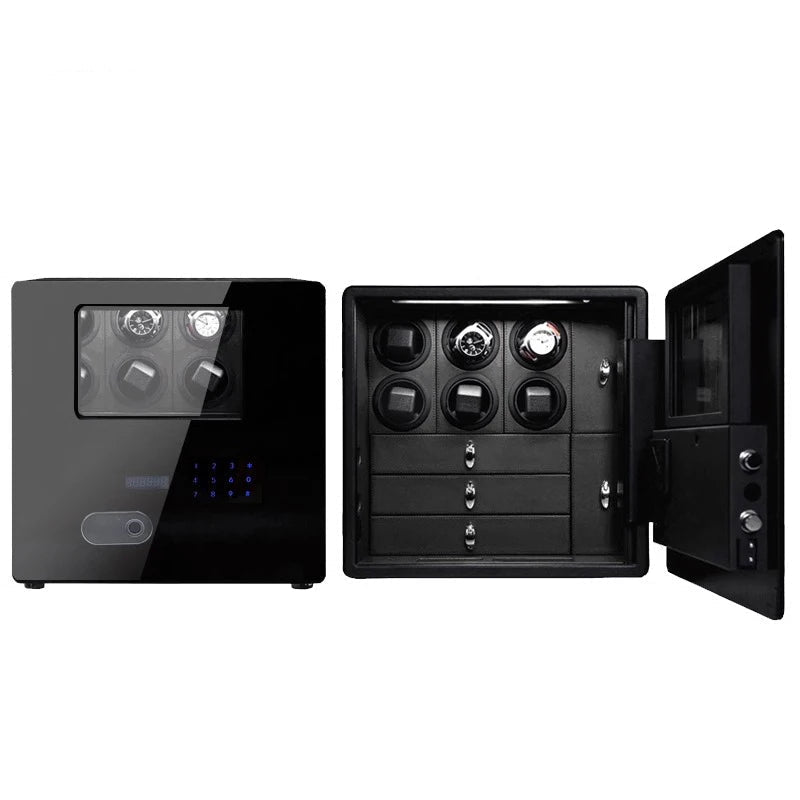
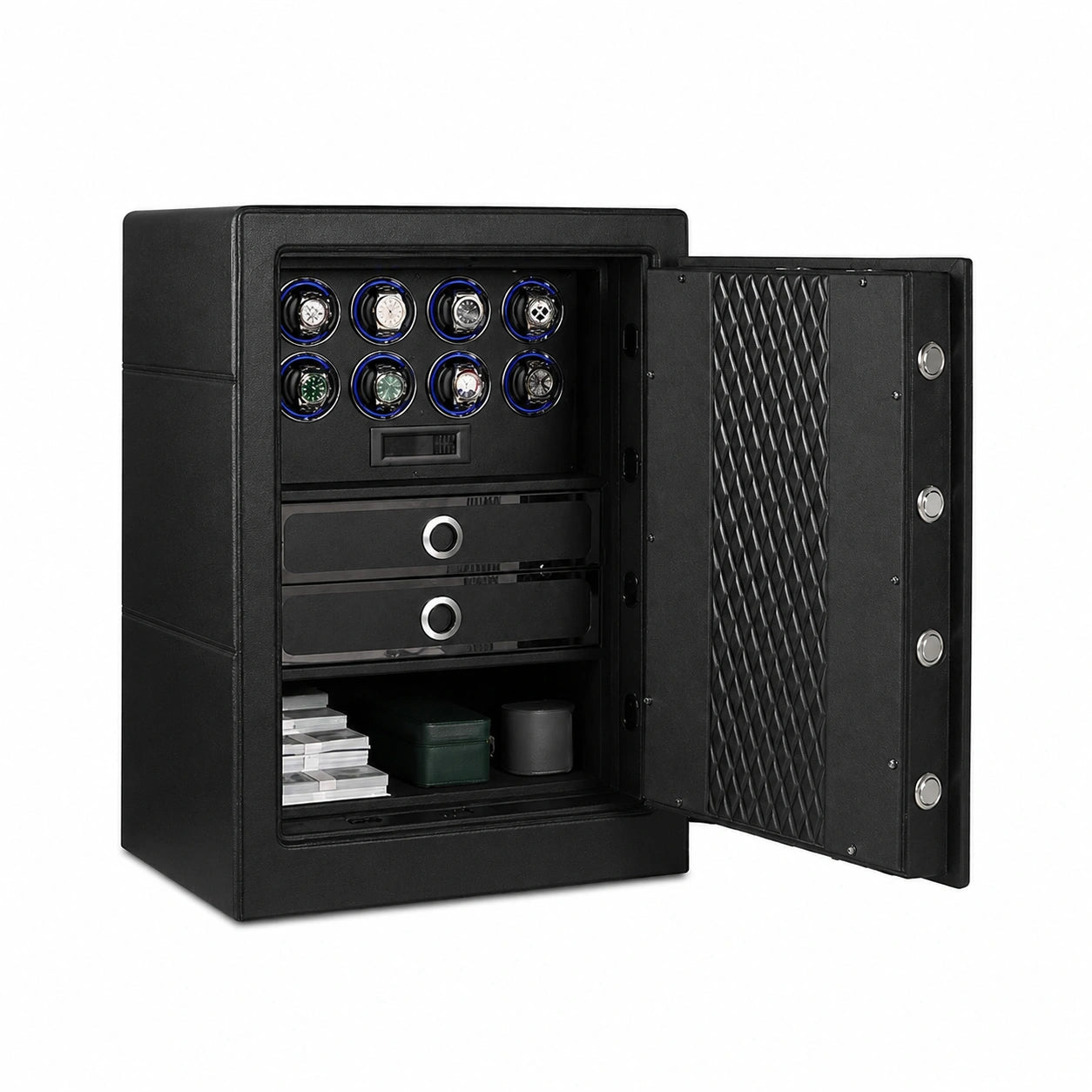
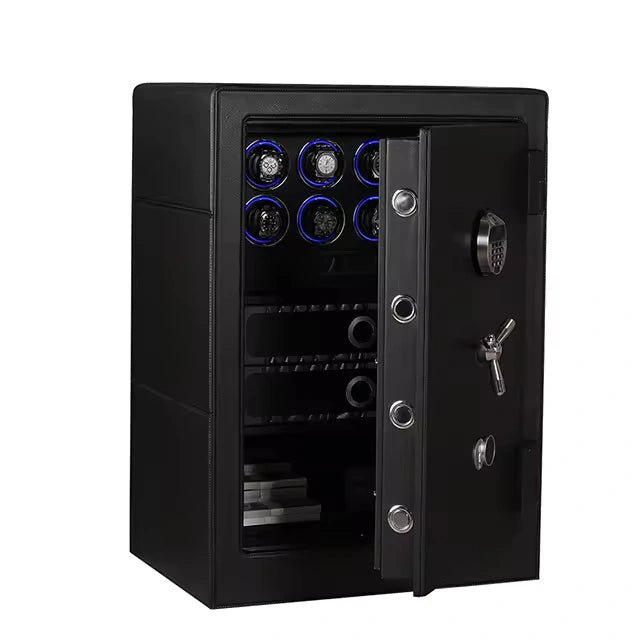
For a substantial BOVET or mixed haute-horlogerie collection, the Titan Watch Winder Safe combines individually programmable winding positions with secure conventional storage.
Depending on configuration, the Titan Vault series can accommodate approximately 12 to 60 watches, with available features including:
- Reinforced safe construction
- Biometric fingerprint access
- Digital passcode
- Manual key access
- Independent winding controls
- Adjustable TPD
- CW/CCW/bidirectional operation
- Japanese Mabuchi motors
- Anti-magnetization protection
- LED illumination
- Additional storage compartments
This architecture is particularly logical for BOVET.
Automatic watches such as the Récital 23 or Récital 30 can occupy programmable winding positions.
Manual manufacture watches such as the 19Thirty, Récital 27, Récital 28, or Orbis Mundi can remain in stationary protected storage.
For a BOVET collection dominated by manually wound pieces, a secure stationary Luxury Watch Safe Collection may be more relevant than maximizing the number of winding motors.
Why Security Matters for BOVET Collectors
BOVET occupies a very different collecting category from an everyday mass-market automatic watch.
The collection can include:
- Precious-metal cases
- Diamond setting
- Flying tourbillons
- Perpetual calendars
- Worldtime complications
- Hand engraving
- Miniature painting
- Bespoke commissions
- Limited-production pieces
For this kind of collection, storage design should consider:
winding + physical security + case clearance + environmental protection + presentation
rather than winding alone.
In many BOVET collections, the automatic rotor count may actually be much lower than the total number of watches.
BOVET in a Mixed Haute Horlogerie Collection
BOVET frequently sits alongside traditional high-watchmaking manufacturers with complicated mechanical movements and precious-metal collections.
A mixed collection might contain:
BOVET + Patek Philippe + Vacheron Constantin + Breguet + Jaeger-LeCoultre + Chopard
Related WatchMatic resources include:
Best Watch Winder for Patek Philippe Watches
Best Watch Winder for Vacheron Constantin Watches
Best Watch Winder for Breguet Watches
Best Watch Winder for Jaeger-LeCoultre Watches
Best Watch Winder for Chopard Watches
The same principle applies across the entire collection:
Do not assume every mechanical haute-horlogerie watch is automatic.
How to Choose the Best Watch Winder for Your BOVET
Step 1: Identify the Exact Reference
Do not stop at:
- Fleurier
- Dimier
- Récital
These describe collection families rather than winding architecture.
Step 2: Confirm Automatic or Manual
This is the most important step for BOVET.
Many BOVET manufacture movements are manually wound.
Step 3: Check the Published Power Reserve
Current examples vary dramatically:
- Récital 30 Automatic — 62 hours
- Récital 23 Automatic — 62 hours
- Récital 26 Manual — 120 hours
- 19Thirty Manual — 168 hours
- Récital 27 Manual — 168 hours
- Récital 28 Manual — 240 hours
Power reserve determines how frequently the watch may need winding, but it does not determine whether a rotating winder can supply that energy.
Step 4: Determine Winding Requirements
For automatic references, identify appropriate TPD and rotation direction.
Step 5: Choose Adjustable TPD
Avoid fixed-program winding systems.
Step 6: Choose CW, CCW and Bidirectional Modes
Multiple direction options provide the greatest compatibility.
Step 7: Check Case Clearance
Pay particular attention to:
- Dimier Writing Desk cases
- Fleurier bows
- Crowns at 12 o'clock
- Larger complicated cases
Step 8: Check Cushion Fit
Smaller Miss Audrey watches need different support from large Récital pieces.
Step 9: Use Independent Controls
Only the automatic pieces need programmed rotor positions.
Step 10: Allocate Manual Watches to Stationary Storage
Do not waste winding capacity on 5-, 7-, or 10-day manually wound manufacture watches.
For broader resources covering winding, TPD, secure storage, and collection protection, visit the WatchMatic Guide Hub.
Best Watch Winder for BOVET Watches: Final Thoughts
Choosing the best watch winder for a BOVET starts with a question that is more important here than with most brands:
Is the exact watch automatic or manually wound?
Current automatic BOVET examples include the Récital 23, Récital 30, and Miss Audrey.
But many of BOVET's signature manufacture watches are manually wound, including the 19Thirty, Orbis Mundi, Récital 26 Chapter Two, Récital 27, and Récital 28 Prowess 1.
The difference is fundamental.
A 10-day mechanical tourbillon can be far more complicated and valuable than a 62-hour automatic watch, yet still gain absolutely no winding benefit from a conventional rotating winder.
For a confirmed automatic BOVET, prioritize:
- Adjustable TPD
- CW/CCW/bidirectional programming
- Controlled winding and rest cycles
- Quiet, smooth motors
- Appropriate case clearance
- Flexible watch cushions
- Soft interior materials
- Independent programming
For manually wound BOVET manufacture watches, prioritize secure stationary storage instead.
The most reliable decision process is:
BOVET Reference → Automatic or Manual → Power Reserve → Complication → Winding Requirement → Winder or Stationary Storage
For additional winding and secure-storage solutions, explore WatchMatic.