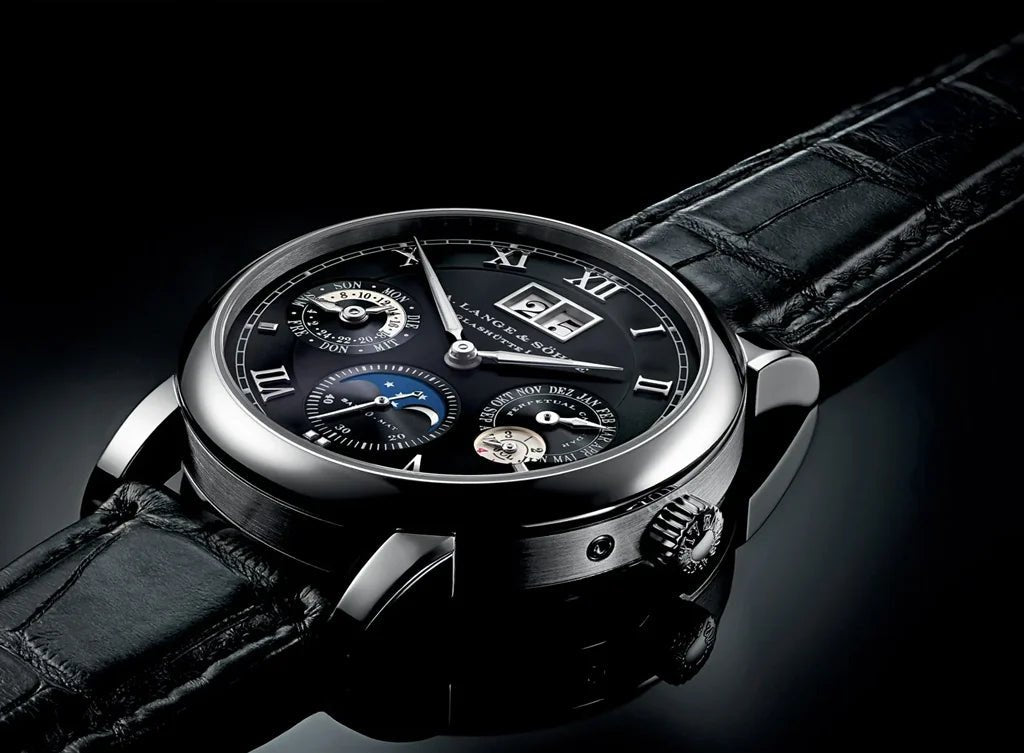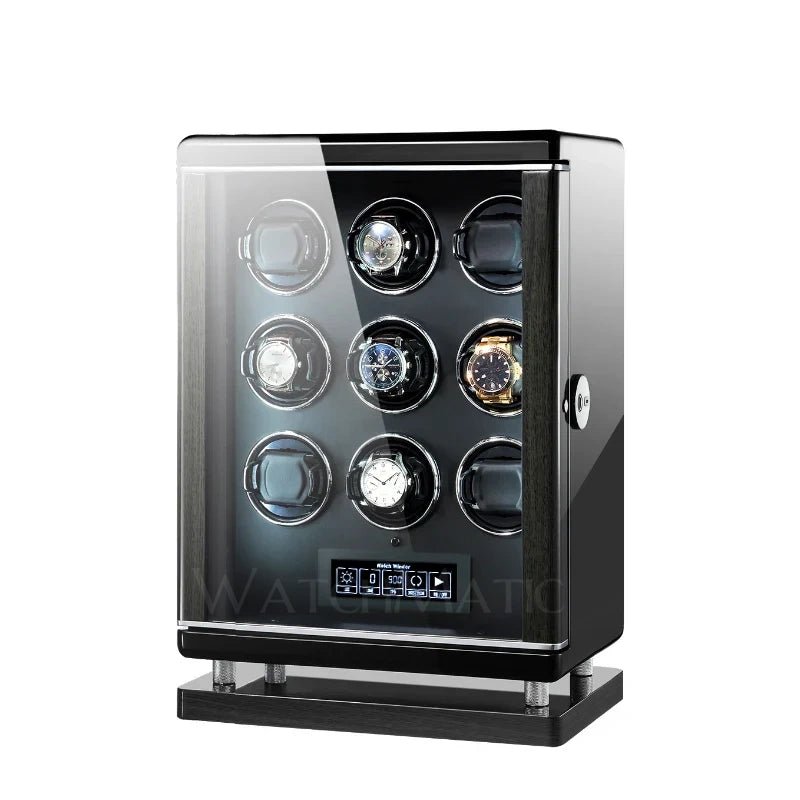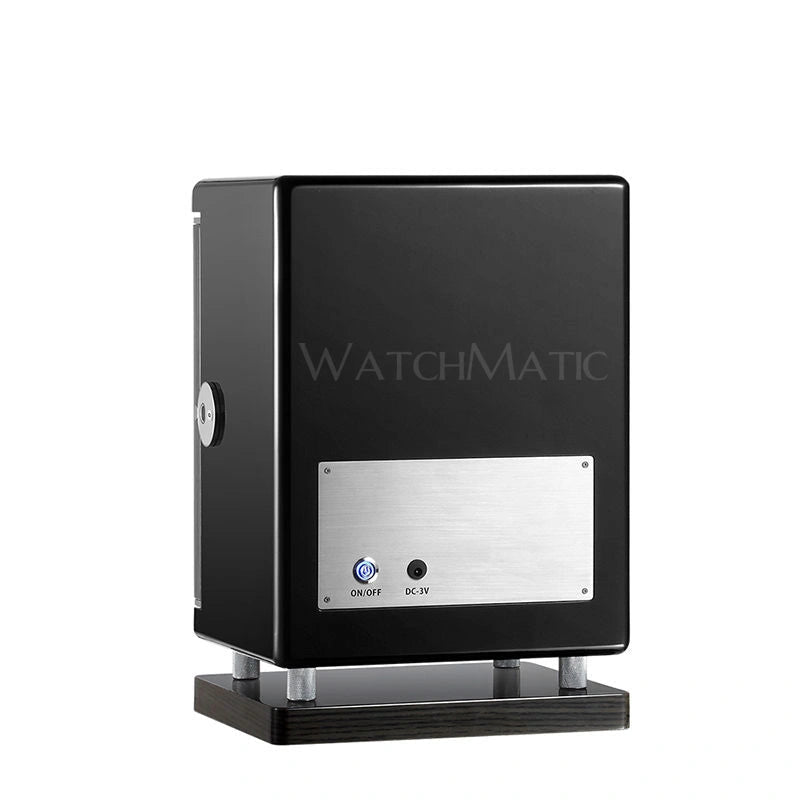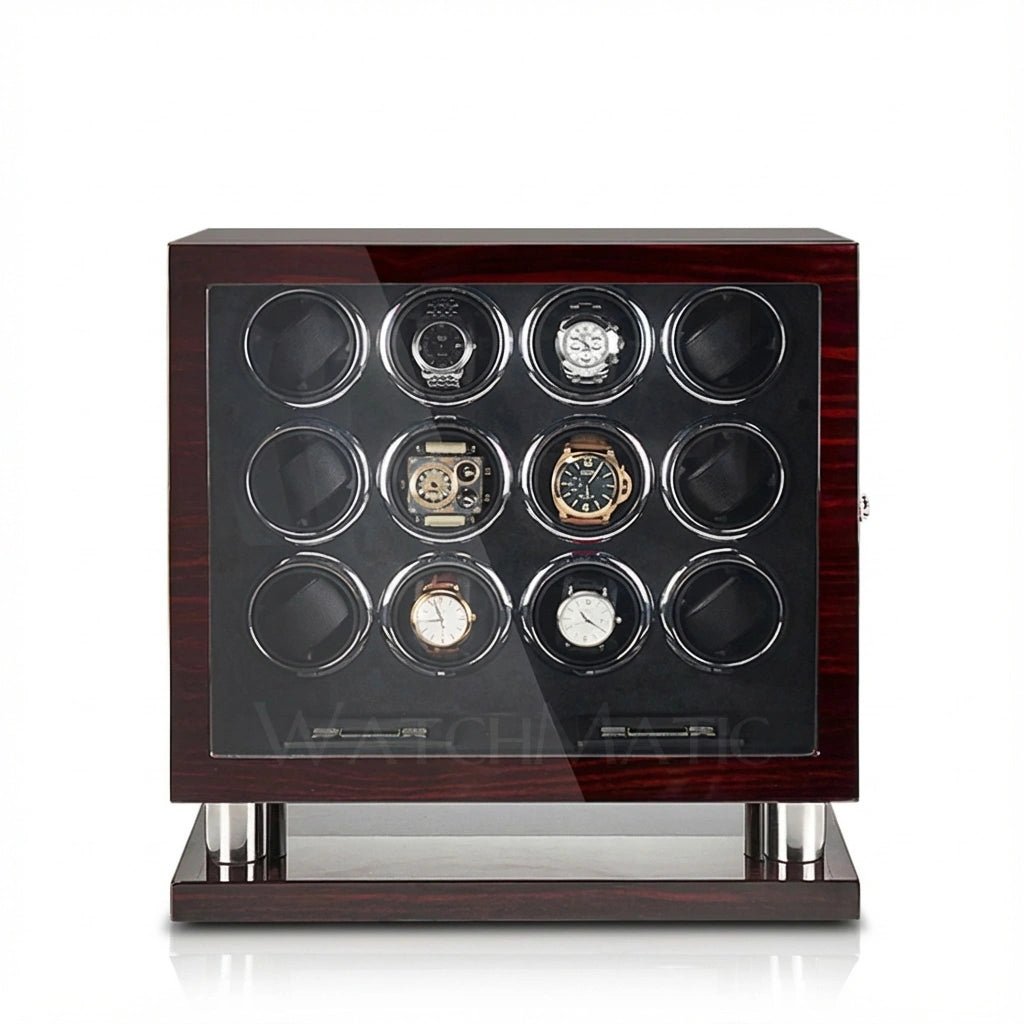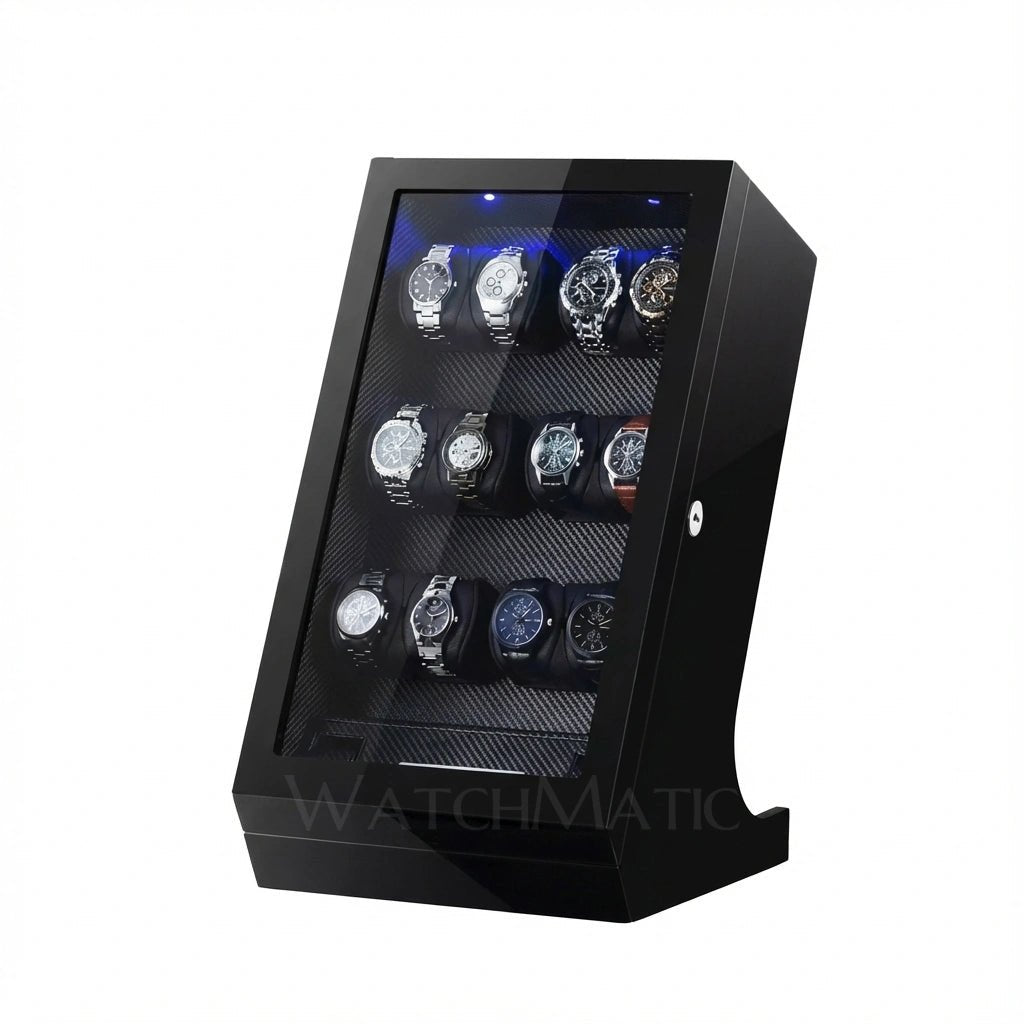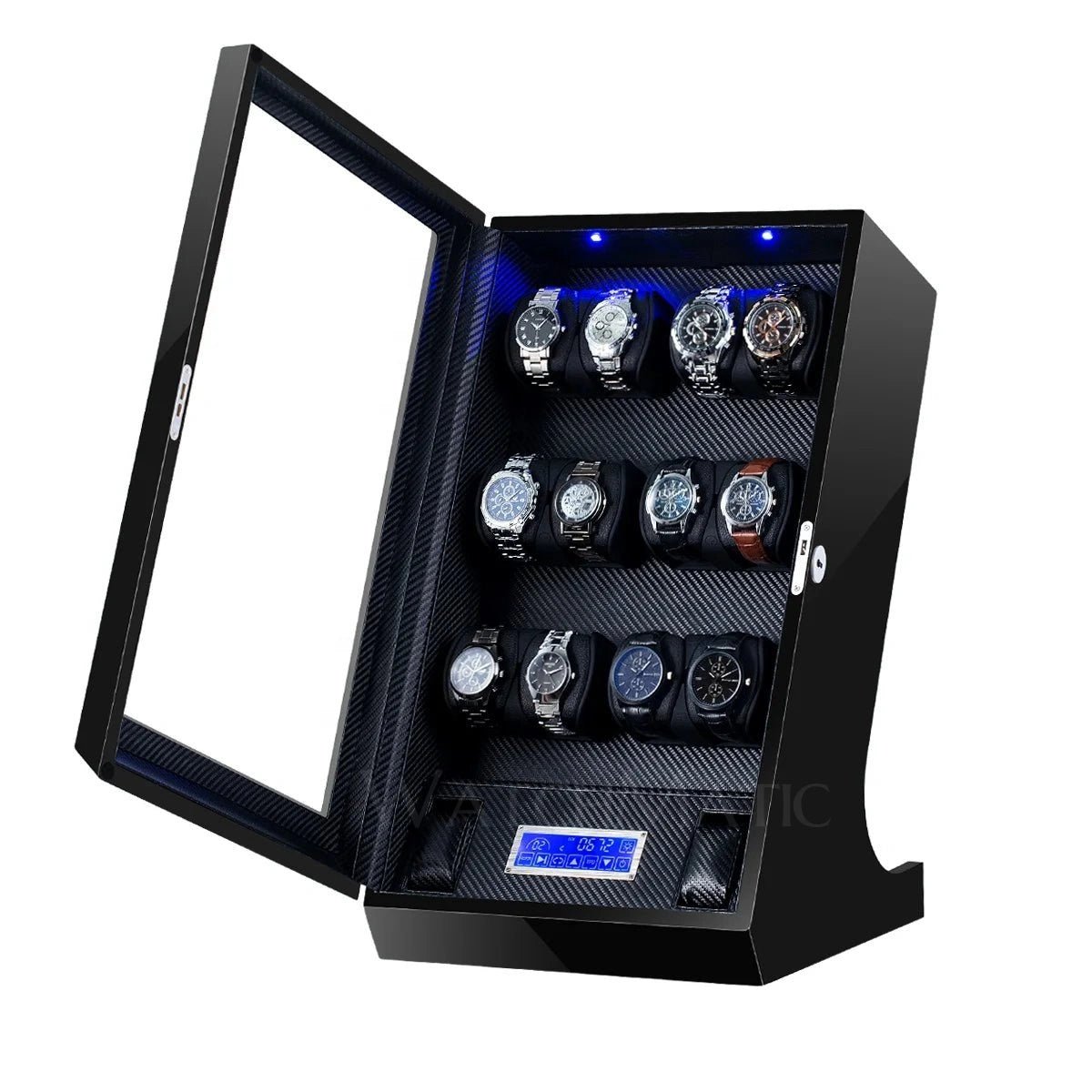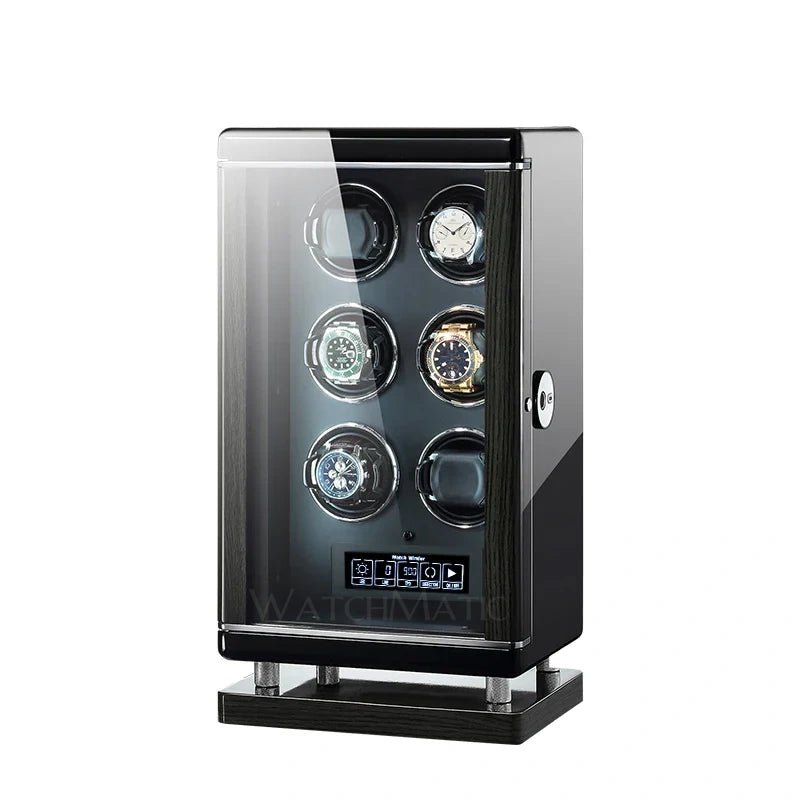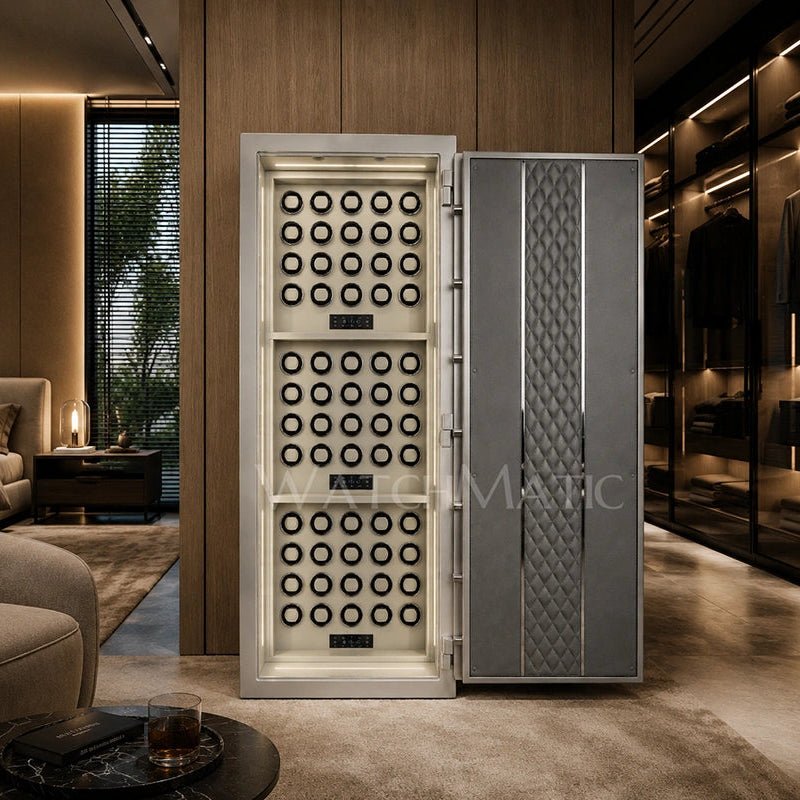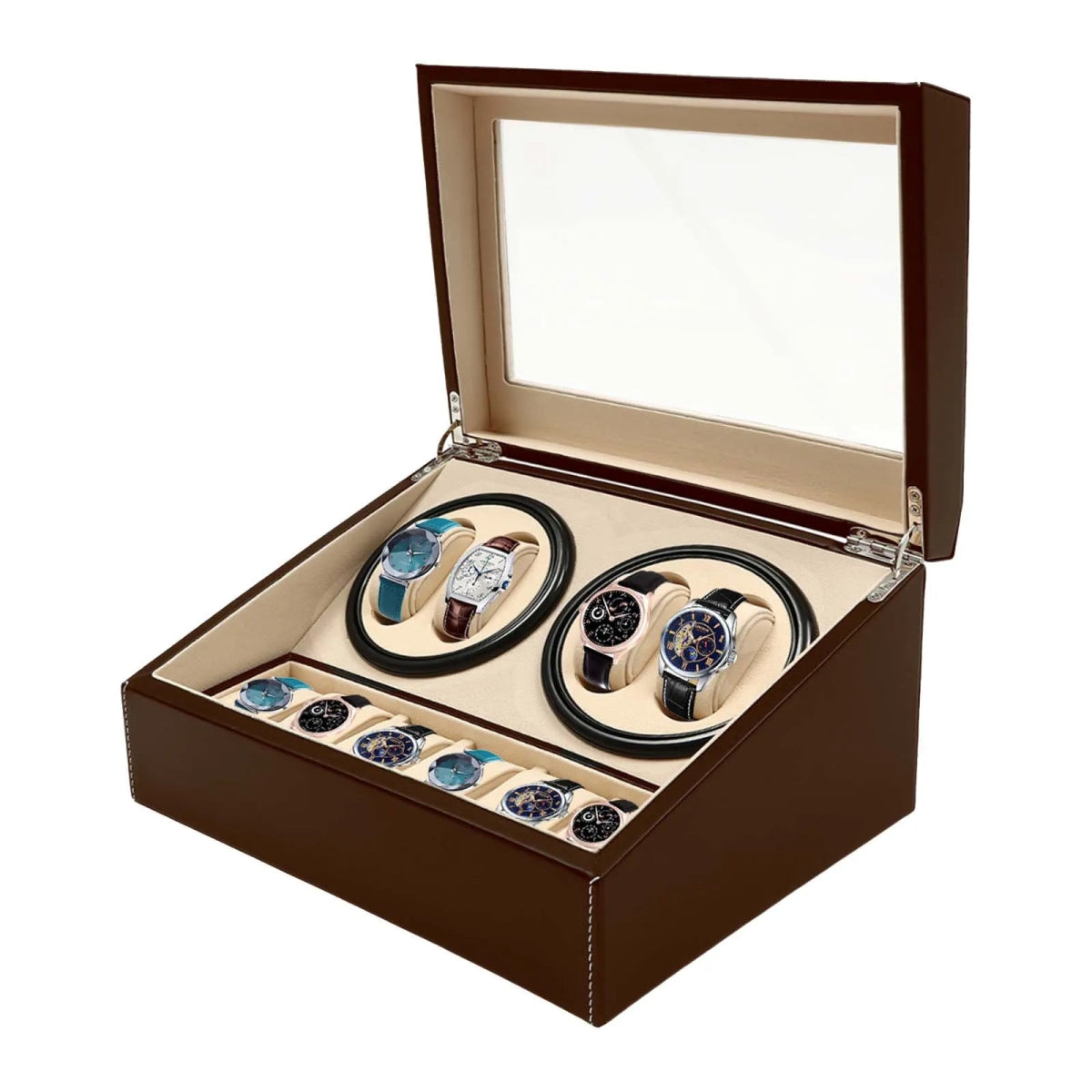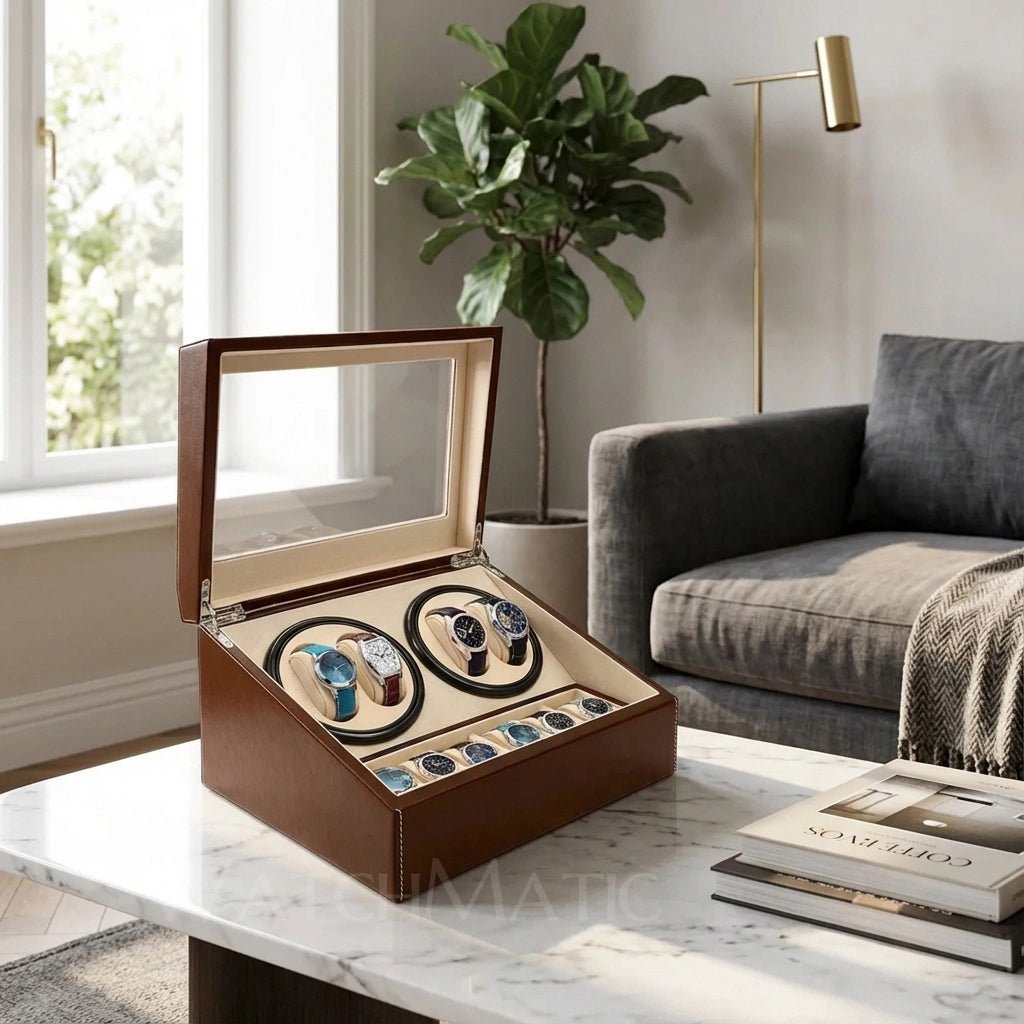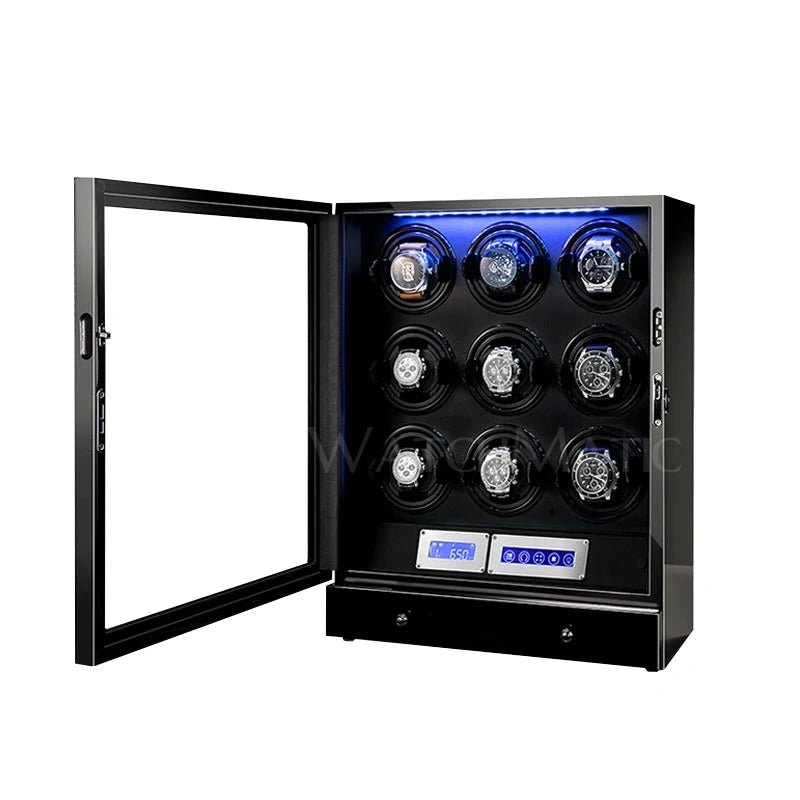
The best watch winder for Seiko watches is a programmable winder that supports adjustable Turns Per Day (TPD), multiple rotation directions, quiet operation, and secure watch cushions. A watch winder is appropriate for automatic Seiko watches, including many models powered by Seiko's 4R, 6R, and 8L mechanical movements, but it is not required for Seiko quartz or solar watches.
For most automatic Seiko watches, the goal is not continuous rotation. A properly configured winder should provide controlled winding cycles based on the specific movement inside the watch.
Collectors with several automatic watches may also benefit from independent winding controls, allowing different Seiko models—or watches from different brands—to operate with their own settings.
Does a Seiko Watch Need a Watch Winder?
It depends entirely on the type of Seiko you own.
Seiko produces watches using several different technologies, including:
- Automatic mechanical movements
- Manual-winding mechanical movements
- Quartz movements
- Solar movements
- GPS Solar movements
- Kinetic movements
- Spring Drive movements in certain product families
A conventional watch winder is intended primarily for automatic mechanical watches.
Seiko itself explains that automatic mechanical watches use wrist movement to wind the mainspring. Many modern Seiko automatic movements also provide manual winding through the crown.
Therefore, if your Seiko contains an automatic mechanical movement, a watch winder can keep it running when it is not on your wrist.
If your Seiko is quartz or solar-powered, a conventional automatic watch winder is unnecessary.
Why Use a Watch Winder for a Seiko Automatic Watch?
A Seiko automatic watch does not require a winder in order to remain mechanically functional.
You can simply allow the watch to stop when its power reserve runs out and restart it when you want to wear it again.
The primary advantage of a watch winder is convenience.
It can help:
- Keep the watch running between wears
- Maintain the current time and date
- Reduce repeated resetting
- Keep frequently rotated watches ready to wear
- Organize multiple automatic watches
- Provide dedicated storage for an active collection
This becomes increasingly useful if you own several automatic Seiko watches or a mixed collection containing Seiko alongside other mechanical brands.
For a broader explanation of how watch winders work and when they make sense, see the Watch Winder Guide.
Understanding Seiko Automatic Movements
Seiko is unusual compared with many watch brands because it develops and manufactures a broad range of mechanical movements.
This means there is no single "Seiko watch winder setting" that should automatically be applied to every watch.
The movement inside the watch matters.
Some important Seiko mechanical families include:
Seiko 4R Series
The 4R family is widely used across Seiko's mechanical watch lineup.
Examples include:
- 4R34
- 4R35
- 4R36
- 4R37
- 4R38
- 4R39
- 4R57
- 4R71
- 4R72
Seiko identifies these as mechanical calibers, with the 4R35/4R36 family using automatic winding together with manual-winding capability.
The 4R family appears across many accessible Seiko automatic watches and is therefore particularly relevant when choosing a watch winder.
Seiko 6R Series
The 6R family sits higher within Seiko's mechanical movement range and appears in numerous contemporary Prospex and Presage watches.
For example, Seiko's current 6R55 is an automatic movement with manual winding and approximately 72 hours of power reserve.
The longer power reserve means a fully wound 6R55-equipped watch may continue running through an unworn weekend without requiring a winder.
That does not make a winder useless—it simply means the convenience benefit depends on how frequently you rotate the watch.
Seiko 8L Series
Higher-end Seiko mechanical watches can use movements from the 8L family.
The 8L35, for example, is an automatic movement with manual winding and approximately 50 hours of power reserve. Seiko also describes its Magic Lever system as allowing the oscillating mass to contribute to winding as it moves in either direction.
For watches at this level, a high-quality programmable winder with secure cushions and controlled operating cycles is preferable to a simple continuously rotating device.
Seiko Watch Winder TPD Settings
TPD, or Turns Per Day, describes how many rotations a watch winder provides during its programmed operating period.
There is no reason to simply choose the maximum TPD setting.
The correct approach is:
Identify the Seiko model → identify its caliber → confirm the movement's winding requirements → configure the winder accordingly.
For a full explanation of TPD, see the Watch TPD Guide.
A programmable watch winder is particularly useful because it gives you flexibility if you later add watches with different movement requirements.
Don't Guess the Setting From the Seiko Brand Name
Two Seiko watches can look similar while using different calibers.
Likewise, two watches from different collections may share related movements.
This is why we recommend checking the caliber rather than selecting a setting simply because the dial says "Seiko."
You can usually identify the caliber through:
- The watch documentation
- Caseback information
- Model specifications
- Seiko's official product information
Once you know the caliber, selecting an appropriate winding program becomes much easier.
What Rotation Direction Should You Use for a Seiko Watch?
Rotation direction is another important watch winder setting.
Programmable winders generally provide:
- Clockwise (CW)
- Counterclockwise (CCW)
- Bidirectional (CW + CCW)
The appropriate setting should be matched to the movement rather than assumed across the entire Seiko brand.
Some Seiko automatic winding systems are designed to efficiently convert rotor movement from either direction into mainspring winding. For example, Seiko specifically describes the 8L35's Magic Lever as generating winding as the oscillating mass moves in either direction.
For mixed collections, a winder offering all three direction options provides substantially more flexibility than a fixed-direction unit.
What to Look for in a Seiko Watch Winder
When choosing a watch winder for a Seiko automatic watch, focus on the winding system rather than simply the appearance of the box.
Adjustable TPD
A programmable TPD range allows the winder to accommodate different Seiko movements and other automatic watches in your collection.
Multiple Rotation Directions
Look for support for:
CW + CCW + Bidirectional
This makes the winder adaptable to a much broader range of movements.
Rest Cycles
An automatic watch does not need to rotate continuously.
A quality winder should alternate between winding and resting periods.
Independent Control
If you own several watches, independent controls allow each position to operate according to its own program.
This becomes especially important in a mixed-brand collection.
Quiet Motors
A watch winder may operate for many hours every day.
Low-noise motors are therefore especially useful if the unit is kept in a:
- Bedroom
- Dressing room
- Office
- Walk-in closet
- Living area
Secure Watch Cushions
The cushion should hold the watch securely without placing unnecessary pressure on the bracelet or strap.
This matters particularly if you own watches with different wrist sizes or bracelet configurations.
Anti-Magnetization Design
Mechanical watches should be protected from unnecessary magnetic exposure.
For premium watch winders, motor shielding and anti-magnetization design are therefore useful considerations.
Best Watch Winder for One Seiko Automatic Watch
If you own one automatic Seiko, you do not need a large winding system.
A compact programmable watch winder is generally sufficient.
Prioritize:
- Adjustable TPD
- CW/CCW/bidirectional settings
- Rest cycles
- Quiet operation
- Stable watch support
Avoid choosing a winder simply because it offers extremely high rotation counts.
The objective is controlled winding, not maximum movement.
You can explore WatchMatic's complete Watch Winder Collection for single-watch and multi-watch configurations.
Best Watch Winder for Multiple Seiko Watches
The requirements change when the collection grows.
For example, a collector may own:
- Seiko 5 Sports
- Prospex Diver
- Prospex GMT
- Presage
- King Seiko
- A higher-end mechanical Seiko
At this point, independent winding control becomes considerably more useful.
Instead of forcing every watch to follow one program, each winding position can be configured according to the movement it contains.
A multi-watch winder also keeps the active collection organized and ready to wear.
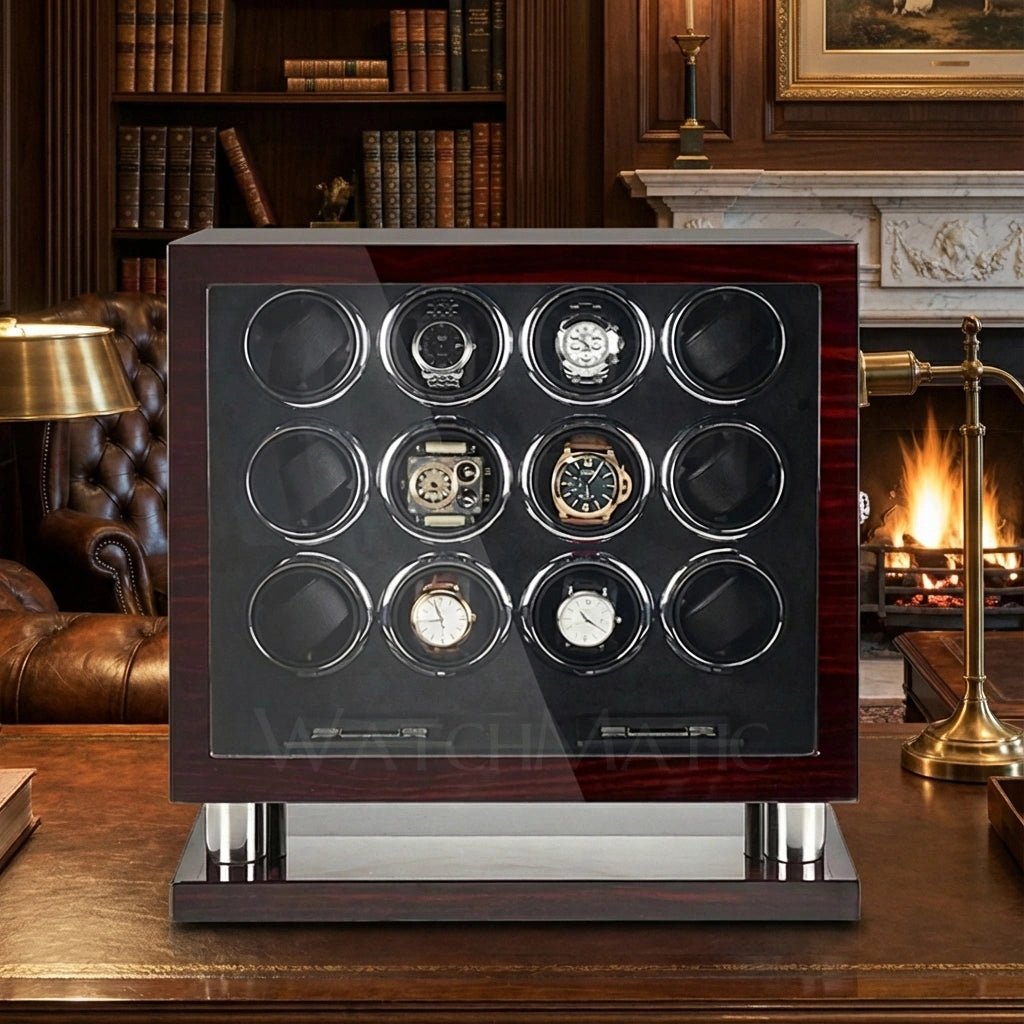
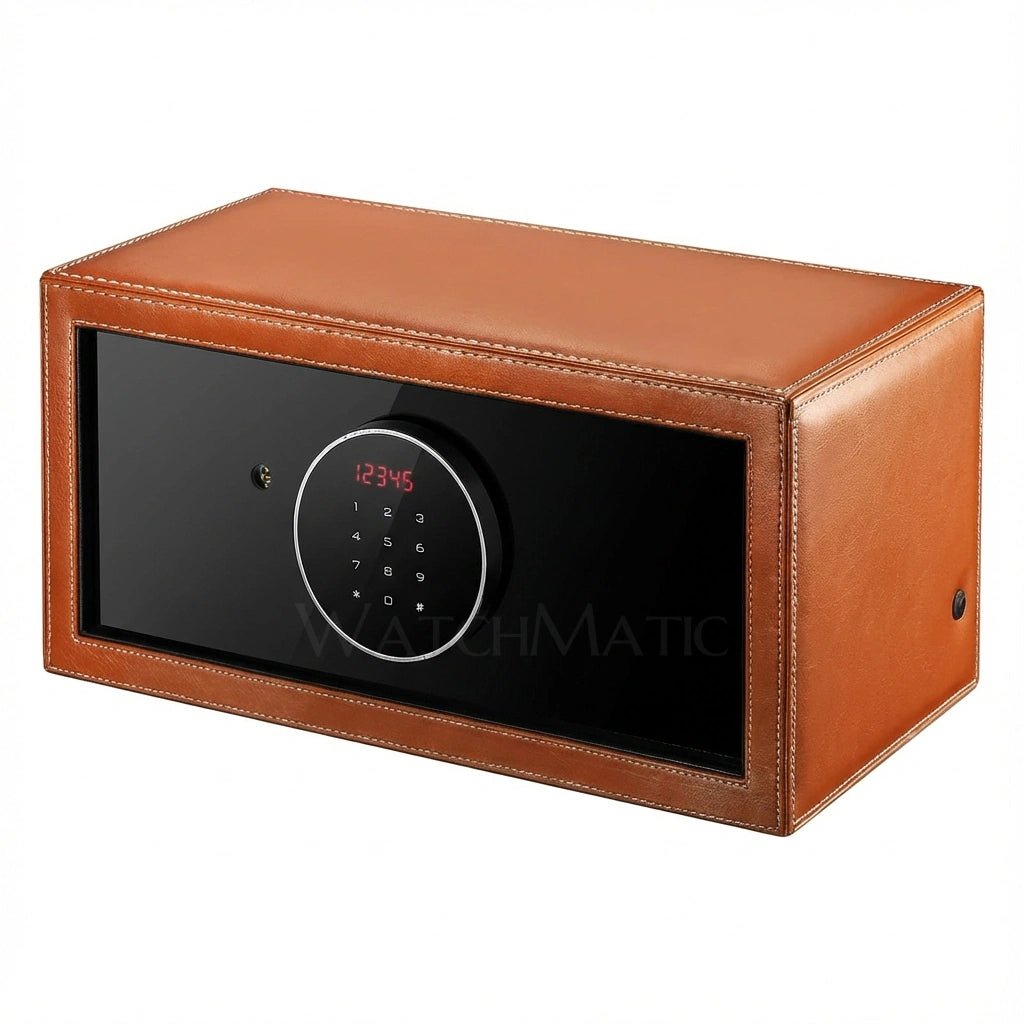
LuxGuard Multi-Watch Winders

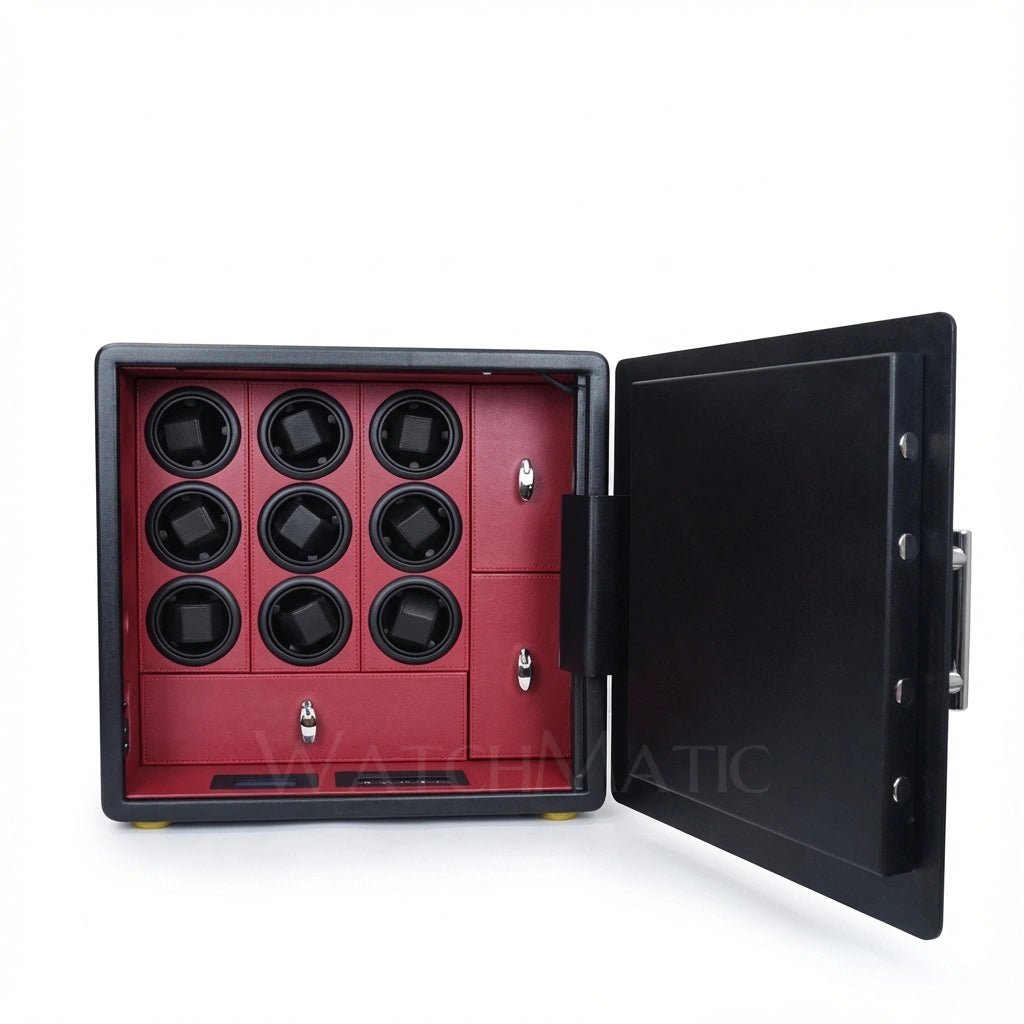
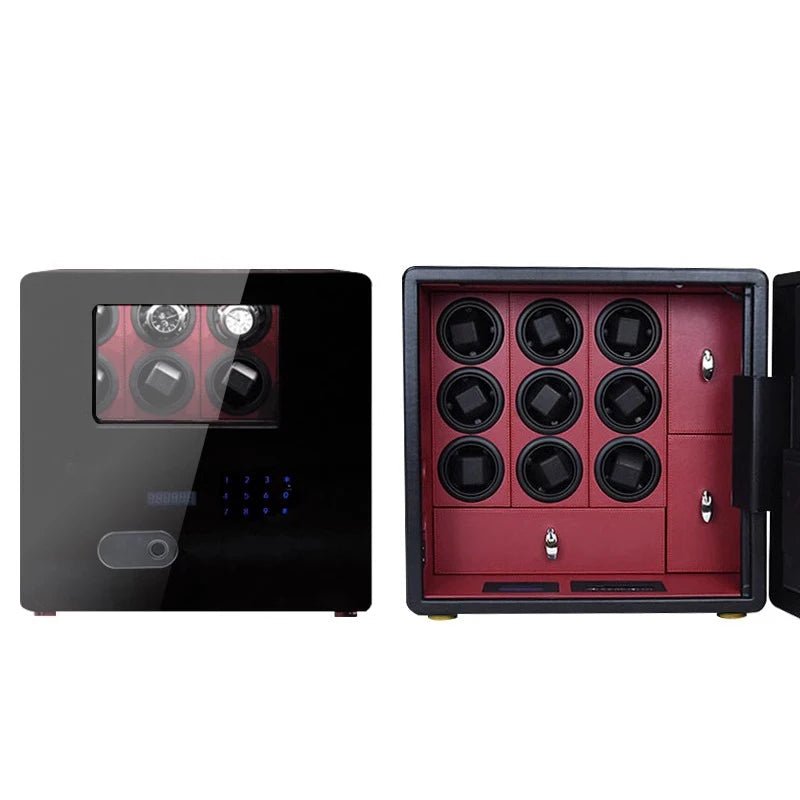
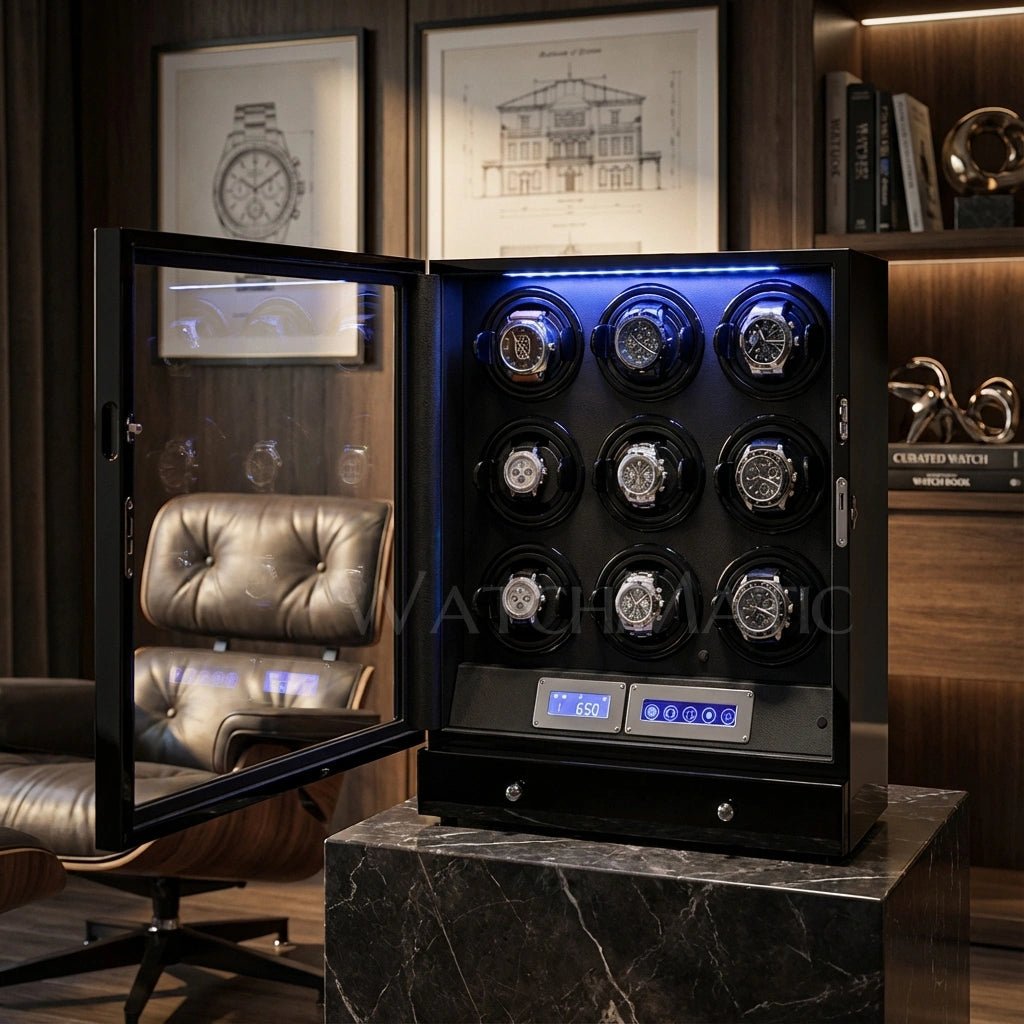
For collectors rotating several Seiko automatic watches, LuxGuard provides independent winding positions within a dedicated presentation system.
Features include programmable rotation modes, Japanese Mabuchi motors, quiet operation, anti-magnetic protection, lighting, and individual winding control.
This makes it particularly suitable for a collection containing different automatic calibers rather than several identical watches.
Explore the WatchMatic Watch Winder Collection to compare available configurations.
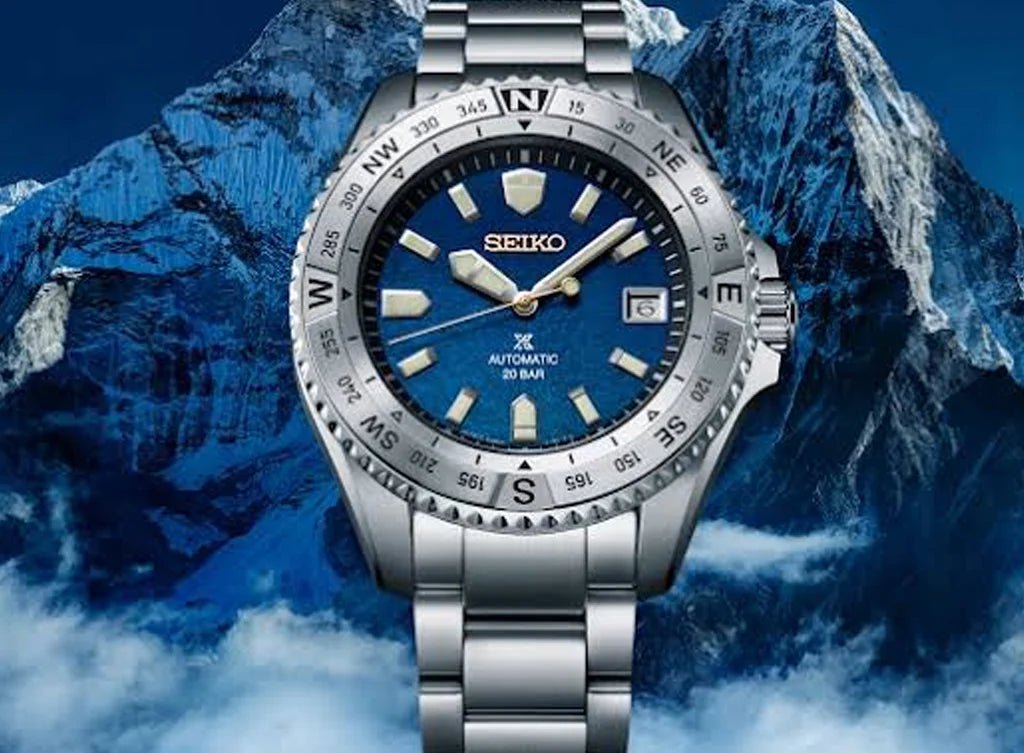
Best Watch Winder for Seiko Prospex
Seiko Prospex deserves particular attention because the collection contains numerous automatic mechanical models.
Depending on the reference, Prospex watches can use movements from families such as 4R, 6R, and 8L.
For example, Seiko currently lists numerous Prospex references using the automatic 6R55, while its 8L35 lineup includes higher-end Prospex references.
For a Prospex automatic, choose a winder based on the specific caliber, not simply the Prospex collection name.
A programmable winder with adjustable TPD and direction gives you the flexibility to accommodate different Prospex models over time.
Best Watch Winder for Seiko Presage
Seiko Presage is another important mechanical collection.
Because Presage includes numerous mechanical references and calibers, owners should first identify the movement inside their specific watch.
For collectors with multiple Presage watches, a multi-position winder can provide both organized presentation and ready-to-wear convenience.
This is especially useful when the collection is rotated rather than worn one watch at a time for extended periods.
Best Watch Winder for Seiko 5 Sports
Seiko 5 Sports is one of the most recognizable entry points into Seiko automatic watch ownership.
Many contemporary Seiko 5 Sports models use movements from the 4R family.
These are automatic mechanical movements, making them suitable for use with an appropriately configured watch winder.
However, a winder is still optional.
If you own one Seiko 5 and wear it regularly, normal wrist movement may provide everything you need.
A winder becomes more practical when you begin rotating several automatic watches.
Best Watch Winder for King Seiko
Modern King Seiko mechanical watches occupy a different position within the Seiko portfolio.
For owners building a collection around King Seiko, Presage, Prospex, or other mechanical Seiko references, a programmable multi-watch winder provides more flexibility than a basic fixed-setting device.
Again, identify the caliber before selecting the winding program.
Seiko vs. Grand Seiko: Do They Use the Same Winder Settings?
Not necessarily.
Although Seiko and Grand Seiko share historical and technical connections, they should not be treated as one movement family for watch-winder purposes.
Grand Seiko uses its own range of mechanical and Spring Drive calibers, while Seiko uses numerous 4R, 6R, 8L and other movements.
If you own Grand Seiko, see our dedicated Best Watch Winder for Grand Seiko guide.
For a mixed Seiko and Grand Seiko collection, independent winding controls are particularly useful.
Can You Put a Seiko Solar Watch on a Watch Winder?
A conventional watch winder is not required for a Seiko Solar watch.
Solar watches use light to generate electrical energy and store that energy in their rechargeable system.
Mechanical rotation is therefore not their normal charging mechanism.
If you own both Solar and automatic Seiko watches, only the automatic mechanical pieces need to be considered for conventional watch-winder use.
Can You Put a Seiko Quartz Watch on a Watch Winder?
There is generally no functional reason to do so.
A conventional quartz movement is battery-powered and does not rely on an automatic rotor to wind a mechanical mainspring.
A watch winder therefore provides no winding benefit to a standard quartz Seiko.
What About Seiko Kinetic?
Seiko Kinetic is different from a conventional automatic mechanical watch.
Kinetic technology uses wrist movement to generate electrical energy rather than mechanically winding a conventional automatic mainspring.
It should therefore not simply be treated as equivalent to a standard Seiko automatic movement when selecting a conventional watch winder.
The article and recommendations here are primarily intended for mechanical automatic Seiko watches.
Is It Safe to Leave a Seiko on a Watch Winder?
A properly configured quality watch winder can be used for an automatic Seiko.
The important factors are:
- Correct movement identification
- Appropriate winding program
- Controlled operating cycles
- Suitable rotation direction
- Secure positioning
A watch winder should not be used as a solution for a watch that repeatedly stops because of a mechanical problem.
If an adequately wound Seiko begins showing unusual behavior—such as substantially reduced power reserve, abnormal winding resistance, or significant changes in timekeeping—it may need professional inspection.
Does a Seiko Automatic Need to Run All the Time?
No.
An automatic Seiko can be allowed to stop after its power reserve is exhausted.
A winder is primarily useful when you want the watch to remain:
Running + set + ready to wear.
For example, Seiko states that the current 6R55 offers approximately 72 hours of power reserve. A fully wound watch using this movement can therefore potentially remain running through an unworn weekend without any additional winding.
For someone wearing that watch every weekday, a winder may not be necessary.
For someone rotating ten watches, it may be much more useful.
Watch Winder vs. Watch Winder Safe for Seiko Collectors
As the collection becomes larger or more valuable, winding is no longer the only consideration.
A collector may also need:
- Security
- Organized storage
- Controlled access
- Protection from dust
- Individual winding controls
- Additional storage for watches not currently winding
At that point, a watch winder safe becomes a different category of solution.
| Feature | Watch Winder | Watch Winder Safe |
|---|---|---|
| Automatic winding | Yes | Yes |
| TPD control | Model dependent | Yes on programmable models |
| Rotation direction | Model dependent | Yes on programmable models |
| Collection organization | Yes | Yes |
| Security | Basic | High |
| Controlled access | Limited | Biometric/digital options |
| Large collection suitability | Moderate | High |
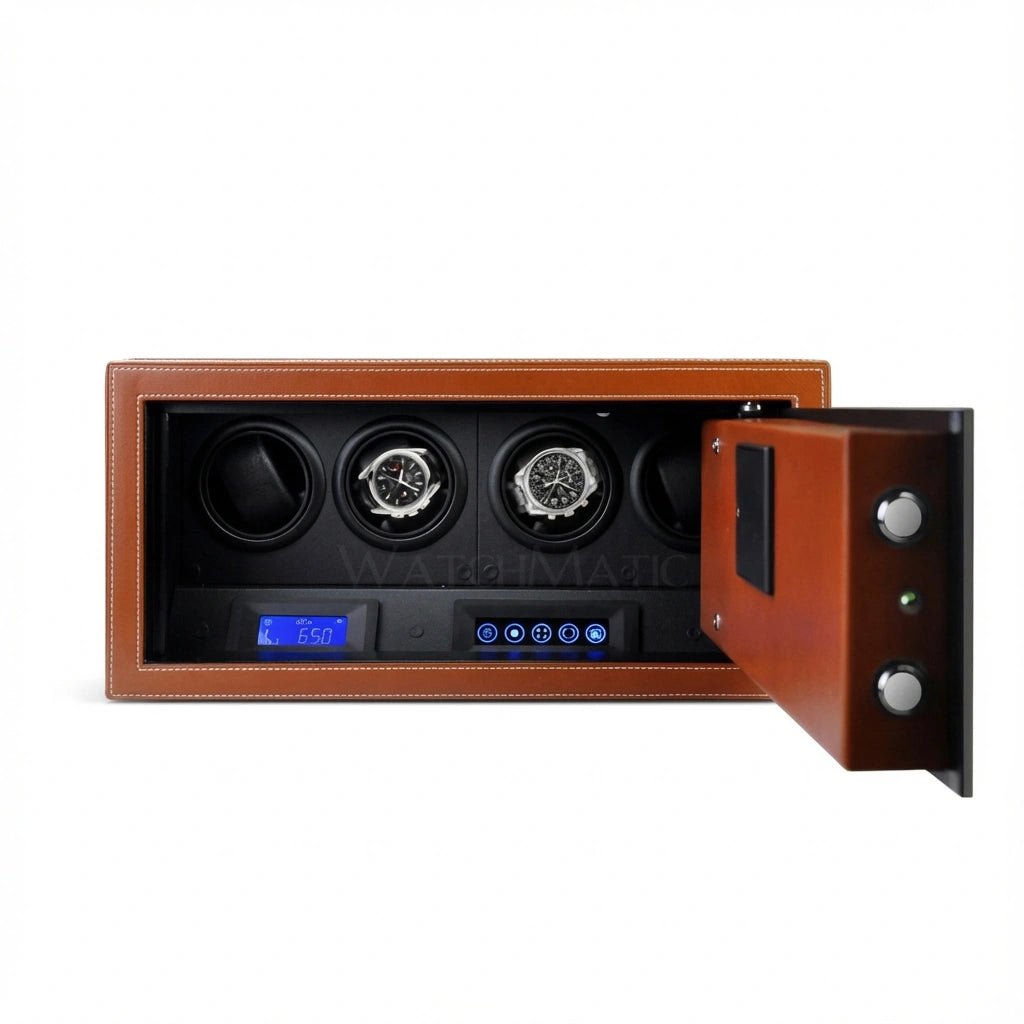
Explore WatchMatic's Watch Winder Safes for integrated winding and secure storage.
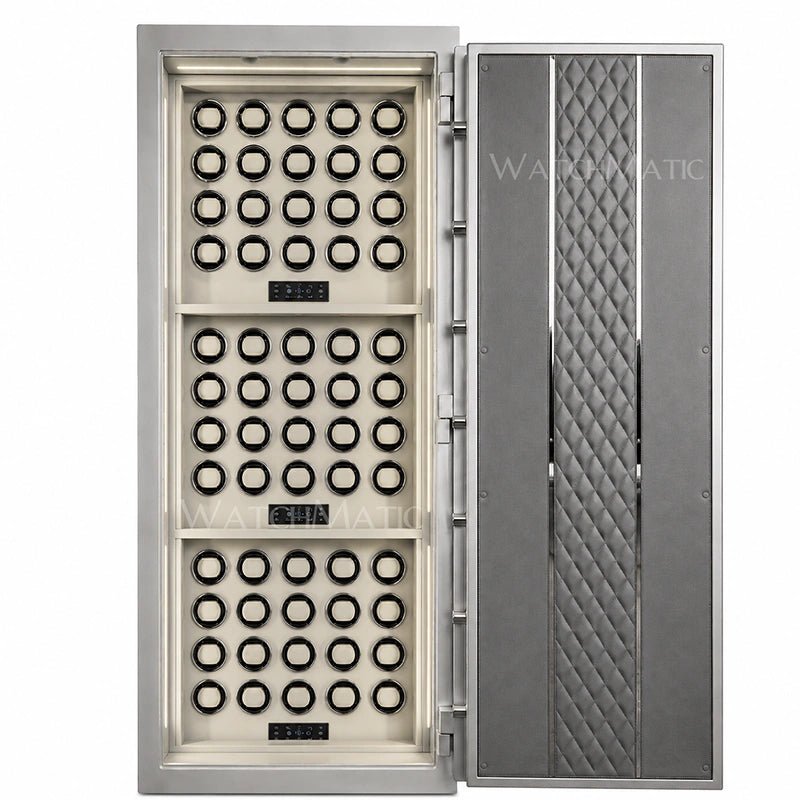
Titan Vault for Large Seiko Collections

A collector who owns a substantial Seiko collection—or combines Seiko with Rolex, Omega, Grand Seiko and other mechanical watches—may eventually require more than a standalone winder.
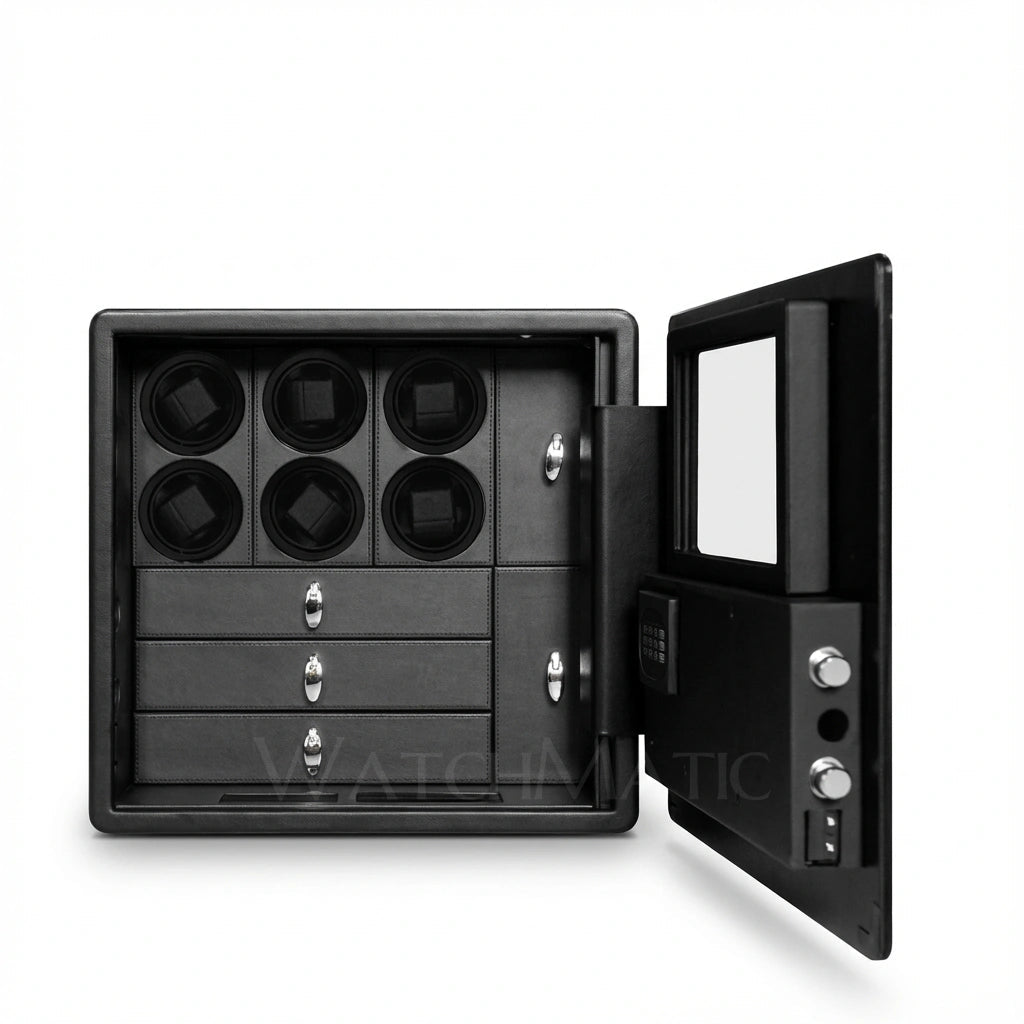
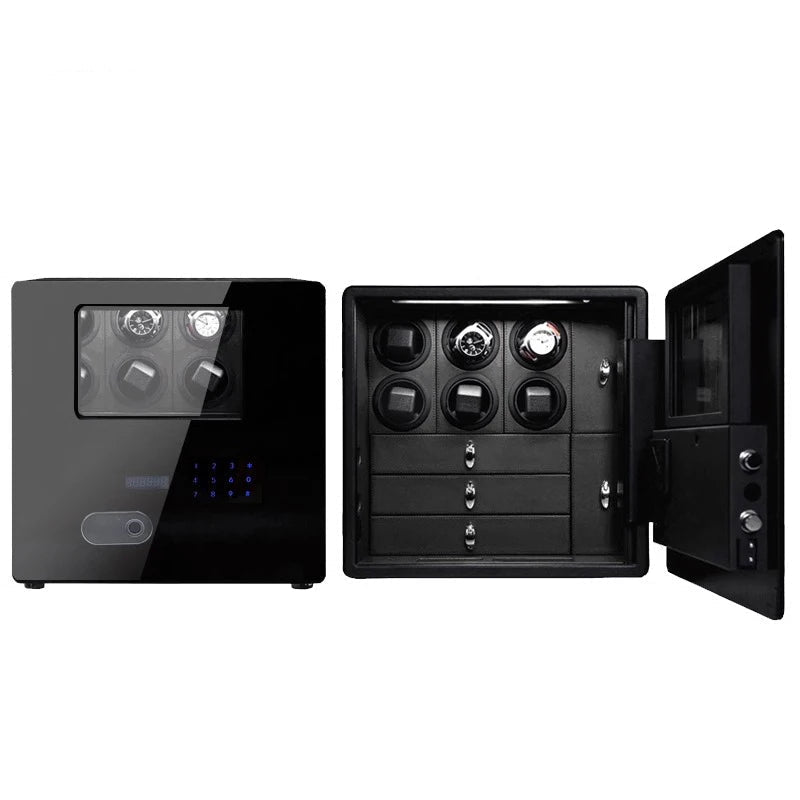
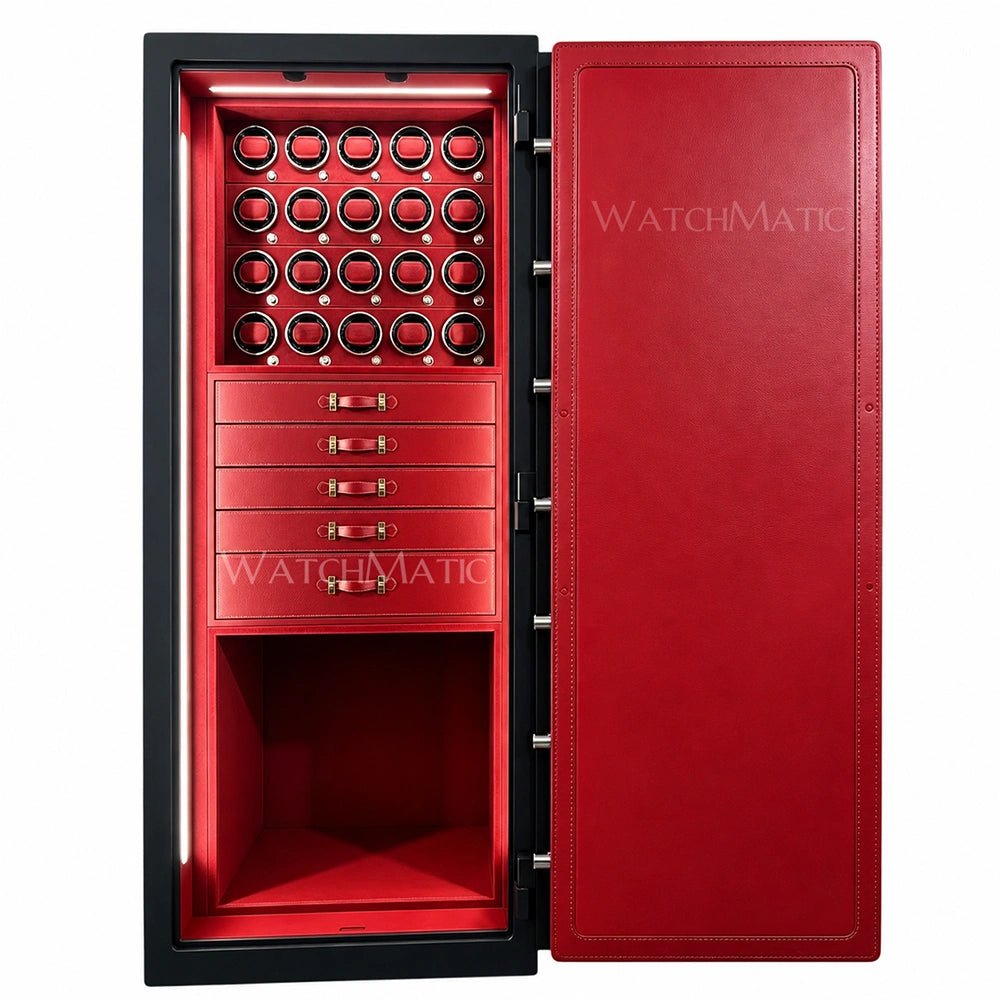
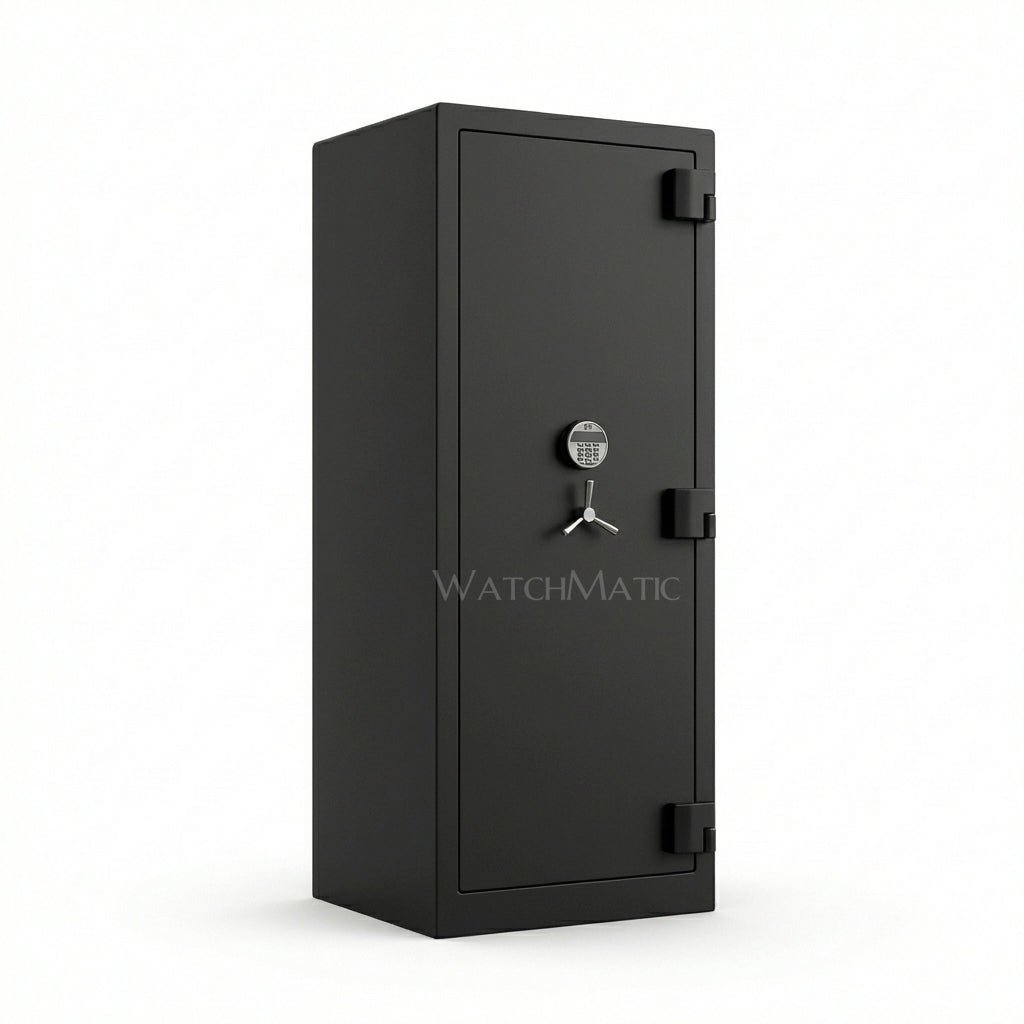
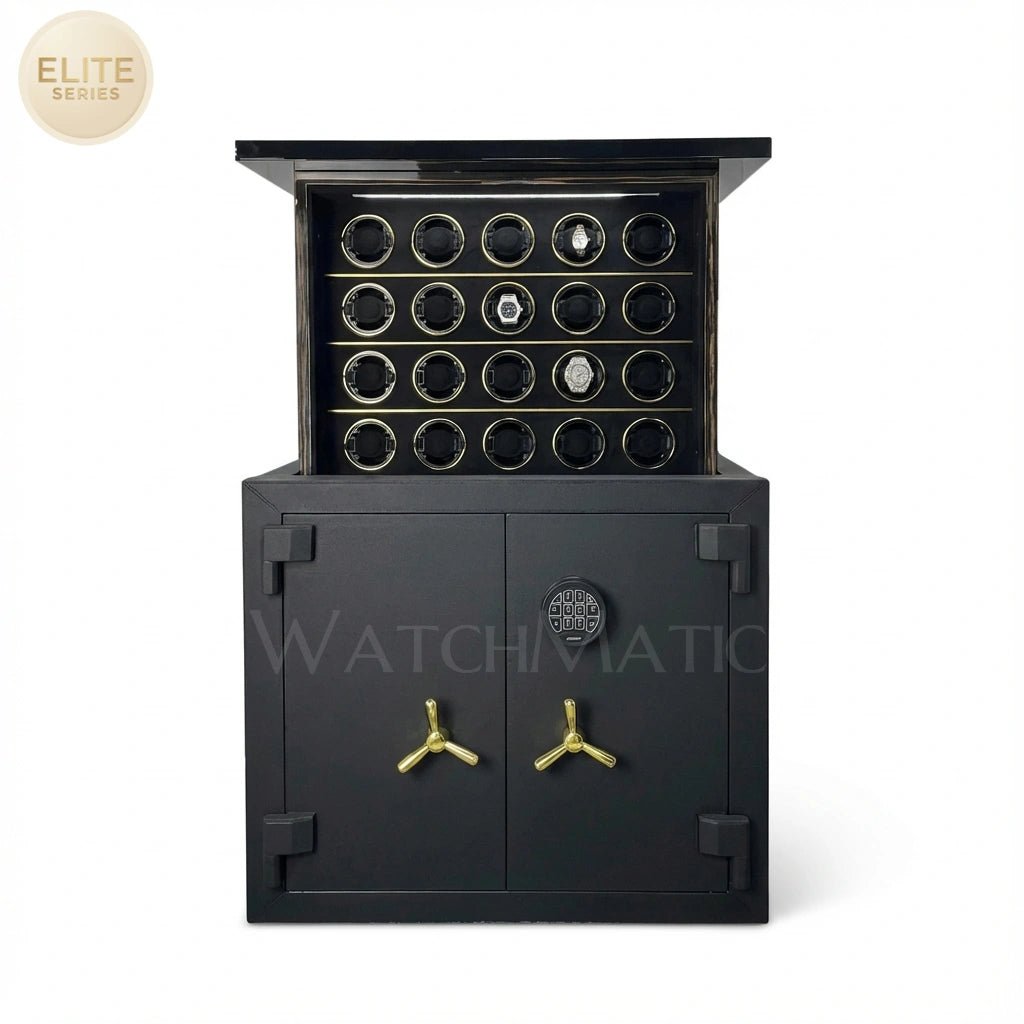
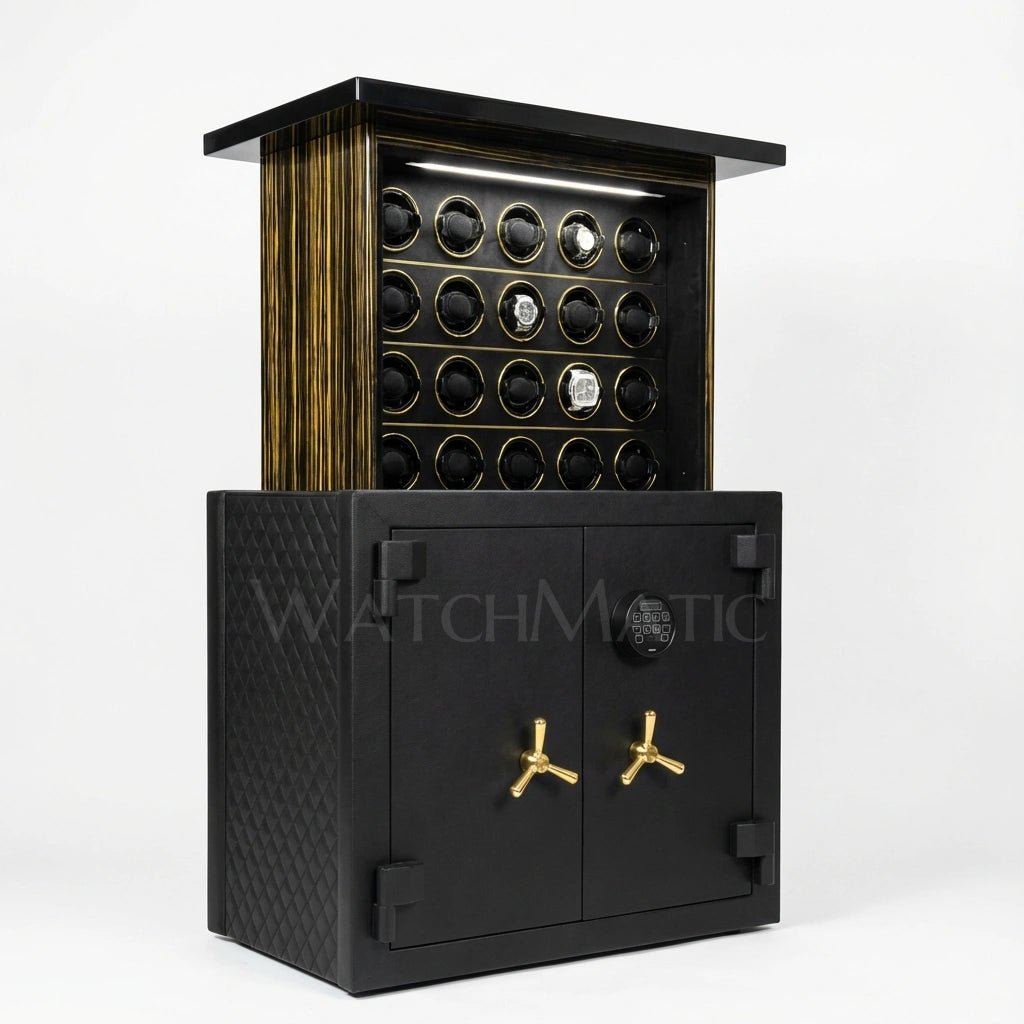
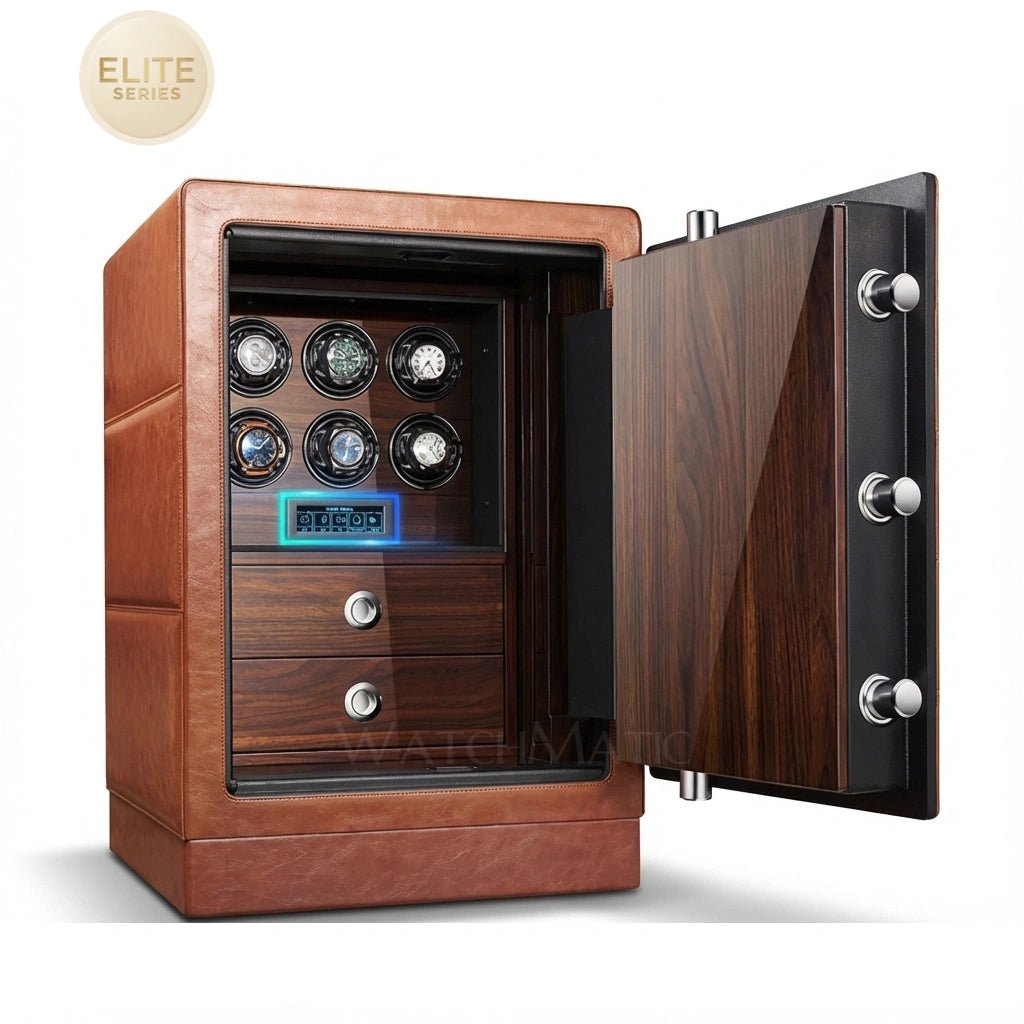
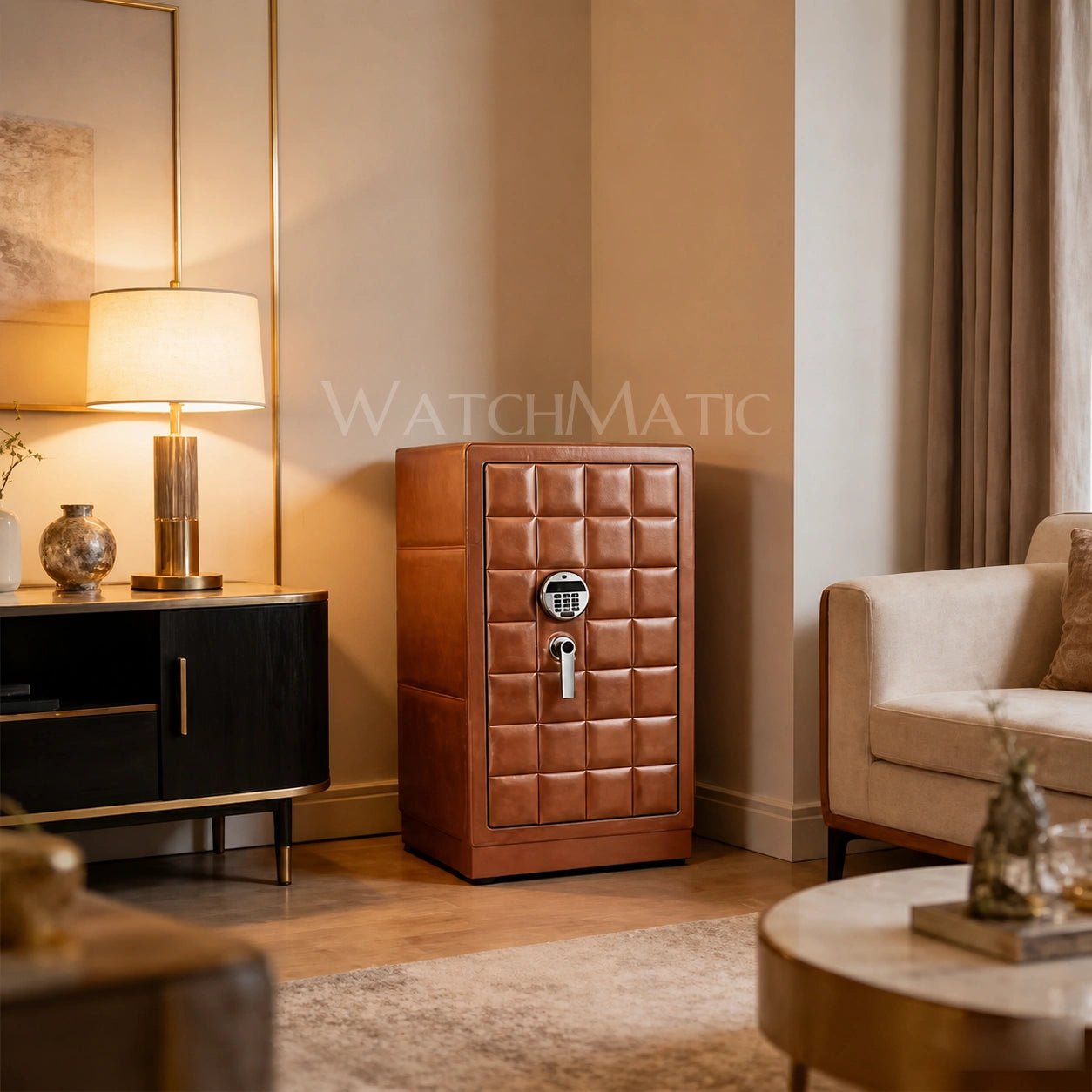
The Titan Vault Watch Winder Safe integrates secure storage with individually controlled winding positions.
Depending on configuration, the Titan Vault series can accommodate approximately 12 to 60 watches and provides features such as:
- Reinforced safe construction
- Biometric fingerprint access
- Digital passcode
- Manual key access
- Independent winding controls
- Adjustable TPD
- CW, CCW and bidirectional winding
- Japanese Mabuchi motors
- Anti-magnetization protection
- LED illumination
- Additional collection storage
This allows frequently worn automatic watches to remain active while other pieces remain securely organized in the same system.
For collectors primarily focused on secure storage rather than integrated winding, see the Luxury Watch Safe Collection.
Building a Mixed Seiko and Swiss Watch Collection
Seiko is frequently part of a broader mechanical watch collection.
A collector might own:
Seiko + Grand Seiko + Rolex + Omega + Tudor + TAG Heuer
The watches should not automatically share the same winding program.
This is where independent controls become valuable.
If your collection extends beyond Seiko, related WatchMatic guides include:
Best Watch Winder for Rolex Watches
Best Watch Winder for Omega Watches
Best Watch Winder for TAG Heuer Watches
Best Watch Winder for Tudor Watches
Best Watch Winder for Grand Seiko
These brand-specific resources make it easier to manage a mixed collection without treating every automatic movement identically.
How to Choose the Best Watch Winder for Your Seiko
Before purchasing a winder, follow this sequence:
Step 1: Confirm That Your Seiko Is Automatic
Do not assume that every Seiko requires winding.
Step 2: Identify the Caliber
Find the exact movement used by your reference.
Step 3: Check the Winding Requirements
Determine the appropriate TPD and rotation direction.
Step 4: Choose a Programmable Winder
Look for adjustable TPD and multiple rotation directions.
Step 5: Consider Future Collection Growth
If you currently own two automatic watches but expect to own six, buying only enough capacity for today's collection may lead to another upgrade later.
Step 6: Consider Security
As collection value grows, a watch winder safe may become more appropriate than an exposed standalone winder.
For more information about selecting and configuring a winder, visit the WatchMatic Guide Hub.
Best Watch Winder for Seiko: Final Thoughts
The best watch winder for a Seiko is not determined by the Seiko name alone.
It depends on the movement inside the watch.
For automatic mechanical Seiko watches, look for a programmable winder offering:
- Adjustable TPD
- CW/CCW/bidirectional rotation
- Rest cycles
- Quiet motors
- Secure cushions
- Independent controls for multiple watches
A watch winder is not required to keep an automatic Seiko mechanically healthy. Its primary value is convenience: keeping watches in your active rotation running, set, organized, and ready to wear.
For TPD and movement-setting information, use the Watch TPD Guide.
For broader watch-winder selection and usage advice, see the Watch Winder Guide.
And for additional watch storage, winding and collector resources, visit the WatchMatic.