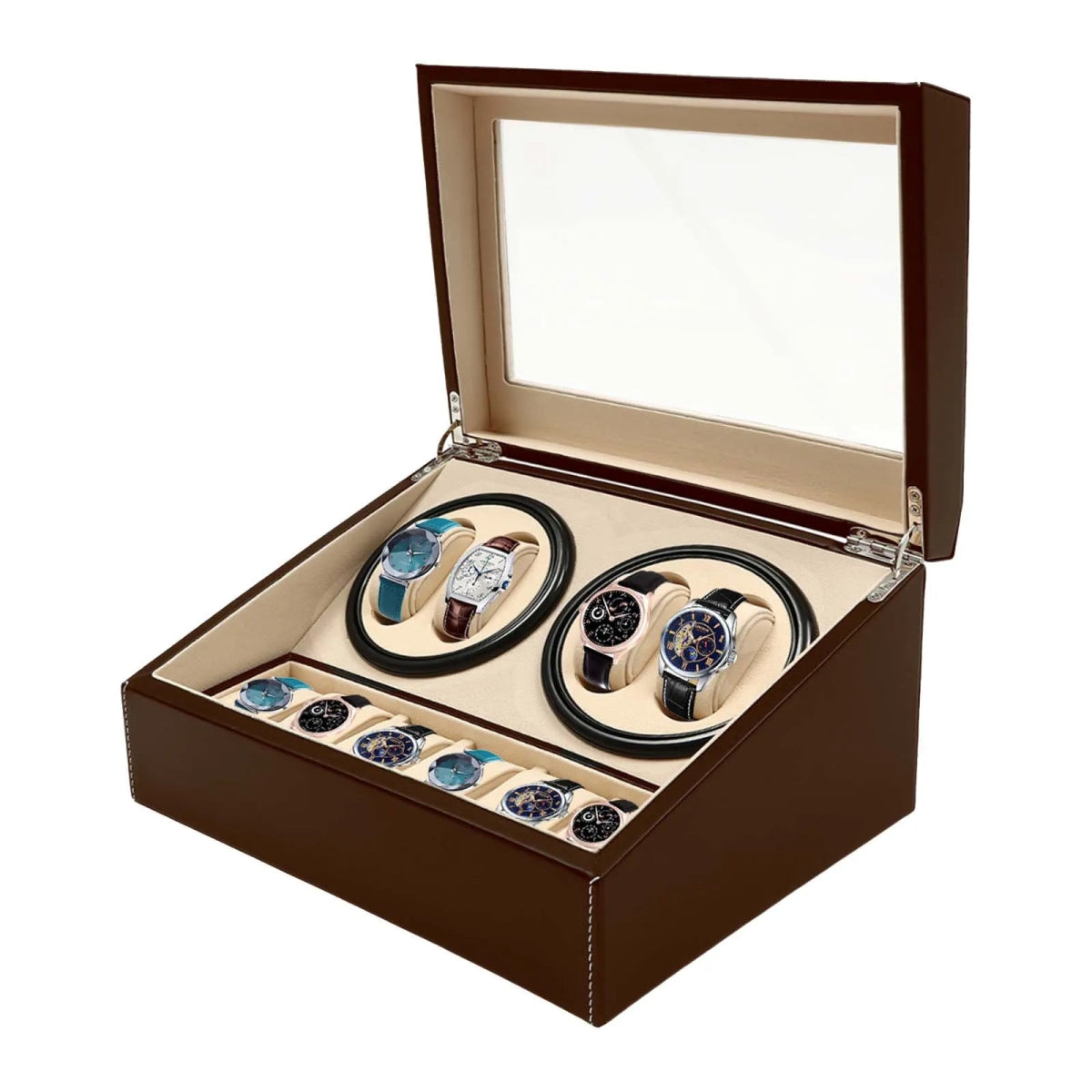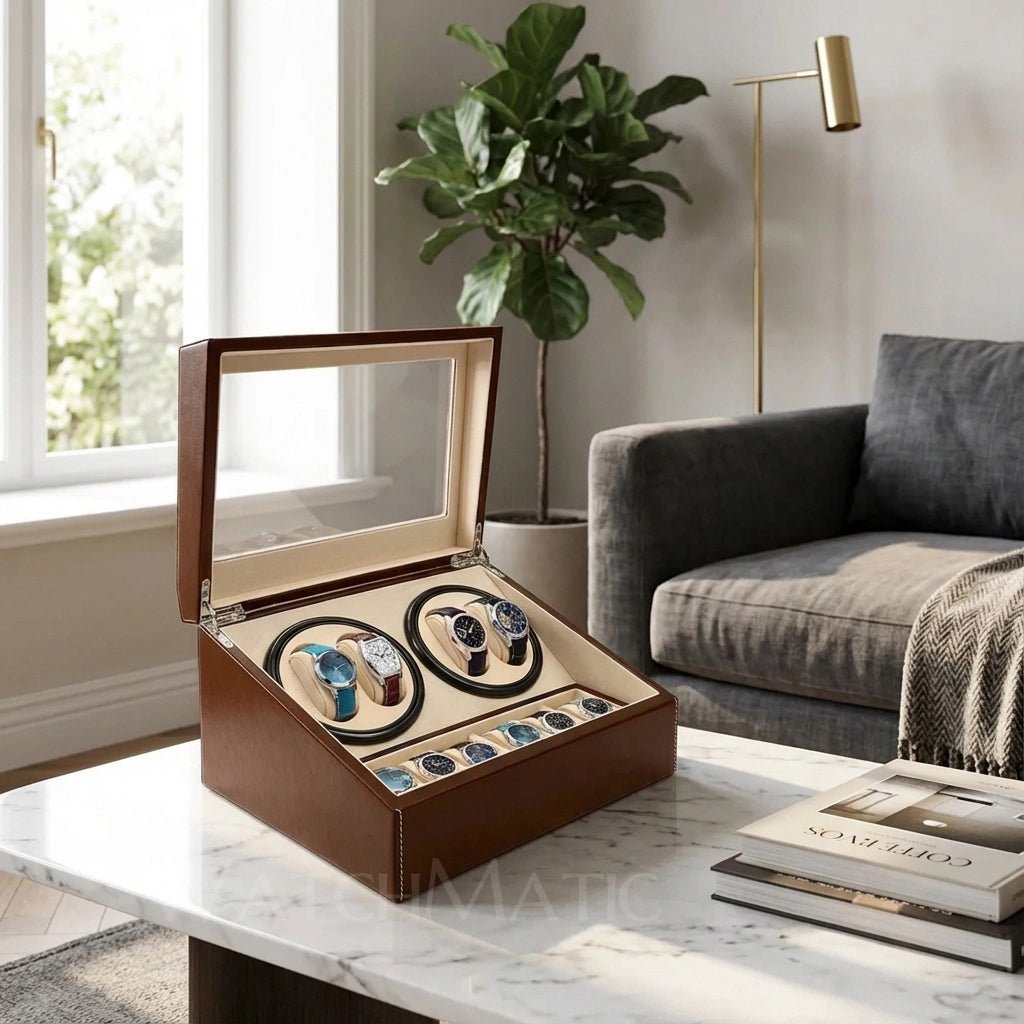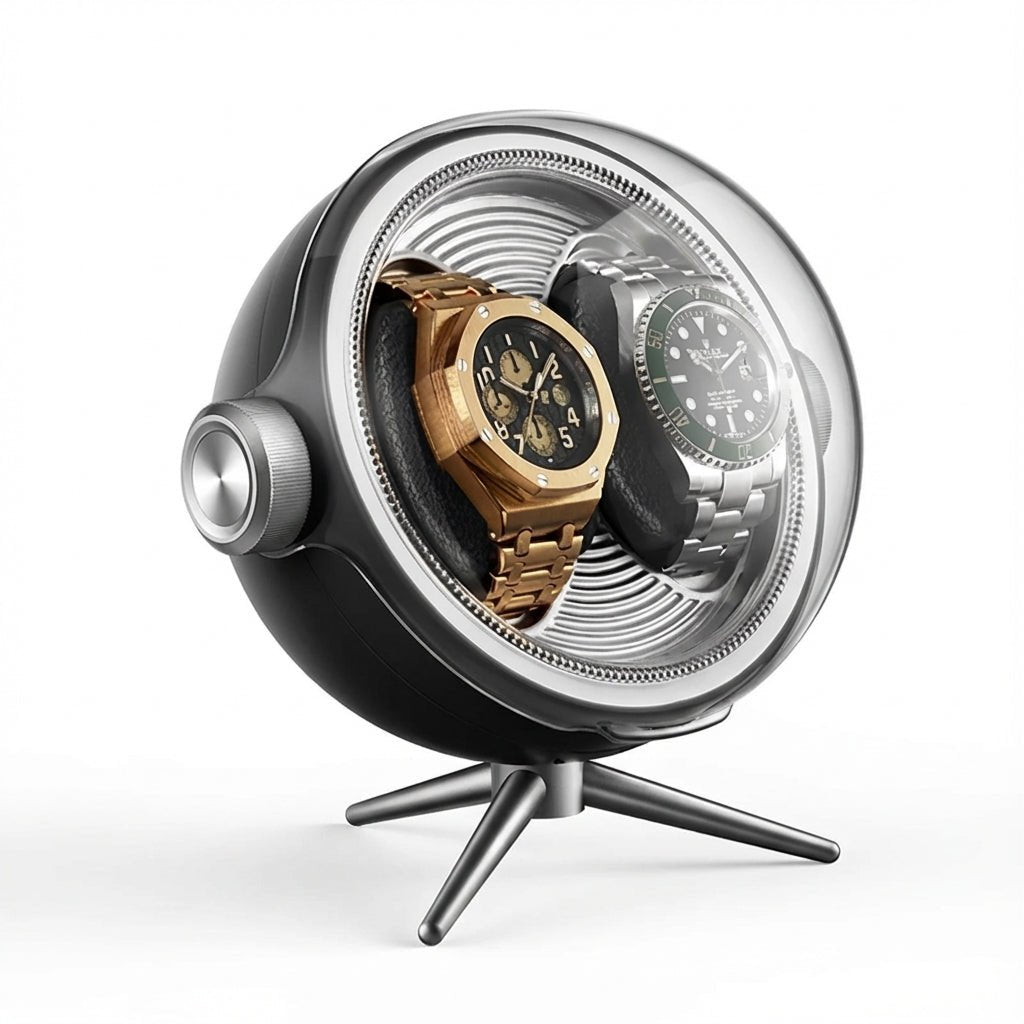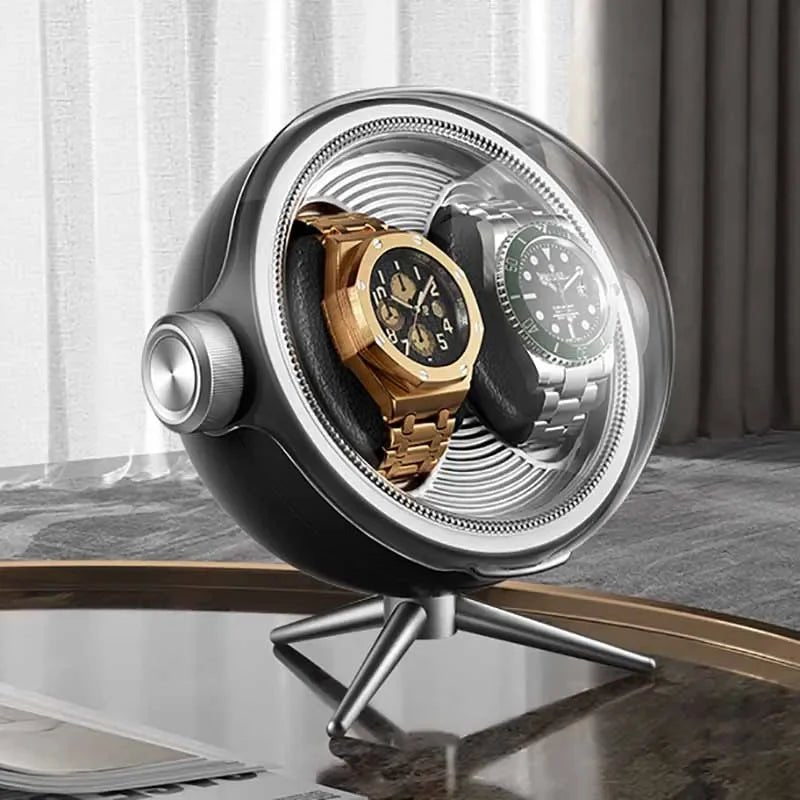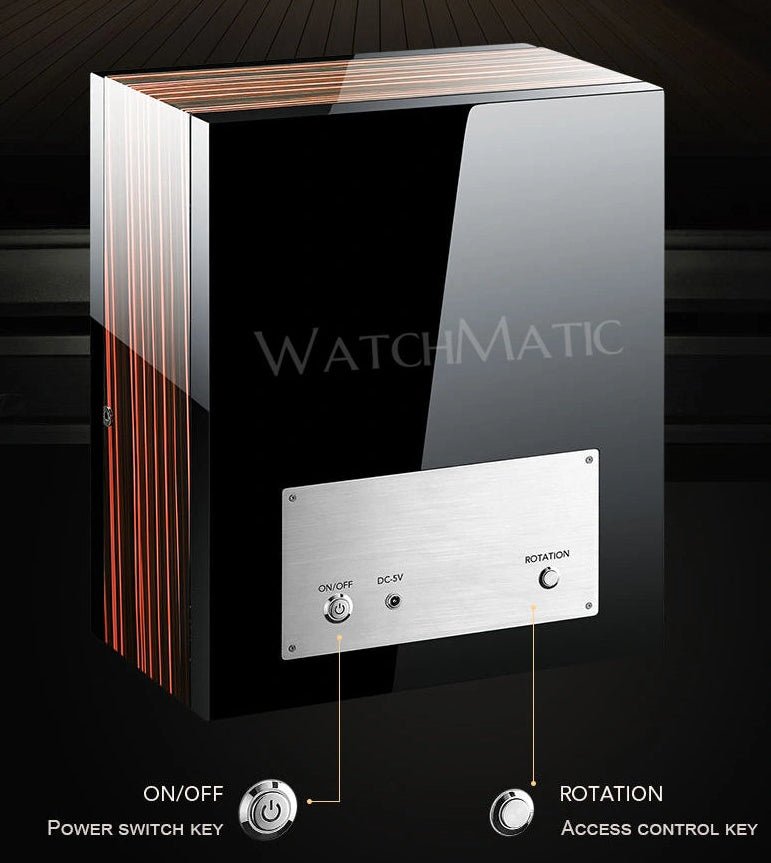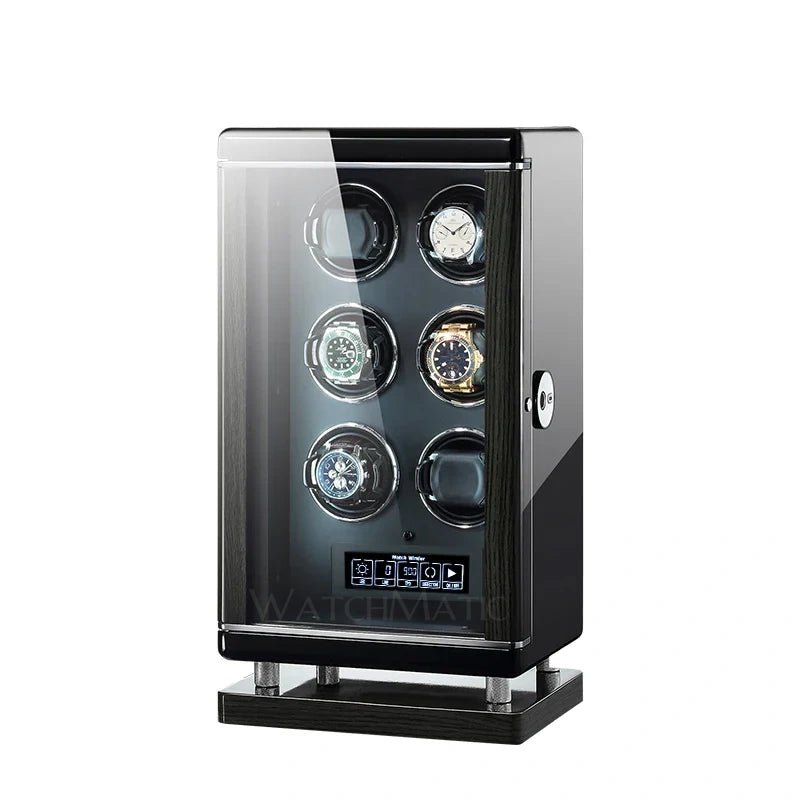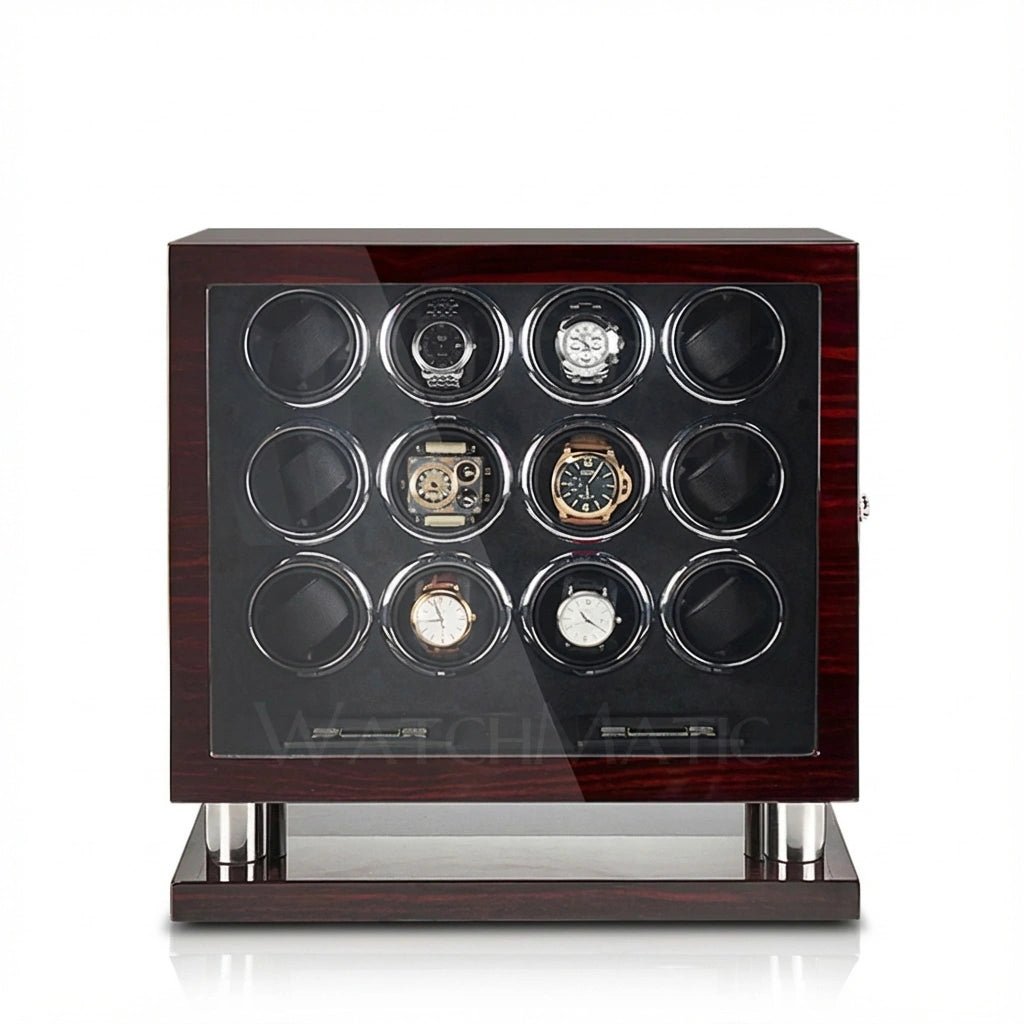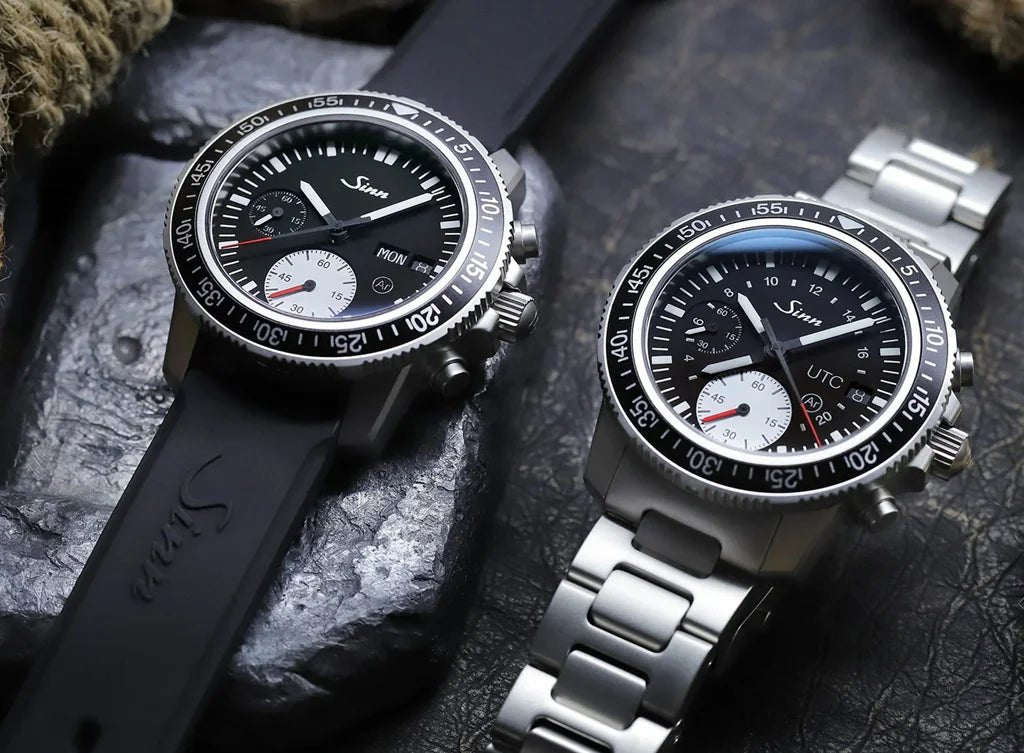
The best watch winder for Sinn watches is a programmable model with adjustable Turns Per Day (TPD), clockwise and counterclockwise rotation options, controlled winding and rest cycles, quiet operation, and secure support for relatively robust sports, pilot, and diving watches.
Many current Sinn mechanical watches are self-winding. Popular examples include the 556, U50, U1, T50, 857, EZM 3, 103 St Sa, and 903 St II.
However, Sinn has used a wide range of movements over time. Current examples include Sellita SW200-1 and SW300-1 movements, the Concepto C99001 automatic chronograph, and a La Joux-Perret movement in the redesigned 903. Sinn also produces or has produced manually wound and quartz watches.
The correct approach is therefore to identify the exact Sinn reference and movement before choosing a winder setting.
Does a Sinn Watch Need a Watch Winder?
No automatic Sinn mechanically requires a watch winder.
Sinn's own operating instructions for self-winding watches explain that normal daily wear should generally provide sufficient winding. If the watch has stopped after being left unworn, it can be started with several turns of the crown and then wound automatically during normal use.
A watch winder is mainly useful for convenience. It can help keep an automatic Sinn running between wears, maintain the time and date, preserve GMT or calendar indications, reduce repeated resetting, and keep several mechanical watches ready to wear.
For a broader explanation of automatic winding, see the Watch Winder Guide.
Which Sinn Watches Can Use a Watch Winder?
Many current Sinn instrument, diving, and pilot watches are automatic.
Representative examples include:
| Sinn watch | Example movement | Winding type | Typical / published reserve |
|---|---|---|---|
| 556 | Sellita SW200-1 | Automatic | ~41 hours |
| U50 | Sellita SW300-1 | Automatic | ~56 hours |
| 857 | Sellita SW300-1 | Automatic | ~56 hours |
| T50 | Sellita SW300-1 | Automatic | ~56 hours |
| U1 | Sellita SW200-1 | Automatic | ~41 hours |
| 103 St Sa | Concepto C99001 | Automatic chronograph | Reference-specific |
| 903 St II | LJP automatic chronograph | Automatic chronograph | At least 60 hours |
| 103 St Sa Ty Hd H | Hand-wound caliber | Manual | 56 hours |
| Series 434 | ETA quartz | Quartz | Winder not required |
Sinn confirms the self-winding architecture of the 556, U50, U1, T50, 857, current 103 St Sa, and 903 series. Sellita publishes typical reserves of approximately 41 hours for the SW200-1 and 56 hours for the SW300-1, while Sinn specifies at least 60 hours for the current 903 chronograph.
The correct sequence is:
Sinn reference → movement → automatic/manual/quartz → winding requirements → watch-winder program
Understanding Sinn Automatic Movements
Sinn is not defined by one proprietary movement family.
Instead, the company has used several Swiss mechanical movement platforms and modifies, regulates, or integrates them according to the requirements of each watch.
That makes movement identification particularly important.
Sellita SW200-1
The SW200-1 is widely used in Sinn watches.
Current Sinn 556 references, for example, use the SW200-1 with:
- Automatic winding
- 26 jewels
- 28,800 vibrations per hour
- Hacking seconds
- Anti-magnetic performance according to DIN 8309
Sinn's February 2026 technical documentation confirms the SW200-1 in current 556 references.
Sellita publishes a typical power reserve of approximately 41 hours for the SW200-1.
That relatively moderate reserve means a Sinn 556 can stop fairly quickly if it remains outside the wrist rotation for several days.
For collectors rotating multiple watches, a watch winder can therefore provide meaningful convenience.
Sellita SW300-1
The SW300-1 is another important automatic movement within Sinn's catalog.
Current or recent examples include:
- U50
- 857
- T50
Sinn's 2026 technical documentation confirms the SW300-1 in current U50 variants, while current 857 and T50 specifications also identify the same movement.
Sellita specifies a typical power reserve of approximately 56 hours for the SW300-1.
That gives these watches noticeably more autonomy than a typical SW200-1 watch.
SW200-1 vs. SW300-1 in Sinn Watches
This difference matters for real-world winder use.
A Sinn 556 with SW200-1 may provide approximately 41 hours.
A Sinn U50 or 857 with SW300-1 typically offers approximately 56 hours.
If both watches leave the wrist at the same time, the SW300-1-equipped watch has more reserve before stopping.
This means power reserve and wearing pattern should be considered alongside TPD.
Sinn Concepto C99001
The current 103 St Sa represents a different movement architecture.
Sinn's October 2025 technical documentation identifies the watch as using the Concepto C99001, a self-winding chronograph movement with:
- 25 jewels
- 28,800 vibrations per hour
- Automatic winding
- Chronograph
- Day and date displays
This demonstrates why an owner should not simply copy settings from a Sinn 556 or U50.
The 103 is a chronograph powered by a different movement family.
Sinn 903 and La Joux-Perret
The redesigned Sinn 903 St II uses a La Joux-Perret automatic chronograph movement.
Sinn's current catalog identifies the 903 as self-winding and specifies a minimum 60-hour power reserve when fully wound. It also uses a column-wheel chronograph architecture.
This gives the current 903 a longer reserve than many conventional Sellita SW200-1 Sinn watches.
It also means settings intended for an older 903 reference should not automatically be copied to the current generation.
Sinn Watch Winder TPD Settings
TPD means Turns Per Day—the approximate number of rotations provided by a watch winder during its programmed daily cycle.
There should not be one universal rule such as:
“Sinn = X TPD.”
Sinn watches can contain:
- Sellita SW200-1
- Sellita SW300-1
- Sellita chronograph calibers
- Concepto movements
- La Joux-Perret movements
- ETA movements in older references
- Manually wound movements
- Quartz movements
The safer process is:
- Identify the exact Sinn reference.
- Identify the movement.
- Confirm that it is self-winding.
- Determine its winding requirements.
- Select an appropriate TPD.
- Select the appropriate rotation direction.
- Confirm that the watch maintains sufficient reserve.
For a detailed explanation of Turns Per Day, see the Watch TPD Guide.
What Rotation Direction Should You Use for a Sinn Watch?
Programmable watch winders generally provide:
- CW — Clockwise
- CCW — Counterclockwise
- Bi — Bidirectional
The rotation direction should be determined by the movement rather than by the Sinn brand name.
This is particularly important for collectors who own Sinn watches from different generations, because the company has transitioned between ETA, Sellita, Concepto, La Joux-Perret, and other movements over time.
A winder offering all three direction options therefore provides greater flexibility than a fixed-direction model.
Power Reserve Matters When Choosing a Sinn Watch Winder
Sinn's catalog provides a useful illustration of why power reserve changes how useful a watch winder feels.
Compare:
| Movement | Example Sinn | Approx. reserve |
|---|---|---|
| SW200-1 | 556 | 41 h typical |
| SW300-1 | U50 / 857 / T50 | 56 h typical |
| LJP automatic chronograph | 903 St II | ≥60 h |
An owner who wears a 903 every two or three days may rarely encounter a stopped watch.
An SW200-1-powered 556 left untouched for the same period is more likely to require restarting.
This is why the more useful question is:
“How long does my particular Sinn run, and how often do I wear it?”
rather than simply:
“Does Sinn need a watch winder?”
What to Look for in a Sinn Watch Winder
Sinn watches are often designed as professional instrument watches, divers, pilot watches, and mission timers.
The winder therefore needs to accommodate both the movement and the physical watch.
Adjustable TPD
Choose a winder with multiple TPD programs rather than one fixed rotation count.
The objective is sufficient winding, not maximum rotation.
Multiple Rotation Directions
Look for support for:
CW + CCW + Bidirectional
This gives greater flexibility across Sinn's different movements.
Controlled Rest Cycles
An automatic Sinn does not need uninterrupted spinning.
A quality winder should divide winding into operating periods and rest periods.
Independent Controls
This is particularly important for multi-watch systems.
An SW200-1 Sinn 556 and an LJP-powered 903 should not have to share one program.
Quiet Motors
Low-noise operation matters when the winder is located in a bedroom, private office, dressing room, or walk-in wardrobe.
Secure Support
Sinn watches range from compact 38.5 mm instrument watches to substantial pilot chronographs and professional dive watches.
The cushion should hold each watch securely without excessive bracelet or strap tension.
Smooth Motor Operation
Ruggedness does not mean the watch should be subjected to abrupt movement.
Smooth starts, stops, and transitions remain preferable even for a tool watch designed for harsh environments.
Best Watch Winder for Sinn 556
The Sinn 556 is one of the brand's most popular everyday automatic watches.
Current 556 I RS and 556 A RS references use the Sellita SW200-1 automatic movement. Sinn specifies a 38.5 mm case, while Sellita lists approximately 41 hours as the typical reserve for the SW200-1.
For a Sinn 556, prioritize:
- Adjustable TPD
- Multiple rotation directions
- Controlled rest cycles
- Quiet operation
- Secure support for bracelet or leather strap
Because the reserve is relatively modest, a winder can be useful if the 556 is one of several watches worn throughout the week.
Best Watch Winder for Sinn U50
The U50 is a professional diving watch built around a 41 mm case made from German Submarine Steel.
Current U50 documentation identifies the movement as the Sellita SW300-1, with automatic winding and a 28,800 vph frequency. The watch is pressure-resistant to 500 meters and tested according to diving-watch and diving-equipment requirements.
Sellita lists approximately 56 hours as the typical reserve for the SW300-1.
For a U50, a suitable winder should provide stable support for:
- Steel bracelet
- Silicone strap
- Heavier dive-watch head
The physical security of the watch on the cushion is just as important as the electronic programming.
Best Watch Winder for Sinn U1
The larger Sinn U1 currently uses the SW200-1 automatic movement.
Sinn specifies the movement as self-winding with 26 jewels and 28,800 semi-oscillations per hour. The U1 case is made from German Submarine Steel and is designed for substantial diving use.
For a U1, prioritize:
- Stable watch support
- Compressible cushion
- Adjustable TPD
- Multiple winding directions
- Smooth motor operation
Because the U1 is a relatively substantial professional dive watch, a weak or poorly fitting cushion can be more problematic than with a lighter dress watch.
Best Watch Winder for Sinn T50
The Sinn T50 is another current automatic diver.
Current T50 technical specifications identify the movement as the SW300-1 with:
- Automatic winding
- 25 jewels
- 28,800 vibrations per hour
- Anti-magnetism according to DIN 8309
With the SW300-1's typical 56-hour reserve, a T50 can remain running longer away from the wrist than an SW200-1 Sinn under comparable conditions.
A programmable winder remains useful primarily when the watch is part of a larger rotation.
Best Watch Winder for Sinn 857
The Sinn 857 combines pilot-watch functionality with additional protective technologies.
The current 857 S uses an SW300-1 automatic movement and includes:
- Ar-Dehumidifying Technology
- TEGIMENT-based case treatment
- Magnetic-field protection up to 80,000 A/m
- Captive pilot's bezel
These technologies improve the watch's suitability for demanding environments.
They do not change the fundamental watch-winder requirement.
The movement still needs an appropriate winding program, just like any other SW300-1-based automatic.
Best Watch Winder for Sinn 103
The 103 series requires particular care because not every 103 uses the same type of movement.
The current 103 St Sa uses the automatic Concepto C99001 chronograph caliber.
However, Sinn has also produced contemporary hand-wound 103 references.
For example, the 103 St Sa Ty Hd H uses a hand-wound caliber and provides approximately 56 hours of power reserve.
This creates an important rule:
103 St Sa automatic → conventional watch winder can be useful
103 hand-wound reference → conventional automatic winder does not wind it
Do not purchase or configure a watch winder from the collection name alone.
Best Watch Winder for Sinn 903
The redesigned 903 St II and 903 St BE II are self-winding chronographs powered by a La Joux-Perret movement.
Sinn specifies:
- Automatic winding
- Column-wheel chronograph
- At least 60 hours of power reserve
- 41 mm case
- Chronograph and slide-rule functions
The longer reserve means the watch may remain running for several days without a winder.
Nevertheless, a collector rotating the 903 among many watches may prefer to keep it running and ready to wear.
Automatic vs. Hand-Wound Sinn Watches
Not every mechanical Sinn should go on a watch winder.
The company has produced both automatic and manually wound mechanical watches.
A modern example is the hand-wound 103 St Sa Ty Hd H. Historical and collector references such as the 6200 Meisterbund I also use manually wound movements—in that case the UWD 33.1 with a 55-hour reserve.
A conventional rotating winder provides no meaningful winding benefit to these watches.
Therefore:
Mechanical Sinn ≠ automatically watch-winder compatible
The movement must be self-winding.
What About Sinn Quartz Watches?
Sinn also produces quartz watches.
The current Series 434, for example, uses high-precision, temperature-compensated quartz movements rather than automatic mechanical movements.
A conventional mechanical watch winder provides no winding benefit to a quartz Sinn.
This is another reason to identify the movement before purchasing a winder.
Sinn Technologies and Watch Winder Compatibility
One of the most important distinctions in this article is that Sinn's case and environmental technologies are not watch-winder settings.
TEGIMENT Technology
TEGIMENT is designed to increase surface hardness and scratch resistance.
It does not determine TPD or rotation direction.
Ar-Dehumidifying Technology
Sinn's Ar-Dehumidifying Technology helps reduce moisture inside the case and improve functional reliability.
It does not alter how many turns per day the automatic movement requires.
Magnetic Field Protection
Models such as the 857 can provide magnetic-field protection up to 80,000 A/m.
This protects the movement from magnetic exposure, but a quality watch winder should still minimize unnecessary magnetic fields around the watch.
Temperature Resistance Technology
Certain Sinn watches are engineered to operate across extreme temperature ranges, including approximately −45°C to +80°C.
Again, this technology concerns functional reliability under environmental stress—not automatic winding requirements.
DIAPAL
DIAPAL is Sinn's escapement technology designed to operate without conventional escapement lubrication.
It does not mean the movement requires more or fewer rotations on a watch winder.
The guiding principle remains:
Case technology protects the watch; movement architecture determines the winding program.
Does Sinn's Anti-Magnetic Protection Mean Any Winder Is Safe?
No.
Some Sinn watches offer substantially higher magnetic-field protection than standard mechanical watches.
For example, the 857 S specifies protection up to 80,000 A/m.
That does not mean motor design should be ignored.
A well-designed watch winder should still minimize magnetic interference.
The preferable combination is:
magnetically protected Sinn + low-interference watch winder
rather than using the watch's own shielding to compensate for a poor motor system.
Does a Sinn Automatic Need to Run All the Time?
No.
Sinn's own instructions state that normal wear typically keeps its self-winding watches wound and that a stopped watch can be restarted manually.
The usefulness of a winder depends on:
Power reserve + wearing frequency + complication + collection size
Consider three examples.
Sinn 556
SW200-1
Typical reserve around 41 hours.
Sinn U50
SW300-1
Typical reserve around 56 hours.
Sinn 903 St II
LJP automatic chronograph
At least 60 hours.
A collector wearing the 903 every few days may rarely see it stop.
A 556 left outside the rotation for three days is more likely to require restarting.
Neither watch mechanically requires continuous running.
Best Watch Winder for One Sinn Automatic
For one Sinn automatic, a compact programmable winder is usually sufficient.
Prioritize:
- Adjustable TPD
- CW/CCW/bidirectional modes
- Controlled rest cycles
- Quiet operation
- Secure cushion fit
- Stable positioning for heavier watches
Suitable configurations can be explored in the WatchMatic Watch Winder Collection.
Best Watch Winder for Multiple Sinn Watches
A Sinn collector might own:
- 556
- 104
- 103
- U50
- U1
- T50
- 857
- 903
- EZM models
These watches can contain very different automatic movements and may also be mixed with manual or quartz Sinn references.
The more practical architecture is therefore:
Automatic Sinn watches → independently programmable winding positions
Hand-wound Sinn watches → stationary secure storage
Quartz Sinn watches → stationary secure storage
Independent winding control becomes much more useful than simply maximizing the number of rotating positions.
LuxGuard for Sinn Automatic Collections

A multi-position LuxGuard Watch Winder can be suitable for collectors who rotate several Sinn automatic watches or maintain a broader tool-watch collection.
Depending on configuration, features include:
- Independent winding controls
- Multiple rotation modes
- Japanese Mabuchi motors
- Quiet operation
- Anti-magnetization protection
- Interior illumination
- Secure individual watch positions
Independent programming allows an SW200-1 556, SW300-1 U50, and chronograph-powered 903 to receive separate programs rather than being forced onto one shared setting.
Is It Safe to Keep a Sinn on a Watch Winder?
A properly configured quality watch winder can be used with an automatic Sinn.
Important factors include:
- Confirming that the watch is self-winding
- Identifying the exact movement
- Using appropriate TPD
- Selecting an appropriate rotation direction
- Providing winding and rest cycles
- Supporting the watch securely
A watch winder should not be used to compensate for a mechanical issue.
If an adequately wound Sinn develops unusually short reserve or significant changes in timekeeping, professional inspection may be more appropriate than simply increasing TPD.
Watch Winder vs. Watch Winder Safe for Sinn Collectors
For one or several Sinn automatics, a standalone programmable winder is generally the most proportionate solution.
A watch winder safe becomes more relevant when the Sinn collection forms part of a larger, higher-value mixed collection.
| Feature | Watch Winder | Watch Winder Safe |
|---|---|---|
| Automatic winding | Yes | Yes |
| Independent programming | Model dependent | Available |
| Hand-wound watch storage | Possible | Yes |
| Quartz watch storage | Possible | Yes |
| Controlled access | Limited | High |
| Physical security | Limited | High |
| Additional storage | Limited | Available |
| Large mixed collection | Moderate | High |
Collectors seeking integrated automatic winding and physical security can explore the Watch Winder Safe Collection.
Titan Vault for Larger Sinn and Mixed Collections

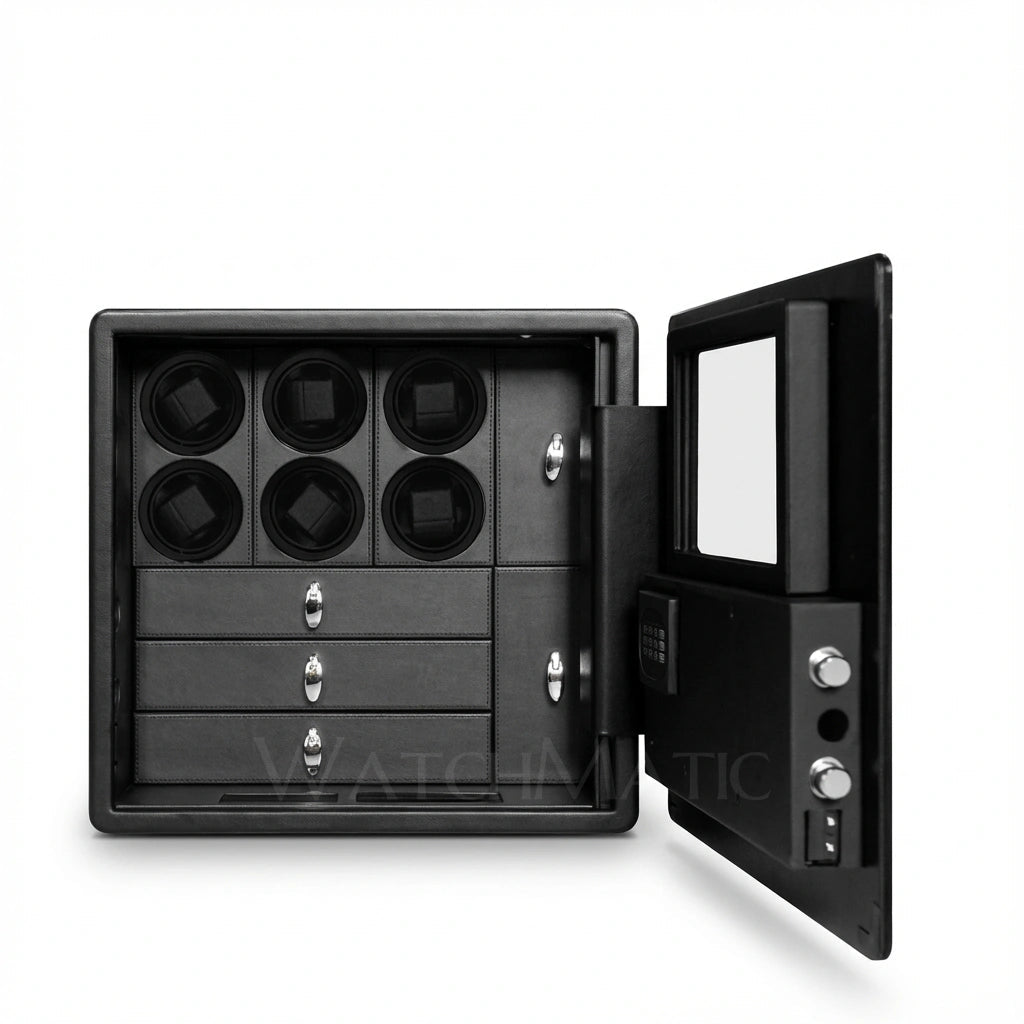
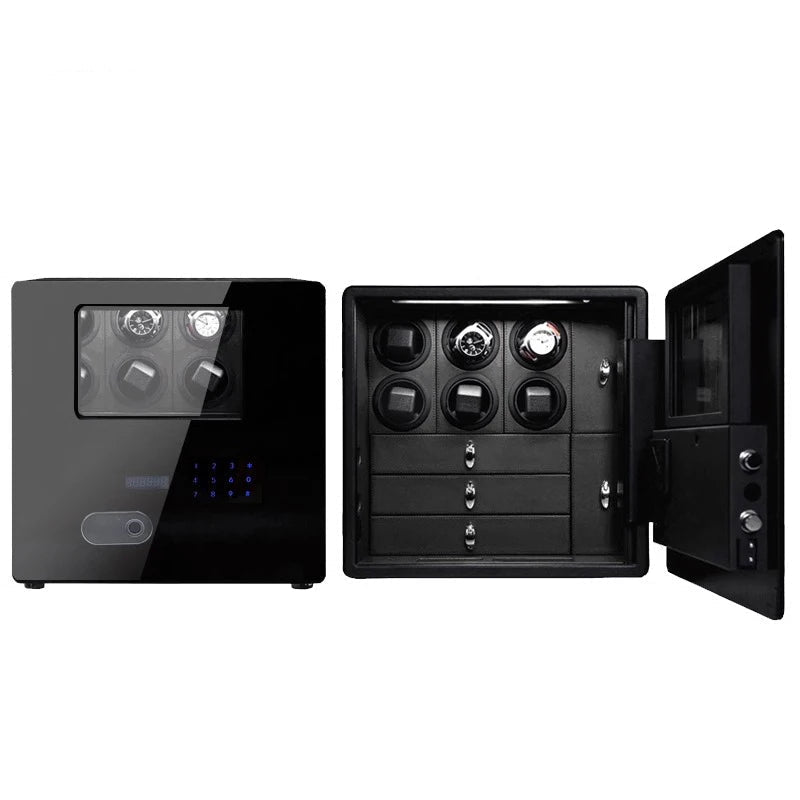
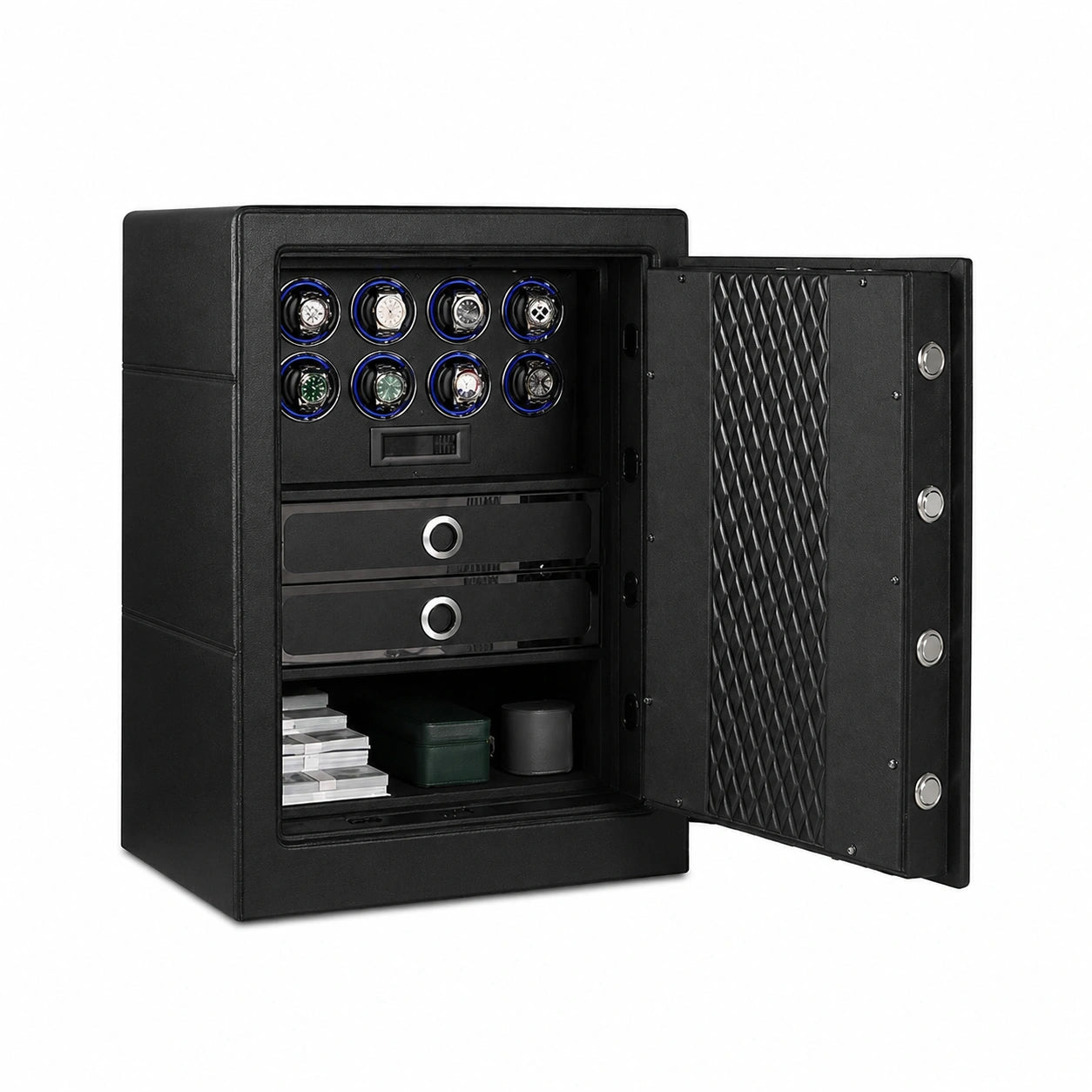
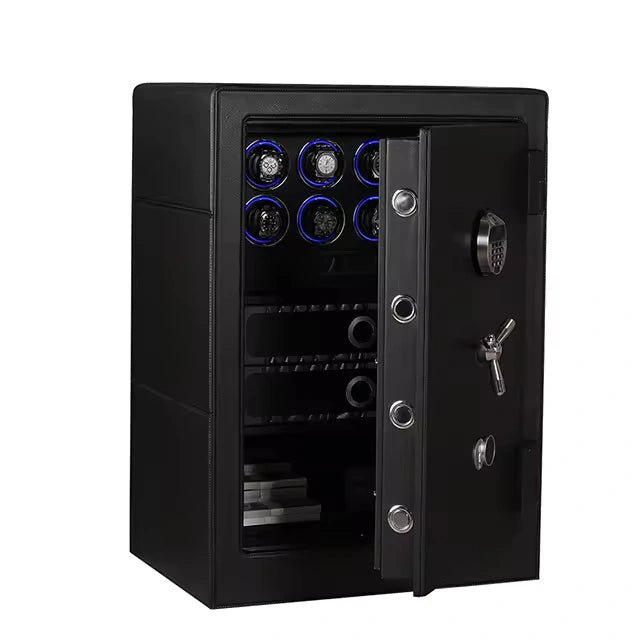
For a larger Sinn or mixed mechanical-watch collection, the Titan Watch Winder Safe combines independently programmable winding positions with secure conventional storage.
Depending on configuration, the Titan Vault series can accommodate approximately 12 to 60 watches, with available features including:
- Reinforced safe construction
- Biometric fingerprint access
- Digital passcode
- Manual key access
- Independent winding controls
- Adjustable TPD
- CW/CCW/bidirectional operation
- Japanese Mabuchi motors
- Anti-magnetization protection
- LED illumination
- Additional storage compartments
Automatic Sinn watches can occupy programmed winding positions while manual and quartz watches remain securely stored without unnecessary rotation.
Collectors whose priority is secure stationary storage rather than integrated automatic winding can instead explore the Luxury Watch Safe Collection.
Sinn in a Mixed German and Tool Watch Collection
Sinn watches are often collected alongside brands with strong pilot, engineering, diving, military, and tool-watch identities.
A mixed collection might include:
Sinn + IWC + Bremont + Bell & Ross + Oris + Tudor
Related WatchMatic resources include:
Best Watch Winder for IWC Watches
Best Watch Winder for Bell & Ross Watches
Best Watch Winder for Oris Watches
Best Watch Winder for Tudor Watches
I would add the Bremont contextual link once that newly written page has been published, because it is one of the strongest semantic neighbors for Sinn in the aviation/tool-watch segment.
How to Choose the Best Watch Winder for Your Sinn
Step 1: Identify the Exact Reference
Do not stop at "103," "U-series," or "EZM."
Movement specifications can differ within a collection and across generations.
Step 2: Confirm the Winding Type
Determine whether the watch is:
- Automatic
- Hand-wound
- Quartz
Only an automatic movement receives the normal winding benefit from a conventional watch winder.
Step 3: Identify the Movement
Common examples include:
- SW200-1
- SW300-1
- Concepto C99001
- LJP automatic chronograph movements
- Older ETA or Valjoux movements
Step 4: Check the Power Reserve
Typical examples range from approximately 41 hours for SW200-1 to 56 hours for SW300-1 and at least 60 hours for the current 903.
Step 5: Determine TPD and Direction
Use movement-specific guidance rather than applying a universal Sinn setting.
Step 6: Choose a Programmable Winder
Adjustable TPD and CW/CCW/bidirectional modes provide greater flexibility.
Step 7: Check Physical Fit
A compact 556 and a substantial professional diver may require different cushion compression and support.
Step 8: Use Independent Controls for Multiple Watches
This is particularly useful when Sellita three-hand movements share a winder with chronographs or other calibers.
Step 9: Ignore Unrelated Case Technologies When Setting TPD
TEGIMENT, Ar-Dehumidifying, DIAPAL, and magnetic protection do not determine winding direction or turns per day.
Step 10: Consider Security as the Collection Grows
For a larger mixed-brand collection, physical protection and controlled access may eventually matter more than simply adding winding positions.
For broader resources covering automatic winding, TPD, storage, and collection protection, visit the WatchMatic Guide Hub.
Best Watch Winder for Sinn Watches: Final Thoughts
The best watch winder for Sinn watches should be selected according to the exact reference and movement, not simply the Sinn name.
For most automatic Sinn watches, prioritize:
- Adjustable TPD
- CW/CCW/bidirectional operation
- Controlled rest cycles
- Quiet motors
- Secure support for substantial tool watches
- Independent programming for multi-watch collections
Sinn provides a particularly clear example of why movement-level identification matters.
A current 556 uses the SW200-1, current U50 variants use the SW300-1, the 103 St Sa uses a Concepto automatic chronograph, and the redesigned 903 uses a La Joux-Perret automatic chronograph with at least 60 hours of reserve.
At the same time, Sinn also offers or has offered hand-wound and quartz references that receive no conventional automatic-winding benefit.
The most reliable process is therefore:
Sinn Reference → Movement → Winding Type → Power Reserve → Rotation Requirement → TPD → Winder Program
Sinn's technologies such as TEGIMENT, magnetic-field protection, Ar-Dehumidifying Technology, and temperature resistance may make the watch more capable in demanding environments, but the movement inside the case still determines how it should be wound.
For additional automatic winding and secure-storage solutions, explore WatchMatic.