A serious watch collection is more than a selection of beautiful timepieces. It is a carefully assembled group of mechanical achievements, personal milestones, design preferences, and, in many cases, valuable assets.
As a collection grows from a handful of watches to twenty, forty, or even one hundred pieces, keeping everything organized becomes an increasingly important part of ownership.
Experienced collectors rarely rely on memory alone. They develop systems for cataloging their watches, recording service histories, managing daily rotation, storing accessories, and protecting important documents.
These habits make a collection easier to enjoy while reducing the risk of misplaced accessories, overlooked maintenance, accidental damage, or inadequate security.
Whether your collection includes Rolex, Patek Philippe, Audemars Piguet, Omega, Vacheron Constantin, Cartier, or independent watchmakers, the principles of effective collection management remain remarkably consistent.
In this guide, we explain how to organize a watch collection like a professional collector, from building a detailed inventory to designing a secure and practical storage system for long-term ownership.
How Do Professional Watch Collectors Organize Their Watches?
Professional-level watch collection management combines five fundamental practices:
- Documentation: maintaining accurate records of every watch, its provenance, and its condition.
- Classification: organizing watches by movement, usage, significance, and storage requirements.
- Physical organization: assigning each watch a designated storage position.
- Maintenance management: tracking servicing, performance, and accessory changes.
- Security: protecting the collection, its documents, and sensitive ownership information.
The purpose of these systems is not to make watch collecting unnecessarily complicated. It is to establish a consistent process that saves time and makes a growing collection easier to manage.
A collector with six watches can benefit from these habits just as much as someone managing a substantially larger portfolio.
1. Create a Master Inventory of Your Watch Collection
The first step in professional collection management is creating a complete inventory.
When a collection contains only a few watches, it is relatively easy to remember each reference, purchase date, and service history.
As more pieces are acquired, however, relying on memory becomes increasingly impractical.
A centralized inventory creates a reliable record of what you own and how each watch should be managed.
What Information Should You Record?
For every timepiece, consider documenting:
- Collection ID: a unique internal identifier assigned to each watch.
- Brand: the manufacturer or watchmaker.
- Model and reference: the complete model designation and reference number.
- Serial number: stored privately for identification and ownership records.
- Movement: automatic, manual-winding, quartz, or another movement type.
- Acquisition date: when the watch entered your collection.
- Purchase documentation: receipt, invoice, and warranty information.
- Condition: relevant cosmetic or mechanical observations.
- Service history: previous inspections, repairs, or maintenance.
- Storage location: the assigned safe, drawer, or winding position.
- Insurance information: coverage status and supporting valuation records.
For particularly valuable or collectible watches, you may also want to record provenance, original accessories, prior ownership information, and any relevant restoration history.
Example of a Watch Collection Inventory
A simple spreadsheet can provide an effective foundation.
| Collection ID | Watch | Movement | Usage | Storage Position |
|---|---|---|---|---|
| WC-001 | Rolex Submariner | Automatic | Daily rotation | Safe A / Winder 01 |
| WC-002 | Omega Speedmaster | Manual | Weekly rotation | Safe A / Drawer 01 |
| WC-003 | Cartier Tank | Quartz | Occasional wear | Safe A / Drawer 02 |
The entries above are illustrative. A complete inventory should use the exact movement and reference of each individual watch.
Store sensitive information, particularly serial numbers and ownership documents, in a secured digital system rather than a publicly accessible spreadsheet.
For collectors with larger portfolios, specialized collection-management software can also be considered, provided it offers appropriate privacy, export, and backup capabilities.
2. Assign a Unique Identification Number to Every Watch
One simple practice that makes a collection easier to manage is assigning each watch its own internal identification number.
For example:
- WC-001: First watch in the collection.
- WC-002: Second watch.
- WC-003: Third watch.
- WC-004: Fourth watch.
This identification number remains attached to the inventory record even if the watch changes storage position, receives a different strap, or is sent for servicing.
Why Not Use the Manufacturer's Serial Number?
Serial numbers are important for identification, but using them as everyday storage labels unnecessarily exposes sensitive information.
A separate internal ID provides a convenient reference without revealing the manufacturer's identification details.
For example, an inventory record could identify a particular watch as WC-018, while its full serial number remains within a protected ownership file.
That same ID can be used to connect photographs, service invoices, insurance documentation, and storage records.
Over time, this creates a simple but effective system for tracing the history of each timepiece.
3. Organize Your Watches by How Often You Wear Them
Many collectors initially organize watches by brand or visual appearance.
Although that can produce an attractive display, it is not always the most practical system for everyday use.
For a mixed collection, frequency of wear is often the most useful starting point.
Category A: Daily Rotation
These are the watches you wear most frequently, often several times per week.
They should be stored in easily accessible positions within your designated secure storage system.
For automatic watches, a programmable winder may be convenient if you regularly alternate between several pieces.
Category B: Weekly or Seasonal Rotation
These watches may include dress watches, travel watches, chronographs, or models associated with specific activities.
They should remain organized and readily accessible, but they may not require dedicated winding positions.
Category C: Occasional and Special-Occasion Watches
These are watches worn infrequently, such as formal timepieces, limited editions, or pieces reserved for particular occasions.
Stationary storage in a suitable watch drawer or secure compartment is often appropriate.
Category D: Rare, Vintage, and Heirloom Watches
Rare or historically significant watches may require more careful handling and individualized storage arrangements.
For these pieces, prioritize appropriate protection, clear documentation, and any preservation requirements identified by the manufacturer or a qualified watch specialist.
Some collectors also maintain separate categories for watches currently undergoing servicing or awaiting sale.
For more storage strategies, read How Collectors Organize Large Watch Collections.
4. Build a Consistent Watch Rotation System
A professional approach to collection management should make it easy to decide which watch to wear and where to return it afterward.
Without a consistent routine, watches may gradually become scattered across dressing tables, office desks, travel cases, and different storage compartments.
A simple rotation system prevents that problem.
Give Every Watch a Permanent Home
Assign each watch a designated position, even if it is frequently worn.
For example:
- Winder 01–06: regularly worn automatic watches.
- Drawer 01: manual-winding watches.
- Drawer 02: quartz watches and selected dress watches.
- Drawer 03: occasional-use and collectible pieces.
- Drawer 04: watch straps and accessories.
The exact arrangement will depend on the storage system.
The essential rule is that each watch should return to its assigned position after use.
Keep the Most Frequently Worn Watches Accessible
Arrange the storage system to minimize unnecessary handling.
Watches used daily should not require removing several other watches to reach them.
Similarly, rarely worn pieces do not necessarily need the most prominent positions.
Record Temporary Movements
When a watch leaves its normal position for servicing, travel, appraisal, or another legitimate reason, update the inventory record.
A simple status field such as "In Service," "Travel," or "On Loan" prevents confusion when a watch is temporarily absent.
5. Use Watch Winders Strategically, Not Indiscriminately
One of the most common misconceptions about luxury watch storage is that every automatic watch should remain running continuously.
That is not necessary for every collector or every movement.
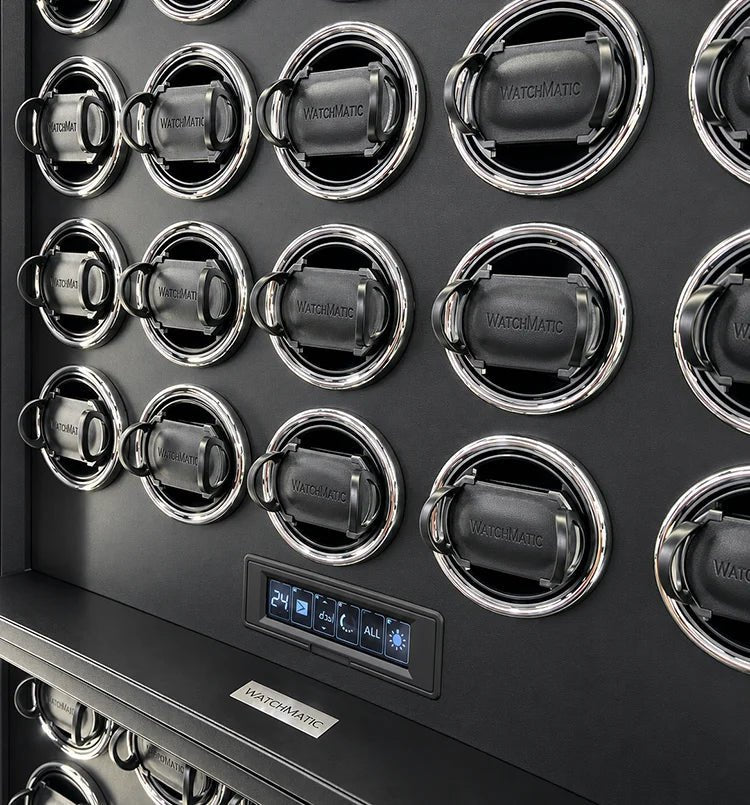
A programmable watch winder is primarily a convenience device that helps maintain the power reserve of compatible automatic watches between wears.
For collectors rotating several watches with complex date or calendar settings, this can make the collection easier to use.
However, watches stored for extended periods may be kept stationary according to the manufacturer's instructions.
Identify the Watches That Benefit From Winding
Consider reserving winding positions for:
- Automatic watches used frequently.
- Watches with complications that are inconvenient to reset.
- Selected watches in active weekly rotation.
Manual-winding watches and quartz watches do not require conventional automatic winding systems.
Configure Each Winder According to the Movement
Different automatic movements can have different winding requirements.
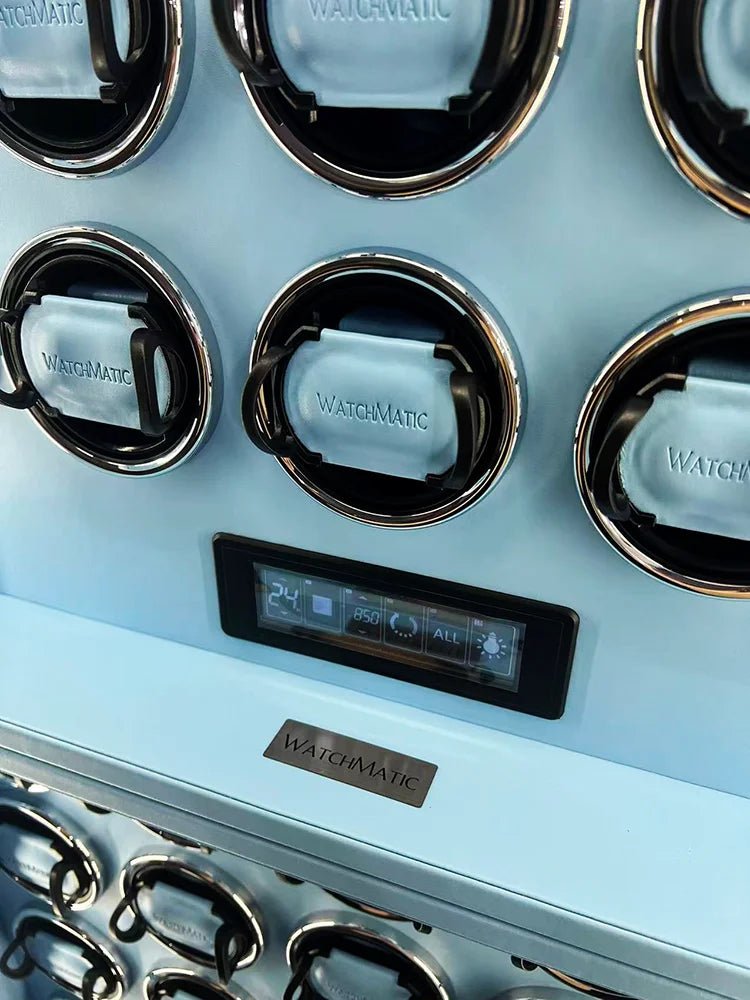
Review the appropriate Turns Per Day (TPD), clockwise or counterclockwise direction, and bidirectional settings for each movement.
A winder with independent rotor control is particularly useful when managing a mixed collection containing watches from different manufacturers.
Refer to the Watch Winder Guide for more information about winding programs and movement compatibility.
Maintain a Winder Assignment Record
For larger collections, consider documenting:
- Watch collection ID.
- Assigned winding position.
- Movement or caliber.
- Selected TPD.
- Rotation direction.
- Date the settings were last checked.
This makes it easier to manage different watch models without relying on memory whenever a watch changes position.
6. Separate Watches From Straps, Bracelets, and Accessories
A watch collection usually contains more than the watches themselves.
Over time, collectors accumulate leather straps, rubber straps, metal bracelets, buckles, deployant clasps, tools, travel cases, and original presentation boxes.
Without dedicated organization, these accessories can become difficult to locate or associate with the correct watch.
Organize Accessories by Watch ID
Use the same identification system established in your master inventory.
For example, a spare bracelet belonging to watch WC-012 can be recorded under that watch's accessories, even if the bracelet is stored in a different drawer.
This helps preserve the relationship between watches and their original components.
Use Separate Storage Compartments
Consider dividing accessories into:
- Leather and fabric straps.
- Rubber straps.
- Metal bracelets and spare links.
- Buckles and clasps.
- Tools and cleaning accessories.
- Original watch boxes and presentation materials.
Small parts should be stored in suitable protective containers so they cannot scratch watch cases, bracelets, or other accessories.
Preserve Original Components
For collectible and vintage watches, original bracelets, buckles, straps, and accompanying materials may contribute to the watch's documented history.
A replacement strap can improve everyday comfort, but the original component should be identified and retained where appropriate.
For compact collections, dedicated luxury watch boxes and cases can provide useful organization for watches and selected accessories.
7. Photograph and Document Every Watch
High-quality photographs are an important part of professional collection documentation.
They provide a visual condition record and can support insurance, servicing, appraisal, and future ownership documentation.
For each watch, consider capturing:
- A clear photograph of the dial and front of the case.
- Side views showing the case profile.
- The bracelet or strap and clasp.
- The caseback, where appropriate.
- Relevant distinguishing characteristics.
- Any existing scratches, dents, or visible damage.
- Original packaging and accompanying documentation.
Keep Photography Consistent
Use a clean background, even lighting, and a repeatable photographic setup.
Consistent photographs make it easier to compare condition over time, particularly before and after professional servicing.
Maintain a Condition Record
Photographs become more useful when accompanied by written observations.
For example:
WC-014 — Light wear on clasp; small mark on the lower-left lug; original bracelet and presentation box retained.
Clear descriptions provide a more useful historical record than vague assessments such as "excellent condition."
Protect Sensitive Photographs
Images showing complete serial numbers, home storage arrangements, or valuable collections should be treated as sensitive records.
Store them securely and avoid publishing them unnecessarily.
8. Keep Purchase, Warranty, and Provenance Records Together
For valuable watches, documentation is an important part of ownership.
A collector may own a watch for many years before needing to retrieve the original purchase receipt, warranty card, service documentation, or historical records.
Organizing these materials early can prevent problems later.
Create an Ownership File for Each Watch
A complete file may contain:
- Original purchase invoice or receipt.
- Warranty card or certificate.
- Manufacturer and dealer documentation.
- Service invoices and repair records.
- Authentication and provenance records, where available.
- Appraisal or valuation documents.
- Relevant photographs.
- Original accessory and packaging information.
Preserve Both Digital and Physical Copies
Maintain secure digital copies of important records while retaining original physical documents when necessary.
Do not assume that a scanned warranty card or certificate will always replace the original for manufacturer, insurance, or resale purposes.
For valuable collections, store backup records separately from the watches so that a single incident does not destroy both the collection and its only documentation.
Maintain Provenance Carefully
For vintage, historically significant, or previously owned watches, provenance can be especially important.
Keep relevant documentation about acquisition, prior ownership when legitimately available, restoration history, and major component replacements.
A complete and accurate history is generally more useful than an undocumented claim about a watch's originality.
9. Create a Maintenance and Servicing Schedule
A professional collection requires a reliable method for managing servicing and monitoring the condition of individual watches.
With a large collection, it can be difficult to remember which pieces have recently been inspected and which may require attention.
Track Service History
For every relevant service event, record:
- Date of service.
- Service provider.
- Type of work performed.
- Parts replaced or retained.
- Water-resistance testing, where relevant.
- Cost and applicable service warranty.
- Any recommendations for follow-up.
Use the manufacturer and the actual condition of the movement to guide service decisions.
There is no universal servicing interval that applies to every luxury mechanical watch.
Monitor Changes in Performance
Pay attention to unusual changes, including:
- Significant differences in timekeeping.
- Unexpectedly reduced power reserve.
- Difficulty operating the crown.
- Unusual sounds or repeated stopping.
- Condensation beneath the crystal.
- Visible damage to the case, bracelet, or crystal.
Where a potential mechanical problem is identified, professional inspection is preferable to repeatedly operating the watch or adjusting its winding program.
Do Not Confuse Watch Winding With Maintenance
A watch winder helps operate the winding mechanism of an automatic watch. It does not replace movement servicing, lubrication, water-resistance testing, or mechanical repairs.
For additional guidance, see How to Keep an Automatic Watch in Good Condition.
10. Choose Storage Based on Collection Value and Usage
The physical storage system is one of the most important components of professional watch collection management.
However, different storage products serve different purposes.
A collector with four modestly valued watches may have very different requirements from someone managing thirty valuable or historically significant pieces.
Watch Boxes for Small Collections
A quality watch box provides individual compartments and soft surfaces that help prevent unnecessary contact between watches.
It can be appropriate for smaller collections or watches that do not require active winding, but it generally provides limited theft protection.
Watch Winders for Regular Automatic Rotation
Programmable winders can simplify the management of automatic watches that are worn frequently.
They should be selected according to movement compatibility, quality, and actual winding requirements.
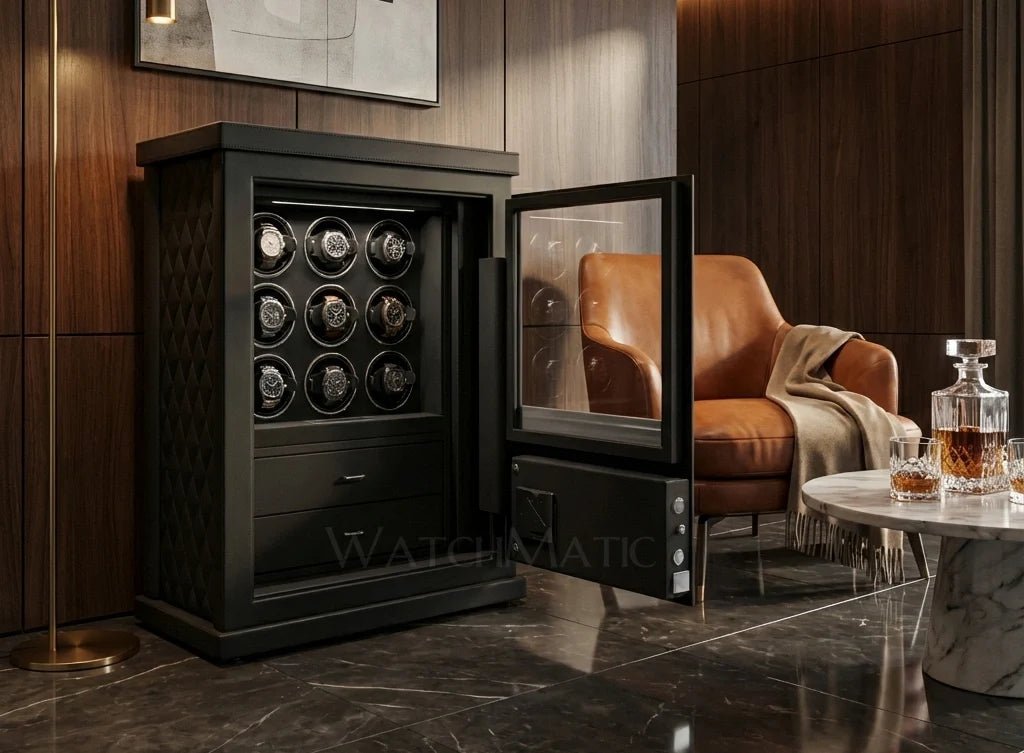
Luxury Watch Safes for Valuable Collections
As the total value of a collection increases, secure storage becomes more important.
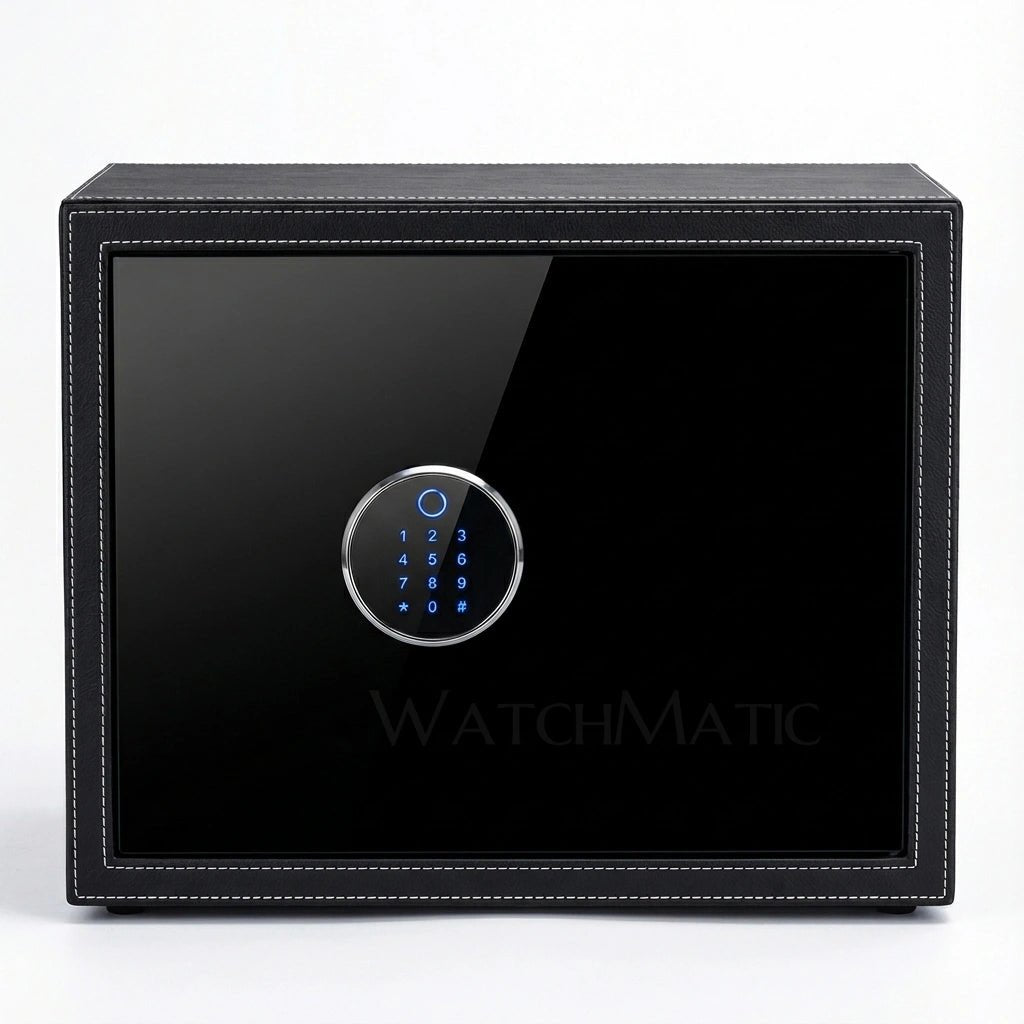
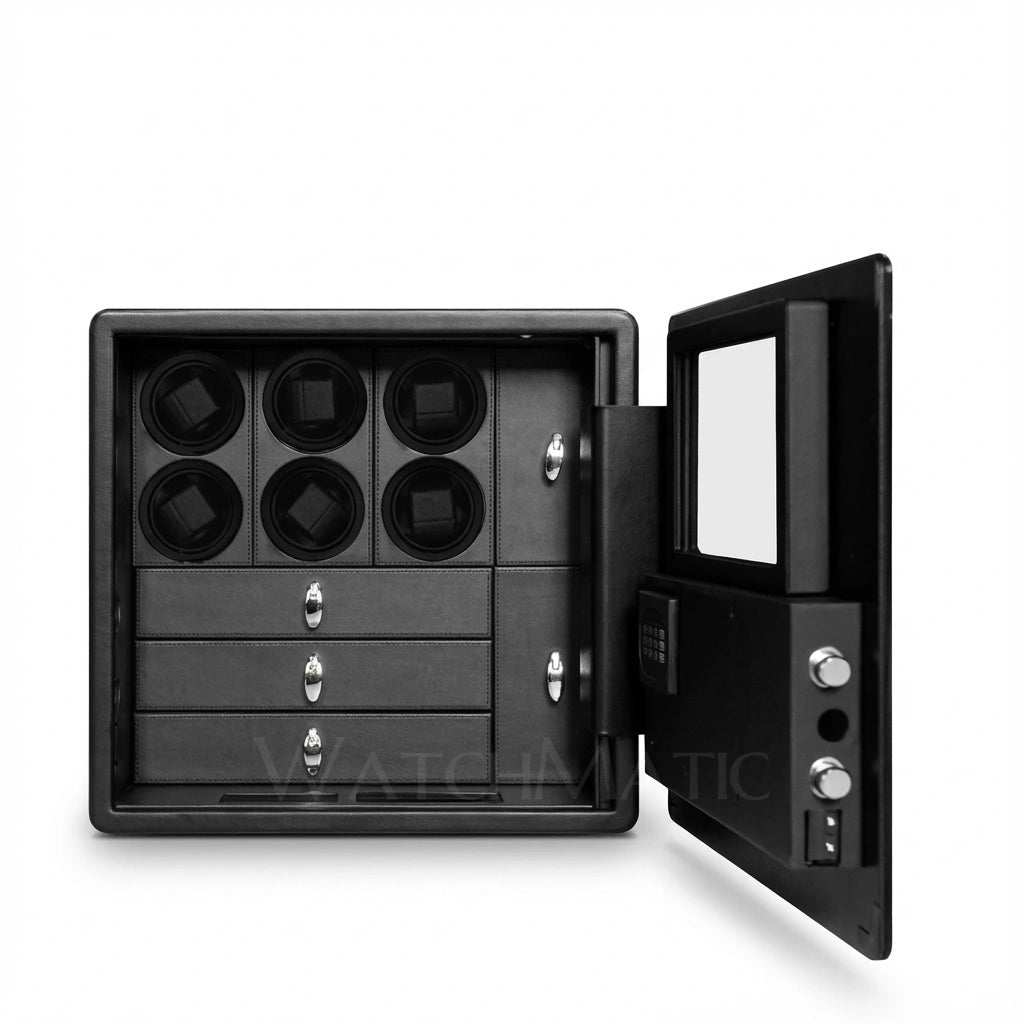
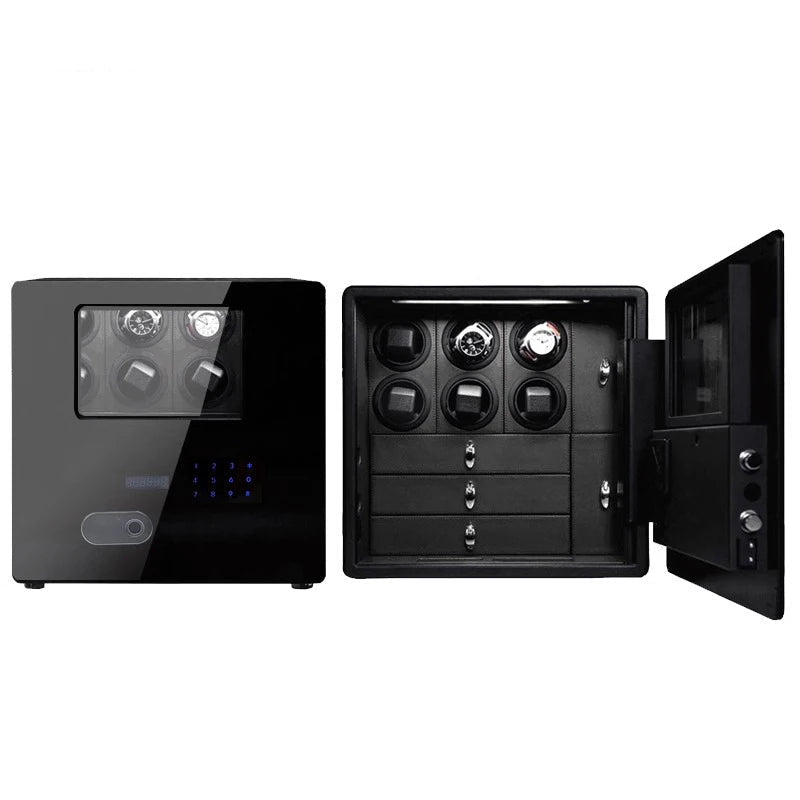
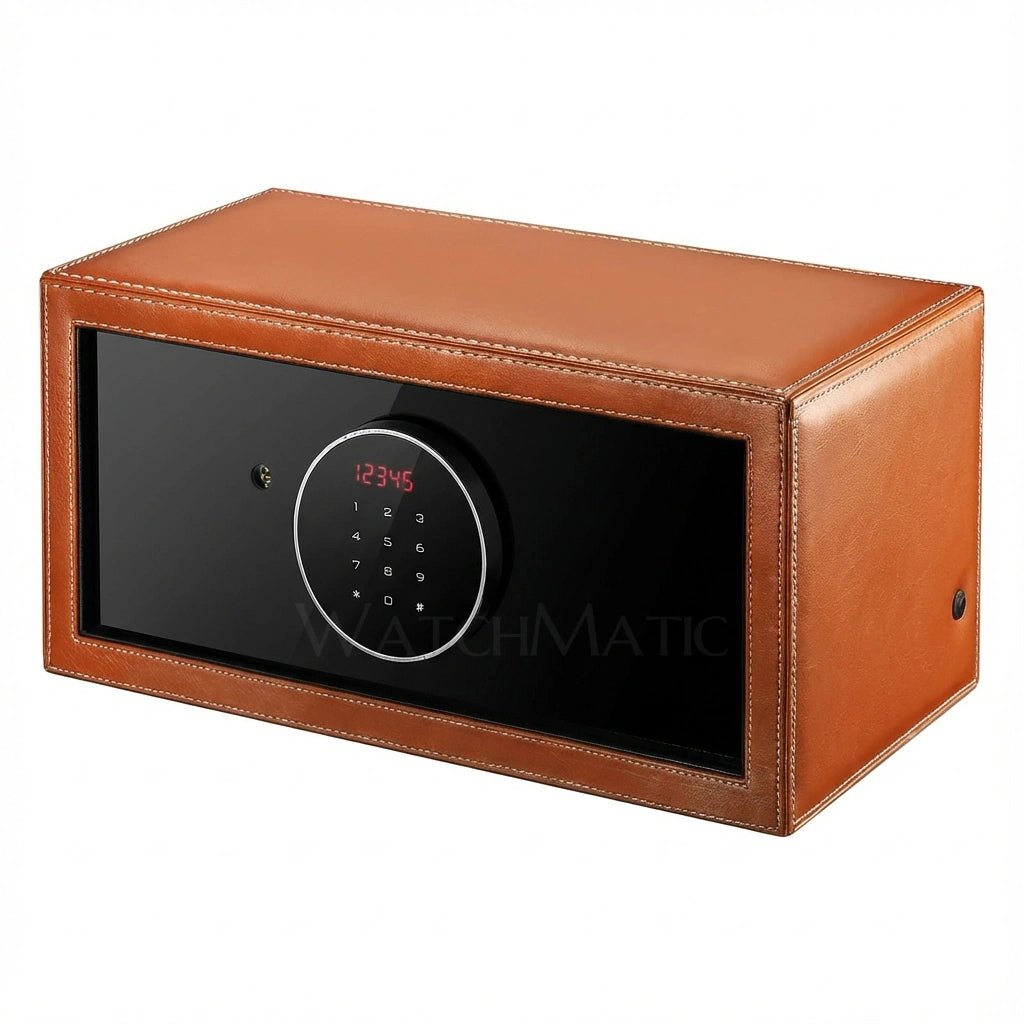
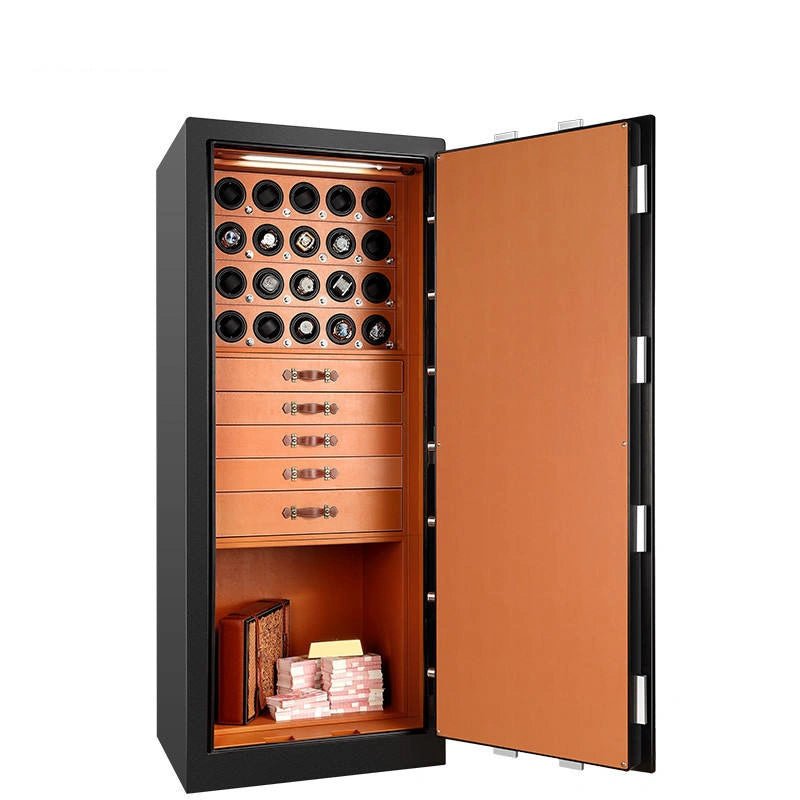
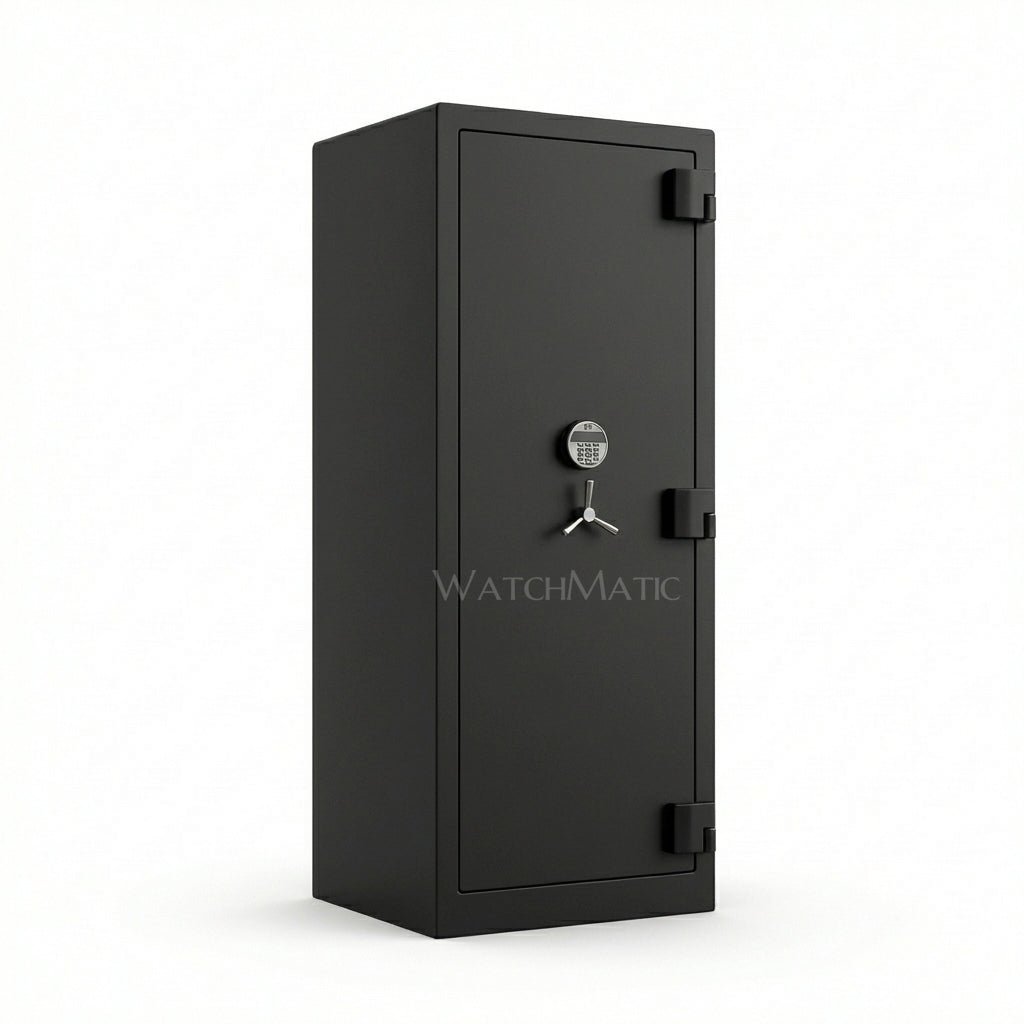
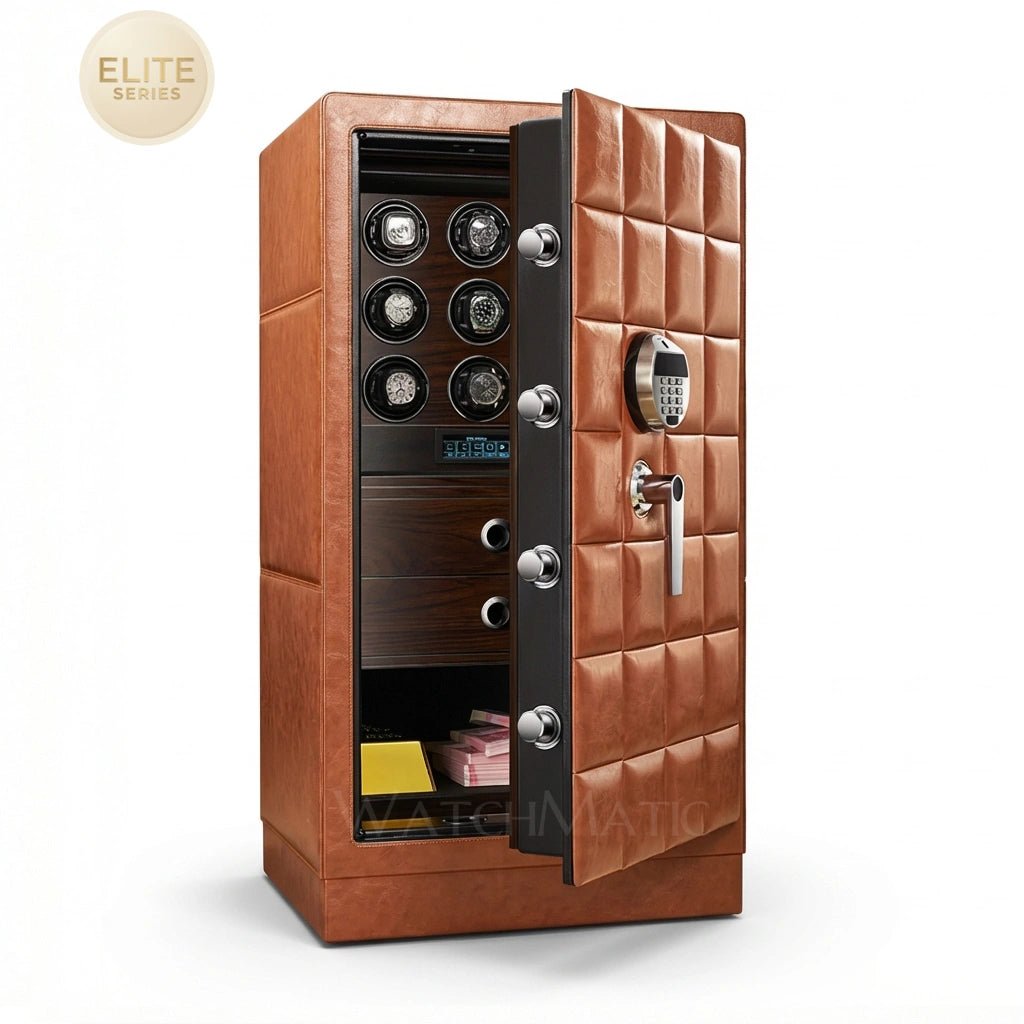
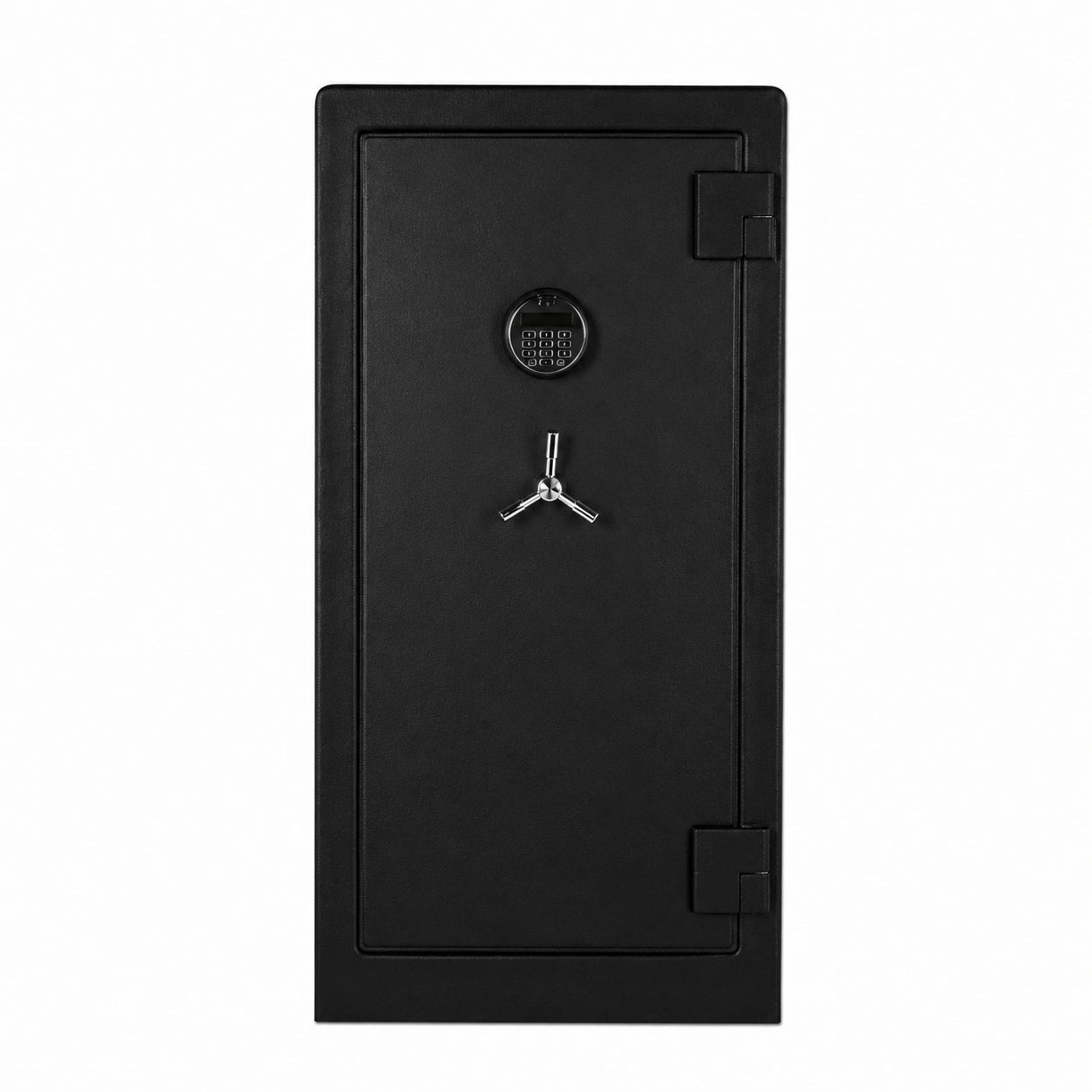
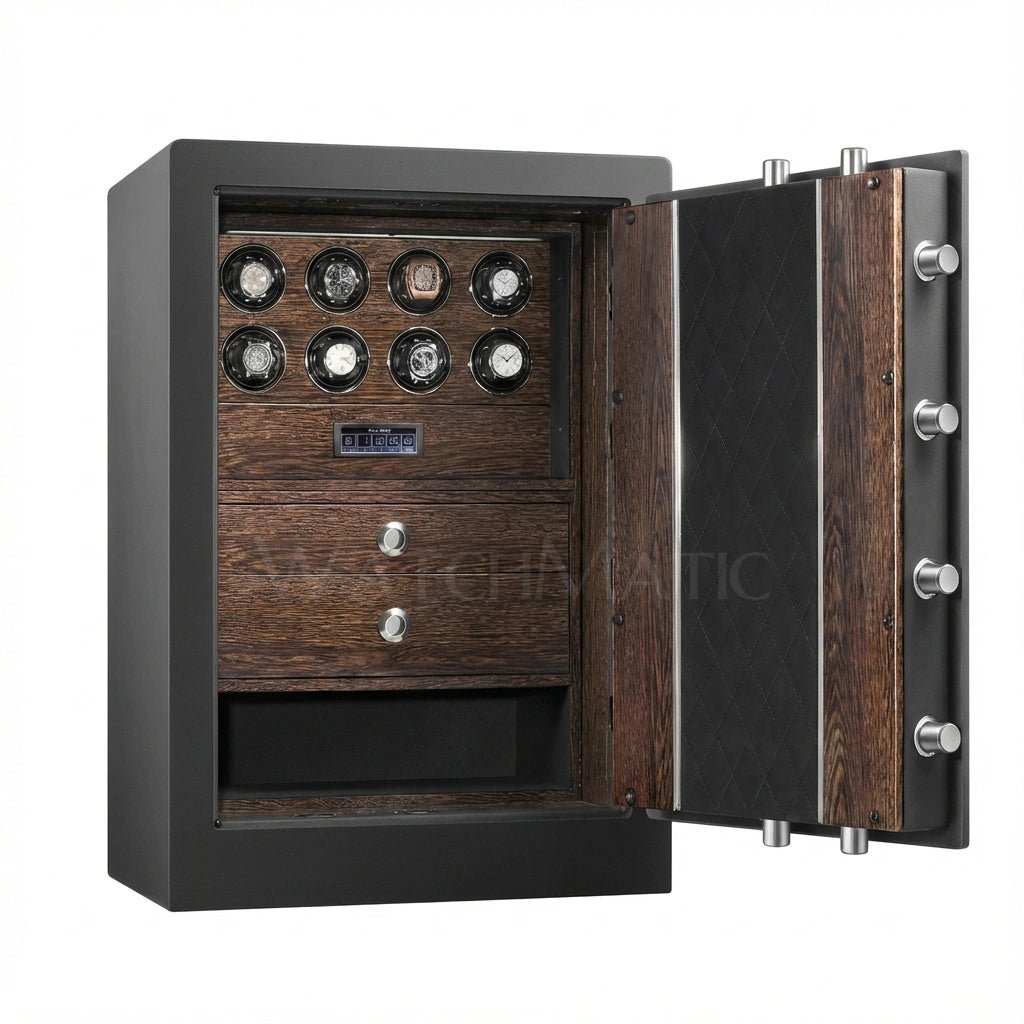
A purpose-built luxury watch safe can combine controlled access with individually arranged watch storage and premium interior finishing.
For demanding security requirements, verify the exact model's construction, burglary-resistance certifications, fire-resistance specifications, and installation conditions.
The word "safe" alone does not establish an independently certified level of protection.
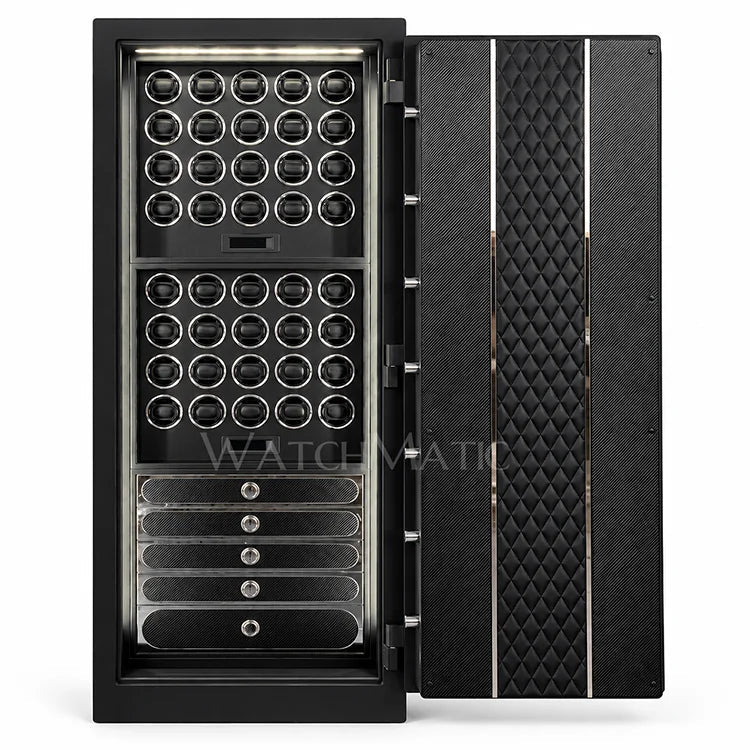
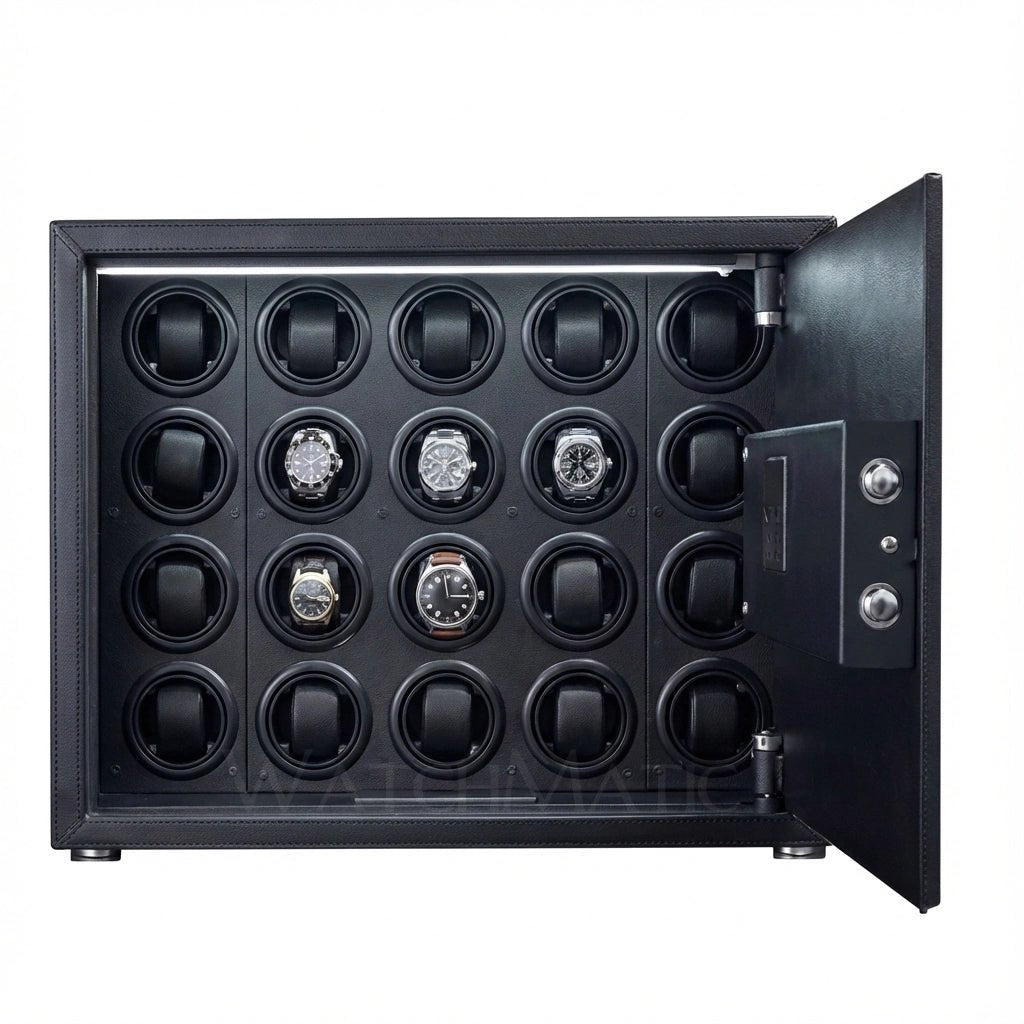
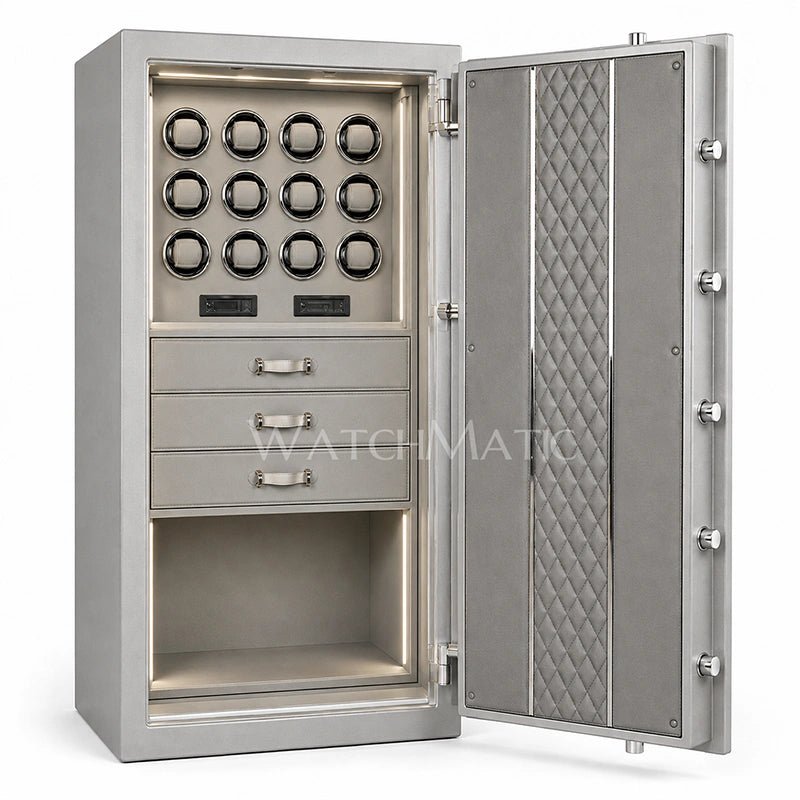
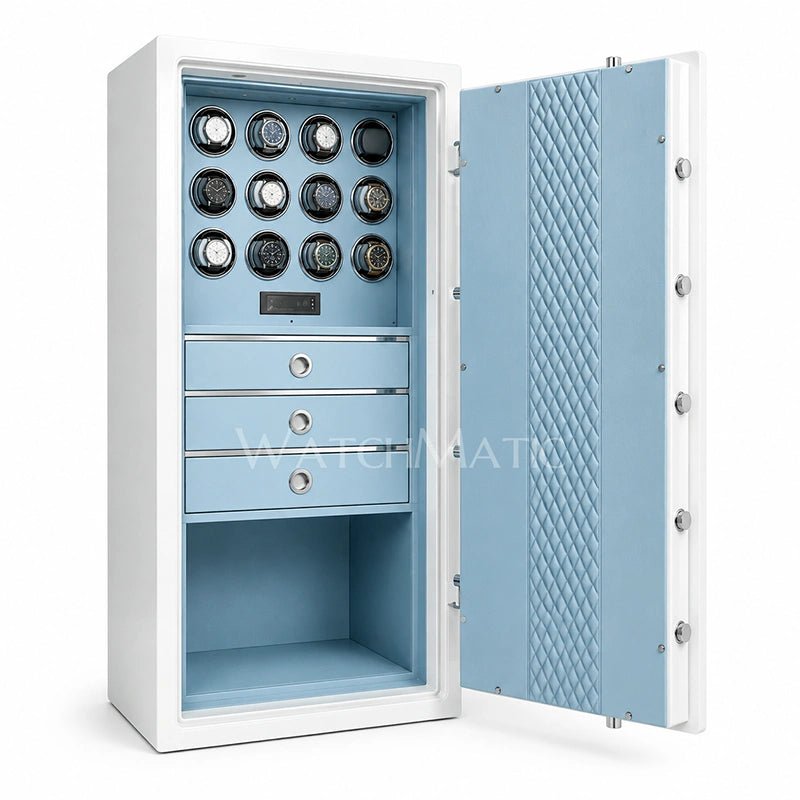
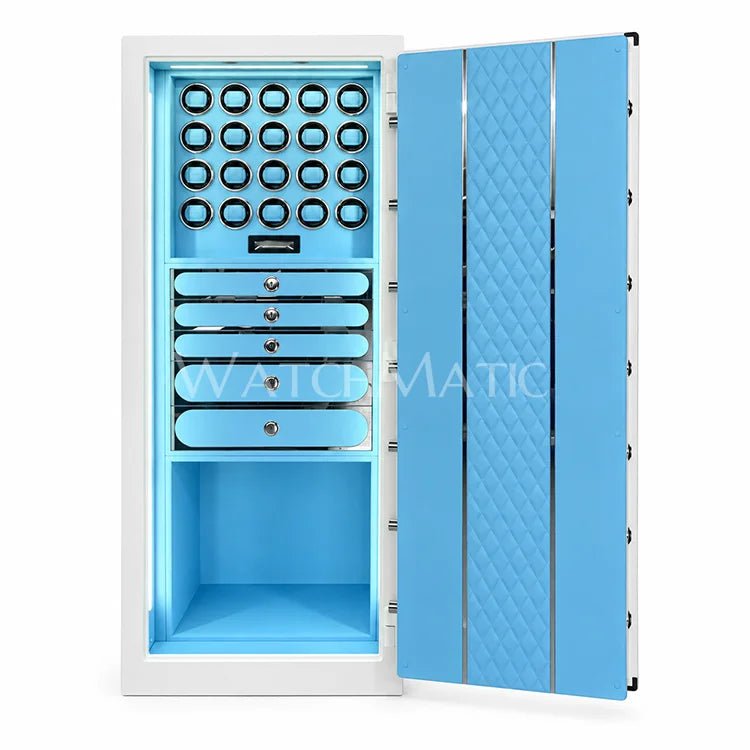
Watch Winder Safes for Integrated Collection Management
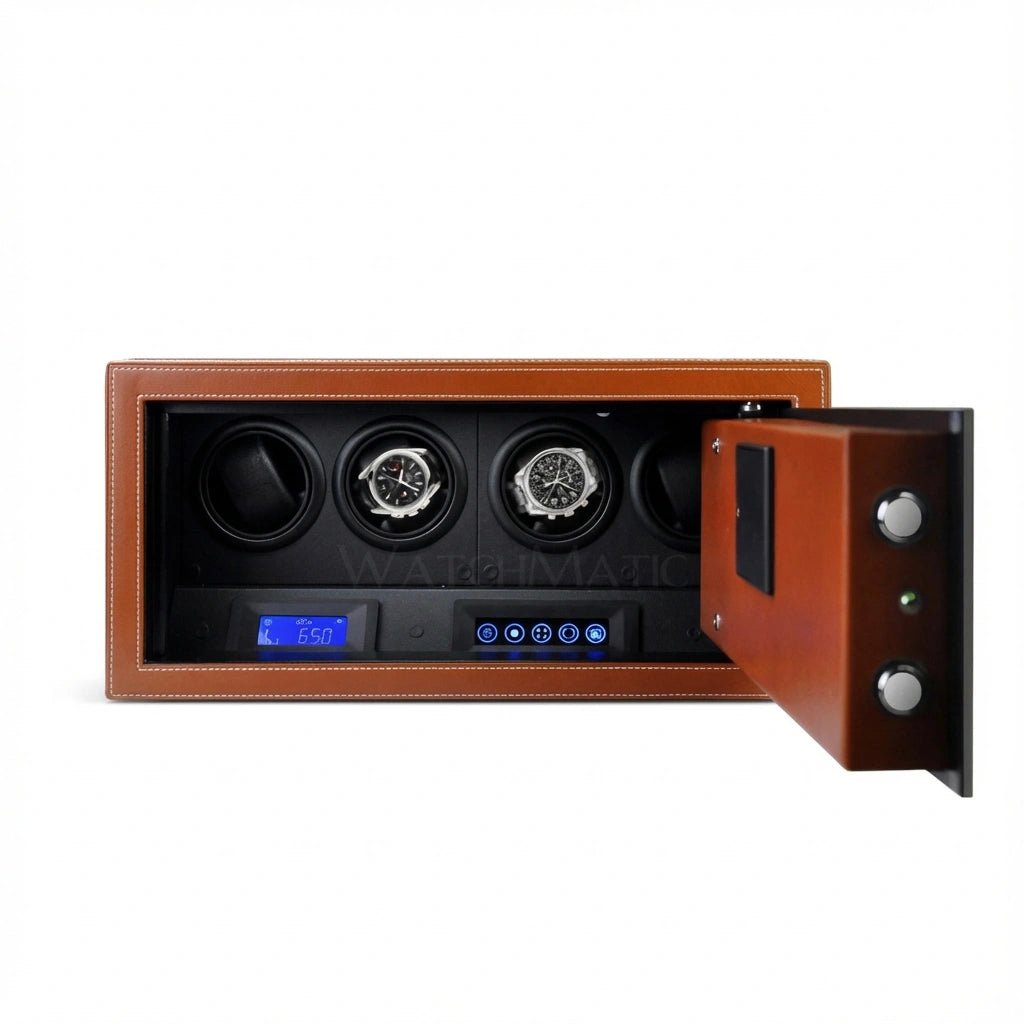
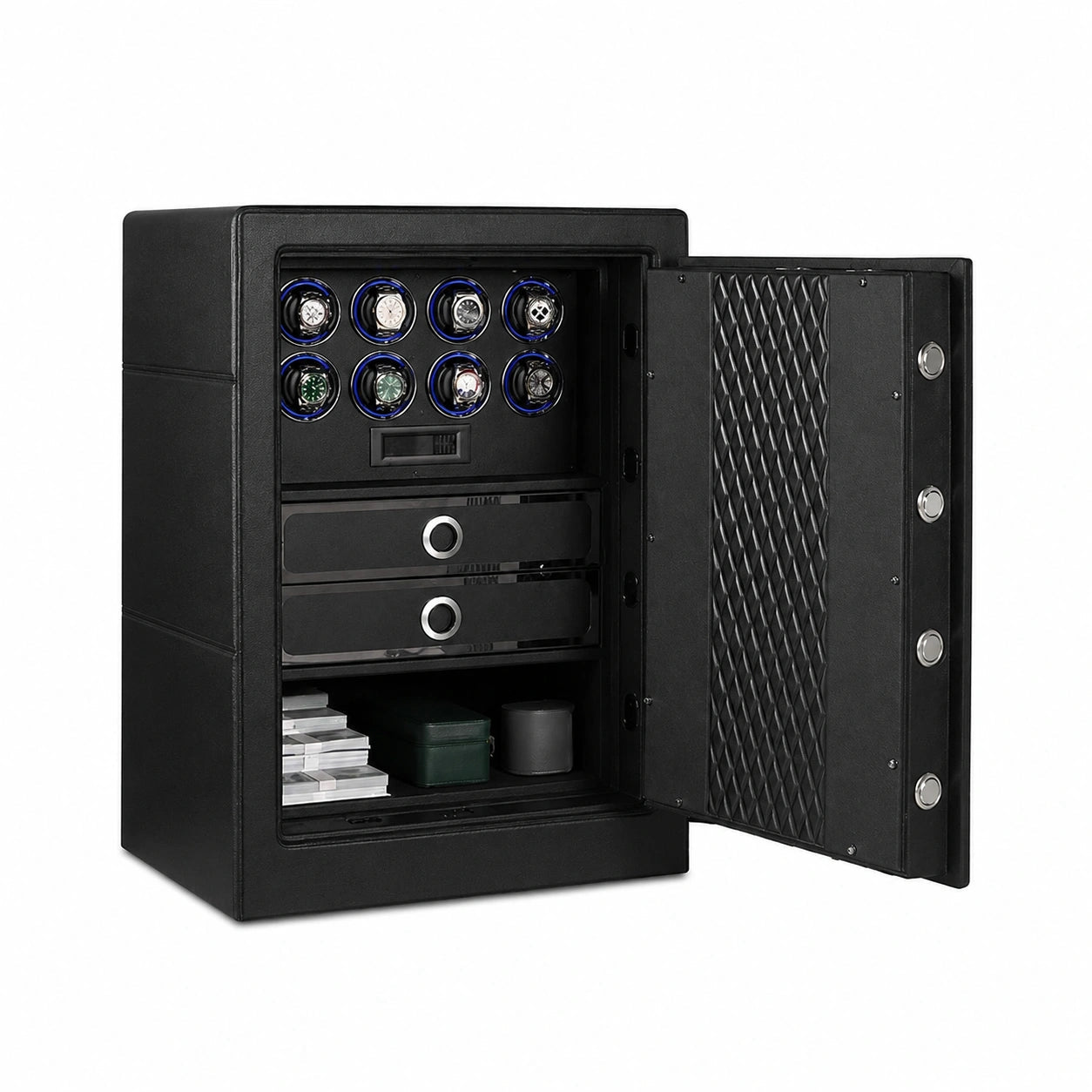
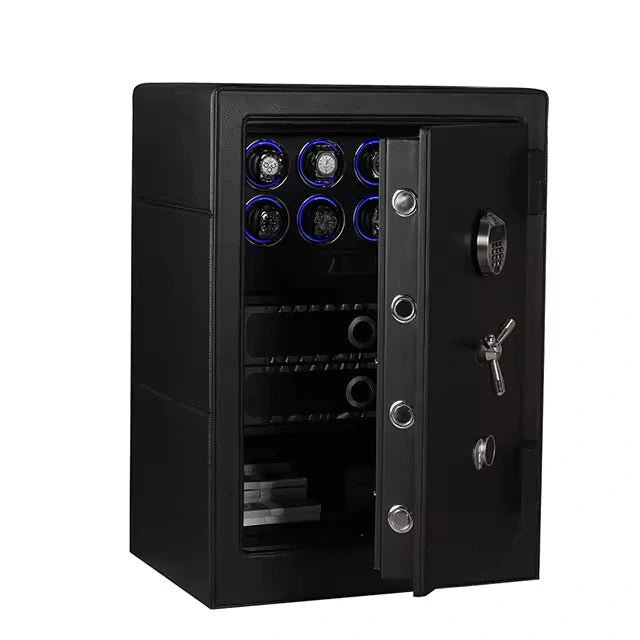
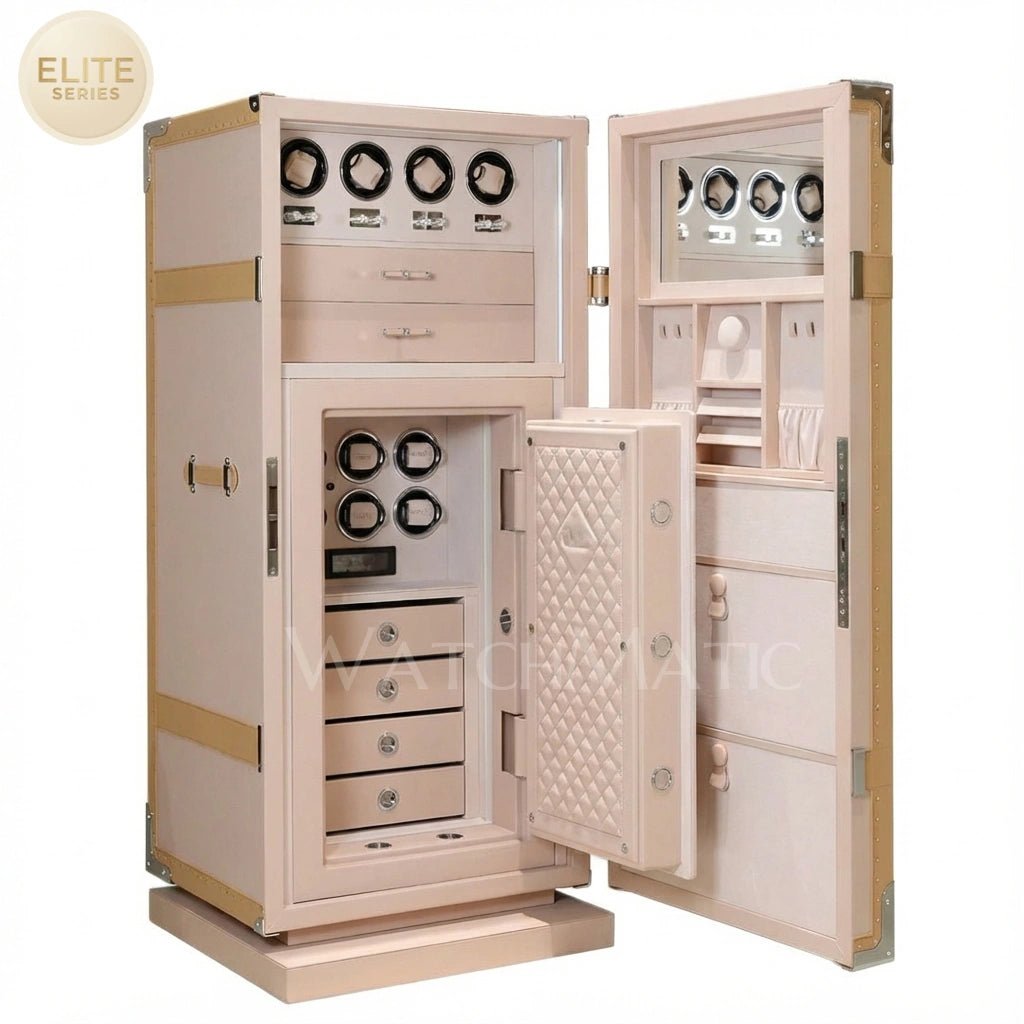
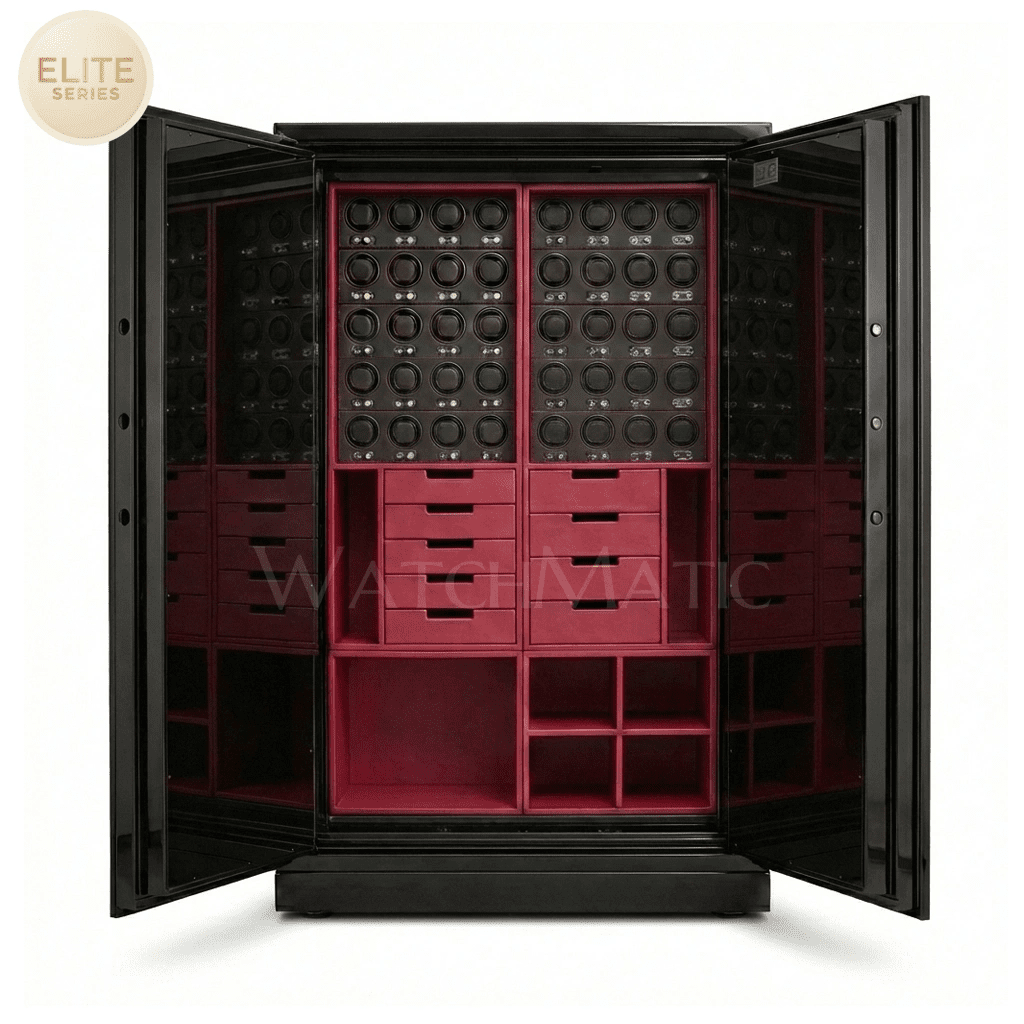
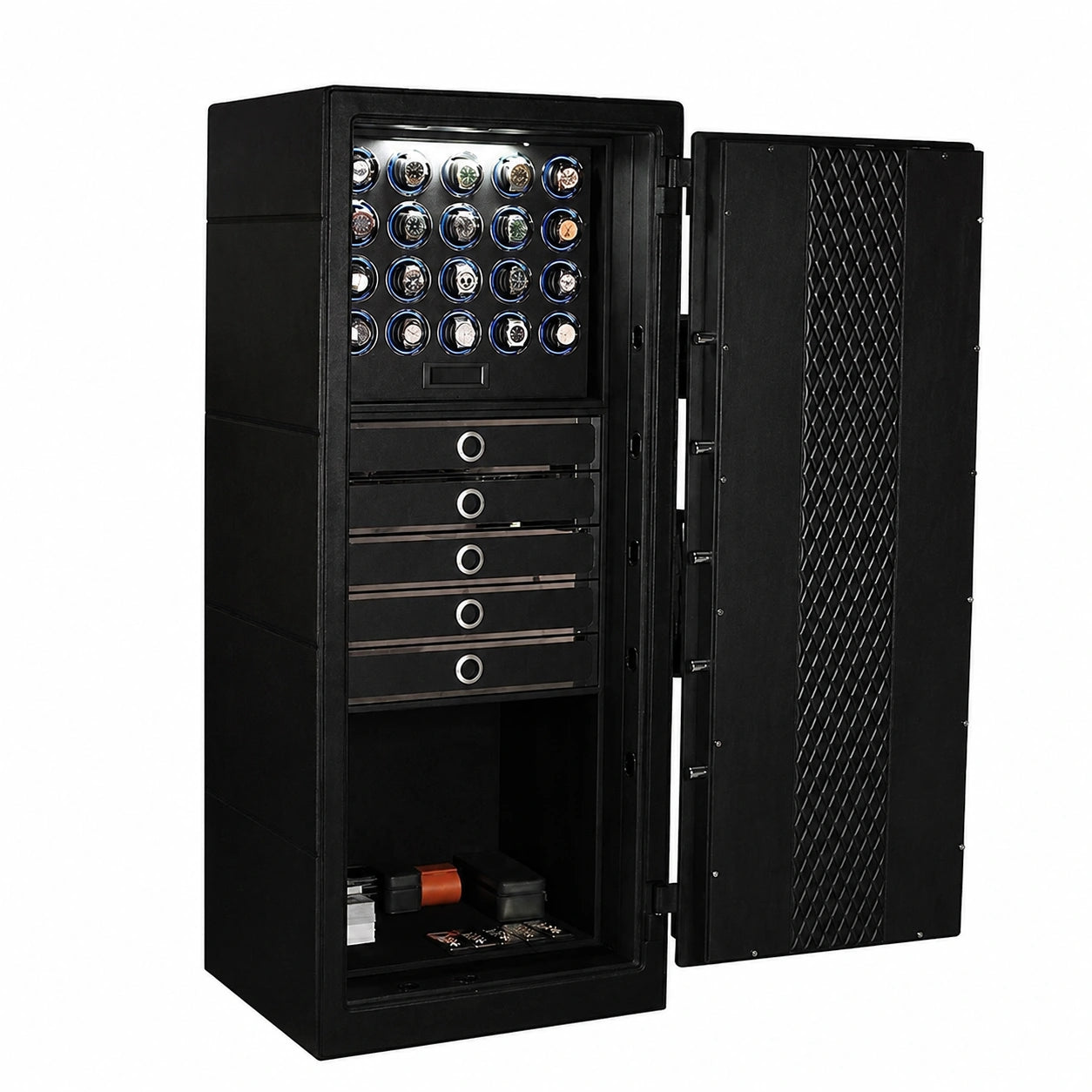
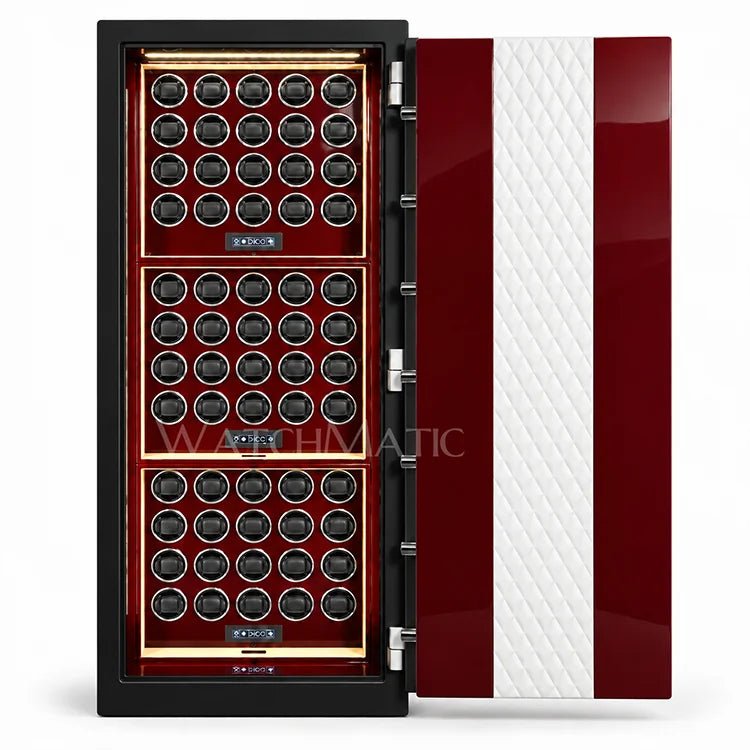
A watch winder safe combines secure storage with integrated winding positions for automatic watches.
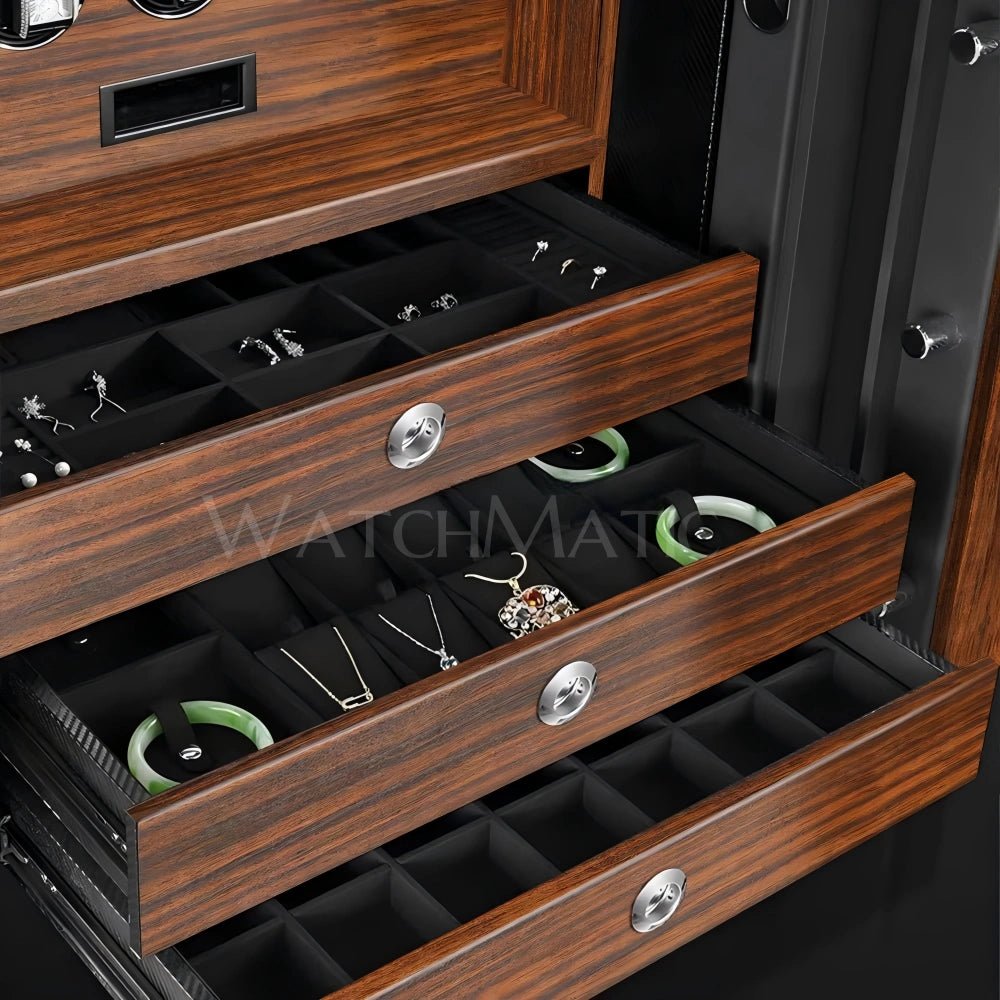
Depending on the configuration, it can also include drawers for stationary watches, jewelry, spare straps, and accessories.
This approach can make large collections easier to organize without requiring numerous independent winding devices throughout the room.
11. Consider a Dedicated Storage Layout for Larger Collections
As the number of watches increases, a structured layout can make a substantial difference to daily convenience.
The objective is to create a system where every watch has a logical place and can be accessed without disturbing other pieces.
Example: Organizing a 24-Watch Collection
Imagine a collector who owns twenty-four watches:
- Six automatic watches in frequent rotation.
- Eight automatic watches worn occasionally.
- Four manually wound mechanical watches.
- Six quartz or other watches suitable for stationary storage.
A practical starting arrangement might look like this:
| Storage Area | Allocation | Function |
|---|---|---|
| Winder Zone A | 6 watches | Frequently worn automatic watches |
| Storage Drawer B | 8 watches | Occasionally worn automatic watches |
| Storage Drawer C | 4 watches | Manual-winding watches |
| Storage Drawer D | 6 watches | Quartz and other stationary watches |
| Accessory Drawer | As required | Straps, bracelets, and accessories |
Under this arrangement, the collector requires six active winding positions and eighteen stationary watch positions, rather than automatically purchasing twenty-four winders.
Additional positions can be reserved for future acquisitions if the collection is expected to grow.
This is an illustrative layout. The actual drawer dimensions and number of watch holders must be confirmed against the selected storage system.
Prioritize Usability Over Visual Symmetry
A symmetrical wall of watch winders may look impressive, but it is not always the most efficient configuration.
Professional-level organization begins with the collection's actual requirements, not simply the visual appearance of the cabinet.
Consider the balance between winding positions, stationary watch holders, storage drawers, and everyday accessibility.
12. Protect the Collection With Appropriate Security and Insurance
Organization alone cannot protect a valuable watch collection.
As collections become more financially significant, security and insurance should become integrated parts of the ownership strategy.
Evaluate the Combined Collection Value
Consider the total value of the watches stored together, not simply the value of the most expensive individual piece.
A collection containing many watches of moderate individual value can represent a significant overall exposure.
Choose Security Appropriate to the Risk
Depending on the circumstances, a secure storage strategy may involve:
- A properly specified luxury watch safe.
- Appropriate installation and anchoring.
- Controlled access to the storage room.
- Alarm or monitoring integration.
- Discreet storage away from unnecessary public visibility.
- Professional insurance review.
Where security certification is necessary, ask for model-specific documentation rather than relying on general marketing descriptions.
Review Insurance Coverage Periodically
Collection values and insurance requirements can change over time.
Maintain appropriate photographs, ownership documents, valuations, and a record of new acquisitions or disposals.
Consult the insurer about appraisal requirements, coverage limits, eligible security arrangements, and how watches are covered both at home and while being worn or transported.
Secure the Digital Inventory Too
Collection-management files may contain sensitive information about valuable assets.
Protect them with appropriate access controls, strong authentication, and secure backups.
Avoid storing the only copy of your inventory on a device that could be lost, damaged, or stolen alongside the collection.
For additional physical protection strategies, read How to Keep Your Luxury Watch Collection Safe at Home.
13. Develop a Simple Collection Management Routine
A detailed inventory is only useful if it remains accurate.
Rather than waiting until the collection becomes disorganized, establish a routine that updates the records as ownership and storage arrangements change.
After Wearing a Watch
- Check the watch for visible moisture or contamination.
- Follow the manufacturer's recommendations for appropriate exterior care.
- Make sure the crown is correctly secured where applicable.
- Return the watch to its assigned storage position.
- Update the inventory if its location or status has changed.
When Acquiring a New Watch
- Assign a new collection ID.
- Record the model, reference, and private serial number.
- Photograph the watch and accompanying accessories.
- Preserve purchase and warranty documents.
- Review insurance requirements.
- Allocate a suitable winding or stationary storage position.
Periodically Review the Collection
- Confirm that all watches are accounted for.
- Check that storage records remain accurate.
- Review upcoming servicing requirements.
- Inspect cushions, drawers, and winding equipment.
- Evaluate the storage environment.
- Update valuations and insurance information when appropriate.
- Review available capacity for future acquisitions.
The review frequency can be adjusted to the collection's size, value, and usage.
A relatively small and stable collection may require only occasional updates. An actively traded or frequently rotated collection will generally benefit from more frequent reviews.
14. Avoid the Most Common Watch Collection Organization Mistakes
Even experienced collectors can develop habits that make their collections harder to manage.
Keeping Watches in Multiple Untracked Locations
Storing watches across several boxes, drawers, and rooms without a location record makes it difficult to maintain an accurate inventory.
Centralize storage where appropriate and record any necessary exceptions.
Organizing Only by Brand
Brand-based arrangements can be visually appealing, but they may not reflect differences in movement type, usage, or security requirements.
Use brand as a secondary classification rather than the only organizing principle.
Keeping Every Automatic Watch on a Winder
Winders are useful for selected automatic watches, but continuous operation is not universally necessary.
Allocate winding positions according to actual wearing habits and movement requirements.
Failing to Record Service History
Without accurate service records, collectors may forget when a watch was last inspected or which components were previously replaced.
Keep service documentation associated with the individual watch record.
Mixing Accessories Without Identification
Loose bracelets, spare links, buckles, and straps can become difficult to identify over time.
Group accessories by watch or collection ID and use appropriate protective containers.
Overcrowding the Storage System
Watches should not be pressed together or stored where cases, bracelets, and clasps can contact one another unnecessarily.
When storage becomes crowded, review the layout or consider expanding capacity.
Exposing Sensitive Collection Information
Publicly sharing complete inventories, serial numbers, or details of home storage locations can create unnecessary privacy and security risks.
Keep sensitive records restricted to appropriate individuals.
15. When Should You Upgrade to a Bespoke Watch Storage System?
Standard watch boxes, winders, and safes can serve many collectors effectively.
However, larger or more specialized collections may eventually require a more personalized approach.
A bespoke system becomes particularly useful when the collector needs:
- A specific combination of winding and stationary storage.
- Customized watch holder drawers.
- Dedicated jewelry and accessory compartments.
- Special accommodation for unusually large watches.
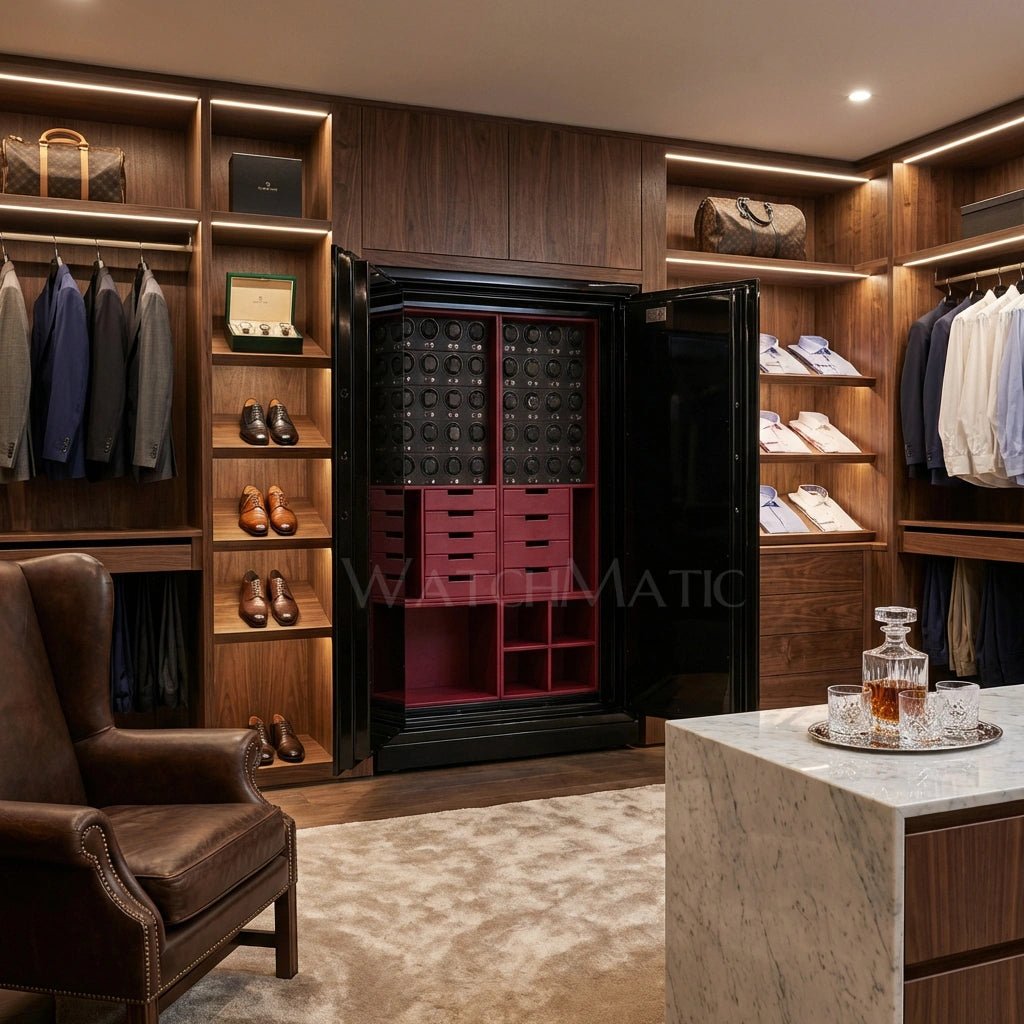
- Dimensions tailored to a dressing room or private office.
- Particular interior finishes or upholstery materials.
- Enhanced security specifications or locking options.
- Integrated storage for a growing collection.
For example, a collector with forty watches may not require forty winding modules.
Instead, a combination of twenty individually controlled winders, multiple watch holder drawers, and dedicated accessory compartments could provide a more practical arrangement.
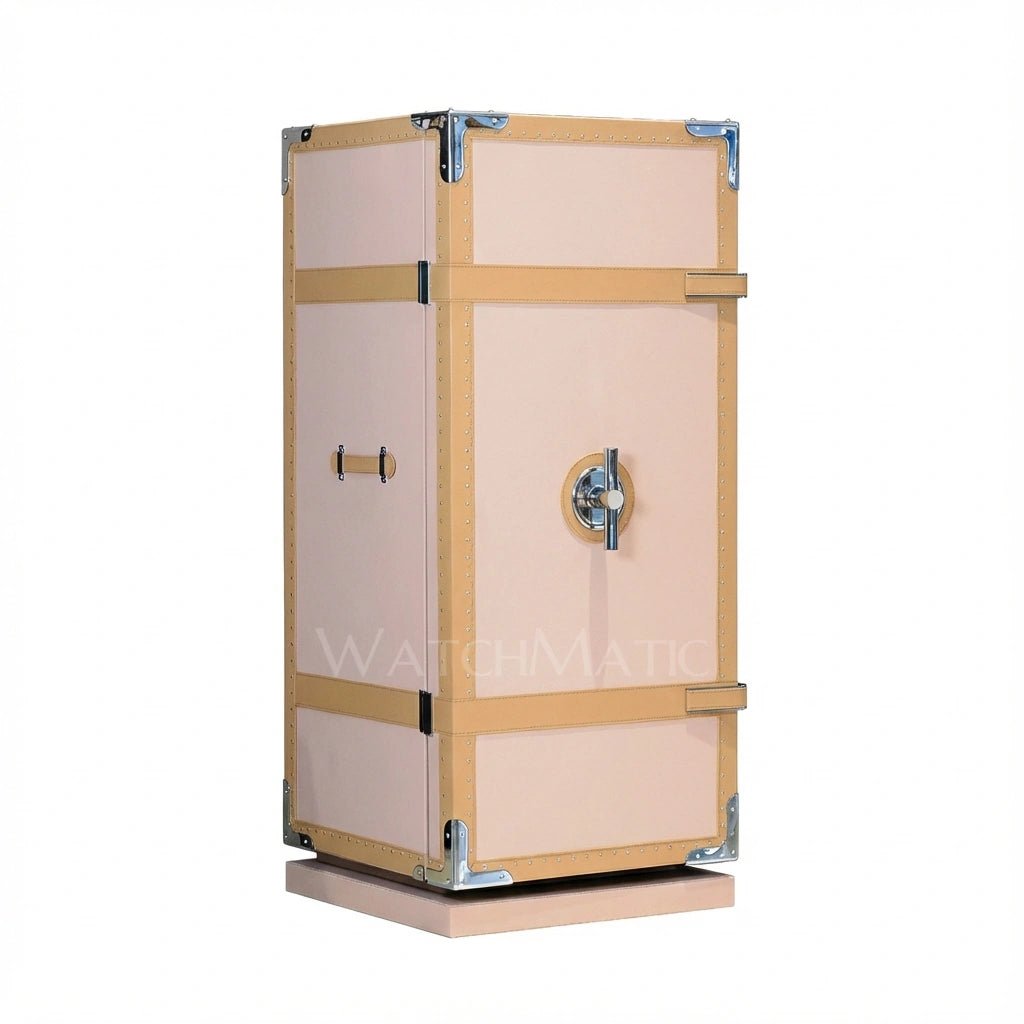
WatchMatic offers bespoke luxury watch safe solutions with configurable layouts, winding capacity, storage drawers, dimensions, and selected technical features.
When planning a custom installation, the homeowner should also consider safe weight, floor capacity, door clearance, delivery access, and the security specifications required for the collection.
16. A Professional Watch Collection Organization Checklist
Use this checklist as a practical reference when creating or reviewing your collection management system.
| Management Area | Recommended Practice |
|---|---|
| Inventory | Record every watch with a unique collection ID |
| Documentation | Preserve invoices, warranty records, and provenance |
| Photography | Maintain current photographs and condition records |
| Classification | Group watches by use, movement, and storage requirements |
| Rotation | Assign designated positions for daily and occasional watches |
| Watch Winding | Use movement-appropriate winding programs where needed |
| Accessories | Store straps, bracelets, and small components separately |
| Maintenance | Track servicing and changes in watch condition |
| Security | Use protection appropriate to collection value and risk |
| Insurance | Review coverage and supporting documentation |
| Future Planning | Reserve practical capacity for additional watches |
Frequently Asked Questions About Organizing a Watch Collection
What is the best way to organize a luxury watch collection?
The most effective approach combines a detailed inventory with a consistent physical storage system. Organize watches by frequency of use, movement type, and security requirements, then assign each watch a designated storage position. Keep purchase documents, photographs, service records, and accessories linked to the corresponding watch.
Should I organize my watch collection by brand or by type?
Both methods can be useful, but organizing primarily by frequency of use and storage requirements is often more practical. Brand and watch type can serve as secondary classifications. A collector may keep frequently worn Rolex and Omega watches together while storing rarely worn watches from the same manufacturers in separate secure compartments.
How do professional collectors keep track of their watches?
Many experienced collectors use spreadsheets, digital inventories, or dedicated collection-management software. Useful records include the brand, model, reference, serial number, acquisition date, photographs, service history, valuation, and storage location. Sensitive information should be stored securely and updated whenever watches are acquired, sold, moved, or serviced.
What information should I include in a watch inventory spreadsheet?
At minimum, record a unique collection ID, watch brand, model, reference, movement type, acquisition information, condition, and current storage position. For valuable collections, include secured serial number records, purchase documents, insurance information, provenance, photographs, and service history.
Do all automatic watches in a collection need watch winders?
No. Automatic watches do not universally require continuous winding during storage. Programmable winders are useful for watches worn frequently or watches with complications that are inconvenient to reset. Other automatic watches may be stored stationary according to the movement manufacturer's guidance.
How should I organize a collection of 20 or more watches?
Begin by grouping the watches according to movement type, usage, and storage needs. Reserve winding positions for selected automatic watches and use dedicated drawers or compartments for stationary pieces. A centralized inventory and clearly assigned storage positions become particularly valuable as the collection increases in size.
Should I keep original watch boxes and warranty cards?
Retaining original boxes, warranty cards, purchase documents, and relevant accessories is generally advisable, particularly for valuable or collectible watches. These materials can support ownership records, future servicing, insurance, and resale documentation. Physical originals should be stored securely, with protected digital copies maintained where appropriate.
How often should I review my watch collection inventory?
Update the inventory whenever a watch is purchased, sold, sent for servicing, or moved to another location. A periodic review can help confirm that watches and accessories remain accounted for, maintenance records are current, and the storage arrangement continues to suit the collection.
Is a watch box enough for an expensive watch collection?
A watch box can provide convenient organization and help protect watches from accidental contact and dust. However, it generally offers limited burglary protection. Valuable collections may require a properly specified watch safe, with the appropriate security level determined by the collection's value, insurance requirements, and other risks.
Can I organize watches and jewelry in the same luxury safe?
Yes. Many luxury watch safes can incorporate separate watch winding positions, stationary watch drawers, jewelry compartments, and accessory storage. Individual compartments help prevent direct contact between watches and jewelry, while bespoke configurations can be tailored to the collection's specific requirements.
Final Thoughts: A Well-Organized Collection Is Easier to Preserve and Enjoy
Collecting fine watches is about more than acquiring exceptional timepieces. It is also about understanding, documenting, maintaining, and protecting them over time.
The habits that define professional-level collection management are surprisingly straightforward.
Maintain an accurate inventory. Give every watch a designated position. Organize according to how the watches are worn. Use winding systems where they provide genuine convenience. Preserve important documentation and maintain appropriate service records.
As the collection becomes more valuable, integrate physical security and insurance into the overall management strategy.
For smaller collections, a well-designed watch box and reliable inventory may be sufficient. For collectors with multiple automatic watches, programmable winders can simplify daily rotation.
For larger or high-value collections, luxury watch safes and integrated winding cabinets provide a more comprehensive solution for organized storage and physical protection.
At WatchMatic, we specialize in luxury watch winders, secure watch storage, and bespoke watch safe solutions designed around the needs of private collectors.
The goal is not simply to own an exceptional watch collection. It is to create a system that allows every timepiece to be properly documented, protected, maintained, and enjoyed for years to come.