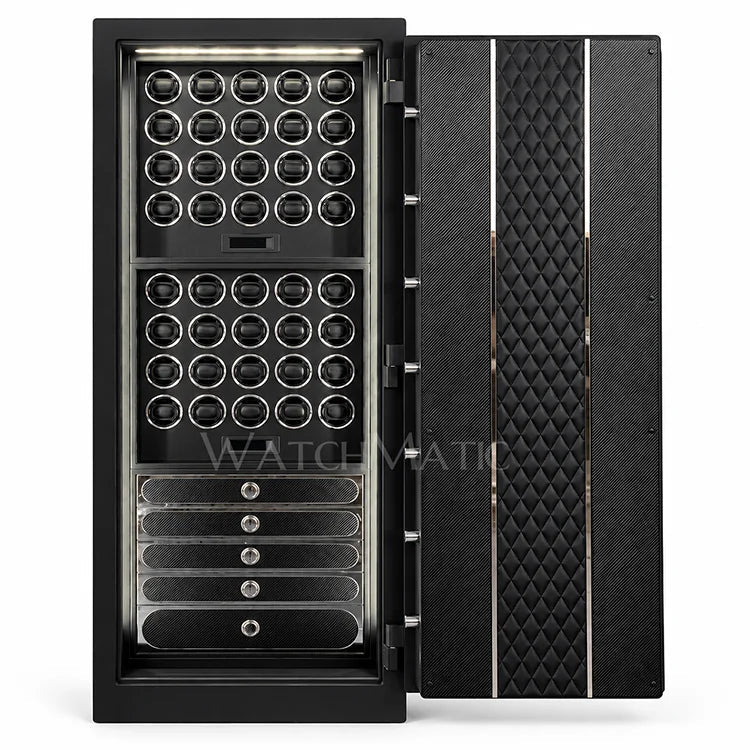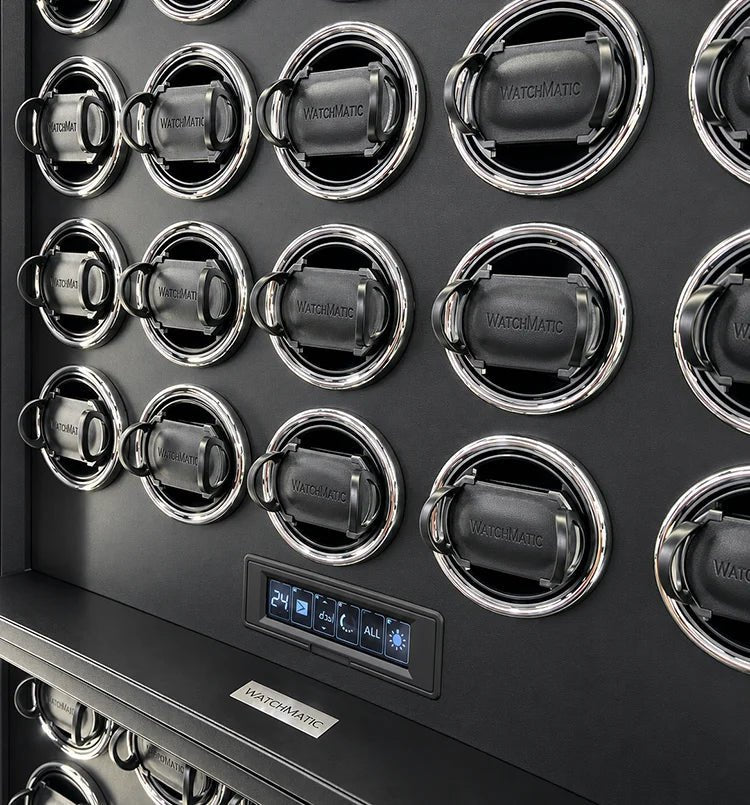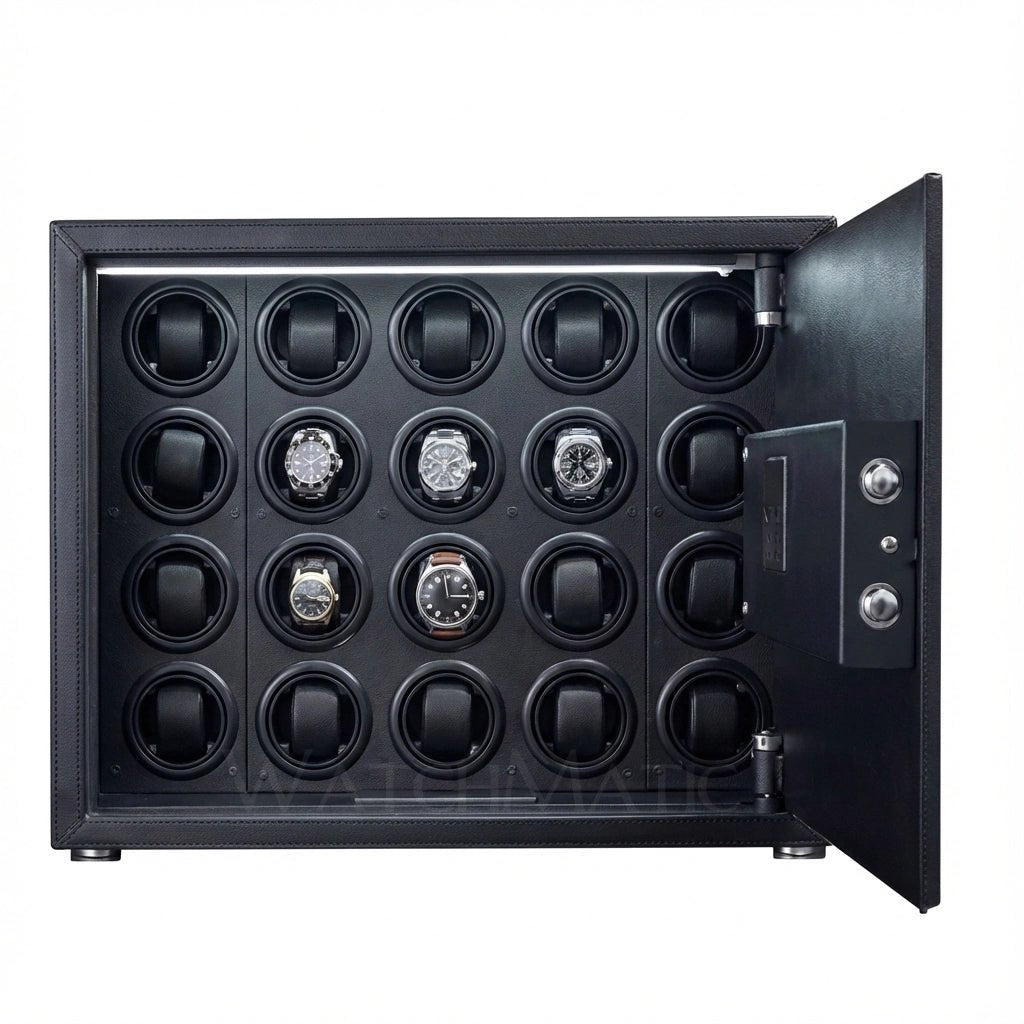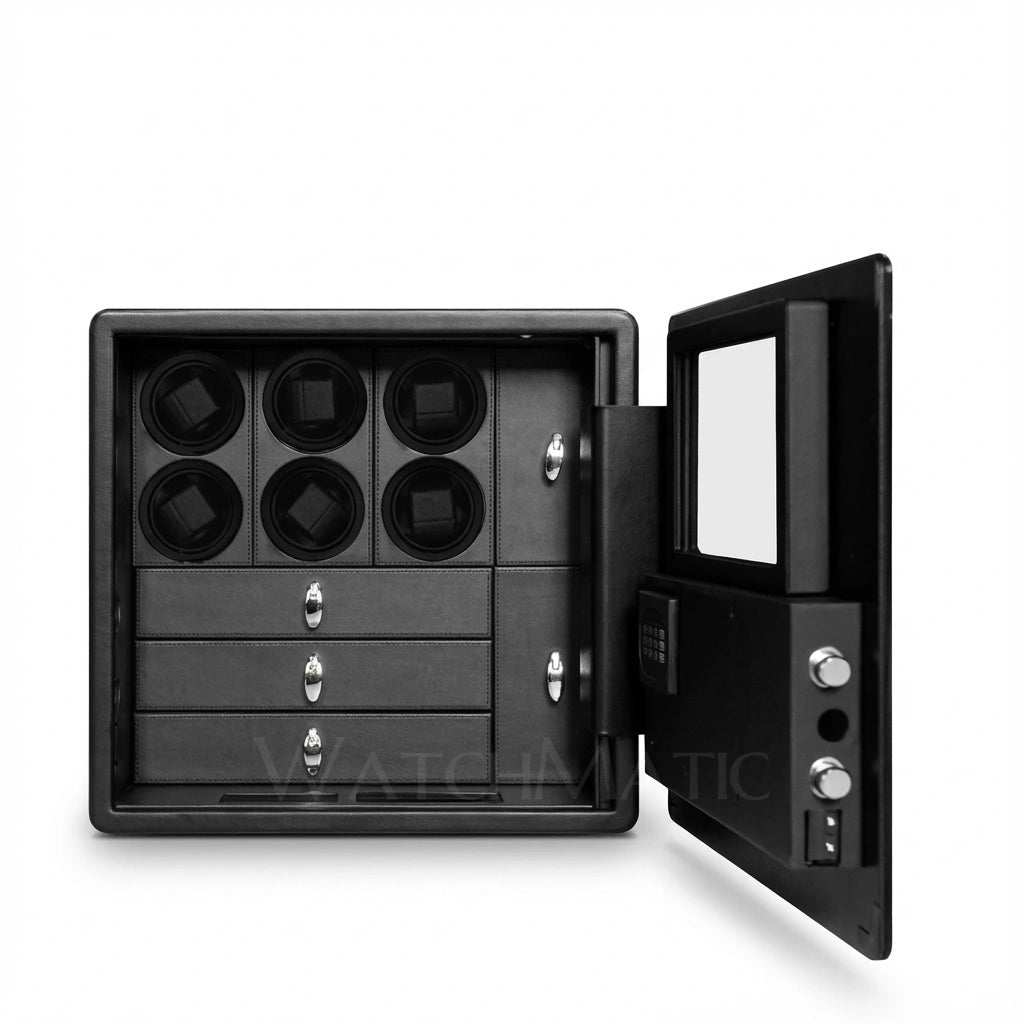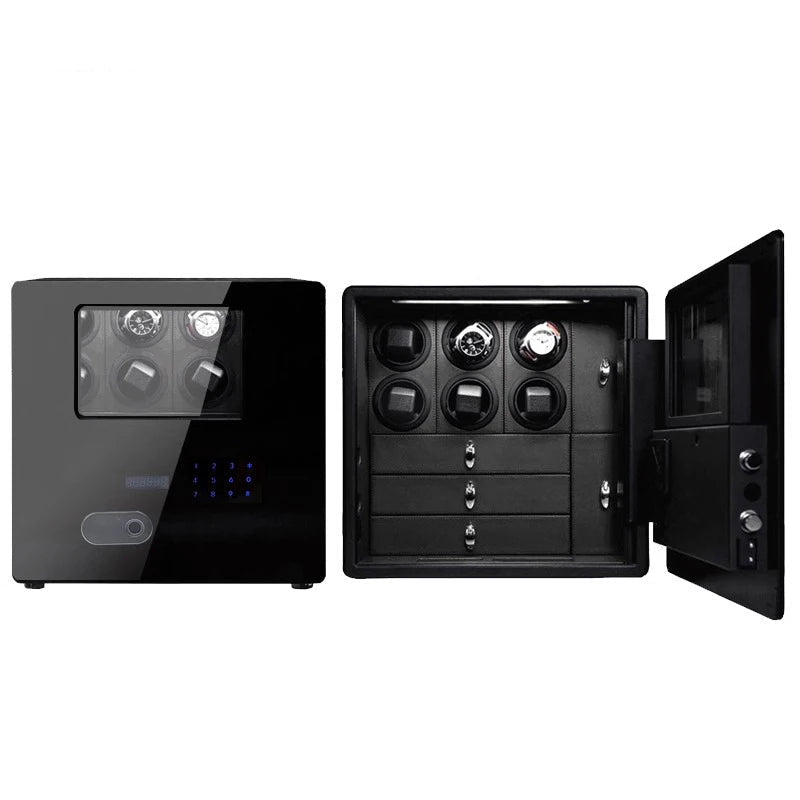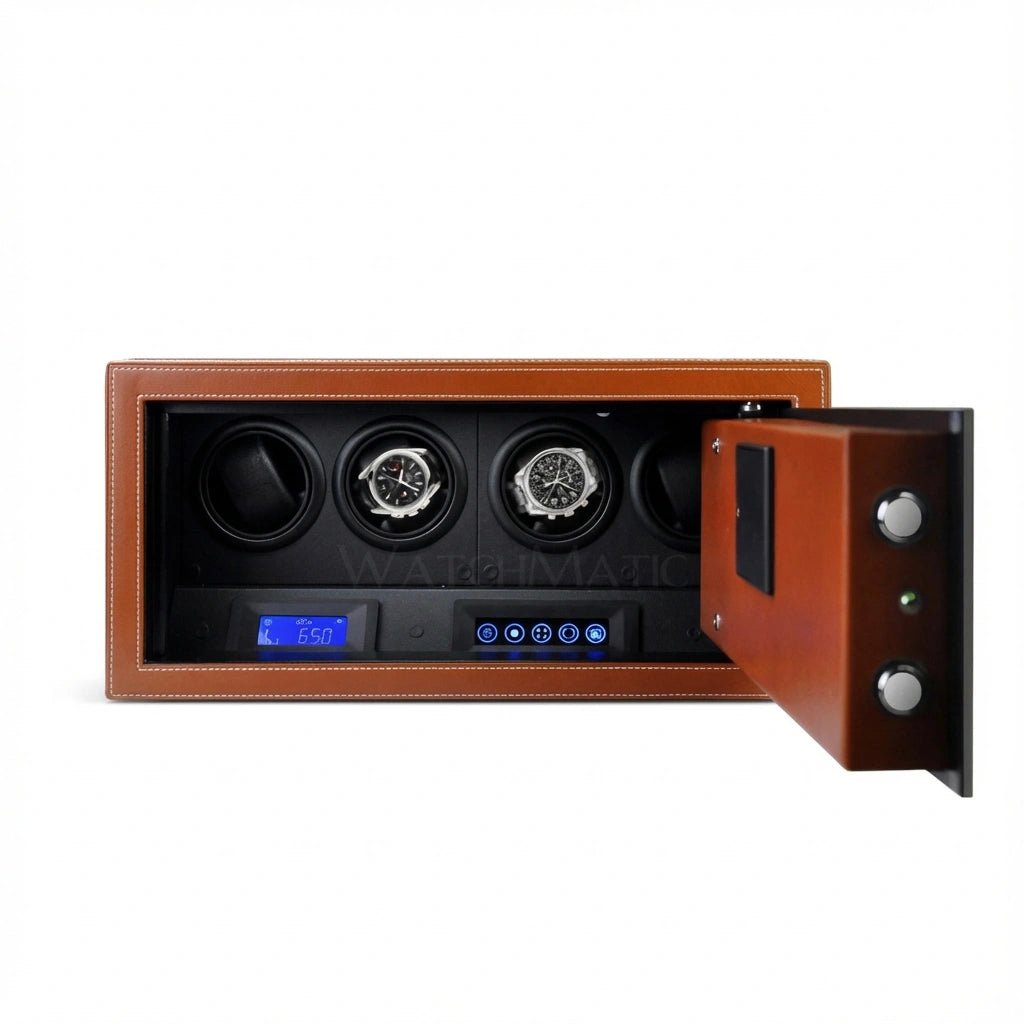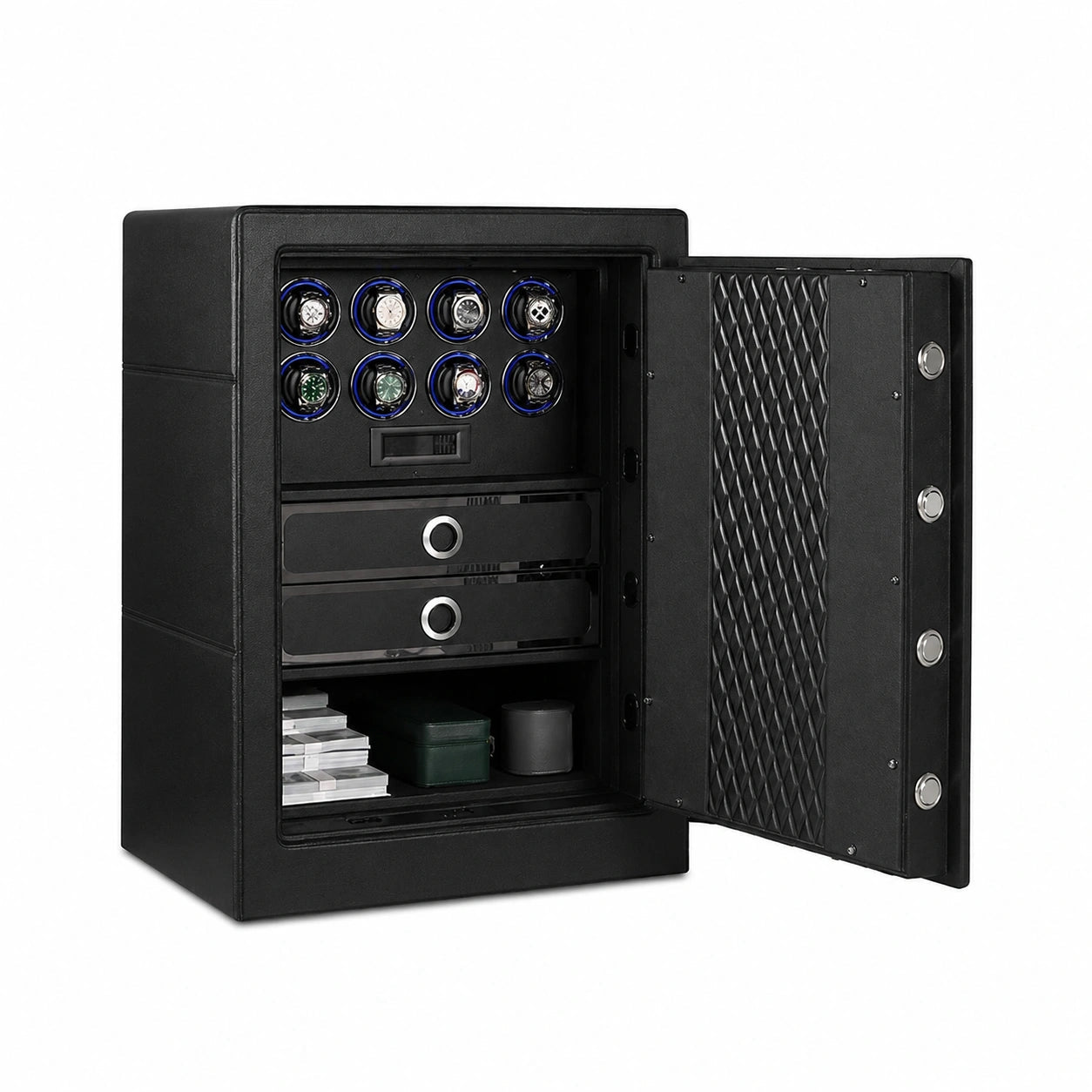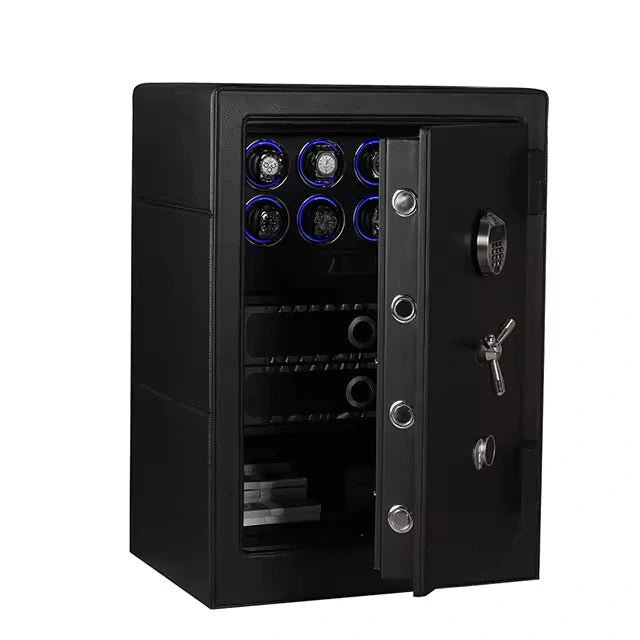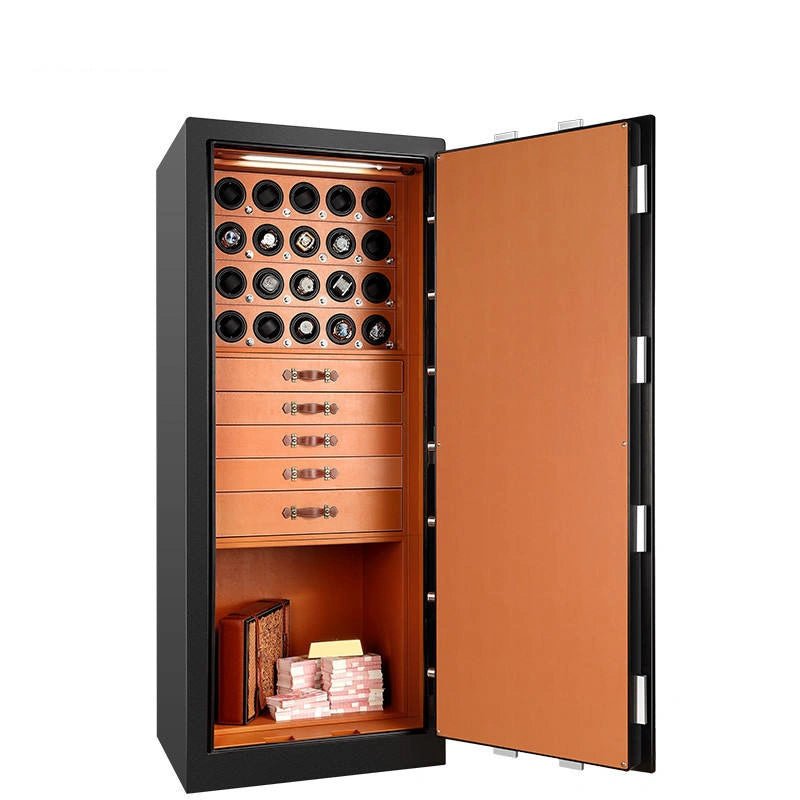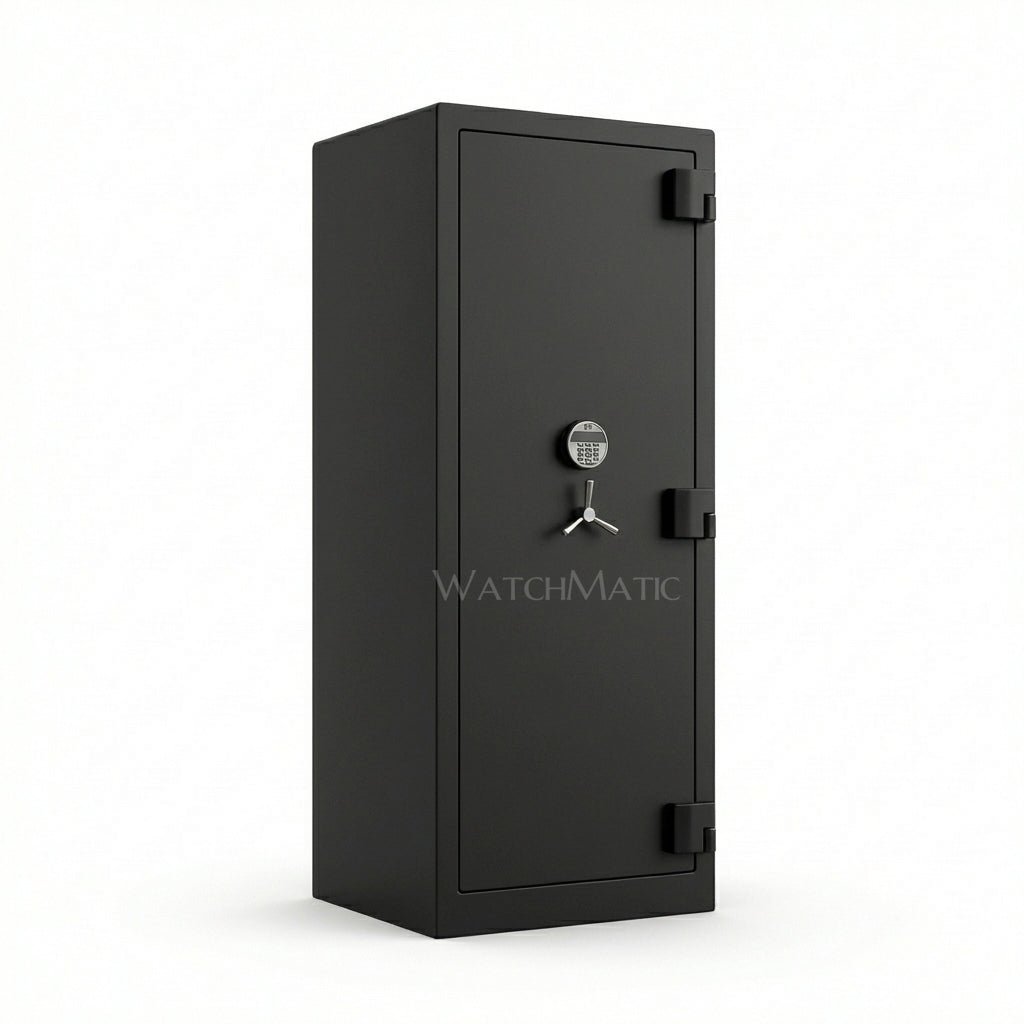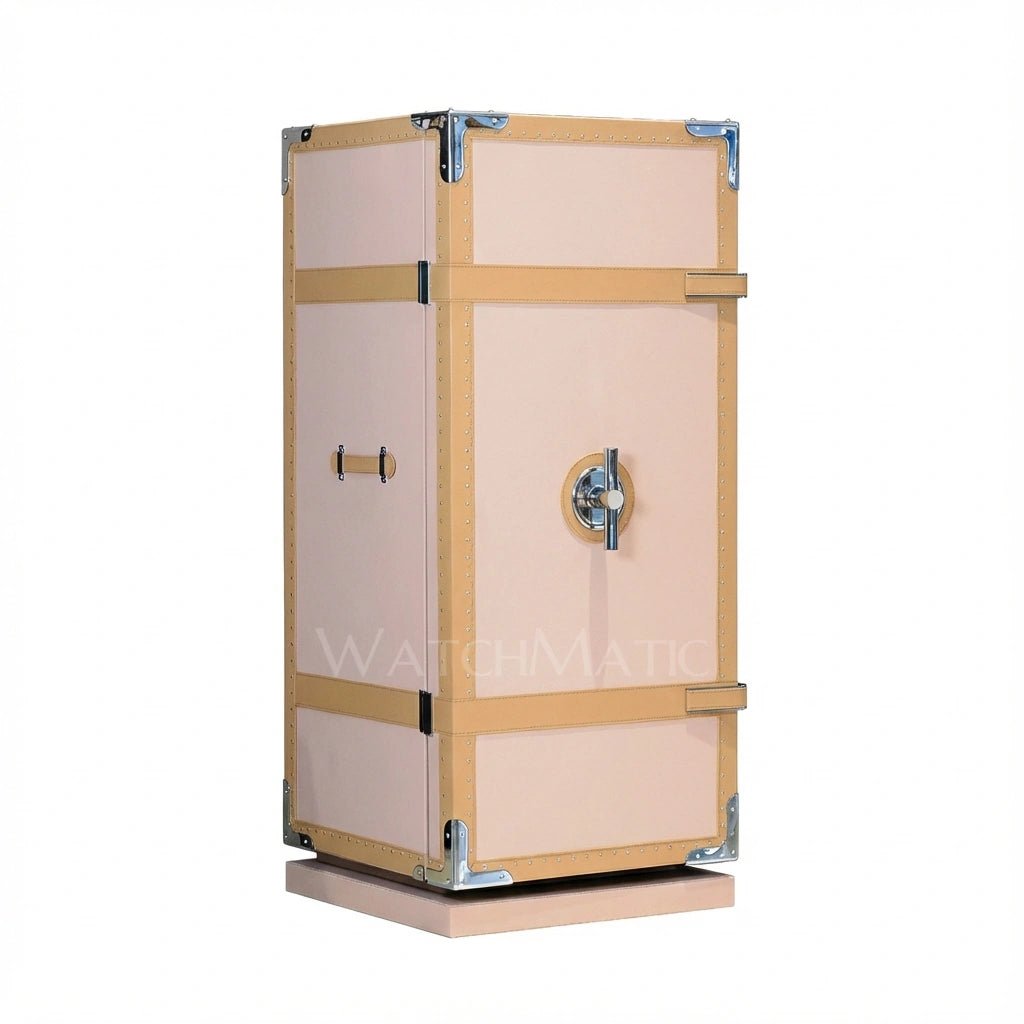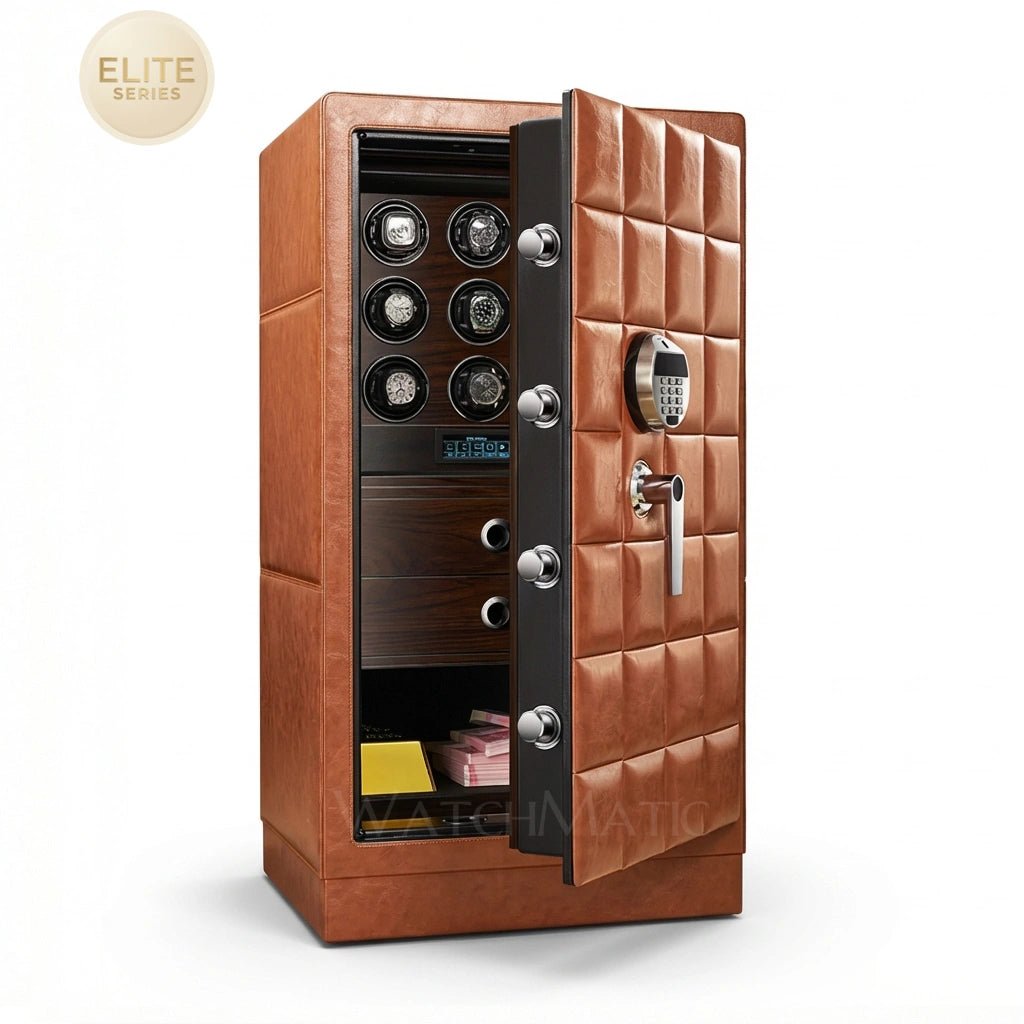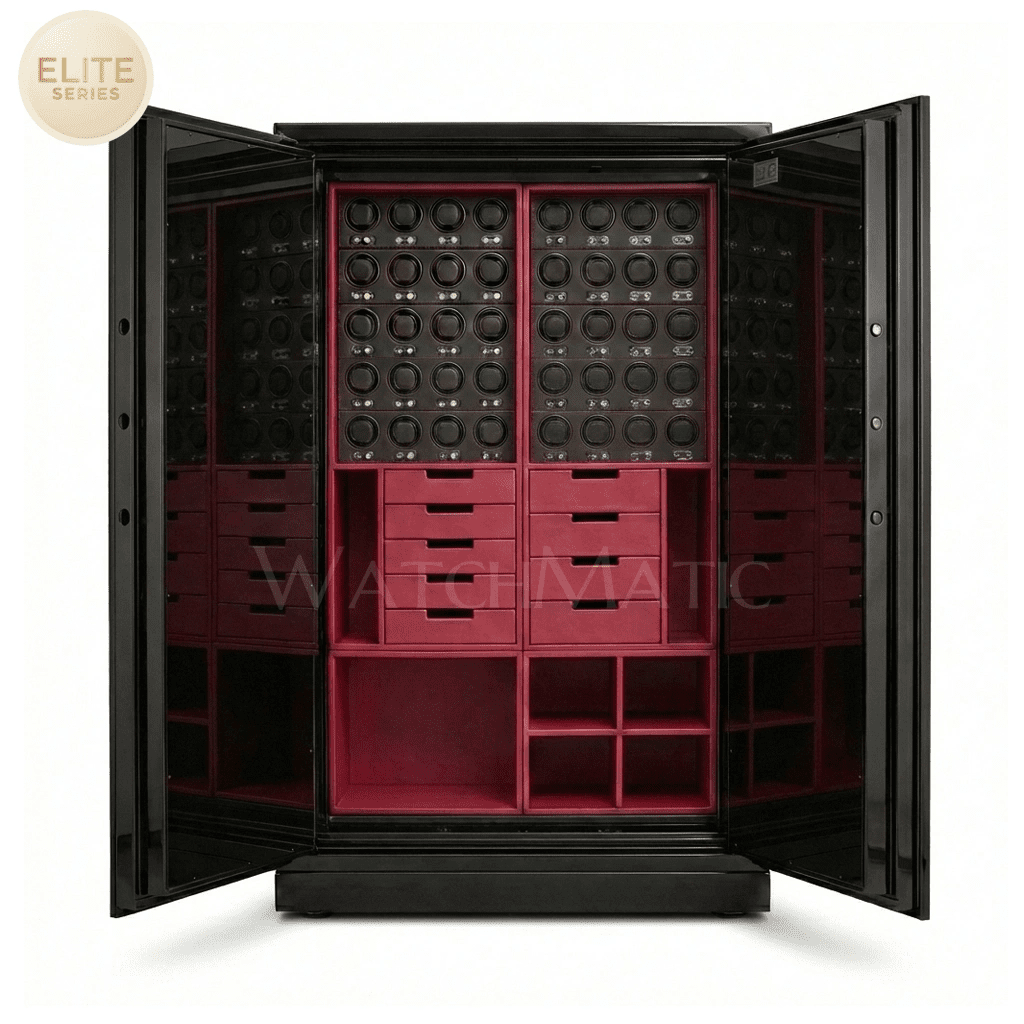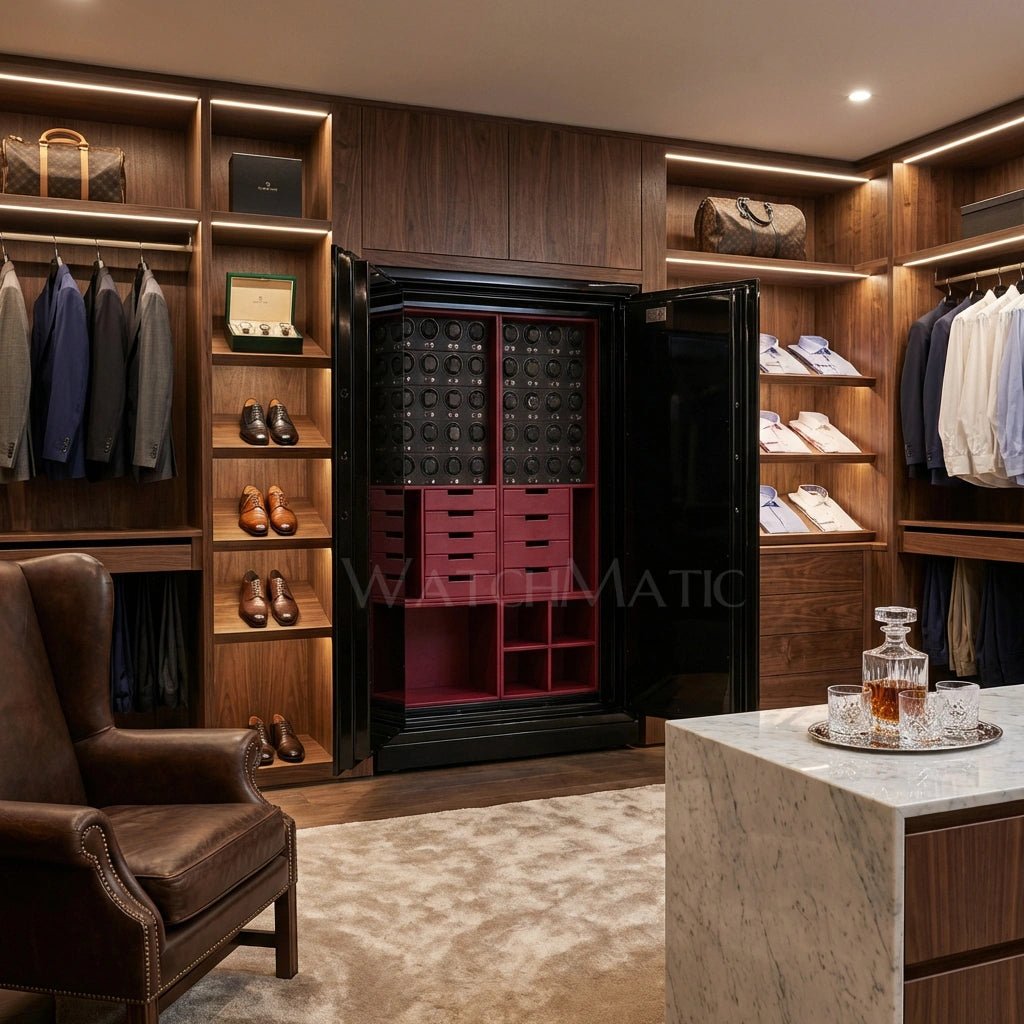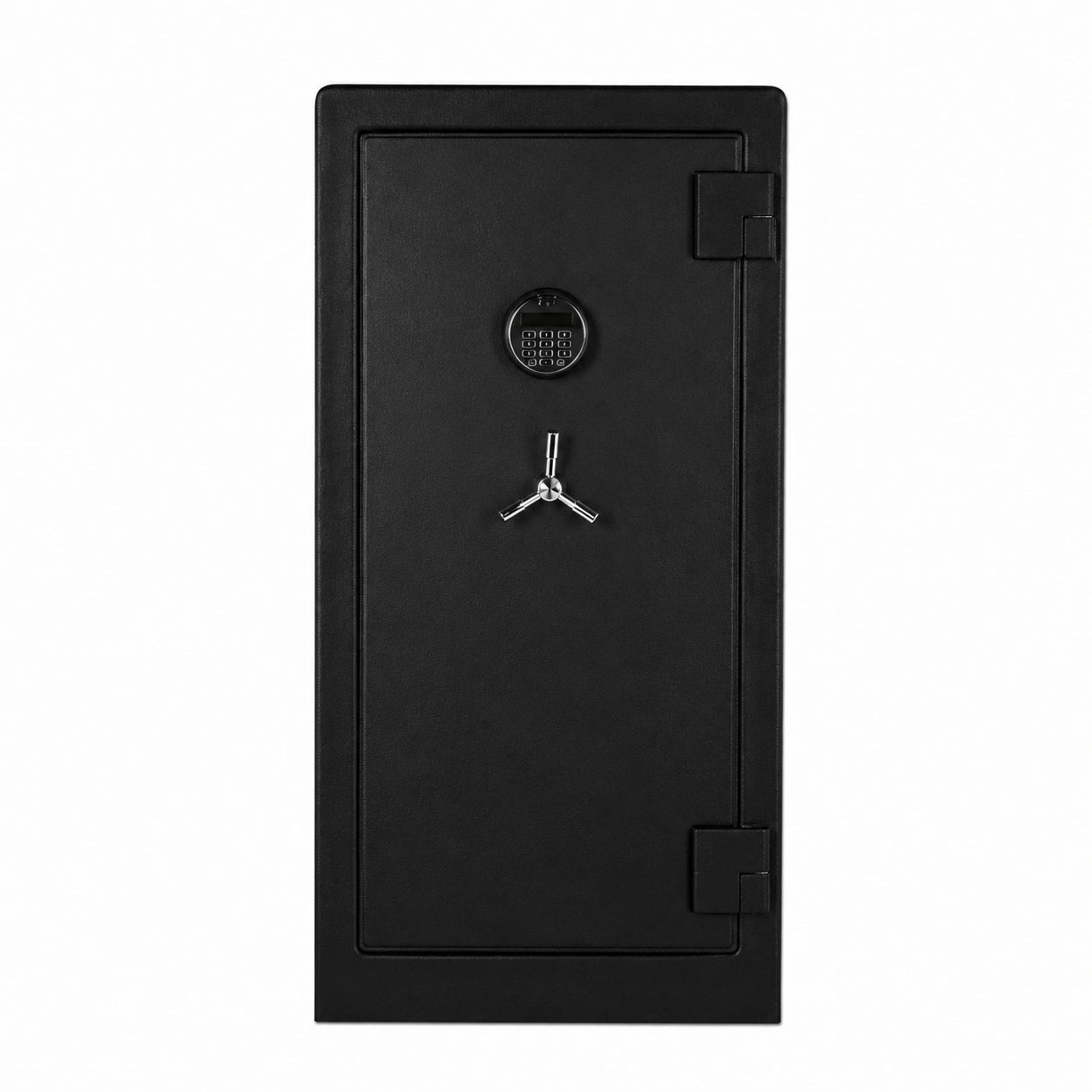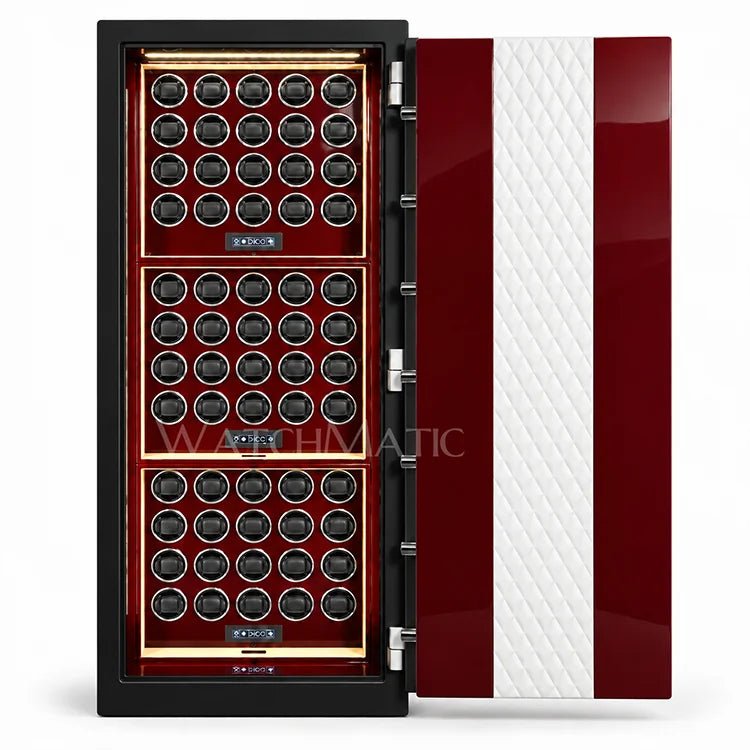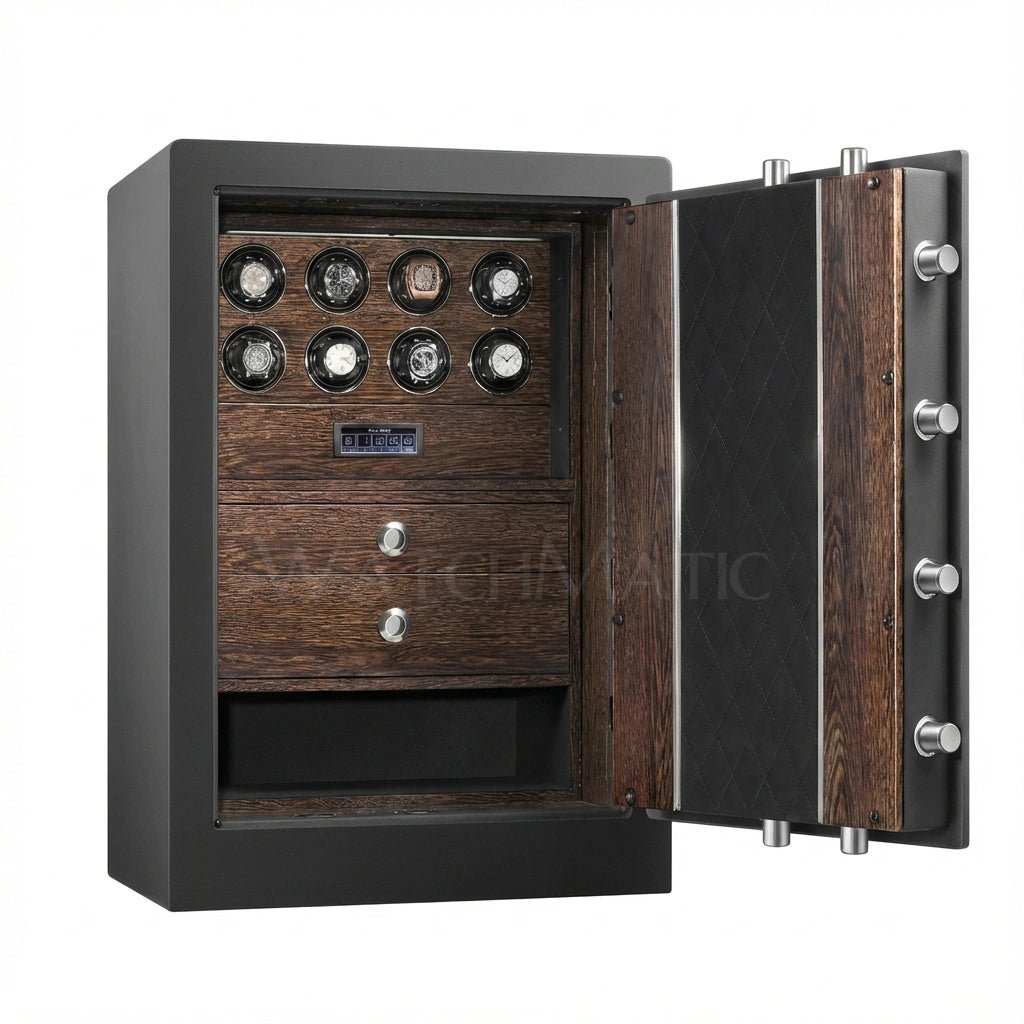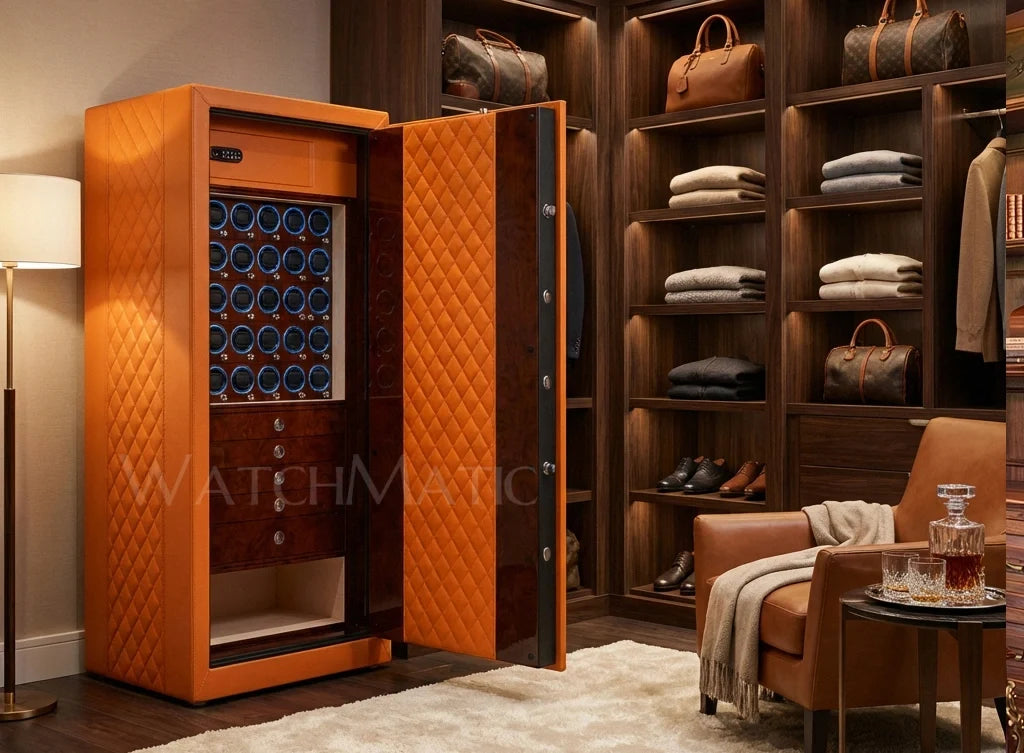
A luxury watch safe can weigh several hundred kilograms, making it a substantial addition to a bedroom, dressing room, or private watch collection space.
For homeowners with hardwood or engineered wood flooring, this raises an important concern: How do you protect wooden floors under a heavy watch safe?
Perhaps you have recently installed beautiful oak flooring in your walk-in closet. You want to position a luxury watch winder safe beside your wardrobe cabinetry, but you are concerned about scratches, dents, permanent indentations, or damage caused during delivery.
You may also be wondering whether a protective mat, rubber pad, or metal base plate is enough to prevent problems.
The answer depends on more than the weight of the safe. Its base construction, the type of wooden floor, the supporting structure beneath the flooring, and the installation method all influence the outcome.
In some situations, protecting the visible floor finish may be relatively straightforward. In others, the proposed location requires a structural assessment or a different installation design.
This guide explains how to protect hardwood and engineered wood floors when installing a heavy watch safe, which protective materials may be appropriate, how to prevent damage during delivery, and why floor loading and anchoring must be considered separately from cosmetic protection.
Quick Answer: What Should You Put Under a Heavy Watch Safe?
The safest approach is to confirm the floor's structural suitability, inspect the safe's contact points, and select a manufacturer-approved support or protective arrangement before installation.
Depending on the flooring system and safe construction, this may involve a suitable non-marking contact layer, a professionally designed load-spreading base, or installing the safe directly on an appropriate structural substrate rather than on the finished wooden floor.
There is no single pad or mat that is suitable for every heavy safe.
Before placing a substantial watch safe on wooden flooring, check:
- The safe's total installed weight, including relevant accessories and contents.
- Whether the safe rests on a continuous base, feet, rails, or adjustable supports.
- Whether the flooring is solid hardwood, glued-down engineered wood, or floating flooring.
- How the subfloor and building structure support the load.
- Whether any proposed protective material is suitable for long-term contact with the floor finish.
- How the safe will be delivered, positioned, leveled, and anchored.
- Whether the installation preserves the flooring and safe manufacturers' requirements.
Important: A protective pad can help address certain surface-contact risks, but it cannot make an inadequate floor structure capable of carrying a heavy safe.
1. Understand the Three Types of Floor Damage a Heavy Safe Can Cause
Before choosing a protective solution, it is important to distinguish between surface damage, flooring-system damage, and structural concerns.
Surface Scratches and Abrasion
Scratches can occur when a safe is dragged, rotated, or repositioned directly on finished flooring.
Metal edges, hard feet, moving equipment, and small particles trapped beneath the safe can damage the floor finish.
This type of damage is especially relevant during delivery and installation, when the safe is being moved into position.
Dents and Permanent Indentations
Heavy objects can create concentrated pressure where their feet or base contact the floor.
Depending on the wood species, flooring construction, contact area, and underlying support, this may produce visible indentations or localized deformation.
A protective material that prevents scratches does not necessarily prevent indentation.
Movement, Separation, or Structural Deflection
Some flooring systems are designed to expand and contract as temperature and humidity change.
Restricting that movement with a heavy, permanently installed object can cause problems in certain floating-floor systems.
Separately, an inadequate subfloor or supporting structure may deflect or experience other problems under a concentrated load.
These issues cannot be corrected simply by placing a decorative mat beneath the safe.
2. Identify What Type of Wooden Floor You Have
The first technical question should be about the flooring system, not the safe itself.
Wood flooring can be installed using different construction methods, and those methods affect how a heavy fixed object should be supported.
Solid Hardwood Flooring
Solid hardwood consists of wood planks installed over a suitable supporting system.
Its susceptibility to indentation depends partly on the wood species, finish, plank construction, and how the load is transferred to the substrate.
A dense hardwood finish may resist some everyday wear, but it should not be assumed capable of supporting a heavy safe without assessment.
Glued-Down Engineered Wood Flooring
Engineered wood typically consists of a decorative wood layer bonded to a multi-layer core.
Some engineered products are installed using an approved adhesive over a suitable substrate.
For these installations, the substrate and complete flooring assembly must be considered. The appearance of the wood surface alone does not establish its load capacity.
Floating Engineered Wood Flooring
Floating floors are not continuously bonded or mechanically fixed to the substrate in the same way as some glued-down or nailed flooring systems.
They are generally designed to accommodate movement through specified expansion spaces.
Some flooring manufacturers expressly restrict placing heavy permanent fixtures on top of floating installations because the weight can interfere with natural expansion and contraction.
For this reason, a floating floor deserves particular attention before a heavy watch safe is installed.
Wood Flooring Over a Structural Timber Subfloor
In some homes, the finished wooden floor sits over timber joists or another elevated structural floor system.
In these cases, the support beneath the visible flooring becomes especially important.
A qualified professional may need to evaluate the safe's location, load path, floor framing, and any necessary reinforcement.
Wood Flooring Over Concrete
Some residences use hardwood or engineered wood installed over a concrete slab.
Although the underlying construction differs from a timber-framed floor, the slab and flooring assembly still need to be suitable for the proposed load.
Do not assume that a ground-floor location or the presence of concrete automatically makes every heavy-safe installation acceptable.
3. Why the Safe's Base Design Matters as Much as Its Weight
Two watch safes with similar weights can create different contact conditions at the floor.
This is because the load may be transferred through different base constructions.
Continuous Flat Bases
Some safes have a relatively broad base that contacts the supporting surface across a larger area.
However, the apparent footprint does not guarantee uniform contact pressure.
Manufacturing tolerances, uneven floors, reinforcing members, and the actual underside construction can affect where the load is concentrated.
Individual Feet or Leveling Supports
Other cabinets may rest on individual feet or designated support points.
In such cases, a substantial portion of the safe's weight can be transferred through relatively small contact areas.
These supports require particular attention when evaluating possible indentation or localized flooring damage.
Metal Rails and Structural Base Frames
Some heavy cabinets use steel rails or a reinforced base frame.
These components may create line-contact or other concentrated load patterns, depending on their design.
Do not assume that a larger external footprint always means better load distribution.
Ask for the Actual Contact Details
Before installation, request the following information where available:
- Safe base dimensions.
- Location and dimensions of support feet or rails.
- Whether the cabinet requires leveling.
- Approved support or protective materials.
- Anchoring locations and installation requirements.
These details help the installer determine how the cabinet should rest on the floor without introducing unnecessary damage or instability.
4. Does a Protective Mat Prevent Damage Under a Heavy Safe?
A protective mat may help with certain surface-contact problems, but its suitability depends on the material, thickness, long-term compression characteristics, and compatibility with the flooring finish.
Felt Pads
Felt protectors are commonly used beneath ordinary furniture to reduce scratching.
However, small adhesive furniture pads should not automatically be considered suitable for a safe weighing several hundred kilograms.
They may compress, move, detach, or fail to distribute concentrated loads adequately.
Rubber Pads
Some rubber products provide grip or cushioning, but not every rubber formulation is suitable for long-term contact with finished hardwood.
Certain materials may affect flooring finishes, leave marks, or trap moisture under unfavorable conditions.
Only use a product whose compatibility has been confirmed by the flooring and safe manufacturers.
Foam and Soft Protective Mats
Soft mats may be useful for temporary protection during certain activities, but they can compress under substantial static loads.
A thick, soft pad should not be assumed to provide reliable structural support for a heavy watch safe.
Plastic Floor Protectors
Rigid plastic or other synthetic protective products may be suitable for some furniture applications.
However, suitability for a heavy safe depends on the material's load rating, the safe's support geometry, and the flooring system.
A generic office-chair mat is not automatically appropriate for a full-height steel cabinet.
The Correct Principle
Choose protective materials for a verified purpose: finish protection, approved load distribution, or both.
Do not assume that one inexpensive mat will resolve every installation concern.
5. When Is a Rigid Load-Spreading Base Appropriate?
For some installations, a properly designed rigid base or load-spreading arrangement may be considered to address localized pressure at contact points.
The objective is to transfer loads through an appropriate supporting system rather than allowing concentrated feet or edges to damage the finished floor.
However, not every wide plate distributes force evenly, and placing a rigid sheet beneath a heavy safe is not automatically sufficient.
The Base Must Be Designed for the Actual Load
The appropriate dimensions, material, stiffness, and contact arrangement depend on the safe and floor construction.
A thin sheet may bend or transfer load unevenly.
A rigid steel plate may also damage a wood finish if its underside, edges, and contact conditions are not properly considered.
Load Distribution Is Not Structural Reinforcement
A base can sometimes change how a load reaches the underlying surface.
It cannot increase the fundamental load-bearing capacity of floor joists, a slab, or another inadequate structural element.
If the building structure cannot safely support the safe, structural changes or a different location may be required.
Do Not Use a Base That Compromises Anchoring
An added platform must not interfere with the safe's approved anchoring arrangement.
Any anchor passing through a support system must be designed and installed in accordance with the relevant safe and structural requirements.
For Heavy Safes, Use an Engineered Solution
Where localized loading is a concern, ask an appropriately qualified installer or structural professional to assess the actual arrangement.
Do not select a metal, timber, or composite plate solely by guessing an appropriate thickness.
For a broader discussion of load capacity, see Watch Safe Weight Guide: Can Your Floor Support a 300kg Cabinet?.
6. Can You Put a Heavy Safe on Floating Wood Flooring?
This is one of the most important questions for homeowners with modern engineered wood floors.
Do not assume that a heavy, permanent watch safe can be placed directly on floating flooring.
Floating flooring systems generally need freedom to move as environmental conditions change.
Some manufacturers restrict heavy permanent fixtures because the weight may trap the floor in place, potentially contributing to joint separation, buckling, or other movement-related problems.
Check the Specific Flooring Manufacturer's Instructions
Different flooring products have different installation methods and limitations.
The applicable guidance may depend on the flooring's construction, locking system, underlayment, and installation conditions.
Do not rely on general advice intended for ordinary furniture when dealing with a permanent installation weighing hundreds of kilograms.
Consider Direct Structural Support Where Required
For certain projects, a suitable approach may involve supporting the safe independently of the floating surface, with the flooring appropriately detailed around the installation area.
This must be designed to preserve the floor's necessary movement and the safe's anchoring requirements.
Do not cut the floor, remove flooring material, or modify structural elements without an approved installation plan.
A Large Mat Does Not Solve Floating-Floor Restrictions
Placing a protective pad or wide plate on top of floating flooring may still restrict its movement.
Therefore, a wider contact area does not automatically make a prohibited installation acceptable.
The flooring manufacturer's requirements should be resolved before selecting the safe's final location.
7. Protect the Wooden Floor During Delivery and Moving
Some of the most serious visible floor damage can occur before the safe reaches its final position.
A heavy safe may be transported through hallways, doorways, and dressing rooms using specialized moving equipment.
The weight may be concentrated under wheels, rollers, skates, or other temporary support points as the unit moves.
Survey the Delivery Route
Before the delivery date, inspect the entire route from the entrance to the installation position.
Identify:
- Finished hardwood or engineered wood surfaces.
- Door thresholds and changes in floor level.
- Narrow turns or restricted access.
- Areas where the safe must be turned or repositioned.
- Existing scratches or flooring defects.
- Loose or damaged floorboards.
Use Suitable Temporary Floor Protection
Professional moving contractors may use purpose-selected temporary floor protection and rigid moving paths appropriate to the equipment and flooring system.
The protection should be suitable for the expected wheel or support loads and compatible with the wood finish.
Its design should account for both concentrated moving loads and the risk of scratches from grit or debris.
Clean the Surface Before Covering It
Small particles trapped between protective sheets and finished wood can cause abrasion when equipment passes over them.
The flooring should be clean and dry before temporary protection is installed.
Avoid Unapproved Adhesives
Do not apply ordinary packing tape directly to finished hardwood.
Some adhesives can leave residue or damage the finish when removed.
Follow the flooring manufacturer's recommendations for temporary coverings and attachment methods.
Do Not Drag or Pivot the Safe on Bare Wood
A heavy steel cabinet should not be dragged, rotated, or pushed across finished wooden flooring without an approved handling method.
Even a short movement can create scratches or indentations.
For substantial installations, use an experienced safe-moving team rather than attempting to reposition the cabinet manually.
8. Why Temporary Moving Loads Can Be Different From the Final Installation Load
During delivery, the safe is not necessarily supported in the same manner as it will be after installation.
For example, a cabinet that ultimately rests on a broad base may temporarily be supported by the wheels of moving equipment or smaller lifting points.
Turning the safe around a corner or crossing a threshold can also change the way loads are transferred.
The Final Location Is Only Part of the Assessment
A floor may require protection along the entire delivery path, not just beneath the final position.
For upper-floor installations, the moving contractor should also consider the suitability of the access route and handling method.
Do Not Assume Moving Equipment Makes the Load Harmless
Specialized equipment can improve handling control, but the equipment still transfers weight to the building surfaces.
The appropriate equipment and protective path should be selected for the actual conditions.
Prepare the Final Position in Advance
Confirm the support, flooring protection, leveling, and anchoring plan before the cabinet is moved into its final location.
This reduces the need to reposition the safe repeatedly after delivery.
9. How Do You Protect Hardwood Floors When Anchoring a Watch Safe?
Anchoring may be an important part of the safe's security installation.
However, fixing a safe to the building structure must be planned carefully when decorative wooden flooring is present.
Anchoring Should Follow the Safe Manufacturer's Requirements
Some safes are designed to be fixed using specified anchoring points.
The required anchor type and installation method depend on the safe's construction and the substrate.
Do not assume that screws installed only into a finish layer or ordinary timber flooring provide adequate security.
The Anchor Must Engage an Appropriate Supporting Structure
Depending on the building and approved design, suitable anchoring may involve a structural substrate beneath the decorative flooring.
The actual design should be confirmed by the safe installer and relevant qualified professional.
Protect the Floor Around the Installation
Where the approved installation requires work near finished flooring, protect surrounding surfaces from debris and tool contact.
Any necessary openings should be coordinated with the flooring requirements and finished appropriately.
Floating Floors Require Particular Care
Fixing a floating floor in place through an inappropriate anchor arrangement can interfere with the movement that the flooring system requires.
Resolve these conditions with the relevant manufacturers and installers before proceeding.
A Heavy Safe Is Not Automatically Secure Without Anchoring
The fact that a safe weighs several hundred kilograms does not establish that it meets its intended security performance without proper installation.
Where anchoring is required by the manufacturer, applicable security specification, or insurer, follow the approved instructions.
Read What to Check Before Installing a Heavy-Duty Watch Safe at Home for a broader installation overview.
10. Should You Add Rubber, Carpet, or Felt Under the Entire Safe?
It may seem logical to place a thick protective material beneath the whole cabinet.
However, an unsuitable layer can introduce new problems rather than solve existing ones.
Compression and Instability
Some soft materials compress unevenly under heavy loads.
If the safe is not supported as designed, its stability or alignment may be affected.
Any material installed beneath the safe should be compatible with its approved base and leveling arrangement.
Moisture Trapping
Some non-breathable materials may retain moisture against wood flooring under certain conditions.
Over time, persistent moisture can contribute to finish damage or other flooring problems.
Floor Finish Compatibility
Certain synthetic materials may interact with floor finishes and cause marks or discoloration.
Compatibility should be established before long-term contact.
Anchoring Interference
A thick underlay can change the relationship between the cabinet, floor, and anchoring components.
Do not add materials that change the safe's approved installation geometry without authorization.
For a heavy watch safe, a properly designed support arrangement is more important than choosing the thickest available protective mat.
11. Example: Protecting a Wooden Floor Under a 190 kg Watch Safe
Consider a collector planning to install a compact luxury watch safe on the wooden floor of a residential dressing room.
The WatchMatic Titan Vault 8, for example, has a published standard weight of approximately 190 kg (419 lb) and external dimensions of 85 × 60 × 45 cm.
Although this is more compact than a full-height cabinet, it still represents a substantial concentrated load.
Step 1: Identify the Flooring System
Determine whether the floor consists of solid hardwood, glued-down engineered wood, or floating flooring.
Step 2: Confirm Structural Suitability
Review the supporting construction and obtain a qualified assessment where required.
Step 3: Inspect the Safe Base
Confirm the actual support points and any approved protective or leveling components.
Step 4: Plan the Delivery Route
Protect the wooden surfaces that the moving equipment will cross, not only the final installation area.
Step 5: Install and Inspect
Once the safe is positioned and secured according to the approved plan, inspect the visible floor around its base and confirm that the cabinet operates correctly.
The relatively compact size of this example does not remove the need for proper installation planning.
12. Example: Installing a 420 kg Watch Winder Safe on Hardwood Flooring
Now consider a full-height watch winder safe installed inside a luxury walk-in closet.
The WatchMatic Titan Vault 40 has published standard dimensions of 170 × 70 × 60 cm and weighs approximately 420 kg (926 lb).
At this scale, floor protection should be considered as part of a coordinated installation plan rather than a last-minute purchase of furniture pads.
Confirm the Structural Support
The safe's weight, actual base contact points, position, and underlying floor system should be assessed.
If the floor is elevated, timber-framed, or otherwise uncertain, obtain appropriate professional evaluation.
Review the Decorative Flooring
Determine whether the wood flooring can remain beneath the safe under the applicable manufacturer's instructions.
For some floating-floor systems, supporting the safe independently of the finished planks may be necessary.
Plan a Suitable Base and Anchoring System
Any additional support structure should be designed around the safe's base and the approved anchoring method.
Do not assume that an ordinary rubber mat or a thin metal sheet is sufficient.
Protect the Delivery Route
A full-height cabinet of this weight generally requires specialized movement and handling.
Coordinate the delivery contractor's equipment and temporary floor-protection method before arrival.
Allow for Door Clearance
The location should also provide sufficient space to open the heavy safe door, access winding positions, and extend interior drawers without obstruction.
The final installation should satisfy both the floor-protection requirements and the safe's operational needs.
The example dimensions and weights relate to published standard configurations. Confirm the approved specifications for the actual ordered safe, particularly where customization is involved.
13. Can You Put a Watch Safe on Wooden Floors Upstairs?
Potentially, but upper-floor installation requires special attention to the supporting structure and delivery route.
The visible wood finish is not the principal factor determining whether a floor can support a heavy cabinet.
The load-bearing system beneath it matters more.
Evaluate the Floor Structure
An upper floor may use timber framing, a concrete slab, or another construction system.
The actual framing arrangement, support conditions, and proposed load location should be evaluated where necessary.
Do Not Rely on Generic Residential Load Figures
General building design figures cannot establish that a particular point load is acceptable at a particular location.
The safe's base geometry, structural support, and other relevant loads must also be considered.
Consider the Full Delivery Route
Staircases, landings, elevators, and thresholds may require separate planning.
The moving process must be suitable for both the weight of the safe and the building surfaces along the route.
Consult Qualified Professionals Where Appropriate
For substantial safe installations, especially in older buildings or locations with uncertain structural capacity, obtain a professional assessment before placing the order.
14. What If the Wooden Floor Is Already Installed?
Many collectors decide to purchase a watch safe after completing a home renovation.
In this situation, protecting an existing premium floor finish becomes especially important.
Do Not Assume the Flooring Needs to Be Removed
Some installations may be possible without altering the finished floor, depending on the flooring system, safe design, and supporting structure.
Other installations may require a more specialized support arrangement or localized changes.
Review the Manufacturer's Installation Conditions
Before ordering, check whether the flooring manufacturer allows the proposed permanent load and anchoring method.
This is particularly important for floating installations.
Coordinate the Safe and Flooring Contractors
If protective or structural modifications are needed, coordinate them before delivery.
The safest approach is to establish one approved installation plan rather than making separate changes that may conflict with one another.
Document the Existing Floor Condition
Photograph the installation area and delivery route before work begins.
Clear records can help distinguish existing marks from any damage discovered after delivery.
15. Can You Remove a Heavy Watch Safe Without Damaging Wooden Floors?
A carefully planned installation can reduce the risk of damage, but it cannot guarantee that a wooden floor will look unchanged after years of supporting a heavy cabinet.
Long-term contact may produce indentations, finish differences, or other changes depending on the flooring and installation conditions.
Permanent Indentations May Remain
If the flooring has been compressed or dented, removing the safe will not necessarily restore the original surface.
Wood Color May Change Unevenly
Areas exposed to daylight may age differently from flooring concealed beneath furniture or a safe.
After relocation, the covered area may therefore have a different appearance from the surrounding floor.
Anchoring May Leave Openings
Where the approved installation uses anchors passing through flooring, later removal may require appropriate repair or finishing work.
Moving Still Requires Professional Protection
Do not drag the cabinet out of its position.
Use a suitable handling plan and temporary protection for the removal route, just as you would during the original installation.
Plan Ahead if Relocation Is Likely
If you expect to move home or redesign the room, discuss future removal requirements with the safe installer before completing the original installation.
16. How to Monitor Wooden Flooring After Safe Installation
Once the safe is installed, periodic visual checks can help identify changes in the surrounding flooring.
Do not attempt to lift, tilt, or reposition a heavy cabinet merely to inspect its underside.
Look for Visible Changes Near the Base
During normal cleaning, observe the exposed flooring around the safe for:
- New gaps between adjacent floorboards.
- Visible lifting or buckling.
- Changes in level near the safe.
- Unexpected moisture marks.
- Discoloration adjacent to protective materials.
- Movement or instability in the cabinet.
These signs can have different causes and do not automatically indicate that the safe is responsible.
Monitor Room Conditions
Wood flooring can respond to changes in temperature and humidity.
Maintain indoor conditions according to the flooring manufacturer's recommendations.
Investigate Suspected Movement Promptly
If flooring changes appear near a heavy safe, consult an appropriate flooring or structural professional.
Do not attempt improvised adjustments by inserting additional pads, wedges, or other materials beneath a fully loaded cabinet.
17. Common Mistakes When Protecting Floors Under a Heavy Safe
Using Ordinary Furniture Pads Without Checking Their Suitability
Products intended for chairs or lightweight cabinets are not automatically suitable for safes weighing hundreds of kilograms.
Assuming a Thick Mat Distributes the Load
A soft material may compress and provide little meaningful load distribution.
Placing a Heavy Safe Directly on a Floating Floor Without Approval
Some floating floors cannot accommodate heavy permanent fixtures without a specifically designed installation arrangement.
Ignoring the Underlying Structure
Protecting the wood finish does not establish that the floor system can carry the safe.
Using a Metal Plate Without Considering Its Contact Edges
An unsuitable plate may itself create scratches, localized loading, or installation problems.
Dragging the Safe During Final Positioning
Heavy steel edges or support points can cause substantial damage when moved directly across a finished floor.
Anchoring Only Into Decorative Flooring
Anchoring must satisfy the safe's approved security installation requirements and engage an appropriate supporting structure.
Forgetting About Moisture Compatibility
Some protective materials may interact with finishes or retain moisture during long-term contact.
Making Last-Minute Changes After Delivery
Changing the installation arrangement while a heavy safe is already inside the room can increase handling risk and complicate the work.
Resolve the principal installation questions before the cabinet arrives.
18. Wooden Floor Protection Checklist Before Installing a Watch Safe
Use this checklist when planning a heavy watch safe installation in a bedroom, walk-in closet, or private collection room.
| Installation Item | What to Confirm |
|---|---|
| Safe Weight | Confirmed installed weight, including relevant contents and equipment |
| Base Construction | Actual floor contact points, feet, rails, or continuous supports |
| Wood Flooring Type | Solid hardwood, glued-down engineered wood, or floating flooring |
| Floor Manufacturer Approval | Suitability for the permanent load and intended installation method |
| Structural Support | Floor framing or slab suitability, with professional assessment where required |
| Protective Material | Approved material, load compatibility, and finish compatibility |
| Load-Spreading Base | Professionally designed arrangement, if necessary |
| Anchoring | Manufacturer-approved fixation and suitable structural substrate |
| Delivery Protection | Appropriate moving equipment and temporary floor-protection path |
| Room Environment | Suitable moisture and temperature conditions |
| Future Relocation | Potential removal requirements and floor repairs |
A completed checklist does not replace a structural or installation assessment where one is necessary.
It helps ensure that the important questions are addressed before the safe is transported into the property.
19. When Should You Consult a Professional Installer?
Professional installation becomes particularly important when the safe is heavy, the flooring is sensitive, or the supporting structure is uncertain.
Consider specialist assistance when:
- The safe weighs several hundred kilograms.
- The installation is on an upper floor.
- The flooring is a floating system with restrictions on heavy fixtures.
- The safe requires structural anchoring.
- Its base has concentrated contact points.
- A protective load-spreading structure may be necessary.
- The route includes narrow turns, stairs, or elevators.
- The flooring is particularly expensive or difficult to replace.
- The safe will be integrated into bespoke cabinetry.
The safe supplier, professional moving contractor, flooring specialist, and structural professional may each need to address different parts of the installation.
These responsibilities should be coordinated rather than assumed to fall entirely on one contractor.
Planning a Bespoke Watch Safe Installation
For collectors designing a dressing room or private watch storage area, it may be useful to select the safe before finalizing the flooring and cabinetry.
This allows the design team to consider the safe's weight, footprint, anchoring, electrical access, and delivery requirements during the planning stage.
Explore WatchMatic's bespoke luxury watch safe solutions for configurable dimensions, winding positions, and interior storage layouts.
Frequently Asked Questions About Heavy Safes on Wooden Floors
Can a heavy watch safe damage hardwood floors?
Yes. Depending on the safe's weight, base contact points, flooring construction, and installation method, a heavy safe may cause scratches, indentations, or other flooring damage. The supporting structure must also be suitable for the load. Proper delivery planning and an approved support arrangement can help reduce avoidable damage.
What should I put under a heavy safe on a wooden floor?
The appropriate material depends on the safe's base and the specific flooring system. Some installations may use approved contact protection or an engineered support base, while others may require the safe to be supported independently of the decorative flooring. Generic rubber mats, felt pads, and metal sheets are not universally suitable.
Will a rubber mat protect hardwood flooring from a safe?
Not necessarily. A rubber mat may reduce some contact-related risks, but its suitability depends on its load capacity, compression characteristics, and compatibility with the floor finish. Some materials can leave marks or trap moisture. Confirm the arrangement with the flooring and safe manufacturers before long-term installation.
Can I put a 400 kg safe on a hardwood floor?
Potentially, but the safe's weight alone cannot determine whether the installation is acceptable. The floor structure, wood flooring system, contact points, anchoring, and installation method must be evaluated. A safe weighing approximately 400 kg warrants careful planning and professional assessment where structural capacity is uncertain.
Can a heavy watch safe sit on engineered wood flooring?
It depends on how the engineered wood is installed and the manufacturer's requirements. Glued-down and floating installations can have different restrictions. Some floating flooring systems should not be loaded by heavy permanent fixtures without a specially designed arrangement that preserves the necessary floor movement.
Is it safe to place a heavy watch safe on floating wood flooring?
Do not assume it is safe. Certain floating-floor manufacturers prohibit or restrict heavy permanent fixtures because they can interfere with flooring movement. Check the exact product's installation instructions and obtain an approved design before positioning or anchoring a substantial watch safe.
Will a steel plate spread the weight of a heavy safe?
A properly engineered plate or support structure may change how loads are transferred, but a metal sheet does not automatically distribute weight evenly or increase the building's structural capacity. The material, dimensions, stiffness, contact conditions, and anchoring arrangement must be evaluated for the specific installation.
Should I anchor a watch safe through hardwood flooring?
Anchoring should follow the safe manufacturer's approved procedure and engage a suitable supporting structure. Decorative flooring alone may not provide an appropriate anchoring substrate. Floating flooring also requires special care to preserve its intended movement. The installation should be coordinated with the flooring requirements.
How do professional movers protect wood floors when delivering a safe?
Specialized movers assess the route and select appropriate handling equipment and temporary floor protection for the safe, flooring, and moving loads. They should avoid dragging or pivoting the safe directly on finished wood and protect areas where concentrated wheel or support loads occur.
Can a heavy safe leave permanent dents in wooden flooring?
Yes. Depending on the wood and contact pressure, permanent indentations can occur. Even after the safe is removed, the floor may not return to its original appearance. Suitable support design is therefore important before installation.
Will a protective pad stop a heavy safe from damaging the floor structure?
No. A protective pad cannot make an inadequate floor structure capable of supporting the safe. Cosmetic finish protection, flooring-system compatibility, and structural load capacity are separate questions that must be addressed individually.
Can I put a heavy watch safe on the second floor?
Possibly, but the proposed location and delivery route need to be evaluated for the actual building. Floor framing, concentrated load, installation method, and other structural conditions matter. A qualified professional should assess substantial loads when the floor's capacity is uncertain.
How do I avoid scratching hardwood when moving a watch safe?
Do not drag the safe directly across finished flooring. Have an experienced safe-moving contractor select appropriate lifting or moving equipment and a suitable temporary protective path. The floor should be clean before coverings are installed, and any attachment methods should be compatible with its finish.
Will removing the safe later leave marks on the wood floor?
It may. Possible changes include indentations, color differences from uneven light exposure, or openings from approved anchoring. The extent depends on the floor, duration of installation, support arrangement, and environmental conditions. These possibilities should be considered when planning a permanent installation.
Final Thoughts: Protect the Flooring and the Structure Beneath It
A luxury watch safe can be a valuable addition to a carefully designed home, but heavy cabinets require more installation planning than ordinary furniture.
For homeowners with hardwood or engineered wood flooring, the priority is not simply finding a mat to place beneath the safe.
It is understanding how the cabinet transfers its weight, how the floor is constructed, and whether the installation can be completed without damaging the finish or compromising the supporting structure.
A suitable installation begins with the safe's actual dimensions, weight, and base construction. It also considers the flooring manufacturer's requirements, delivery-route protection, approved anchoring, and long-term environmental conditions.
Some projects may need only a straightforward approved support arrangement. Others, particularly heavy safes on floating or elevated flooring, may require structural or flooring modifications before installation.
The correct solution should be determined before the cabinet arrives, not after damage has occurred.
WatchMatic offers luxury watch safe cabinets and watch winder safes in different configurations, with bespoke options available for collectors planning specialized residential installations.
The best way to protect wooden floors under a heavy watch safe is to plan the complete installation: the safe, its support, the floor finish, and the structure beneath it.