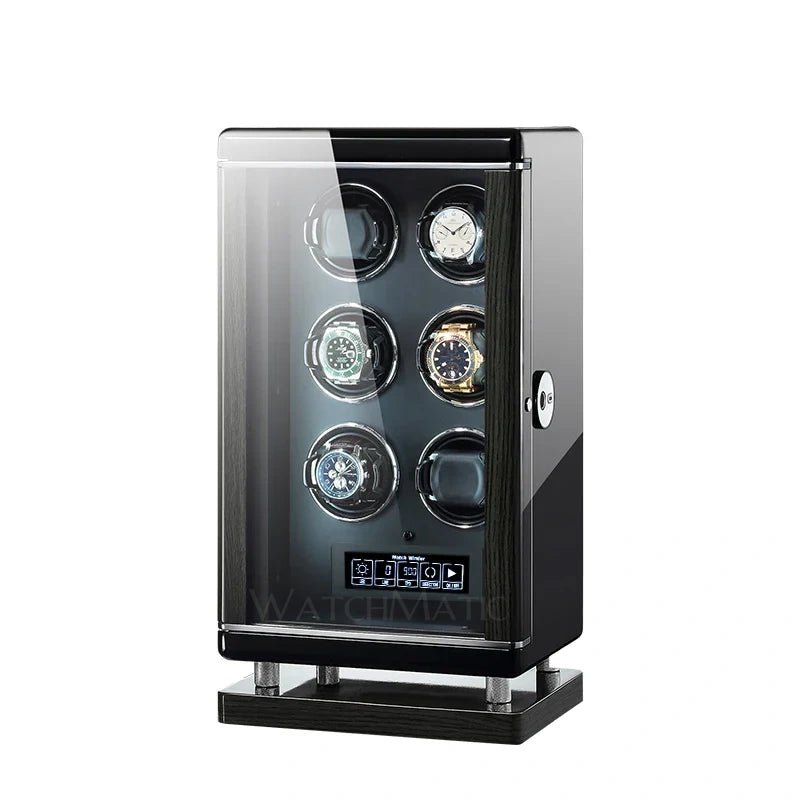
The best watch winder for BALL watches is a programmable model with adjustable Turns Per Day (TPD), clockwise and counterclockwise rotation options, controlled rest cycles, quiet operation, and secure support for relatively substantial sports-watch cases and bracelets.
BALL Watch produces a broad range of automatic mechanical watches across collections such as Engineer, Engineer III, Engineer Hydrocarbon, Roadmaster, and other professional-watch families. Current movements range from conventional automatic calibers such as the RR1103-C and RR1702-C to BALL's manufacture RRM7309-C, which offers an 80-hour power reserve while maintaining a 28,800 vph frequency.
A BALL automatic does not mechanically require a watch winder, but a properly configured unit can keep the watch running, maintain calendar or GMT indications, and reduce repeated resetting when the watch is part of a larger rotation.
Does a BALL Watch Need a Watch Winder?
No.
An automatic BALL watch can be allowed to stop after its stored power is exhausted and then be restarted when required.
BALL's own owner's manual explains that normal movement of the wearer's arm winds its automatic watches and that manual winding is generally needed only after the watch has not been worn for several days or has stopped.
A watch winder is therefore primarily about convenience, not mechanical necessity.
It can help:
- Keep an automatic BALL running between wears
- Maintain the time and date
- Keep GMT or multiple-time-zone indications active
- Reduce repeated resetting
- Organize several automatic watches
- Keep an active rotation ready to wear
For a broader explanation of automatic winding and when a winder makes sense, see the Watch Winder Guide.
Which BALL Watches Can Use a Watch Winder?
Many modern BALL watches are automatic.
Some representative examples include:
| BALL Watch | Example caliber | Movement type | Published power reserve |
|---|---|---|---|
| Roadmaster M Perseverer | RRM7309-C | Manufacture automatic | 80 hours |
| Engineer M Marvelight | RRM7309-C | Manufacture automatic | 80 hours |
| Roadmaster M Archangel II | RRM7309-C | Manufacture automatic | 80 hours |
| Engineer III Marvelight Chronometer | RR1702-C | Automatic | 42 hours |
| Roadmaster Challenger Power Reserve | RR1702-C | Automatic | 42 hours |
| Engineer III Ohio Chronometer | RR1103-C | Automatic | Reference-specific |
| Engineer Hydrocarbon Original | RR1102-CSL | Automatic | Reference-specific |
| Engineer Hydrocarbon AeroGMT II | RR1201-C | Automatic GMT | Reference-specific |
BALL's current catalog confirms the automatic movement specifications above across these models.
The correct process is therefore:
Model → Reference → Caliber → Winding Requirements → Watch Winder Program
rather than selecting one universal setting simply because the watch carries the BALL name.
Understanding BALL Automatic Movements
BALL uses several automatic movement families with meaningfully different specifications.
For watch-winder owners, the distinction between the manufacture RRM7309-C and shorter-reserve calibers such as RR1702-C is particularly useful.
BALL Manufacture Caliber RRM7309-C
The RRM7309-C is BALL's first in-house Chronometer Manufacture Caliber.
BALL specifies:
- Automatic mechanical movement
- COSC chronometer certification
- 28,800 vibrations per hour
- Approximately 80 hours of power reserve
BALL describes the caliber as maintaining its 4 Hz frequency while extending autonomy to 80 hours.
The movement currently appears in watches such as the Roadmaster M Perseverer and Engineer M Marvelight.
An 80-hour reserve changes the practical value of a winder.
If the watch is fully wound on Friday evening, it may still be running several days later without any additional winding.
For a collector wearing the same watch frequently, a winder may therefore provide limited additional convenience.
For someone rotating ten mechanical watches, the situation is different.
BALL RR1702-C
The RR1702-C appears in current watches including the Engineer III Marvelight Chronometer and several Roadmaster Power Reserve models.
BALL specifies approximately 42 hours of power reserve, together with COSC chronometer certification on these references.
Compared with an 80-hour RRM7309-C watch, a 42-hour RR1702-C may stop much sooner during the same ownership pattern.
That makes the practical usefulness of a watch winder greater for an owner who regularly rotates the watch every few days.
BALL RR1103-C
The RR1103-C is another frequently encountered BALL automatic caliber.
Current Engineer III models such as the Ohio Chronometer, Pioneer, and Marvelight use this automatic COSC-certified movement.
Because BALL uses several RR-series calibers across its catalog, owners should not assume that every Engineer III contains exactly the same movement.
Always check the reference.
BALL RR1102-CSL
The Engineer Hydrocarbon Original uses the automatic RR1102-CSL.
The current watch combines the movement with:
- COSC certification
- Day and date
- SpringLOCK
- SpringSEAL
- Amortiser
- 80,000 A/m anti-magnetism
- 7,500Gs shock resistance
For a watch-winder user, the important point is not simply that the watch is highly resistant to external forces.
It still requires movement-appropriate winding rather than maximum rotation.
BALL RR1201-C
The Engineer Hydrocarbon AeroGMT II uses automatic caliber RR1201-C.
Its functions include:
- Hours and minutes
- Sweep seconds
- Date
- Three-time-zone indication
BALL also specifies COSC chronometer certification for current AeroGMT II references.
The multi-time-zone functionality gives this type of watch a stronger convenience case for remaining running than a basic time-only watch.
BALL Watch Winder TPD Settings
TPD means Turns Per Day—the approximate number of rotations delivered by a watch winder during a programmed daily cycle.
There should not be one generic rule such as:
“BALL Watch = X TPD.”
BALL currently uses multiple automatic calibers with different designs and power reserves.
Instead:
- Identify the exact BALL reference.
- Identify the caliber.
- Confirm its winding characteristics.
- Determine an appropriate TPD.
- Select the correct rotation direction.
- Monitor whether the watch maintains adequate power.
For a detailed explanation of Turns Per Day and how watch-winder programs work, see the Watch TPD Guide.
What Rotation Direction Should You Use for a BALL Watch?
Programmable watch winders generally provide:
- CW — Clockwise
- CCW — Counterclockwise
- Bi — Bidirectional
The correct direction should be matched to the movement inside the watch.
Do not assume that every RR or RRM caliber should use one identical winding direction simply because all are BALL movements.
This is why a programmable winder offering all three direction options is preferable to a basic fixed-direction device.
It also provides more flexibility if your BALL shares the same winder with watches from other manufacturers.
Power Reserve Matters More Than the Brand Name
BALL provides an especially useful example of why power reserve matters when evaluating whether a watch winder is worthwhile.
Compare two current watches:
Roadmaster M Perseverer
RRM7309-C
Approximately 80 hours
Engineer III Marvelight Chronometer
RR1702-C
Approximately 42 hours
If both watches are removed from the wrist at the same time, the shorter-reserve watch may stop significantly earlier.
This means two BALL owners can have very different experiences despite both owning automatic watches from the same manufacturer.
The useful question is therefore not simply:
“Does BALL need a watch winder?”
It is:
“How long is the power reserve of my particular BALL, and how often do I wear it?”
Power Reserve Indicator: A Useful BALL Feature
Some BALL watches include a dedicated power-reserve indicator.
The BALL owner's manual explains that these watches display the remaining stored energy and that the indication decreases as the reserve runs down.
Examples include current RR1702-C Roadmaster models with approximately 42 hours of reserve.
This can be particularly useful for a watch-winder owner because the watch itself provides a visual indication of its stored energy.
If a watch consistently loses reserve while spending sufficient time on a winder, the owner can investigate whether:
- The TPD is too low
- The selected direction is unsuitable
- The watch is not positioned correctly
- The movement may require inspection
However, the power-reserve indicator should be treated as information—not as a reason to continually increase TPD.
What to Look for in a BALL Watch Winder
BALL watches are frequently designed as robust professional, sports, diving, and engineering-focused watches.
The winder should therefore handle both the movement and the physical watch appropriately.
Adjustable TPD
Choose a winder offering several TPD programs rather than one fixed rotation count.
Multiple Rotation Directions
Look for:
CW + CCW + Bidirectional
This provides flexibility across different BALL calibers and future additions to the collection.
Controlled Rest Cycles
An automatic BALL does not need continuous uninterrupted rotation.
A quality winder should divide its daily winding into periods of activity and rest.
Independent Controls
This is particularly important for multi-watch winders.
An RRM7309-C manufacture watch and an RR1702-C watch should not have to follow one shared winding program.
Quiet Motors
A winder can operate for hours each day.
Quiet motors are therefore valuable in:
- Bedrooms
- Private offices
- Dressing rooms
- Walk-in wardrobes
- Living spaces
Secure Support for Heavy Sports Watches
Several BALL models are relatively substantial.
For example, the Engineer Hydrocarbon Original is approximately 43 mm and around 200 g, while AeroGMT II configurations can also approach approximately 200 g.
The cushion and motor system should therefore hold the watch securely without movement or sagging during rotation.
Anti-Magnetization Design
BALL places significant emphasis on magnetic resistance in many of its watches.
Current Engineer III models can provide resistance up to 80,000 A/m (1,000 Gauss) through designs that include Mu-metal shielding.
A quality winder should still minimize unnecessary magnetic exposure rather than assuming the watch's own magnetic resistance makes motor design irrelevant.
Best Watch Winder for BALL Engineer III
The Engineer III family contains multiple automatic calibers.
For example, the current Engineer III Ohio Chronometer uses automatic RR1103-C, while the Engineer III Marvelight Chronometer Power Reserve uses RR1702-C with approximately 42 hours of reserve.
This makes Engineer III a good example of why collection name alone is insufficient.
For an Engineer III, prioritize:
- Adjustable TPD
- Multiple rotation directions
- Secure bracelet support
- Quiet operation
- Controlled rest cycles
- Independent programming in multi-watch systems
The exact movement should still determine the program.
Best Watch Winder for BALL Engineer Hydrocarbon
The Engineer Hydrocarbon collection is built around extreme resistance.
Current models can incorporate technologies including:
- SpringLOCK
- SpringSEAL
- Amortiser
- Mu-metal magnetic shielding
- High shock resistance
- High water resistance
The Engineer Hydrocarbon EOD, for example, uses automatic RR1101-CSL, offers 80,000 A/m anti-magnetism, and is engineered to withstand extreme shock.
These rugged specifications do not mean the watch should be subjected to unnecessarily aggressive winding.
For a heavy Engineer Hydrocarbon, a good winder should provide:
- Stable watch positioning
- Strong but quiet motor performance
- Compressible cushion
- Adjustable TPD
- Selectable direction
Physical stability is particularly important because these watches can be considerably larger and heavier than dress watches.
Best Watch Winder for BALL Roadmaster
The Roadmaster family includes several current automatic configurations.
One of the most interesting is the Roadmaster M Perseverer, which uses BALL's manufacture RRM7309-C with an 80-hour reserve.
Other Roadmaster models use the RR1702-C with approximately 42 hours and a power-reserve display.
This creates a substantial difference within a single collection.
For Roadmaster owners, always identify the exact movement before deciding how aggressively the watch needs to be wound.
Best Watch Winder for BALL Engineer M
The Engineer M designation is particularly important because it has been used for watches featuring BALL's manufacture movement.
The Engineer M Marvelight Patriot, for example, uses automatic RRM7309-C, providing approximately 80 hours of power reserve at 28,800 vph.
For an 80-hour BALL manufacture watch, a winder is often most useful when the watch belongs to a large rotation rather than when it is worn every few days.
Best Watch Winder for BALL AeroGMT
The Engineer Hydrocarbon AeroGMT II combines automatic winding with three-time-zone functionality.
Current versions use automatic RR1201-C and are available with substantial professional-watch cases and bracelets.
A GMT watch can provide more convenience when kept running because it preserves several time indications between wears.
For an AeroGMT, prioritize:
- Stable support for its larger case
- Adjustable winding programs
- Multiple directions
- Quiet motor operation
- Independent control
Best Watch Winder for One BALL Automatic Watch
For one automatic BALL, a compact programmable winder is usually sufficient.
Prioritize:
- Adjustable TPD
- CW/CCW/bidirectional rotation
- Rest cycles
- Quiet operation
- Strong, secure cushion support
- Enough motor torque for substantial sports watches
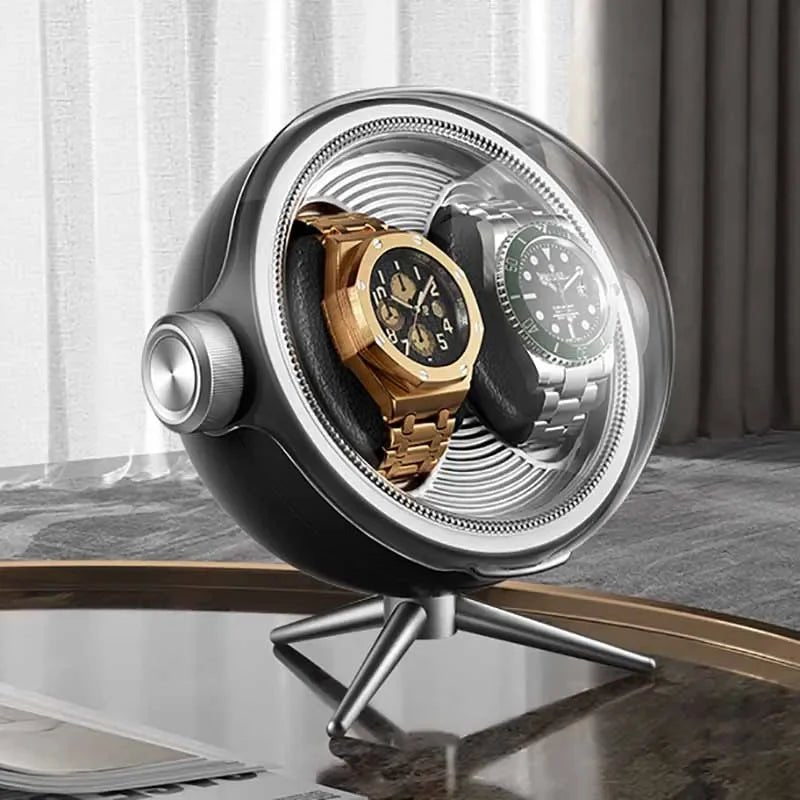
Suitable configurations can be explored in the WatchMatic Watch Winder Collection.
Best Watch Winder for Multiple BALL Watches
A BALL collection might include:
- Engineer III
- Engineer Hydrocarbon
- Engineer M
- Roadmaster
- AeroGMT
- Power Reserve models
That collection could simultaneously contain:
- An 80-hour RRM7309-C
- A 42-hour RR1702-C
- RR1103-C
- RR1102-CSL
- RR1201-C
Independent winding controls therefore become considerably more useful than simply buying a box with many rotating positions.
LuxGuard for BALL Automatic Collections

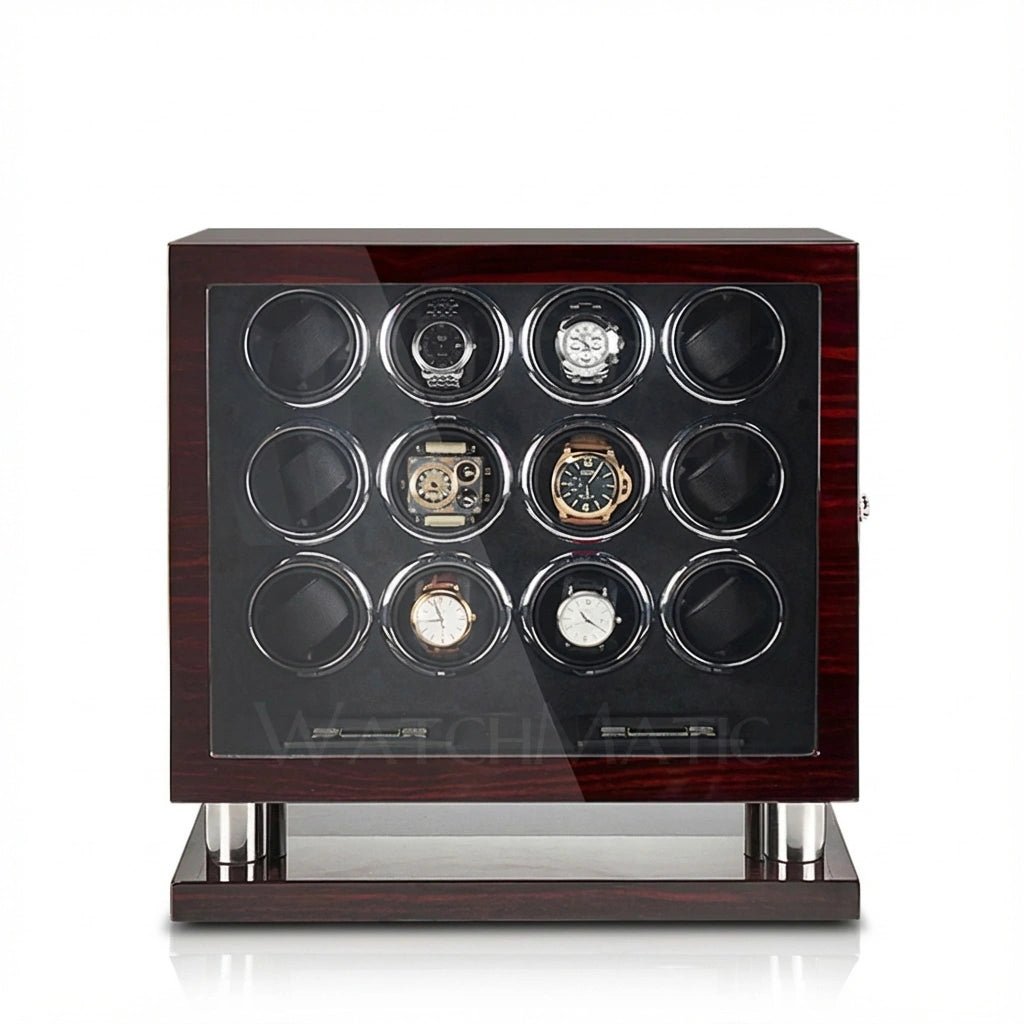
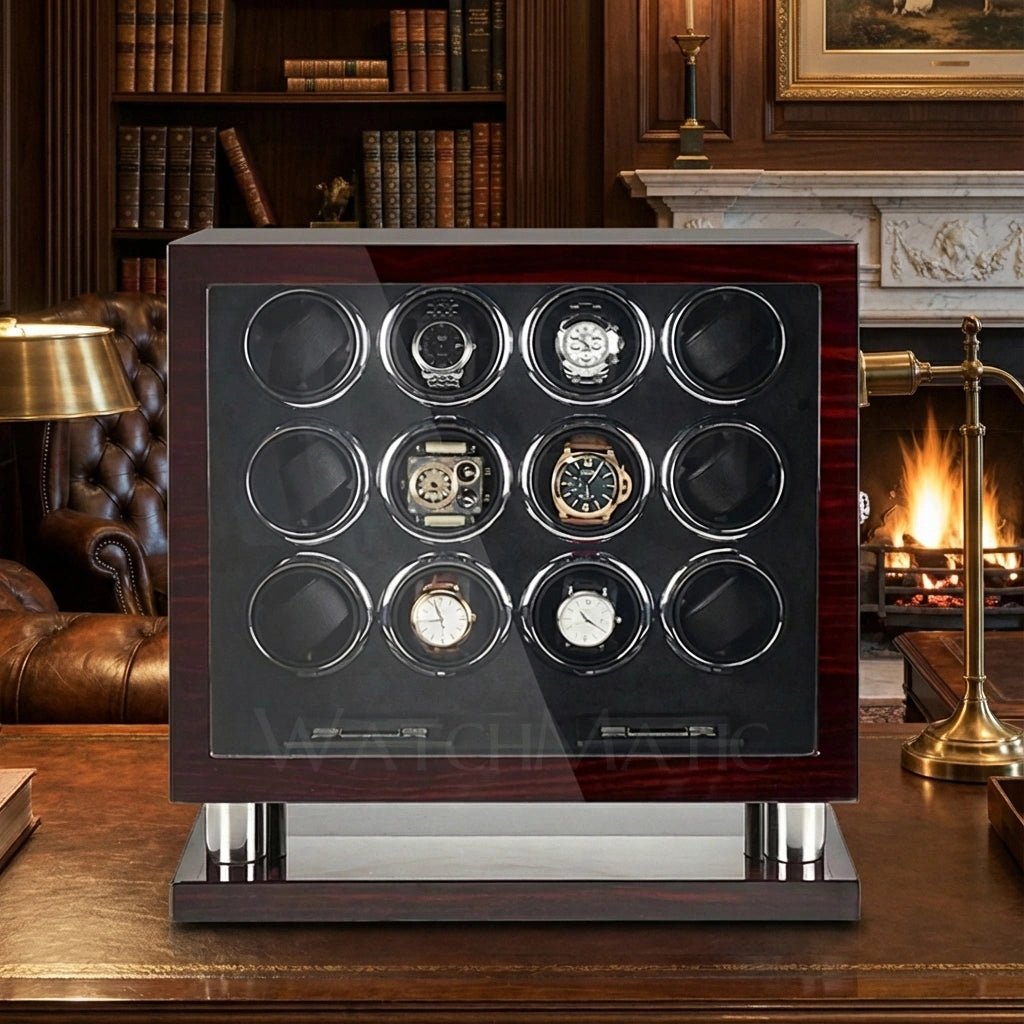
A multi-position LuxGuard Watch Winder is well suited to collectors managing several BALL automatic watches or a broader mechanical sports-watch collection.
Depending on configuration, features include:
- Independent winding controls
- Multiple rotation modes
- Japanese Mabuchi motors
- Quiet operation
- Anti-magnetization protection
- Interior illumination
- Secure individual watch positions
Independent control allows an RRM7309-C watch and an RR-series watch to operate under separate programs rather than forcing them onto one setting.
BALL Anti-Magnetism and Watch Winders
BALL is particularly well known for building watches around resistance to magnetic fields.
Several current Engineer III and Engineer Hydrocarbon models specify 80,000 A/m, equivalent to approximately 1,000 Gauss, using technologies that can include Mu-metal shielding.
This protection is useful, but it should not change the basic rule for selecting a winder.
A good watch winder should still be designed to minimize unnecessary magnetic exposure around the movement.
In other words:
A magnetically resistant watch is not an excuse for a poorly designed winding motor.
BALL Shock Resistance Does Not Change Winder Requirements
Another defining characteristic of BALL watches is shock resistance.
Depending on the model, current watches can be rated for:
- 5,000Gs
- 7,500Gs
- Substantially higher extreme-impact ratings on specialized models
The Engineer Hydrocarbon EOD, for example, incorporates a patented shock-absorption system and is specified to withstand a 10-meter free fall / 50,000Gs.
This engineering is designed for real-world impact protection.
A watch winder should not create meaningful shock in normal operation.
Smooth rotation, secure positioning, and controlled starts and stops are preferable to abrupt motor movement regardless of how shock-resistant the watch is.
Does a BALL Automatic Need to Run All the Time?
No.
BALL's own manual makes clear that the watch can stop when left unworn and can be manually restarted when necessary.
Consider two examples:
RRM7309-C: approximately 80 hours
RR1702-C: approximately 42 hours
A collector wearing an 80-hour model every second or third day may almost never encounter a stopped watch.
A 42-hour model rotated once per week is much more likely to stop.
Therefore, the practical value of the winder depends on:
Power reserve + wearing frequency + complication + collection size
not merely the BALL brand name.
Is It Safe to Keep a BALL Watch on a Winder?
A properly configured quality watch winder can be used with an automatic BALL watch.
Important factors include:
- Correct caliber identification
- Appropriate TPD
- Suitable rotation direction
- Controlled winding/rest cycles
- Secure support for the watch's weight
- Smooth motor operation
A winder should not be used to compensate for a mechanical issue.
If an adequately wound BALL consistently displays unexpectedly low reserve or abnormal timekeeping, professional inspection is more appropriate than continually increasing TPD.
Watch Winder vs. Watch Winder Safe for BALL Collectors
A small BALL collection may be adequately served by a standalone winder.
As the collection grows, security becomes another consideration.
| Feature | Watch Winder | Watch Winder Safe |
|---|---|---|
| Automatic winding | Yes | Yes |
| Independent programming | Model dependent | Available |
| Collection organization | Yes | Yes |
| Controlled access | Limited | High |
| Physical security | Limited | High |
| Additional storage | Limited | Available |
| Large mixed collection | Moderate | High |
Collectors seeking integrated automatic winding and physical security can explore the Watch Winder Safe Collection.
Titan Vault for Larger BALL and Mixed Collections

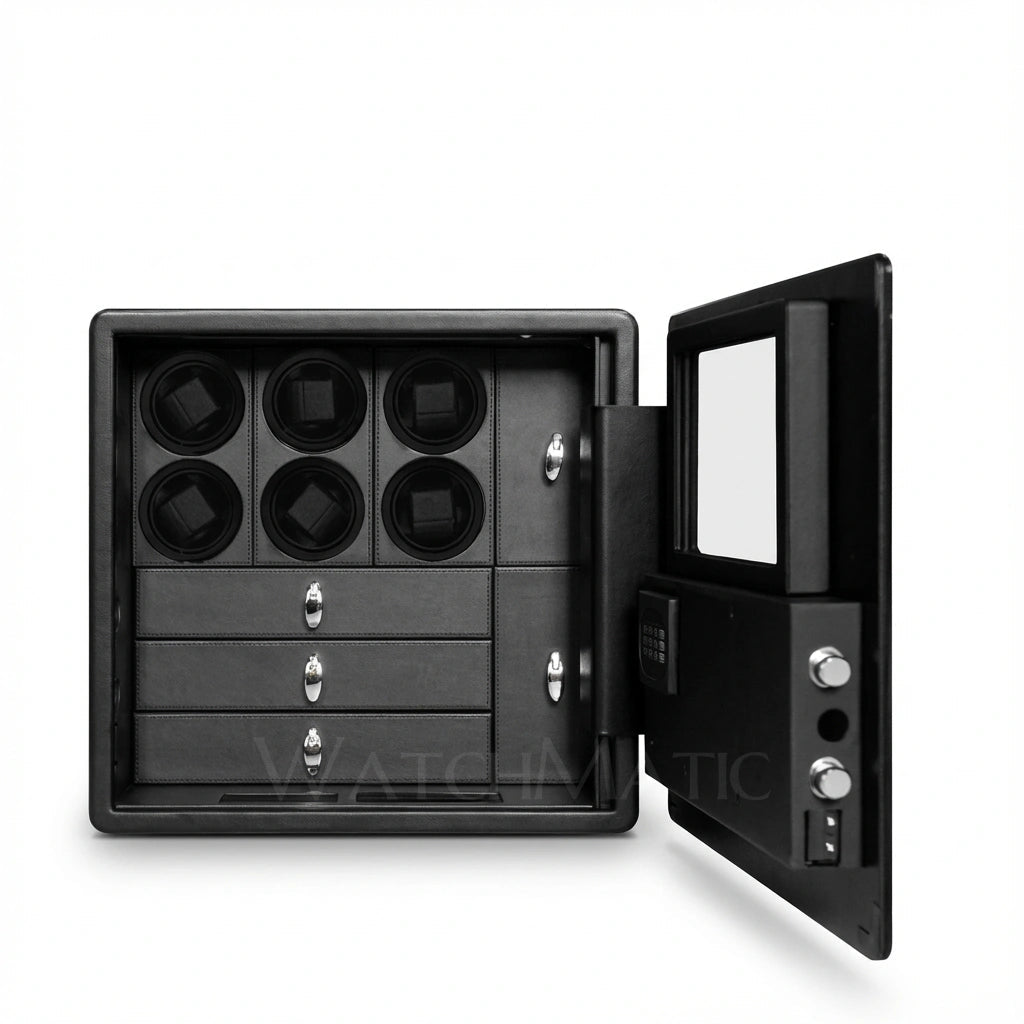
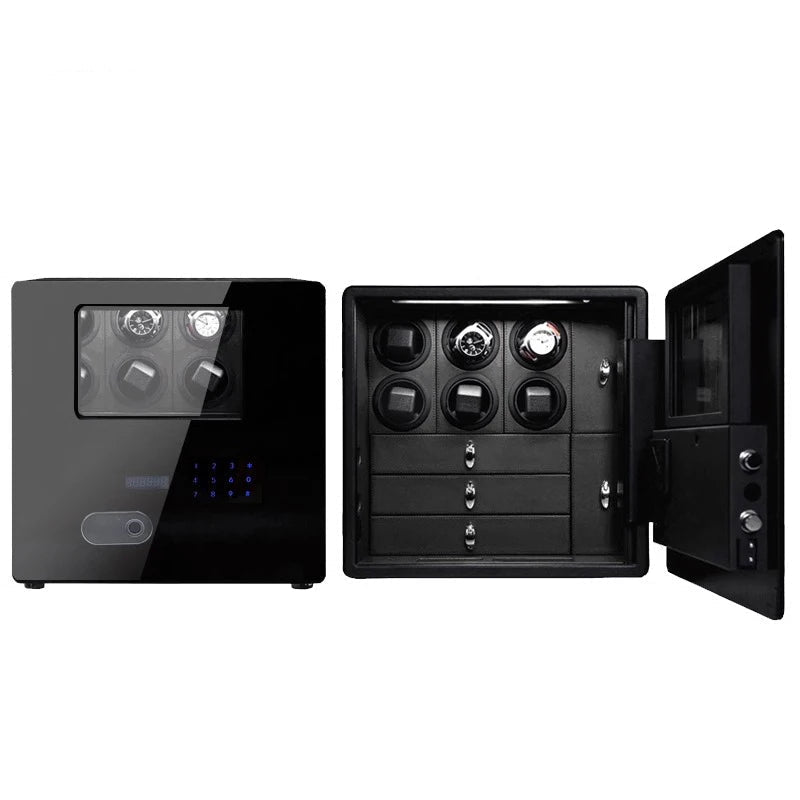
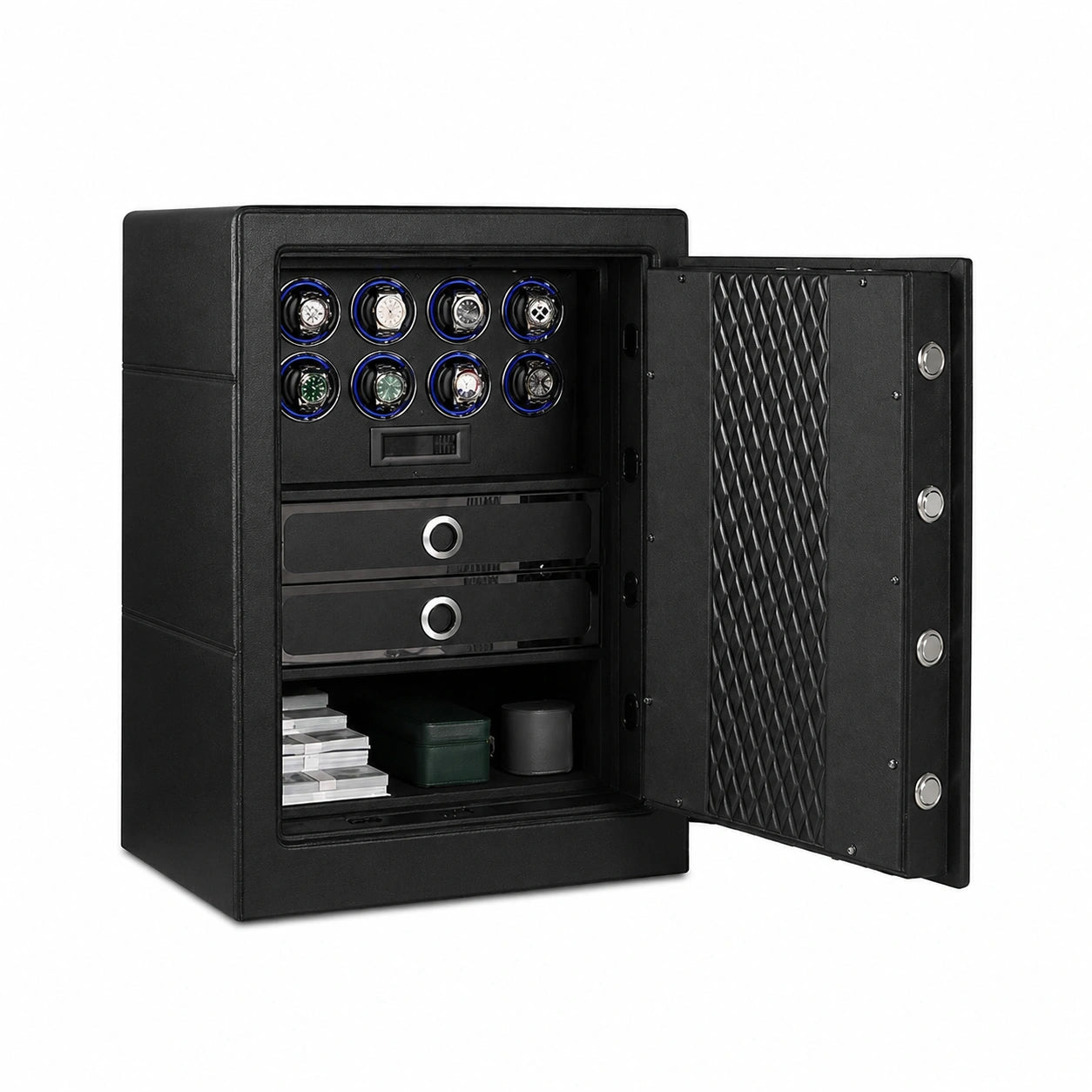
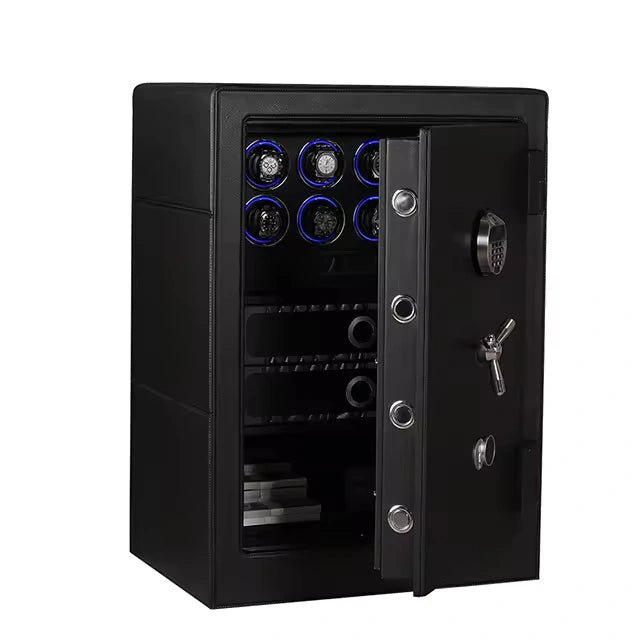
For collectors with larger BALL or mixed mechanical-watch collections, the Titan Vault Watch Winder Safe combines independently programmable winding positions with secure storage.
Depending on configuration, the Titan Vault series can accommodate approximately 12 to 60 watches and offers available features including:
- Reinforced safe construction
- Biometric fingerprint access
- Digital passcode
- Manual key access
- Independent winding controls
- Adjustable TPD
- CW/CCW/bidirectional operation
- Japanese Mabuchi motors
- Anti-magnetization protection
- LED illumination
- Additional storage compartments
This type of system becomes more relevant when a BALL collection grows alongside other valuable sports, diving, aviation, or luxury watches.
Collectors who primarily need secure storage without integrated winding can instead explore the Luxury Watch Safe Collection.
BALL in a Mixed Sports and Tool Watch Collection
BALL watches are frequently collected alongside Swiss brands with strong sports, aviation, diving, or engineering identities.
A collection might contain:
BALL + Breitling + IWC + Tudor + Oris + Longines
Related WatchMatic resources include:
Best Watch Winder for Breitling Watches
Best Watch Winder for IWC Watches
Best Watch Winder for Tudor Watches
Best Watch Winder for Oris Watches
Best Watch Winder for Longines Watches
The movements in these watches should not automatically share one winding program simply because they are all Swiss automatics.
How to Choose the Best Watch Winder for Your BALL Watch
Step 1: Identify the Exact Model and Reference
Do not stop at "Engineer" or "Roadmaster."
Different references within the same family can use different movements.
Step 2: Identify the Caliber
Examples include:
- RRM7309-C
- RR1702-C
- RR1103-C
- RR1102-CSL
- RR1101-CSL
- RR1201-C
Step 3: Check the Power Reserve
An 80-hour manufacture movement behaves very differently off the wrist from a 42-hour movement.
Step 4: Determine the Winding Requirements
Establish appropriate TPD and rotation direction for the specific caliber.
Step 5: Choose a Programmable Winder
Avoid fixed-program systems if you expect the collection to grow.
Step 6: Consider Watch Weight
Several BALL professional models are large and heavy.
The winder should hold them securely throughout the rotation cycle.
Step 7: Use Independent Controls for Multiple Watches
This is especially useful when mixing RRM manufacture calibers with RR-series movements.
Step 8: Consider the Complications
GMT, multiple-time-zone, day/date, and power-reserve watches may provide more convenience when kept running.
Step 9: Consider Security as the Collection Grows
At some point, controlled access and physical protection may become more important than simply adding more winding positions.
For additional resources covering TPD, automatic winding, watch storage, and collection protection, visit the WatchMatic Guide Hub.
Best Watch Winder for BALL Watches: Final Thoughts
The best watch winder for BALL Watches should be selected according to the specific caliber, power reserve, watch size, and wearing pattern.
For most BALL automatics, prioritize:
- Adjustable TPD
- CW/CCW/bidirectional programs
- Controlled rest cycles
- Quiet motor operation
- Strong and secure watch cushions
- Independent programming for multi-watch collections
BALL provides a particularly useful example of why brand-level recommendations can be too simplistic.
The manufacture RRM7309-C provides approximately 80 hours of power reserve, while current RR1702-C watches provide around 42 hours.
The company also builds watches with unusually high shock and magnetic resistance, but those engineering features do not eliminate the need for correct watch-winder programming.
The right approach remains:
Reference → Caliber → Power Reserve → Winding Requirements → Winder Program
rather than simply selecting the highest available TPD.
For additional automatic winding and secure-storage solutions, explore WatchMatic.