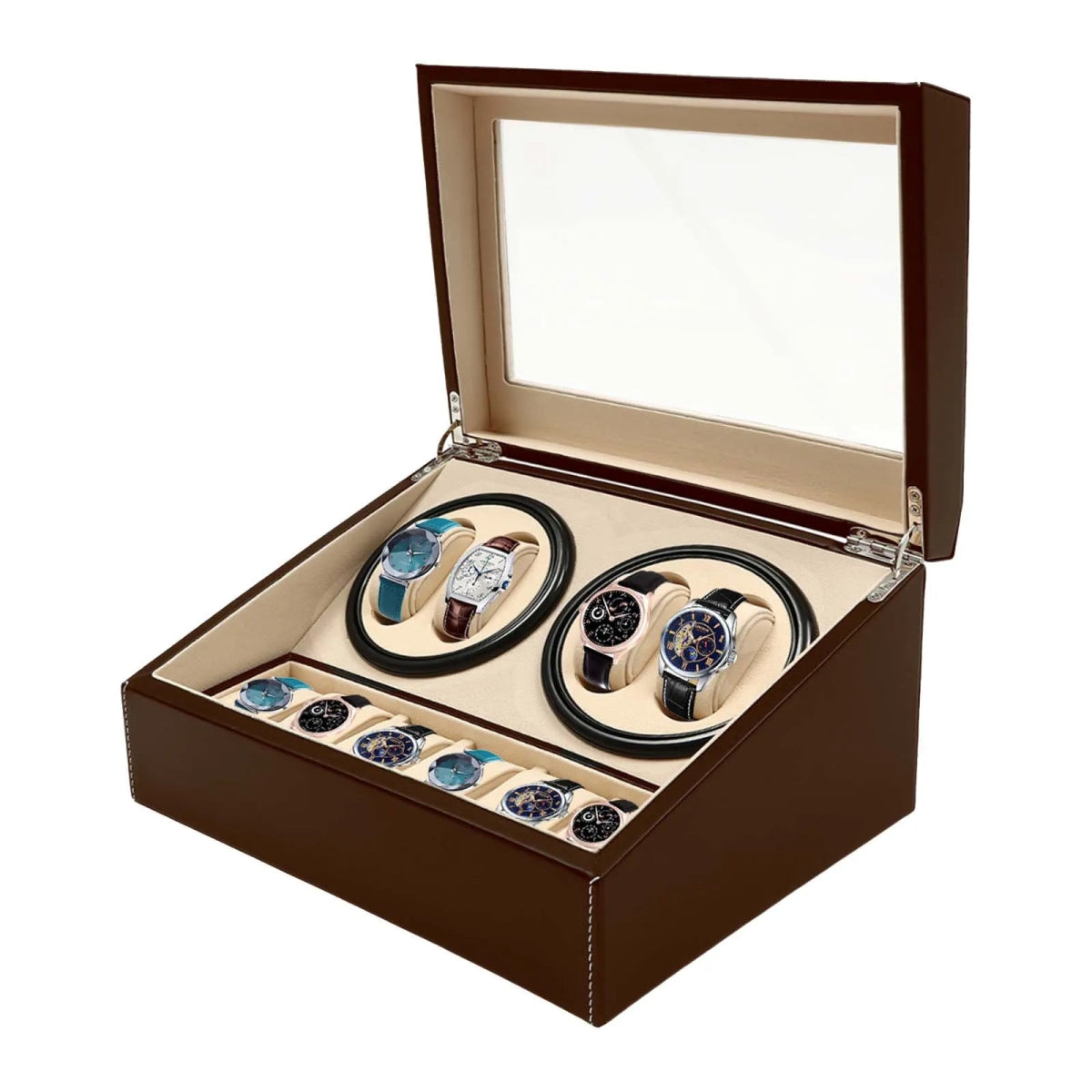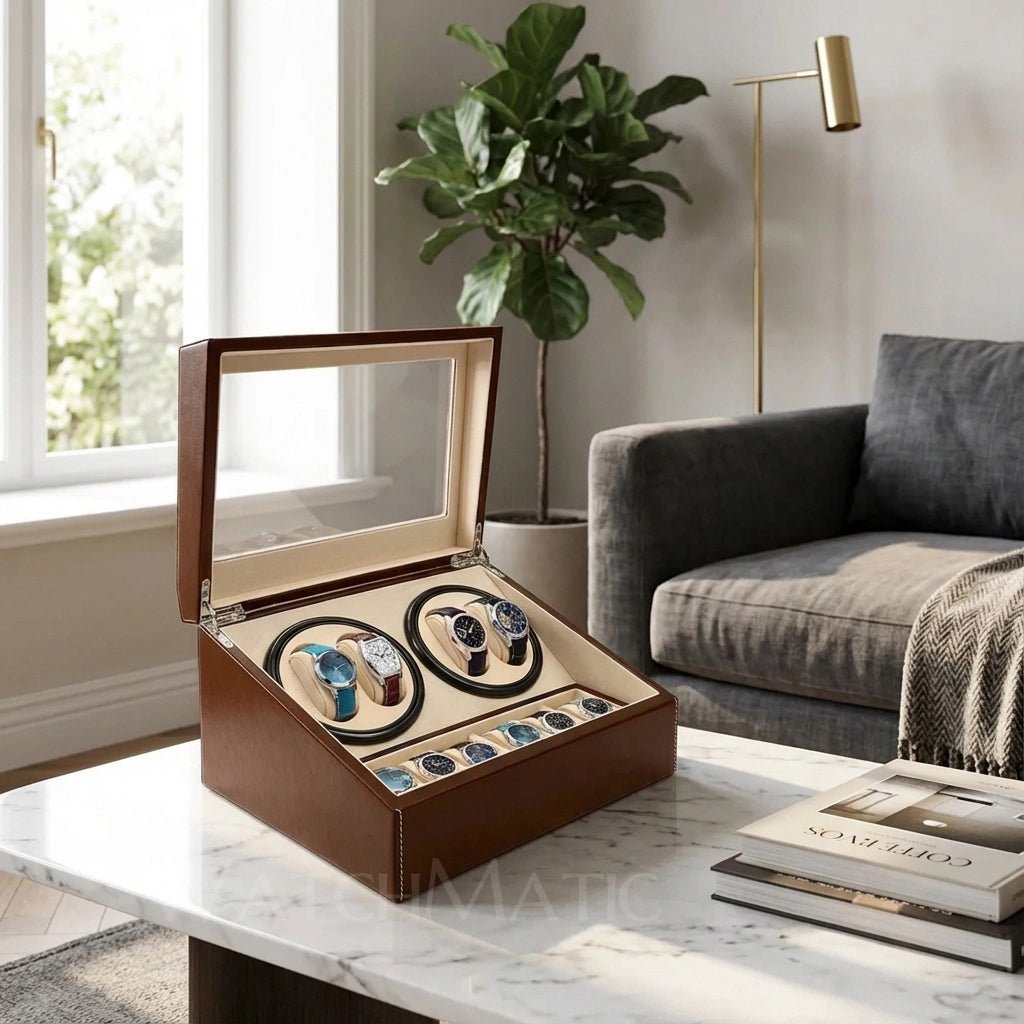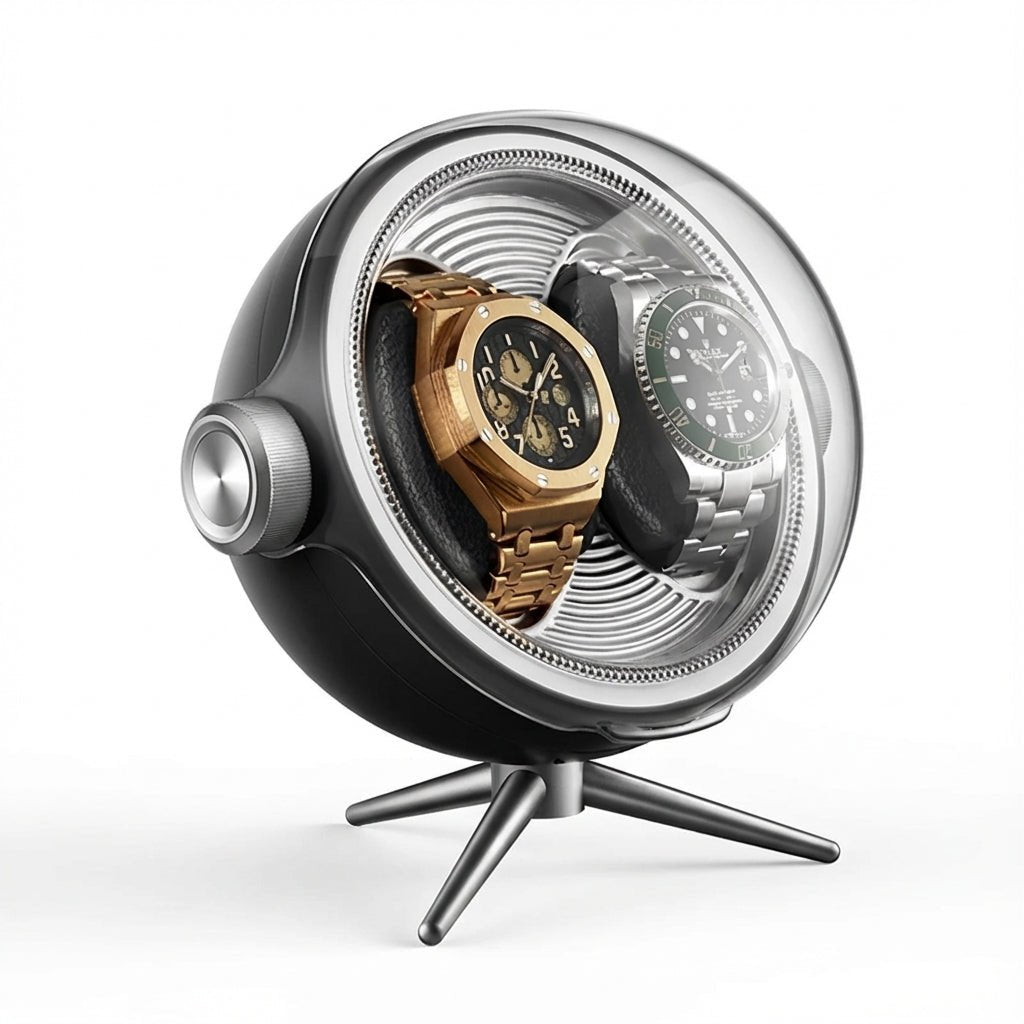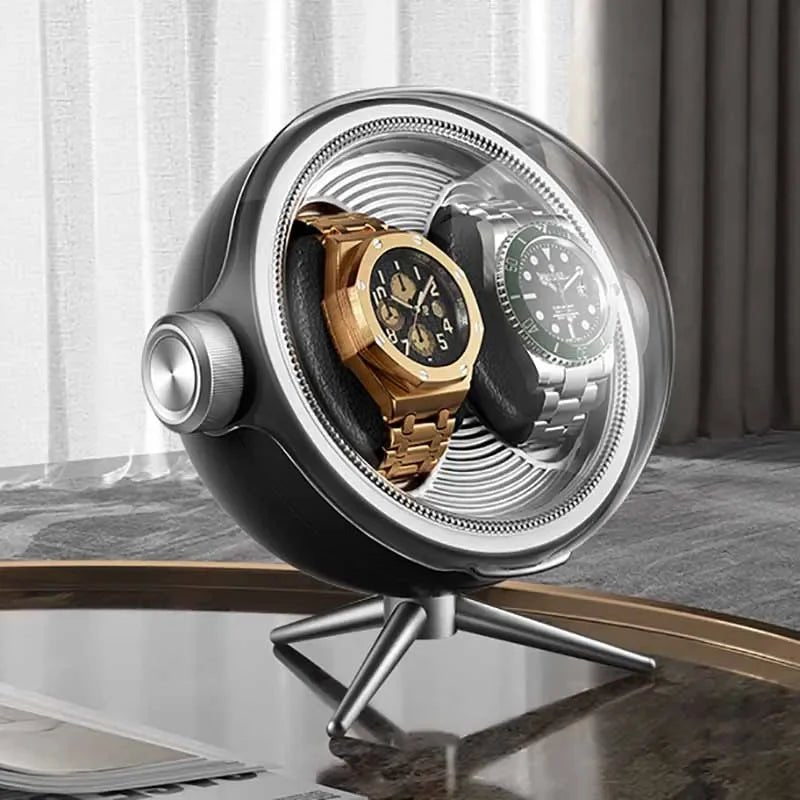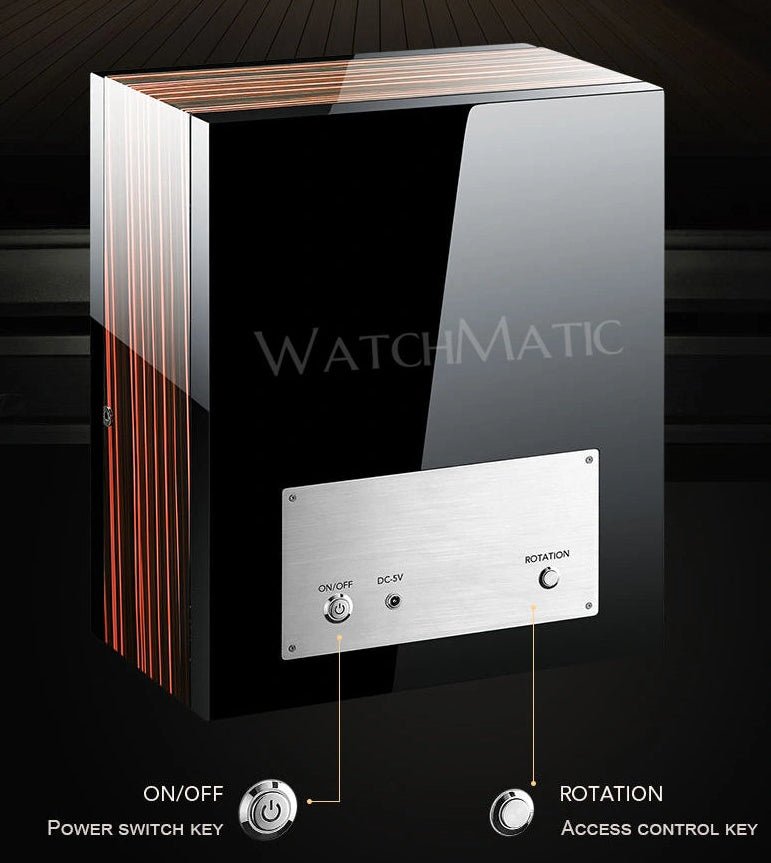
The best watch winder for Casio watches is a programmable model with adjustable Turns Per Day (TPD), selectable clockwise and counterclockwise rotation, controlled winding and rest cycles, quiet operation, and secure watch support.
However, only a relatively small part of the Casio catalog actually benefits from a conventional mechanical watch winder.
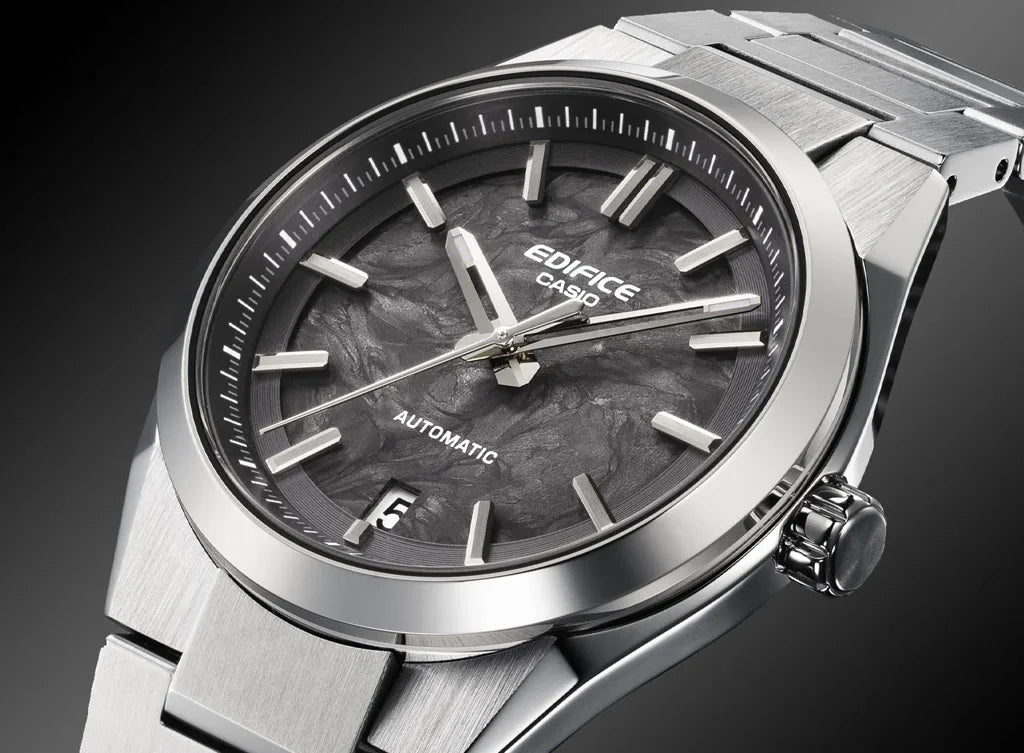
Casio entered mechanical watchmaking with the EDIFICE EFK-100 Automatic and has since expanded its automatic lineup with the EFK-110 and EFK-200.
These watches use self-winding mechanical movements and can therefore benefit from a properly configured watch winder.
By contrast, most familiar Casio watches—including many G-SHOCK, OCEANUS, PRO TREK, standard Casio, and non-automatic EDIFICE models—use quartz, solar-powered, digital, or connected electronic movements.
Those watches receive no winding benefit from mechanical rotation.
The correct process is:
Casio Reference → Mechanical / Solar / Quartz → Automatic or Electronic → Winder or Charging Method
Does a Casio Watch Need a Watch Winder?
Most Casio watches do not need a watch winder.
Historically, Casio has been primarily associated with electronic timekeeping technologies, including:
- Quartz
- Digital quartz
- Tough Solar
- Radio-controlled timekeeping
- Bluetooth-connected watches
- GPS or satellite synchronization
- High-function outdoor watches
A conventional rotating watch winder does not charge or power these systems.
The important exception is Casio's newer EDIFICE Automatic collection.
Current EFK-series watches contain mechanical self-winding movements and can be kept running by an appropriately configured watch winder.
Even these automatic watches do not mechanically require continuous winding.
A winder mainly provides convenience by keeping the watch running and the date set between wears.
For a broader explanation of how automatic winding works, see the Watch Winder Guide.
Which Casio Watches Can Use a Watch Winder?
Current Casio watch technologies can be divided into several broad categories.
| Casio watch | Movement / power system | Conventional watch winder? |
|---|---|---|
| EDIFICE EFK-100 | Automatic mechanical | Yes |
| EDIFICE EFK-110 | Automatic mechanical | Yes |
| EDIFICE EFK-200 | Automatic mechanical | Yes |
| Most EDIFICE chronographs | Quartz / solar | No |
| G-SHOCK | Quartz / Tough Solar / electronic | No |
| MR-G | Primarily solar/electronic | No |
| OCEANUS | Solar-powered electronic | No |
| PRO TREK | Quartz / Tough Solar | No |
| Casio Vintage | Quartz digital | No |
| Casio Standard | Mostly quartz/digital | No |
| Casio Smart / connected watches | Electronic | No |
This makes Casio very different from brands whose catalogs are dominated by automatic mechanical movements.
For Casio, the first question should not be:
“What TPD does Casio need?”
It should be:
“Is this particular Casio actually mechanical and automatic?”
Casio's Move Into Automatic Mechanical Watches
Casio introduced its first mechanical watch through the EDIFICE line.
The original EFK-100 represented a significant departure from Casio's traditional electronic-watch identity.
Instead of a quartz module, Tough Solar system, Bluetooth-connected movement, or digital module, the EFK-100 uses a traditional mechanical automatic movement.
Casio has since expanded that concept through additional EFK-series automatic watches.
This means advice such as:
“Casio watches never need a watch winder”
is no longer accurate.
The more precise answer is:
Most Casio watches do not need a winder, but EDIFICE Automatic EFK models can use one.
Casio EDIFICE EFK-100 Automatic
The EFK-100 is historically important because it introduced mechanical automatic watchmaking to Casio.
Its movement specifications include:
- Automatic winding
- Manual winding capability
- Approximately 40 hours of power reserve
- 24 jewels
- 21,600 vibrations per hour
- Hacking seconds
- Date display
The watch is housed in a relatively compact 39 mm case and uses a sapphire crystal and see-through caseback.
For a watch-winder owner, the most important specification is the approximately 40-hour power reserve.
A fully wound EFK-100 may stop if it remains unworn for roughly two days.
That makes a winder useful for someone rotating the watch among several others.
Best Watch Winder for Casio EDIFICE EFK-100
For the EFK-100, look for:
- Adjustable TPD
- CW/CCW/bidirectional programs
- Controlled rest cycles
- Quiet operation
- Compressible bracelet cushion
- Stable watch positioning
Because the EFK-100 has a relatively moderate power reserve, it can derive more practical convenience from a winder than a modern automatic with an 80- or 120-hour reserve.
However, continuous operation is not mechanically required.
EFK-100 Power Reserve and Wearing Pattern
Consider two owners.
Owner A
Wears the EFK-100 almost every day.
The approximately 40-hour reserve and normal wrist movement may be sufficient to keep the watch running continuously.
A winder adds little value.
Owner B
Rotates the EFK-100 with five other automatic watches.
The Casio may regularly remain unworn for several days and stop.
For that owner, a winder can reduce repeated restarting and date setting.
The practical value therefore depends on:
40-hour reserve + wearing frequency + collection size
Casio EDIFICE EFK-110 Automatic
The EFK-110 continues Casio's expansion into mechanical watches.
Current EFK-110 models use a Japanese-made automatic movement with:
- Automatic winding
- Manual winding
- Approximately 42 hours of power reserve
- 21 jewels
- 21,600 vibrations per hour
- Date display
- Hacking seconds
The watch uses a compact 38 mm case with sapphire crystal and a transparent screw-lock caseback.
Compared with the EFK-100, the movement specification provides slightly longer published autonomy at approximately 42 hours.
Best Watch Winder for Casio EFK-110
For an EFK-110, prioritize:
- Adjustable TPD
- Multiple direction settings
- Controlled rest periods
- Quiet motor operation
- Bracelet-friendly cushion
- Stable support for the 38 mm case
The watch does not need aggressive winding.
The objective is simply to deliver sufficient movement to maintain the automatic reserve between wears.
Casio EDIFICE EFK-200 Automatic
The EFK-200 represents a newer generation within Casio's expanding mechanical EDIFICE lineup.
Current EFK-200 references use a Japanese automatic mechanical movement with:
- Automatic winding
- Manual winding
- Approximately 42 hours of power reserve
- 21 jewels
- 21,600 vibrations per hour
- Date
- Hacking seconds
The standard steel versions use a compact 38 mm case, while selected forged-carbon variants use slightly different case dimensions and strap configurations.
The EFK-200 therefore expands the physical variety of Casio automatic watches beyond conventional steel-bracelet configurations.
Best Watch Winder for Casio EFK-200
For an EFK-200, select a winder with:
- Adjustable TPD
- CW/CCW/bidirectional programs
- Controlled rest cycles
- Smooth motor operation
- Flexible cushion sizing
- Compatibility with steel bracelet or urethane strap
- Quiet operation
For forged-carbon and resin-strap versions, the cushion should not force the strap into an unnatural curvature.
EFK-100 vs. EFK-110 vs. EFK-200
Casio's current automatic families are mechanically similar from the owner's perspective but not completely identical.
| Collection | Approx. power reserve | Jewels | Frequency |
|---|---|---|---|
| EFK-100 | 40 hours | 24 | 21,600 vph |
| EFK-110 | 42 hours | 21 | 21,600 vph |
| EFK-200 | 42 hours | 21 | 21,600 vph |
This comparison also shows why it is better to identify the exact reference rather than simply saying:
“Casio Automatic = one specification.”
The differences are not enormous, but they exist.
Casio Watch Winder TPD Settings
TPD means Turns Per Day—the approximate number of rotations delivered by a watch winder during a programmed daily cycle.
There should not be one broad setting such as:
“Casio = 650 TPD.”
That would be particularly misleading because most Casio watches are not automatic mechanical watches at all.
For an EDIFICE Automatic:
- Identify the exact EFK reference.
- Confirm that it uses a mechanical automatic movement.
- Determine the movement's winding requirements.
- Select an appropriate TPD.
- Select the appropriate rotation direction.
- Confirm that the watch maintains sufficient reserve.
For a deeper explanation of Turns Per Day and how winder programs work, see the Watch TPD Guide.
What Rotation Direction Should You Use for a Casio Automatic?
Programmable watch winders generally provide:
CW — Clockwise
CCW — Counterclockwise
Bi — Bidirectional
Casio publishes detailed specifications for the EFK automatic movements, including power reserve, jewel count, frequency, accuracy, and manual-winding capability.
However, a consumer watch-winder direction is not generally presented as part of the standard product specification.
For that reason, a programmable winder that supports all three direction modes provides more flexibility than a fixed-direction device.
The guiding principle remains:
movement-specific configuration rather than brand-level guessing.
Do G-SHOCK Watches Need a Watch Winder?
No.
G-SHOCK watches use electronic timekeeping systems.
Depending on the reference, they may use:
- Conventional quartz
- Tough Solar
- Bluetooth
- Multiband radio synchronization
- GPS
- Digital sensors
- Hybrid analog-digital displays
None of these systems is wound by mechanically rotating the watch.
Therefore:
G-SHOCK ≠ automatic mechanical watch
and:
G-SHOCK ≠ conventional watch-winder use
Even premium G-SHOCK models should not be placed on a mechanical winder for the purpose of generating power.
Does a G-SHOCK Tough Solar Need a Watch Winder?
No.
Tough Solar converts light into electrical energy and stores that energy in a rechargeable secondary battery.
The correct charging source is light, not physical rotation.
When a Tough Solar watch is not being worn, it should receive suitable light exposure according to Casio's charging instructions.
Putting it on a rotating watch winder will not replace solar charging.
Can a G-SHOCK MR-G Use a Watch Winder?
A premium price, titanium construction, handcrafted finishing, or sophisticated analog display does not make a watch automatic.
Current G-SHOCK MR-G watches are built around Casio's advanced electronic technologies rather than conventional self-winding mechanical movements.
A rotating automatic watch winder therefore provides no winding benefit.
MR-G watches may still deserve high-quality secure storage because of their value, but that is a storage and security requirement, not a mechanical winding requirement.
Does OCEANUS Need a Watch Winder?
No conventional watch winder is required for current OCEANUS watches.
OCEANUS is strongly associated with Casio's premium electronic technologies, including:
- Solar charging
- Radio-controlled time synchronization
- Bluetooth connectivity on selected references
- Advanced analog hand control
The watch runs on energy stored in a rechargeable battery charged through its solar panel.
Rotation does not wind a mainspring because there is no conventional automatic rotor-and-mainspring system performing that function.
OCEANUS Needs Light, Not Rotation
This distinction is worth emphasizing.
For an OCEANUS solar watch:
light exposure → electrical charging
For an EDIFICE EFK Automatic:
rotor movement → mechanical winding
They may both be premium analog Casio watches, but their energy systems are fundamentally different.
A large collection containing both therefore needs different storage strategies.
Does PRO TREK Need a Watch Winder?
No.
PRO TREK watches are outdoor instruments built around electronic systems such as:
- Tough Solar
- Digital compass
- Altimeter
- Barometer
- Thermometer
- Sunrise/sunset data
- Radio synchronization
- Bluetooth on selected models
A conventional watch winder does not power these functions.
Tough Solar PRO TREK models should receive appropriate light exposure to keep their rechargeable battery sufficiently charged.
PRO TREK Sensors Are Not Mechanical Complications
A PRO TREK may be far more functionally complex than a simple mechanical automatic watch.
It can include multiple environmental sensors and extensive timekeeping functions.
But complication count does not determine whether a watch belongs on a winder.
A highly complex electronic PRO TREK receives no mechanical winding benefit.
A much simpler three-hand EFK-110 does.
The deciding factor is:
energy architecture, not functional complexity.
Does Casio EDIFICE Need a Watch Winder?
This depends on the exact EDIFICE.
The current EDIFICE catalog includes:
- Automatic mechanical watches
- Solar-powered watches
- Quartz chronographs
- Bluetooth-connected watches
- Conventional analog quartz watches
Therefore:
EDIFICE EFK Automatic → watch winder can be useful
EDIFICE Solar → no mechanical winding benefit
EDIFICE Quartz → no mechanical winding benefit
EDIFICE Bluetooth Quartz → no mechanical winding benefit
The EDIFICE name alone is no longer sufficient to answer the question.
How to Tell Whether an EDIFICE Is Automatic
Do not determine movement type solely from appearance.
Instead, check the technical specification for wording such as:
Mechanical watch
or:
Winding mechanism: Automatic with manual winding
Other visual clues can include:
- See-through caseback
- Visible mechanical movement
- Smooth mechanical seconds motion
But the technical specification remains the more reliable method.
Sweeping Seconds Does Not Always Mean the Same Thing
For Casio, a smoothly moving seconds hand can help identify the EFK mechanical models, but hand motion should still not be used as the only movement-identification method.
Across the wider watch industry, electronic movements can also produce smooth seconds motion.
The better process remains:
reference number → official movement specification
rather than visual assumption.
Can a Casio Solar Watch Be Charged on a Watch Winder?
No meaningful solar charging benefit comes from rotation itself.
A solar Casio needs light exposure.
A mechanical winder does not generate the electrical energy required by Tough Solar.
Putting a solar watch on a winder may physically move the watch around, but that motion does not replace the solar panel's charging function.
If the watch needs charging, follow the appropriate Casio light-charging instructions.
Should You Put a Solar Casio Inside a Closed Watch Winder?
This can actually be counterproductive if the enclosure prevents sufficient light exposure.
A solar-powered watch stored for a long period inside an opaque cabinet may receive little or no light.
For Tough Solar, OCEANUS, or solar EDIFICE watches, long-term storage should consider the watch's charging requirement.
The preferred storage arrangement is therefore different from an automatic mechanical watch.
Casio Automatic vs. Tough Solar
| Feature | EDIFICE Automatic | Tough Solar Casio |
|---|---|---|
| Energy source | Mechanical mainspring | Rechargeable battery |
| Automatic rotor | Yes | No |
| Charged by wrist rotation | Yes | No |
| Charged by light | No | Yes |
| Conventional winder useful | Yes, optionally | No |
| Can be manually wound | Current EFK models: Yes | No |
| Needs light during storage | No | Yes |
This is the central distinction in the article.
Casio Automatic vs. Quartz
A conventional quartz Casio is even simpler.
Its electrical movement does not gain energy from wrist rotation.
Therefore:
Automatic mechanical → winder may be useful
Quartz → winder unnecessary
Solar quartz → needs light
Connected electronic → uses its intended battery/charging system
Why the 40–42 Hour Reserve Matters
Current Casio EDIFICE automatic watches have relatively moderate power reserves.
The EFK-100 offers approximately 40 hours, while the EFK-110 and EFK-200 provide approximately 42 hours.
That means an automatic Casio removed from the wrist on Friday evening may stop before Monday morning.
This makes a watch winder practically useful for owners who:
- Rotate several watches
- Wear the automatic Casio once or twice per week
- Prefer not to reset the date
- Want the watch ready immediately
It matters far less for someone wearing the same EFK every day.
Does a Casio Automatic Need to Run All the Time?
No.
There is no general mechanical requirement for an EDIFICE Automatic to remain continuously running.
Allowing an automatic watch to stop after its power reserve is exhausted is normal.
A winder should therefore be understood as:
a convenience tool
rather than:
a mechanical necessity
The practical value depends on:
power reserve + wearing frequency + collection size
Should You Fully Wind a Casio Automatic Before Using a Winder?
A watch winder is generally best treated as a maintenance-winding system rather than the fastest method of starting a completely depleted movement.
Current EFK watches support manual winding.
If the watch has stopped completely, it can be manually started according to its operating instructions and then placed on the winder for ongoing maintenance winding.
The preferred approach is:
start the movement correctly → establish reserve → use the winder to maintain it
rather than:
select maximum TPD and wait for the winder to recover a stopped watch.
What to Look for in a Casio Watch Winder
Adjustable TPD
Choose several available TPD settings rather than one fixed daily rotation count.
CW, CCW and Bidirectional Modes
A programmable system provides greater movement compatibility and future flexibility.
Controlled Rest Cycles
Continuous rotation is unnecessary.
The winder should alternate active winding periods with rest periods.
Quiet Motors
Low-noise operation matters in:
- Bedrooms
- Offices
- Dressing rooms
- Walk-in wardrobes
- Living spaces
Flexible Cushions
The EFK automatic range includes steel bracelets and selected alternative strap constructions.
The holder should compress to the actual wrist circumference.
Secure Bracelet Support
The watch should remain centered during rotation without excessive bracelet tension.
Independent Controls
This becomes especially useful if the automatic Casio shares the system with mechanical watches from other brands.
Best Watch Winder for One Casio Automatic
For one EFK automatic, a compact programmable winder is usually sufficient.
Prioritize:
- Adjustable TPD
- CW/CCW/bidirectional operation
- Controlled rest cycles
- Quiet motor
- Flexible cushion
- Secure bracelet or strap support
Suitable options can be explored in the WatchMatic Watch Winder Collection.
Best Watch Winder for Multiple Casio Watches
A Casio collector might own:
- EFK-100 Automatic
- EFK-110 Automatic
- EFK-200 Automatic
- G-SHOCK
- MR-G
- OCEANUS
- PRO TREK
- Tough Solar EDIFICE
- Casio Vintage
Only the first three groups currently require consideration for conventional mechanical winding.
The more efficient storage architecture is:
EDIFICE Automatic → programmable winding positions
Quartz Casio → stationary storage
Solar Casio → stationary storage with appropriate access to light
Connected Casio → stationary storage with its intended charging method
LuxGuard for Casio Automatic Collections

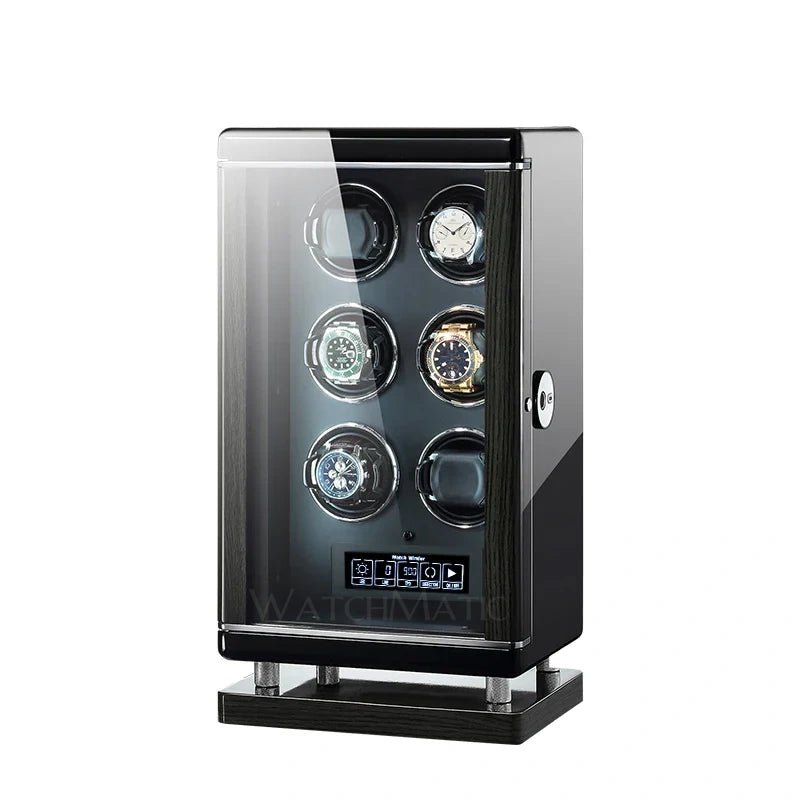
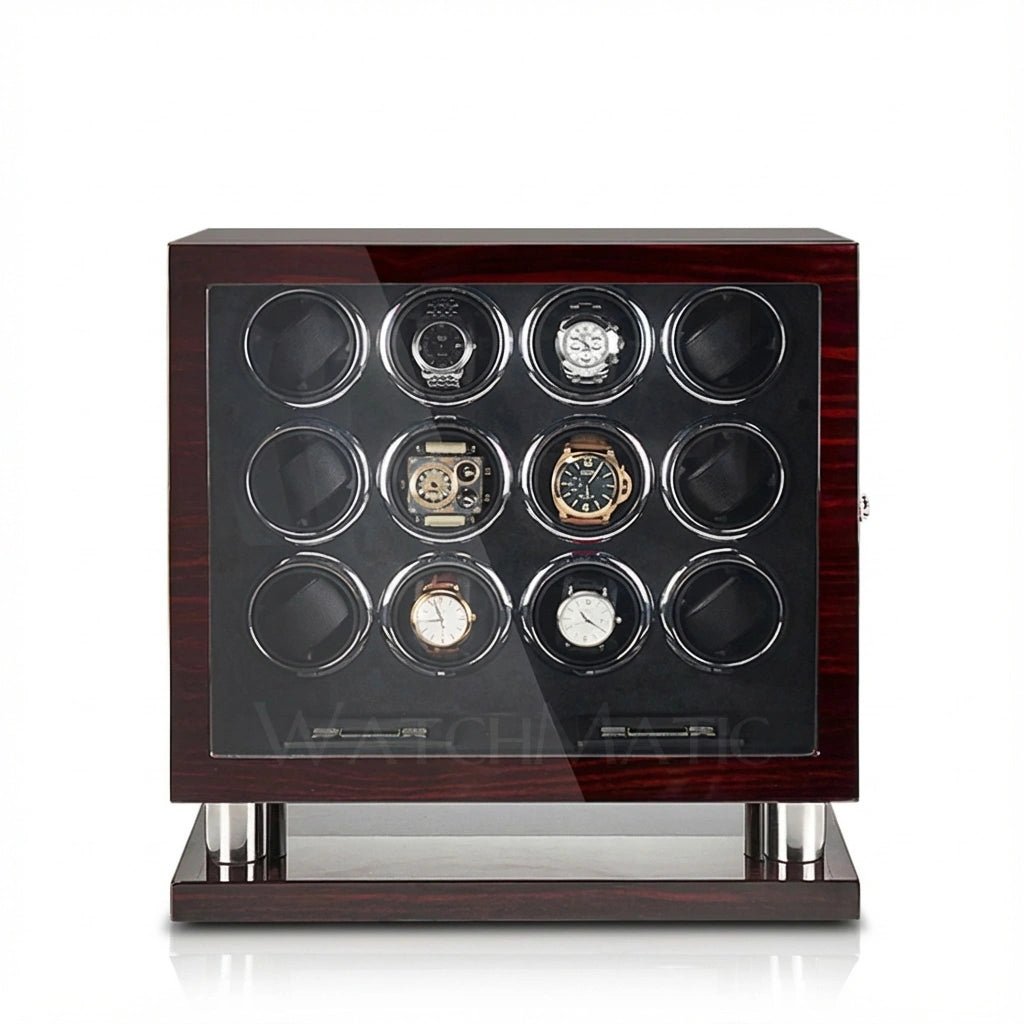
A multi-position LuxGuard Watch Winder can be suitable for collectors who own several EDIFICE Automatic watches or combine Casio automatics with mechanical watches from other manufacturers.
Depending on configuration, features include:
- Independent winding controls
- Multiple rotation modes
- Japanese Mabuchi motors
- Quiet operation
- Anti-magnetization protection
- Interior illumination
- Secure individual watch positions
Independent control becomes most valuable when Casio EFK watches share the winder with automatic movements from other brands.
Should G-SHOCK and OCEANUS Be Stored in the Same Winder?
They can physically be stored alongside other watches if the cabinet design allows it, but there is no reason to allocate a powered rotating position solely for winding.
A more efficient collection setup is:
Automatic watches → rotating positions
Quartz / solar watches → stationary positions
For solar watches, ensure the storage strategy also provides suitable charging opportunities.
Is It Safe to Keep an Automatic Casio on a Watch Winder?
A properly configured quality winder can be used with an automatic EDIFICE EFK watch.
Important considerations include:
- Confirming the watch is automatic
- Choosing appropriate TPD
- Choosing suitable rotation direction
- Using controlled rest cycles
- Supporting the watch securely
- Avoiding unnecessary magnetic exposure
Do not use increasing TPD as a substitute for diagnosing an abnormal movement.
If a sufficiently wound EFK consistently delivers unexpectedly short running time or abnormal accuracy, professional inspection may be more appropriate.
Watch Winder vs. Watch Winder Safe for Casio Collectors
For a collector owning only one or several EFK automatics, a standalone watch winder is generally the more proportionate solution.
A watch winder safe becomes more relevant when Casio forms part of a larger mixed collection that may include high-value mechanical watches.
| Feature | Watch Winder | Watch Winder Safe |
|---|---|---|
| Automatic winding | Yes | Yes |
| Independent programs | Model dependent | Available |
| Quartz storage | Possible | Yes |
| Solar-watch storage | Possible | Yes |
| Controlled access | Limited | High |
| Physical security | Limited | High |
| Large mixed collection | Moderate | High |
Collectors who want automatic winding combined with secure storage can explore the Watch Winder Safe Collection.
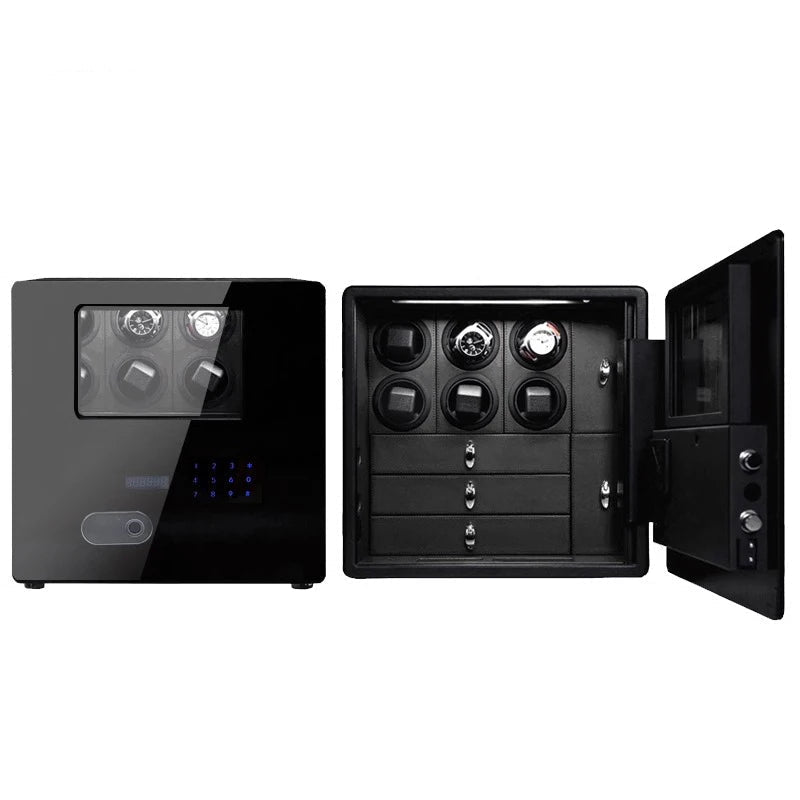
Titan Vault for Larger Casio and Mixed Collections

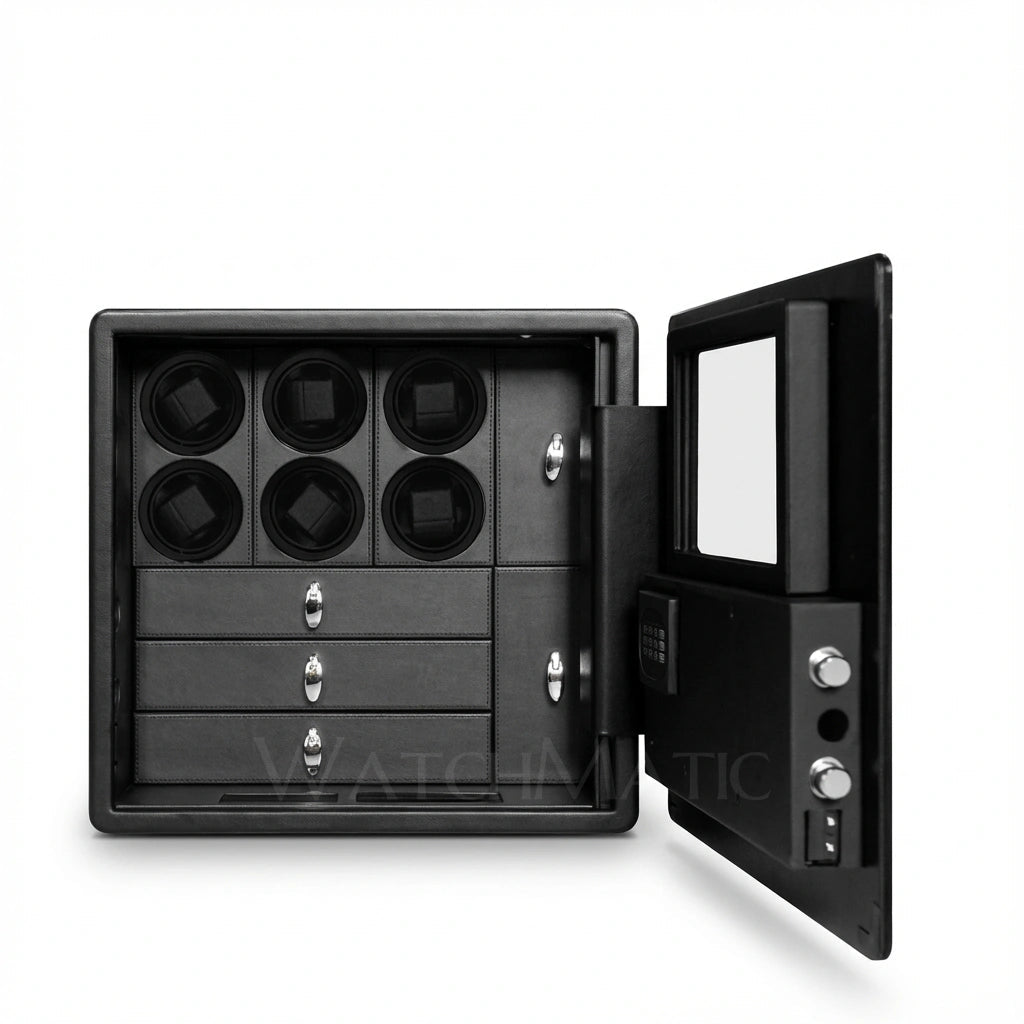
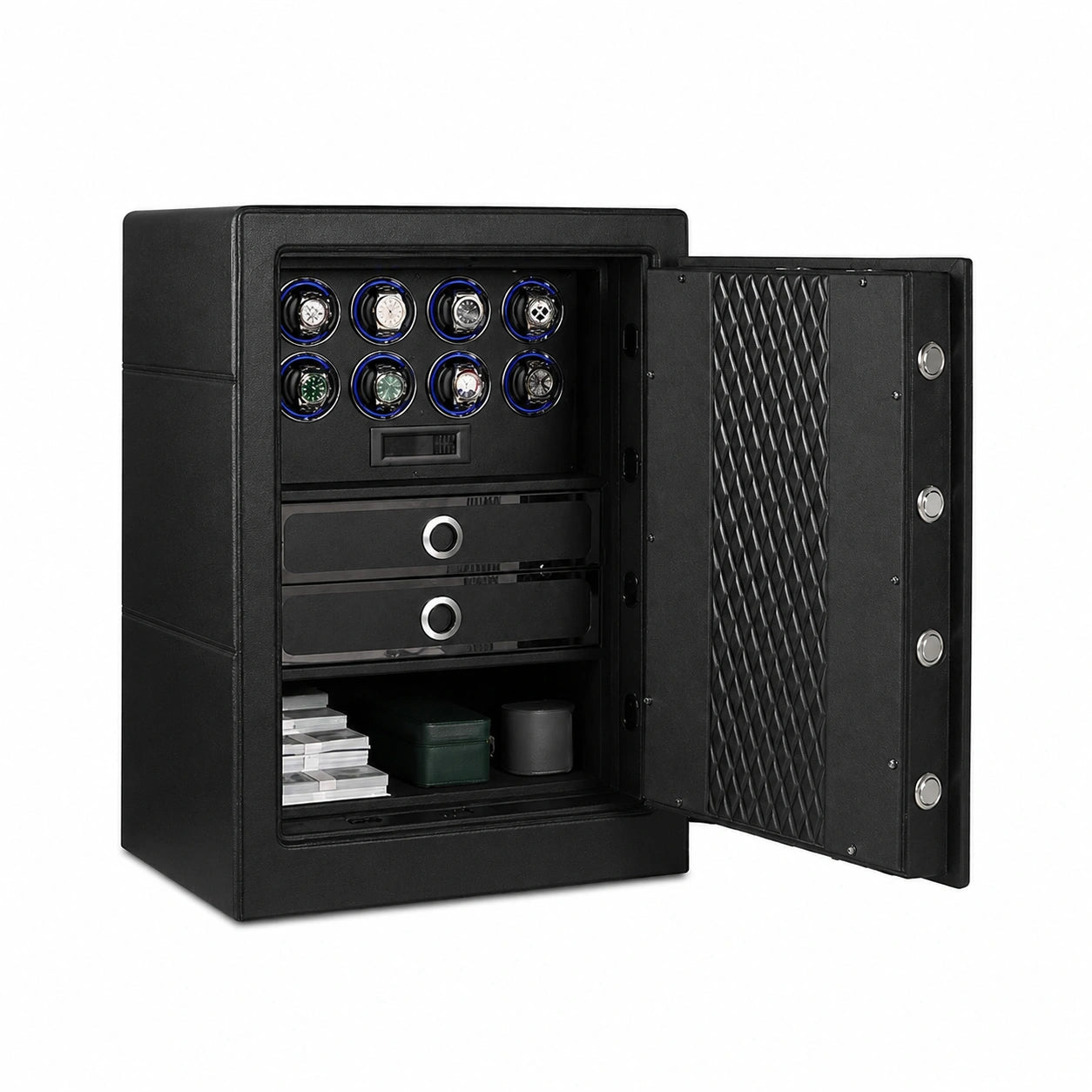
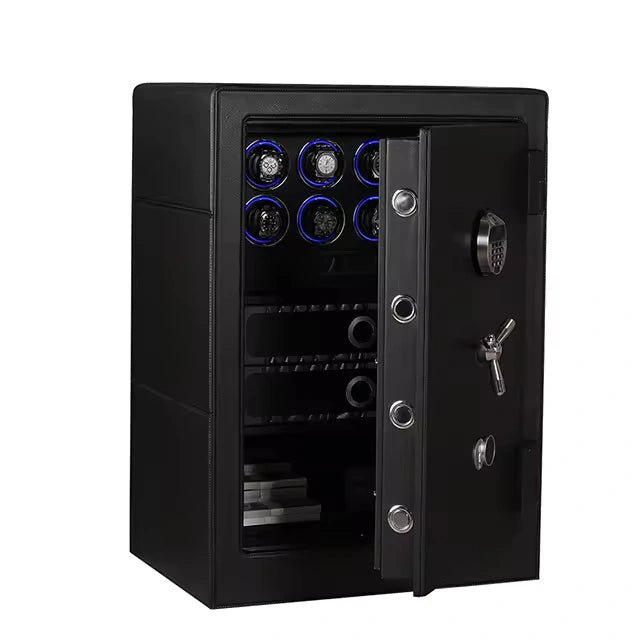
For a larger mixed collection, the Titan Watch Winder Safe combines independently programmable winding positions with secure stationary storage.
Depending on configuration, the Titan Vault series can accommodate approximately 12 to 60 watches, with available features including:
- Reinforced safe construction
- Biometric fingerprint access
- Digital passcode
- Manual key access
- Independent winding controls
- Adjustable TPD
- CW/CCW/bidirectional operation
- Japanese Mabuchi motors
- Anti-magnetization protection
- LED illumination
- Additional storage compartments
A mixed Casio collection can therefore be organized according to movement type.
Automatic EFK watches can occupy programmed rotor positions.
G-SHOCK, OCEANUS, PRO TREK, and quartz models can remain in stationary storage.
For solar watches, however, remember that long-term charging requirements still need to be considered.
Collectors whose primary goal is security rather than automatic winding can instead explore the Luxury Watch Safe Collection.
Casio in a Mixed Japanese Watch Collection
Casio now creates an interesting mixed-technology collection alongside established Japanese mechanical-watch manufacturers.
A collection might include:
Casio + Seiko + Citizen + Grand Seiko
Related WatchMatic resources include:
Best Watch Winder for Seiko Watches
Best Watch Winder for Citizen Watches
Best Watch Winder for Grand Seiko Watches
This comparison is particularly useful because all four manufacturers combine very different energy technologies.
Seiko may include automatic, manual, Spring Drive, solar, and quartz.
Citizen combines automatic movements with extensive Eco-Drive technology.
Grand Seiko includes automatic mechanical, manual-wind, Spring Drive, and quartz.
Casio now combines its traditional electronic technologies with an emerging automatic EDIFICE range.
Movement identification therefore matters more than nationality or brand family.
How to Choose the Best Watch Winder for Your Casio
Step 1: Identify the Exact Reference
Do not simply search for:
Casio watch winder settings
The Casio catalog contains fundamentally different technologies.
Step 2: Determine the Movement Type
Identify whether the watch is:
- Automatic mechanical
- Conventional quartz
- Tough Solar
- Connected electronic
- Radio-controlled electronic
Step 3: Confirm Whether It Is an EFK Automatic
Current mechanical examples include:
- EFK-100
- EFK-110
- EFK-200
Step 4: Check the Power Reserve
Current examples provide approximately:
EFK-100 → 40 hours
EFK-110 → 42 hours
EFK-200 → 42 hours
Step 5: Determine Appropriate TPD
Do not use a generic setting simply because the dial says Casio or EDIFICE.
Step 6: Determine Rotation Direction
Choose a programmable system supporting CW, CCW, and bidirectional modes.
Step 7: Check Physical Fit
Current automatic Casio models include:
- Steel bracelets
- Forged-carbon constructions
- Urethane strap variants
The cushion should accommodate the exact configuration.
Step 8: Do Not Put Solar Watches on a Winder for Charging
Tough Solar requires light.
Rotation does not replace solar charging.
Step 9: Do Not Allocate Rotors to Quartz Watches
A quartz Casio receives no mechanical winding benefit.
Step 10: Consider Security Separately From Winding
An MR-G or premium OCEANUS may deserve secure storage despite not needing a motorized rotor.
Storage value and winding requirements are separate questions.
For broader resources covering winding, TPD, storage, and watch protection, visit the WatchMatic Guide Hub.
Best Watch Winder for Casio Watches: Final Thoughts
For most of Casio's history, the answer to:
“Does a Casio need a watch winder?”
would have been effectively no.
That is no longer completely accurate.
Casio now produces genuine mechanical automatic watches through its EDIFICE EFK family.
Current examples include:
EFK-100 → approximately 40-hour reserve
EFK-110 → approximately 42-hour reserve
EFK-200 → approximately 42-hour reserve
These watches can benefit from an appropriately programmed conventional watch winder.
However, the overwhelming majority of familiar Casio technologies work differently.
G-SHOCK Tough Solar → light-powered electronic
OCEANUS → predominantly solar electronic
PRO TREK Tough Solar → light-powered electronic
Conventional Casio digital/analog → quartz electronic
None of these receives a mechanical winding benefit from rotation.
The most reliable decision process is therefore:
Casio Reference → Mechanical or Electronic → Automatic / Quartz / Solar → Winder or Correct Charging Method
For a confirmed mechanical Casio automatic, prioritize:
- Adjustable TPD
- CW/CCW/bidirectional operation
- Controlled rest cycles
- Quiet motor operation
- Flexible cushion sizing
- Secure bracelet support
- Independent programming
For solar and quartz Casio watches, skip mechanical winding and use the appropriate storage or charging method instead.
For additional automatic-winding and secure-storage solutions, explore WatchMatic.