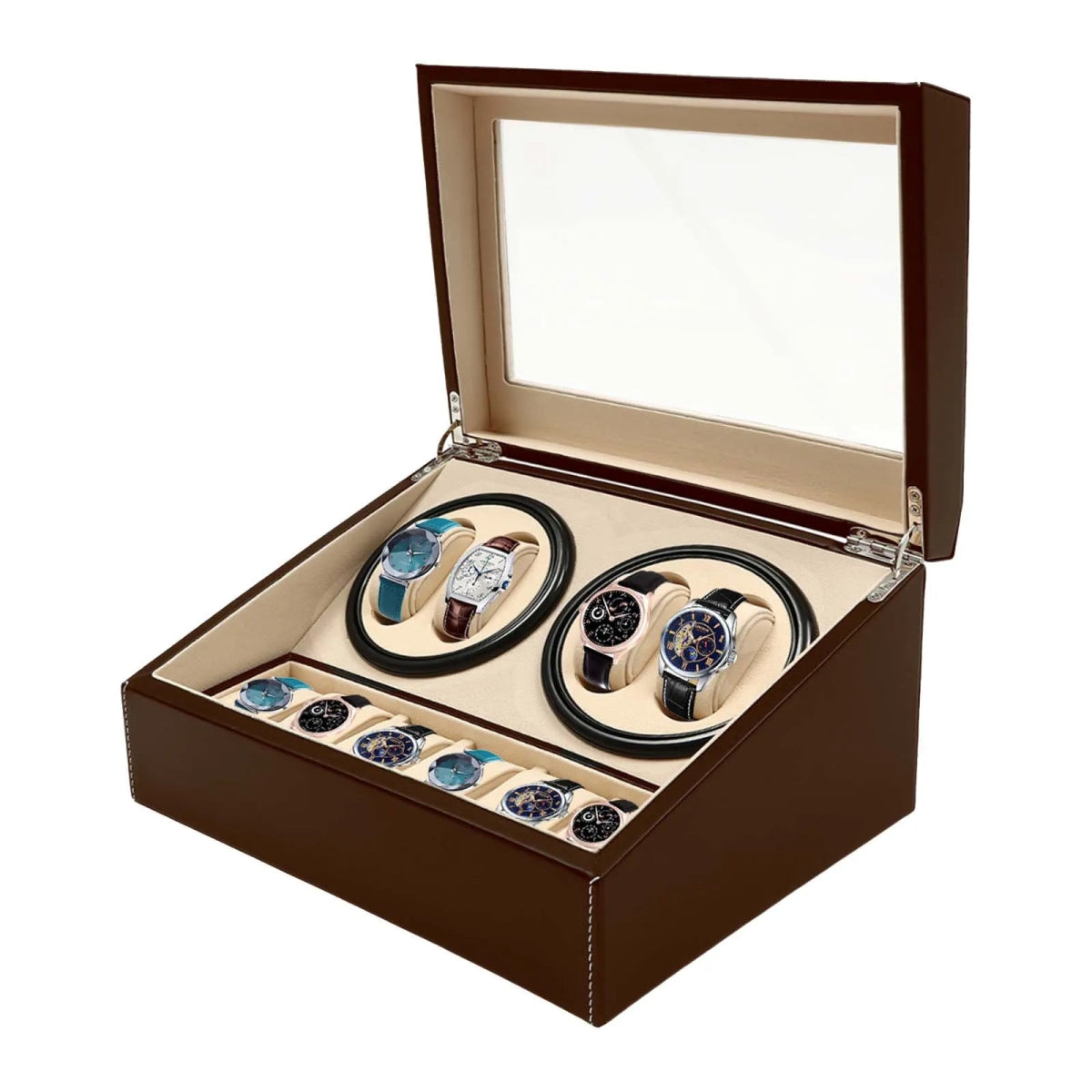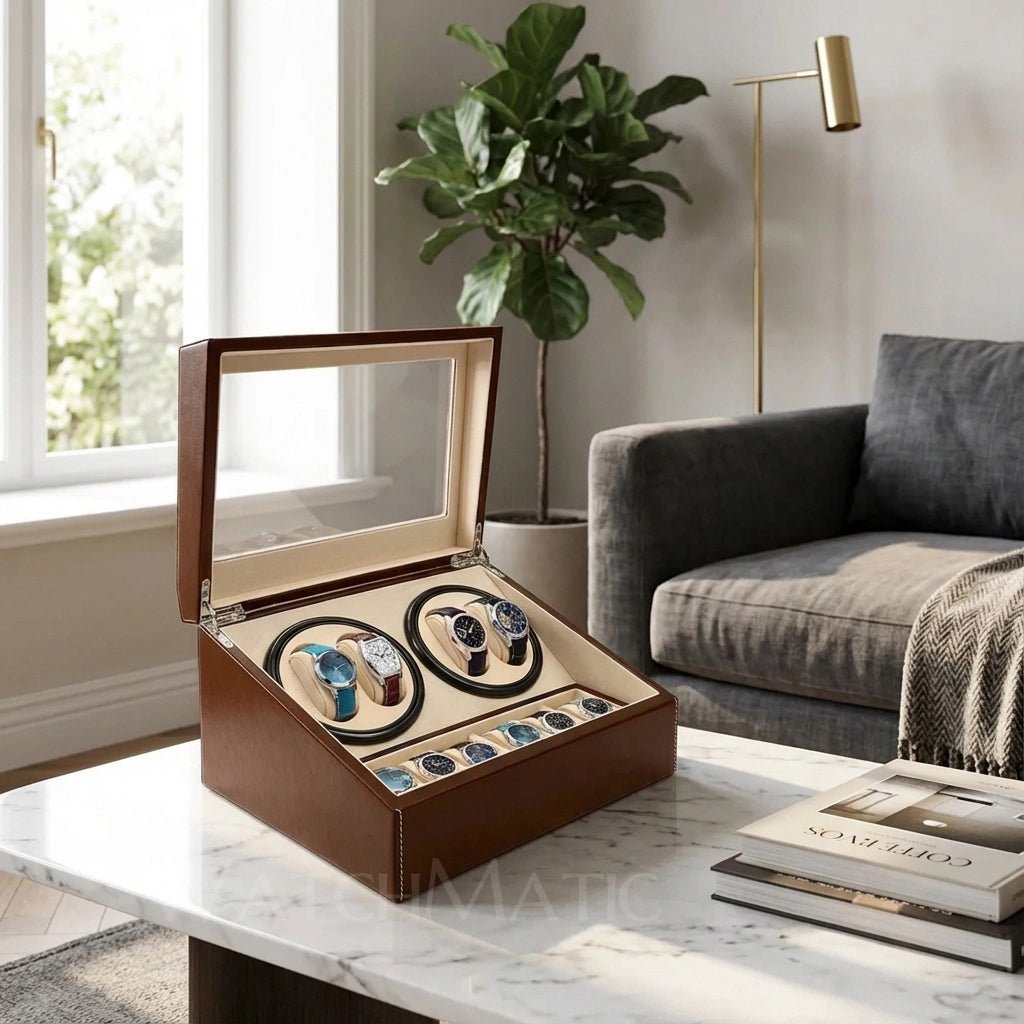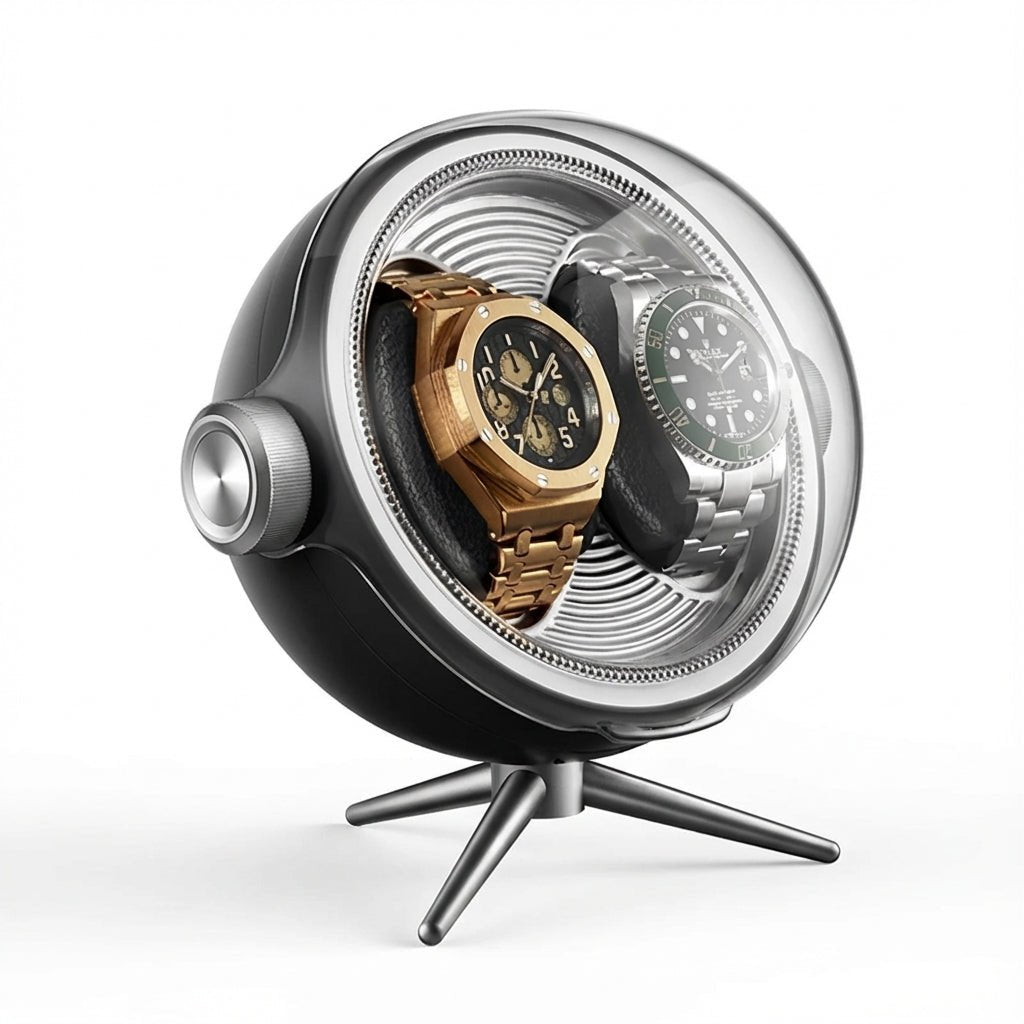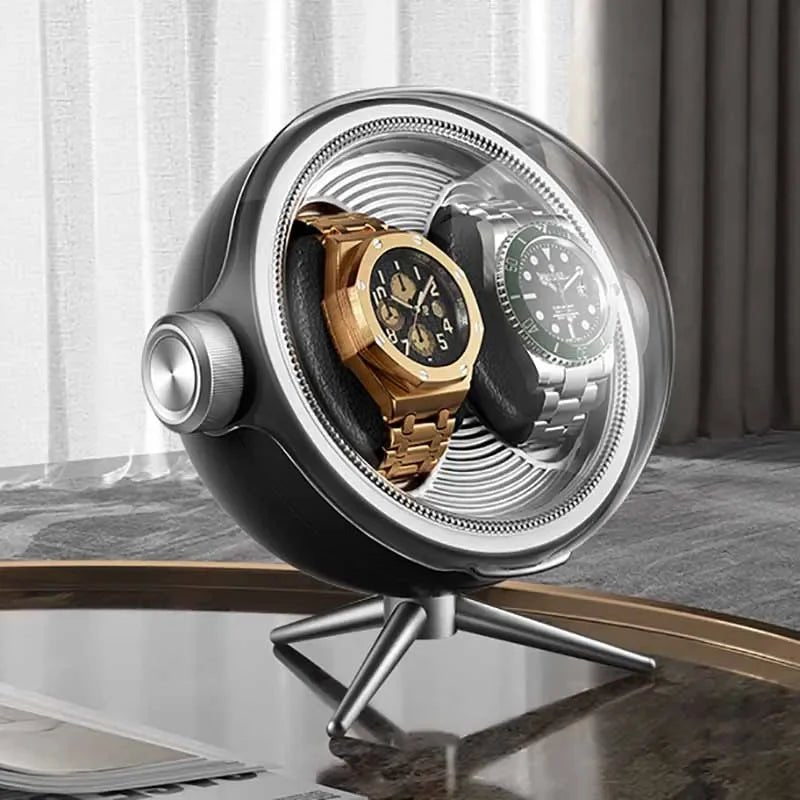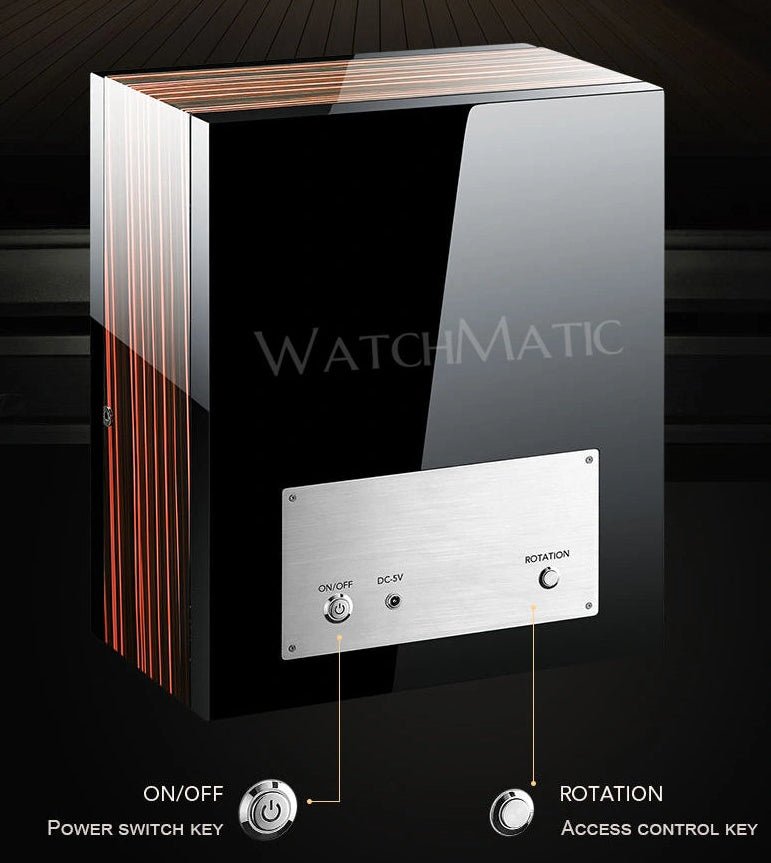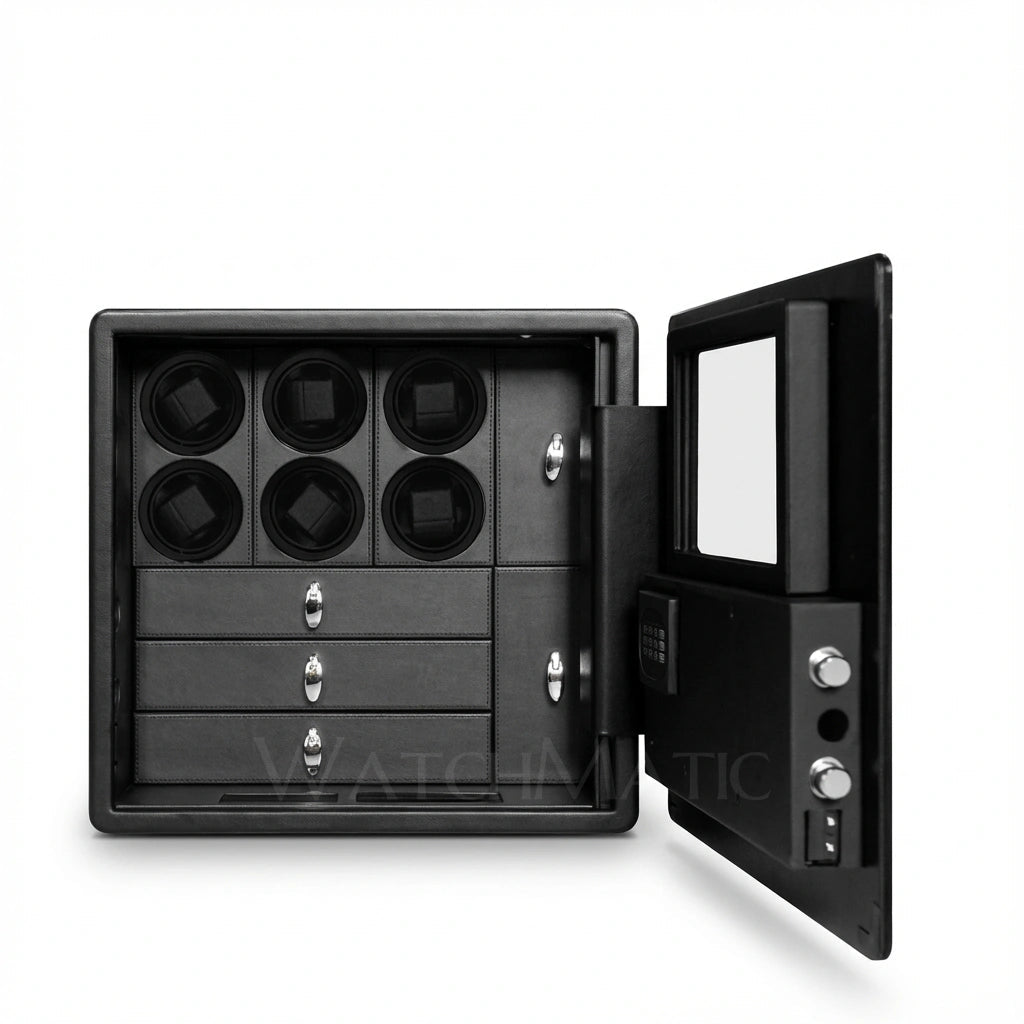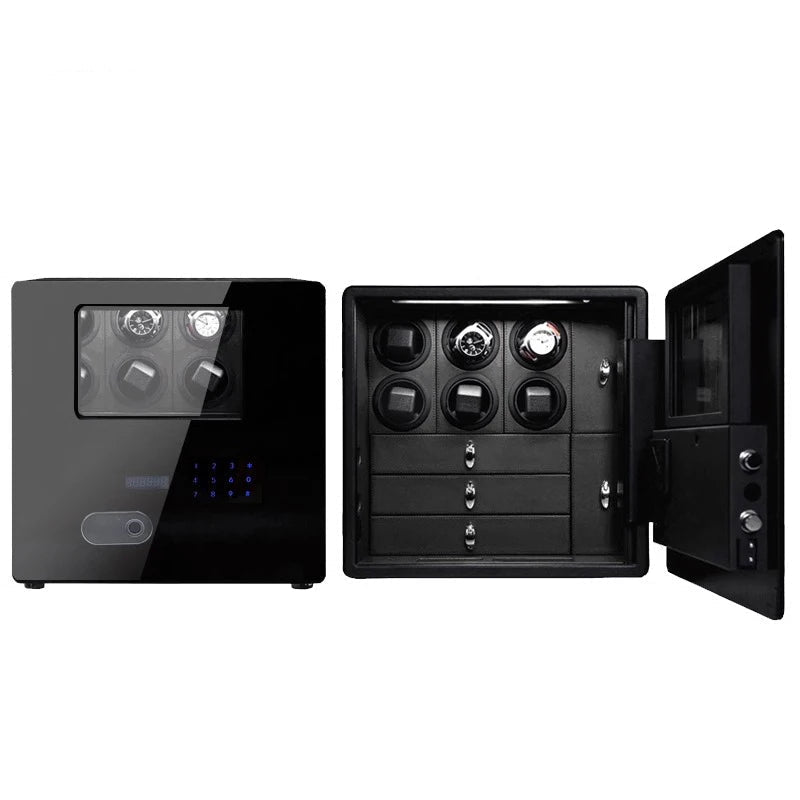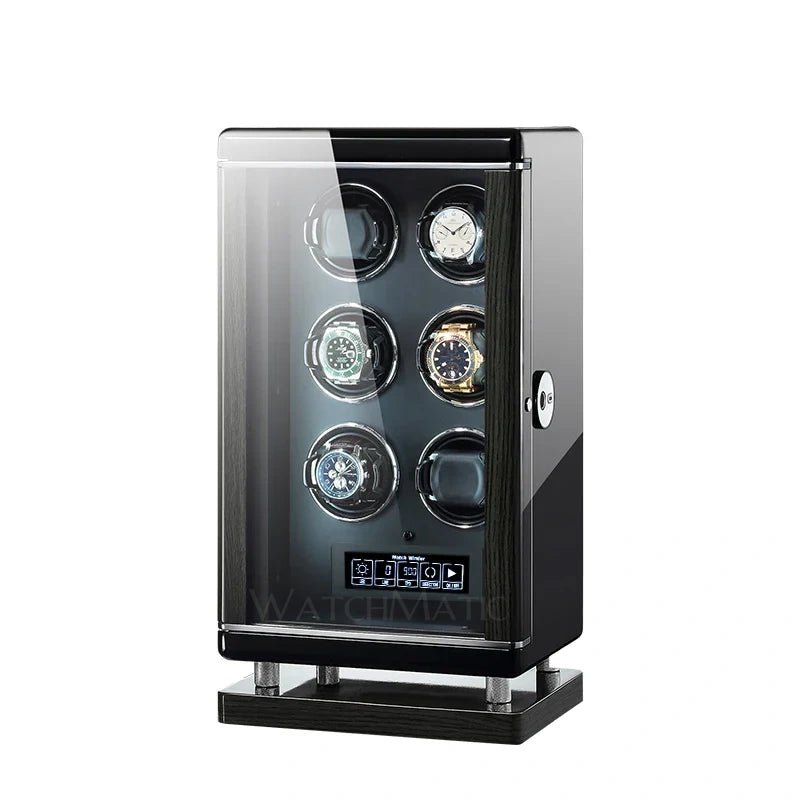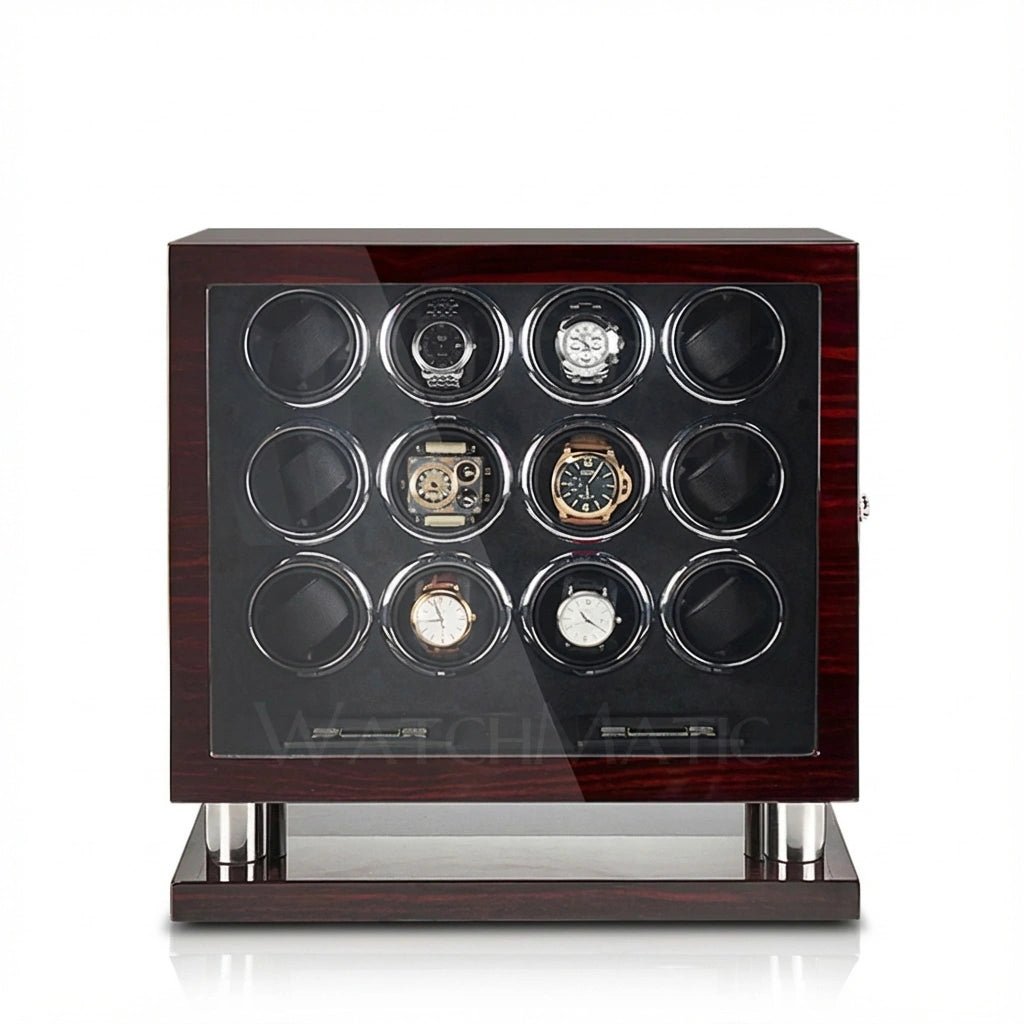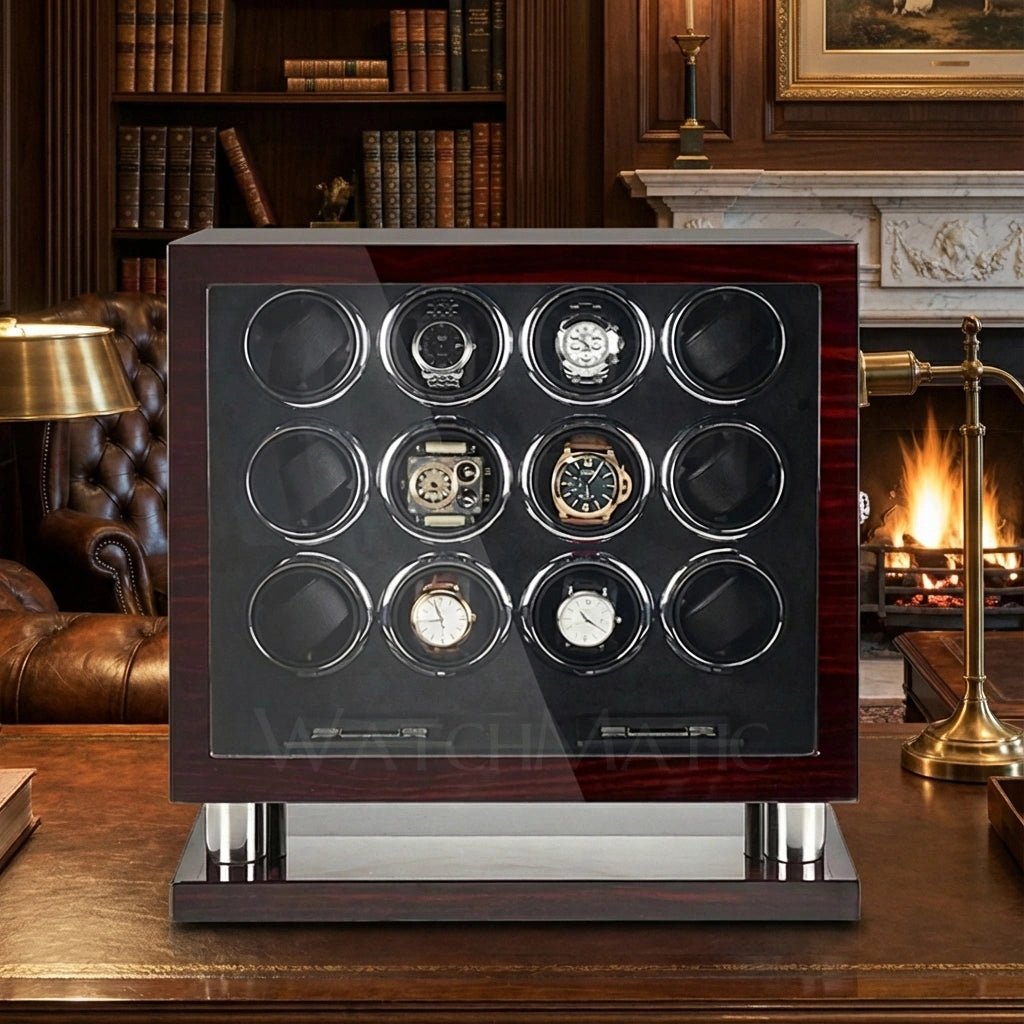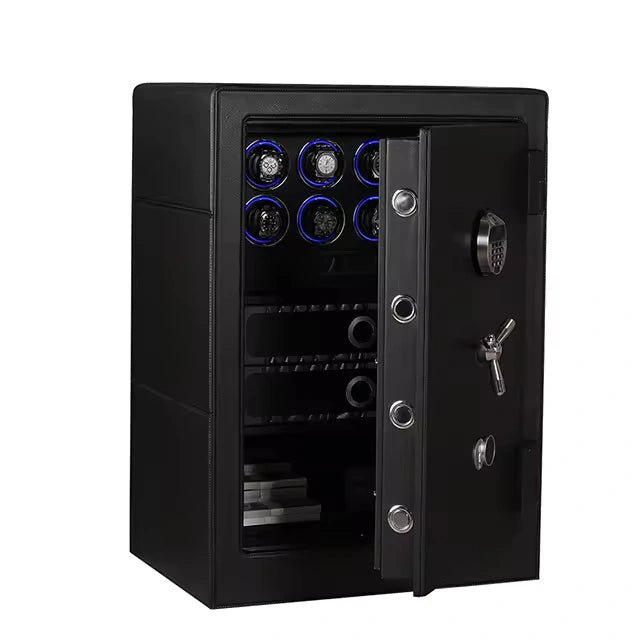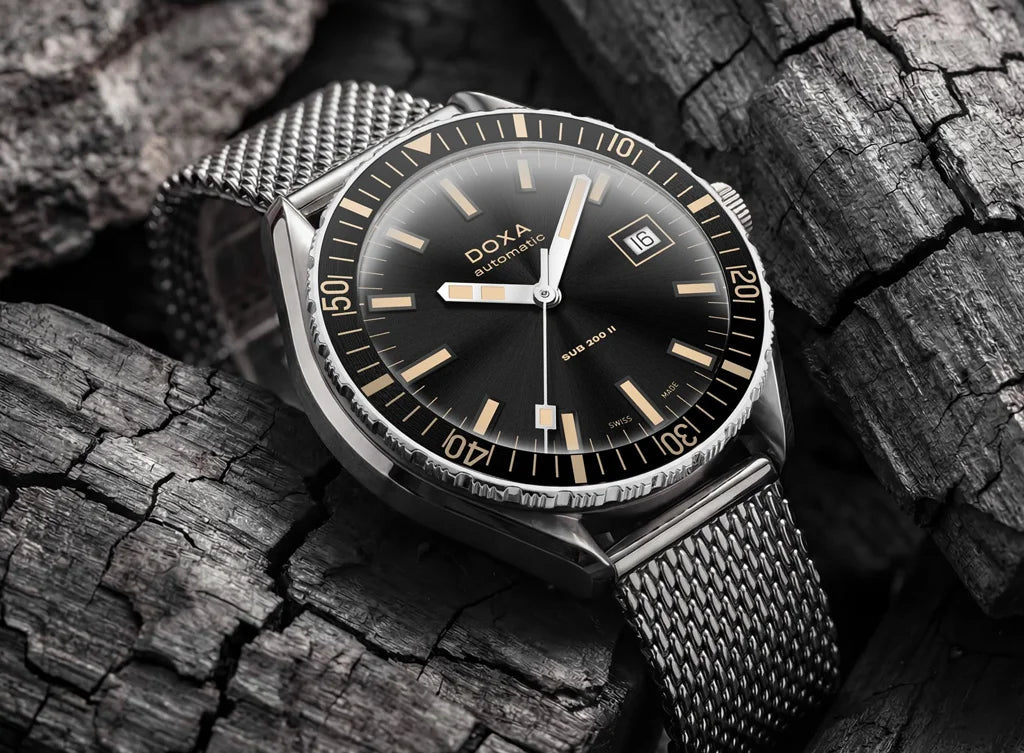
The best watch winder for DOXA watches is a programmable model with adjustable Turns Per Day (TPD), clockwise and counterclockwise rotation options, controlled winding and rest cycles, quiet operation, and strong watch support suitable for professional dive watches.
Most current DOXA watches are automatic mechanical models, particularly across the brand's well-known SUB collections.
Popular automatic examples include:
- SUB 200
- SUB 200T
- SUB 250T GMT
- SUB 300
- SUB 300 Ti5
- SUB 300 Beta
- SUB 300T
- SUB 600T
- SUB 750T
- SUB 1500T
- SUB 200 C-GRAPH II
- DOXA Army
However, these watches do not all have the same power reserve.
Many core DOXA divers provide approximately 38 hours, while newer or more specialized references can provide 50 or 56 hours.
The correct process is therefore:
DOXA Reference → Movement Specification → Power Reserve → Winding Requirement → Physical Fit → Watch Winder Program
Does a DOXA Watch Need a Watch Winder?
No automatic DOXA mechanically requires a watch winder.
A self-winding DOXA uses movement of its rotor to wind the mainspring while the watch is being worn.
If the watch remains unworn longer than its available power reserve, it eventually stops.
A watch winder is therefore mainly useful for convenience.
It can help:
- Keep an automatic DOXA running between wears
- Maintain the time and date
- Keep a GMT indication synchronized
- Reduce repeated restarting
- Keep several dive watches ready to wear
- Organize a larger mechanical-watch collection
For a broader explanation of how automatic winding works, see the Watch Winder Guide.
Which DOXA Watches Can Use a Watch Winder?
Current DOXA watches show a meaningful range of automatic power reserves.
| DOXA watch | Movement type | Approx. power reserve | Conventional winder? |
|---|---|---|---|
| SUB 200 | Automatic | 38 hours | Yes |
| SUB 200T | Automatic | 38 hours | Yes |
| SUB 300 | COSC automatic | 38 hours | Yes |
| SUB 300 Ti5 | COSC automatic | 38 hours | Yes |
| SUB 300 Beta | Automatic | 38 hours | Yes |
| SUB 300T | Automatic | 38 hours | Yes |
| SUB 600T | Automatic | 38 hours | Yes |
| DOXA Army | Automatic | 38 hours on standard refs | Yes |
| SUB 250T GMT | Automatic GMT | 50 hours | Yes |
| SUB 1500T | Automatic | 50 hours | Yes |
| SUB 200 C-GRAPH II | Automatic chronograph | 56 hours | Yes |
| SUB 750T | Automatic | 56 hours | Yes |
This creates an important distinction:
DOXA is predominantly automatic today, but DOXA does not equal one single power-reserve specification.
Why DOXA Is Different From Many Other Watch Brands
DOXA's current catalog is unusually concentrated around mechanical dive watches.
That simplifies one part of the watch-winder question because a large percentage of current SUB watches are indeed automatic.
However, the brand creates a different challenge:
many models look very similar mechanically but differ considerably in case architecture, water resistance, power reserve, and physical dimensions.
A SUB 200T and SUB 1500T are both automatic DOXA divers.
But they are very different objects.
The first is a compact 39 mm watch.
The latter is approximately 45 mm and much more substantial.
A suitable winder therefore needs to address both:
movement compatibility
and:
physical support.
DOXA's 38-Hour Automatic Group
A large portion of the current DOXA catalog provides approximately:
38 hours of power reserve
This includes prominent models such as:
- SUB 200
- SUB 200T
- SUB 300
- SUB 300 Ti5
- SUB 300 Beta
- SUB 300T
- SUB 600T
- Standard DOXA Army references
From a watch-winder perspective, this is highly relevant.
A 38-hour watch removed from the wrist on Friday evening may stop well before Monday morning.
For a collector rotating multiple watches, that makes a winder noticeably more convenient than it might be for a movement offering 80 or 120 hours.
DOXA's 50-Hour Automatic Group
Some newer or specialized DOXA references extend reserve to approximately:
50 hours
Important examples include:
- SUB 250T GMT
- SUB 1500T
This gives the watch more autonomy but does not fundamentally change the watch-winder principle.
A frequent wearer may rarely need a winder.
A large-collection owner may still prefer keeping the watch running between wears.
DOXA's 56-Hour Automatic Group
Two particularly relevant current watches provide approximately:
56 hours of power reserve
These include:
- SUB 200 C-GRAPH II
- SUB 750T
The first is an automatic chronograph.
The second is a substantial professional diver.
Although both provide similar reserve, their case proportions and functions are different.
That demonstrates why power reserve alone should not determine winder selection.
DOXA Watch Winder TPD Settings
TPD means Turns Per Day—the approximate number of rotations delivered by a watch winder during its programmed daily cycle.
There should not be one generic recommendation such as:
“DOXA = 650 TPD.”
DOXA's current product specifications commonly identify:
- Swiss mechanical automatic
- Self-winding
- Power reserve
- Frequency
- COSC certification where applicable
But the consumer specification does not generally provide one universal watch-winder TPD program for the entire brand.
The correct process is:
- Identify the exact DOXA reference.
- Confirm the automatic movement specification.
- Determine its winding requirements.
- Select appropriate TPD.
- Select appropriate rotation direction.
- Confirm that the watch maintains adequate reserve.
For a detailed explanation of Turns Per Day, see the Watch TPD Guide.
What Rotation Direction Should You Use for a DOXA Watch?
Programmable watch winders generally provide:
CW — Clockwise
CCW — Counterclockwise
Bi — Bidirectional
The appropriate rotation direction should be determined according to the exact movement rather than from the DOXA brand name alone.
This is particularly important because the brand's current catalog includes:
- Standard automatic movements
- COSC-certified automatic movements
- GMT automatic movements
- Automatic chronographs
A winder supporting all three directional modes therefore provides more flexibility than a fixed-direction device.
DOXA Power Reserve Comparison
A useful overview of the current catalog looks like this:
| DOXA family | Approx. reserve |
|---|---|
| SUB 200 | 38 h |
| SUB 200T | 38 h |
| SUB 300 | 38 h |
| SUB 300 Ti5 | 38 h |
| SUB 300 Beta | 38 h |
| SUB 300T | 38 h |
| SUB 600T | 38 h |
| DOXA Army | 38 h on standard refs |
| SUB 250T GMT | 50 h |
| SUB 1500T | 50 h |
| SUB 200 C-GRAPH II | 56 h |
| SUB 750T | 56 h |
This distribution creates two practical ownership groups.
38-Hour DOXA Watches
These stop relatively quickly in a multi-day rotation.
A winder can provide significant convenience.
50–56-Hour DOXA Watches
These tolerate a longer period away from the wrist.
A frequent wearer may find a winder less necessary.
The more useful question is therefore:
How long does my DOXA run, and how often do I wear it?
Best Watch Winder for DOXA SUB 200
The DOXA SUB 200 is one of the more accessible automatic models in the current SUB family.
Its technical profile includes:
- Swiss automatic mechanical movement
- Approximately 38-hour power reserve
- 28,800 vibrations per hour
- Date
- 42 mm case
- 200-meter water resistance
For a SUB 200, prioritize:
- Adjustable TPD
- Multiple rotation directions
- Controlled rest cycles
- Quiet motor operation
- Steel-bracelet compatibility
- Rubber-strap compatibility
The approximately 38-hour reserve makes a winder particularly useful if the watch is worn only every few days.
SUB 200 Bracelet and Strap Fit
The SUB 200 can be configured with DOXA's characteristic steel bracelet or an FKM rubber strap.
These two configurations behave differently on a winder.
Steel Bracelet
Look for:
- Compressible cushion
- Secure clasp closure
- Minimal bracelet tension
- Stable watch-head positioning
Rubber Strap
Look for:
- Natural curvature
- Cushion that does not overstretch the strap
- Enough space around the buckle
- Secure retention during rotation
Electronic programming alone is not enough if the watch is physically unstable.
Best Watch Winder for DOXA SUB 200T
The SUB 200T is particularly interesting because DOXA reduced the case to approximately:
39 mm
with a thickness of around:
10.7 mm
while retaining an automatic movement with approximately 38 hours of power reserve.
This makes it one of the more compact current DOXA divers.
For the SUB 200T, prioritize:
- Compressible cushion
- Compatibility with smaller wrist circumferences
- Adjustable TPD
- Multiple rotation directions
- Quiet operation
Compared with larger DOXA divers, chamber clearance is rarely the main concern.
Cushion circumference may matter more.
SUB 200T Diamonds
The SUB 200T family also includes diamond-set versions.
Mechanically, these remain automatic watches with approximately 38 hours of reserve.
The gem setting does not alter the winding requirements.
However, it changes how the watch should be physically supported.
For diamond-set models, prefer:
- Soft interior contact surfaces
- Minimal rubbing around the bezel
- Stable bracelet support
- Smooth rotation
The winder should support the watch through the strap or bracelet rather than allow decorative surfaces to contact the enclosure.
Best Watch Winder for DOXA SUB 250T GMT
The SUB 250T GMT is one of the most useful current DOXA watches for a watch-winder owner.
Its specifications include:
- Swiss automatic movement
- Approximately 50-hour power reserve
- 28,800 vibrations per hour
- Date
- 24-hour GMT hand
- Second time-zone indication
- 40 mm case
- 250-meter water resistance
Unlike a basic three-hand dive watch, a GMT contains additional time-zone information.
That increases the convenience of keeping the watch running.
Why a GMT Benefits More From Staying Running
If a standard three-hand watch stops, resetting it is straightforward.
With a GMT watch, the wearer may need to restore:
- Local time
- Date
- GMT reference time
The movement still does not mechanically need continuous operation.
But the convenience value of a winder is stronger.
For a SUB 250T GMT, prioritize:
- Adjustable TPD
- Multiple rotation modes
- Independent control
- Quiet operation
- Bracelet or FKM strap compatibility
SUB 250T GMT's 50-Hour Reserve
The 50-hour reserve is also an important middle ground in DOXA's range.
It offers more autonomy than the traditional 38-hour SUB watches but less than many modern long-reserve movements.
A collector wearing the GMT every second day may not need a winder.
Someone wearing it once per week probably gains much more convenience from one.
Best Watch Winder for DOXA SUB 300
The SUB 300 is one of the brand's most historically significant modern dive watches.
Current references use a:
COSC-certified Swiss automatic movement
with approximately:
38 hours of power reserve
The watch also features:
- 42.5 mm case
- Date
- 300-meter water resistance
- DOXA diving bezel
- Sapphire crystal
For a SUB 300, prioritize:
- Programmable TPD
- Multiple direction modes
- Controlled rest cycles
- Secure bracelet support
- Rubber-strap compatibility
- Smooth motor operation
Does COSC Certification Change Winder Settings?
No.
COSC certification concerns chronometric performance.
It does not directly determine:
- TPD
- Rotation direction
- Daily winder operating time
- Cushion size
A COSC-certified SUB 300 should still be configured according to the actual winding requirements of its movement.
Therefore:
COSC accuracy certification ≠ special winder setting
Best Watch Winder for DOXA SUB 300 Ti5
The SUB 300 Ti5 extends the SUB 300 concept into Grade 5 titanium.
Its current technical specifications include:
- COSC-certified automatic movement
- Approximately 38-hour reserve
- 28,800 vibrations per hour
- 42.5 mm case
- Approximately 13.4 mm thickness
- 300-meter water resistance
- Dive Flex rubber strap
For watch-winder use, titanium construction does not change the movement program.
However, the rubber strap and case dimensions affect physical fit.
For a SUB 300 Ti5, prioritize:
- Rubber-compatible cushion
- Adequate chamber clearance
- Adjustable TPD
- Smooth rotation
- Quiet motor
Titanium Does Not Change TPD
This principle applies broadly.
Changing the case from stainless steel to titanium can affect:
- Weight
- Comfort
- Corrosion resistance
- Wrist feel
It does not directly determine:
- Rotor requirement
- Winding direction
- TPD
The movement remains the key winding variable.
Best Watch Winder for DOXA SUB 300 Beta
The SUB 300 Beta is a slimmer and more urban interpretation of the DOXA professional diver.
Current specifications include:
- Swiss automatic movement
- Approximately 38-hour reserve
- 42.5 mm case
- Approximately 11.95 mm thickness
- 300-meter water resistance
- Ceramic bezel
- Helium release valve
- Bracelet or FKM rubber strap
The slimmer case can make the watch easier to accommodate inside many winding chambers than thicker professional dive watches.
SUB 300 Beta vs. Standard SUB 300
Both are automatic and both provide approximately 38 hours of reserve.
However, the physical designs differ.
That means they may share similar movement-related considerations while requiring different attention to:
- Cushion fit
- Case clearance
- Bracelet positioning
This is a good example of why:
same reserve ≠ identical storage requirements
Best Watch Winder for DOXA SUB 300T
The SUB 300T is a substantial professional dive watch.
Current technical specifications include:
- Swiss automatic movement
- Approximately 38-hour reserve
- 42.5 mm case
- Approximately 13.65 mm thickness
- 1,200-meter water resistance
- Helium release valve
- Bracelet or FKM rubber strap
For a SUB 300T, choose:
- Strong cushion retention
- Adequate chamber depth
- Adjustable TPD
- Multiple rotation directions
- Smooth motor operation
- Bracelet/rubber compatibility
1,200-Meter Water Resistance Does Not Mean More TPD
The SUB 300T is rated for dramatically greater water pressure than a SUB 200.
But both can provide approximately the same 38-hour power reserve.
This demonstrates an important point:
water resistance and automatic winding requirements are technically separate.
The 1,200-meter rating tells you about:
- Case construction
- Seals
- Pressure resistance
It tells you nothing directly about:
- TPD
- Rotation direction
- Rotor efficiency
What About the SUB 300T Aristera?
The SUB 300T Professional Aristera places its crown at approximately 9 o'clock for left-handed wear.
Its movement remains automatic with approximately 38 hours of reserve.
Crown position does not create a special watch-winder requirement.
A rotating winder acts on the entire watch rather than directly manipulating the crown.
Therefore:
left-hand crown ≠ different TPD
Best Watch Winder for DOXA SUB 600T
The SUB 600T provides approximately:
38 hours of power reserve
and combines that movement with a distinctive angular 40 mm case and approximately 14.15 mm thickness.
Its water resistance reaches:
600 meters
For winder use, pay attention to:
- Case geometry
- Bracelet fit
- NATO compatibility on applicable configurations
- Chamber depth
- Stable watch positioning
Again, the 600-meter rating does not change the movement's winding requirement.
Best Watch Winder for DOXA SUB 750T
The revived SUB 750T differs significantly from many traditional DOXA automatics because it offers approximately:
56 hours of power reserve
Its case is approximately:
45 mm
making it one of the more substantial watches in the current SUB lineup.
For a SUB 750T, prioritize:
- Large watch-head support
- Deep enough chamber
- Secure bracelet or rubber-strap positioning
- Adjustable TPD
- Quiet motor
- Smooth starts and stops
Does a 56-Hour SUB 750T Need a Winder?
No.
The longer reserve actually reduces how often the watch needs supplemental winding.
Consider:
Worn every two days
The 56-hour reserve may be sufficient to keep the watch running naturally.
Worn once per week
The watch will normally stop between uses.
In that situation, a winder provides more convenience.
Best Watch Winder for DOXA SUB 1500T
The SUB 1500T combines an automatic movement with approximately:
50 hours of reserve
and an extremely robust professional diving case.
Current specifications include:
- 45 mm case
- Approximately 16.25 mm thickness
- 1,500-meter water resistance
- Helium release valve
- Steel bracelet or FKM strap
This is one of the DOXA watches where physical winder compatibility should be checked carefully.
SUB 1500T Chamber Clearance
At approximately 45 mm × 16.25 mm, the SUB 1500T is significantly thicker than compact models such as the SUB 200T.
Check:
- Door clearance
- Rotor-to-door distance
- Adjacent rotor spacing
- Crown clearance
- Bracelet or rubber strap curvature
A winder can be electronically compatible while still being physically too shallow.
Best Watch Winder for DOXA SUB 200 C-GRAPH II
The SUB 200 C-GRAPH II uses a Swiss automatic chronograph movement with approximately:
56 hours of power reserve
Current dimensions are approximately:
- 42 mm diameter
- 15.85 mm thickness
- 200-meter water resistance
The automatic chronograph adds more mechanical complexity than a standard three-hand DOXA.
However, that does not mean it automatically requires more TPD.
Does a DOXA Chronograph Need More Rotation?
Not simply because it is a chronograph.
A watch winder maintains the self-winding system.
It does not:
- Operate the chronograph
- Wind the chronograph separately
- Service the chronograph
- Lubricate its components
- Replace movement maintenance
The appropriate program should still be based on the winding architecture of the movement.
Original SUB 200 C-GRAPH vs. C-GRAPH II
The earlier SUB 200 C-GRAPH was physically substantial at approximately:
45 mm × 17.25 mm
while the C-GRAPH II reduced the case to approximately:
42 mm × 15.85 mm
Both provide approximately 56 hours of automatic power reserve.
This creates a useful winder insight.
The movement requirement can remain broadly similar while:
case-fit requirements improve considerably.
The C-GRAPH II is easier to accommodate in many winding chambers.
Best Watch Winder for DOXA Army
Standard current DOXA Army references use a Swiss automatic movement providing approximately:
38 hours of power reserve
with:
- 42.5 mm case
- 300-meter water resistance
- Bracelet or FKM strap
- Additional NATO strap on selected packages
A programmable winder is appropriate when the watch is part of a rotation.
However, some special editions have different movement specifications.
DOXA Army Reference-Specific Differences
This is another reason not to assign one universal DOXA specification.
Standard DOXA Army references commonly provide approximately 38 hours.
Certain limited or special editions have used a COSC-certified automatic movement with approximately 42 hours of reserve.
Therefore:
DOXA Army ≠ always identical movement specification
Check the exact reference.
DOXA Dive-Watch Color Names Do Not Change Winder Settings
DOXA uses recognizable dial names including:
- Professional
- Sharkhunter
- Searambler
- Caribbean
- Divingstar
- Aquamarine
- Whitepearl
- Sea Emerald
These names primarily describe color or design configuration.
A Professional and Caribbean SUB 300T of the same movement generation do not require different TPD simply because their dials are different colors.
Therefore:
dial color ≠ winding requirement
Bracelet vs. Rubber Strap on a DOXA Winder
Most major DOXA dive-watch families can be configured with either:
- Stainless-steel bracelet
- FKM rubber strap
Some also support NATO-style straps.
These configurations create different physical requirements.
Steel Bracelet
A suitable cushion should:
- Compress sufficiently
- Allow the clasp to close naturally
- Avoid excessive bracelet tension
- Hold the watch head securely
FKM Rubber Strap
Look for:
- Natural strap curvature
- No excessive stretching
- Stable buckle positioning
- Appropriate cushion diameter
NATO Strap
Ensure excess strap material cannot interfere with:
- Rotating components
- Adjacent watches
- Winder doors
DOXA Beads of Rice Bracelet and Cushion Fit
DOXA's iconic Beads of Rice bracelet is highly articulated.
This makes it comfortable on the wrist but also means cushion size should be selected carefully.
A holder that is too large can:
- Stretch the bracelet unnecessarily
- Prevent the clasp from closing naturally
- Change watch-head positioning
A compressible cushion generally provides better flexibility across different wrist sizes.
Deep-Dive Features Do Not Affect Winder Programming
DOXA is strongly associated with professional dive-watch technology.
Depending on model, features can include:
- No-decompression bezel
- Helium release valve
- 200–1,500 meter water resistance
- Wetsuit extensions
- Ceramic bezels
- Pressure-resistant cases
None of these determines TPD.
Always separate:
dive-watch case engineering
from:
automatic movement winding requirements.
Helium Release Valves Do Not Affect a Watch Winder
Models such as the SUB 300 Beta, SUB 300T, and SUB 1500T can include helium release valves.
The valve is relevant to saturation-diving pressure management.
It has no direct relationship to:
- Rotor winding
- TPD
- Rotation direction
- Daily winding duration
A helium valve therefore does not require any special winder program.
COSC Certification Does Not Affect a Watch Winder
Similarly, models such as the SUB 300 and SUB 300 Ti5 use COSC-certified movements.
COSC certification relates to chronometric performance.
A watch does not need:
- More TPD
- Faster rotation
- Continuous operation
because it is COSC certified.
Select the program according to the movement's winding needs.
Does a DOXA Automatic Need to Run All the Time?
No.
Allowing an automatic DOXA to stop after its power reserve is exhausted is normal.
The usefulness of a winder depends on:
Power reserve + wearing frequency + complication + collection size
Consider:
SUB 200T
38-hour reserve.
Likely to stop quickly in a weekly rotation.
SUB 250T GMT
50-hour reserve plus GMT functionality.
Longer autonomy and stronger convenience reason for remaining synchronized.
SUB 750T
56-hour reserve.
Can remain running longer without a winder.
There is no universal answer for every owner.
Should You Start a Stopped DOXA Before Using a Winder?
A watch winder is generally best viewed as a maintenance-winding device.
If an automatic DOXA is completely stopped, follow the appropriate starting procedure for the watch and establish an initial reserve before using the winder to maintain it.
Avoid the approach:
maximum TPD until it starts
The more appropriate sequence is:
restart → establish reserve → program winder → maintain
What to Look for in a DOXA Watch Winder
Adjustable TPD
Choose a winder offering several Turns Per Day settings.
DOXA's different movement generations should not be forced into one fixed program.
CW, CCW and Bidirectional Modes
A programmable system offering all three directions provides greater flexibility.
Controlled Rest Cycles
A properly designed winder should alternate between:
- Active rotation
- Rest periods
Continuous uninterrupted spinning is unnecessary.
Independent Controls
This becomes especially useful in a mixed DOXA collection.
A 38-hour SUB 300 and 56-hour C-GRAPH II should ideally be independently programmable.
Strong Cushion Retention
Many DOXA watches are substantial professional divers.
The cushion should securely support the watch throughout rotation.
Deep Chamber Clearance
Pay particular attention to:
- SUB 1500T
- SUB 200 C-GRAPH
- C-GRAPH II
- Large 45 mm references
Bracelet and Rubber Compatibility
A good holder should accommodate both.
Quiet Motors
A watch winder may operate for hours each day.
Low-noise performance matters in:
- Bedrooms
- Dressing rooms
- Offices
- Walk-in wardrobes
- Living spaces
Smooth Starts and Stops
DOXA watches may be robust tool watches, but smooth motor transitions remain preferable.
Shock resistance is not a reason to use abrupt mechanical motion.
Best Watch Winder for One DOXA Automatic
For one automatic DOXA, a compact programmable winder is generally sufficient.
Prioritize:
- Adjustable TPD
- CW/CCW/bidirectional operation
- Controlled rest cycles
- Quiet motors
- Strong cushion support
- Adequate case clearance
- Steel and FKM strap compatibility
Suitable configurations can be explored in the WatchMatic Watch Winder Collection.
Best Watch Winder for Multiple DOXA Watches
A dedicated DOXA collector might own:
- SUB 200T
- SUB 250T GMT
- SUB 300
- SUB 300T
- SUB 600T
- SUB 750T
- SUB 1500T
- C-GRAPH II
- DOXA Army
All may be automatic, but that does not mean they should necessarily share one program.
A better architecture is:
38-hour automatics → independently programmed as required
50-hour GMT/deep divers → independently programmed
56-hour automatic chronographs and divers → independently programmed
Physical dimensions should also determine which watch occupies which rotor position.
LuxGuard for DOXA Automatic Collections

A multi-position LuxGuard Watch Winder can be particularly suitable for a collection of DOXA automatics or a broader group of Swiss dive watches.
Depending on configuration, features include:
- Independent winding controls
- Multiple rotation modes
- Japanese Mabuchi motors
- Quiet operation
- Anti-magnetization protection
- Interior illumination
- Secure individual watch positions
Independent control is useful when a 38-hour SUB 300, 50-hour SUB 250T GMT, and 56-hour SUB 750T share the same system.
DOXA Case Size and Winder Clearance
Current DOXA watches cover a surprisingly broad range.
| Model | Approx. diameter | Approx. thickness |
|---|---|---|
| SUB 200T | 39 mm | 10.7 mm |
| SUB 250T GMT | 40 mm | 10.85 mm |
| SUB 600T | 40 mm | 14.15 mm |
| SUB 200 | 42 mm | 13.8 mm |
| SUB 300 | 42.5 mm | 13.4 mm |
| SUB 300T | 42.5 mm | 13.65 mm |
| SUB 300 Beta | 42.5 mm | 11.95 mm |
| SUB 750T | 45 mm | 11.95 mm |
| SUB 1500T | 45 mm | 16.25 mm |
| Original C-GRAPH | 45 mm | 17.25 mm |
This is one of the strongest information-gain areas for DOXA.
A winder designed comfortably around a SUB 200T may not provide ideal clearance for a 17.25 mm-thick C-GRAPH.
Is It Safe to Keep a DOXA on a Watch Winder?
A properly configured quality watch winder can be used with a DOXA automatic.
Important considerations include:
- Confirming the exact reference
- Selecting suitable TPD
- Selecting appropriate rotation direction
- Using controlled winding/rest cycles
- Holding the watch securely
- Maintaining adequate chamber clearance
A winder should not be used to compensate for abnormal mechanical behavior.
If an adequately wound DOXA develops significantly reduced reserve or inconsistent operation, professional inspection may be more appropriate than simply increasing TPD.
Watch Winder vs. Watch Winder Safe for DOXA Collectors
For one or several DOXA watches, a standalone programmable winder is usually sufficient.
A watch winder safe becomes more relevant when DOXA forms part of a larger luxury dive-watch or mixed mechanical collection.
| Feature | Watch Winder | Watch Winder Safe |
|---|---|---|
| Automatic winding | Yes | Yes |
| Independent programs | Model dependent | Available |
| Controlled access | Limited | High |
| Physical security | Limited | High |
| Additional storage | Limited | Available |
| Large mixed collection | Moderate | High |
Collectors looking for integrated automatic winding and secure storage can explore the Watch Winder Safe Collection.
Titan Vault for Larger DOXA and Mixed Collections

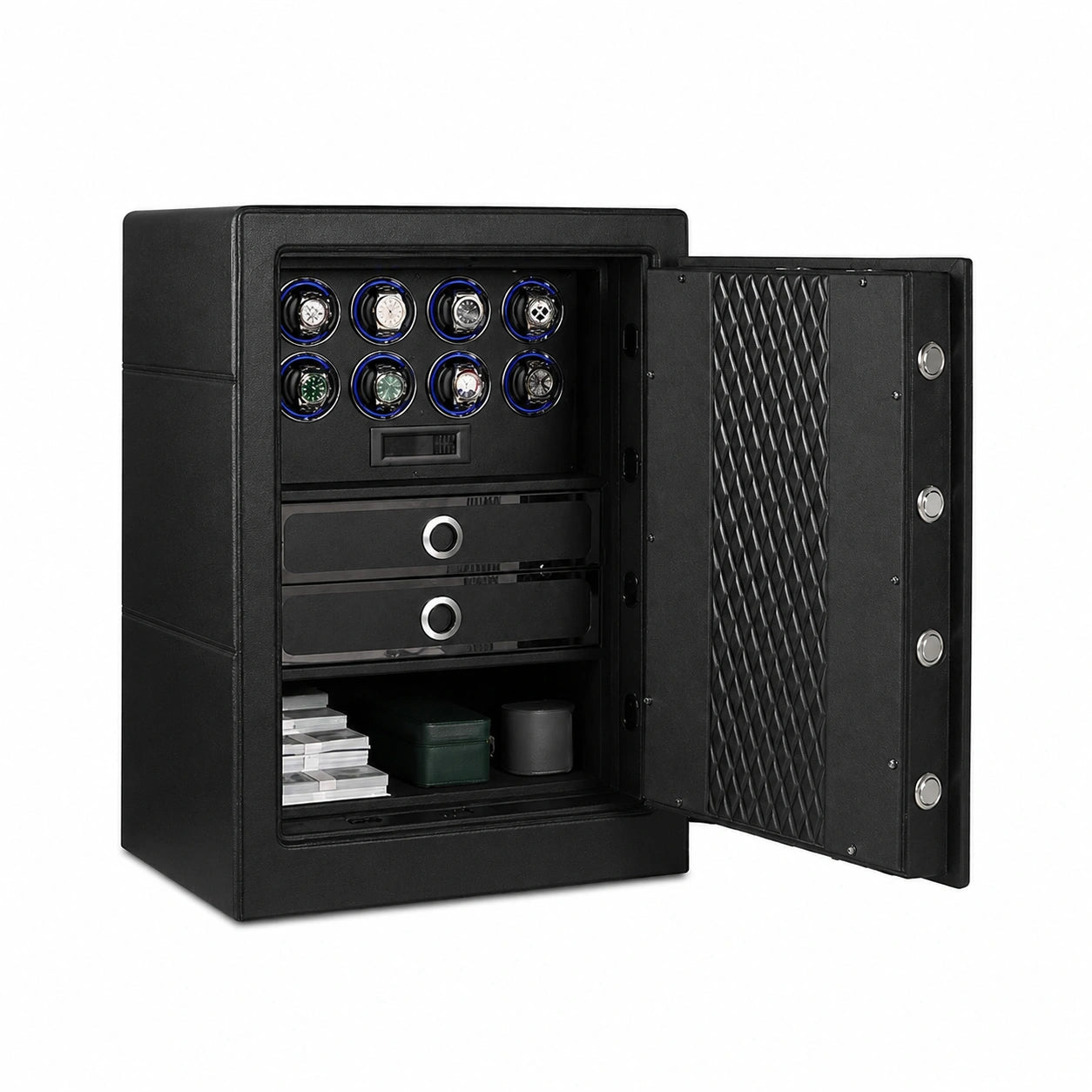
For a larger DOXA or mixed luxury-watch collection, the Titan Watch Winder Safe combines independently programmable winding positions with secure stationary storage.
Depending on configuration, the Titan Vault series can accommodate approximately 12 to 60 watches, with available features including:
- Reinforced safe construction
- Biometric fingerprint access
- Digital passcode
- Manual key access
- Independent winding controls
- Adjustable TPD
- CW/CCW/bidirectional operation
- Japanese Mabuchi motors
- Anti-magnetization protection
- LED illumination
- Additional storage compartments
A DOXA collector can therefore assign different automatic models to individually controlled winding positions while using additional compartments for straps, bracelets, tools, or other watches.
Collectors whose primary requirement is secure stationary storage can instead explore the Luxury Watch Safe Collection.
DOXA in a Mixed Dive-Watch Collection
DOXA is frequently collected alongside Swiss and Japanese brands with strong professional diving histories.
A mixed collection might contain:
DOXA + EDOX + Oris + Certina + Seiko
Related WatchMatic resources include:
Best Watch Winder for EDOX Watches
Best Watch Winder for Oris Watches
Best Watch Winder for Certina Watches
Best Watch Winder for Seiko Watches
Even among professional dive watches, movement specifications can vary substantially.
Do not copy one brand's winder settings to another simply because both watches are divers.
How to Choose the Best Watch Winder for Your DOXA
Step 1: Identify the Exact Reference
Determine whether the watch is:
- SUB 200
- SUB 200T
- SUB 250T GMT
- SUB 300
- SUB 300 Beta
- SUB 300T
- SUB 600T
- SUB 750T
- SUB 1500T
- C-GRAPH
- DOXA Army
Step 2: Check the Power Reserve
Representative current reserves include:
38 hours
50 hours
56 hours
depending on the reference.
Step 3: Identify Any Special Movement Specification
For example:
- COSC-certified automatic
- GMT automatic
- Automatic chronograph
Step 4: Determine Appropriate TPD
Do not assign one generic DOXA number.
Step 5: Determine Rotation Direction
Choose a winder offering:
- CW
- CCW
- Bidirectional
Step 6: Check Case Diameter
Current models range from approximately:
39 mm to 45 mm
Step 7: Check Case Thickness
This can be even more important than diameter.
Current examples range from approximately:
10.7 mm to more than 17 mm
Step 8: Check Bracelet or Strap Configuration
Consider:
- Beads of Rice bracelet
- Conventional steel bracelet
- FKM rubber
- NATO
Step 9: Use Independent Programs for Multiple Watches
A 38-hour SUB and 56-hour C-GRAPH should not automatically be forced onto one program.
Step 10: Ignore Water Resistance When Choosing TPD
A 1,500-meter watch does not automatically need more winding than a 200-meter watch.
For broader resources covering automatic winding, TPD, secure storage, and collection protection, visit the WatchMatic Guide Hub.
Best Watch Winder for DOXA Watches: Final Thoughts
Choosing the best watch winder for a DOXA is relatively straightforward once the exact reference is identified.
Most of the current SUB catalog consists of self-winding Swiss mechanical watches, but their power reserves differ.
Core models such as the SUB 200, SUB 200T, SUB 300, SUB 300 Beta, SUB 300T, and SUB 600T generally provide approximately 38 hours.
The SUB 250T GMT and SUB 1500T provide approximately 50 hours.
The SUB 200 C-GRAPH II and revived SUB 750T provide approximately 56 hours.
For a DOXA automatic, prioritize:
- Adjustable TPD
- CW/CCW/bidirectional programming
- Controlled rest cycles
- Quiet motor operation
- Strong watch retention
- Bracelet and FKM compatibility
- Adequate chamber depth
- Independent programming for multiple watches
DOXA also provides a particularly clear lesson in separating movement requirements from dive-watch specifications.
A SUB 200 may be rated to 200 meters.
A SUB 300T may be rated to 1,200 meters.
A SUB 1500T may reach 1,500 meters.
Those numbers say a great deal about the watch's case and diving capability—but essentially nothing about how many turns per day the movement needs.
The most reliable decision process is:
DOXA Reference → Power Reserve → Movement Type → Physical Dimensions → TPD/Direction → Winder Program
For additional automatic-winding and secure-storage solutions, explore WatchMatic.