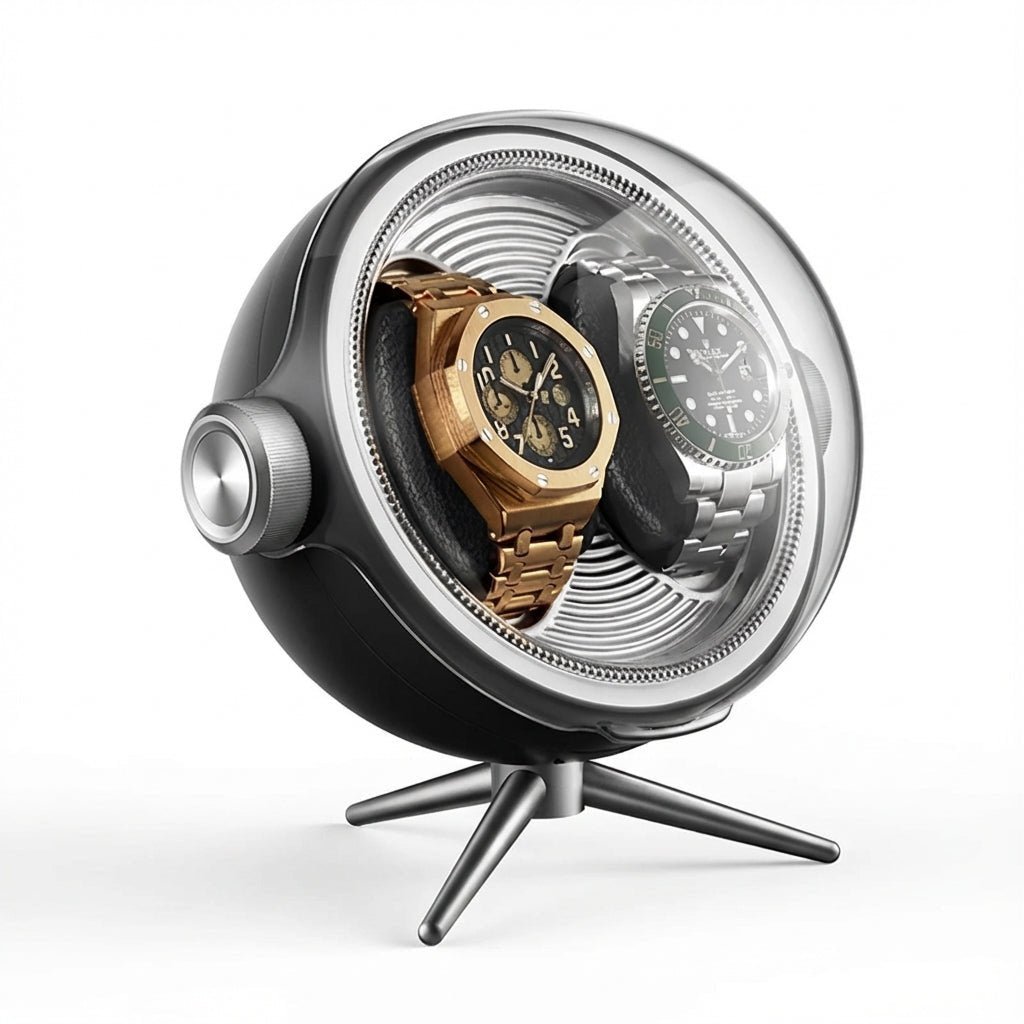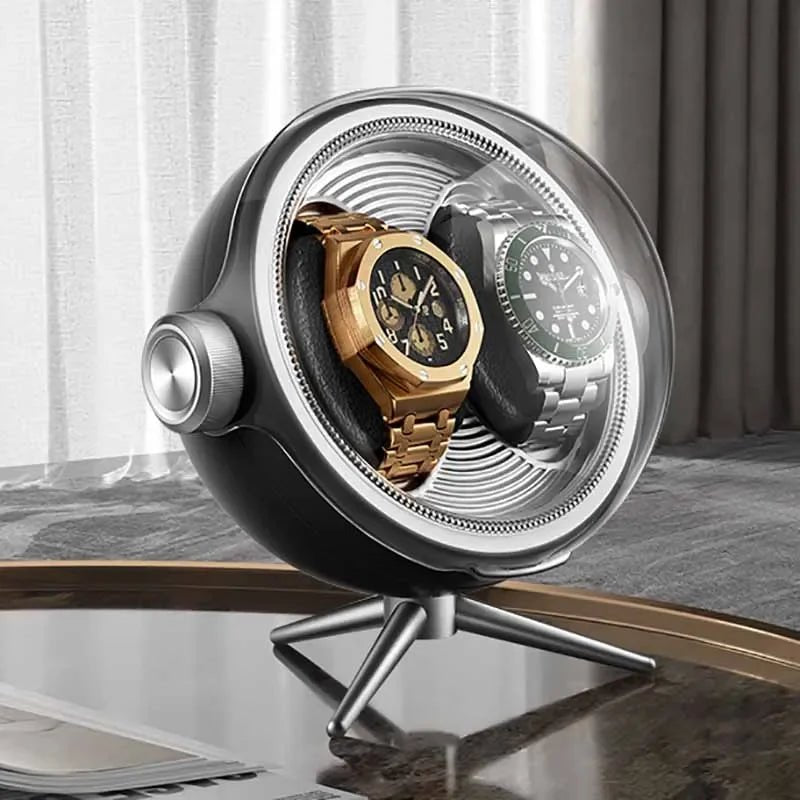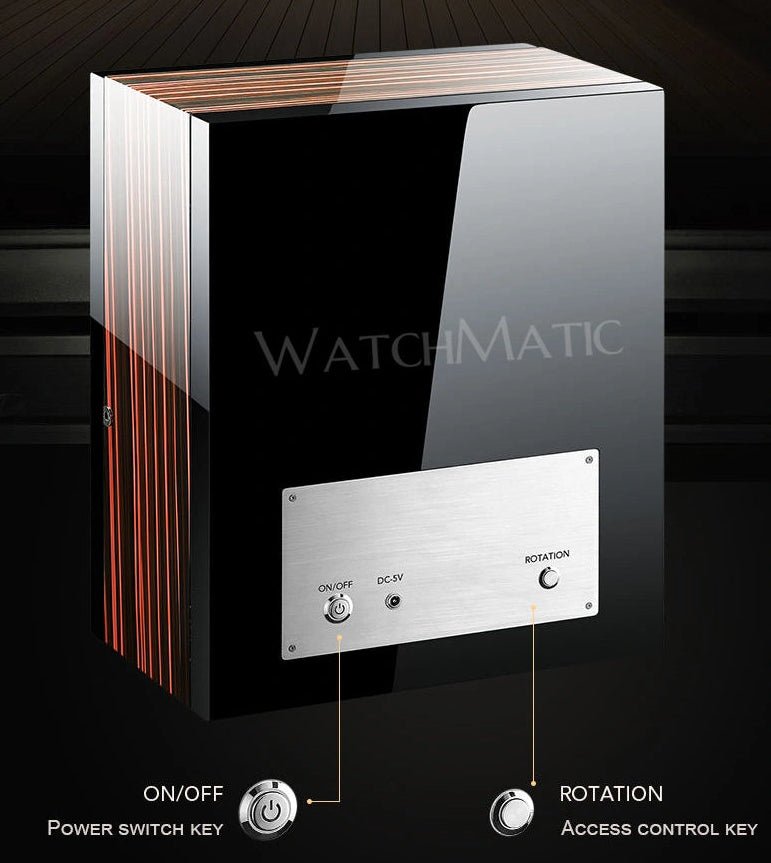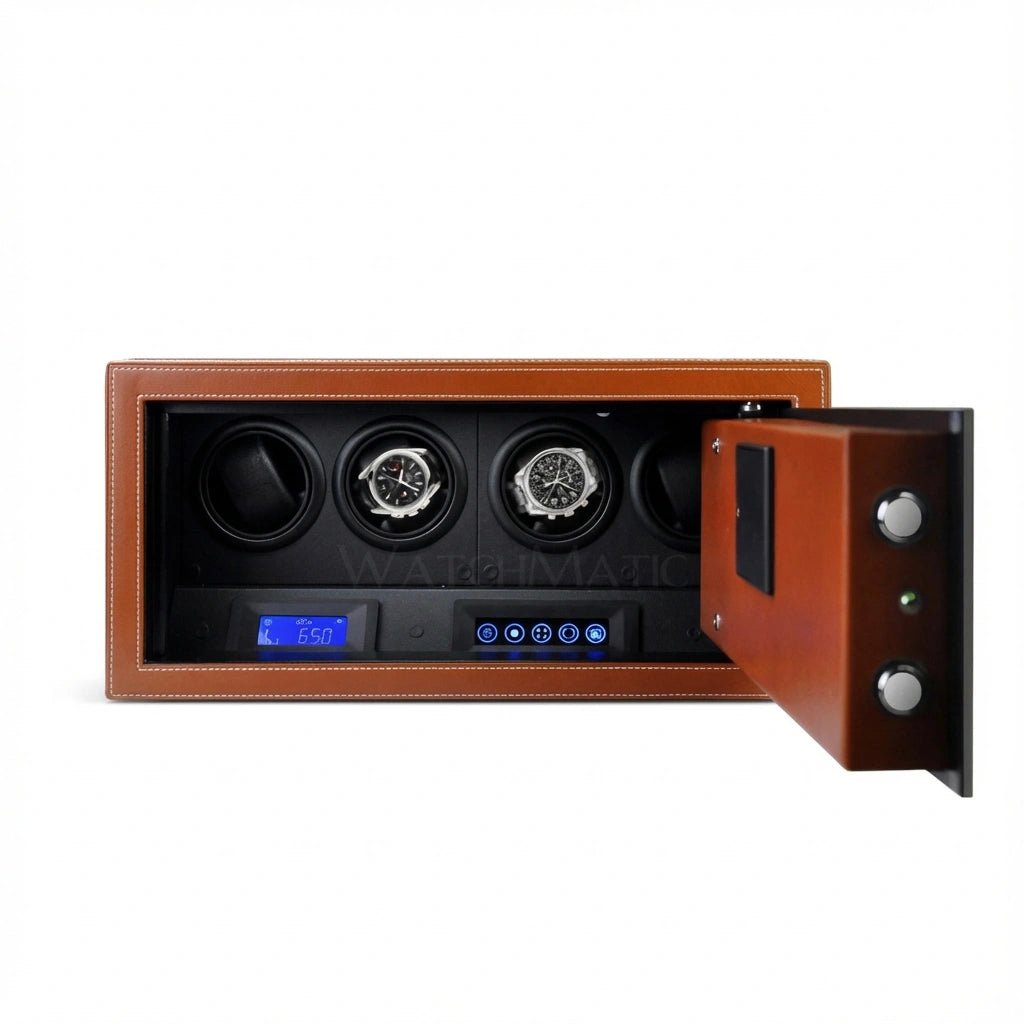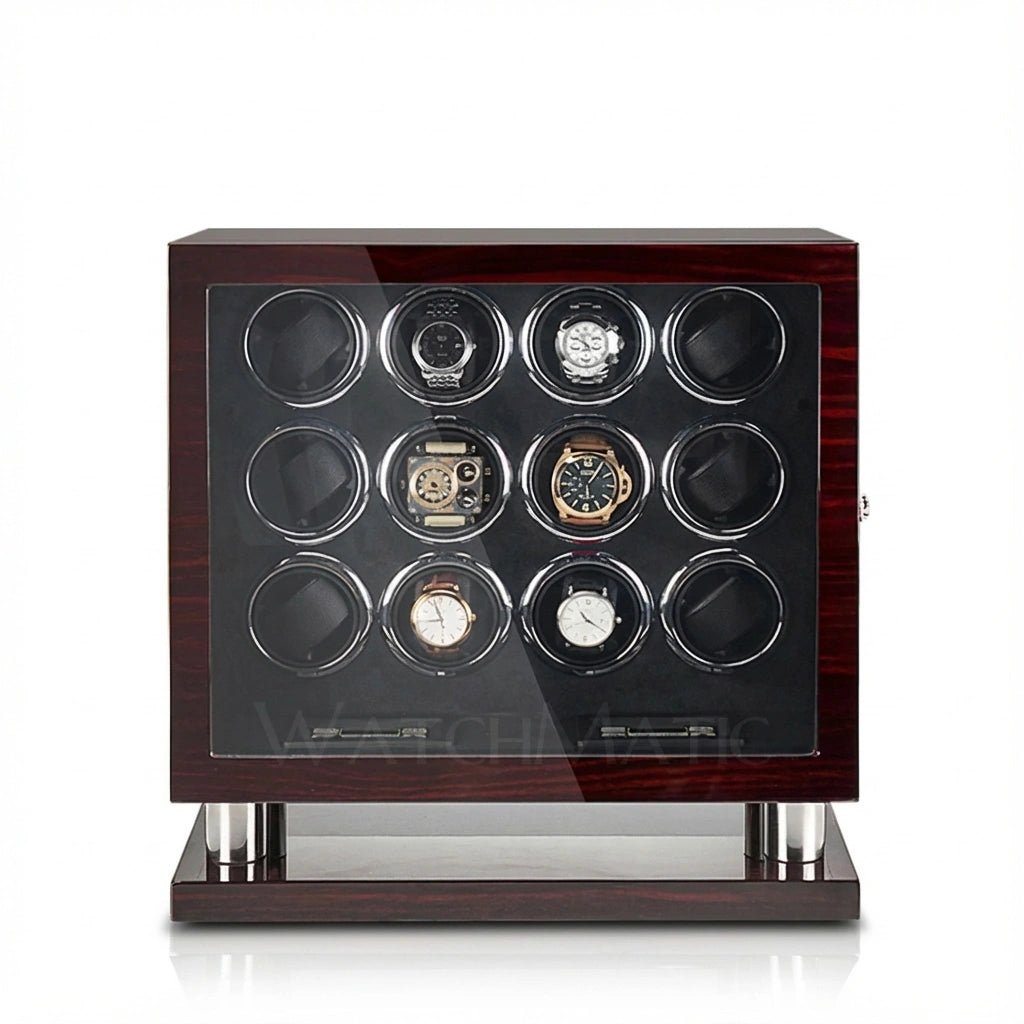
The best watch winder for EBEL watches is a programmable model with adjustable Turns Per Day (TPD), clockwise and counterclockwise rotation options, controlled winding and rest cycles, quiet operation, and a flexible cushion that fits EBEL's distinctive integrated-style bracelets securely.
A conventional watch winder is appropriate only for automatic mechanical EBEL watches.
Current automatic examples include selected EBEL 1911 models, including standard automatic, Worldtimer, diving, and automatic chronograph references, as well as selected EBEL Sport Classic models in 29 mm, 37 mm, and 42 mm sizes. EBEL also sells many quartz watches under the same broader collection names, so the exact reference must always be checked first.
Unlike some manufacturers, EBEL's current product pages generally identify these watches simply as using a Swiss automatic movement rather than publishing a universal caliber, winding direction, TPD, or power-reserve specification. That makes reference-level identification particularly important when setting up a winder.
Does an EBEL Watch Need a Watch Winder?
No automatic EBEL mechanically requires a watch winder.
EBEL's own operating instructions explain that if an automatic watch has not been worn for several days, it can be manually restarted by turning the crown clockwise approximately 20 times. Normal wrist movement then continues winding the automatic movement during wear.
A watch winder is therefore primarily a convenience device.
It can help:
- Keep an automatic EBEL running between wears
- Maintain the time and date
- Keep Worldtimer indications active
- Reduce repeated resetting
- Organize several automatic watches
- Keep a frequently rotated collection ready to wear
For a broader explanation of how automatic winding works, see the Watch Winder Guide.
Which EBEL Watches Can Use a Watch Winder?
The deciding factor is the movement type—not the EBEL collection name.
| EBEL watch | Current movement description | Conventional watch winder? |
|---|---|---|
| EBEL 1911 38 mm | Swiss automatic | Yes |
| EBEL 1911 42 mm | Swiss automatic | Yes |
| EBEL 1911 Worldtimer 42 mm | Swiss automatic | Yes |
| EBEL 1911 Diver-style 42 mm | Swiss automatic | Yes |
| EBEL 1911 Chronograph 44 mm | Swiss automatic chronograph | Yes |
| EBEL Sport Classic 37 mm | Swiss automatic | Yes |
| EBEL Sport Classic 42 mm | Swiss automatic | Yes |
| Selected Sport Classic 29 mm | Swiss automatic | Yes |
| Many Sport Classic 24/29/33 mm refs | Swiss quartz | No |
| Current EBEL Wave examples | Swiss quartz | No |
| Current EBEL Discovery Lady examples | Swiss quartz | No |
| Current Brasilia examples | Swiss quartz | No |
EBEL's current catalog confirms that automatic and quartz references coexist within the broader brand portfolio, and even within collections such as Sport Classic and EBEL 1911.
The correct process is therefore:
EBEL reference → movement type → automatic or quartz → movement details → watch-winder settings
Why the Exact EBEL Reference Matters
EBEL is a particularly good example of why a collection name alone can be misleading.
Consider EBEL 1911.
Current 38 mm and selected 42 mm men's references are automatic. There are also automatic Worldtimer models and 44 mm automatic chronographs. But current women's 1911 references in 30 mm and 34 mm configurations can be quartz, and EBEL also lists quartz 42 mm examples.
The same issue exists with Sport Classic.
Current 37 mm and 42 mm versions include automatic watches, while many 24 mm, 29 mm, and 33 mm Sport Classic references are quartz. EBEL even currently lists a 29 mm automatic Sport Classic alongside other 29 mm quartz references.
Therefore:
“EBEL 1911” or “EBEL Sport Classic” is not enough information to determine watch-winder compatibility.
The exact reference must be confirmed.
EBEL's Official Automatic-Winding Guidance
EBEL provides unusually practical instructions for automatic owners.
According to the company's operating manual, if an automatic EBEL has not been worn for several days, the wearer should manually wind it by carefully turning the crown clockwise approximately 20 revolutions.
After that initial winding, normal wrist movement continues powering the movement. EBEL also recommends active daily wear to help preserve the watch's stored reserve.
This provides two useful lessons for watch-winder owners.
First, a stopped EBEL does not indicate a problem simply because it stopped after being left unworn.
Second, a watch winder is not a replacement for understanding the watch's winding state. Starting an automatic watch with an initial manual wind before placing it on a winder can be useful when the watch is completely stopped.
EBEL Watch Winder TPD Settings
TPD means Turns Per Day—the approximate number of rotations delivered by a watch winder during its programmed daily cycle.
There should not be one universal recommendation such as:
“EBEL = 650 TPD.”
EBEL's current product pages generally state only:
Swiss automatic movement
or:
Swiss automatic chronograph movement
without publishing a standard consumer watch-winder TPD specification.
That means the safer method is:
- Identify the exact EBEL reference.
- Confirm that it is automatic.
- Identify the underlying caliber when reliable information is available.
- Determine its appropriate winding requirement.
- Select TPD and rotation direction accordingly.
- Check whether the watch maintains adequate power.
For a broader explanation of how Turns Per Day works, see the Watch TPD Guide.
What Rotation Direction Should You Use for an EBEL Watch?
Most programmable winders provide:
- CW — Clockwise
- CCW — Counterclockwise
- Bi — Bidirectional
The rotation direction should ideally be matched to the exact movement.
Current EBEL product pages identify the watches as automatic but generally do not publish consumer watch-winder rotation direction as part of the product specification.
Therefore, it is better to use a programmable winder that offers all three direction options than to buy a fixed-direction device based on a generic online claim about "EBEL settings."
This is especially important for older EBEL watches because the brand has used different automatic movements over several decades.
Current EBEL Automatic vs. Quartz: The Key Distinction
For EBEL, the first question should always be:
Is this exact reference automatic or quartz?
The current EBEL website itself allows watches to be filtered by:
- Swiss automatic movement
- Swiss quartz movement
and both technologies remain active within the catalog.
| Movement type | Energy source | Conventional watch winder useful? |
|---|---|---|
| Automatic mechanical | Rotor winds mainspring | Yes, optionally |
| Quartz | Battery/electrical energy | No |
A quartz EBEL gains no winding benefit from being rotated.
This means the presence of a mechanical-looking dial, luxury bracelet, sapphire crystal, precious metal, or high price does not determine whether the watch belongs on a winder.
Only the movement does.
What to Look for in an EBEL Watch Winder
EBEL has a distinctive physical characteristic that makes cushion selection particularly important:
bracelet architecture.
The brand's signature wave-link bracelets wrap closely around the wrist and are an important part of the design of Sport Classic and other EBEL watches.
Adjustable TPD
Choose a winder with several TPD levels instead of one fixed daily rotation count.
This gives you more flexibility when the exact automatic caliber is identified.
Multiple Rotation Directions
Look for:
CW + CCW + Bidirectional
A three-direction system is considerably more adaptable than a fixed-direction winder.
Controlled Rest Cycles
A quality winder should divide its daily rotation into operating and resting periods.
Continuous uninterrupted spinning is unnecessary.
Independent Controls
If several watches share one system, each winding position should ideally operate independently.
This is particularly useful for a mixed EBEL collection containing standard automatic, chronograph, and Worldtimer watches.
Quiet Motors
Low-noise operation is valuable when a winder is kept in:
- A bedroom
- Dressing room
- Private office
- Walk-in wardrobe
- Living space
Compressible Watch Cushions
This is particularly relevant to EBEL.
A rigid oversized cushion may place unnecessary tension on a closely fitted wave-link bracelet.
The holder should compress sufficiently to match the owner's actual bracelet circumference.
Stable Watch Positioning
The watch should remain centered while rotating.
This becomes particularly important with larger 42 mm and 44 mm EBEL models.
Best Watch Winder for EBEL Sport Classic
The EBEL Sport Classic is one of the brand's signature collections and a strong example of why movement identification matters.
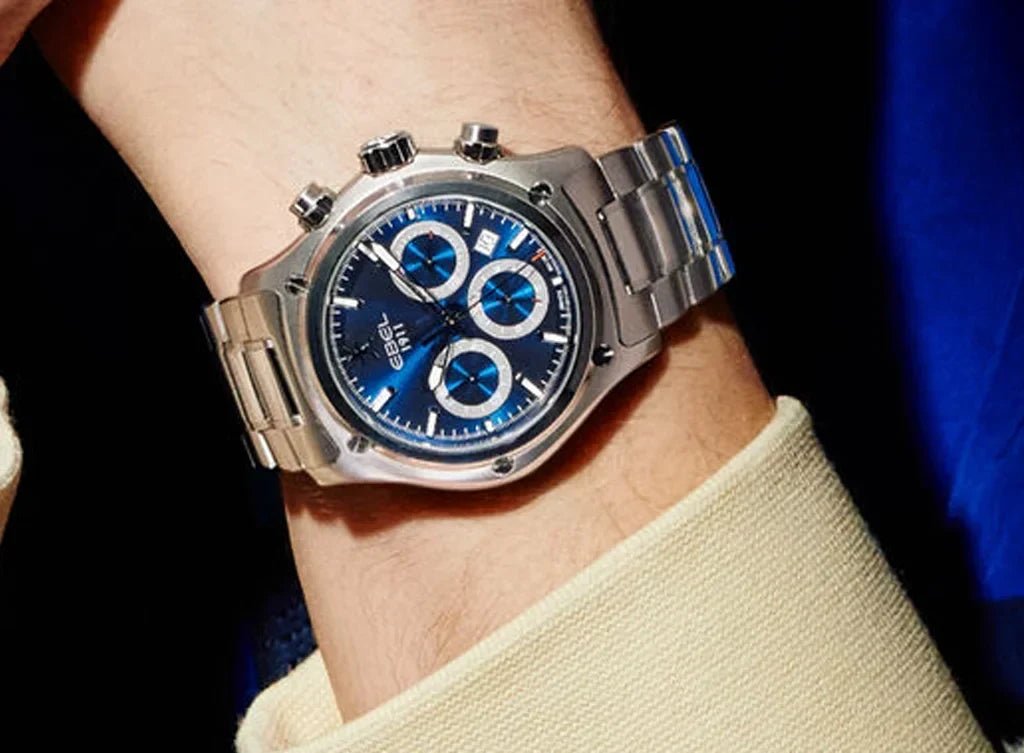
Current 37 mm Sport Classic references include Swiss automatic movements. Current 42 mm men's versions also include automatic references, including open-balance designs with sapphire casebacks.
At the same time, many current Sport Classic watches in smaller sizes use quartz movements.
Therefore:
Sport Classic Automatic → winder compatible
Sport Classic Quartz → no conventional winding benefit
For an automatic Sport Classic, prioritize:
- Adjustable TPD
- Multiple direction modes
- Quiet operation
- Controlled rest cycles
- Compressible cushion
- Gentle support for the wave-link bracelet
EBEL Sport Classic Bracelet Fit
This deserves its own section because EBEL's bracelet design is unusually important to the wearing experience.
The Sport Classic uses EBEL's characteristic wave-link bracelet, which follows the wrist closely. Current automatic models are offered with stainless-steel and two-tone versions of this bracelet.
A watch-winder cushion should therefore not force the bracelet outward beyond its natural fitted circumference.
For a properly sized EBEL bracelet, look for a holder that:
- Compresses easily
- Supports smaller wrist circumferences
- Keeps the clasp naturally closed
- Prevents excessive tension
- Holds the watch head securely during rotation
This is one area where physical fit can matter just as much as TPD.
Best Watch Winder for EBEL 1911
The EBEL 1911 collection includes several different current automatic configurations.
EBEL currently lists:
- 38 mm automatic models
- 42 mm automatic models
- 42 mm automatic diving references
- 42 mm automatic Worldtimer references
- 44 mm automatic chronographs
For a standard automatic EBEL 1911, look for:
- Adjustable TPD
- CW/CCW/bidirectional modes
- Controlled rest periods
- Quiet motor operation
- Stable bracelet support
However, exact movement configuration should still be checked before selecting the final program.
Best Watch Winder for EBEL 1911 Worldtimer
The current EBEL 1911 Worldtimer is a particularly strong candidate for watch-winder use.
EBEL describes current 42 mm Worldtimer references as Swiss automatic watches displaying the time across 24 reference time zones, with a date display and ceramic city/time-zone bezel.
A Worldtimer creates a stronger convenience argument than a simple time-only automatic.
If a basic three-hand watch stops, resetting it generally takes little time.
A Worldtimer contains more synchronized information, so a collector may prefer to keep it running and ready to wear.
For an EBEL 1911 Worldtimer, prioritize:
- Programmable TPD
- Multiple rotation directions
- Independent control
- Controlled rest cycles
- Secure bracelet positioning
Best Watch Winder for EBEL 1911 Automatic Chronograph
Current 44 mm EBEL 1911 references include Swiss automatic chronograph movements.
These watches feature a date indication, sapphire caseback, and 100-meter water resistance on current references.
An automatic chronograph can be placed on an appropriately configured watch winder because the underlying movement is self-winding.
However, the role of the winder should be understood correctly.
A winder:
keeps the automatic movement supplied with winding energy
It does not:
service, regulate, lubricate, or maintain the chronograph mechanism
For a 44 mm automatic chronograph, physical support is also important because the watch head is larger than a standard Sport Classic.
Best Watch Winder for EBEL 1911 Diver-Style Models
Current EBEL 1911 automatic references also include 42 mm watches with ceramic unidirectional bezels and water resistance up to 20 bar / 200 meters.
For these watches, look for:
- Stable support for the larger watch head
- Compressible bracelet cushions
- Adjustable TPD
- Multiple rotation directions
- Smooth motor starts and stops
The watch's diving specification does not change its winding requirement.
Water resistance and automatic winding are separate technical considerations.
EBEL 1911 Automatic vs. Quartz
This distinction is especially important because EBEL 1911 is not exclusively automatic.
Current men's references include automatic 38 mm and 42 mm watches, Worldtimers, divers, and chronographs.
But the current catalog also includes 1911 quartz models, including women's 30 mm and 34 mm references and selected other configurations.
Therefore:
Do not buy a watch winder because the watch says “EBEL 1911.”
Instead, confirm the technical specification states:
Swiss automatic movement
Can an EBEL Wave Use a Watch Winder?
Current EBEL Wave listings are quartz.
The official current Wave collection filter lists Swiss quartz movement, and current 30 mm Wave references are explicitly identified as quartz watches.
A conventional automatic watch winder therefore provides no winding benefit to those current Wave models.
For a vintage or older EBEL Wave reference, however, the exact movement should still be checked rather than applying current-catalog information retrospectively.
Can an EBEL Discovery Use a Watch Winder?
Again, the exact reference matters.
Current EBEL Discovery Lady references shown in EBEL's catalog are quartz and therefore receive no winding benefit from a conventional automatic winder.
However, EBEL has also produced automatic Discovery watches historically. The company's own archived Discovery Bronze material, for example, describes that model as using an automatic movement.
This is an excellent example of why current collection assumptions should not automatically be applied to older EBEL watches.
For a pre-owned Discovery:
check the exact reference and movement before selecting a winder.
Can an EBEL Brasilia Use a Watch Winder?
Current Brasilia examples listed by EBEL use Swiss quartz movements.
Those current watches therefore do not need a conventional automatic winder.
As with any older EBEL reference, collectors purchasing a vintage or discontinued Brasilia should verify the exact movement rather than relying only on the present catalog.
Current EBEL vs. Vintage EBEL Watch Winder Settings
This is particularly important for EBEL because many watches in circulation are older than the brand's current lineup.
A collector may own:
- Current Sport Classic automatic
- Current 1911 automatic
- Older Discovery automatic
- Older 1911 chronograph
- Vintage automatic EBEL
- Current quartz Wave
Those watches should not automatically receive the same winding program.
For older watches, the process should be:
Reference number → production generation → movement → winding direction → TPD
Do not copy current-product assumptions to a vintage EBEL simply because the dial carries the same collection name.
Why EBEL Does Not Support a Universal TPD Answer
Some watch-winder guides try to reduce the process to:
Brand = TPD + direction.
That approach is particularly weak for EBEL.
Current official product pages often do not expose the underlying caliber at all. They simply classify the watch as a Swiss automatic movement.
Meanwhile:
- The catalog contains quartz and automatic watches
- Collection names can include both movement types
- Older EBEL references may use different movements from current watches
- Chronograph and Worldtimer references introduce additional architectures
Therefore the better approach is movement-specific rather than brand-specific.
Does an EBEL Automatic Need to Run All the Time?
No.
EBEL's own instructions make clear that an automatic watch can be restarted after it has been left unworn.
The company recommends an initial manual wind of approximately 20 clockwise crown rotations after several days of non-use, after which normal wrist movement continues winding the watch.
This means there is nothing inherently abnormal about allowing an automatic EBEL to stop.
A winder becomes useful when the owner values:
convenience + readiness + reduced resetting
rather than because the movement must remain continuously active.
Best Watch Winder for One EBEL Automatic
For one automatic EBEL, a compact programmable winder is usually sufficient.
Prioritize:
- Adjustable TPD
- CW/CCW/bidirectional rotation
- Controlled rest cycles
- Quiet motor operation
- Compressible cushion
- Secure bracelet support
Suitable single-watch and multi-watch configurations can be explored in the WatchMatic Watch Winder Collection.
Best Watch Winder for Multiple EBEL Watches
An EBEL collection may contain:
- Sport Classic Automatic
- Sport Classic Quartz
- 1911 Automatic
- 1911 Worldtimer
- 1911 Automatic Chronograph
- Wave Quartz
- Discovery Quartz
- Older automatic Discovery or 1911 watches
This means not every watch should occupy a motorized winding position.
The more practical architecture is:
Automatic EBEL watches → independently programmable winding positions
Quartz EBEL watches → stationary storage
For vintage automatic pieces, use the movement-specific configuration appropriate to that reference.
LuxGuard for EBEL Automatic Collections

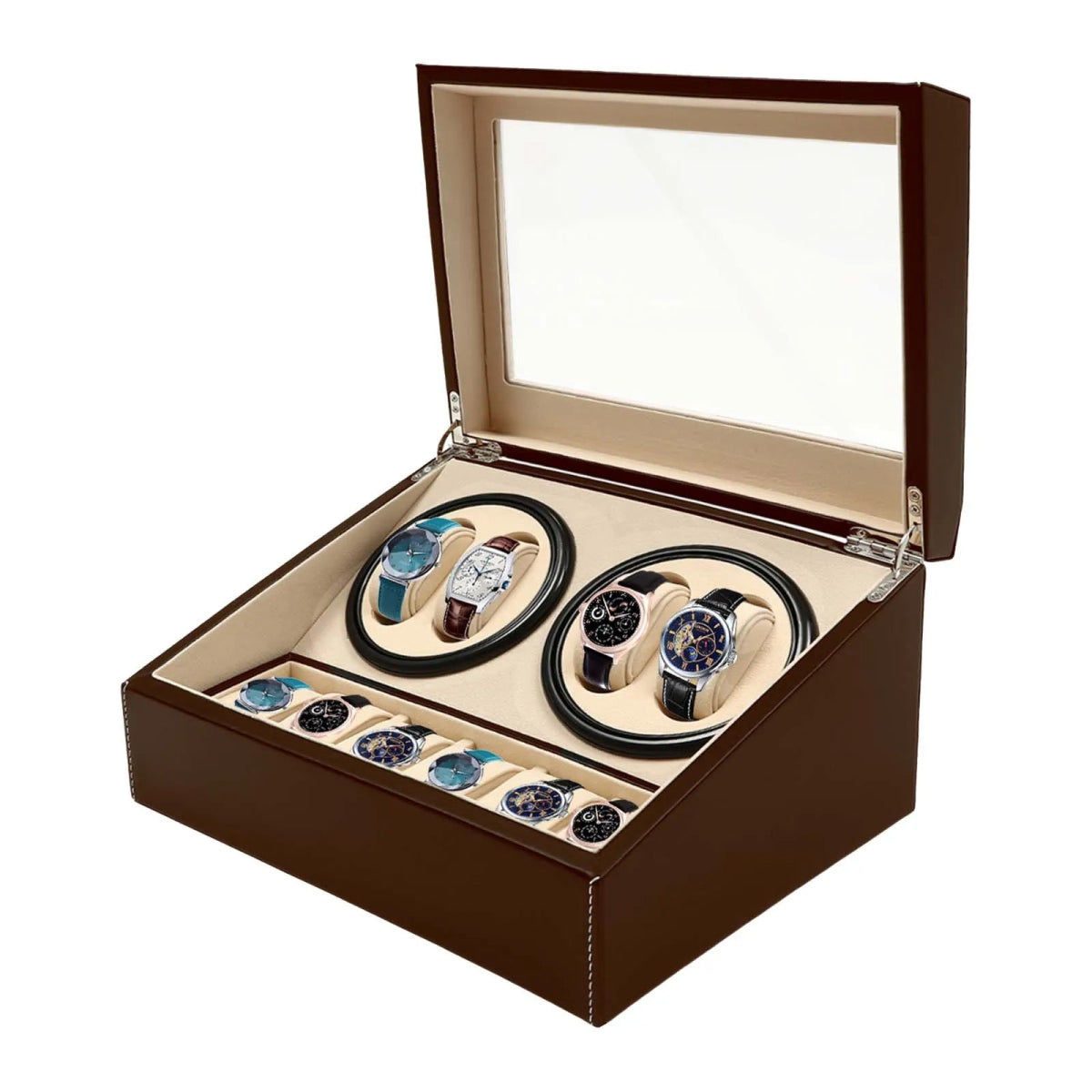
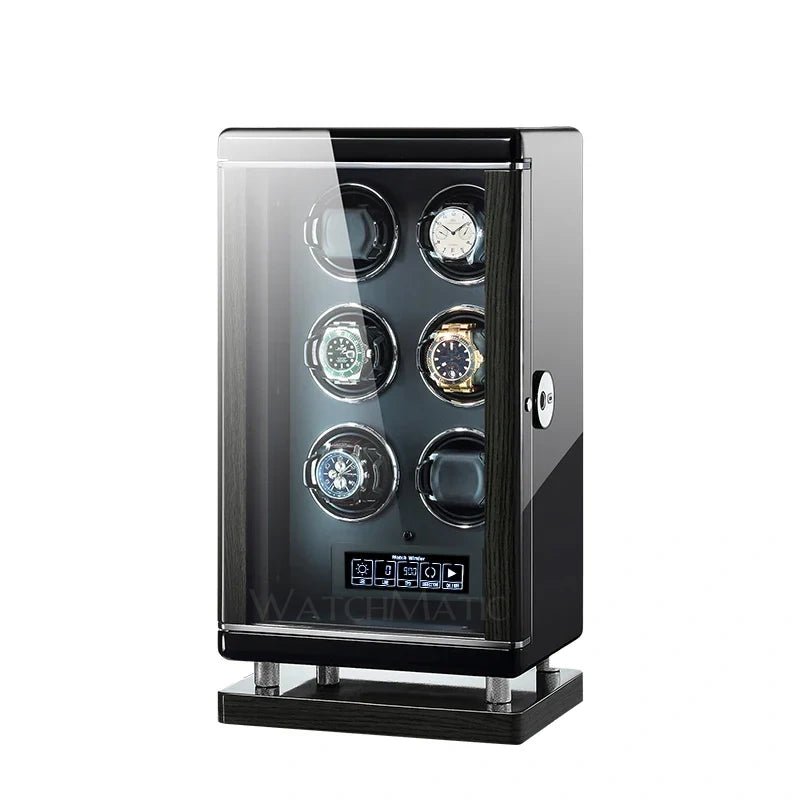
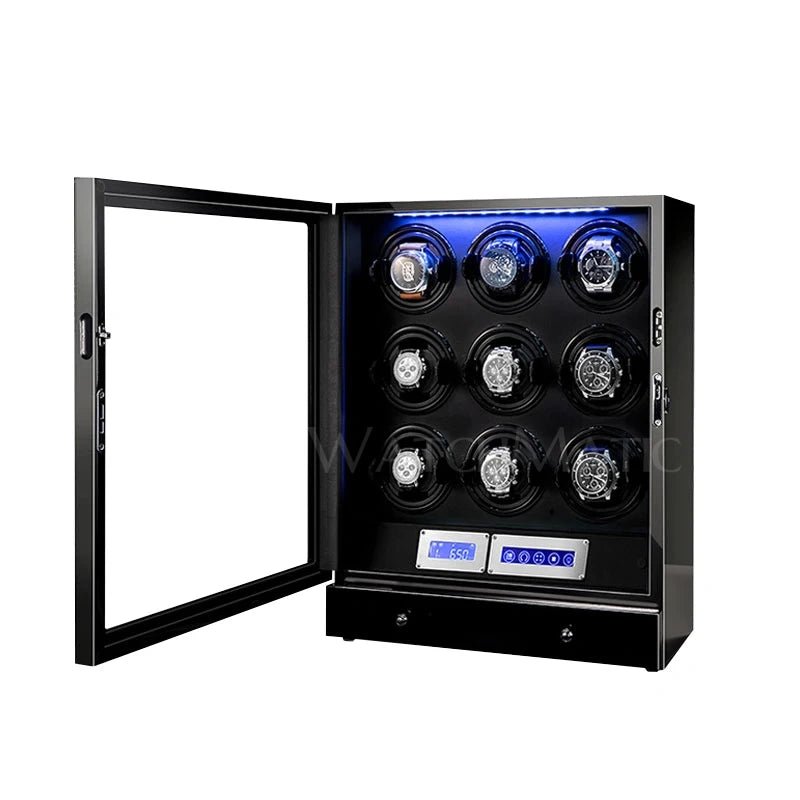
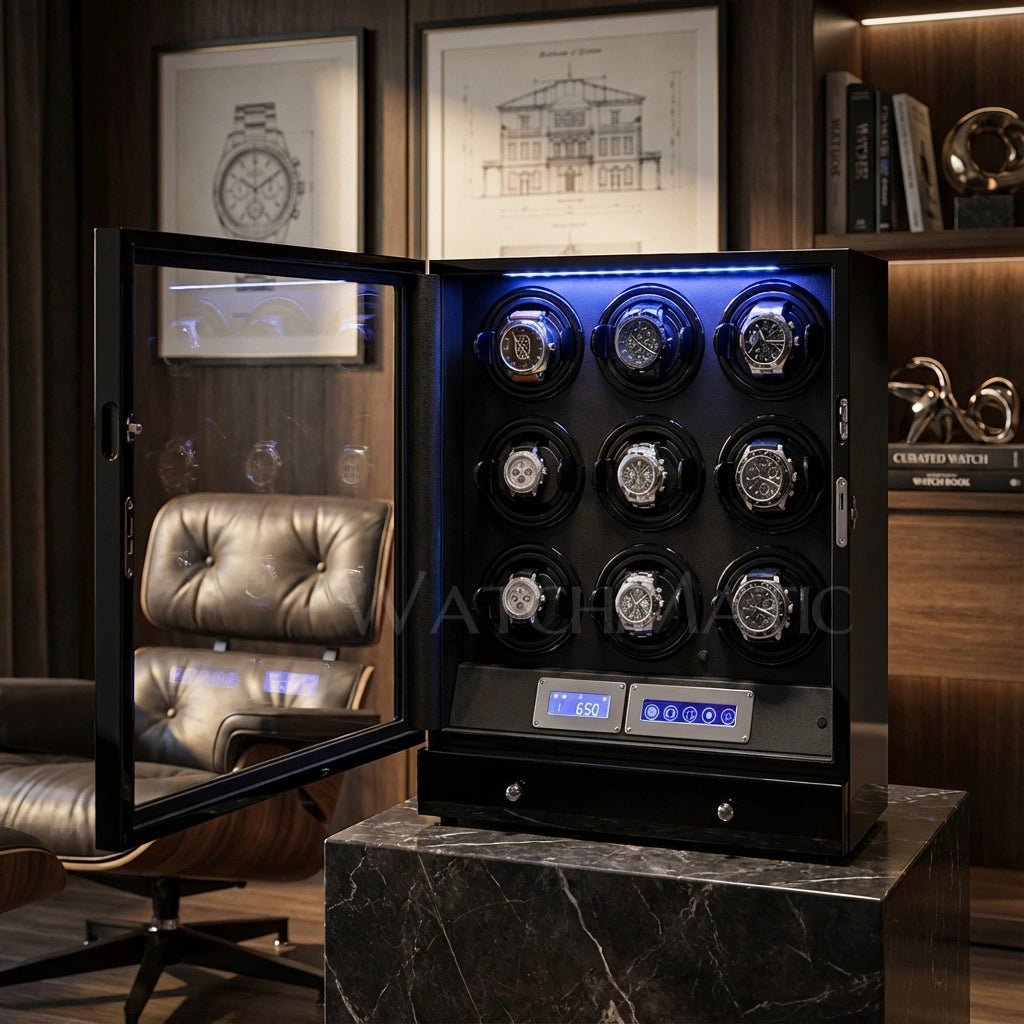
A multi-position LuxGuard Watch Winder can be suitable for collectors rotating several automatic EBEL watches or maintaining a broader Swiss mechanical collection.
Depending on configuration, features include:
- Independent winding controls
- Multiple rotation modes
- Japanese Mabuchi motors
- Quiet operation
- Anti-magnetization protection
- Interior illumination
- Secure individual watch positions
Independent programming is especially useful for an EBEL collection because a standard automatic 1911, an automatic chronograph, and an older automatic reference should not automatically be treated as identical movements.
EBEL Bracelet Fit: An Important Physical Consideration
For EBEL owners, winder selection should not focus only on electronics.
The brand's wave-link bracelet design can fit the wrist closely, and many current automatic Sport Classic and 1911 watches use integrated or highly articulated bracelet constructions.
An unsuitable cushion can create:
- Excessive bracelet tension
- Difficulty closing the clasp
- Poor watch positioning
- Movement of the watch head during rotation
A flexible holder that compresses to fit the bracelet circumference is therefore particularly valuable for EBEL.
Is It Safe to Keep an EBEL on a Watch Winder?
A properly configured quality watch winder can be used with an automatic EBEL.
Important factors include:
- Confirming the watch is automatic
- Identifying the movement where possible
- Selecting appropriate TPD
- Using a suitable rotation direction
- Providing controlled rest cycles
- Supporting the bracelet correctly
A watch winder should not be used to compensate for a mechanical problem.
If an automatic EBEL repeatedly stops despite receiving appropriate winding, or displays an unexpectedly short running time, professional inspection may be more appropriate than simply increasing TPD.
Watch Winder vs. Watch Winder Safe for EBEL Collectors
For one or several automatic EBEL watches, a standalone programmable winder will usually be sufficient.
As the collection grows—particularly if it includes precious-metal 1911 or Sport Classic watches, automatic chronographs, Worldtimers, or other luxury brands—physical security may become more relevant.
| Feature | Watch Winder | Watch Winder Safe |
|---|---|---|
| Automatic winding | Yes | Yes |
| Independent programming | Model dependent | Available |
| Quartz storage | Possible | Yes |
| Controlled access | Limited | High |
| Physical security | Limited | High |
| Jewelry/accessory storage | Limited | Available |
| Large mixed collection | Moderate | High |
Collectors seeking integrated winding and secure storage can explore the Watch Winder Safe Collection.
Titan Vault for Larger EBEL and Mixed Collections

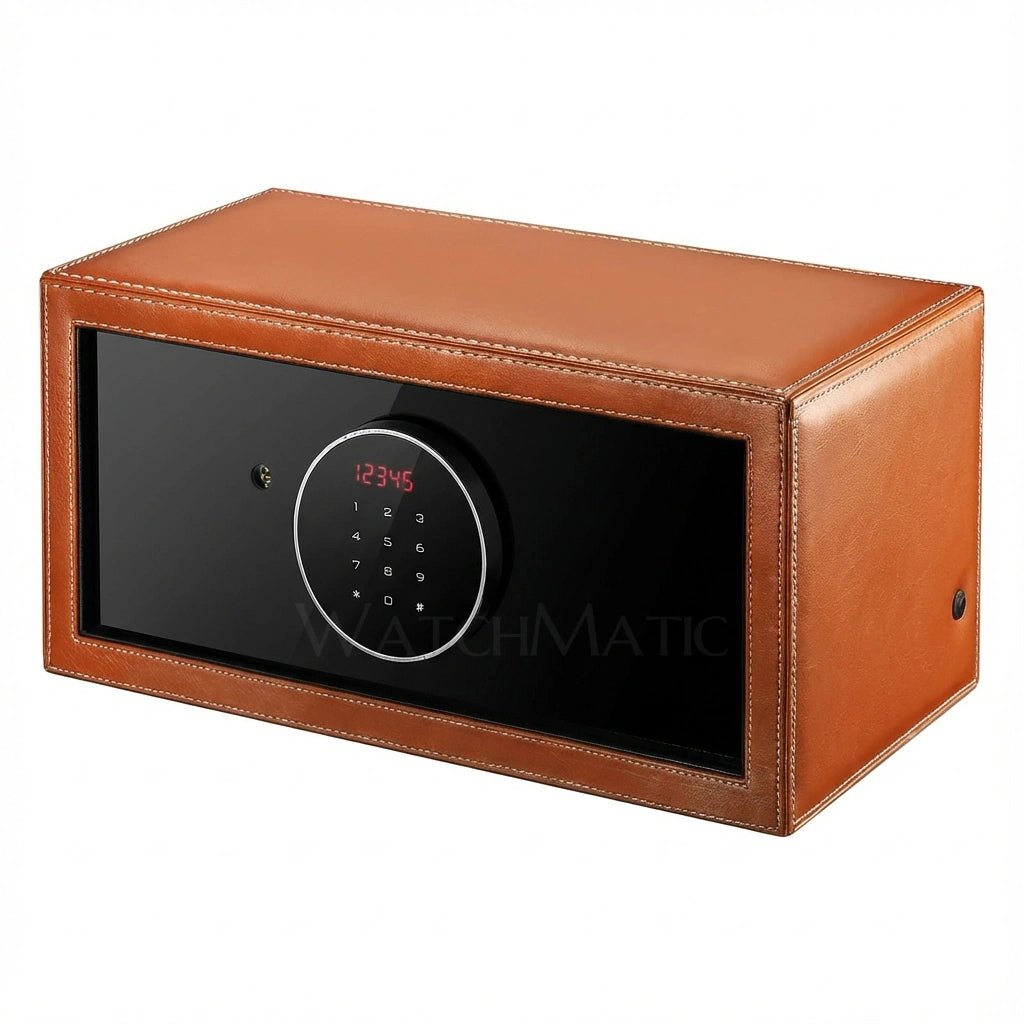
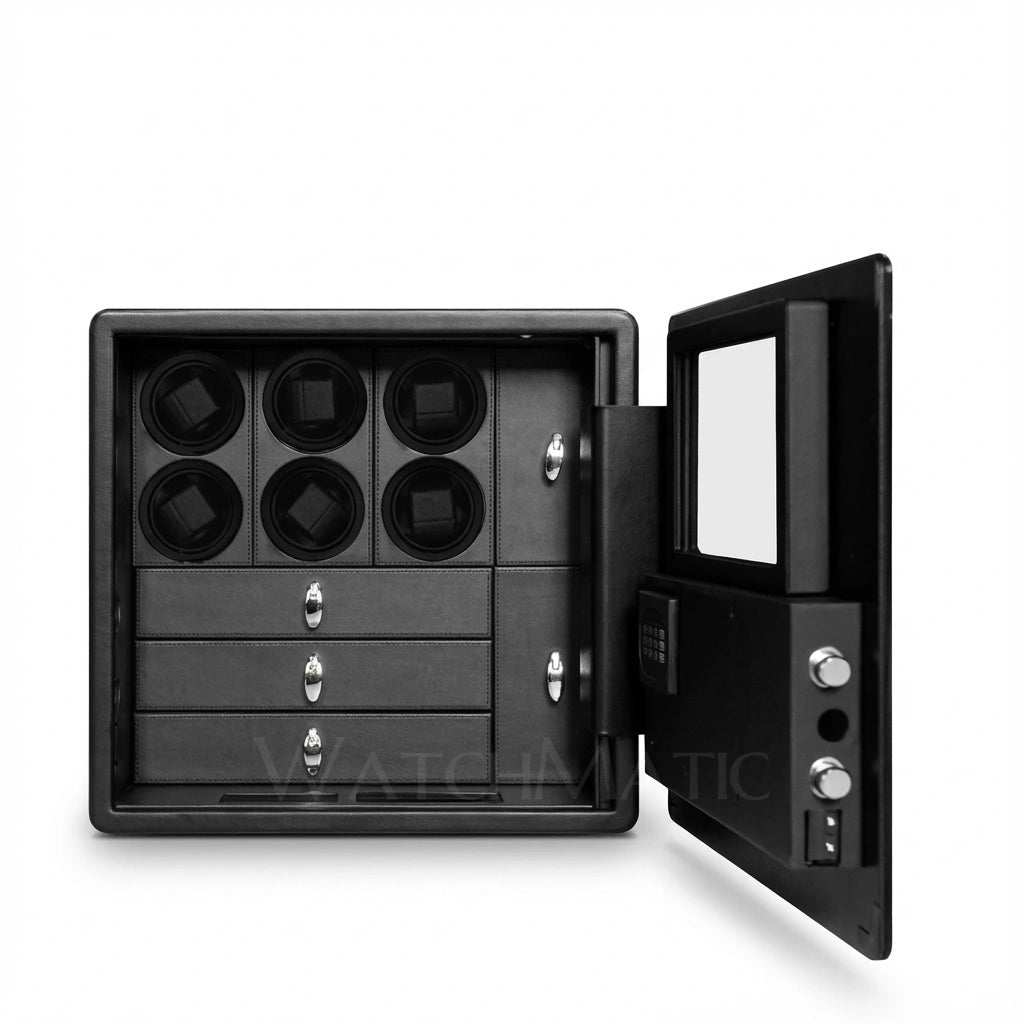
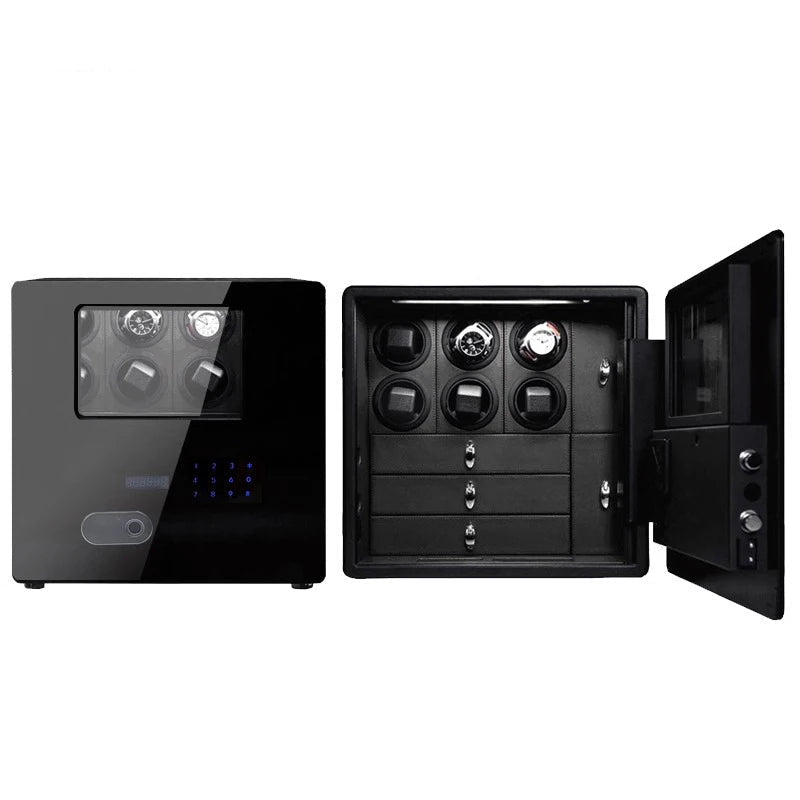
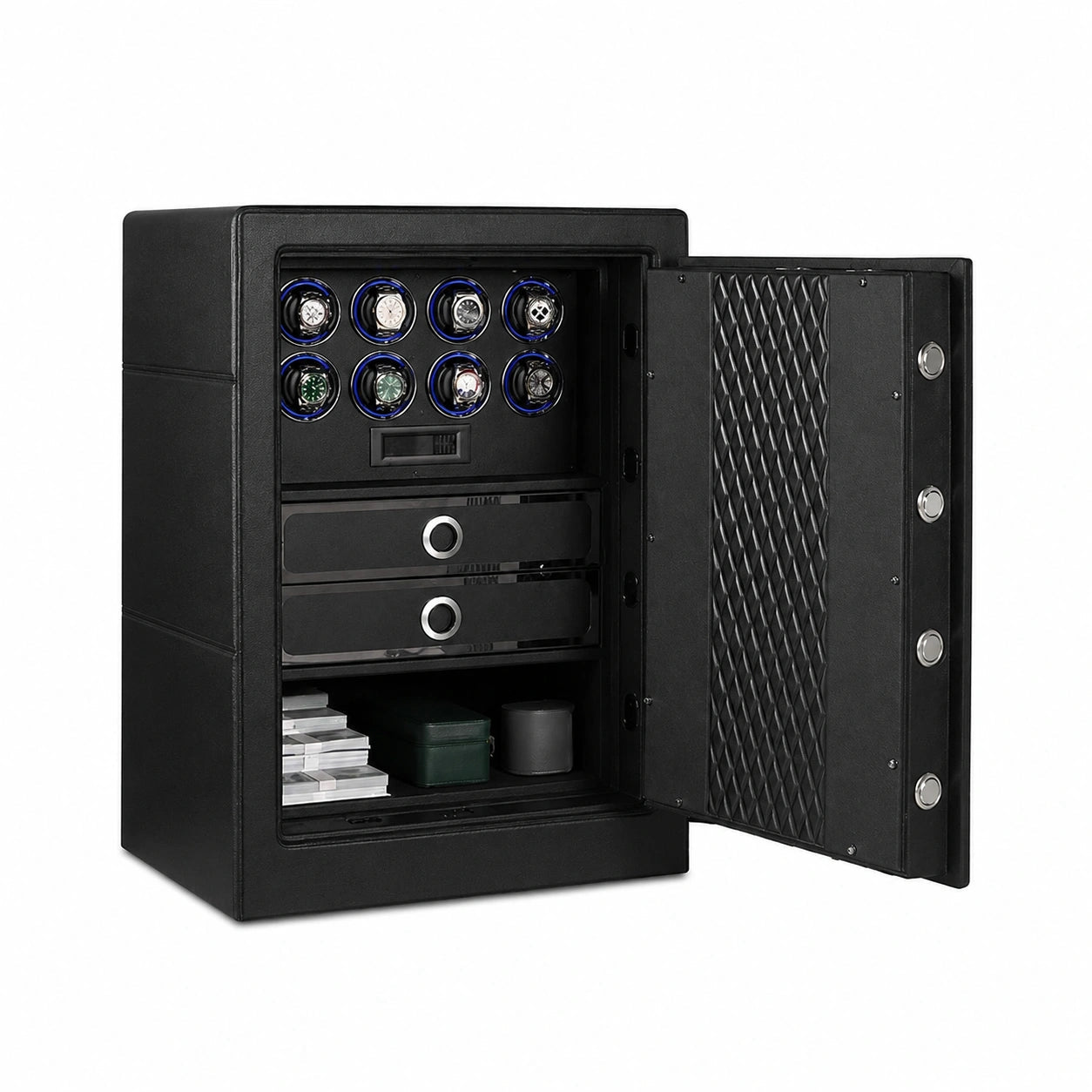
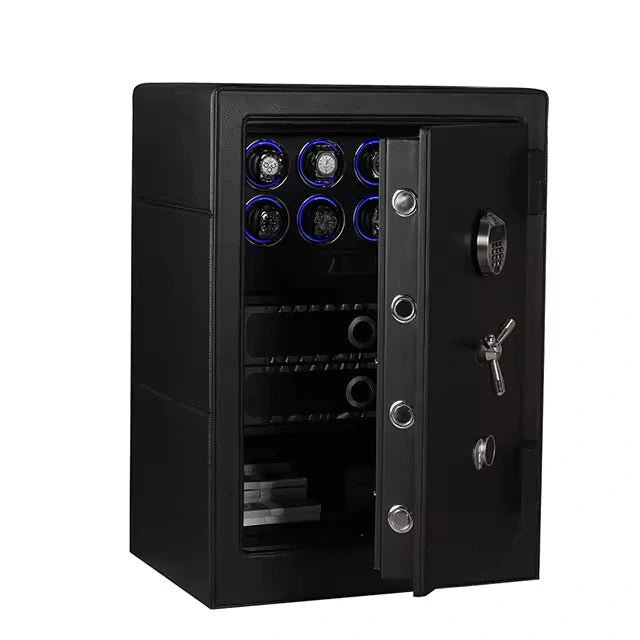
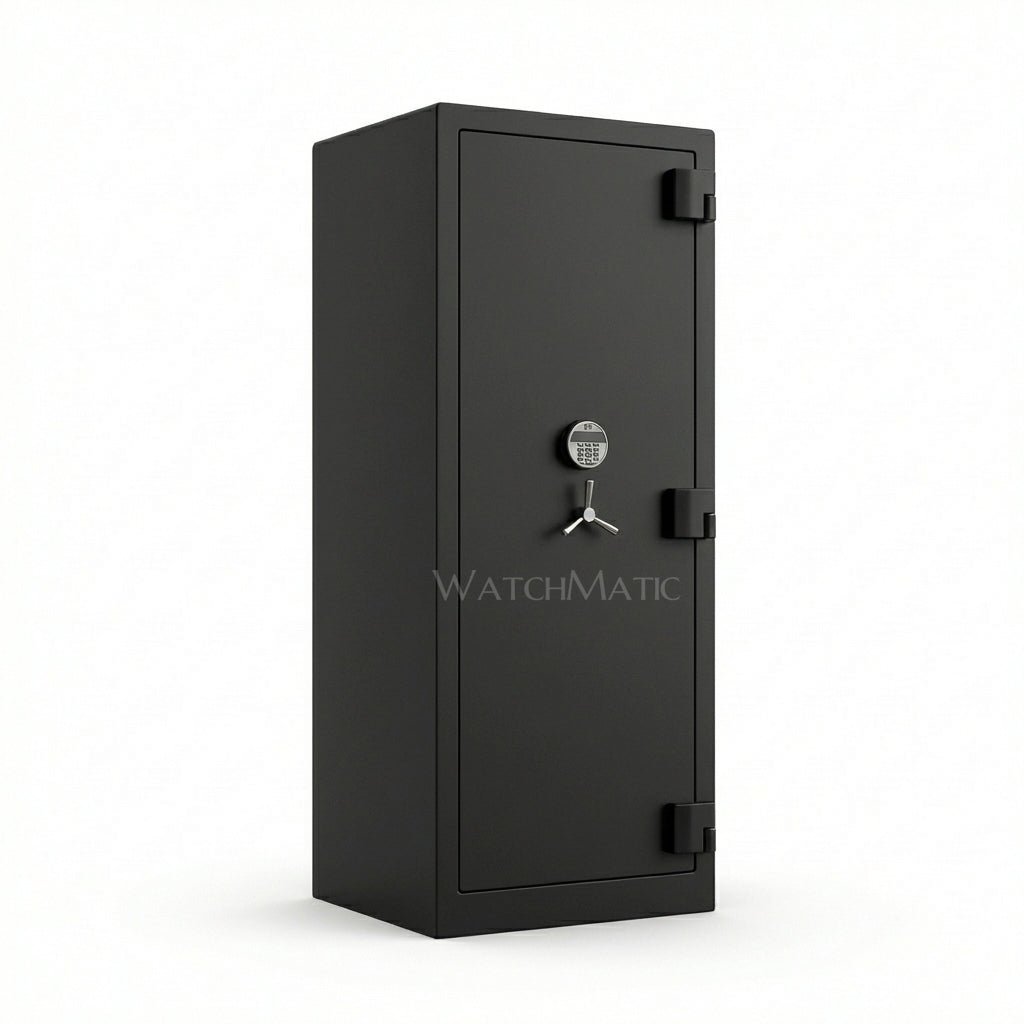
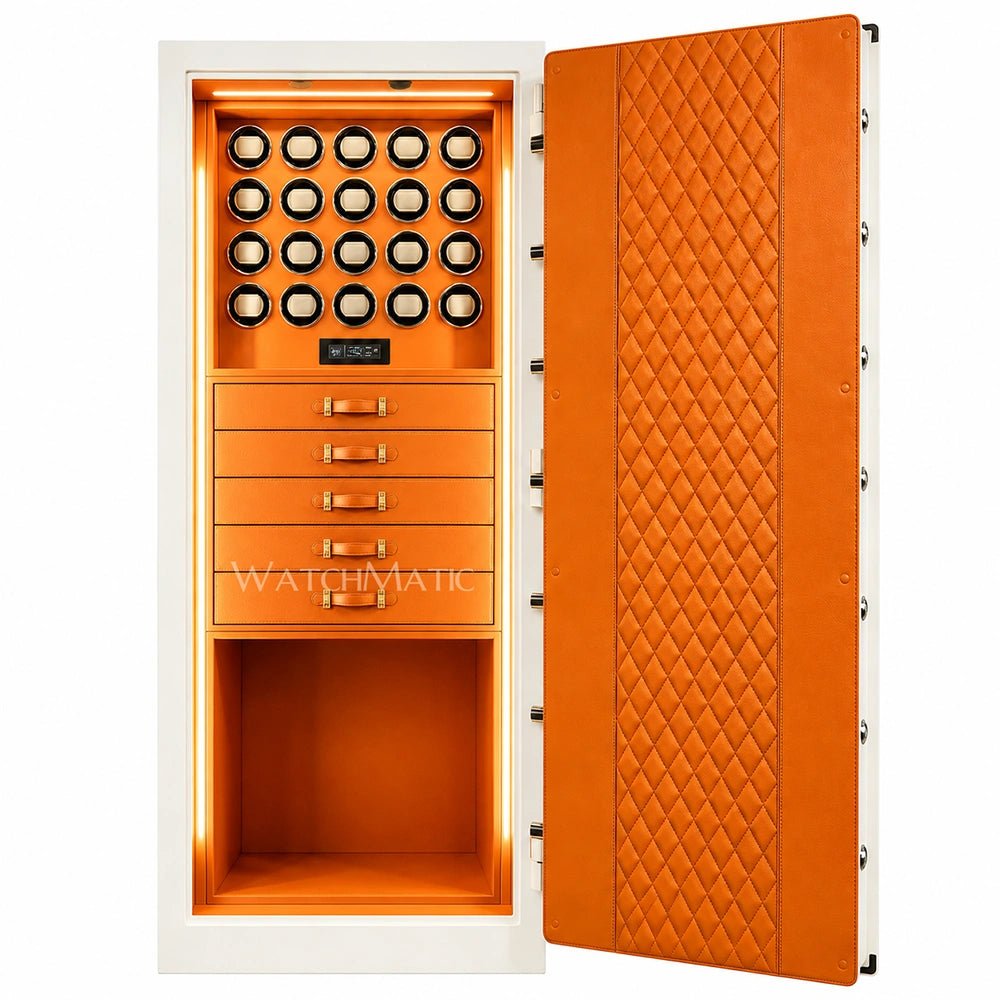
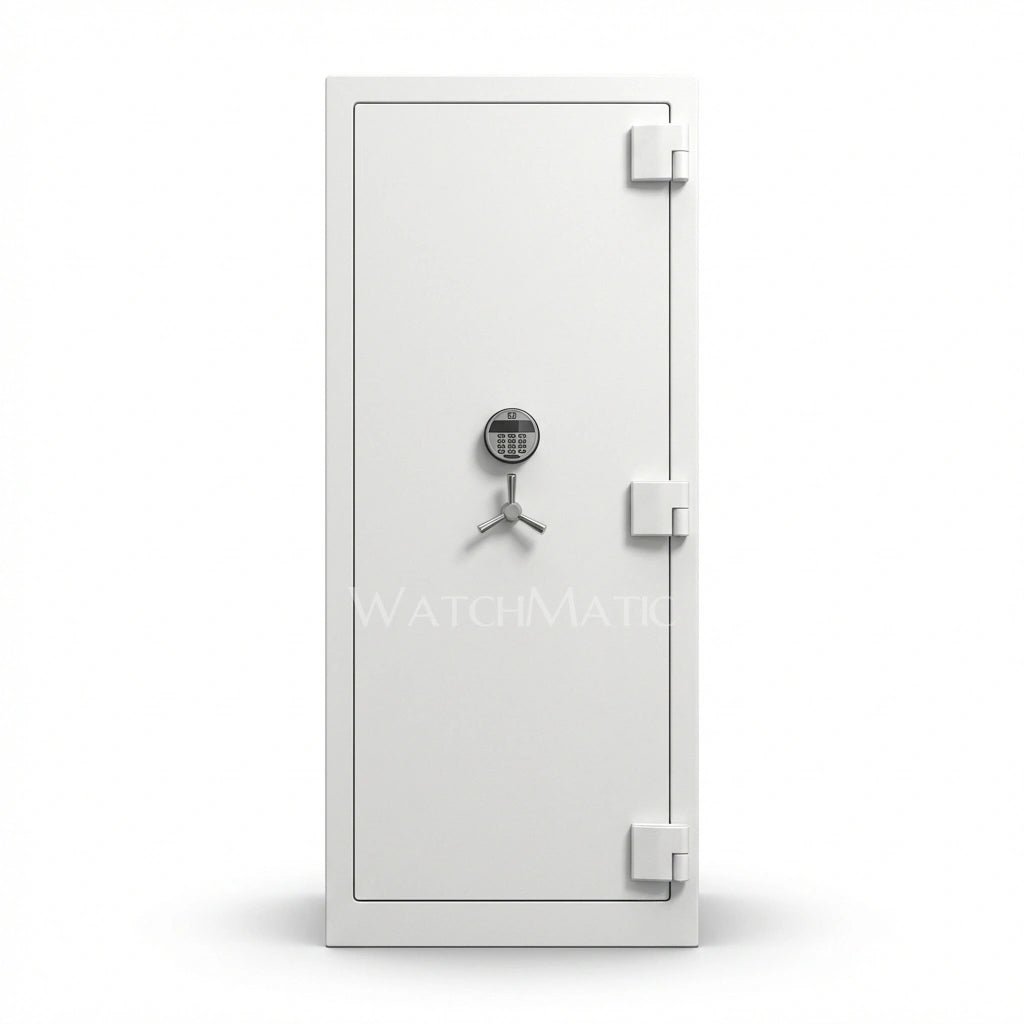
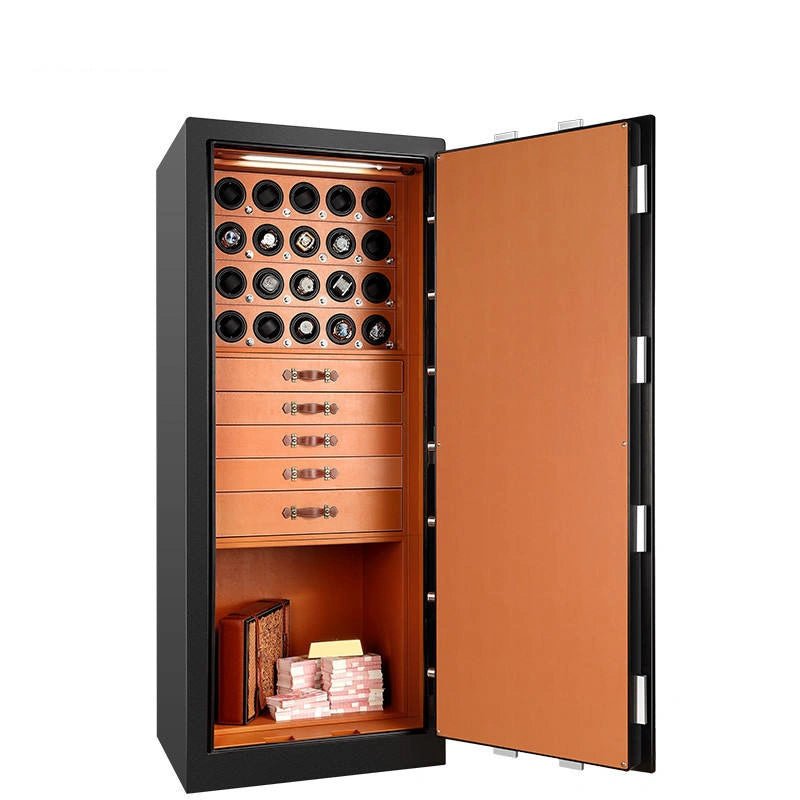
For a larger EBEL or mixed luxury-watch collection, the Titan Watch Winder Safe combines independently programmable winding positions with secure stationary storage.
Depending on configuration, the Titan Vault series can accommodate approximately 12 to 60 watches, with available features including:
- Reinforced safe construction
- Biometric fingerprint access
- Digital passcode
- Manual key access
- Independent winding controls
- Adjustable TPD
- CW/CCW/bidirectional operation
- Japanese Mabuchi motors
- Anti-magnetization protection
- LED illumination
- Additional storage compartments
Automatic EBEL watches can occupy active winding positions while quartz EBEL watches and other pieces remain securely stored without unnecessary rotation.
Collectors whose main requirement is security rather than integrated winding can instead explore the Luxury Watch Safe Collection.
EBEL in a Mixed Swiss Watch Collection
EBEL commonly sits alongside Swiss brands combining dress, sport, bracelet-focused, and accessible-luxury mechanical watches.
A mixed collection might include:
EBEL + Longines + Baume & Mercier + Raymond Weil + Maurice Lacroix + Frederique Constant
Related WatchMatic resources include:
Best Watch Winder for Longines Watches
Best Watch Winder for Baume & Mercier Watches
Best Watch Winder for Raymond Weil Watches
Best Watch Winder for Maurice Lacroix Watches
Best Watch Winder for Frederique Constant Watches
Each automatic movement should still be configured according to its own requirements rather than applying one generic Swiss-watch setting.
How to Choose the Best Watch Winder for Your EBEL
Step 1: Identify the Exact Reference
Do not rely only on:
- EBEL 1911
- Sport Classic
- Discovery
- Wave
The same collection name may exist across different movements or generations.
Step 2: Confirm Automatic vs. Quartz
This is the most important first technical distinction.
Only automatic references receive the normal winding benefit of a rotating watch winder.
Step 3: Identify the Caliber When Possible
Current EBEL product pages often state only “Swiss automatic movement,” so use reliable documentation for the exact reference before assigning movement-specific settings.
Step 4: Determine TPD
Use an appropriate movement-specific setting rather than the highest available number.
Step 5: Determine Rotation Direction
Choose based on the underlying automatic movement.
Step 6: Select a Programmable Winder
A unit offering adjustable TPD plus CW, CCW, and bidirectional modes gives the most flexibility.
Step 7: Check Bracelet Fit
This is especially important for EBEL's wave-link bracelets.
Step 8: Use Independent Controls for Multiple Watches
A Worldtimer, automatic chronograph, and vintage EBEL may require different programs.
Step 9: Do Not Use Winding Positions for Quartz Models
Current Wave, Discovery Lady, Brasilia, and many Sport Classic/1911 references are quartz.
Step 10: Consider Security as the Collection Grows
For a larger mixed collection, secure storage may eventually become more important than simply increasing the number of winding positions.
For broader resources covering automatic winding, TPD, storage, and watch protection, visit the WatchMatic Guide Hub.
Best Watch Winder for EBEL Watches: Final Thoughts
The best watch winder for an EBEL should be selected according to the exact reference and movement type, not simply the collection name.
For a confirmed automatic EBEL, prioritize:
- Adjustable TPD
- CW/CCW/bidirectional programming
- Controlled rest cycles
- Quiet motor operation
- Compressible watch cushions
- Secure bracelet support
- Independent control for multi-watch collections
EBEL is particularly important from a reference-identification perspective because its current catalog mixes automatic and quartz movements within the same broader collections.
Current 1911 references range from automatic 38 mm and 42 mm watches to Worldtimer and automatic chronograph models, while quartz 1911 references are also available. Sport Classic similarly includes both automatic and quartz watches in different sizes and configurations.
EBEL's official operating manual also provides useful practical guidance: an automatic watch left unworn for several days can be restarted with approximately 20 clockwise crown turns, after which normal wrist motion continues winding the movement.
The most reliable decision process is therefore:
EBEL Reference → Automatic or Quartz → Exact Movement → TPD → Rotation Direction → Winder Program
rather than assigning one generic setting to the entire brand.
For additional automatic-winding and secure-storage solutions, explore WatchMatic.