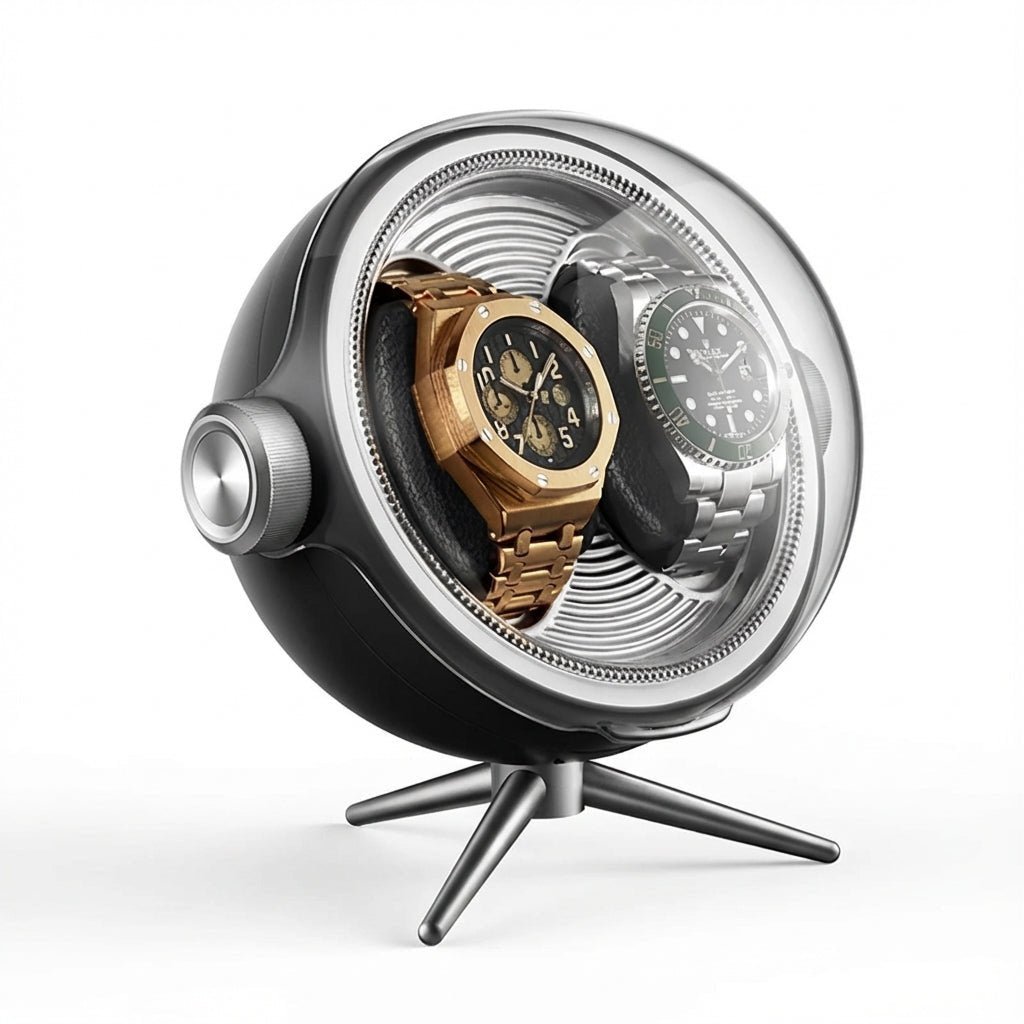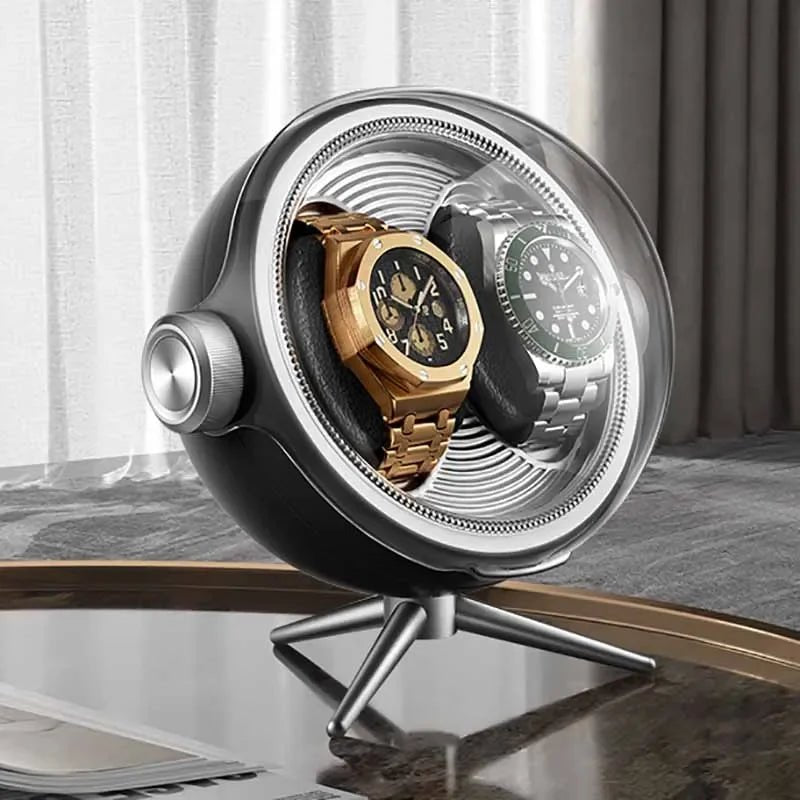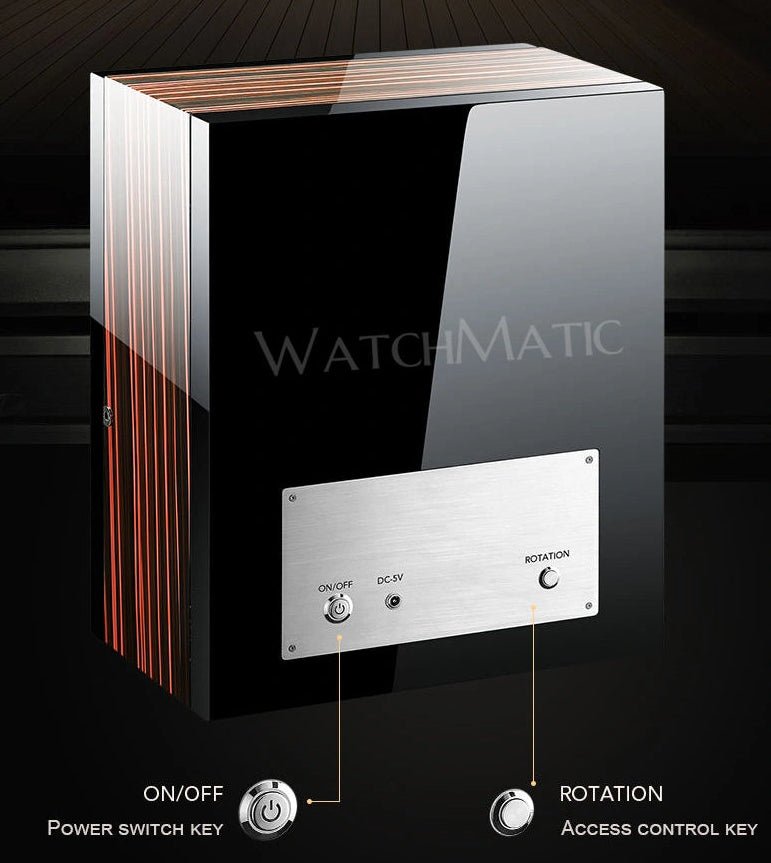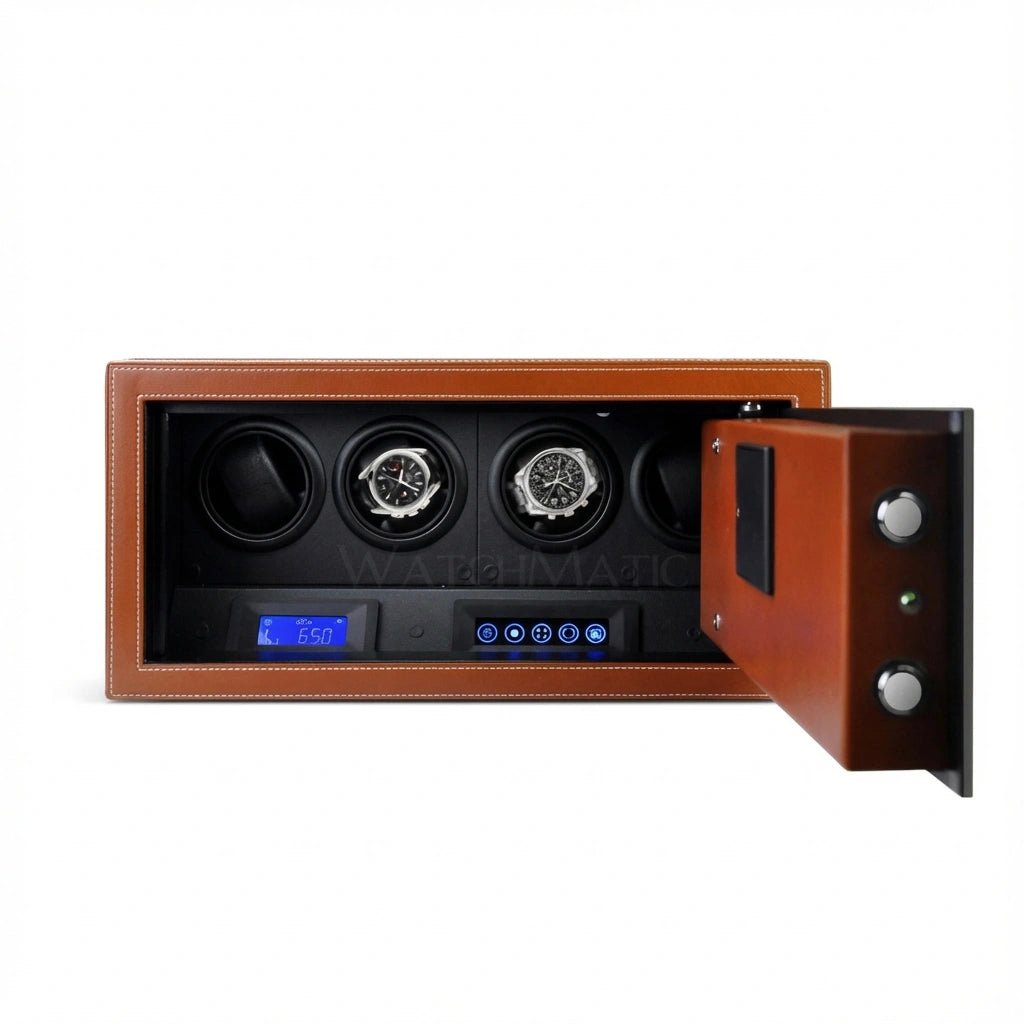
The best watch winder for Atelier Wen watches is a programmable model with adjustable Turns Per Day (TPD), clockwise and counterclockwise rotation options, independent controls, controlled winding and rest cycles, quiet operation, and secure support for integrated bracelets and high-finish watch cases.
Current and recent Atelier Wen watches are built around automatic mechanical movements, but the exact caliber varies significantly by collection and generation.
Important examples include:
- Perception V3 — customised Pequignet EPM03
- Ancestra — customised Pequignet EPM03
- Inflection — customised Girard-Perregaux GP03300
- Inflection Shuò — customised Girard-Perregaux GP03300
- Millésime 2025 Perception — customised SL1588
- Earlier Perception V2 references — customised SL1588 / SL1588A
Representative power reserves range from approximately:
41 hours for SL1588-based Perception watches
to:
48 hours for Inflection's GP03300
and:
65 hours for current EPM03-powered Perception V3 and Ancestra watches.
The correct decision process is therefore:
Exact Atelier Wen Reference → Generation → Movement → Power Reserve → Winding Architecture → Physical Fit → TPD and Direction
Does an Atelier Wen Watch Need a Watch Winder?
No Atelier Wen automatic watch mechanically requires a watch winder.
An automatic movement uses an oscillating rotor to convert movement into energy stored in the mainspring.
If the watch remains unworn longer than its available power reserve, it eventually stops.
A watch winder is therefore primarily useful for convenience.
It can help:
- Keep an Atelier Wen automatic running between wears
- Reduce repeated restarting
- Maintain the time
- Keep the movement ready to wear
- Manage several automatic watches
- Organize a collection containing multiple movement generations
Allowing an automatic Atelier Wen watch to stop after its reserve is exhausted is normal.
A winder should be understood as a readiness and storage tool rather than a substitute for professional servicing.
For a broader explanation of automatic winding, see the Watch Winder Guide.
Which Atelier Wen Watches Can Use a Watch Winder?
Representative current and recent Atelier Wen watches include:
| Atelier Wen watch | Movement | Winding type | Approx. power reserve | Conventional winder? |
|---|---|---|---|---|
| Perception V3 | Pequignet EPM03 | Automatic, bidirectional | 65 h | Yes |
| Ancestra | Pequignet EPM03 | Automatic, bidirectional | 65 h | Yes |
| Inflection | GP03300 | Automatic | 48 h | Yes |
| Inflection Shuò | GP03300 | Automatic | 48 h | Yes |
| Millésime 2025 Perception Xuán | SL1588 | Automatic | 41 h | Yes |
| Millésime 2024 Perception Mù | SL1588A | Automatic | 41 h | Yes |
| Earlier Perception V2 variants | SL1588 / SL1588A | Automatic | ~41 h | Yes |
Unlike brands such as Armin Strom or Arnold & Son, the principal Atelier Wen references relevant here do not require a large automatic-vs-manual split.
The more important distinction is:
which generation and which automatic movement does the watch use?
Why Atelier Wen Is Unusual From a Movement Perspective
Atelier Wen's identity centers strongly on contemporary Chinese craftsmanship.
However, its movement strategy has evolved across several countries and suppliers.
Relevant watches now include movement architecture originating from:
- China
- France
- Switzerland
This creates a particularly useful watch-winder lesson.
The country associated with the brand or movement does not determine the winder setting.
The exact movement does.
Atelier Wen Movement Evolution
The movement story can be simplified into three important stages.
SL1588 Era
Earlier Perception watches and recent Millésime editions use a heavily customised SL1588-family automatic movement.
Typical reserve:
approximately 41 hours
EPM03 Era
Current Perception V3 and Ancestra use a customised Pequignet EPM03.
Power reserve:
approximately 65 hours
Winding:
bidirectional automatic
GP03300
Inflection uses a customised Girard-Perregaux GP03300.
Power reserve:
approximately 48 hours
This means there should not be one broad recommendation such as:
“Every Atelier Wen uses the same watch-winder setting.”
Perception V3 Changes the Watch-Winder Equation
The move from the SL1588 platform to the EPM03 changes several important technical characteristics.
Perception V3 increases power reserve from approximately:
41 hours → 65 hours
It also introduces a different automatic winding architecture.
That means advice written for Perception V2 should not automatically be copied to Perception V3.
The collection name remains:
Perception
but the movement underneath it has changed substantially.
Exact Generation Matters More Than Collection Name
Consider two watches both called Atelier Wen Perception.
Earlier Perception
SL1588-family movement
Approximately 41 hours
Chinese automatic movement
Perception V3
EPM03
Approximately 65 hours
French automatic movement
Bidirectional winding architecture
Both are automatic.
Both can use a watch winder.
But they should not automatically be treated as mechanically identical.
Therefore:
Perception generation > Perception collection name
when selecting a winding program.
Atelier Wen EPM03 Automatic Movement
The customised EPM03 used by Atelier Wen is based on Pequignet's Calibre Initial architecture.
Current Atelier Wen specifications include:
- Automatic winding
- Bidirectional winding
- Approximately 65 hours of power reserve
- 28,800 vibrations per hour
- 21 jewels
- Hacking seconds
- Manual winding capability
- Chronometer-grade regulation
The winding system uses a pawl-based architecture designed to convert rotor movement efficiently in both directions.
Bidirectional Winding and Watch-Winder Direction
The EPM03 is particularly straightforward from a direction perspective because its automatic winding system is designed to capture movement in both rotor directions.
That means both clockwise and counterclockwise rotor motion can contribute to mainspring winding.
However, this should not be interpreted as:
any TPD is automatically correct.
Direction and daily turn count are separate variables.
A bidirectional movement still needs an appropriate amount of total winding activity.
Best Watch Winder for Atelier Wen Perception V3
Current Perception V3 uses the customised EPM03 with approximately:
65 hours of power reserve.
Representative specifications include:
- 40 mm diameter
- 47 mm lug-to-lug
- Approximately 10.4 mm total thickness
- Integrated 904L stainless-steel bracelet
- 100-meter water resistance
- Full exhibition caseback
For a Perception V3, prioritize:
- Adjustable TPD
- Bidirectional capability
- Controlled rest cycles
- Quiet motor operation
- Compressible bracelet cushion
- Smooth starts and stops
- Secure support for the integrated bracelet
Does Perception V3 Need a Watch Winder?
Not necessarily.
A 65-hour reserve is relatively substantial.
Consider:
Frequent wearer
Wears the Perception V3 every second or third day.
The movement may remain running without any winder.
Larger collection owner
Wears the watch once every week or two.
The movement will eventually stop between wears.
A winder becomes more convenient.
Therefore:
the move from 41 hours to 65 hours actually reduces dependence on a watch winder.
65 Hours Is a Meaningful Upgrade Over 41 Hours
A 41-hour automatic can stop during a relatively short break from the wrist.
A 65-hour watch can survive much more of a weekend.
That difference changes ownership behavior.
The improvement does not make the EPM03 “better suited” to a watch winder.
Instead, it means the owner may need the winder less frequently.
Perception V3 Integrated Bracelet Fit
Perception V3 uses an integrated 904L steel bracelet with an on-the-fly adjustment system.
This creates an important physical-fit consideration.
A bracelet sized for a smaller wrist may not fit comfortably around a large rigid watch-winder cushion.
Look for:
- Compressible cushion
- Natural clasp closure
- Minimal link tension
- Stable watch-head positioning
- Sufficient clearance around the bracelet
The correct TPD program is only useful if the watch is also held correctly.
Quick-Release Bracelet and Rubber Strap
Perception V3 can also be used with compatible FKM rubber straps.
That means the same watch can present two different physical requirements.
Steel Bracelet
Prioritize:
- Compressible cushion
- Low bracelet tension
- Stable clasp closure
FKM Rubber Strap
Prioritize:
- Natural curvature
- No excessive outward stretching
- Secure buckle or clasp positioning
Movement programming does not change merely because the strap changes.
Bracelet Type Does Not Determine TPD
Switching from a steel bracelet to an FKM strap changes:
- Weight
- Flexibility
- Fit
- Physical support
It does not change:
- Caliber
- Power reserve
- Rotor architecture
- TPD requirement
Therefore:
strap configuration and movement configuration should be evaluated separately.
Best Watch Winder for Atelier Wen Ancestra
The Ancestra also uses a heavily customised EPM03 automatic movement.
Published specifications include:
- Bidirectional automatic winding
- Approximately 65 hours of power reserve
- 28,800 vibrations per hour
- Hacking seconds
- Manual-winding support
The important difference from Perception V3 is primarily physical and aesthetic rather than fundamental automatic architecture.
Ancestra Case and Strap Fit
Representative Ancestra references measure approximately:
38 mm in diameter
46 mm lug-to-lug
and:
11.3 mm thick including the crystals.
They use a traditional leather strap rather than Perception's integrated bracelet architecture.
For an Ancestra, prioritize:
- Adjustable TPD
- Bidirectional mode
- Soft leather-strap support
- Controlled rest cycles
- Quiet operation
- Smooth motor transitions
Leather Straps Need Different Cushion Support
A leather strap should not be tightly stretched around an oversized winder cushion for long periods.
The holder should allow:
- Natural curvature
- Moderate buckle tension
- No sharp folding
- Secure watch-head positioning
This matters more for Ancestra than for integrated-bracelet Perception.
Same Movement, Different Physical Requirements
Perception V3 and Ancestra use the same broad EPM03 architecture.
Yet their storage requirements differ.
| Feature | Perception V3 | Ancestra |
|---|---|---|
| Movement | EPM03 | EPM03 |
| Reserve | 65 h | 65 h |
| Automatic winding | Bidirectional | Bidirectional |
| Case | 40 mm | 38 mm |
| Main attachment | Integrated bracelet / FKM | Leather strap |
| Main physical issue | Bracelet cushion fit | Leather curvature |
This demonstrates an important rule:
same movement does not mean identical physical winder fit.
Guilloché and Enamel Do Not Change Winder Settings
Atelier Wen is strongly associated with decorative crafts such as:
- Hand-turned guilloché
- Grand feu enamel
- Hand-hammered silver
- Natural stone dials
- Chinese calligraphy
- Hand engraving
These features affect:
- Artistic value
- Rarity
- handling care
- physical security
They do not directly determine:
- TPD
- Winding direction
- Rotor efficiency
- Power reserve
The movement remains the relevant variable.
Best Watch Winder for Atelier Wen Inflection
The Inflection uses a heavily customised Girard-Perregaux GP03300 automatic movement.
Representative specifications include:
- Automatic winding
- Approximately 48 hours of power reserve
- 28,800 vibrations per hour
- 27 jewels
- Hacking seconds
The watch itself is unusually distinctive because both its case and integrated bracelet are manufactured from:
99.9% pure tantalum.
GP03300 Winding Direction
The underlying GP03300 platform is documented by Girard-Perregaux as a self-winding caliber with:
clockwise winding direction
in standard applications.
For an Atelier Wen Inflection, owners should still verify the exact reference documentation before programming a third-party winder.
This is particularly important because Atelier Wen significantly customises:
- Bridges
- Rotor
- Finishing
- movement presentation
Even when the underlying winding train remains related to the GP platform.
Best Watch Winder Setup for Inflection
For an Inflection, prioritize:
- Adjustable TPD
- Clockwise capability
- Independent controls
- Controlled rest cycles
- Smooth motor operation
- Highly compressible bracelet cushion
- Strong watch retention
- Soft interior surfaces
The approximately 48-hour reserve makes a winder more practically useful than it may be for the 65-hour EPM03 watches if both are worn infrequently.
Tantalum Creates a Different Physical Challenge
Tantalum is extremely dense.
That means an Inflection can feel substantially heavier than a visually similar steel watch.
The movement does not need additional TPD because of this extra case weight.
However, the winding holder needs to keep the entire watch stable.
Heavy Watch Does Not Mean More TPD
Case and bracelet weight affect:
- Load on the cushion
- Rotor-module balance
- retention
- physical stability
They do not directly change:
- Movement winding direction
- Daily turn requirement
- Power reserve
Therefore:
heavy tantalum case ≠ higher TPD.
Tantalum Bracelet Cushion Fit
Inflection's integrated bracelet is particularly valuable and mechanically substantial.
A poorly sized cushion can:
- Place unnecessary tension on the bracelet
- Prevent natural clasp closure
- Shift the watch head off center
- Increase rubbing against interior surfaces
For an Inflection, cushion quality deserves more attention than simply choosing a high TPD setting.
Inflection 40 mm Dimensions
Representative current Inflection watches measure approximately:
- 40 mm diameter
- 45 mm lug-to-lug
- 10.2 mm thickness
The watch is not particularly large in diameter or thickness.
The more unusual consideration is its:
dense full-tantalum construction.
Inflection Shuò
The limited Inflection Shuò collaboration uses the same broad customised GP03300 automatic architecture.
It provides approximately:
48 hours of power reserve
and remains self-winding.
Its additional features include:
- Full tantalum case architecture
- Precious-metal dial construction
- Hand engraving
- Limited production
The artistic changes do not create a different basic watch-winder requirement.
Limited Edition Does Not Need More Rotation
A limited or expensive watch does not benefit from a higher TPD merely because of scarcity.
The same principle applies to:
- Inflection Shuò
- Limited Ancestra references
- Millésime
- Collaboration pieces
The correct program follows the movement.
Atelier Wen SL1588 Automatic Movement
Earlier Perception watches and recent Millésime pieces use the customised SL1588-family automatic movement.
Representative specifications include:
- Automatic winding
- Approximately 41 hours of power reserve
- 28,800 vibrations per hour
- 32 jewels
- Tungsten rotor
- Adjustment in multiple positions
Atelier Wen heavily customised and regulated this Chinese movement for Perception.
Best Watch Winder for Perception V2
A Perception V2 using SL1588 or SL1588A can use a conventional programmable watch winder.
For this generation, prioritize:
- Adjustable TPD
- Multiple winding directions
- Controlled rest cycles
- Quiet motor
- Integrated-bracelet compatibility
- Secure support
Its approximately 41-hour reserve makes a winder relatively useful in a multi-watch rotation.
Perception V2 vs. Perception V3
This is the most important technical comparison in the article.
| Feature | Perception V2 / Millésime-era | Perception V3 |
|---|---|---|
| Movement family | SL1588 | EPM03 |
| Origin | Chinese movement manufacture | French manufacture |
| Automatic | Yes | Yes |
| Power reserve | ~41 h | 65 h |
| Frequency | 28,800 vph | 28,800 vph |
| Winding architecture | Automatic | Bidirectional automatic |
| Winder compatible | Yes | Yes |
The visual family may remain recognizably Perception.
The movement architecture has changed significantly.
Do Not Copy a V2 Winder Setting to V3 Without Checking
This is one of the most important practical points.
Someone may search:
“Atelier Wen Perception watch winder settings”
and find advice written when the SL1588 was the standard movement.
That advice should not automatically be applied to Perception V3.
The correct process is:
identify V2 or V3 first.
Millésime 2025 Perception Xuán
The Millésime 2025 Perception Xuán uses the customised SL1588 automatic movement.
Its specifications include approximately:
41 hours of power reserve.
The watch also uses:
- 40 mm case
- 904L stainless steel
- Integrated bracelet
- Natural pietersite dial
- Semi-display caseback
From a watch-winder perspective, its movement belongs to the earlier Perception architecture rather than the EPM03-powered V3.
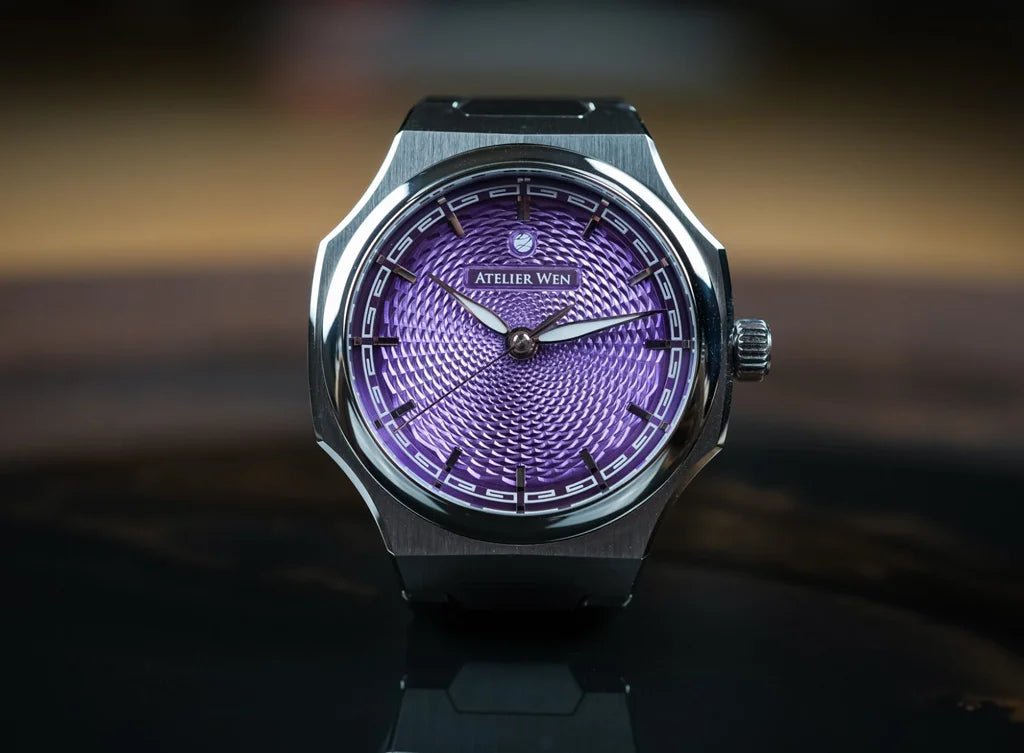
Millésime 2024 Perception Mù
The Millésime 2024 Perception Mù also uses an SL1588A-family automatic movement with approximately:
41 hours of reserve.
It differs aesthetically through:
- Purple guilloché dial
- Grade 5 titanium bracelet
- Limited-edition character
Again, material and dial treatment do not alter the fundamental winding architecture.
Titanium vs. Steel Does Not Determine Winder Settings
Perception watches have appeared in:
- Stainless steel
- Grade 5 titanium
Changing case or bracelet material affects:
- Weight
- wrist feel
- scratch behavior
- physical support
It does not determine:
- TPD
- Winding direction
- Power reserve
Atelier Wen Watch Winder TPD Settings
TPD means Turns Per Day—the approximate number of rotations a watch winder delivers during a daily cycle.
There should not be one universal statement such as:
“Atelier Wen = 650 TPD.”
The brand has used several automatic movement architectures.
These include:
- SL1588
- SL1588A
- EPM03
- GP03300
The better process is:
- Identify the exact Atelier Wen reference.
- Identify the generation.
- Identify the movement.
- Confirm the winding architecture.
- Determine appropriate TPD.
- Determine appropriate winding direction.
- Confirm that the watch maintains sufficient reserve.
For a deeper explanation of Turns Per Day, see the Watch TPD Guide.
Atelier Wen Does Not Need One Brand-Wide Setting
Atelier Wen illustrates why brand-wide TPD advice can become obsolete quickly.
The brand has evolved from one automatic movement family to several.
For example:
Perception V2 → SL1588
Perception V3 → EPM03
Inflection → GP03300
All are Atelier Wen.
All are automatic.
But they are not one caliber.
What Rotation Direction Should You Use?
The correct direction depends on the movement.
EPM03
Bidirectional automatic winding.
Both directions can contribute to winding.
GP03300
The underlying Girard-Perregaux movement platform is documented as clockwise-winding.
SL1588
Use the verified requirements of the specific SL1588 implementation rather than assuming it matches either EPM03 or GP03300.
A premium winder that offers:
- CW
- CCW
- Bidirectional
provides the best flexibility across Atelier Wen generations.
Power Reserve Comparison
| Movement | Atelier Wen example | Approx. reserve |
|---|---|---|
| SL1588 / SL1588A | Earlier Perception / Millésime | 41 h |
| GP03300 | Inflection | 48 h |
| EPM03 | Perception V3 / Ancestra | 65 h |
This creates a clear progression:
41 → 48 → 65 hours
but reserve alone still does not determine the entire winding program.
Longer Reserve Does Not Mean More TPD
The 65-hour EPM03 has a longer reserve than the 41-hour SL1588.
That does not mean it should receive more turns.
A longer reserve describes stored energy capacity and movement design.
It does not automatically specify how many turns the winder should deliver.
Does an Atelier Wen Need to Run All the Time?
No.
An automatic Atelier Wen can stop normally after its stored reserve is exhausted.
There is no mechanical requirement to keep it running continuously.
The value of a winder depends on:
power reserve + wearing frequency + collection size + convenience preference
For example:
Perception V2
41-hour reserve.
More likely to stop during a weekend away from the wrist.
Inflection
48-hour reserve.
Still relatively easy to exhaust in a multi-day rotation.
Perception V3
65-hour reserve.
More tolerant of several days between wears.
Should You Start a Stopped Atelier Wen Before Using a Winder?
A watch winder is generally best used as a maintenance-winding device.
If an automatic watch has fully stopped, establish an initial reserve according to the correct instructions before relying on the winder to maintain it.
The preferred process is:
restart correctly → establish reserve → set time → place on programmed winder → maintain
rather than:
stopped watch → maximum TPD.
High TPD Is Not Automatically Better
More daily turns do not automatically improve an Atelier Wen watch.
Once sufficient winding is provided, additional rotations may offer no useful benefit.
High TPD does not automatically:
- Improve accuracy
- Improve movement lubrication
- Extend service intervals
- Protect hand guilloché
- Protect enamel
- Improve rotor efficiency
- Increase the power reserve specification
Use appropriate rather than maximum rotation.
Chronometer-Grade Accuracy Does Not Determine TPD
Perception V3 and Ancestra use EPM03 movements regulated to chronometer-grade performance.
This relates to timekeeping accuracy.
It does not provide a direct TPD requirement.
Therefore:
chronometer-grade accuracy ≠ special high-TPD setting.
Water Resistance Does Not Determine TPD
Several current Atelier Wen watches provide:
100 meters / 10 ATM
of water resistance.
This describes the case.
It does not describe the automatic winding system.
Therefore:
100 m water resistance ≠ watch-winder setting.
Watch Craftsmanship and Winding Requirements Are Separate
Atelier Wen's watches may include:
- Hand guilloché
- Grand feu enamel
- Pietersite
- 925 silver dial bases
- Hand engraving
- Chinese calligraphy
- Precious-metal dial work
- Tantalum bracelets
None of these features tells the owner what TPD to use.
The movement does.
What to Look for in an Atelier Wen Watch Winder
Adjustable TPD
Movement generations differ, so multiple TPD settings are preferable to one fixed program.
CW, CCW and Bidirectional Modes
This provides flexibility across EPM03, GP03300 and earlier SL1588 watches.
Independent Controls
Especially useful in a collection containing more than one Atelier Wen movement generation.
Controlled Rest Cycles
Automatic watches do not need uninterrupted rotation.
The winder should alternate active winding and rest periods.
Smooth Motor Operation
Fine-finished watches should be moved smoothly rather than abruptly.
Low Vibration
The objective is controlled rotational movement approximating useful wrist motion.
Quiet Motors
Low operating noise matters in:
- Bedrooms
- Offices
- Dressing rooms
- Living spaces
- Collector rooms
Compressible Cushions
This is particularly important for:
- Perception integrated bracelets
- Inflection tantalum bracelets
- Smaller wrist sizing
Soft Interior Surfaces
Highly finished steel, titanium and tantalum should not repeatedly contact hard winder surfaces.
Stable Support for Heavy Watches
Inflection's full-tantalum architecture deserves particularly secure retention.
Best Watch Winder for One Atelier Wen
For one Atelier Wen automatic, a compact programmable winder is generally sufficient.
Prioritize:
- Adjustable TPD
- CW/CCW/bidirectional capability
- Controlled rest cycles
- Quiet operation
- Smooth motion
- Compressible cushion
- Secure watch-head positioning
Broader options can be explored in the WatchMatic Watch Winder Collection.
Best Watch Winder for Multiple Atelier Wen Watches
A collector might own:
- Perception V2
- Perception V3
- Ancestra
- Inflection
All four are automatic.
But they represent:
- SL1588 architecture
- EPM03 architecture
- GP03300 architecture
This is precisely where independent rotor control becomes valuable.
A four-watch configuration can keep each movement on its own program instead of assuming all Atelier Wen watches are mechanically identical.
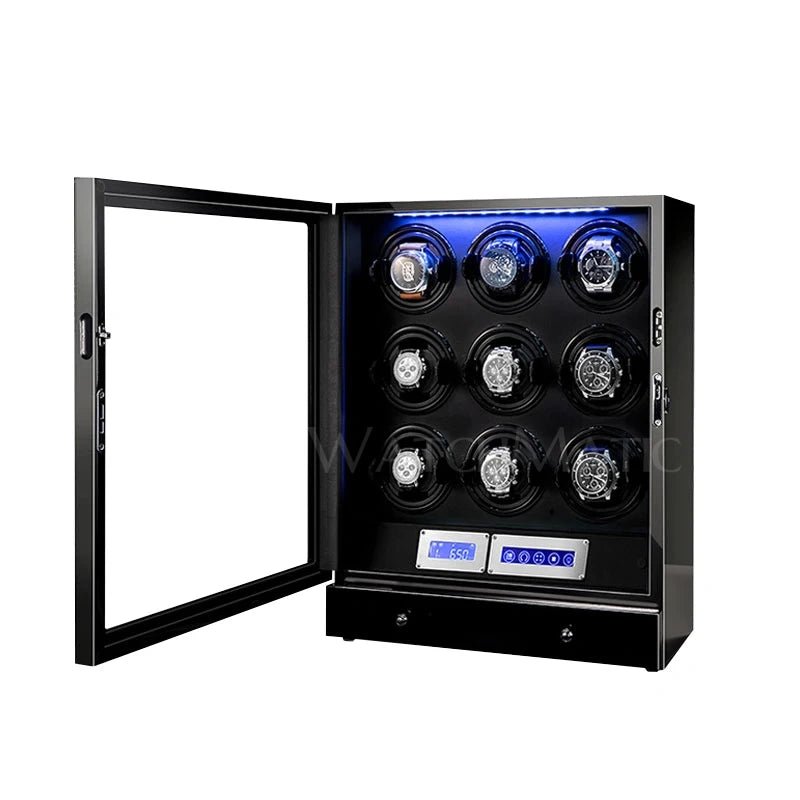
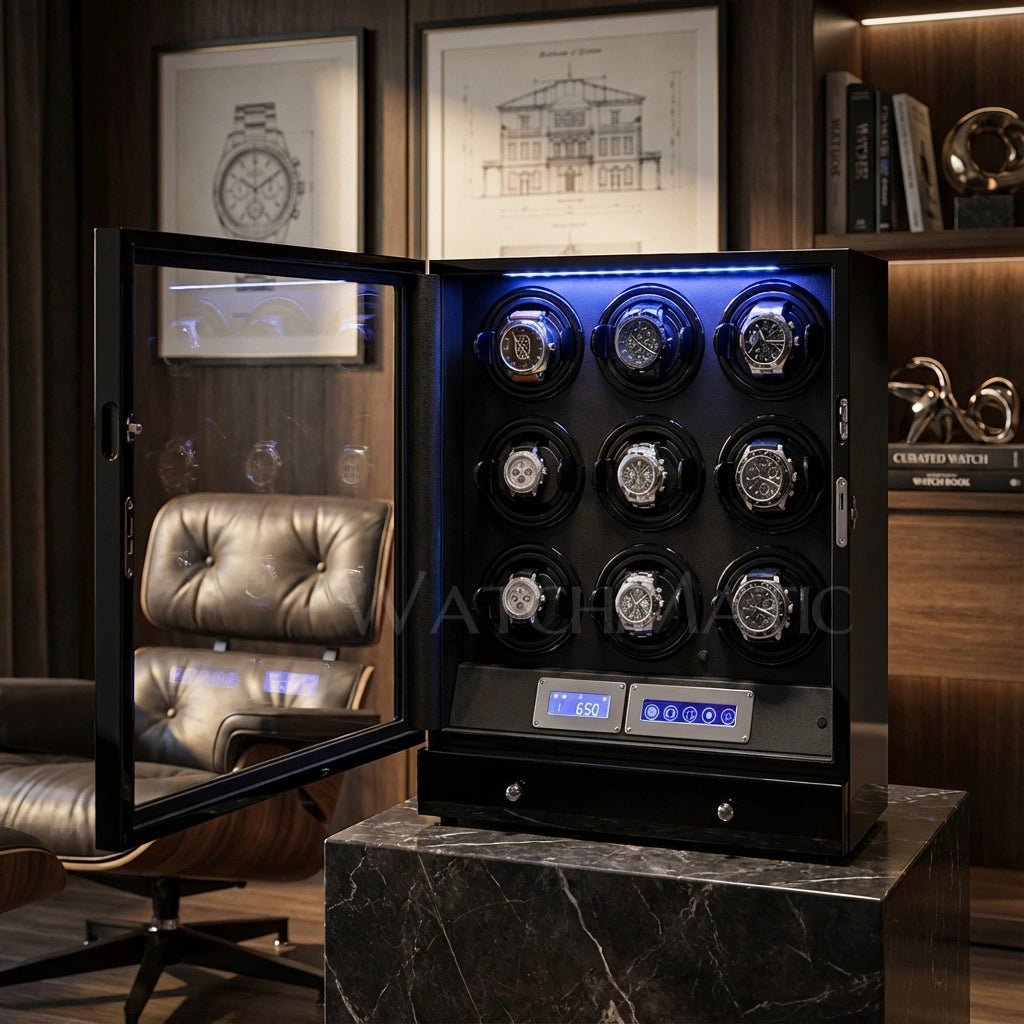
Vento Watch Winder for Atelier Wen Watches

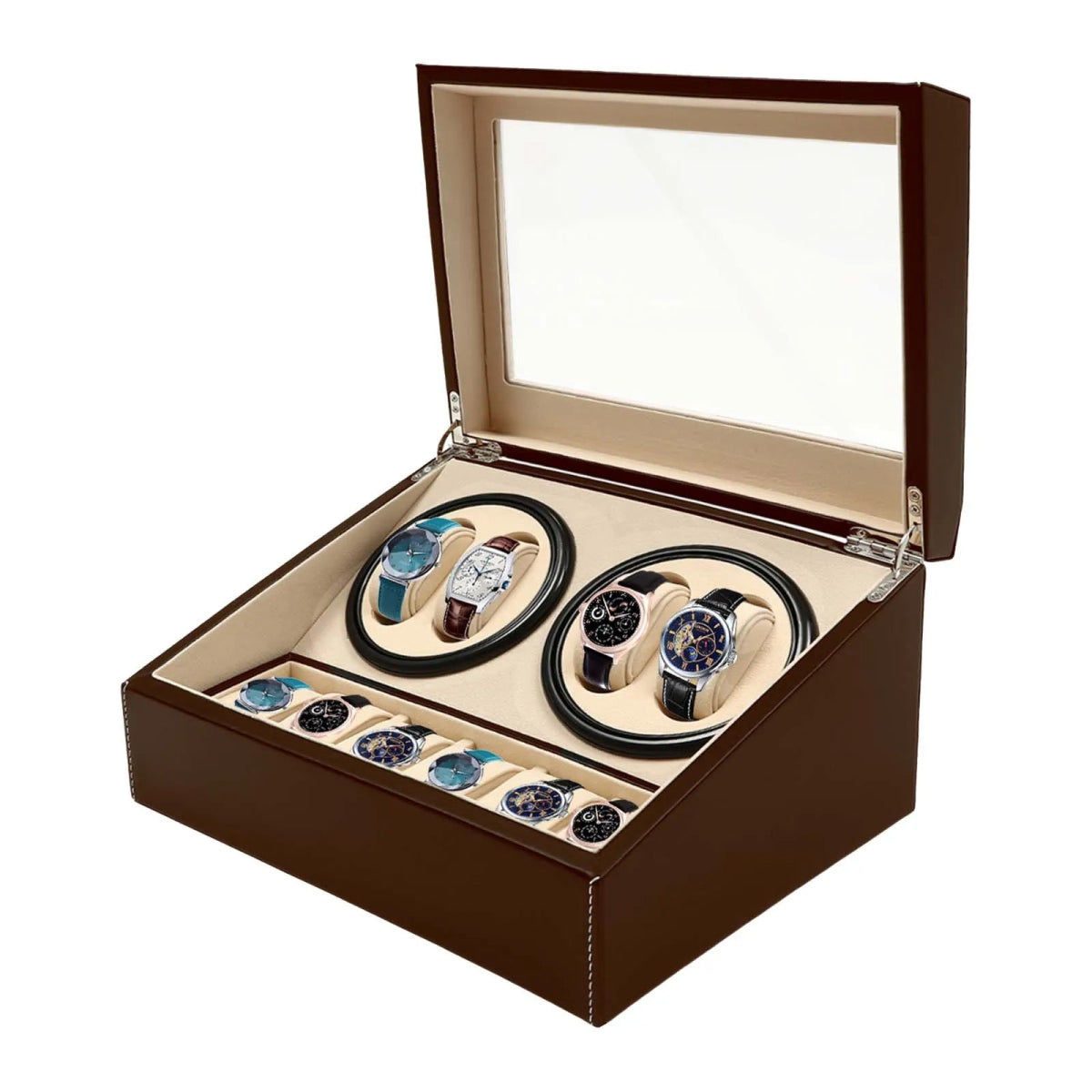
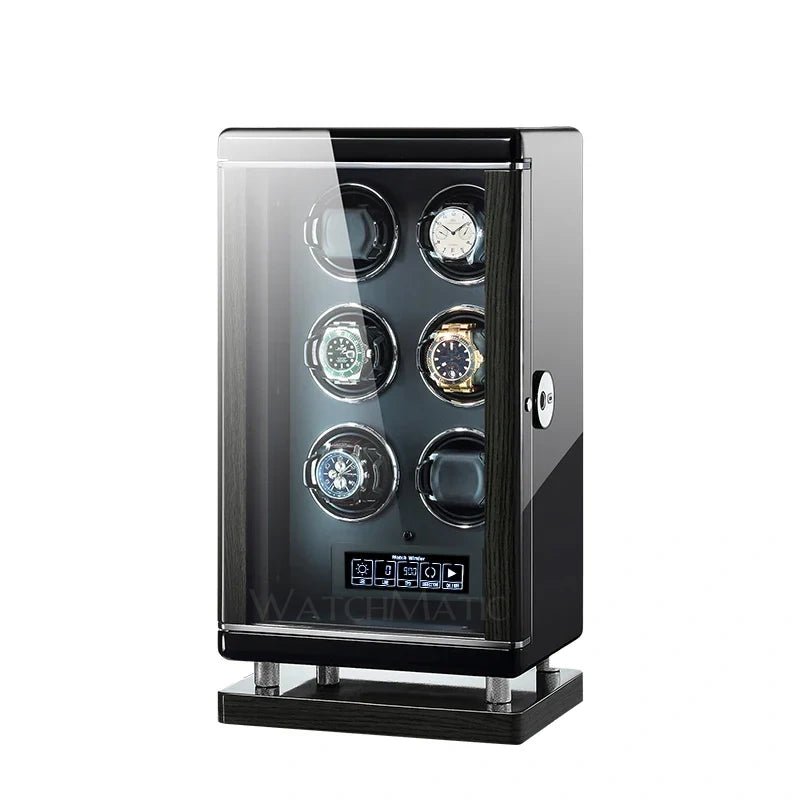
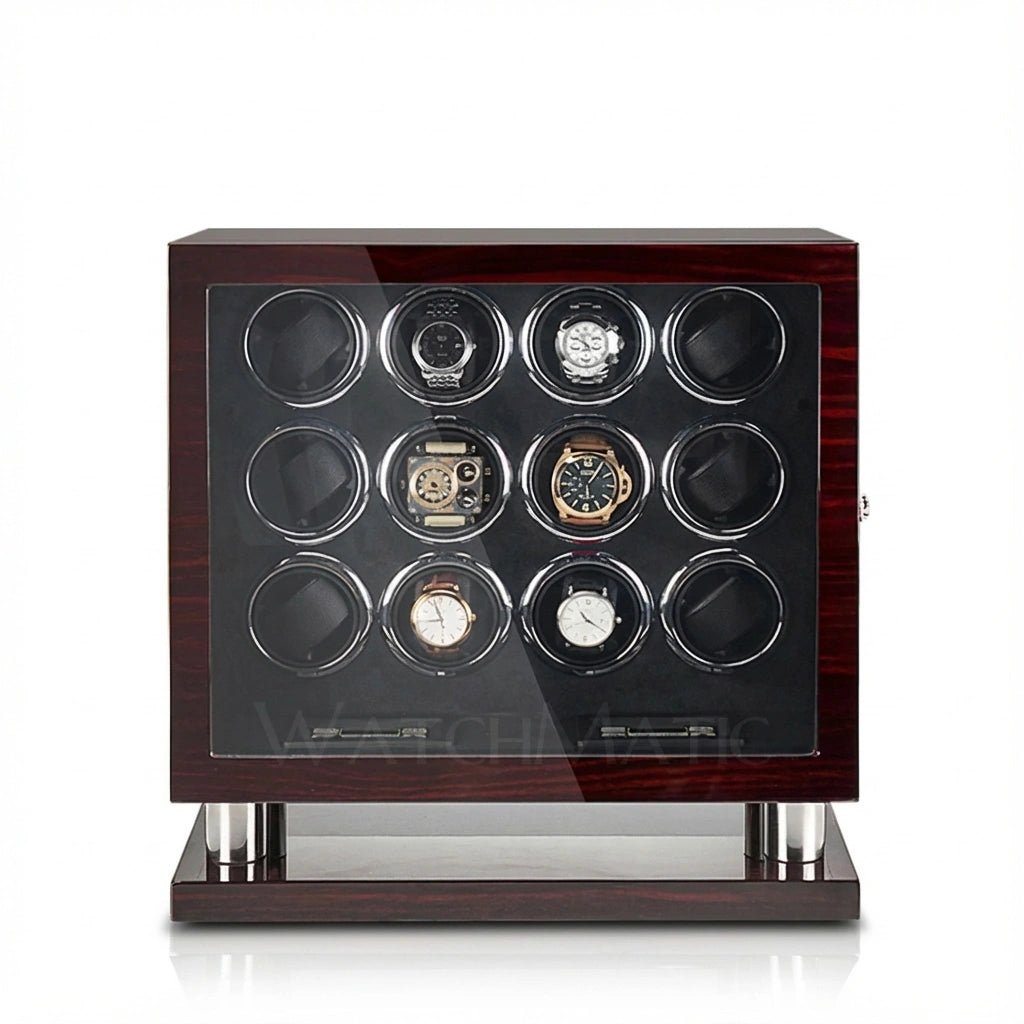
The Vento Luxury Quad Watch Winder is a particularly logical fit for a compact Atelier Wen collection because it offers four independently controlled winding positions.
Each rotor can be configured separately for:
- TPD
- Rotation direction
- Winding mode
For example, a collector could use four positions for:
- Perception V2
- Perception V3
- Ancestra
- Inflection
without forcing SL1588, EPM03 and GP03300 movements onto the same program.
Why Independent Control Matters More as Atelier Wen Evolves
When a brand uses one movement family across its entire catalog, independent control can be less critical.
Atelier Wen is moving in the opposite direction.
Its current evolution includes:
- Chinese automatic movement architecture
- French automatic movement architecture
- Swiss automatic movement architecture
Independent settings become increasingly useful as the collection expands across generations.
Vento and Integrated Bracelet Fit
Perception and Inflection both use integrated-style bracelets.
Before long-term use, confirm that the Vento cushion:
- Compresses sufficiently
- Allows the clasp to close naturally
- Does not stretch links excessively
- Keeps the case centered
This is especially important for Inflection's valuable tantalum bracelet.
Is It Safe to Keep an Atelier Wen on a Watch Winder?
A properly configured quality watch winder can be used with an Atelier Wen automatic.
Important considerations include:
- Identifying the exact movement
- Selecting suitable TPD
- Selecting appropriate direction
- Using controlled rest cycles
- Supporting the bracelet or strap correctly
- Using smooth low-vibration operation
If a watch develops unusually short reserve or abnormal performance despite adequate winding, professional inspection is more appropriate than simply increasing TPD.
A Watch Winder Does Not Service an Atelier Wen
A watch winder does not:
- Replace lubricants
- Regulate timekeeping
- Service the rotor
- Maintain guilloché
- Preserve enamel
- Repair a winding mechanism
- Protect a movement from normal wear
- Replace professional servicing
Its role is simply to provide rotational motion to an automatic winding system.
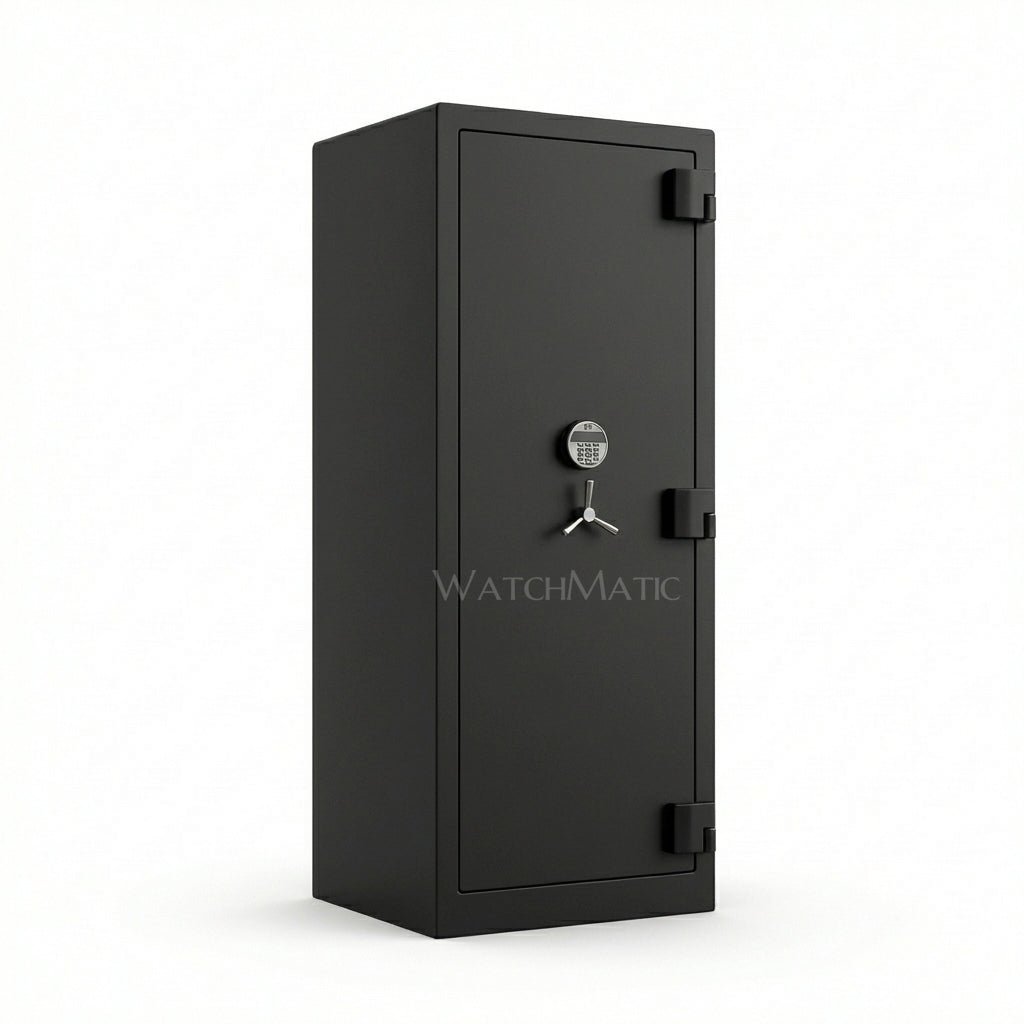
Watch Winder vs. Watch Safe for Atelier Wen Collectors
For one to four Perception or Ancestra watches, a standalone winder is generally proportionate.
The equation changes substantially with Inflection.
Inflection's:
- High retail value
- Limited annual production
- Full tantalum construction
- High-end movement
- Grand feu enamel
- elaborate finishing
make physical security more relevant.
| Feature | Standalone Winder | Watch Winder Safe |
|---|---|---|
| Automatic winding | Yes | Yes |
| Independent programs | Available | Available |
| Physical security | Limited | High |
| Controlled access | Limited | High |
| Additional storage | Limited | Available |
| Perception-focused collection | Highly suitable | Optional |
| Inflection / larger collection | Moderate | More relevant |
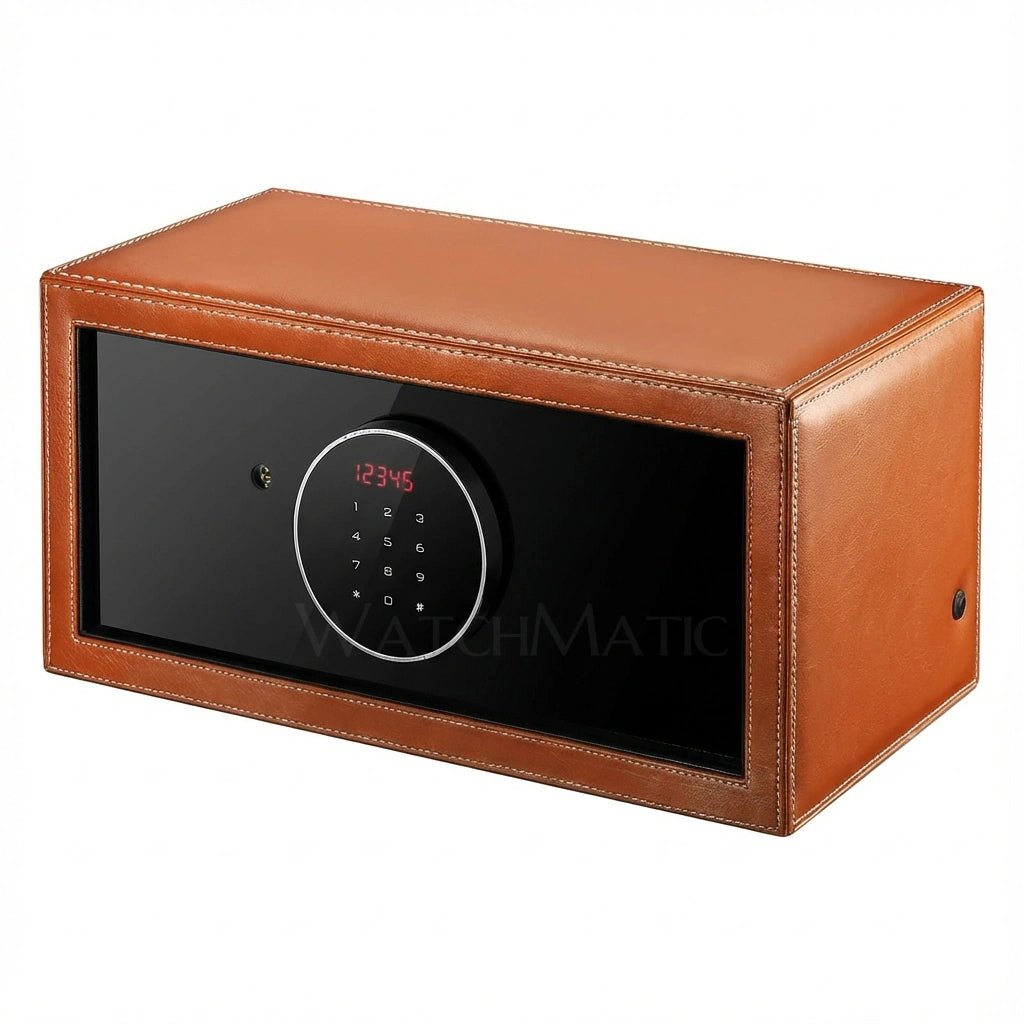
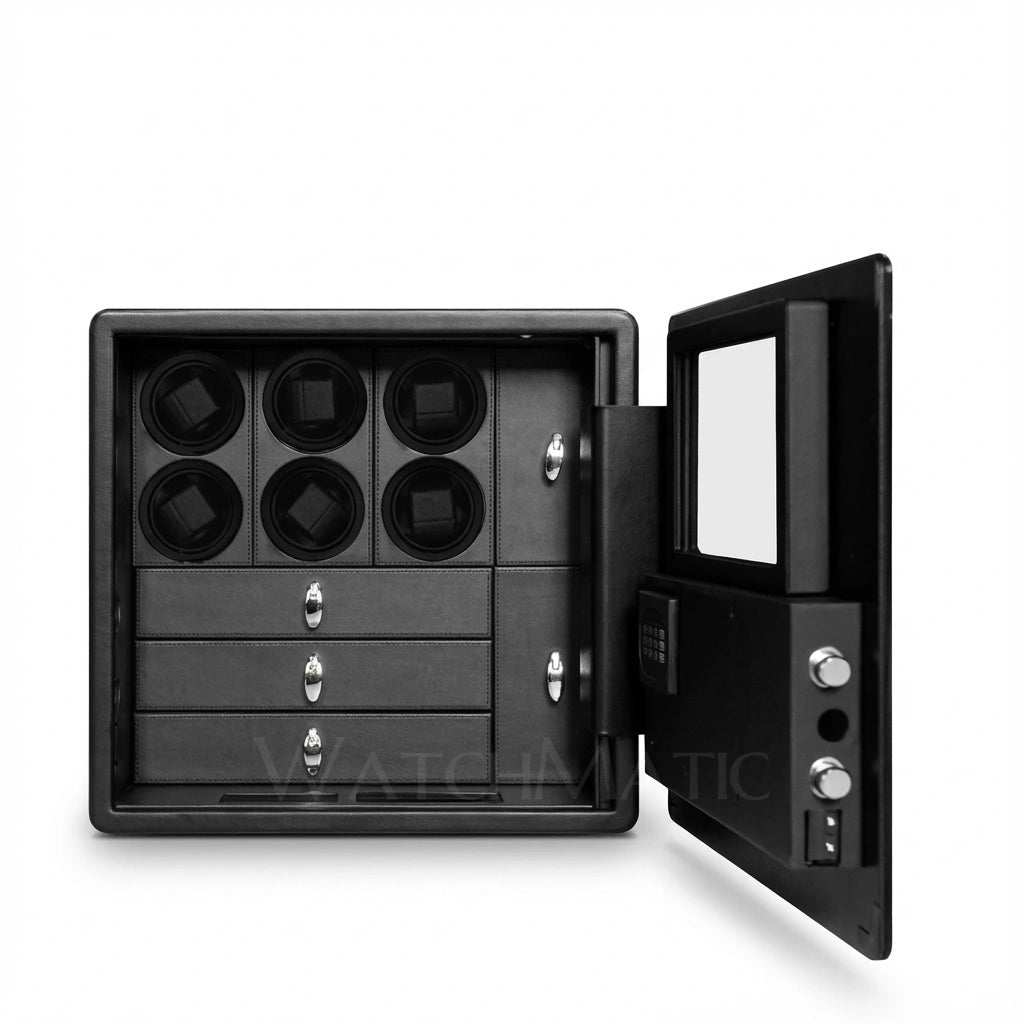
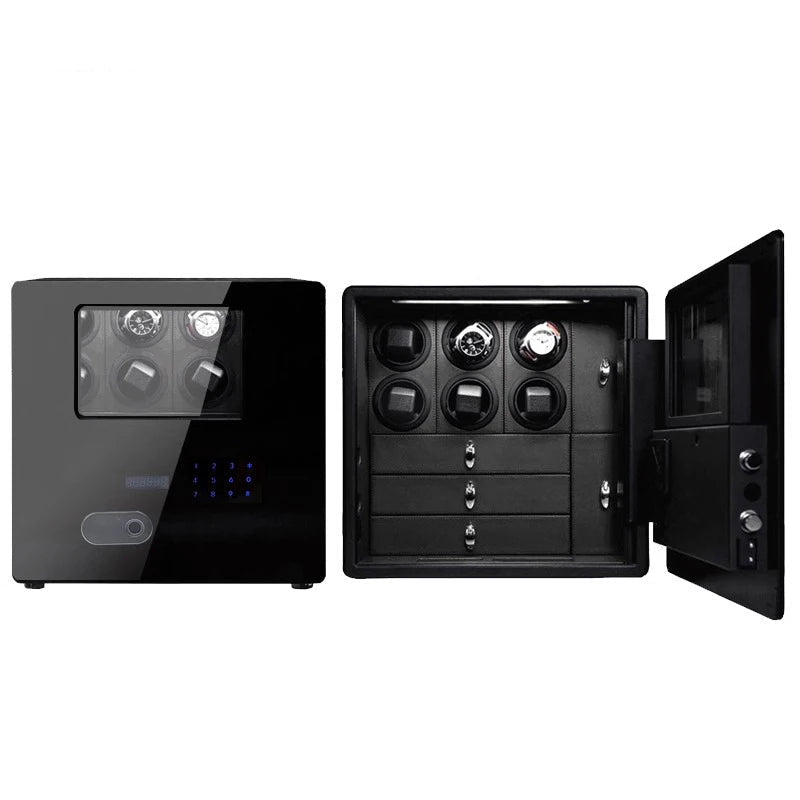
Collectors looking for integrated winding and secure storage can explore the Watch Winder Safe Collection.
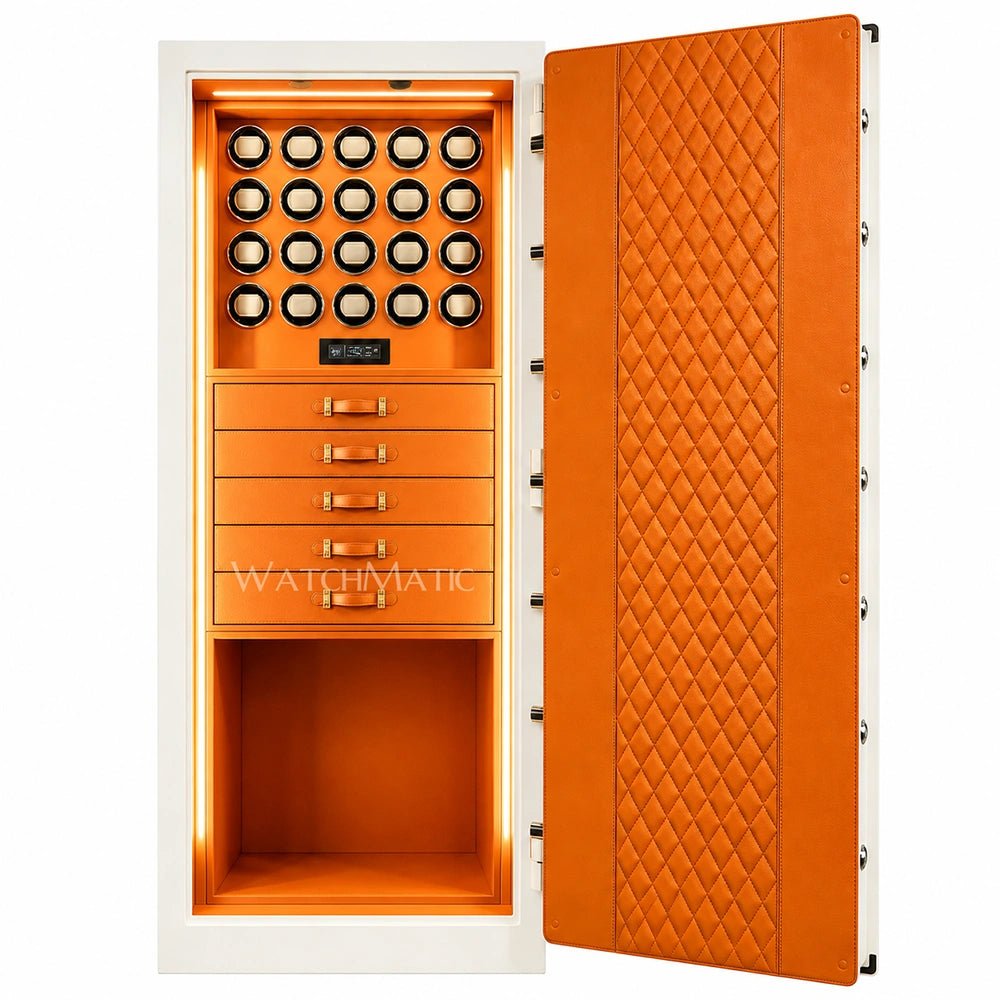
Titan Vault 20 for a Larger Atelier Wen Collection

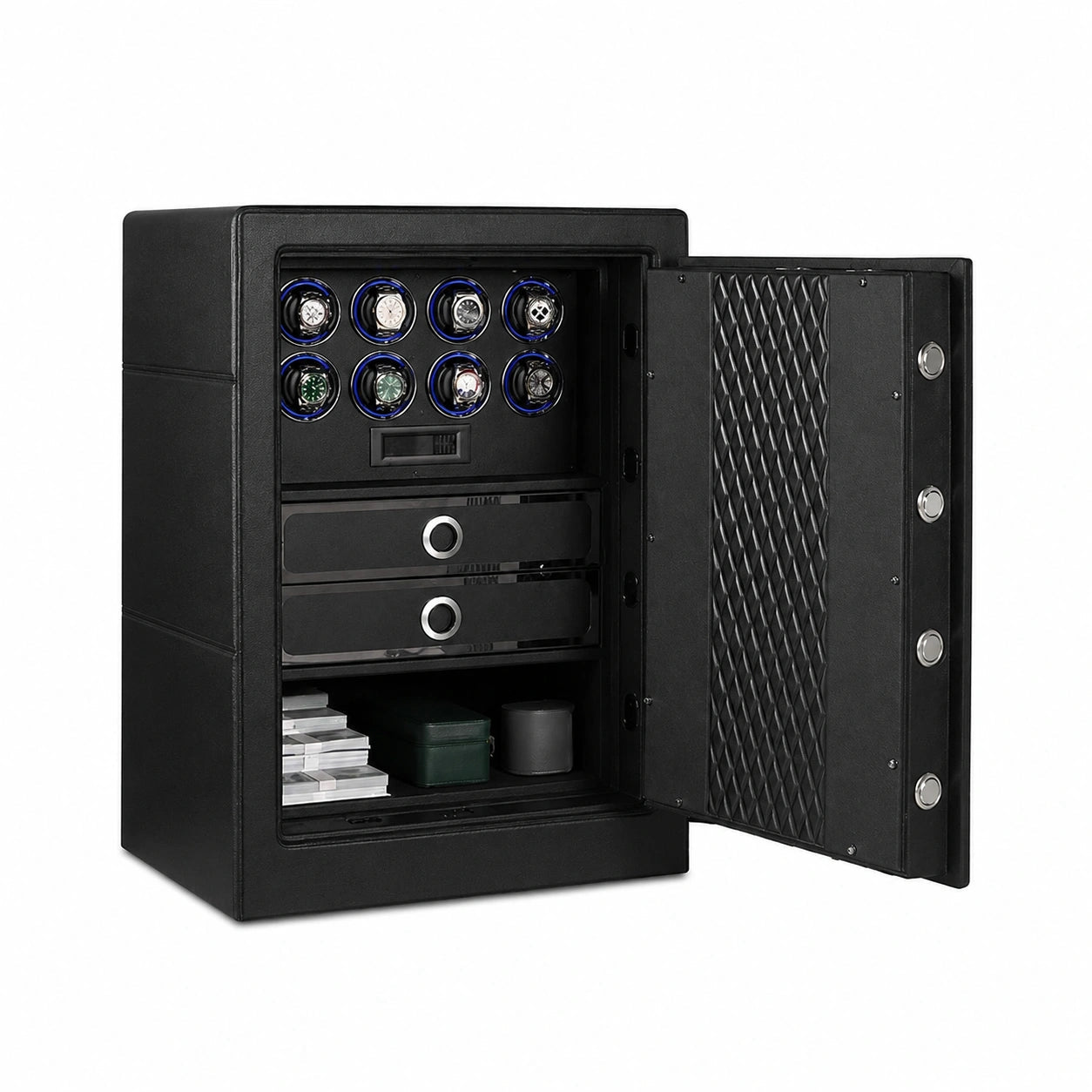
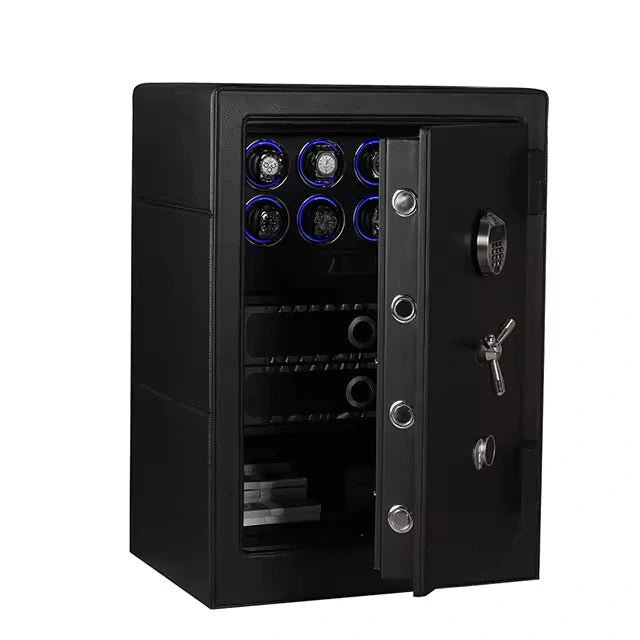
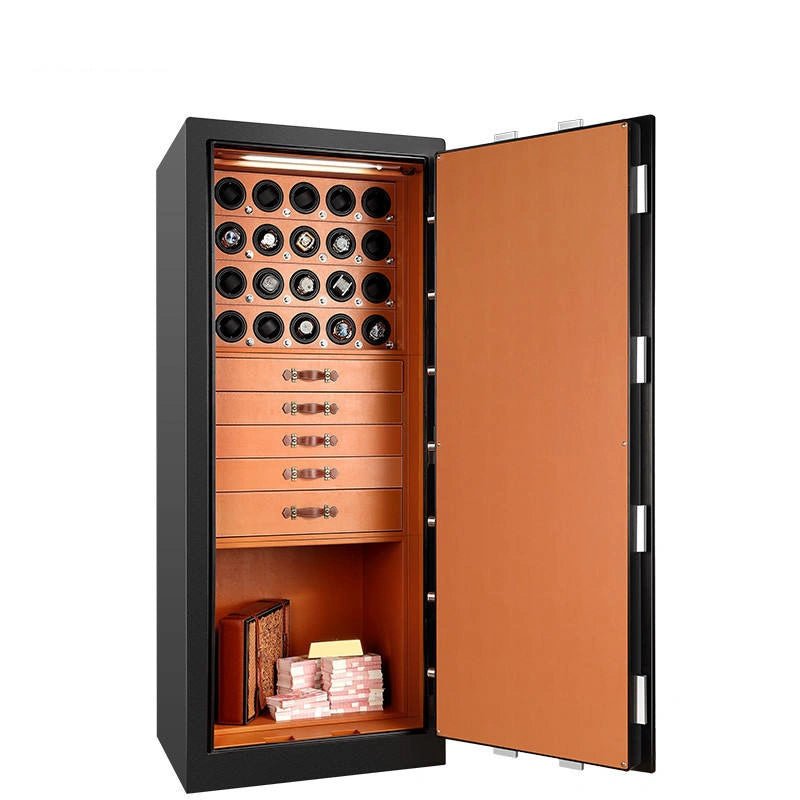
For Atelier Wen watches within a larger independent or luxury-watch collection, the Titan Vault 20 Watch Winder Safe combines 20 independently controlled winding positions with secure storage.
Available features include:
- Monolithic solid-steel body
- 10-layer reinforced exterior shell
- Biometric fingerprint access
- Digital passcode
- Manual key access
- Floor anchoring
- LCD touchscreen
- Japanese Mabuchi motors
- Independent winding control
- 650–2200 TPD range
- CW/CCW/bidirectional rotation
- Ultra-quiet operation below 10 dB
- Anti-magnetization protection
- Adjustable interior lighting
- 10-year warranty
EN 15659 LFS 60 P fire certification and UL TL-30 / EN 1143-1 Grade III security certification are available upon request, rather than being standard on every configuration.
Titan Vault 20 and Atelier Wen Movement Compatibility
Titan Vault 20 provides multiple TPD and directional options.
However, owners should still match each position to the actual movement.
For example:
Perception V3 / Ancestra → EPM03
Inflection → GP03300
Older Perception → SL1588
The safe's programmability does not remove the need for movement identification.
Why Security Matters More for Inflection
Perception and Ancestra already involve substantial craftsmanship.
Inflection moves Atelier Wen into a significantly higher price and materials category.
It combines:
- Full tantalum architecture
- Grand feu enamel
- Limited annual production
- Custom Girard-Perregaux movement
- Highly finished bracelet
- extensive manual finishing
For an Inflection collector, secure storage may eventually become as important as automatic winding.
Tantalum Is Valuable but Security Is About the Whole Watch
The reason to use a safe is not simply that tantalum is rare.
Security should reflect:
- Total watch value
- Collectability
- limited production
- replacement difficulty
- movement
- decorative crafts
- sentimental importance
A conventional winder and a safe therefore solve different problems.
When a Stationary Watch Safe Is Still Useful
Even though current Atelier Wen watches are largely automatic, they do not need to remain rotating continuously.
A collector prioritizing security over automatic readiness may choose stationary storage instead.
Secure non-winding options can be found in the Luxury Watch Safe Collection.
Atelier Wen in a Mixed Independent-Watch Collection
Atelier Wen increasingly sits naturally within collections that combine independent craftsmanship, unusual movement sourcing and high-quality finishing.
A mixed collection might include:
Atelier Wen + Girard-Perregaux + Grand Seiko + Parmigiani Fleurier + Armin Strom
Related WatchMatic guides include:
Best Watch Winder for Girard-Perregaux Watches
Best Watch Winder for Grand Seiko Watches
Best Watch Winder for Parmigiani Fleurier Watches
Best Watch Winder for Armin Strom Watches
Movement-specific programming remains important even when the watches share similar collector positioning.
Atelier Wen and Girard-Perregaux
The connection between Atelier Wen and Girard-Perregaux is unusually direct.
Inflection uses a heavily customised GP03300.
That means movement research for an Inflection can legitimately begin with the GP03300 architecture.
However, the final reference-specific specification should still take priority because Atelier Wen customises:
- Rotor
- bridges
- finishing
- movement presentation
The correct hierarchy remains:
exact Inflection specification → underlying GP03300 architecture → generic brand database
Atelier Wen and Pequignet
Perception V3 and Ancestra similarly demonstrate Atelier Wen's relationship with Pequignet.
The EPM03 is based on a French manufacture movement architecture with:
- 65-hour reserve
- Bidirectional winding
- 4 Hz frequency
- 21 jewels
This creates a completely different technical foundation from earlier SL1588 Perception watches.
Chinese Craftsmanship Does Not Mean Chinese Movement
This is an important Atelier Wen-specific insight.
A Perception V3 is strongly centered on Chinese design and craftsmanship through elements such as its guilloché dial.
Yet its movement is French.
Inflection uses Chinese enamel craft and a Swiss movement.
Earlier Perception uses a Chinese movement.
Therefore, neither brand nationality nor dial origin should be used to infer watch-winder requirements.
Movement Origin Comparison
| Atelier Wen family | Movement origin | Example |
|---|---|---|
| Earlier Perception | China | SL1588 |
| Perception V3 / Ancestra | France | EPM03 |
| Inflection | Switzerland | GP03300 |
All three are automatic.
All three can use conventional winders.
Their winding architecture still differs.
How to Choose the Best Watch Winder for Your Atelier Wen
Step 1: Identify the Exact Collection
Determine whether the watch is:
- Perception
- Millésime
- Ancestra
- Inflection
- Inflection Shuò
- Another collaboration or historical reference
Step 2: Identify the Generation
This is particularly important for Perception.
Do not assume V2 and V3 use the same movement.
Step 3: Identify the Movement
Important movements include:
- SL1588
- SL1588A
- EPM03
- GP03300
Step 4: Check Power Reserve
Representative values include:
SL1588 → approximately 41 hours
GP03300 → approximately 48 hours
EPM03 → approximately 65 hours
Step 5: Determine Winding Architecture
Examples:
EPM03 → bidirectional automatic
GP03300 → underlying platform uses clockwise winding
Do not assume all Atelier Wen movements share one direction.
Step 6: Determine Appropriate TPD
Use movement-specific information rather than one generic Atelier Wen setting.
Step 7: Check Bracelet or Strap Type
Consider:
- 904L integrated bracelet
- Grade 5 titanium bracelet
- Full tantalum bracelet
- FKM rubber
- Leather
Step 8: Check Cushion Compression
This is especially important for integrated bracelets.
Step 9: Consider Watch Weight
Inflection's full tantalum construction requires particularly stable physical support.
Step 10: Match Storage Security to Collection Value
A Perception-focused collection and an Inflection-heavy collection may justify very different storage strategies.
For broader resources covering winding, TPD, storage, and collection protection, visit the WatchMatic Guide Hub.
Best Watch Winder for Atelier Wen Watches: Final Thoughts
Choosing the best watch winder for an Atelier Wen requires more than identifying the brand.
The current movement story spans three distinct automatic architectures.
Earlier Perception and recent Millésime watches use SL1588-family automatic movements with approximately 41 hours of power reserve.
The Inflection uses a customised Girard-Perregaux GP03300 with approximately 48 hours of reserve.
Current Perception V3 and Ancestra use the customised Pequignet EPM03 with approximately 65 hours of reserve and bidirectional automatic winding.
The most important recent change is therefore the evolution from:
Perception V2 → SL1588 / ~41 h
to:
Perception V3 → EPM03 / 65 h
A search result or TPD recommendation written for an older Perception should not automatically be reused for the current V3.
For a confirmed Atelier Wen automatic, prioritize:
- Adjustable TPD
- CW/CCW/bidirectional programming
- Independent controls
- Controlled rest cycles
- Smooth low-vibration motors
- Compressible cushions
- Integrated-bracelet compatibility
- Secure support for heavier watches
The most reliable decision framework is:
Atelier Wen Reference → Generation → Movement → Power Reserve → Winding Architecture → Bracelet/Strap Fit → TPD/Direction → Winder Program
For additional automatic-winding and secure-storage solutions, explore WatchMatic.