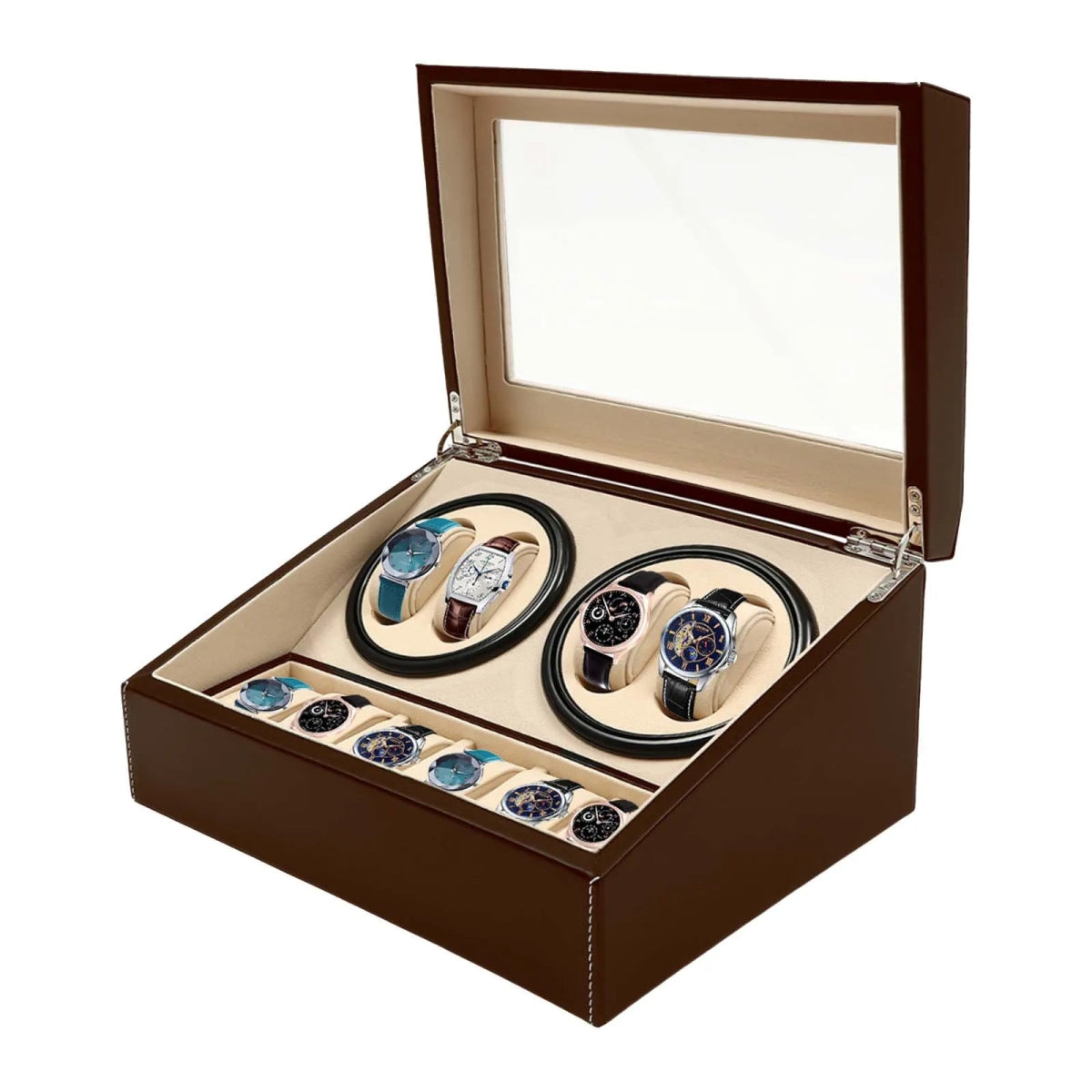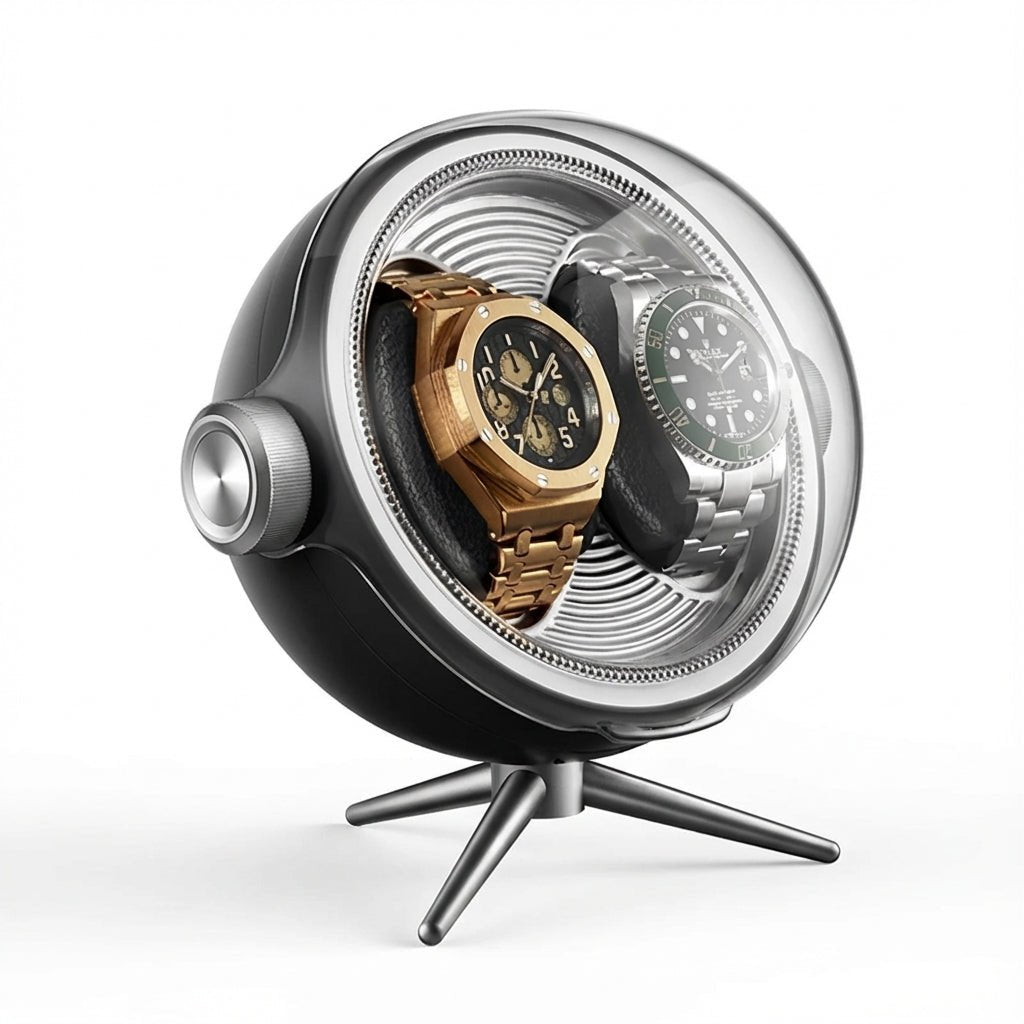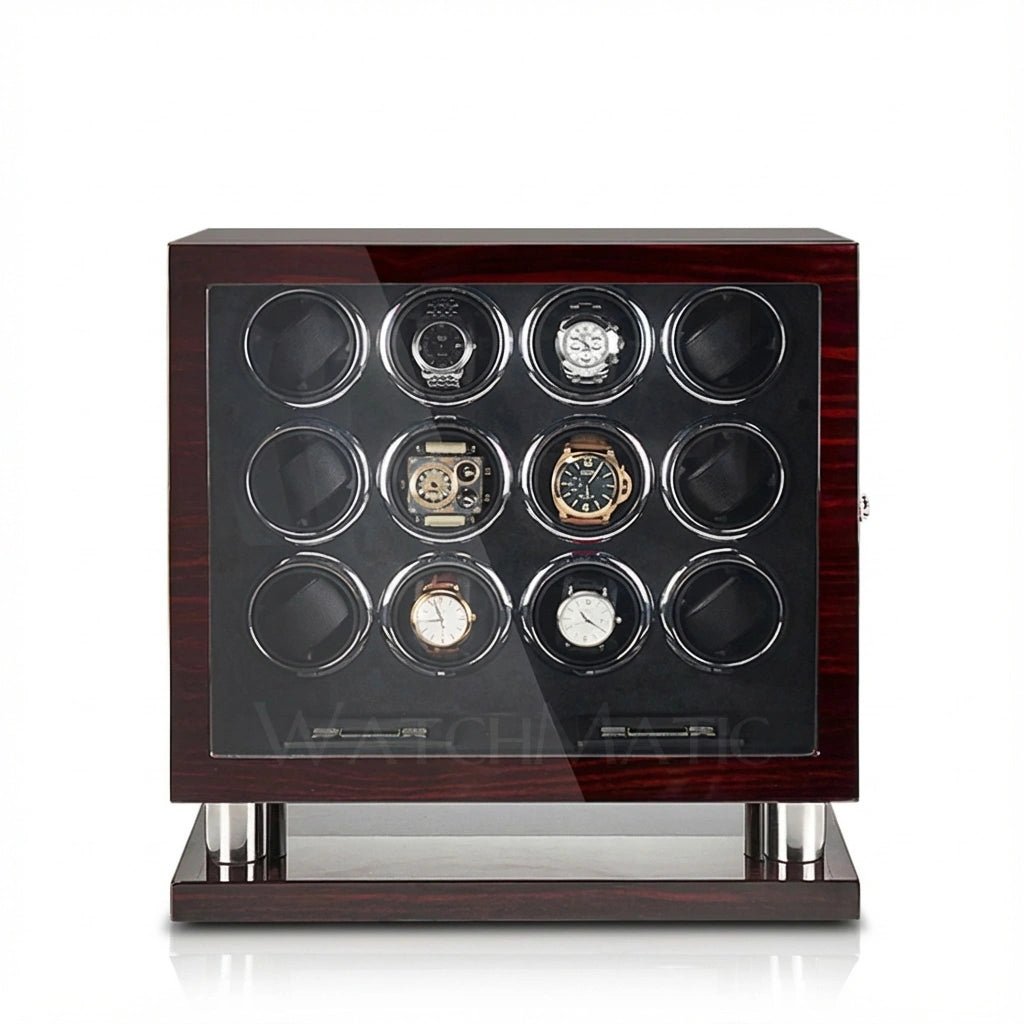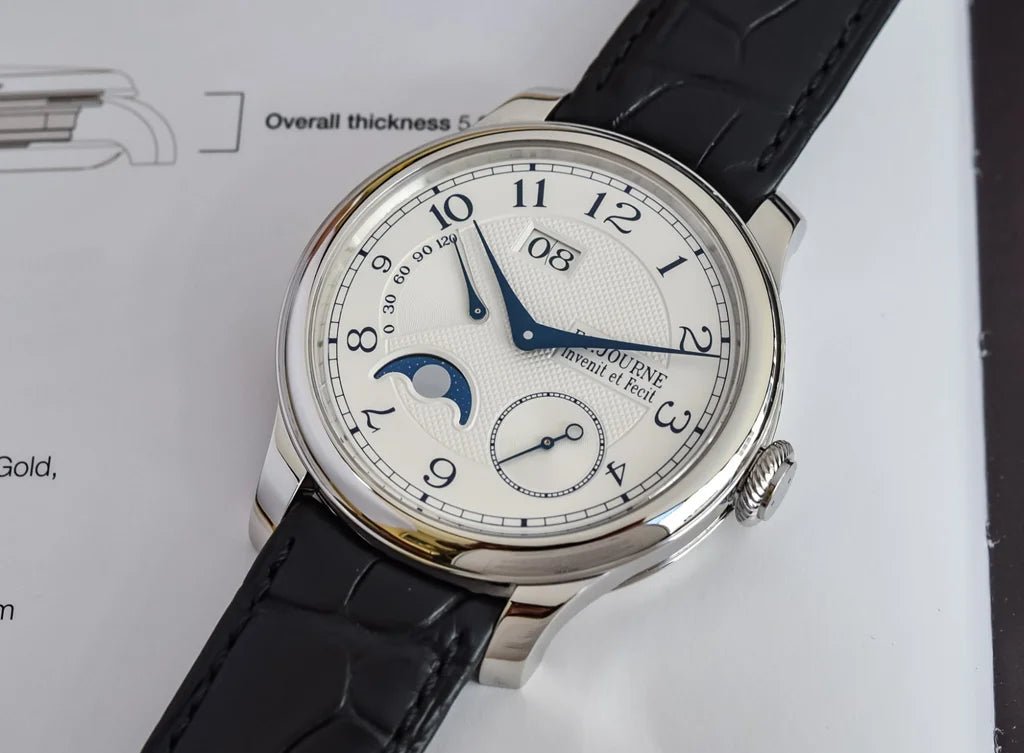
The best watch winder for F.P. Journe watches is a highly programmable model that allows precise control of daily rotations, winding direction, rest cycles, and individual watch positions.
However, F.P. Journe requires considerably more care than a typical brand-level watch-winder recommendation.
The current collection includes three fundamentally different movement categories:
- Automatic mechanical watches
- Manually wound mechanical watches
- Electromechanical quartz watches
Important automatic examples include:
- Automatique
- Automatique Lune
- Divine
- Quantième Perpétuel
- FFC
Many of F.P. Journe's most famous watches, however, are manually wound, including:
- Chronomètre Bleu
- Chronomètre Souverain
- Chronomètre Optimum
- Chronomètre à Résonance
- Tourbillon Souverain
- Répétition Souveraine
- Astronomic Souveraine
The Élégante uses an electromechanical quartz movement and receives no mechanical winding benefit from a conventional watch winder.
F.P. Journe is also unusual because the Maison publishes specific rotator speeds and directions for selected automatic references rather than leaving owners to rely entirely on generic third-party databases.
That makes the correct decision process:
Exact Reference → Caliber → Automatic / Manual / Electromechanical → Official Rotator Specification → Power Reserve → Winder or Stationary Storage
Does an F.P. Journe Watch Need a Watch Winder?
No F.P. Journe automatic mechanically requires a watch winder.
A self-winding movement converts movement of its oscillating rotor into energy stored in the mainspring.
When the watch remains unworn for longer than its available reserve, it can eventually stop.
A winder is therefore primarily useful for:
- Keeping an automatic F.P. Journe ready to wear
- Maintaining the date
- Maintaining moon-phase indications
- Keeping perpetual-calendar information synchronized
- Reducing repeated resetting
- Managing several automatic watches
- Organizing a larger haute-horlogerie collection
It does not replace servicing or make a mechanical watch inherently healthier simply by keeping it continuously running.
For a broader explanation of automatic winding, see the Watch Winder Guide.
Which F.P. Journe Watches Can Use a Watch Winder?
Representative current watches can be separated as follows:
| F.P. Journe watch | Caliber | Winding type | Published autonomy | Conventional winder? |
|---|---|---|---|---|
| Automatique | 1300.3 | Automatic | 160 ± 10 h | Yes |
| Automatique Lune | 1300.3 | Automatic | 160 ± 10 h | Yes |
| Divine | 1300.3 | Automatic | 160 ± 10 h | Yes |
| Quantième Perpétuel | 1300.3 | Automatic | 160 ± 10 h | Yes |
| FFC | 1300.3 architecture | Automatic | 120 ± 12 h | Yes |
| Chronomètre Bleu | 1304 | Manual | 56 ± 2 h | No |
| Chronomètre Souverain | 1304 | Manual | 56 ± 2 h | No |
| Chronomètre Optimum | 1510 | Manual | 70 ± 2 h | No |
| Chronomètre à Résonance | 1520 | Manual | 42 h total | No |
| Tourbillon Souverain | 1519 | Manual | 80 ± 2 h | No |
| Astronomic Souveraine | 1619 | Manual | Manual-wind | No |
| Répétition Souveraine | 1408 | Manual | Manual-wind | No |
| Élégante | 1210 | Electromechanical quartz | Years | No |
This immediately establishes the most important rule:
F.P. Journe mechanical does not mean F.P. Journe automatic.
Why F.P. Journe Is Unusual for Watch-Winder Owners
Most watch manufacturers publish:
- Movement type
- Power reserve
- Frequency
- Jewel count
- Complications
but do not publish an actual rotator specification.
F.P. Journe is different.
For several automatic references, the Maison gives an explicit number of revolutions over 24 hours and an explicit winding direction.
That means an F.P. Journe owner has access to unusually specific manufacturer information.
It also means generic advice such as:
“Use 650 TPD for every F.P. Journe”
should be treated cautiously.
F.P. Journe Official Rotator Specifications
Representative current technical specifications include:
| Model | Official rotator specification |
|---|---|
| Automatique | 274 clockwise revolutions / 24 h |
| Automatique Lune | 274 clockwise revolutions / 24 h |
| FFC | 274 clockwise revolutions / 24 h |
| Divine | 274 anti-clockwise revolutions / 24 h |
| Quantième Perpétuel | 274 anti-clockwise revolutions / 24 h |
This is unusually valuable information.
It also reveals something important:
even references based on the broader 1300.3 family should not automatically be assigned one universal direction.
The exact technical specification for the exact reference should take priority.
Why You Should Not Use One F.P. Journe TPD Setting
Many generic watch-winder databases attempt to reduce an entire brand to one number.
That approach is particularly inappropriate for F.P. Journe.
First, many F.P. Journe watches are manually wound and therefore do not need TPD at all.
Second, the Maison itself publishes reference-specific rotator information.
Third, current official specifications do not even show one common direction across all 1300.3-based references.
Therefore, the correct hierarchy is:
official exact-reference specification
before:
generic movement-family assumption
before:
brand-level database recommendation
For a broader explanation of Turns Per Day, see the Watch TPD Guide.
274 Rotations Per Day vs. Commercial Watch-Winder Presets
F.P. Journe's published figure of approximately 274 revolutions per 24 hours is substantially lower than the minimum setting offered by many consumer watch winders.
That matters.
It does not automatically mean that a higher commercial preset will damage the watch. Automatic movements use systems designed to prevent the mainspring from being conventionally overwound once fully tensioned.
However:
more rotation is not automatically better.
If a third-party watch winder cannot reproduce or appropriately accommodate the manufacturer's published rotator specification, the owner should verify compatibility rather than simply selecting the nearest high preset.
For an F.P. Journe, precision of configuration is more important than maximizing the number of turns.
Clockwise vs. Anti-Clockwise F.P. Journe Settings
Another important detail is direction.
Current technical documentation for some models specifies:
274 clockwise rotations per 24 hours
while others specify:
274 anti-clockwise rotations per 24 hours.
This is precisely why the owner should not conclude:
“Calibre 1300.3 always winds clockwise.”
or:
“Every Octa-based watch uses the same program.”
The exact reference should be checked.
A premium winder should therefore provide:
- Clockwise operation
- Counterclockwise operation
- Bidirectional capability
- Independent programming
even if the exact watch ultimately uses only one direction.
F.P. Journe Calibre 1300.3
Calibre 1300.3 is central to understanding F.P. Journe automatic watches.
The Octa architecture was developed around the idea of combining substantial autonomy with automatic winding and the ability to support multiple complications.
Important characteristics include:
- Automatic winding
- Off-centre rotor
- 22K gold winding mass on key configurations
- Large-capacity mainspring barrel
- 3 Hz frequency
- Long autonomy
- Slipping mainspring system
Current watches using this architecture include several of the most relevant F.P. Journe references for watch-winder owners.
Five-Day Precision vs. Total Autonomy
An important nuance exists in F.P. Journe's published specifications.
For current Automatique references, the official technical specification can state total autonomy of approximately:
160 ± 10 hours
However, the Maison's technical description emphasizes roughly:
120 hours / five days
as the period during which the movement is intended to maintain its strongest chronometric performance.
Beyond that five-day range, the watch can continue running, but decreasing balance amplitude means the final hours should not necessarily be interpreted as equivalent precision autonomy.
For a watch-winder owner, the distinction is useful:
total running time and optimum chronometric operating range are not exactly the same concept.
Best Watch Winder for F.P. Journe Automatique
The current Automatique uses Calibre 1300.3.
Its published characteristics include:
- Unidirectional automatic winding
- Off-centre rotor
- Large date
- Power-reserve indication
- Approximately 160 ± 10 hours total autonomy
- 3 Hz frequency
- 40 or 42 mm case options
Most importantly, the manufacturer's technical specification provides:
274 clockwise revolutions per 24 hours
for the current reference.
This is much more useful than guessing from generic TPD databases.
For an Automatique, prioritize:
- Precise low-turn programmability
- Clockwise operation
- Controlled rest cycles
- Smooth motor operation
- Quiet performance
- Secure strap or bracelet support
Does the Automatique Really Need a Winder?
The Automatique already has unusually long autonomy.
If worn every few days, it may remain running naturally without any winder.
Consider:
Frequent wearer
Wears the Automatique several times per week.
Its long reserve can make a winder largely unnecessary.
Large-collection owner
Wears it once every one or two weeks.
The watch may stop between wears.
A carefully configured winder becomes more convenient.
Long power reserve therefore:
reduces dependence on a winder
rather than increasing it.
Best Watch Winder for F.P. Journe Automatique Lune
The Automatique Lune also uses Calibre 1300.3 and combines long autonomy with additional indications.
Current functions include:
- Hours
- Minutes
- Small seconds
- Large date
- Power-reserve indication
- Moon phase
Its total autonomy is approximately:
160 ± 10 hours
and its current technical specification states:
274 clockwise revolutions per 24 hours.
Why Automatique Lune Has a Stronger Convenience Case
Compared with the simpler Automatique, the Automatique Lune has an additional moon-phase indication.
Allowing the watch to stop is not mechanically harmful.
However, when the watch stops for an extended period, the owner may need to restore:
- Time
- Date
- Moon phase
Keeping it running can therefore reduce repeated setup.
That is a convenience benefit, not a mechanical-health requirement.
Moon Phase Does Not Require Continuous Running
A moon-phase mechanism does not need to move continuously while the watch is stored in order to remain mechanically healthy.
The practical issue is synchronization.
If the watch stops, the displayed lunar phase also stops.
A winder can preserve the display's relationship to the current lunar cycle by keeping the movement operating.
Best Watch Winder for F.P. Journe Divine
The Divine also uses automatic Calibre 1300.3.
Its indications include:
- Central hours and minutes
- Small seconds
- Large date
- Power reserve
- Moon phase
Its published autonomy is approximately:
160 ± 10 hours
but the current rotator specification differs from several other 1300.3 references:
274 anti-clockwise rotations per 24 hours.
This is an important example of why reference-specific documentation matters.
Same Caliber Family, Different Published Direction
Compare:
Automatique → 274 clockwise
Automatique Lune → 274 clockwise
Divine → 274 anti-clockwise
All belong to the broader 1300.3 automatic architecture.
Yet current technical pages do not present one universal rotator direction.
Therefore, a collector should never create a blanket rule such as:
“Every FP Journe 1300.3 should be clockwise.”
Use the specification for the actual watch.
Best Watch Winder for F.P. Journe Quantième Perpétuel
The Quantième Perpétuel is arguably the strongest current F.P. Journe candidate for a watch winder from a convenience perspective.
It combines automatic Calibre 1300.3 with a perpetual-calendar display.
Current specifications include:
- Automatic winding
- 22K gold off-centre rotor
- Day
- Date
- Month
- Leap-year cycle
- Long power reserve
- Approximately 160 ± 10 hours total autonomy
Its current technical specification states:
274 anti-clockwise rotations per 24 hours.
Why the Quantième Perpétuel Benefits More From Staying Running
A simple two-hand watch is straightforward to reset after stopping.
A perpetual calendar is different.
Its indications must remain synchronized across:
- Date
- Day
- Month
- Leap-year cycle
The perpetual mechanism itself does not mechanically require a watch winder.
But avoiding a complete stop can significantly reduce the inconvenience of restoring calendar information after extended storage.
This makes the Quantième Perpétuel a stronger winder candidate than many simpler automatic watches.
Long Power Reserve vs. Perpetual Calendar Complexity
The Quantième Perpétuel illustrates an important balance.
Its long reserve means it can remain off the wrist for several days without stopping.
That reduces the need for a winder.
However, if it eventually does stop, its complication makes resetting more involved.
Therefore:
long power reserve → less frequent need for winding
while:
perpetual calendar → greater value in avoiding a complete stop
Both factors should be considered.
Best Watch Winder for F.P. Journe FFC
The FFC is one of the most visually and mechanically unusual automatic watches in the F.P. Journe catalog.
Its time display uses articulated titanium fingers to indicate the hours, accompanied by a rotating minutes display.
Despite the unconventional display architecture, the movement is based around the automatic 1300.3 system.
Published specifications include approximately:
120 ± 12 hours of power reserve
and:
274 clockwise revolutions per 24 hours
on a rotator.
FFC Complexity Does Not Mean More TPD
The animated hand display is mechanically sophisticated.
But that does not mean the watch should receive additional daily rotation simply because more components are moving.
The automatic winding requirement is separate from display complexity.
For an FFC, prioritize:
- Reference-specific winding program
- Clockwise rotation as specified
- Controlled rest cycles
- Very smooth motor operation
- Secure strap support
- Adequate clearance for the 42 mm case
FFC Physical Dimensions
The FFC is approximately:
42 mm in diameter
and roughly:
10.8 mm thick
on the current reference.
That does not create an extreme chamber-clearance challenge.
The more important issue is the value and complexity of the watch.
Use:
- Soft contact materials
- Stable positioning
- Low-vibration operation
- Secure retention
rather than focusing only on case size.
What About Historical Octa Watches?
F.P. Journe has produced several generations of Octa watches over more than two decades.
These include discontinued references and earlier versions with specifications that can differ from current models.
Therefore, owners of older:
- Octa Réserve de Marche
- Octa Lune
- Octa Calendrier
- Octa UTC
- Octa Chronographe
- Other historical Octa references
should identify the exact generation before copying settings from a current Automatique.
Historical and current models should not automatically be treated as mechanically identical.
Vintage and Discontinued F.P. Journe References Need Extra Care
Collector interest in F.P. Journe includes many early and discontinued watches.
An online database may list a movement number without distinguishing:
- Brass movement generation
- Rose-gold movement generation
- Updated automatic winding system
- Earlier bidirectional winding
- Later unidirectional winding
- Reference-specific revisions
For this reason, a historical F.P. Journe should be configured according to its own documentation whenever possible.
F.P. Journe's Change From Bidirectional to Unidirectional Winding
The Octa automatic architecture evolved over time.
Later versions moved toward unidirectional automatic winding, with F.P. Journe describing this system as more efficient for rapidly tensioning the long mainspring used by the Octa.
This matters for owners of historical references.
A setup appropriate for an earlier version should not automatically be assumed to be the correct program for a later current watch.
F.P. Journe Chronomètre Bleu
The Chronomètre Bleu is one of the most recognizable F.P. Journe watches.
But it does not need a conventional watch winder.
It uses Calibre 1304, which is manually wound.
Its published autonomy is approximately:
56 ± 2 hours
and its movement uses two mainspring barrels working in parallel.
Can a Chronomètre Bleu Use a Watch Winder?
Not for winding.
The Chronomètre Bleu has no automatic winding rotor.
Placing it on a rotating winder will move the watch physically, but it will not provide the intended winding energy.
The correct approach is:
manual winding through the crown
and:
secure stationary storage when not being worn.
Chronomètre Bleu: Mechanical Does Not Mean Automatic
This is one of the most important examples for search users.
The Chronomètre Bleu is:
- Mechanical
- Highly collectible
- Hand-finished
- Powered by twin barrels
- Equipped with a power reserve of approximately 56 hours
but it is still manually wound.
Therefore:
mechanical =/= automatic
and:
mechanical =/= needs a watch winder
F.P. Journe Chronomètre Souverain
The Chronomètre Souverain also uses Calibre 1304.
Like the Chronomètre Bleu, it is manually wound and provides approximately:
56 ± 2 hours of autonomy.
It therefore receives no winding benefit from conventional rotational motion.
For a Chronomètre Souverain, the more relevant storage priorities are:
- Soft stationary support
- Protection from impact
- Controlled access
- Stable environmental conditions
- Security appropriate to the collection's value
F.P. Journe Chronomètre Optimum
The Chronomètre Optimum uses Calibre 1510.
It is manually wound and provides approximately:
70 ± 2 hours of autonomy.
Its movement includes sophisticated chronometric architecture such as:
- One-second remontoire
- Natural deadbeat seconds
- Bi-axial escapement
- Parallel mainspring barrels
None of these features makes the watch automatic.
Can a Chronomètre Optimum Use a Watch Winder?
Not for conventional winding.
The Calibre 1510 is explicitly manually wound.
Its approximately 70-hour reserve also means it can remain running for nearly three days after being fully wound.
But once that reserve is exhausted, the watch needs manual winding through the crown.
A rotating winder provides no substitute.
F.P. Journe Chronomètre à Résonance
The current Chronomètre à Résonance uses Calibre 1520.
It is one of F.P. Journe's most technically distinctive watches.
Current specifications include:
- Manual winding
- Two balances
- Two remontoirs d'égalité
- Dual time displays
- Approximately 42 hours total autonomy
- Approximately 28 ± 2 hours of efficient running time
Despite its technical complexity, it is not automatic.
Can a Chronomètre à Résonance Use a Watch Winder?
No conventional rotating winder can wind the current Chronomètre à Résonance.
The watch must be manually wound.
This is particularly important because someone unfamiliar with the model may assume that a highly sophisticated contemporary mechanical watch must contain an automatic rotor.
It does not.
Total Autonomy vs. Efficient Running Time
The current Résonance introduces another useful distinction.
Its specification differentiates between:
total autonomy
and:
efficient running time
This demonstrates why a single power-reserve number does not always describe the full operating behavior of a haute-horlogerie movement.
For storage decisions, however, the fundamental point remains:
Calibre 1520 is manually wound.
TPD is therefore irrelevant for conventional winding.
F.P. Journe Tourbillon Souverain
The current Tourbillon Souverain uses Calibre 1519.
It is:
- Manually wound
- Equipped with a vertical tourbillon
- Fitted with constant-force architecture
- Equipped with dead seconds
- Approximately 80 ± 2 hours of power reserve
A conventional watch winder provides no winding benefit.
Tourbillon Does Not Mean Automatic
Tourbillon refers to a regulating architecture.
It does not describe how the mainspring receives energy.
A tourbillon can be:
- Automatic
- Manual
The F.P. Journe Tourbillon Souverain is manual.
Therefore:
tourbillon complexity ≠ watch-winder compatibility
80-Hour Reserve Still Does Not Make It Automatic
The Tourbillon Souverain offers substantially longer autonomy than many automatic watches.
Yet conventional rotation still cannot wind it.
Compare:
Tourbillon Souverain → 80 h → manual → no conventional winder
with:
Automatique → up to 160 ± 10 h total autonomy → automatic → conventional winder compatible
Power reserve and winding architecture are separate specifications.
F.P. Journe Astronomic Souveraine
The Astronomic Souveraine is among the most complicated watches produced by F.P. Journe.
It incorporates numerous astronomical and civil-time indications.
Current Calibre 1619 is manually wound.
Therefore, despite its extensive complexity:
a conventional rotating watch winder provides no winding benefit.
Complexity Does Not Determine Winder Compatibility
The Astronomic Souveraine makes the principle especially obvious.
It may contain far more mechanical functions than a simple automatic watch.
But the question:
“Can a watch winder wind it?”
has a simple answer determined by one feature:
Does the movement have an automatic winding rotor?
For Calibre 1619, the answer is no.
F.P. Journe Répétition Souveraine
The Répétition Souveraine uses manually wound Calibre 1408.
It combines high horology with an ultra-thin minute-repeater architecture.
A conventional watch winder cannot wind it.
The repeater mechanism also does not need to be exercised automatically by a winder.
For this type of watch, premium stationary storage is considerably more relevant than a powered rotor position.
F.P. Journe Élégante
The Élégante is a completely different case.
It uses Calibre 1210, an electromechanical quartz movement.
It includes:
- Quartz regulation
- Electromechanical drive
- Motion detection
- Standby mode
- Automatic restoration of the displayed time when motion resumes
- Extremely long battery autonomy
A conventional mechanical watch winder provides no useful winding energy.
Does an F.P. Journe Élégante Need a Watch Winder?
No.
The Élégante's motion detector should not be confused with an automatic mechanical rotor.
The watch detects whether it is being worn and manages its electronic energy accordingly.
Physical rotation on a conventional watch winder does not wind a mainspring.
Therefore:
Élégante → electromechanical → no conventional winding requirement
Motion Detection Does Not Mean Automatic Winding
This distinction is important.
The Élégante contains an inertia-based motion detector.
But that moving component is used to detect activity.
It does not operate like the rotor in an automatic mechanical watch.
Therefore:
motion sensor ≠ self-winding rotor
and:
movement detection ≠ mechanical winding
F.P. Journe Automatic vs. Manual vs. Electromechanical
| Movement type | Examples | Conventional winder useful? |
|---|---|---|
| Automatic mechanical | Automatique, Automatique Lune, Divine, QP, FFC | Yes |
| Manual mechanical | Bleu, Souverain, Optimum, Résonance, Tourbillon | No |
| Electromechanical quartz | Élégante | No |
This distinction should be made before discussing TPD.
Power Reserve Does Not Determine Winder Compatibility
F.P. Journe provides several particularly useful comparisons.
Chronomètre Optimum
Approximately 70 hours
Manual winding
No conventional winder benefit
Automatique
Much longer automatic autonomy
Self-winding
Can use a conventional winder
Tourbillon Souverain
Approximately 80 hours
Manual winding
No conventional winder benefit
FFC
Approximately 120 hours
Automatic winding
Can use a winder
The decisive variable is:
winding architecture
not:
number of hours of power reserve.
Complication Does Not Determine Winder Compatibility
The same principle applies to complications.
Quantième Perpétuel
Highly complicated
Automatic
Winder compatible
Chronomètre à Résonance
Highly complicated
Manual
Not conventionally winder compatible
FFC
Highly unusual display complication
Automatic
Winder compatible
Astronomic Souveraine
Extreme complication
Manual
Not conventionally winder compatible
Therefore:
more complications ≠ greater need for a rotating winder.
Does an F.P. Journe Automatic Need to Run All the Time?
No.
An automatic F.P. Journe can stop after its stored energy is exhausted.
There is no general mechanical requirement to keep it continuously running.
In fact, because current Octa-derived watches can offer exceptionally long autonomy, many F.P. Journe owners may need a winder less frequently than owners of conventional 38–42-hour automatics.
The practical value depends on:
power reserve + complication + frequency of wear + collection size
Long Power Reserve Changes the F.P. Journe Winder Equation
Consider a conventional automatic watch with approximately 40 hours of reserve.
It may stop after less than two days away from the wrist.
A current F.P. Journe Automatique can continue substantially longer.
This means:
long reserve reduces the frequency at which the owner needs a winder.
However, watches such as the Quantième Perpétuel can still justify continuous readiness because their displays are more complicated to restore after a complete stop.
Should You Fully Wind an F.P. Journe Before Putting It on a Winder?
A watch winder is generally best used to maintain an already operating automatic watch.
If the watch has stopped completely, follow the starting procedure appropriate to that reference before placing it on a winder.
The preferred sequence is:
restart correctly → establish initial reserve → configure correct rotator program → maintain
rather than:
stopped watch → highest available TPD
Why Maximum TPD Is Particularly Inappropriate for F.P. Journe
F.P. Journe explicitly publishes relatively low rotator values on several references.
That makes the common consumer approach of simply selecting the highest available TPD particularly difficult to justify.
The goal should be:
sufficient rotation to maintain the watch
not:
maximum possible rotor movement.
Once adequate winding has been achieved, additional rotations provide no automatic improvement in accuracy, servicing, lubrication, or movement longevity.
What to Look for in a Watch Winder for F.P. Journe
Precise Programmability
This is arguably the most important characteristic.
A generic fixed-output winder is not ideal for a brand that publishes reference-specific rotator figures.
Low-Turn Capability
Because some official F.P. Journe specifications are substantially below common consumer-winder presets, the ability to operate at relatively low daily rotation counts is especially valuable.
Clockwise and Counterclockwise Modes
Both directions are important because current official documentation differs by reference.
Independent Controls
Each F.P. Journe automatic should ideally be programmable separately.
Do not assume two watches using related automatic architecture should share one setting.
Controlled Rest Cycles
The watch does not need uninterrupted rotation.
The programmed turns should be distributed through active and resting periods.
Smooth Motor Operation
For high-value independent watchmaking, smooth starts, stops, and direction transitions are preferable.
Low Vibration
The objective is controlled movement similar to normal wrist motion—not aggressive mechanical shaking.
Quiet Operation
A premium winder may be placed in:
- Bedroom
- Dressing room
- Private office
- Collector room
- Walk-in wardrobe
Motor noise should therefore remain minimal.
Flexible Watch Cushions
F.P. Journe watches are commonly around 38–42 mm, but wrist circumference and strap configuration vary considerably.
The cushion should adapt without excessive tension.
Soft Interior Materials
The collection may include:
- Platinum
- 18K gold
- Tantalum
- Titanium components
- Steel
- Precious-metal bracelets
Hard enclosure surfaces should not repeatedly contact the watch.
Strap vs. Bracelet Fit
Many F.P. Journe watches use leather straps.
Others are available with precious-metal bracelets.
These require different support.
Leather Strap
Avoid:
- Excessively large cushions
- Sharp curvature
- Excessive buckle tension
- Hard edges
Precious-Metal Bracelet
Prioritize:
- Highly compressible cushion
- Natural clasp closure
- Minimal bracelet stretching
- Stable watch-head position
Because a platinum or gold bracelet adds substantial value and weight, physical support is particularly important.
Best Watch Winder for One F.P. Journe Automatic
For one automatic F.P. Journe, the main priority should not simply be purchasing the most powerful winder.
Instead, prioritize:
- Precise TPD control
- Correct winding direction
- Controlled rest cycles
- Smooth motor operation
- Low vibration
- Appropriate cushion fit
- Independent programming
Suitable winding formats can be explored in the WatchMatic Watch Winder Collection.
For an F.P. Journe specifically, however, compare the available winder programs carefully with the exact manufacturer's rotator specification before long-term use.
Best Watch Winder for Multiple F.P. Journe Watches
A serious F.P. Journe collection might contain:
- Automatique
- Automatique Lune
- Quantième Perpétuel
- Chronomètre Bleu
- Chronomètre Optimum
- Chronomètre à Résonance
- Tourbillon Souverain
- Élégante
Only three watches in that example require consideration for conventional automatic winding.
The others should be handled differently.
A better architecture is:
Automatic references → individually programmed winding positions
Manual references → secure stationary storage
Élégante → stationary storage appropriate to an electromechanical watch
Automatic rotor capacity therefore should not automatically equal total collection capacity.
LuxGuard for an F.P. Journe Collection

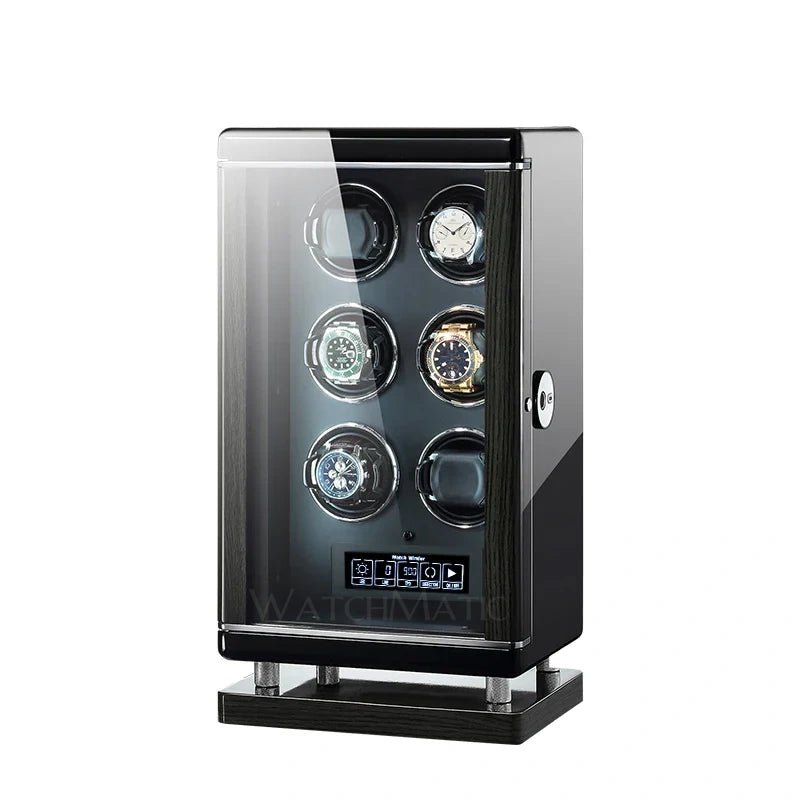
A multi-position LuxGuard Watch Winder can serve as a winding platform within a mixed automatic collection, with features including independent rotor control, multiple rotation modes, Japanese Mabuchi motors, quiet operation, interior illumination, and secure individual watch positions.
For F.P. Journe, however, the key consideration is not simply whether the winder rotates.
The selected program should be checked against the exact reference.
Because F.P. Journe publishes unusually specific and relatively low rotator values for selected automatics, owners should not assume that a generic preset is equivalent to the Maison's stated program.
Do Manual F.P. Journe Watches Need to Rotate in Storage?
No.
There is no winding reason to rotate a:
- Chronomètre Bleu
- Chronomètre Souverain
- Chronomètre Optimum
- Chronomètre à Résonance
- Tourbillon Souverain
- Répétition Souveraine
- Astronomic Souveraine
These watches should be manually wound when appropriate.
When not in use, high-quality stationary storage is entirely suitable.
Is It Safe to Keep an F.P. Journe on a Watch Winder?
A properly configured winder can be appropriate for a confirmed automatic F.P. Journe.
The important word is:
properly configured.
Consider:
- Exact reference
- Published rotator specification
- Winding direction
- Daily rotation count
- Rest cycles
- Cushion fit
- Motor smoothness
- Vibration
- Magnetic environment
If the winder cannot accommodate the published requirements of the reference, compatibility should be confirmed rather than assumed.
Slipping Mainspring Does Not Mean Unlimited Rotation Is Ideal
Automatic movements commonly incorporate a system that allows the mainspring to slip once sufficient tension is reached.
Current 1300.3 specifications explicitly include a slipping mainspring.
This helps prevent conventional overwinding.
However, this should not be interpreted as:
“Any amount of TPD is equally appropriate.”
The presence of a slipping system does not create a reason to subject the rotor and winding train to unnecessary motion.
Use appropriate rather than maximal rotation.
A Watch Winder Does Not Service an F.P. Journe
A watch winder does not:
- Replace lubricants
- Regulate timekeeping
- Service the escapement
- Maintain a remontoire
- Service a tourbillon
- Service a repeater
- Repair a calendar mechanism
- Replace professional maintenance
It simply provides rotational motion to a self-winding system.
This distinction is especially important with high-complication independent watchmaking.
Watch Winder vs. Watch Safe for F.P. Journe Collectors
F.P. Journe is one of the brands where the storage-security question can become more important than maximizing rotor count.
A collection can contain many extremely valuable watches while only a minority are automatic.
| Feature | Watch Winder | Watch Winder Safe |
|---|---|---|
| Automatic winding | Yes | Yes |
| Independent programs | Model dependent | Available |
| Manual-watch storage | Possible | Yes |
| Élégante storage | Possible | Yes |
| Controlled access | Limited | High |
| Physical security | Limited | High |
| Additional storage | Limited | Available |
| Mixed automatic/manual collection | Moderate | High |
| High-value independent collection | Limited | More suitable |
Collectors requiring integrated winding and secure storage can explore the Watch Winder Safe Collection.
Titan Vault for an F.P. Journe Collection

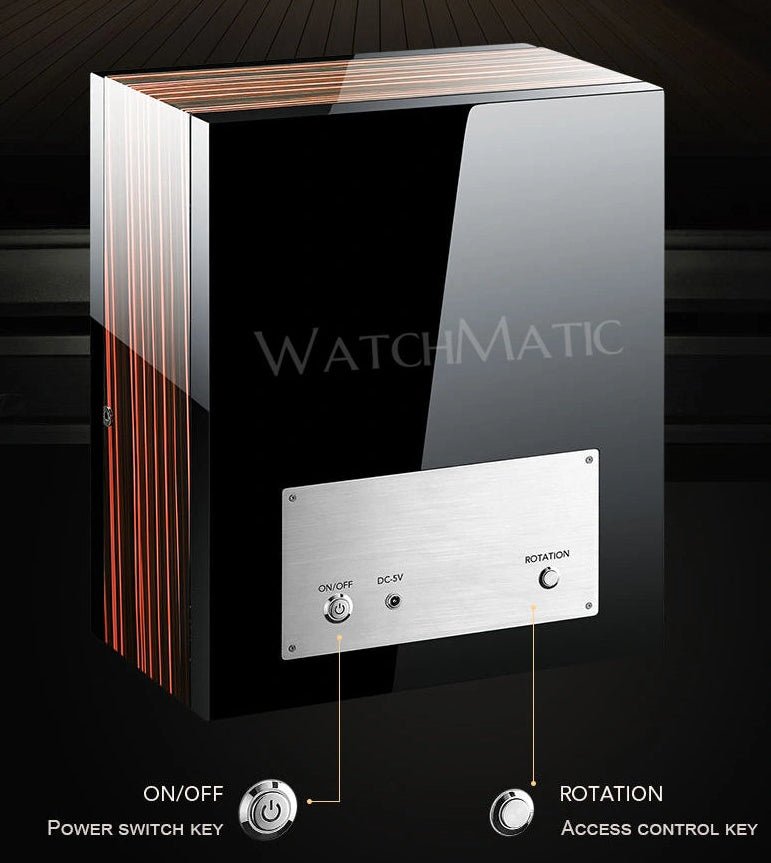
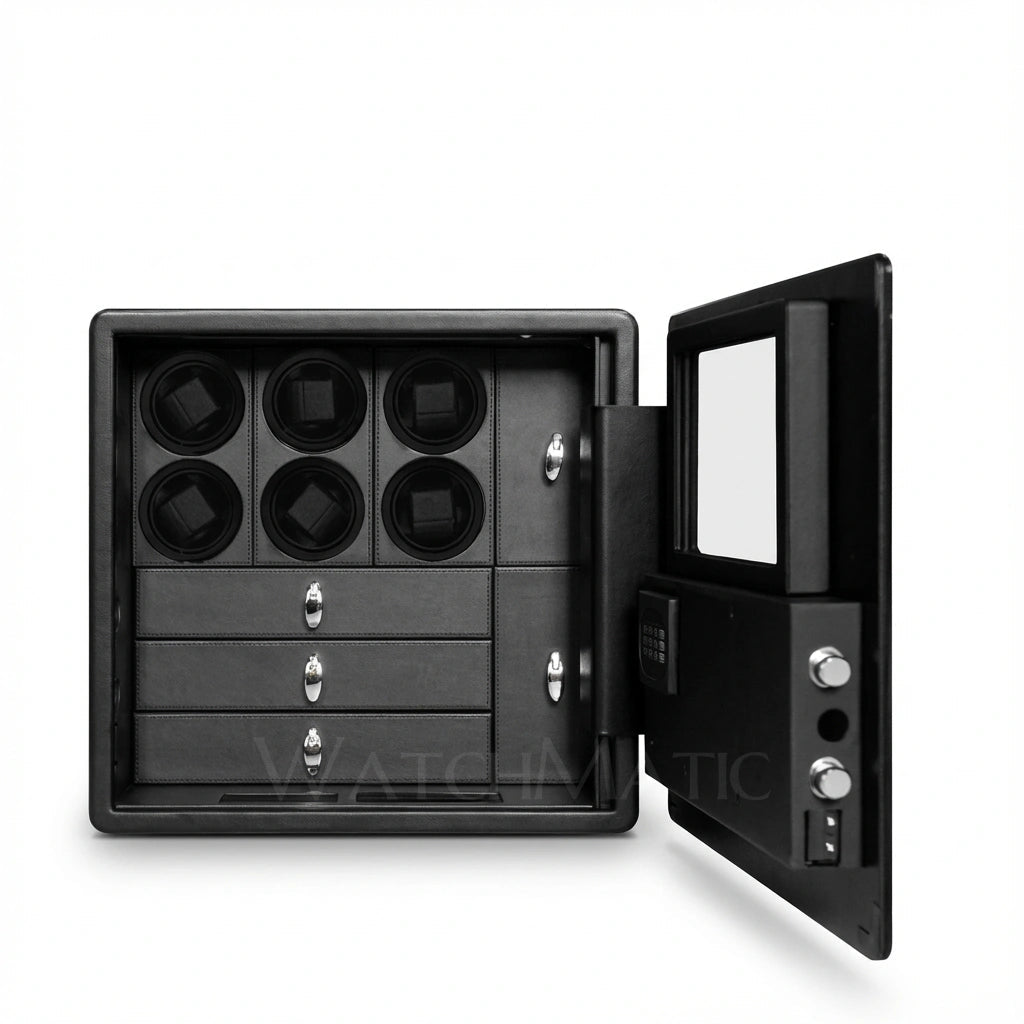
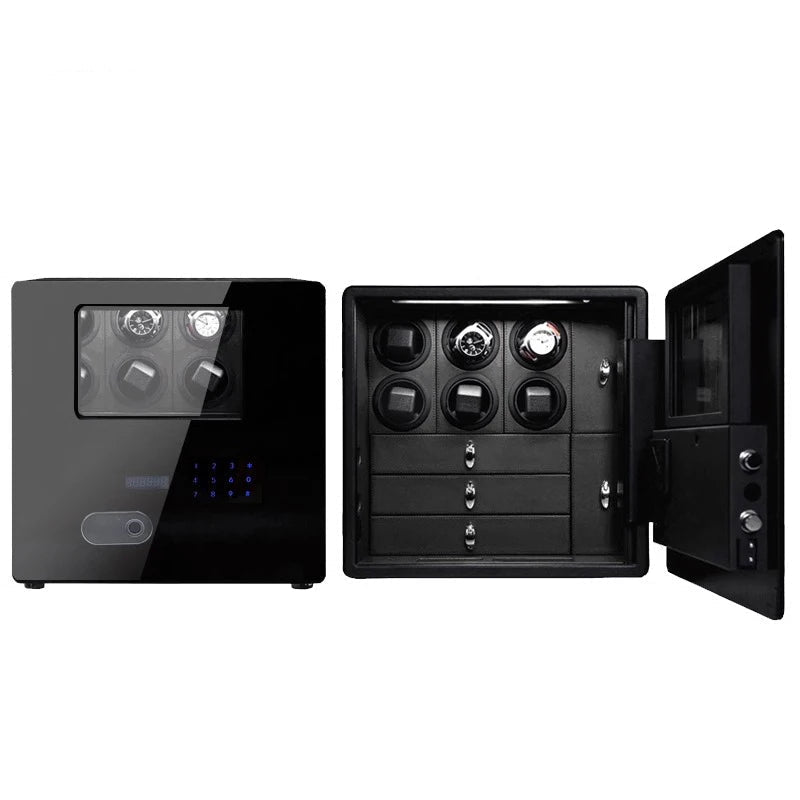
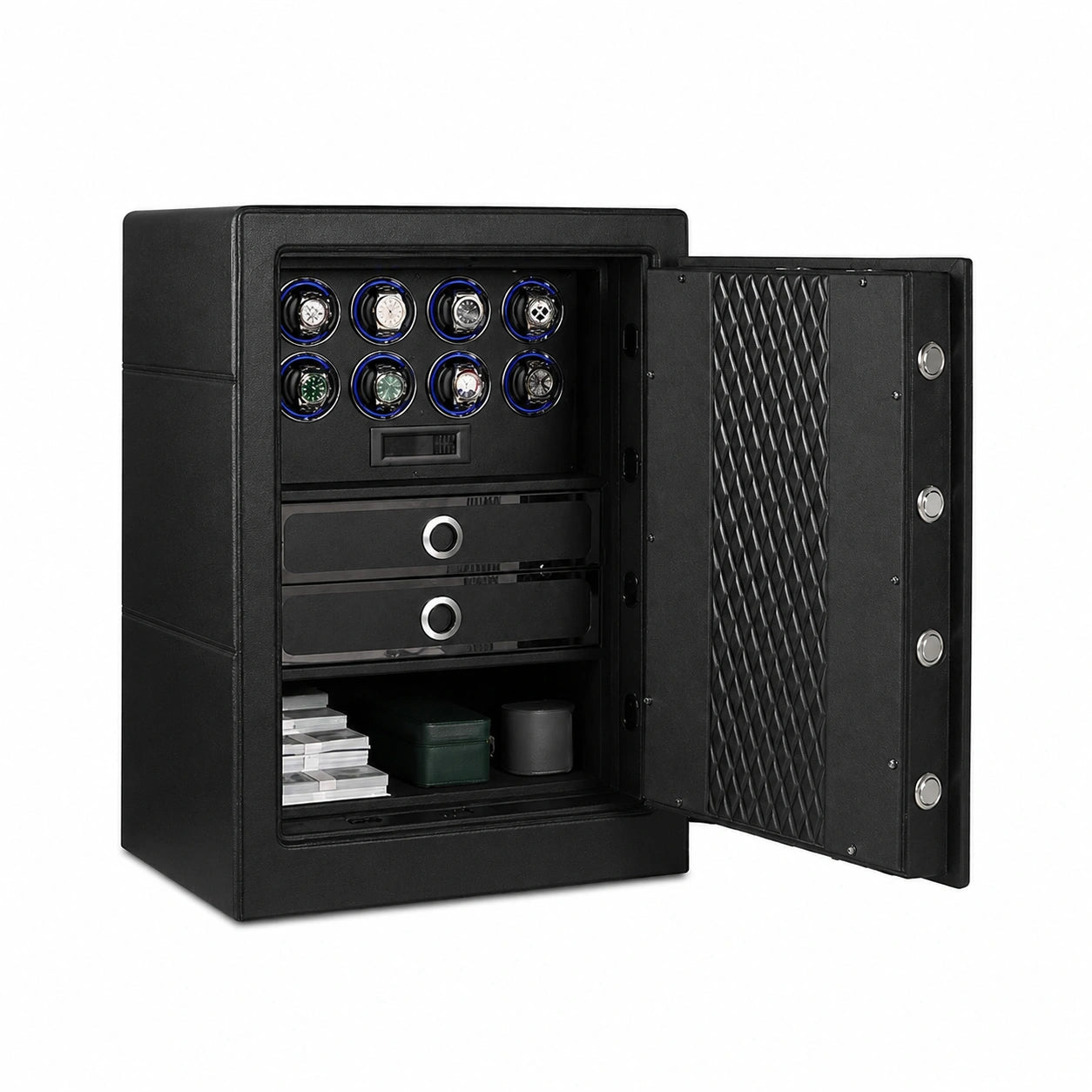
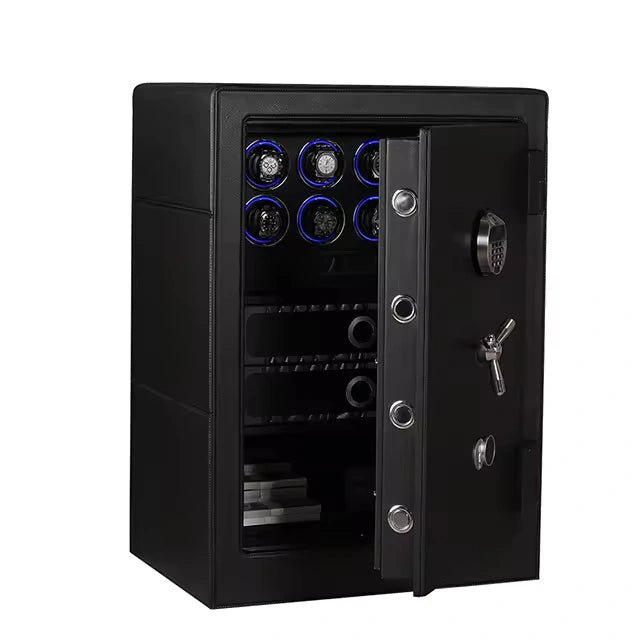
For a larger F.P. Journe or mixed haute-horlogerie collection, the Titan Watch Winder Safe combines programmable winding positions with secure stationary storage.
Depending on configuration, available features include:
- Reinforced safe construction
- Biometric fingerprint access
- Digital passcode
- Manual key access
- Independent winding controls
- Programmable rotation modes
- Japanese Mabuchi motors
- Anti-magnetization protection
- LED illumination
- Additional stationary storage compartments
This mixed architecture is particularly relevant to F.P. Journe because a collector may own only a few automatic watches alongside numerous manually wound pieces.
Automatic references can occupy selected powered positions.
Chronomètre, Résonance, Tourbillon, repeater, and other manually wound watches can remain in protected stationary storage.
As with any third-party winder, exact program compatibility should be checked against the individual F.P. Journe reference rather than assumed from the brand name alone.
For a collection dominated by manually wound F.P. Journe pieces, a Luxury Watch Safe Collection may be more relevant than maximizing motorized positions.
Why Security Matters for F.P. Journe Collectors
F.P. Journe watches can combine:
- Very limited production
- High collector demand
- Platinum cases
- 18K gold movements
- Tantalum cases
- Precious-metal bracelets
- Tourbillons
- Repeaters
- Resonance movements
- Perpetual calendars
- Rare discontinued references
For this type of collection, storage planning should consider:
winding compatibility + physical security + controlled access + presentation + physical fit
rather than focusing only on automatic winding.
Automatic Capacity Should Not Equal Collection Capacity
Consider an eight-watch F.P. Journe collection containing:
- Automatique
- Automatique Lune
- Quantième Perpétuel
- Chronomètre Bleu
- Chronomètre Optimum
- Chronomètre à Résonance
- Tourbillon Souverain
- Élégante
There are eight watches.
But only three of them require conventional automatic-winder consideration.
The more logical storage plan may therefore be:
3 carefully configured rotor positions + 5 secure stationary positions
rather than eight constantly rotating holders.
This is especially relevant when planning a bespoke watch safe.
F.P. Journe in a Mixed Haute Horlogerie Collection
F.P. Journe frequently sits within collections containing other independent or traditional haute-horlogerie manufacturers.
A mixed collection might include:
F.P. Journe + Patek Philippe + Vacheron Constantin + Breguet + Parmigiani Fleurier + A. Lange & Söhne
Related WatchMatic guides include:
Best Watch Winder for Patek Philippe Watches
Best Watch Winder for Vacheron Constantin Watches
Best Watch Winder for Breguet Watches
Best Watch Winder for Parmigiani Fleurier Watches
Best Watch Winder for A. Lange & Söhne Watches
A collection at this level makes movement-specific independent controls substantially more important than a one-program-fits-all winder.
How to Choose the Best Watch Winder for Your F.P. Journe
Step 1: Identify the Exact Reference
Do not stop at:
- Octa
- Souveraine
- Chronomètre
- Tourbillon
Determine the exact reference and generation.
Step 2: Determine Automatic, Manual, or Electromechanical
This immediately establishes whether conventional winding is relevant.
Examples:
Automatique → automatic
Quantième Perpétuel → automatic
Chronomètre Bleu → manual
Résonance → manual
Élégante → electromechanical
Step 3: Identify the Caliber
Important current examples include:
- 1300.3
- 1304
- 1510
- 1520
- 1519
- 1619
- 1408
- 1210
Step 4: Check the Manufacturer's Rotator Specification
This is unusually important with F.P. Journe.
Where an exact rotator value is published, it should take priority over generic third-party assumptions.
Step 5: Check Direction
Do not assume one direction applies to every 1300.3 reference.
Current documentation differs among specific watches.
Step 6: Check Power Reserve
Representative current figures include:
- Automatique — 160 ± 10 h total autonomy
- Automatique Lune — 160 ± 10 h
- Divine — 160 ± 10 h
- Quantième Perpétuel — 160 ± 10 h
- FFC — 120 ± 12 h
- Chronomètre Bleu — 56 ± 2 h, manual
- Chronomètre Optimum — 70 ± 2 h, manual
- Tourbillon Souverain — 80 ± 2 h, manual
Step 7: Consider the Complication
A perpetual calendar provides more convenience value from staying synchronized than a simple time-only automatic.
But complication does not determine whether the movement is automatic.
Step 8: Check Physical Fit
Consider:
- Strap circumference
- Precious-metal bracelet sizing
- Case diameter
- Clasp closure
- Watch-head stability
Step 9: Use Independent Programs
Never force several haute-horlogerie calibers onto a common program simply because they share a cabinet.
Step 10: Reserve Stationary Storage for Manual Watches
A substantial F.P. Journe collection can contain more manual watches than automatic ones.
Plan security and storage capacity accordingly.
For broader resources covering watch winding, TPD, secure storage, and collection protection, visit the WatchMatic Guide Hub.
Best Watch Winder for F.P. Journe Watches: Final Thoughts
Choosing the best watch winder for an F.P. Journe requires a more reference-specific approach than almost any generic brand recommendation.
The Maison itself publishes rotator information for several automatic references.
Current Automatique and Automatique Lune specifications state approximately 274 clockwise revolutions per 24 hours.
The FFC also specifies approximately 274 clockwise revolutions per 24 hours.
Current Divine and Quantième Perpétuel specifications state approximately 274 anti-clockwise revolutions per 24 hours.
That alone demonstrates why one universal F.P. Journe TPD or winding-direction recommendation is inappropriate.
It is equally important to determine whether the watch is automatic in the first place.
Many of the Maison's most important watches are manually wound:
- Chronomètre Bleu
- Chronomètre Souverain
- Chronomètre Optimum
- Chronomètre à Résonance
- Tourbillon Souverain
- Répétition Souveraine
- Astronomic Souveraine
These watches receive no winding benefit from conventional rotation.
The Élégante is electromechanical and likewise does not require a mechanical watch winder.
For a confirmed automatic F.P. Journe, prioritize:
- Exact reference-specific programming
- Appropriate daily rotation count
- Correct winding direction
- Controlled rest cycles
- Smooth low-vibration operation
- Independent controls
- Flexible watch cushions
- Soft interior contact surfaces
For manually wound and electromechanical F.P. Journe watches, prioritize secure stationary storage instead.
The most reliable decision framework is:
F.P. Journe Reference → Caliber → Automatic / Manual / Electromechanical → Official Rotator Specification → Power Reserve → Complication → Physical Fit → Winder or Stationary Storage
For additional automatic-winding and secure-storage solutions, explore WatchMatic.