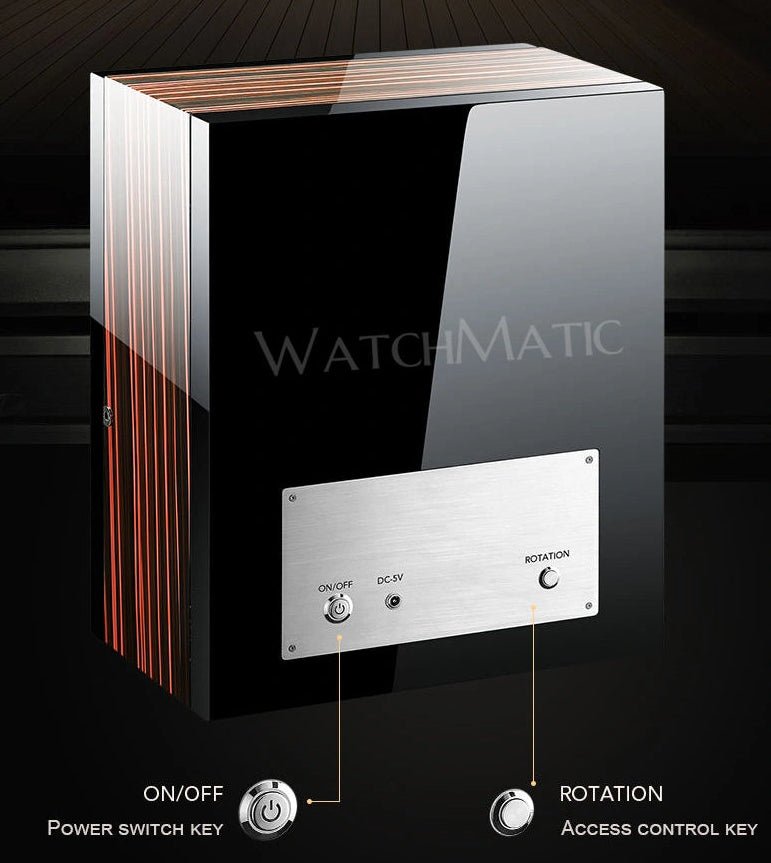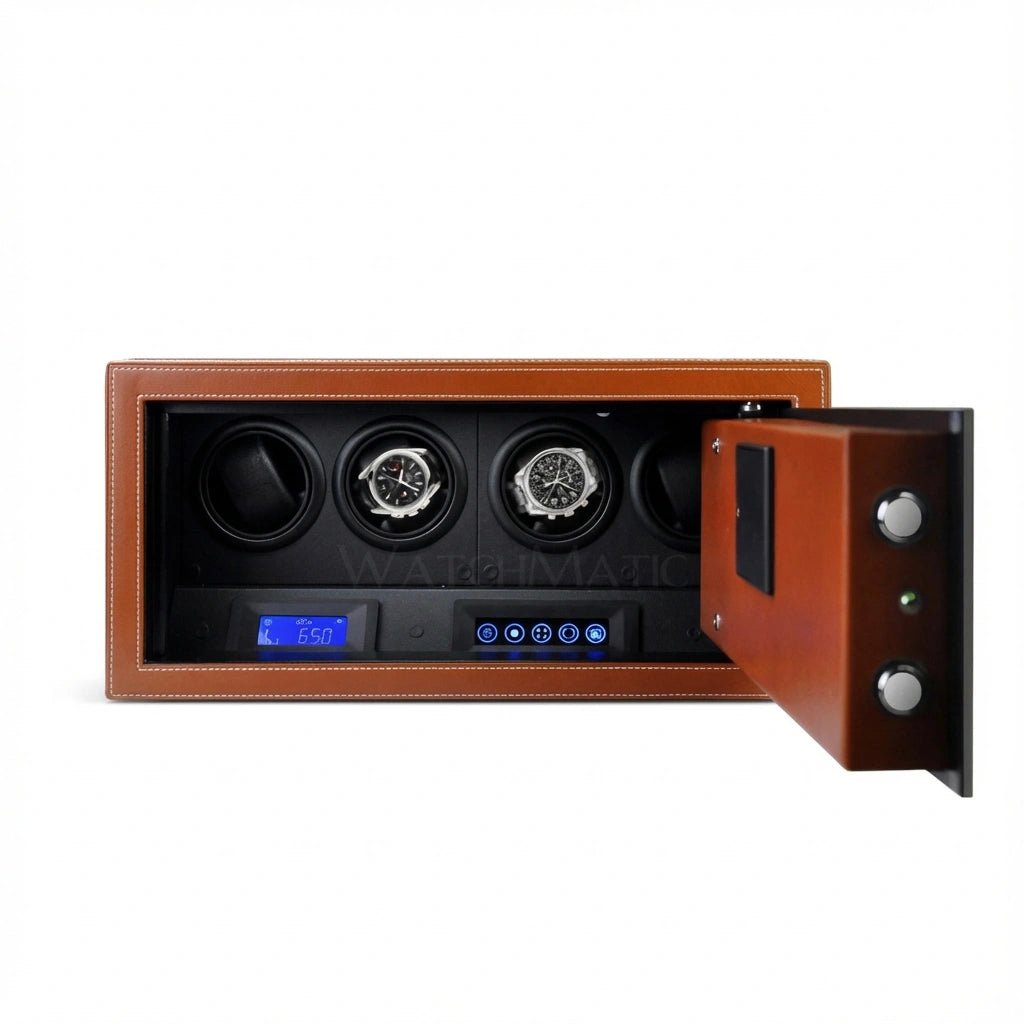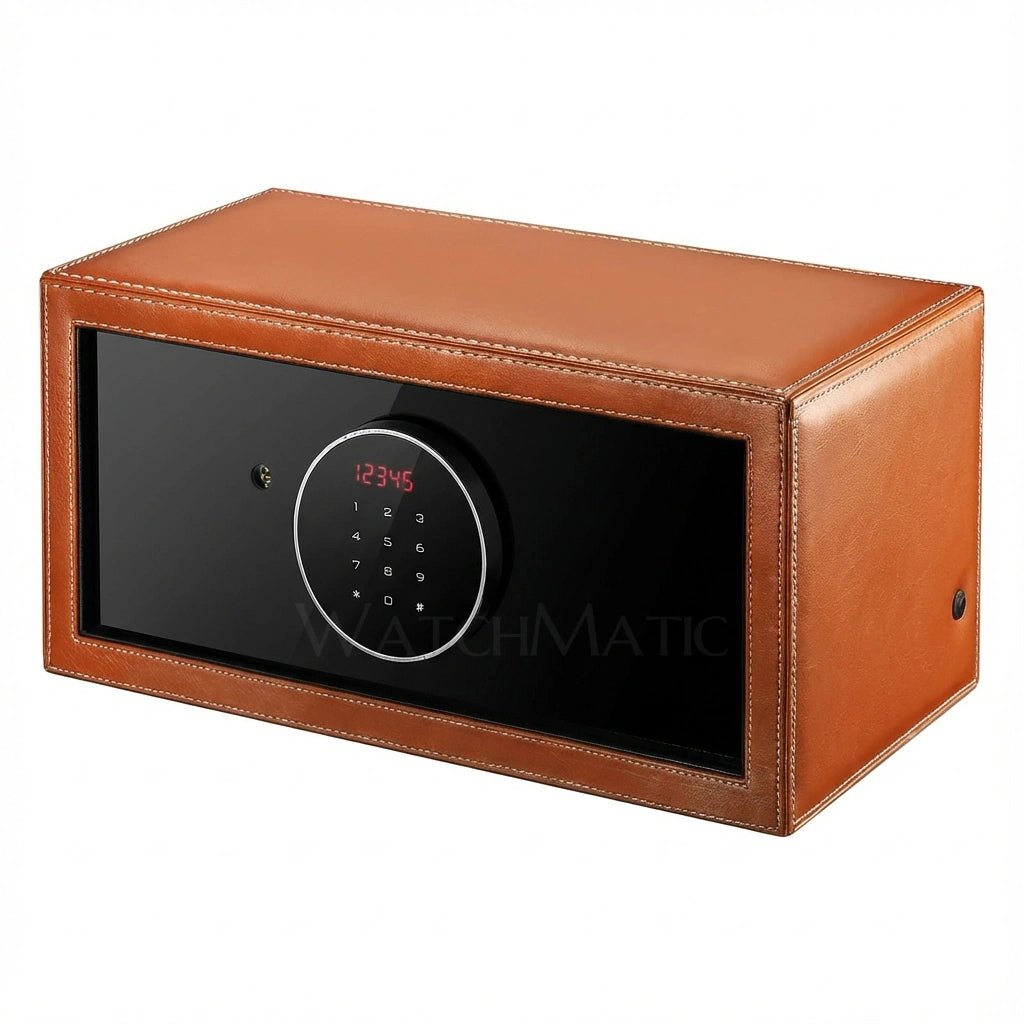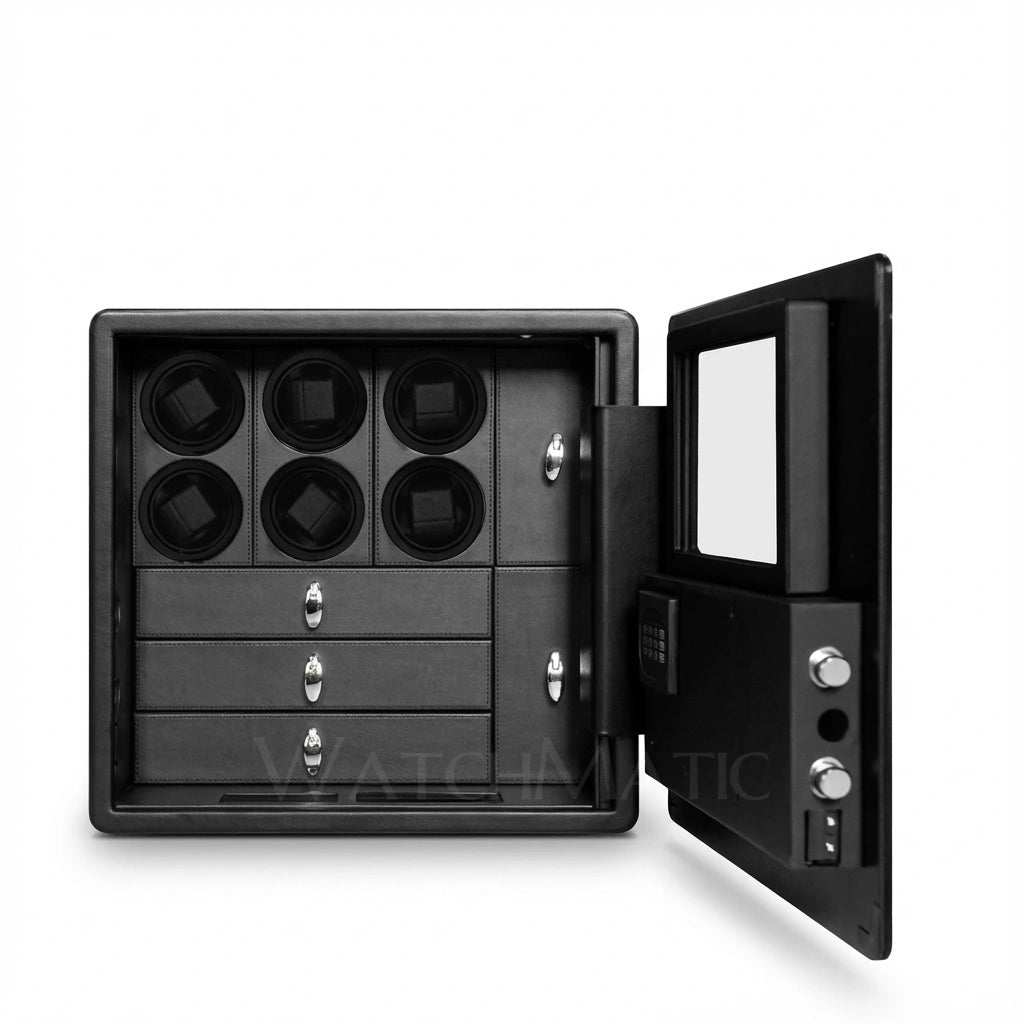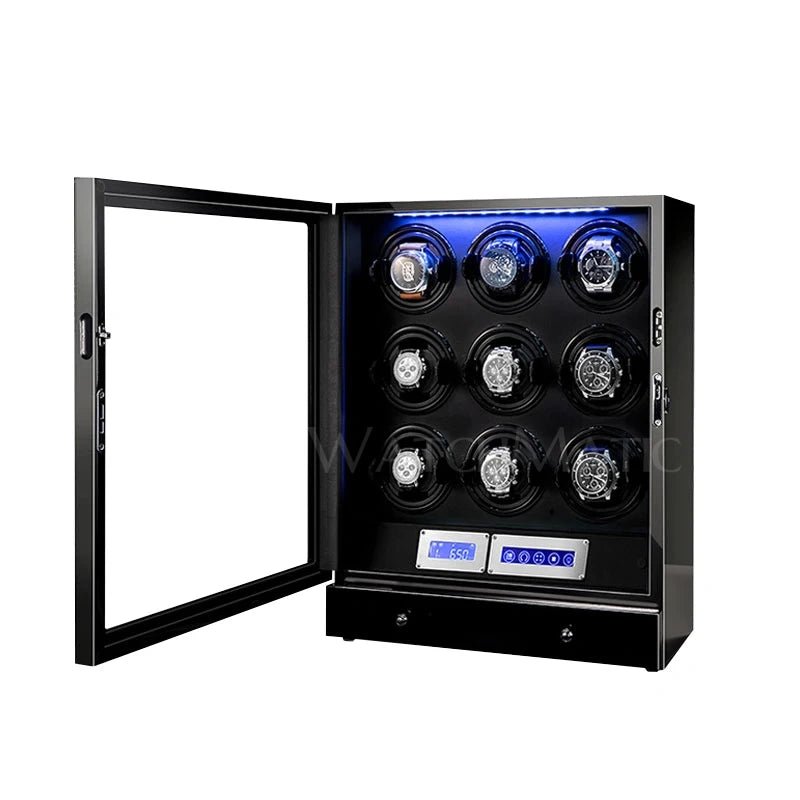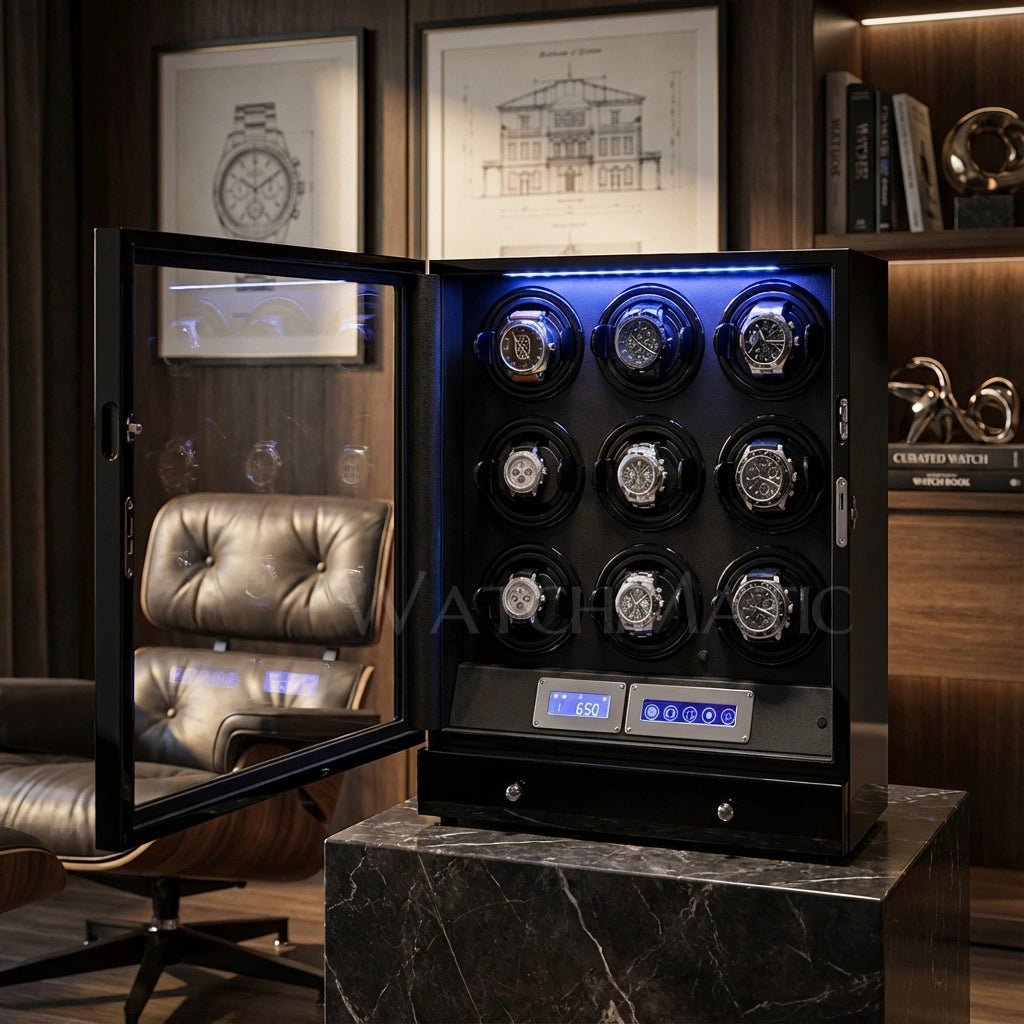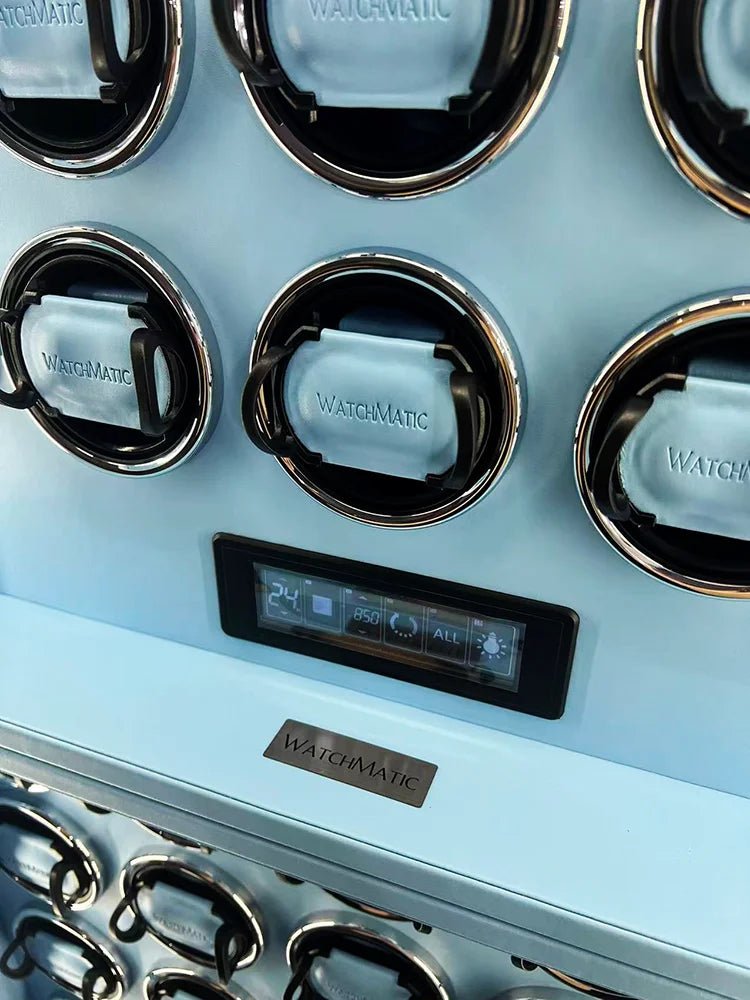
You place your automatic watch on a watch winder, select a winding program, and leave it running overnight. The next morning, or perhaps a few days later, you discover that the watch has stopped.
It is a frustrating situation, particularly when the purpose of using a watch winder is to keep your automatic watch running and ready to wear.
But does this mean your watch winder is defective? Is the watch malfunctioning? Or have you selected the wrong winding settings?
In many cases, the explanation is relatively straightforward. An automatic watch may stop on a watch winder because the rotation direction is incompatible with its movement, the Turns Per Day (TPD) setting is insufficient, or the watch did not have enough stored energy when it was first placed on the winder.
Other possibilities include incorrect programming, an interruption in the winder's operation, an improperly fitted watch cushion, or a mechanical issue within the watch itself.
In this guide, we explain why your automatic watch stops on a watch winder, how to identify the most likely cause, and what you can do to resolve the problem without unnecessarily increasing the winding settings or risking damage to your timepiece.
Quick Answer: Why Does My Automatic Watch Stop on a Watch Winder?
If your automatic watch keeps stopping on a watch winder, the seven main possibilities are:
- The watch was not sufficiently wound before being placed on the winder.
- The winder is rotating in the wrong direction for the movement.
- The programmed Turns Per Day (TPD) are too low.
- The winding program includes a long delay, rest period, or incorrect schedule.
- The winder is not completing its programmed rotations.
- The watch is not positioned securely on the winding holder.
- The watch movement has a winding, power reserve, or mechanical problem.
The best troubleshooting approach is to check the watch and winder separately, then test them together using the correct movement-specific settings.
Do not immediately switch to the highest TPD or assume that your automatic watch needs professional servicing. A systematic diagnosis can often identify the problem more efficiently.
1. Understand What a Watch Winder Actually Does
Before troubleshooting the problem, it helps to understand how an automatic watch receives and stores energy.
Inside an automatic mechanical watch is a weighted rotor that moves as the watch changes position.
Through the movement's automatic winding mechanism, this motion transfers energy to the mainspring, which provides the power required to operate the watch.
When you stop wearing an automatic watch, the movement continues running using its remaining power reserve.
Once that stored energy is exhausted, the watch stops.
A watch winder attempts to maintain that reserve by rotating the watch according to a programmed cycle.
A Watch Winder Does Not Normally Rotate Continuously
Most programmable watch winders operate intermittently.
They complete a certain number of rotations, pause for a period, and resume according to the selected program.
This is normal behavior.
For example, the winder may rotate for several minutes and remain stationary for a longer interval. A watch winder that is not moving when you look at it is not necessarily switched off or malfunctioning.
Manufacturers such as Mabuchi describe programmable winding systems that alternate between rotation and rest periods.
A Watch Winder Maintains Energy; It Does Not Repair the Watch
A properly configured watch winder can help keep a compatible automatic watch running between wears.
However, it cannot repair worn components, correct movement faults, replace lubricants, or restore a defective automatic winding mechanism.
This distinction becomes important when a watch continues stopping despite an apparently correct winding program.
2. Reason One: Your Automatic Watch Was Not Wound Before Placing It on the Winder
One common troubleshooting mistake is placing a completely stopped watch directly onto a watch winder and expecting it to recover its power reserve immediately.
A watch winder can supply winding motion, but it does not necessarily replenish a depleted mainspring as quickly or predictably as manual winding.
If the watch begins with very little stored energy, an intermittent winding cycle may initially provide less energy than the movement consumes.
As a result, the watch may stop even though the winder itself is functioning correctly.
How to Fix It
Before using the winder:
- Remove the watch from the winding holder.
- Follow the watch manufacturer's instructions for manually winding the movement, if manual winding is supported.
- Establish an appropriate initial power reserve.
- Set the time and relevant complications according to the manufacturer's instructions.
- Secure the crown properly.
- Place the watch on the winder and select the appropriate winding program.
The exact winding procedure and number of crown turns vary by watch and movement.
For example, Rolex's official care instructions explain that a stopped Rolex automatic watch should be manually wound before wearing it, with a minimum of 25 crown turns for adequate partial winding.
Do not assume that this number applies to every automatic watch manufacturer or caliber.
Important Distinction
A watch winder is generally most useful for maintaining an established power reserve, rather than serving as the fastest method of restarting a completely depleted movement.
If your watch repeatedly stops soon after being placed on the winder, insufficient initial winding should be one of the first possibilities to investigate.
3. Reason Two: The Watch Winder Is Rotating in the Wrong Direction
Not every automatic watch movement winds in the same direction.
This is one of the most important technical details when configuring a watch winder.
Depending on the movement's winding architecture, the rotor may provide effective winding in:
- Clockwise (CW) rotation.
- Counterclockwise (CCW) rotation.
- Both directions (bidirectional).
If your watch uses a movement that winds effectively in only one direction, a winder operating exclusively in the opposite direction may provide little or no useful winding energy.
The watch can appear to be rotating normally while its remaining power reserve gradually runs down.
Example: A Watch That Runs for Two Days Before Stopping
Imagine that you manually wind an automatic watch and place it on a winder using the wrong rotation direction.
The watch may continue running for a day or two because it already has stored energy.
However, if the winder does not replenish that energy, the watch will eventually stop once its remaining reserve is exhausted.
This explains why a watch can appear to work perfectly on a winder initially and still stop several days later.
How to Fix It
Identify the exact movement or caliber inside your watch.
Then verify the recommended winding direction using a reliable movement-specific reference or the watch manufacturer's guidance.
Once confirmed, select the compatible direction on your watch winder.
Do not assume that all watches from the same brand use identical winding directions.
Also remember that the meaning of clockwise and counterclockwise settings should be checked against the winder manufacturer's instructions.
For a detailed explanation, read Clockwise or Counterclockwise? Watch Winder Direction Guide.
4. Reason Three: Your Turns Per Day (TPD) Setting Is Too Low
Turns Per Day, commonly abbreviated as TPD, refers to the number of rotations performed by a programmable watch winder over a 24-hour period, according to the manufacturer's counting method.
Different automatic movements can have different winding requirements.
If the winder does not provide enough effective winding motion to replace the energy consumed by the movement, the watch's power reserve may gradually decline.
Eventually, the watch stops.
Why a Watch Can Stop Even When the Winder Is Rotating
Consider an illustrative situation where a watch requires more effective winding than the selected program provides.
The watch begins with a sufficient reserve and operates normally during the first day.
However, the winder replenishes less energy than the movement consumes.
Over several days, the available reserve decreases until the watch stops.
This can happen even though the winder is completing its programmed rotations.
Is 650 TPD Enough for Every Automatic Watch?
No.
Although settings around 650–900 TPD are commonly encountered in automatic watch winding systems, there is no universal TPD setting appropriate for every movement.
Some watches may maintain their reserve at relatively modest settings, while others require different winding programs.
The correct value depends on the specific caliber, winding efficiency, rotation direction, and the winder's operating method.
How to Fix It
- Identify the exact movement inside the watch.
- Check its recommended TPD and rotation direction.
- Review how your particular winder counts rotations, especially in bidirectional mode.
- Select the appropriate starting program.
- Test whether the watch maintains its reserve over a suitable observation period.
- If necessary, make measured adjustments within the manufacturer's supported settings.
Do not immediately choose the maximum available TPD.
More rotation does not automatically improve timekeeping accuracy or resolve a mechanical fault.
For detailed settings guidance, explore the WatchMatic Watch TPD Guide or read How to Match Watch Winder Settings to Your Watch Movement.
5. Reason Four: The Winder Is in a Rest Cycle, Delayed Start, or Incorrect Program
Watch winders do not necessarily begin rotating immediately after a watch is placed inside.
Some models offer delayed start functions, programmed sleep periods, or operation schedules that distribute winding rotations throughout the day.
These features are normal when used as intended, but incorrect settings can create confusion.
Normal Rest Period vs. Actual Failure
If the winding holder is stationary when you check it, consider the following:
- Is the winder in a programmed rest period?
- Is a delayed start function activated?
- Has the winding position been switched off?
- Is the selected program intended to operate only during certain intervals?
- Has the control panel retained the intended settings?
A stationary rotor does not necessarily indicate a faulty motor.
Some programmable winding systems intentionally alternate between active winding and extended rest periods to distribute rotations throughout the day.
How to Fix It
Review the operating instructions for your particular model.
Confirm that the program is active, the intended winding mode is selected, and no unexpected delay is enabled.
Some devices include a manual test function that helps confirm whether the motor can rotate.
Use the manufacturer's supported test procedure rather than attempting to force the holder to move.
6. Reason Five: The Watch Winder Is Not Completing Its Programmed Rotations
Even with the correct TPD and direction selected, a watch winder may fail to deliver the intended winding motion.
Possible causes include:
- Unstable or disconnected power supply.
- Depleted batteries on battery-powered models.
- A malfunctioning adapter.
- A motor or drive mechanism problem.
- A fault affecting an individual winding position.
- An unexpected controller reset or programming issue.
- Interference or obstruction preventing normal rotation.
Check the Power Supply First
Confirm that the winder is receiving power and that the power source matches the manufacturer's specifications.
For battery-powered models, check battery condition and replacement guidance.
For AC-powered winders, verify the adapter and cable connection.
Do not substitute an incompatible adapter or modify internal electrical components.
Check the Individual Rotor
If the winder has multiple independent positions, compare the affected position with another functioning position using the manufacturer's test procedure.
If one rotor fails while the others operate normally, the issue may be isolated to that motor or control channel.
If the entire unit fails to operate, a shared power or controller issue becomes more likely.
Check for Unusual Sounds
Grinding, repeated clicking, or abnormal vibration may indicate a problem with the drive mechanism or holder assembly.
Stop using the affected position if it is producing unusual mechanical noise or movement.
Contact the winder manufacturer's support team rather than disassembling a product that may still be covered by warranty.
7. Reason Six: The Watch Is Not Securely Positioned on the Winder Cushion
A watch must be properly fitted to its winding holder to remain stable during operation.
If the cushion is too small, too large, or incorrectly installed, the watch may shift, wobble, or fail to remain properly positioned during rotation.
This can create a safety concern and may interfere with normal operation.
Common Fit Problems
- A loose bracelet that does not grip the cushion securely.
- A cushion unsuitable for the watch's bracelet size.
- A large watch case that contacts the surrounding winding compartment.
- An incorrectly seated or partially detached holder.
- A strap or clasp positioned awkwardly against the winding mechanism.
How to Fix It
Remove the watch and inspect the holder.
Make sure the cushion fits the watch securely without applying excessive pressure to the bracelet or strap.
Reinstall the holder according to the winder manufacturer's instructions and confirm that the watch has sufficient clearance throughout a rotation.
If the watch repeatedly shifts or appears unstable, stop the winder and obtain a properly sized holder.
Do not force an expensive watch onto an incompatible cushion.
8. Reason Seven: The Watch Itself May Have a Mechanical Problem
Sometimes the watch winder is functioning correctly, but the automatic watch still cannot maintain its expected power reserve.
In this situation, the problem may originate within the watch movement.
Potential causes include:
- Reduced winding efficiency.
- A fault in the automatic winding mechanism.
- Problems involving the mainspring or power reserve.
- Increased friction or other movement abnormalities.
- Components requiring inspection or professional servicing.
These issues cannot be confirmed simply by observing that the watch has stopped.
A qualified watchmaker must evaluate the movement to identify an actual mechanical defect.
Warning Signs of a Watch Movement Problem
Professional inspection becomes more appropriate when:
- The watch stops despite being adequately wound.
- The available power reserve is substantially shorter than expected.
- The watch stops repeatedly during normal wear.
- Timekeeping performance changes significantly.
- The crown becomes difficult to operate.
- Unusual sounds or resistance develop.
- Condensation appears beneath the crystal.
Do not attempt to solve a suspected movement fault by continuously increasing TPD or running the winder at its maximum setting.
A watch winder cannot replace movement servicing.
9. Watch Winder Troubleshooting: Match the Symptom to the Cause
The following table provides a practical starting point when diagnosing a watch that stops on a winder.
| Symptom | Possible Cause | Recommended Check |
|---|---|---|
| Watch stops shortly after being placed on the winder | Insufficient initial power reserve | Restart and wind according to the watch manufacturer's instructions |
| Watch stops after one or several days | Incorrect rotation direction or insufficient effective TPD | Verify movement-specific winding requirements and program |
| Winder rotates, but watch still loses power | Settings mismatch, incomplete rotations, or watch problem | Check settings, completed cycles, and watch reserve separately |
| Winder appears not to move | Normal rest period, delayed start, or power issue | Review program and run the supported motor test |
| One winder position stops working | Individual motor or control problem | Compare with other positions using approved test procedures |
| Watch moves or slips during rotation | Incorrect cushion or holder fit | Stop operation and inspect holder compatibility |
| Watch stops during normal wear as well | Insufficient winding or possible movement problem | Evaluate power reserve and seek watchmaker assessment if abnormal |
These are possible explanations, not definitive diagnoses. More than one factor can contribute to the same symptom.
10. How to Troubleshoot Your Automatic Watch Winder Step by Step
If your automatic watch repeatedly stops on a winder, follow this sequence before making major changes to the winding program.
Step 1: Identify the Exact Watch Movement
Record the watch brand, model, reference number, and movement caliber.
A brand name alone may not be enough to determine the correct winding settings.
Step 2: Establish an Initial Power Reserve
Restart and manually wind the watch according to the manufacturer's instructions, where supported.
Do not rely on a nearly depleted watch to establish whether the winder's maintenance program is effective.
Step 3: Confirm the Rotation Direction
Determine whether the movement requires clockwise, counterclockwise, or bidirectional winding.
Match this requirement to the actual operating direction of the winder.
Step 4: Check the TPD and Operating Schedule
Verify that the programmed rotation count is suitable for the movement.
Review start delays, rest cycles, and any programming options that alter the total daily winding motion.
Pay attention to how your particular device defines bidirectional TPD. Some manufacturers count rotations differently, so the same displayed setting may not represent the same total movement on every brand of winder.
Step 5: Verify the Winder's Operation
Check that the winding holder is securely installed and that the motor completes its intended operating cycle.
Confirm the power source and inspect for abnormal noises, interruptions, or holder movement.
Step 6: Monitor the Watch
With the watch adequately wound and the correct program selected, monitor whether it continues running over a period appropriate to its movement and power reserve.
Record the settings and observations so you can identify whether any adjustment actually improves the result.
Step 7: Test the Watch Separately if the Problem Continues
If the watch still stops, evaluate its power reserve independently of the winder.
Follow the watch manufacturer's recommended winding procedure, place the watch in a safe stationary position, and observe how long it continues running.
Compare the result with the expected power reserve, recognizing that an informal home test is not a substitute for professional measurement.
If the watch runs normally away from the winder but repeatedly stops when using it, the winding program or device deserves further investigation.
If the watch stops unusually early even after appropriate manual winding, a qualified watchmaker should assess the movement.
11. How Can You Tell Whether the Problem Is the Watch or the Winder?
The most useful diagnostic step is to separate the two systems.
A stopped automatic watch may result from a problem with the winder, the watch, or their compatibility.
Test A: Evaluate the Watch Without the Winder
Wind the watch correctly using the manufacturer's procedure.
Then allow it to run in a suitable stationary position while monitoring its behavior.
If it maintains a power reserve consistent with its specifications, this suggests that the movement can operate normally under those conditions.
If it stops substantially earlier than expected, servicing may be appropriate.
Test B: Evaluate the Winder's Operation
Use the winder's supported test procedure to confirm that the affected position operates correctly.
On a multi-position device, compare its behavior with another functioning rotor where the manufacturer's instructions permit.
If the position does not complete its programmed movement, investigate the motor, controller, or power supply.
Test C: Evaluate the Combination
Once both devices appear to function independently, return the watch to the winder with its verified movement-specific settings.
Monitor whether the watch maintains power.
This process helps distinguish three different situations:
- The watch has a potential mechanical or power reserve problem.
- The winder has an operational fault.
- The watch and winder function individually but are not configured compatibly.
A watch that performs normally during one short test is not necessarily guaranteed to be mechanically perfect. Persistent symptoms should still be assessed professionally.
12. Does the Watch Brand Affect the Correct Winder Settings?
Yes, but the specific movement matters more than the name printed on the dial.
A collector may own several automatic watches from Rolex, Omega, Patek Philippe, Breitling, Tudor, or other manufacturers.
It would be a mistake to assume that every watch in the collection requires the same winding program.
Rolex Automatic Watches
Many modern Rolex automatic movements use bidirectional winding, but buyers should confirm the requirements for their particular caliber.
If a Rolex stops on a winder, begin by checking the initial winding, actual winder operation, and appropriate program rather than immediately assuming the watch is defective.
Omega Automatic Watches
Omega produces a broad range of movements, and winding requirements vary by caliber.
Identify the exact automatic movement before choosing TPD and direction.
Also confirm that the watch is automatic. A manually wound Omega Speedmaster, for example, does not receive useful winding energy from a conventional automatic watch winder.
Patek Philippe and Other Complicated Watches
For watches with calendar or other complications, maintaining a power reserve may be especially convenient because resetting the watch can require additional steps.
However, the correct winding direction and TPD must still be verified for the actual movement.
Do not rely on a general statement that every watch from a particular luxury brand uses the same winding settings.
Mixed-Brand Collections
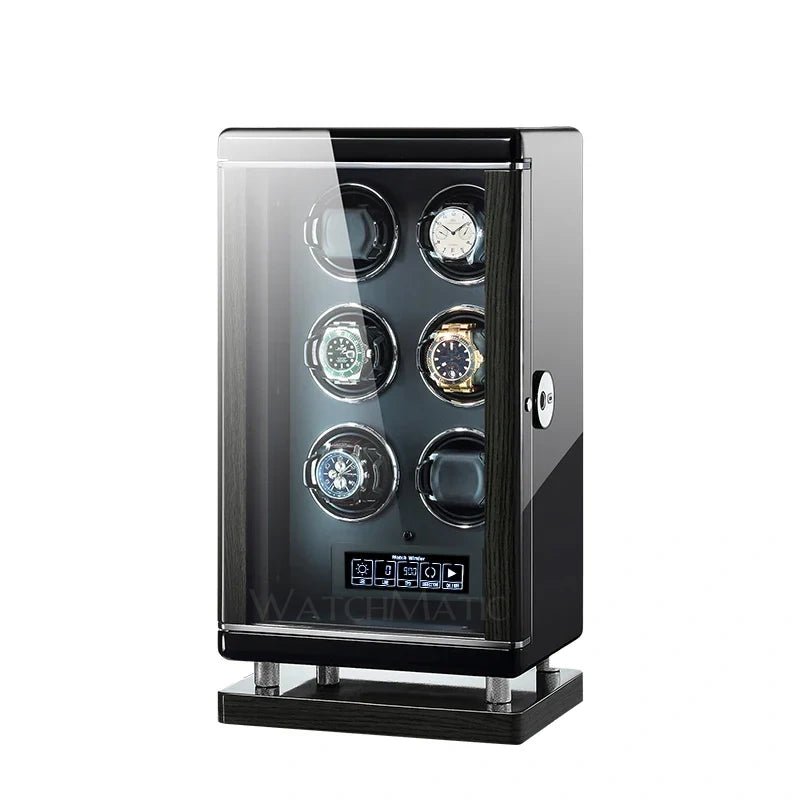
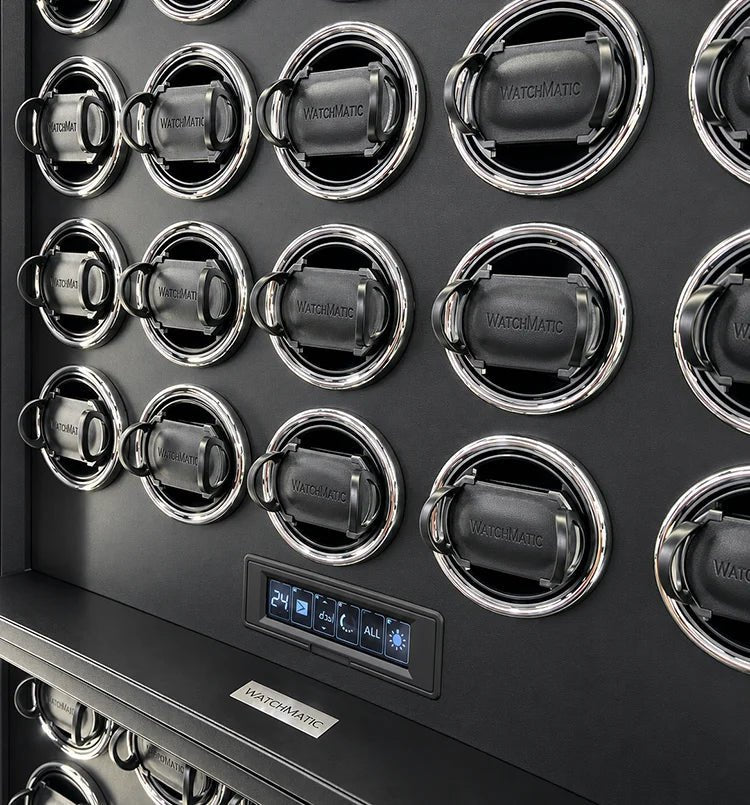
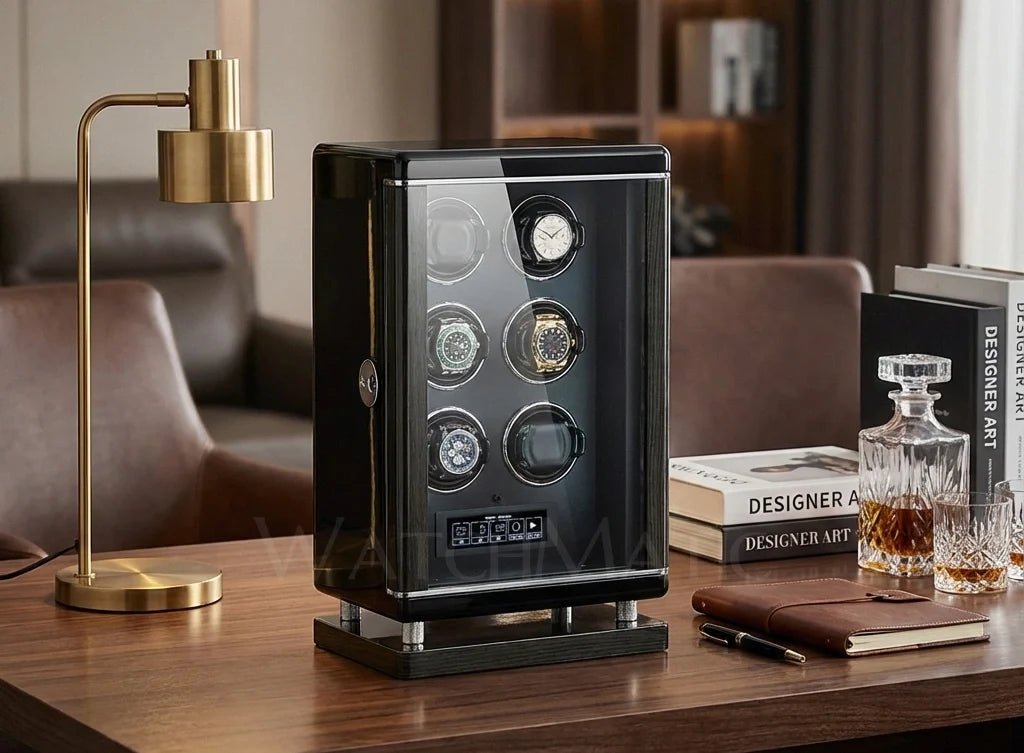
Collectors with several watches may benefit from individually programmable winding positions.
Independent control allows different movements to receive different rotation programs rather than forcing the entire collection to operate under one setting.
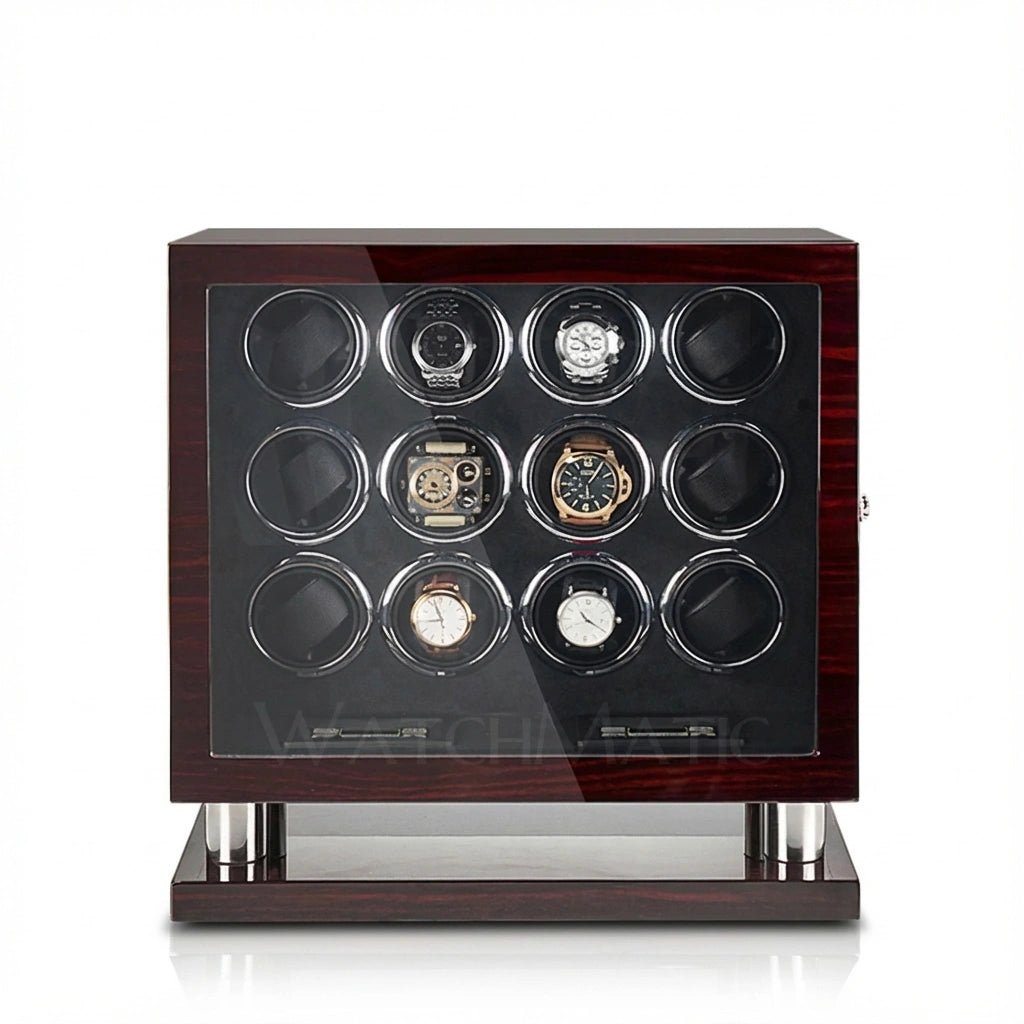
Explore WatchMatic's programmable watch winders for different collection sizes and winding arrangements.
13. Why Does My Watch Stop on a Multi-Watch Winder or Watch Winder Safe?
Multi-watch winders and integrated watch winder safes introduce an additional consideration: different winding positions may be configured independently or controlled through shared settings.
If only one watch stops while the others continue running, do not assume that the complete winding system has failed.
Start by asking:
- Does the affected watch use a different movement?
- Does its rotor have a different winding direction requirement?
- Is that position assigned a different TPD program?
- Is its holder securely fitted?
- Is the individual motor operating correctly?
If the winding system uses independent controls, verify the settings of the affected position rather than changing every rotor.
When Multiple Watches Stop Together
If several watches stop unexpectedly around the same time, investigate common factors such as:
- Power interruption.
- Controller or programming changes.
- An incorrectly selected shared winding mode.
- Failure of a common power supply.
The likelihood of a shared system issue increases when several previously functioning watches experience the same symptom together.
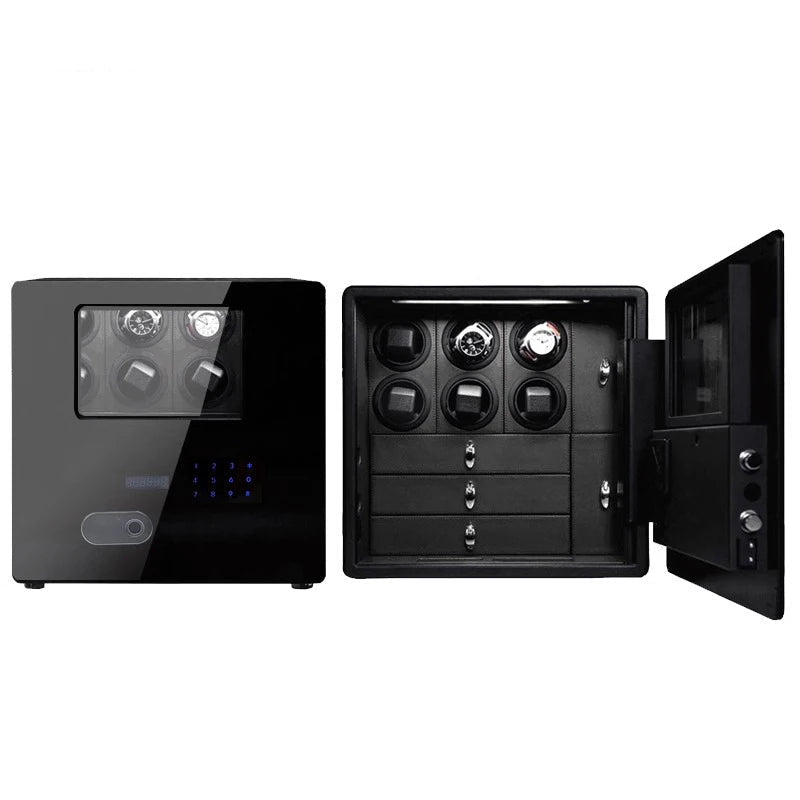
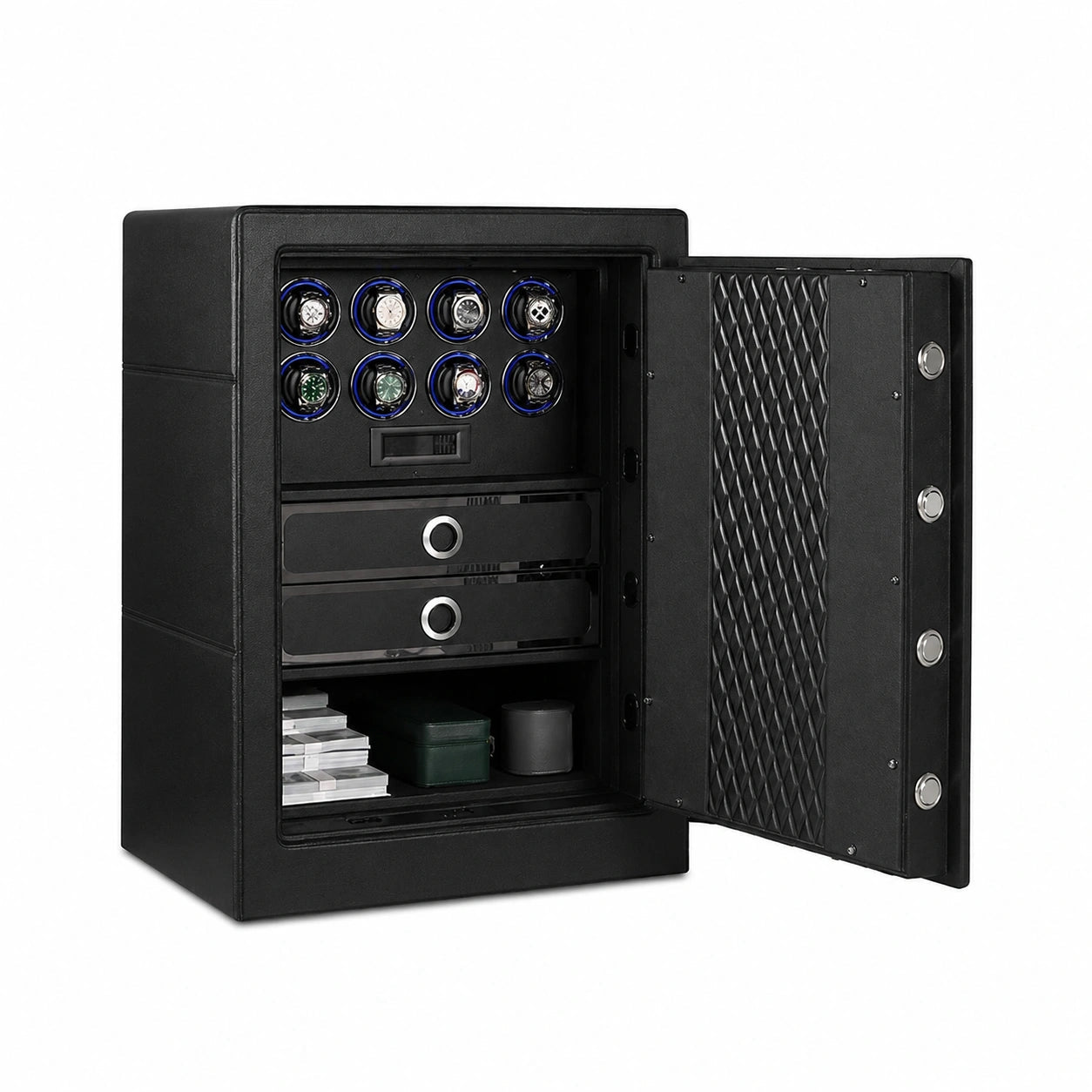
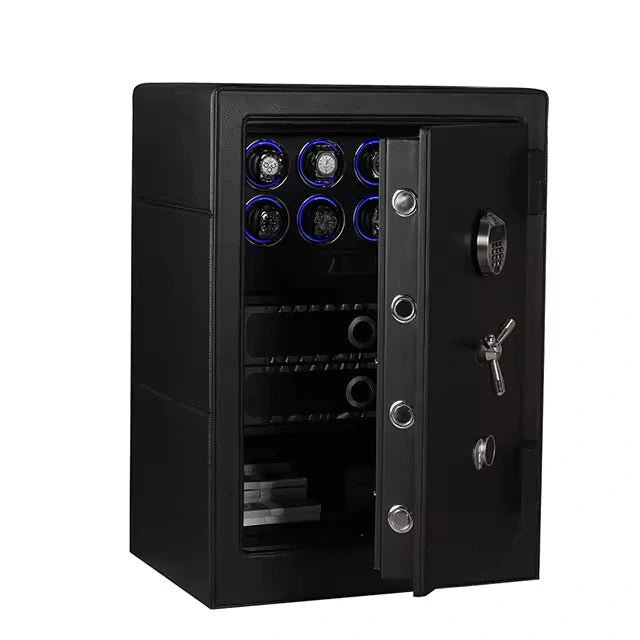
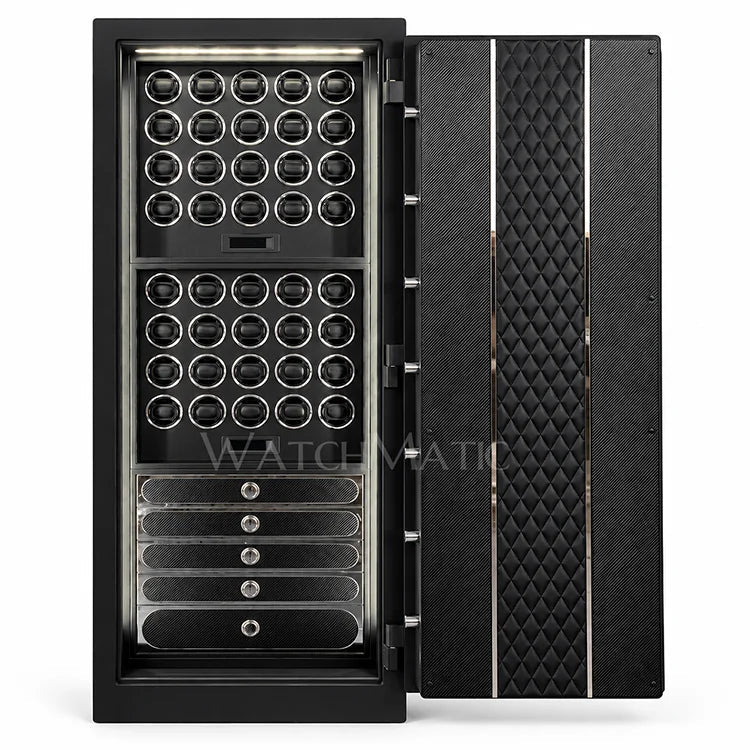
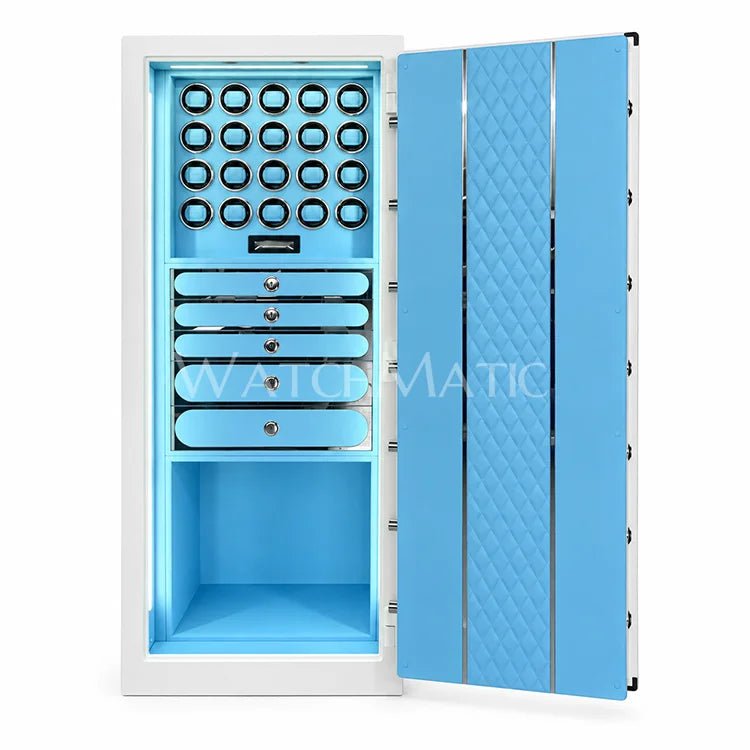
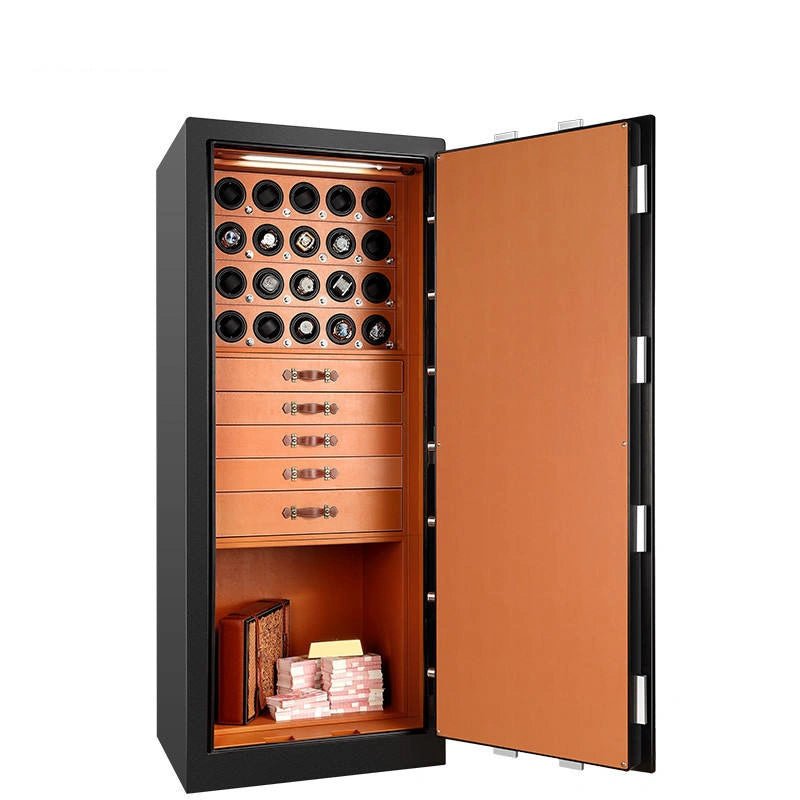
Integrated Winding Inside a Luxury Safe
A watch winder safe combines storage protection with built-in automatic winding positions.
Depending on the model, the system may include individually programmable winders, integrated lighting, and additional compartments for stationary watches or accessories.
When troubleshooting a winder inside a safe, follow the approved electrical and operating instructions. Do not modify internal wiring, ventilation, or security components to investigate a motor problem.
14. Common Mistakes That Make Watch Winder Problems Worse
When an automatic watch stops unexpectedly, it can be tempting to experiment with every setting until the problem disappears.
However, some approaches are less useful than they appear.
Immediately Selecting Maximum TPD
Increasing TPD without verifying the correct winding direction may not solve anything.
If the movement is not receiving effective winding motion, additional rotations in the wrong direction are unlikely to restore its reserve.
Assuming Bidirectional Always Means Universal Compatibility
Bidirectional winding modes can be useful, but they do not necessarily deliver the same effective winding as a correctly selected single-direction mode for every caliber.
For a movement that winds in only one direction, rotations in the non-winding direction may contribute little useful energy.
The winder's method of counting turns also matters.
Assuming a Stationary Winder Is Broken
Programmable winders often rest between operating cycles.
Observe the complete program or use an approved test function rather than judging performance from a brief glance.
Leaving a Poorly Fitted Watch on the Rotor
An unstable holder can increase the risk of contact damage or abnormal movement.
Correct the fit before continuing operation.
Repeatedly Manipulating a Watch With an Unusual Crown or Movement Problem
If the crown becomes difficult to operate, or the watch shows abnormal mechanical behavior, stop troubleshooting through repeated winding.
Professional inspection is safer than forcing the mechanism.
Assuming a Watch Winder Replaces Servicing
A winder cannot correct worn or damaged movement components.
Its function is to provide controlled winding motion to a compatible automatic watch.
15. When Should You Contact a Watchmaker or Winder Manufacturer?
Knowing when to stop troubleshooting is just as important as understanding the settings.
Contact the Watch Winder Manufacturer When:
- The rotor fails its approved operating test.
- The programmed cycle is not being completed.
- The control panel resets unexpectedly.
- A motor produces unusual grinding or clicking sounds.
- A winding holder is damaged or cannot be secured properly.
- The power adapter or electronics show signs of malfunction.
Contact a Qualified Watchmaker When:
- The watch repeatedly stops after appropriate manual winding.
- The measured power reserve is significantly below its expected specification.
- Timekeeping becomes unusually inconsistent.
- The crown or winding mechanism behaves abnormally.
- There are signs of impact damage or moisture intrusion.
- The watch continues to malfunction on a known working, correctly configured winding system.
If a watch is still covered by a manufacturer's warranty, consider contacting the brand's authorized service network before arranging third-party repairs.
16. How to Prevent Your Automatic Watch From Stopping on a Winder Again
Once the underlying problem has been identified, a consistent winding routine can reduce the likelihood of repeated interruptions.
Use the Correct Movement-Specific Program
Identify the caliber and confirm the appropriate TPD and rotation direction before using a new watch on the winder.
Start With an Adequate Reserve
When a watch has stopped completely, restart it according to the manufacturer's instructions before relying on the winder for maintenance winding.
Check the Holder Fit
Make sure the watch remains stable and does not contact the surrounding compartment during operation.
Maintain the Winder
Follow the manufacturer's cleaning, power supply, and maintenance guidance.
Inspect the holder and check for abnormal sounds or irregular movement.
Record Settings for Multiple Watches
If you own several automatic watches, maintain a simple record of the correct winding program for each movement.
This prevents accidental mismatches when watches are moved between winding positions.
Remember That Not Every Watch Needs to Run Continuously
For watches that are rarely worn, allowing the movement to stop can be a reasonable storage choice.
A watch winder is primarily a convenience tool for keeping selected automatic watches ready between wears.
For additional guidance, read How to Keep an Automatic Watch Running When Not Wearing It.
Frequently Asked Questions About Automatic Watches Stopping on Winders
Why does my automatic watch stop even though the watch winder is rotating?
A rotating winder does not automatically mean that the movement is receiving sufficient winding energy. The rotation direction may be incompatible with the caliber, the effective TPD may be too low, or the watch may have started with insufficient power reserve. A mechanical issue is another possibility. Verify the movement settings and watch condition before increasing the winding program.
Can a watch winder keep a completely stopped automatic watch running?
A watch winder can provide energy to a compatible automatic movement, but it may take time to build sufficient reserve from a fully depleted state. For watches that support manual winding, following the manufacturer's normal restarting procedure before using the winder is generally more reliable.
How many TPD does my automatic watch need to stay running?
The correct Turns Per Day setting depends on the specific movement, winding direction, and winder design. Common programs include settings around 650–900 TPD, but this range is not universal. Consult movement-specific guidance and confirm how the winder counts rotations before selecting a program.
Why does my Rolex stop on a watch winder?
If a Rolex automatic watch stops on a winder, check whether it was adequately wound before use, whether the winding program is compatible with its caliber, and whether the winder is operating correctly. If the watch also stops unusually early during normal wear or after appropriate manual winding, it may require professional inspection.
Why does my Omega stop on a watch winder?
Omega uses different movement types and calibers, so the appropriate winding program depends on the exact model. Verify that the watch uses an automatic movement, confirm the required rotation direction and TPD, and check the initial power reserve. A manually wound movement will not be wound by a conventional automatic watch winder.
Is my watch winder broken if it stops rotating?
Not necessarily. Many programmable winders alternate between rotation and rest periods, while some offer delayed start functions. Review the operating program and use the manufacturer's approved test procedure. A winder that fails to complete its programmed cycle may require technical support.
Should I increase the TPD if my watch keeps stopping?
Only after verifying the movement's requirements, rotation direction, and proper operation of the winder. Increasing TPD may help when the watch is genuinely receiving insufficient effective winding, but it will not correct a wrong winding direction, defective motor, or mechanical watch problem.
Can the wrong rotation direction make an automatic watch stop?
Yes. Some automatic movements wind effectively in only one rotor direction. If the winder rotates exclusively in the opposite direction, the watch may gradually use up its existing power reserve and stop. Select the movement-compatible direction using reliable caliber-specific information.
Does a watch winder improve the accuracy of an automatic watch?
A winder can help maintain the movement's power reserve, but it does not regulate the watch or correct mechanical timekeeping problems. Accuracy is affected by the movement's condition, adjustment, position, and other factors. Persistent timekeeping problems should be evaluated by a qualified watchmaker.
How long should I test a watch after adjusting the winder settings?
The observation period should be appropriate to the movement's specified power reserve and the winder's complete operating program. Monitor whether the watch remains running over several full winding cycles, rather than judging the result after only a short period. If the problem persists, evaluate the watch and winder separately.
Can a watch winder damage an automatic watch if the settings are wrong?
Modern automatic movements generally incorporate a slipping mainspring mechanism to prevent conventional overwinding. However, that does not mean any winding program, holder, or device is appropriate. Excessive unnecessary rotation, poor physical fit, abnormal vibration, or a malfunctioning winder should be avoided. Always use suitable movement-specific settings and a properly functioning device.
Final Thoughts: Find the Cause Before Increasing the Winding Settings
When an automatic watch stops on a watch winder, the problem does not automatically mean the watch is defective or the winder needs replacing.
Often, the first things to investigate are the simplest: whether the watch had enough power reserve to begin with, whether the rotation direction matches its movement, and whether the selected TPD provides sufficient effective winding.
Next, confirm that the winding device is actually completing its program and that the watch is securely positioned on the holder.
If the settings and winder operation appear correct, evaluating the watch's power reserve separately can help determine whether professional servicing is necessary.
The objective is not to make your watch winder rotate as much as possible. It is to deliver the appropriate winding motion for your specific automatic movement.
At WatchMatic, we offer programmable watch winders and integrated watch winder safes designed for collectors managing automatic watches with different movement and storage requirements.
Whether you own a single automatic watch or a collection of high-value timepieces, selecting the correct winding program and understanding the limitations of the equipment are essential to keeping your watches ready to wear.