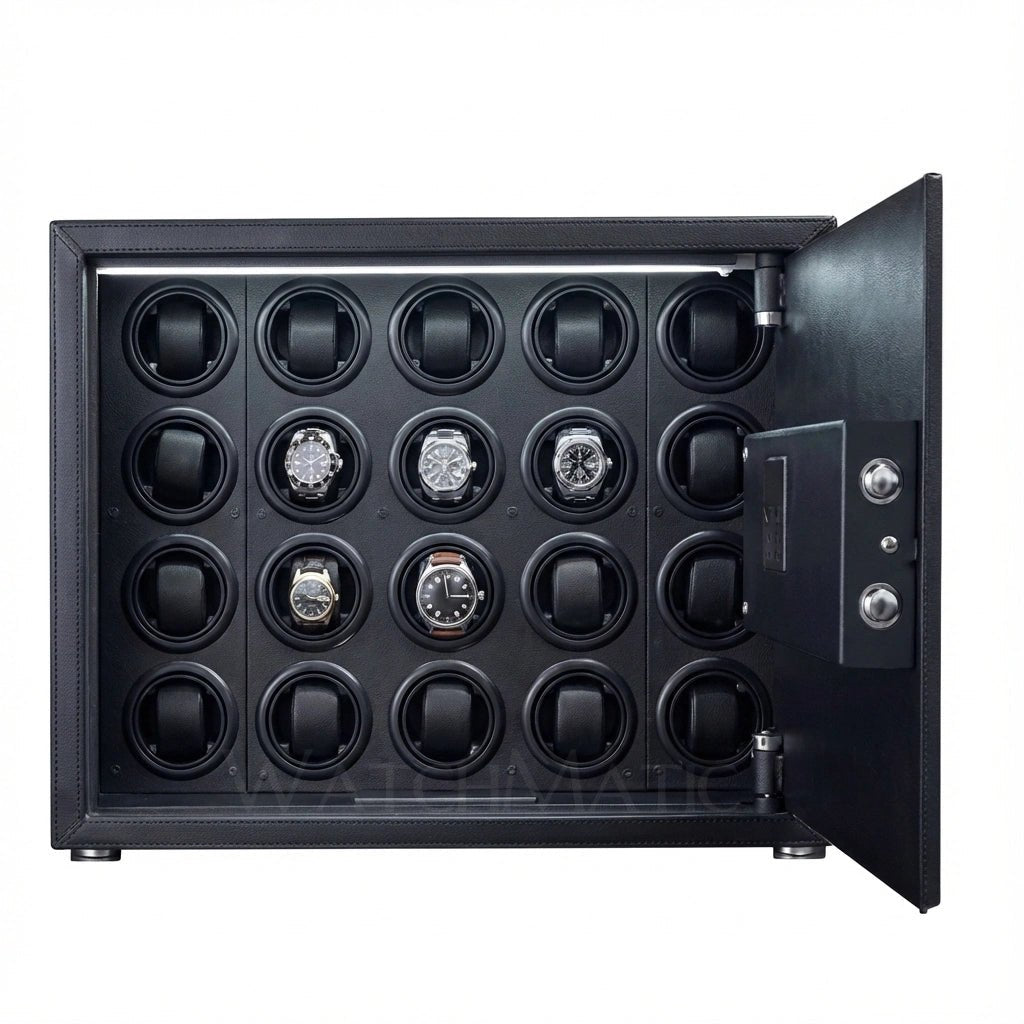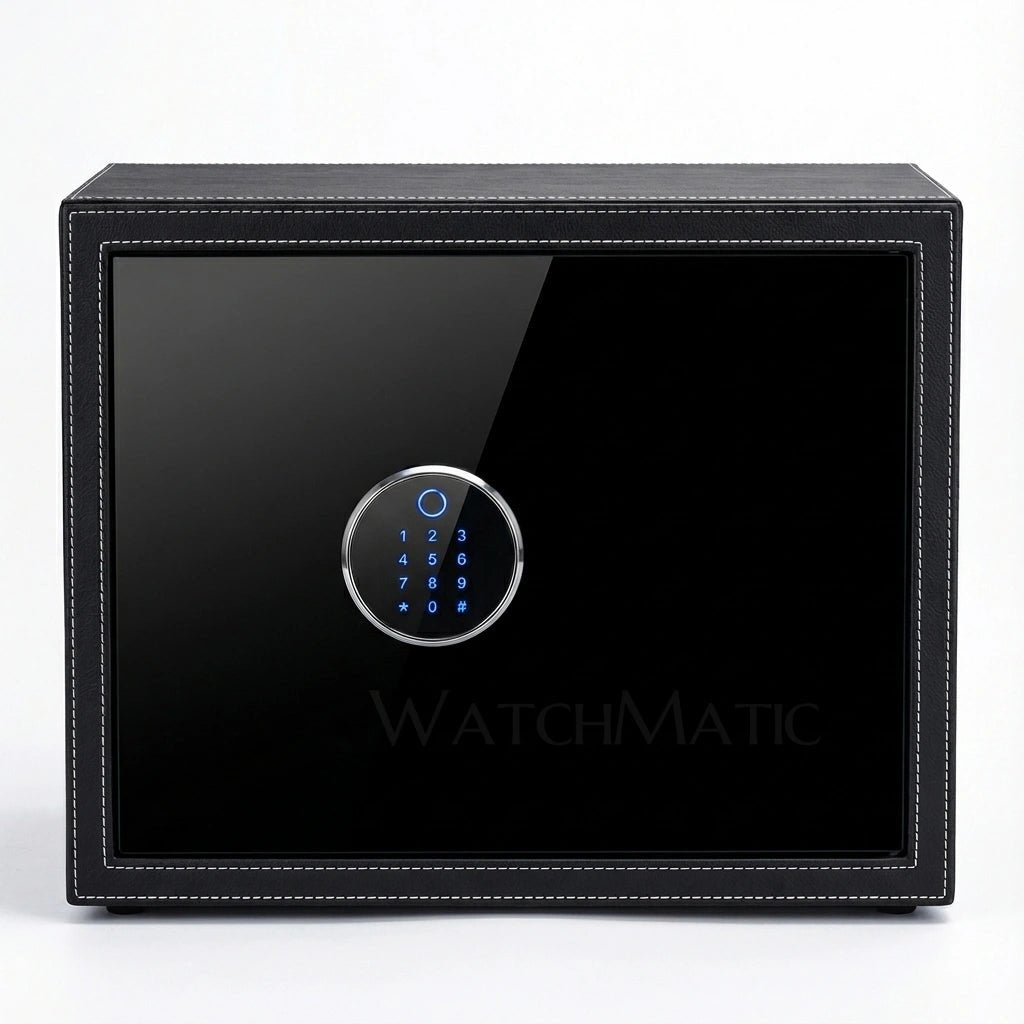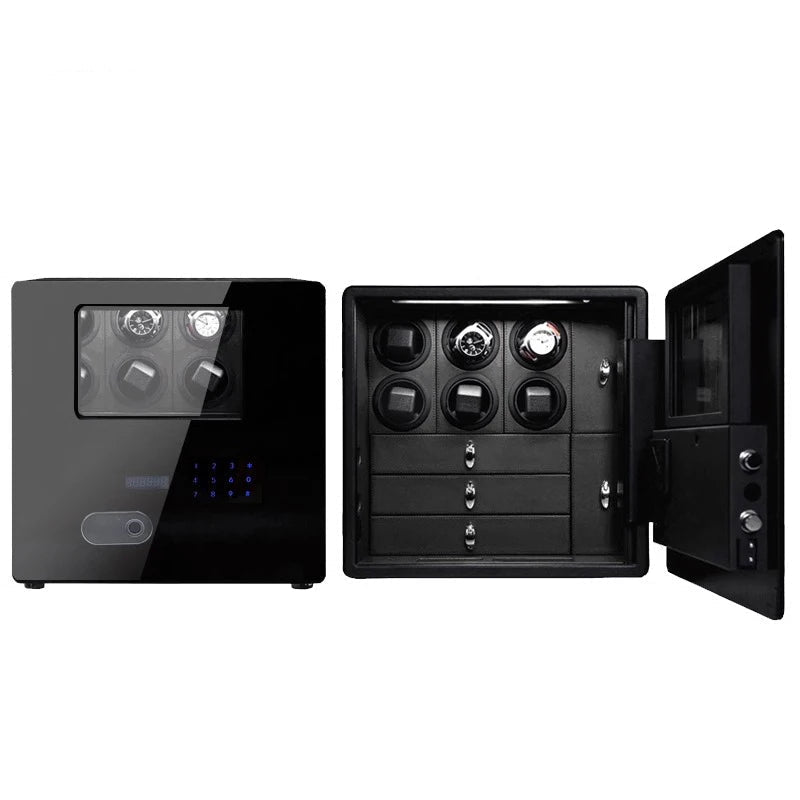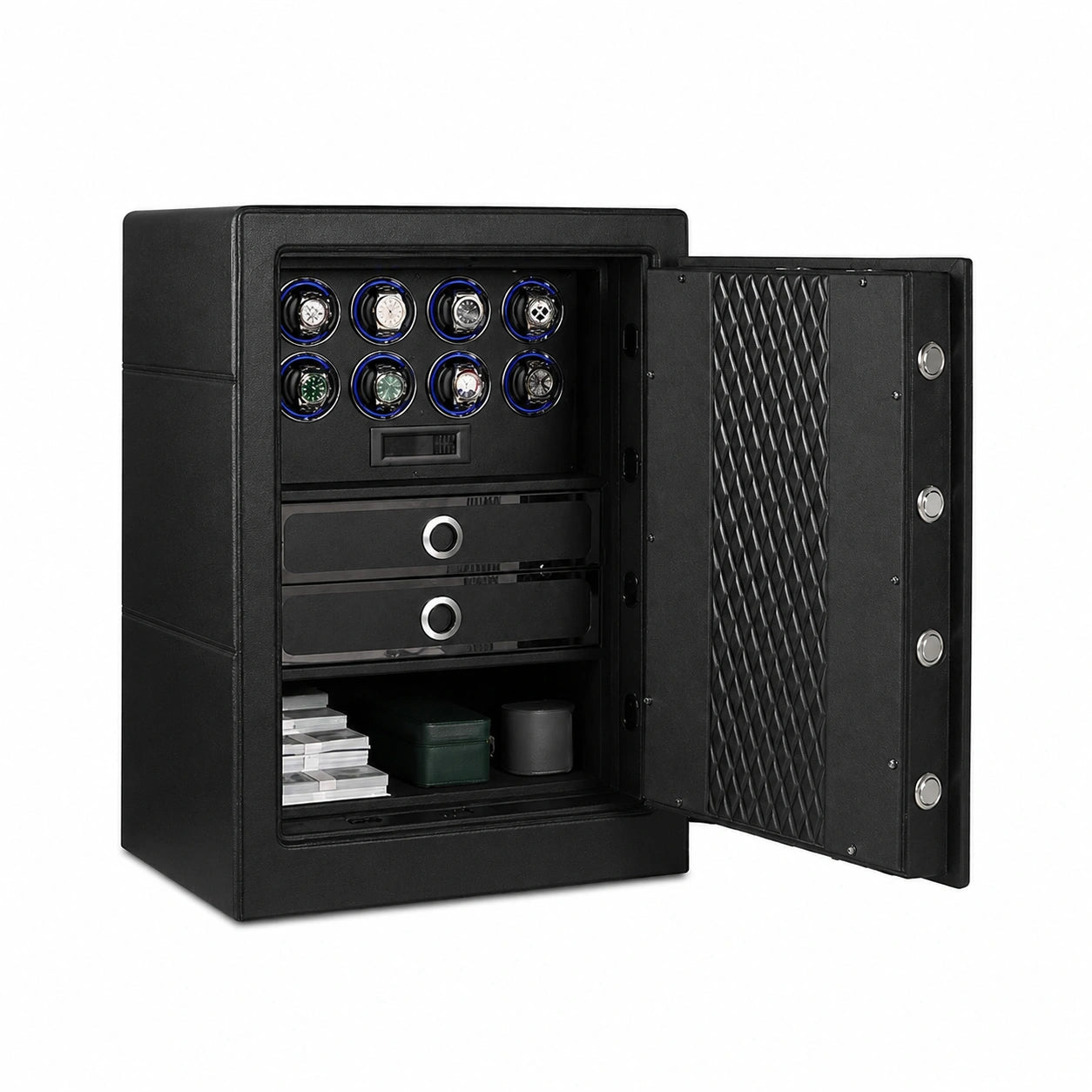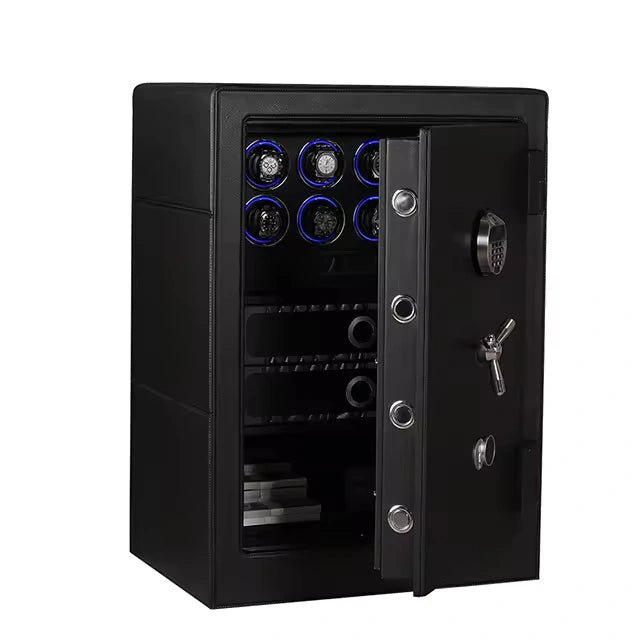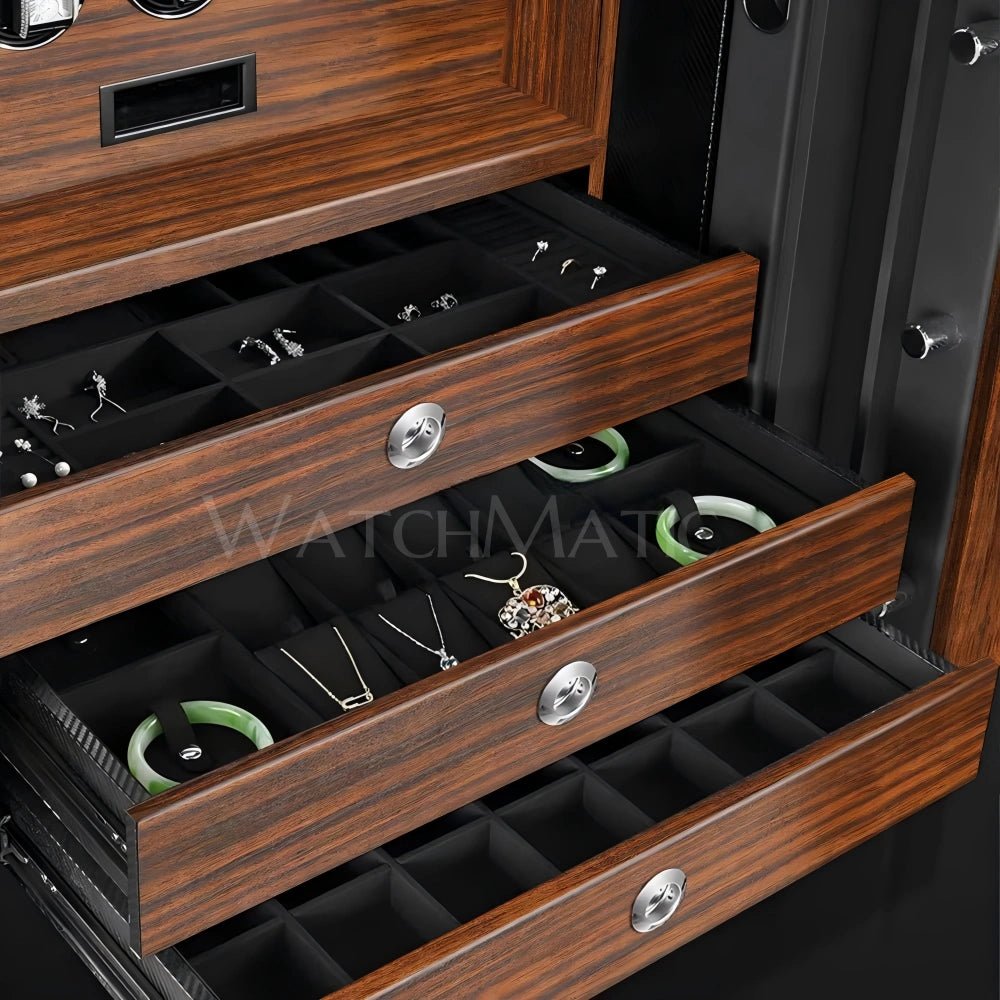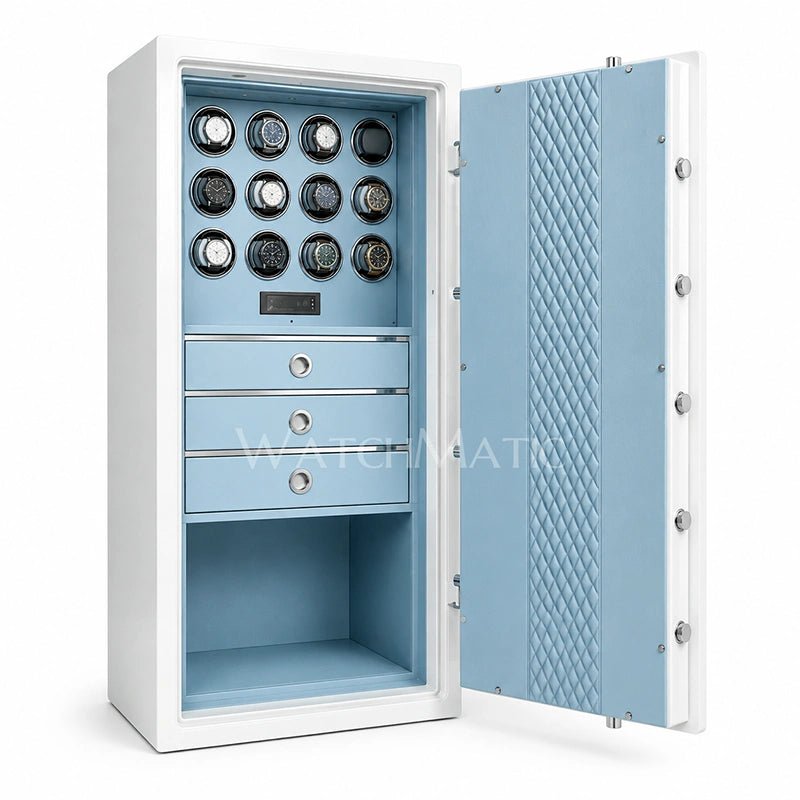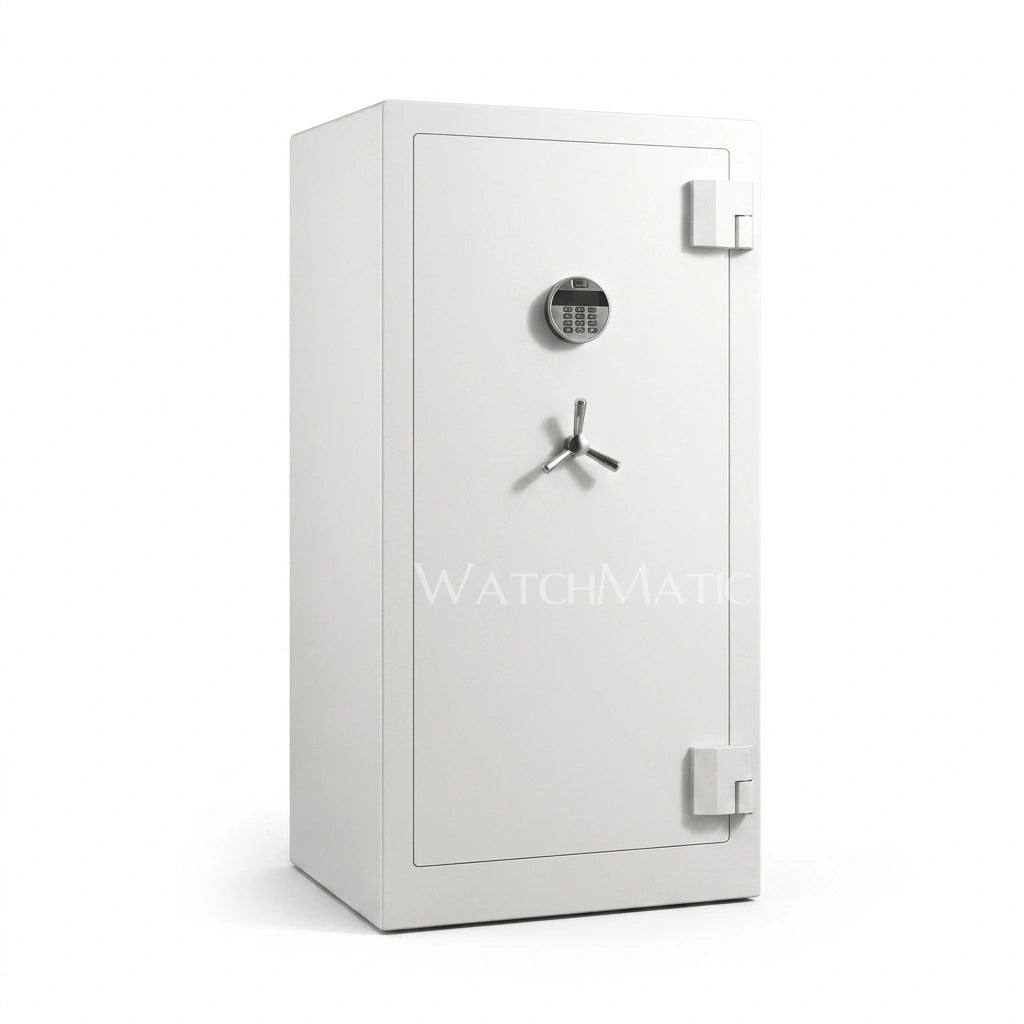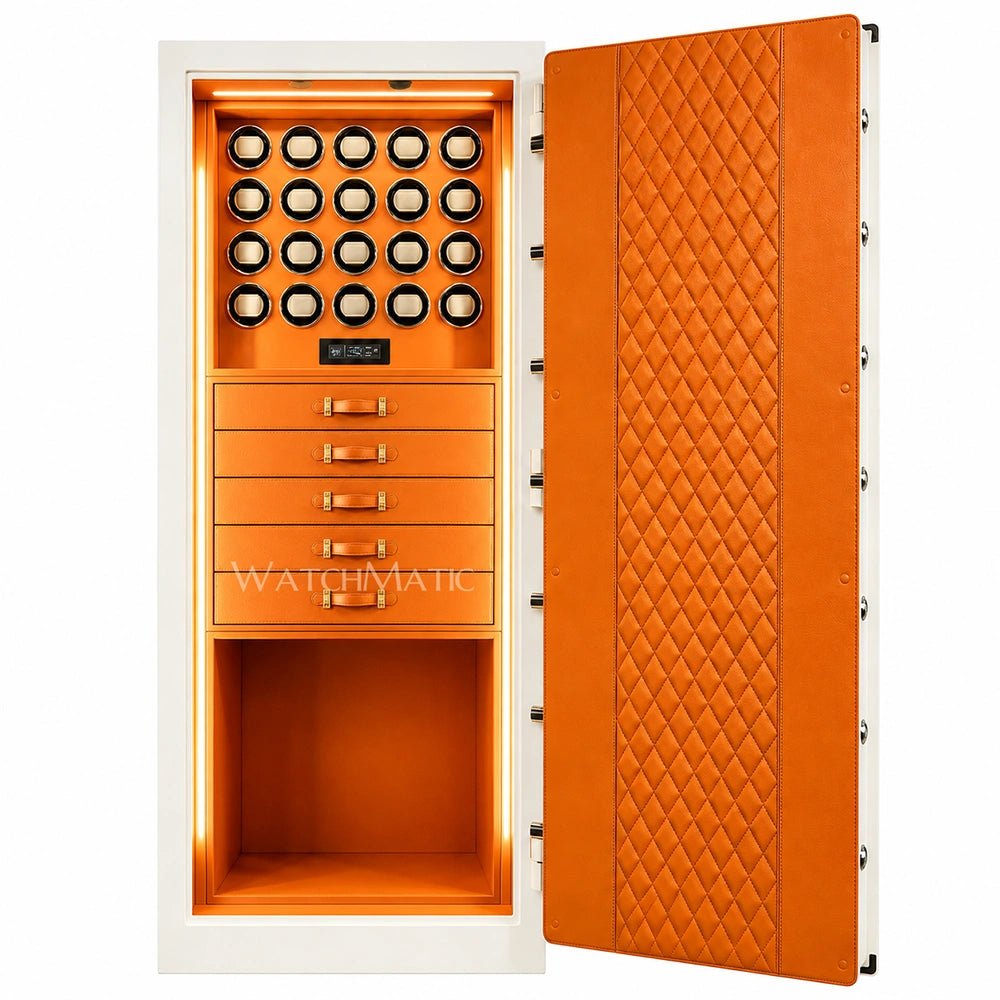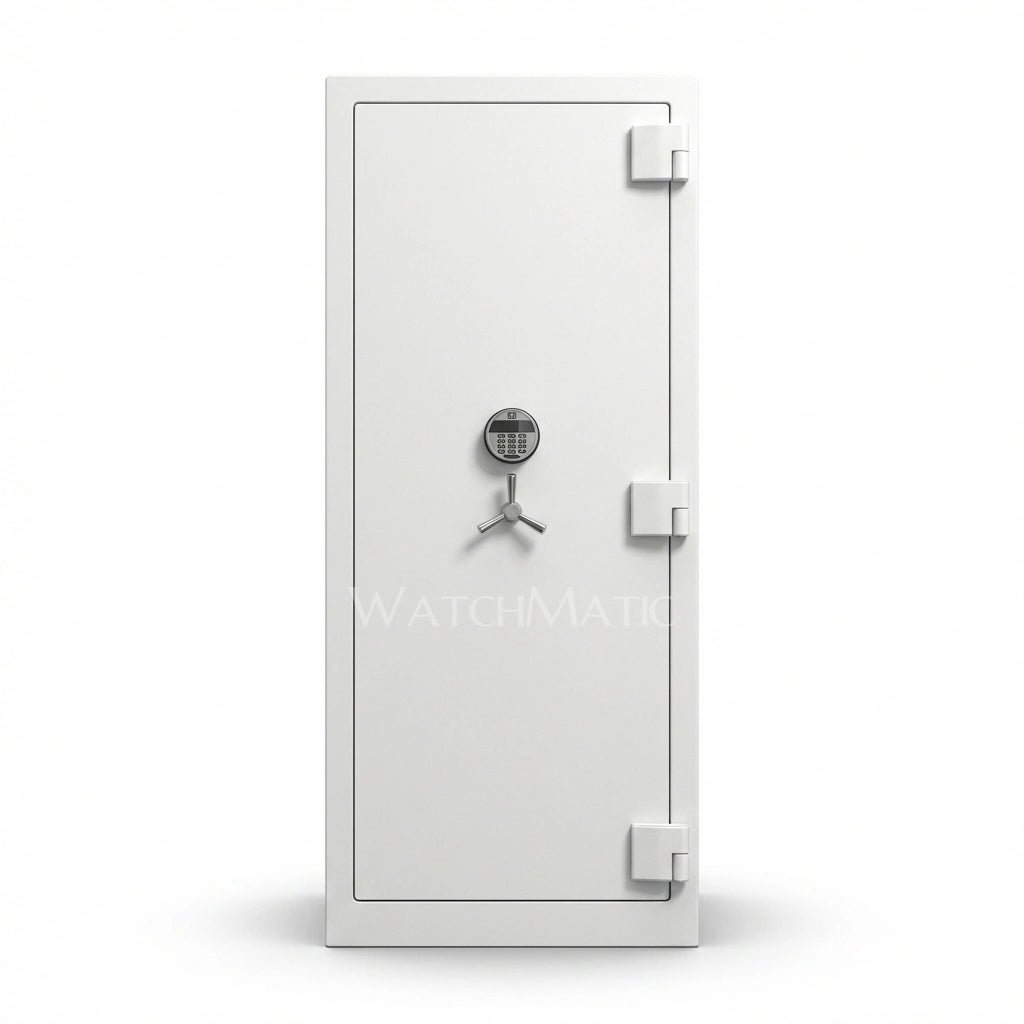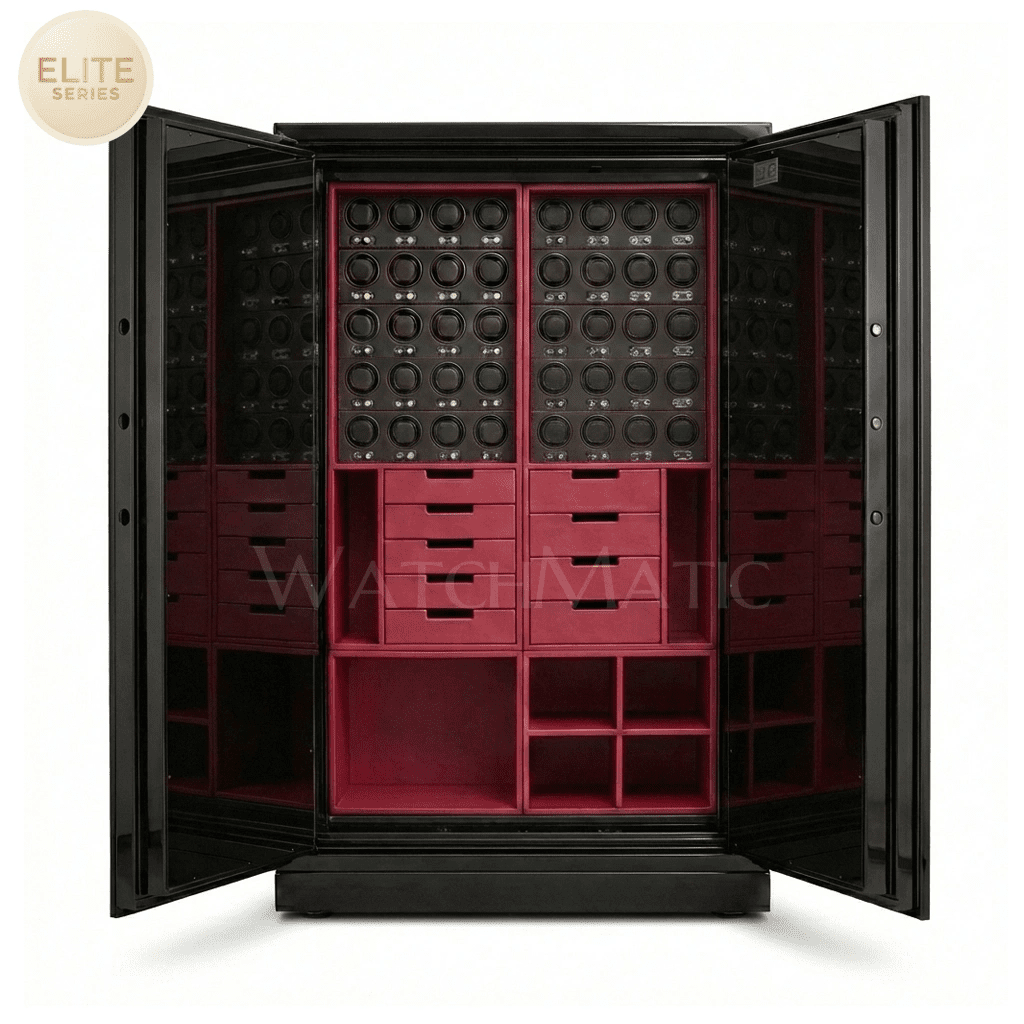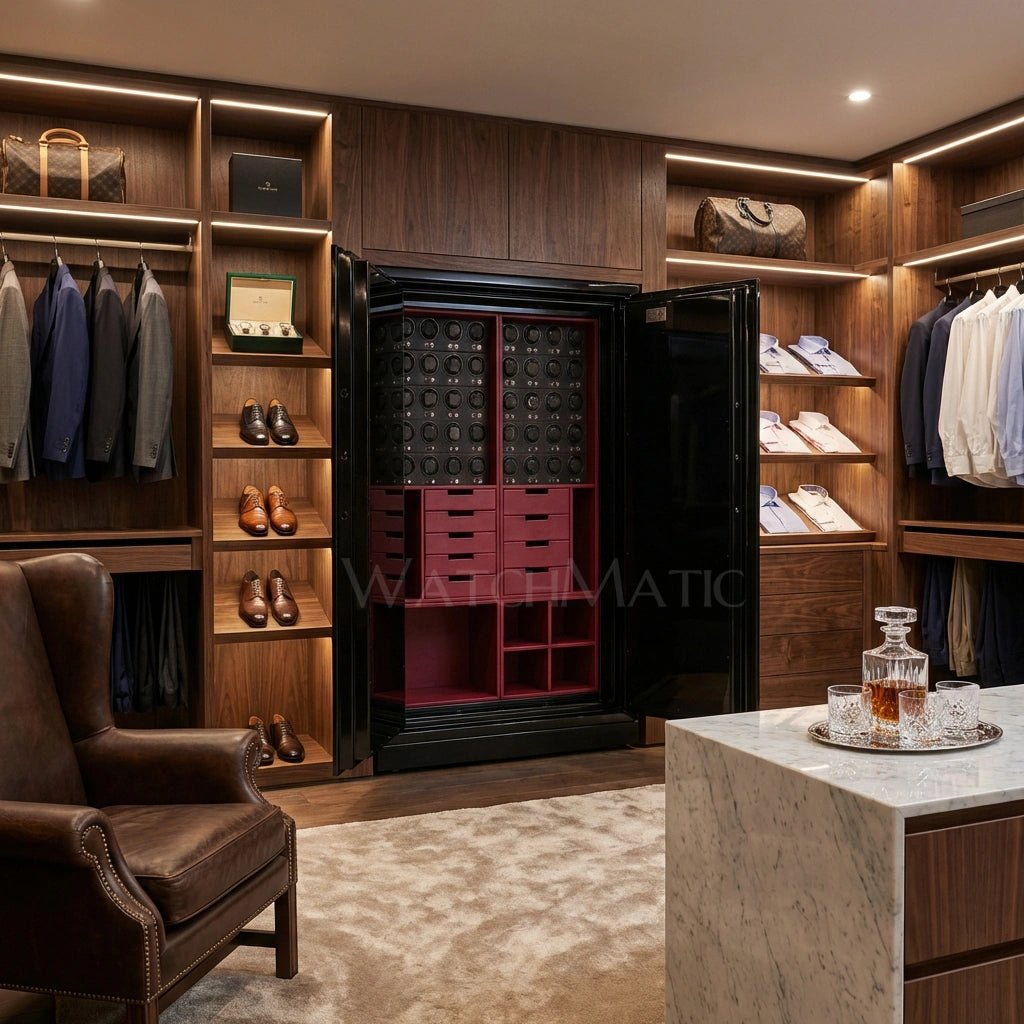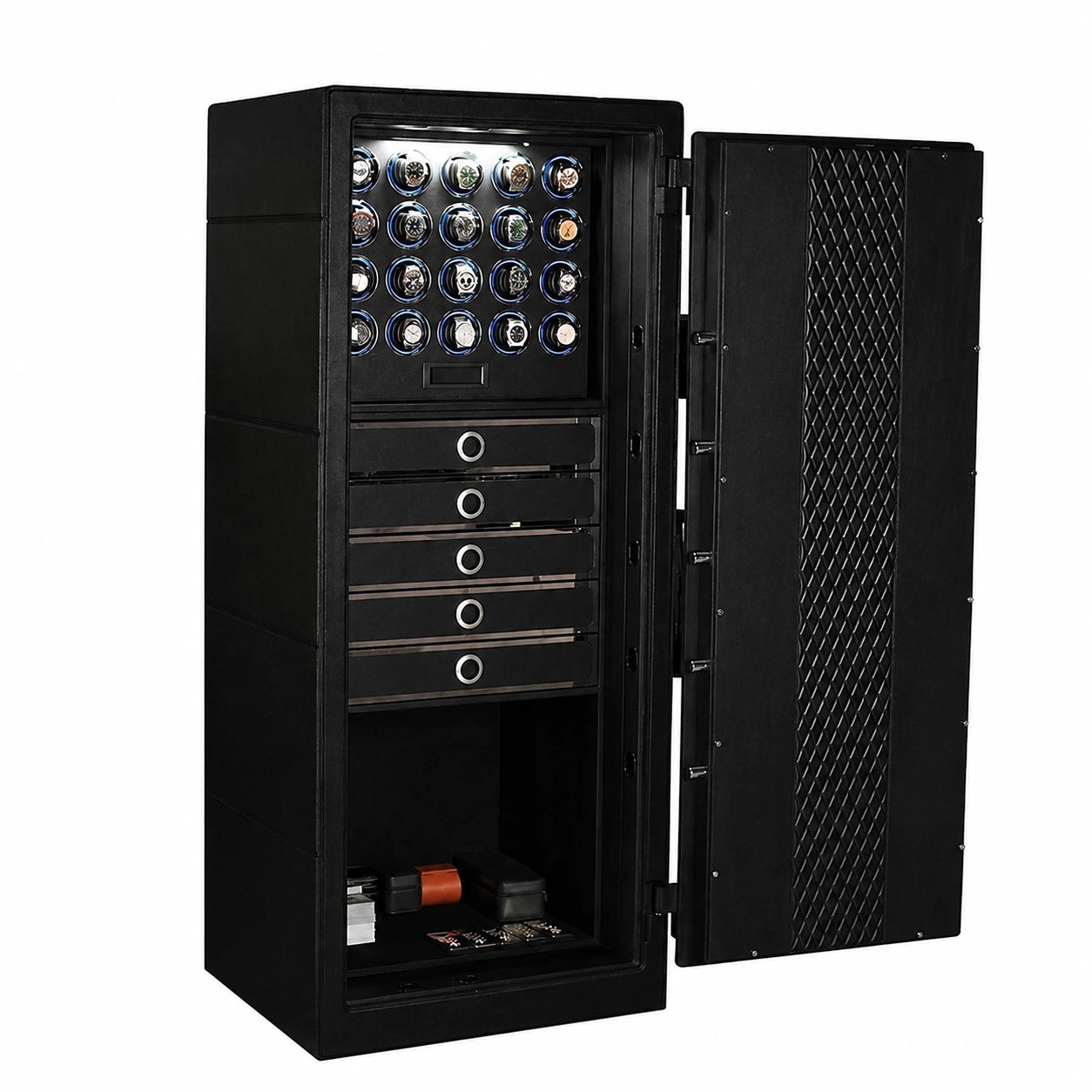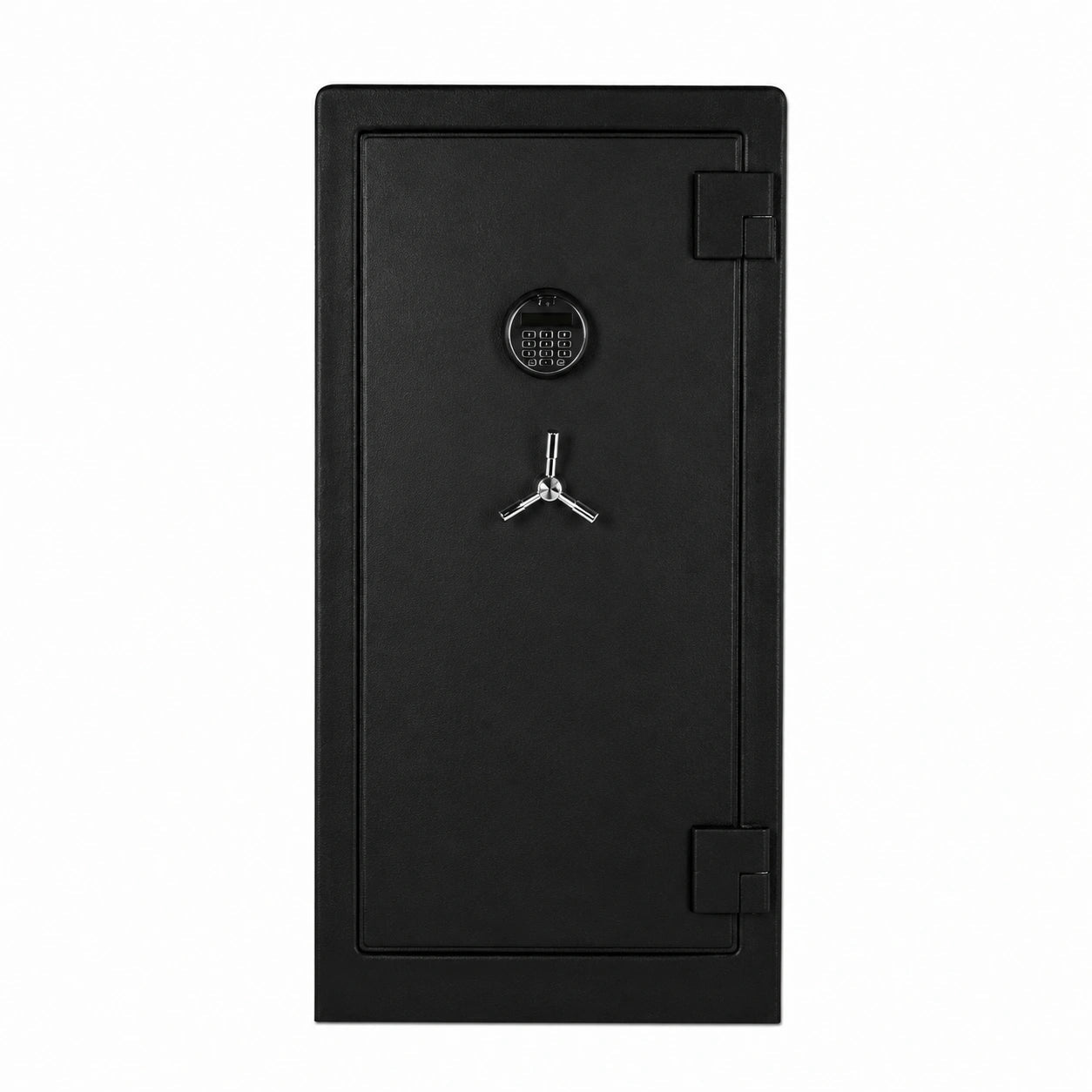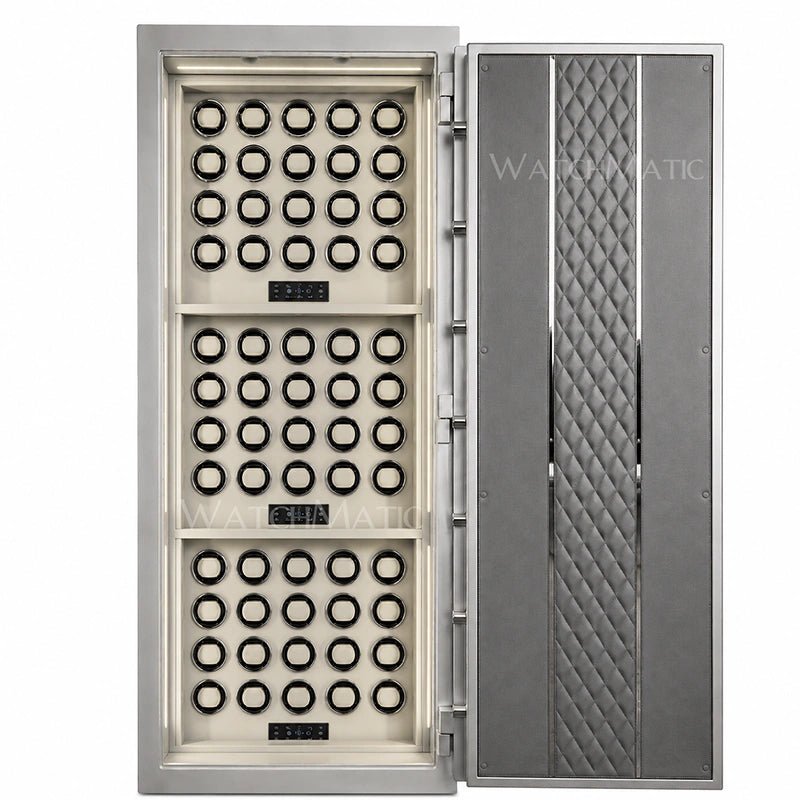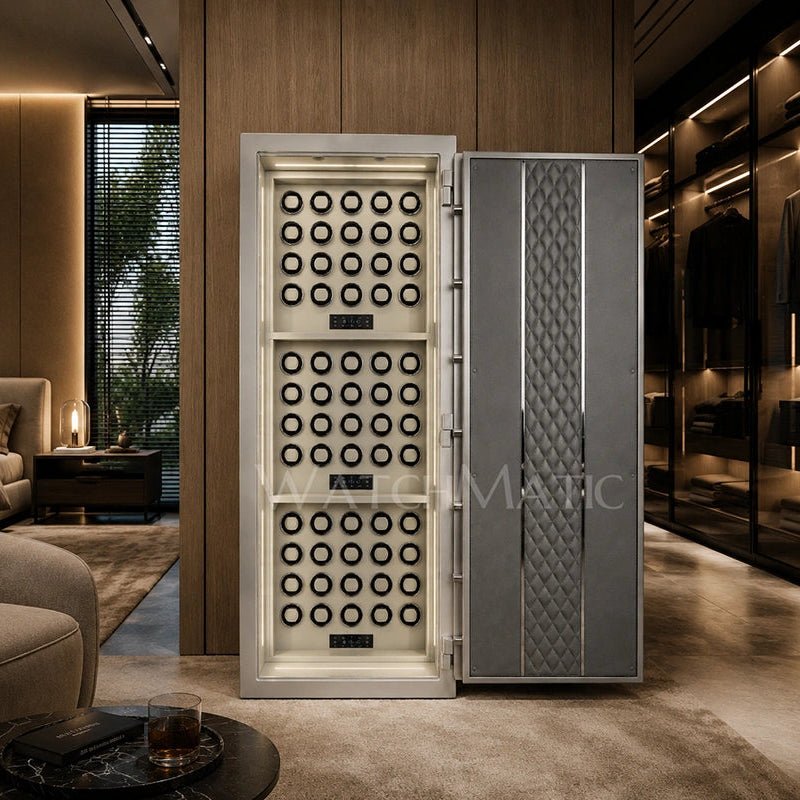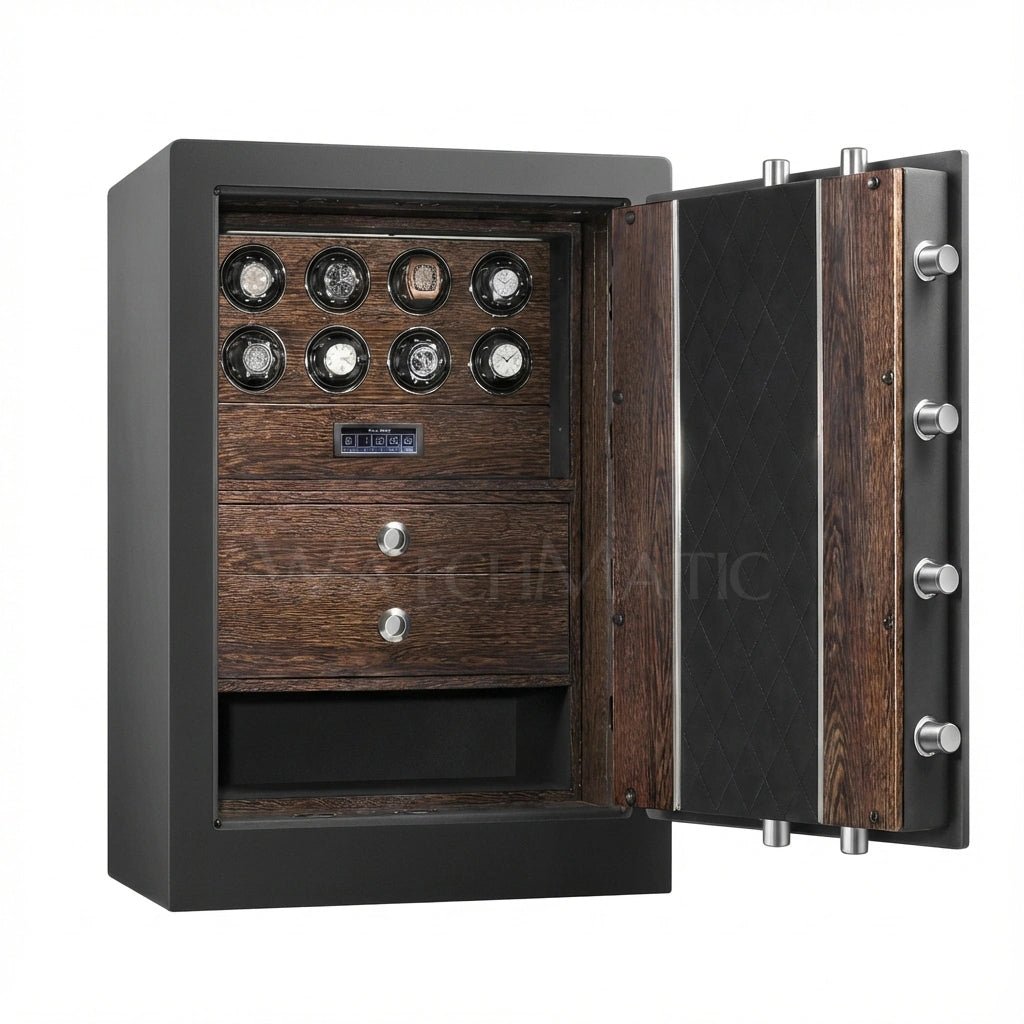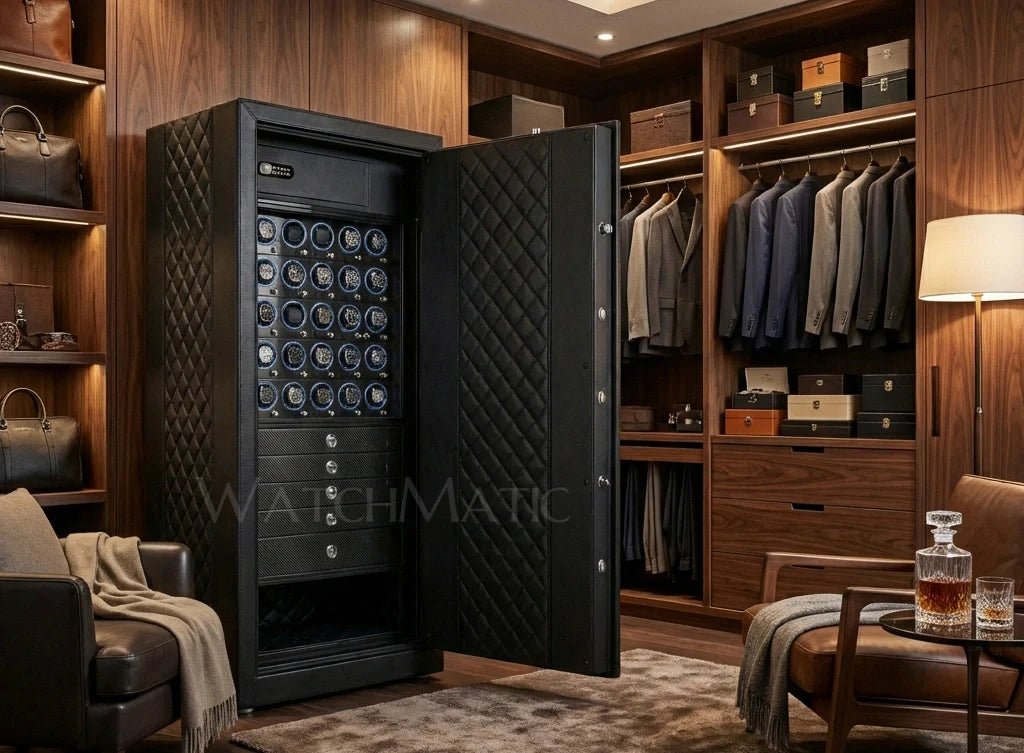
Many collectors begin with display-focused storage — glass cabinets, open watch winders, or decorative cases. As collection value grows, the risk profile changes. Transitioning to vault-level protection means shifting from aesthetic presentation to structured risk control.
This evolution typically happens when:
- Total collection value reaches seven figures
- Rare or highly liquid references enter the portfolio
- Insurance requirements become formalized
- Privacy and discretion become priorities
Vault-level protection is not about hiding passion.
It is about aligning storage strategy with asset class.
For serious collectors, the move from display to security is less emotional than operational — a recalibration of exposure, liquidity risk, and long-term preservation.
The Display Phase: Emotional Ownership
In the early stages of collecting, visibility is part of the experience.
Watches are displayed in glass cabinets, on open winders, or inside custom furniture. The collection is enjoyed visually and accessed frequently. At this level, the primary objective is convenience and admiration.
However, display systems create inherent exposure:
- Visible assets
- Predictable storage location
- Limited structural resistance
- Fragmented storage points
Through years of observing collector behavior, we routinely see the same inflection point: once a portfolio includes platinum pieces, limited editions, or complicated references, display becomes a liability rather than a luxury.
The Trigger: Liquidity and Visibility
High-end watches are among the most portable luxury assets in existence. A handful of references from Patek Philippe, Rolex, or Audemars Piguet can represent significant liquid value in minimal physical volume.
That portability changes the security equation.
From an underwriting perspective, insurers evaluate concentration risk. A visible, fragmented collection increases probability of targeted theft. Consolidation within a structurally secure enclosure reduces exposure.
The shift from display to vault-level protection is often initiated not by fear — but by scale.
What “Vault-Level Protection” Actually Means at Home
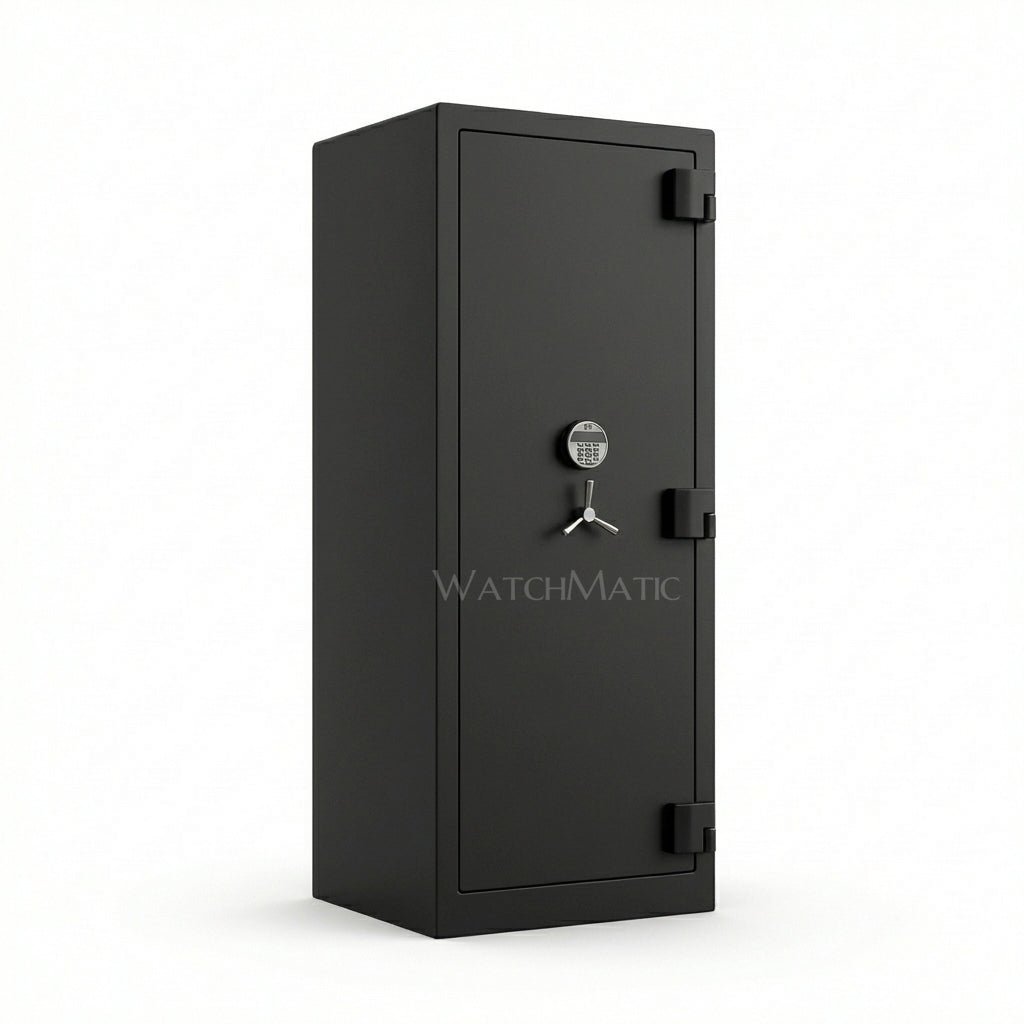
In a residential context, vault-level protection does not imply a commercial bank vault. It means:
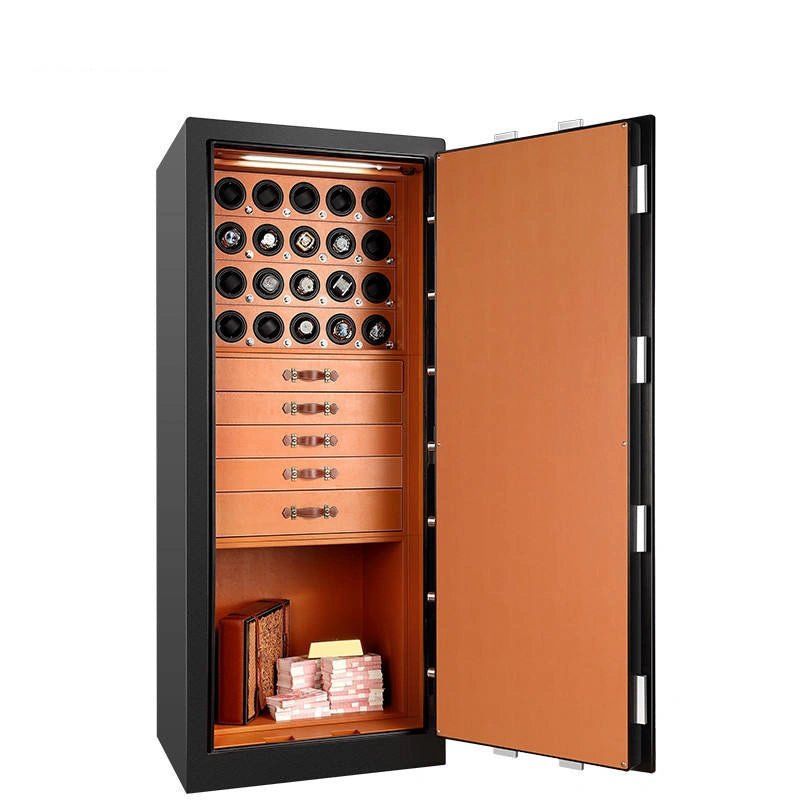
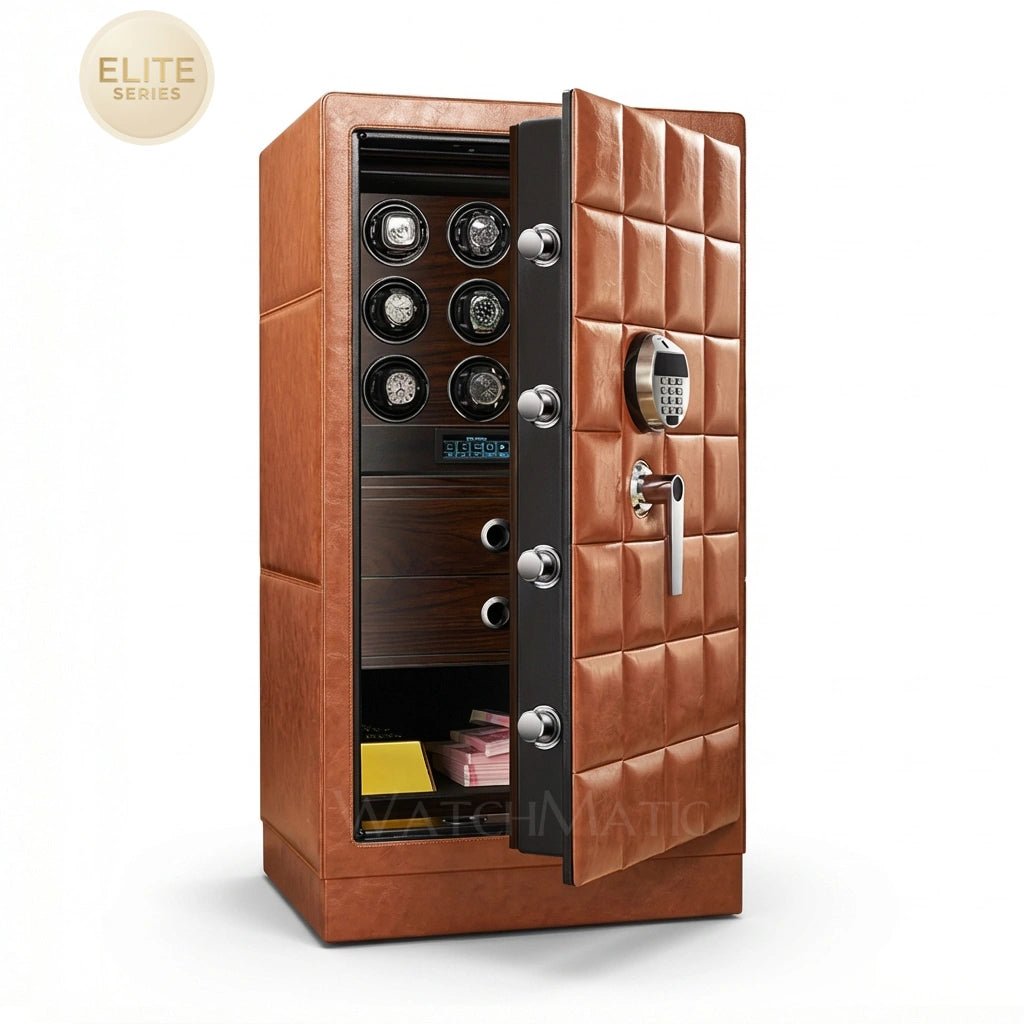
- A floor-standing, high-mass safe (150–650 kg)
- Reinforced multi-layer steel construction
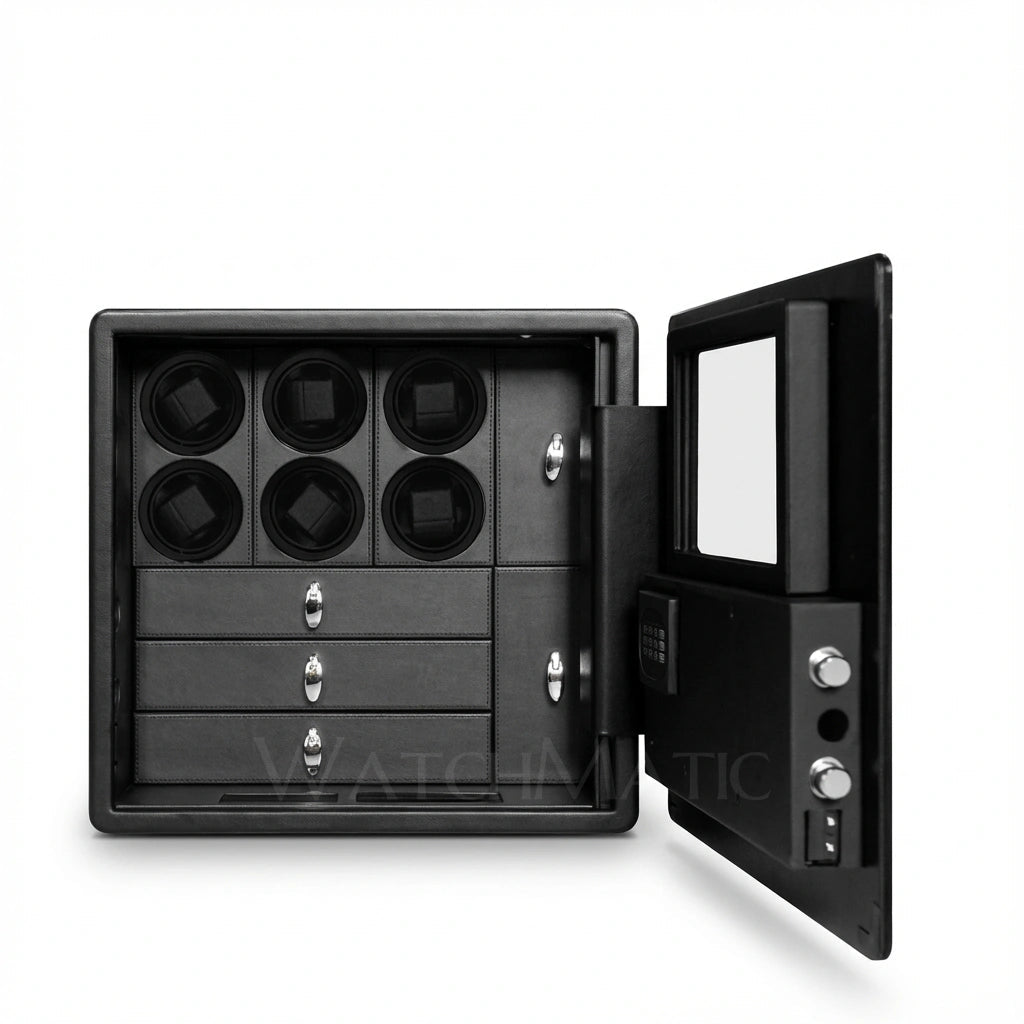
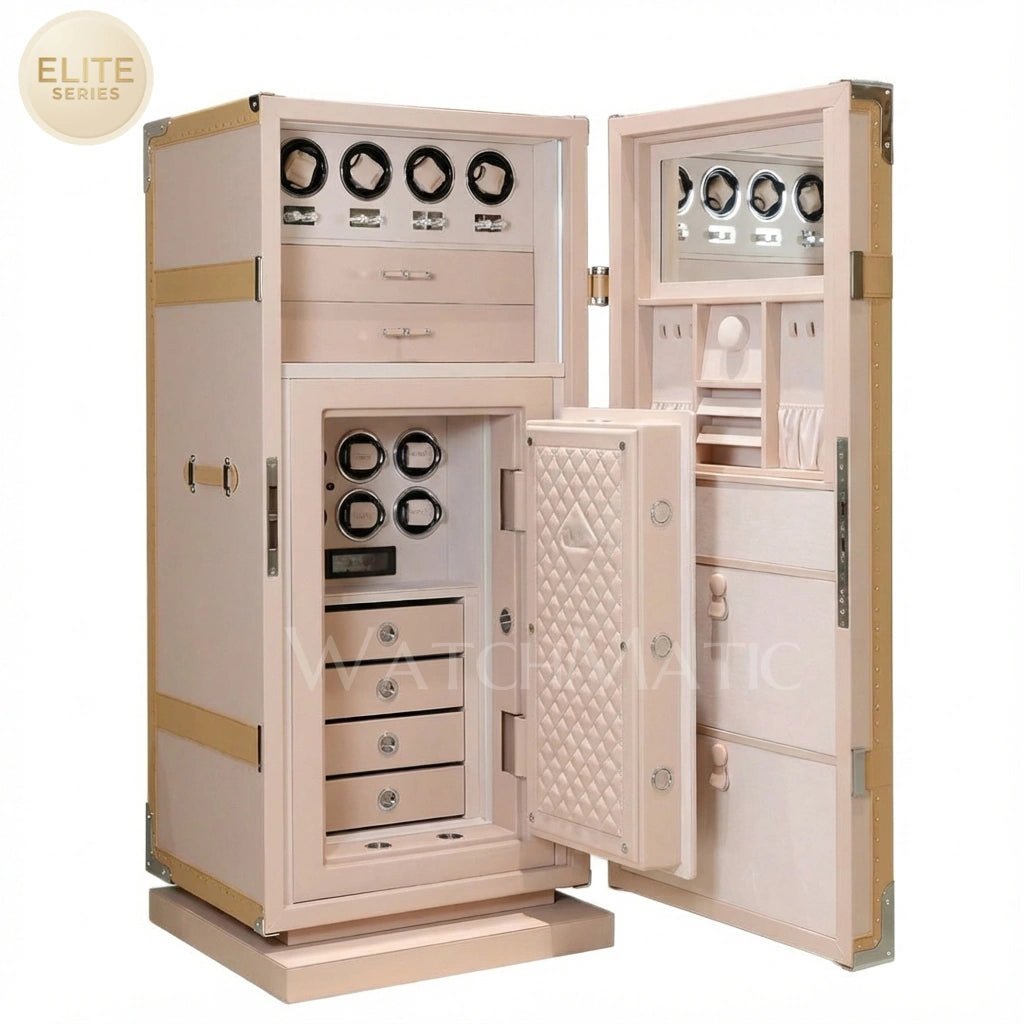
- Controlled internal organization
- Discreet placement strategy
Within the luxury watch safe specialist category, structural mass is a foundational design principle. A safe that cannot be easily removed fundamentally alters the risk model.
Unlike lightweight cabinets, floor-standing units at this mass range do not require bolt-down anchoring under standard residential conditions, allowing flexible yet stable placement.
Vault-level protection is about stability, delay, and discretion.
Psychological Resistance to the Transition
Interestingly, the transition is often delayed by emotional attachment to visibility.
Collectors associate display with pride. Moving pieces into a vault can feel like reducing enjoyment.
In high-rise installations, we routinely see a hybrid approach emerge:
- Core investment pieces secured
- Limited rotation pieces displayed
- Periodic rotation for enjoyment
This layered strategy preserves emotional engagement while reducing aggregate risk.
Security does not eliminate appreciation.
It reframes exposure.
Environmental & Structural Considerations
At portfolio scale, protection extends beyond burglary.
Collectors begin considering:
- Fire exposure
- Humidity control
- Mechanical stability for complicated movements
- Long-term preservation
Certain models engineered to EN 15659 – LFS 30 P or LFS 60 P standards provide certified fire protection for defined durations. While fire is statistically less frequent than theft, its financial impact can be absolute.
Transitioning to vault-level storage is therefore both a security and preservation decision.
For collectors exploring high-security cabinet lineup, consolidation simplifies both environmental control and insurance documentation.
The Strategic Evolution
The transition from display to vault-level protection rarely happens overnight.
It follows a pattern:
- Collection grows.
- Liquidity increases.
- Insurance conversations begin.
- Risk tolerance decreases.
At that point, storage shifts from aesthetic decision to asset strategy.
A curated display cabinet communicates passion.
A vault-level enclosure communicates stewardship.
For executive collectors, that distinction becomes inevitable as value compounds.