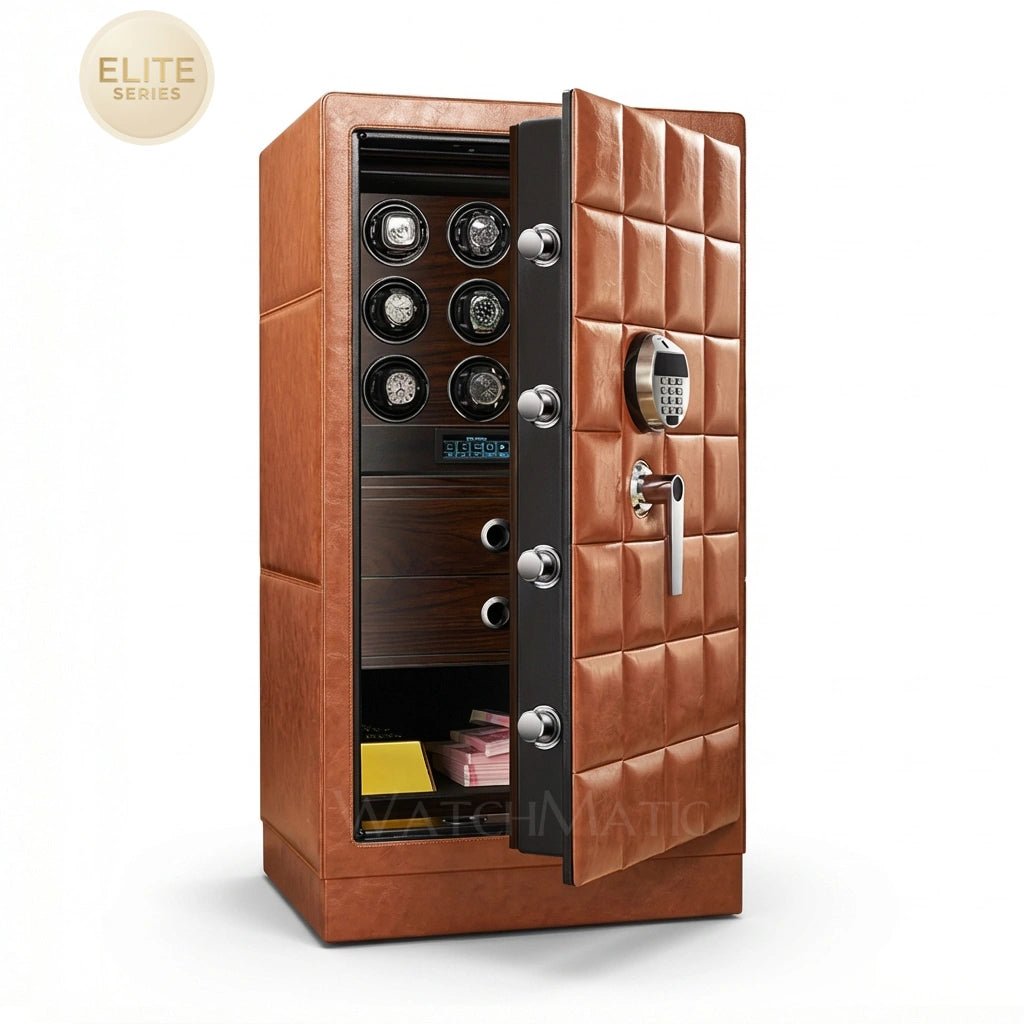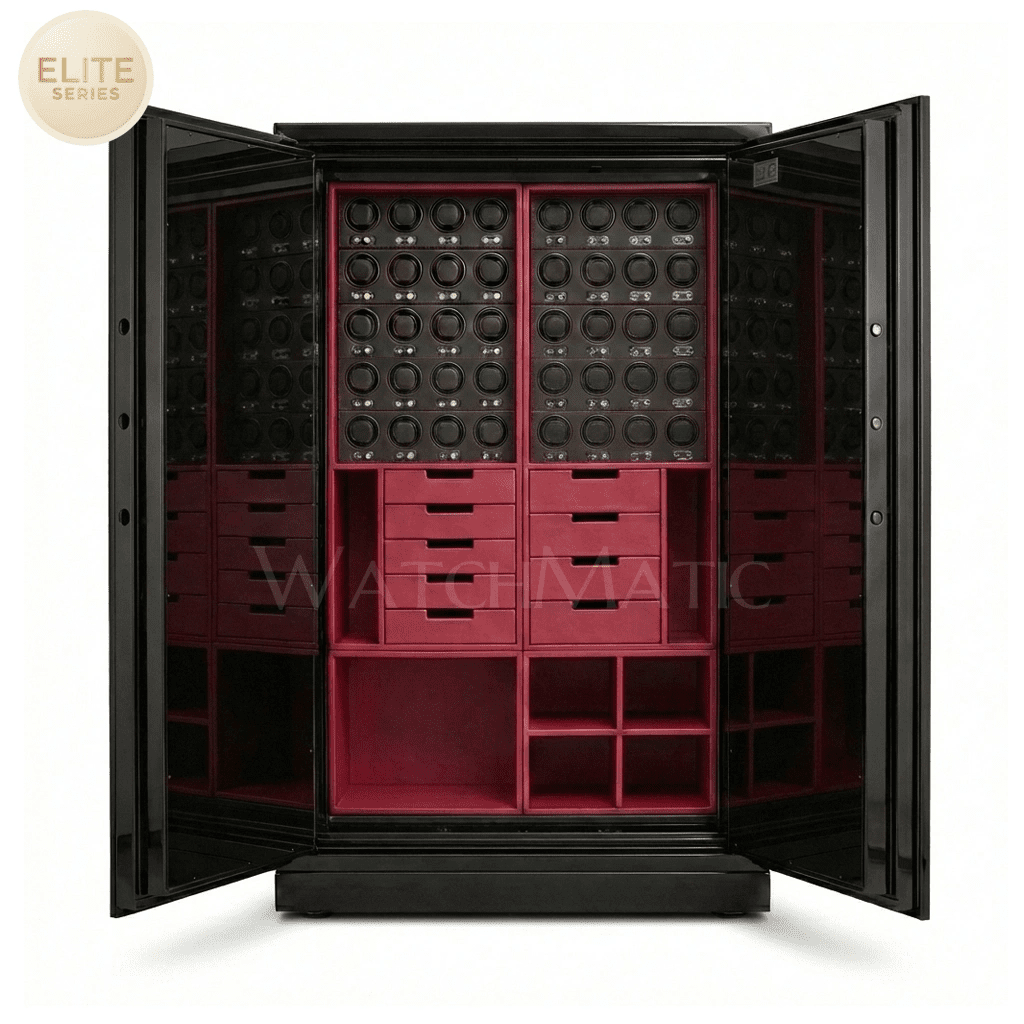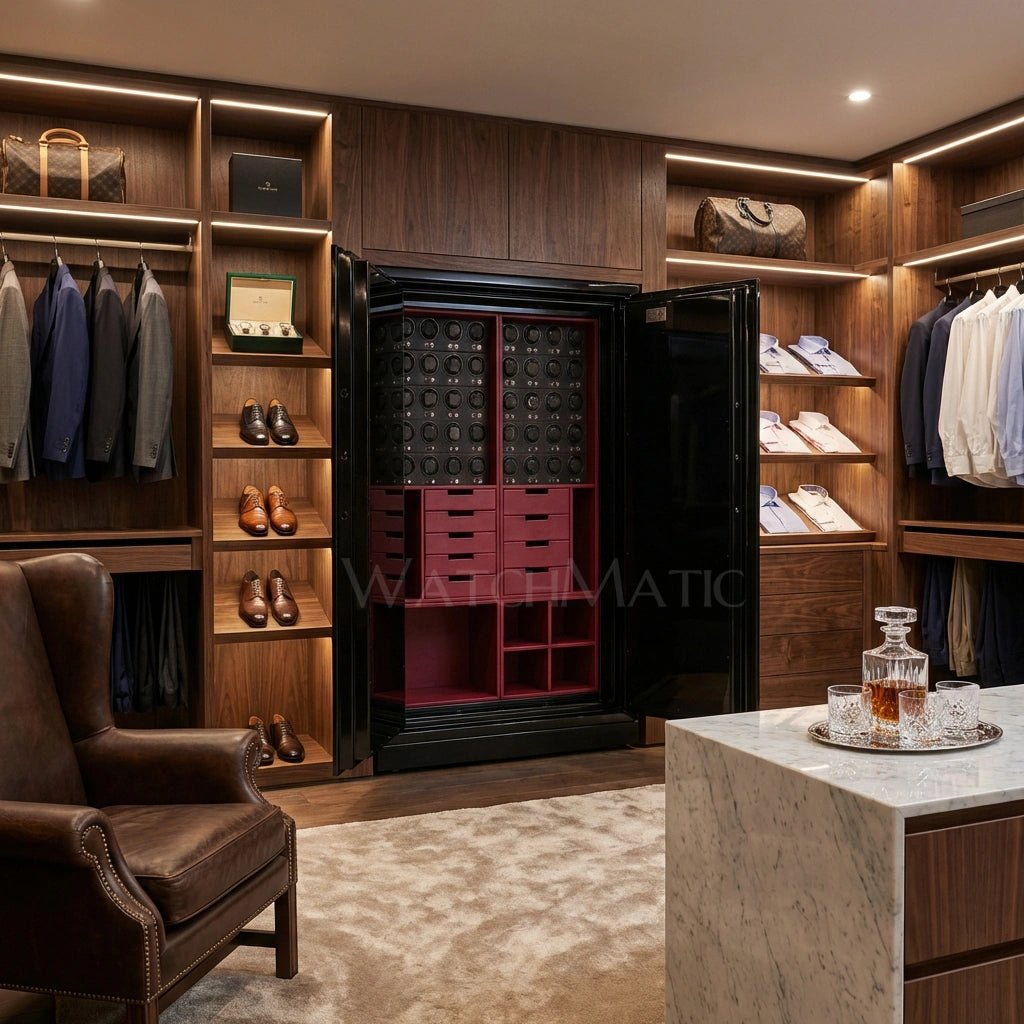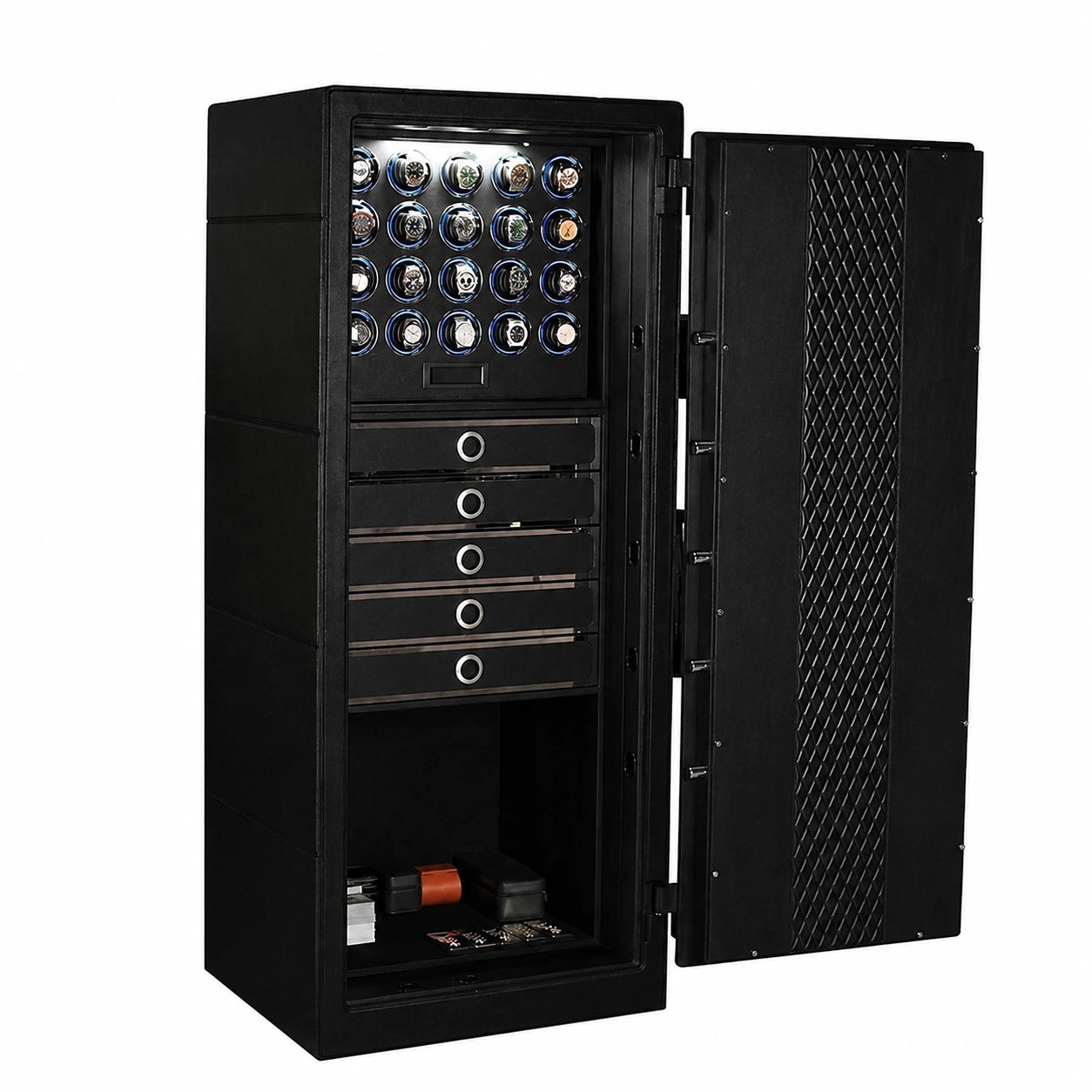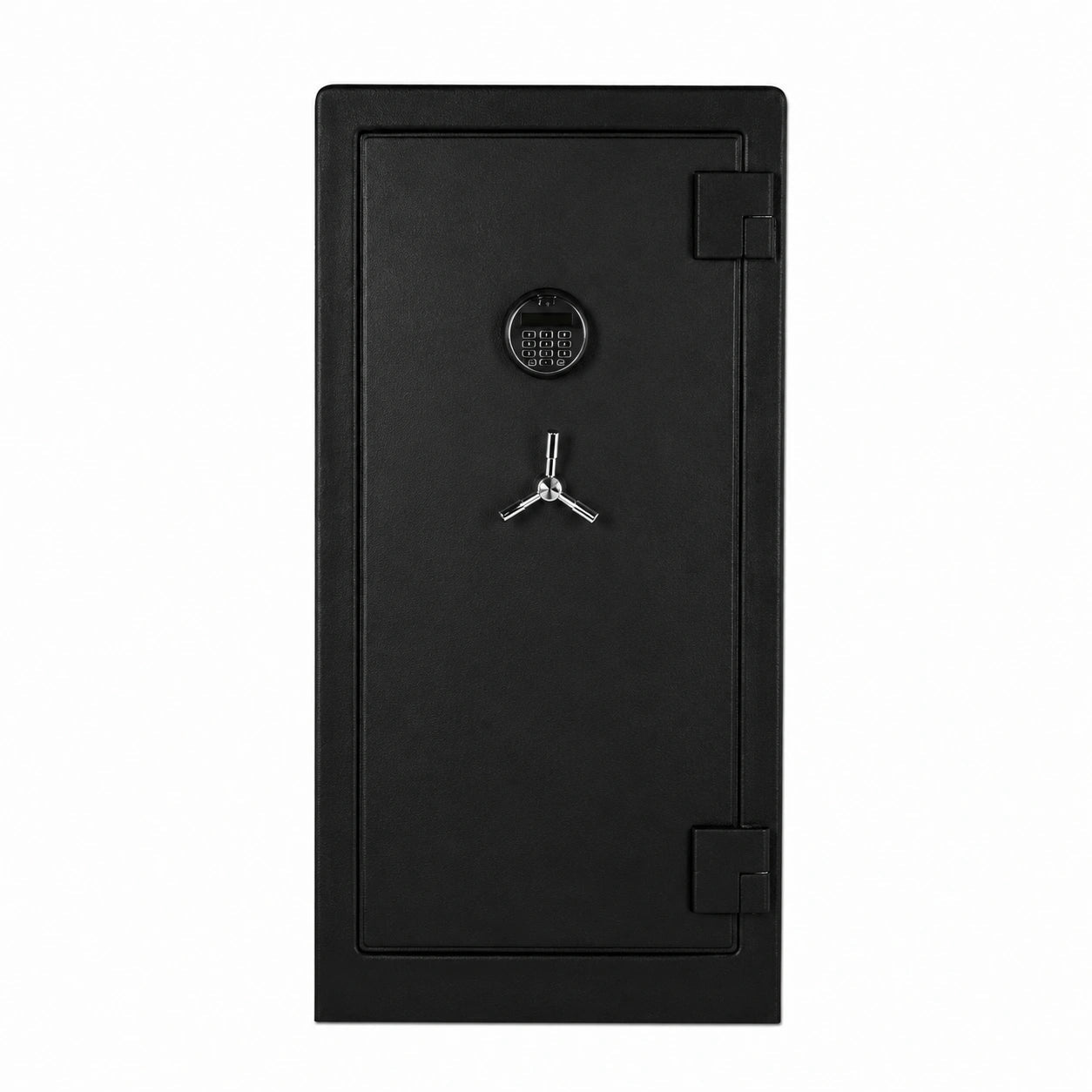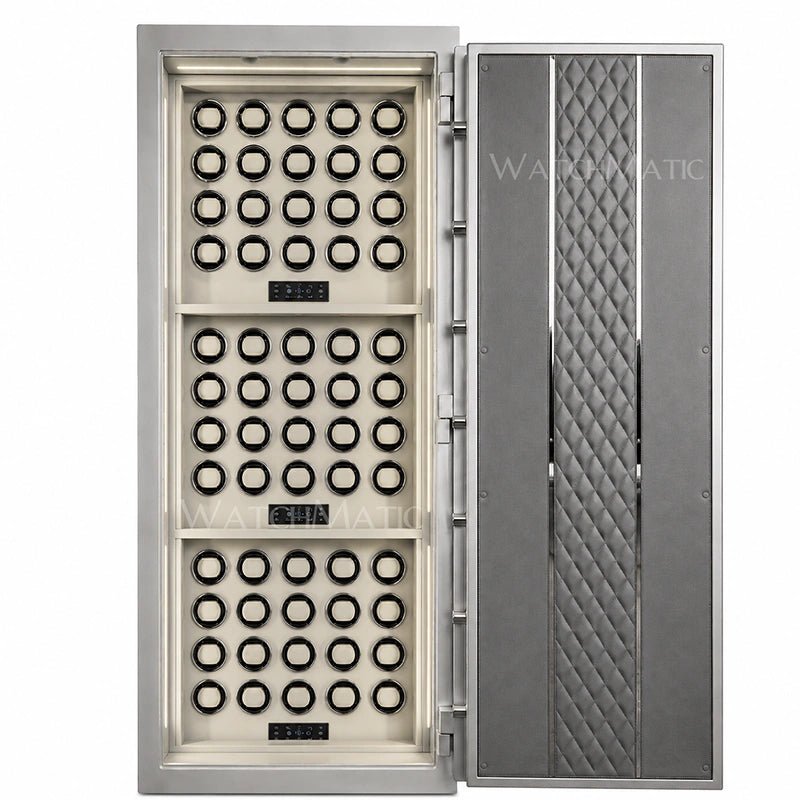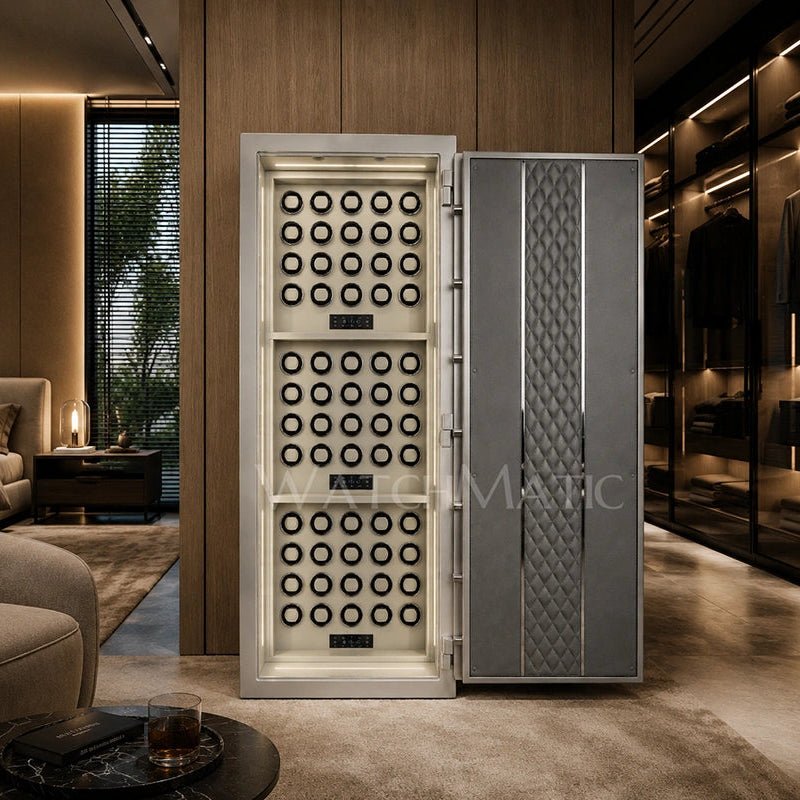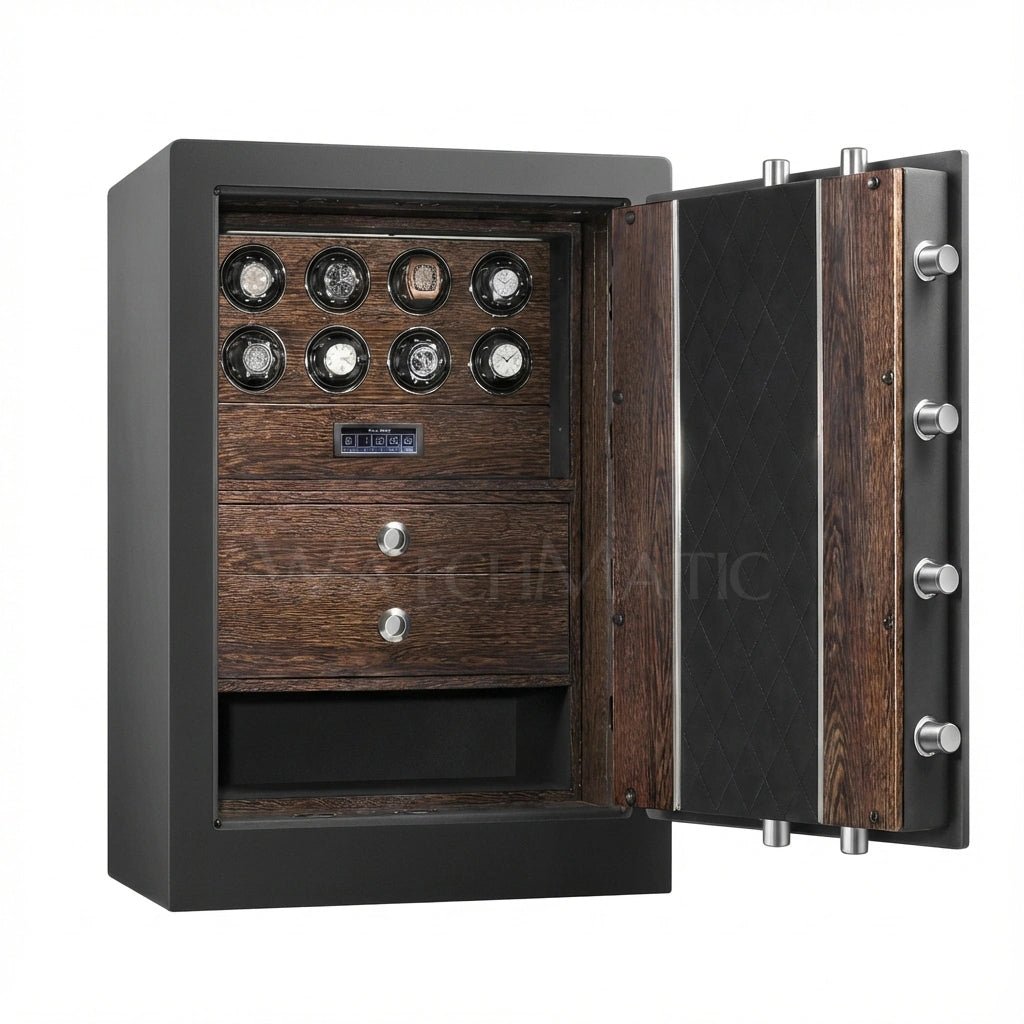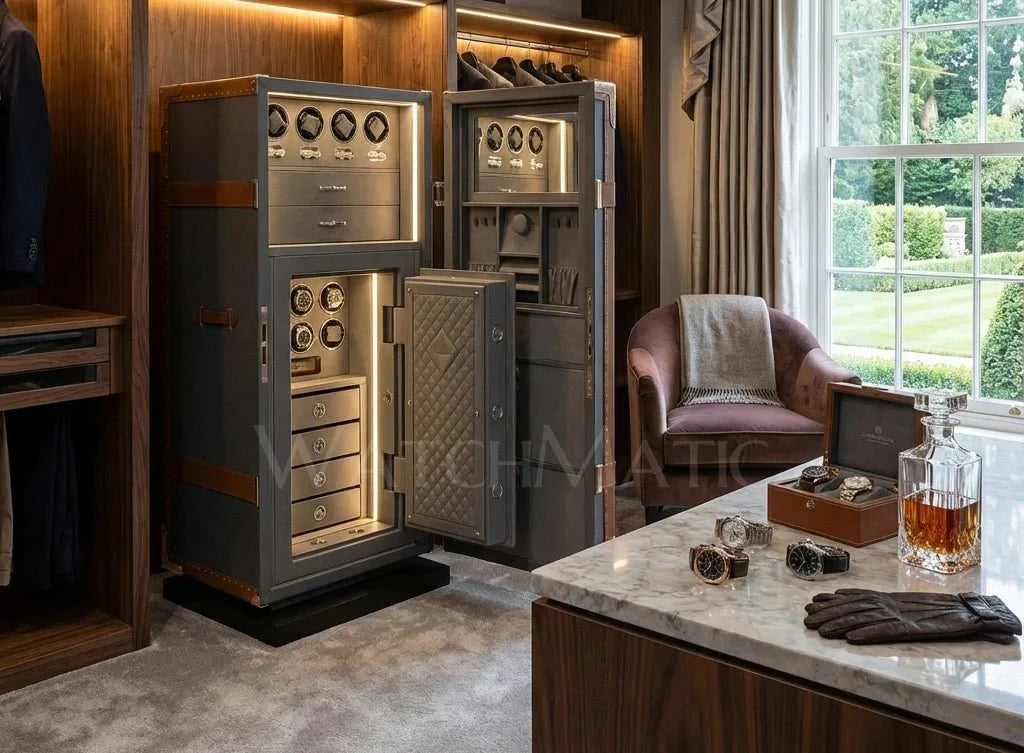
Burglary ratings for luxury safe cabinets indicate how long a safe can resist forced-entry attempts under controlled testing conditions. These ratings are not marketing labels — they are structured benchmarks based on defined tool sets and measured attack time.
In the U.S., ratings such as TL-15 and TL-30 are issued by Underwriters Laboratories (UL). In Europe, burglary resistance is commonly evaluated under EN 1143-1 or EN 14450 standards.
It is important to distinguish:
- Burglary rating = resistance to forced-entry tools
- Fire rating = resistance to heat exposure
- “Minutes” = net working time during active tool contact
For collectors storing high-value timepieces, understanding these classifications clarifies what a safe is engineered to withstand — and what it is not.
What a Burglary Rating Actually Measures
A burglary rating does not mean a safe is “impenetrable.”
It measures how long trained technicians, using a prescribed set of tools, can actively attack the safe before creating a standardized access opening.
Key variables include:
- Tool category permitted during testing
- Attack surface (door only vs all sides)
- Net working time (actual contact time, not clock time)
- Structural resistance of steel and composite materials
For example:
- TL-15 → 15 minutes of net tool-working time
- TL-30 → 30 minutes of net tool-working time
These tests occur in laboratory conditions — not chaotic real-world burglaries.
U.S. vs European Burglary Standards
In the U.S., UL 687 governs TL ratings.
In Europe, burglary resistance is often certified under EN 1143-1 with graded classifications (Grade 0, I, II, III, etc.).
The methodologies differ, but the principle remains consistent:
Structured resistance to defined mechanical attack.
It is also essential to avoid confusion between burglary ratings and fire certifications. Fire standards evaluate thermal endurance, not tool resistance.
Conflating the two is a common industry error.
Why Burglary Ratings Matter for Watch Collectors
Collectors storing rare references from Patek Philippe, Rolex, or Audemars Piguet are managing portable assets with high liquidity.
From an underwriting perspective, insurers often consider:
- Declared asset value
- Safe rating classification
- Installation environment
- Alarm integration
A rated safe provides measurable resistance rather than aesthetic reassurance.
However, ratings must be interpreted correctly.
Rating vs Real-World Risk
A TL-30 rating does not imply 30 minutes of uninterrupted grinding in a residential setting. The “30 minutes” represents cumulative active tool contact in a lab under controlled escalation.
In actual burglary scenarios:
- Noise increases detection risk
- Power availability may be limited
- Removal feasibility affects strategy
Therefore, rating is one layer of defense — not a guarantee.
Security effectiveness depends on:
- Structural mass
- Placement discretion
- Alarm and surveillance systems
- Response time
A coherent strategy integrates these variables rather than relying on rating alone.
Structural Architecture Still Matters
Even in the absence of a TL rating, safe performance is influenced by:
- Multi-layer steel body construction
- Reinforced door architecture
- Lock protection plates
- Tight door-to-frame tolerances
- Overall mass and stability
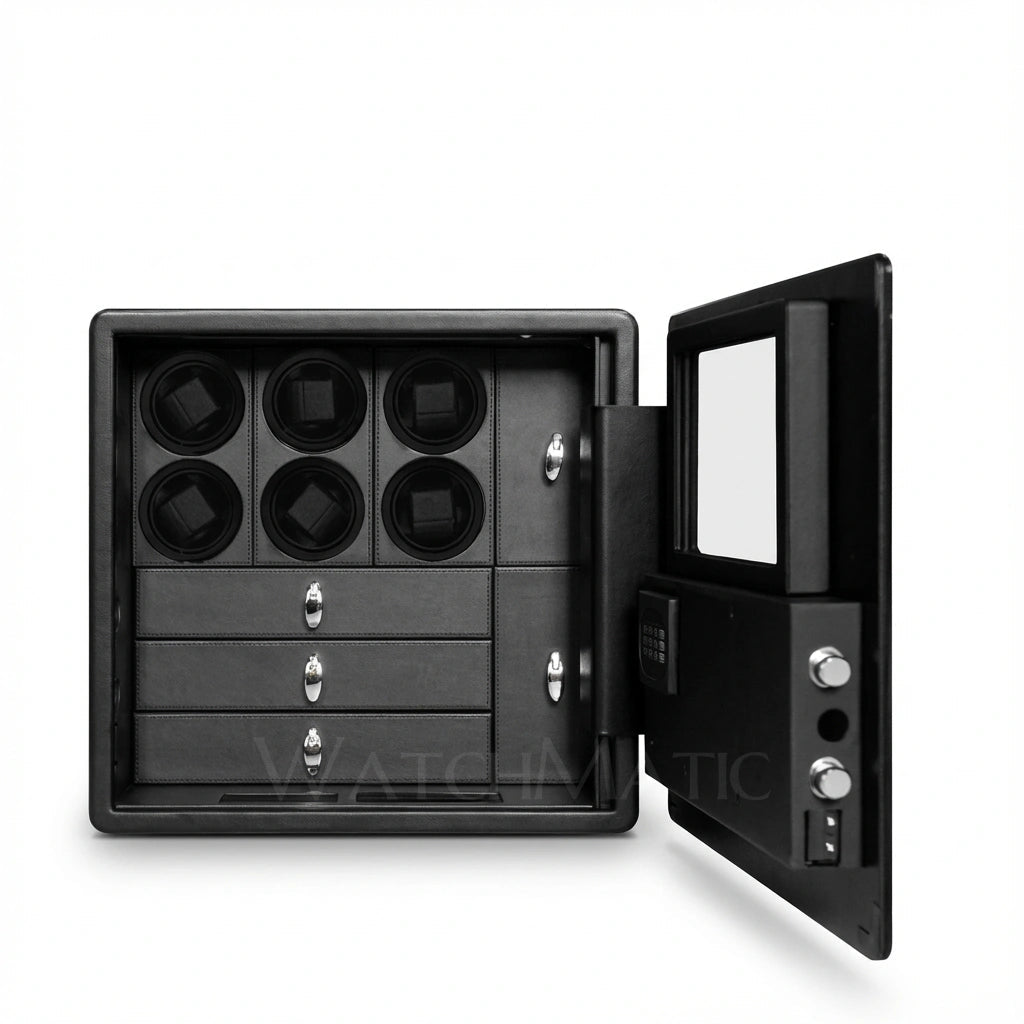
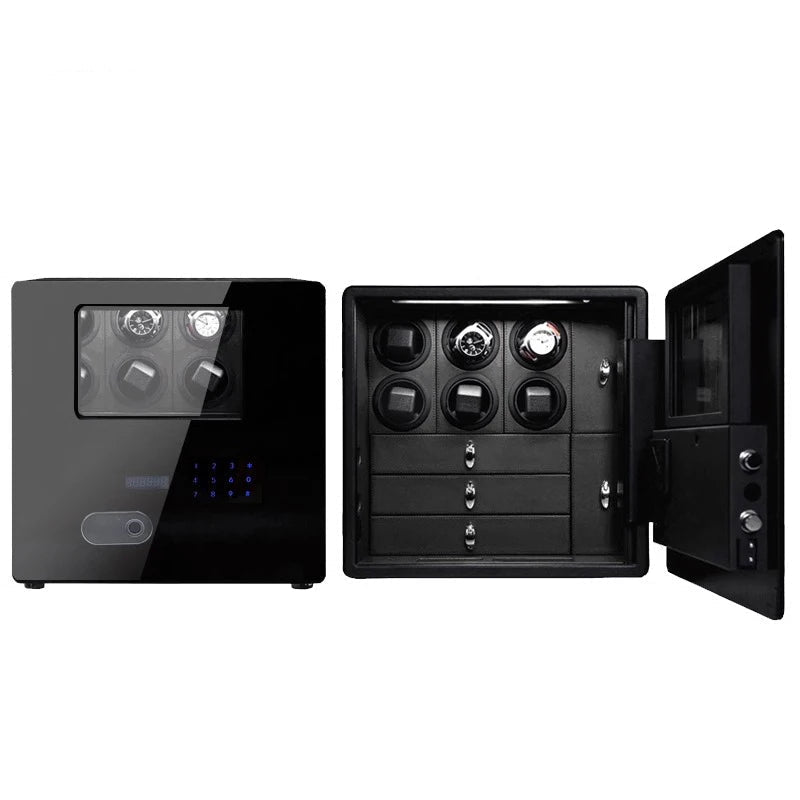
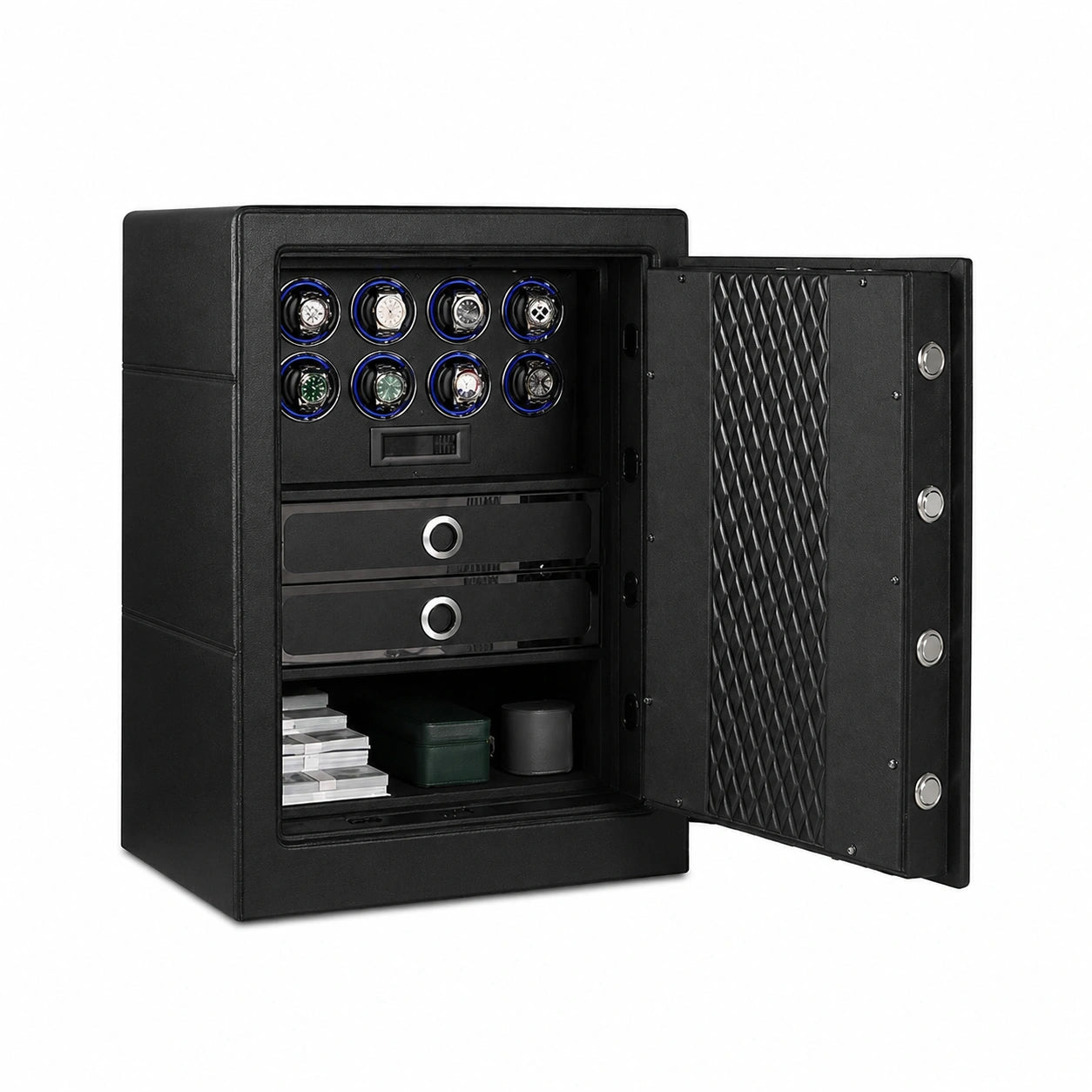
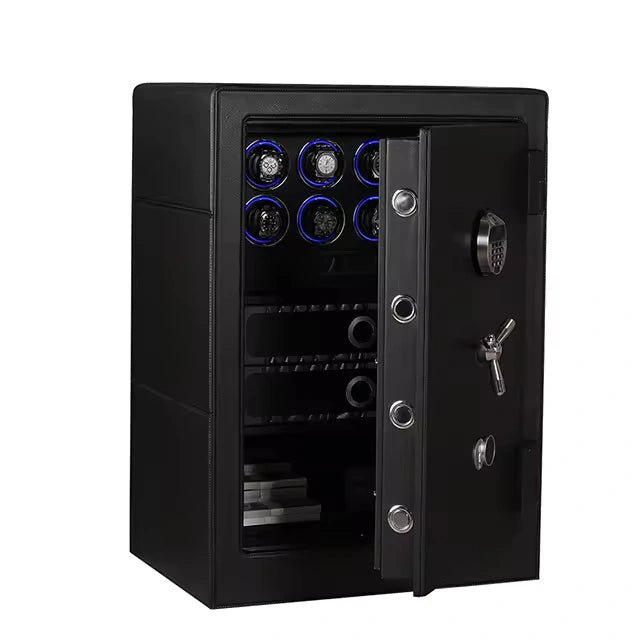
Within the watch winder safe specialist segment, structural mass and layered steel engineering are prioritized to increase forced-entry delay in realistic residential conditions.
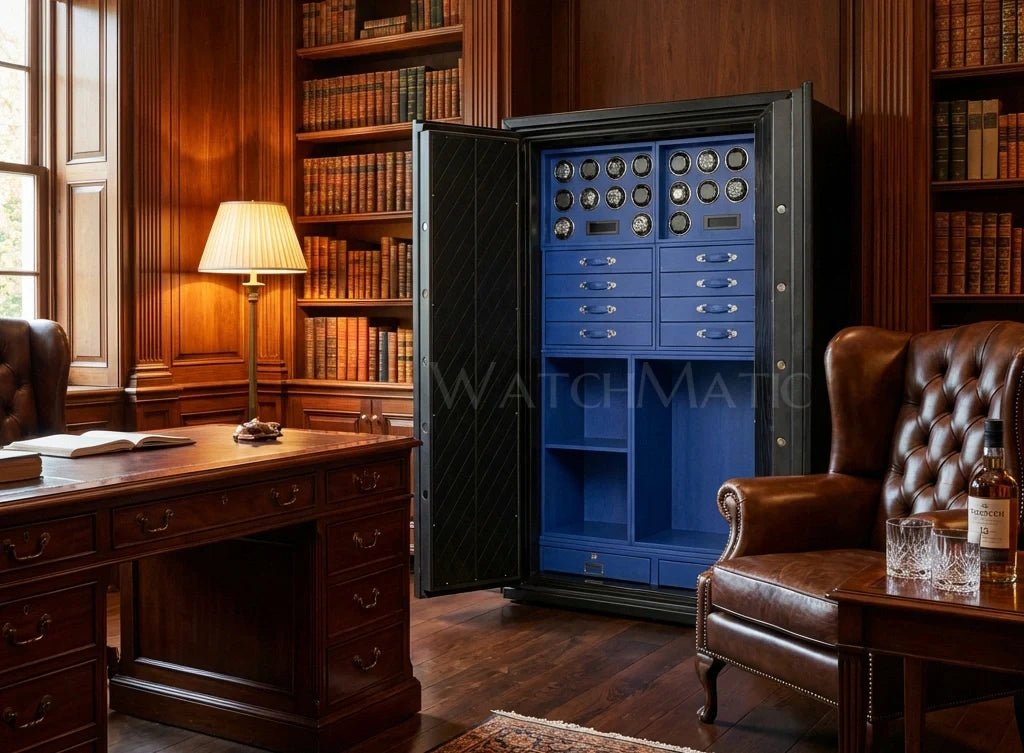
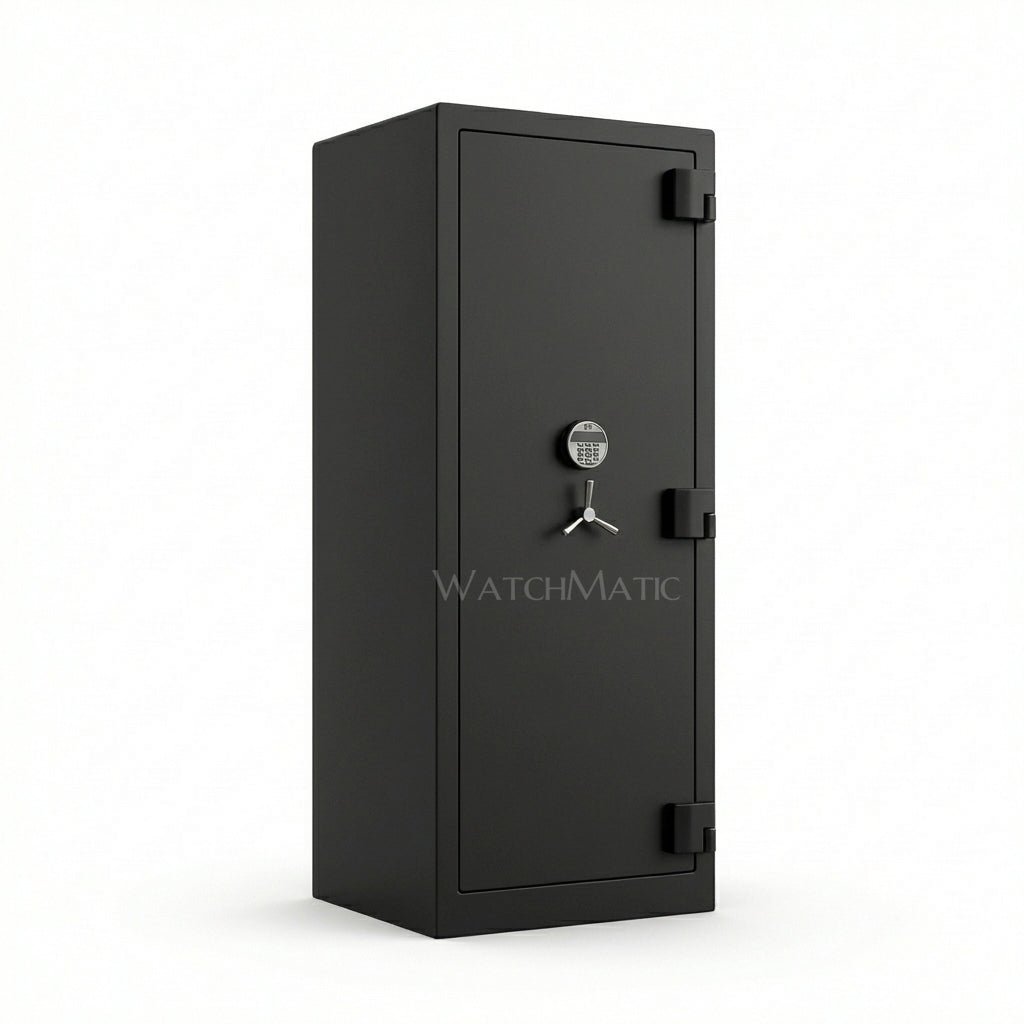
Our high security and fire-resistant watch safes are engineered as floor-standing units weighing between 150–650 kg. While burglary ratings vary by model and market, structural mass remains a decisive defensive variable.
Strategic Perspective for Executive Collectors
Burglary ratings should be understood as:
- Laboratory benchmarks
- Insurance reference points
- Comparative indicators
They are not marketing superlatives.
At the executive collection level, security should be evaluated as a layered architecture:
- Structural resistance
- Environmental protection
- Discretion and placement
- Detection systems
- Insurance alignment
A rating is one component of that system — not the system itself.
Understanding individual features is important, but seeing how they work together matters more. Our guide to choosing a watch safe explains this in detail.