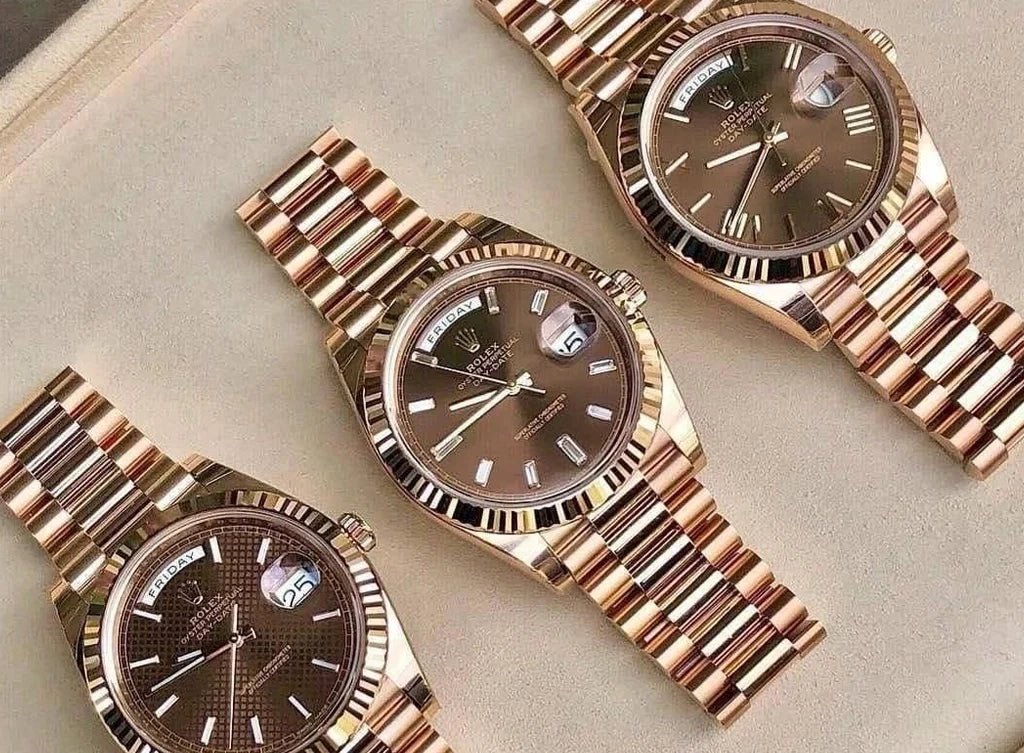
Building a luxury watch collection can take years. Every new acquisition brings excitement, whether it is a long-awaited Rolex, a distinctive Omega Speedmaster, a classic Cartier, or a particularly meaningful independent timepiece.
But as a collection grows, something interesting often happens. The number of watches you own increases, while the number you regularly wear may remain relatively small.
You might own fifteen or twenty watches yet consistently reach for the same three or four favorites. Other pieces sit quietly in their boxes, appreciated but rarely worn.
Eventually, you begin asking yourself a different question: How do you decide which watches to keep when downsizing a collection?
Should you keep the most expensive watches? The ones you wear most often? The rarest references? Or the watches with the greatest sentimental value?
Downsizing is not simply about reducing the number of watches you own. It is about understanding what each timepiece contributes to your collection and identifying which pieces still deserve a place in it.
This guide explains how to thoughtfully downsize a luxury watch collection, evaluate individual watches, identify unnecessary overlap, and build a smaller collection that better reflects your lifestyle, preferences, and long-term collecting goals.
Quick Answer: Which Watches Should You Keep When Downsizing?
When downsizing a watch collection, prioritize the watches you genuinely enjoy, regularly wear, find difficult to replace, or value for their personal and historical significance.
Consider selling watches that no longer match your preferences, duplicate pieces you like better, or remain in the collection primarily because of their original purchase price.
A practical starting point is to divide your watches into three categories:
- Keep: watches with a clear purpose, strong personal attachment, distinctive character, or long-term collecting significance.
- Consider Selling: watches that overlap with others, no longer suit your lifestyle, or provide limited enjoyment.
- Reconsider Later: watches you are uncertain about, particularly those with sentimental value or significant replacement difficulty.
The objective is not to keep only the most expensive watches or those receiving the most wrist time.
A relatively inexpensive family heirloom may deserve a permanent place in your collection, while a considerably more expensive watch may no longer feel personally meaningful.
The most successful downsizing decisions balance practical use, emotional significance, collection diversity, and financial considerations.
1. Decide Why You Want to Downsize Your Watch Collection
Before choosing which watches to sell, identify what you want to achieve by downsizing.
Without a clear objective, you may sell watches that you later wish you had kept or reduce the collection without improving your overall satisfaction.
You Want to Wear More of What You Own
Some collectors realize that their favorite watches receive nearly all their wrist time.
Reducing the number of competing pieces can make choosing a watch easier and allow the remaining collection to receive more attention.
You Want a More Focused Collection
Your interests may have become more specific over time.
Perhaps you initially collected several different watch styles but now prefer vintage chronographs, classic dress watches, or modern sports watches.
Downsizing can help bring the collection into alignment with those evolving preferences.
You Want to Reduce Ownership Complexity
A larger collection requires more space, documentation, maintenance planning, and security consideration.
Simplifying the collection may reduce these responsibilities, although a smaller collection of particularly valuable watches can still require substantial care and protection.
You Want Greater Financial Flexibility
Selling watches that no longer provide satisfaction can release capital for other priorities.
However, the amount received may differ substantially from the original purchase price or current advertised resale prices.
You Want to Make Room for Future Acquisitions
Some collectors prefer maintaining a particular collection size while gradually replacing watches as their tastes evolve.
This can be a reasonable strategy, provided it does not encourage unnecessary buying and selling.
Before proceeding, complete this sentence: "I want to downsize my watch collection because..."
Your answer should guide the decisions that follow.
2. Start With a Complete Inventory of Your Watches
It is difficult to make a thoughtful decision about a collection when you have not reviewed every piece together.
Begin by creating a complete inventory of the watches you currently own.
Include watches stored in safes, watch boxes, travel cases, and any pieces temporarily away for servicing.
Record the Information That Matters
For each watch, consider documenting:
- Brand, model, and reference number.
- Movement type and complications.
- Acquisition date and original purchase price.
- Current condition and service history.
- Frequency of wear.
- Personal or sentimental significance.
- Its role within the collection.
- Approximate current resale value, if relevant.
- Original boxes, papers, and accessories.
- Whether the watch would be difficult to replace.
Keep complete serial numbers, sensitive ownership records, and personal information in a secure inventory rather than a publicly shared document.
Example Collection Review
| Watch | Current Role | Wrist Time | Initial Assessment |
|---|---|---|---|
| Rolex Submariner | Everyday sports watch | Frequent | Keep |
| Omega Speedmaster | Chronograph | Occasional | Keep |
| Cartier Tank | Dress watch | Occasional | Keep |
| Second Stainless Steel Diver | Similar to everyday watch | Rare | Consider Selling |
| Vintage Family Watch | Sentimental heirloom | Rare | Keep |
This example is illustrative. The appropriate decision depends on the individual watch and collector, not the brand or model alone.
For more detailed inventory and documentation methods, see How to Organize a Watch Collection Like a Professional Collector.
3. Identify the Watches You Would Never Want to Replace
Before evaluating resale value or wrist time, identify the watches that have exceptional personal significance.
These may be the easiest watches to overlook in a purely numerical downsizing exercise.
Family Heirlooms
A watch passed down through generations may have modest market value but substantial emotional importance.
Selling it could mean losing something that cannot be recovered by purchasing another example of the same model.
Milestone Watches
Some watches commemorate important events such as graduation, career achievements, marriage, anniversaries, or personal accomplishments.
Their significance may extend far beyond their specifications or current market value.
Rare or Historically Significant Pieces
Unusual vintage references, discontinued models, and historically interesting watches can be difficult to replace in comparable condition.
Originality, provenance, and distinctive characteristics may make a particular example especially meaningful to its owner.
Watches That Define Your Collecting Journey
Your first mechanical watch or the piece that inspired your interest in horology may deserve a place even if it is no longer part of your active rotation.
These watches represent your personal collecting history.
A useful rule is to identify your emotional non-negotiables before making financially motivated decisions.
Doing so helps prevent a numerical downsizing target from overriding the reasons you began collecting in the first place.
4. Use Wrist Time as Evidence, Not as the Only Rule
One of the most common reasons to consider downsizing is realizing how few watches receive regular wrist time.
A collector may own fifteen watches but frequently wear only three or four.
This is worth examining, but it does not automatically mean the other watches should be sold.
Track Your Actual Wearing Habits
For four to six weeks, record which watch you wear each day.
If you regularly change watches during the day, note those wearing sessions separately.
At the end of the observation period, identify:
- The watches you consistently choose.
- The watches you wear only for specific occasions.
- The watches you rarely consider wearing.
- The watches you enjoy owning but intentionally preserve.
Distinguish Intentional Storage From Unwanted Ownership
A rare vintage watch worn twice a year may be fulfilling its intended role.
By contrast, a relatively new sports watch that remains unworn because you prefer another model may be a stronger candidate for downsizing.
Ask a More Revealing Question
Instead of asking, "When did I last wear this watch?" ask:
"If I had an appropriate occasion tomorrow, would I genuinely choose to wear this watch?"
If the answer is consistently no, the watch may no longer fit your preferences.
However, wrist time should remain one consideration alongside sentimental value, rarity, and the overall purpose of the collection.
5. Identify Watches That Serve the Same Purpose
Collection overlap is one of the most useful areas to examine when downsizing.
As collectors acquire new watches, they sometimes purchase several pieces with similar designs, dimensions, complications, or intended uses.
There is nothing inherently wrong with collecting within a particular category.
However, overlap becomes worth reconsidering when several watches compete for the same wrist time and one is consistently preferred.
Compare Similar Sports Watches
Imagine owning three stainless steel sports watches with black dials, similar case sizes, and comparable everyday functionality.
If one feels more comfortable, looks better on your wrist, and consistently becomes your first choice, ask what the other two contribute.
They may offer distinct histories, movements, or personal significance. Alternatively, they may simply duplicate a role already covered by your favorite.
Compare Watches Within the Same Brand
Owning multiple Rolex, Omega, or Tudor watches is not automatically redundant.
Different references may offer considerably different designs or functions.
However, if you own several highly similar references and consistently favor one, it may be reasonable to reconsider the others.
Compare by Function, Not Only Appearance
Two watches may look different yet serve the same practical role.
For example, a versatile sports watch and a casual chronograph may both function as your everyday watch.
Likewise, two visually similar watches may offer different complications or historical significance.
Consider the actual purpose of each piece rather than relying exclusively on visual comparison.
The Two-Watch Comparison Test
Place two potentially overlapping watches side by side and ask:
- Which one would I choose to wear tomorrow?
- Which is more comfortable?
- Which has greater personal significance?
- What does each watch offer that the other does not?
- If I could keep only one, which would I miss more?
If the same watch wins nearly every comparison, the other may be a reasonable candidate for selling.
6. Create a Watch Collection Decision Matrix
For collectors managing ten, twenty, or more watches, evaluating every piece through an informal emotional decision can become difficult.
A simple scoring framework can help make the process more consistent.
Instead of attempting to determine which watches are objectively best, evaluate each one according to criteria that reflect your personal priorities.
Five Criteria to Consider
- Personal Enjoyment: How much do you enjoy owning and wearing the watch?
- Lifestyle Fit: How comfortably and naturally does it fit your current activities?
- Collection Uniqueness: Does it contribute something distinctive?
- Sentimental Significance: Does it carry personal or historical meaning?
- Replacement Difficulty: Would it be difficult to acquire a comparable example again?
Assign a score from 1 to 5 for each category, with 5 representing the strongest reason to keep the watch.
Illustrative Watch Collection Scoring Matrix
| Watch | Enjoyment | Lifestyle | Unique Role | Sentimental | Hard to Replace | Total / 25 |
|---|---|---|---|---|---|---|
| Favorite Sports Watch | 5 | 5 | 4 | 4 | 3 | 21 |
| Vintage Family Heirloom | 4 | 1 | 5 | 5 | 5 | 20 |
| Classic Dress Watch | 4 | 3 | 5 | 3 | 3 | 18 |
| Overlapping Diver | 2 | 3 | 1 | 2 | 2 | 10 |
The scores are hypothetical and illustrate a personal decision-making method. They are not objective rankings, appraisals, or financial recommendations.
How to Interpret the Results
Higher scores suggest that a watch contributes meaningfully to your collection.
Lower scores identify watches worth reconsidering, particularly when they have limited use, little sentimental significance, and substantial overlap with other pieces.
However, do not apply an arbitrary cutoff that automatically determines which watches must be sold.
For example, a family heirloom may deserve to be kept regardless of its numerical score.
The decision matrix should clarify your thinking, not replace personal judgment.
7. Example: Downsizing a 15-Watch Collection to 8 Watches
Consider a collector who has accumulated fifteen watches over several years.
The collection includes sports watches, chronographs, dress watches, travel watches, and several sentimental pieces.
After reviewing the collection, the owner decides that eight watches would better suit their current lifestyle and collecting interests.
Step 1: Keep Four Core Watches
These represent the watches most frequently worn and enjoyed:
- One versatile everyday sports watch.
- One comfortable casual watch.
- One dress watch.
- One travel-oriented GMT or similarly useful complication.
Step 2: Keep Two Specialist Watches
These offer something distinctive that the everyday watches do not:
- A mechanically interesting chronograph.
- A distinctive vintage, independent, or otherwise specialized watch.
Step 3: Keep Two Personally Significant Watches
These may include:
- A family heirloom.
- A watch commemorating an important personal milestone.
Step 4: Reconsider the Remaining Seven
The seven watches not included in the initial selection might consist of:
- Three pieces substantially overlapping with preferred watches.
- Two watches that are uncomfortable or no longer suit the owner's preferences.
- One watch purchased mainly because of market popularity.
- One watch that no longer has a meaningful role in the collection.
These watches become candidates for further review, not automatic sales.
Result: A More Intentional Eight-Watch Collection
| Collection Category | Watches Kept | Purpose |
|---|---|---|
| Core Rotation | 4 | Frequent enjoyment and daily versatility |
| Specialist Watches | 2 | Distinctive design, history, or complications |
| Sentimental Pieces | 2 | Personal meaning and long-term ownership |
| Total | 8 | A more focused collection |
This example demonstrates an important principle: a smaller collection does not need to consist exclusively of the watches you wear most frequently.
Different watches can justify their place through different forms of value.
8. Should You Keep the Most Expensive Watches?
Price is an important consideration, but it should not automatically determine which watches remain in your collection.
A particularly expensive watch may have significant market value without being one you enjoy wearing or owning.
Conversely, a relatively affordable watch may be irreplaceable because of personal significance.
Market Value and Personal Value Are Different
Market value describes what another buyer may be willing to pay under particular market conditions.
Personal value reflects the enjoyment, memories, meaning, and satisfaction you associate with owning a watch.
The two can overlap, but they are not the same.
Consider the Financial Consequences of Selling
Before deciding to sell an expensive watch, review its realistic resale value after relevant transaction costs.
Those costs may include dealer margins, consignment commissions, insured shipping, payment fees, and applicable taxes.
The final amount received can differ significantly from an advertised listing price.
Do Not Keep a Watch Solely Because It May Appreciate
Luxury watch prices are influenced by changing demand, supply, condition, rarity, and market conditions.
There is no guarantee that a watch will appreciate or retain its original purchase price.
Similarly, selling an appreciated watch is not automatically the correct decision if it remains personally meaningful.
Financial considerations should inform the decision without completely replacing your collecting preferences.
9. Consider How Difficult Each Watch Would Be to Replace
Replacement difficulty is one of the most overlooked considerations in watch collection downsizing.
Two watches may have similar market values but very different replacement prospects.
Readily Available Models
A current-production model that is widely available may be relatively straightforward to replace, although availability and prices can change.
If you later regret selling it, comparable examples may still exist in the market.
Discontinued or Unusual References
A discontinued watch, distinctive dial configuration, or rare variation may be more difficult to source again.
Finding another example in comparable condition, with appropriate provenance and accessories, may require additional time and expense.
Unique Ownership History
Even when the same reference remains available, it may not replace a particular watch's personal history.
A family watch, meaningful gift, or piece acquired during an important life event may be impossible to replace emotionally.
Ask Yourself One Final Question
"If I regret selling this watch two years from now, how difficult would it be to own an equivalent example again?"
If the answer is "extremely difficult," consider placing the watch in the Reconsider Later category until you feel more confident.
10. Avoid Downsizing Too Quickly
Once collectors decide to reduce their collections, it can be tempting to sell several watches immediately.
However, a rushed process may create unnecessary regret.
Use a 30-to-60-Day Review Period
For watches in the Reconsider Later category, consider setting a personal review period before taking action.
During that period:
- Wear the watch again if appropriate.
- Compare it with similar pieces in your collection.
- Consider its sentimental significance.
- Investigate realistic resale and replacement costs.
- Ask whether your desire to sell remains consistent.
This is a decision-making exercise, not a requirement to operate or wear mechanical watches for any particular duration.
Separate the Decision From the Selling Process
First decide whether you genuinely want to part with the watch.
Only then determine where, when, and how to sell it.
Mixing these decisions can create pressure to sell simply because a dealer has made an attractive offer.
Consider Selling in Stages
If you plan to reduce a large collection substantially, consider completing the process in stages.
For example, you might sell one or two clear candidates before reviewing the remaining collection.
This allows you to understand whether the smaller collection feels more satisfying before making additional permanent decisions.
11. How to Sell Watches Without Creating New Problems
Once you have confidently identified watches to sell, the transaction should be approached with the same care as the original acquisition.
Prepare Complete Documentation
Locate relevant purchase records, warranty cards, presentation boxes, accessories, and service documentation.
These materials may help prospective buyers evaluate the watch and its ownership history.
Review the Watch's Condition
Document its current condition with clear photographs and accurate descriptions.
Avoid unnecessary polishing or component replacement without understanding the consequences, particularly for vintage and collectible references.
Compare Realistic Selling Options
Depending on the watch, potential options include:
- Direct sale to an established watch dealer.
- Consignment through a reputable specialist.
- Sale through a suitable watch marketplace.
- Trade-in toward another watch.
Compare expected net proceeds, transaction security, convenience, and relevant costs rather than relying solely on the highest advertised price.
Keep Appropriate Transaction Records
Maintain documentation of the sale, including the agreed price, transfer arrangements, and relevant payment or delivery confirmation.
Update your collection inventory and any applicable insurance records once ownership has been transferred.
For valuable watches, appropriate verification, insured transportation, and secure payment arrangements are particularly important.
12. How Should You Organize the Watches You Decide to Keep?
Downsizing creates an opportunity to rethink how the remaining collection is organized.
A smaller collection may be easier to access, document, and enjoy, but it should still be stored according to the requirements of the individual watches.
Separate Active Rotation From Occasional Watches
Begin by dividing the remaining collection into three practical groups:
- Frequently worn watches: timepieces that form your normal weekly rotation.
- Occasional watches: pieces worn during particular events, activities, or seasons.
- Long-term collection pieces: watches kept for sentimental, historical, or collecting significance.
These groups may require different storage arrangements.
Choose Storage According to Actual Use
Frequently worn watches should remain conveniently accessible while protected from accidental contact and damage.
Watches that are worn less often may be stored in individual stationary compartments.
Collectors should avoid overcrowding watch cushions, trays, and drawers.
For broader storage guidance, read Best Way to Store Luxury Watches.
Use Watch Boxes for Organized Collections
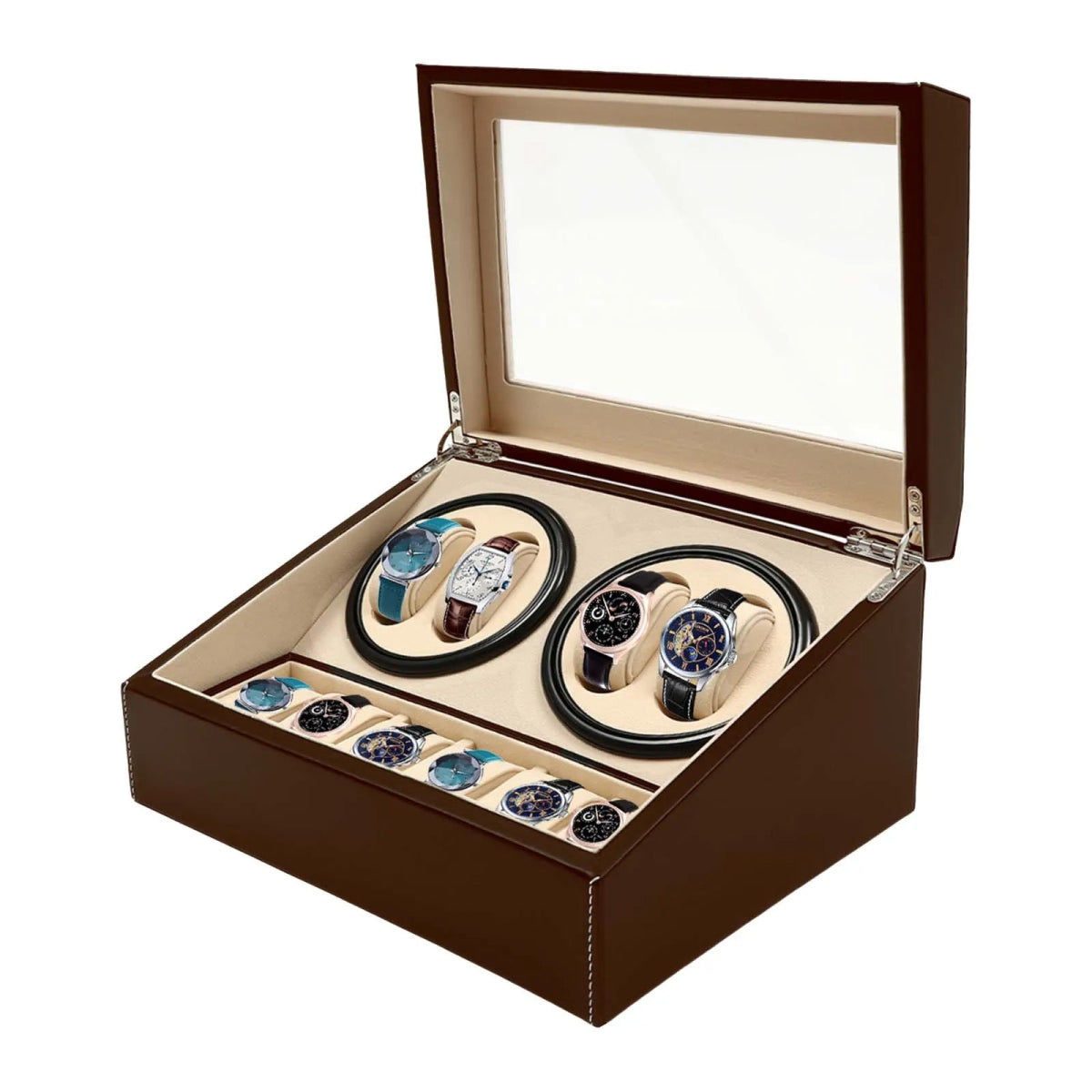
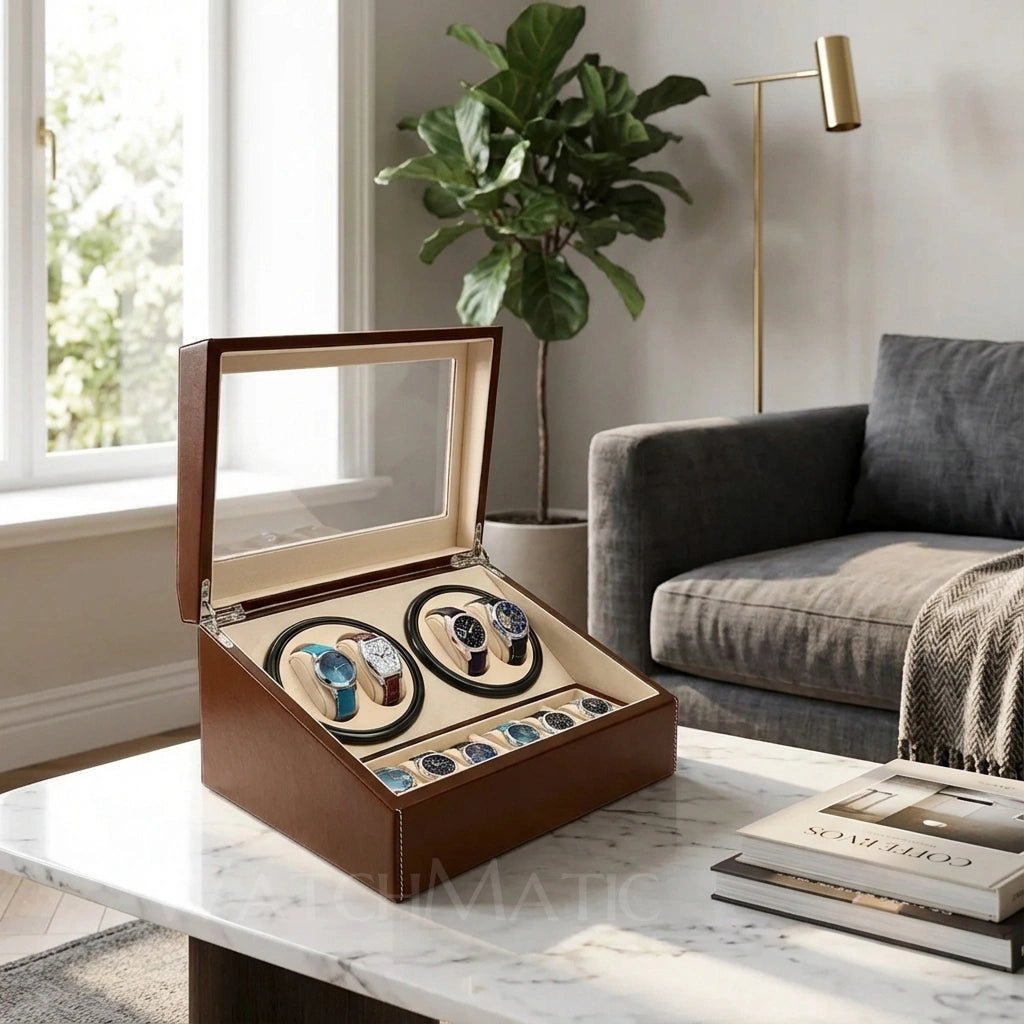
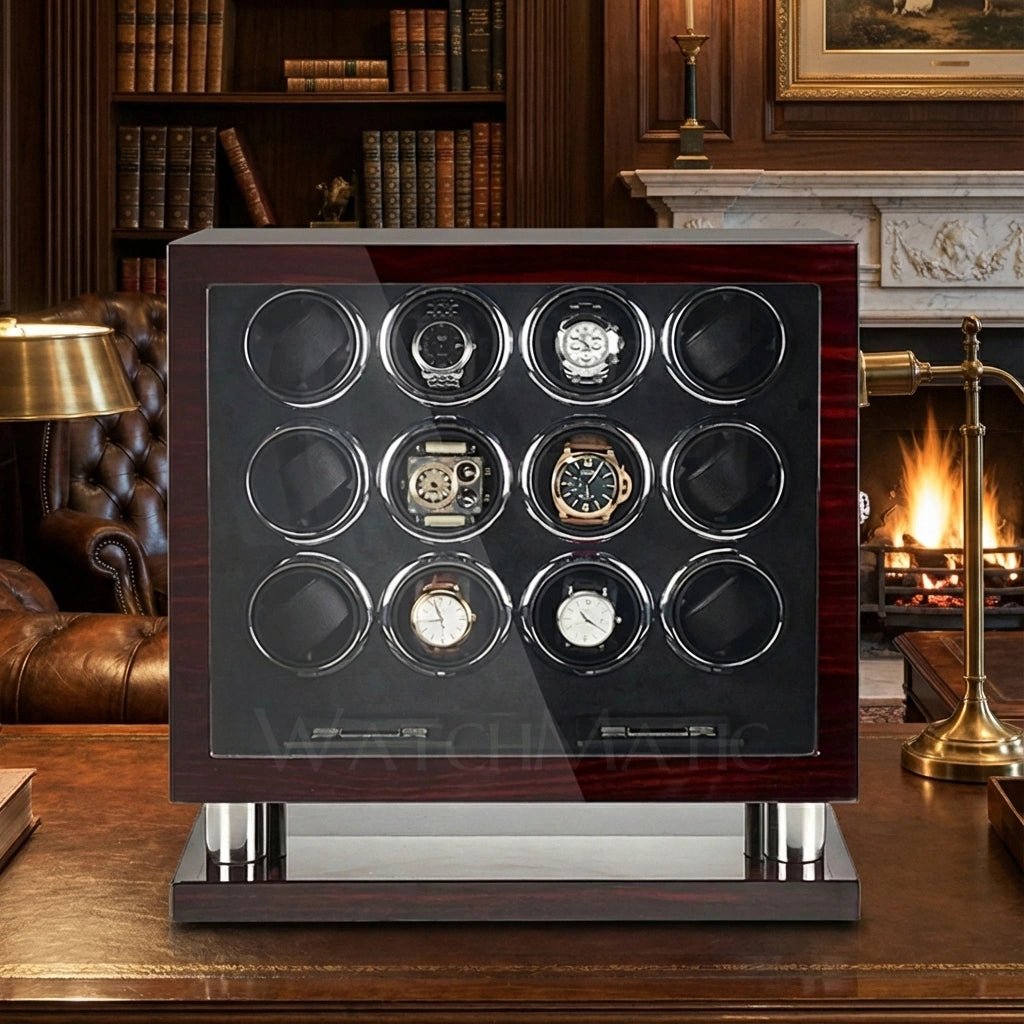
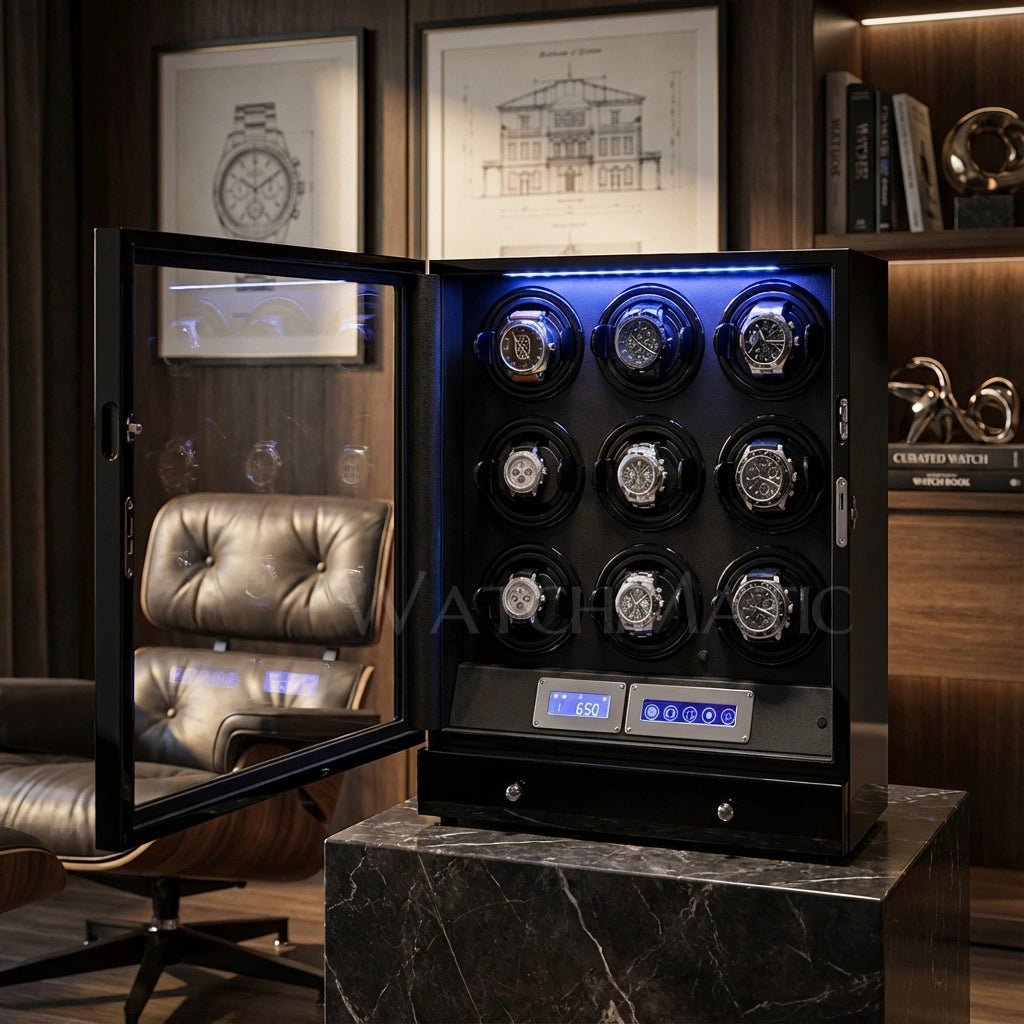
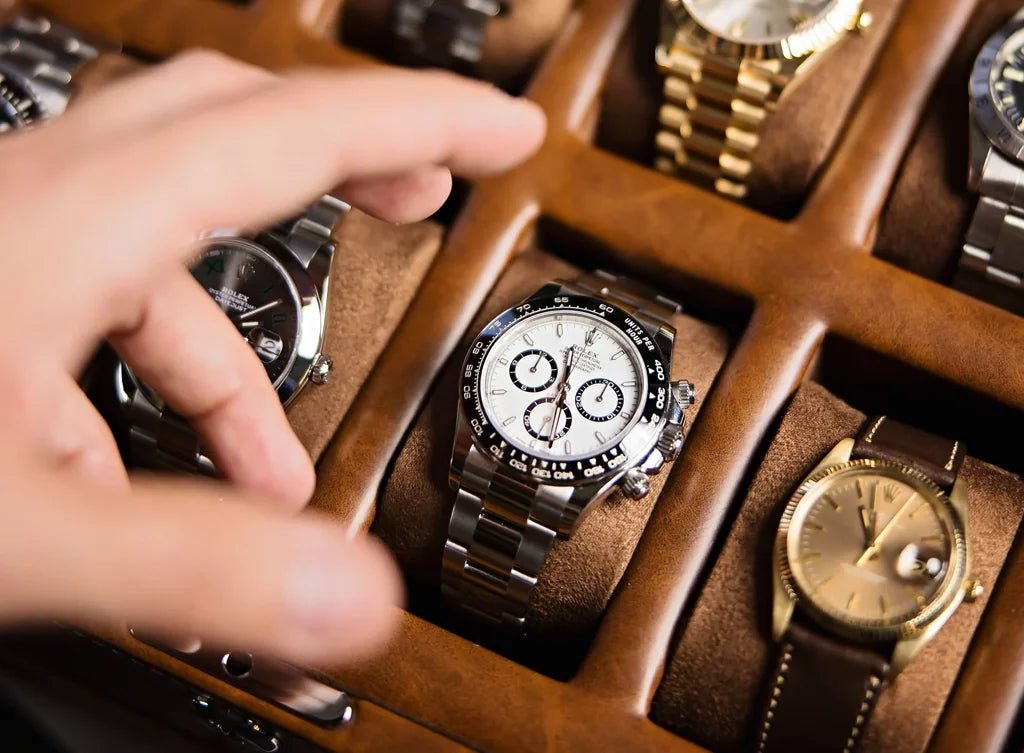
A well-designed watch box can provide convenient storage for smaller collections or watches that do not need active winding.
Individual compartments help keep watches separated and organized.
However, ordinary watch boxes generally provide limited burglary protection and should not be treated as substitutes for security-rated safes.
13. Do You Still Need a Watch Winder After Downsizing?
Downsizing a collection may also change the number of watch winding positions you actually need.
For example, a collector who previously owned twenty automatic watches might retain eight watches, of which only four are worn regularly.
In this case, the collector may prefer fewer winding positions rather than maintaining a large winding system that is no longer fully used.
Not Every Automatic Watch Needs Continuous Winding
An automatic watch does not universally need to remain running while stored.
When a watch is not worn, its movement can stop naturally after the remaining power reserve is exhausted.
For watches used infrequently, stationary storage can be appropriate according to the manufacturer's recommendations.
When a Watch Winder Still Makes Sense
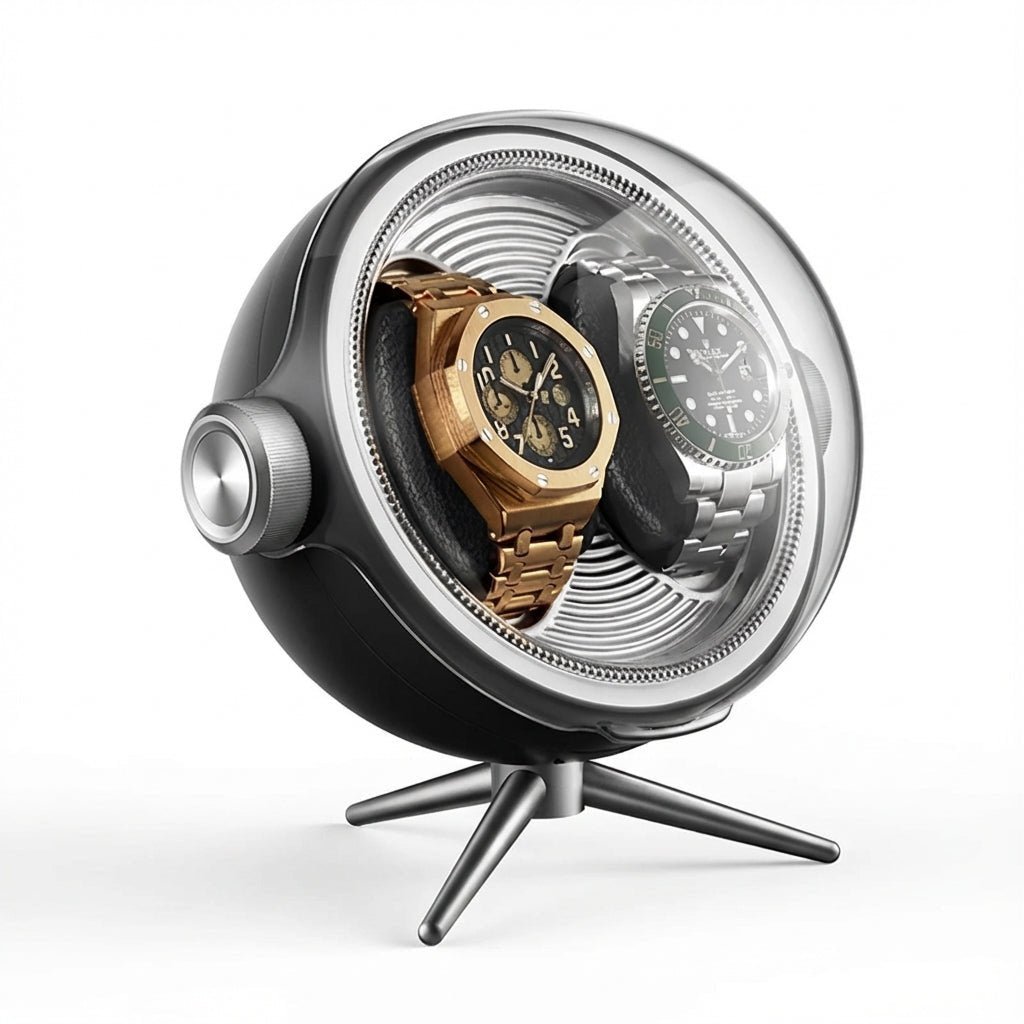
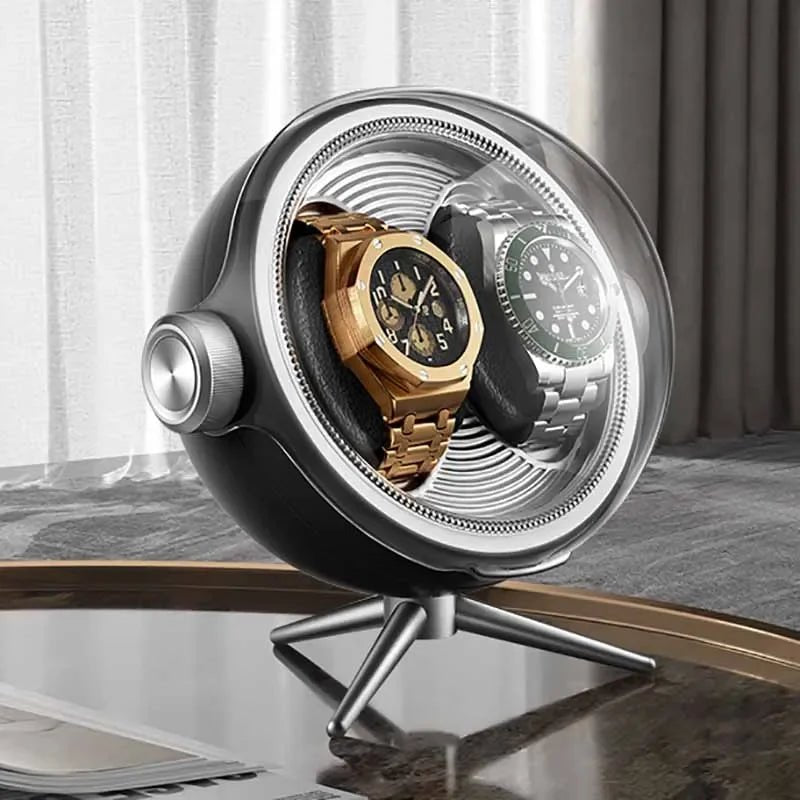
A programmable watch winder may be useful when the remaining collection includes several automatic watches that you regularly rotate.
Keeping selected watches running can reduce the need to reset the time, date, or complications before wearing them.
For mixed-brand collections, individually configurable winding programs can accommodate different movement requirements.
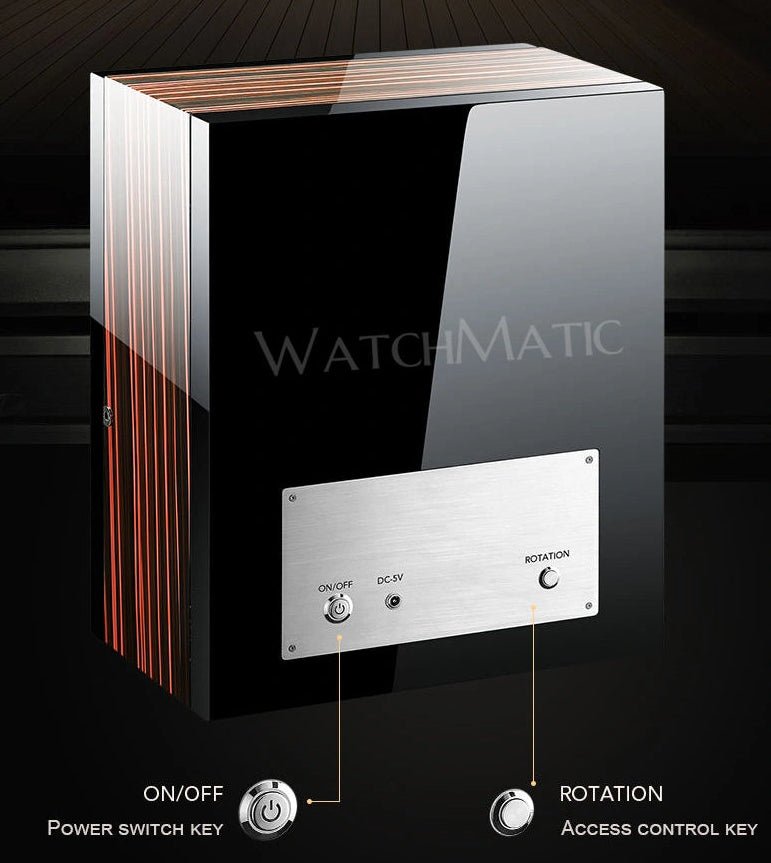
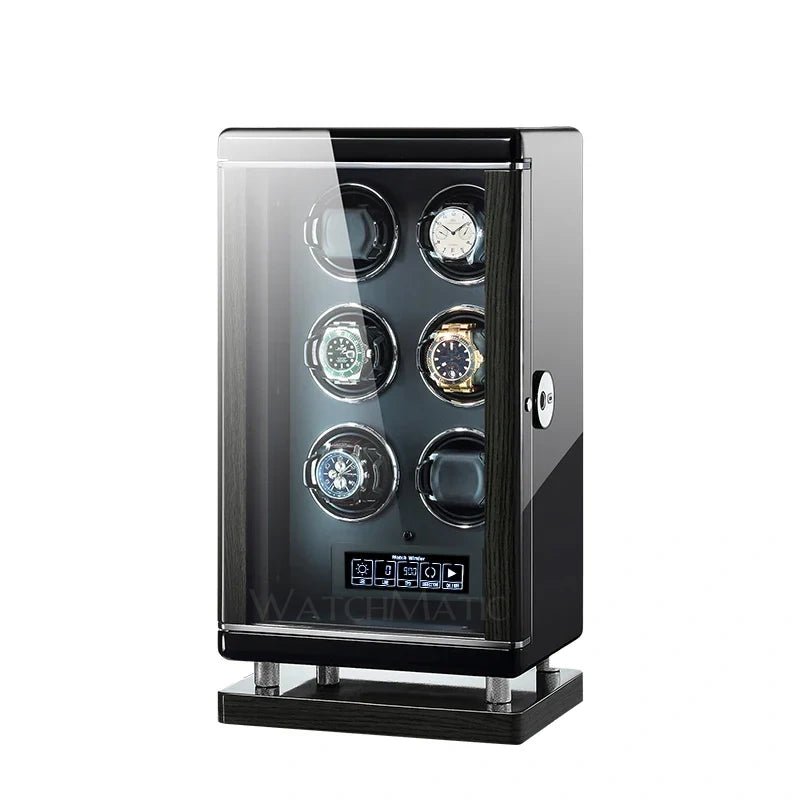
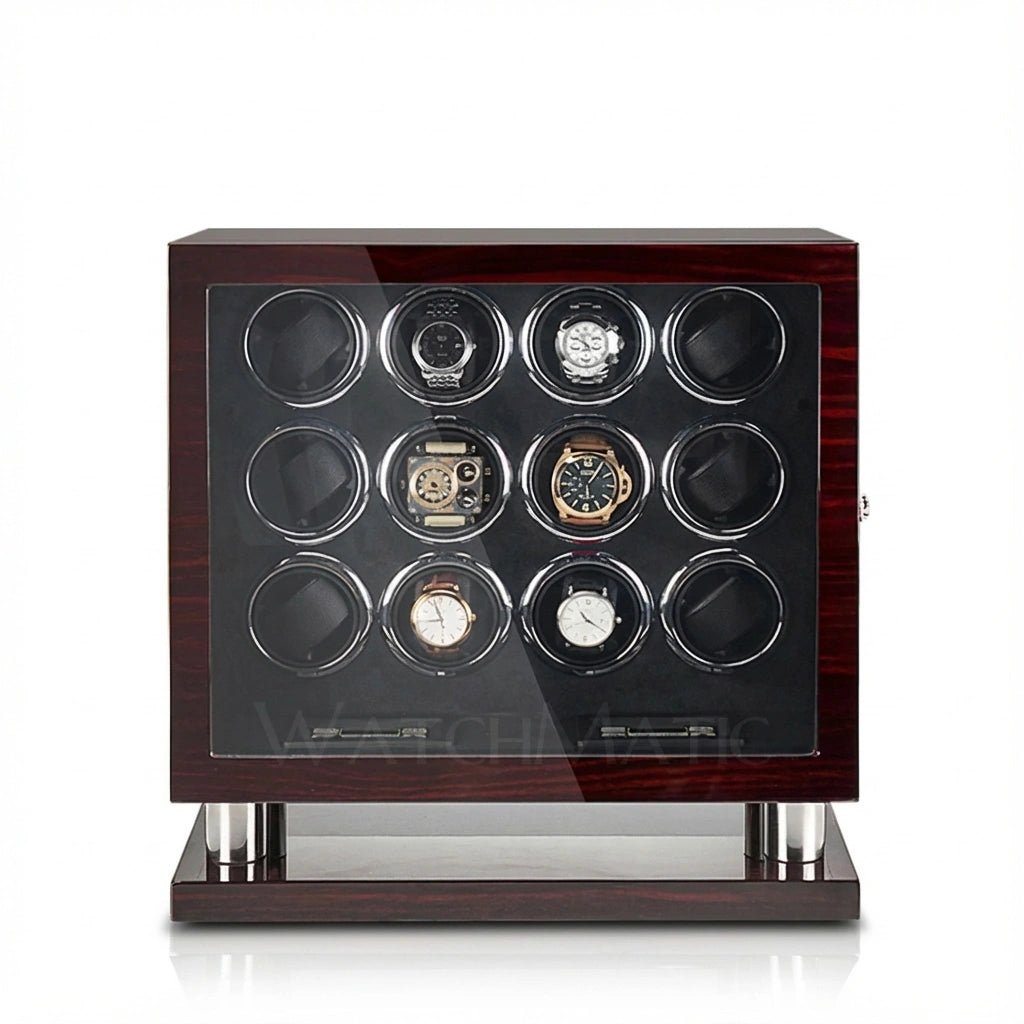
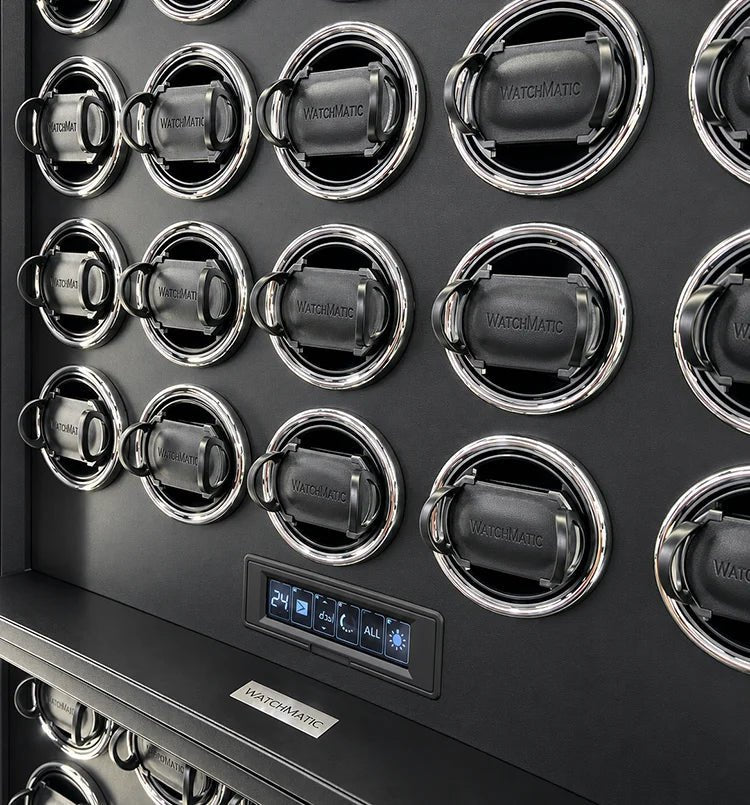
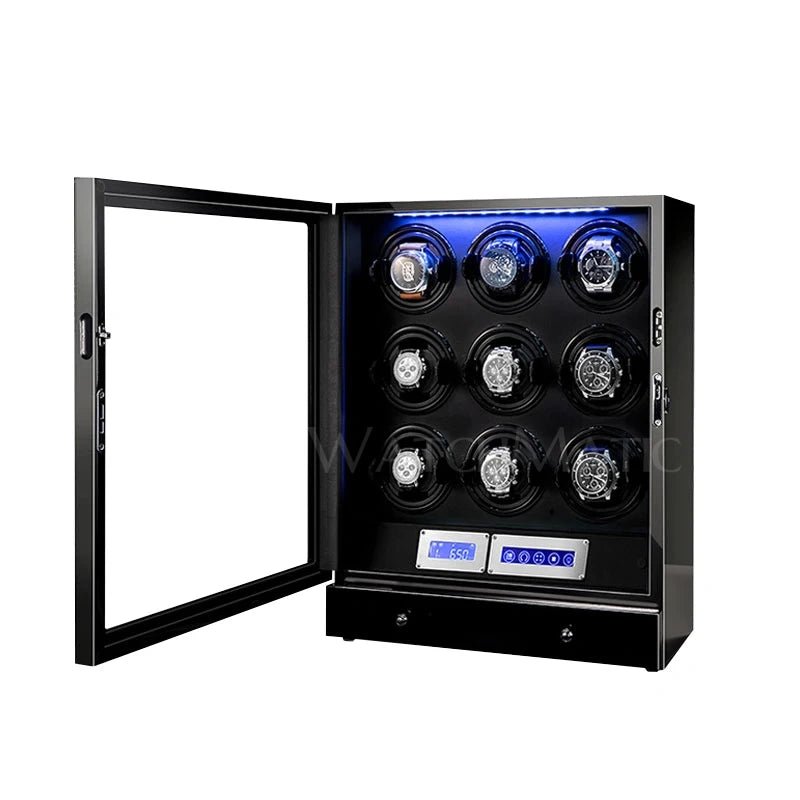
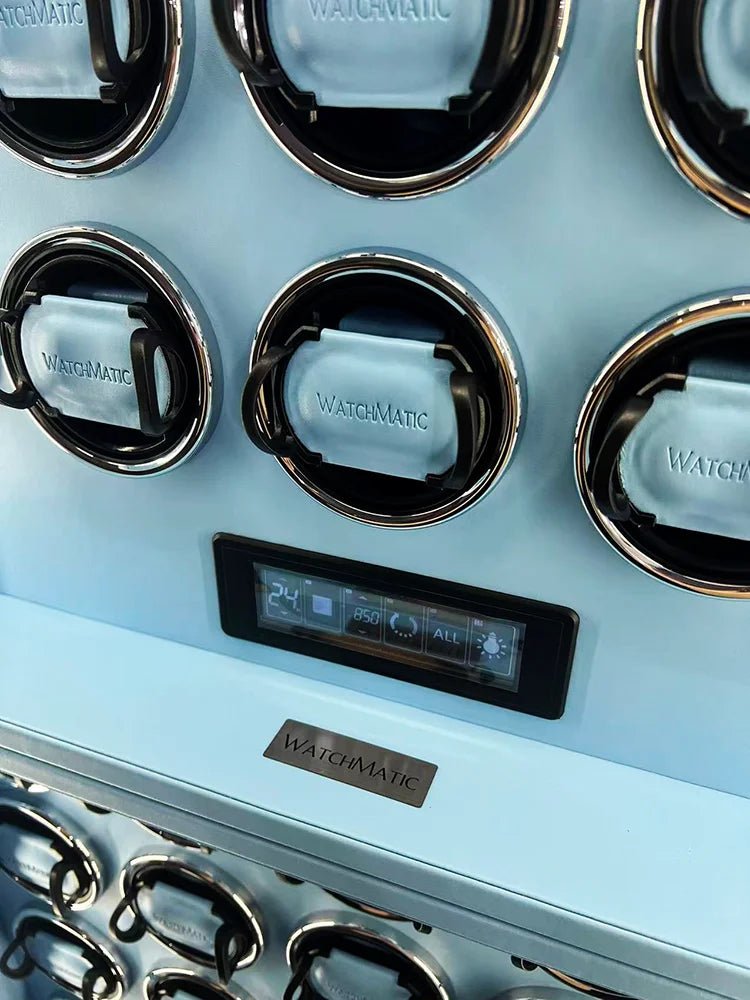
Explore WatchMatic's automatic watch winder collection for different capacities and configurations.
Prioritize the Right Number of Winding Positions
Choose winding capacity according to the number of watches you want ready to wear, rather than automatically matching the total number of automatic watches you own.
The aim is practical convenience, not keeping every movement running unnecessarily.
14. Does a Smaller Collection Still Need a Luxury Watch Safe?
A smaller collection is not necessarily a less valuable collection.
In some cases, downsizing results in fewer watches but a higher average value per piece.
For example, a collector may sell several moderately priced watches while retaining a small number of particularly valuable or difficult-to-replace timepieces.
The security requirements of the remaining collection may therefore remain substantial.
Evaluate Collection Value, Not Just Watch Count
The appropriate storage solution should reflect the total value, importance, and risk profile of the watches being kept.
Two exceptionally valuable watches may justify more substantial protection than a considerably larger collection of lower-value watches.
Consider a Purpose-Built Watch Safe
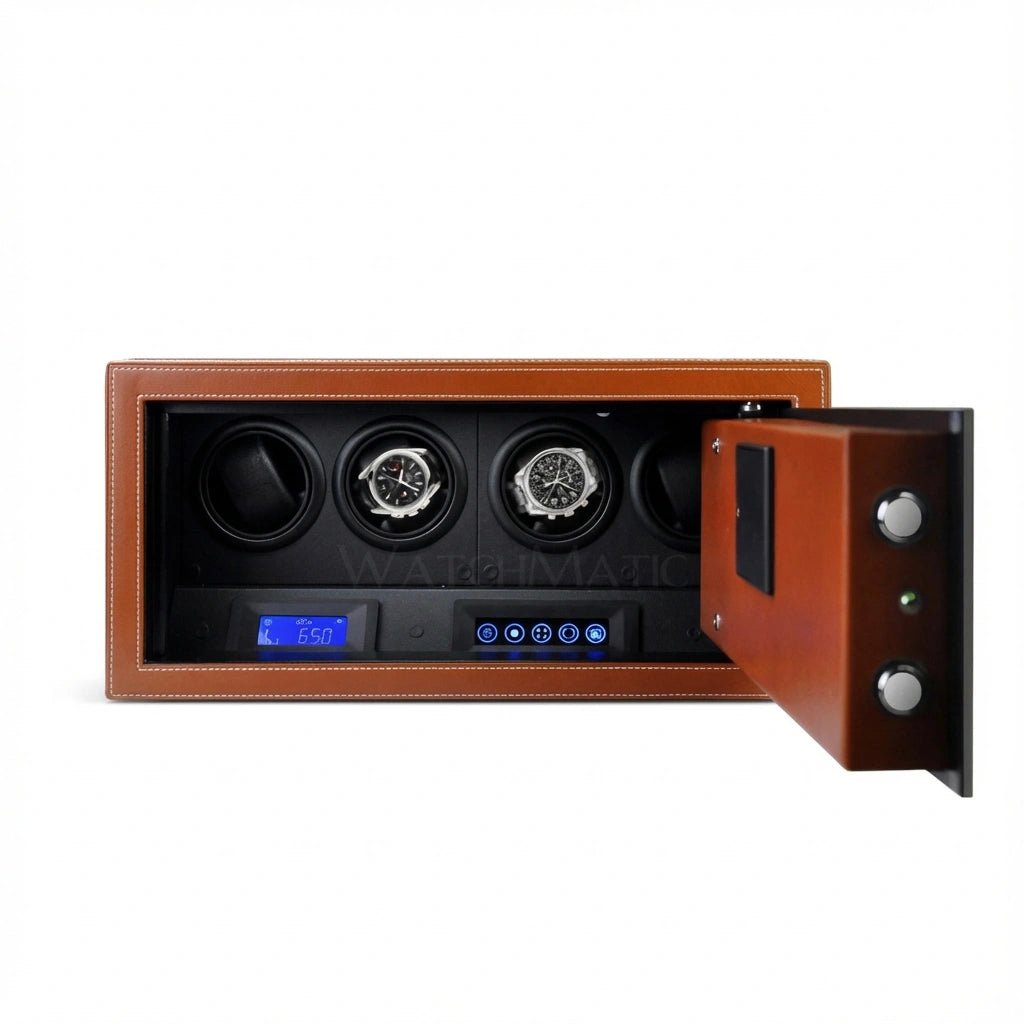
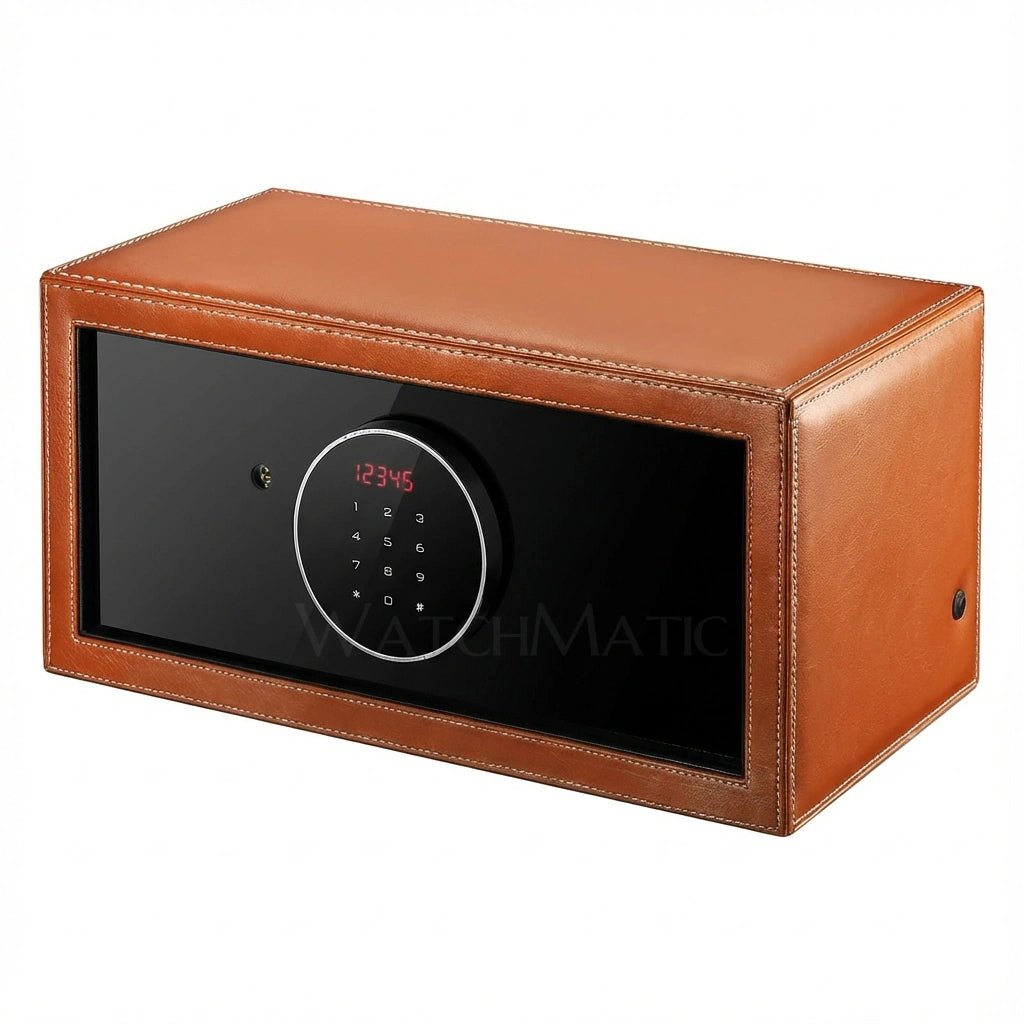
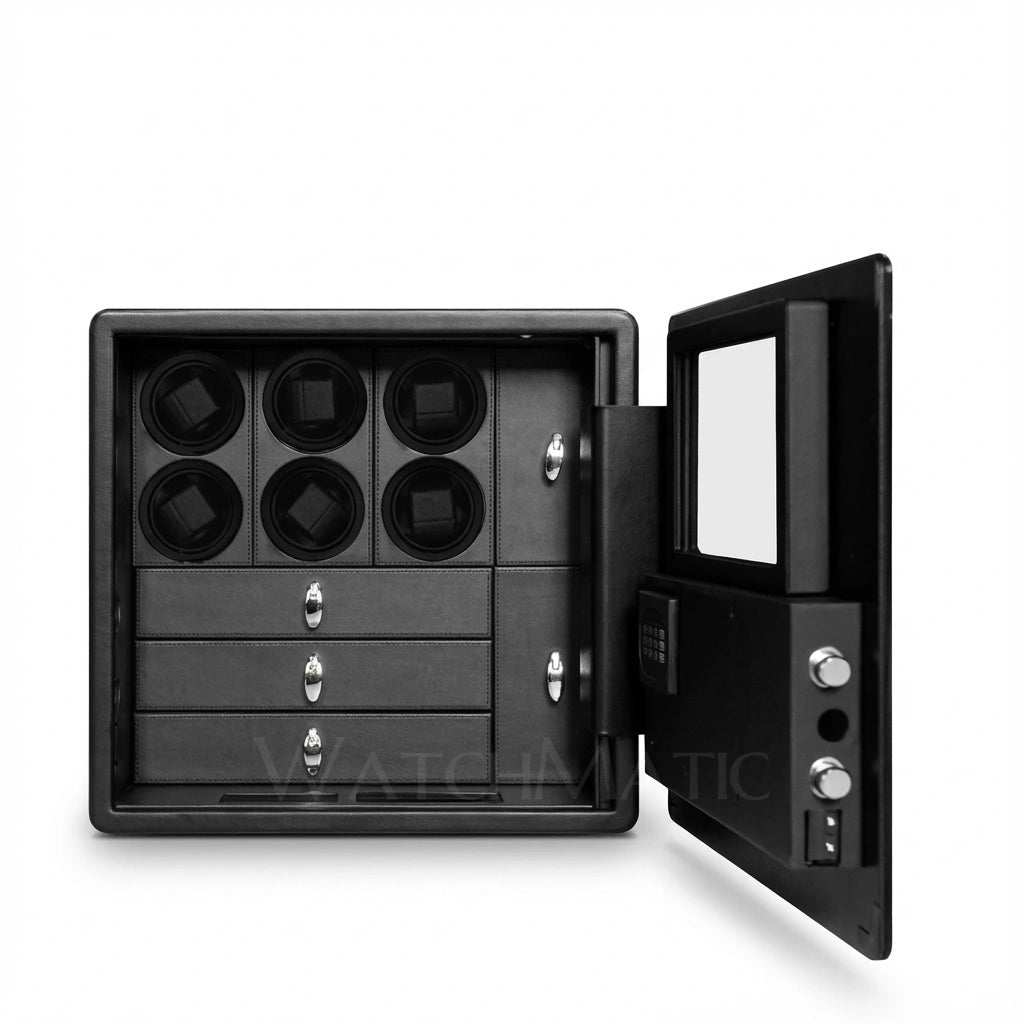
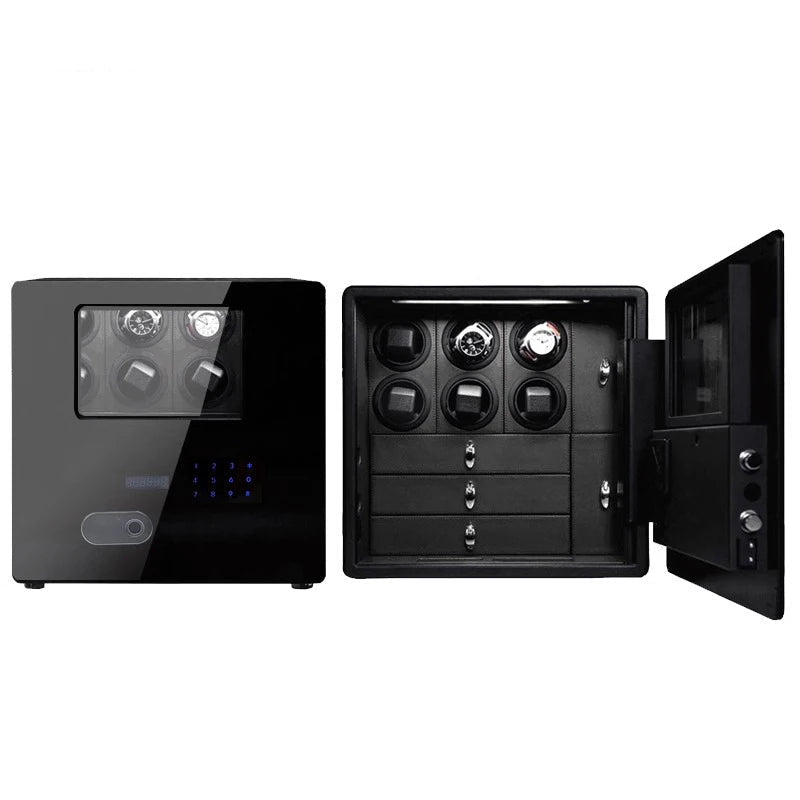
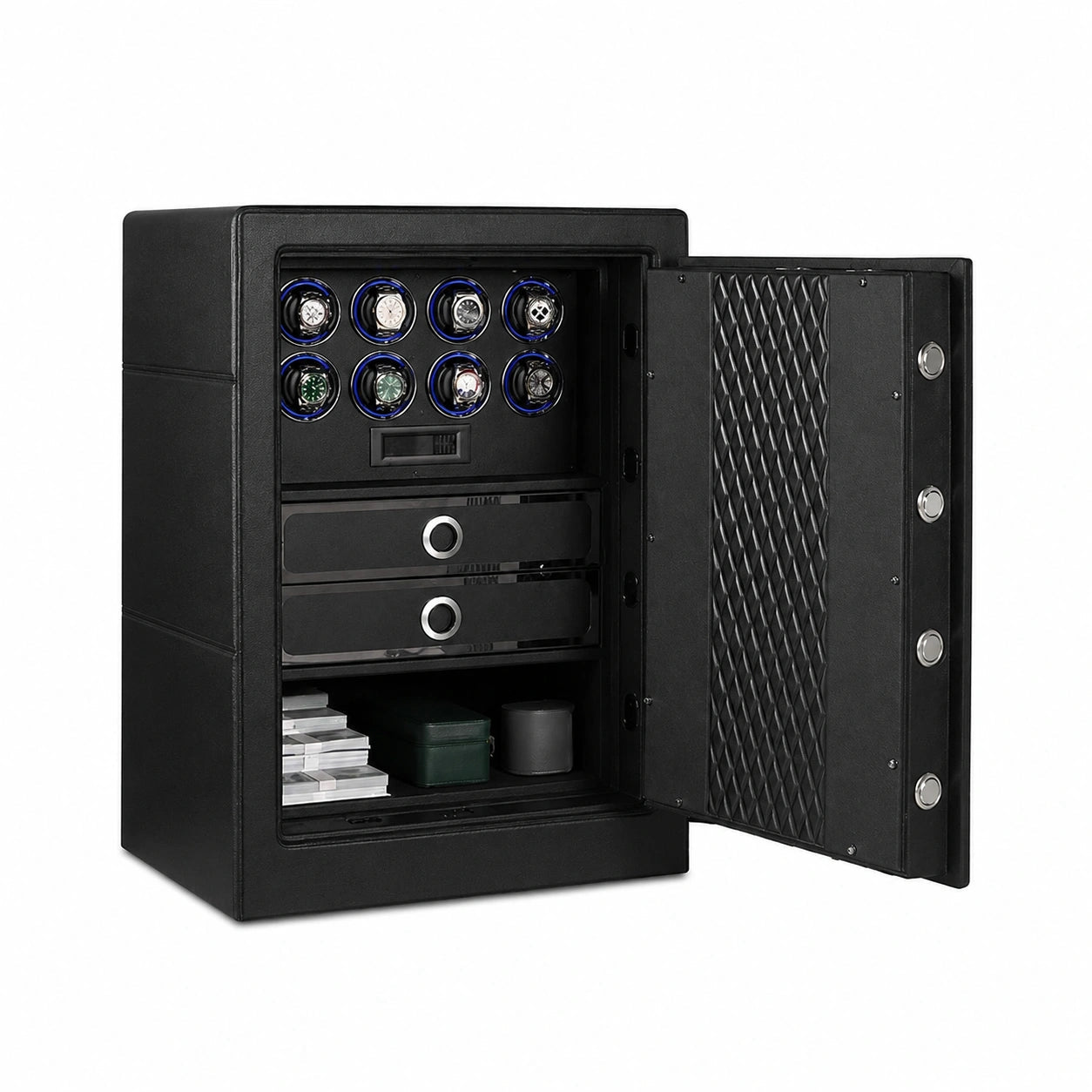
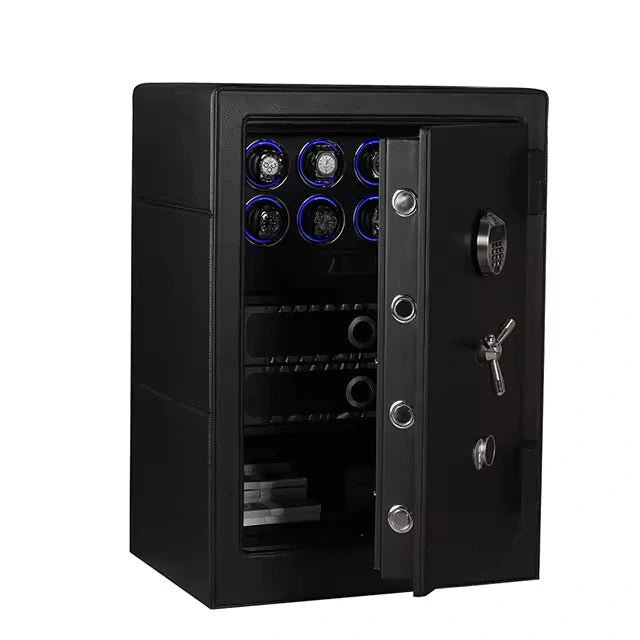
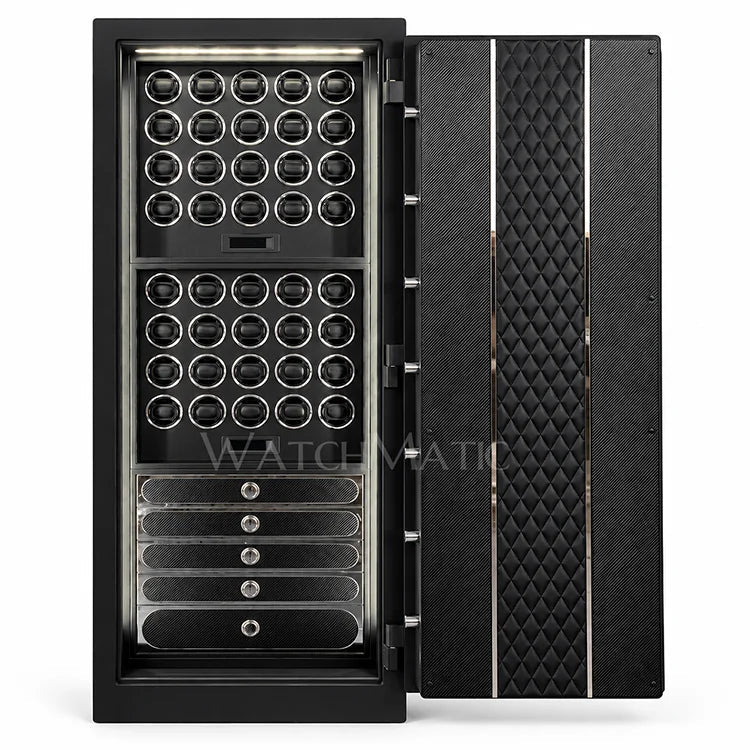
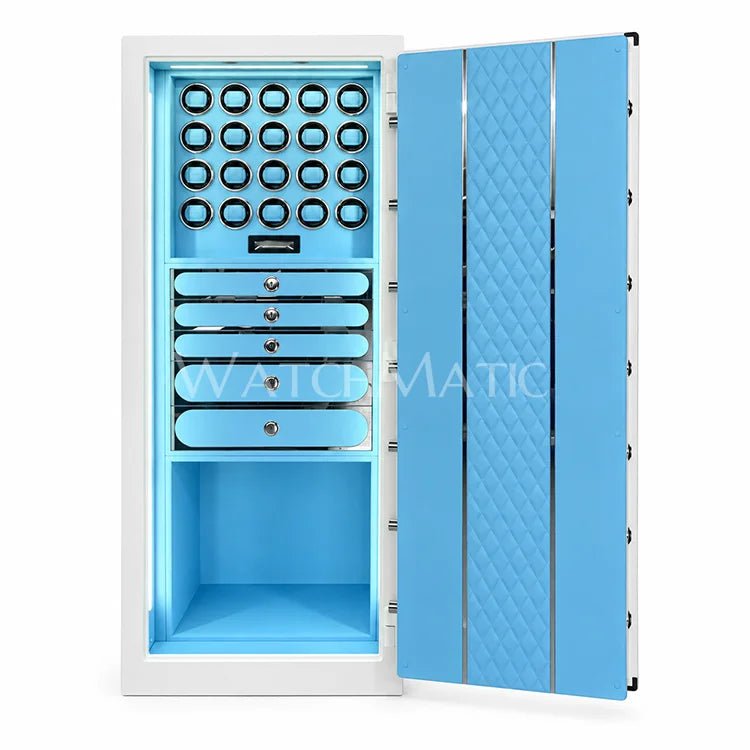
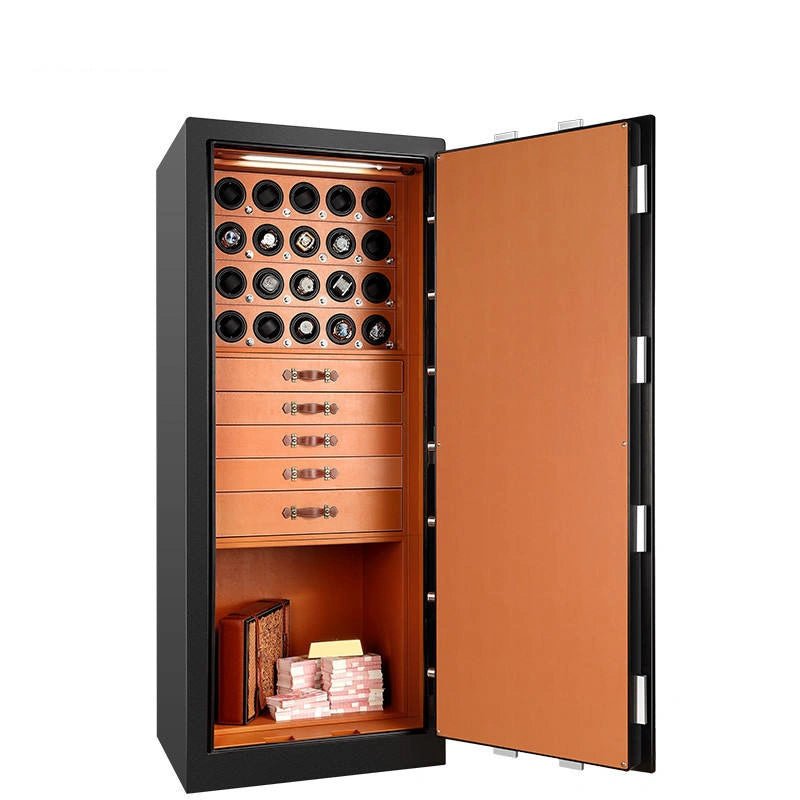
A luxury watch safe can provide a dedicated security enclosure, with selected models offering integrated winding, interior storage, specialized locking systems, and configurable compartments.
Where specific burglary or fire-resistance performance is required, confirm the relevant certification and exact product configuration rather than relying on general product descriptions.
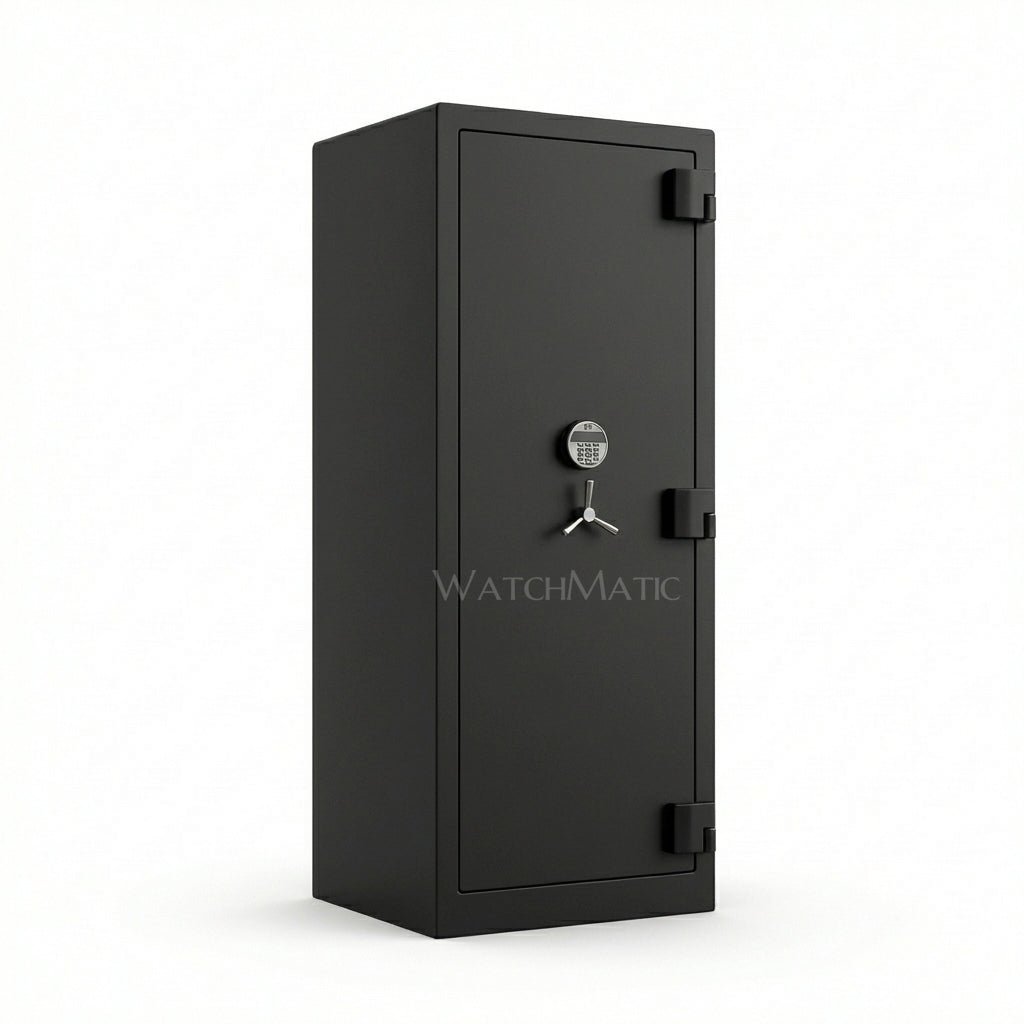
Explore WatchMatic's luxury watch safe cabinets for storage designed around high-value collections.
Consider Bespoke Storage for a Highly Curated Collection
Collectors who have reduced their collections may prefer a more personalized storage arrangement.
For example, a bespoke interior could combine a small number of integrated winders with dedicated stationary watch drawers and accessory compartments.
Depending on the selected design, customization may include interior materials, winding capacity, drawer configurations, exterior finishes, and selected security features.
WatchMatic provides bespoke luxury watch safe solutions for collectors who require personalized storage arrangements.
15. How to Avoid Rebuilding the Same Overcrowded Collection
Downsizing can be a meaningful reset, but its benefits may be temporary if the same acquisition habits continue afterward.
The objective should not necessarily be to stop purchasing watches. Instead, develop a more deliberate approach to future acquisitions.
Define Your Collecting Direction
Consider whether you want to focus on:
- A small selection of versatile everyday watches.
- Particular watchmaking brands or periods.
- Mechanical complications.
- Vintage or historically significant references.
- A balanced collection of different styles.
- Watches with strong personal meaning.
A clearly defined direction can make future decisions easier.
Check for Overlap Before Buying
Before acquiring a new watch, compare it with the watches you already own.
Ask what it would contribute that the existing collection does not already provide.
Consider a One-In, One-Out Approach
Some collectors maintain a fixed collection size by considering which watch they would release before purchasing another.
This can help control collection growth, but it should remain an optional personal rule rather than an inflexible requirement.
There may be good reasons to retain an existing watch while acquiring another, particularly when sentimental or historical value is involved.
Avoid Buying Only Because a Watch Is Popular
A model receiving considerable attention online may not be right for your collection.
Evaluate comfort, design, functionality, and genuine personal interest rather than relying exclusively on trends or resale expectations.
Review Your Collection Periodically
A periodic review can help identify changing preferences, overlapping watches, and evolving storage requirements.
The review does not need to result in a sale.
Sometimes it simply confirms that you still enjoy every watch you own.
16. Your Final Watch Collection Downsizing Checklist
Before making a final decision, review each watch against the following considerations.
| Decision Factor | Question to Ask |
|---|---|
| Personal Enjoyment | Do I still genuinely enjoy owning this watch? |
| Wrist Time | Do I wear it, or intentionally keep it for another purpose? |
| Lifestyle Fit | Does it suit my current activities and preferences? |
| Collection Overlap | Does another watch fulfill the same role better? |
| Sentimental Value | Does it represent a meaningful memory or relationship? |
| Uniqueness | What does it contribute that other watches do not? |
| Replacement Difficulty | Could I realistically replace this exact watch later? |
| Financial Considerations | Are the expected net sale proceeds meaningful to me? |
| Long-Term Interest | Will this watch still matter to me in several years? |
| Seller's Regret | Would I seriously regret not owning it anymore? |
If your answers consistently support keeping a watch, there is no reason to remove it simply to meet a numerical target.
If the watch no longer brings enjoyment, has no distinctive role, and would be relatively easy to replace, it may be a stronger candidate for selling.
For uncertain cases, postponing the decision is often preferable to making a permanent choice under pressure.
Frequently Asked Questions About Downsizing a Watch Collection
How do you decide which watches to keep when downsizing?
Begin by identifying your most meaningful, frequently worn, distinctive, and difficult-to-replace watches. Then review pieces that overlap with others, no longer fit your lifestyle, or provide limited enjoyment. A simple Keep, Consider Selling, and Reconsider Later system can help organize the process without forcing immediate decisions.
How many watches should you keep in a smaller collection?
There is no ideal number. Some collectors are satisfied with three versatile watches, while others prefer eight, ten, or more pieces representing different styles and collecting interests. The appropriate number depends on your preferences, lifestyle, budget, storage requirements, and the reasons you collect watches.
Should I sell watches that I rarely wear?
Not automatically. Low wrist time may indicate that a watch no longer suits your preferences, but some watches are intentionally kept for special occasions, historical interest, or sentimental significance. Consider why the watch remains unworn before deciding whether to sell it.
Should I keep my most expensive watch when downsizing?
Price alone should not determine the decision. A high-value watch may be worth keeping because of personal enjoyment, rarity, or collecting significance. However, a less expensive watch may have greater sentimental value. Compare the watch's personal importance with its practical role, realistic resale proceeds, and replacement difficulty.
How do I choose between two similar luxury watches?
Compare comfort, wrist time, design preference, sentimental attachment, movement characteristics, and the distinct role each watch plays. If one consistently performs better across the factors that matter to you, the other may be a candidate for selling. However, collecting two similar references can still be reasonable when both are personally meaningful.
Should I keep a watch because it might increase in value?
Potential appreciation can be one consideration, but future luxury watch prices are uncertain. Keeping a watch solely because its value might rise can result in holding a piece you no longer enjoy. Evaluate market value alongside your personal collecting goals, financial circumstances, and the consequences of selling.
Is downsizing from 20 watches to 5 a good idea?
It can be, but the appropriate reduction depends on your objectives. Moving from twenty watches to five may simplify rotation and storage, while another collector may prefer retaining ten or fifteen distinctive pieces. Focus on whether the remaining collection serves your interests rather than choosing an arbitrary target.
How do I avoid regretting selling a luxury watch?
Avoid rushing. Review the watch's sentimental value, rarity, replacement difficulty, and actual role in your collection. Consider wearing it again and allowing a cooling-off period before listing it for sale. Obtain realistic resale information and make sure the decision reflects your long-term preferences rather than a temporary frustration.
Should I sell all watches that overlap with others?
No. Some collectors intentionally specialize in particular designs, brands, complications, or periods. Similar watches may have different historical or personal significance. Overlap is most useful as a reason to investigate a watch's role, not as an automatic instruction to sell it.
Do I need a watch winder after downsizing my collection?
Not necessarily. The appropriate number of winding positions depends on how many automatic watches you regularly rotate and want to keep running. If your smaller collection includes only a few frequently worn automatic watches, a compact programmable winder may be sufficient. Other watches can remain in appropriate stationary storage.
Is a watch safe necessary for a small luxury watch collection?
A small collection can still contain extremely valuable watches. The need for a safe depends on the total value, risk profile, insurance requirements, and storage environment rather than the number of watches alone. Where substantial protection is required, select a properly specified safe with appropriate security features and verified certifications where applicable.
What should I do with the watches I decide to keep?
Organize the remaining collection according to frequency of use, movement type, and security requirements. Keep ownership documentation and maintenance records current. Use suitable watch boxes, programmable winders, or properly specified watch safes depending on the collection's needs, and maintain appropriate environmental conditions for long-term storage.
Final Thoughts: Build a Collection You Want to Keep, Not Just a Smaller One
Downsizing a luxury watch collection can be difficult because watches are rarely just objects.
Each timepiece may represent a particular period of your life, a personal achievement, a fascination with watchmaking, or years of collecting experience.
That is why the most effective approach begins with understanding what you genuinely value rather than setting an arbitrary number of watches to keep.
Identify the pieces that bring you the greatest enjoyment. Recognize the watches that carry important memories. Evaluate overlap honestly, and consider which watches would be difficult or impossible to replace.
At the same time, allow yourself to part with watches that no longer fit your preferences or collecting direction.
A well-curated collection does not have to be small. It simply needs to reflect your interests, lifestyle, and the reasons you enjoy watches.
Once your collection has been refined, organizing and protecting the remaining pieces becomes an important part of long-term ownership.
At WatchMatic, we offer luxury watch boxes, programmable watch winders, watch winder safes, and bespoke storage solutions designed for collectors who value thoughtful organization and appropriate protection.
The goal of downsizing is not to own fewer watches at any cost. It is to keep the watches that matter most and create a collection you will continue to appreciate for years to come.