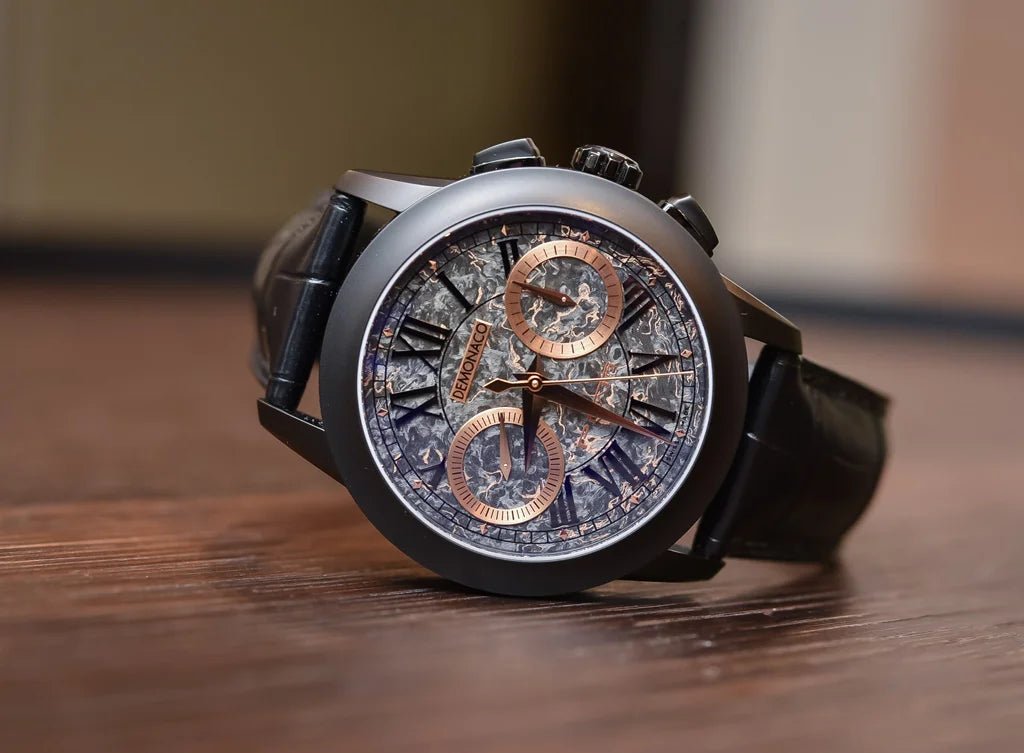
The best watch winder for Ateliers deMonaco watches is a premium programmable model with adjustable Turns Per Day (TPD), clockwise and counterclockwise rotation modes, controlled rest cycles, independent winding controls, smooth low-vibration motors, and secure support for precious-metal cases and alligator straps.
However, the exact Ateliers deMonaco movement must be identified first.
The collection includes both automatic and manually wound manufacture calibers.
Important automatic examples include:
- Ronde de Monte-Carlo — dMc-700
- Admiral Chronographe Flyback — dMc-760
- Tourbillon Oculus / Ronde d'Or / related XP1 Tourbillon references — dMc-980 or XP1 automatic architecture
Important manually wound examples include:
- Poinçon de Genève Classique — dMc-708
- Tourbillon Répétition Minute — manual-wind tourbillon minute-repeater architecture
This creates an important rule:
Automatic Ateliers deMonaco → a properly configured watch winder can be useful
Manual Ateliers deMonaco → a conventional rotating watch winder provides no winding benefit
The correct decision process is:
Exact Reference → Caliber → Automatic or Manual → Power Reserve → Complication → Physical Fit → TPD/Direction or Stationary Storage
Does an Ateliers deMonaco Watch Need a Watch Winder?
No automatic Ateliers deMonaco mechanically requires a watch winder.
A self-winding mechanical movement uses an oscillating weight to convert movement into mainspring energy while the watch is worn.
If the watch remains unworn longer than its available power reserve, it eventually stops.
A watch winder is therefore primarily a convenience tool.
It can help:
- Keep an automatic Ateliers deMonaco running between wears
- Maintain time indications
- Reduce repeated crown winding
- Keep an automatic flyback chronograph ready to wear
- Maintain calendar information on applicable historical complications
- Manage several automatic watches in a larger collection
Allowing an automatic movement to stop normally after its reserve has been depleted is not inherently harmful.
For a broader explanation of automatic winding, see the Watch Winder Guide.
Which Ateliers deMonaco Watches Can Use a Watch Winder?
Representative movements associated with the current catalog and important references include:
| Ateliers deMonaco watch | Caliber | Winding type | Approx. power reserve | Conventional winder? |
|---|---|---|---|---|
| Ronde de Monte-Carlo | dMc-700 | Automatic | ~42 h | Yes |
| Ronde de Monte-Carlo La Sirène | dMc-700 | Automatic | ~40–42 h depending documentation | Yes |
| Admiral Chronographe Flyback | dMc-760 | Automatic | ~38 h | Yes |
| Tourbillon Oculus / XP1 | dMc-980 / XP1 | Automatic tourbillon | ~38–42 h depending reference | Yes |
| Tourbillon Ronde d'Or | dMc-980 | Automatic tourbillon | ~42 h | Yes |
| Poinçon de Genève Classique | dMc-708 | Manual | ~38 h | No |
| Poinçon de Genève Métiers d'Art | dMc-708 | Manual | ~38 h | No |
| Tourbillon Répétition Minute | reference-specific manual caliber | Manual | ~42–48 h depending generation | No |
The key lesson is immediately visible:
tourbillon does not mean manual, and Poinçon de Genève does not mean automatic.
The exact movement architecture decides winder compatibility.
Why Ateliers deMonaco Is Unusual for Watch-Winder Owners
Ateliers deMonaco occupies an unusual position among independent haute-horlogerie manufacturers.
Its catalog includes:
- Simple automatic movements
- Automatic flyback chronographs
- Automatic tourbillons
- Manually wound Geneva Seal movements
- Manually wound tourbillon minute repeaters
- Bespoke métiers d'art pieces
That means complication complexity provides very little information about whether the watch can use a conventional winder.
A relatively simple Ronde de Monte-Carlo is automatic.
An extreme-precision Tourbillon can also be automatic.
A Poinçon de Genève Classique is manual.
A Tourbillon Minute Repeater is also manual.
Therefore:
complication level ≠ winding architecture.
Ateliers deMonaco dMc-700 Automatic Movement
The dMc-700 is one of the most relevant Ateliers deMonaco movements for conventional watch-winder use.
It has been used in Ronde de Monte-Carlo references, including Classique and La Sirène variations.
Representative specifications include:
- Automatic winding
- Approximately 42 hours of power reserve
- 28,800 vibrations per hour
- 26 jewels
- 22K gold oscillating weight
- Silicium escape wheel
- Central hours, minutes and seconds
This makes the Ronde de Monte-Carlo one of the most straightforward Ateliers deMonaco watches to place on an automatic winder.
Best Watch Winder for Ronde de Monte-Carlo
For a Ronde de Monte-Carlo, prioritize:
- Adjustable TPD
- CW/CCW/bidirectional capability
- Controlled rest cycles
- Quiet motor operation
- Soft leather-strap support
- Smooth acceleration
- Stable support for precious-metal cases
Many Ronde de Monte-Carlo references use approximately:
39 mm cases
with thickness around:
11 mm.
Physically, they are relatively easy to accommodate compared with the Maison's larger tourbillons.
Why 42 Hours Makes a Winder Practically Useful
A 42-hour reserve is moderate by contemporary standards.
Consider a watch removed Friday evening.
It may stop during Sunday if it receives no additional movement.
A collector rotating several watches may therefore repeatedly need to:
- Restart the watch
- Correct the time
- Establish an initial power reserve
A winder can reduce that inconvenience.
La Sirène and High-Jewellery Storage
The Ronde de Monte-Carlo La Sirène uses the same broad dMc-700 automatic architecture but can add extensive:
- Diamonds
- Rubies
- Sapphires
- Mother-of-pearl
- Gold case components
Movement-wise, it remains an automatic watch.
From a storage perspective, however, physical protection becomes much more important.
Gem Setting Does Not Change TPD
A gem-set La Sirène does not need more or fewer turns because of its diamonds or sapphires.
Gem setting affects:
- Value
- Weight
- Surface vulnerability
- Security requirements
It does not determine:
- TPD
- Winding direction
- Rotor efficiency
- Power reserve
Therefore:
jewellery complexity ≠ winding requirement.
Soft Contact Surfaces Matter More for High-Jewellery Watches
For gem-set or highly polished Ateliers deMonaco watches, make sure the holder and enclosure do not allow the case to touch:
- Rotor frame
- Door
- Adjacent watch
- Hard cushion hardware
The movement can be correctly programmed while the physical storage setup remains unsuitable.
Ateliers deMonaco dMc-760 Automatic Flyback Chronograph
The dMc-760 powers the Admiral Chronographe Flyback.
Representative specifications include:
- Automatic winding
- Approximately 38 hours of power reserve
- 28,800 vibrations per hour
- 32 jewels
- Flyback chronograph
- Patented Direct Return to Zero mechanism
- 22K gold oscillating weight
This is another clearly winder-compatible Ateliers deMonaco movement.
Best Watch Winder for Admiral Chronographe Flyback
For an Admiral Chronographe Flyback, prioritize:
- Adjustable TPD
- CW/CCW/bidirectional operation
- Controlled rest cycles
- Independent programming
- Smooth motor motion
- Adequate pusher clearance
- Secure leather-strap support
Representative references use approximately:
42 mm cases
and:
13.3 mm thickness.
That makes physical clearance more important than with the slimmer Ronde de Monte-Carlo.
Flyback Chronograph Does Not Mean Higher TPD
The dMc-760 contains a sophisticated flyback chronograph system.
But that does not create a rule such as:
flyback = additional TPD.
The watch winder acts through the automatic winding system.
It does not:
- Start the chronograph
- Stop the chronograph
- Reset the chronograph
- Activate the flyback
- Exercise the Direct Return to Zero mechanism
- Service the chronograph
Therefore:
chronograph complexity ≠ higher daily rotation requirement.
Does a Chronograph Consume More Energy?
Operating a mechanical chronograph can affect the movement's energy consumption while the chronograph is running.
That does not mean the correct storage strategy is simply to increase TPD permanently.
The chronograph is normally stored with its timing function stopped unless the owner deliberately uses it.
The appropriate winder program should still follow the automatic caliber's normal winding requirements.
38-Hour Reserve Makes Regular Rotation Useful
The dMc-760 has a shorter reserve than many modern 60–80-hour automatic calibers.
For someone who wears the Admiral only once or twice per week, it may frequently stop.
This makes the convenience value of a winder relatively strong.
Sapphire Dial Does Not Affect Winding
Selected Admiral Chronographe Flyback references use sapphire dial architecture that reveals more of the mechanism.
That visual openness does not alter:
- Automatic rotor behavior
- TPD requirement
- Winding direction
- Power reserve
Therefore:
visible movement ≠ different winding program.
Ateliers deMonaco XP1 / dMc-980 Automatic Tourbillon
The most interesting automatic movement in the brand from a watch-winder perspective is the XP1 / dMc-980 tourbillon architecture.
Documented references include:
- Tourbillon Oculus
- Tourbillon Ronde d'Or
- Casino de Monte-Carlo bespoke tourbillon
- Wat Arun Tourbillon
- Other XP1-based pieces
The movement includes:
- Automatic winding
- One-minute tourbillon
- 22K gold oscillating weight
- Sapphire tourbillon bridge
- Silicium escape wheel and lever
- 28,800 vibrations per hour
- Approximately 38–42 hours of reserve depending on the documented reference
Can an Ateliers deMonaco Tourbillon Use a Watch Winder?
Yes — when it uses the automatic XP1/dMc-980 architecture.
This is an important distinction.
Some owners assume:
tourbillon = manually wound
because many traditional tourbillon movements are manual.
That assumption does not work here.
The dMc-980 uses an automatic oscillating weight.
Therefore, conventional rotational movement can provide winding energy.
Best Watch Winder for Tourbillon Oculus
For a Tourbillon Oculus using automatic XP1 architecture, prioritize:
- Adjustable TPD
- Multiple rotation directions
- Controlled rest cycles
- Smooth motor transitions
- Very low vibration
- Soft premium contact surfaces
- Adequate clearance for the 44 mm case
Representative Oculus references use approximately:
44 mm diameter
and:
13.1 mm thickness.
These watches require more chamber space than the 39 mm Ronde models.
Tourbillon Does Not Need Extra TPD
A tourbillon is a regulating mechanism designed around a rotating escapement assembly.
It does not itself define the automatic winding requirement.
Therefore:
tourbillon = complication
not:
tourbillon = high TPD.
The correct winding program should be based on the automatic system.
Tourbillon Motion Is Not the Same as Winder Motion
The tourbillon cage rotates as part of the watch's regulating mechanism.
The watch winder rotates the entire watch to move the automatic rotor.
These are completely different motions serving different purposes.
Do not confuse:
tourbillon cage rotation
with:
automatic rotor rotation.
Automatic Tourbillon vs. Manual Tourbillon
Ateliers deMonaco is particularly useful for illustrating this distinction.
XP1 / dMc-980 Tourbillon
- Tourbillon
- Automatic winding
- Approximately 42-hour reserve
- Conventional winder can provide energy
Tourbillon Répétition Minute
- Tourbillon
- Minute repeater
- Manual winding
- Conventional winder provides no winding energy
Therefore:
the word Tourbillon alone is not enough to choose a winder.
Ateliers deMonaco Poinçon de Genève dMc-708
The Poinçon de Genève Classique uses the dMc-708.
It is:
manually wound
with approximately:
38 hours of power reserve.
Representative specifications include:
- 28,800 vibrations per hour
- 18 jewels
- Patented Freebeat regulation system
- Geneva Seal certification
- Extensive hand finishing
It does not use an automatic oscillating weight.
Can a Poinçon de Genève Classique Use a Watch Winder?
Not for winding.
A conventional winder works by moving an automatic rotor.
The dMc-708 has no such rotor.
The watch must be wound manually through the crown.
Therefore:
Poinçon de Genève Classique → manual → no conventional winding benefit.
Geneva Seal Does Not Mean Automatic
The Poinçon de Genève relates to stringent standards concerning areas such as:
- Movement construction
- Finishing
- Assembly
- Testing
- Geneva production requirements
It does not indicate:
- Automatic winding
- TPD
- Winding direction
- Daily rotor requirement
A Geneva Seal movement can be manual.
The Ateliers deMonaco dMc-708 is a direct example.
Freebeat Regulation Does Not Change Winder Compatibility
The patented Freebeat system relates to regulation of the hairspring.
It is not an automatic winding system.
Therefore:
Freebeat ≠ rotor
and:
Freebeat ≠ special TPD setting.
The dMc-708 still requires manual crown winding.
Poinçon de Genève vs. Ronde de Monte-Carlo
Compare:
Poinçon de Genève Classique
- dMc-708
- Manual
- Approximately 38 hours
- No conventional winder benefit
Ronde de Monte-Carlo
- dMc-700
- Automatic
- Approximately 42 hours
- Conventional winder compatible
The power reserves are quite similar.
Their winding architectures are completely different.
Similar Power Reserve Does Not Mean Similar Storage
A 38-hour manually wound watch and a 42-hour automatic watch may stop at similar times after winding.
Only one can receive new energy from a conventional rotating winder.
This is why:
power reserve does not determine watch-winder compatibility.
Métiers d'Art Does Not Change the Movement Type
Ateliers deMonaco has created Poinçon de Genève pieces featuring elaborate:
- Grand feu enamel
- Engraving
- Artistic dials
- Precious metals
For example, a highly elaborate artistic dial does not convert dMc-708 into an automatic movement.
Decorative complexity and winding architecture must be considered separately.
Ateliers deMonaco Tourbillon Répétition Minute
The Tourbillon Répétition Minute has deep historical importance for the Maison.
The development of a tourbillon minute-repeater movement was central to the creation of Ateliers deMonaco itself.
Documented versions use manual winding.
Depending on generation and reference, technical documentation has described different movement designations and reserve figures.
For storage decisions, the critical point is stable:
the documented Tourbillon Répétition Minute architecture is manually wound.
Can the Tourbillon Répétition Minute Use a Watch Winder?
Not for conventional winding.
The movement receives mainspring energy through manual crown winding.
Rotating the watch in a conventional automatic winder does not replace this.
This remains true despite the presence of:
- Tourbillon
- Minute repeater
- Multiple chiming components
- Sapphire tourbillon bridge
- Silicium escapement components
Minute Repeater Does Not Need a Winder
The minute repeater complication is independent of automatic rotor winding.
A conventional watch winder does not:
- Activate the repeater
- Strike the hours
- Strike the quarters
- Strike the minutes
- Exercise the gongs
- Exercise the hammers
- Maintain the chiming system
Therefore:
minute repeater complexity ≠ automatic-winder compatibility.
A More Complicated Watch Can Need Less Motorized Storage
Compare:
Ronde de Monte-Carlo
Simple hours, minutes and seconds
Automatic
Can use a powered rotor
Tourbillon Répétition Minute
Tourbillon plus chiming complication
Manual
No powered rotor needed
This demonstrates an important principle:
the most complicated watch in the collection can require the least motorized storage.
Ateliers deMonaco Watch Winder TPD Settings
TPD means Turns Per Day—the approximate number of rotations a watch winder delivers over a daily cycle.
There should not be one blanket recommendation such as:
“Ateliers deMonaco = 650 TPD.”
The brand includes:
- dMc-700 automatic
- dMc-760 automatic chronograph
- dMc-980 automatic tourbillon
- dMc-708 manual
- Manual minute-repeater tourbillons
The correct process is:
- Identify the exact reference.
- Identify the caliber.
- Confirm whether it is automatic.
- Determine the movement's winding requirements.
- Select appropriate TPD.
- Select appropriate rotation direction.
- Check whether the watch maintains adequate reserve.
For a deeper explanation of Turns Per Day, see the Watch TPD Guide.
What Rotation Direction Should You Use?
A premium programmable watch winder should provide:
CW — Clockwise
CCW — Counterclockwise
Bi — Bidirectional
Ateliers deMonaco documentation provides detailed information about:
- Caliber
- Frequency
- Rotor
- Power reserve
- complications
but a single brand-wide consumer winding direction should not be assumed.
The correct hierarchy is:
exact reference → exact automatic caliber → verified winding requirement
rather than:
Ateliers deMonaco → one fixed program.
Do Manual Ateliers deMonaco Watches Need TPD?
No.
TPD is only useful where rotational movement can wind an automatic movement.
A manual:
- dMc-708
- Tourbillon Répétition Minute movement
does not receive useful mainspring energy from conventional rotating storage.
There is no conventional TPD target for these watches.
Automatic Power Reserve Comparison
| Automatic caliber | Example | Approx. reserve |
|---|---|---|
| dMc-760 | Admiral Chronographe Flyback | 38 h |
| dMc-700 | Ronde de Monte-Carlo | 40–42 h |
| XP1 / dMc-980 | Automatic Tourbillon | 38–42 h |
The current/documented automatic families all sit relatively close together in reserve.
That means movement architecture and physical fit become more useful differentiators than power reserve alone.
Manual Power Reserve Comparison
| Manual caliber | Example | Approx. reserve |
|---|---|---|
| dMc-708 | Poinçon de Genève | 38 h |
| TB-RM / later minute-repeater tourbillon architecture | Tourbillon Répétition Minute | roughly 42–48 h depending reference |
Again, the power-reserve ranges overlap strongly with the automatic watches.
38-Hour Automatic vs. 38-Hour Manual
This provides one of the cleanest comparisons.
Admiral Chronographe Flyback
Approximately 38 hours
Automatic
Conventional winder compatible
Poinçon de Genève Classique
Approximately 38 hours
Manual
Conventional winder provides no winding benefit
The reserve is almost identical.
The winding method is completely different.
Therefore:
power reserve should never be used as a shortcut for determining winder compatibility.
42-Hour Automatic Tourbillon vs. Manual Minute Repeater
Another useful comparison:
XP1 Tourbillon
Approximately 42 hours
Automatic
Winder compatible
Tourbillon Répétition Minute
Manual
Reference-specific reserve around the same general range
No conventional winding benefit
Again:
greater complication does not imply automatic winding.
Does an Ateliers deMonaco Automatic Need to Run All the Time?
No.
An automatic Ateliers deMonaco can stop normally after its reserve has been exhausted.
There is no general mechanical requirement for continuous operation.
A winder becomes most useful when:
- The watch is rotated among many pieces
- It is worn less than every two days
- The owner prefers immediate readiness
- The watch contains calendar information that would otherwise need resetting
Historical Quantième Perpétuel and Winder Convenience
Ateliers deMonaco has also produced the Quantième Perpétuel EaZy Adjust, an automatic perpetual-calendar architecture with approximately 48 hours of reserve in documented versions.
This is an example where watch-winder convenience becomes especially strong.
A perpetual calendar tracks:
- Date
- Day
- Month
- Leap-year cycle
- Additional calendar information
Allowing the watch to stop is not inherently harmful.
But keeping it running can reduce the need for calendar correction.
Perpetual Calendar Does Not Require Continuous Running
The mechanical benefit should not be overstated.
A perpetual calendar does not need to run continuously for lubrication or mechanical health.
The benefit of the winder is:
calendar synchronization and convenience.
Historical References Require Extra Care
Ateliers deMonaco has produced many:
- Limited editions
- Bespoke pieces
- Unique commissions
- Evolving movement generations
Therefore, an older reference should not automatically be configured using specifications from a visually similar newer watch.
This is especially important with:
- Tourbillon references
- Minute-repeater pieces
- Bespoke dials
- Grand Prix commissions
- Casino de Monte-Carlo pieces
Use the exact documentation where possible.
Same Collection Can Contain Different Generations
Independent manufacturers frequently evolve calibers without changing the broad identity of a collection.
For Ateliers deMonaco, the safest hierarchy is:
reference number > caliber > collection name > generic brand recommendation.
Tourbillon Oculus Case Fit
Many Tourbillon Oculus references use approximately:
44 mm diameter
and:
13.1 mm thickness.
A suitable winder needs enough clearance around:
- Case
- Crown
- sapphire crystal
- folding clasp
- neighboring watches
The watch should not touch the enclosure while rotating.
Ronde de Monte-Carlo Case Fit
Representative Ronde de Monte-Carlo watches are smaller at approximately:
39 mm × 11 mm.
These can be easier to accommodate physically.
However, many use precious-metal cases and gem setting, making soft contact surfaces particularly important.
Admiral Chronograph Pusher Clearance
The Admiral Chronographe Flyback uses:
- Crown
- Chronograph pushers
- 42 mm case
- Approximately 13.3 mm thickness
Check that the pushers do not contact the winder frame during rotation.
Correct TPD does not compensate for poor physical clearance.
Tourbillon Minute Repeater Case Size
Documented Tourbillon Répétition Minute references can be around:
46 mm
with substantial thickness.
These watches do not need a powered winding rotor, but they do need generous stationary storage space.
Physical capacity should therefore be planned independently from motor count.
What to Look for in an Ateliers deMonaco Watch Winder
Adjustable TPD
A programmable system is preferable because automatic calibers differ.
CW, CCW and Bidirectional Modes
All three provide better movement compatibility.
Independent Controls
Especially important when dMc-700, dMc-760, dMc-980 and watches from other manufacturers share one winder.
Controlled Rest Cycles
Continuous uninterrupted spinning is unnecessary.
A quality system should alternate:
- Rotation
- Rest
throughout the day.
Smooth Motor Operation
High-value tourbillons and hand-finished automatic movements should receive controlled motion.
Low Vibration
The objective is normal winding motion rather than aggressive movement.
Quiet Motors
Low noise matters in:
- Bedroom
- Dressing room
- Office
- Collector room
- Walk-in wardrobe
Flexible Cushions
Ateliers deMonaco watches can range approximately from:
39 mm to 46 mm
and use different wrist circumferences.
Leather-Strap Compatibility
Many references use hand-stitched alligator leather.
Avoid forcing the strap around an oversized rigid cushion.
Soft Contact Materials
Particularly important for:
- Gold
- Polished steel
- Titanium components
- Gem-set cases
- Hand-finished clasps
Adequate Chamber Clearance
Especially relevant for 42–44 mm:
- Admiral Chronographe Flyback
- Tourbillon Oculus
- Tourbillon Ronde d'Or
Best Watch Winder for One Automatic Ateliers deMonaco
For one automatic reference, choose a programmable winder with:
- Adjustable TPD
- CW/CCW/bidirectional modes
- Controlled rest cycles
- Quiet motor
- Smooth rotation
- Appropriate cushion fit
- Adequate case clearance
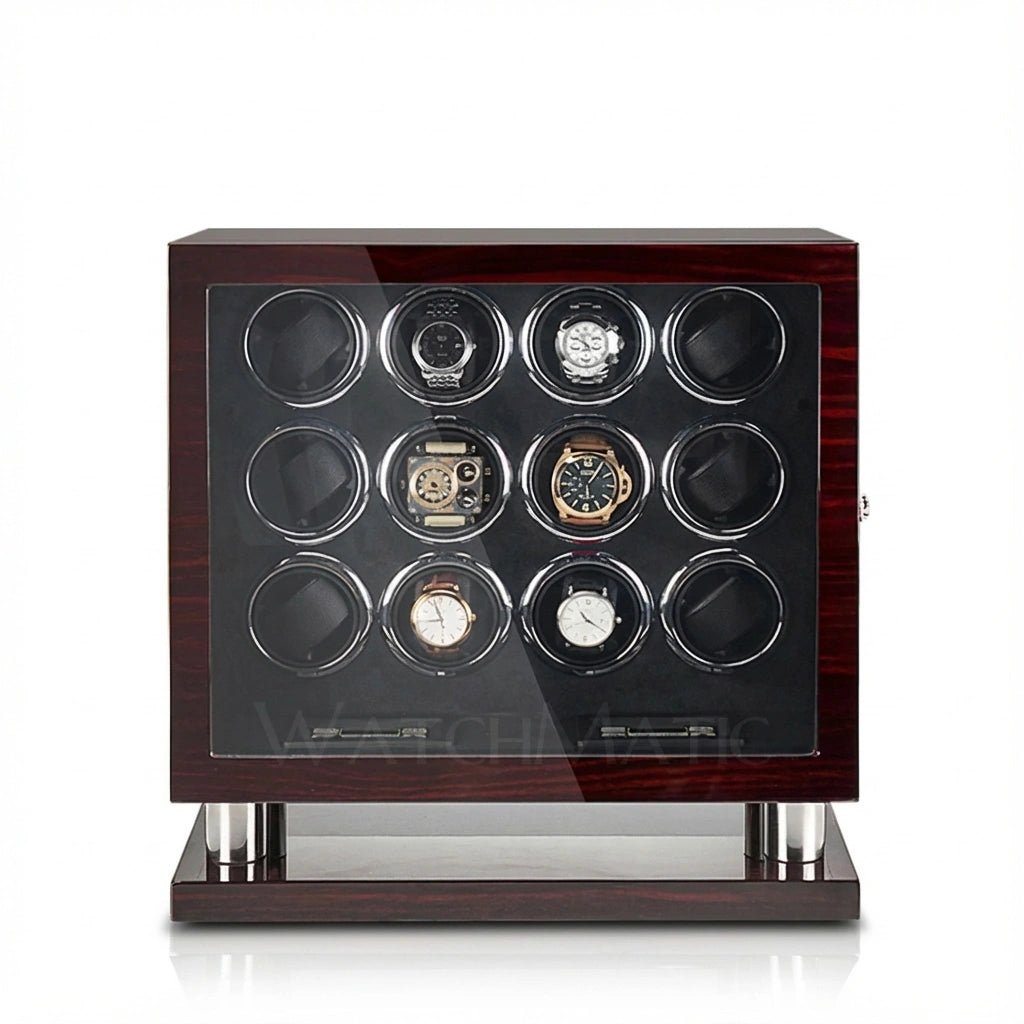
Broader winding configurations can be explored in the WatchMatic Watch Winder Collection.
Best Watch Winder for Multiple Ateliers deMonaco Watches
Consider a collection containing:
- Ronde de Monte-Carlo
- Admiral Chronographe Flyback
- Tourbillon Oculus
- Poinçon de Genève Classique
- Tourbillon Répétition Minute
There are five mechanical watches.
Only three need conventional automatic-winding positions.
The more efficient architecture is:
Ronde + Admiral + automatic Tourbillon → programmable rotors
Poinçon de Genève + Minute Repeater → secure stationary storage
This distinction can materially change the storage system required.
Automatic Rotor Capacity Should Not Equal Collection Size
Mechanical watch count and rotor count are not the same thing.
For an Ateliers deMonaco collector, an ideal cabinet may contain:
several powered winding positions + several premium stationary positions
rather than one motor for every watch.
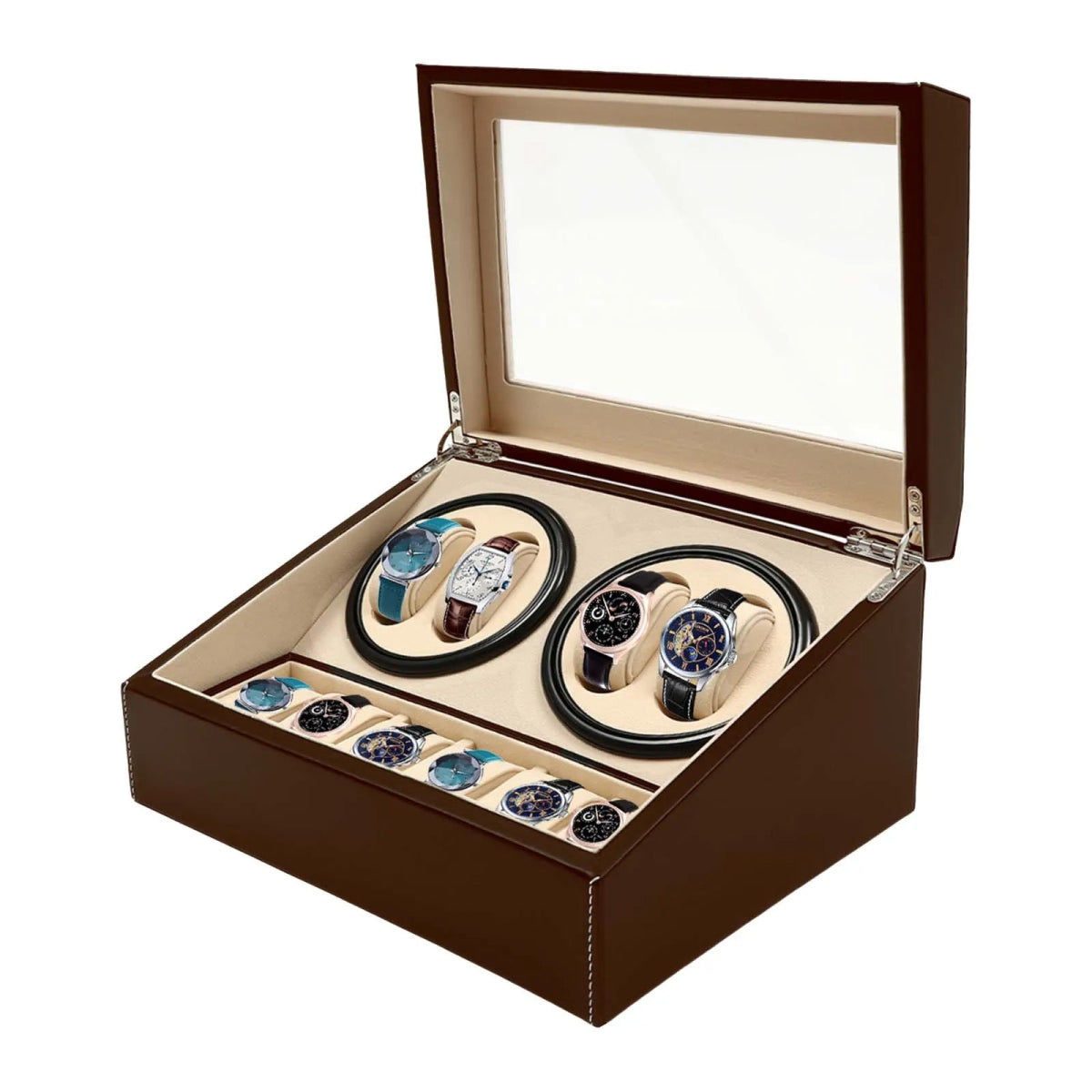
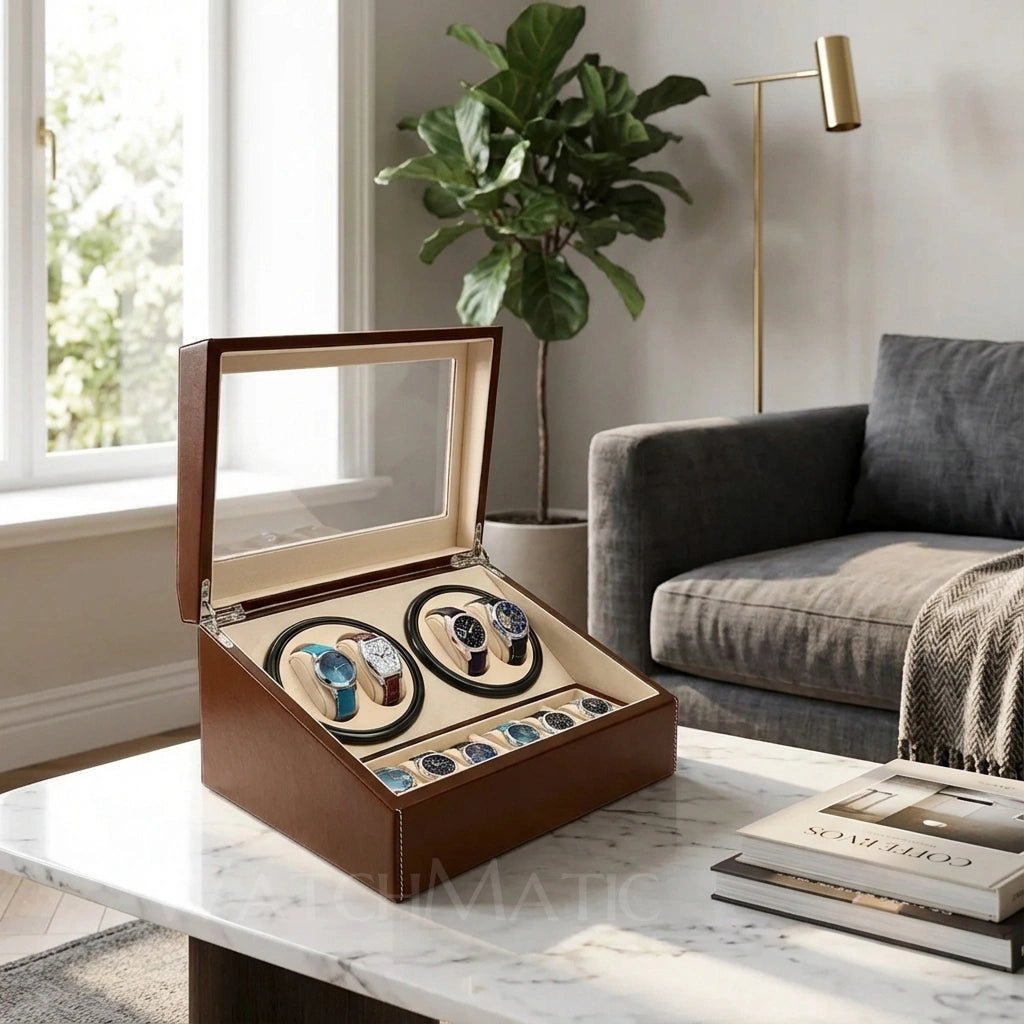
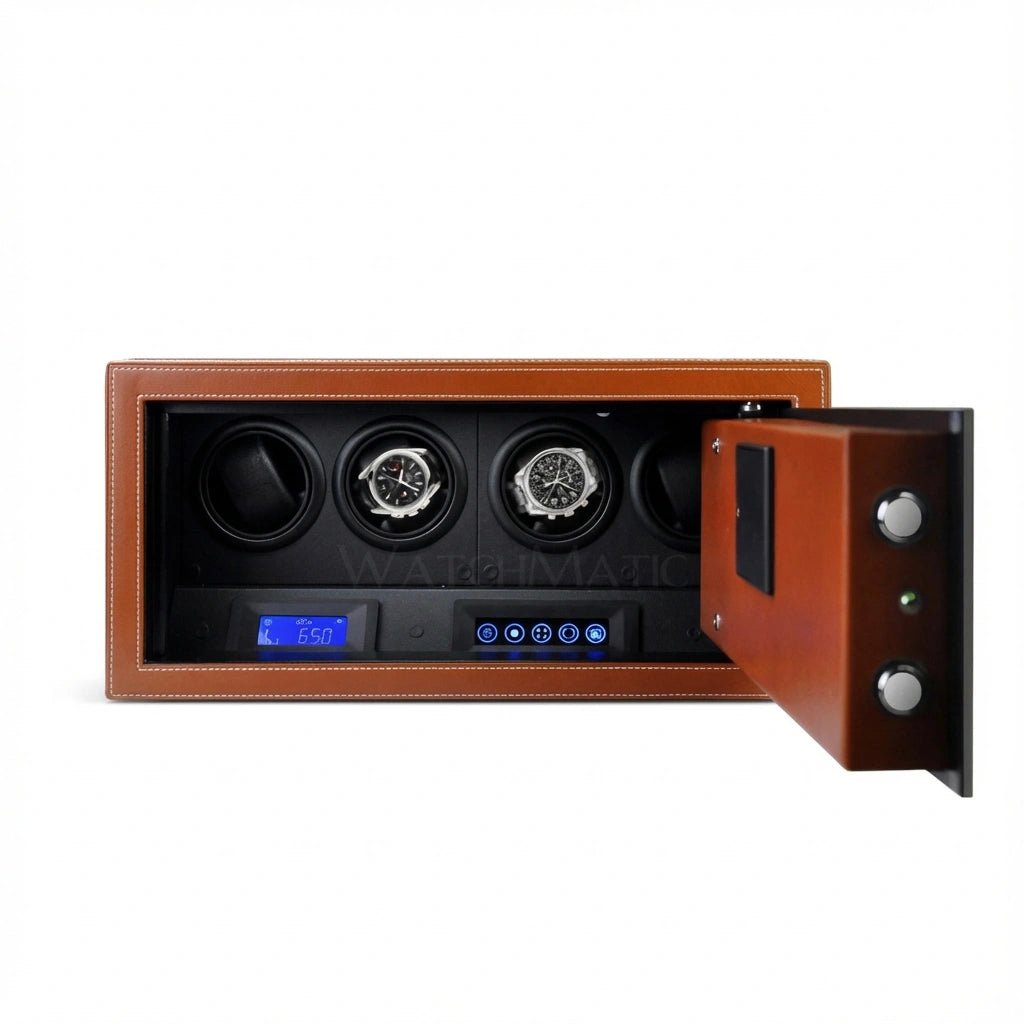
Vento Watch Winder for Ateliers deMonaco Automatics

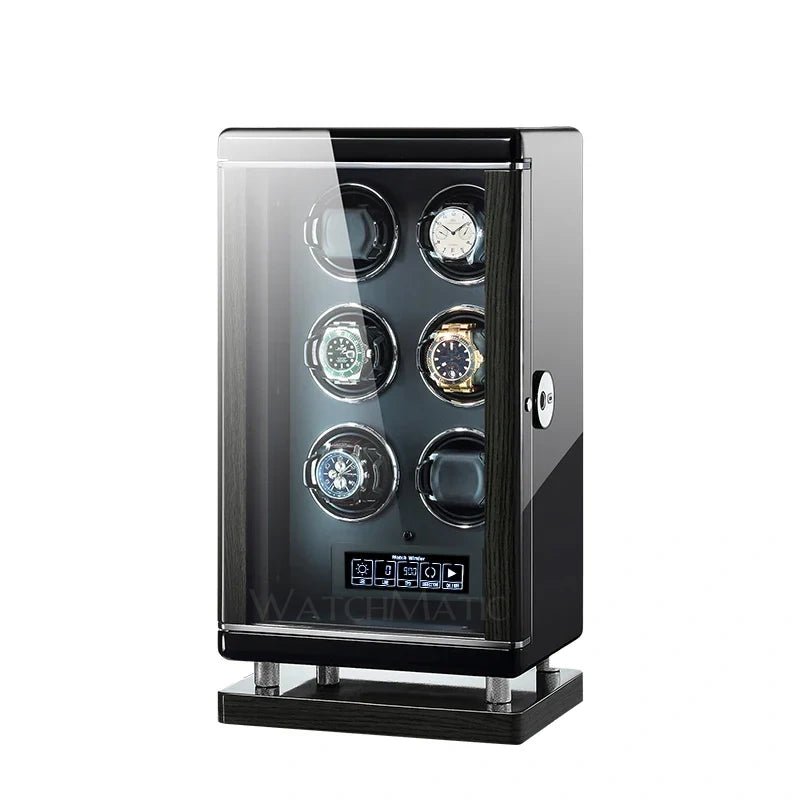
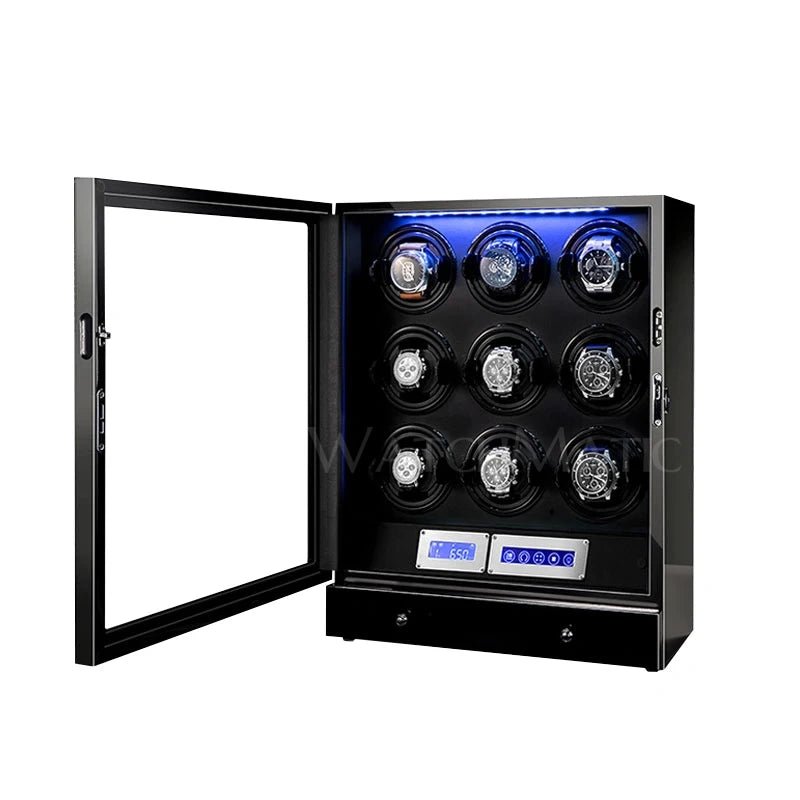
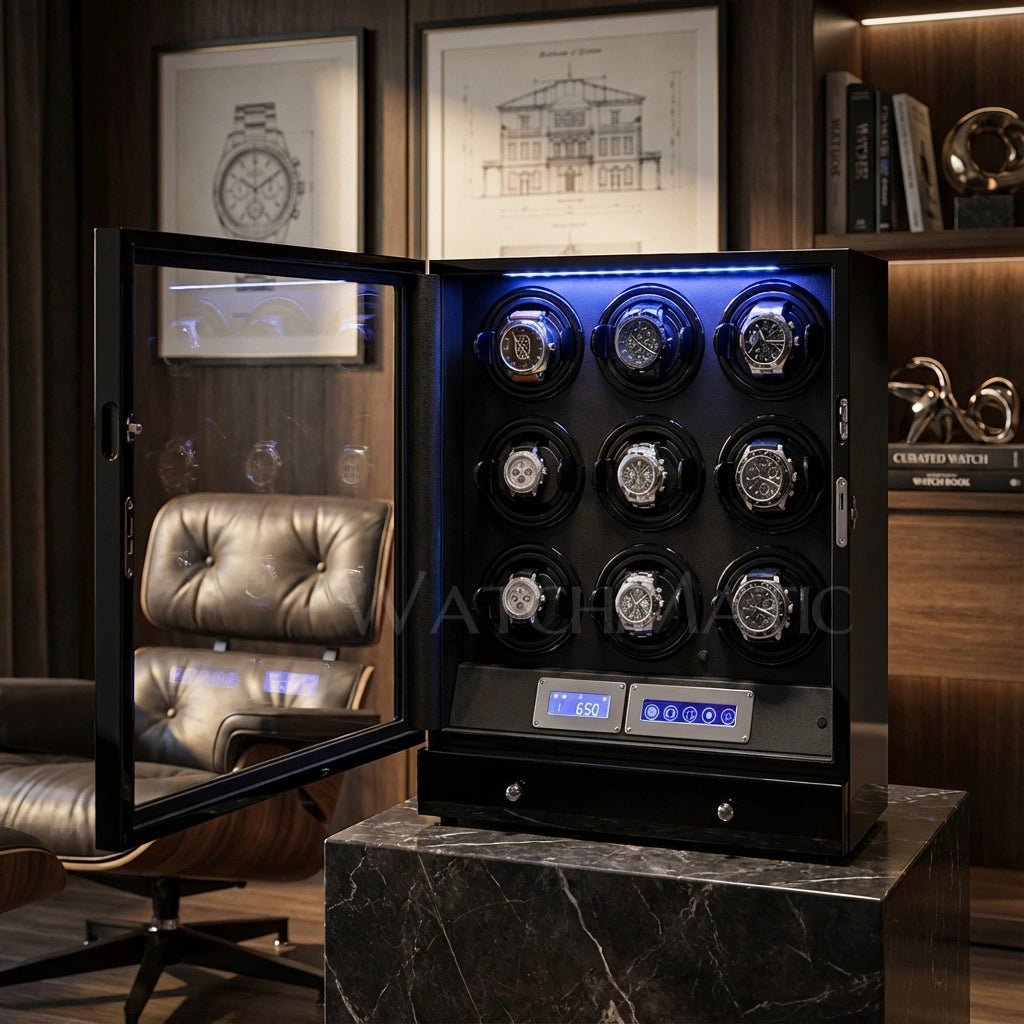
The Vento Luxury Quad Watch Winder can be suitable for a compact collection of automatic Ateliers deMonaco watches.
Its four independently controlled winding positions allow different programs for watches such as:
- Ronde de Monte-Carlo dMc-700
- Admiral Chronographe Flyback dMc-760
- XP1 / dMc-980 Tourbillon
- Another automatic watch from the collection
Each position can be configured independently rather than forcing different calibers onto one shared program.
Suggested image alt:
Vento Luxury Quad Watch Winder for Ateliers deMonaco automatic watches
Why Independent Control Matters
The dMc-700, dMc-760 and dMc-980 share some characteristics, including relatively moderate power reserves and automatic winding.
They are still different movement architectures.
Independent programming allows the owner to configure the correct movement rather than assuming:
same brand = same setting.
Do Not Use Powered Positions for Manual Watches Just Because Space Is Available
A Poinçon de Genève Classique may physically fit inside the Vento.
That does not mean rotation provides any winding benefit.
The same powered position is more efficiently used for an automatic watch.
Is It Safe to Keep an Automatic Ateliers deMonaco on a Winder?
A properly configured quality winder can be used with a confirmed automatic Ateliers deMonaco.
Important considerations include:
- Confirming the movement is automatic
- Identifying the exact caliber
- Selecting suitable TPD
- Selecting the correct direction
- Using controlled rest cycles
- Supporting the watch securely
- Maintaining sufficient case clearance
- Minimizing unnecessary vibration
If an adequately wound watch shows unusually short reserve or abnormal operation, professional inspection is more appropriate than simply increasing TPD.
A Watch Winder Does Not Service an Ateliers deMonaco
A watch winder does not:
- Replace lubricants
- Regulate accuracy
- Service a tourbillon
- Service a flyback chronograph
- Maintain a minute repeater
- Repair a Freebeat regulation system
- Renew water resistance
- Replace professional maintenance
Its role is limited to providing motion to an automatic winding mechanism.
Watch Winder vs. Watch Safe for Ateliers deMonaco Collectors
Ateliers deMonaco is particularly suited to a mixed automatic-and-stationary storage strategy.
| Feature | Watch Winder | Watch Winder Safe |
|---|---|---|
| Automatic winding | Yes | Yes |
| Independent programs | Available | Available |
| Manual-watch storage | Possible | Yes |
| High-jewellery storage | Limited security | High security |
| Controlled access | Limited | High |
| Additional storage | Limited | Available |
| Mixed automatic/manual collection | Moderate | High |
| Tourbillon and bespoke collection | Limited | More suitable |
Collectors requiring integrated automatic winding and physical protection can consider the Watch Winder Safe Collection.
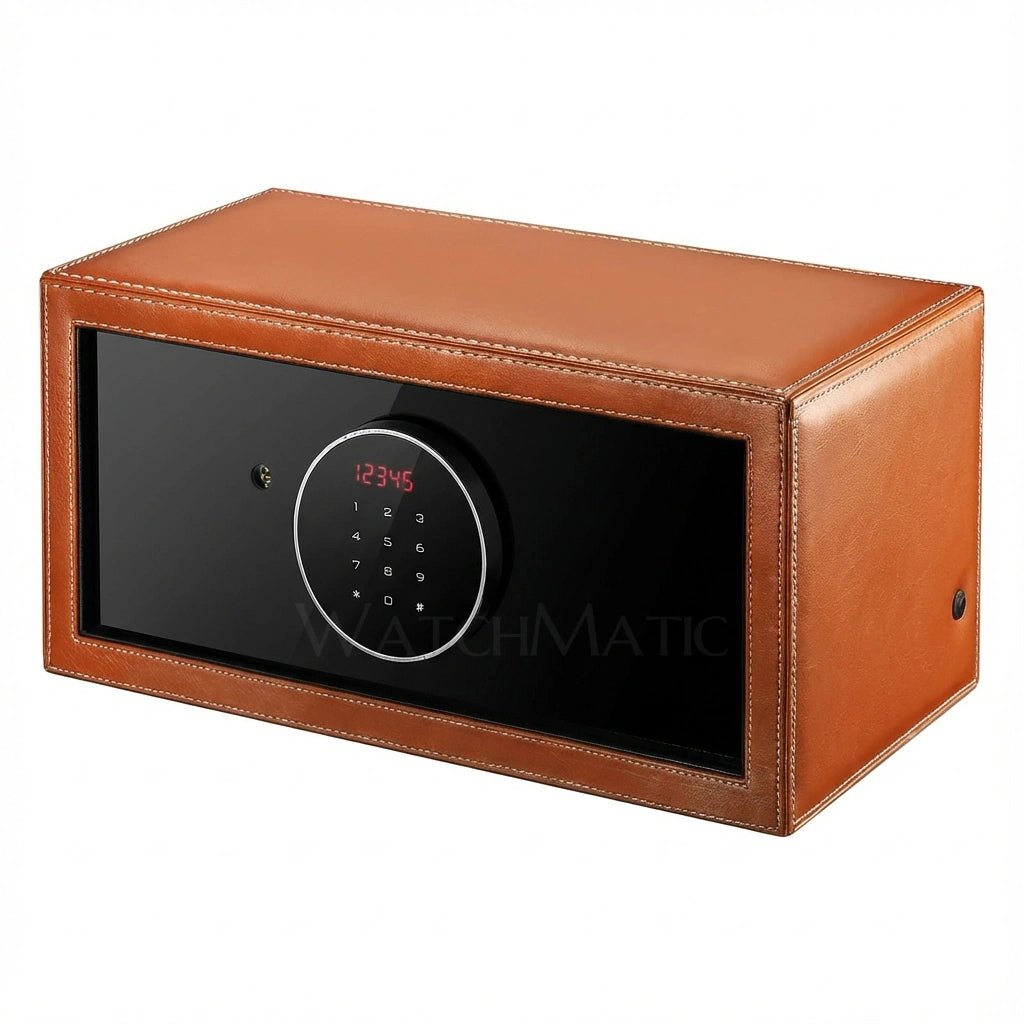
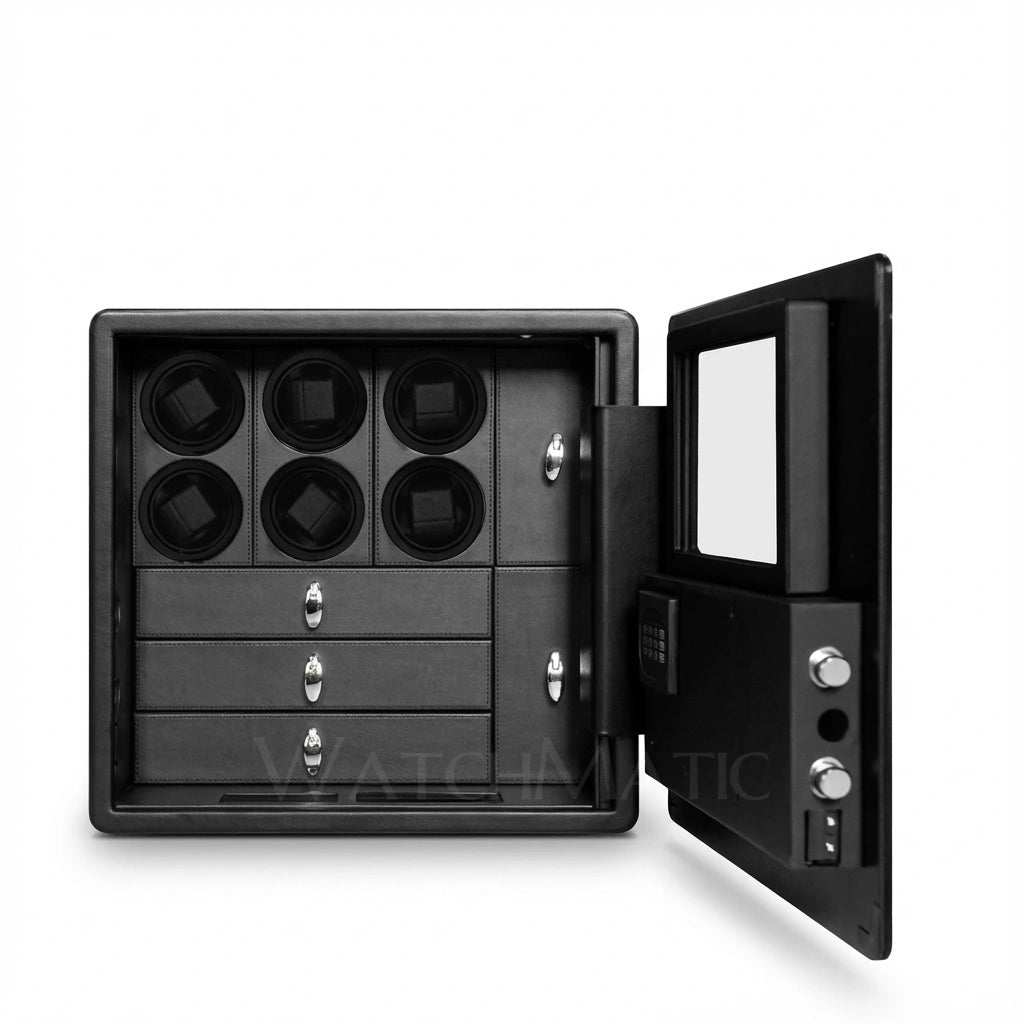
Titan Vault 20 for an Ateliers deMonaco Collection

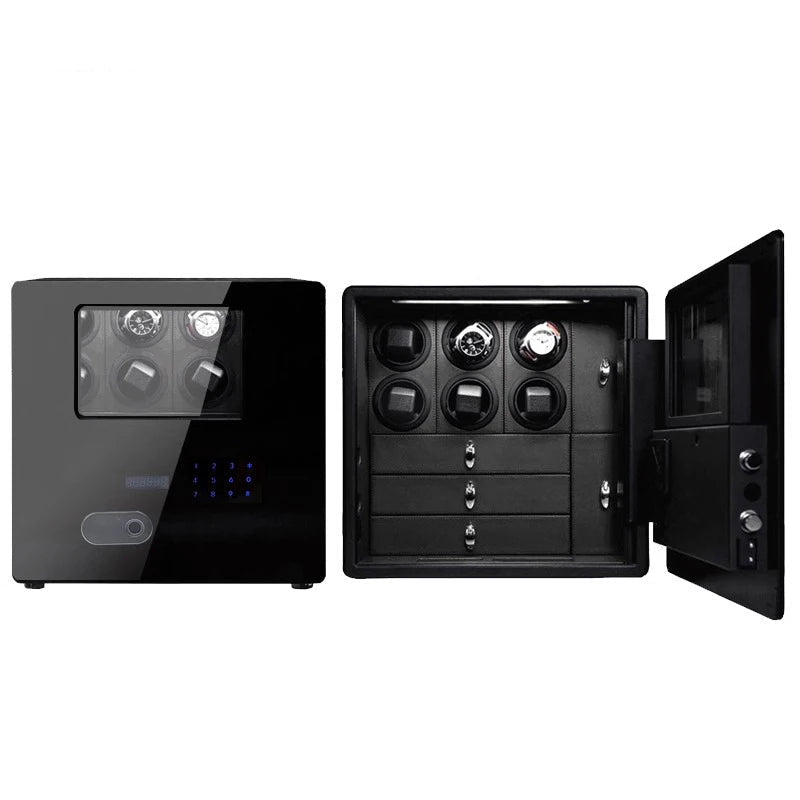
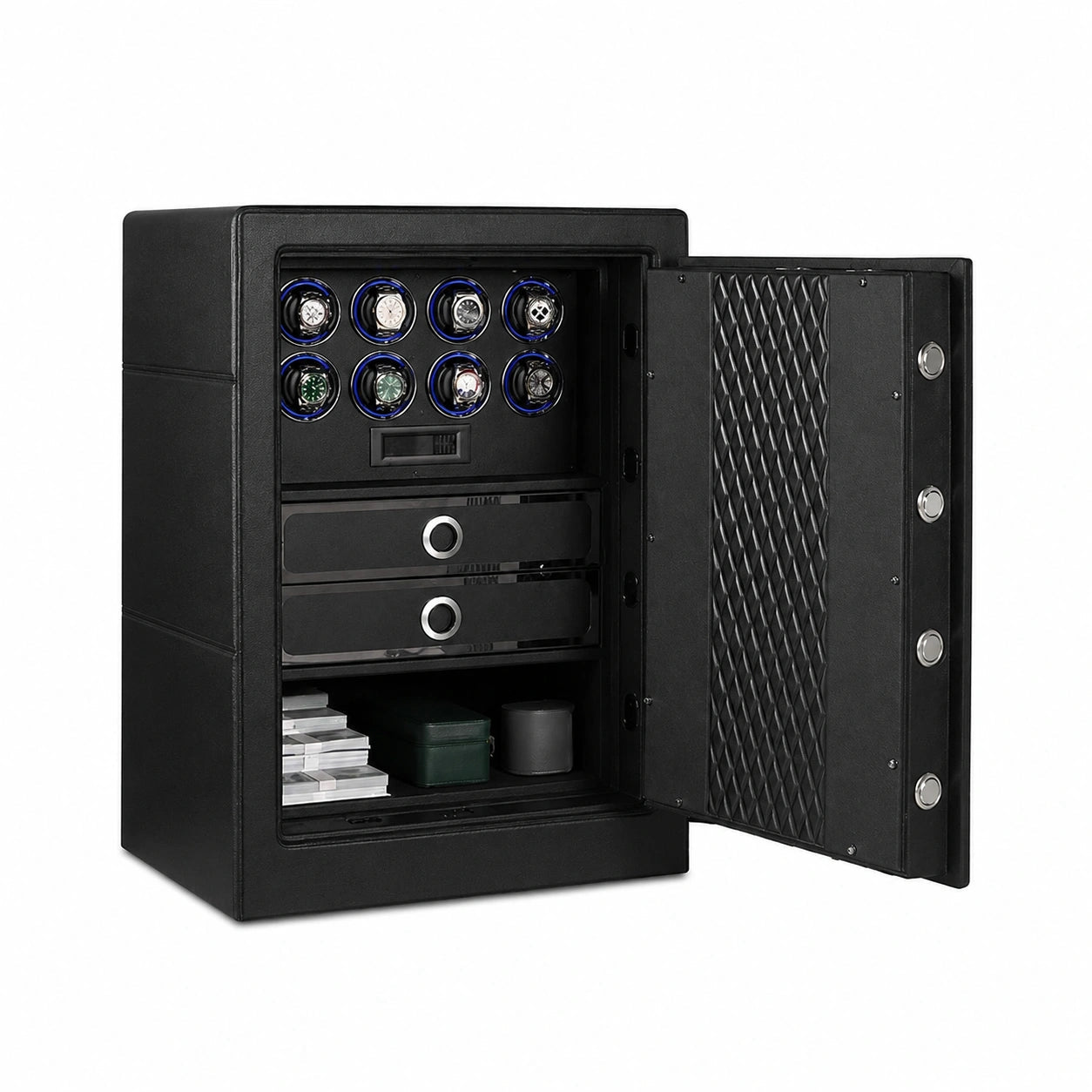
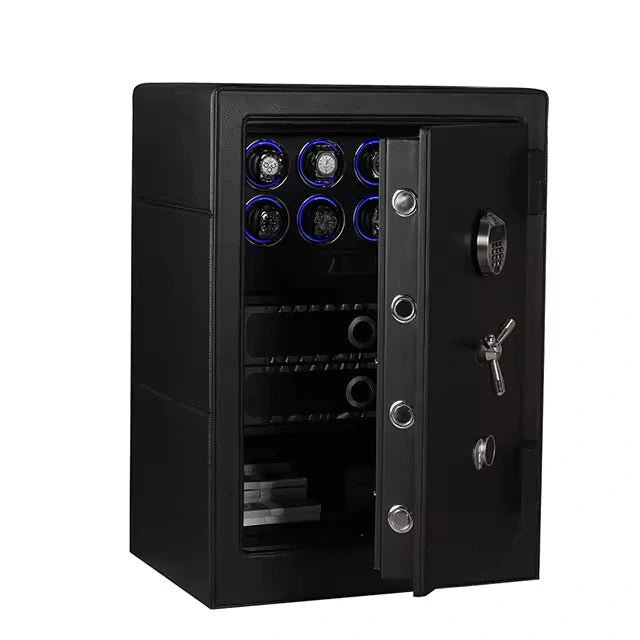
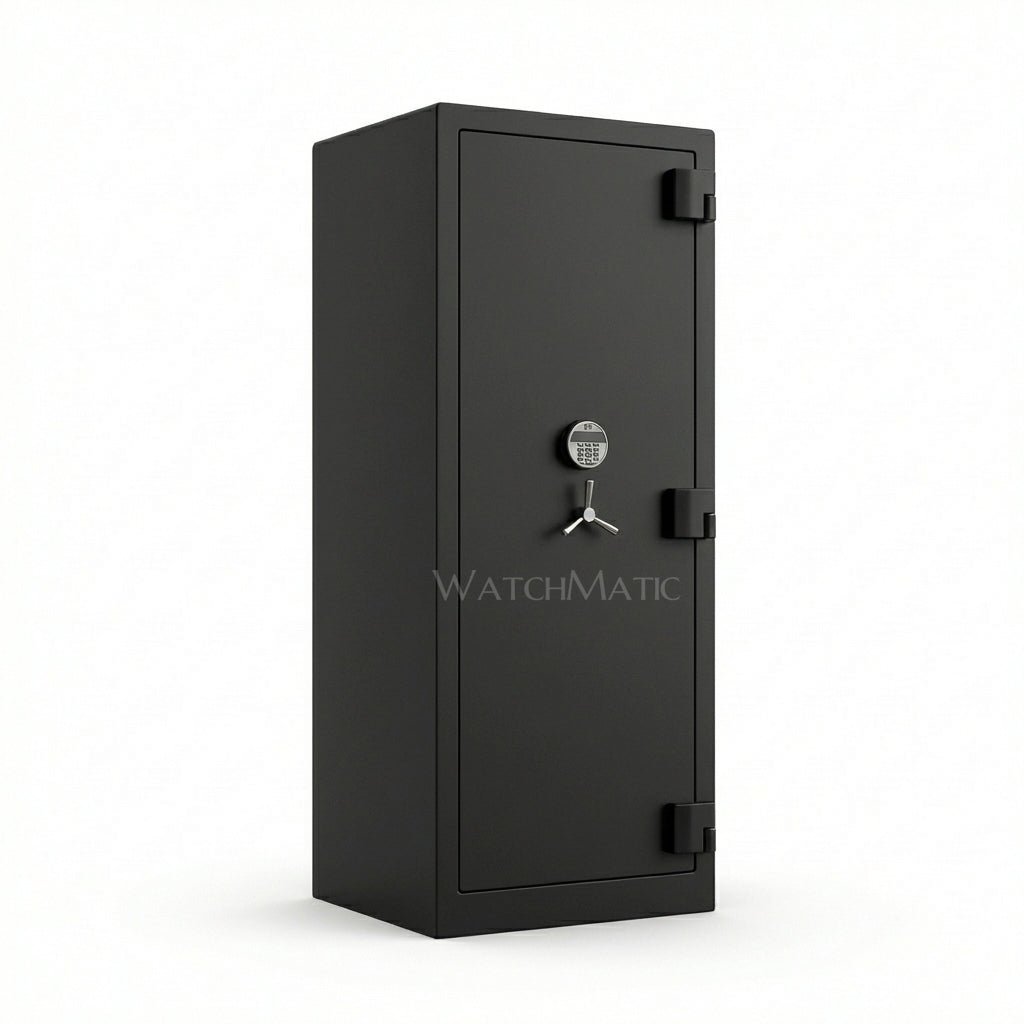
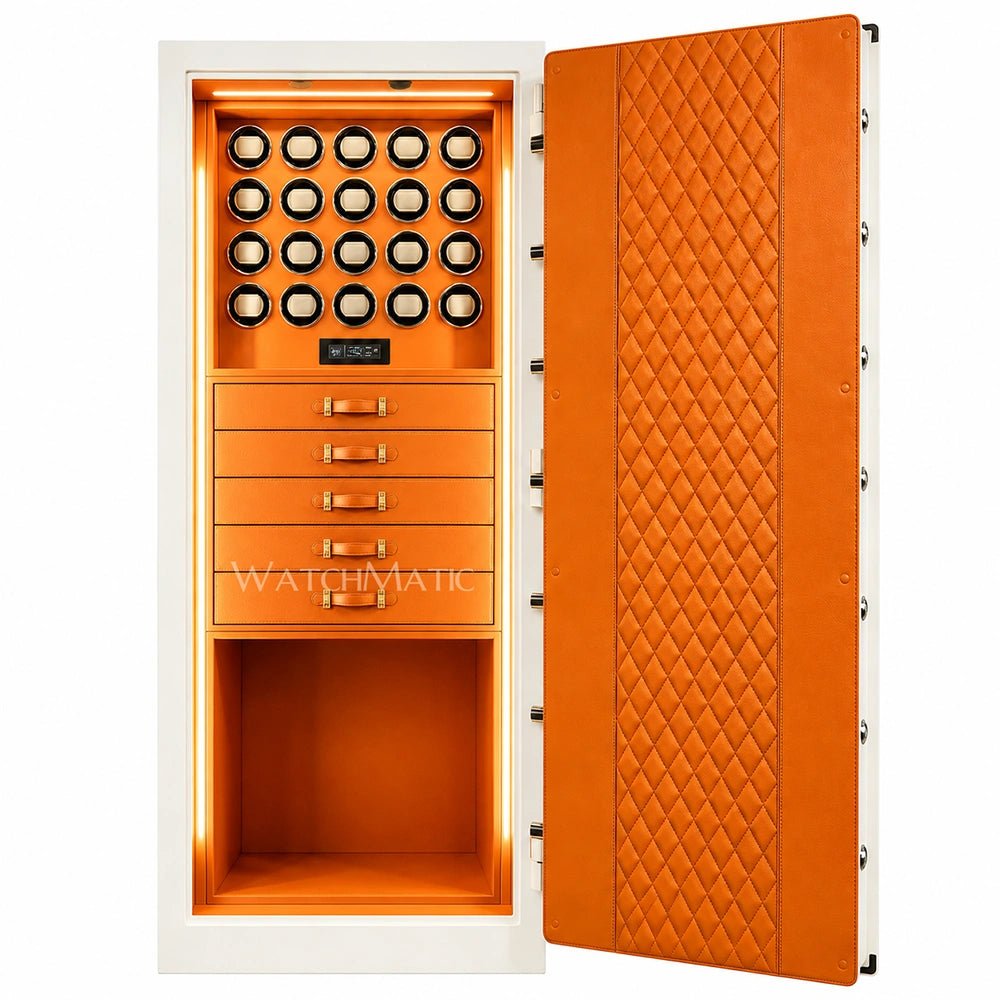
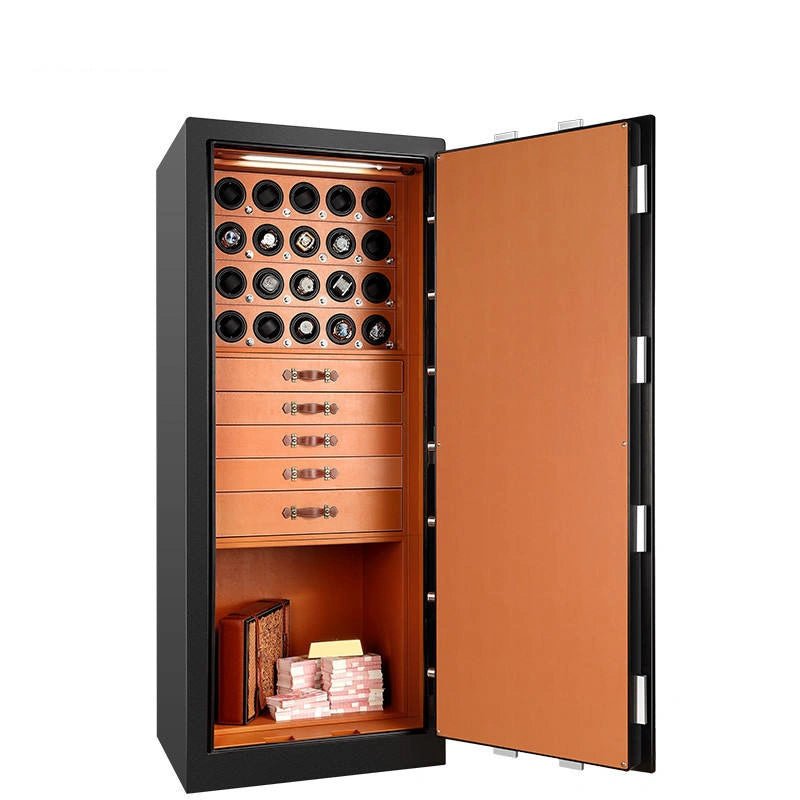
For a larger Ateliers deMonaco or mixed haute-horlogerie collection, the Titan Vault 20 Watch Winder Safe combines independently controlled winding positions with secure storage architecture.
Available features include:
- Monolithic solid-steel body
- 10-layer reinforced exterior shell
- Biometric fingerprint access
- Digital passcode
- Manual key access
- Floor anchoring
- LCD touchscreen
- Japanese Mabuchi motors
- Independent winding controls
- Adjustable TPD from 650 to 2200
- CW/CCW/bidirectional operation
- Anti-magnetization protection
- Adjustable LED illumination
- Ultra-quiet operation
- 10-year warranty
Higher-level fire and burglary certifications are available upon request rather than being standard on every configuration.
Why Titan Vault 20 Fits This Brand Particularly Well
Ateliers deMonaco collections can contain several very valuable watches that do not need a powered rotor.
For example:
- Ronde de Monte-Carlo — automatic
- Admiral Flyback — automatic
- XP1 Tourbillon — automatic
- Poinçon de Genève — manual
- Minute Repeater Tourbillon — manual
A combined system allows:
automatic watches → programmable rotors
and:
manual watches → secure stationary storage.
This is more logical than maximizing motor count.
The Most Valuable Watch May Not Need a Rotor
A Tourbillon Répétition Minute may be one of the most valuable watches in an Ateliers deMonaco collection.
Yet it receives no winding benefit from a powered rotor.
Meanwhile, a comparatively simpler Ronde de Monte-Carlo can use one.
Therefore:
security importance ≠ winding importance.
High Jewellery Strengthens the Security Case
La Sirène and bespoke pieces can contain:
- Diamonds
- Rubies
- Sapphires
- White gold
- Rose gold
- Hand engraving
- Enamel
- Unique artistic dials
These characteristics significantly increase physical-security relevance without changing movement TPD.
Bespoke Pieces Need Reference-Specific Research
Ateliers deMonaco has produced bespoke watches such as:
- Wat Arun Tourbillon
- Casino de Monte-Carlo
- Grand Prix commissions
- La Sirène variants
Do not infer the movement solely from the dial or case theme.
A bespoke artistic watch may still be based on:
- dMc-700 automatic
- dMc-980 automatic tourbillon
- dMc-708 manual
- another reference-specific caliber
The exact movement remains decisive.
When a Stationary Watch Safe Is More Appropriate
If a collection is dominated by:
- Poinçon de Genève
- Minute repeaters
- Manual high complications
- Bespoke non-automatic pieces
then maximizing powered positions may be unnecessary.
Secure stationary options from the Luxury Watch Safe Collection can be more appropriate.
Ateliers deMonaco in a Mixed Haute Horlogerie Collection
Ateliers deMonaco naturally fits into a collection focused on:
- Independent watchmaking
- Geneva finishing
- Tourbillons
- Minute repeaters
- High complications
- Rare limited production
A mixed collection might include:
Ateliers deMonaco + Roger Dubuis + F.P. Journe + Arnold & Son + Armin Strom + Breguet
Related WatchMatic guides include:
Best Watch Winder for Roger Dubuis Watches
Best Watch Winder for F.P. Journe Watches
Best Watch Winder for Arnold & Son Watches
Best Watch Winder for Armin Strom Watches
Best Watch Winder for Breguet Watches
At this level, movement-specific programming is substantially more important than one common brand setting.
Ateliers deMonaco vs. Roger Dubuis
Both manufacturers can combine extreme complications with very high levels of hand finishing.
They also demonstrate the same important principle:
tourbillon does not identify winding architecture.
Some tourbillons are automatic.
Others are manual.
The movement must always be checked.
Ateliers deMonaco vs. F.P. Journe
F.P. Journe contains many iconic manually wound watches alongside selected automatic references.
Ateliers deMonaco similarly mixes automatic and manual high horology.
However, its automatic tourbillon architecture creates a particularly useful counterexample to the assumption that complicated tourbillons should always be manually wound.
How to Choose the Best Watch Winder for Your Ateliers deMonaco
Step 1: Identify the Exact Reference
Determine whether the watch is:
- Ronde de Monte-Carlo
- Admiral Chronographe Flyback
- Poinçon de Genève
- Tourbillon Oculus
- Tourbillon Ronde d'Or
- Tourbillon Répétition Minute
- Bespoke piece
Step 2: Identify the Caliber
Important documented examples include:
- dMc-700
- dMc-760
- dMc-980 / XP1
- dMc-708
- Reference-specific minute-repeater tourbillon calibers
Step 3: Confirm Automatic or Manual
Representative examples:
dMc-700 → automatic
dMc-760 → automatic
dMc-980 → automatic
dMc-708 → manual
Tourbillon Minute Repeater → manual
Step 4: Check Power Reserve
Representative figures include:
- dMc-760 — approximately 38 h
- dMc-708 — approximately 38 h
- dMc-700 — approximately 40–42 h
- dMc-980 — approximately 38–42 h
Do not use these numbers alone to infer winding type.
Step 5: Determine Whether TPD Is Relevant
TPD only matters for an automatic movement.
Do not calculate conventional TPD for dMc-708 or a manual minute repeater.
Step 6: Determine Rotation Direction
Use verified caliber-specific requirements rather than one generic Ateliers deMonaco setting.
Choose a winder that supports:
- CW
- CCW
- Bidirectional
Step 7: Consider the Complication
A flyback chronograph or automatic perpetual calendar may provide greater convenience from staying ready.
A manual tourbillon or repeater still cannot be conventionally wound through rotation.
Step 8: Check Case Dimensions
Representative sizes span roughly:
- 39 mm Ronde de Monte-Carlo
- 40 mm Poinçon de Genève
- 42 mm Admiral Chronograph
- 44 mm automatic Tourbillon
- 46 mm Tourbillon Minute Repeater
Step 9: Check Strap and Surface Protection
Many watches use hand-stitched alligator straps and precious-metal cases.
Use soft, compressible holders.
Step 10: Match Rotor Capacity to Automatic Watches
Do not equate:
total mechanical watches
with:
number of powered positions required.
For broader resources covering watch winding, TPD, storage, and collection protection, visit the WatchMatic Guide Hub.
Best Watch Winder for Ateliers deMonaco Watches: Final Thoughts
Choosing the best watch winder for an Ateliers deMonaco requires identifying the exact movement before considering TPD or rotation direction.
Several important collections use automatic manufacture movements.
The Ronde de Monte-Carlo dMc-700 provides approximately 40–42 hours of power reserve.
The Admiral Chronographe Flyback dMc-760 provides approximately 38 hours.
The XP1 / dMc-980 Tourbillon provides approximately 38–42 hours and, importantly, is also automatic.
By contrast, the Poinçon de Genève dMc-708 provides approximately 38 hours but is manually wound.
The Tourbillon Répétition Minute is also associated with manually wound architecture.
This creates two particularly useful comparisons:
Admiral dMc-760 → ~38 h → automatic → winder compatible
versus:
Poinçon de Genève dMc-708 → ~38 h → manual → no conventional winding benefit
and:
XP1 Tourbillon → highly complicated → automatic → winder compatible
versus:
Tourbillon Répétition Minute → even more complicated → manual → no conventional winding benefit
The lesson is clear:
neither power reserve nor complication level determines watch-winder compatibility.
For a confirmed automatic Ateliers deMonaco, prioritize:
- Adjustable TPD
- CW/CCW/bidirectional programming
- Independent controls
- Controlled rest cycles
- Smooth low-vibration motors
- Flexible cushions
- Adequate case and pusher clearance
- Soft contact surfaces
For manually wound Poinçon de Genève and Tourbillon Répétition Minute watches, prioritize secure stationary storage instead.
The most reliable decision framework is:
Ateliers deMonaco Reference → Caliber → Automatic or Manual → Power Reserve → Complication → Physical Fit → TPD/Direction → Winder or Stationary Storage
For additional winding and secure-storage solutions, explore WatchMatic.