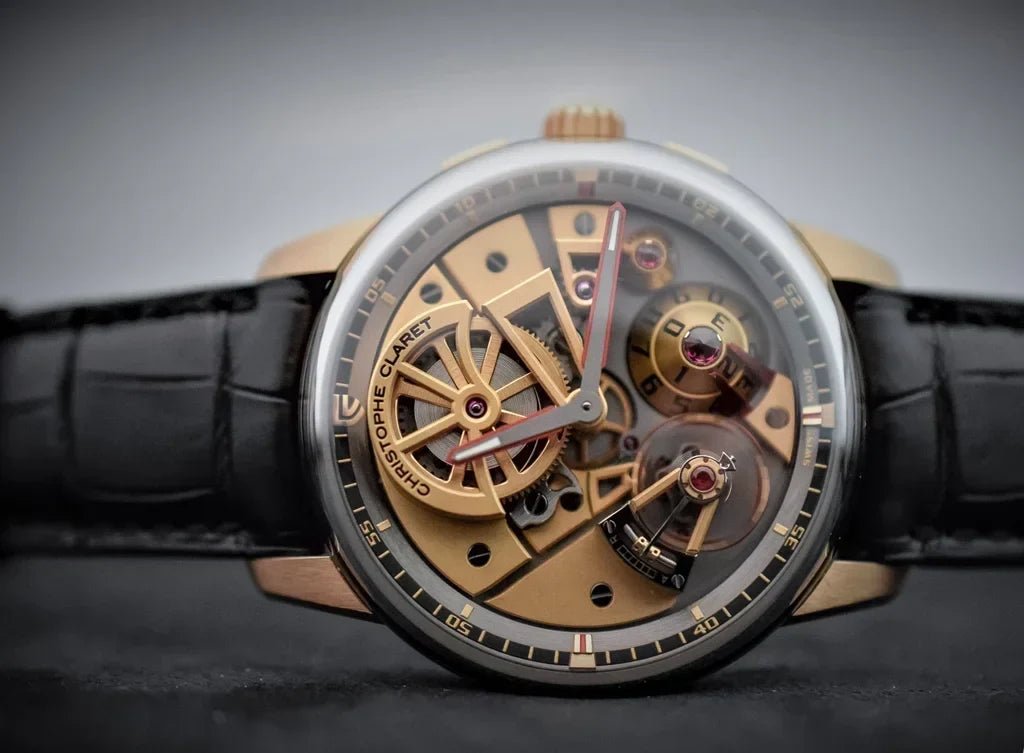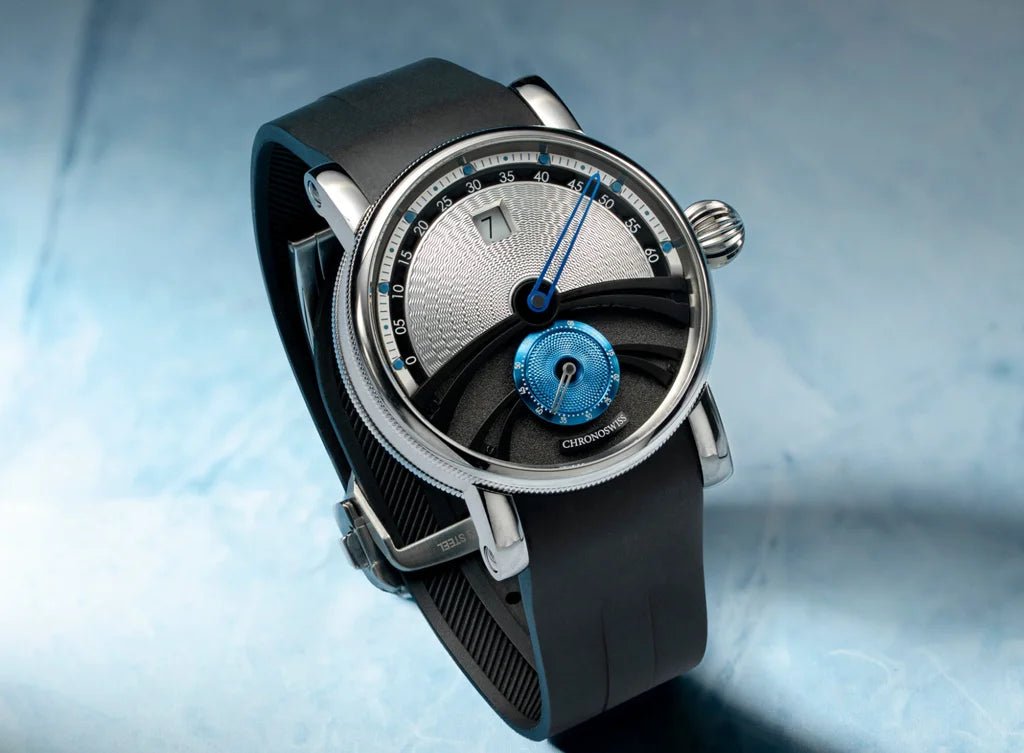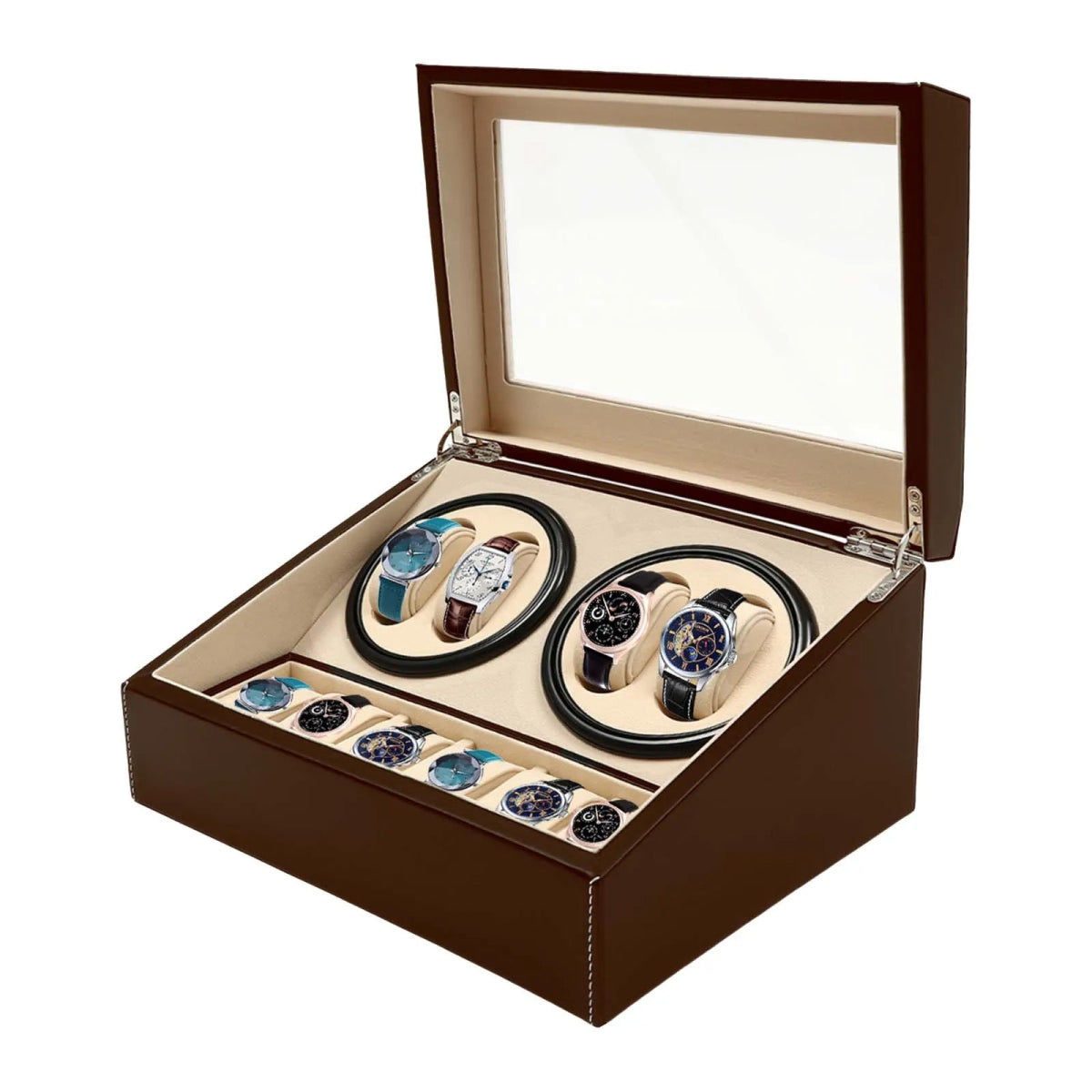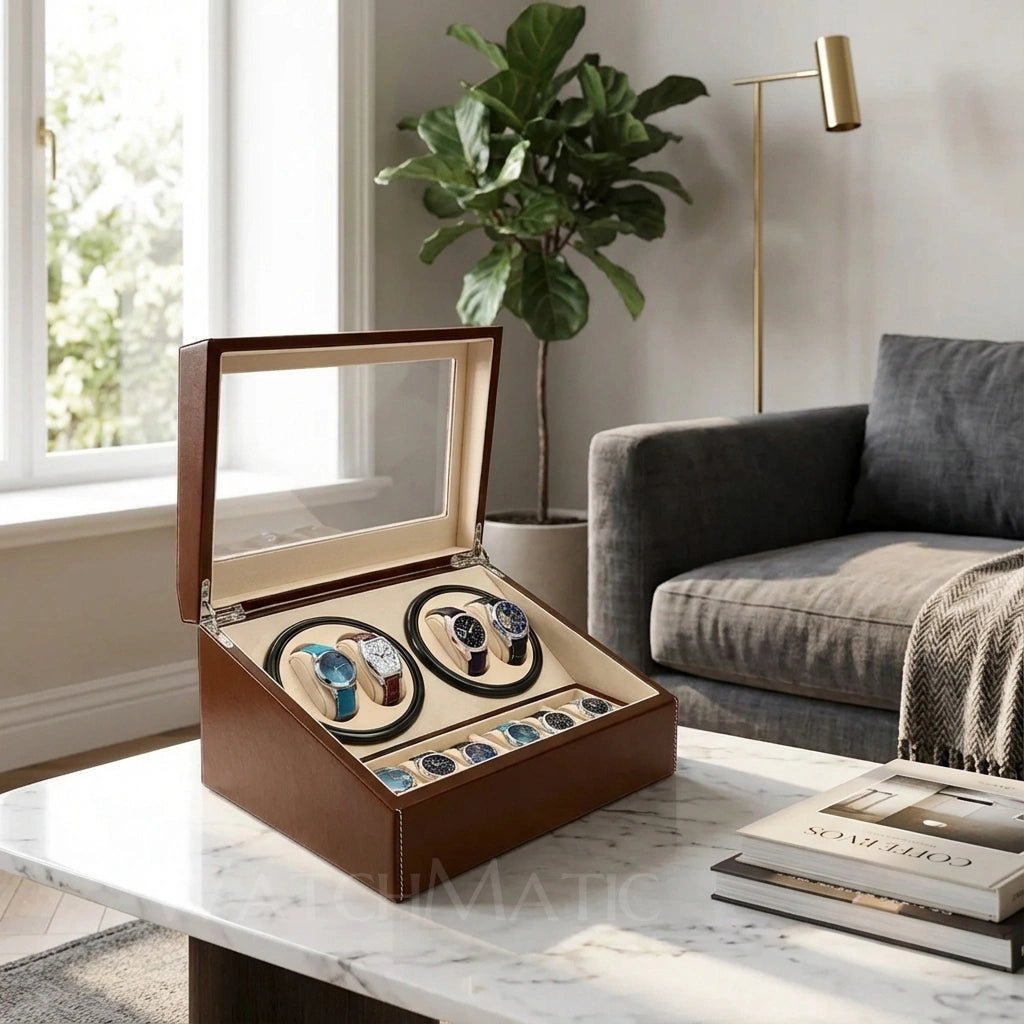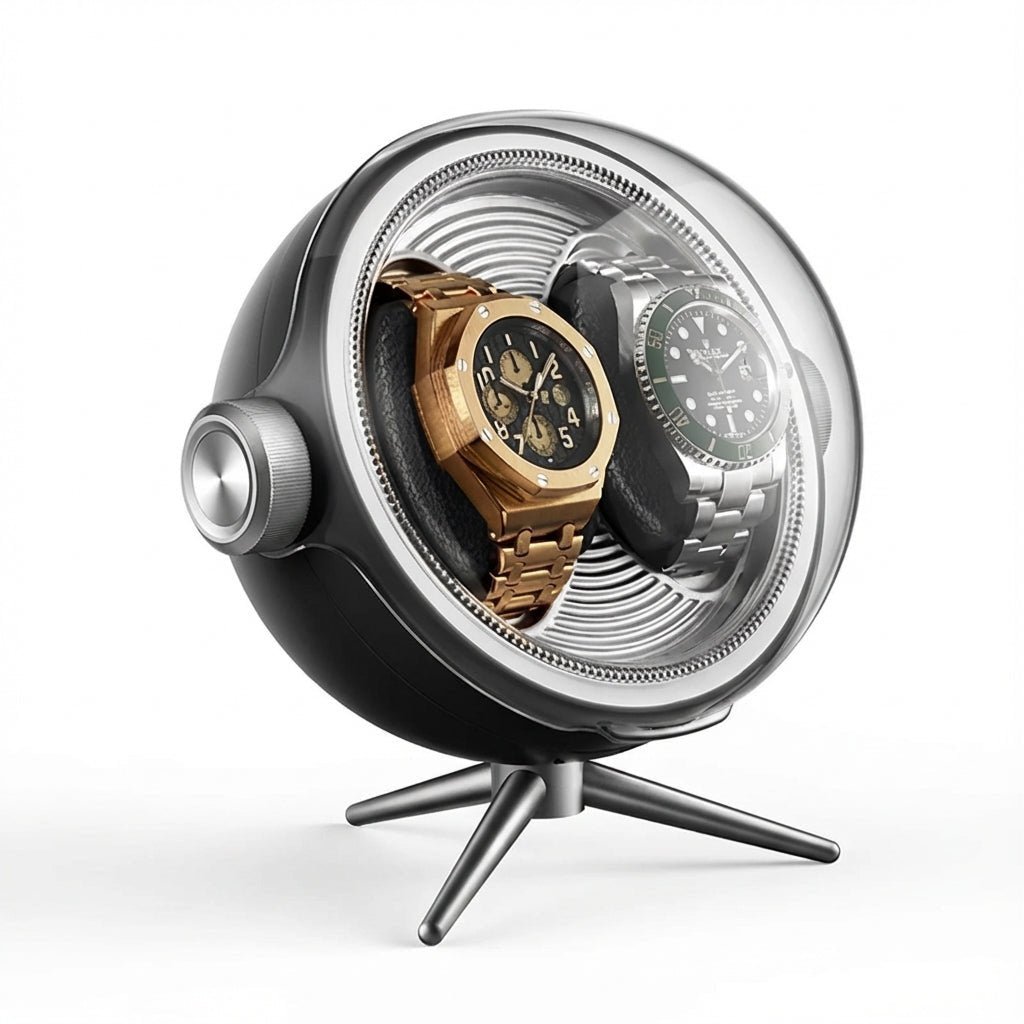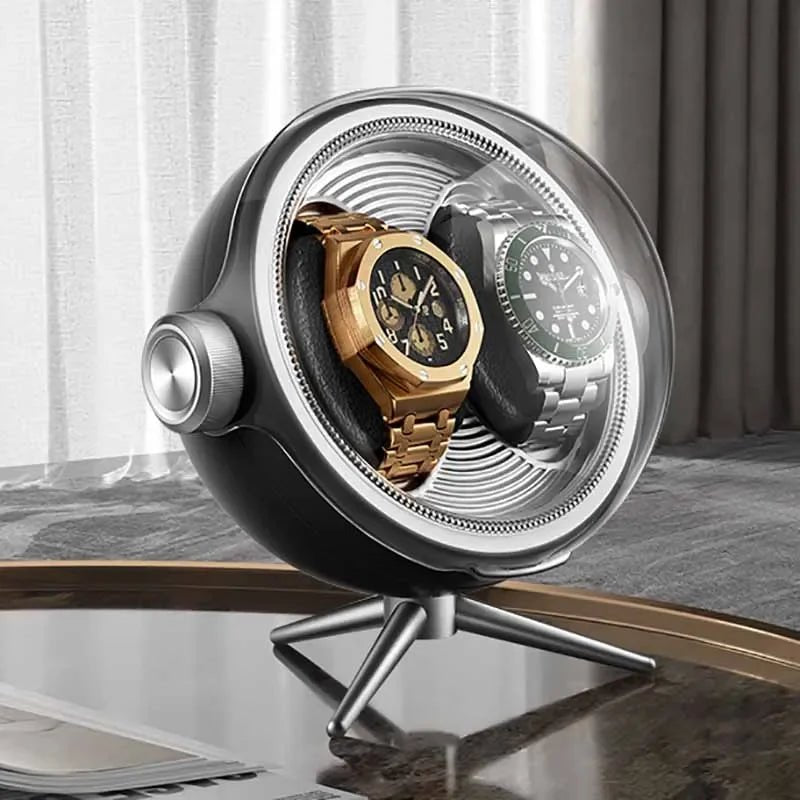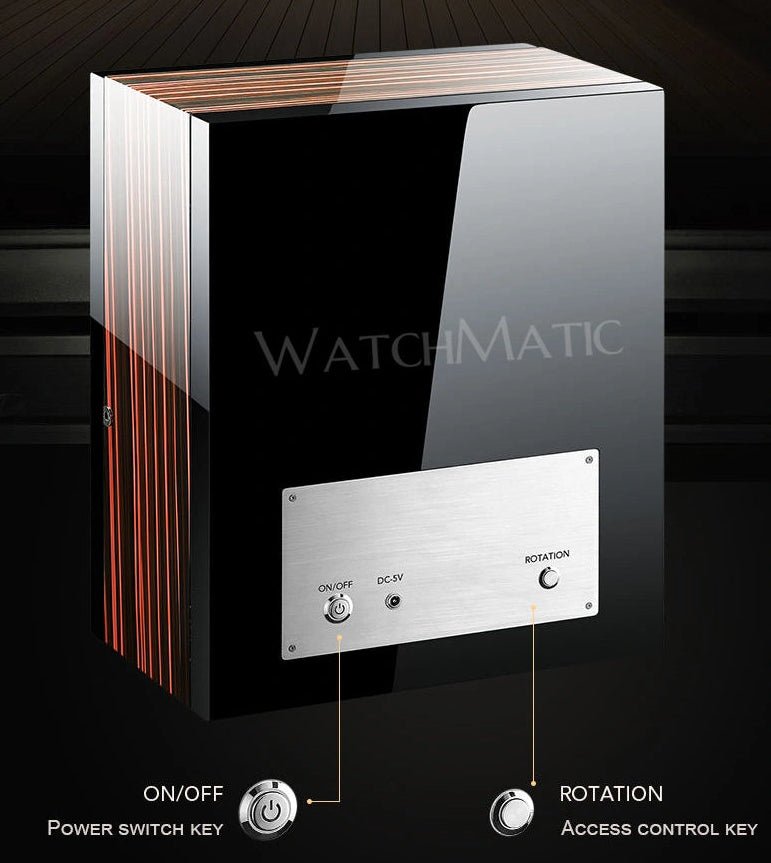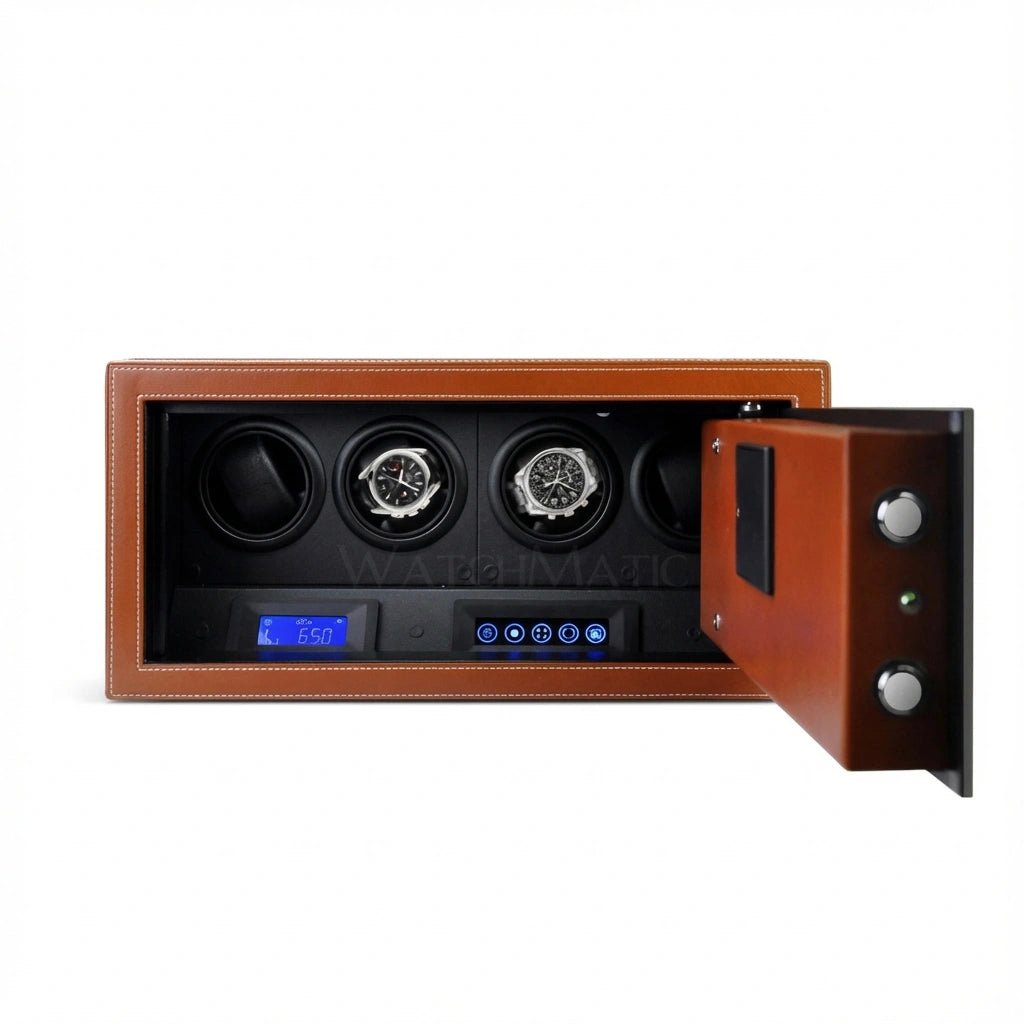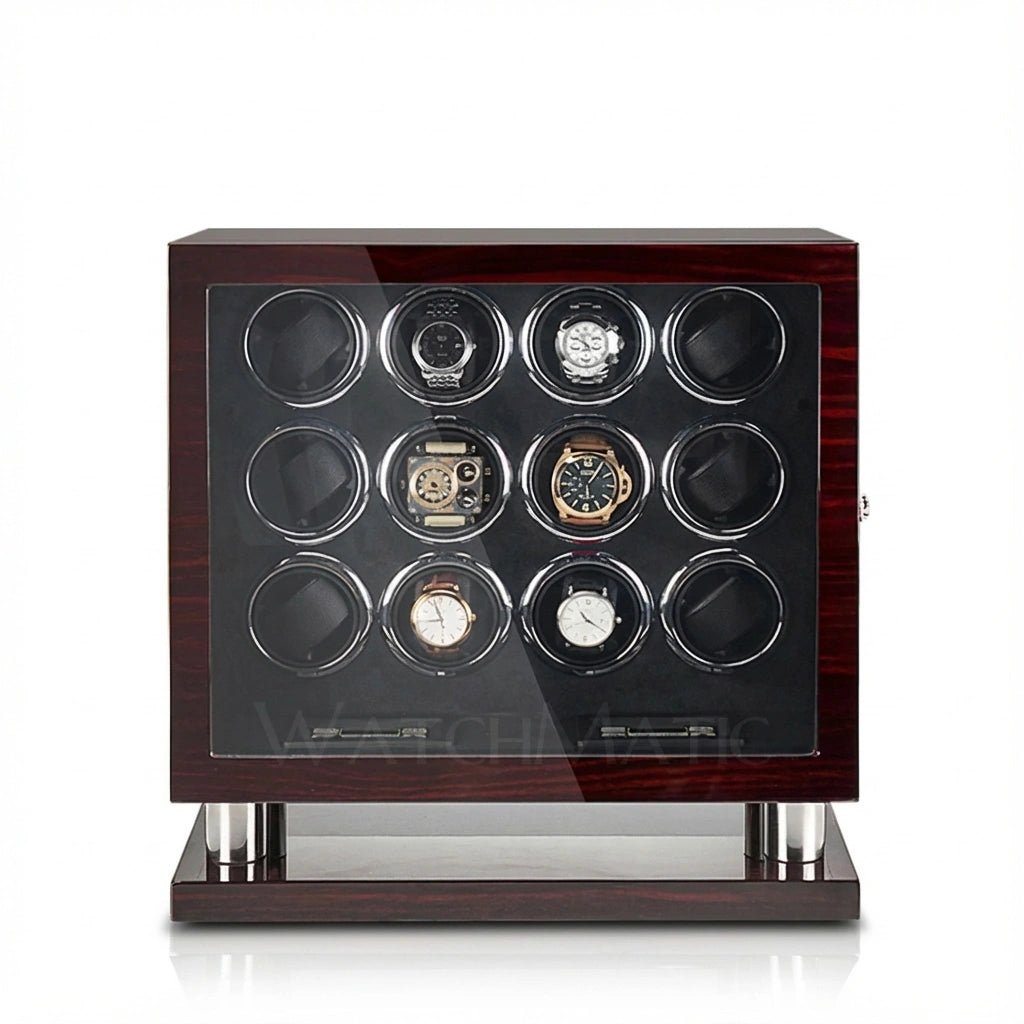
The best watch winder for Czapek watches is a premium programmable model with adjustable Turns Per Day (TPD), clockwise and counterclockwise rotation modes, independent controls, controlled rest cycles, smooth low-vibration operation, and secure support for integrated bracelets, precious-metal cases, and high-complication movements.
However, Czapek & Cie. requires exact caliber identification.
The current and recent catalog includes several distinct automatic architectures:
- Antarctique — SXH5 automatic micro-rotor
- Antarctique S — SXH5 automatic micro-rotor
- Promenade — SXH5.1 automatic micro-rotor
- Antarctique Révélation — SXH7 automatic micro-rotor
- Faubourg de Cracovie — SXH3 automatic chronograph
- Antarctique Rattrapante — SXH6 automatic split-seconds chronograph
- Antarctique Tourbillon — Calibre 9 automatic
- Time Jumper — Calibre 10.01 automatic
But several major Czapek watches are manually wound:
- Quai des Bergues — SXH1
- Place Vendôme Tourbillon — SXH2
- Place Vendôme Complicité — Calibre 8
Therefore:
Automatic Czapek → a properly configured conventional watch winder can be useful
Manual Czapek → a conventional rotating watch winder provides no winding benefit
The correct decision framework is:
Exact Reference → Caliber → Automatic or Manual → Power Reserve → Winding Architecture → Complication → Physical Fit → TPD/Direction or Stationary Storage
Does a Czapek Watch Need a Watch Winder?
No automatic Czapek mechanically requires a watch winder.
An automatic movement converts rotor motion into mainspring energy while the watch is worn.
If the watch remains unworn longer than its available reserve, it eventually stops.
A watch winder is therefore primarily useful for:
- Keeping an automatic Czapek ready to wear
- Maintaining time and date
- Keeping chronograph-capable watches powered between wears
- Reducing repeated restarting
- Maintaining jumping-hour or other synchronized indications
- Managing several automatic movements in a larger collection
Allowing an automatic Czapek to stop after its reserve is depleted is normal.
A watch winder does not replace servicing or mechanically improve a movement simply because it keeps it continuously running.
For a broader explanation of automatic winding, see the Watch Winder Guide.
Which Czapek Watches Can Use a Watch Winder?
Representative current and recent calibers include:
| Czapek watch | Caliber | Winding type | Approx. power reserve | Conventional winder? |
|---|---|---|---|---|
| Antarctique | SXH5 | Automatic micro-rotor | 60 h | Yes |
| Antarctique S | SXH5 | Automatic micro-rotor | 60 h | Yes |
| Promenade | SXH5.1 | Automatic micro-rotor | 60 h | Yes |
| Antarctique Révélation | SXH7 | Automatic micro-rotor | 60 h | Yes |
| Faubourg de Cracovie | SXH3 | Automatic chronograph | 65 h | Yes |
| Antarctique Rattrapante | SXH6 | Automatic rattrapante | 60 h | Yes |
| Antarctique Tourbillon | Calibre 9 | Automatic tourbillon | 100 h | Yes |
| Time Jumper | Calibre 10.01 | Automatic central rotor | 55 h | Yes |
| Quai des Bergues | SXH1 | Manual | 168 h | No |
| Place Vendôme Tourbillon | SXH2 | Manual | 60 h | No |
| Place Vendôme Complicité | Calibre 8 | Manual | 72 h | No |
This immediately reveals two Czapek-specific lessons:
tourbillon does not determine winding type
and:
long power reserve does not determine watch-winder compatibility.
Why Czapek Requires Exact Movement Identification
Czapek's modern catalog has evolved very quickly.
The Maison now uses:
- Central automatic rotors
- Micro-rotors
- Automatic chronographs
- Automatic split-seconds chronographs
- Automatic tourbillons
- Seven-day manual calibers
- Manual double-escapement movements
- Manual tourbillon movements
As a result, a broad query such as:
“Czapek watch winder setting”
is not precise enough.
The exact reference should be identified first.
Czapek's Automatic Portfolio Is No Longer One Movement Family
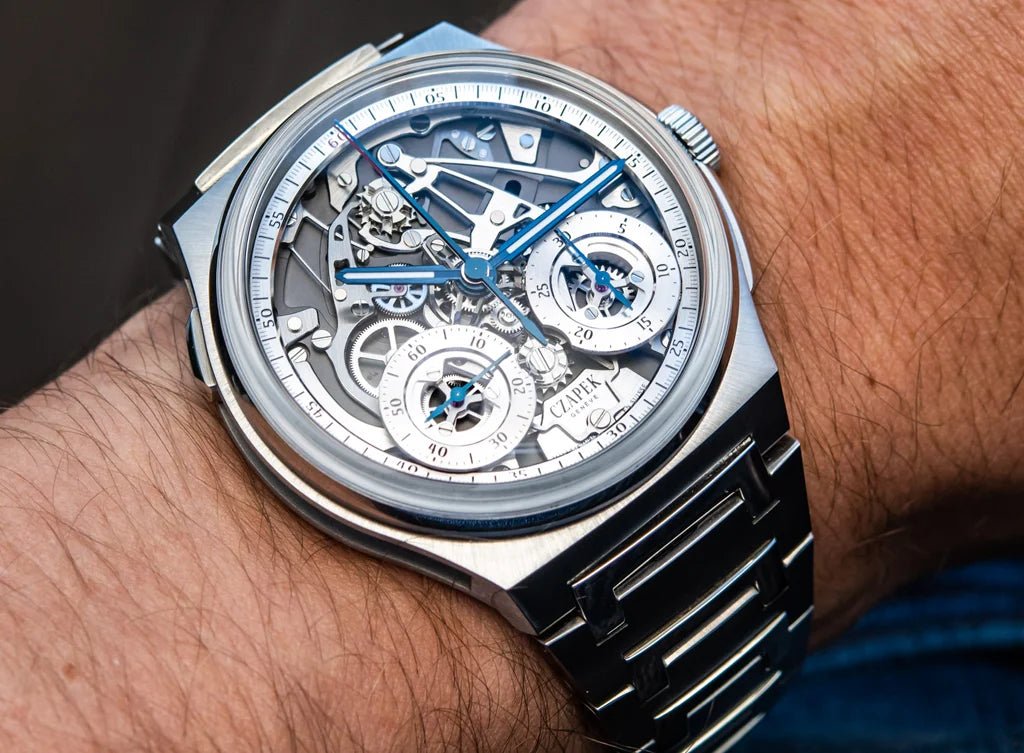
For several years, the SXH5 became strongly associated with modern Czapek because it powered the Antarctique.
The current picture is broader.
Czapek automatic movements now include:
- SXH3
- SXH5
- SXH5.1
- SXH6
- SXH7
- Calibre 9
- Calibre 10.01
These movements differ substantially in:
- Rotor architecture
- Power reserve
- complications
- component count
- movement dimensions
- energy requirements
Therefore:
Czapek automatic ≠ one universal TPD program.
Czapek SXH5 Micro-Rotor Movement
The SXH5 is the foundation of the modern Antarctique collection.
Representative specifications include:
- Automatic winding
- Recycled 950 platinum micro-rotor
- Approximately 60 hours of power reserve
- Single barrel
- 28,800 vibrations per hour
- Variable-inertia balance
- 28 jewels
- Open movement architecture
The movement was conceived in-house and has undergone technical improvements since its original introduction.
SXH5 Development Matters
Czapek has evolved the SXH5 over time.
The micro-rotor was upgraded from an earlier gold configuration to a slightly larger recycled platinum rotor, while the bearing system was also revised.
The result was improved winding-train efficiency.
This is another reason not to assume that every historical SXH5 implementation is mechanically identical to every current one.
Best Watch Winder for Czapek Antarctique
The Antarctique is one of the clearest current Czapek candidates for a watch winder.
Its SXH5 movement provides approximately:
60 hours of power reserve.
Representative current 40.5 mm references feature:
- 40.5 mm case
- Approximately 10.6 mm thickness
- Integrated bracelet
- Quick-release system
- Micro-adjustment
- Rubber or leather strap alternatives
- 120 m water resistance on many versions
For an Antarctique, prioritize:
- Adjustable TPD
- CW/CCW/bidirectional capability
- Controlled rest cycles
- Smooth motor operation
- Compressible bracelet cushion
- Stable watch-head positioning
- Independent programming
Czapek Explicitly Designs SXH5 for Automatic Winding
The SXH5 micro-rotor is intended to wind through ordinary wrist movement.
Czapek also explicitly describes its automatic watches as suitable for being wound by a watch winder when the owner regularly changes watches.
That makes conventional automatic-winder compatibility clear.
However, Czapek does not provide one universal consumer TPD number for every SXH5 application.
The correct program should still be verified before long-term use.
Micro-Rotor Does Not Mean Higher TPD
The SXH5 uses a relatively small off-center rotor.
That does not mean:
small rotor = more daily turns required.
The movement has been engineered around its micro-rotor architecture.
The objective is:
sufficient movement to maintain reserve
rather than:
compensating for rotor size with maximum TPD.
Antarctique Power Reserve and Winder Use
A 60-hour reserve already allows the watch to remain off the wrist for substantially longer than a conventional 38–42-hour automatic.
Frequent wearer
Wears the Antarctique every two days.
A winder may provide little additional benefit.
Larger collection owner
Wears the Antarctique once every week.
The movement will eventually stop.
A winder becomes more convenient.
Therefore:
longer reserve reduces dependence on a winder.
Antarctique S
The smaller Antarctique S also uses SXH5.
Representative current references use:
- 38.5 mm case
- Approximately 10.6 mm thickness
- Integrated steel bracelet
- SXH5 micro-rotor
- Approximately 60 hours of reserve
Movement-wise, the winder logic is broadly similar to the 40.5 mm Antarctique.
Physically, the smaller bracelet can create a more significant cushion-fit issue.
Smaller Bracelet Sizes Need Compressible Cushions
An Antarctique S sized for a smaller wrist may not close naturally around a large rigid watch-winder holder.
Use a cushion that:
- Compresses substantially
- Allows natural clasp closure
- Avoids excessive bracelet tension
- Keeps the watch centered during rotation
This is especially important for integrated bracelets.
38.5 mm vs. 40.5 mm Does Not Determine TPD
Case size changes:
- Fit
- weight
- physical holder requirements
It does not directly change:
- Rotor architecture
- movement power reserve
- winding direction
- appropriate daily turns
Therefore:
larger Antarctique ≠ more TPD.
Steel, Gold and Titanium Antarctique Watches
Czapek has produced Antarctique watches in:
- Stainless steel
- Rose gold
- Yellow gold
- Grade 5 titanium
These materials have very different weights.
They do not directly determine winding requirements.
A full-gold Antarctique may require more secure physical support because of its weight.
The SXH5 movement itself does not need more daily turns simply because the case is gold.
Integrated Gold Bracelets Need Strong Support
A full precious-metal Antarctique can be substantially heavier than its steel equivalent.
For these watches, prioritize:
- Stable cushion retention
- Appropriate bracelet compression
- Smooth motor starts
- No case movement within the holder
- Soft contact surfaces
Physical stability becomes more important.
Best Watch Winder for Czapek Promenade
The Promenade translates the SXH5 architecture into a more elegant 38 mm watch.
Its variant is commonly identified as:
SXH5.1
with approximately:
60 hours of power reserve.
Representative specifications include:
- Automatic micro-rotor
- 4 Hz frequency
- Small seconds
- 38 mm case
- Approximately 10.8 mm total thickness
- Nubuck, leather, or Milanese bracelet options
Promenade Uses the Same Broad Platform Differently
The Promenade demonstrates how one automatic architecture can support a very different watch.
Compare:
Antarctique
Integrated sports watch
Central seconds/date depending reference
SXH5
Promenade
Elegant 38 mm watch
Small seconds
SXH5.1
The broad movement architecture is related.
The physical storage requirements differ.
Best Watch Winder Setup for Promenade
Prioritize:
- Adjustable TPD
- Controlled rest periods
- Quiet operation
- Smaller compressible cushion
- Soft leather support
- Milanese-bracelet compatibility
- Smooth low-vibration motion
The Promenade is physically easier to accommodate than many larger haute-horlogerie pieces.
Guilloché and Grand Feu Enamel Do Not Affect TPD
Promenade references may contain:
- Grand feu enamel
- Handmade guilloché
- Natural materials
- elaborate artistic dials
These elements increase:
- artistic value
- collectability
- replacement difficulty
They do not alter:
- Rotor direction
- TPD
- Power reserve
- Automatic-winding efficiency
Promenade Milanese Bracelet Fit
A Milanese mesh bracelet behaves differently from an integrated solid-link bracelet.
It is more flexible, but the holder should still avoid:
- Sharp bending
- Excessive compression
- Unnatural clasp tension
Physical fit remains independent from movement programming.
Czapek SXH7 and Antarctique Révélation
The SXH7 expands the Antarctique movement family in a different direction.
Current 2026 Révélation references use a:
skeletonized automatic movement
with:
- Micro-rotor
- Approximately 60 hours of power reserve
- 4 Hz frequency
- Openworked architecture
- Reduced component count compared with the standard SXH5
- Recycled platinum winding mass
Best Watch Winder for Antarctique Révélation
Movement-wise, the SXH7 remains conventionally compatible with automatic winding.
Prioritize:
- Adjustable TPD
- Multiple winding directions
- Controlled rest cycles
- Independent control
- Smooth low-vibration operation
- Integrated bracelet support
Representative current titanium versions use:
38.5 mm
cases with integrated titanium bracelets.
Skeletonization Does Not Mean More Rotation
The highly visible SXH7 movement can create the impression that a more exposed or complicated watch should receive more motion.
That is incorrect.
Skeletonization affects:
- Movement appearance
- component layout
- finishing
It does not automatically increase the required TPD.
SXH5 vs. SXH7
| Feature | SXH5 | SXH7 |
|---|---|---|
| Winding | Automatic micro-rotor | Automatic micro-rotor |
| Reserve | 60 h | 60 h |
| Architecture | Open bridge layout | More extensively skeletonized |
| Representative watch | Antarctique | Antarctique Révélation |
| Conventional winder | Yes | Yes |
Even with the same reserve and related philosophy, owners should still identify the exact caliber.
Czapek SXH3 Automatic Chronograph
The SXH3 powers Faubourg de Cracovie chronographs.
It is a high-frequency integrated automatic chronograph developed to Czapek specifications.
Representative technical features include:
- Automatic winding
- Approximately 65 hours of reserve
- 5 Hz / 36,000 vph
- Column wheel
- Vertical clutch
- Linear zero-resetting hammer
- COSC chronometer certification
- Precious-metal central rotor
Best Watch Winder for Faubourg de Cracovie
A Faubourg de Cracovie using SXH3 can use a conventional automatic winder.
For this watch, prioritize:
- Adjustable TPD
- Multiple winding-direction options
- Controlled rest cycles
- Smooth motor operation
- Chronograph-pusher clearance
- Soft strap support
- Independent programming
Representative current cases measure:
41.5 mm
and are commonly fitted to alligator or Alcantara straps.
5 Hz Does Not Mean Higher TPD
SXH3 runs at:
36,000 vibrations per hour / 5 Hz.
That is higher than SXH5's 4 Hz frequency.
This does not create a simple relationship such as:
higher beat rate = higher TPD.
Movement frequency describes the oscillator.
TPD describes external watch-winder rotation.
They are different specifications.
Chronograph Complexity Does Not Mean Higher TPD
The SXH3 includes:
- Column wheel
- Vertical clutch
- Chronograph counters
- High-frequency escapement
None of these create a universal requirement for additional daily turns.
The automatic winding system should receive the appropriate amount of movement for the caliber.
COSC Certification Does Not Determine Winder Settings
COSC certification concerns chronometric performance.
It does not prescribe:
- TPD
- Winding direction
- Cushion size
- Daily winder run time
Therefore:
COSC ≠ watch-winder program.
Faubourg de Cracovie Has a 65-Hour Reserve
Compared with a 60-hour SXH5, SXH3 adds several hours of reserve.
The difference is modest.
Both are capable of surviving a normal overnight or short multi-day break from the wrist.
A winder becomes more useful primarily in a larger collection where either watch may remain unworn for many days.
Czapek Antarctique Rattrapante SXH6
The Antarctique Rattrapante uses the automatic SXH6.
Representative specifications include:
- Automatic winding
- Split-seconds monopusher chronograph
- Approximately 60 hours of power reserve
- 4 Hz frequency
- Two column wheels
- Horizontal clutch
- Variable-inertia balance
- Precious-metal rotor
The movement places much of the chronograph mechanism on the dial side.
Best Watch Winder for Antarctique Rattrapante
For an SXH6 Rattrapante, prioritize:
- Adjustable TPD
- CW/CCW/bidirectional support
- Independent programming
- Controlled rest cycles
- Very smooth motor operation
- Large case clearance
- Compressible integrated-bracelet cushion
Representative cases measure approximately:
42.5 mm
with glass-box height around:
15.3 mm.
This makes chamber depth significantly more important than for a standard Antarctique.
Rattrapante Complexity Does Not Require Maximum Rotation
The split-seconds mechanism adds:
- Additional chronograph hand
- Second column wheel
- Split mechanism
- Additional levers and clamps
A watch winder does not operate these functions.
Therefore:
rattrapante ≠ higher TPD.
Rattrapante Pusher and Case Clearance
The watch includes additional controls around the case.
Check:
- Crown clearance
- Chronograph pusher clearance
- Split-seconds pusher clearance
- Glass-box clearance
- Distance to adjacent rotor positions
Mechanical compatibility is useless if the watch physically touches the enclosure.
Standard Antarctique vs. Rattrapante
| Feature | Standard Antarctique | Rattrapante |
|---|---|---|
| Caliber | SXH5 | SXH6 |
| Winding | Micro-rotor automatic | Automatic |
| Reserve | 60 h | 60 h |
| Main complication | Time/date | Split-seconds chronograph |
| Diameter | ~40.5 mm | ~42.5 mm |
| Main fit concern | Bracelet | Thickness and controls |
Both provide approximately 60 hours.
Their movements and physical requirements are very different.
Same 60-Hour Reserve Does Not Mean Same Winder Program
Power reserve describes stored running time.
It does not tell you:
- Rotor architecture
- Winding efficiency
- Direction
- TPD requirement
Therefore, SXH5 and SXH6 should not automatically be treated identically.
Czapek Antarctique Tourbillon Calibre 9
The Antarctique Tourbillon represents one of the most important recent developments in Czapek watchmaking.
Its new Calibre 9 is:
automatic
and provides approximately:
100 hours of power reserve.
Representative features include:
- Flying tourbillon
- Automatic winding
- Precious-metal oscillating weight
- 3 Hz frequency
- Open dial-side gear train
- 40.5 mm case
- Integrated bracelet
Can the Czapek Antarctique Tourbillon Use a Watch Winder?
Yes.
This is a current automatic tourbillon.
The presence of a flying tourbillon does not prevent conventional automatic winding.
A properly configured winder can therefore supply energy through its automatic winding system.
Best Watch Winder for Antarctique Tourbillon
Prioritize:
- Adjustable TPD
- Multiple winding directions
- Independent control
- Controlled rest cycles
- Smooth low-vibration motion
- Compressible integrated-bracelet holder
- Premium soft-contact surfaces
Because the movement already provides approximately 100 hours of reserve, frequent wearers may have relatively little need for a winder.
100 Hours Strongly Reduces Winder Dependence
A fully wound Calibre 9 can run for roughly four days.
That allows the owner substantially more flexibility than:
- 55-hour Calibre 10.01
- 60-hour SXH5
- 60-hour SXH6
- 65-hour SXH3
Therefore:
the automatic Czapek with the longest reserve may be one of the least dependent on a winder.
Tourbillon Does Not Mean Manual
This is a major current Czapek lesson.
Compare:
Antarctique Tourbillon
Calibre 9
Automatic
100 hours
Conventional winder compatible
with:
Place Vendôme Tourbillon
SXH2
Manual
60 hours
No conventional winding benefit
Both are Czapek tourbillons.
Their storage logic is fundamentally different.
Modern vs. Earlier Czapek Tourbillon Architecture
Czapek's tourbillon strategy therefore demonstrates the importance of generation.
The earlier Place Vendôme approach used manual winding.
The current Antarctique Tourbillon uses automatic winding.
A generic search such as:
“Czapek tourbillon watch winder”
is therefore insufficient.
Identify the exact model.
Czapek Time Jumper Calibre 10.01
The Time Jumper introduced the new Calibre 10 platform.
The first movement is:
Calibre 10.01
with:
- Automatic winding
- Central full-size rotor
- Recycled platinum winding mass
- Approximately 55 hours of power reserve
- Jumping hours
- Trailing minutes
- 4 Hz frequency
This represents a very different automatic architecture from the SXH5 micro-rotor.
Best Watch Winder for Czapek Time Jumper
For the Time Jumper, prioritize:
- Adjustable TPD
- Multiple winding directions
- Controlled rest cycles
- Smooth motor operation
- Stable strap support
- Adequate case clearance
The watch uses a distinctive:
40.5 mm half-hunter case
with an opening cover.
Half-Hunter Case Requires Physical Clearance
The Time Jumper's external architecture is unusually important.
Before placing it in a winder, ensure that:
- The case cover is securely closed
- The cover-release mechanism does not contact the enclosure
- Crown clearance is sufficient
- The watch remains centered
- Nothing presses against the bubble-shaped central loupe
Jumping Hour Does Not Mean Manual
Many traditional jumping-hour watches are manually wound.
The Czapek Time Jumper is not.
It is automatic.
Therefore:
jumping hour ≠ manual winding.
Central Rotor vs. Micro-Rotor
Time Jumper also creates a useful architectural comparison.
SXH5
Micro-rotor automatic.
Calibre 10.01
Central-rotor automatic.
Both can use a watch winder.
Their rotor architecture is different.
Therefore, do not assume one program solely because both are Czapek automatics.
Does Jumping Hour Require Additional TPD?
No.
The instantaneous hour transition uses movement energy.
But this does not mean the owner should permanently compensate by selecting an excessively high TPD setting.
The correct program should follow the automatic winding architecture of Calibre 10.01.
Czapek Quai des Bergues SXH1
The Quai des Bergues uses one of the clearest manual-wind movements in the collection:
SXH1.
Its specifications include:
- Manual winding
- Two mainspring barrels
- Approximately 168 hours / seven days of reserve
- 3 Hz frequency
- Power-reserve indication
- Small seconds
A conventional rotating watch winder provides no winding benefit.
Does a Quai des Bergues Need a Watch Winder?
No.
SXH1 must be wound manually.
There is no automatic rotor for the watch winder to move.
Therefore:
Quai des Bergues SXH1 → manual → stationary storage.
Seven Days of Reserve Does Not Make It Automatic
This creates one of the strongest comparisons in the entire article.
Antarctique SXH5
60 hours
Automatic
Winder compatible
Quai des Bergues SXH1
168 hours
Manual
No conventional winding benefit
The manual watch runs almost three times as long.
Yet it cannot be wound by conventional rotation.
Seven-Day Reserve Also Reduces Manual-Winding Burden
The SXH1's very long reserve means the owner does not need to wind it every day.
A full winding can keep the watch running for approximately a week.
Therefore, a conventional winder is both:
- mechanically ineffective
- unnecessary as a workaround for frequent daily winding
Two Barrels Do Not Mean Automatic
SXH1 uses two barrel springs.
Barrel count tells you about stored-energy architecture.
It does not tell you how the mainsprings are replenished.
Therefore:
two barrels ≠ automatic rotor
and:
two barrels ≠ double TPD.
Czapek Place Vendôme SXH2
The Place Vendôme Tourbillon uses the manually wound:
SXH2
with approximately:
60 hours of power reserve.
Its complications include:
- One-minute suspended tourbillon
- Second time zone
- Day/night indication
- Power-reserve display
Despite this substantial complication set, the movement is manual.
Can a Place Vendôme Tourbillon Use a Watch Winder?
Not for winding.
SXH2 does not contain a self-winding rotor.
Rotating the entire watch inside a conventional winder does not replenish its mainspring.
It should be manually wound through the crown.
Second Time Zone Creates Convenience but Not Compatibility
From a usability perspective, maintaining:
- Local time
- second time zone
- day/night indication
would be convenient.
However, conventional rotational winding cannot accomplish this because SXH2 is manual.
This distinction is important:
a complication may create a desire to keep the watch running without creating a mechanism that a watch winder can use.
Place Vendôme Tourbillon vs. Antarctique Tourbillon
This is the strongest current Czapek comparison.
| Feature | Place Vendôme Tourbillon | Antarctique Tourbillon |
|---|---|---|
| Caliber | SXH2 | Calibre 9 |
| Tourbillon | Yes | Yes |
| Winding | Manual | Automatic |
| Reserve | 60 h | 100 h |
| Conventional winder | No | Yes |
The word:
Tourbillon
is therefore insufficient for determining watch-winder compatibility.
Czapek Place Vendôme Complicité
The Place Vendôme Complicité uses Calibre 8.
It is:
manually wound
with approximately:
72 hours of power reserve.
Its architecture includes:
- Two independent escapements
- Two balance wheels
- Differential
- Single barrel
- Openworked movement
- Power-reserve indication
Can Place Vendôme Complicité Use a Watch Winder?
Not for winding.
Calibre 8 must receive energy through the crown.
A rotating watch holder provides no useful mainspring winding.
Two Escapements Do Not Mean Automatic
The Complicité contains two balance systems.
That does not mean it contains:
- two rotors
- one rotor
- any automatic rotor at all
The movement remains manually wound.
Double Escapement Does Not Mean Higher TPD
Because the watch is manual, TPD is irrelevant for conventional winding.
This demonstrates why complexity-based assumptions fail completely.
A simpler SXH5 automatic can use a winder.
A dual-escapement Calibre 8 cannot.
Czapek Automatic vs. Manual Power Reserve
| Caliber | Representative watch | Type | Approx. reserve |
|---|---|---|---|
| Calibre 10.01 | Time Jumper | Automatic | 55 h |
| SXH5 | Antarctique | Automatic | 60 h |
| SXH5.1 | Promenade | Automatic | 60 h |
| SXH6 | Rattrapante | Automatic | 60 h |
| SXH7 | Révélation | Automatic | 60 h |
| SXH3 | Faubourg de Cracovie | Automatic | 65 h |
| Calibre 8 | Complicité | Manual | 72 h |
| Calibre 9 | Antarctique Tourbillon | Automatic | 100 h |
| SXH1 | Quai des Bergues | Manual | 168 h |
| SXH2 | Place Vendôme Tourbillon | Manual | 60 h |
This table makes the central lesson very clear:
reserve length does not identify winding type.
60 Hours Can Mean Automatic or Manual
Compare:
SXH5 → 60 h → automatic
SXH6 → 60 h → automatic
SXH7 → 60 h → automatic
SXH2 → 60 h → manual
The exact same approximate autonomy can correspond to completely different winding architecture.
The Longest Reserve Is Manual
The SXH1 provides approximately:
168 hours / seven days
and is manually wound.
The automatic Calibre 9 provides an impressive:
100 hours
but still does not surpass the SXH1.
Therefore:
longest power reserve ≠ strongest case for a watch winder.
Czapek Watch Winder TPD Settings
TPD means Turns Per Day—the approximate number of rotations delivered by a watch winder during a daily program.
There should not be one blanket recommendation such as:
“Czapek = 650 TPD.”
The automatic portfolio includes fundamentally different architectures:
- SXH3 central rotor
- SXH5 micro-rotor
- SXH5.1 micro-rotor
- SXH6 automatic chronograph
- SXH7 micro-rotor
- Calibre 9 automatic tourbillon
- Calibre 10.01 central rotor
The correct process is:
- Identify the exact Czapek reference.
- Identify the caliber.
- Confirm automatic winding.
- Determine the caliber's winding requirement.
- Select appropriate TPD.
- Select appropriate rotation direction.
- Confirm that reserve remains adequately maintained.
For a deeper explanation of daily-turn programming, see the Watch TPD Guide.
What Rotation Direction Should You Use for a Czapek?
A premium programmable winder should ideally offer:
CW — Clockwise
CCW — Counterclockwise
Bi — Bidirectional
Czapek publishes extensive technical information about movement construction and power reserve.
However, one universal consumer winding direction should not be assumed across every current caliber.
Use:
exact caliber → verified winding requirement → correct direction
rather than:
Czapek → one generic setting.
Do Manual Czapek Watches Need TPD?
No.
TPD has no useful winding role for:
- SXH1
- SXH2
- Calibre 8
These movements receive mainspring energy through crown winding.
There is therefore no conventional TPD target to calculate for them.
Micro-Rotor vs. Central Rotor
Czapek currently uses both.
Micro-Rotor
Examples:
- SXH5
- SXH5.1
- SXH7
Larger/Central Rotor
Examples:
- SXH3
- SXH6
- Calibre 10.01
- Calibre 9 uses its own automatic oscillating-weight architecture
Rotor size or location does not by itself define TPD.
Micro-Rotor Does Not Mean Less Reliable Winding
A properly engineered micro-rotor is a legitimate automatic winding architecture.
It should not automatically be considered weaker or require aggressive winding simply because it is physically smaller.
Czapek's own development of SXH5 specifically focused on improving winding efficiency.
Calibre 9's 100 Hours Does Not Mean More Daily Turns
A larger power reserve does not automatically require a higher TPD program.
The movement's reserve reflects:
- Mainspring capacity
- energy efficiency
- frequency
- gear train
- escapement
The winder requirement must still be established separately.
Automatic Chronographs Do Not Need to Run Continuously
Neither SXH3 nor SXH6 needs to remain continuously active for mechanical health.
A chronograph-equipped watch can stop normally.
A winder provides readiness.
It does not provide servicing.
Should the Chronograph Be Left Running on the Winder?
There is generally no reason to run the chronograph continuously simply because the watch is sitting on a winder.
The winder's job is to maintain the automatic movement's energy.
The chronograph complication can remain reset unless the owner deliberately uses it.
High TPD Is Not Automatically Better
Selecting the maximum available TPD does not make a Czapek better maintained.
Once adequate reserve is being maintained, additional rotations may provide little practical benefit.
Higher TPD does not automatically:
- Improve accuracy
- Improve lubrication
- Extend service intervals
- Improve tourbillon performance
- Maintain chronograph calibration
- Protect a micro-rotor
- Increase the movement's stated reserve
Use appropriate rather than maximum rotation.
Does a Czapek Automatic Need to Run All the Time?
No.
Automatic Czapek watches can stop normally after their reserve is depleted.
The practical value of a winder depends on:
power reserve + wearing frequency + complication + collection size.
Which Czapek Watches Gain the Most Convenience From a Winder?
Stronger convenience case
- Time Jumper — jumping-hour display
- Antarctique Rattrapante in a large rotation
- Faubourg de Cracovie
- Date-equipped Antarctique references
- Collections containing several 55–65-hour automatics
Lower dependence due to long reserve
- Antarctique Tourbillon Calibre 9 — approximately 100 hours
No conventional winding benefit
- Quai des Bergues
- Place Vendôme Tourbillon
- Place Vendôme Complicité
This is not a ranking of quality or value.
It simply describes practical winder usefulness.
Should You Start a Stopped Czapek Before Using a Winder?
A watch winder is generally best treated as a:
maintenance-winding system
rather than the fastest way to recover a completely depleted watch.
For a stopped automatic Czapek:
restart correctly → establish initial reserve → set indications → place on programmed winder → maintain
rather than:
stopped watch → maximum available TPD.
What to Look for in a Czapek Watch Winder
Adjustable TPD
Czapek uses several automatic architectures.
A programmable system provides more flexibility than a fixed-output motor.
CW, CCW and Bidirectional Modes
All three modes allow the winder to support more calibers.
Independent Controls
This is particularly important for a mixed Czapek collection containing:
- SXH3
- SXH5
- SXH6
- SXH7
- Calibre 9
- Calibre 10.01
Controlled Rest Cycles
Automatic watches do not need uninterrupted spinning.
A quality system should alternate:
- Rotation
- Rest
throughout the day.
Smooth Motor Operation
High-finish movements and valuable integrated-bracelet watches should receive controlled motion.
Low Vibration
The goal is normal winding motion rather than aggressive mechanical shaking.
Quiet Operation
A premium winder may be located in:
- Bedroom
- Dressing room
- Private office
- Collector room
- Walk-in wardrobe
Low motor noise is therefore important.
Compressible Bracelet Cushions
Especially relevant for:
- Antarctique
- Antarctique S
- Antarctique Tourbillon
- Révélation
- Full-gold Antarctique models
Stable Support for Heavy Watches
Precious-metal integrated bracelets can add significant weight.
The cushion should keep the watch centered throughout rotation.
Adequate Chamber Depth
Pay particular attention to:
- Antarctique Rattrapante
- Time Jumper
- watches with glass-box crystals
- unusual case structures
Integrated Bracelet Fit Is Critical for Czapek
Many current Czapek collectors own Antarctique watches with closely fitted integrated bracelets.
The holder should:
- Compress enough for the bracelet
- Avoid forcing the clasp
- Prevent link tension
- Support the watch head evenly
- Avoid contact with enclosure surfaces
Correct movement programming alone does not make a winder suitable.
Quick-Release Straps Do Not Change Winding Requirements
Czapek's Easy Release system allows the owner to alternate between:
- Steel bracelet
- Titanium bracelet
- Gold bracelet
- Rubber
- Leather
Changing the attachment changes physical fit.
It does not change the movement or TPD requirement.
Best Watch Winder for One Czapek Automatic
For one Czapek automatic, choose a premium programmable system with:
- Adjustable TPD
- CW/CCW/bidirectional operation
- Controlled rest periods
- Smooth low-vibration motor
- Appropriate bracelet or strap cushion
- Adequate case clearance
Suitable configurations can be explored in the WatchMatic Watch Winder Collection.
Best Watch Winder for Multiple Czapek Watches
Consider a collection containing:
- Antarctique
- Promenade
- Faubourg de Cracovie
- Antarctique Rattrapante
- Quai des Bergues
- Place Vendôme Complicité
There are six mechanical watches.
Only four in this example benefit from conventional automatic winding.
The more efficient architecture is:
Antarctique + Promenade + Faubourg + Rattrapante → independently programmed winding positions
Quai des Bergues + Complicité → secure stationary storage
This distinction becomes important when deciding how many motorized positions to buy.
Rotor Capacity Should Not Equal Collection Capacity
Czapek is a particularly good example of why:
mechanical-watch count ≠ rotor count.
A collector may own:
- Several automatic sports watches
- Long-reserve manual dress watches
- Manual tourbillons
- Manual dual-escapement complications
Motorized and stationary storage should be planned separately.
Vento Watch Winder for Czapek Automatics

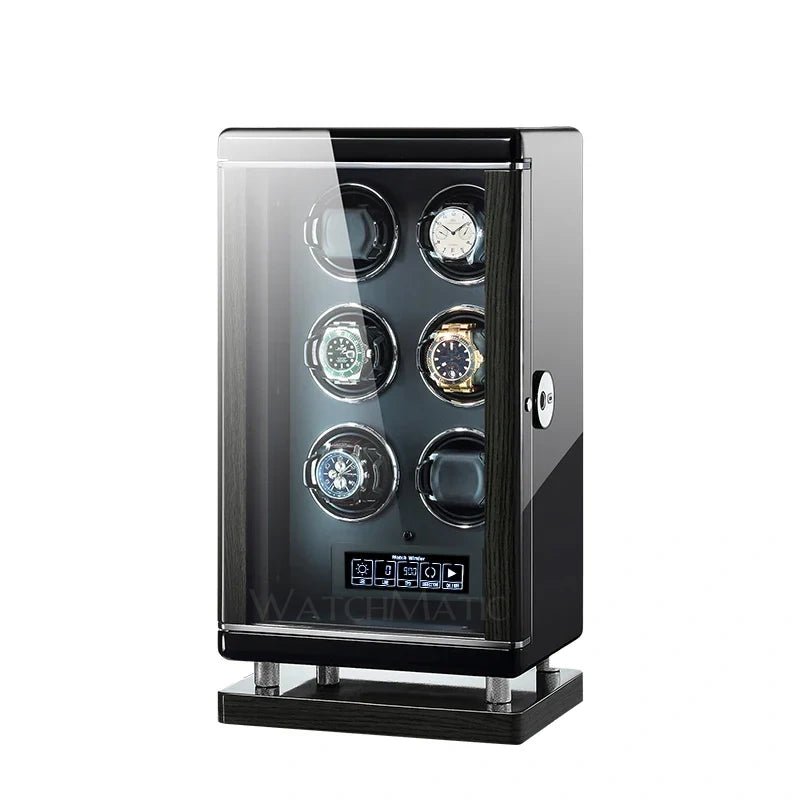
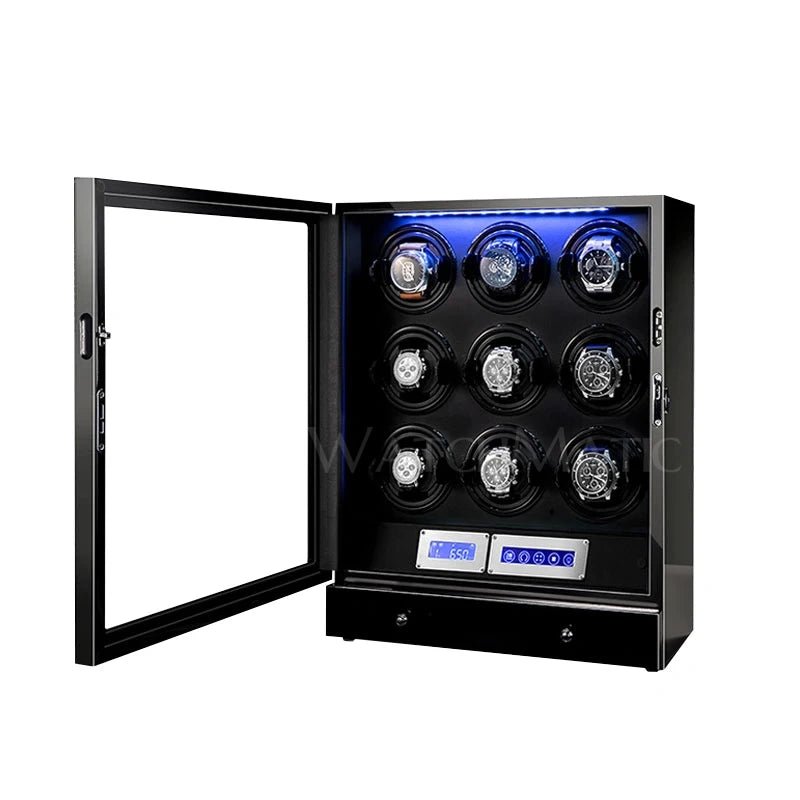
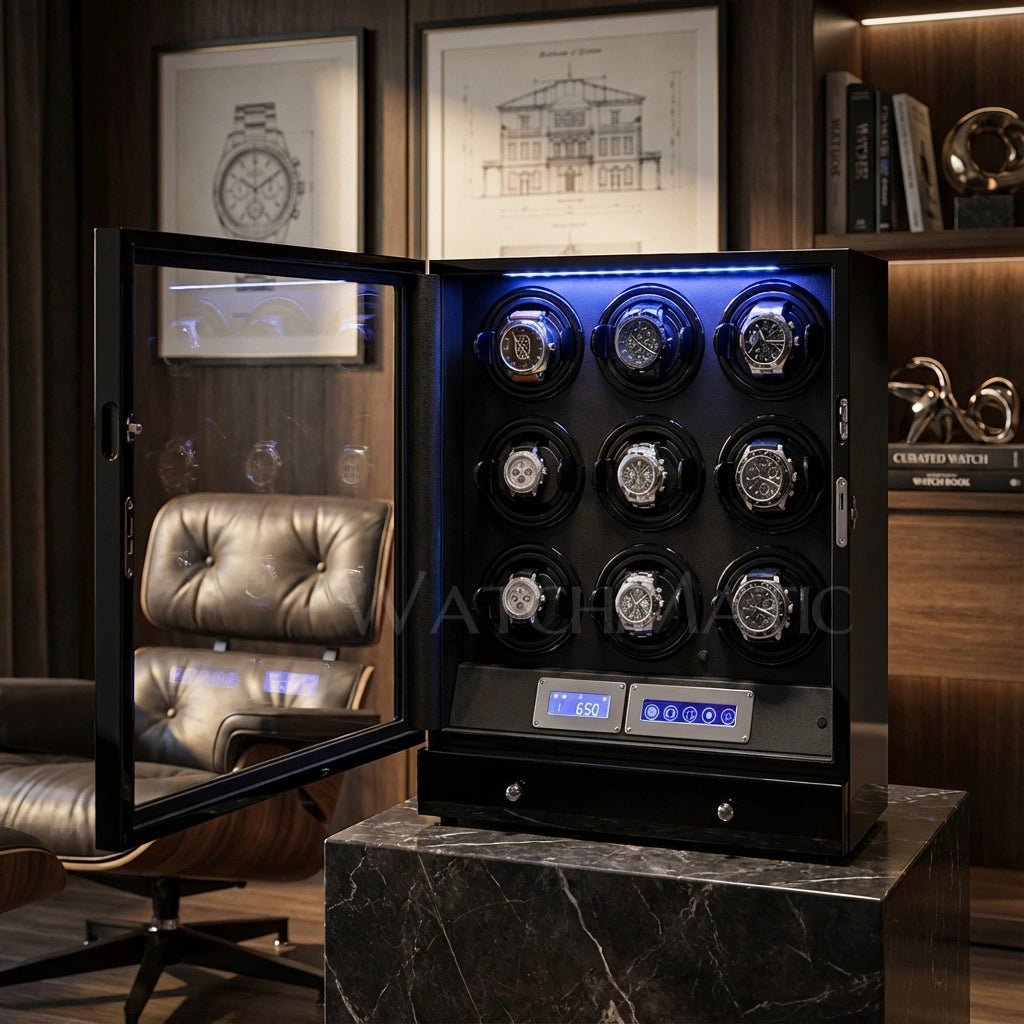
The Vento Luxury Quad Watch Winder is a logical option for a compact collection of automatic Czapek watches because it provides four independently controlled winding positions.
Each position can be configured individually for:
- Rotation direction
- TPD
- Winding mode
A four-watch configuration could contain:
- Antarctique SXH5
- Promenade SXH5.1
- Faubourg de Cracovie SXH3
- Time Jumper Calibre 10.01
without forcing four different automatic architectures onto one shared program.
Why Independent Control Matters for Czapek
Independent control matters more as the modern Czapek movement portfolio expands.
A current collector may own:
micro-rotor + central rotor + automatic chronograph + automatic tourbillon
inside the same collection.
There is no strong reason to assume they should all use one generic program.
Vento and Integrated Czapek Bracelets
Before long-term use with an Antarctique, confirm that the cushion:
- Compresses sufficiently
- Allows natural bracelet closure
- Keeps the case centered
- Does not stretch the bracelet
- Leaves the crown clear
This is particularly important with precious-metal bracelets.
Do Not Use a Powered Position for SXH1 or SXH2 Solely for Winding
A Quai des Bergues or Place Vendôme Tourbillon may physically fit on a rotating holder.
That does not mean the rotation winds it.
Powered positions are better allocated to genuine Czapek automatics.
Is It Safe to Keep a Czapek Automatic on a Watch Winder?
A properly configured premium winder can be appropriate for a confirmed automatic Czapek.
Important factors include:
- Identifying the exact reference
- Identifying the exact caliber
- Selecting suitable TPD
- Selecting suitable rotation direction
- Using controlled rest periods
- Supporting the bracelet or strap correctly
- Maintaining adequate enclosure clearance
- Using smooth low-vibration operation
If an automatic Czapek shows unexpectedly short reserve despite appropriate winding, professional inspection is more appropriate than continually increasing TPD.
A Watch Winder Does Not Service a Czapek
A watch winder does not:
- Replace lubricants
- Regulate accuracy
- Service a tourbillon
- Service a chronograph
- Service a rattrapante mechanism
- Repair a micro-rotor
- Maintain a double escapement
- Replace professional maintenance
Its purpose is limited to supplying controlled motion to an automatic winding system.
Watch Winder vs. Watch Safe for Czapek Collectors
Czapek is particularly well suited to a mixed automatic-and-stationary storage strategy.
| Feature | Standalone Winder | Watch Winder Safe |
|---|---|---|
| Automatic winding | Yes | Yes |
| Independent programming | Available | Available |
| Manual-watch storage | Possible | Yes |
| Physical security | Limited | High |
| Controlled access | Limited | High |
| Integrated-bracelet support | Yes | Yes |
| Precious-metal collection | Limited protection | More suitable |
| Larger mixed Czapek collection | Moderate | High |
Collectors requiring integrated winding and secure storage can explore the Watch Winder Safe Collection.
Titan Vault 20 for a Czapek Collection

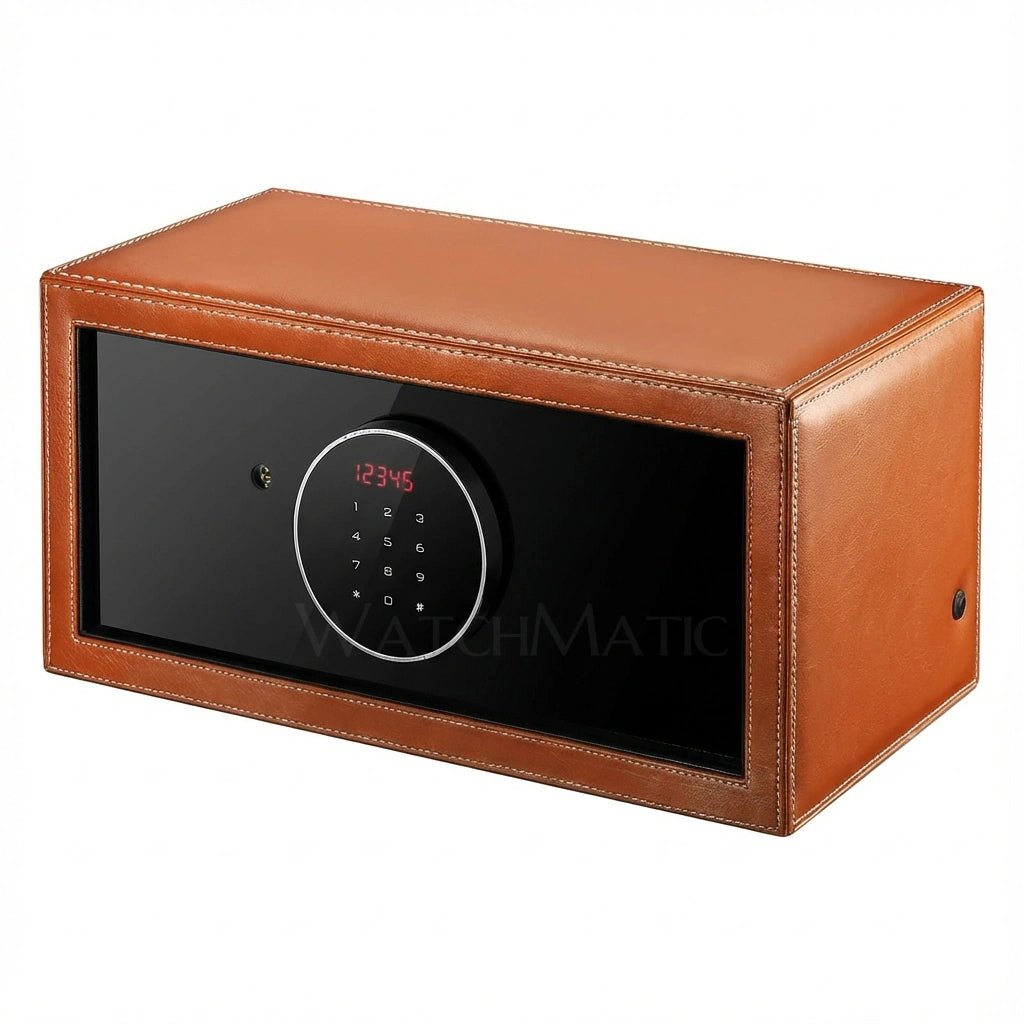
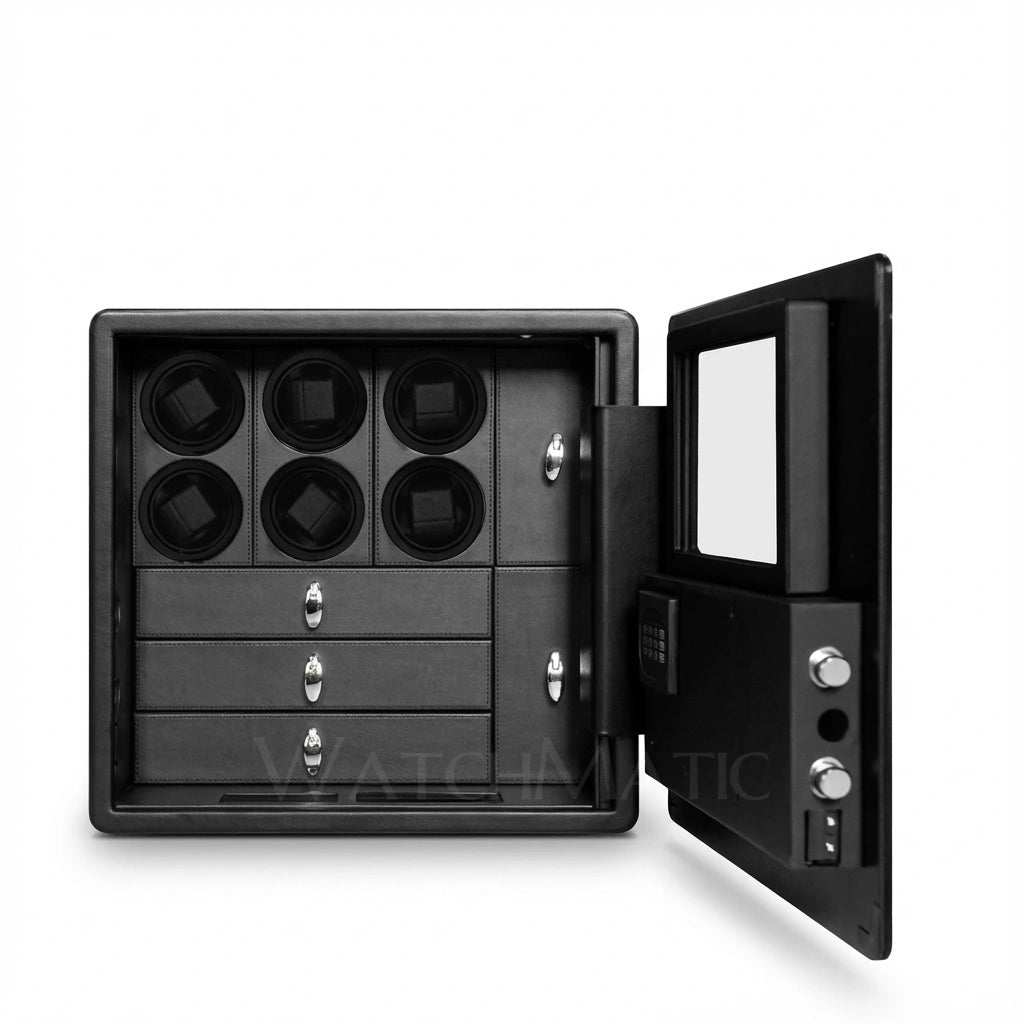
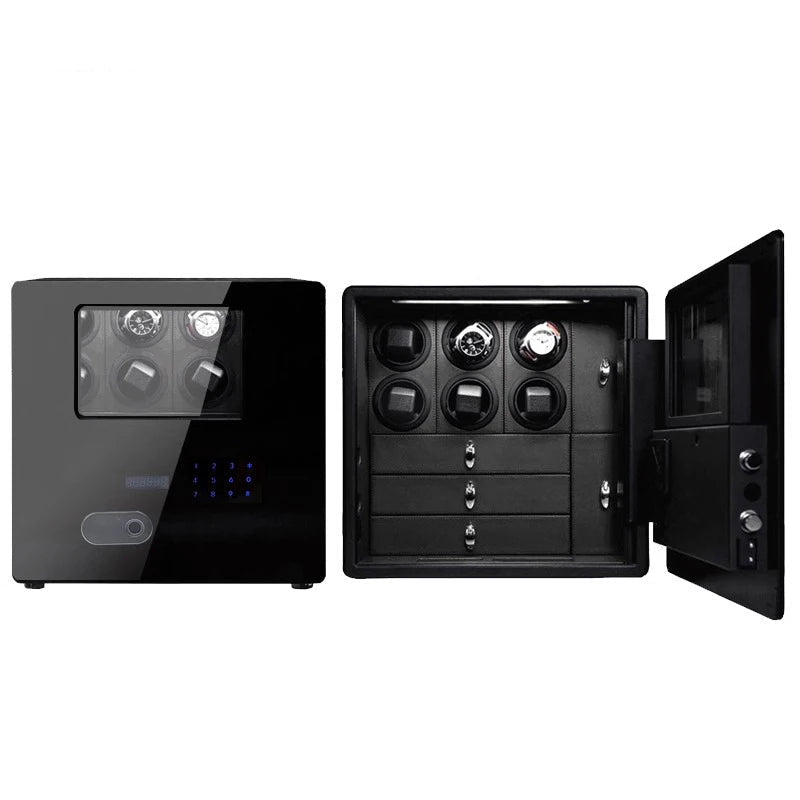
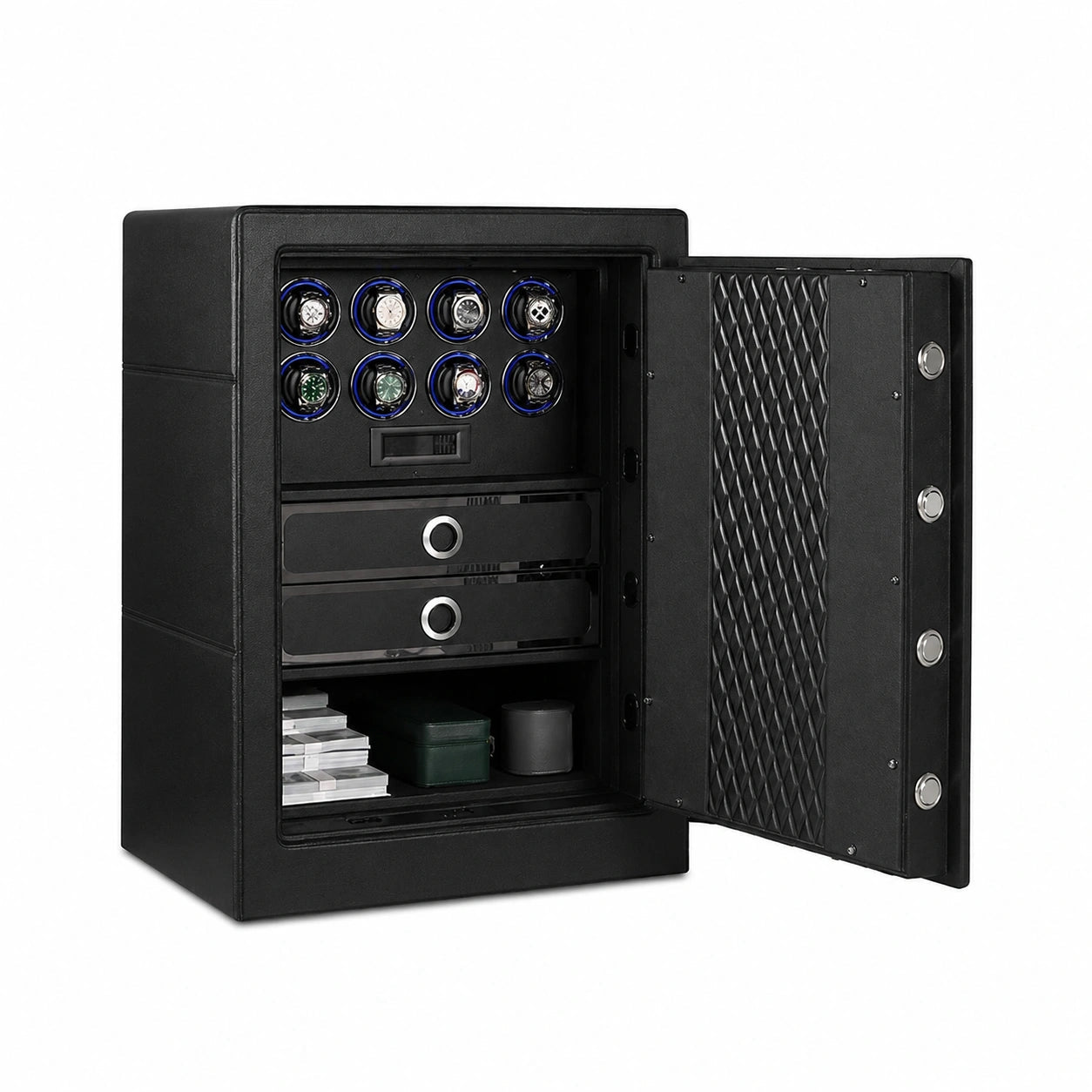
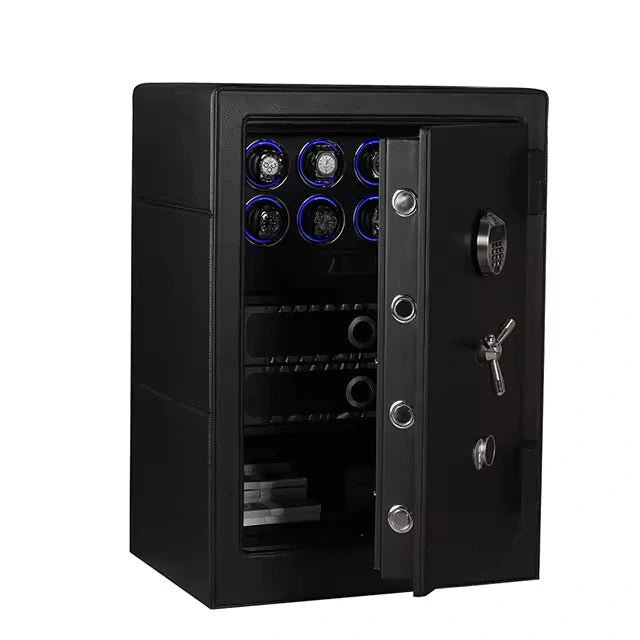
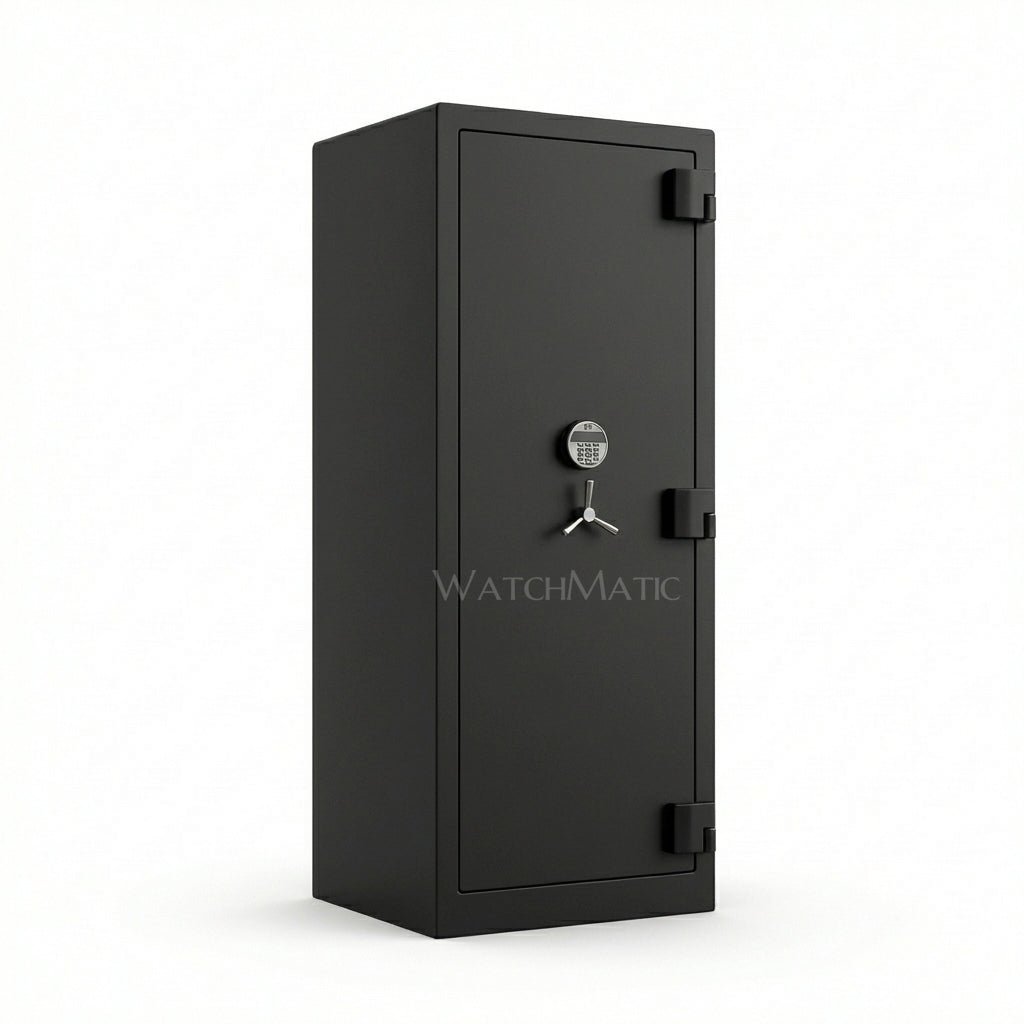
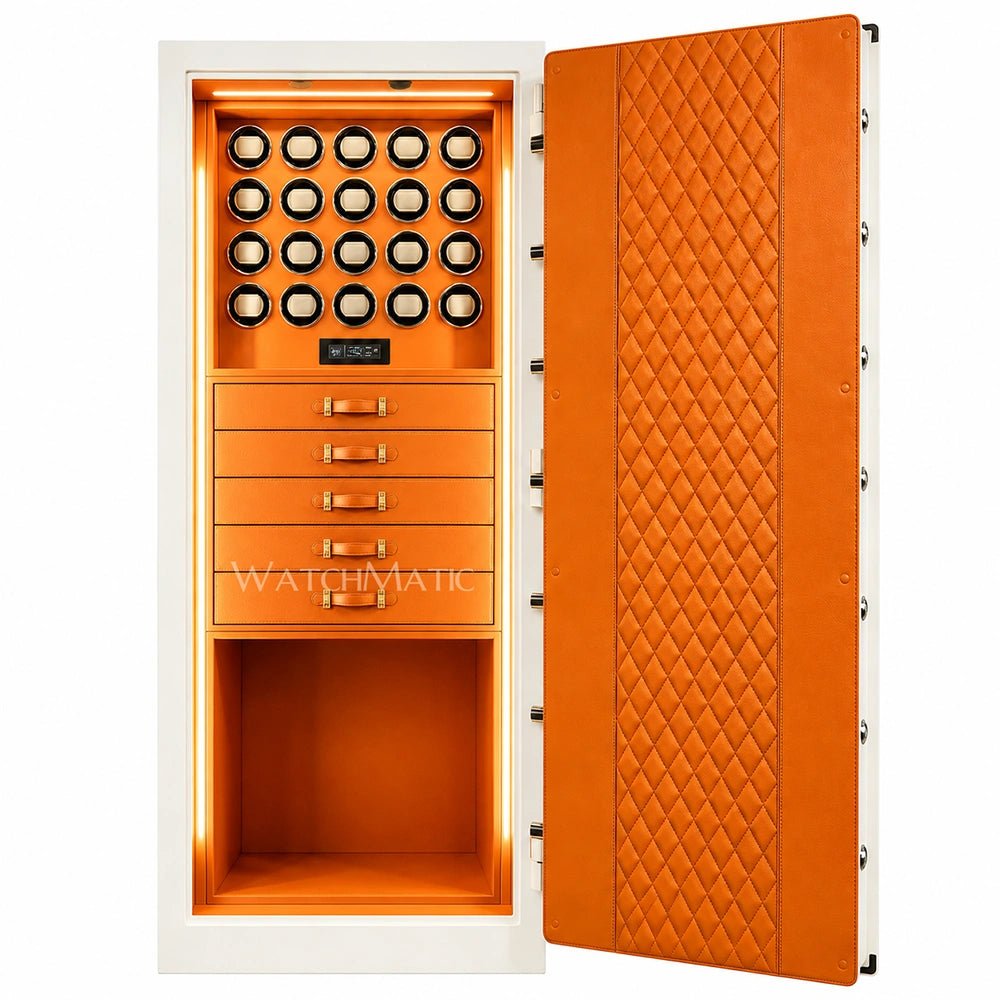
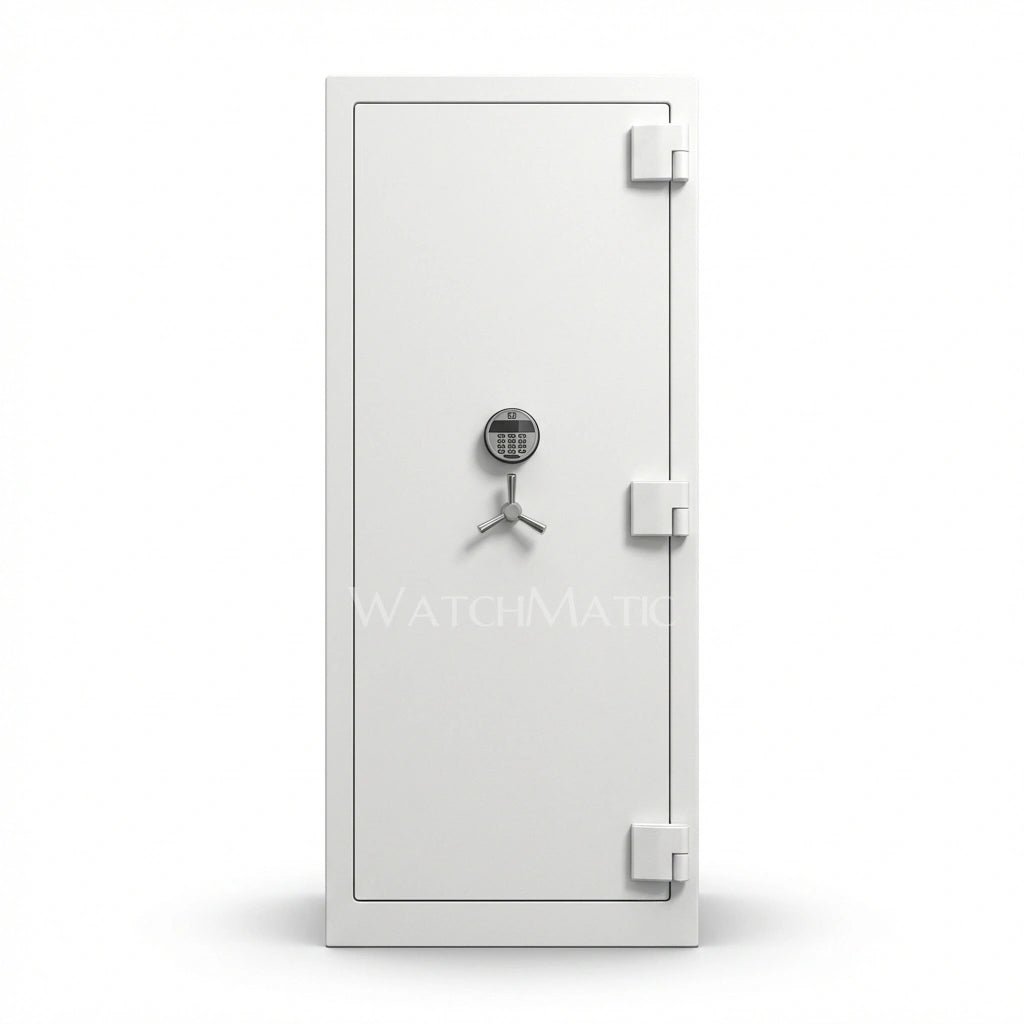
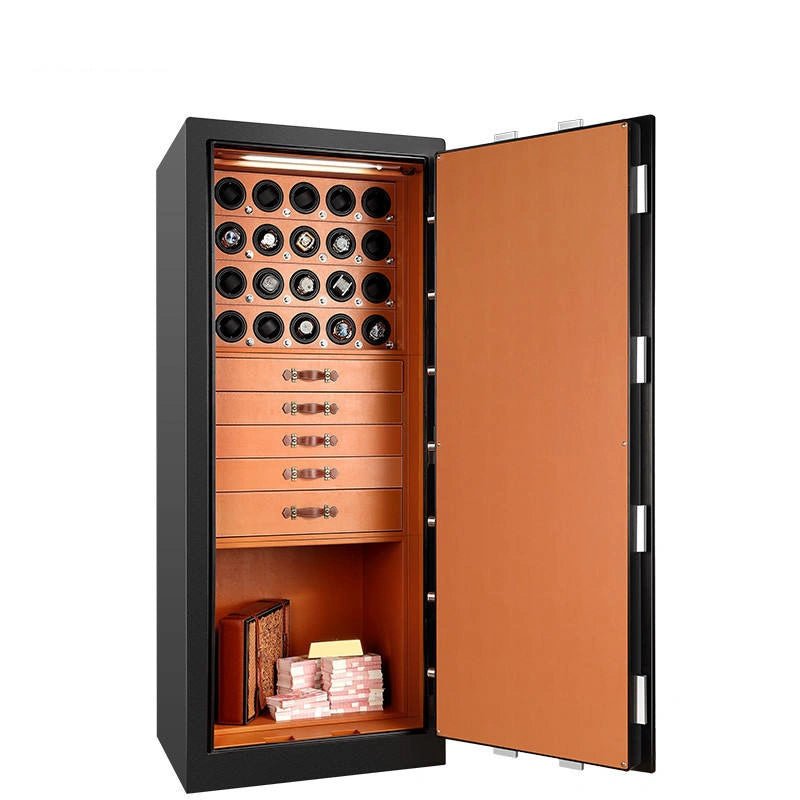
For a larger Czapek or mixed haute-horlogerie collection, the Titan Vault 20 Watch Winder Safe combines 20 automatic-winding positions with high-security storage architecture.
Current features include:
- Monolithic solid-steel body
- 10-layer reinforced exterior shell
- Biometric fingerprint access
- Digital passcode
- Manual key access
- Floor anchoring
- LCD touchscreen
- Japanese Mabuchi motors
- Independent winder control
- 650–2200 TPD range
- CW/CCW/bidirectional operation
- Ultra-quiet operation below 10 dB
- Anti-magnetization protection
- Adjustable interior lighting
- 10-year warranty
EN 15659 LFS 60 P fire certification and UL TL-30 / EN 1143-1 Grade III security certification are available upon request, rather than being assumed as standard certification on every configuration.
Why Titan Vault 20 Is Relevant to Czapek Collectors
Czapek is a substantially stronger security use case than many mid-priced automatic-watch brands.
A collection can include:
- Steel Antarctique
- Full-gold Antarctique
- Rattrapante
- Automatic Tourbillon
- Place Vendôme Complicité
- Quai des Bergues
- Limited guilloché and enamel pieces
At that point, the problem is no longer simply:
“How do I keep my automatic watch running?”
It becomes:
“How do I program, organize and physically protect a high-value mixed collection?”
Automatic and Manual Czapek Watches Need Different Storage Roles
A mixed safe could allocate:
automatic calibers → individually programmed winding positions
and:
manual SXH1 / SXH2 / Calibre 8 watches → secure stationary storage.
This is more rational than rotating every mechanical watch.
Security Value and Winder Value Are Separate
A Place Vendôme Complicité may be one of the most valuable watches in a collection.
Yet:
Calibre 8 → manual → no rotor required.
An Antarctique SXH5 may cost significantly less.
Yet:
SXH5 → automatic → rotor can be useful.
Therefore:
the most expensive watch does not necessarily need the most motorized storage.
Precious-Metal Antarctique Strengthens the Security Case
Full-gold Antarctique references combine:
- Precious-metal cases
- Precious-metal integrated bracelets
- Limited production
- Manufacture micro-rotor movements
These pieces make secure winding increasingly relevant because both:
- automatic readiness
- physical protection
matter simultaneously.
Complicité and Quai des Bergues Strengthen the Stationary-Storage Case
A collection dominated by:
- Quai des Bergues
- Place Vendôme Tourbillon
- Place Vendôme Complicité
may contain extremely valuable mechanical watches but require relatively few powered positions.
For such collections, secure stationary solutions from the Luxury Watch Safe Collection may be more appropriate than maximizing rotor count.
Czapek in a Mixed Independent Haute Horlogerie Collection
Czapek naturally sits alongside independent and high-horology brands that combine traditional finishing with modern movement architecture.
A mixed collection might include:
Czapek + F.P. Journe + Parmigiani Fleurier + Girard-Perregaux + Armin Strom + Roger Dubuis
Related WatchMatic guides include:
Best Watch Winder for F.P. Journe Watches
Best Watch Winder for Parmigiani Fleurier Watches
Best Watch Winder for Girard-Perregaux Watches
Best Watch Winder for Armin Strom Watches
Best Watch Winder for Roger Dubuis Watches
A collection at this level benefits much more from independent movement programming than from a single universal rotor setting.
Czapek vs. F.P. Journe
Both manufacturers combine:
- Automatic movements
- Manually wound high horology
- Strong collector demand
- independent movement architecture
However, their automatic approaches differ.
F.P. Journe publishes explicit rotator specifications for selected models.
Czapek's product information establishes automatic-winder compatibility for its self-winding watches but should not be reduced to one universal TPD number.
Czapek vs. Parmigiani Fleurier
Both brands make extensive use of:
- Micro-rotors
- Integrated sports-watch designs
- Haute-horlogerie finishing
- High complications
However:
micro-rotor does not create a universal cross-brand setting.
Exact caliber information must still take priority.
Czapek vs. Girard-Perregaux
Both manufacturers span:
- Automatic sports watches
- Tourbillons
- high-end chronographs
- traditional haute horlogerie
In both cases, complication name alone cannot determine winding type.
Czapek vs. Armin Strom
Armin Strom's current high-complication portfolio is heavily manual outside a relatively small automatic group.
Czapek's current catalog is more automatic-heavy, including even its new Antarctique Tourbillon.
This means two similarly positioned independent collections can require very different ratios of rotor positions to stationary storage.
How to Choose the Best Watch Winder for Your Czapek
Step 1: Identify the Exact Collection
Determine whether the watch is:
- Antarctique
- Antarctique S
- Antarctique Tourbillon
- Antarctique Rattrapante
- Promenade
- Faubourg de Cracovie
- Time Jumper
- Quai des Bergues
- Place Vendôme
Step 2: Identify the Exact Reference and Generation
This matters because Czapek movements continue to evolve.
Do not assume every visually similar Antarctique uses the same caliber.
Step 3: Identify the Caliber
Important examples include:
- SXH1
- SXH2
- SXH3
- SXH5
- SXH5.1
- SXH6
- SXH7
- Calibre 8
- Calibre 9
- Calibre 10.01
Step 4: Confirm Automatic or Manual
Examples:
SXH1 → manual
SXH2 → manual
SXH3 → automatic
SXH5 → automatic
SXH6 → automatic
SXH7 → automatic
Calibre 8 → manual
Calibre 9 → automatic
Calibre 10.01 → automatic
Step 5: Check Power Reserve
Representative figures include:
- Calibre 10.01 — 55 h
- SXH2 — 60 h manual
- SXH5 — 60 h
- SXH6 — 60 h
- SXH7 — 60 h
- SXH3 — 65 h
- Calibre 8 — 72 h manual
- Calibre 9 — 100 h
- SXH1 — 168 h manual
Step 6: Determine Whether TPD Is Relevant
TPD only matters for self-winding movements.
Do not assign conventional TPD to:
- SXH1
- SXH2
- Calibre 8
Step 7: Determine Rotation Direction
Use verified caliber-specific information.
Choose a winder capable of:
- CW
- CCW
- Bidirectional
Step 8: Consider the Complication
A:
- Chronograph
- Rattrapante
- Tourbillon
- Jumping hour
- Double escapement
does not by itself determine automatic or manual winding.
Step 9: Check Physical Fit
Pay particular attention to:
- Integrated Antarctique bracelets
- Full-gold bracelets
- Rattrapante case thickness
- Time Jumper half-hunter cover
- large sapphire glass-box cases
Step 10: Match Rotor Capacity to Automatic Watches
Do not equate:
total Czapek mechanical watches
with:
total powered winding positions required.
For broader resources covering automatic winding, TPD, secure storage, and collection protection, visit the WatchMatic Guide Hub.
Best Watch Winder for Czapek Watches: Final Thoughts
Choosing the best watch winder for a Czapek requires identifying the exact caliber before selecting TPD or rotation direction.
Modern Czapek now contains a wide range of automatic architectures.
The SXH5 Antarctique provides approximately 60 hours through a platinum micro-rotor.
The SXH5.1 Promenade also provides approximately 60 hours.
The SXH3 Faubourg de Cracovie is an automatic 5 Hz chronograph with approximately 65 hours.
The SXH6 Antarctique Rattrapante is an automatic split-seconds chronograph with approximately 60 hours.
The SXH7 Révélation is a skeletonized automatic micro-rotor movement with approximately 60 hours.
The Time Jumper Calibre 10.01 uses a central automatic rotor and provides approximately 55 hours.
Most notably, the new Antarctique Tourbillon Calibre 9 is automatic and provides approximately 100 hours of power reserve.
But Czapek's manually wound movements remain equally important.
The Quai des Bergues SXH1 provides approximately 168 hours / seven days.
The Place Vendôme SXH2 Tourbillon provides approximately 60 hours.
The Place Vendôme Complicité Calibre 8 provides approximately 72 hours.
None of these manual calibers receives winding energy from conventional rotation.
This creates two particularly strong Czapek comparisons:
Antarctique Tourbillon Calibre 9 → 100 h → automatic → winder compatible
versus:
Place Vendôme Tourbillon SXH2 → 60 h → manual → no conventional winding benefit
and:
Antarctique SXH5 → 60 h → automatic → winder compatible
versus:
Quai des Bergues SXH1 → 168 h → manual → no conventional winding benefit.
The central lesson is therefore:
neither complication type nor power reserve determines whether a Czapek belongs on a watch winder.
For a confirmed automatic Czapek, prioritize:
- Adjustable TPD
- CW/CCW/bidirectional programming
- Independent controls
- Controlled rest cycles
- Smooth low-vibration motors
- Compressible bracelet cushions
- Stable support for precious-metal watches
- Adequate case and crystal clearance
For SXH1, SXH2 and Calibre 8 watches, prioritize premium stationary storage instead.
The most reliable decision framework is:
Czapek Reference → Generation → Caliber → Automatic or Manual → Power Reserve → Complication → Physical Fit → TPD/Direction → Winder or Stationary Storage
For additional automatic-winding and secure-storage solutions, explore WatchMatic.