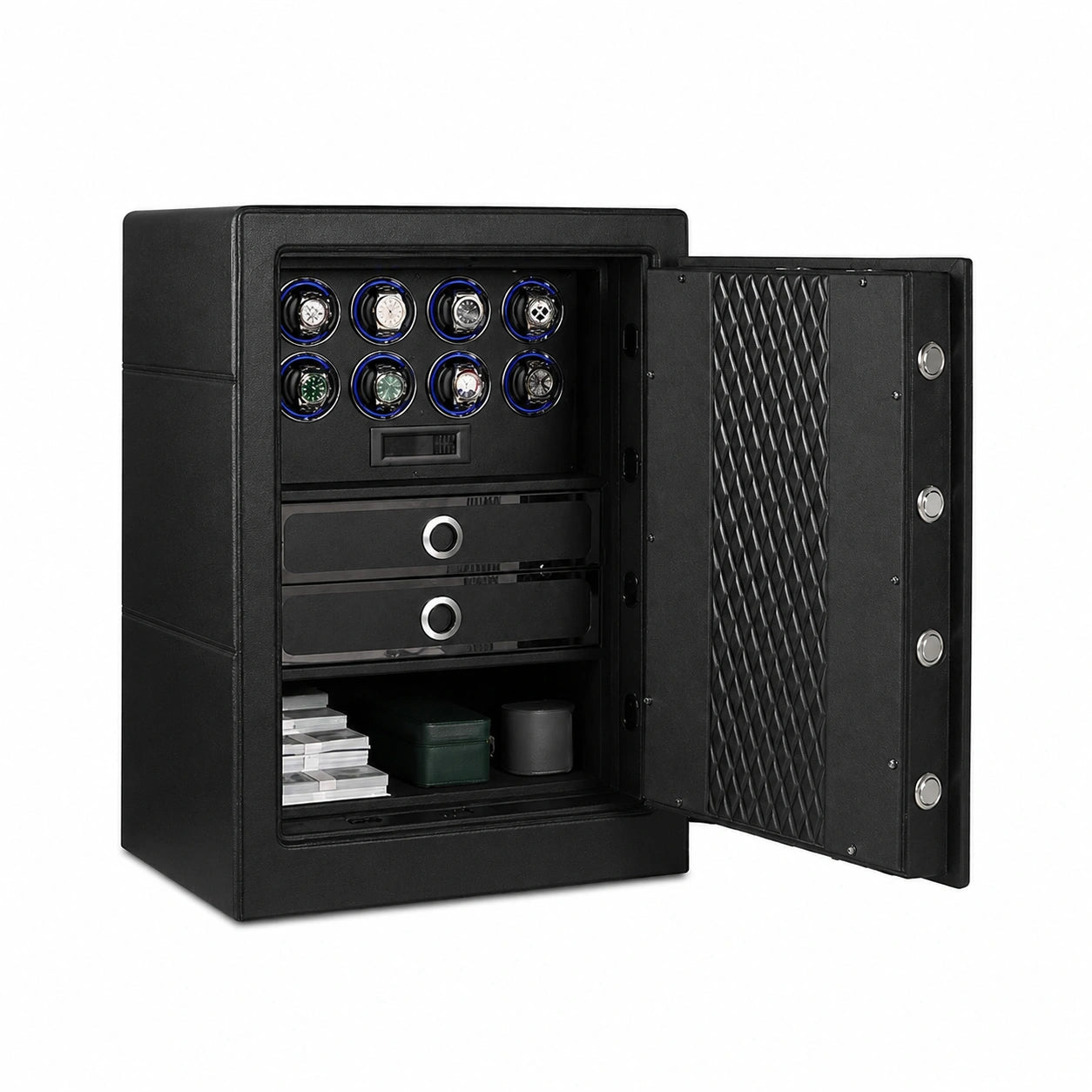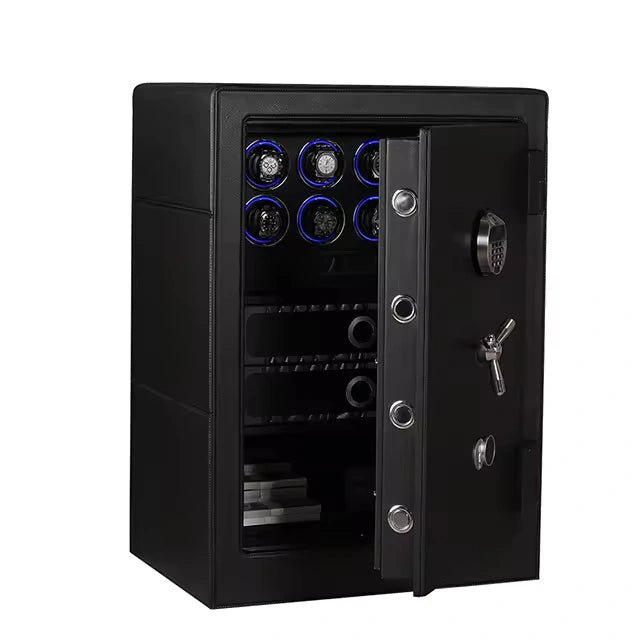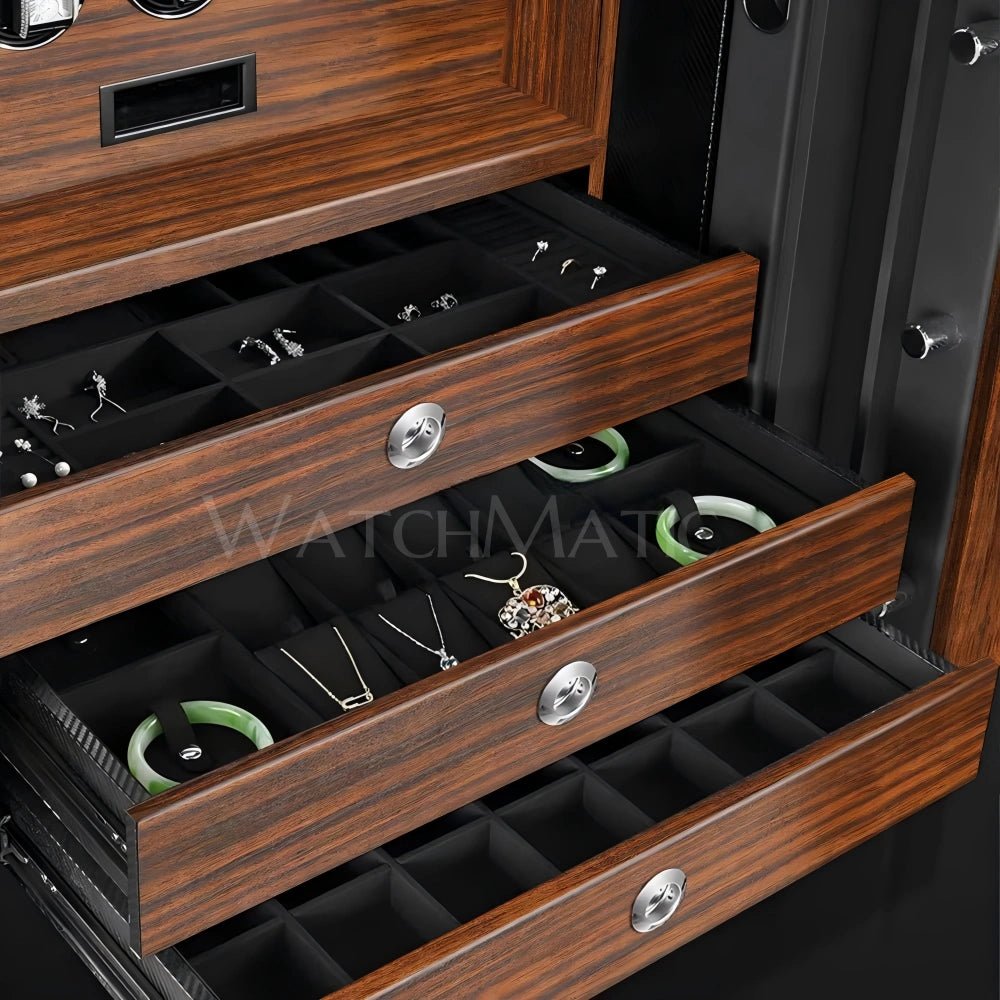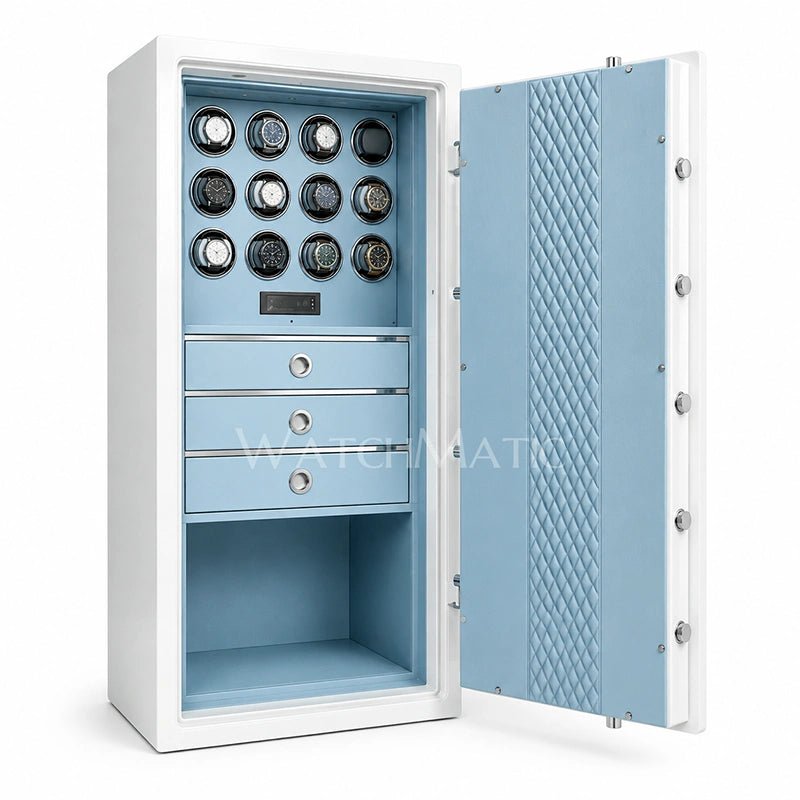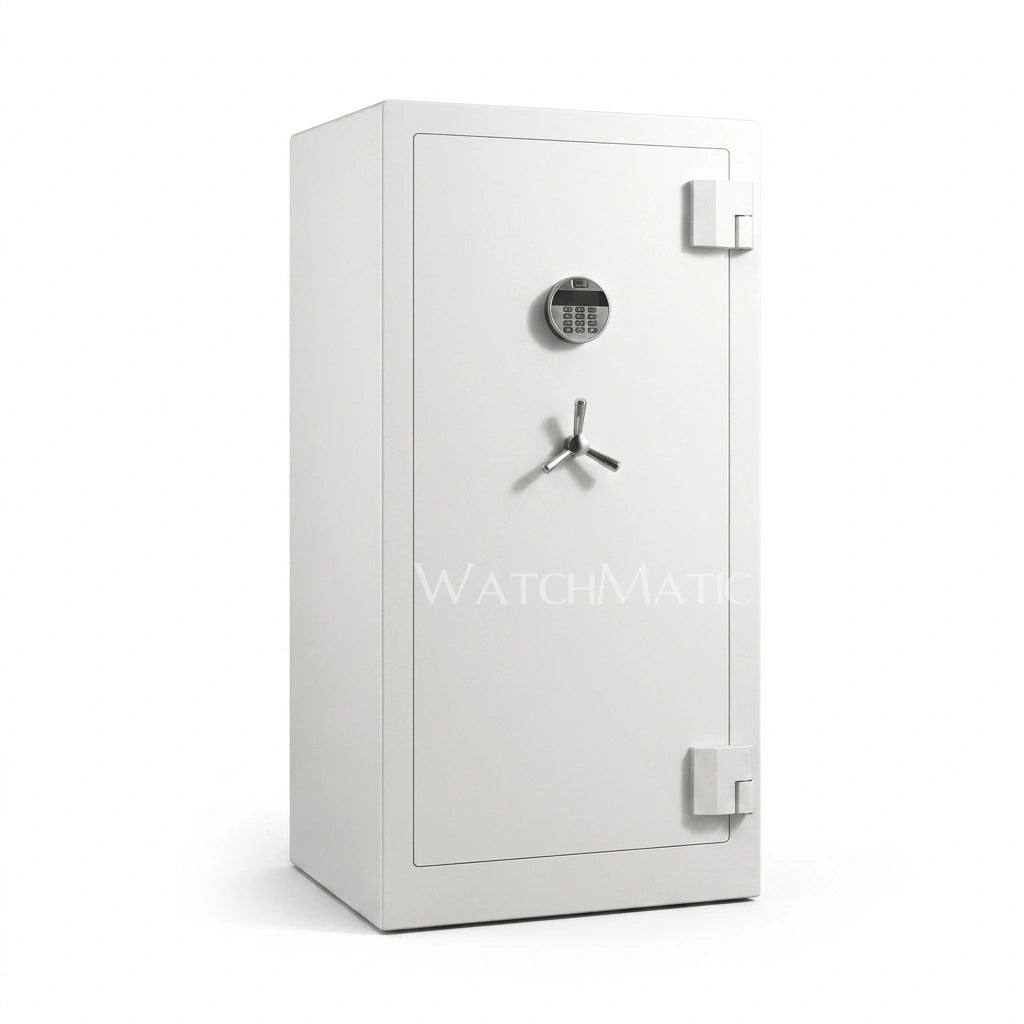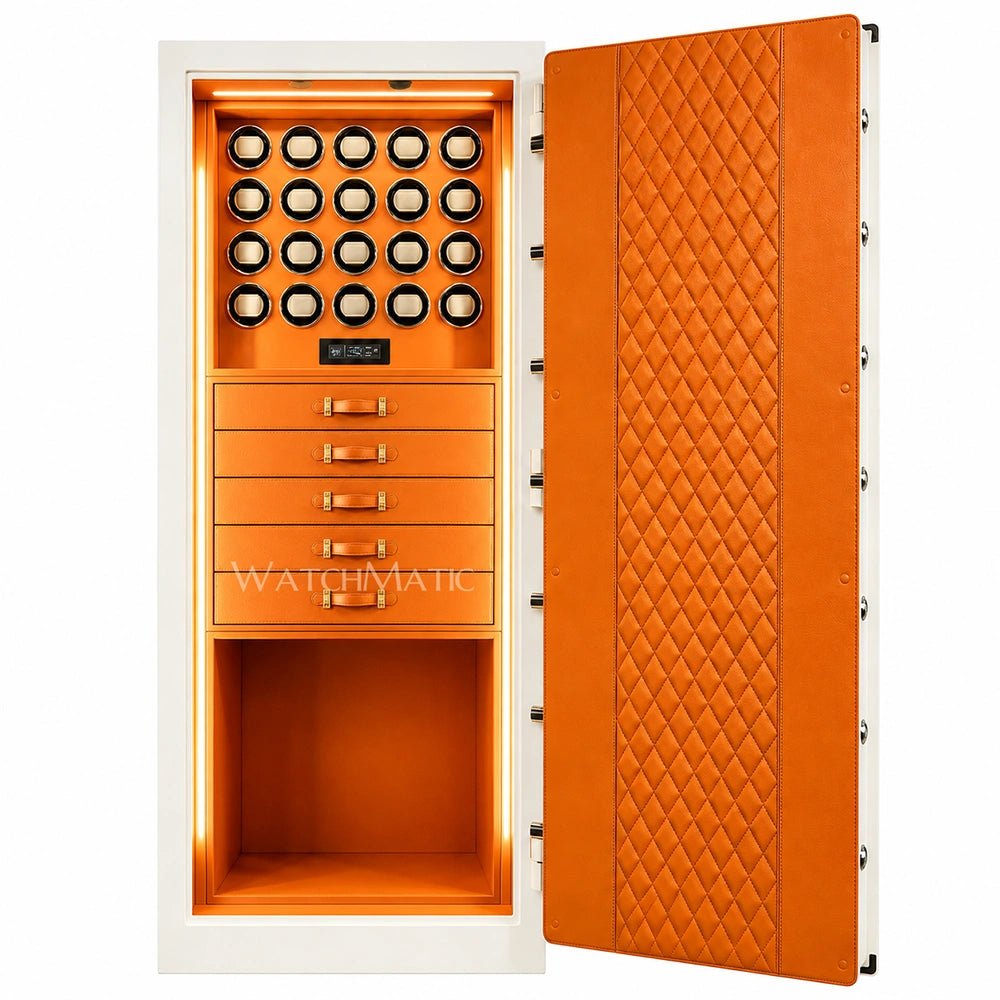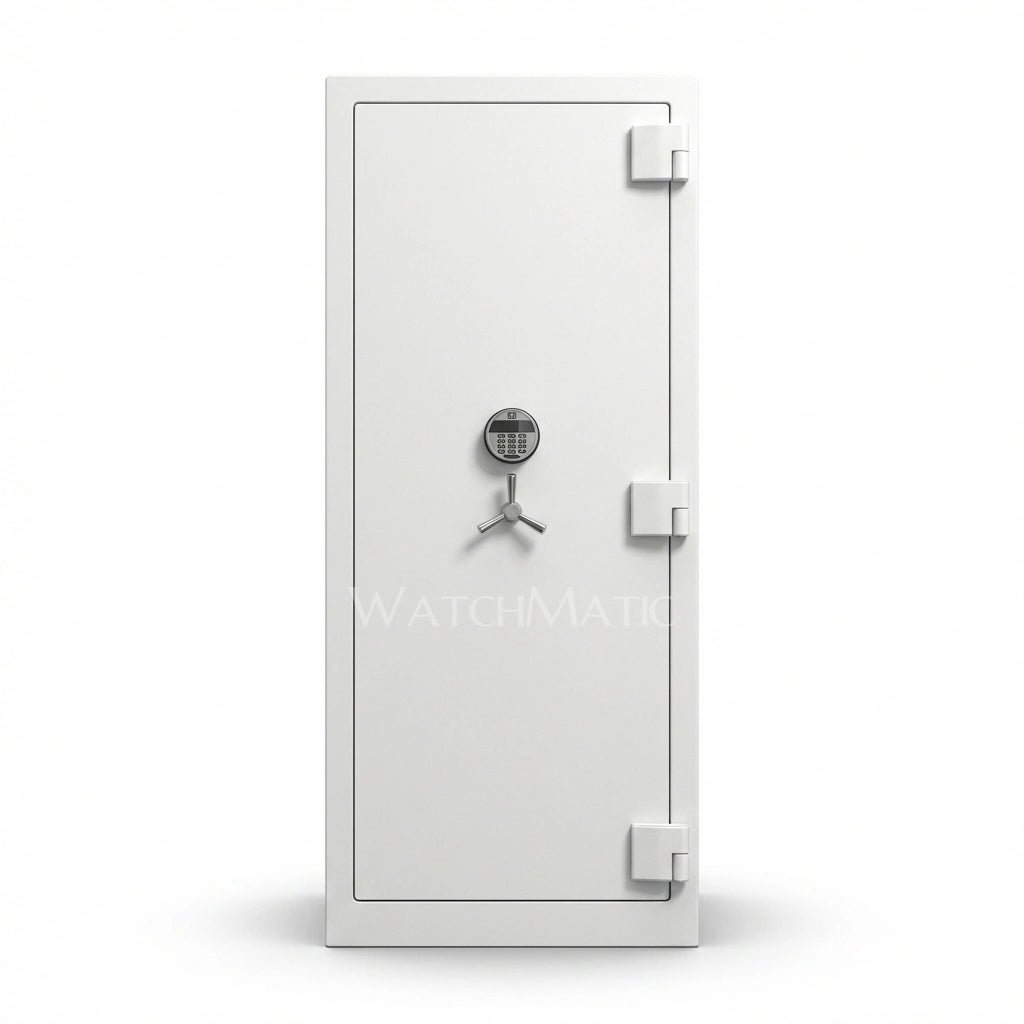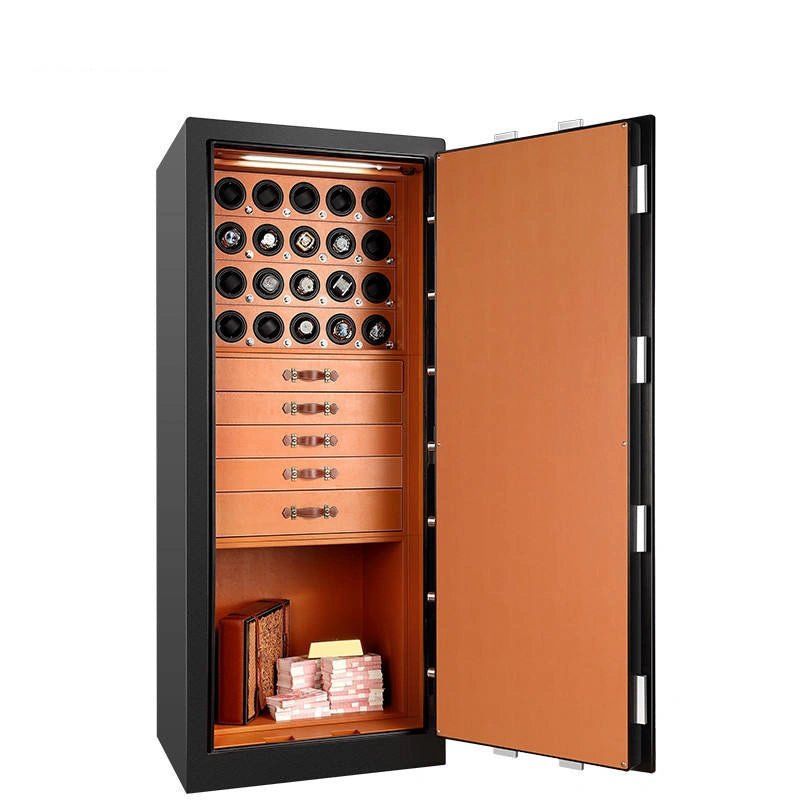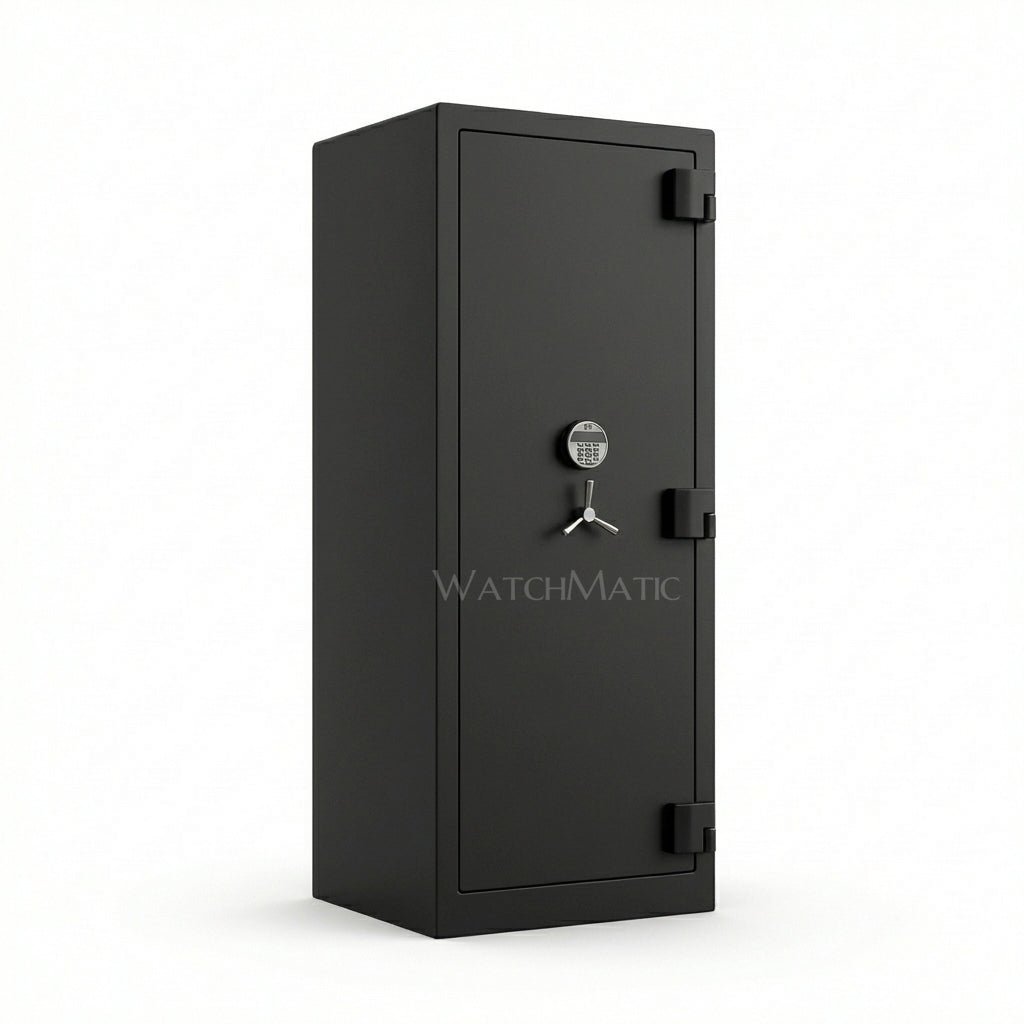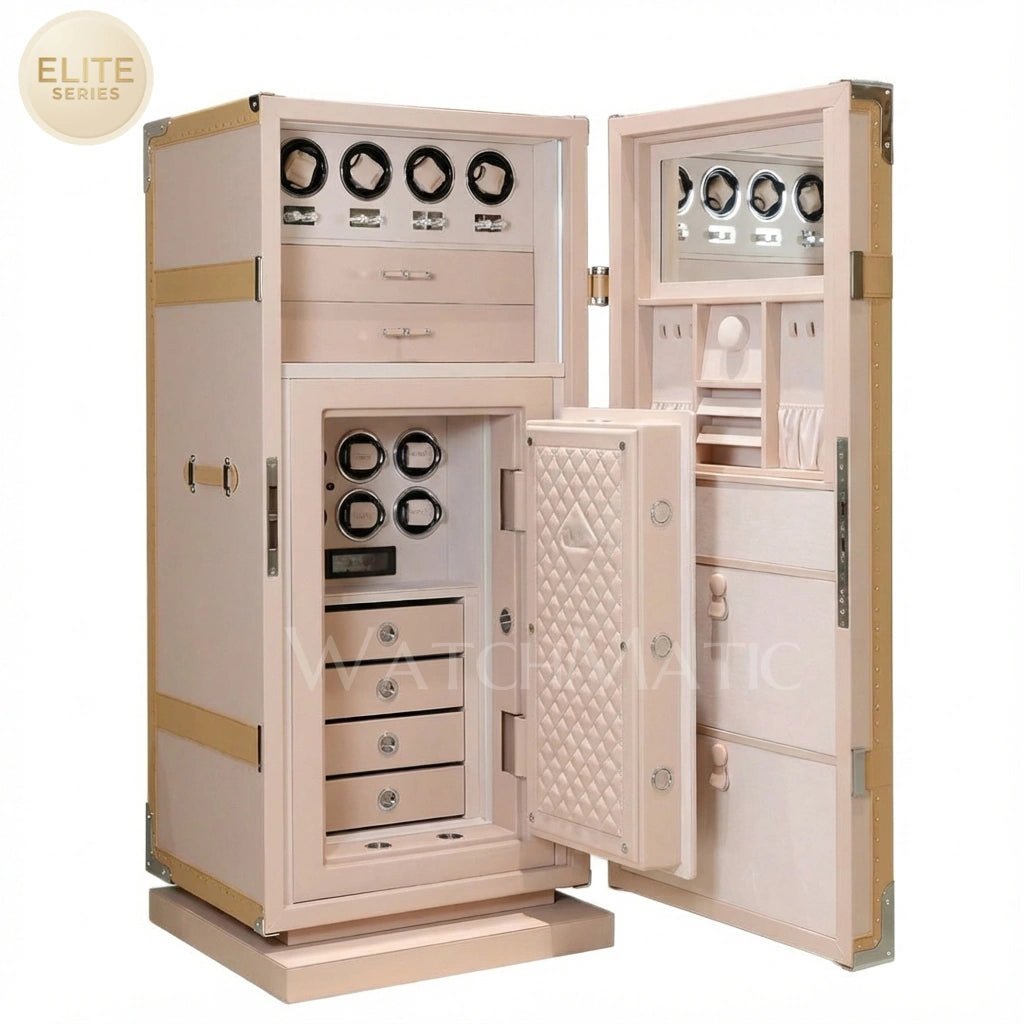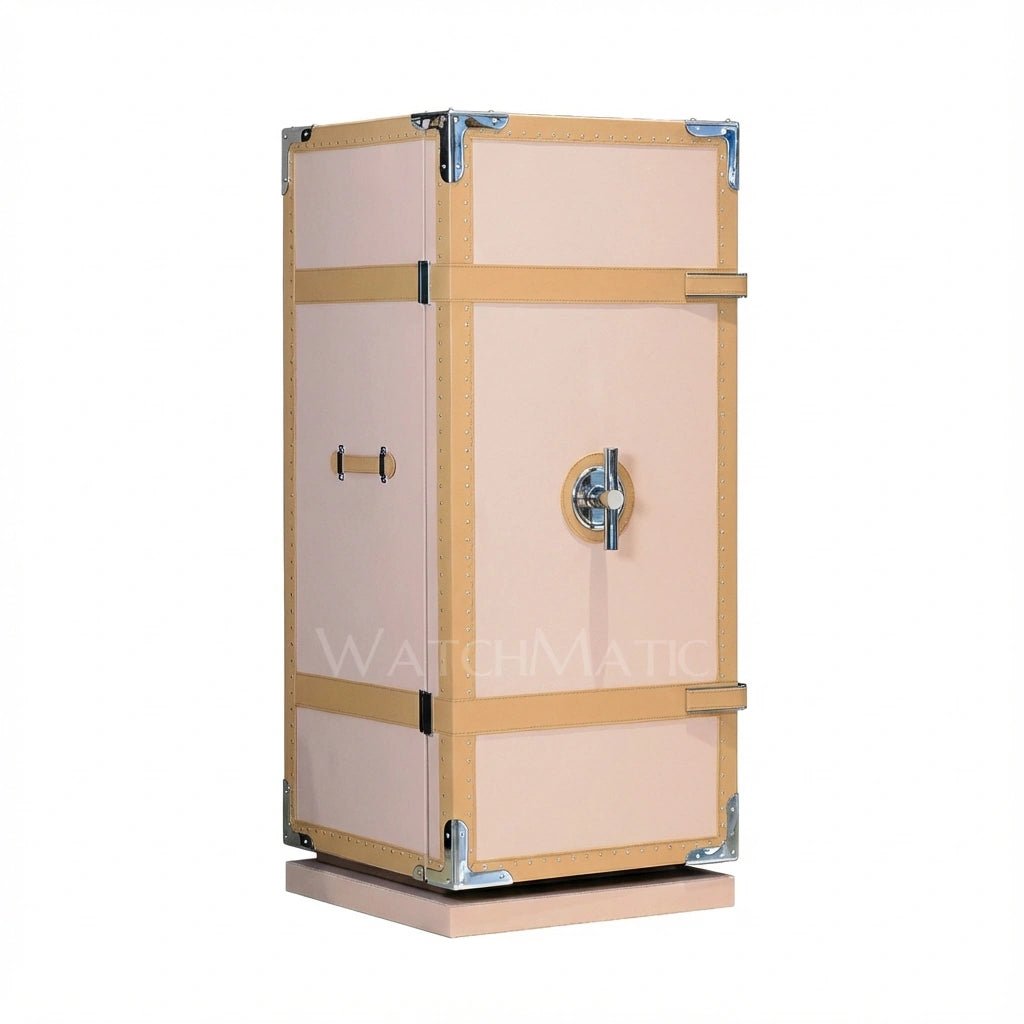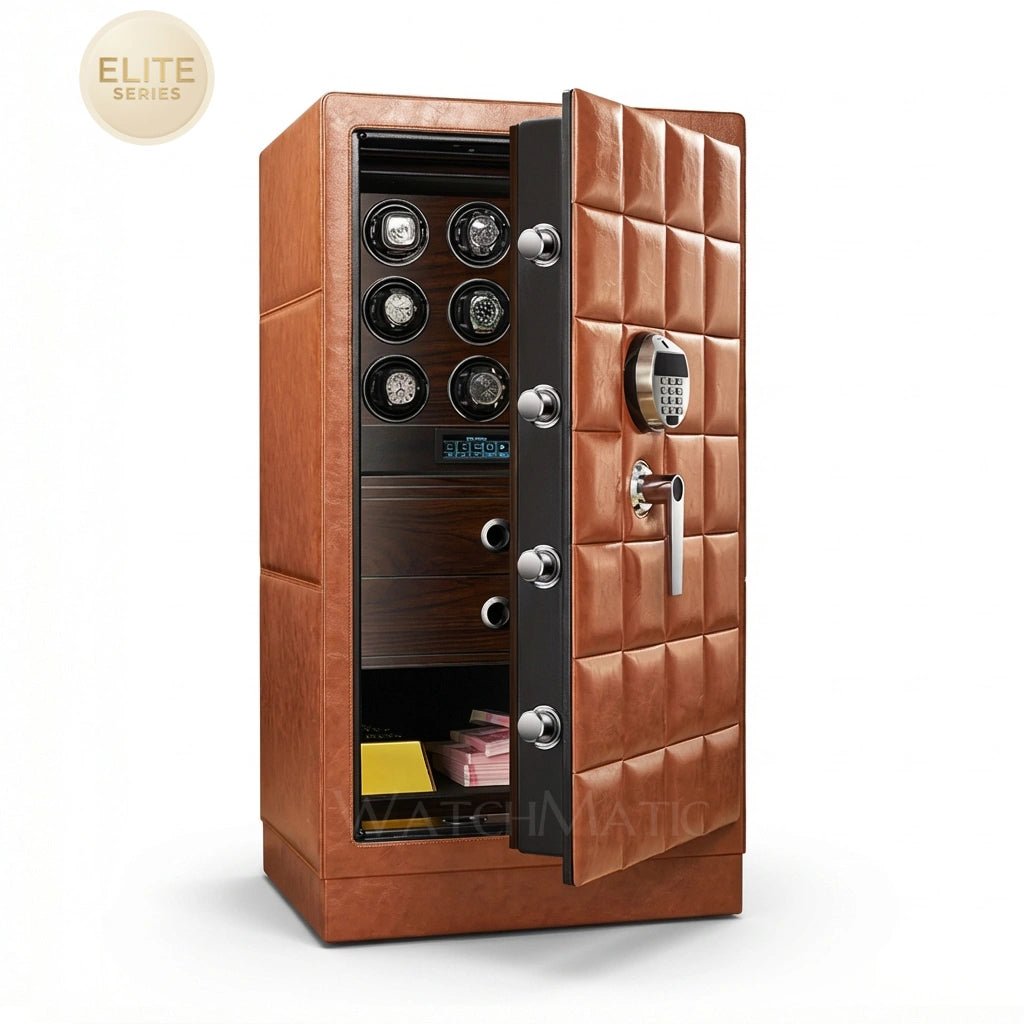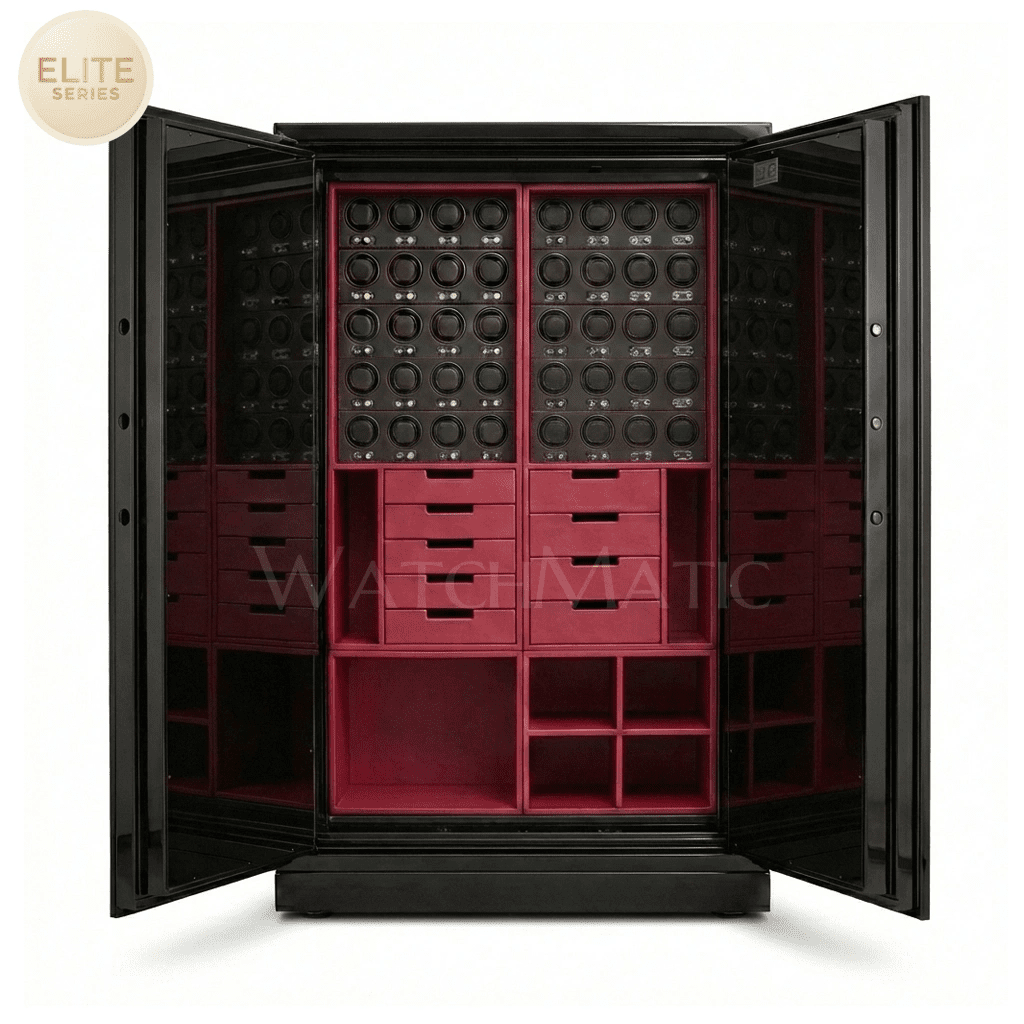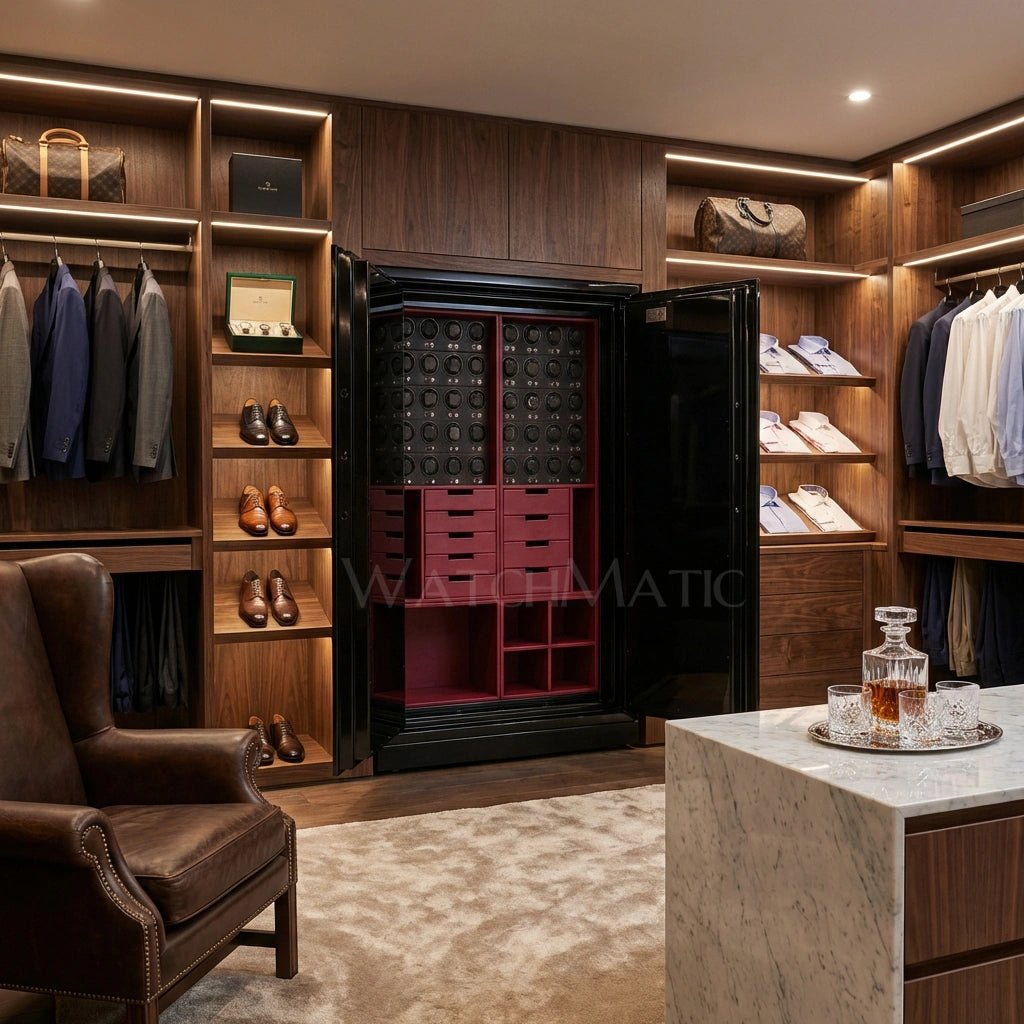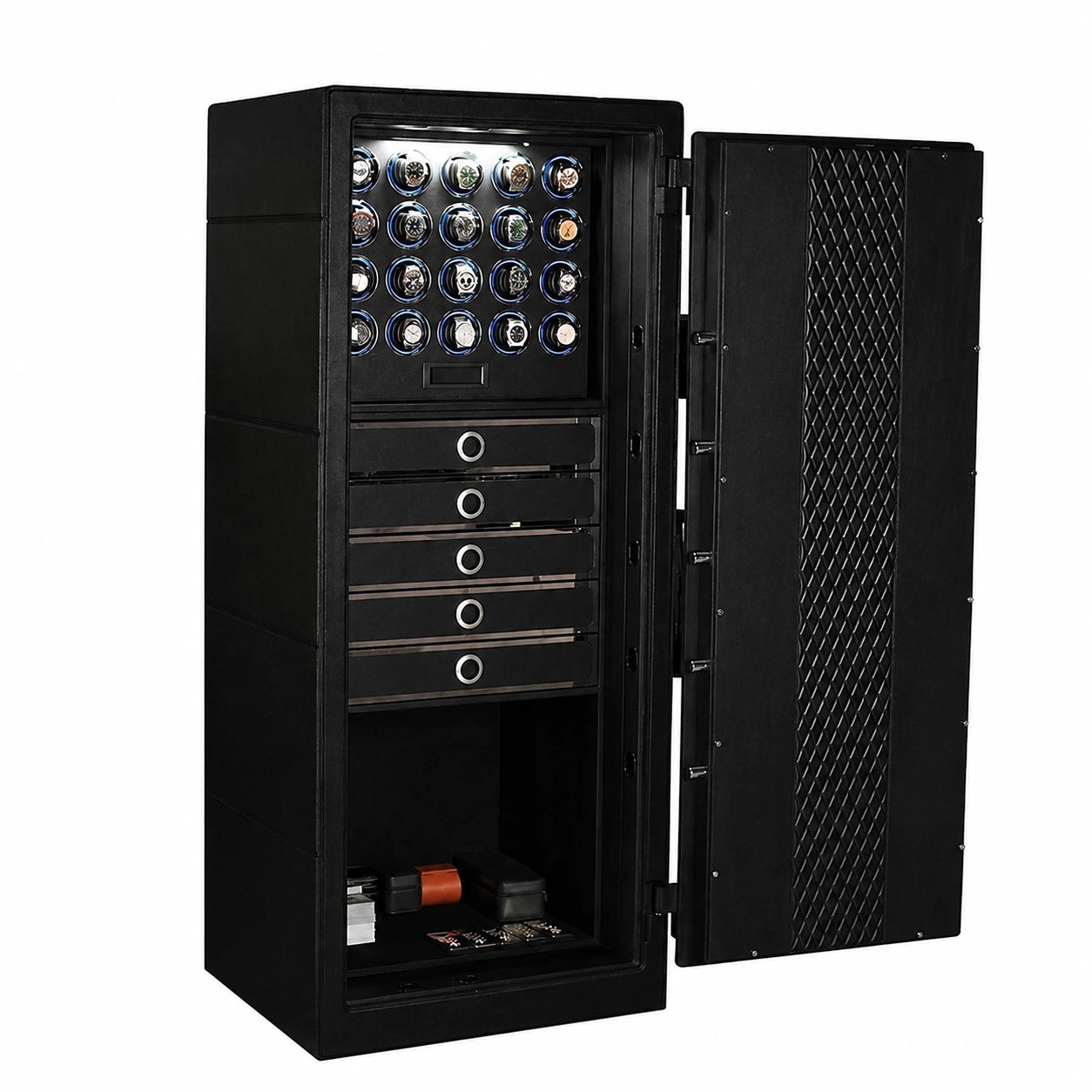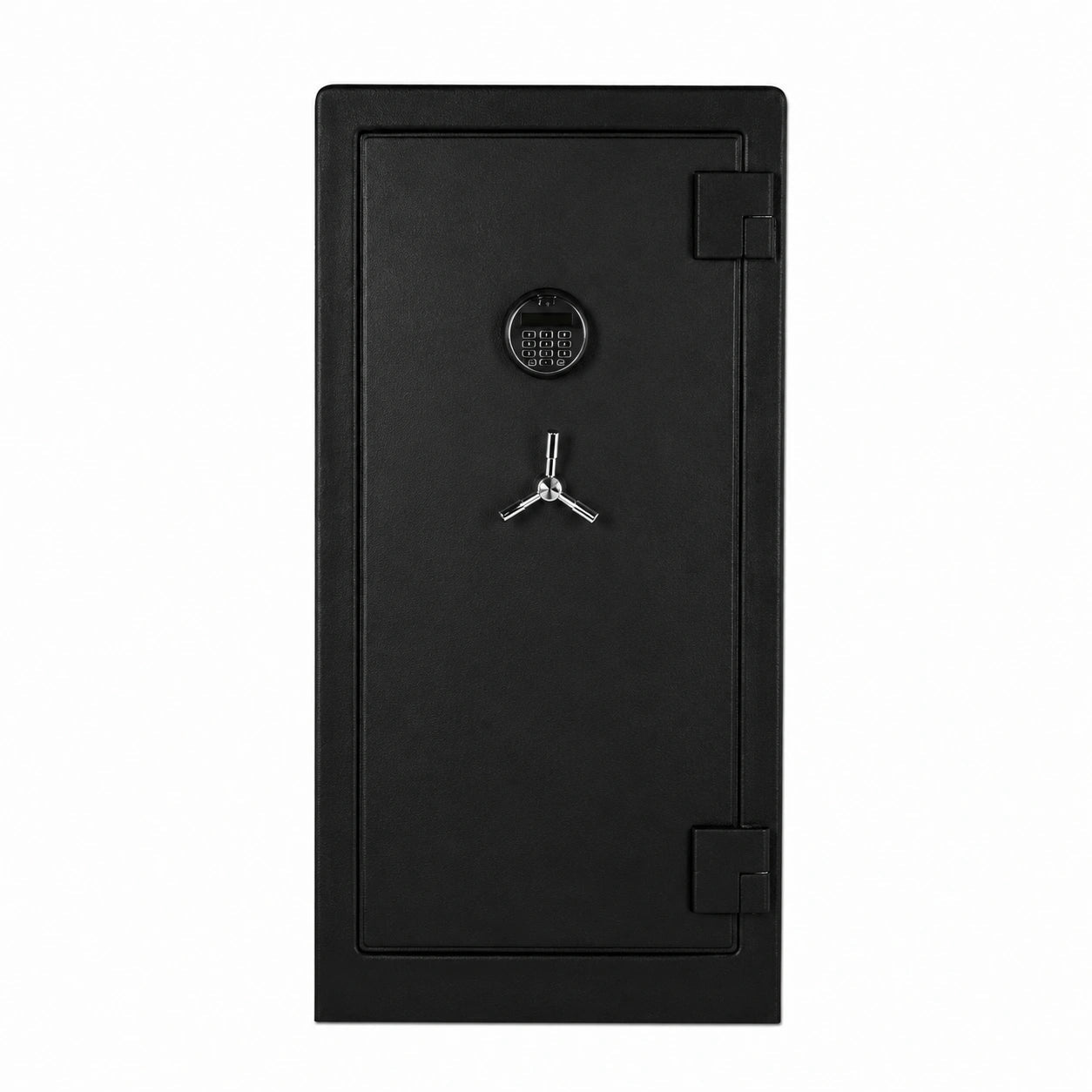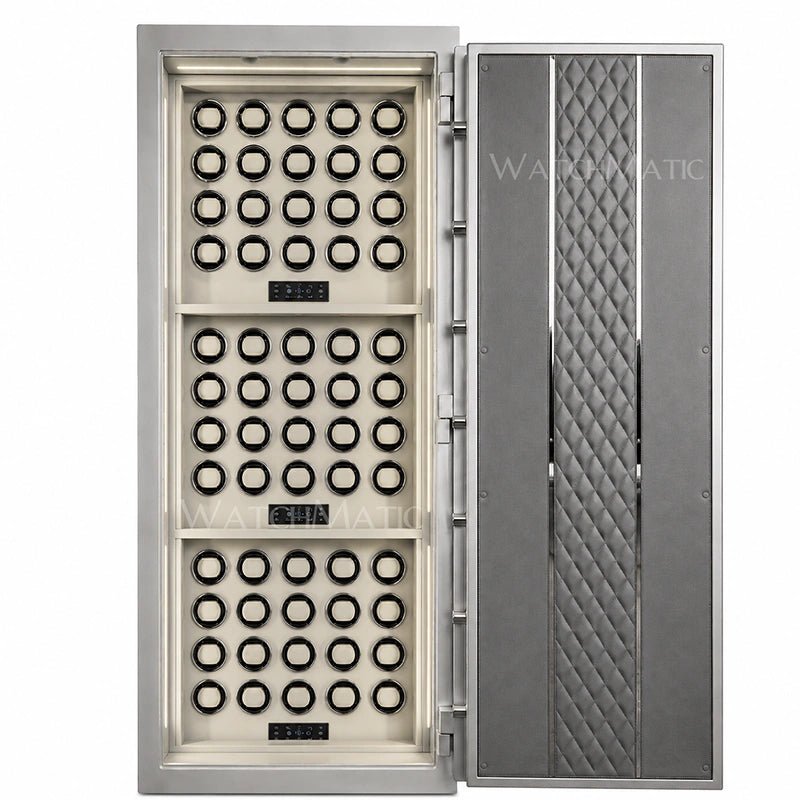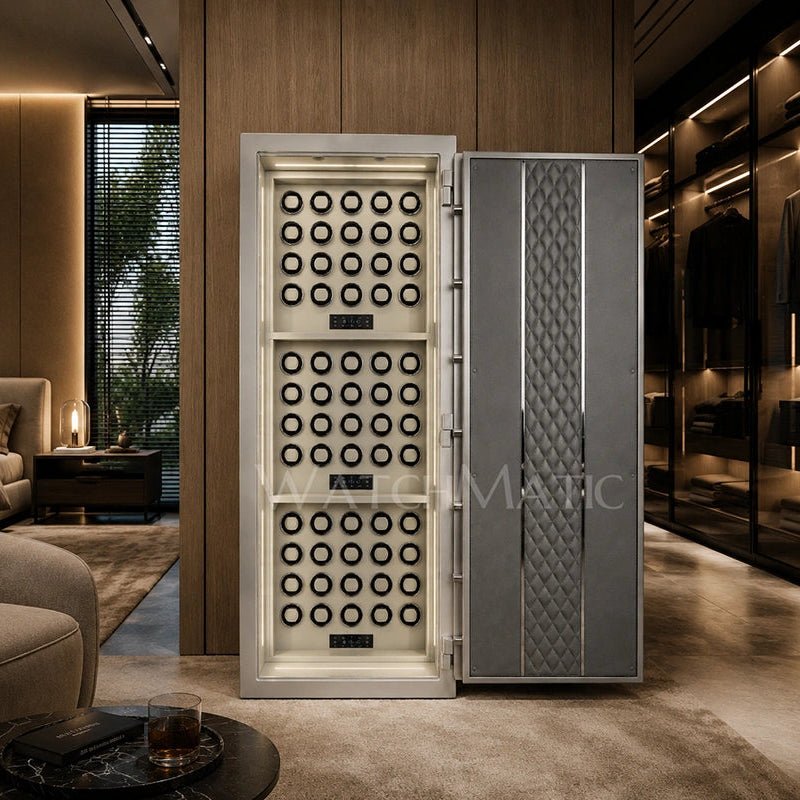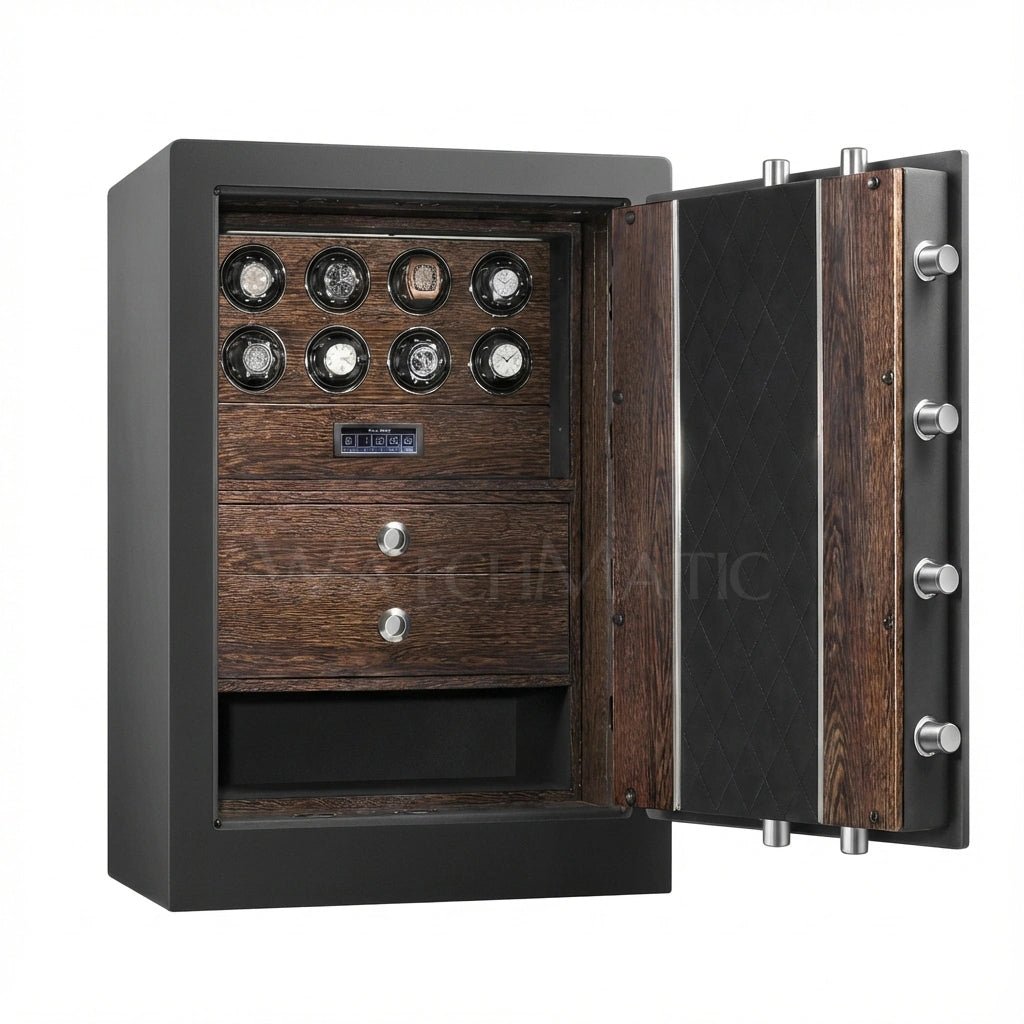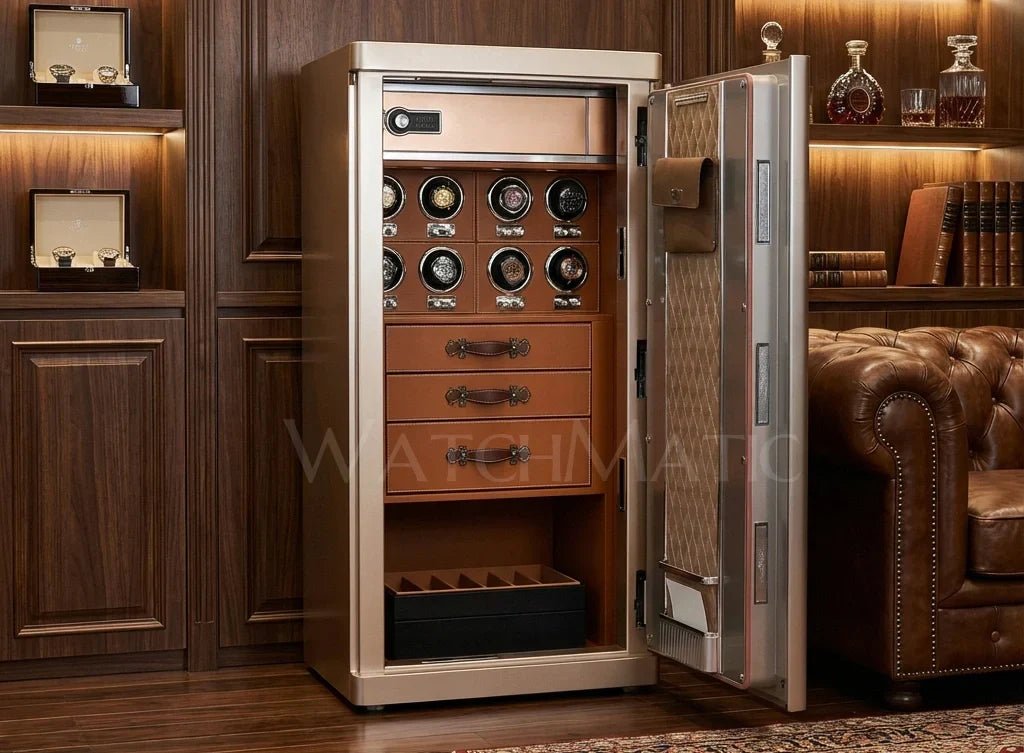
In luxury safes, composite construction and solid steel construction serve different protective purposes.
- Solid steel safes rely on thick plate steel for structural strength and resistance to prying or drilling.
- Composite safes use layered steel combined with proprietary fire-resistant and tool-resistant materials to improve thermal insulation and attack resistance.
- For high-value watch collections, composite construction is often superior due to its balanced protection against both burglary and fire exposure.
Collectors storing six- or seven-figure timepieces from Rolex or Patek Philippe should understand that safe construction depth, material layering, and tested security rating matter more than exterior appearance.
This guide explains the engineering differences between composite and solid steel safes — and when each is appropriate.
Why Construction Type Matters More Than Thickness Alone
In advisory discussions with serious collectors, one misconception appears frequently:
“Thicker steel automatically means better protection.”
While thickness contributes to strength, construction architecture determines overall resistance.
A properly engineered luxury watch safe system must withstand:
- Sustained tool attack
- Thermal exposure
- Structural prying
- Drill penetration
- Long-term environmental fluctuation
The way materials are layered is often more important than raw steel thickness alone.
What Is Solid Steel Construction?
Solid steel safes use:
- Thick plate steel for body and door
- Welded seams
- Multi-directional locking bolts
Advantages of Solid Steel
✔ High structural rigidity
✔ Strong resistance to prying
✔ Predictable mechanical durability
✔ Often simpler internal architecture
Limitations
- Lower inherent fire insulation unless additional material added
- Heavy weight concentrated in fewer layers
- Less resistance to modern composite-cutting tools compared to layered systems
Solid plate safes are often effective for environments where burglary is primary concern but fire exposure risk is lower.
What Is Composite Construction?
Composite safes use multiple layers of:
- Outer steel shell
- Proprietary fire-resistant composite fill
- Hardened drill-resistant plates
- Inner steel lining
These layers may include concrete-based compounds, ceramic materials, or proprietary insulation designed to slow both heat transfer and tool penetration.
Composite systems are commonly used in safes meeting standards tested by Underwriters Laboratories for TL-15 and TL-30 classifications.
Technical Comparison: Composite vs Solid Steel
| Feature | Solid Steel | Composite Construction |
|---|---|---|
| Burglary Resistance | Strong vs prying | Strong vs cutting & drilling |
| Fire Protection | Limited unless insulated | Integrated fire resistance |
| Tool Resistance | Dependent on plate thickness | Multi-layer resistance |
| Weight Distribution | Dense plate concentration | Distributed layered density |
| Typical Use | Basic high-strength safes | TL-rated luxury safes |
Composite safes often achieve higher burglary ratings without relying solely on plate thickness.
Tool Attack Resistance: Why Layering Matters
Modern burglary tools include:
- Carbide drill bits
- Abrasive cutting wheels
- Thermal lances
- Mechanical prying tools
A single thick steel plate can be compromised with sustained attack.
Layered composite construction forces attackers to transition through multiple materials — slowing penetration and increasing resistance time.
This layered resistance is one reason many TL-30 rated safes use composite architecture.
Fire Performance: Thermal Dynamics Explained
Fire resistance depends on:
- Heat transfer rate
- Internal temperature retention
- Duration of exposure
Solid steel conducts heat rapidly. Without insulation, internal temperature rises quickly.
Composite safes:
- Slow heat transfer
- Maintain lower internal temperature
- Protect lubricated mechanical watch movements
For collectors storing mechanical timepieces, composite construction provides better long-duration thermal buffering.
Weight & Structural Considerations
Composite safes are often heavier due to layered fill material.
This increases:
- Floor load planning importance
- Need for professional installation
- Anchoring requirements
A high-capacity system from a premium high-security watch safe collection may exceed 500–800 kg when using composite construction.
Structural slab evaluation becomes essential in residential settings.
When Is Solid Steel Appropriate?
Solid steel safes may be suitable when:
- Collection value is moderate
- Fire exposure risk is minimal
- Installation weight must be controlled
- Budget is constrained
However, for collections exceeding $250,000–$500,000, composite TL-rated construction typically provides stronger overall protection.
When Composite Construction Is Recommended
Composite safes are strongly recommended when:
- Collection exceeds $250,000
- Fire risk is present
- Insurance requires TL rating
- Long-term asset preservation is primary objective
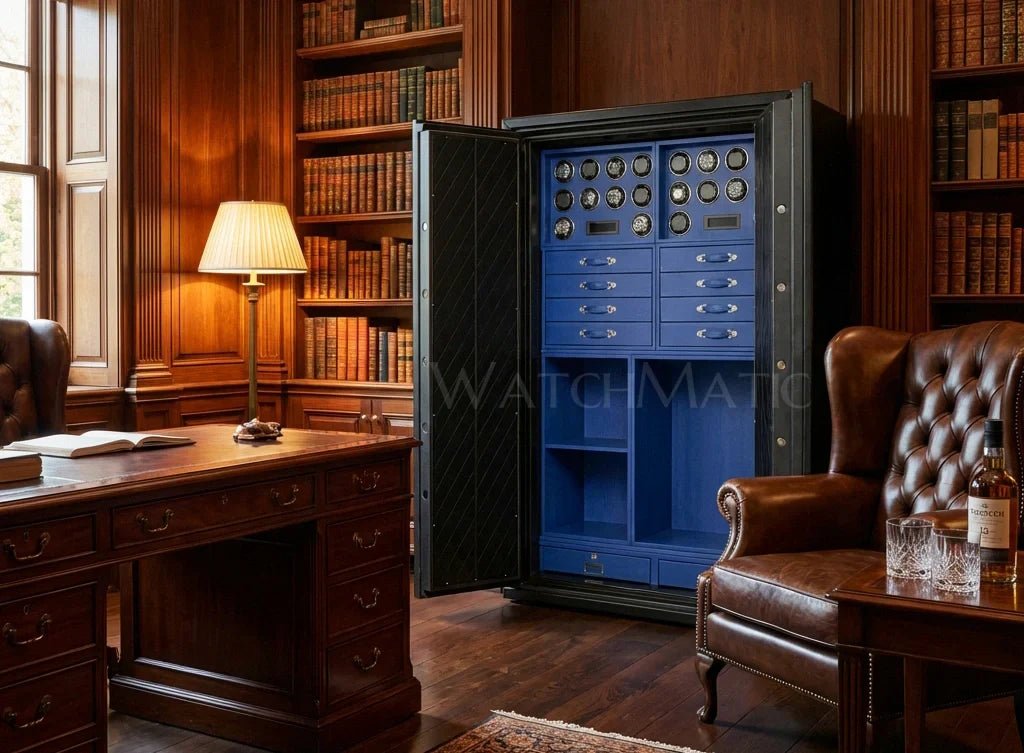
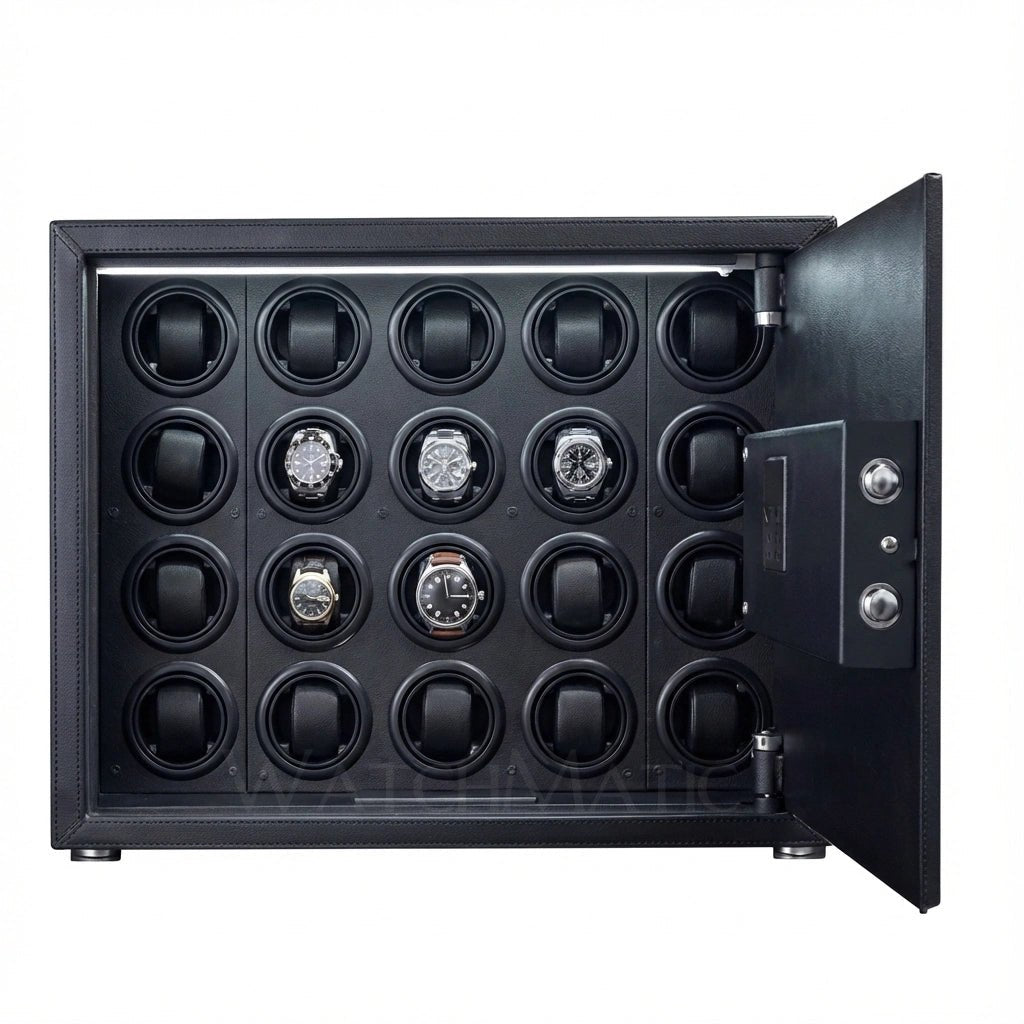
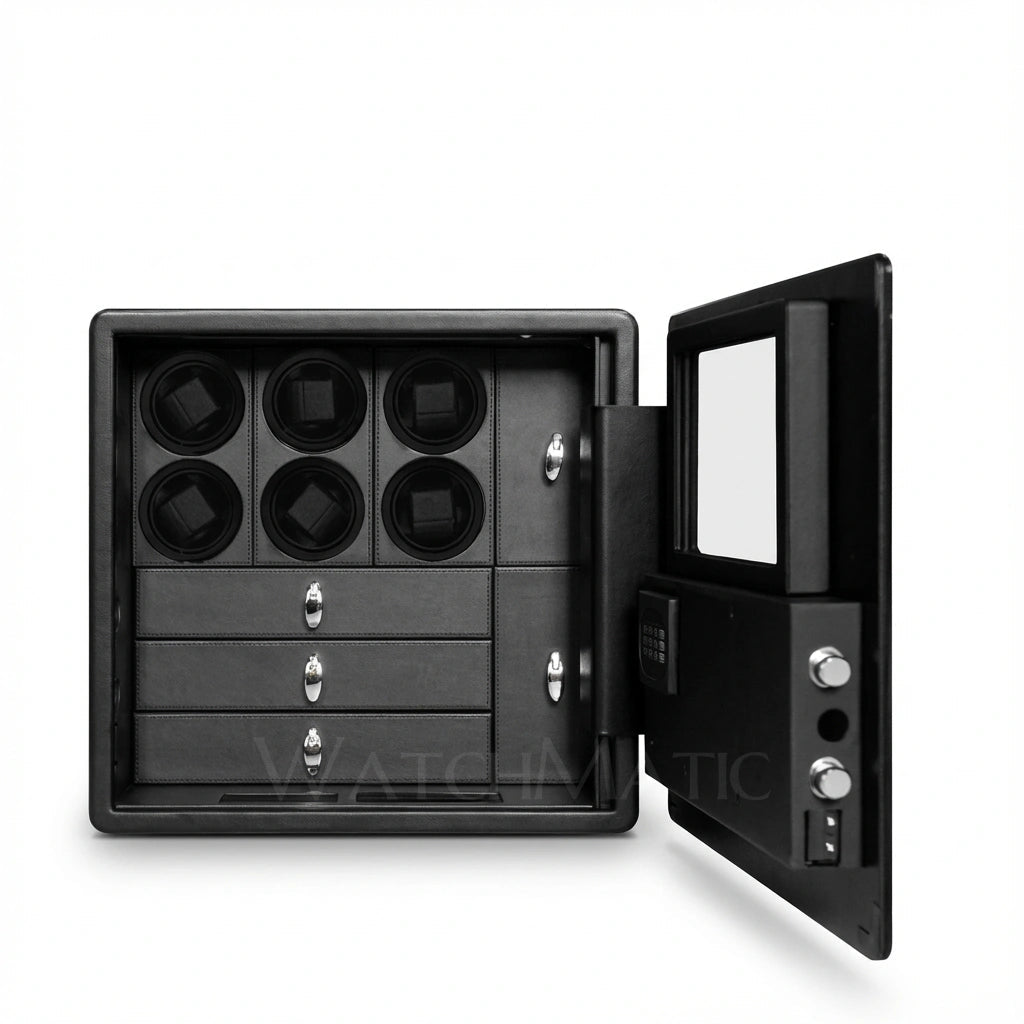
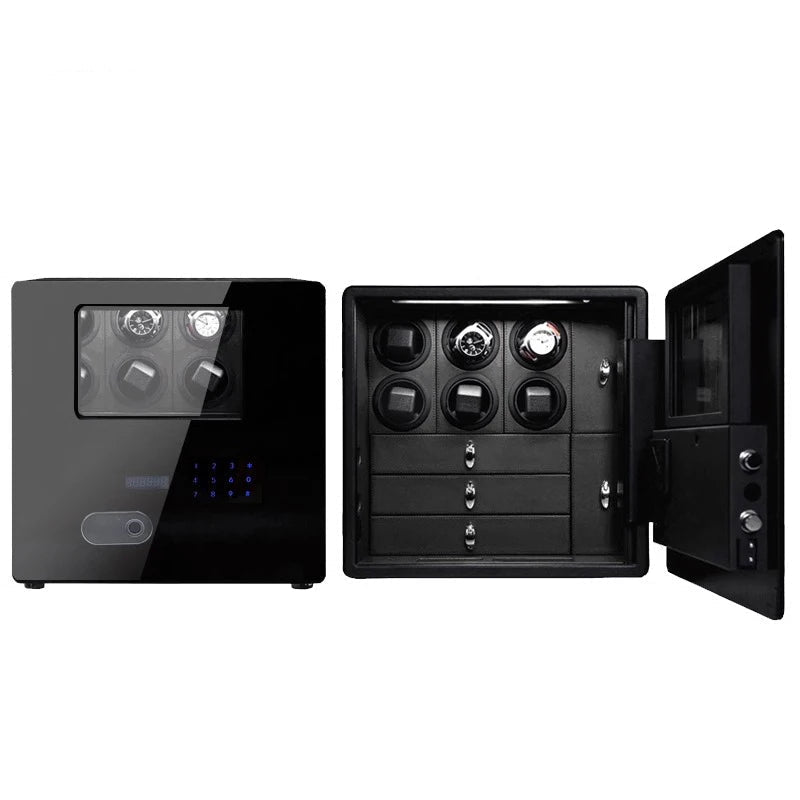
Luxury watch winder safes combining burglary resistance with environmental protection are frequently engineered using composite bodies rather than simple plate steel.
An integrated watch winder safe system benefits from composite insulation to stabilize internal climate while maintaining attack resistance.
Insurance & Underwriting Implications
High-net-worth insurance carriers often evaluate:
- TL rating
- Construction type
- Fire rating
- Anchoring method
Composite construction aligns more frequently with TL-certified safes, strengthening underwriting defensibility.
Expert Perspective: Why Most Premium Safes Use Composite Construction
In high-value collector environments, we rarely recommend pure plate construction unless specific structural constraints exist.
Composite architecture allows:
- Balanced burglary and fire resistance
- Higher certification potential
- Better long-term environmental control
As a luxury watch safe specialist, WatchMatic prioritizes layered engineering strategies in systems intended for serious collectors. Free worldwide shipping and a 10-year warranty are part of ownership lifecycle assurance, but construction architecture remains the primary determinant of protection performance.
Executive Decision Framework
When comparing composite vs solid steel construction, evaluate:
✔ Collection value
✔ Fire exposure risk
✔ Insurance requirements
✔ Structural load capacity
✔ Long-term preservation goals
Construction choice should align with asset strategy — not marketing language.