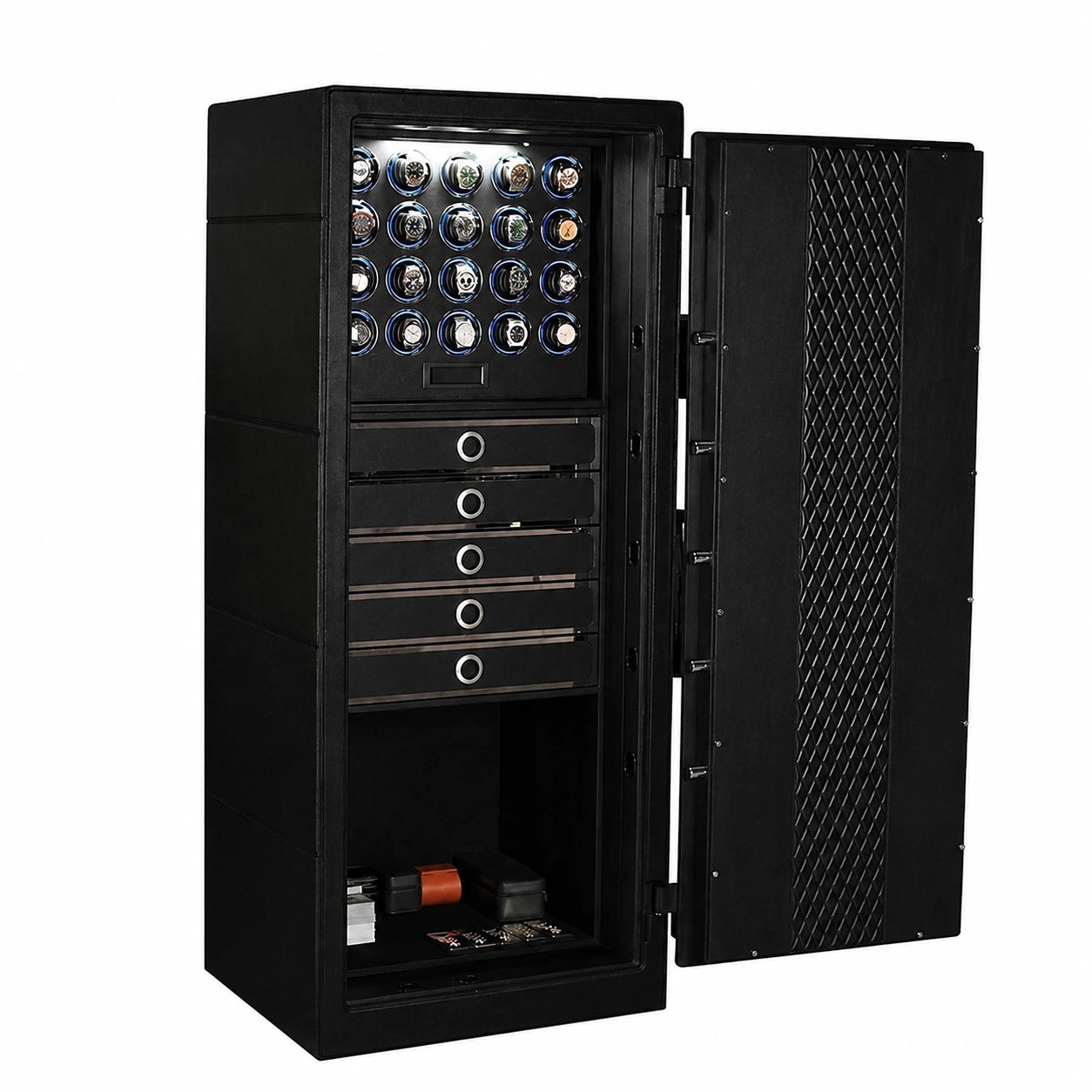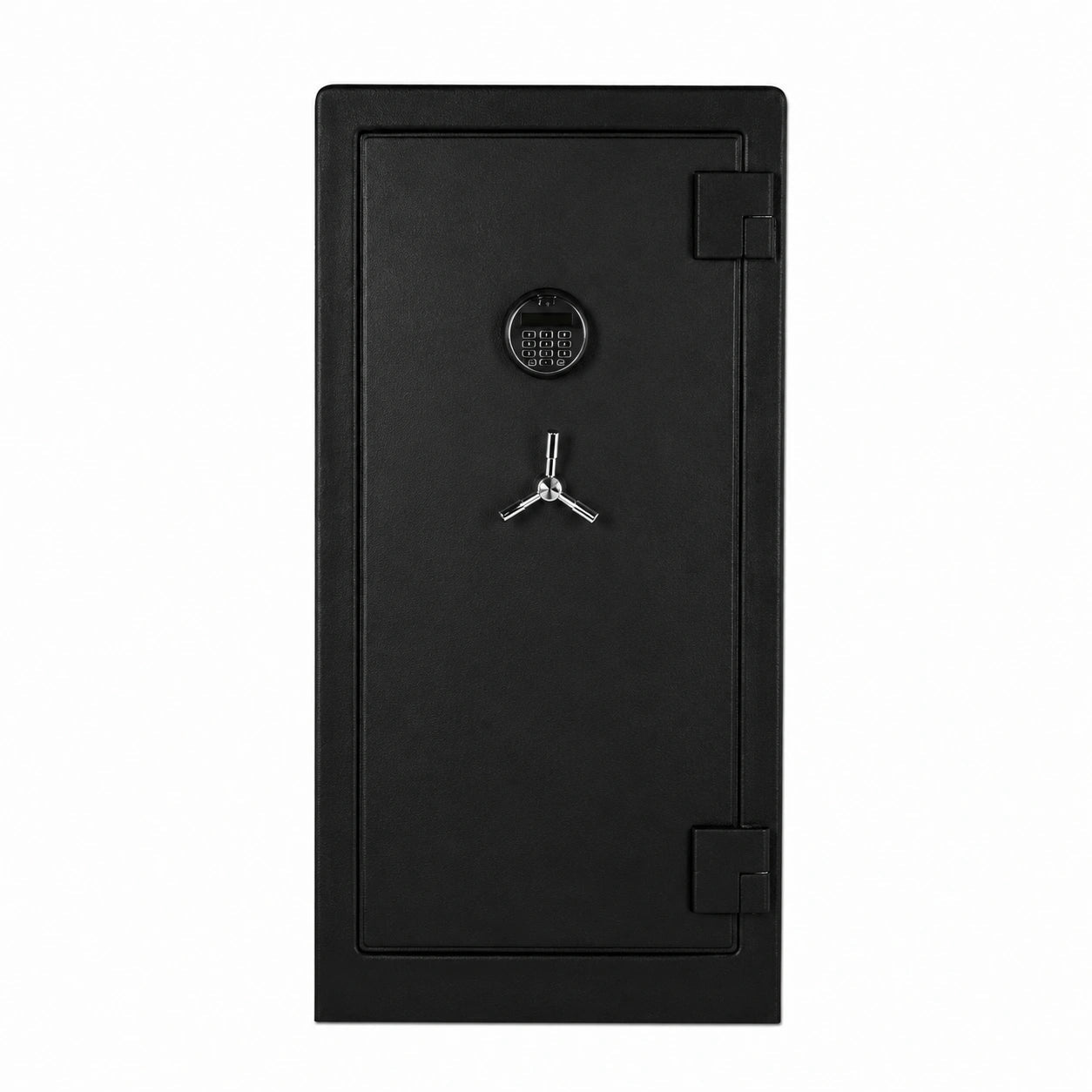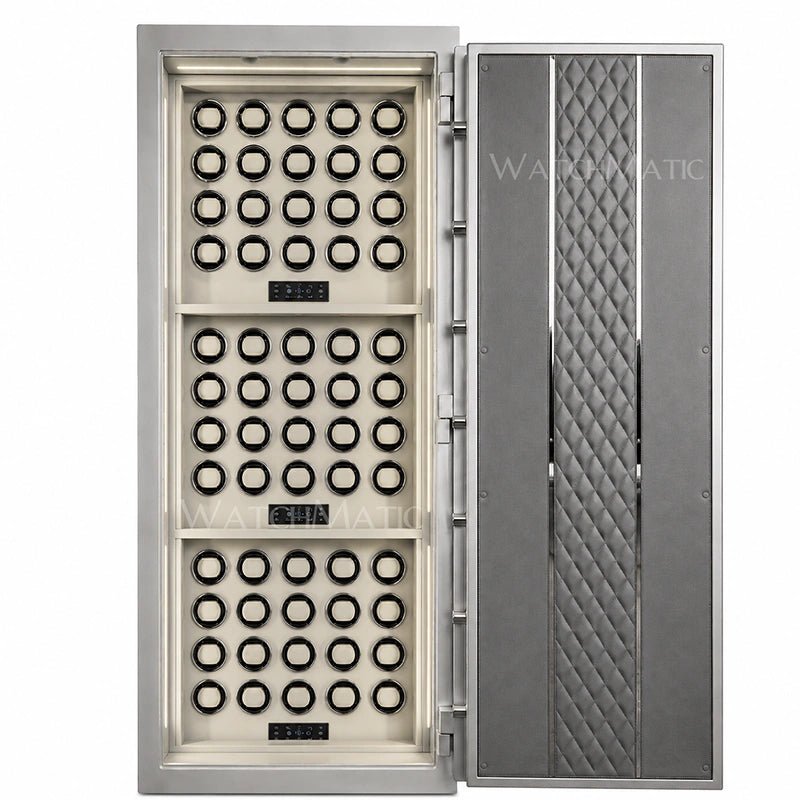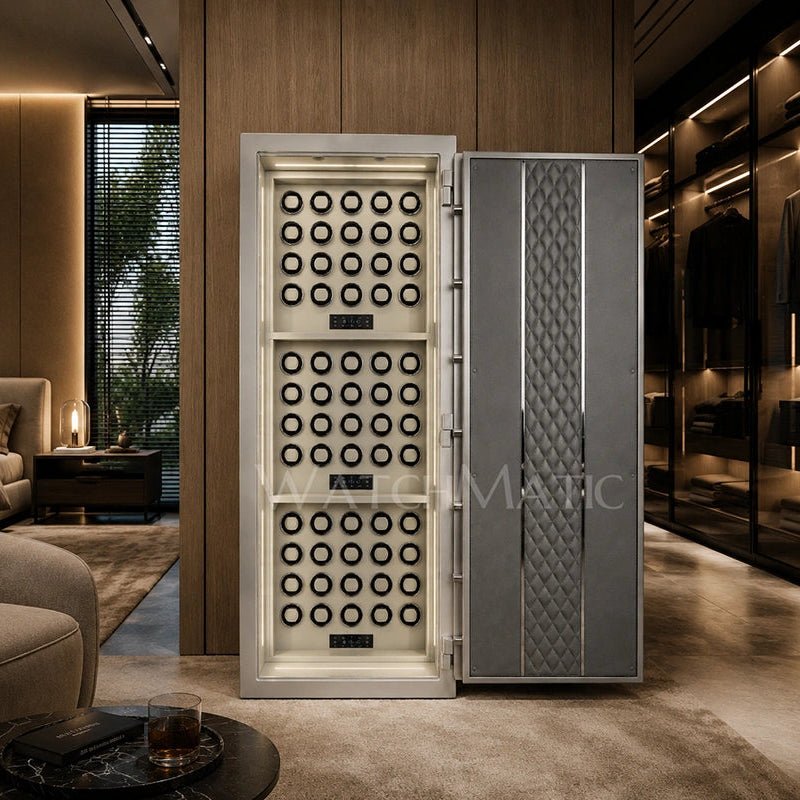
Fire ratings on watch safes indicate how long the safe can maintain internal temperatures below a tested threshold during controlled fire exposure.
- 30-minute fire ratings offer baseline protection against short-duration residential fires.
- 60-minute fire ratings provide balanced protection suitable for most suburban and urban homes.
- 120-minute fire ratings are designed for extended burn scenarios such as wildfires or large structural fires.
For mechanical watch collections, fire duration matters because prolonged heat affects lubricants, gaskets, and movement integrity. The appropriate fire rating depends on regional risk, property type, and collection value, not marketing language alone.
This guide explains how fire testing works, what the durations really mean, and how to choose the right level of protection for serious collectors.
Understanding What a Fire Rating Actually Measures
A common misconception is that a “60-minute safe” guarantees complete protection for exactly one hour in any fire.
In reality, fire ratings are determined by controlled laboratory testing where:
- The safe is placed inside a furnace
- Temperature follows a predefined curve
- Internal temperature must remain below a specified threshold
- Duration is recorded under standardized conditions
Based on our engineering standards, fire resistance is primarily a function of thermal insulation architecture, not just exterior steel thickness.
For example, safes certified under EN 15659 – LFS 30 P or LFS 60 P are tested to protect contents from exceeding defined internal temperature limits during exposure. While originally focused on document protection, the underlying principle — limiting internal heat transfer — is equally relevant for mechanical watch preservation.
Why Fire Protection Is Critical for Mechanical Watches
Through years of observing automatic movements in varying climates, we’ve found that sustained heat exposure can permanently alter movement lubrication performance.
Mechanical watches contain:
- Precision lubricants
- Synthetic seals
- Dial coatings
- Adhesives
- Spring assemblies
Prolonged internal temperatures — even without visible external damage — can degrade lubrication viscosity and affect long-term movement reliability.
Fire protection in a watch safe is therefore about preserving precision, not merely preventing total loss.
30-Minute Fire-Rated Watch Safes
Baseline Residential Protection
A 30-minute rating is typically designed to withstand:
- Short kitchen fires
- Localized electrical fires
- Rapid-response urban incidents
When It May Be Sufficient
- Low-risk metropolitan environments
- Smaller collections
- Apartments with rapid emergency response times
Limitations
- Minimal safety margin
- Not suitable for wildfire zones
- Limited protection for estate properties
From an advisory standpoint, 30-minute protection should be considered entry-level for watch collectors.
60-Minute Fire-Rated Watch Safes
Balanced Protection for Most Homes
A 60-minute rating is generally the most practical choice for serious collectors.
It typically covers:
- Full-room residential burn scenarios
- Delayed response in suburban areas
- Multi-room structural fire spread
In real-world residential installations, we’ve found that 60-minute protection aligns well with both preservation goals and structural feasibility.
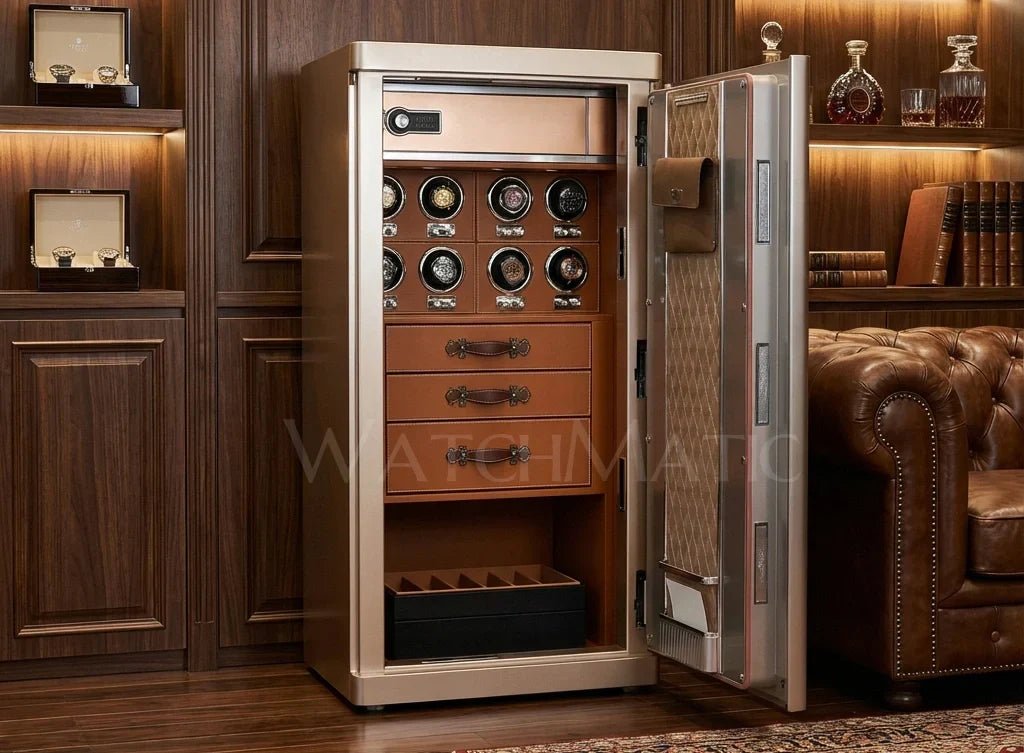
When incorporated into a professionally engineered fire-resistant luxury watch safe collection, 60-minute protection provides meaningful thermal buffering without excessive weight or structural complexity.
For collectors evaluating environmental risks by region, our guide on choosing the right watch safe for U.S. homes offers additional context.
120-Minute Fire-Rated Watch Safes
Extended Protection for High-Risk Areas
A 120-minute fire rating is typically appropriate when:
- The property is in a wildfire-prone region
- The home is remote with slower emergency response
- The estate structure has high combustible mass
- The collection value justifies maximum thermal buffer
Wildfires often generate prolonged radiant heat exposure even if flames do not directly engulf the safe.
Based on installations in wildfire-exposed states, extended-duration protection significantly improves survival probability.
However, 120-minute safes are typically:
- Heavier
- Structurally thicker
- More demanding for floor load
- More complex to install
Structural planning becomes essential in these cases.
Fire Rating Comparison Table
| Fire Rating | Typical Use Case | Thermal Buffer | Structural Impact |
|---|---|---|---|
| 30 Minutes | Urban low-risk | Minimal | Lower weight |
| 60 Minutes | Standard residential | Moderate | Balanced |
| 120 Minutes | Wildfire / estate | High | Heavy construction |
Fire duration should scale with risk exposure and asset value.
The Role of Insulation & Construction Architecture
Fire protection is determined by:
- Composite insulation layers
- Heat-absorbing fill materials
- Door seal integrity
- Multi-wall construction
Steel alone conducts heat rapidly. Insulation architecture slows internal temperature rise.
As a luxury watch safe specialist, WatchMatic designs safes certified under EN 15659 LFS standards with a focus on temperature stability rather than relying on exterior mass alone. Free worldwide shipping and a 10-year warranty support long-term ownership confidence, but engineering integrity remains the core of protection.
Installation Location Influences Fire Exposure
Fire performance is affected by placement.
Safer locations within a home include:
- BasementsInterior load-bearing walls
- Areas away from garages
- Spaces shielded from exterior wall exposure
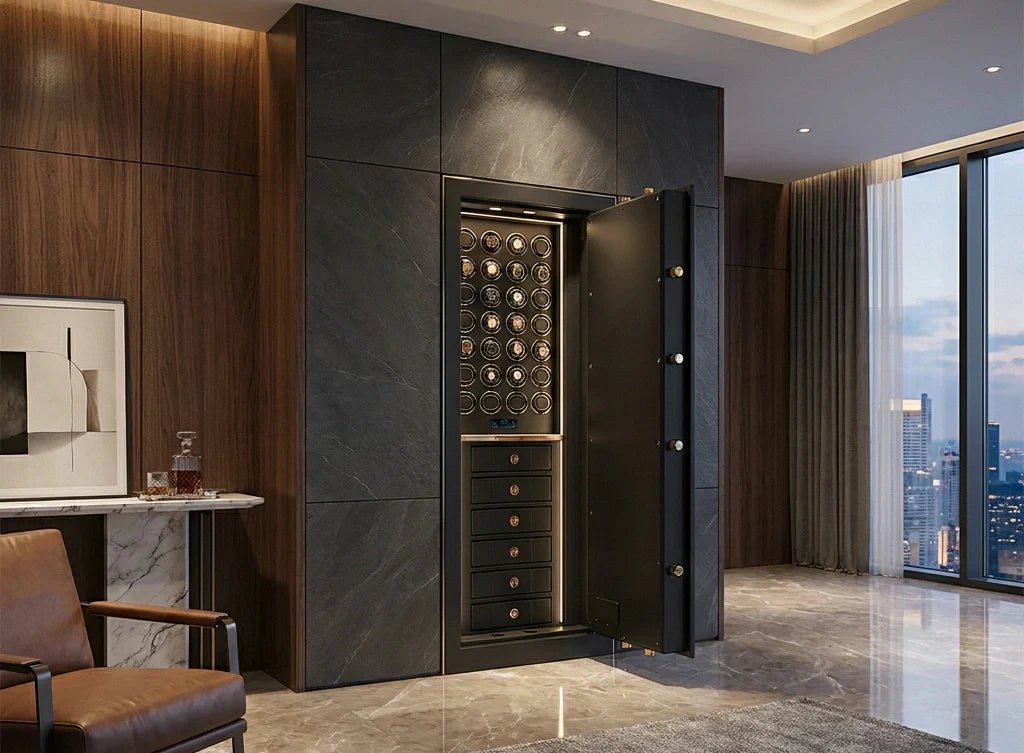
In high-rise buildings, fire spread dynamics differ from suburban estate homes. Installation planning should consider exposure patterns.
When Should You Upgrade to 120 Minutes?
Consider upgrading if:
✔ You live in wildfire-prone areas
✔ Your collection exceeds $500,000
✔ The home has extended fuel load
✔ Insurance recommends higher protection
✔ You prioritize long-term asset preservation over structural simplicity
Over-specifying fire protection without contextual risk can introduce unnecessary structural complexity, but under-specifying exposes precision mechanical assets to avoidable risk.
Expert Perspective: Duration Is a Strategic Decision
At WatchMatic, we’ve found that collectors often prioritize burglary resistance while underestimating thermal exposure.
In practice:
- 60 minutes is sufficient for most residential collectors
- 120 minutes is strategic in wildfire regions
- 30 minutes is entry-level baseline
Fire protection should align with environmental reality — not marketing exaggeration.