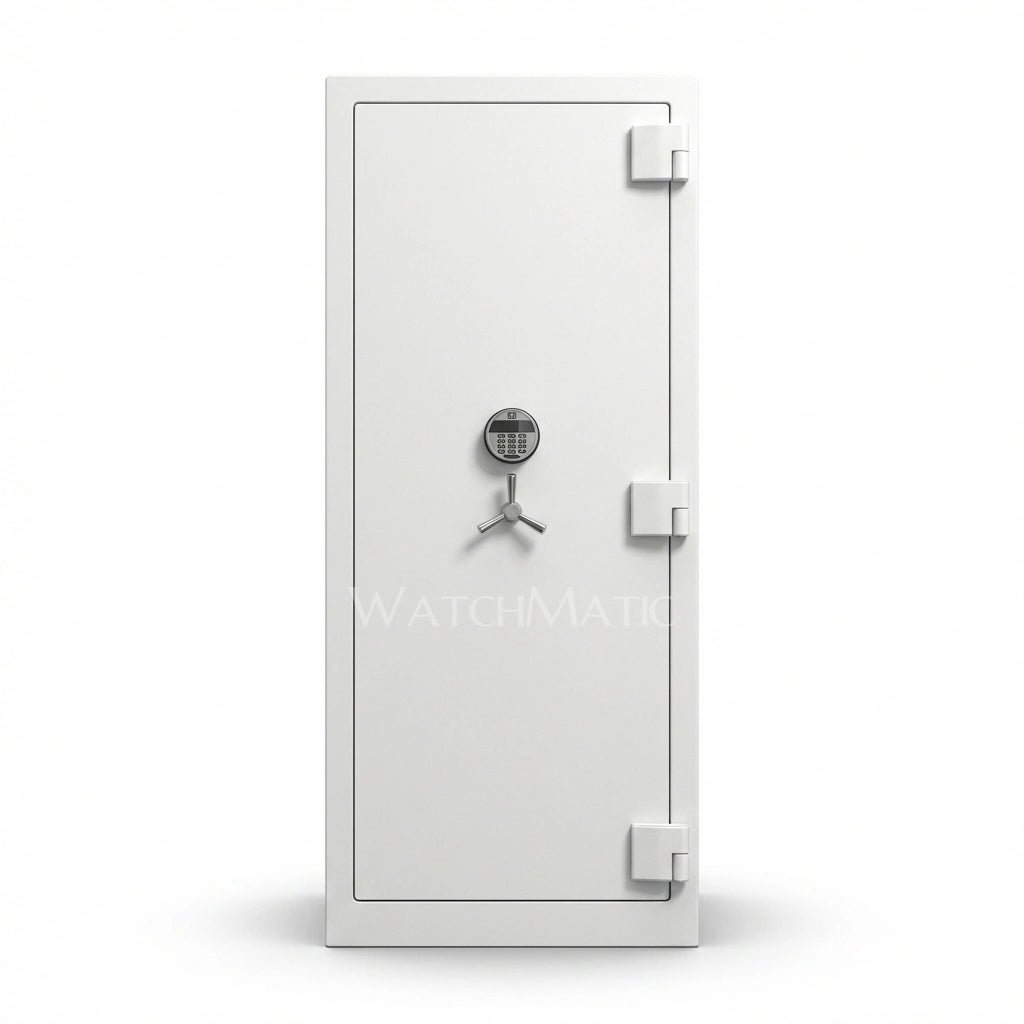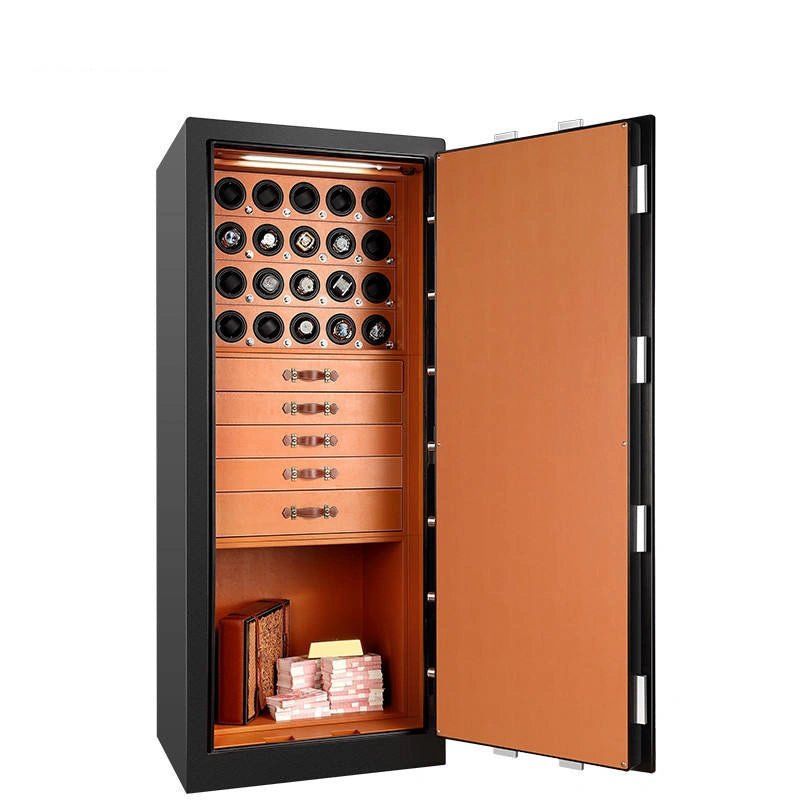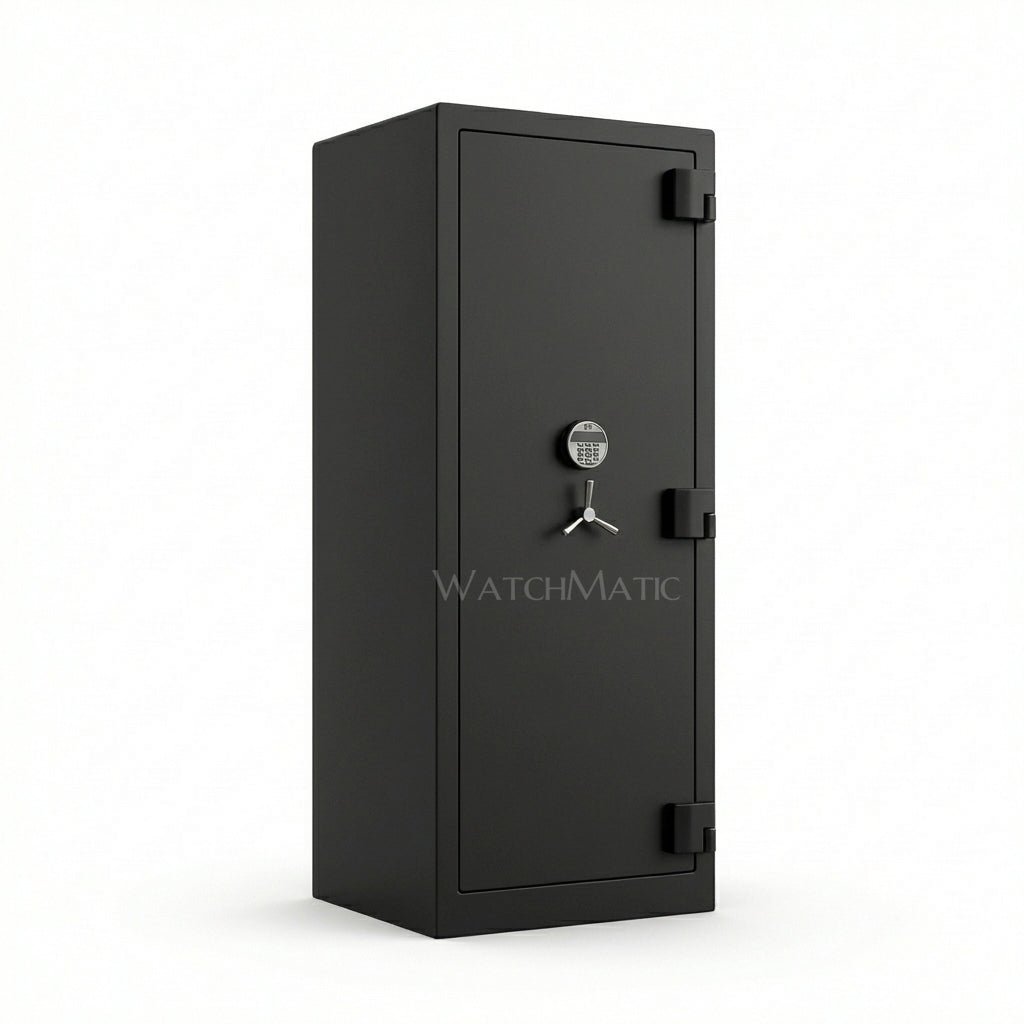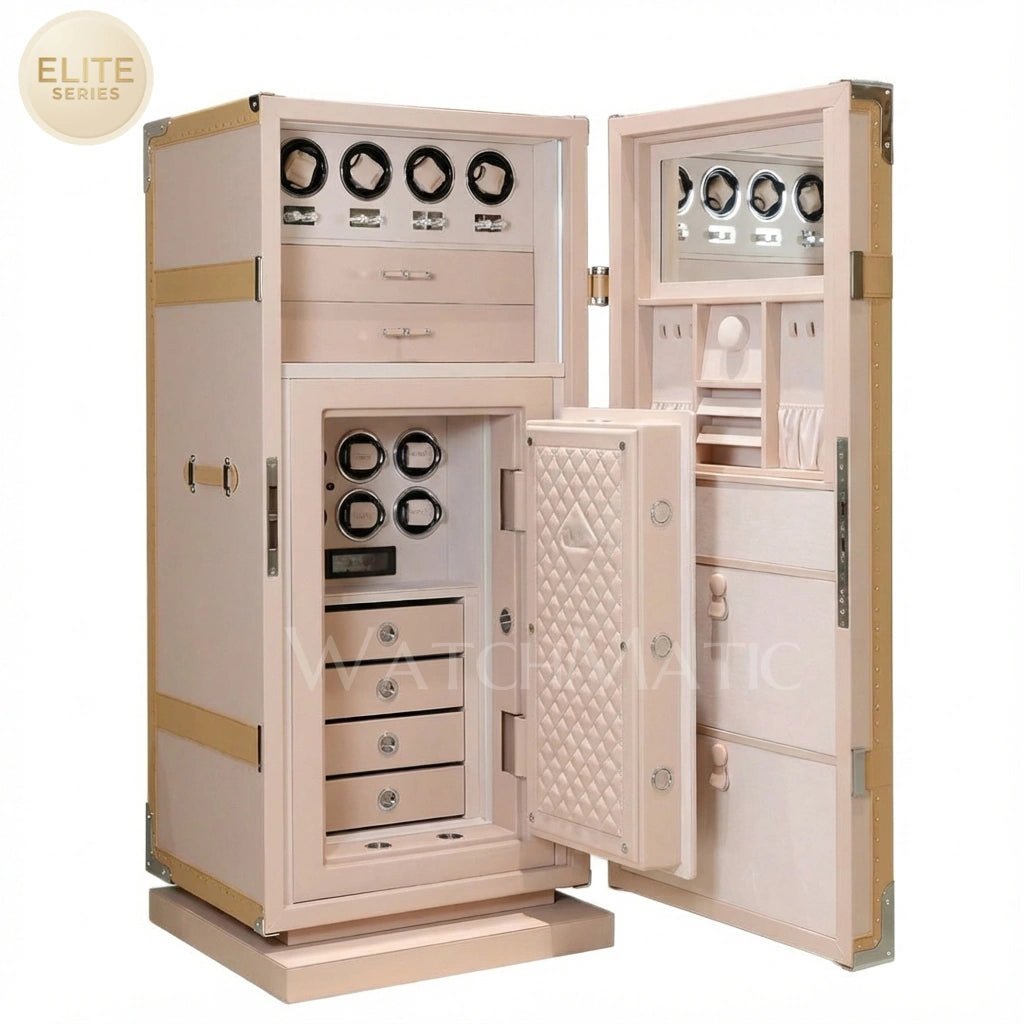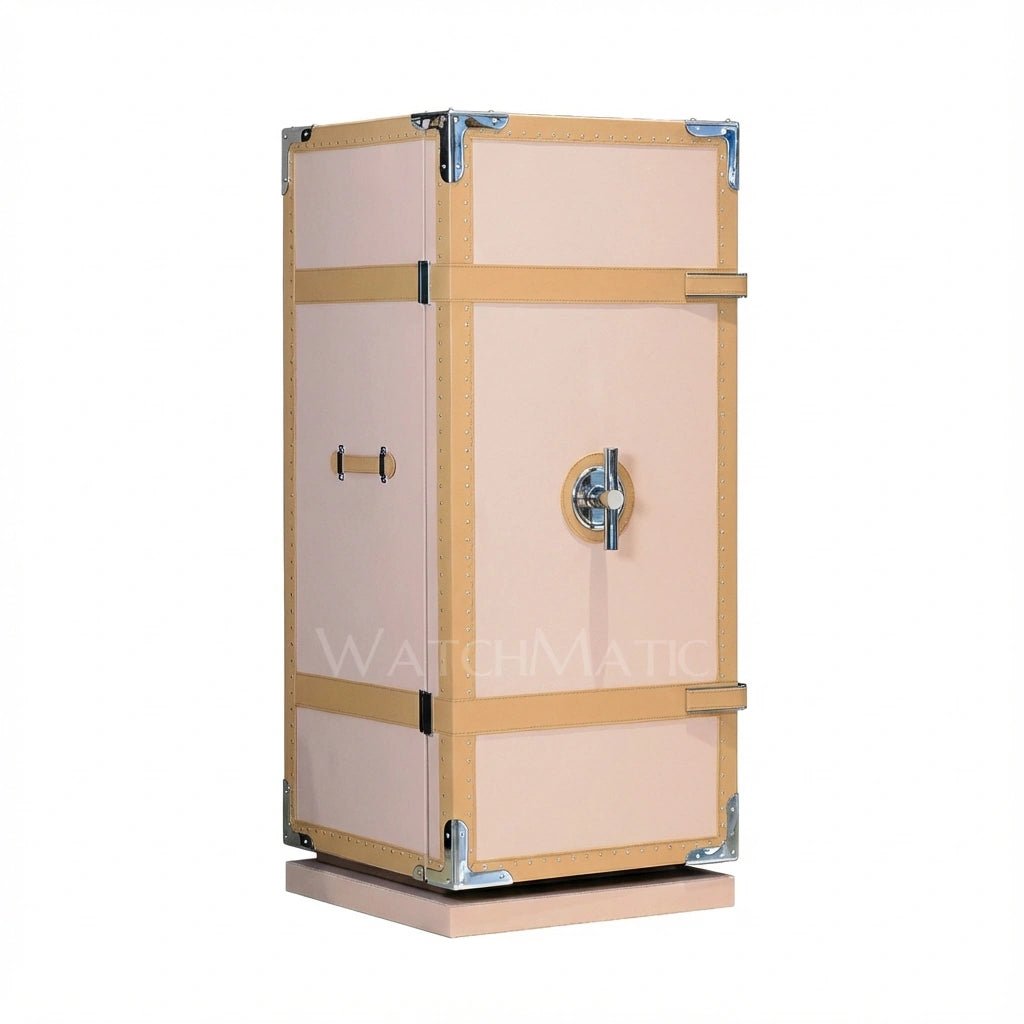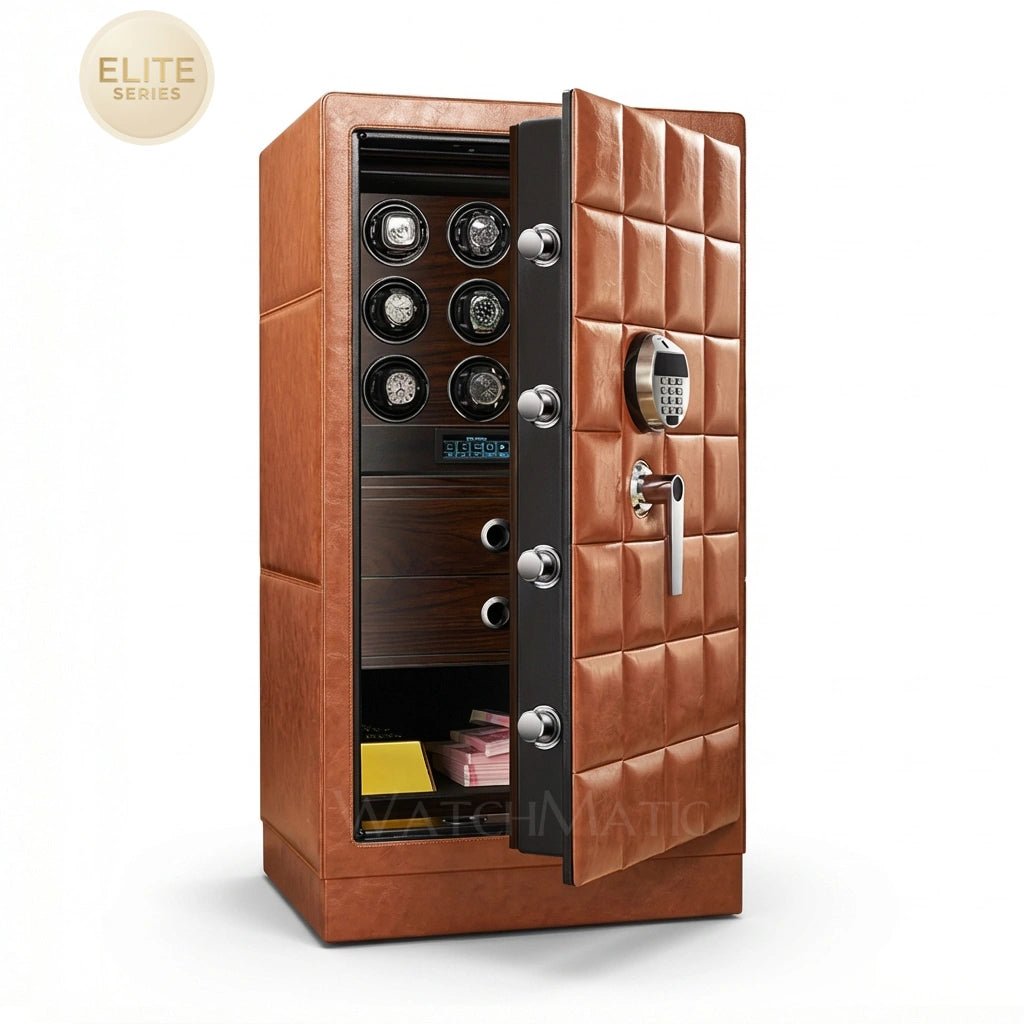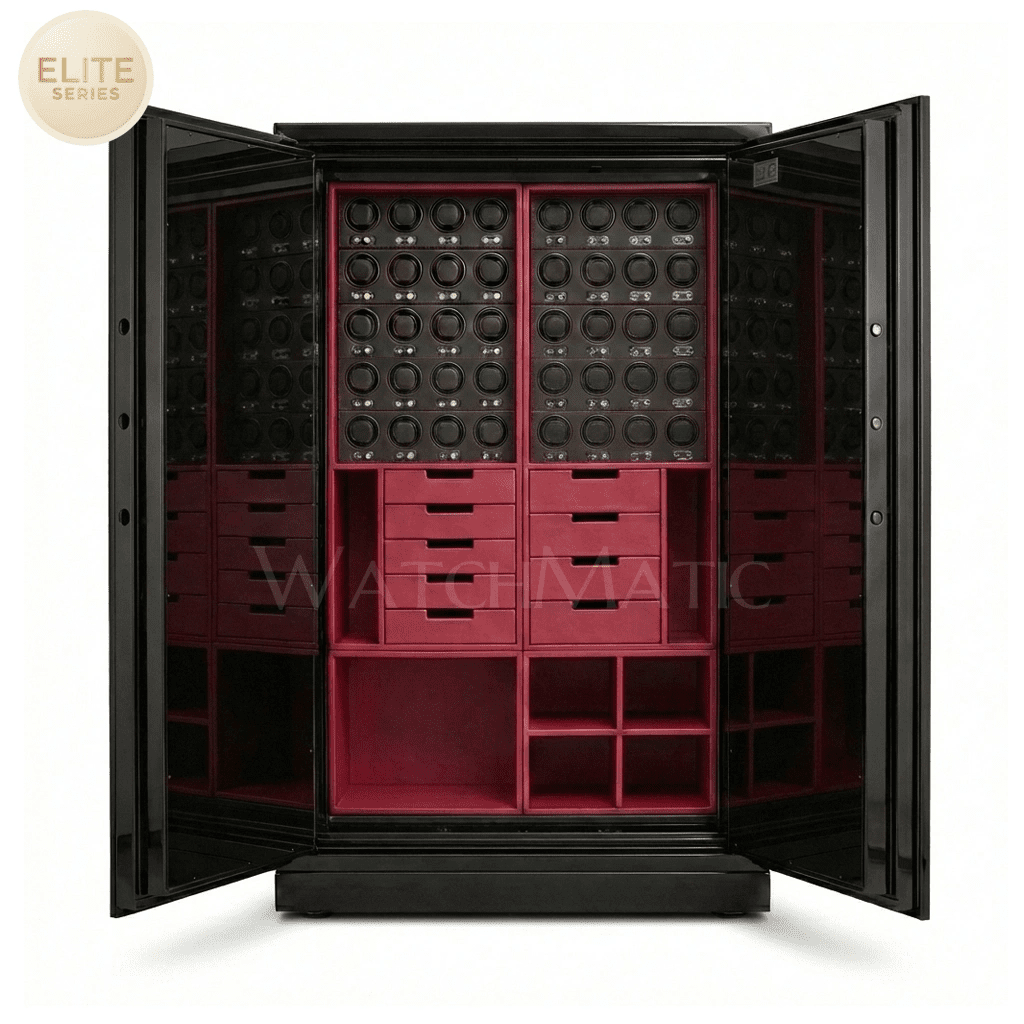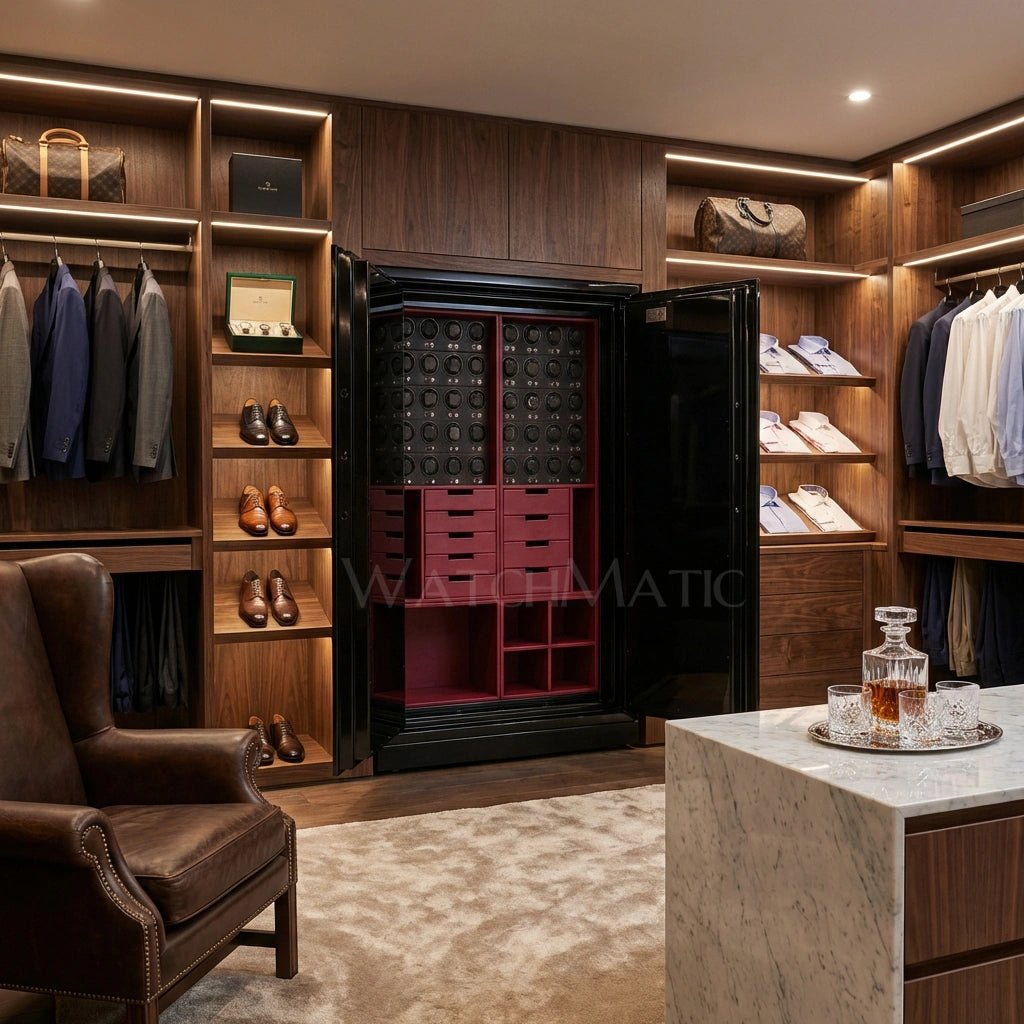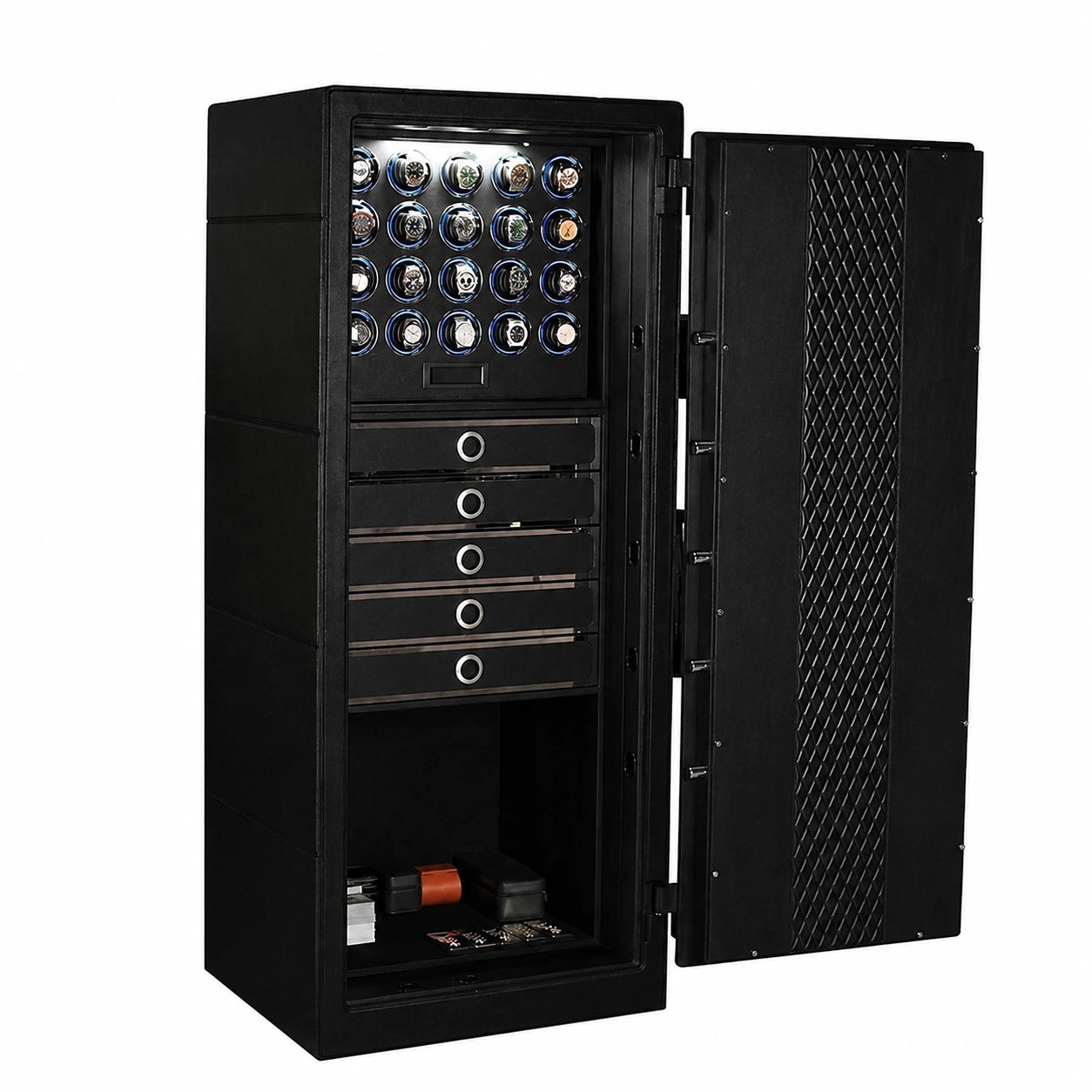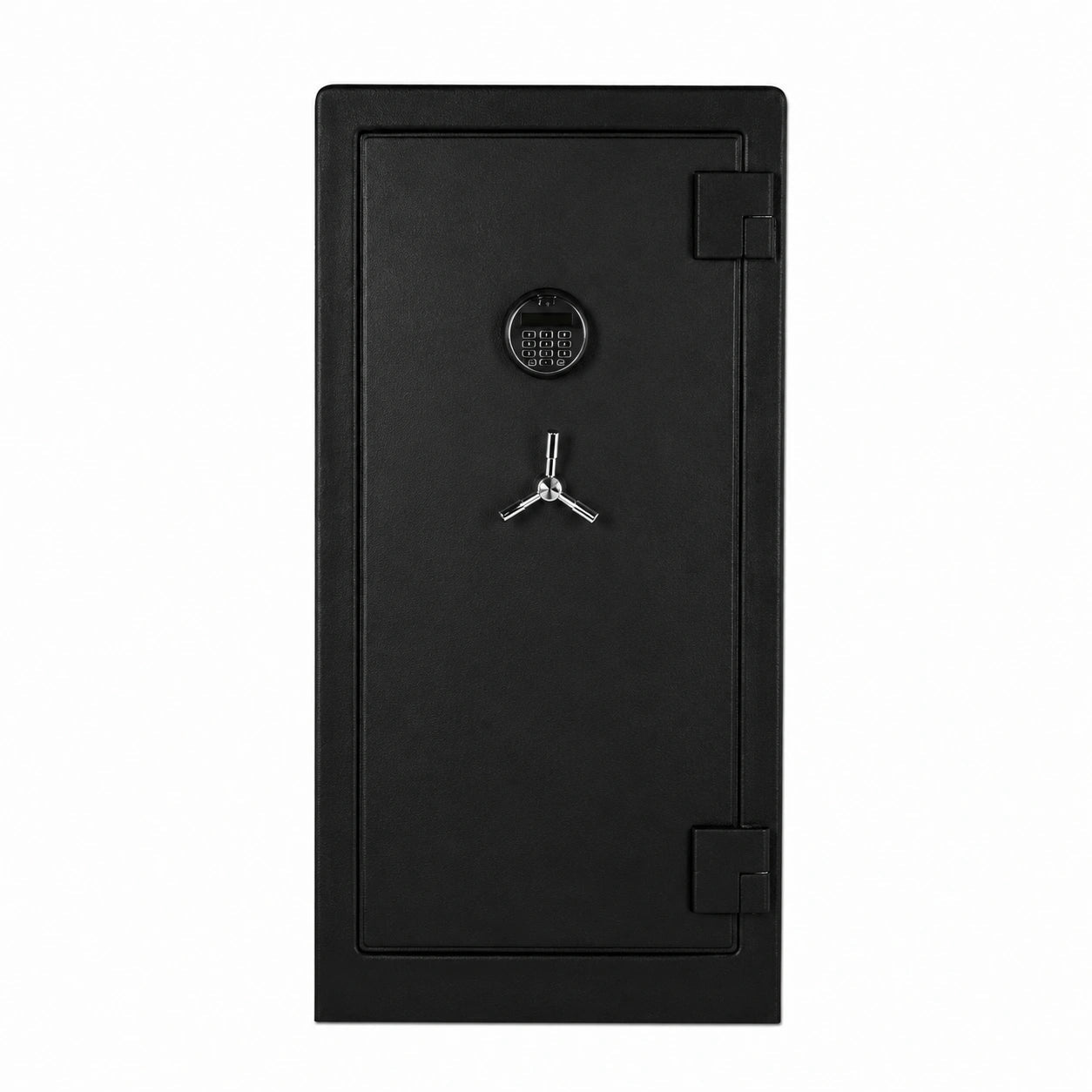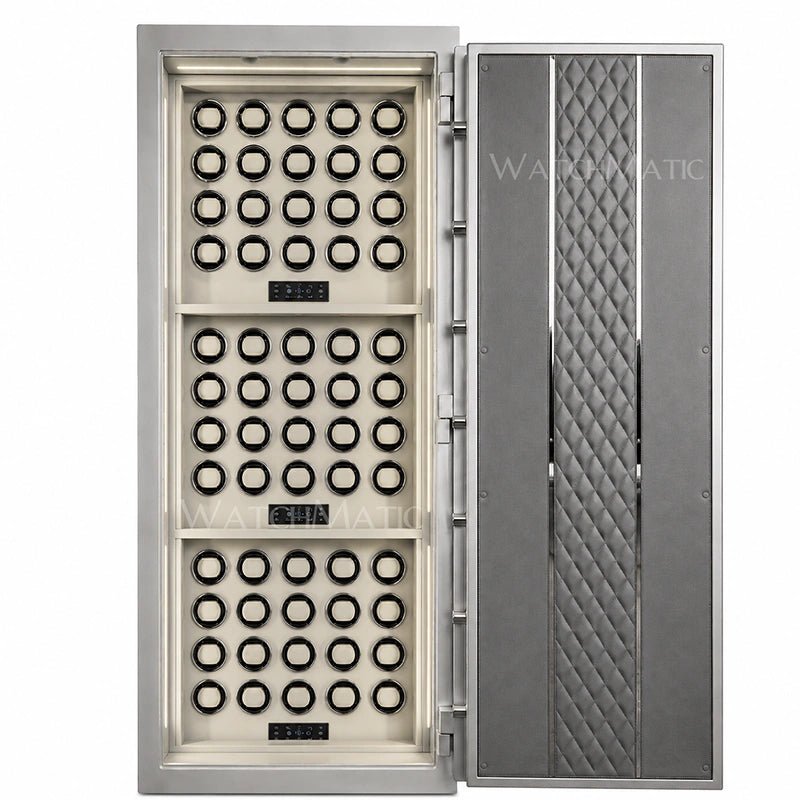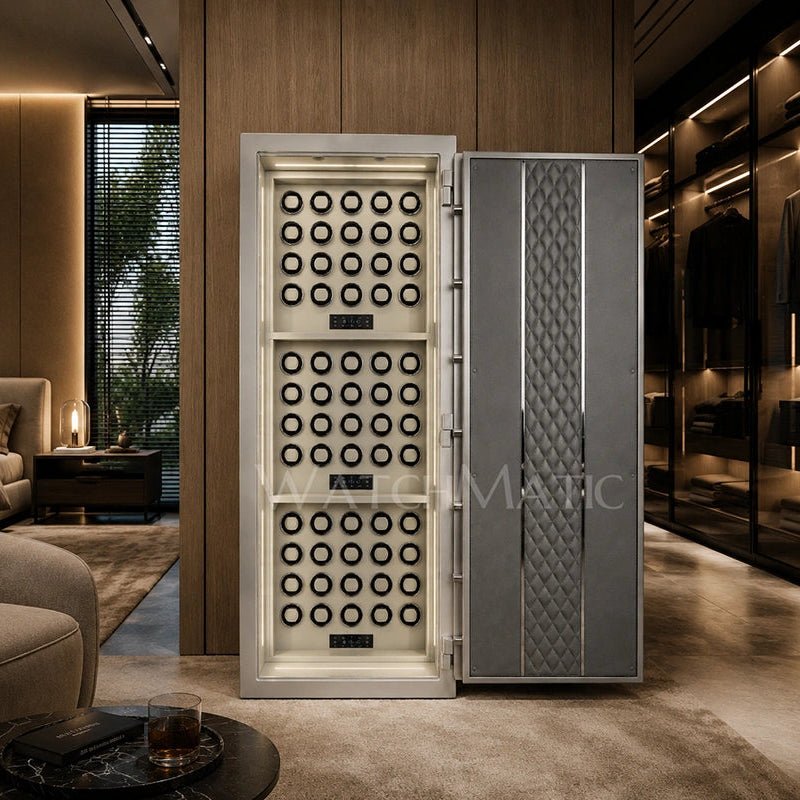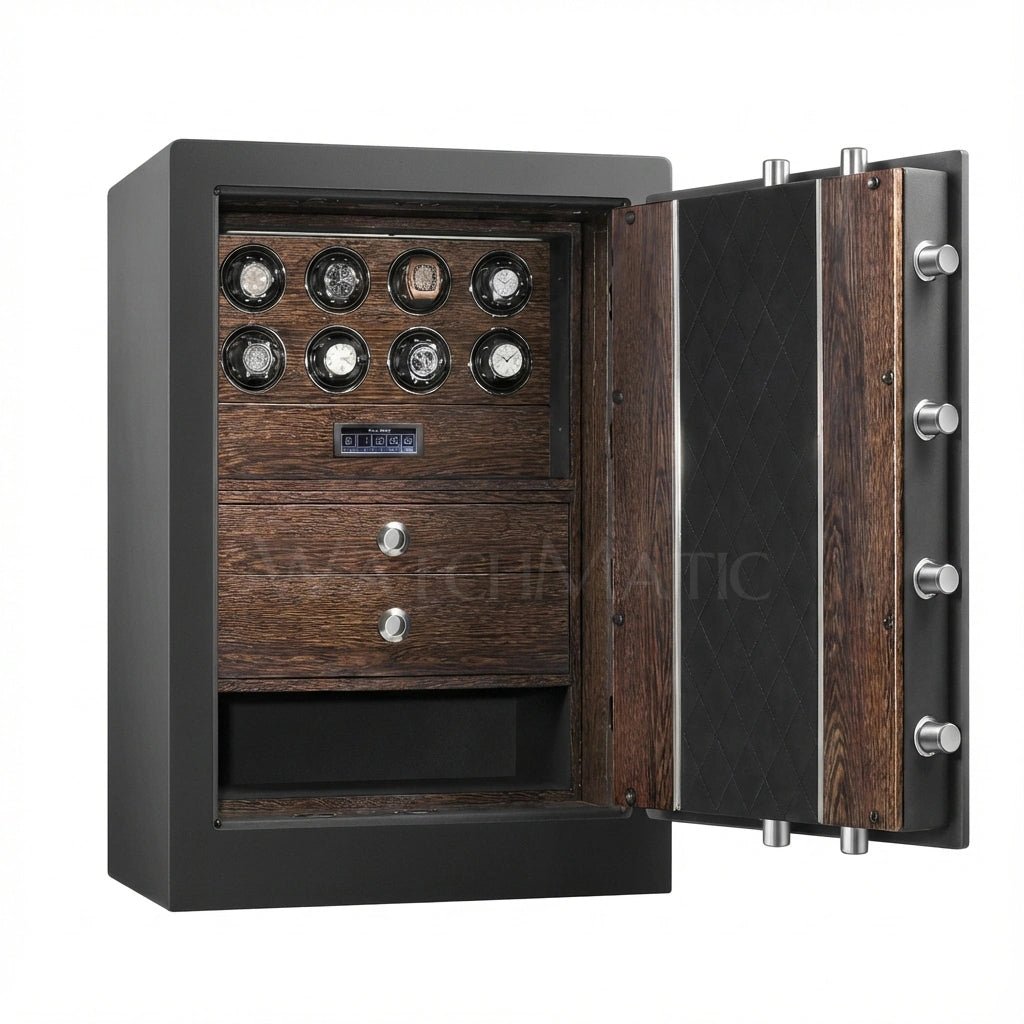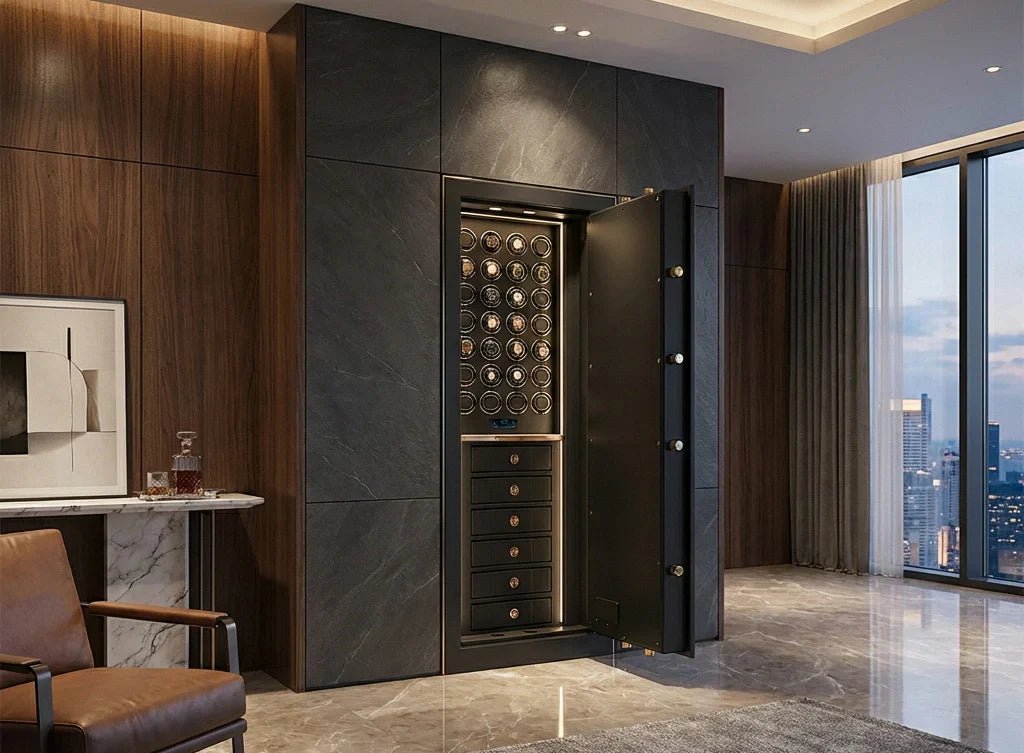
EN 15659 LFS 30 P and LFS 60 P are European fire-resistance certifications that indicate how long a safe can maintain internal temperatures below a tested threshold during controlled fire exposure.
- LFS 30 P = 30 minutes of certified fire resistance
- LFS 60 P = 60 minutes of certified fire resistance
- “P” indicates protection tested for paper-based contents
- Certification is conducted under standardized furnace testing conditions
For luxury watch safes, this certification matters because thermal stability protects mechanical movements, lubricants, and internal components from prolonged heat exposure. While originally designed for document protection, the controlled internal temperature limits directly benefit precision watch preservation.
Understanding EN 15659 helps collectors distinguish between marketing claims and independently tested fire performance.
What Is EN 15659?
EN 15659 is a European standard that defines fire-resistance testing for light fire safes.
The testing evaluates whether:
- The internal temperature of the safe remains below a defined threshold
- Exposure follows a controlled temperature curve
- The safe maintains integrity for the certified duration
Based on our engineering standards, the most important factor is not exterior thickness — it is heat transfer control through insulation architecture.
What Does “LFS” Mean?
LFS stands for:
Light Fire Safe
It indicates that the safe is designed to protect contents from fire exposure under defined testing parameters.
The classification focuses on:
- Temperature control
- Duration of exposure
- Structural stability during heating
For watch collectors, the relevance lies in the safe’s ability to slow internal temperature rise.
LFS 30 P vs LFS 60 P — What’s the Difference?
The difference is duration.
| Certification | Duration | Intended Protection Level |
|---|---|---|
| LFS 30 P | 30 minutes | Baseline residential fire exposure |
| LFS 60 P | 60 minutes | Extended residential fire exposure |
The internal temperature must not exceed specified thresholds during testing.
Through years of observing automatic movements exposed to temperature variation, we’ve found that prolonged heat exposure is far more damaging than brief spikes. This is why duration matters.
Does EN 15659 Apply to Watch Safes?
The “P” classification is designed around paper protection. Paper ignites at relatively low temperatures compared to metal.
However, mechanical watches contain:
- Lubricants
- Synthetic seals
- Dial coatings
- Adhesive bonding agents
All of which are sensitive to sustained heat.
While watches are not documents, the underlying principle of internal temperature limitation directly benefits watch preservation.
Why Certification Matters More Than Marketing Claims
Not all “fireproof” claims are equal.
A certified safe:
- Has undergone independent testing
- Meets standardized temperature thresholds
- Has verifiable documentation
A non-certified safe may rely on manufacturer claims without independent validation.
In high-value collections, independent certification provides measurable assurance.
When Is LFS 30 P Sufficient?
LFS 30 P may be appropriate when:
- The property is in a low-risk urban area
- Emergency response time is rapid
- The collection value is moderate
- Fire exposure risk is minimal
However, 30 minutes provides limited thermal buffer in extended burn scenarios.
When Is LFS 60 P Recommended?
LFS 60 P is typically advisable when:
- The collection exceeds six figures
- The property is suburban or estate-level
- There is elevated wildfire exposure
- Insurance underwriting requires higher protection
In wildfire-prone regions, extended-duration certification provides meaningful additional safety margin.
How WatchMatic Applies EN 15659
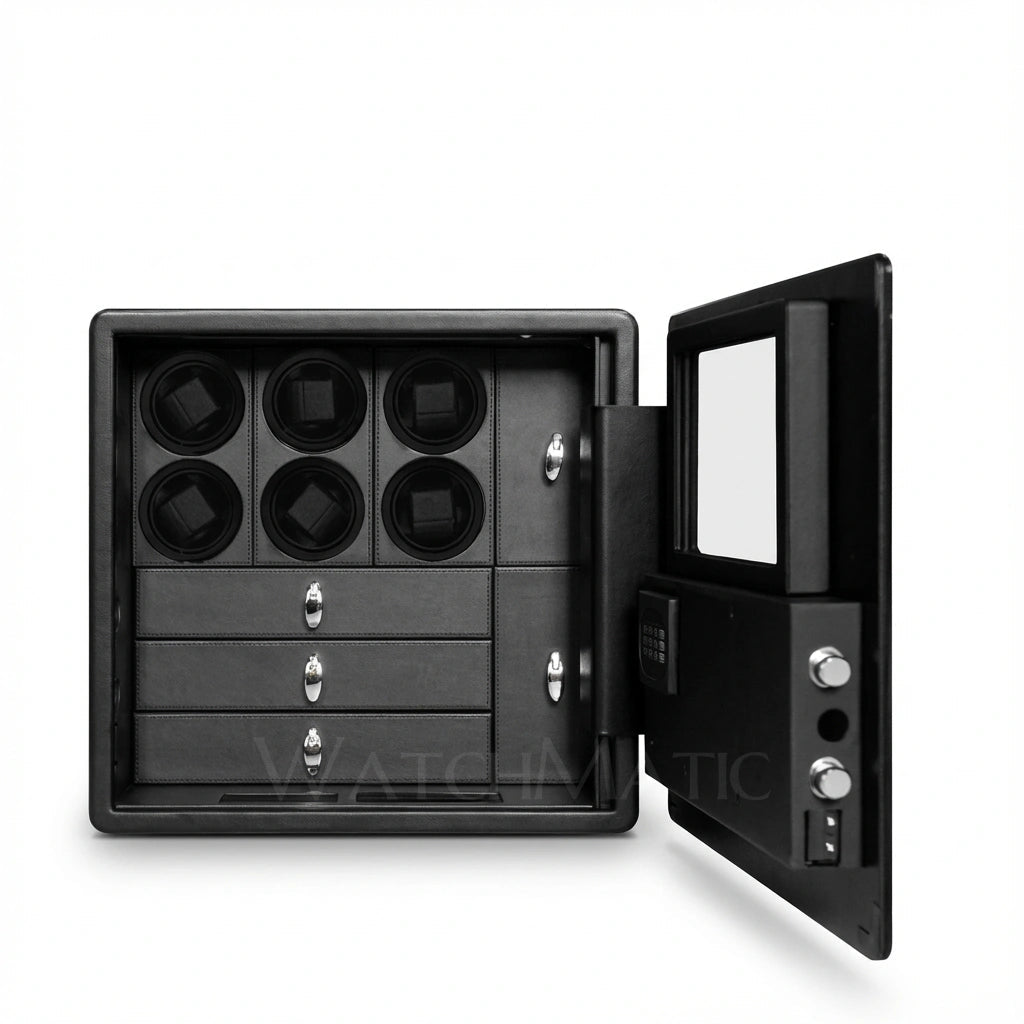
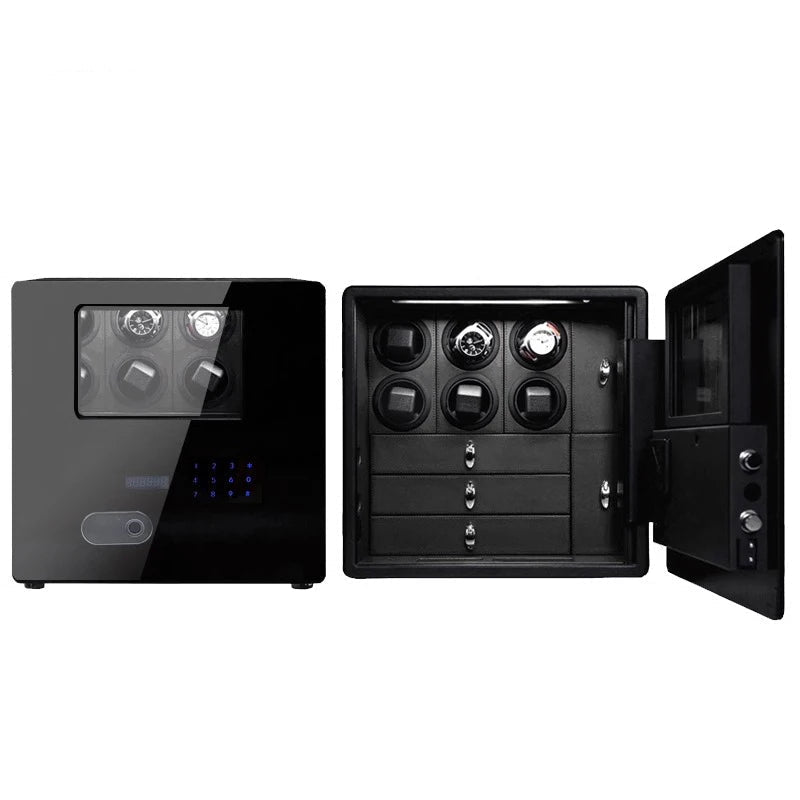
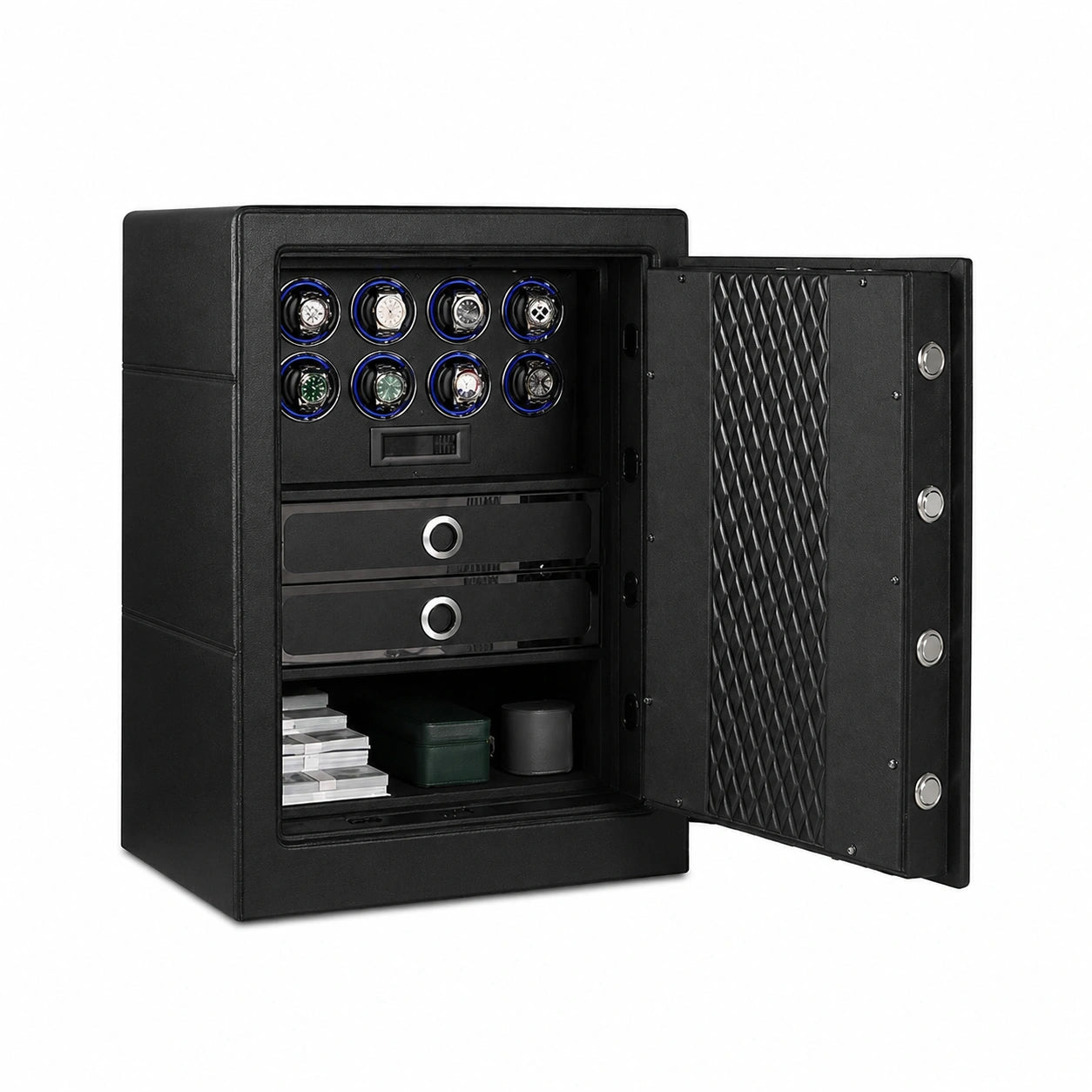
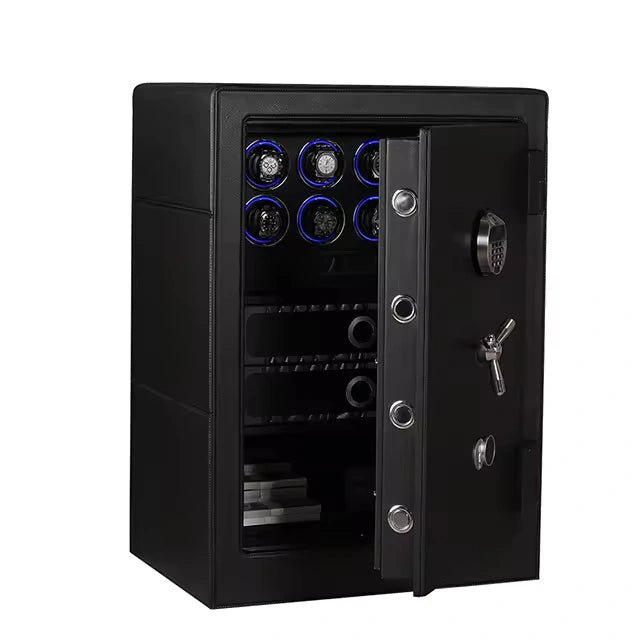
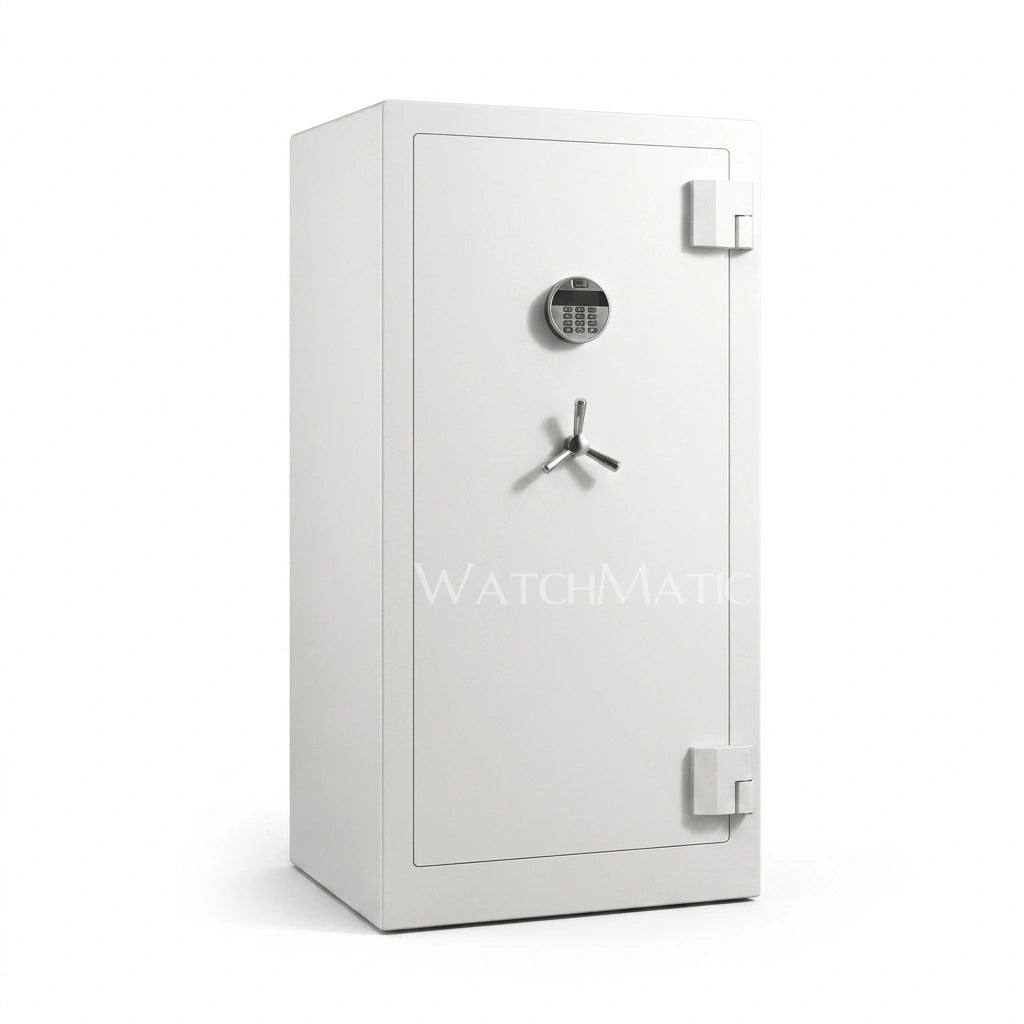
At WatchMatic, we design safes certified under EN 15659 LFS 30 P and LFS 60 P with a focus on thermal stability rather than surface thickness.
As a luxury watch safe specialist our approach emphasizes:
- Controlled heat transfer
- Insulation layering
- Structural integrity
- Real-world installation planning
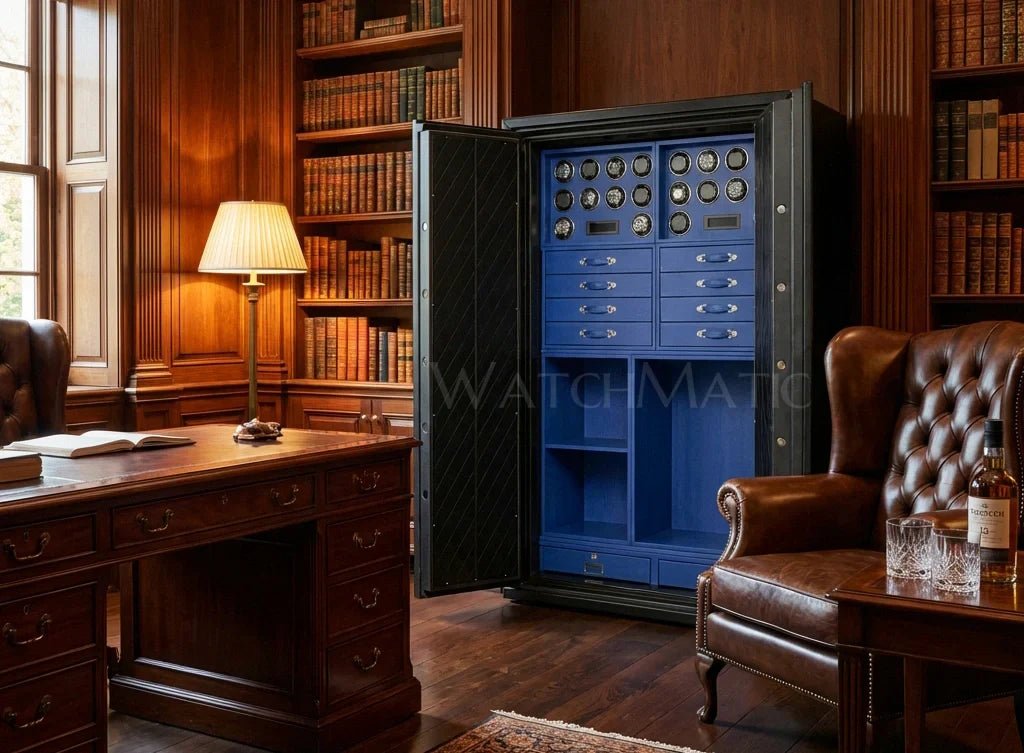
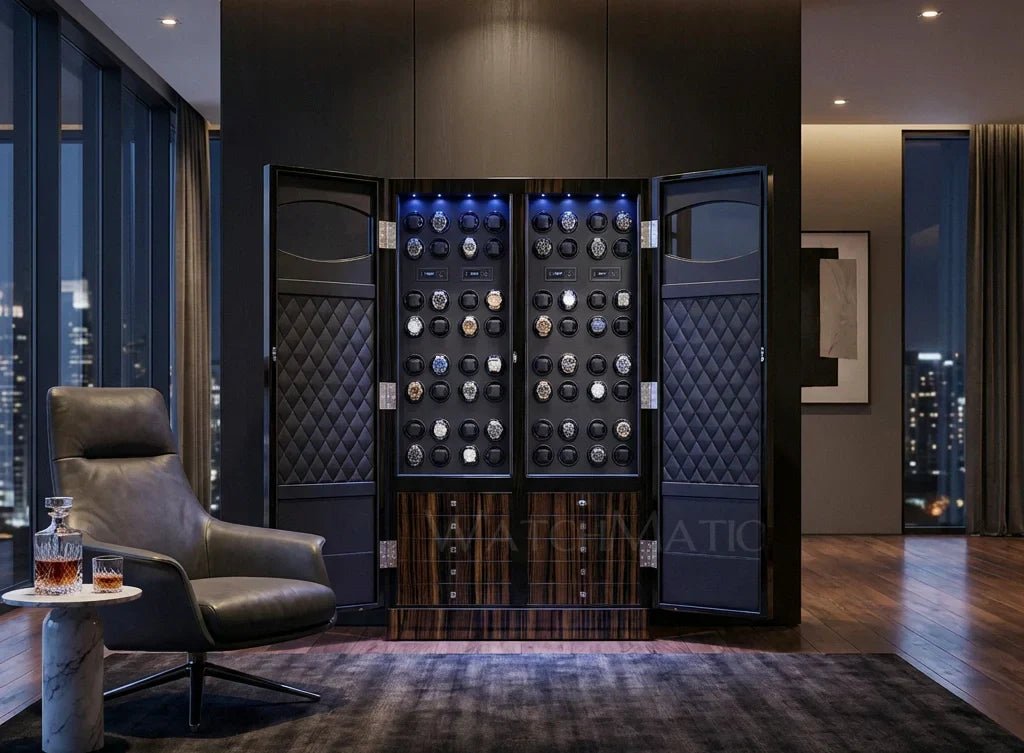
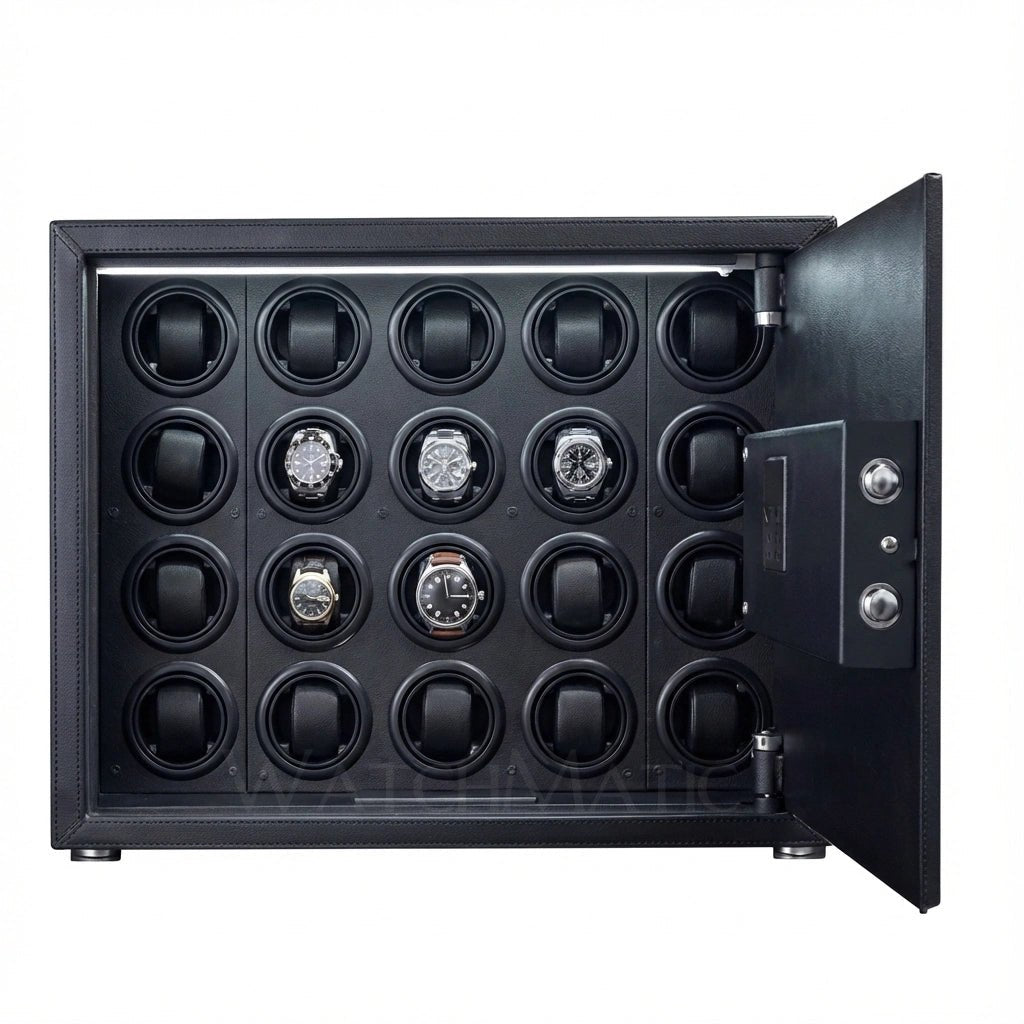
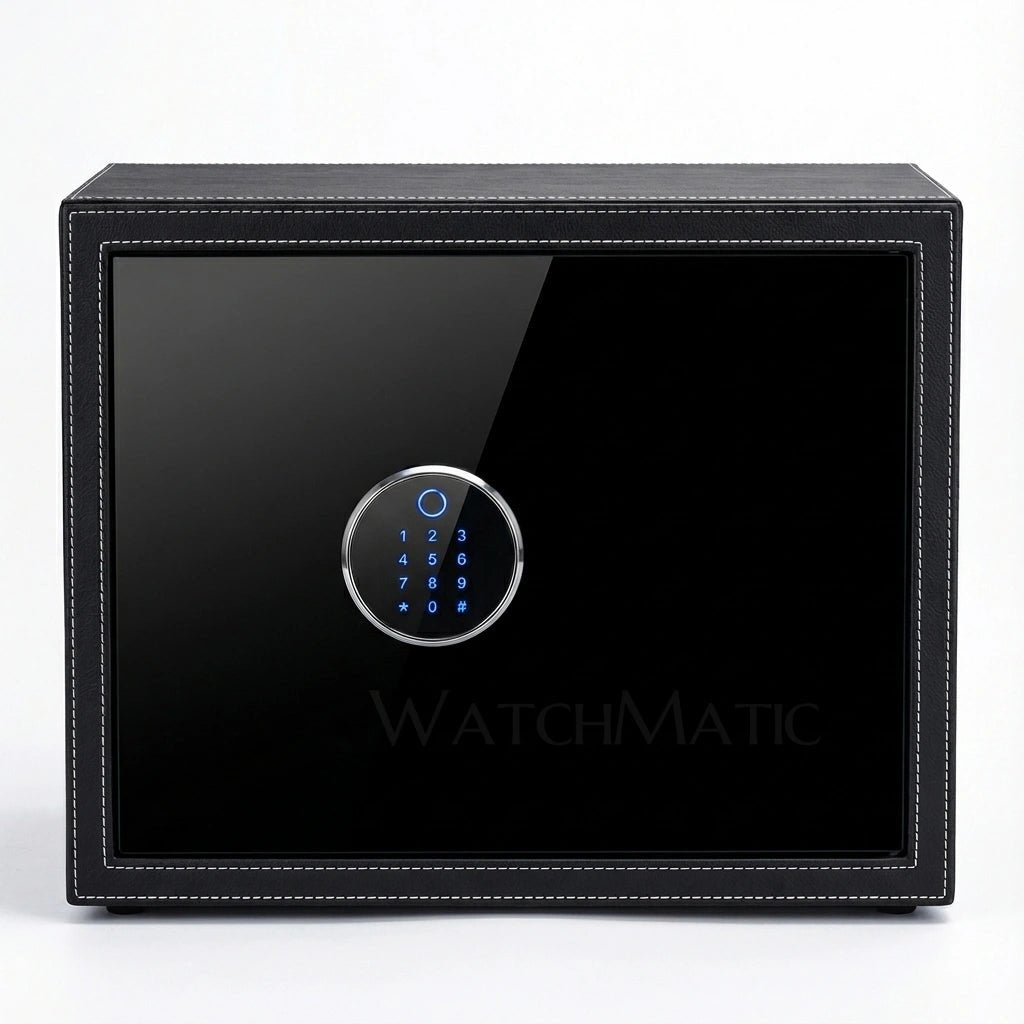
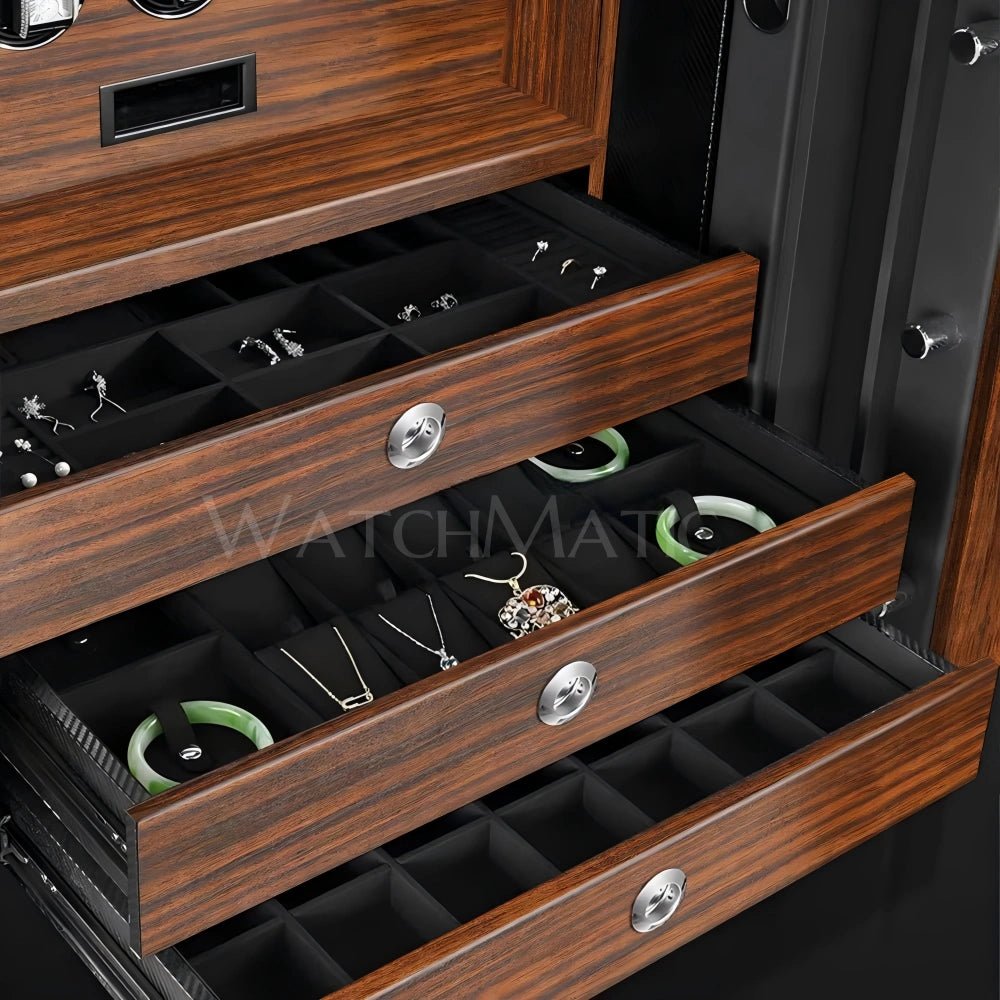
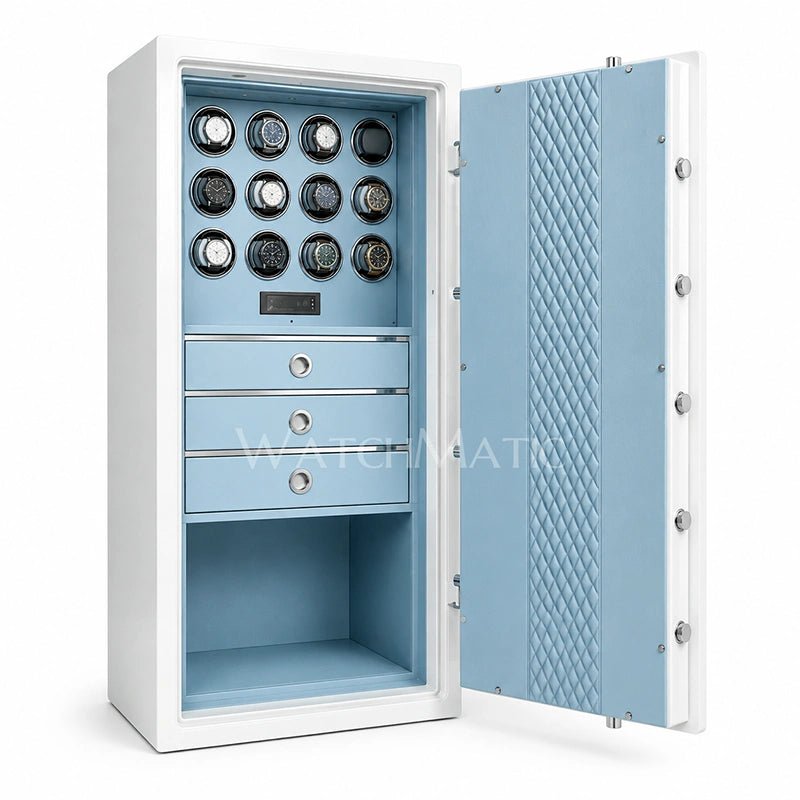
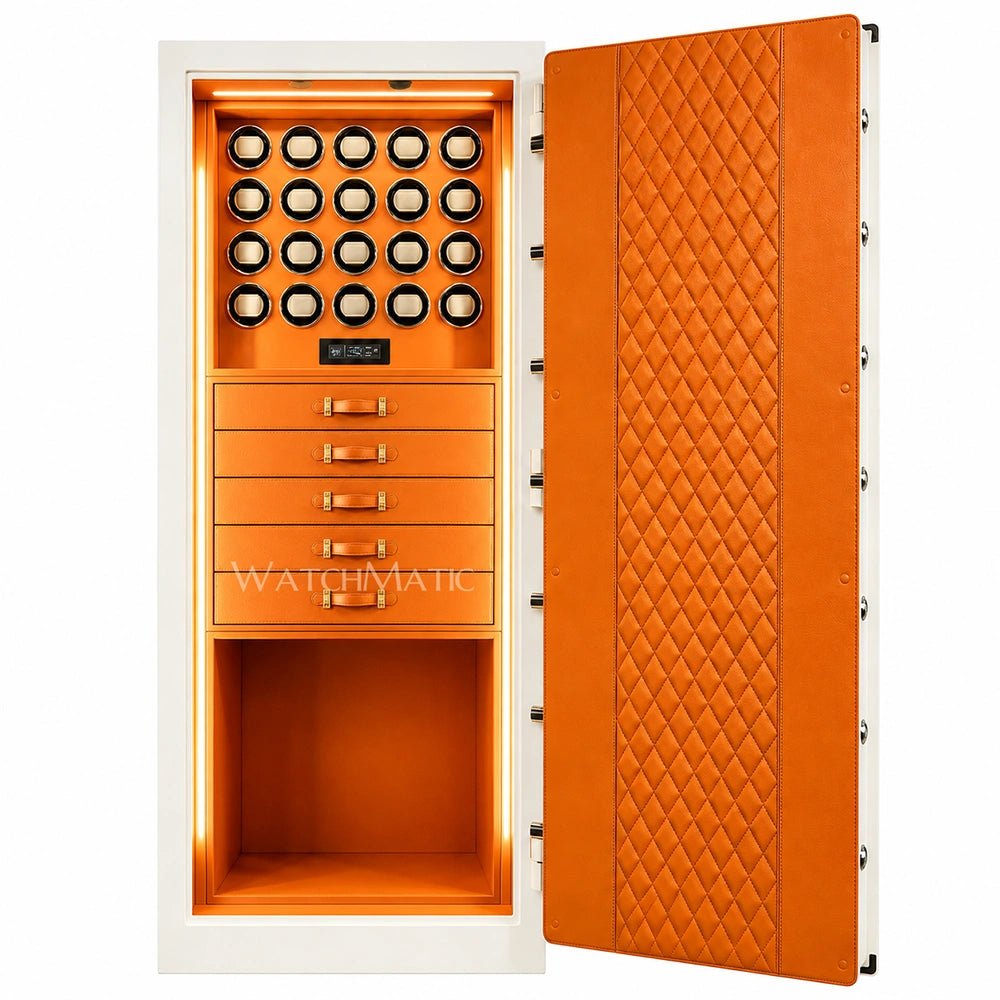
For collectors seeking larger certified systems, our fire-certified watch safe collection integrates EN 15659 standards into executive-grade configurations.
Free worldwide shipping and a 10-year warranty support ownership confidence, but certification integrity remains the core protective factor.
For those comparing fire duration options in greater detail, our guide on 30 vs 60 vs 120-minute fire-rated watch safes provides additional technical context.
Does EN 15659 Replace Burglary Ratings?
No.
EN 15659 specifically addresses fire resistance, not burglary resistance.
Fire certification and burglary resistance are separate engineering domains.
A complete protection strategy should consider:
- Fire exposure
- Structural anchoring
- Installation placement
- Environmental stability
Certification addresses one — but important — dimension of risk.
Expert Perspective: Is LFS 60 P Worth It?
In practical advisory scenarios, we typically recommend:
- LFS 30 P for moderate urban collections
- LFS 60 P for serious collectors seeking broader protection
The decision should align with environmental risk and asset value — not simply upgrade psychology.
Fire certification is about preserving precision, not checking a specification box.