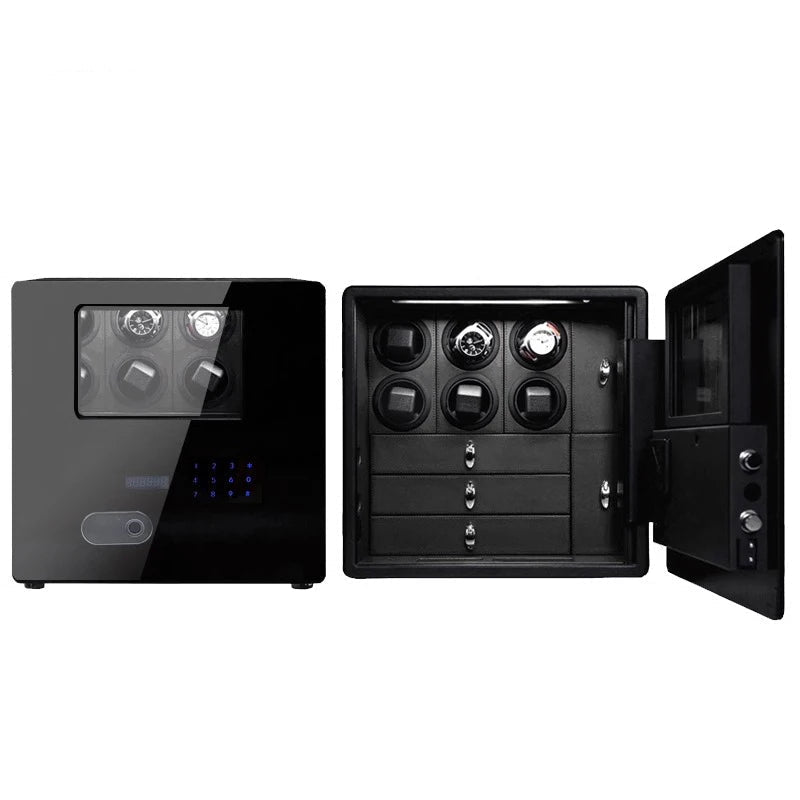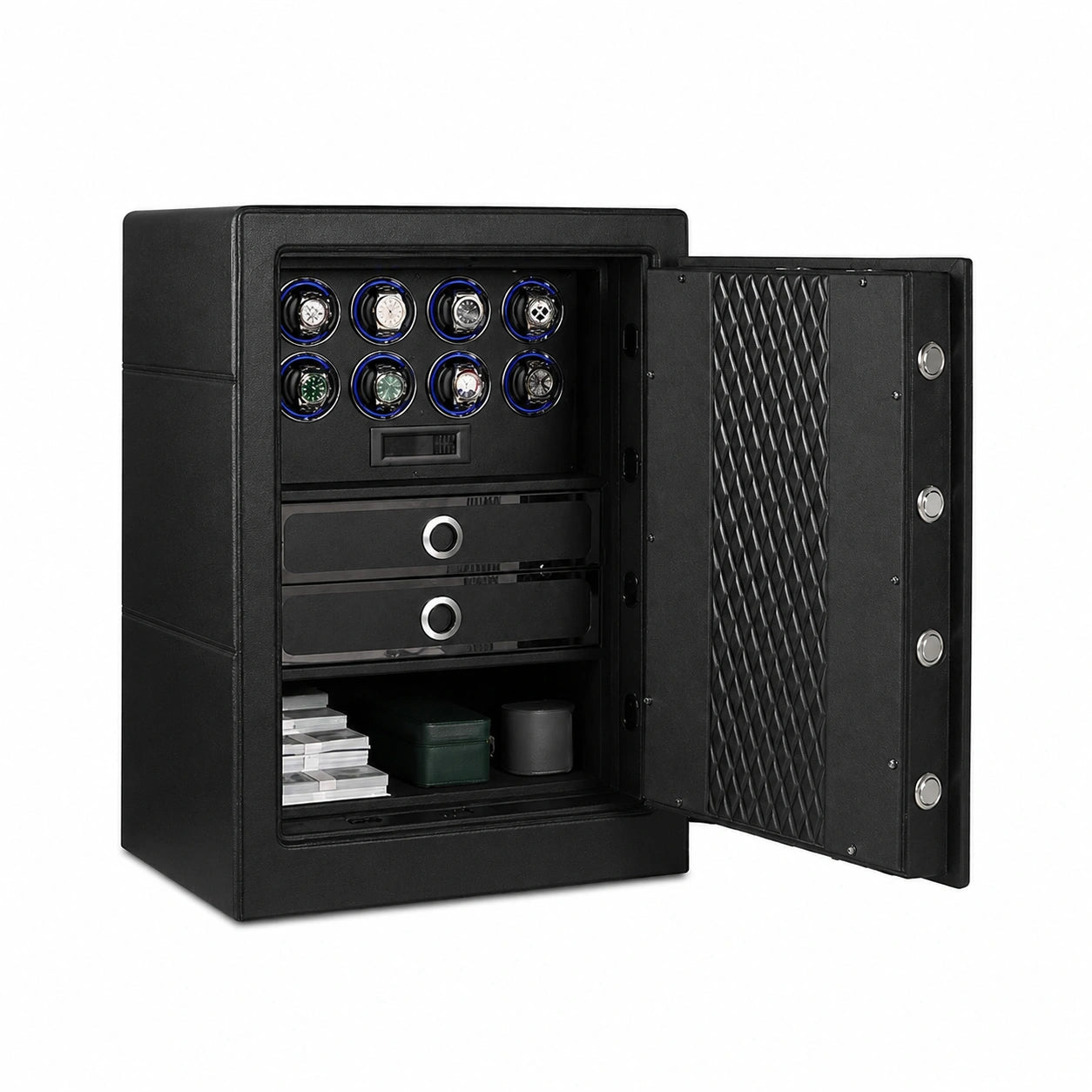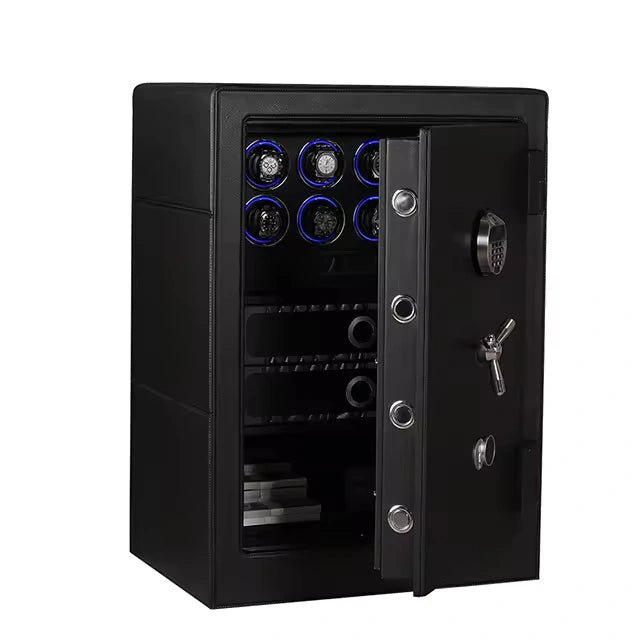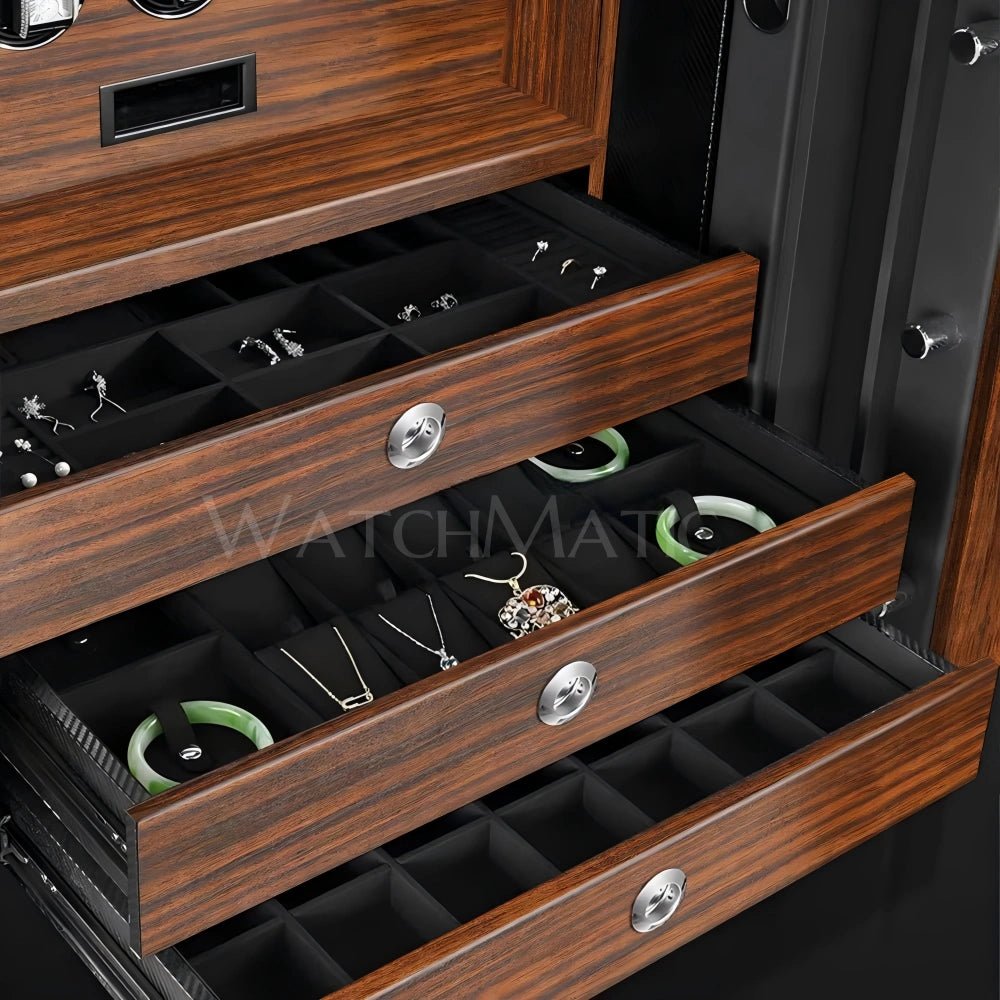
Protecting a multi-million dollar watch collection at home requires more than a safe. It requires a layered risk strategy combining physical security, environmental control, discretion, and insurance alignment.
At this level, collectors are no longer protecting accessories — they are protecting portable assets that may include rare references from brands such as Patek Philippe, Rolex, and Audemars Piguet.
Core protection pillars typically include:
- A high-mass, floor-standing watch safe
- Integrated alarm and surveillance systems
- Controlled environmental conditions
- Confidential installation and placement strategy
The objective is not simply storage.
It is probability management — reducing theft, fire, and disclosure risk simultaneously.
Step One: Rethink the Word “Storage”
Once a collection surpasses seven figures, the conversation changes.
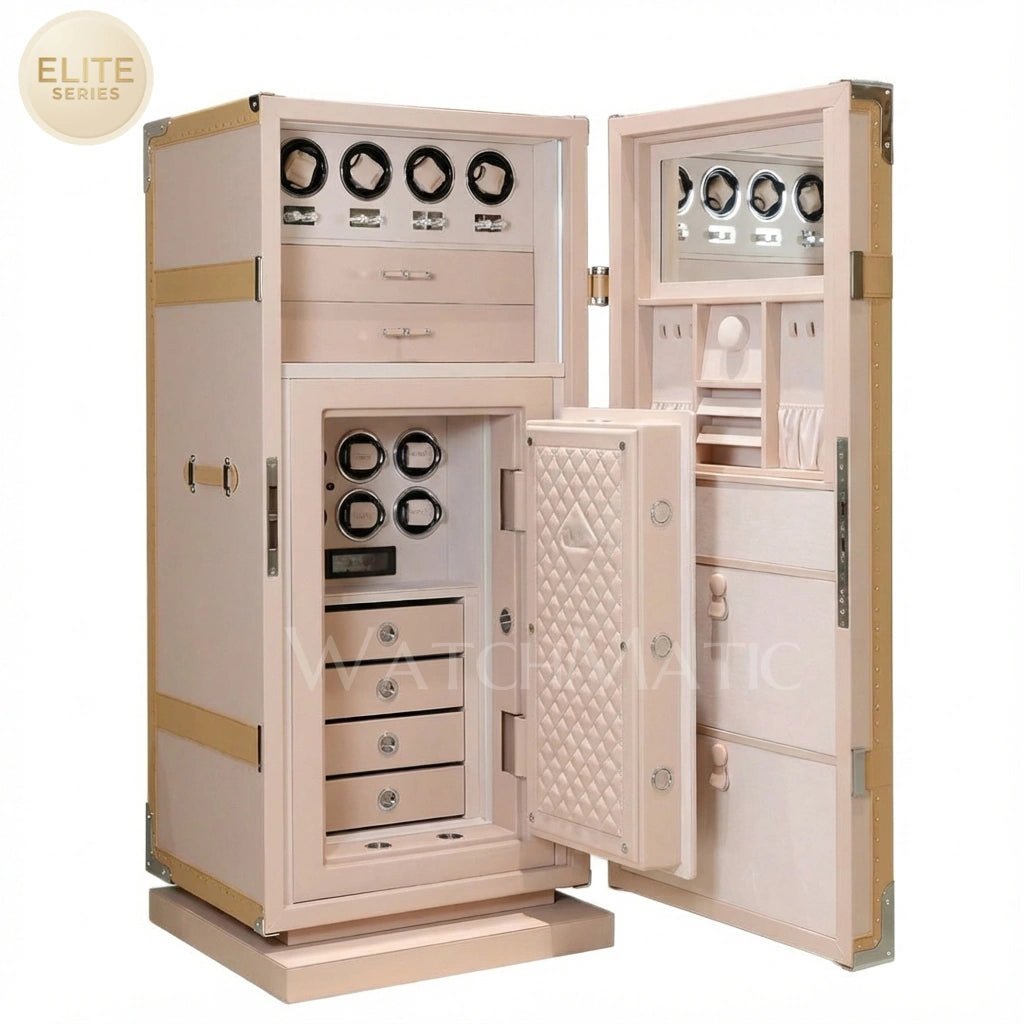
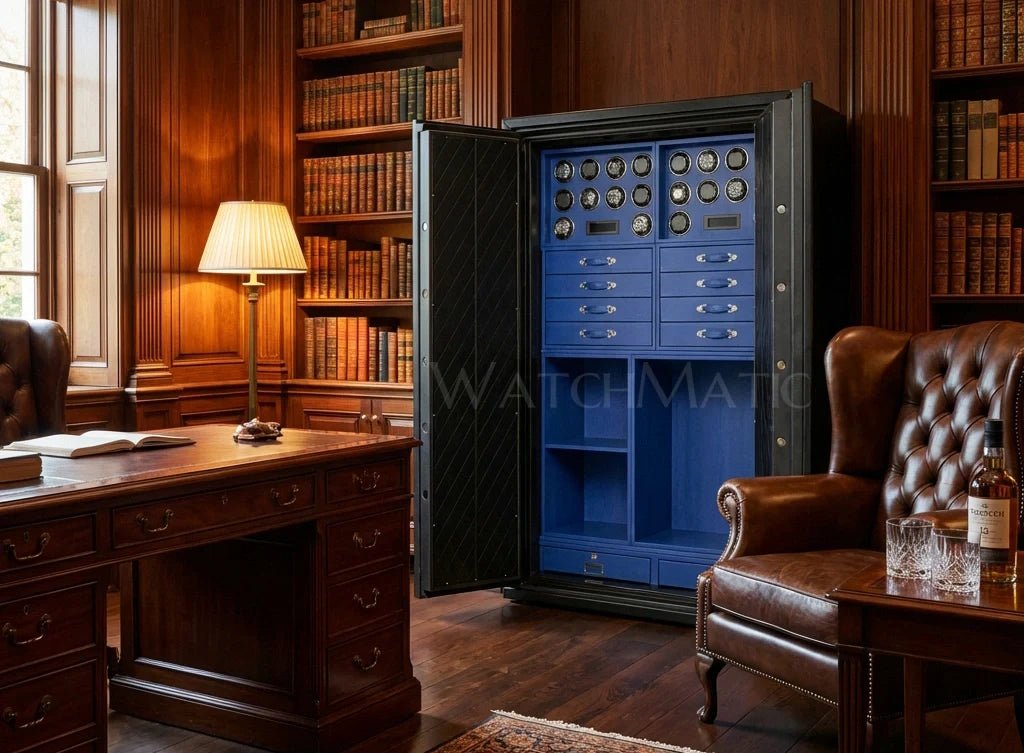
Based on our engineering standards, the most common vulnerability we observe is fragmentation. Watches are split between drawers, winders, display cabinets, and travel cases. This creates multiple exposure points.
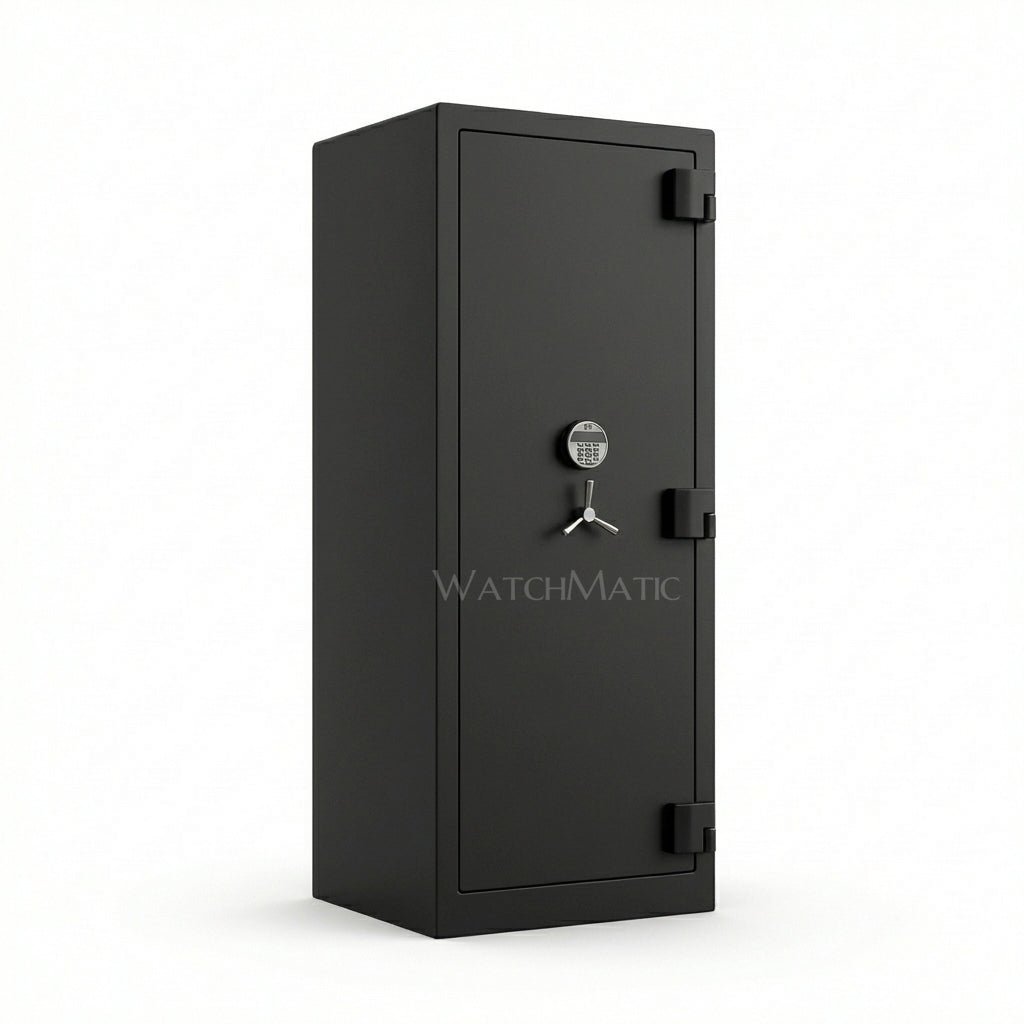
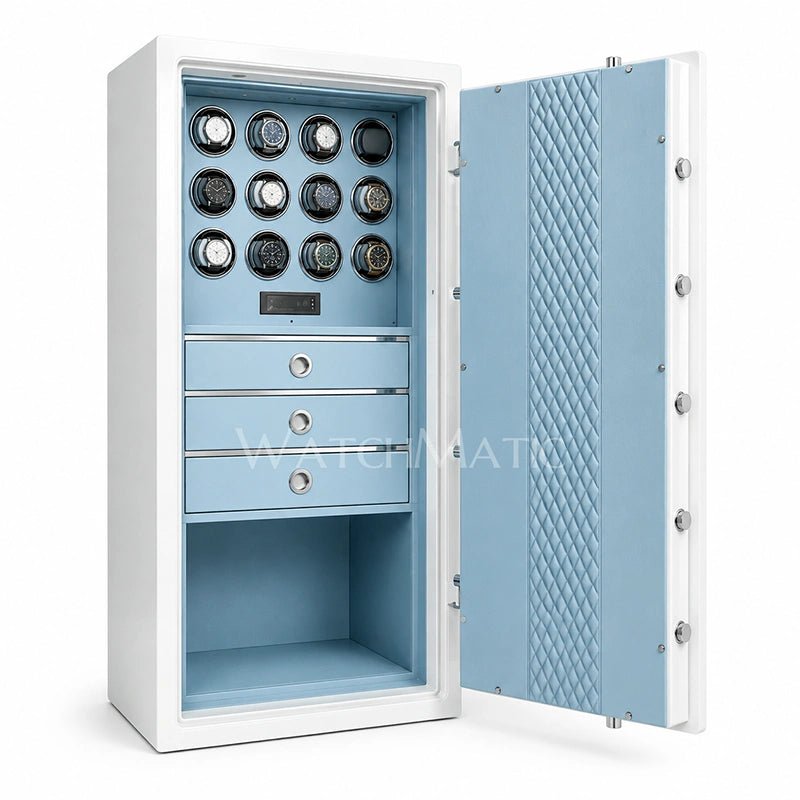
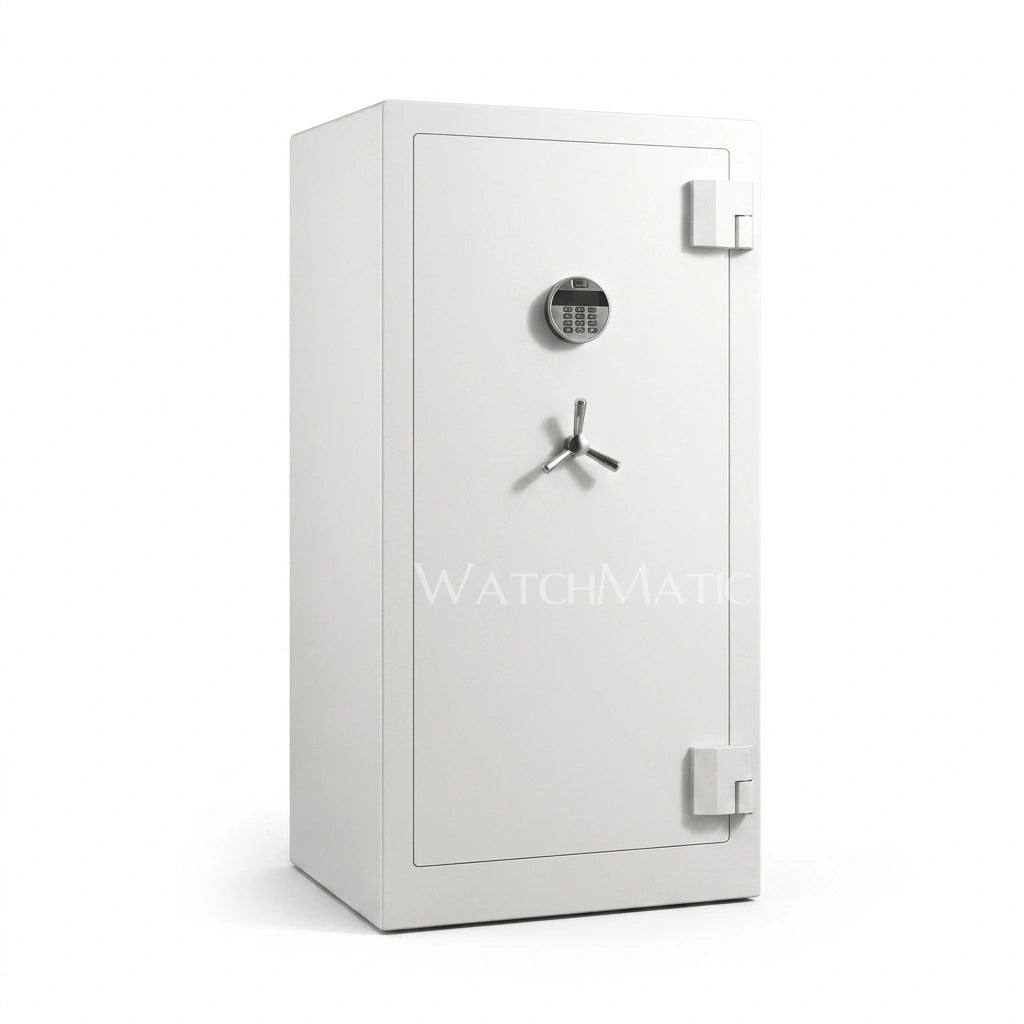
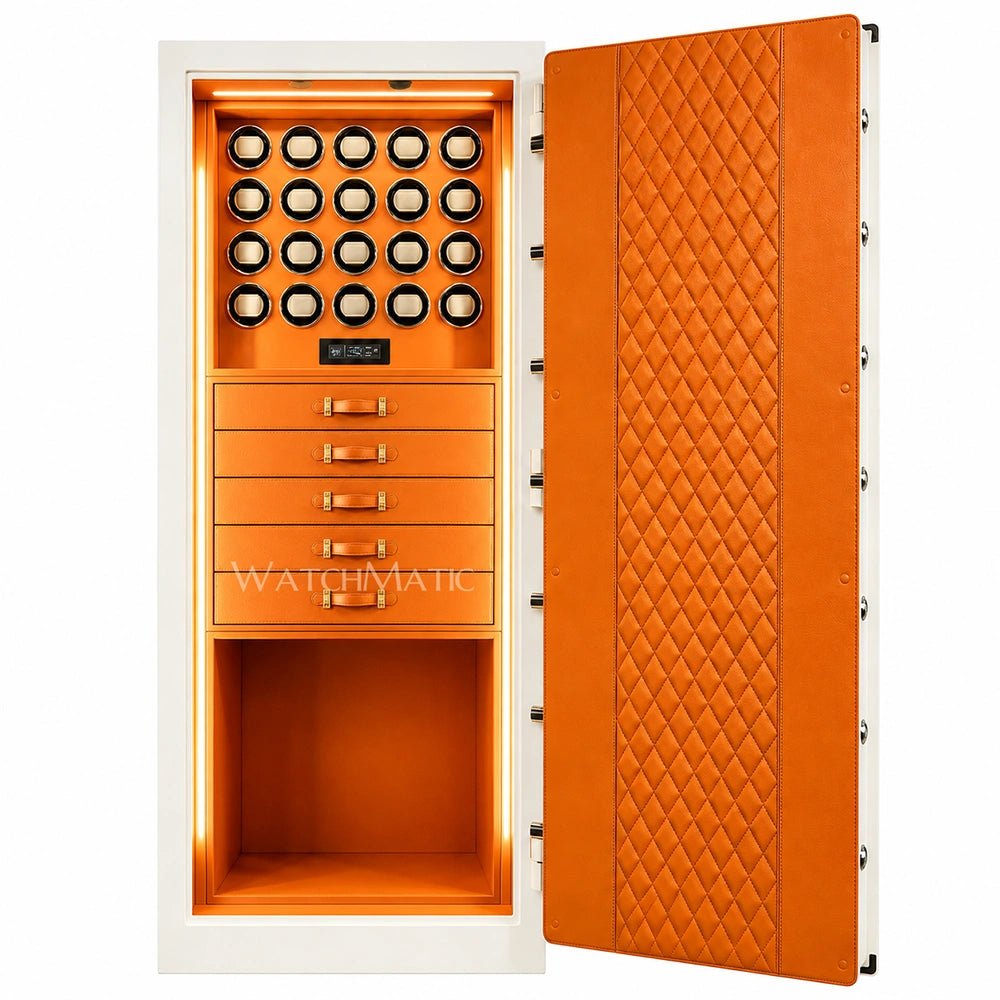
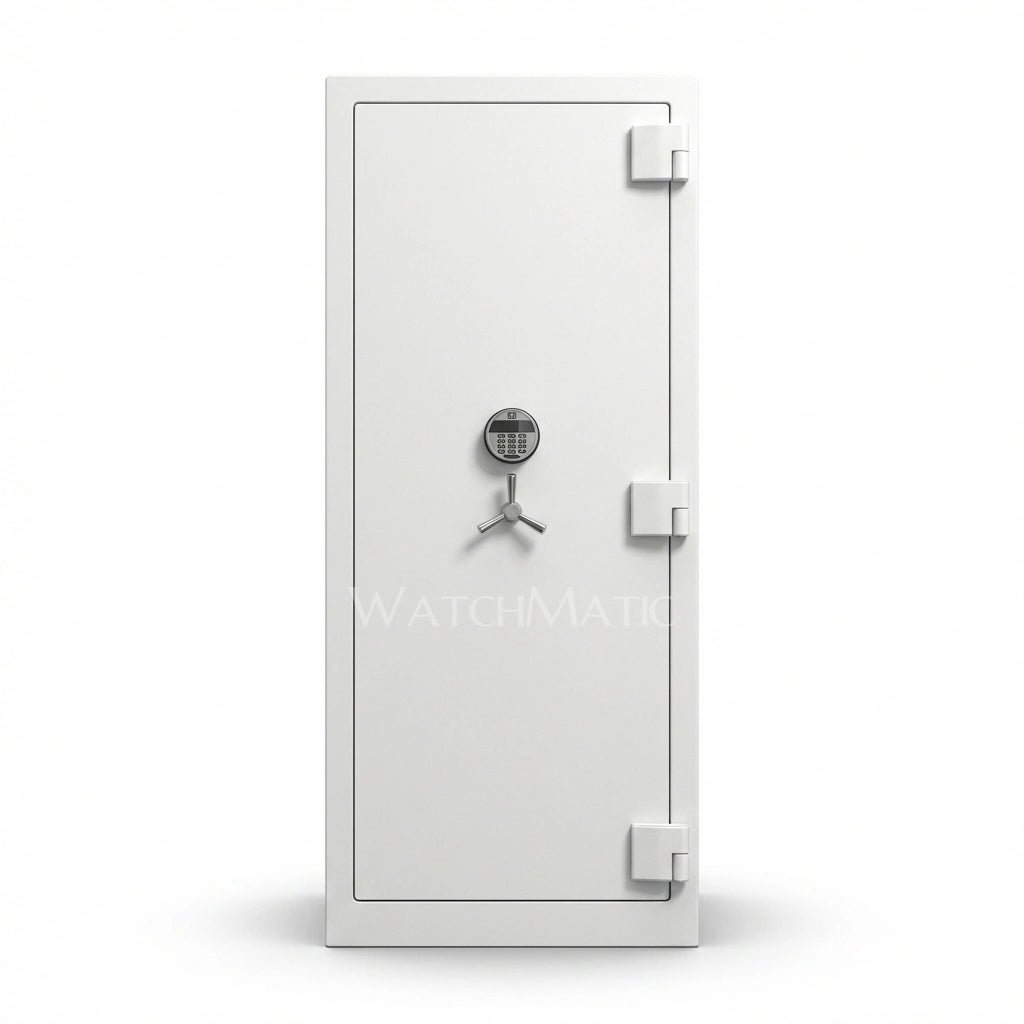
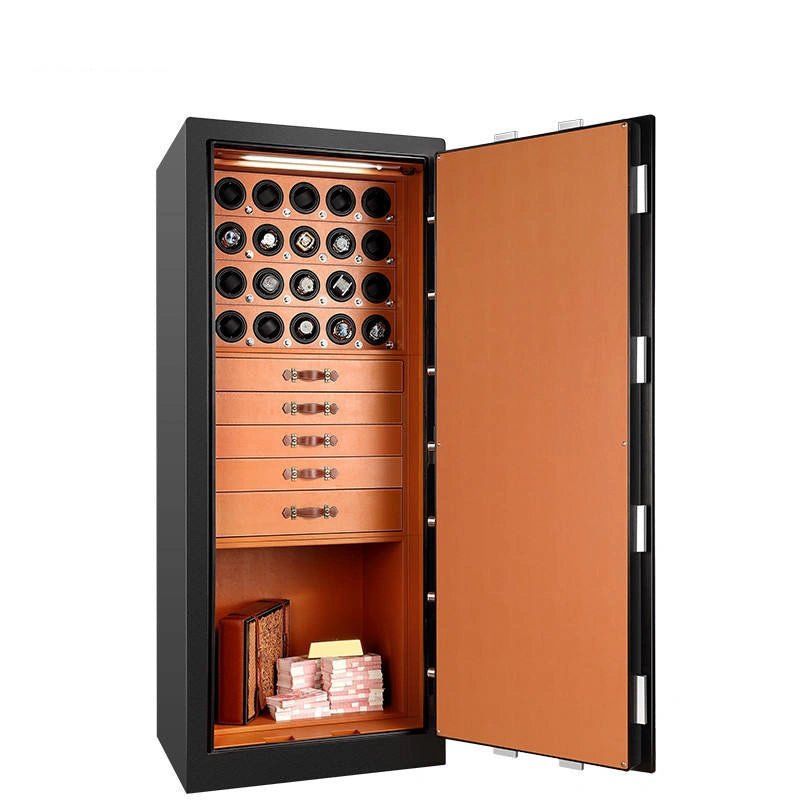
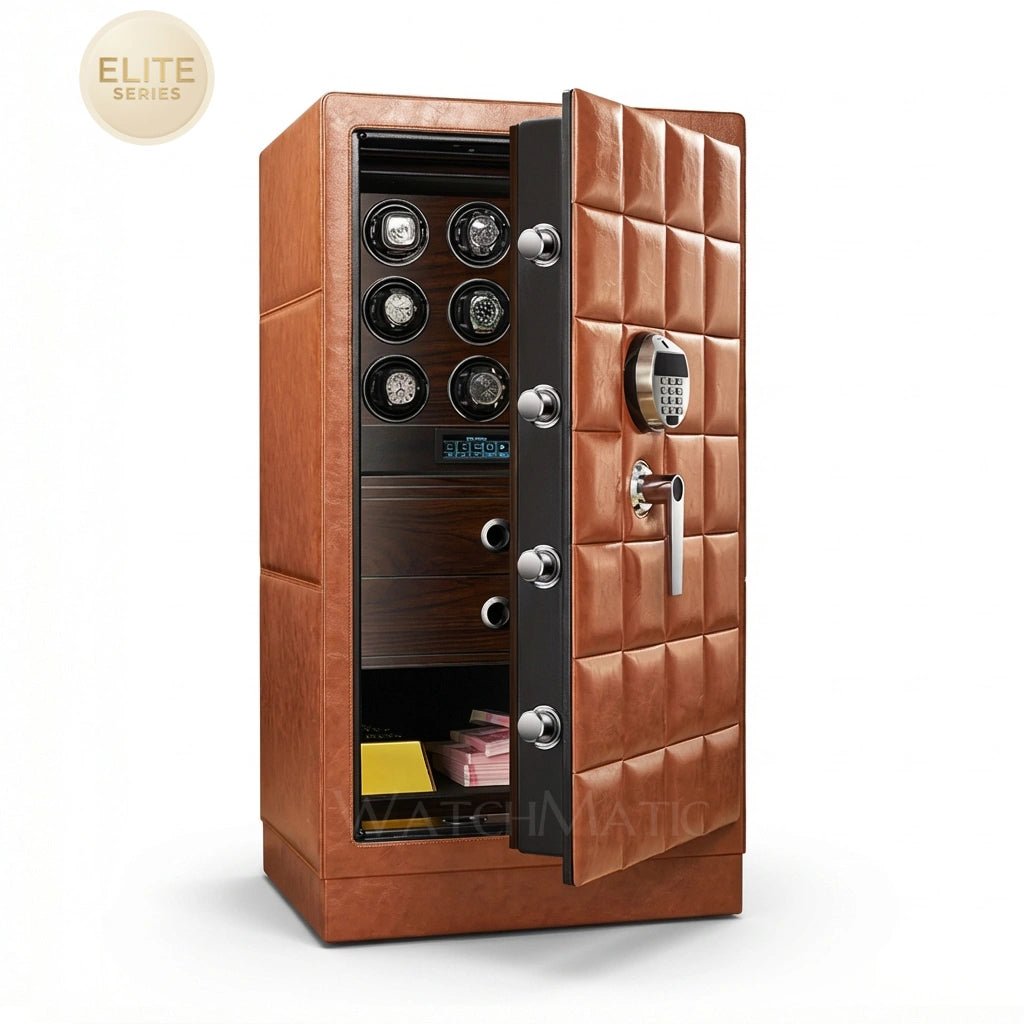
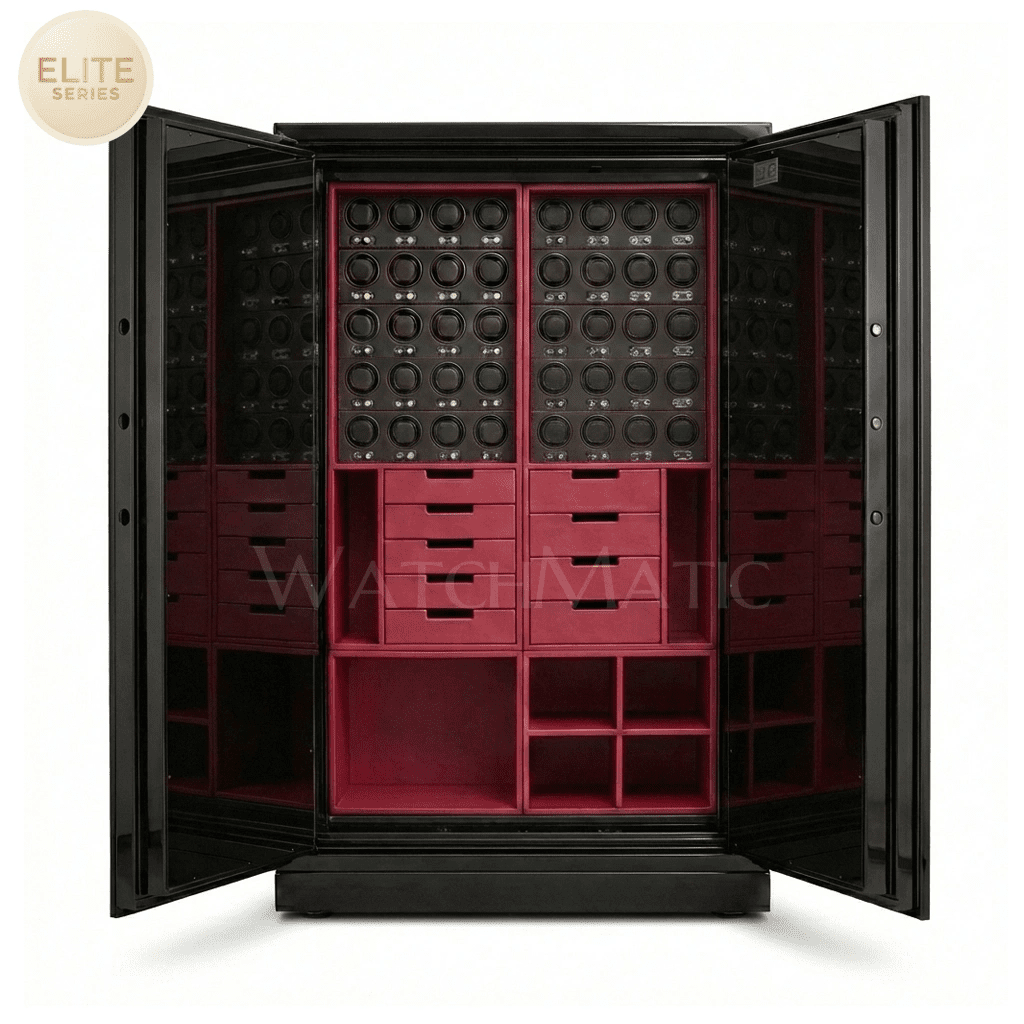
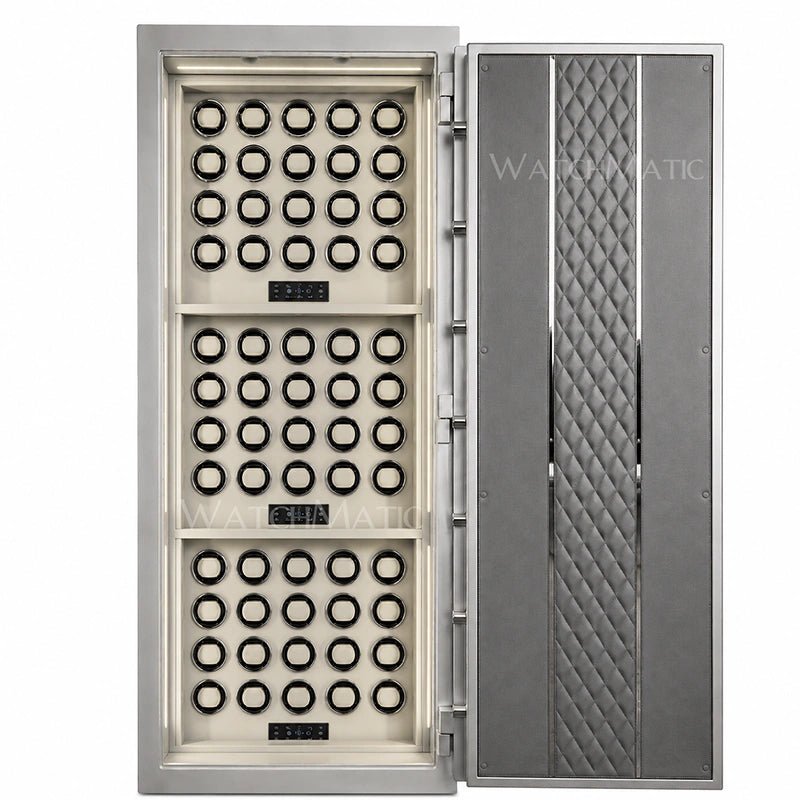
A consolidated, floor-standing security enclosure weighing 150–650 kg immediately reduces mobility risk. Unlike lightweight cabinets, these units cannot be casually removed from the residence. Structural mass becomes part of the defense architecture.
Within the curated luxury watch cabinet brand ecosystem, structural stability is engineered as a baseline principle rather than an upgrade.
Step Two: Understand Real-World Burglary Behavior
Most residential burglaries are fast and opportunistic. Intruders move toward master bedrooms, closets, and visible valuables. They are operating under time pressure.
From an underwriting perspective, insurers evaluate:
- How long access can be sustaine
- Whether removal is feasible
- Whether the asset is concentrated in one protected location
A high-security floor-standing enclosure alters the time equation. Removal becomes impractical. Forced entry becomes noisy and prolonged.
The goal is not absolute invincibility.
It is delay beyond criminal comfort thresholds.
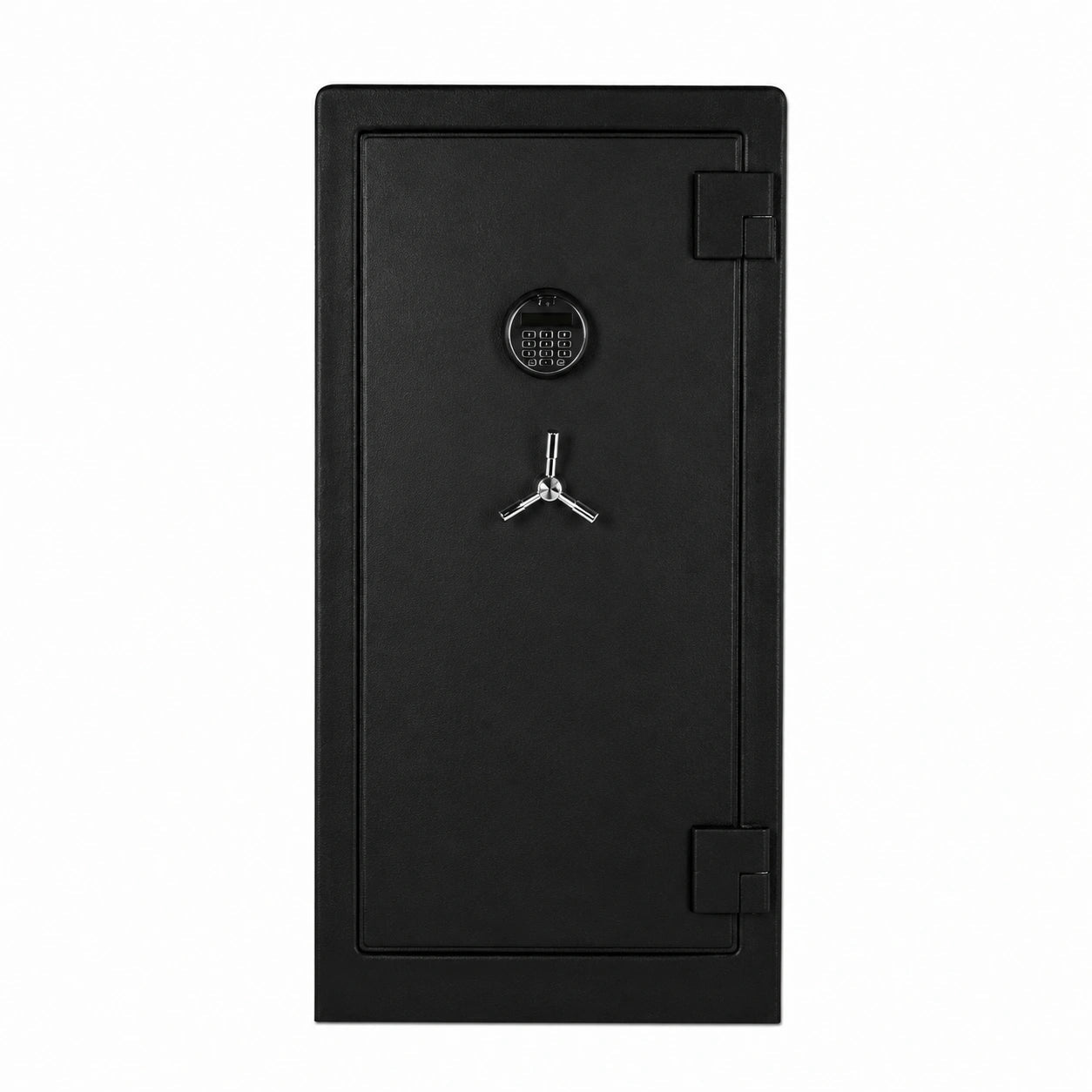
For collectors considering executive watch protection systems, structural mass and reinforced multi-layer steel construction work together to increase breach time under realistic residential conditions.
Step Three: Fire and Environmental Risk
High-value mechanical watches are sensitive not only to theft, but also to heat and humidity fluctuations.
At this level, fire resistance becomes part of portfolio protection. Certain models engineered to EN 15659 – LFS 30 P or LFS 60 P standards provide certified protection against heat exposure for defined durations.
Beyond certification, interior architecture should include:
- Controlled humidity balance
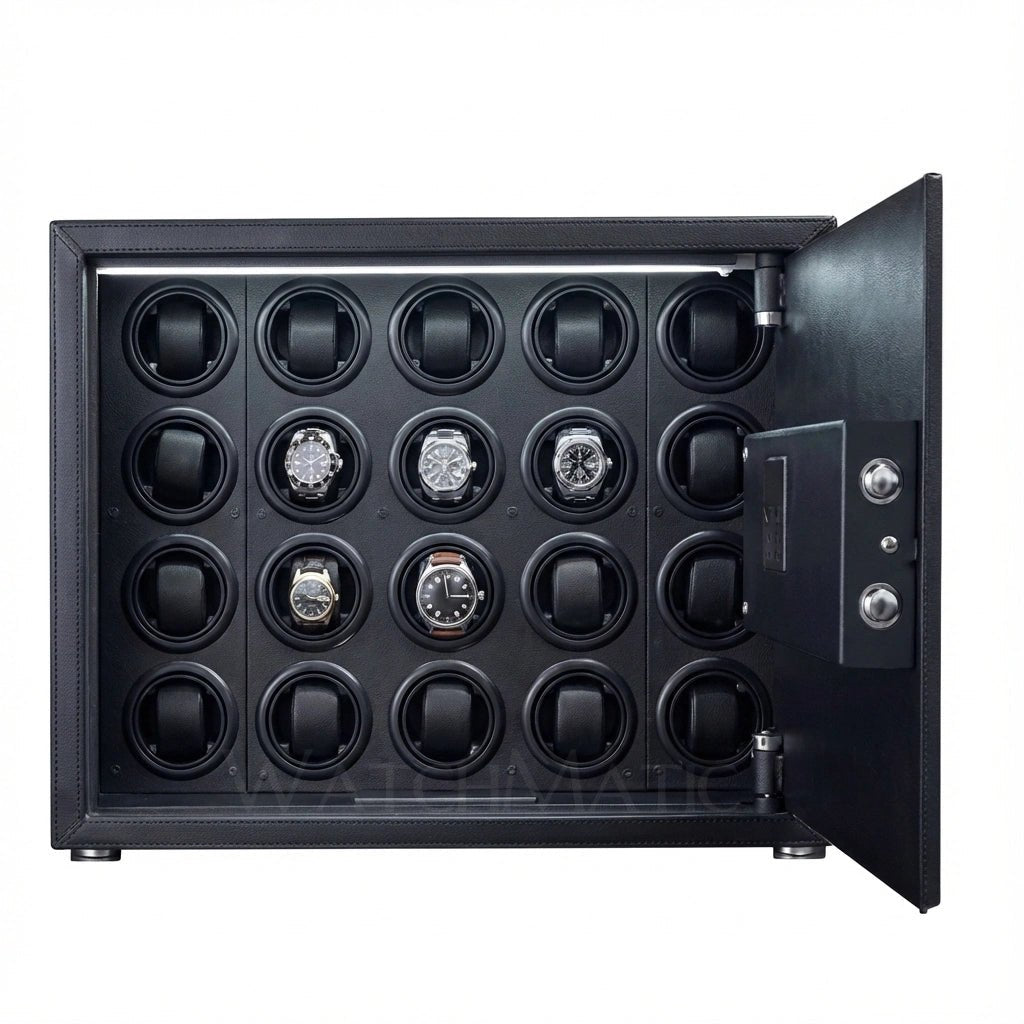
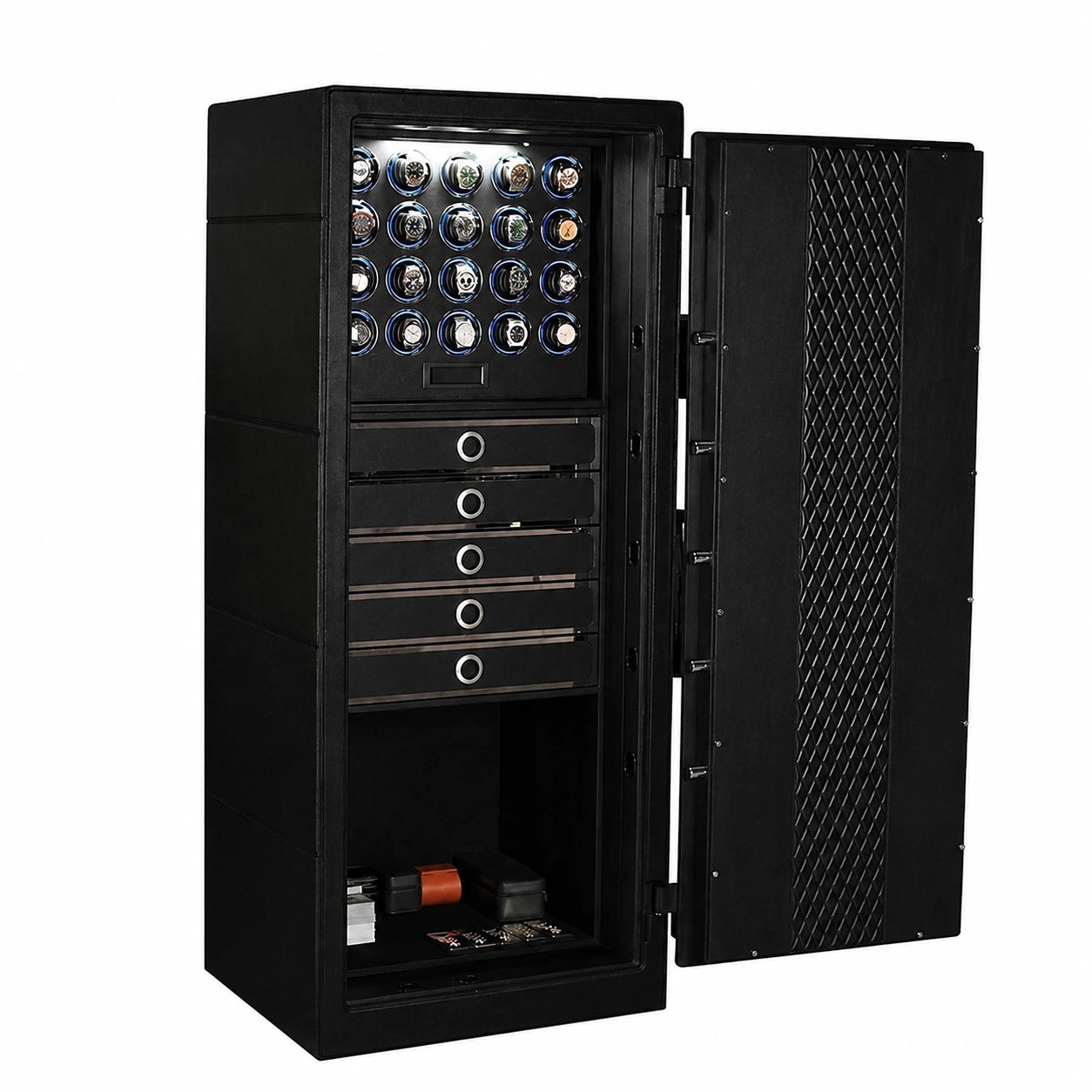
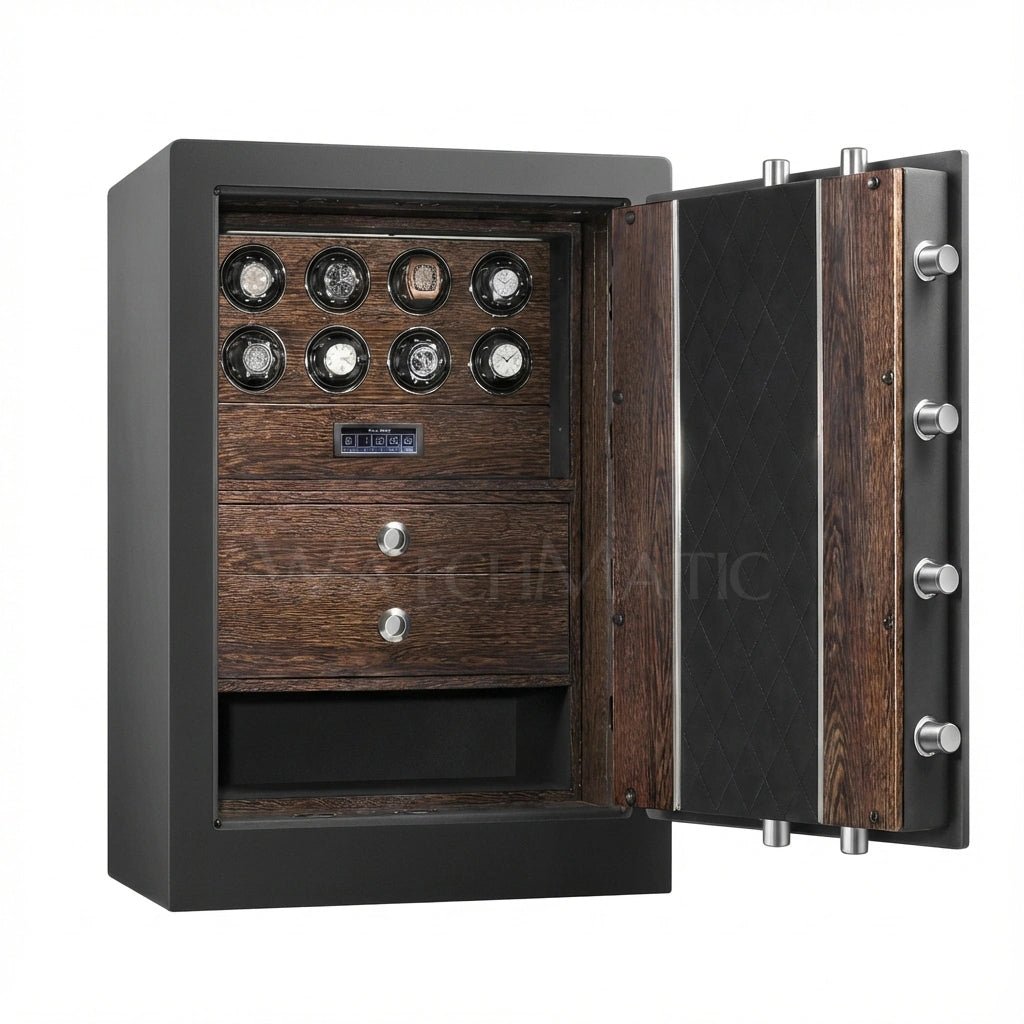
- Isolated rotor systems (if integrated winders are used)
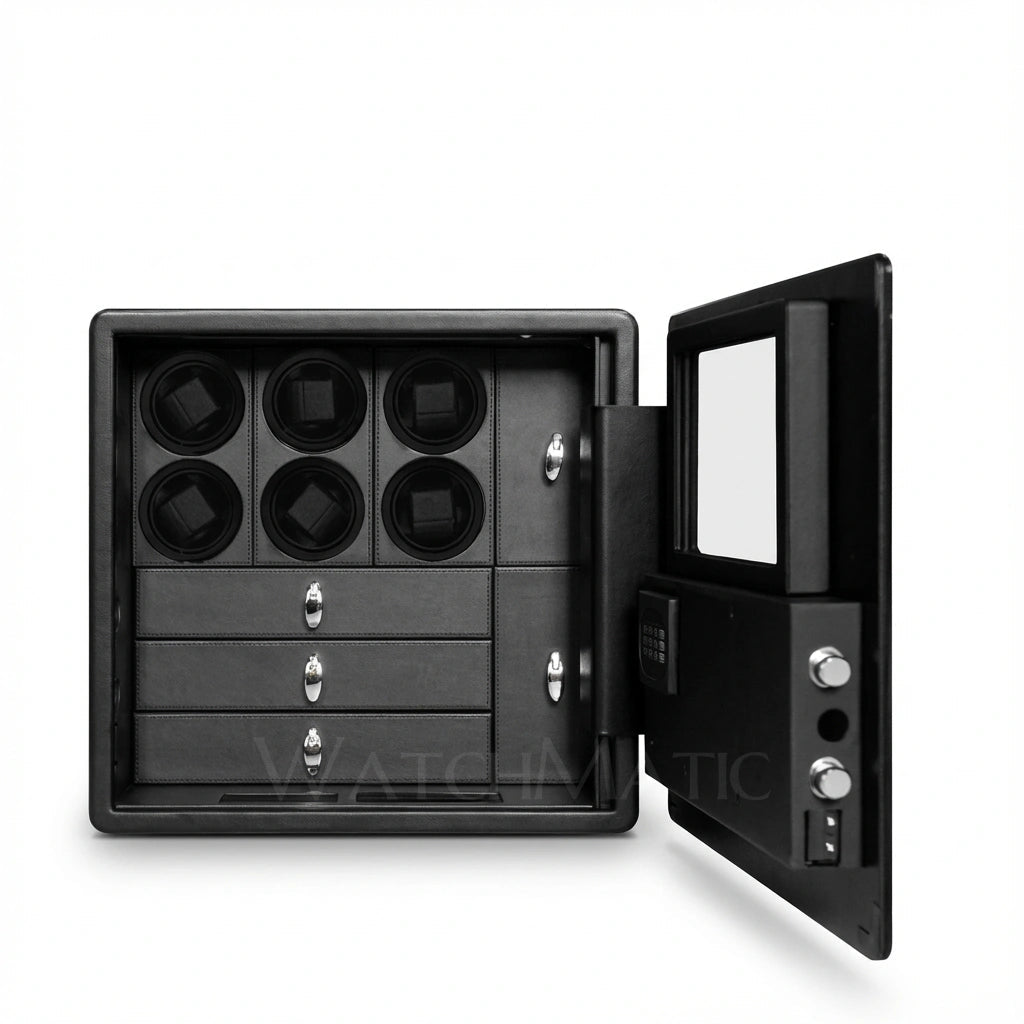
- Soft-contact drawer systems preventing case abrasion
Environmental protection preserves both value and mechanical integrity.
Step Four: Discretion Is a Security Layer
Security is not only mechanical.
In high-rise installations, we routinely see one overlooked variable: visibility. If contractors, guests, or service personnel are aware of the location and scale of a collection, risk expands beyond forced entry.
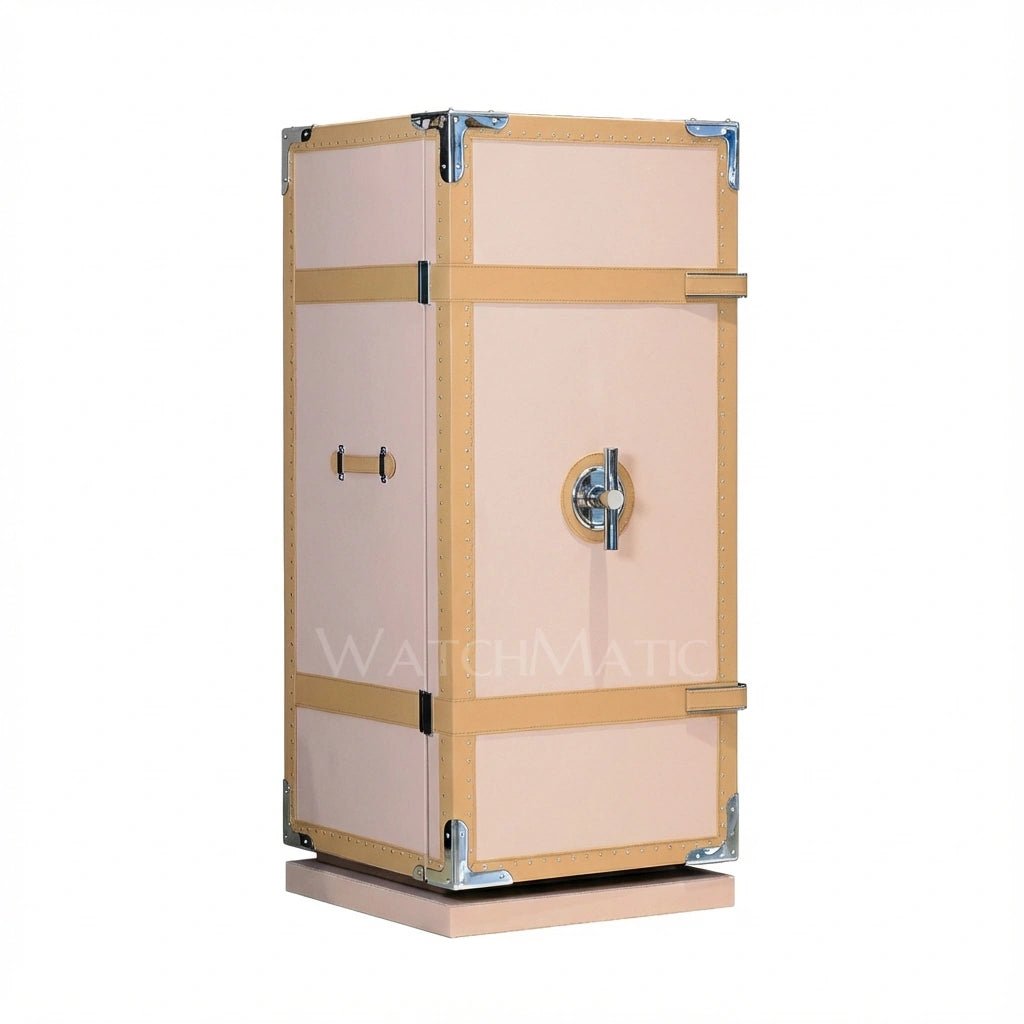
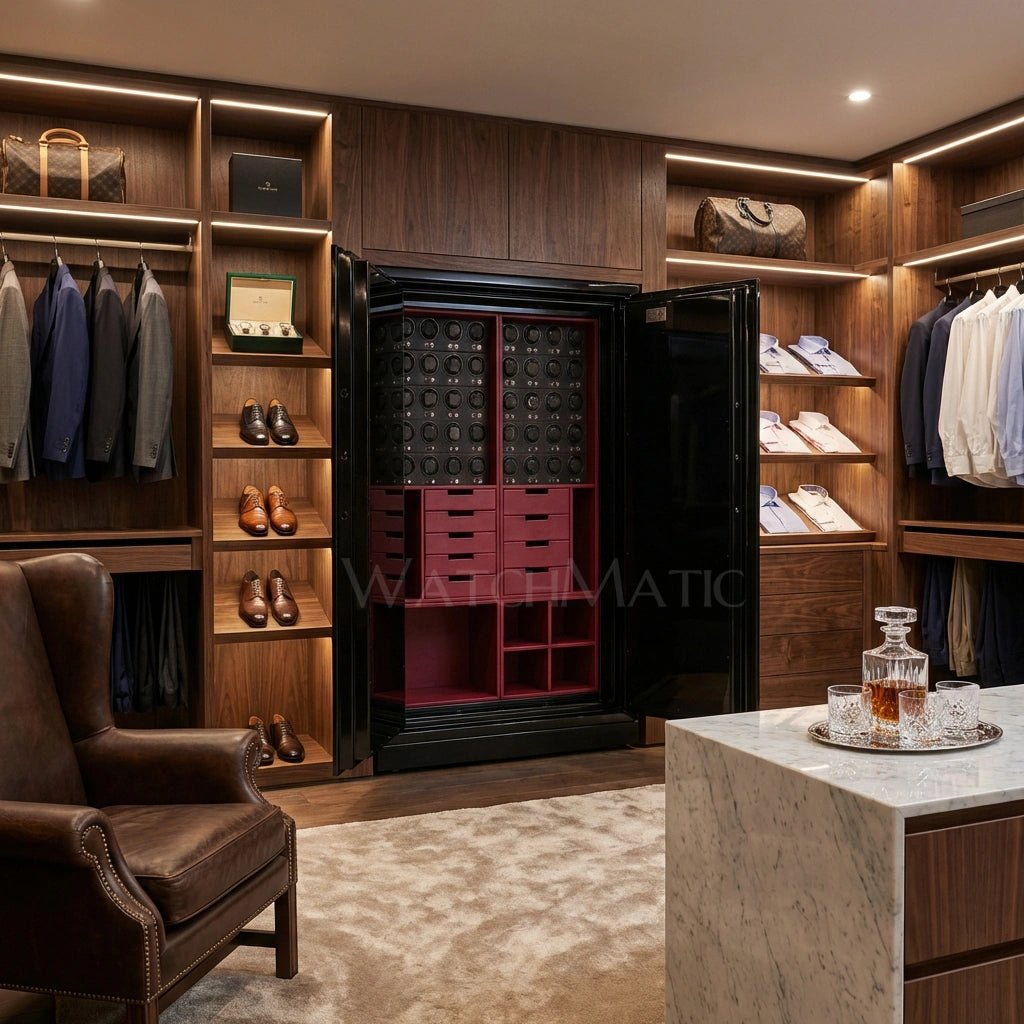
Discreet delivery, controlled installation, and concealed placement matter.
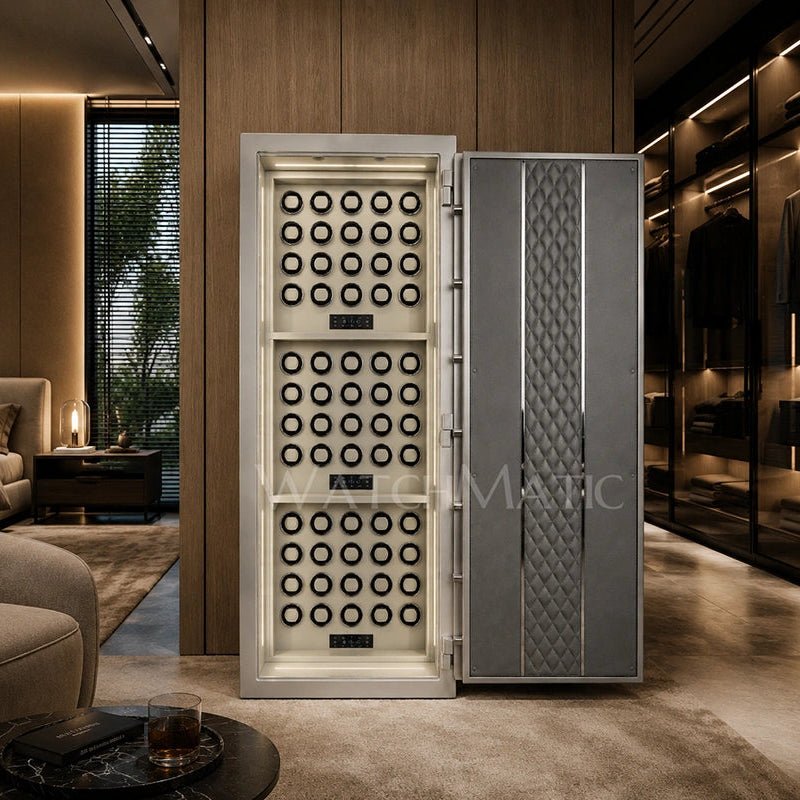
The advantage of a 150–650 kg floor-standing enclosure is that it does not require bolt-down anchoring under standard residential conditions. This allows flexible placement within structurally sound areas without visible hardware exposure.
Discretion reduces targeting probability before any tool is ever used.
Step Five: Insurance Alignment
For multi-million dollar portfolios, insurance coverage should be reviewed alongside physical security.
Policies may require:
- Declared storage conditions
- Certified fire resistance (if applicable)
- Proof of professional installation
- Centralized storage location
Fragmented storage often complicates claims. Consolidation simplifies documentation.
Strategic Framework for Executive Collectors
At portfolio scale, protection should address:
- Theft probability
- Fire exposure
- Mechanical preservation
- Information controlInsurance defensibility
Security is not a product purchase.
It is a system architecture decision.
When structural mass, layered steel construction, fire-rated engineering, and environmental control converge into one unified enclosure, the protection model becomes coherent rather than fragmented.
That coherence is what differentiates storage from strategy.
For collectors looking at long-term protection strategies, our complete Watch Safe Guide covers key considerations in depth.