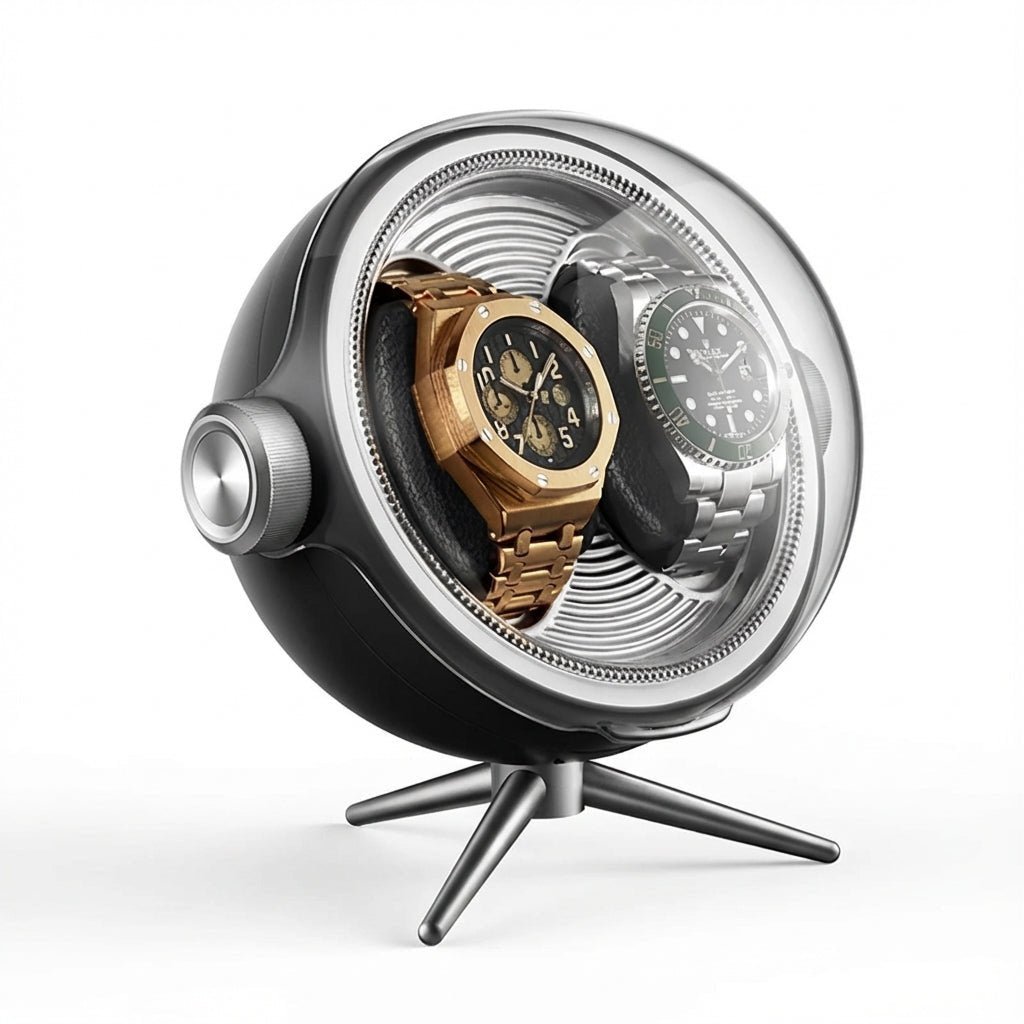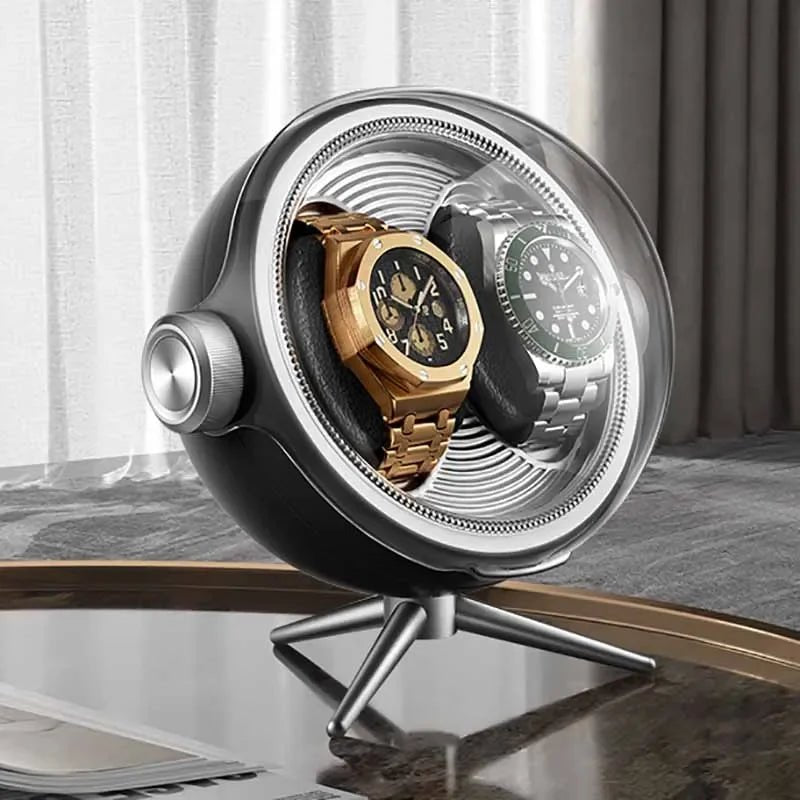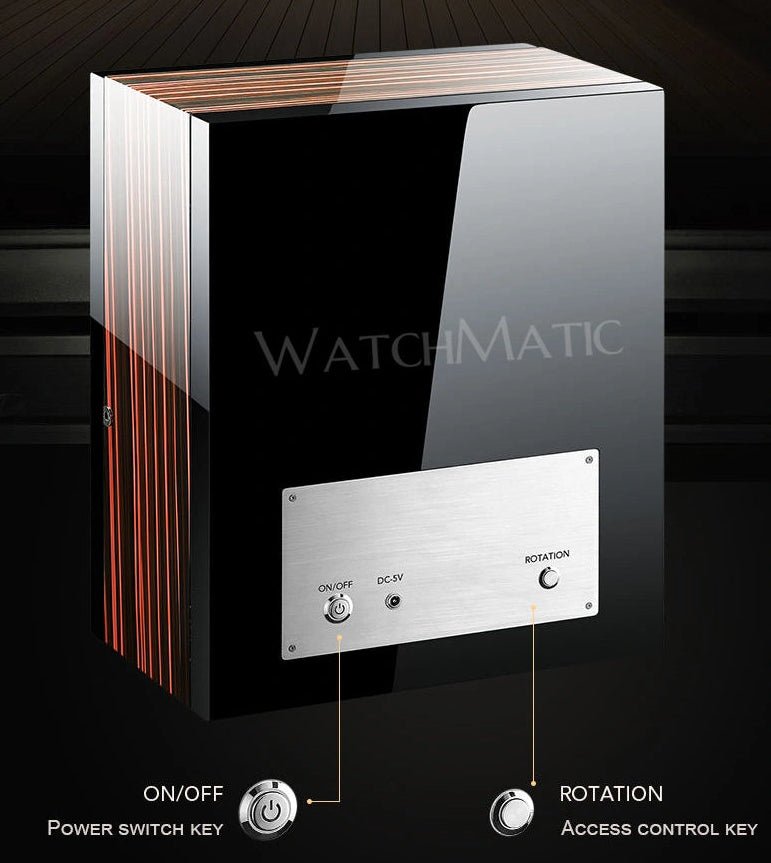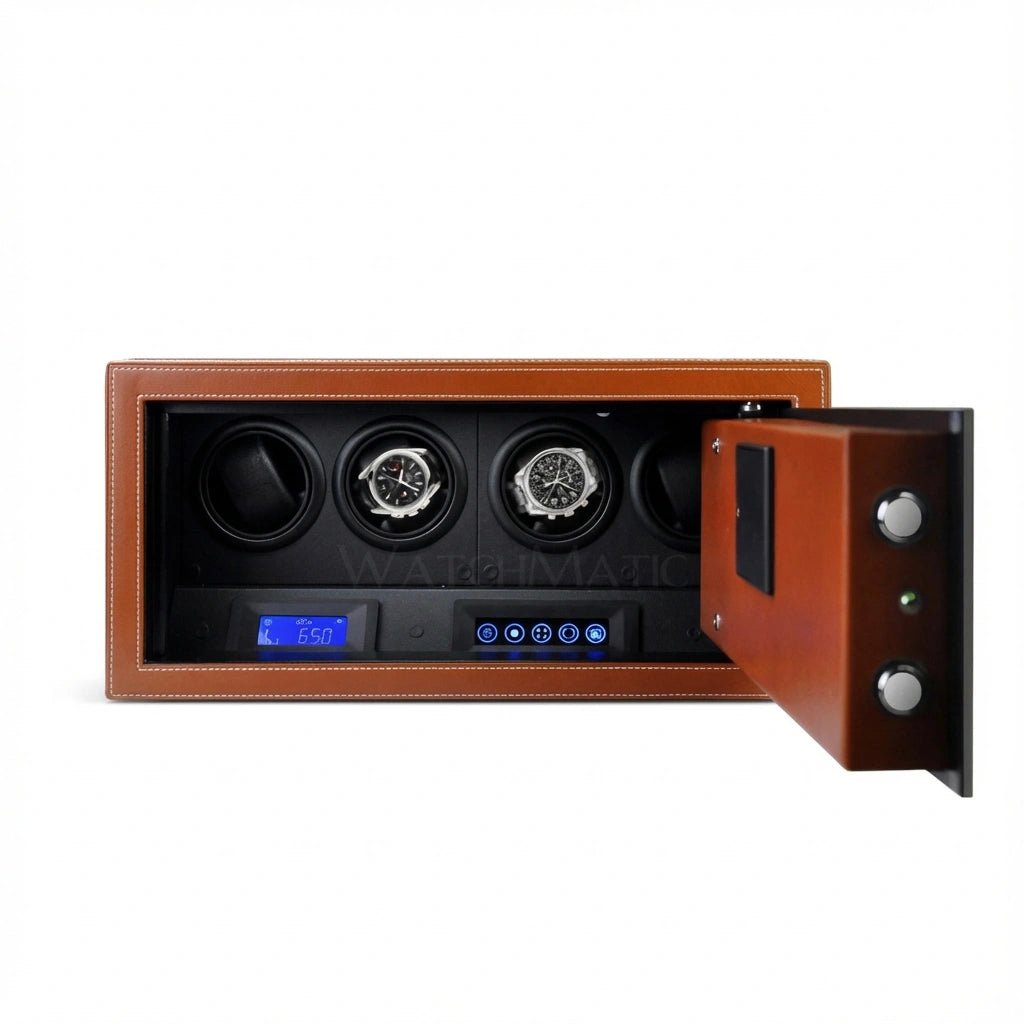
The best watch winder for Farer watches is a programmable model with adjustable Turns Per Day (TPD), clockwise and counterclockwise rotation options, controlled rest cycles, independent winding controls, quiet operation, and flexible watch cushions for Farer's wide range of straps and bracelets.
However, not every Farer mechanical watch should be placed on a powered watch winder.
Current automatic Farer collections include examples such as:
- Three Hand Series III — La Joux-Perret G101
- Aqua Compressor Series III — La Joux-Perret G101
- GMT — Sellita SW330-2
- GMT Bezel — Sellita SW330-2
- World Timer — Sellita SW331-2
- Pilot Series II — Sellita SW300-1
- Integra — Sellita SW300-1
Important current hand-wound collections include:
- Racing Chronograph — Sellita SW510M b
- Moonphase — Sellita SW288-1 M a
- 35mm Cushion Case — Sellita SW210-1 b
- Lissom — La Joux-Perret D100
This creates the fundamental rule:
Automatic Farer → a properly configured watch winder can be useful
Hand-wound Farer → a conventional rotating watch winder provides no winding benefit
The correct process is:
Exact Farer Reference → Movement → Automatic or Manual → Power Reserve → Complication → Physical Fit → TPD/Direction or Stationary Storage
Does a Farer Watch Need a Watch Winder?
No automatic Farer mechanically requires a watch winder.
A self-winding mechanical movement uses an oscillating rotor to convert movement into energy stored in the mainspring.
When the watch remains unworn longer than its available power reserve, it eventually stops.
A watch winder is therefore primarily a convenience tool.
It can help:
- Keep an automatic Farer running between wears
- Maintain the time and date
- Keep GMT indications synchronized
- Keep world-time displays ready
- Reduce repeated restarting
- Organize several automatic watches
- Maintain a regular rotation across different Farer calibers
Allowing an automatic Farer to stop normally is not inherently harmful.
A watch winder should not be presented as a replacement for servicing or as a mechanical necessity for movement health.
For a broader explanation of automatic winding, see the Watch Winder Guide.
Which Farer Watches Can Use a Watch Winder?
Representative current Farer collections can be divided as follows:
| Farer collection | Movement | Winding type | Approx. power reserve | Conventional winder? |
|---|---|---|---|---|
| Three Hand Series III | La Joux-Perret G101 | Automatic | 68 h | Yes |
| Aqua Compressor Series III | La Joux-Perret G101 | Automatic | 68 h | Yes |
| GMT | Sellita SW330-2 | Automatic | 56 h | Yes |
| GMT Bezel | Sellita SW330-2 | Automatic | 56 h | Yes |
| World Timer | Sellita SW331-2 | Automatic | 56 h | Yes |
| Pilot Series II | Sellita SW300-1 | Automatic | 56 h | Yes |
| Integra | Sellita SW300-1 | Automatic | 56 h | Yes |
| Earlier Lomond II Field | Sellita SW221-1 | Automatic | 41 h | Yes |
| Racing Chronograph | Sellita SW510M b | Manual | 63 h | No |
| Moonphase | Sellita SW288-1 M a | Manual | 45 h | No |
| 35mm Cushion Case | Sellita SW210-1 b | Manual | 45 h | No |
| Lissom | La Joux-Perret D100 | Manual | 50 h | No |
The first Farer-specific lesson is therefore:
mechanical does not mean automatic.
The second is:
movement supplier does not determine winding type.
Why Farer Requires Movement Identification
Farer uses movements from several respected Swiss manufacturers.
Current and recent examples include:
- La Joux-Perret
- Sellita
But even within Sellita, Farer uses both:
- Automatic calibers
- Hand-wound calibers
For example:
SW300-1 → automatic
SW330-2 → automatic
SW331-2 → automatic
while:
SW210-1 b → manual
SW288-1 M a → manual
SW510M b → manual
Therefore:
“Farer uses Sellita” is not enough information to choose a watch winder.
Farer Three Hand Series III
The current Three Hand Series III uses the Swiss-made:
La Joux-Perret G101
with approximately:
68 hours of power reserve.
Representative models include:
- Resolute III
- Alert
- Venture
- Aurora
The movement is automatic and therefore compatible with a properly configured watch winder.
Best Watch Winder for Farer Three Hand Series III
For a Three Hand Series III watch, prioritize:
- Adjustable TPD
- CW/CCW/bidirectional capability
- Controlled rest cycles
- Quiet motor operation
- Smooth starts and stops
- Flexible leather or bracelet support
Current cases measure approximately:
39 mm
with a thickness around:
11.8 mm.
These dimensions are relatively easy to accommodate in most quality watch winders.
68 Hours Reduces Winder Dependence
A 68-hour reserve is a significant improvement over a traditional 38–42-hour automatic.
A fully wound G101 can potentially remain running across most of a normal weekend.
That means:
Frequent wearer
Wears the Farer every two or three days.
A watch winder may add little practical value.
Multi-watch collector
Returns to the watch after a week.
The movement will normally have stopped.
A watch winder becomes more useful.
Therefore:
longer reserve reduces dependence on a winder.
68-Hour Reserve Does Not Mean Higher TPD
A longer power reserve does not automatically require more daily turns.
Power reserve describes:
how long the movement can run after sufficient winding.
TPD describes:
external rotational activity supplied by a watch winder.
These are different specifications.
La Joux-Perret G101 Does Not Make Every Farer Automatic
Farer also uses the manual La Joux-Perret D100 in Lissom watches.
Therefore, even the movement manufacturer cannot be used as a shortcut.
Compare:
G101 → automatic
with:
D100 → manual.
Always identify the caliber.
Farer Aqua Compressor Series III
Current Aqua Compressor Series III watches also use the La Joux-Perret G101.
The movement provides approximately:
68 hours of power reserve.
Representative current models use:
- Titanium case
- 41.5 mm diameter
- 300 m water resistance
- Internal rotating dive bezel
- Two-crown compressor-style architecture
Best Watch Winder for Farer Aqua Compressor
Movement-wise, the Aqua Compressor can use the same broad automatic-winder logic as other G101 watches.
For physical compatibility, prioritize:
- Adequate crown clearance
- Secure rubber-strap or bracelet support
- Chamber clearance for the 41.5 mm case
- Smooth low-vibration motor operation
- Adjustable TPD and direction
300m Water Resistance Does Not Determine TPD
The Aqua Compressor is engineered for serious water resistance.
That relates to:
- Case construction
- Crown sealing
- gaskets
- crystal
- pressure resistance
It has no direct relationship with:
- TPD
- rotor direction
- power-reserve target
Therefore:
300 m dive rating ≠ higher winder setting.
Two Crowns Do Not Mean More Winding
The Aqua Compressor uses separate crowns for different functions.
An additional crown controlling an internal bezel does not create an additional automatic winding requirement.
Therefore:
two crowns ≠ additional TPD.
Titanium Does Not Mean Lower TPD
Titanium substantially reduces total watch weight compared with steel.
That affects:
- Wrist comfort
- load on the cushion
- physical feel
It does not change the movement's automatic winding requirement.
Therefore:
lightweight case ≠ fewer turns.
Farer GMT Collection
The current GMT collection uses the:
Sellita SW330-2 Top Grade
with approximately:
56 hours of power reserve.
Representative models include Lander variants and related GMT references in:
- 36 mm
- 39.5 mm
case sizes.
The movement is automatic.
Best Watch Winder for Farer GMT Watches
For an SW330-2 Farer GMT, prioritize:
- Adjustable TPD
- Multiple rotation directions
- Independent programming
- Controlled rest cycles
- Quiet motor
- Flexible strap support
The 56-hour reserve provides useful autonomy while remaining short enough that the watch can stop during a longer rotation.
GMT Complication Strengthens Winder Convenience
If a simple three-hand watch stops, the owner generally needs to reset:
- Time
A Farer GMT may require restoring:
- Local time
- GMT/reference time
- Date
Keeping the movement running can reduce that repeated setup.
The benefit is convenience.
The GMT mechanism does not require continuous running for mechanical health.
GMT Does Not Mean Higher TPD
The additional 24-hour hand is driven by the movement's gear train.
It does not directly change the automatic winding requirement.
Therefore:
GMT complication ≠ maximum TPD.
36 mm and 39.5 mm GMTs Use the Same Movement Family
Farer's current conventional GMT watches appear in two principal case sizes.
The 36 mm and 39.5 mm versions both use the SW330-2.
That means movement programming may be similar for equivalent references.
Physical support, however, can differ substantially.
Smaller Watches Need More Compressible Cushions
A 36 mm GMT sized for a smaller wrist may have:
- Shorter leather strap adjustment
- Smaller bracelet circumference
A large rigid cushion can create unnecessary tension.
Therefore, physical fit should be checked independently from movement settings.
Farer GMT Bezel Collection
The GMT Bezel collection also uses the:
Sellita SW330-2
with approximately:
56 hours of power reserve.
Representative current cases come in approximately:
- 38 mm
- 40 mm
depending on reference.
They add a bidirectional external 24-hour bezel.
Does the 24-Hour Bezel Change the Winder Program?
No.
The external bezel is operated manually and is independent of the automatic movement.
It does not change:
- Rotor direction
- TPD
- power reserve
- winding efficiency
Therefore:
GMT bezel ≠ special watch-winder setting.
200m Water Resistance Does Not Matter to TPD
Current GMT Bezel watches provide approximately 200 m water resistance.
This has no direct relationship with automatic winding.
A more robust case does not need more aggressive rotation.
Farer World Timer
The World Timer collection uses the:
Sellita SW331-2
with approximately:
56 hours of power reserve.
Representative current models include:
- Roché II
- Foxe
- Thorne
The movement replaces a traditional GMT hand with a rotating 24-hour disc.
Best Watch Winder for Farer World Timer
The World Timer has one of the stronger Farer use cases for keeping a watch running.
If it stops, the owner may need to restore:
- Local time
- Date
- 24-hour disc alignment
- World-time relationship
A winder can reduce repeated adjustment.
For the SW331-2, prioritize:
- Adjustable TPD
- Multiple rotation directions
- Independent programming
- Controlled rest cycles
- Quiet motor operation
- Stable strap support
World Time Does Not Mean More TPD
The rotating 24-hour disc consumes movement energy during normal operation.
That does not produce a simple rule such as:
world timer = higher daily turns.
Use the movement's winding requirement.
Two Crowns on World Timer References
Current Farer World Timer cases use a second crown to operate the internal world-time bezel.
This second crown does not wind the movement.
The watch still has one automatic winding architecture based on SW331-2.
Crown Clearance Matters
Although the second crown does not affect TPD, it can affect physical winder clearance.
Check that:
- Both crowns clear the enclosure
- The case remains centered
- The watch does not touch adjacent rotors
SW330-2 vs. SW331-2
These two current Farer movement families provide approximately:
56 hours
of reserve.
But their display architecture differs.
SW330-2
Traditional GMT hand.
SW331-2
Rotating 24-hour disc for world-time presentation.
The identical reserve figure does not make them one movement.
Same Reserve Does Not Mean Same Program
Power reserve is only one movement characteristic.
Two movements with 56 hours can still differ in:
- gearing
- winding architecture
- complication load
- exact application
Therefore, movement identification remains important.
Farer Pilot Series II
Current Pilot Series II watches use:
Sellita SW300-1
with approximately:
56 hours of power reserve.
Representative features include:
- 40 mm Grade 2 titanium case
- Approximately 10.9 mm thickness
- Oversized conical crown
- Internal Faraday cage
- 500-gauss magnetic resistance
- Automatic movement
Best Watch Winder for Farer Pilot Series II
For a Pilot Series II watch, prioritize:
- Adjustable TPD
- CW/CCW/bidirectional capability
- Controlled rest cycles
- Crown clearance
- Flexible strap support
- Quiet motor operation
The movement is straightforwardly automatic.
The more distinctive considerations are physical.
Oversized Pilot Crown Requires Clearance
The large conical crown is intentionally designed to be easy to operate.
Inside a compact watch winder, that projection should not contact:
- Side wall
- door
- adjacent watch
- cushion structure
Therefore:
large crown affects fit, not TPD.
Faraday Cage Does Not Change Winding Requirements
Pilot Series II uses a soft-iron Faraday cage to protect the movement against external magnetic fields.
That feature does not change:
- rotor direction
- power reserve
- daily turns
- automatic winding architecture
Therefore:
anti-magnetic protection ≠ special TPD.
Magnetic Resistance and Watch Winder Magnetism Are Separate Issues
The Faraday cage provides additional resistance against magnetic fields.
A quality winder should still avoid unnecessary magnetic exposure.
Anti-magnetic watch construction is not a reason to use a poor-quality motor.
Farer Integra
The Integra also uses:
Sellita SW300-1 Top Grade
with approximately:
56 hours of power reserve.
Representative watches use:
- 38.5 mm case
- Approximately 10.3 mm thickness
- Integrated steel bracelet
- Optional rubber strap
- Custom full-circle rotor
Best Watch Winder for Farer Integra
Movement-wise, Integra and Pilot Series II share the SW300-1 family.
Physically, they are very different.
For an Integra, prioritize:
- Compressible watch cushion
- Natural bracelet closure
- Adjustable TPD
- Multiple rotation directions
- Smooth motor movement
- Stable case positioning
Pilot Series II vs. Integra
| Feature | Pilot Series II | Integra |
|---|---|---|
| Movement | SW300-1 | SW300-1 |
| Reserve | 56 h | 56 h |
| Winding | Automatic | Automatic |
| Case | Titanium | Steel |
| Main fit issue | Large crown | Integrated bracelet |
| Conventional winder | Yes | Yes |
This is a useful Farer-specific example:
same movement can require different physical winder considerations.
Integrated Bracelet Fit Matters More Than Case Diameter
Integra's 38.5 mm case itself is not difficult to accommodate.
The integrated bracelet is the more important issue.
A cushion should:
- Compress sufficiently
- Allow natural clasp closure
- Avoid excessive link tension
- Hold the watch head centrally
On-the-Fly Micro-Adjustment Helps
Integra's bracelet includes micro-adjustment.
That can provide additional flexibility when placing the watch around a cushion.
However, the bracelet should still not be stretched beyond a natural fit solely to make it fit a winder.
Custom Rotor Does Not Change TPD by Itself
Integra uses a visually distinctive customized circular rotor.
That affects:
- Aesthetics
- finishing
- movement presentation
It does not automatically mean a different TPD from every other SW300-1 implementation.
Use verified movement requirements.
Farer Racing Chronograph
The current Racing Chronograph collection is one of the most important manual-wind exceptions.
Representative watches include:
- Libre
- Gara
- Volante
They use:
Sellita SW510M b
with approximately:
63 hours of power reserve.
The key point is:
SW510M b is hand-wound.
Does a Farer Racing Chronograph Need a Watch Winder?
No.
A conventional automatic watch winder cannot wind the SW510M b.
The movement has no automatic oscillating rotor.
It must receive energy through the crown.
Chronograph Does Not Mean Automatic
This is an important distinction because many modern Swiss chronographs are self-winding.
Farer's current Racing Chronograph is not.
It is:
- Mechanical
- Swiss made
- Chronograph
- 63-hour reserve
but:
manual winding.
63 Hours Does Not Mean Winder Compatible
The Racing Chronograph actually has a longer reserve than Farer's 56-hour GMT, World Timer and SW300-1 automatic watches.
Yet:
SW510M b → manual → no conventional winding benefit.
This is a strong example of why power reserve should not be used to infer winding type.
Racing Chronograph Physical Storage
Representative dimensions are approximately:
- 38.5 mm diameter
- Around 13.4 mm thick
Physical considerations include:
- Chronograph pushers
- Crown
- Leather strap
- domed sapphire crystal
Because the movement does not need rotation, stationary storage is entirely appropriate.
A Winder Does Not Operate the Chronograph
A conventional winder does not:
- Start the chronograph
- Stop it
- Reset it
- Exercise the pushers
- Service the chronograph
It only moves a watch to activate an automatic rotor.
The SW510M b has no such rotor.
Farer Moonphase
The current Moonphase collection uses:
Sellita SW288-1 M a
with approximately:
45 hours of power reserve.
It is:
hand-wound.
Representative current models include the Stratton and related Moonphase references.
Does a Farer Moonphase Need a Watch Winder?
No.
The moon-phase complication may create a strong desire to keep the watch synchronized.
However, the SW288-1 M a receives energy through the crown.
Rotating the complete watch does not wind it.
Moonphase Convenience vs. Winder Compatibility
This is one of the strongest Farer comparisons.
A moon-phase indication becomes less convenient to reset after the watch stops.
Yet:
convenience benefit does not create automatic winding capability.
The owner must still manually wind the watch.
Moonphase Does Not Mean Automatic
A complication name tells you what the watch displays.
It does not tell you how the movement receives energy.
A moon-phase watch can be:
- Automatic
- Manual
- Quartz
Farer's current Moonphase is manual.
45-Hour Reserve Means More Frequent Manual Restarting
Compared with a 68-hour G101 automatic, the current Moonphase has a shorter reserve.
If worn infrequently, it can stop relatively quickly.
However, the solution is manual winding, not a rotating winder.
Farer 35mm Cushion Case
The current 35mm Cushion Case collection uses:
Sellita SW210-1 b
with approximately:
45 hours of power reserve.
Representative models include:
- Marsden
- Belzoni
- Furneaux
All are hand-wound.
Does a 35mm Cushion Case Need a Watch Winder?
No.
The SW210-1 b has no automatic rotor.
Rotational storage does not replenish its mainspring.
Small Mechanical Watch Does Not Mean Automatic
Compact proportions do not tell you anything about winding architecture.
The 35mm Cushion Case is:
- Mechanical
- Exhibition caseback
- Swiss movement
- 4 Hz
but:
manual winding.
Small Case Size Creates a Cushion Issue Even in Stationary Storage
At approximately:
35 mm diameter
and:
38 mm lug-to-lug,
these watches are compact.
For small wrists, their leather straps may also be fitted relatively tightly.
Use appropriately sized stationary cushions to avoid overstretching the strap.
45 Hours Can Mean Different Complications but Same Manual Logic
Both the:
- 35mm Cushion Case
- Moonphase
sit around 45 hours.
One is a simple three-hand watch.
The other has a moon phase and date.
Both are hand-wound.
Complication complexity does not change the answer.
Farer Lissom
The Lissom collection uses the:
La Joux-Perret D100
with approximately:
50 hours of power reserve.
The D100 is based conceptually on a thin manual architecture and allows Farer to achieve an exceptionally slim case.
Representative Lissom dimensions are approximately:
- 38 mm diameter
- 7.95 mm thickness
Does a Farer Lissom Need a Watch Winder?
No.
The D100 is manually wound.
The watch must receive energy through the crown.
A rotating winder provides no winding benefit.
Thin Watch Does Not Mean Micro-Rotor
A common assumption is that a very thin mechanical watch might use:
- micro-rotor
- peripheral rotor
- ultra-thin automatic system
The Lissom does not.
Its thinness comes from a manually wound movement.
Therefore:
thin mechanical ≠ automatic.
Lissom D100 vs. G101
Farer uses two La Joux-Perret calibers with fundamentally different winding architectures.
G101
Automatic
68 h
Three Hand / Aqua Compressor
D100
Manual
50 h
Lissom
This is one of the cleanest examples of why movement manufacturer alone cannot determine watch-winder compatibility.
Current Automatic vs. Manual Farer Families
A useful simplified classification is:
Automatic
- Three Hand Series III
- Aqua Compressor
- GMT
- GMT Bezel
- World Timer
- Pilot Series II
- Integra
- Selected Field generations
Manual
- Racing Chronograph
- Moonphase
- 35mm Cushion Case
- Lissom
This classification should always be checked against the exact reference because Farer regularly updates collections and movements.
Farer Power Reserve Comparison
| Movement | Representative collection | Type | Approx. reserve |
|---|---|---|---|
| SW210-1 b | 35mm Cushion Case | Manual | 45 h |
| SW288-1 M a | Moonphase | Manual | 45 h |
| D100 | Lissom | Manual | 50 h |
| SW300-1 | Pilot / Integra | Automatic | 56 h |
| SW330-2 | GMT / GMT Bezel | Automatic | 56 h |
| SW331-2 | World Timer | Automatic | 56 h |
| SW510M b | Racing Chronograph | Manual | 63 h |
| G101 | Three Hand / Aqua Compressor | Automatic | 68 h |
This table produces a particularly useful Farer-specific insight:
a manual Racing Chronograph can run longer than several current automatic Farer watches.
56 Hours Does Not Mean One Movement
Three major current automatic families offer roughly 56 hours:
- SW300-1
- SW330-2
- SW331-2
But they support different functions.
SW300-1
Three-hand/date architecture in Pilot and Integra.
SW330-2
GMT hand.
SW331-2
Rotating 24-hour world-time disc.
Power reserve alone should not be used to assign a winding program.
45 Hours Does Not Mean Automatic Either
Both:
- SW210-1 b
- SW288-1 M a
provide approximately 45 hours in current Farer applications.
Both are manual.
A number alone cannot tell you whether TPD is relevant.
63-Hour Manual vs. 56-Hour Automatic
This is perhaps the cleanest Farer contrast.
Racing Chronograph
63 h
Manual
No conventional winding benefit
GMT / Integra / World Timer
56 h
Automatic
Conventional winder compatible
The watch with the longer reserve is the one that does not need a motorized position.
68-Hour Automatic vs. 50-Hour Manual
Another useful comparison:
G101
68 h
Automatic
D100
50 h
Manual
Both come from La Joux-Perret.
Only one uses a rotor.
Farer Watch Winder TPD Settings
TPD means Turns Per Day—the approximate number of rotations delivered by a watch winder during a programmed daily cycle.
There should not be a blanket rule such as:
“Farer = 650 TPD.”
The automatic portfolio alone includes:
- G101
- SW300-1
- SW330-2
- SW331-2
- Selected SW221-1 historical/recent references
The correct process is:
- Identify the exact Farer model.
- Identify the movement.
- Confirm whether it is automatic.
- Determine its winding requirements.
- Select suitable TPD.
- Select suitable rotation direction.
- Confirm that adequate reserve is maintained.
For more information about Turns Per Day and programming, see the Watch TPD Guide.
What Rotation Direction Should You Use for a Farer Watch?
A programmable watch winder should ideally support:
CW — Clockwise
CCW — Counterclockwise
Bi — Bidirectional
Do not assume every automatic Farer uses one identical direction because the brand uses multiple calibers.
The correct hierarchy is:
exact reference → exact automatic caliber → verified winding requirement
rather than:
Farer → one generic setting.
Do Manual Farer Watches Need TPD?
No.
TPD is relevant only where rotational movement can activate an automatic rotor.
It has no useful winding role for:
- SW210-1 b
- SW288-1 M a
- SW510M b
- La Joux-Perret D100
These movements must be wound manually.
High TPD Is Not Automatically Better
Selecting the maximum available TPD does not provide superior maintenance.
Once sufficient energy is being supplied, additional turns may offer no practical benefit.
Higher TPD does not automatically:
- Improve accuracy
- Improve lubrication
- Extend servicing intervals
- Protect a GMT mechanism
- Maintain a world timer
- Improve water resistance
- Increase a movement's designed power reserve
The objective is:
appropriate maintenance winding
rather than:
maximum rotation.
Should a Farer Automatic Run Continuously?
No.
There is no general mechanical need to keep a Farer automatic running continuously.
The practical value of a winder depends on:
power reserve + wearing frequency + complication + collection size.
Which Farer Watches Gain the Most Convenience From a Winder?
Stronger Convenience Case
- World Timer
- GMT watches
- GMT Bezel watches
- Earlier shorter-reserve automatics
- Multiple automatic Farers in rotation
Moderate Convenience Case
- Integra
- Pilot Series II
Lower Dependence
- G101 Three Hand Series III
- G101 Aqua Compressor due to 68-hour reserve
No Conventional Winding Benefit
- Racing Chronograph
- Moonphase
- Lissom
- 35mm Cushion Case
This classification refers only to winder usefulness.
It is not a ranking of watch quality.
Should You Start a Stopped Farer Before Using a Winder?
A winder is generally best treated as a:
maintenance-winding device.
If an automatic Farer has fully stopped, establish initial reserve according to the movement's normal operating procedure before relying on the winder to maintain it.
A sensible process is:
restart → set time and complications → establish reserve → place on programmed winder → maintain
rather than:
stopped watch → maximum TPD.
Farer Field Watches Need Generation-Specific Research
Farer's Field collection is a good example of why current-generation research matters.
Earlier Lomond II references use:
Sellita SW221-1 automatic
with approximately:
41 hours of power reserve.
However, Farer is preparing a new Field generation.
Owners should not assume that the next reference necessarily uses the same movement.
Do Not Copy an Older Field-Watch Setting Automatically
A search result for:
“Farer Field watch winder”
may refer to:
- Lomond II
- Exmoor
- Pembroke
- another earlier generation
Before using that information, verify the current reference and movement.
Collection Names Can Outlive Movement Generations
Farer frequently updates:
- movement
- case
- water resistance
- dimensions
- movement grade
while preserving broad collection identity.
That means:
generation > collection name
when the exact technical setup matters.
Water Resistance Does Not Determine Farer Winder Settings
Current Farer watches range from approximately:
- 50 m dress watches
- 100 m everyday watches
- 200 m GMT tool watches
- 300 m dive watches
This has no direct relationship with TPD.
Therefore:
300 m Aqua Compressor ≠ more TPD than 100 m Integra.
Case Material Does Not Determine TPD
Farer currently uses materials including:
- Stainless steel
- Grade 2 titanium
- Bronze crown inserts
These affect:
- Weight
- corrosion behavior
- physical handling
They do not directly determine automatic winding requirements.
Bronze Crown Caps Do Not Change Winding Behavior
Farer's bronze crown cap is a recognizable design detail.
It does not change:
- Movement caliber
- winding direction
- power reserve
- TPD
Design identity and movement architecture should be treated separately.
Dial Color Does Not Change the Program
Farer is especially known for expressive color combinations.
Different references may use:
- Green
- pink
- orange
- copper
- burgundy
- blue
- stone dials
These visual differences do not change winding requirements when the underlying movement is the same.
Stone Dials Require Care but Not Different TPD
Certain Integra and other Farer references use natural stone dials.
That can increase:
- uniqueness
- replacement difficulty
- collector value
It does not change the automatic movement's winding needs.
What to Look for in a Farer Watch Winder
Adjustable TPD
Farer uses several automatic movement families.
A fixed-output winder offers less flexibility.
CW, CCW and Bidirectional Modes
All three provide broader compatibility.
Independent Controls
Particularly useful if the collection contains:
- G101
- SW300-1
- SW330-2
- SW331-2
Controlled Rest Cycles
Continuous uninterrupted spinning is unnecessary.
A quality winder should alternate:
- Rotation
- Rest
throughout the day.
Quiet Motors
Farer collectors often use compact watch boxes in:
- Bedrooms
- Offices
- dressing rooms
- living spaces
Low-noise operation is therefore valuable.
Smooth Motor Operation
There is no reason to move an automatic watch abruptly.
Smooth starts and stops are preferable.
Flexible Cushions
Farer watches use:
- Leather
- suede
- rubber
- integrated steel bracelet
- Milanese mesh
- conventional steel bracelets
- sailcloth
One rigid holder is unlikely to suit all configurations equally well.
Integrated-Bracelet Compatibility
Especially relevant for Integra.
Large-Crown Clearance
Especially relevant for Pilot Series II and multi-crown watches.
Chronograph-Pusher Clearance
Relevant if storing manual Racing Chronographs stationary within a mixed cabinet.
Leather Straps Should Not Be Overstretched
Farer offers many watches on:
- Suede
- St. Venere leather
- Granolo leather
Avoid forcing these straps tightly around oversized watch-winder cushions.
A suitable holder should allow natural curvature.
Milanese Bracelets Need Different Support
Farer offers Milanese mesh on several collections.
Mesh is flexible but should still not be:
- sharply folded
- excessively compressed
- trapped against hardware
Integrated Bracelets Need Compressible Holders
Integra is the clearest example.
A bracelet sized closely to the wrist needs a cushion that compresses enough to prevent excessive tension.
Best Watch Winder for One Farer Automatic
For one automatic Farer, a compact programmable watch winder is usually sufficient.
Prioritize:
- Adjustable TPD
- CW/CCW/bidirectional operation
- Controlled rest cycles
- Quiet performance
- Smooth movement
- Flexible cushion
- Appropriate crown clearance
Broader configurations can be explored in the WatchMatic Watch Winder Collection.
Best Watch Winder for Multiple Farer Watches
Consider a collection containing:
- Three Hand Series III
- Lander GMT
- Integra
- World Timer
- Racing Chronograph
- Moonphase
There are six mechanical watches.
Only four benefit from conventional automatic winding.
A more efficient setup is:
Three Hand + GMT + Integra + World Timer → powered winding positions
Racing Chronograph + Moonphase → stationary storage
This is a better use of motorized capacity.
Mechanical-Watch Count Should Not Equal Rotor Count
A Farer collector might own eight mechanical watches but only four or five automatics.
The appropriate number of powered positions should therefore be based on:
automatic watches
rather than:
total watches.
Vento Watch Winder for Farer Automatics

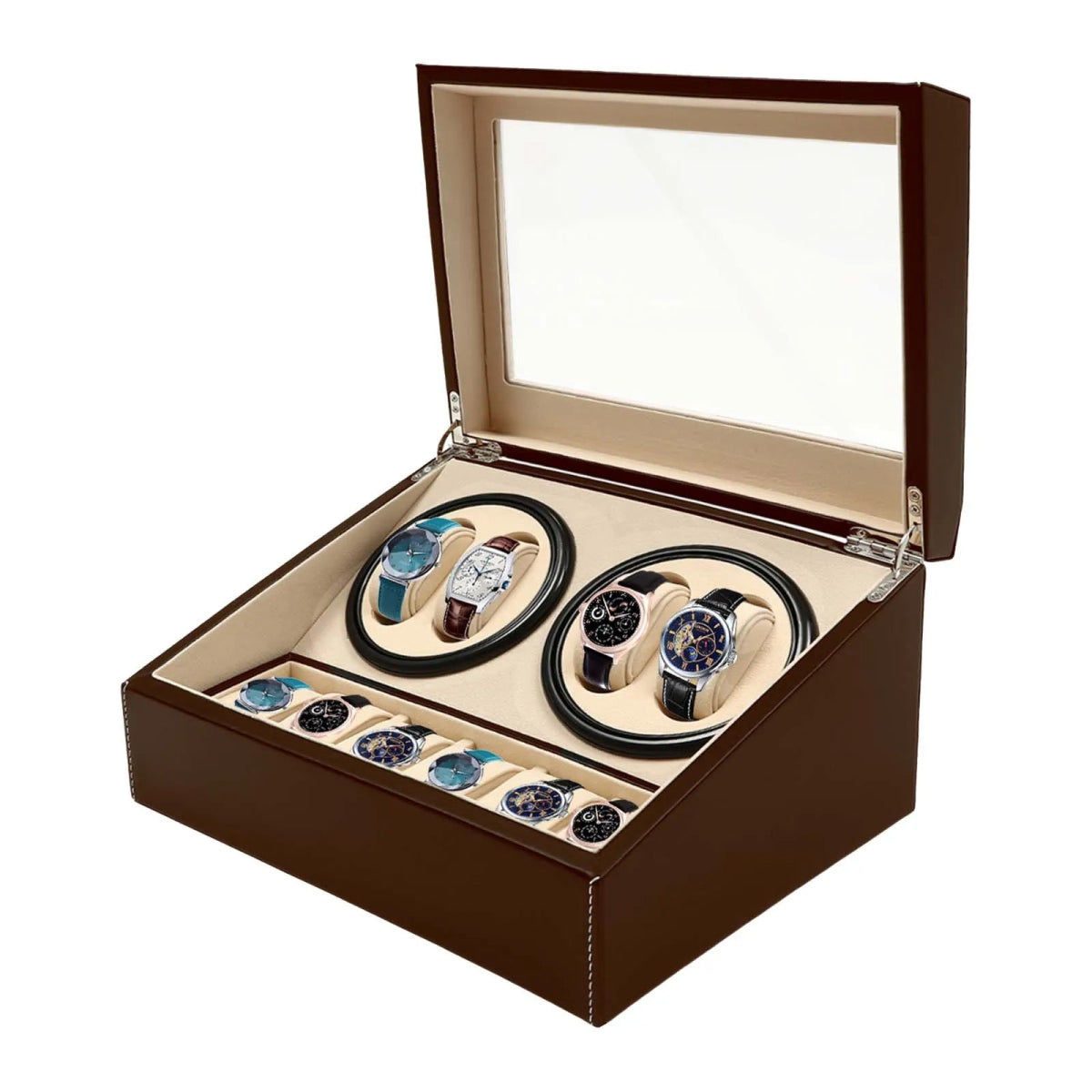
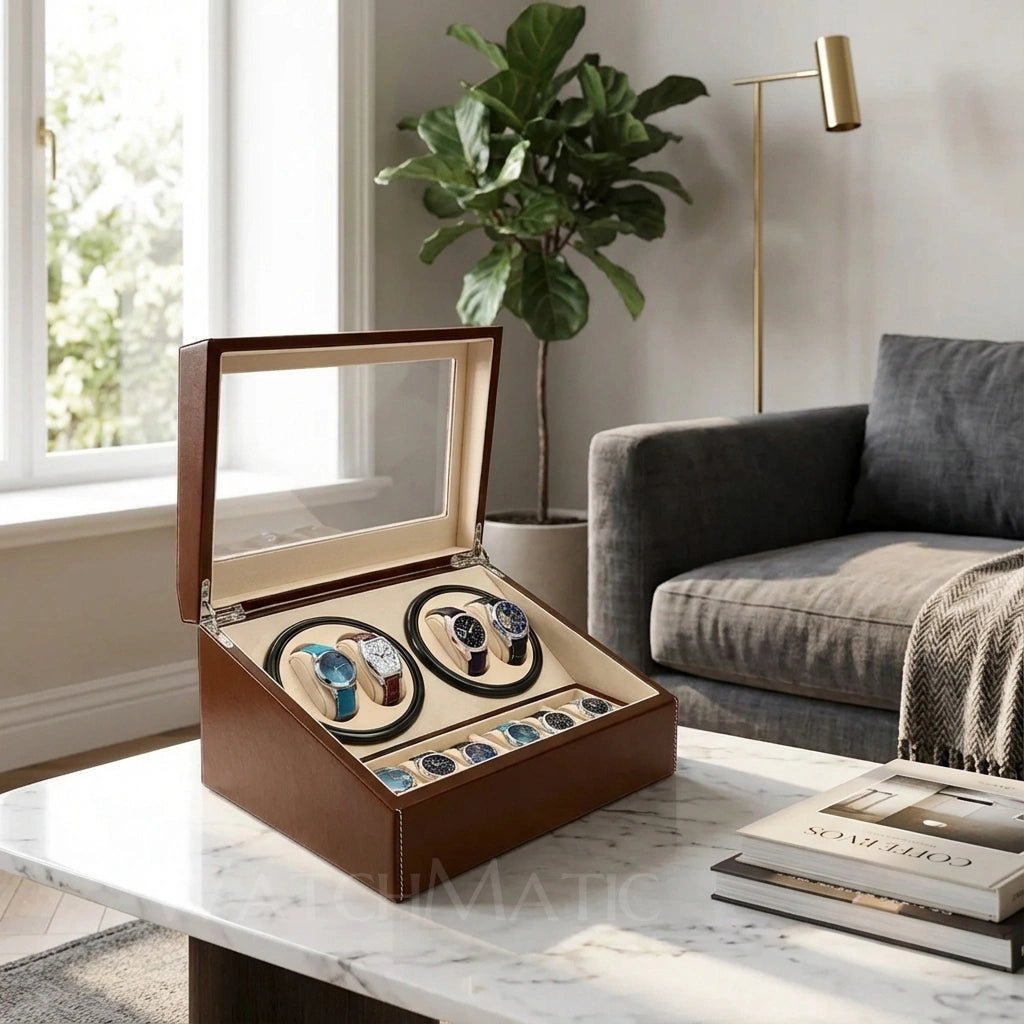
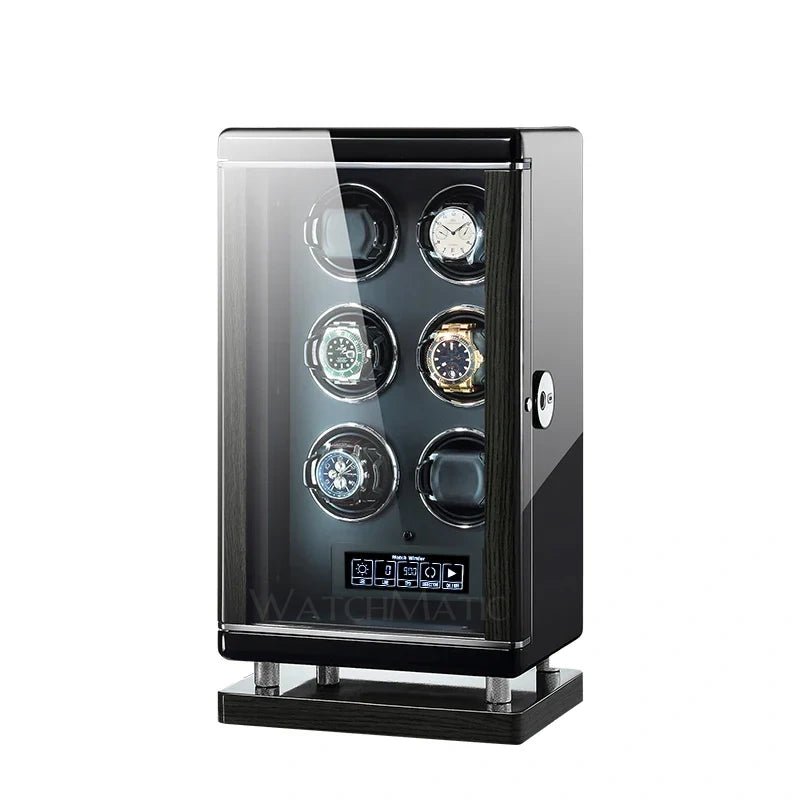
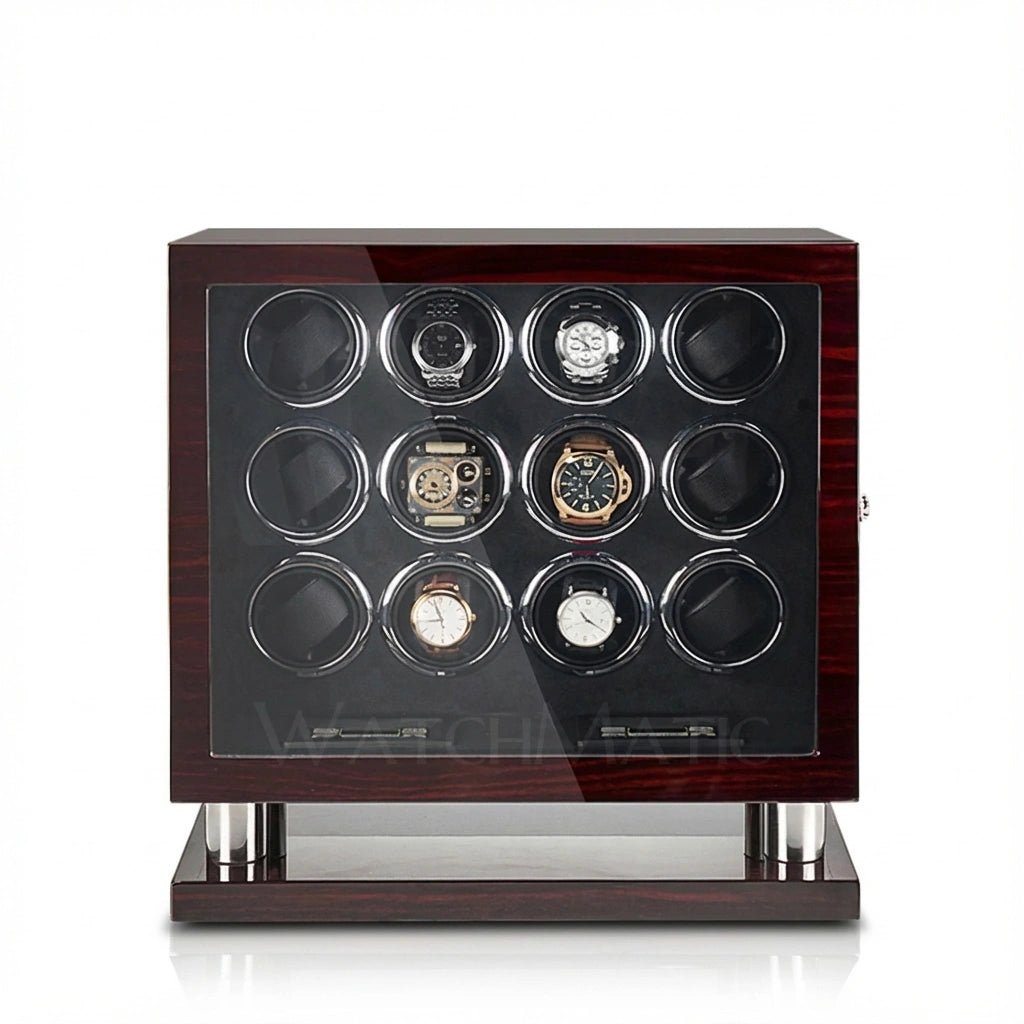
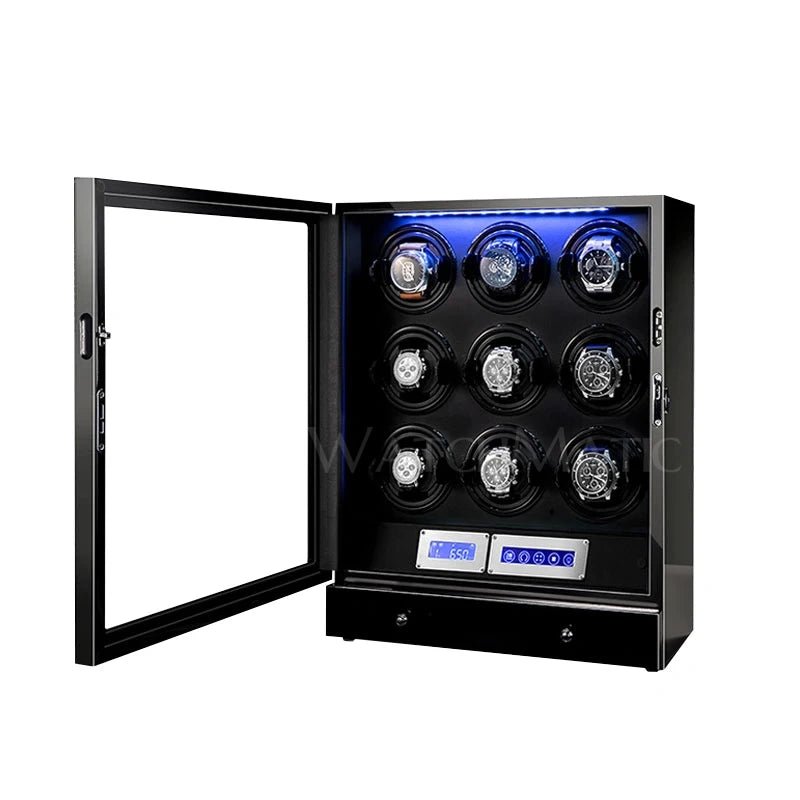
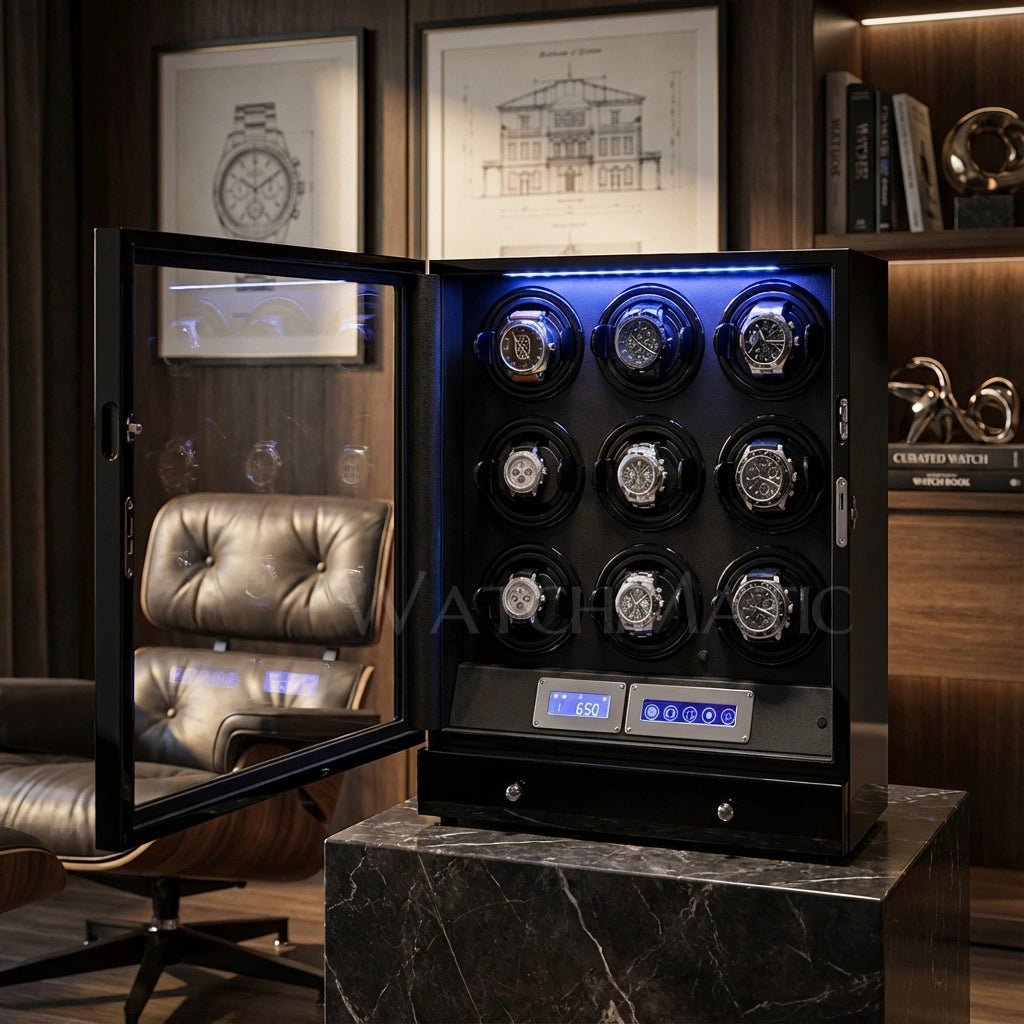
The Vento Luxury Quad Watch Winder is particularly well matched to a compact Farer automatic collection because it provides four independently controlled winding positions.
A four-watch Farer setup could contain:
- Three Hand Series III G101
- GMT SW330-2
- Integra SW300-1
- World Timer SW331-2
Each rotor can be configured independently rather than forcing four different movement families onto one shared program.
Why Vento Is a Proportionate Fit for Farer
Farer generally sits in the enthusiast-focused price category rather than ultra-high-end haute horlogerie.
For one to four automatic Farers, a compact independently controlled winder is usually more proportionate than a large safe cabinet.
Vento makes practical sense for:
- Multiple Farer automatics
- Farer plus other automatic brands
- Collectors rotating several watches throughout the week
Vento Does Not Need to Hold Manual Farers
There is little reason to occupy powered positions with:
- Racing Chronograph
- Moonphase
- Lissom
- 35mm Cushion Case
solely for winding purposes.
Those watches can remain in stationary storage.
Independent Control Is Useful Even When Reserves Are Similar
Several current Farer automatic movements sit near:
56 hours.
That still does not justify assuming one universal setting.
Independent controls preserve flexibility across:
- SW300-1
- SW330-2
- SW331-2
- G101
and any other automatic watch in the collection.
Is It Safe to Keep a Farer Automatic on a Watch Winder?
A properly configured quality winder can be used with an automatic Farer.
Important considerations include:
- Identifying the exact movement
- Selecting suitable TPD
- Selecting suitable rotation direction
- Using controlled rest cycles
- Supporting the strap or bracelet correctly
- Maintaining crown clearance
- Avoiding unnecessary magnetic exposure
If an adequately wound watch shows unexpectedly short reserve or abnormal operation, professional inspection is more appropriate than simply increasing TPD.
A Watch Winder Does Not Service a Farer
A watch winder does not:
- Replace lubricants
- Regulate accuracy
- Service a chronograph
- Maintain a moon phase
- Repair a GMT mechanism
- Restore water resistance
- Repair an automatic rotor
- Replace scheduled maintenance
Its function is limited to supplying movement to an automatic winding system.
Watch Winder vs. Watch Safe for Farer Collectors
For a Farer-only collection, a standalone winder is usually more proportionate than a large watch safe.
The equation changes if Farer watches are part of a larger luxury collection.
| Feature | Standalone Winder | Watch Winder Safe |
|---|---|---|
| Automatic winding | Yes | Yes |
| Independent programs | Available | Available |
| Manual Farer storage | Possible | Yes |
| Physical security | Limited | High |
| Controlled access | Limited | High |
| 1–4 Farer automatics | Highly suitable | Usually unnecessary |
| Larger mixed luxury collection | Moderate | More suitable |
Collectors requiring integrated security and automatic winding can explore the Watch Winder Safe Collection.
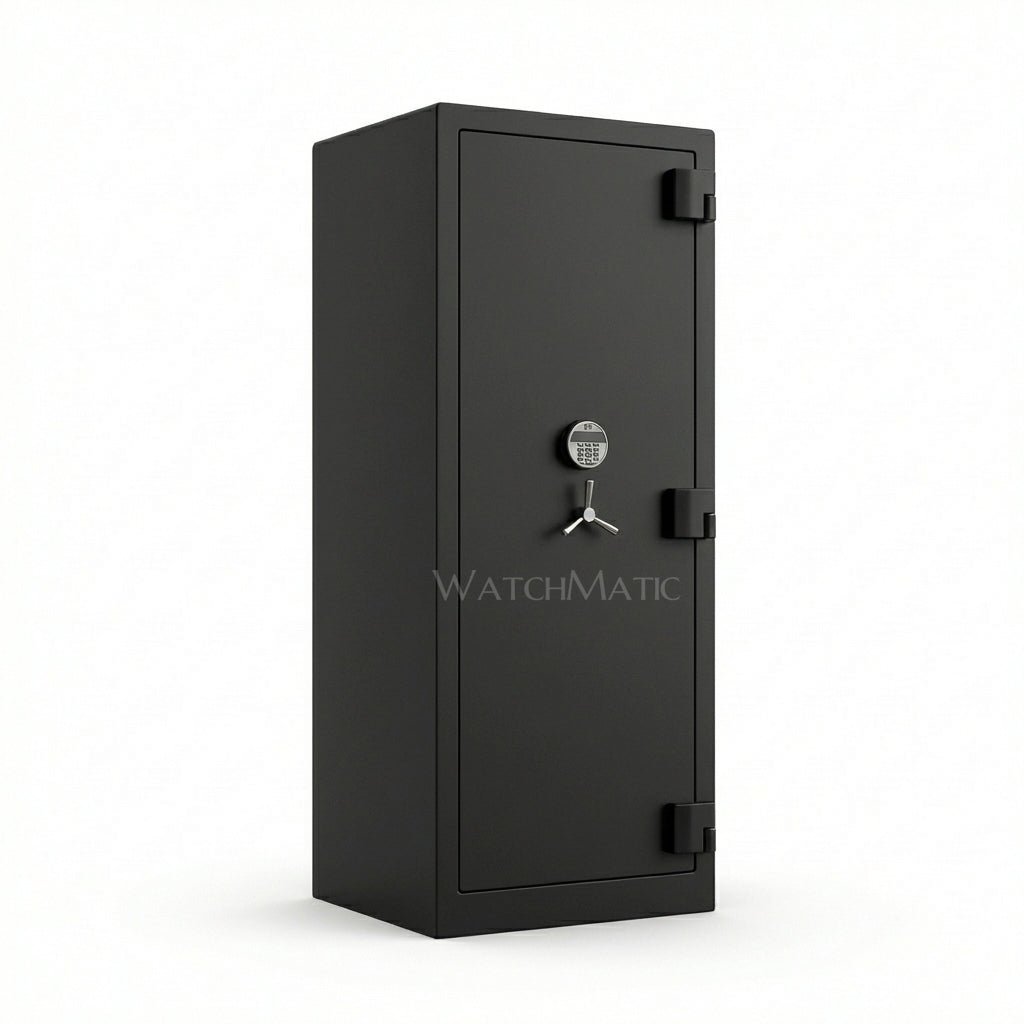
Titan Vault 20 for a Larger Mixed Collection

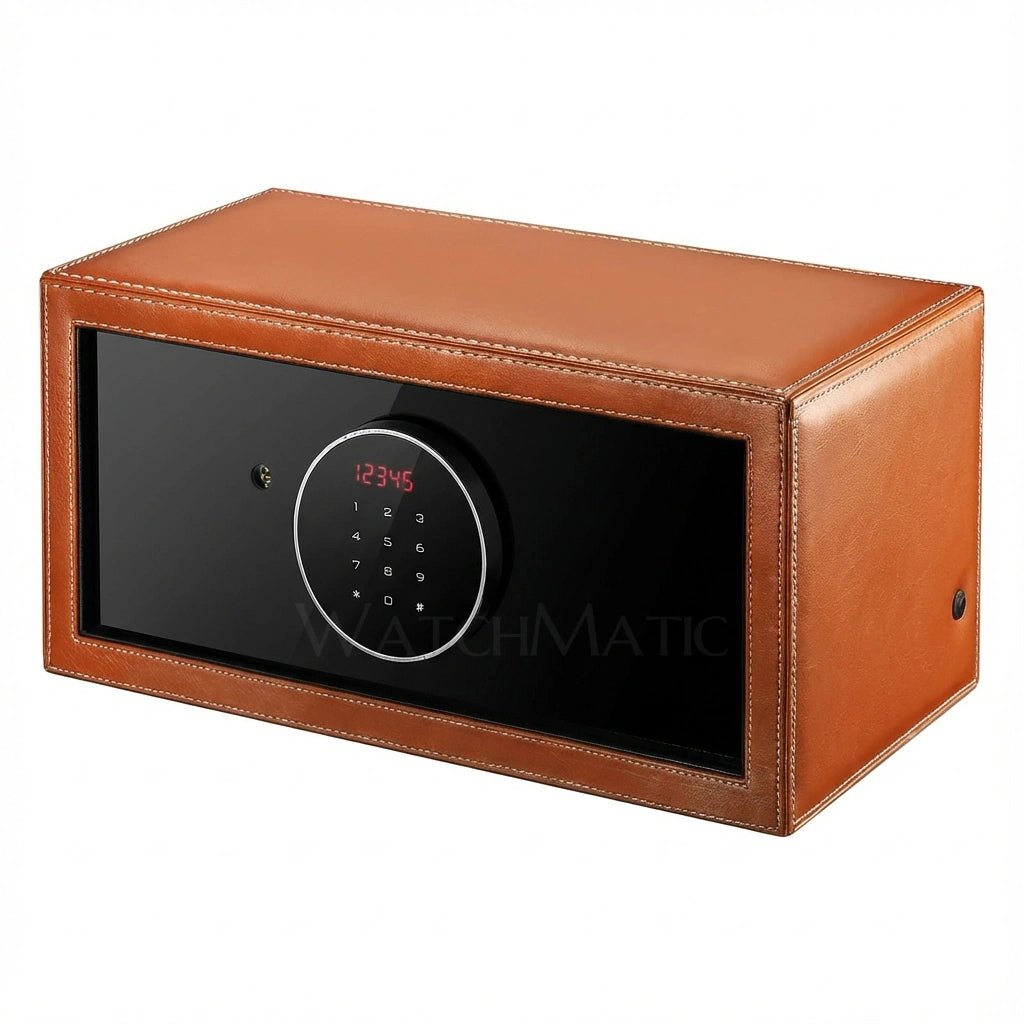
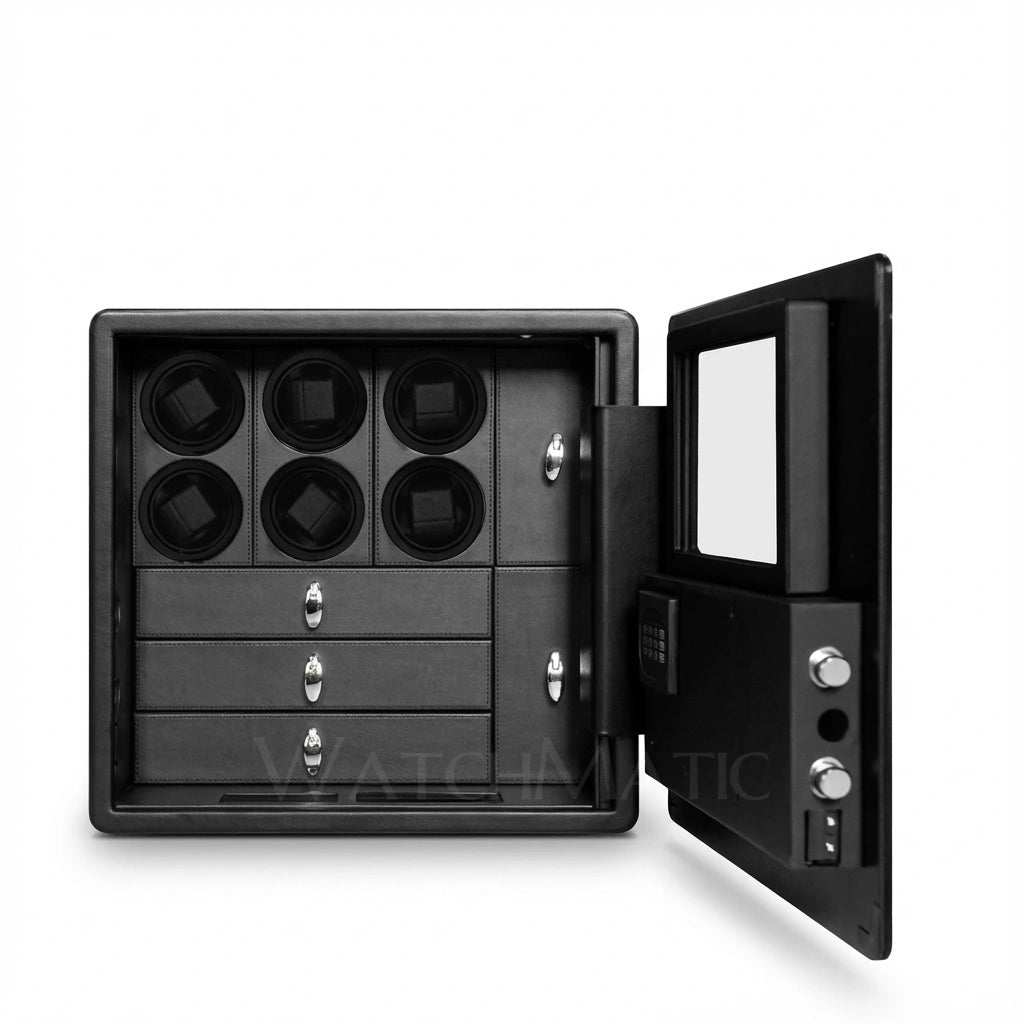
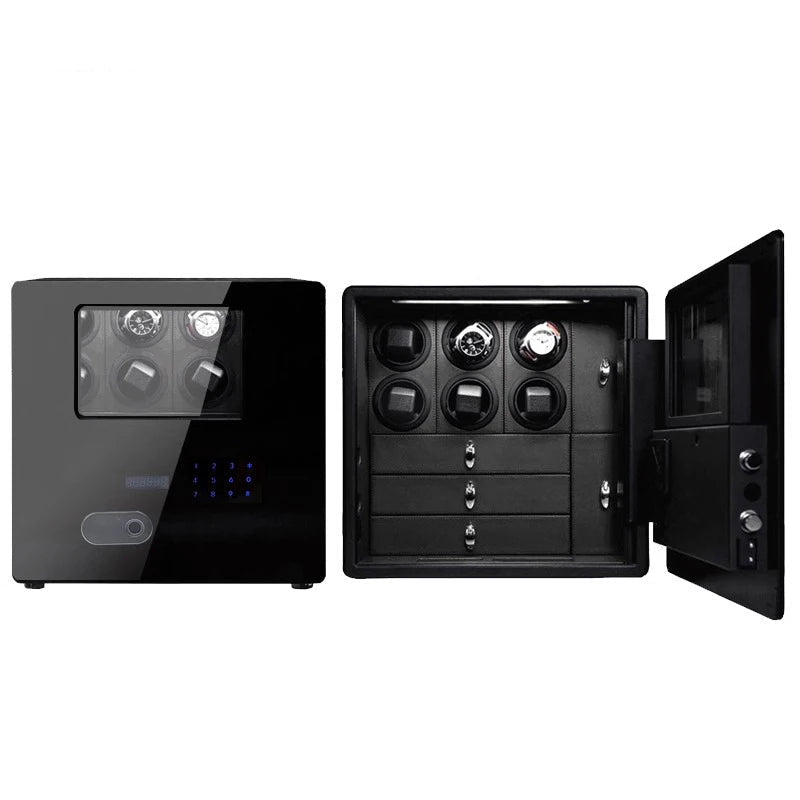
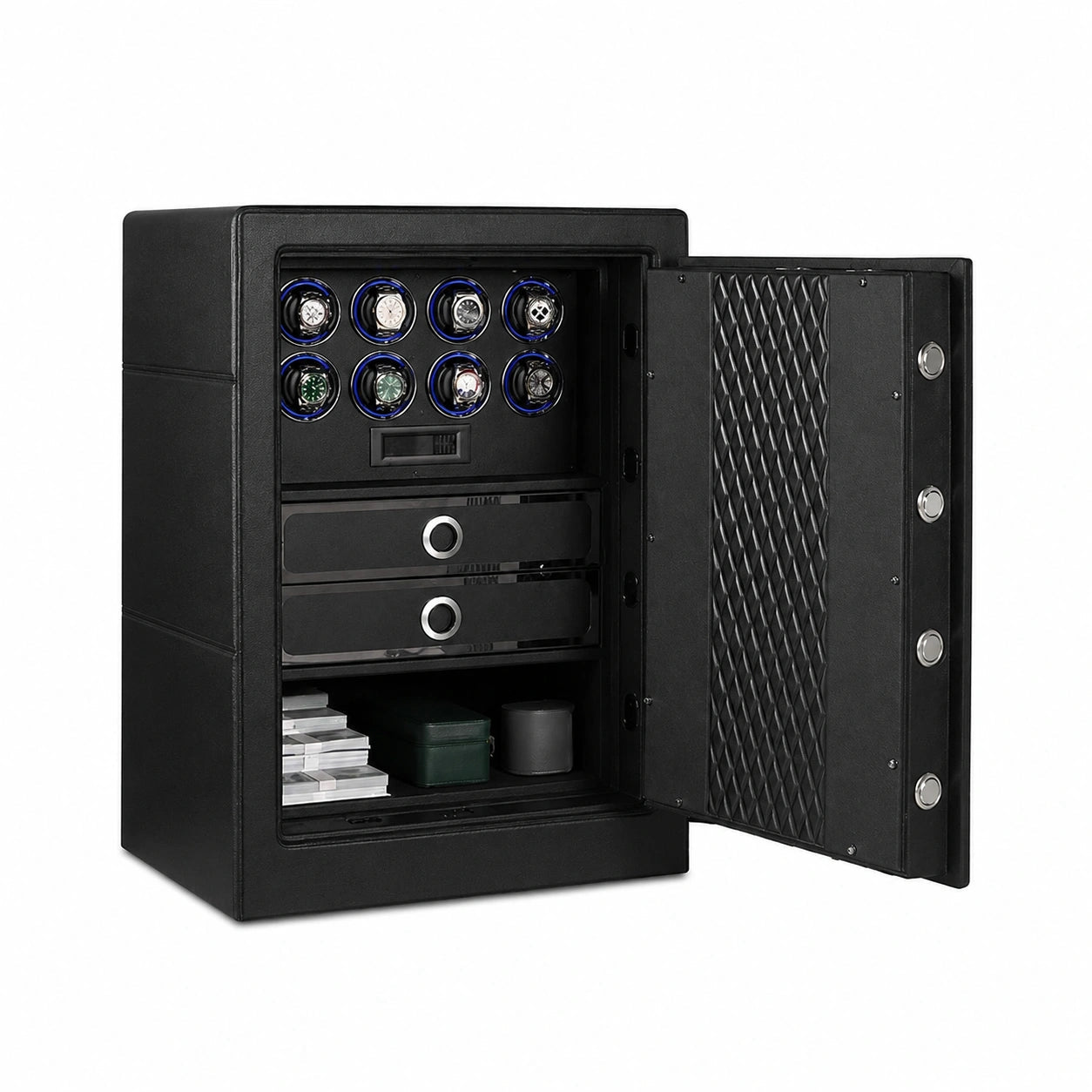
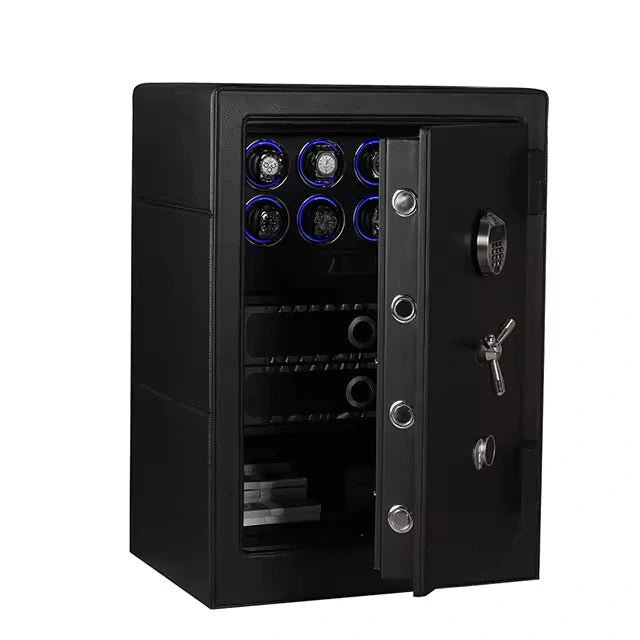
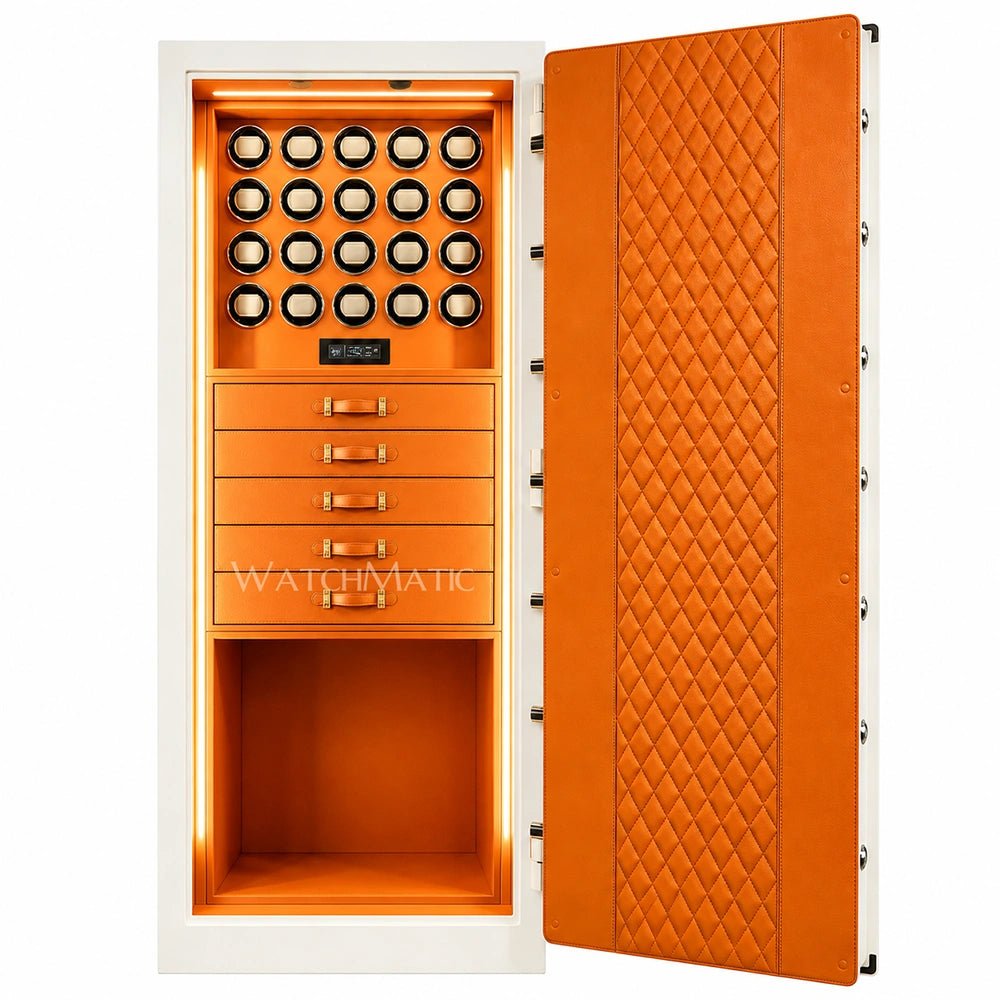
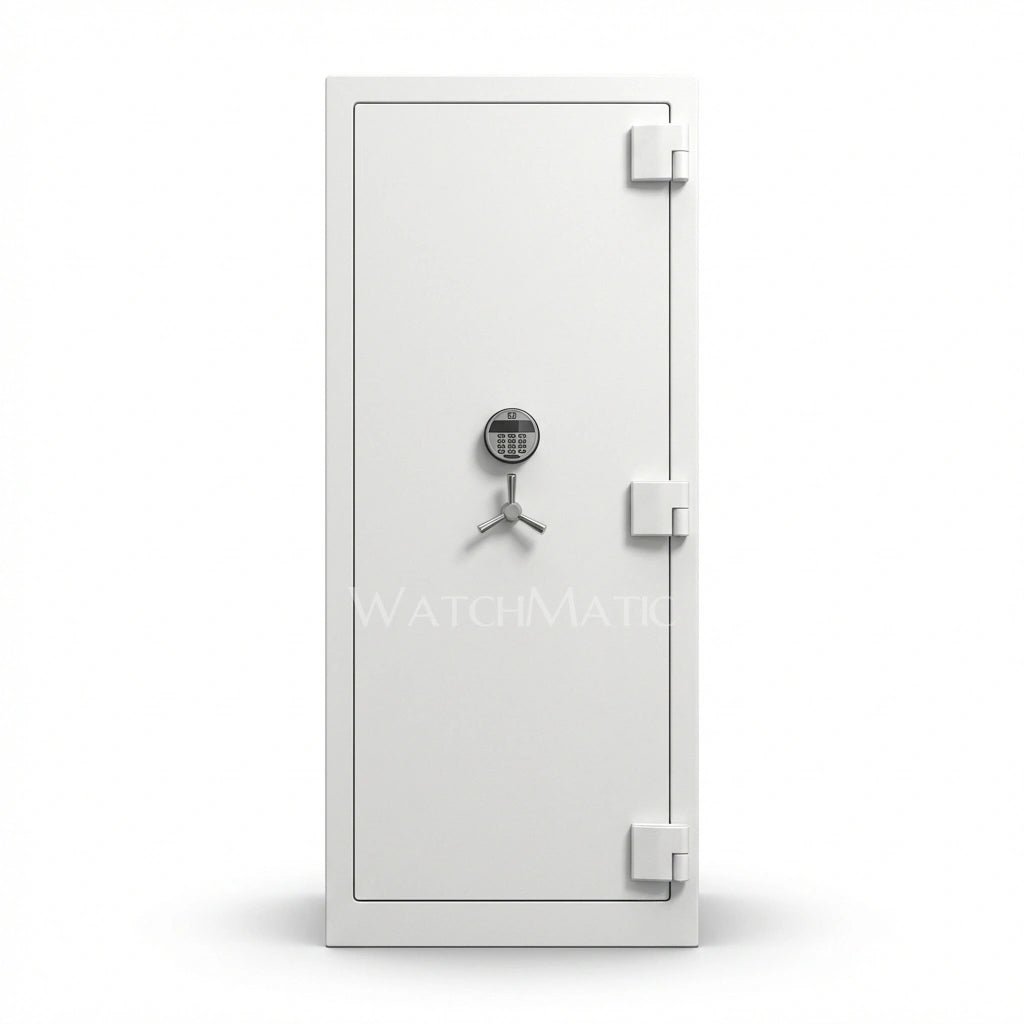
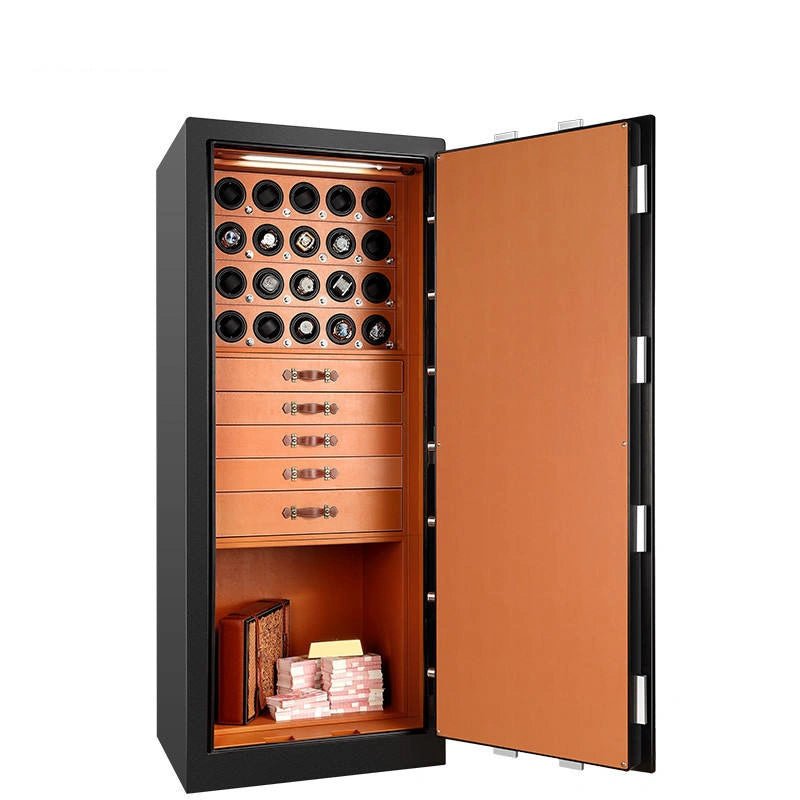
For Farer watches within a larger luxury-watch collection, the Titan Vault 20 Watch Winder Safe combines 20 independently controlled winding positions with secure storage architecture.
Current features include:
- Monolithic solid-steel body
- 10-layer reinforced exterior shell
- Biometric fingerprint access
- Digital passcode
- Manual key access
- Floor anchoring
- LCD touchscreen
- Japanese Mabuchi motors
- Independent winding control
- Adjustable TPD from 650 to 2200
- CW/CCW/bidirectional operation
- Anti-magnetization protection
- Adjustable LED illumination
- Ultra-quiet operation below 10 dB
- 10-year warranty
EN 15659 LFS 60 P fire certification and UL TL-30 / EN 1143-1 Grade III security certification are available upon request, rather than being assumed as standard on every configuration.
Titan Vault 20 Is Not a Default Recommendation for One Farer
A Titan Vault 20 should not be positioned as necessary simply because someone owns:
- One Farer GMT
- One Integra
- One Three Hand
That would be disproportionate.
It becomes more logical when the Farer sits within a larger collection containing substantially higher-value watches.
A Realistic Mixed Collection
For example:
- Farer Lander GMT
- Farer Integra
- Omega
- Rolex
- Tudor
- Grand Seiko
- Cartier
- Christopher Ward
At this point, the owner may need to solve:
- Automatic winding
- Physical security
- Collection organization
- Stationary storage for manual watches
rather than simply keeping one Farer running.
Manual Farers Can Still Be Stored Securely
A Racing Chronograph or Lissom does not need a motor.
It may still deserve secure storage because of:
- Monetary value
- sentimental value
- collection size
- theft risk
Winding requirement and security requirement are different questions.
When Stationary Watch-Safe Storage Makes More Sense
A Farer collection dominated by:
- Racing Chronographs
- Moonphase watches
- Lissom
- 35mm Cushion Case
may contain many mechanical watches but need relatively few powered rotors.
In that scenario, secure stationary options from the Luxury Watch Safe Collection can make more sense than maximizing motor count.
Farer in a Mixed Enthusiast Collection
Farer commonly fits into enthusiast collections alongside brands that combine strong design identity with Swiss or Japanese mechanical movements.
A mixed collection might include:
Farer + Christopher Ward + Baltic + Hamilton + Mido + Longines
Related WatchMatic guides include:
Best Watch Winder for Christopher Ward Watches
Best Watch Winder for Baltic Watches
Best Watch Winder for Hamilton Watches
Best Watch Winder for Mido Watches
Best Watch Winder for Longines Watches
Even where watches occupy similar price categories, movement requirements can differ substantially.
Farer vs. Christopher Ward
Both brands appeal strongly to modern enthusiast collectors and use established Swiss movement architecture.
However, neither brand should be reduced to one movement setting.
Farer's current lineup alone includes:
- La Joux-Perret automatic
- La Joux-Perret manual
- Sellita automatic
- Sellita manual
Movement-specific programming remains necessary.
Farer vs. Baltic
Both brands combine colorful independent design with multiple movement suppliers and a mix of automatic and manual watches.
For both:
mechanical does not automatically mean watch-winder compatible.
Farer vs. Hamilton
Hamilton also offers both automatic and hand-wound mechanical references.
That makes the same basic classification necessary:
identify movement type first.
How to Choose the Best Watch Winder for Your Farer
Step 1: Identify the Exact Collection
Determine whether the watch is:
- Three Hand
- Aqua Compressor
- GMT
- GMT Bezel
- World Timer
- Pilot
- Integra
- Field
- Racing Chronograph
- Moonphase
- Cushion Case
- Lissom
Step 2: Identify the Exact Reference and Generation
This is especially important for:
- Field watches
- Aqua Compressor generations
- GMT generations
- earlier discontinued chronographs
Step 3: Identify the Movement
Important current examples include:
- La Joux-Perret G101
- La Joux-Perret D100
- Sellita SW300-1
- Sellita SW330-2
- Sellita SW331-2
- Sellita SW510M b
- Sellita SW288-1 M a
- Sellita SW210-1 b
Step 4: Confirm Automatic or Manual
Examples:
G101 → automatic
SW300-1 → automatic
SW330-2 → automatic
SW331-2 → automatic
D100 → manual
SW210-1 b → manual
SW288-1 M a → manual
SW510M b → manual
Step 5: Check Power Reserve
Representative values include:
45 h → SW210 / SW288 manual
50 h → D100 manual
56 h → SW300 / SW330 / SW331 automatic
63 h → SW510M manual
68 h → G101 automatic
Step 6: Determine Whether TPD Is Relevant
TPD is relevant only to automatic movements.
Do not assign conventional TPD to manual Farer watches.
Step 7: Determine Rotation Direction
Use verified movement-specific winding requirements.
Choose a winder capable of:
- CW
- CCW
- Bidirectional
Step 8: Consider the Complication
GMT and World Timer watches have stronger convenience reasons to remain synchronized.
Moonphase also has a convenience reason to remain synchronized, but the current movement is manual and therefore cannot use rotational winding.
Step 9: Check Physical Fit
Pay particular attention to:
- Pilot oversized crown
- Aqua Compressor dual crowns
- Integra integrated bracelet
- smaller 36 mm and 35 mm watches
- Racing Chronograph pushers
Step 10: Match Powered Capacity to Automatic Watches
Do not equate:
total Farer mechanical watches
with:
total winding positions required.
For broader resources covering automatic winding, TPD, storage, and collection protection, visit the WatchMatic Guide Hub.
Best Watch Winder for Farer Watches: Final Thoughts
Choosing the best watch winder for a Farer begins with identifying the exact movement.
A substantial part of the current catalog is automatic.
The Three Hand Series III and Aqua Compressor use the La Joux-Perret G101 with approximately 68 hours of power reserve.
The GMT and GMT Bezel collections use the Sellita SW330-2 with approximately 56 hours.
The World Timer uses the SW331-2 with approximately 56 hours.
The Pilot Series II and Integra use the SW300-1 with approximately 56 hours.
These watches can all benefit from properly configured conventional rotational winding.
However, Farer's manual-wind collection is equally important.
The Racing Chronograph uses the SW510M b with approximately 63 hours.
The Moonphase uses the SW288-1 M a with approximately 45 hours.
The 35mm Cushion Case uses the SW210-1 b with approximately 45 hours.
The Lissom uses the La Joux-Perret D100 with approximately 50 hours.
None of these hand-wound movements receives winding energy from a conventional rotating watch winder.
This creates several clear Farer-specific comparisons:
SW300-1 / SW330-2 / SW331-2 → 56 h → automatic
versus:
SW510M b → 63 h → manual.
And:
La Joux-Perret G101 → 68 h → automatic
versus:
La Joux-Perret D100 → 50 h → manual.
The central lesson is therefore:
movement supplier, complication and power reserve are all insufficient on their own to determine watch-winder compatibility.
For a confirmed automatic Farer, prioritize:
- Adjustable TPD
- CW/CCW/bidirectional programming
- Independent controls
- Controlled rest cycles
- Quiet motors
- Smooth rotation
- Flexible cushions
- Appropriate crown and bracelet clearance
For Racing Chronograph, Moonphase, Lissom and 35mm Cushion Case watches, prioritize stationary storage instead.
The most reliable decision framework is:
Farer Reference → Generation → Movement → Automatic or Manual → Power Reserve → Complication → Physical Fit → TPD/Direction → Winder or Stationary Storage
For additional winding and secure-storage solutions, explore WatchMatic.