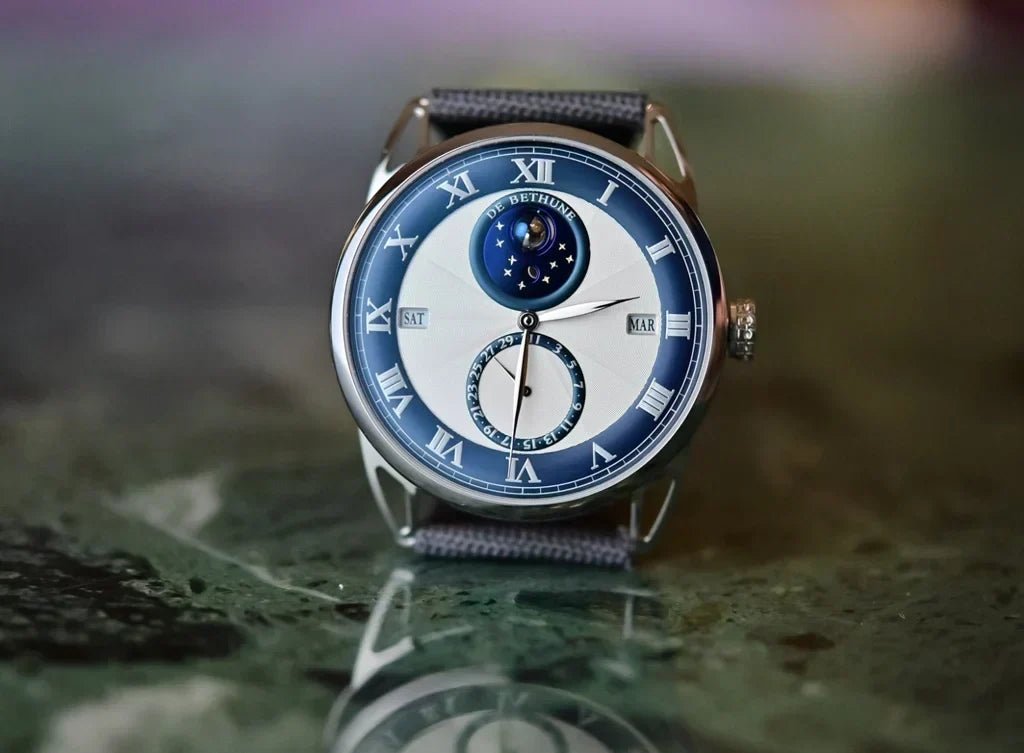
The best watch winder for De Bethune watches depends first on whether the exact watch is automatic.
This distinction is particularly important with De Bethune because much of the current collection is manually wound.
Important automatic or recent self-winding examples include:
- DB27 Titan Hawk V2 — AUTOV2
- DB27 Maya — AUTOV2
- Earlier DB25 Perpetual Calendar — DB2324
- Smaller DB25 Perpetual Calendar — DB2324V2
However, many of the Maison's current signature watches are hand-wound, including:
- DB25 Starry Varius — DB2005
- DB25 GMT Starry Varius — DB2507
- DB25 Perpetual Sky — DB2005V3
- DB25 Digitale — DB2144V3
- DB25 Monopusher Chronograph — DB3000
- DB28 — DB2115-family calibers
- DB28 Tourbillon
- DB29 Maxichrono Tourbillon — DB2039
- DB Kind of Two Jumping GMT — DB2517
- DB Kind of Two Grande Complication — DB2529
The fundamental rule is therefore:
Automatic De Bethune → a properly configured watch winder can be useful
Manual-wind De Bethune → a conventional rotating watch winder provides no winding benefit
The correct decision process is:
Exact Reference → Generation → Caliber → Automatic or Manual → Power Reserve → Complication → Physical Architecture → Winder or Stationary Storage
Does a De Bethune Watch Need a Watch Winder?
Most De Bethune watches do not need a conventional watch winder.
The reason is not that they are mechanically unusual or too complicated.
It is simply that many current De Bethune calibers are manually wound.
A conventional watch winder works by rotating the complete watch so that an automatic oscillating weight moves and winds the mainspring.
If the movement has no automatic rotor, rotation provides no useful winding energy.
For an automatic De Bethune, a winder is still optional.
It can help:
- Keep the watch running between wears
- Maintain time and calendar indications
- Reduce repeated restarting
- Keep an automatic perpetual calendar synchronized
- Manage a larger multi-brand collection
- Keep a DB27 Titan Hawk ready to wear
It does not replace servicing or improve the mechanical health of the watch simply by keeping it continuously running.
For the fundamentals of automatic winding, see the Watch Winder Guide.
Which De Bethune Watches Can Use a Watch Winder?
A useful reference table is:
| De Bethune watch | Caliber | Winding type | Approx. power reserve | Conventional winder? |
|---|---|---|---|---|
| DB27 Titan Hawk V2 | AUTOV2 | Automatic | 60 h | Yes |
| DB27 Maya | AUTOV2 | Automatic | 60 h | Yes |
| Earlier DB25 Perpetual Calendar | DB2324 | Automatic | 5 days | Yes |
| DB25 Perpetual Calendar 40 mm | DB2324V2 | Automatic | 5 days | Yes |
| Current DB25 Starry Varius | DB2005 | Manual | 6 days | No |
| Current DB25 GMT Starry Varius | DB2507 | Manual | 5 days | No |
| Current DB25 Perpetual Sky | DB2005V3 | Manual | 5 days | No |
| Current DB25 Digitale | DB2144V3 | Manual | 5 days | No |
| DB25 Monopusher Chronograph | DB3000 | Manual | 60 h | No |
| Current DB28 | DB2115-family | Manual | 6 days | No |
| DB28 Tourbillon | Reference-specific | Manual | ~5 days | No |
| DB29 Maxichrono Tourbillon | DB2039 | Manual | 5 days | No |
| DB Kind of Two Jumping GMT | DB2517 | Manual | 4 days | No |
| DB Kind of Two Grande Complication | DB2529 | Manual | 4 days | No |
The most important point is clear:
De Bethune mechanical does not mean De Bethune automatic.
In fact, for many current references, the opposite assumption is safer: verify that an automatic rotor actually exists before assigning the watch a powered position.
Why De Bethune Is Different From Most Watch-Winder Brands
Many mainstream luxury-watch manufacturers build most of their collection around automatic movements.
De Bethune approaches watchmaking differently.
Its current catalog contains a very strong concentration of manually wound calibers with:
- Twin barrels
- Four-, five- and six-day power reserves
- Tourbillons
- Dead-beat seconds
- Perpetual calendars
- GMT displays
- Digital displays
- Moon phases
- Chronographs
- Reversible cases
That means a De Bethune collector may own an extremely complicated mechanical collection while requiring surprisingly few motorized watch-winder positions.
Current De Bethune Is Heavily Manual-Wind
The current DB25 collection alone demonstrates this clearly.
Representative models include:
- Starry Varius
- GMT Starry Varius
- Perpetual Sky
- Digitale
- Monopusher Chronograph
All of these current configurations use hand-wound movements.
The DB28 and DB29 families also contain important hand-wound calibers.
Therefore, before researching:
“De Bethune TPD”
the more important first question is:
“Does this exact De Bethune contain an automatic rotor?”
De Bethune AUTOV2 Automatic Movement
One of the clearest self-winding De Bethune calibers is AUTOV2.
It appears in recent DB27 watches such as:
- Titan Hawk V2
- DB27 Maya
- Titan Hawk JPS
Representative technical characteristics include:
- Mechanical self-winding
- Approximately 60 hours of power reserve
- 28,800 vibrations per hour
- 29 jewels
- Optimized oscillating weight
- Titanium balance with white-gold inserts
The oscillating mass has appeared in titanium combined with dense metallic weighting materials depending on the implementation.
Best Watch Winder for De Bethune DB27 Titan Hawk V2
The DB27 Titan Hawk V2 is one of the most straightforward De Bethune watches for conventional winder use.
The AUTOV2 movement is automatic and provides approximately:
60 hours of power reserve.
Representative DB27 Titan Hawk V2 dimensions are:
- 43 mm diameter
- Approximately 9 mm thickness
- Short floating lugs
- Grade 5 titanium or other lightweight case materials depending on reference
For a Titan Hawk V2, prioritize:
- Adjustable TPD
- CW/CCW/bidirectional capability
- Controlled rest cycles
- Quiet motor operation
- Smooth starts and stops
- Flexible strap support
- Adequate clearance for the crown and floating lugs
60 Hours Reduces Dependence on a Winder
A 60-hour reserve gives the Titan Hawk considerably more autonomy than a conventional 38–42-hour automatic.
For example:
Frequent wearer
Wears the Titan Hawk every second day.
The watch may remain running without a winder.
Larger collector
Wears the Titan Hawk once every week.
It will normally stop between wears.
A watch winder becomes more useful.
Therefore:
longer reserve reduces dependence on a winder.
AUTOV2 Oscillating Weight Does Not Mean Maximum TPD
AUTOV2 uses an optimized oscillating weight designed specifically for efficient automatic winding.
That should not be interpreted as a reason to use:
- Maximum TPD
- Continuous rotation
- Aggressive motor cycles
The objective is to maintain sufficient mainspring reserve.
Best Watch Winder for De Bethune DB27 Maya
The DB27 Maya uses the same broad AUTOV2 self-winding architecture.
It provides approximately:
60 hours of power reserve.
From the movement perspective, it is suitable for conventional automatic winding.
For physical fit, prioritize:
- 43 mm case support
- Soft strap cushion
- Crown clearance
- Smooth motor transitions
- Stable retention
The distinctive Maya-numeral dial has no relationship with the winding requirement.
Dial Design Does Not Determine Winder Settings
De Bethune frequently changes artistic treatments dramatically while retaining the same basic movement.
Examples can include:
- Microlight surfaces
- Mayan numerals
- heat-treated titanium
- different dial colors
- collaboration editions
These affect:
- Appearance
- rarity
- collectability
They do not directly determine:
- TPD
- rotor direction
- power reserve
Floating Lugs and Watch-Winder Fit
De Bethune's patented floating-lug architecture is a major physical consideration.
The lugs articulate to improve wrist comfort.
That is beneficial on the wrist but means the watch should not be forced unnaturally around an oversized rigid cushion.
Prioritize a holder that allows:
- Natural lug movement
- Natural strap curvature
- Moderate buckle tension
- Stable watch-head positioning
Floating Lugs Do Not Change TPD
The lug system affects physical geometry.
It does not affect:
- rotor design
- mainspring
- winding direction
- daily turn requirement
Therefore:
floating lug architecture ≠ special TPD setting.
De Bethune DB25 Perpetual Calendar: Automatic Generations
De Bethune has produced important self-winding DB25 Perpetual Calendar references.
Representative calibers include:
- DB2324
- DB2324V2
These automatic movements provide approximately:
5 days of power reserve.
They combine automatic winding with:
- Perpetual calendar
- Day
- Date
- Month
- Leap-year indication
- De Bethune spherical moon phase
This creates one of the strongest legitimate use cases for a watch winder in the De Bethune catalog.
Why the Automatic DB25 Perpetual Calendar Benefits From a Winder
A perpetual calendar is designed to track the calendar continuously across:
- 30-day months
- 31-day months
- February
- leap years
If the movement stops, the indications stop progressing.
Allowing the watch to stop is not inherently harmful.
However, restoring a perpetual calendar can be considerably more involved than resetting a simple time-only watch.
For an automatic DB2324/DB2324V2 reference, a winder can therefore provide substantial convenience.
Five-Day Reserve Already Provides Significant Autonomy
The DB25 automatic perpetual calendar offers approximately:
five days of power reserve.
That means a frequent wearer may not need a winder.
A collector wearing the watch only occasionally may still benefit significantly because the complication is much more elaborate to reset.
This illustrates an important principle:
long reserve reduces winder dependence
while:
complicated synchronized indications increase convenience value.
Spherical Moon Phase Strengthens the Convenience Argument
De Bethune's spherical moon-phase display is designed for extremely high astronomical precision.
When the movement remains running, the lunar indication remains synchronized.
If the watch stops, that relationship must eventually be restored.
Again, the winder's benefit is:
preserving synchronization
not:
protecting the moon-phase mechanism from stopping.
Current Perpetual Sky Is Different
This is one of the most important De Bethune distinctions.
Current DB25 Perpetual Sky uses:
DB2005V3
and is:
hand-wound.
Its power reserve is approximately:
five days.
This means the current perpetual-calendar offering should not automatically receive the same winder advice as the earlier automatic DB2324 or DB2324V2 references.
Earlier DB25 Perpetual Calendar vs. Current Perpetual Sky
| Feature | Earlier DB25 Perpetual Calendar | Current Perpetual Sky |
|---|---|---|
| Representative caliber | DB2324 / DB2324V2 | DB2005V3 |
| Perpetual calendar | Yes | Yes |
| Moon phase | Yes | Yes |
| Power reserve | ~5 days | ~5 days |
| Automatic | Yes | No |
| Conventional winder useful | Yes | No |
This may be the strongest information-gain point in the article.
The complication and reserve are extremely similar.
The winding architecture is not.
Same Complication Does Not Mean Same Winder Compatibility
Someone searching only:
“De Bethune perpetual calendar watch winder”
could easily apply incorrect advice.
The correct sequence is:
reference → caliber → winding type
not:
complication name → generic setting.
Current DB25 Perpetual Sky
The current Perpetual Sky uses the manual DB2005V3.
Its approximately five-day reserve is supplied by a self-regulating twin-barrel architecture.
It includes:
- Hours
- Minutes
- Perpetual calendar
- Day
- Date
- Month
- Leap-year indication
- Spherical moon phase
Yet conventional rotation does not wind it.
Can the Current Perpetual Sky Use a Watch Winder?
Not for winding.
The movement must be wound through the crown.
A conventional rotating watch holder cannot maintain the reserve because there is no automatic oscillating weight.
Perpetual Calendar Convenience vs. Mechanical Compatibility
This produces an unusual situation.
The Perpetual Sky is exactly the type of complication an owner may want to keep running.
But a conventional watch winder is unable to do so.
Therefore:
desire for continuous synchronization ≠ automatic-winder compatibility.
Current DB25 Starry Varius
The Starry Varius uses Caliber:
DB2005
with approximately:
six days of power reserve.
It is:
manually wound.
Current variations include titanium, rose gold, smaller case configurations, and highly decorative executions.
Does the DB25 Starry Varius Need a Watch Winder?
No.
The DB2005 does not contain an automatic rotor.
It must be wound through the crown.
Rotating the watch inside a winder provides no useful mainspring winding.
Six Days of Reserve Already Reduces Winding Frequency
A six-day reserve means the owner does not need to wind the watch every day.
Once fully wound, the movement can continue operating for much of a week.
That makes conventional automatic rotation both:
- mechanically ineffective
- unnecessary as a solution to frequent manual winding
Starry Sky Does Not Affect Winding
The distinctive De Bethune starry-sky dial can include:
- Blued titanium
- White-gold stars
- Gold-leaf Milky Way
- Customized constellations
- Meteorite
- diamonds
None of these affects the movement's winding architecture.
Gem-Set Starry Varius Strengthens the Security Case
A diamond-set or precious-metal Starry Varius does not need a rotor.
It may, however, justify significantly stronger physical security.
This distinction is important:
winding requirement ≠ security requirement.
DB25 GMT Starry Varius
The current GMT Starry Varius uses:
DB2507
with approximately:
five days of power reserve.
Its functions include:
- Hours
- Minutes
- Second time zone
- Day/night indication
- Jumping date
It is:
manually wound.
Does the GMT Starry Varius Need a Watch Winder?
No.
The DB2507 must receive mainspring energy through crown winding.
Conventional rotation provides no useful winding energy.
GMT Complication Creates Convenience but Not Compatibility
This watch contains several indications an owner would prefer to keep synchronized.
If it stops, the owner may need to restore:
- Main time
- Second time zone
- Date
- Day/night relationship
A conventional winder would be convenient if the movement were automatic.
But it is not.
Therefore:
GMT complexity cannot override manual winding architecture.
Five-Day Reserve Helps
Fortunately, the five-day reserve means a GMT Starry Varius can remain running through a substantial period off the wrist.
This greatly reduces the practical inconvenience of manual winding.
DB Kind of Two Jumping GMT
The DB Kind of Two Jumping GMT uses:
DB2517
with approximately:
four days of power reserve.
The movement is:
hand-wound.
Its case can be reversed so that either of two dial faces can be displayed.
Does the DB Kind of Two Need a Watch Winder?
Not for winding.
The DB2517 must be wound manually.
Its rotating/reversible case mechanism should not be confused with an automatic rotor.
Reversible Case Does Not Mean Automatic
The entire case can pivot between two viewing positions.
That motion is part of the watch's external architecture.
It does not wind the movement.
This is another useful distinction:
case rotation ≠ automatic winding.
Two Dials Do Not Mean Two Movements
The DB Kind of Two presents two visual faces.
It still uses one underlying mechanical movement architecture.
The existence of:
- Two dials
- Two time zones
- reversible case
does not create an automatic winding system.
DB Kind of Two Grande Complication
The Grande Complication uses Caliber:
DB2529
with approximately:
four days of power reserve.
It incorporates an extraordinary combination of functions including:
- Reversible double-sided display
- Tourbillon
- Perpetual calendar
- Spherical moon phase
- Jumping seconds
- Leap-year indication
- Retrograde lunar-age indication
It remains:
manually wound.
Can the Grande Complication Use a Watch Winder?
Not for conventional winding.
The DB2529 has no automatic rotor.
Its hundreds of components and extremely high complication level do not change that fact.
Extreme Complexity Does Not Mean Automatic
This is particularly important with De Bethune.
The Grande Complication contains more mechanical complexity than many automatic watches.
Yet a comparatively simple DB27 Titan Hawk can use a conventional winder while the Grande Complication cannot.
Therefore:
complication count ≠ automatic-winder compatibility.
Tourbillon Does Not Mean Automatic
The same principle applies to tourbillons.
De Bethune's current and recent tourbillon movements are overwhelmingly associated with manual winding.
Examples include:
- DB28 Tourbillon
- DB28XP Tourbillon variants
- Kind of Two Tourbillon
- Grande Complication
- DB29 Maxichrono Tourbillon
A conventional winder provides no winding benefit unless the exact movement is confirmed to be self-winding.
De Bethune DB28
Current DB28 models use hand-wound manufacture calibers.
Representative DB2115-family movements provide approximately:
six days of power reserve.
Functions can include:
- Hours
- Minutes
- Spherical moon phase
- Power reserve
- Performance indicator
Does a DB28 Need a Watch Winder?
Not when using the current manual DB2115 architecture.
The movement must be wound manually.
The visually exposed balance and complex architecture do not create automatic winding.
DB28 Floating Lugs and Stationary Storage
The DB28's signature floating lugs are designed to articulate around the wrist.
For stationary storage, use a holder that:
- Accommodates natural lug movement
- Avoids excessive strap tension
- Supports the case rather than forcing the lugs outward
Because the movement does not need rotation, storage can be optimized entirely for physical fit.
Six-Day Manual vs. 60-Hour Automatic
Compare:
DB28 DB2115
Approximately six days
Manual
No conventional winding benefit
DB27 AUTOV2
Approximately 60 hours
Automatic
Winder compatible
The watch with far longer reserve is the one that does not need a rotor.
DB28 Tourbillon
Current De Bethune tourbillon references use manual movements with long reserves, often around:
five days.
These watches can feature:
- Ultra-light 30-second tourbillon
- Silicon/titanium cage
- High-frequency operation
- Floating-lug case architecture
- Extensive titanium finishing
Yet they remain manually wound.
Ultra-Light Tourbillon Does Not Need to Be Exercised by a Winder
A conventional winder does not:
- Exercise the tourbillon
- Lubricate the cage
- Maintain its regulation
- service its bearings
- replace professional maintenance
The tourbillon operates whenever the movement has energy.
30-Second Tourbillon vs. Winder Rotation
The De Bethune tourbillon may complete a rotation every 30 seconds.
That is completely unrelated to the rotations performed by a watch winder.
One is:
a regulating organ inside the movement
The other is:
external motion designed to move an automatic rotor.
Do not confuse the two.
DB29 Maxichrono Tourbillon
The DB29 Maxichrono Tourbillon uses:
DB2039
with approximately:
five days of power reserve.
It is:
manually wound.
Its architecture combines:
- Monopusher chronograph
- Tourbillon
- Multiple central chronograph hands
- Absolute Clutch system
- 36,000-vph frequency
Does the DB29 Maxichrono Tourbillon Need a Watch Winder?
No.
The DB2039 receives energy from crown winding.
A conventional rotating holder provides no winding benefit.
High Frequency Does Not Mean More TPD
DB2039 runs at:
36,000 vibrations per hour.
That describes the frequency of the movement's oscillator.
It has no direct relationship with:
Turns Per Day.
In this case, TPD is irrelevant anyway because the caliber is manual.
Chronograph Does Not Mean Automatic
Modern mechanical chronographs can be either:
- Automatic
- Manual
The DB29 Maxichrono is a clear manual example.
Therefore:
chronograph ≠ automatic movement.
DB25 Monopusher Chronograph
The current DB25 Monopusher Chronograph uses:
DB3000
with approximately:
60 hours of power reserve.
It is:
manually wound.
Its architecture includes:
- Monopusher integrated into the crown
- Column wheel
- Instantaneous 60-minute counter
- Silicon escape wheel
- Titanium balance with gold inserts
DB25 Monopusher vs. DB27 Titan Hawk
This produces a clean comparison.
DB25 Monopusher
60 hours
Manual
No conventional winding benefit
DB27 Titan Hawk
60 hours
Automatic
Conventional winder compatible
Exactly the same approximate reserve.
Completely different storage logic.
Power Reserve Does Not Identify Winding Type
This is one of the central De Bethune lessons.
A De Bethune can provide:
- 60 hours automatic
- 60 hours manual
- 4 days manual
- 5 days manual
- 5 days automatic
- 6 days manual
The reserve tells you:
how long the movement runs
not:
how it receives energy.
DB25 Digitale
The DB25 Digitale uses:
DB2144V3
with approximately:
five days of power reserve.
It is hand-wound.
Its functions include:
- Jumping hours
- Rotating-disc minutes
- Spherical moon phase
Digital Display Does Not Mean Electronic
The DB25 Digitale is fully mechanical.
It is not:
- Quartz
- electronic
- connected
But it is also not automatic.
This creates an important terminology distinction:
mechanical digital display ≠ automatic movement.
Jumping Hour Does Not Need a Winder
The instantaneous hour transition uses energy stored in the movement.
It does not require external rotational movement.
The watch must still be manually wound.
De Bethune Perpetual Calendar Generation Change
This deserves special attention because it can easily create incorrect SEO content.
Earlier De Bethune DB25 perpetual calendars used self-winding DB2324-family movements.
Current Perpetual Sky uses manual DB2005V3.
Therefore, an article that simply says:
“De Bethune perpetual calendars are automatic”
is outdated.
Similarly:
“De Bethune perpetual calendars are manual”
would incorrectly describe important earlier references.
The accurate rule is:
identify the exact generation.
Generation Can Matter More Than Collection Name
This is not just a theoretical concern.
Collectors often purchase De Bethune through:
- Authorized dealers
- Secondary market
- Auctions
- specialist independent-watch dealers
Two visually related DB25 perpetual calendars may come from different mechanical generations.
For a watch winder, that distinction is decisive.
Historical Automatic Does Not Mean Current Automatic
The existence of self-winding DB25 perpetual calendars does not mean every new DB25 is automatic.
The current DB25 catalog is strongly hand-wound.
Owners should not extrapolate a historical movement specification to a current watch.
Current Manual Does Not Mean Every Older De Bethune Is Manual
The reverse mistake is also possible.
De Bethune has produced legitimate automatic models including:
- DB27 Titan Hawk
- DB27 Maya
- DB25 Perpetual Calendar variants
Therefore, manual winding cannot be assumed solely from the brand name.
De Bethune Power Reserve Comparison
| Caliber | Representative watch | Type | Approx. reserve |
|---|---|---|---|
| AUTOV2 | DB27 Titan Hawk | Automatic | 60 h |
| DB3000 | DB25 Monopusher | Manual | 60 h |
| DB2517 | Kind of Two GMT | Manual | 4 days |
| DB2529 | Grande Complication | Manual | 4 days |
| DB2507 | GMT Starry Varius | Manual | 5 days |
| DB2005V3 | Perpetual Sky | Manual | 5 days |
| DB2039 | Maxichrono Tourbillon | Manual | 5 days |
| DB2324 / V2 | Earlier DB25 Perpetual Calendar | Automatic | 5 days |
| DB2005 | Starry Varius | Manual | 6 days |
| DB2115-family | DB28 | Manual | 6 days |
The table shows how unreliable power reserve is as a shortcut.
Five Days Can Mean Automatic or Manual
Compare:
DB2324 → approximately 5 days → automatic
with:
DB2507 → approximately 5 days → manual
and:
DB2005V3 → approximately 5 days → manual.
The owner cannot infer winding architecture from autonomy.
60 Hours Can Also Mean Automatic or Manual
Compare:
AUTOV2 → 60 h → automatic
with:
DB3000 → 60 h → manual.
Again:
same reserve ≠ same winder compatibility.
Self-Regulating Twin Barrel Does Not Mean Automatic
De Bethune uses its self-regulating twin-barrel architecture extensively.
This system relates to:
- Energy storage
- torque delivery
- long autonomy
It does not describe how the movement is wound.
A twin-barrel De Bethune can be:
- Automatic
- Manual
Therefore:
twin barrel ≠ automatic winding.
Twin Barrel Does Not Mean Double TPD
There is no direct equation:
two barrels = twice the turns.
Barrel count and TPD are unrelated in that simple way.
For manual De Bethune movements, TPD is irrelevant altogether.
De Bethune Watch Winder TPD Settings
TPD means Turns Per Day—the approximate number of rotations delivered by a watch winder during its daily program.
There should not be one universal recommendation such as:
“De Bethune = 650 TPD.”
That would be especially misleading because most relevant current De Bethune calibers are manually wound.
Before thinking about TPD:
- Identify the exact reference.
- Identify the caliber.
- Confirm whether an automatic rotor exists.
- Check the caliber's winding specification.
- Determine appropriate TPD.
- Determine appropriate rotation direction.
- Verify that the watch maintains adequate reserve.
For a deeper explanation of winder programming, see the Watch TPD Guide.
Do Manual De Bethune Watches Need TPD?
No.
A conventional TPD program provides no winding benefit to manual calibers such as:
- DB2005
- DB2005V3
- DB2115-family
- DB2144V3
- DB2507
- DB2517
- DB2529
- DB3000
- DB2039
These movements receive mainspring energy through crown winding.
What Rotation Direction Should You Use for an Automatic De Bethune?
A premium programmable winder should provide:
CW — Clockwise
CCW — Counterclockwise
Bi — Bidirectional
De Bethune's public technical documents provide extensive information about:
- Caliber
- rotor construction
- power reserve
- frequency
- complications
but one universal consumer TPD/direction profile should not be assumed for all automatic De Bethune generations.
The correct hierarchy is:
exact reference → exact automatic caliber → verified winding requirement
rather than:
De Bethune → one generic program.
Why a Programmable Winder Still Matters
An owner may have:
- AUTOV2 Titan Hawk
- automatic DB2324 perpetual calendar
- automatic watches from other brands
These do not necessarily share the same winding architecture.
Independent programming gives the owner flexibility without inventing a brand-wide setting.
High TPD Is Not Automatically Better
An expensive haute-horlogerie watch does not require maximum rotation.
Once sufficient reserve is maintained, more turns may offer no useful benefit.
Higher TPD does not automatically:
- Improve accuracy
- Improve lubrication
- Extend service intervals
- protect a silicon escapement
- improve moon-phase precision
- maintain a tourbillon
- improve chronograph operation
The goal is appropriate maintenance winding.
Does an Automatic De Bethune Need to Run All the Time?
No.
A self-winding De Bethune can stop normally.
For AUTOV2's approximately 60-hour reserve, frequent wearers may have very little practical need for a winder.
For an automatic DB2324 perpetual calendar, the complication itself makes keeping the watch synchronized more convenient.
Should You Start a Stopped Automatic De Bethune Before Using a Winder?
A winder is best treated as a:
maintenance-winding system.
If an automatic De Bethune has completely stopped:
restart according to its instructions → establish initial reserve → set indications → place on programmed winder → maintain
rather than:
stopped watch → maximum TPD.
Long Manual Power Reserves Reduce the Need for Constant Intervention
One reason De Bethune can rely so heavily on manual winding is its long power-reserve architecture.
Many current watches provide:
- Four days
- Five days
- Six days
between full windings.
That means manual winding does not necessarily imply daily owner intervention.
Manual Winding Is Part of the Design Philosophy
For watches such as:
- DB28
- Starry Varius
- DB Kind of Two
- DB29 Maxichrono
- Grande Complication
the act of crown winding is part of how the watch is designed to receive energy.
A rotating box should not be treated as a substitute where the movement has no automatic system.
What to Look for in a De Bethune Watch Winder
For the specific self-winding references that can use one, prioritize:
Adjustable TPD
Avoid a fixed-output design.
CW, CCW and Bidirectional Modes
Multiple direction options improve compatibility.
Independent Controls
Especially important in a mixed independent-watch collection.
Controlled Rest Cycles
Continuous rotation is unnecessary.
Smooth Motor Operation
High-value independent watches should receive controlled motion.
Low Vibration
The objective is movement similar to ordinary wrist activity rather than mechanical shaking.
Quiet Motors
Relevant in:
- Bedroom
- Dressing room
- office
- walk-in wardrobe
- collector room
Flexible Cushions
Important because De Bethune uses unusual cases and articulating lugs.
Floating-Lug Compatibility
Do not force articulated lugs against an oversized holder.
Adequate Case Clearance
Several De Bethune watches measure:
- 42–44 mm
- substantial thickness
- unusual case geometry
Soft Contact Surfaces
Especially important for:
- mirror-polished titanium
- blued titanium
- zirconium
- rose gold
- platinum
- diamond-set pieces
Mirror-Polished Titanium Requires Careful Physical Storage
De Bethune frequently uses highly polished Grade 5 titanium.
The material is lightweight but the finish can be visually unforgiving of contact damage.
A watch should not repeatedly touch:
- enclosure wall
- door
- adjacent watch
- hard cushion hardware
Blued Titanium Does Not Change TPD
De Bethune's thermally oxidized blue titanium is a defining aesthetic feature.
It has no direct relationship with automatic winding.
Therefore:
blue titanium ≠ special watch-winder setting.
Zirconium Does Not Change TPD Either
Certain references use zirconium or combinations of advanced materials.
Case material affects:
- weight
- appearance
- scratch behavior
- physical support
not movement winding requirements.
Best Watch Winder for One Automatic De Bethune
For a self-winding De Bethune such as a DB27 Titan Hawk V2, choose a premium programmable system with:
- Adjustable TPD
- CW/CCW/bidirectional operation
- Controlled rest cycles
- Quiet motor
- Smooth acceleration
- Flexible cushion
- Appropriate floating-lug support
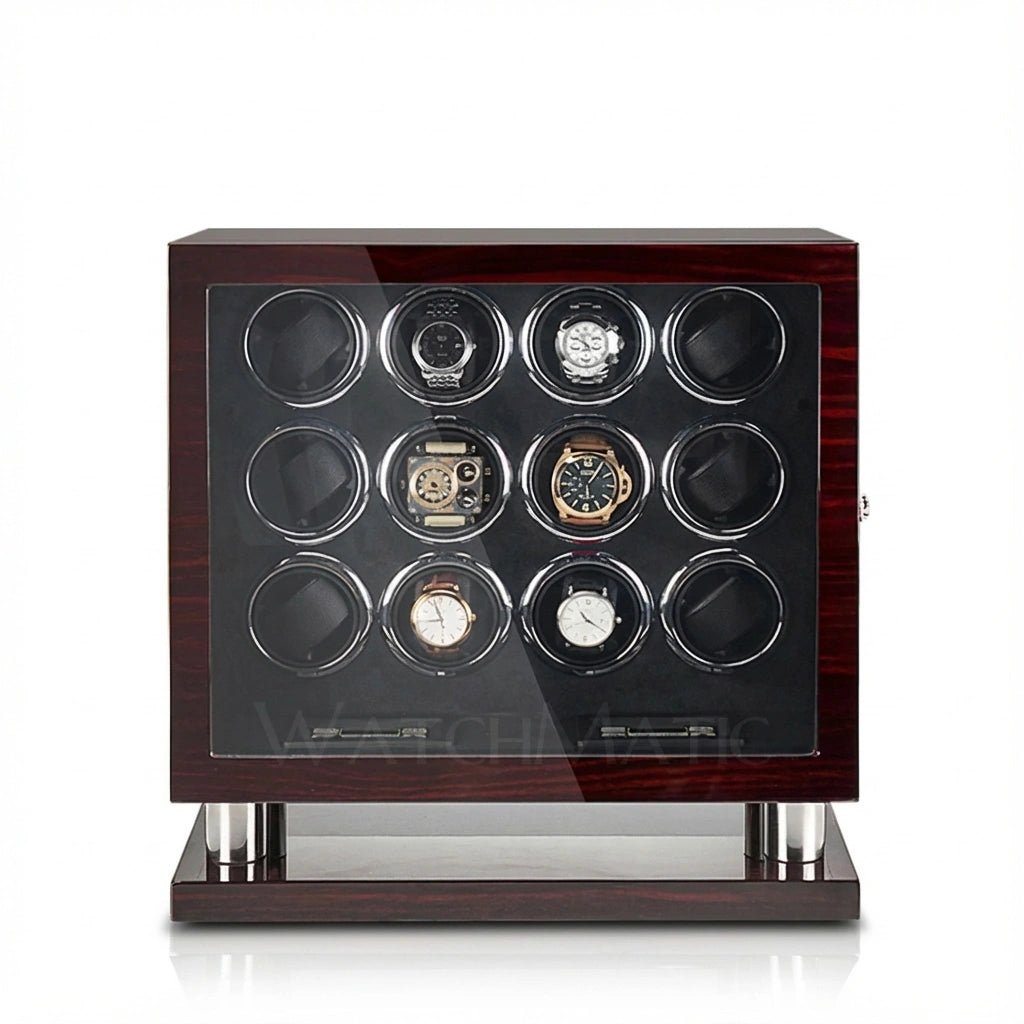
Suitable configurations can be explored in the WatchMatic Watch Winder Collection.
Best Watch Winder for Multiple De Bethune Watches
Consider a collection containing:
- DB27 Titan Hawk
- Earlier DB25 automatic Perpetual Calendar
- DB25 Starry Varius
- DB28
- Kind of Two GMT
- DB29 Maxichrono Tourbillon
There are six mechanical watches.
Only two in that example benefit from conventional automatic winding.
A much more rational layout is:
Titan Hawk + automatic DB25 Perpetual Calendar → individually programmed rotors
Starry Varius + DB28 + Kind of Two + Maxichrono → secure stationary storage
This is the central storage-planning lesson for De Bethune.
Rotor Capacity Should Not Equal De Bethune Collection Size
A collector with ten De Bethune watches may need only:
- one
- two
- or a few
powered positions, depending on the exact references.
That is radically different from a collection dominated by Rolex or modern automatic sports watches.
Vento Watch Winder for Automatic De Bethune Watches

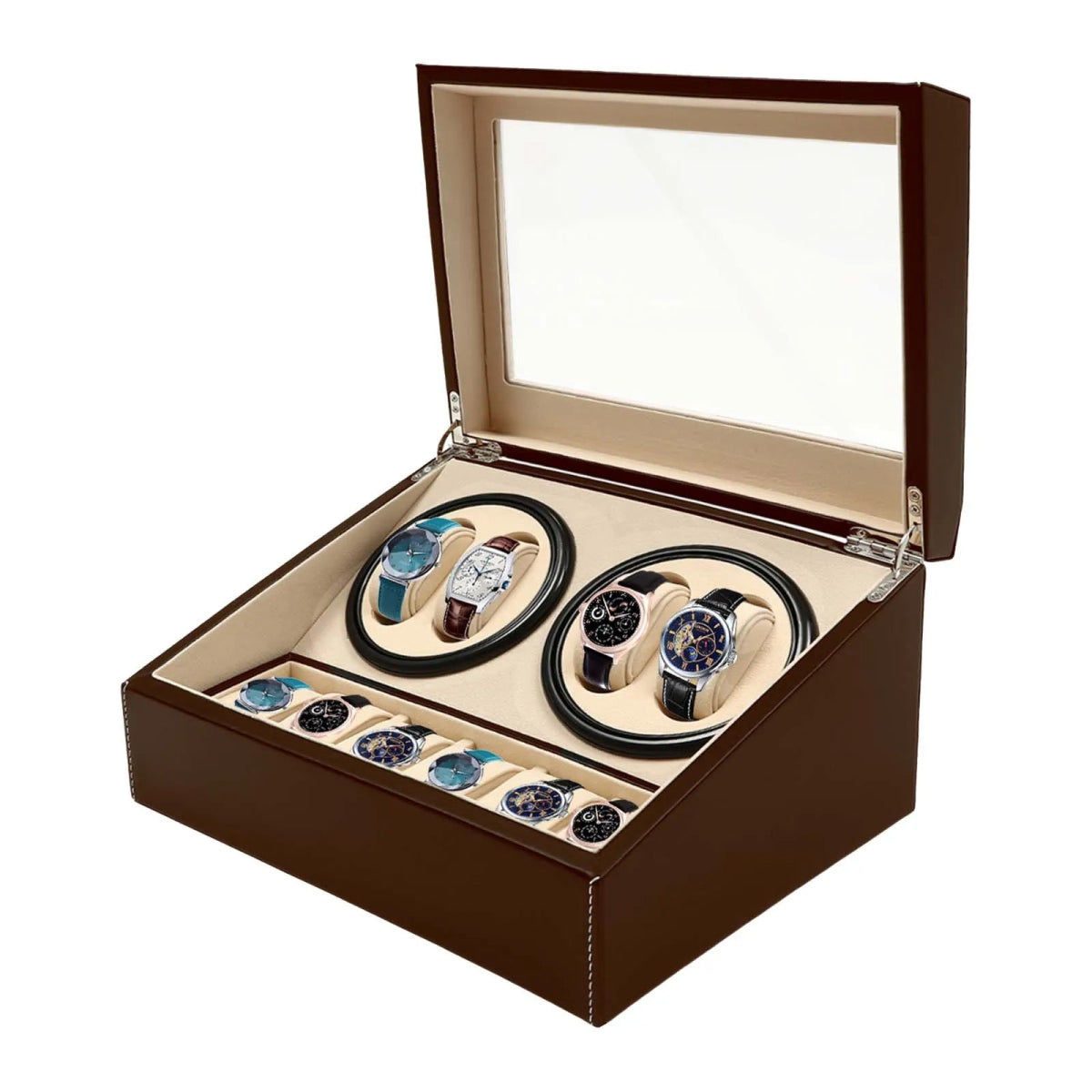
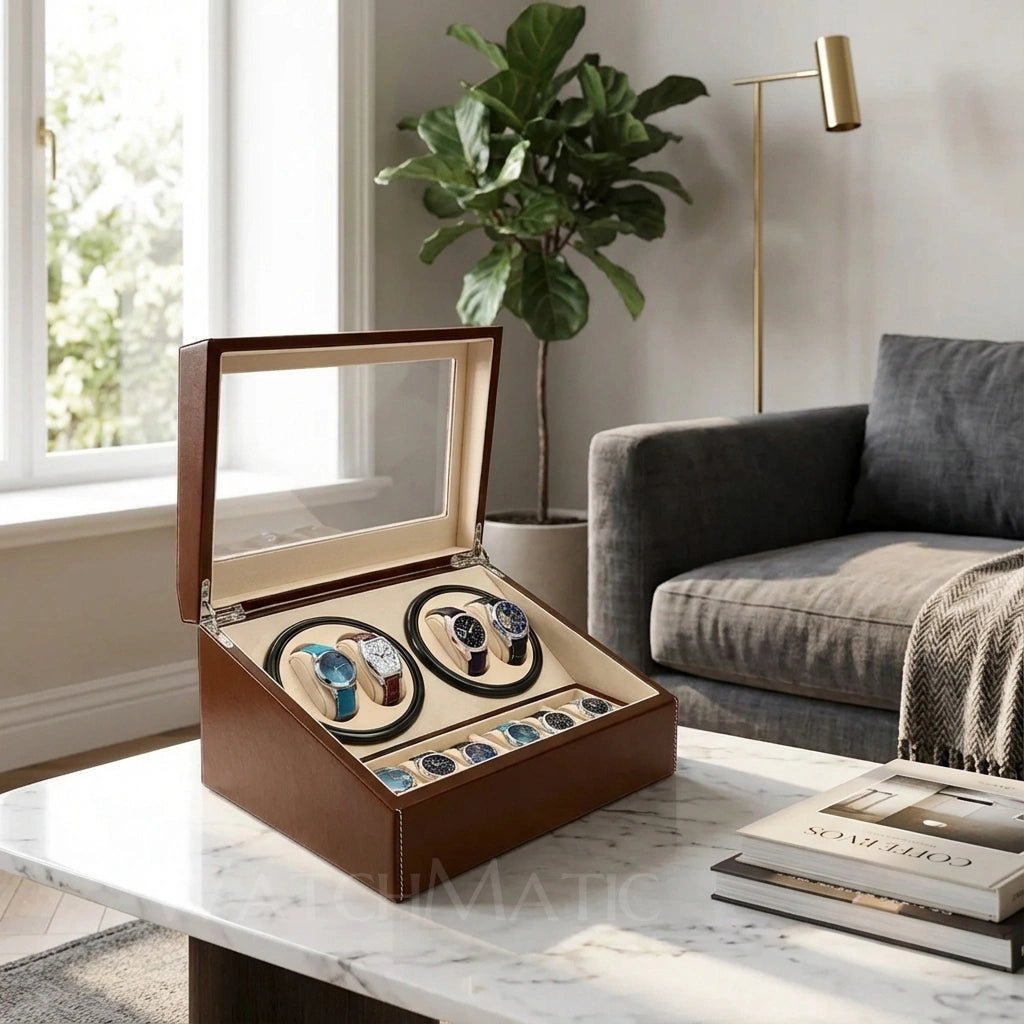
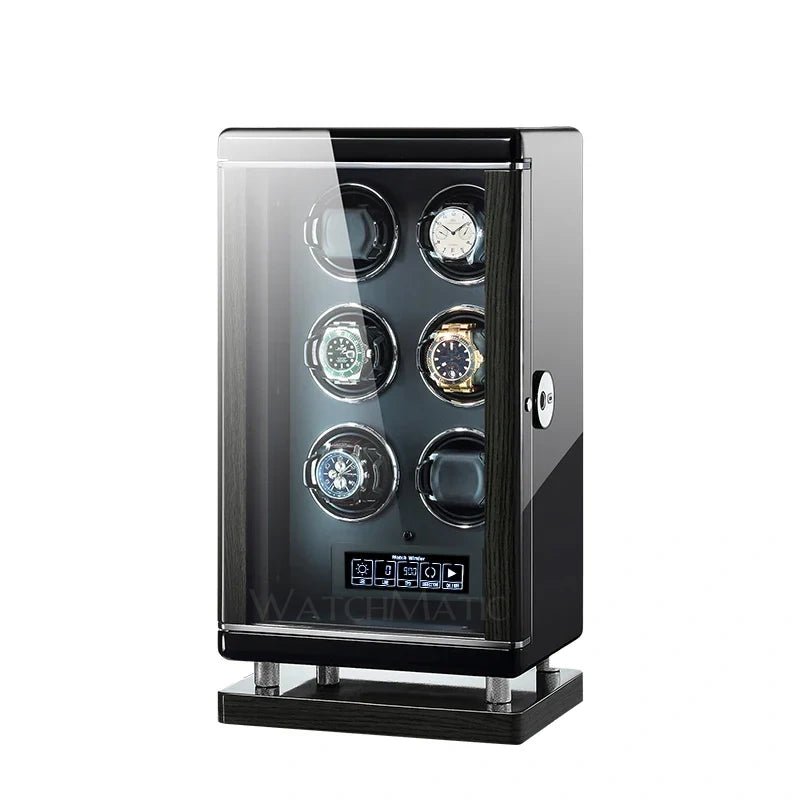
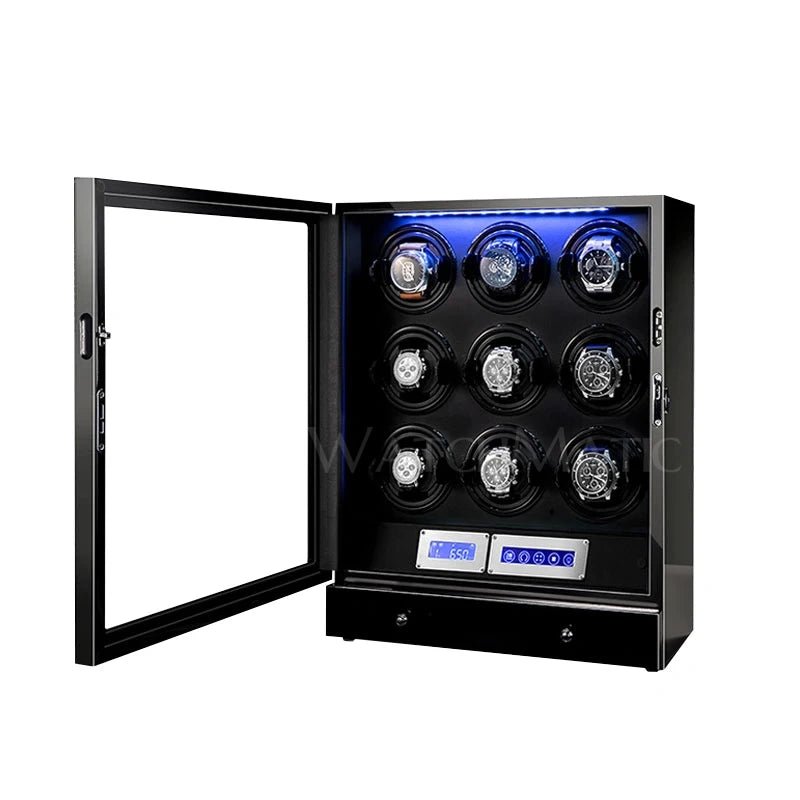
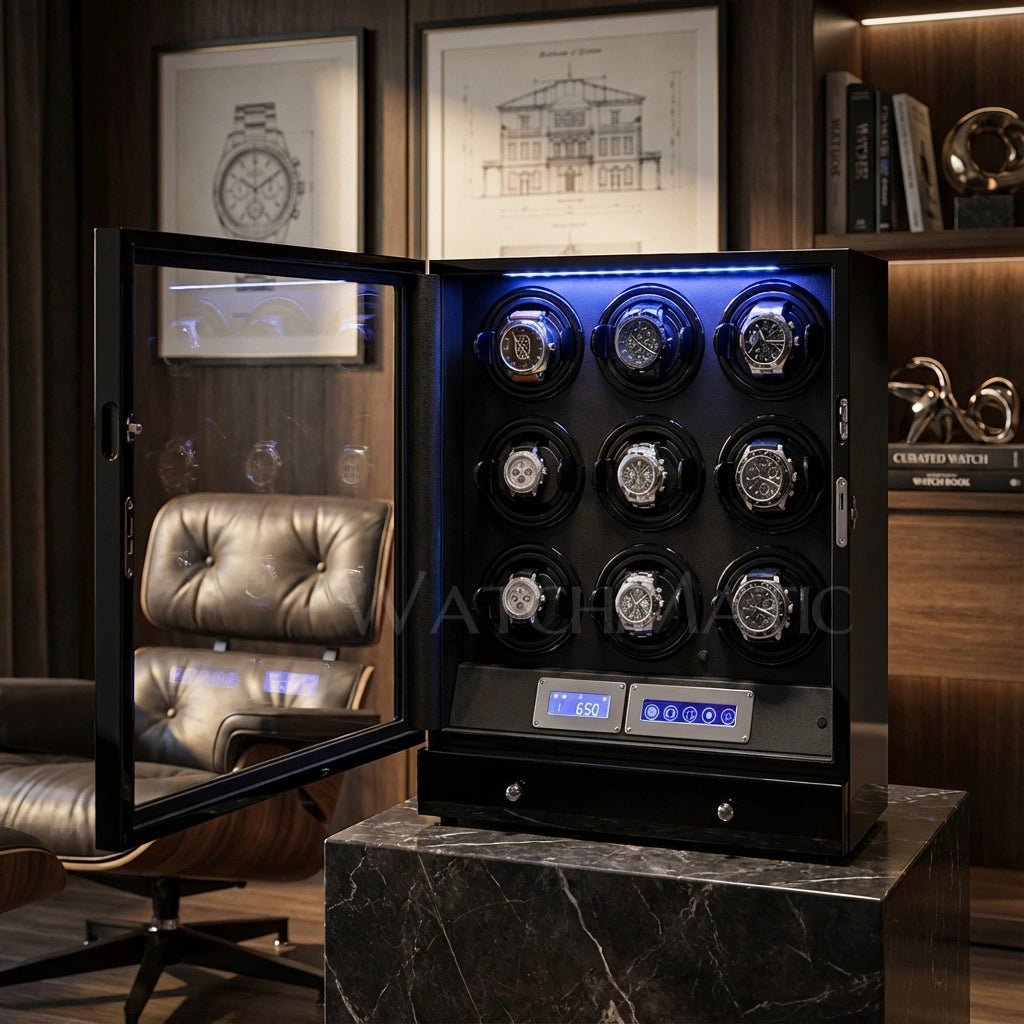
The Vento Luxury Quad Watch Winder can be useful when a collector owns one or more automatic De Bethune references alongside other self-winding watches.
Its four independent positions allow individual configuration for:
- De Bethune AUTOV2
- Automatic DB2324-family perpetual calendar
- Other automatic independent watches
without forcing different movements onto one shared program.
Vento Is Not the Default Product for a De Bethune-Only Collection
This point matters.
A current De Bethune-heavy collection may contain mostly:
- DB25 manual
- DB28 manual
- DB29 manual
- Kind of Two manual
In that scenario, four powered rotors may be more than the collector actually needs.
The Vento makes more sense when De Bethune automatics are combined with automatic watches from other manufacturers.
Do Not Rotate a Manual De Bethune Simply to Fill a Position
A DB28 or Starry Varius can physically sit on a rotating cushion.
That does not mean it benefits from rotation.
A powered position should ideally be reserved for a genuine automatic movement.
Watch Winder vs. Watch Safe for De Bethune Collectors
De Bethune is one of the strongest examples where secure stationary storage can matter more than rotor count.
| Feature | Watch Winder | Watch Winder Safe |
|---|---|---|
| Automatic winding | Yes | Yes |
| Manual-watch storage | Possible | Yes |
| Independent programming | Available | Available |
| Physical security | Limited | High |
| Controlled access | Limited | High |
| High-complication storage | Basic | Strong |
| Mixed automatic/manual collection | Moderate | High |
| De Bethune-focused collection | Often rotor-heavy | Better balanced |
Collectors requiring both winding and secure storage can explore the Watch Winder Safe Collection.
Titan Vault 20 for a De Bethune Collection

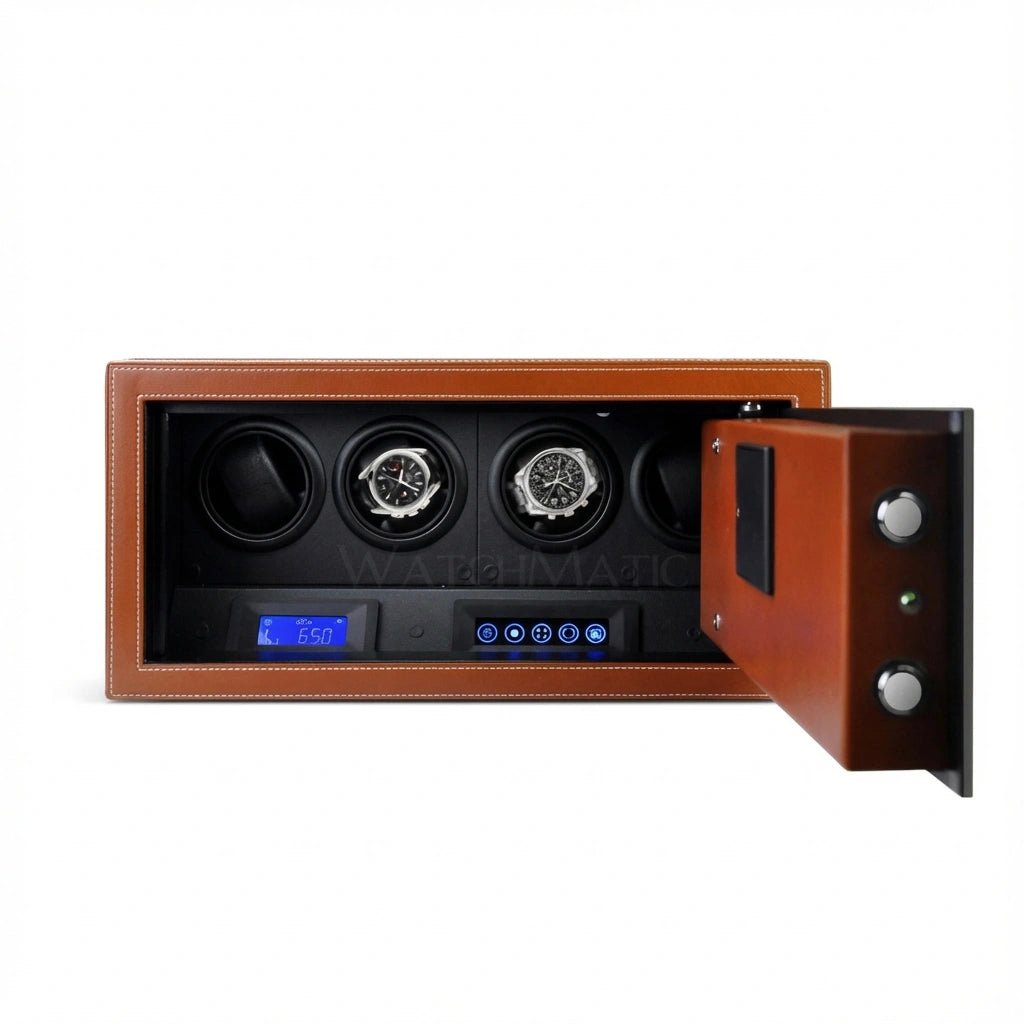
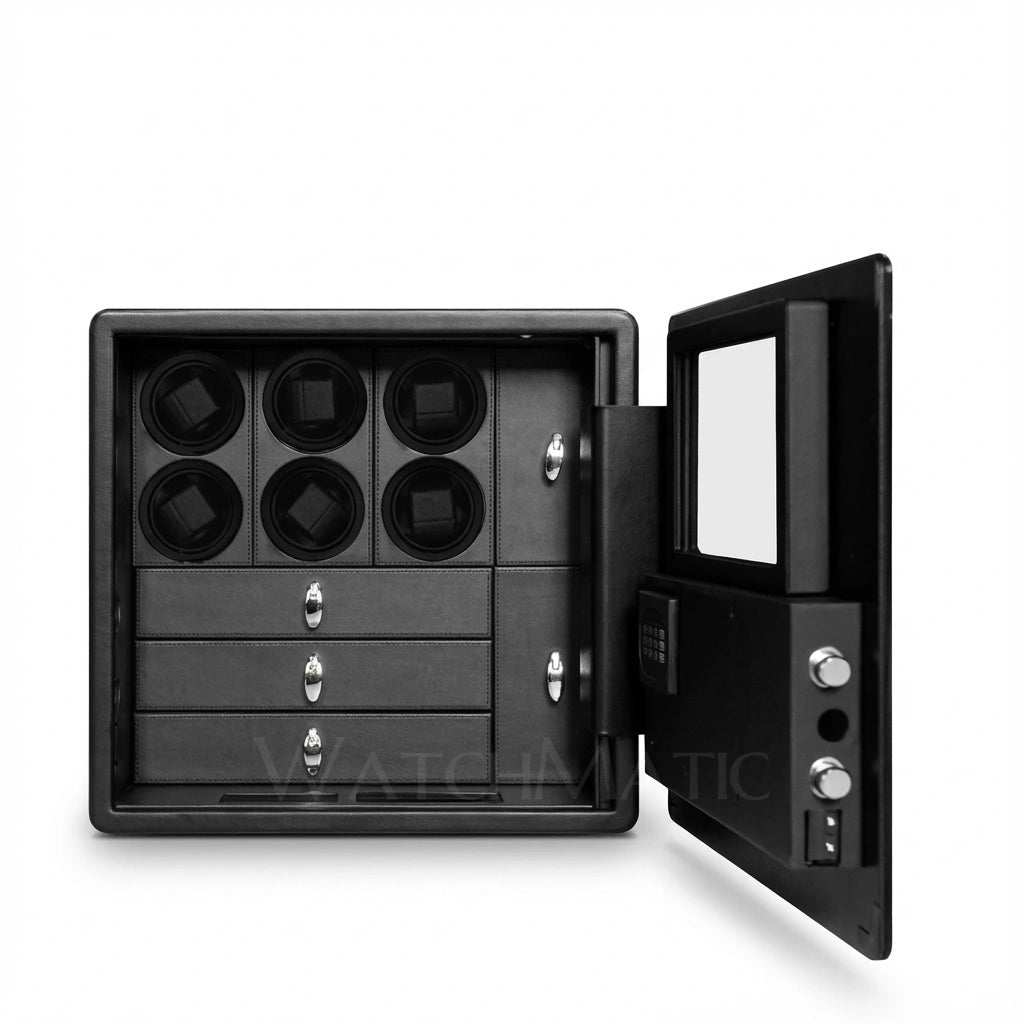
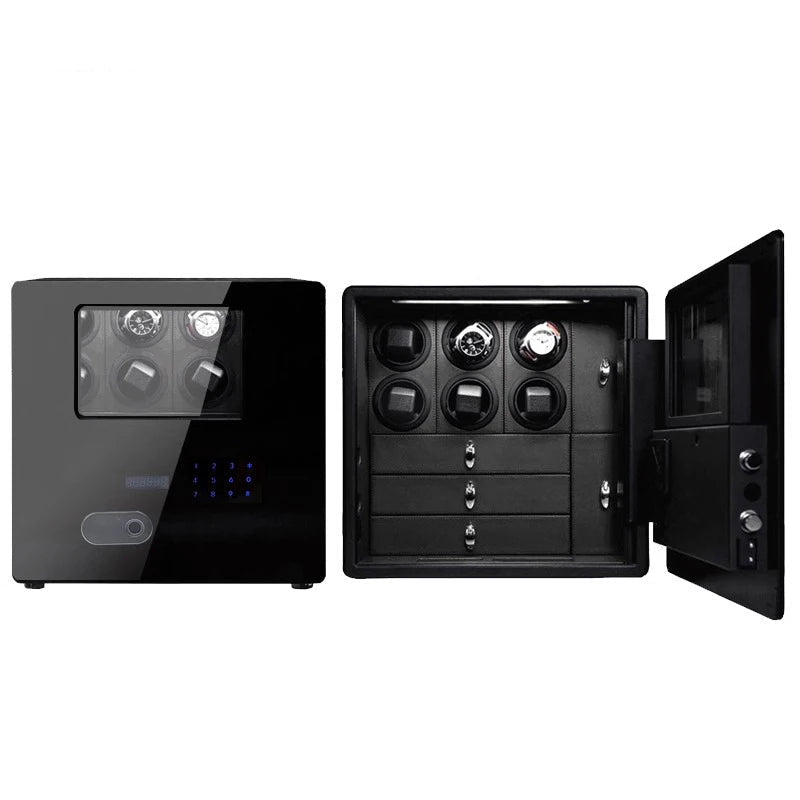
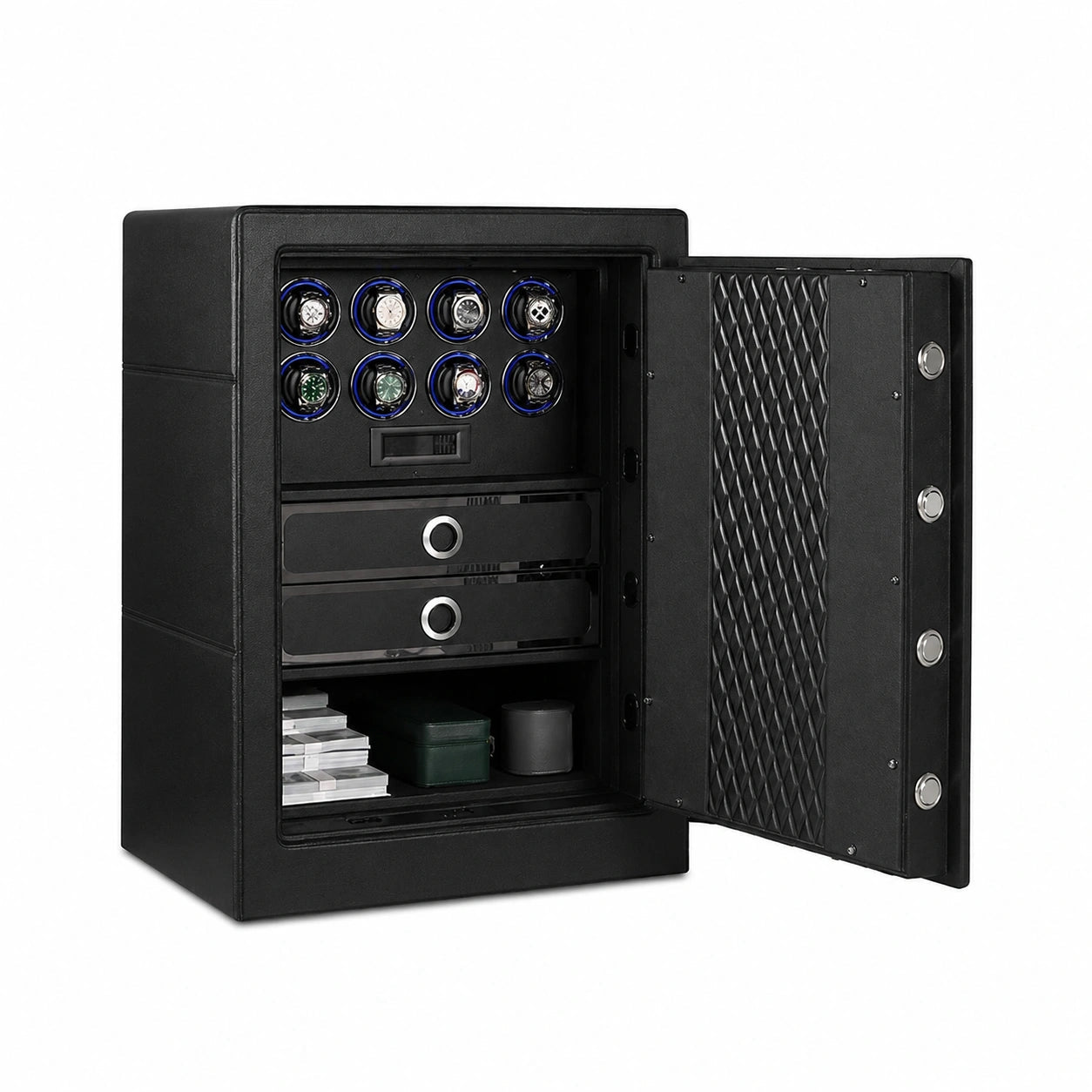
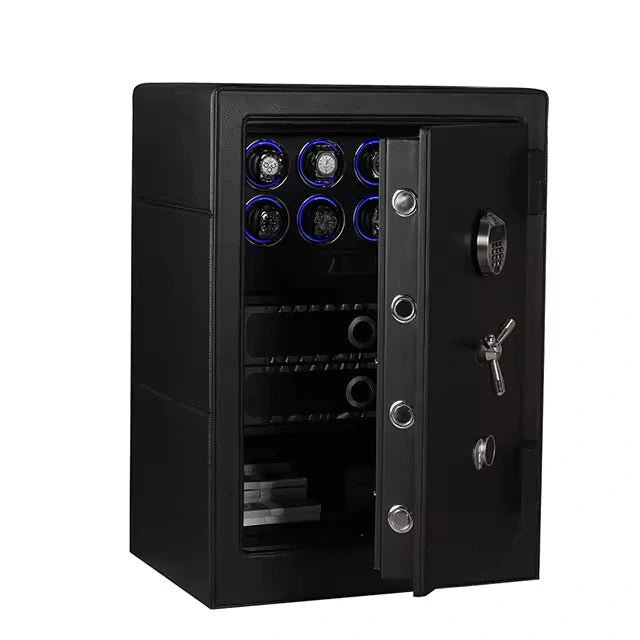
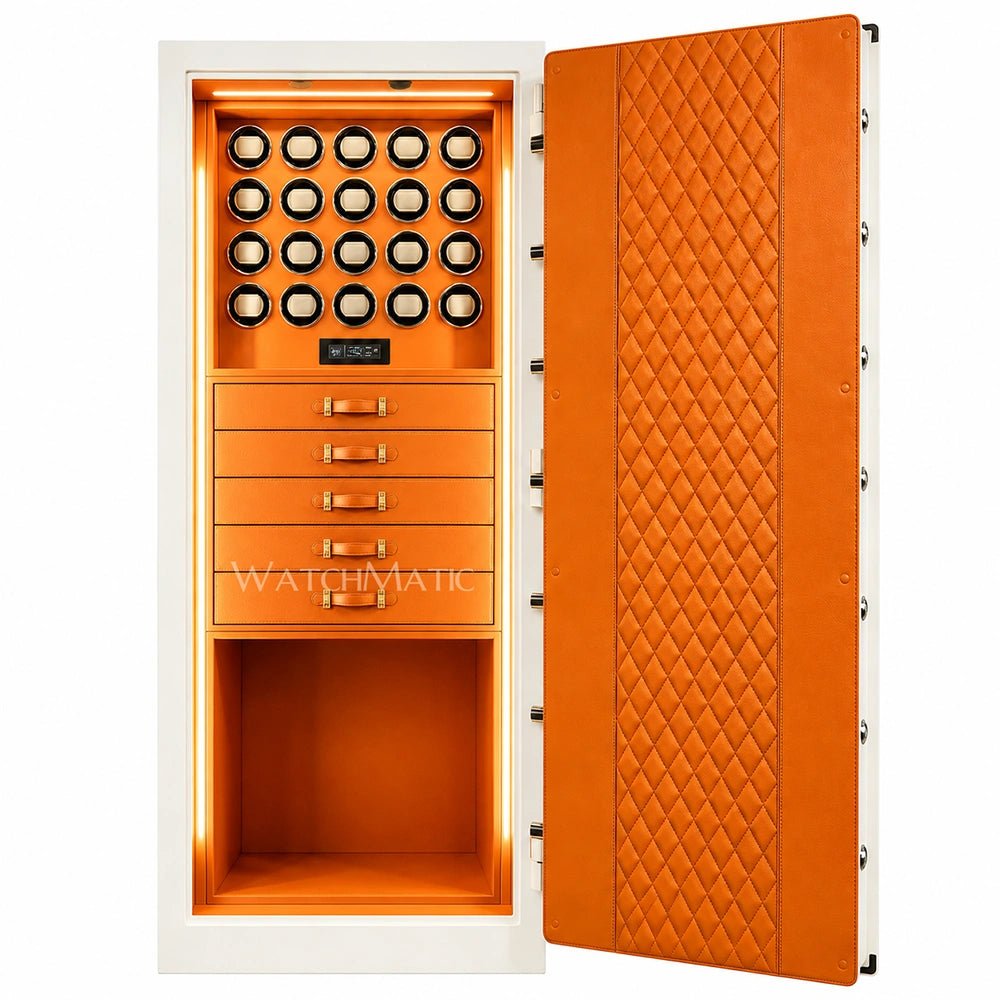
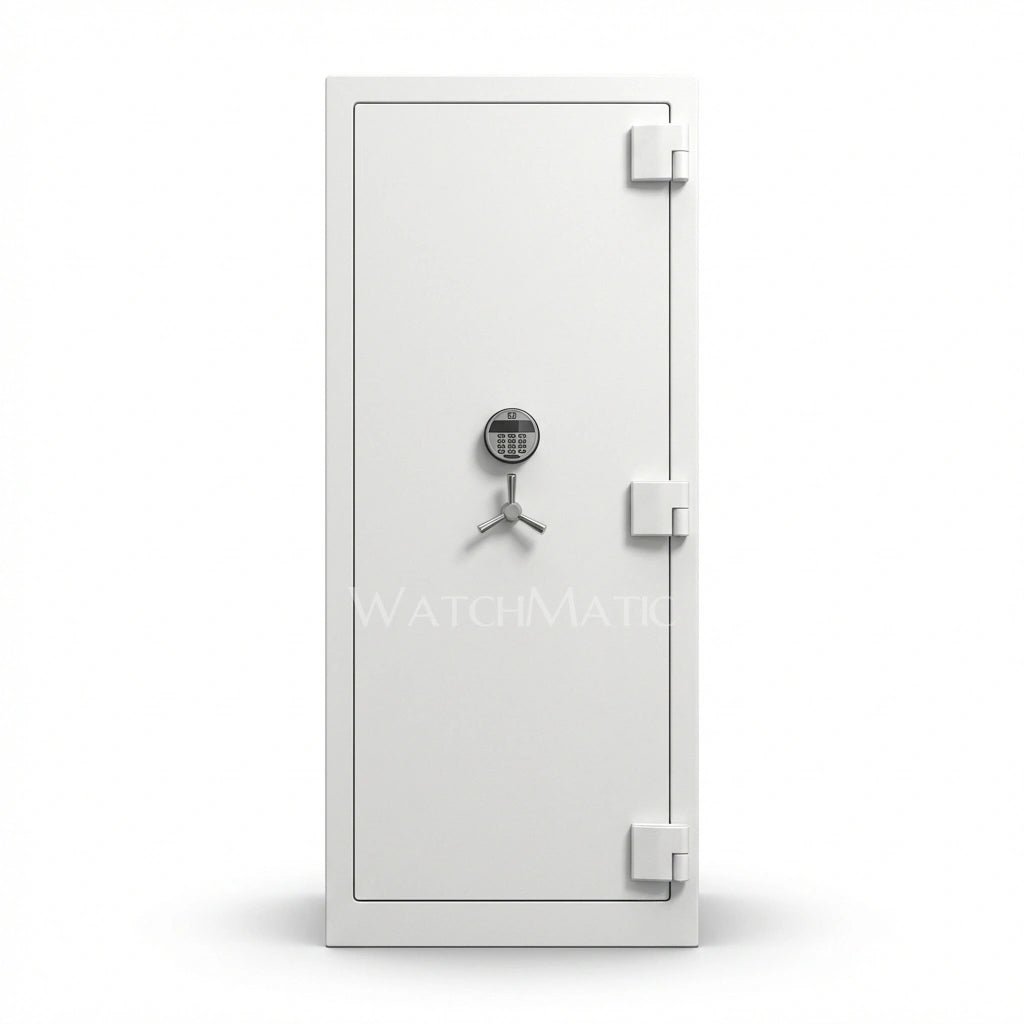
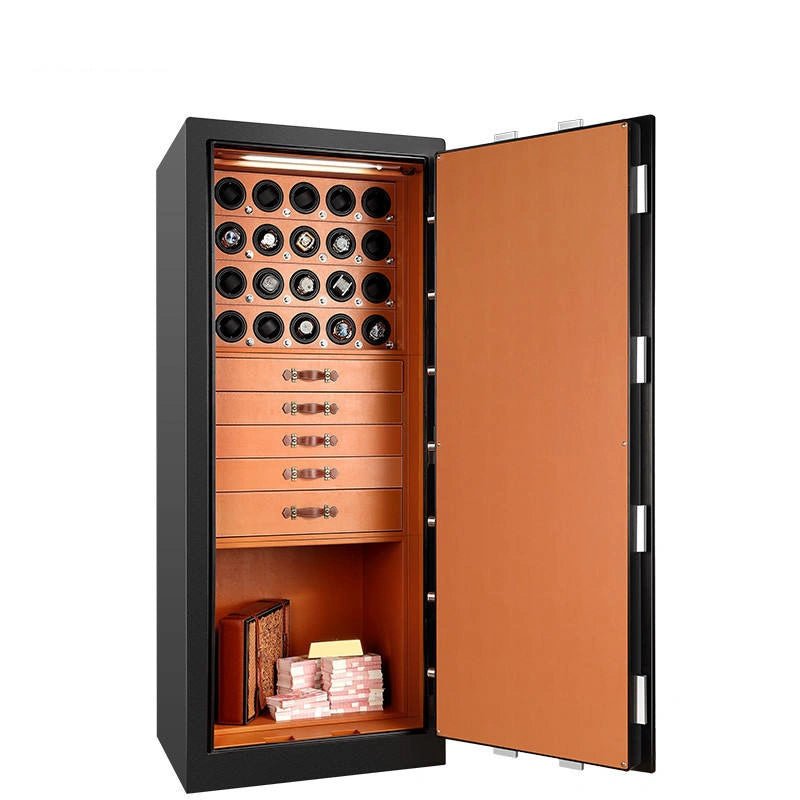
For a larger De Bethune or mixed independent-watch collection, the Titan Vault 20 Watch Winder Safe combines independently controlled winding positions with high-security storage architecture.
Available features include:
- Monolithic solid-steel body
- 10-layer reinforced exterior shell
- Biometric fingerprint access
- Digital passcode
- Manual key access
- Floor anchoring
- LCD touchscreen
- Japanese Mabuchi motors
- Independent winding control
- 650–2200 TPD range
- CW/CCW/bidirectional operation
- Ultra-quiet operation below 10 dB
- Anti-magnetization protection
- Adjustable interior lighting
- Additional storage capability
- 10-year warranty
Higher-level fire and burglary certification configurations are available upon request rather than assumed as standard on every unit.
Why Titan Vault 20 Has Strong Relevance for De Bethune
With some brands, a watch-winder safe can feel disproportionately expensive relative to the watches.
That is not generally the case with a serious De Bethune collection.
A collector may own:
- DB28 Tourbillon
- Grande Complication
- DB29 Maxichrono
- Starry Varius
- Perpetual Sky
- Kind of Two
- DB27 Titan Hawk
The major requirement becomes:
secure mixed storage
rather than simply:
maximum motorized capacity.
Manual High Complications Still Need Security
A DB Kind of Two Grande Complication does not need a powered rotor.
That does not make it a low-priority storage item.
The same is true for:
- DB28 Tourbillon
- DB29 Maxichrono
- Perpetual Sky
- GMT Starry Varius
These watches may justify stronger security than many automatic watches.
Security Value Is Independent of Winder Compatibility
This can be summarized simply:
automatic = determines whether rotational winding works
value = determines how much security may be justified
The two questions should not be confused.
Titan Vault 20 as Mixed Powered + Stationary Storage
A De Bethune-focused configuration can logically use:
selected winding positions for AUTOV2 or DB2324-family automatics
while reserving secure stationary storage for:
- DB2005
- DB2507
- DB2005V3
- DB2517
- DB2529
- DB3000
- DB2039
- DB2115-family movements
This is more efficient than keeping every watch rotating.
When a Stationary Watch Safe Makes Even More Sense
If the collection contains almost entirely current:
- DB25
- DB28
- DB29
- DB Kind of Two
then motorized capacity may not be a priority at all.
In that case, the Luxury Watch Safe Collection may be more relevant than a large bank of watch winders.
Current De Bethune Is an Unusual Commercial Case
This is worth emphasizing because it affects product positioning.
For many brands in this series:
winder first → safe later
For De Bethune, the order can be:
secure stationary storage first → selected winding positions second.
That matches the actual movement portfolio much better.
De Bethune in a Mixed Independent-Watch Collection
De Bethune naturally sits alongside manufacturers known for independent movement architecture, unusual materials, and high complications.
A mixed collection might include:
De Bethune + F.P. Journe + Czapek + Armin Strom + Arnold & Son + Christophe Claret
Related WatchMatic guides include:
Best Watch Winder for F.P. Journe Watches
Best Watch Winder for Czapek Watches
Best Watch Winder for Armin Strom Watches
Best Watch Winder for Arnold & Son Watches
Best Watch Winder for Christophe Claret Watches
At this level, one universal watch-winder program is particularly inappropriate.
De Bethune vs. F.P. Journe
Both brands produce major manually wound and automatic calibers.
However, current De Bethune is unusually concentrated around long-reserve manual movements.
An independent-watch collector should therefore never copy F.P. Journe rotator guidance onto a De Bethune based solely on similar market positioning.
De Bethune vs. Czapek
Czapek's current portfolio contains many automatic watches:
- micro-rotors
- chronographs
- rattrapantes
- automatic tourbillons
De Bethune's current core portfolio is considerably more manual-heavy.
Two highly collectible Swiss independent brands can therefore require radically different ratios of:
powered positions : stationary positions.
De Bethune vs. Armin Strom
Both brands use long-reserve manual calibers extensively.
The similarity reinforces the same principle:
a longer-running watch can be less relevant to a winder than a shorter-running automatic.
De Bethune vs. Christophe Claret
Both brands produce mechanically extreme watches.
Christophe Claret has several highly complicated automatic creations.
De Bethune's current extreme complications are more frequently manual.
Again:
complication level does not predict automatic winding.
How to Choose the Best Watch Winder for Your De Bethune
Step 1: Identify the Exact Collection
Determine whether the watch is:
- DB25
- DB27
- DB28
- DB29
- DB Kind of Two
- DB Eight
- Dream Watch
- another historical reference
Step 2: Identify the Exact Reference
This is essential with:
- Perpetual Calendar
- tourbillon references
- DB27 variants
- historical vs. current DB25 watches
Step 3: Identify the Caliber
Important examples include:
- AUTOV2
- DB2324
- DB2324V2
- DB2005
- DB2005V3
- DB2115-family
- DB2144V3
- DB2507
- DB2517
- DB2529
- DB3000
- DB2039
Step 4: Confirm Automatic or Manual
Representative examples:
AUTOV2 → automatic
DB2324 → automatic
DB2324V2 → automatic
DB2005 → manual
DB2005V3 → manual
DB2507 → manual
DB2517 → manual
DB2529 → manual
DB3000 → manual
DB2039 → manual
Step 5: Check the Generation
This is especially important for perpetual calendars.
Earlier DB25 perpetual calendars can be automatic.
Current Perpetual Sky is manual.
Step 6: Check Power Reserve
Representative figures include:
- AUTOV2 — 60 h
- DB3000 — 60 h manual
- DB2517 — 4 days manual
- DB2529 — 4 days manual
- DB2324 — 5 days automatic
- DB2507 — 5 days manual
- DB2005V3 — 5 days manual
- DB2039 — 5 days manual
- DB2005 — 6 days manual
- DB2115-family — 6 days manual
Step 7: Determine Whether TPD Is Relevant
TPD only matters if an automatic oscillating mass is present.
Do not calculate a conventional TPD setting for a manual De Bethune.
Step 8: Determine Rotation Direction
For an automatic caliber, use verified reference-specific winding information.
Choose a winder capable of:
- CW
- CCW
- Bidirectional
Step 9: Check Case Architecture
Pay particular attention to:
- floating lugs
- reversible Kind of Two case
- thick complications
- crowns and chronograph pushers
- gem-set cases
Step 10: Match Rotor Capacity to Automatic Watches, Not Mechanical Watches
This is the single most important storage-planning principle for De Bethune.
For broader resources covering automatic winding, TPD, secure storage and watch protection, visit the WatchMatic Guide Hub.
Best Watch Winder for De Bethune Watches: Final Thoughts
Choosing the best watch winder for a De Bethune begins by determining whether the exact watch is self-winding at all.
This matters more with De Bethune than with many luxury-watch brands.
Specific recent automatic references such as the DB27 Titan Hawk V2 and DB27 Maya use AUTOV2 with approximately 60 hours of power reserve.
Earlier DB25 Perpetual Calendar DB2324 and DB2324V2 references are also automatic, with approximately five days of reserve, making them strong candidates for winder convenience because of their calendar complexity.
But much of the current core De Bethune catalog is hand-wound.
The DB25 Starry Varius DB2005 provides approximately six days.
The GMT Starry Varius DB2507 provides approximately five days.
The current Perpetual Sky DB2005V3 provides approximately five days.
The DB25 Monopusher DB3000 provides approximately 60 hours.
The DB Kind of Two DB2517 provides approximately four days.
The Grande Complication DB2529 provides approximately four days.
The DB29 Maxichrono Tourbillon DB2039 provides approximately five days.
None of those manual calibers receives useful winding energy from a conventional rotating watch winder.
The strongest De Bethune comparison is therefore not simply automatic versus manual.
It is the generational change within essentially the same complication category:
Earlier DB25 Perpetual Calendar DB2324/DB2324V2 → automatic → ~5 days → winder compatible
versus:
Current Perpetual Sky DB2005V3 → manual → ~5 days → no conventional winding benefit.
A second clean comparison is:
DB27 AUTOV2 → 60 h → automatic
versus:
DB25 Monopusher DB3000 → 60 h → manual.
The central De Bethune lesson is clear:
neither complication, collection name nor power reserve is sufficient to determine watch-winder compatibility.
For a confirmed automatic De Bethune, prioritize:
- Adjustable TPD
- CW/CCW/bidirectional programming
- Independent controls
- Controlled rest cycles
- Smooth low-vibration motors
- Flexible cushions
- Floating-lug compatibility
- Adequate case clearance
For the many current manually wound De Bethune watches, prioritize premium secure stationary storage instead.
The most reliable framework is:
De Bethune Reference → Generation → Caliber → Automatic or Manual → Power Reserve → Complication → Case Architecture → TPD/Direction or Stationary Storage
For additional winding and secure-storage solutions, explore WatchMatic.