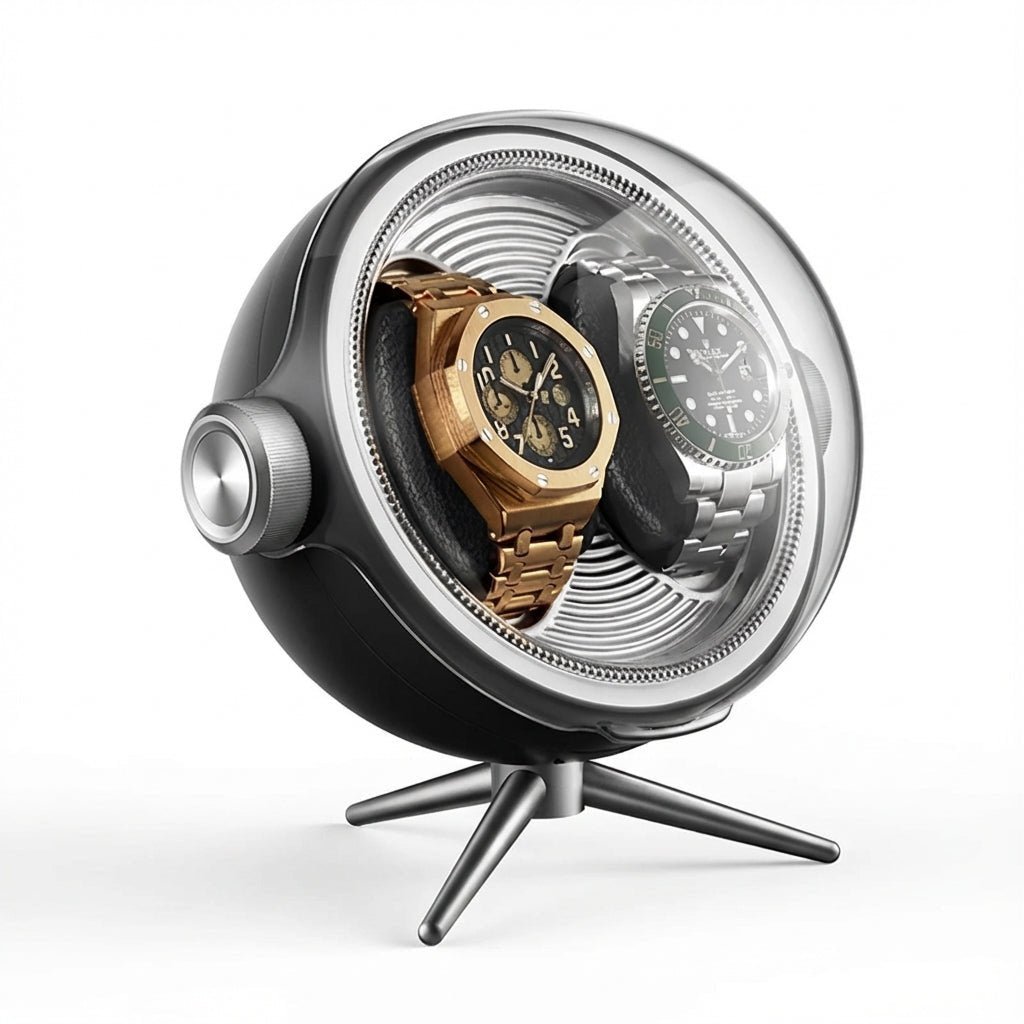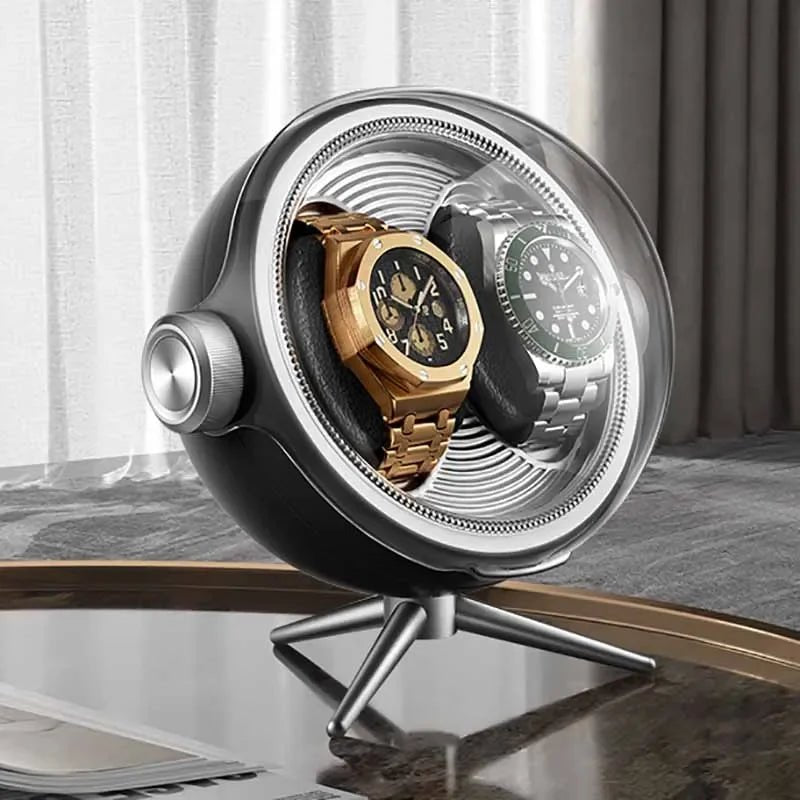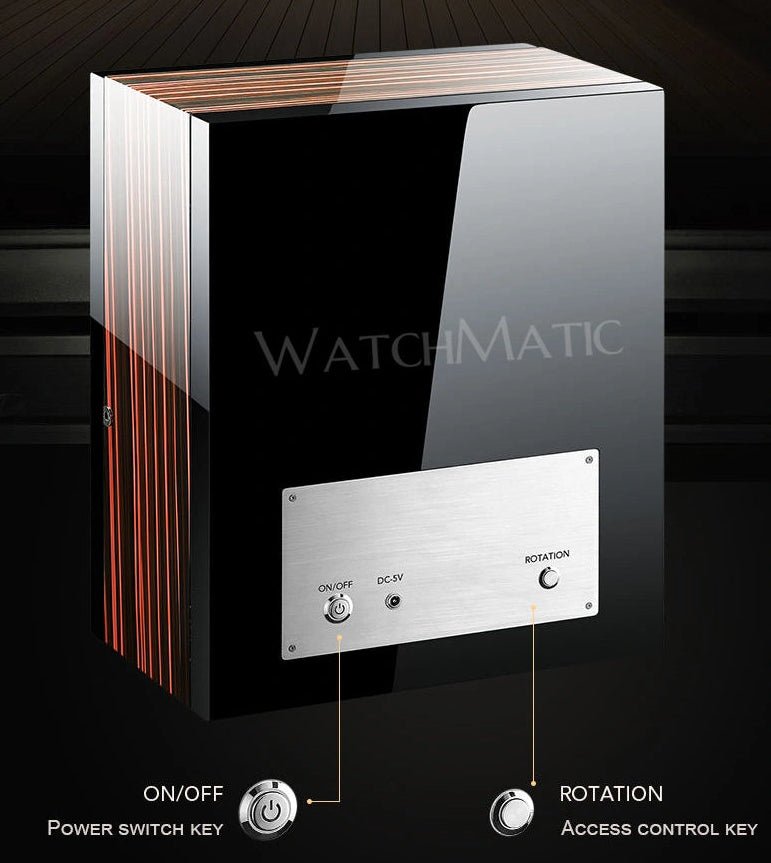
The best watch winder for H. Moser & Cie. watches is a premium programmable model with adjustable Turns Per Day (TPD), clockwise and counterclockwise rotation modes, independent controls, controlled rest cycles, smooth low-vibration operation, and secure support for integrated Streamliner bracelets, leather straps, precious-metal cases, and different case sizes.
However, exact movement identification is essential.
H. Moser & Cie. currently produces both automatic and manually wound watches, sometimes within the same collection.
Important automatic examples include:
- Streamliner Centre Seconds — HMC 201
- Streamliner Small Seconds — HMC 500 micro-rotor
- Streamliner Two Hands 34 mm — HMC 400
- Streamliner Two Hands 28 mm — HMC 410
- Streamliner Perpetual Moon — HMC 270
- Streamliner Flyback Chronograph — HMC 907
- Streamliner Alpine Drivers — HMC 700
- Streamliner Tourbillon — HMC 804
- Streamliner Tourbillon Skeleton — HMC 814
- Pioneer Centre Seconds — HMC 200 / HMC 201 depending reference
- Pioneer Cylindrical Tourbillon Skeleton — HMC 811
- Endeavour Centre Seconds — HMC 200 / HMC 201
- Endeavour Tourbillon — HMC 804 / HMC 805
- Endeavour Chinese Calendar — HMC 210
Important manually wound examples include:
- Endeavour Perpetual Calendar — HMC 800
- Streamliner Perpetual Calendar — HMC 812
- Streamliner Minute Repeater Tourbillon — HMC 905
- Endeavour Concept Minute Repeater Tourbillon — HMC 904
- Endeavour Minute Repeater Cylindrical Tourbillon Skeleton — HMC 909
- Endeavour Flyback Chronograph Dual Time Date — HMC 730
- Streamliner Pump — HMC 103
There is also the 2026 Off-Grid, which uses the D10 technological platform rather than a conventional self-winding mechanical caliber.
The central rule is therefore:
Automatic H. Moser & Cie. → a properly configured conventional watch winder can be useful
Hand-wound H. Moser & Cie. → a conventional rotating watch winder provides no winding benefit
Off-Grid → rotational winding is not applicable
The correct decision process is:
Exact Reference → Generation → Caliber → Automatic / Manual / Other → Power Reserve → Complication → Physical Fit → TPD/Direction or Stationary Storage
Does an H. Moser & Cie. Watch Need a Watch Winder?
No automatic H. Moser & Cie. mechanically requires a watch winder.
An automatic movement uses an oscillating weight to convert wrist movement into energy stored in the mainspring.
If the watch remains unworn beyond its available power reserve, it eventually stops.
That is normal.
A watch winder is primarily useful for:
- Keeping an automatic Moser ready to wear
- Maintaining the time
- Maintaining calendar indications
- Keeping a moon phase synchronized
- Reducing repeated restarting
- Keeping travel complications ready
- Managing several automatic watches
- Organizing a larger independent-watch collection
A winder should not be viewed as a substitute for servicing or as a mechanism that automatically improves movement longevity simply by keeping the watch running.
For broader automatic-winding principles, see the Watch Winder Guide.
Which H. Moser & Cie. Watches Can Use a Watch Winder?
Representative current movements include:
| H. Moser & Cie. watch | Caliber | Winding type | Approx. reserve | Conventional winder? |
|---|---|---|---|---|
| Streamliner Centre Seconds | HMC 201 | Automatic | 72 h | Yes |
| Streamliner Small Seconds | HMC 500 | Automatic micro-rotor | 74 h | Yes |
| Streamliner Two Hands 34 mm | HMC 400 | Automatic | ≥60 h | Yes |
| Streamliner Two Hands 28 mm | HMC 410 | Automatic | ≥60 h | Yes |
| Streamliner Perpetual Moon | HMC 270 | Automatic | 72 h | Yes |
| Streamliner Flyback Chronograph | HMC 907 | Automatic | 72 h | Yes |
| Streamliner Alpine Drivers | HMC 700 | Automatic | 72 h | Yes |
| Streamliner Tourbillon | HMC 804 | Automatic | 72 h | Yes |
| Streamliner Tourbillon Skeleton | HMC 814 | Automatic | 72 h | Yes |
| Pioneer Centre Seconds | HMC 200 / 201 | Automatic | 72 h | Yes |
| Pioneer Cylindrical Tourbillon Skeleton | HMC 811 | Automatic | 72 h | Yes |
| Endeavour Centre Seconds | HMC 200 / 201 | Automatic | 72 h | Yes |
| Endeavour Tourbillon | HMC 804 / 805 | Automatic | 72 h | Yes |
| Endeavour Chinese Calendar | HMC 210 | Automatic | 72 h | Yes |
| Endeavour Perpetual Calendar | HMC 800 | Manual | 168 h | No |
| Streamliner Perpetual Calendar | HMC 812 | Manual | 168 h | No |
| Streamliner Minute Repeater Tourbillon | HMC 905 | Manual | 72 h | No |
| Endeavour Minute Repeater Tourbillon | HMC 904 | Manual | 90 h | No |
| Endeavour Minute Repeater Cylindrical Tourbillon Skeleton | HMC 909 | Manual | 90 h | No |
| Endeavour Flyback Chronograph Dual Time Date | HMC 730 | Manual | 72 h | No |
| Streamliner Pump | HMC 103 | Hand-wound via Pump | 74 h | No |
| Off-Grid | D10 | Non-conventional technological platform | Months | No |
This table immediately shows why a generic:
“H. Moser watch winder setting”
is not precise enough.
Why H. Moser & Cie. Is Particularly Interesting for Watch-Winder Owners
H. Moser & Cie. creates several different energy architectures under one brand.
The current catalog includes:
- Conventional automatic movements
- Automatic micro-rotor movements
- Automatic chronographs
- Automatic tourbillons
- Automatic perpetual moon movements
- Extremely complicated automatic calendars
- Seven-day manually wound perpetual calendars
- Manually wound flyback chronographs
- Manually wound minute repeaters
- A mechanical watch wound through a dedicated Pump button
- A technological Off-Grid watch that is neither a conventional mechanical watch nor a conventional smartwatch
That makes the brand particularly resistant to broad assumptions.
Neither:
- Collection name
- Complication
- Power reserve
- Case design
- Price
can determine watch-winder compatibility by itself.
Streamliner Does Not Automatically Mean Self-Winding
The Streamliner collection is a particularly strong example.
Current references include:
Automatic Streamliners
- Centre Seconds
- Small Seconds
- Two Hands
- Perpetual Moon
- Flyback Chronograph
- Tourbillon
- Tourbillon Skeleton
- Alpine Drivers
Manual Streamliners
- Perpetual Calendar
- Minute Repeater Tourbillon
- Pump
Non-Conventional
- Off-Grid
Therefore:
Streamliner name ≠ automatic winding.
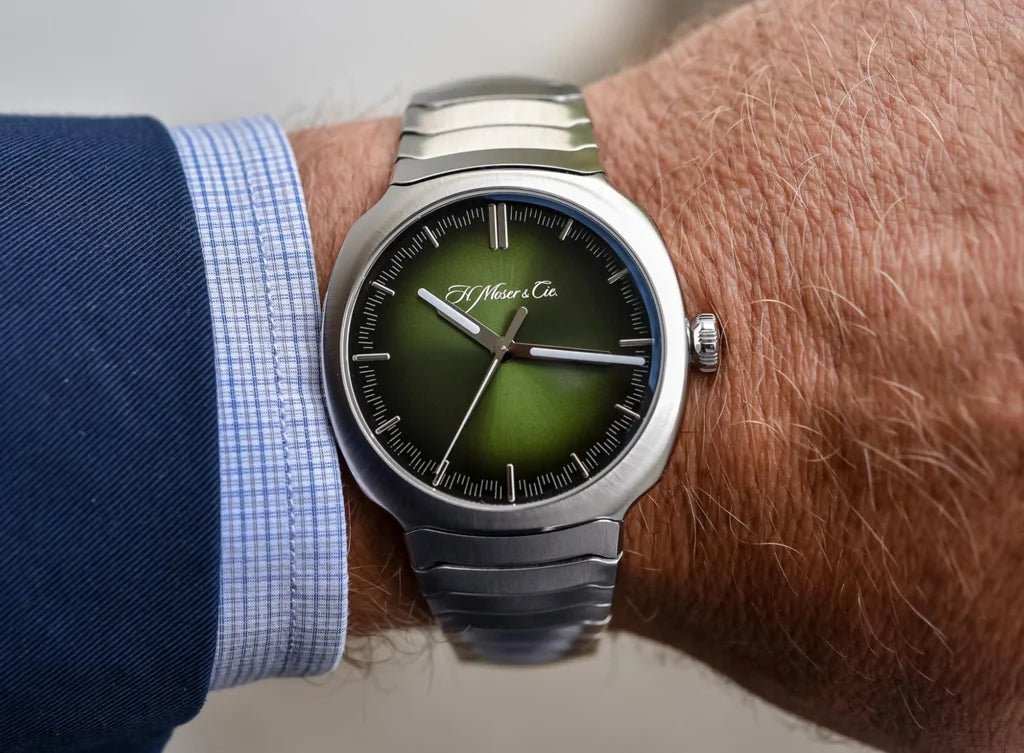
Best Watch Winder for H. Moser Streamliner Centre Seconds
The Streamliner Centre Seconds uses the automatic:
HMC 201
with approximately:
72 hours of power reserve.
The current model combines:
- 40 mm case
- Fully integrated steel bracelet
- Skeletonized gold rotor
- Automatic manufacture movement
- 12 ATM water resistance
It is a straightforward candidate for a properly programmed watch winder.
72 Hours Reduces Winder Dependence
A three-day reserve gives the Streamliner Centre Seconds substantial autonomy.
A collector wearing the watch every two or three days may find that it rarely stops.
A collector rotating:
- Ten
- Twenty
- or more watches
may leave it unworn for long enough that a winder becomes useful.
Therefore:
longer reserve reduces dependence on a winder.
Integrated Streamliner Bracelet Fit
The Streamliner bracelet deserves as much attention as the movement setting.
A bracelet sized closely to the wrist may not fit naturally around a large rigid cushion.
Look for:
- Compressible support
- Natural clasp closure
- Minimal link tension
- Stable watch-head positioning
A correct TPD setting does not compensate for poor bracelet fit.
Bracelet Design Does Not Determine TPD
The Streamliner's flowing integrated bracelet affects:
- Fit
- weight distribution
- cushion requirements
It does not directly determine:
- Winding direction
- Daily turn requirement
- Power reserve
Best Watch Winder for Streamliner Small Seconds
The Streamliner Small Seconds represents an important modern development for H. Moser & Cie.
It uses:
HMC 500
with approximately:
74 hours of power reserve.
The HMC 500 is particularly notable because it is H. Moser & Cie's first automatic manufacture movement using a:
platinum micro-rotor.
HMC 500 Micro-Rotor Changes the Architecture
Unlike the full-size central rotor used in many automatic movements, the HMC 500 integrates the winding mass into the movement architecture.
This allows:
- Slimmer proportions
- Greater movement visibility
- A different visual architecture
It does not create a rule such as:
micro-rotor = higher TPD.
Micro-Rotor Does Not Need Aggressive Rotation
A micro-rotor has been engineered as part of the movement.
The correct approach is:
identify HMC 500 → verify winding requirement → use sufficient TPD
rather than:
small rotor → select maximum TPD.
74-Hour Reserve Makes HMC 500 Less Winder-Dependent
The HMC 500 provides slightly more than three days of autonomy.
A frequent wearer may not need a winder.
The benefit increases as the watch spends longer periods away from the wrist.
Streamliner Small Seconds Physical Fit
Current references use approximately:
39 mm cases
with integrated steel bracelets.
This makes them physically easier to accommodate than larger 42.3 mm chronographs, but the same integrated-bracelet cushion issue remains.
Enamel Dial Does Not Affect Winder Settings
Current Streamliner Small Seconds references can use Grand Feu enamel.
That affects:
- Craftsmanship
- Value
- rarity
- visual character
It does not determine:
- TPD
- rotor direction
- power reserve
Streamliner Two Hands 34 mm
The Streamliner Two Hands 34 mm uses:
HMC 400
with a minimum power reserve of approximately:
60 hours.
It is automatic.
This compact current reference demonstrates that small mechanical watches can still use fully automatic movements.
Streamliner Two Hands 28 mm
The even smaller Streamliner Two Hands 28 mm uses:
HMC 410
with a minimum:
60-hour reserve.
It is also automatic.
Small Case Does Not Mean Quartz
The current 28 mm and 34 mm Streamliners are mechanically important because small case size is sometimes associated with quartz architecture.
That assumption does not work here.
Both are mechanical automatics.
Small Case Does Not Mean Manual Either
Another assumption is that compact mechanical watches may need manually wound movements to save thickness.
Again, current Moser provides a counterexample.
Streamliner 28 mm
HMC 410
Automatic
≥60 hours
Streamliner 34 mm
HMC 400
Automatic
≥60 hours
Both can use conventional rotational winding.
Compact Bracelets Require Smaller Cushions
The main practical challenge with these watches is not movement compatibility.
It is bracelet circumference.
A 28 mm Streamliner is likely to be fitted to a relatively small wrist.
Use a winder cushion that compresses sufficiently rather than forcing the bracelet open.
Best Watch Winder for Streamliner Perpetual Moon
The Streamliner Perpetual Moon uses:
HMC 270
with approximately:
72 hours of power reserve.
It is automatic.
This makes it one of the strongest current H. Moser candidates for watch-winder convenience.
Moon Phase Strengthens the Convenience Case
The movement contains a highly accurate moon-phase mechanism.
If the watch remains running, the lunar indication remains synchronized.
If it stops, the moon-phase relationship eventually needs to be restored.
Therefore, a winder can reduce repeated adjustment.
This is a convenience benefit.
It is not a requirement for mechanical health.
Perpetual Moon Does Not Mean Perpetual Calendar
This distinction matters within H. Moser's own catalog.
Streamliner Perpetual Moon
HMC 270
Automatic
72 hours
Winder compatible
Streamliner Perpetual Calendar
HMC 812
Manual
168 hours
No conventional winding benefit
Both names contain:
Perpetual
but their movement architecture is completely different.
Meteorite Dial Does Not Affect Winding
The Perpetual Moon can use a meteorite dial.
The material affects:
- Aesthetics
- rarity
- collectability
not automatic winding requirements.
Best Watch Winder for Streamliner Flyback Chronograph
The Streamliner Flyback Chronograph uses:
HMC 907
with approximately:
72 hours of power reserve.
It is automatic.
Representative features include:
- Flyback chronograph
- Central chronograph seconds
- Central chronograph minutes
- Automatic winding system located beneath the dial
- 42.3 mm case
Automatic Winding Hidden Under the Dial Still Counts as Automatic
HMC 907 is unusual because the winding system is positioned so that the caseback view of the chronograph remains unobstructed.
The rotor may be less visually obvious than on a conventional automatic watch.
That does not make the movement manual.
Flyback Chronograph Does Not Mean Higher TPD
A watch winder does not operate:
- Start
- Stop
- Reset
- Flyback
functions.
Its role is simply to supply motion to the automatic winding system.
Therefore:
flyback chronograph ≠ higher TPD.
Chronograph Should Not Be Left Running Just Because the Watch Is on a Winder
The chronograph does not need to remain active during storage.
The watch winder maintains the base movement's energy.
The chronograph can remain reset unless deliberately being used.
42.3 mm Case and Pusher Clearance
The Streamliner Flyback is larger than a basic Centre Seconds.
Confirm:
- Door clearance
- Crown clearance
- Chronograph-pusher clearance
- Adjacent rotor spacing
before long-term use.
HMC 907 vs. HMC 730: Same 72 Hours, Opposite Winder Compatibility
This is one of the strongest H. Moser comparisons.
Streamliner Flyback Chronograph
HMC 907
Automatic
72 hours
Winder compatible
Endeavour Flyback Chronograph Dual Time Date
HMC 730
Manual
72 hours
No conventional winding benefit
Both are:
- H. Moser
- Flyback chronographs
- Approximately 72-hour movements
Yet their winding architecture is opposite.
Therefore:
complication + reserve + brand still do not tell you whether a winder works.
Streamliner Alpine Drivers HMC 700
The current Streamliner Alpine Drivers Edition uses:
HMC 700
with approximately:
72 hours of power reserve.
It is a skeletonized flyback chronograph developed with Agenhor.
Its automatic winding rotor is positioned on the dial side.
Can HMC 700 Use a Watch Winder?
Yes.
Although the rotor architecture is unconventional, it is still an automatic winding system.
A properly configured winder can supply movement to it.
Skeletonization Does Not Change TPD
HMC 700 is visually much more open than HMC 907.
That does not mean the movement needs more rotation.
Skeletonization changes:
- Appearance
- bridge architecture
- visibility
not the basic principle of automatic winding.
Motorsport Inspiration Does Not Mean Aggressive Rotation
A Formula One-inspired watch should not be spun more aggressively because it has a racing connection.
Mechanical durability and watch-winder programming are separate subjects.
H. Moser Streamliner Tourbillon HMC 804
Current Streamliner Tourbillon references use:
HMC 804
with approximately:
72 hours of power reserve.
Crucially:
HMC 804 is automatic.
Can a Streamliner Tourbillon Use a Watch Winder?
Yes.
This is one of the clearest examples of why the word:
tourbillon
does not tell the owner whether a watch is manual or automatic.
The HMC 804 contains an automatic winding system.
Tourbillon Does Not Mean High TPD
The rotating tourbillon cage is part of the regulating system.
It is not the automatic rotor.
The two rotations serve completely different functions.
Therefore:
tourbillon rotation ≠ watch-winder rotation.
Double Hairspring Does Not Determine TPD
H. Moser's patented double hairspring is designed to improve regulation by compensating for positional effects.
It does not specify:
- Daily turns
- Rotor direction
- Winder cycle length
Streamliner Tourbillon Skeleton HMC 814
The Streamliner Tourbillon Skeleton uses:
HMC 814
with approximately:
72 hours of power reserve.
It is also automatic.
The movement incorporates a skeletonized oscillating weight.
Openworked Rotor Still Uses Conventional Automatic Principles
The rotor may be highly visible and heavily skeletonized.
That does not mean continuous motion is desirable.
A normal maintenance-winding program remains appropriate.
Skeleton Tourbillon vs. Minute Repeater Tourbillon
Compare:
Streamliner Tourbillon Skeleton
HMC 814
Automatic
72 hours
Winder compatible
Streamliner Minute Repeater Tourbillon
HMC 905
Manual
72 hours
No conventional winding benefit
Both:
- Are Streamliners
- Include a tourbillon
- Provide approximately 72 hours
Only one benefits from a powered rotor.
Streamliner Perpetual Calendar HMC 812
The Streamliner Perpetual Calendar uses:
HMC 812
with approximately:
168 hours / seven days of power reserve.
The movement is:
manually wound.
Does the Streamliner Perpetual Calendar Need a Watch Winder?
No conventional rotating winder can wind it.
HMC 812 has no automatic oscillating weight.
It must receive energy through manual winding.
This Is a Watch You Would Want to Keep Running
From a convenience perspective, the perpetual calendar is exactly the type of watch an owner might prefer not to let stop.
It maintains:
- Date
- Month
- Leap-year cycle
- Time
However:
convenience desire ≠ automatic-winder compatibility.
A conventional watch winder cannot replace manual winding.
Seven-Day Reserve Reduces the Problem
Fortunately, HMC 812 provides approximately:
168 hours / seven days.
That gives the owner far more autonomy than the typical automatic watch.
Manual winding therefore does not imply daily intervention.
Automatic Moon Phase vs. Manual Perpetual Calendar
Compare:
HMC 270 Perpetual Moon
Automatic
72 h
Winder compatible
HMC 812 Perpetual Calendar
Manual
168 h
No conventional winding benefit
The more complicated and longer-running watch is the one that does not use a powered rotor.
Streamliner Minute Repeater Tourbillon HMC 905
The Streamliner Minute Repeater Tourbillon uses:
HMC 905
with approximately:
72 hours of power reserve.
It is:
hand-wound.
Can a Streamliner Minute Repeater Use a Watch Winder?
Not for winding.
The movement must be wound manually.
Its:
- Minute repeater
- Tourbillon
- Dial-side hammers
- Gongs
do not create an automatic winding system.
A Watch Winder Does Not Operate a Minute Repeater
A conventional winder does not:
- Activate the slide
- Operate the hammers
- Strike the gongs
- Exercise the tourbillon independently
- Service the repeating mechanism
Rotation only has a winding purpose when an automatic rotor exists.
Same 72 Hours, Radically Different Architectures
Within the Streamliner collection alone:
HMC 201 → automatic → 72 h
HMC 270 → automatic → 72 h
HMC 804 → automatic → 72 h
HMC 814 → automatic → 72 h
HMC 907 → automatic → 72 h
HMC 700 → automatic → 72 h
HMC 905 → manual → 72 h
The reserve number is therefore a poor shortcut.
Streamliner Pump HMC 103
The 2026 Streamliner Pump is one of the most unusual winding systems in the current market.
It uses:
HMC 103
with approximately:
74 hours of power reserve.
The movement is hand-wound.
But unlike a conventional manual watch, winding is performed through a dedicated:
Pump button.
Does Streamliner Pump Need a Watch Winder?
No.
A conventional rotating winder does not operate the Pump mechanism.
The HMC 103 receives energy when the wearer presses the dedicated pusher.
Pump Motion Is Not Rotor Motion
The name can create confusion.
The movement is powered through a mechanical push-button system.
It does not contain a conventional automatic rotor that receives energy from case rotation.
Therefore:
Pump = interactive manual winding
not:
automatic winding.
Why This Is Important for SEO
Someone may search:
“H. Moser Streamliner Pump watch winder”
because the watch itself uses a novel winding concept.
The answer should be precise:
the Pump already has its own manual energy-delivery mechanism; conventional rotor-based winding provides no winding benefit.
74 Hours Does Not Make Pump Similar to HMC 500
Compare:
HMC 500
74 h
Automatic micro-rotor
Winder compatible
HMC 103
74 h
Hand-wound via Pump
No conventional winding benefit
Exactly the same approximate reserve.
Opposite winding architecture.
H. Moser Off-Grid
The 2026 Off-Grid uses the:
D10 technological platform
developed for H. Moser & Cie.
It is explicitly positioned outside conventional categories.
It is neither a traditional mechanical watch nor a conventional smartwatch.
Does Off-Grid Need a Watch Winder?
No.
Its energy architecture does not depend on an automatic mechanical rotor.
Placing it in a conventional rotating watch winder does not charge or wind it.
Months of Power Reserve Make TPD Irrelevant
The Off-Grid can operate for months depending on feature usage.
TPD is therefore not a meaningful concept for this model.
Current Catalog Now Has Three Energy Categories
The 2026 H. Moser catalog can therefore be understood as:
Automatic Mechanical
Powered by wrist motion and compatible with conventional watch winders.
Manual Mechanical
Powered by crown or dedicated Pump interaction.
Technological Platform
Off-Grid D10.
This makes exact reference identification more important than ever.
Best Watch Winder for Pioneer Centre Seconds
Current Pioneer Centre Seconds references use HMC 200 or HMC 201 automatic manufacture architecture depending on the exact reference.
Representative reserve:
72 hours.
The current range includes approximately:
40 mm cases
with:
12 ATM water resistance
and sport-oriented straps.
Pioneer Is an Easy Automatic-Winder Candidate
For a Pioneer Centre Seconds, prioritize:
- Adjustable TPD
- CW/CCW/bidirectional modes
- Controlled rest cycles
- Quiet motor
- Rubber-strap compatibility
- Smooth operation
Its straightforward time-only architecture makes restarting easy, so a winder is mainly a convenience for larger collections.
12 ATM Does Not Change TPD
The Pioneer is one of the more robust Moser collections.
Its water resistance has no direct relationship with:
- Rotor direction
- Winding efficiency
- TPD
Best Watch Winder for Pioneer Cylindrical Tourbillon Skeleton
The Pioneer Cylindrical Tourbillon Skeleton uses:
HMC 811
with approximately:
72 hours of power reserve.
It is automatic.
The movement combines:
- Cylindrical hairspring
- Flying tourbillon
- Skeletonization
- Automatic winding
Cylindrical Hairspring Does Not Change Winder Requirements
The cylindrical hairspring affects the regulating organ.
It does not tell the winder:
- How many turns to deliver
- Which direction to use
Complicated Does Not Mean Manual
HMC 811 is mechanically far more elaborate than HMC 200.
Both are automatic.
This is another reminder that complication level cannot determine winding type.
Best Watch Winder for Endeavour Centre Seconds
Current Endeavour Centre Seconds references use automatic HMC 200 or HMC 201 architecture depending on the version.
Representative reserve:
72 hours.
These watches can therefore use a conventional programmable winder.
Endeavour Does Not Mean Manual
This is important because many historically important Endeavour references are hand-wound.
Current Endeavour Centre Seconds is automatic.
Therefore:
Endeavour collection name ≠ hand-wound movement.
Double Hairspring vs. Standard Variants
Certain Endeavour Centre Seconds references use H. Moser's double hairspring configuration.
That affects regulation.
It does not make the watch require a different TPD simply because there are two hairsprings.
Endeavour Tourbillon HMC 804 / HMC 805
Current Endeavour Tourbillon references use automatic:
- HMC 804
- or newer HMC 805 architecture depending on reference
with approximately:
72 hours of power reserve.
HMC 805 Is Still Automatic
The newer HMC 805 introduces architectural changes, including revised bridges and visible bidirectional winding components.
It remains automatic.
A conventional winder can therefore be used.
Tourbillon Case Material Does Not Determine TPD
Endeavour Tourbillons can use:
- Steel
- Red gold
- gem-set configurations
- stone or enamel dials
These affect:
- Weight
- value
- security relevance
not movement winding requirements.
Endeavour Chinese Calendar HMC 210
The Endeavour Chinese Calendar uses:
HMC 210
with approximately:
72 hours of power reserve.
It is automatic.
The movement mechanically combines elements of:
- Chinese lunisolar calendar
- Gregorian calendar
- Moon phase
- Zodiac cycle
and is designed to operate across a 12-year cycle without repeated calendar correction.
One of the Strongest Winder Convenience Cases
Among current Moser automatics, the Chinese Calendar has a particularly strong reason to remain synchronized.
If the movement stops, restoring all relevant calendar relationships is more consequential than resetting a basic three-hand watch.
Therefore, a properly configured winder can offer genuine convenience.
Complex Calendar Does Not Mean Manual
Compare:
Endeavour Chinese Calendar
HMC 210
Automatic
72 h
Winder compatible
Endeavour Perpetual Calendar
HMC 800
Manual
168 h
No conventional winding benefit
The more familiar perpetual-calendar complication is manual.
The highly unusual Chinese Calendar is automatic.
Endeavour Perpetual Calendar HMC 800
The current Endeavour Perpetual Calendar uses:
HMC 800
with a minimum:
seven-day / 168-hour power reserve.
It is:
manually wound.
Does HMC 800 Need a Watch Winder?
No.
A conventional rotor-based watch winder cannot wind HMC 800.
It must be wound manually.
Seven-Day Manual Movement vs. Three-Day Automatic
Compare:
HMC 200 / 201
72 h
Automatic
HMC 800
168 h
Manual
The manual movement runs significantly longer.
Power reserve therefore does not predict whether the watch belongs on a powered rotor.
Perpetual Calendar Convenience Is High but Compatibility Is Zero
This is another example of:
high convenience value ≠ watch-winder compatibility.
An owner may want the HMC 800 to keep running continuously.
A conventional winder simply cannot supply energy to it.
Endeavour Flyback Chronograph Dual Time Date HMC 730
The current Endeavour Flyback Chronograph Dual Time Date uses:
HMC 730
with approximately:
72 hours of power reserve.
Crucially:
HMC 730 is manually wound.
HMC 730 Is Especially Important Because It Looks Like a Natural Winder Candidate
The watch combines:
- Flyback chronograph
- Dual time
- Date
- 72-hour reserve
- Contemporary manufacture architecture
Yet it has no automatic winding rotor.
HMC 730 vs. HMC 907
This comparison should be remembered:
| Feature | Streamliner Flyback | Endeavour Flyback Dual Time Date |
|---|---|---|
| Caliber | HMC 907 | HMC 730 |
| Flyback | Yes | Yes |
| Reserve | 72 h | 72 h |
| Automatic | Yes | No |
| Conventional winder | Yes | No |
This is a perfect example of why:
complication name cannot determine winding type.
Endeavour Minute Repeater HMC 904
The Endeavour Concept Minute Repeater Tourbillon uses:
HMC 904
with approximately:
90 hours of power reserve.
It is:
manual-winding.
90 Hours and More Than 400 Components Still Do Not Create Automatic Winding
The movement contains:
- More than 400 components
- Minute repeater
- Tourbillon
- Dial-side acoustic components
Yet there is no automatic rotor.
New 2026 HMC 909
The Endeavour Minute Repeater Cylindrical Tourbillon Skeleton introduced in 2026 uses:
HMC 909
with approximately:
90 hours of power reserve.
It is also:
hand-wound.
HMC 909 Combines Extreme Complexity With Zero Winder Benefit
Its architecture includes:
- Fully skeletonized movement
- Minute repeater
- Flying tourbillon
- Cylindrical hairspring
- More than 400 components
A conventional winder still contributes:
zero winding energy.
Complexity Does Not Create a Rotor
This principle is particularly clear here.
A simple:
HMC 200 Centre Seconds
can use a winder.
An extremely complicated:
HMC 909 Minute Repeater Cylindrical Tourbillon
cannot.
H. Moser Automatic vs. Manual Power Reserve
| Caliber | Example | Type | Approx. reserve |
|---|---|---|---|
| HMC 400 | Streamliner Two Hands 34 | Automatic | ≥60 h |
| HMC 410 | Streamliner Two Hands 28 | Automatic | ≥60 h |
| HMC 200 / 201 | Centre Seconds | Automatic | 72 h |
| HMC 210 | Chinese Calendar | Automatic | 72 h |
| HMC 270 | Perpetual Moon | Automatic | 72 h |
| HMC 700 | Alpine Drivers | Automatic | 72 h |
| HMC 804 / 805 | Tourbillon | Automatic | 72 h |
| HMC 811 | Cylindrical Tourbillon | Automatic | 72 h |
| HMC 814 | Tourbillon Skeleton | Automatic | 72 h |
| HMC 907 | Flyback Chronograph | Automatic | 72 h |
| HMC 730 | Flyback Chronograph Dual Time Date | Manual | 72 h |
| HMC 905 | Streamliner Minute Repeater | Manual | 72 h |
| HMC 500 | Streamliner Small Seconds | Automatic micro-rotor | 74 h |
| HMC 103 | Streamliner Pump | Manual / Pump | 74 h |
| HMC 904 | Endeavour Minute Repeater | Manual | 90 h |
| HMC 909 | Endeavour Minute Repeater Cylindrical Tourbillon | Manual | 90 h |
| HMC 800 | Endeavour Perpetual Calendar | Manual | 168 h |
| HMC 812 | Streamliner Perpetual Calendar | Manual | 168 h |
This table contains several unusually strong comparisons.
72 Hours Can Mean Automatic or Manual
At H. Moser & Cie., approximately 72 hours can describe:
- HMC 200 automatic
- HMC 201 automatic
- HMC 210 automatic
- HMC 270 automatic
- HMC 700 automatic
- HMC 804 automatic
- HMC 805 automatic
- HMC 811 automatic
- HMC 814 automatic
- HMC 907 automatic
- HMC 730 manual
- HMC 905 manual
The reserve number therefore tells you very little about winder compatibility.
74 Hours Can Also Mean Automatic or Manual
Compare:
HMC 500 → automatic micro-rotor → 74 h
with:
HMC 103 → Pump-wound manual → 74 h.
Again:
same reserve ≠ same energy architecture.
The Longest Current Reserves Are Manual
The HMC 800 and HMC 812 provide approximately:
168 hours / seven days.
Both are manual.
This is the opposite of the simplistic assumption that long-reserve watches should be the strongest candidates for a watch winder.
H. Moser Watch Winder TPD Settings
TPD means Turns Per Day—the approximate number of rotations delivered by a watch winder during a daily program.
There should not be one universal recommendation such as:
“H. Moser & Cie. = 650 TPD.”
The current automatic portfolio includes substantially different architectures:
- HMC 200
- HMC 201
- HMC 210
- HMC 270
- HMC 400
- HMC 410
- HMC 500 micro-rotor
- HMC 700
- HMC 804
- HMC 805
- HMC 811
- HMC 814
- HMC 907
The correct process is:
- Identify the exact reference.
- Identify the exact caliber.
- Confirm that it is automatic.
- Verify its winding requirements.
- Select suitable TPD.
- Select suitable winding direction.
- Check whether adequate reserve is maintained.
For a deeper explanation, see the Watch TPD Guide.
Do Not Invent a TPD From Power Reserve
A 72-hour movement does not automatically use the same TPD as another 72-hour movement.
Power reserve depends on:
- Barrel capacity
- Movement efficiency
- Frequency
- escapement
- energy consumption
TPD depends on the automatic winding system.
These are related only indirectly.
What Rotation Direction Should You Use?
A premium programmable system should provide:
CW — Clockwise
CCW — Counterclockwise
Bi — Bidirectional
Do not assume one rotation direction applies to every automatic H. Moser caliber.
Use:
exact caliber → verified winding architecture → direction
rather than:
brand → generic setting.
HMC 805 Shows Why Movement Documentation Matters
The HMC 805 explicitly incorporates visible bidirectional winding components.
That is movement-specific information.
It should not automatically be generalized to every Moser caliber.
Micro-Rotor HMC 500 Should Be Treated Separately
HMC 500 uses a different winding architecture from:
- HMC 200
- HMC 201
- HMC 907
Its correct winder program should therefore be based on HMC 500 rather than copied from a conventional central-rotor Moser.
Do Manual Moser Watches Need TPD?
No.
TPD is irrelevant for conventional winding of:
- HMC 103
- HMC 730
- HMC 800
- HMC 812
- HMC 904
- HMC 905
- HMC 909
These movements contain no conventional self-winding rotor.
High TPD Is Not Automatically Better
Selecting the maximum available TPD does not provide superior care simply because the watch is expensive.
Once enough energy is being maintained, additional rotations may provide no practical benefit.
Higher TPD does not automatically:
- Improve accuracy
- Improve lubrication
- Extend service intervals
- Improve a double hairspring
- Improve a tourbillon
- Maintain a minute repeater
- Increase moon-phase accuracy
- Increase the stated power reserve
The objective is:
appropriate maintenance winding
rather than:
maximum rotation.
Does an Automatic H. Moser Need to Run Continuously?
No.
An automatic Moser can stop normally.
The practical value of a winder depends on:
power reserve + frequency of wear + complication + collection size.
Which Moser Watches Gain the Most Convenience From a Winder?
Strong convenience case
- Endeavour Chinese Calendar
- Streamliner Perpetual Moon
- Streamliner Flyback in a large collection
- Multiple automatic Streamliners
Moderate convenience case
- Centre Seconds
- Pioneer
- Tourbillon
- Small Seconds
Lower dependence
- Frequently worn 72–74-hour automatics
No conventional winding benefit
- Perpetual Calendar HMC 800 / HMC 812
- HMC 730 Flyback Dual Time Date
- Minute Repeater HMC 904 / 905 / 909
- Streamliner Pump HMC 103
- Off-Grid D10
Complication Convenience and Winder Compatibility Are Separate Questions
This concept is particularly important with Moser.
Chinese Calendar
Difficult to fully reconstruct if stopped
Automatic
Winder can help
Perpetual Calendar
Also desirable to keep synchronized
Manual
Conventional winder cannot help
Perpetual Moon
Strong synchronization convenience
Automatic
Winder can help
Minute Repeater
Extreme complication
Manual
No rotational winding benefit
The two questions should always be asked separately:
Would it be convenient to keep this watch running?
and:
Can a conventional watch winder actually wind it?
Should You Restart a Stopped Automatic Moser Before Using a Winder?
A watch winder is best understood as a:
maintenance-winding device.
For a completely stopped automatic:
restart correctly → establish initial reserve → set indications → place on programmed winder → maintain
rather than:
stopped watch → maximum TPD.
Fumé Dial Does Not Affect Winder Settings
H. Moser is strongly associated with fumé dials.
Dial color and finishing have no direct relationship with:
- TPD
- winding direction
- rotor efficiency
Vantablack Does Not Affect Winder Settings
Vantablack is one of Moser's most recognizable materials.
It changes the visual behavior of the dial.
It does not alter the winding architecture.
Enamel Does Not Affect TPD
Grand Feu enamel similarly affects:
- Craftsmanship
- rarity
- value
not the automatic winding requirement.
Gem Setting Does Not Mean More Rotation
Some Moser Tourbillons and precious-metal watches use substantial gem setting.
The stones increase:
- Value
- surface-care requirements
- security relevance
not TPD.
What to Look for in an H. Moser Watch Winder
Adjustable TPD
Essential because Moser uses many different automatic calibers.
CW, CCW and Bidirectional Modes
A flexible system is preferable to a fixed-direction motor.
Independent Controls
Particularly useful for collections containing:
- HMC 201
- HMC 500
- HMC 804
- HMC 907
simultaneously.
Controlled Rest Cycles
There is no need for uninterrupted spinning.
Smooth Motor Operation
High-value manufacture movements should receive controlled motion.
Low Vibration
The objective is wrist-like rotation rather than mechanical shaking.
Quiet Operation
Relevant in:
- Bedroom
- Dressing room
- Private office
- Collector room
Compressible Cushions
Critical for:
- Streamliner integrated bracelets
- 28 mm and 34 mm Streamliners
- Smaller wrists
Soft Contact Surfaces
Important for:
- Red gold
- White gold
- Steel
- titanium
- gem-set watches
Adequate Chamber Clearance
Especially relevant for:
- 42.3 mm Streamliner Flyback
- 42.8 mm Pioneer Cylindrical Tourbillon
- larger high complications
Streamliner Bracelet Fit Deserves Special Attention
The bracelet flows closely around the wrist.
That ergonomic design can create a challenge with rigid cylindrical watch cushions.
The holder should:
- Compress
- support the case centrally
- allow natural bracelet closure
- avoid forcing the first bracelet links outward
Small Streamliners Need Even Smaller Cushions
The 28 mm and 34 mm models may be fitted to very small wrist circumferences.
A standard oversized watch cushion may simply be inappropriate.
Physical fit should be checked before programming.
Precious-Metal Streamliners Can Be Heavy
Full-gold Streamliner configurations can place substantially more weight on a rotating holder than steel versions.
This does not change TPD.
It does make:
- retention
- cushion stability
- smooth motor transitions
more important.
Best Watch Winder for One Automatic H. Moser
For one automatic H. Moser & Cie., choose a premium programmable winder with:
- Adjustable TPD
- CW/CCW/bidirectional modes
- Controlled rest cycles
- Smooth low-vibration movement
- Quiet motor
- Correct bracelet or strap support
- Adequate case clearance
Suitable configurations can be explored in the WatchMatic Watch Winder Collection.
Best Watch Winder for Multiple H. Moser Watches
Consider a collection containing:
- Streamliner Centre Seconds
- Streamliner Small Seconds
- Streamliner Tourbillon
- Streamliner Flyback Chronograph
- Streamliner Perpetual Calendar
- Endeavour Minute Repeater
There are six mechanical watches.
Only four benefit from conventional automatic winding.
A more logical architecture is:
Centre Seconds + Small Seconds + Tourbillon + Flyback → independently programmed winding positions
Perpetual Calendar + Minute Repeater → secure stationary storage
Mechanical Watch Count Should Not Equal Rotor Count
A serious Moser collection can contain many mechanical watches without needing one powered rotor per watch.
This becomes even more important when the collection includes:
- HMC 800
- HMC 812
- HMC 904
- HMC 905
- HMC 909
- HMC 730
- HMC 103
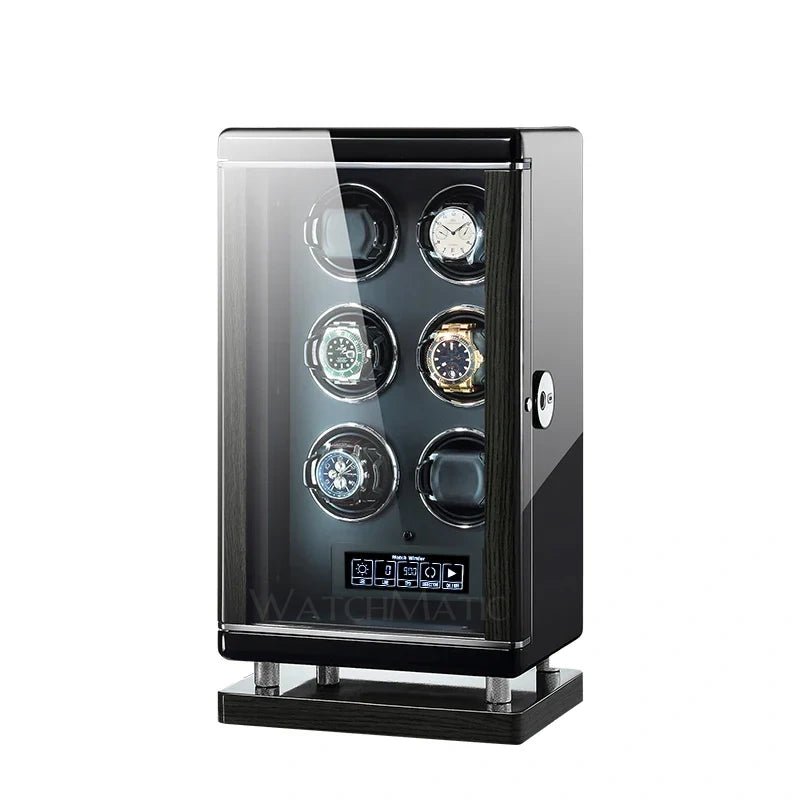
Vento Watch Winder for H. Moser Automatics

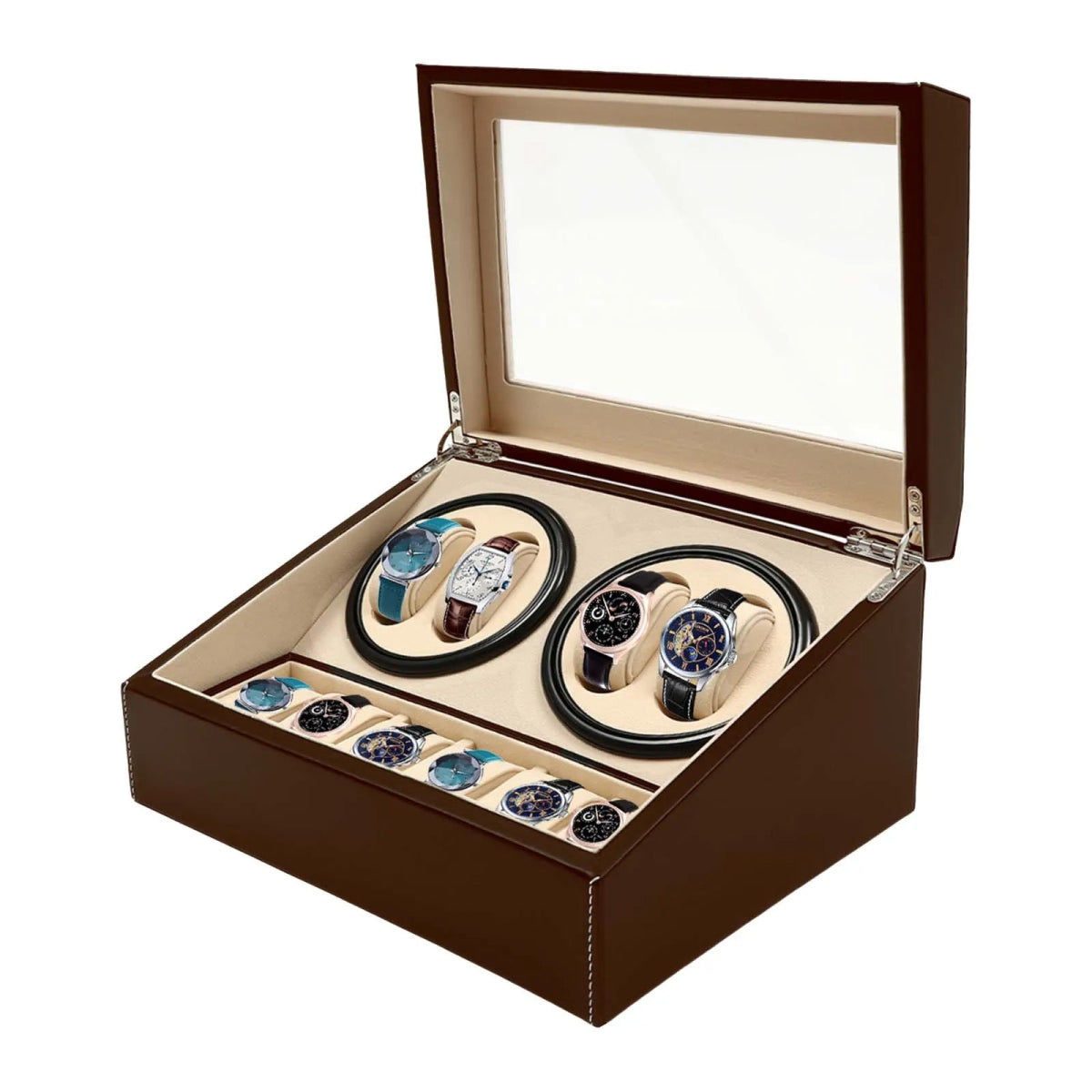
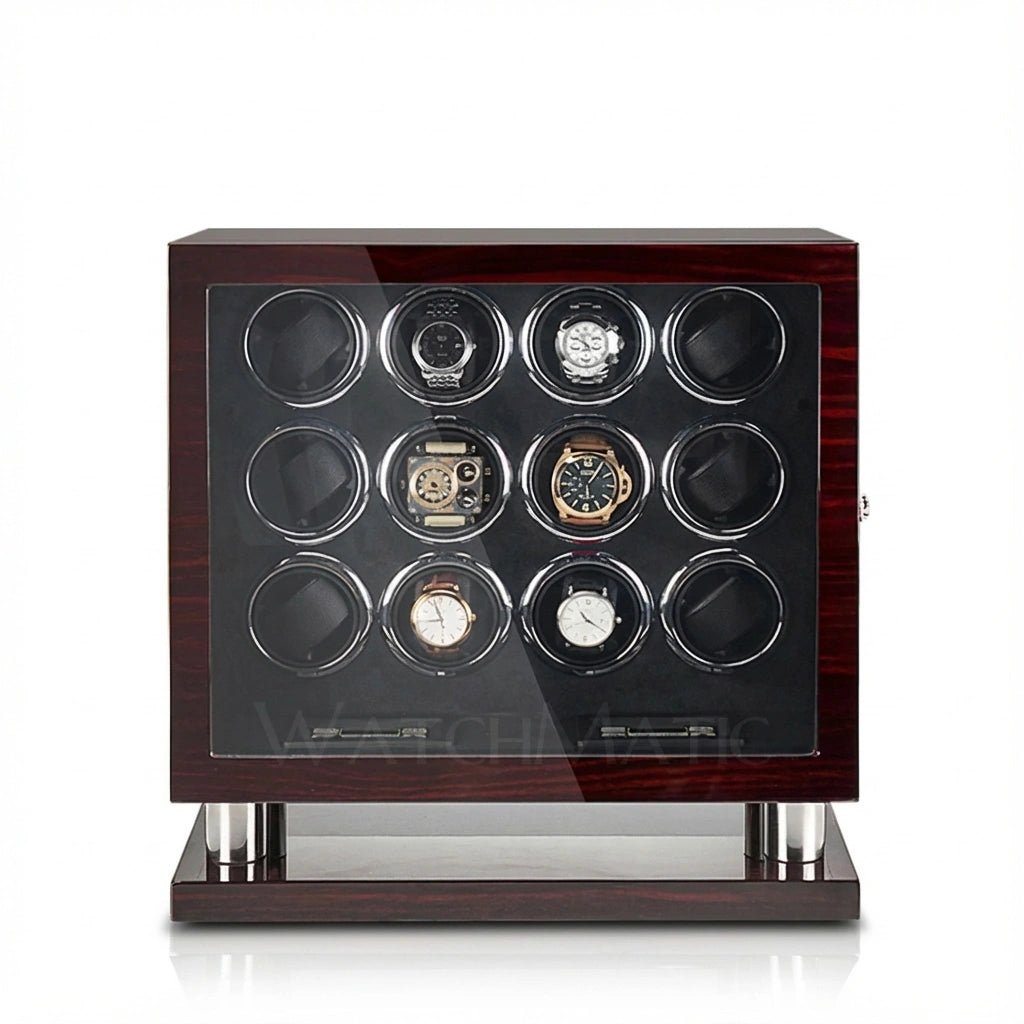
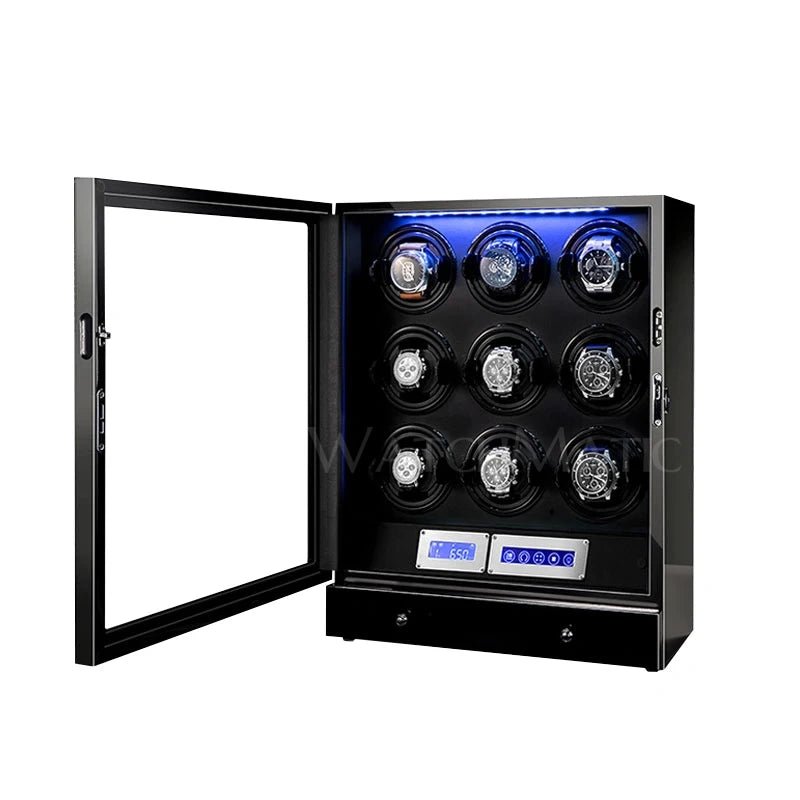
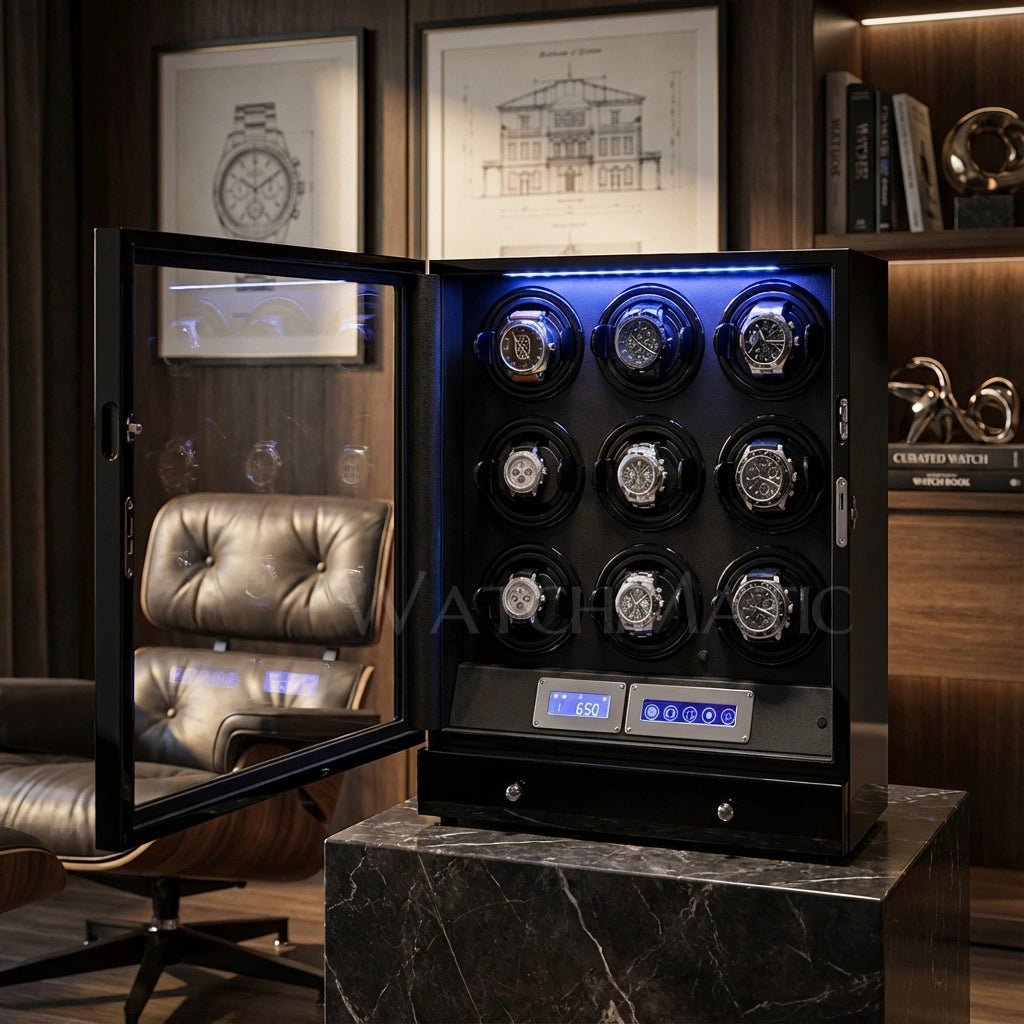
The Vento Luxury Quad Watch Winder is a practical option for a compact automatic H. Moser collection because it provides four independently controlled winding positions.
A four-watch configuration could contain:
- Streamliner Centre Seconds — HMC 201
- Streamliner Small Seconds — HMC 500
- Streamliner Tourbillon — HMC 804
- Streamliner Flyback Chronograph — HMC 907
Each position can receive its own:
- TPD
- Rotation direction
- Winding mode
rather than forcing a conventional rotor, micro-rotor, tourbillon automatic, and chronograph automatic onto one common setting.
Why Vento Is a Strong Match for Streamliner Collectors
Unlike brands whose current catalog is predominantly manually wound, H. Moser has a substantial automatic Streamliner lineup.
A collector could realistically own:
- Centre Seconds
- Small Seconds
- Tourbillon
- Flyback
and make genuine use of all four powered positions.
Independent Control Matters More Than Shared 72-Hour Reserves
Several of those watches provide approximately 72 hours.
That does not mean their winding systems are identical.
Independent control preserves movement-specific flexibility.
Check Streamliner Bracelet Fit Before Long-Term Use
The main caveat is physical.
The integrated bracelet needs a sufficiently compressible holder.
This is especially important for:
- Smaller wrist sizes
- 28 mm Two Hands
- 34 mm Two Hands
- Precious-metal bracelets
Is It Safe to Keep an Automatic H. Moser on a Watch Winder?
A properly configured quality winder can be used with a confirmed automatic H. Moser.
Important considerations include:
- Exact reference identification
- Exact caliber identification
- Appropriate TPD
- Appropriate rotation direction
- Controlled rest cycles
- Stable physical support
- Low-vibration operation
- Adequate case clearance
If a properly wound Moser develops unexpectedly short reserve or abnormal behavior, professional inspection is more appropriate than continually increasing TPD.
A Watch Winder Does Not Service an H. Moser
A watch winder does not:
- Replace lubricants
- Regulate accuracy
- Service a double hairspring
- Service a tourbillon
- Service a minute repeater
- Correct a perpetual calendar
- Repair a chronograph
- Maintain enamel or Vantablack
- Replace professional maintenance
Its role is limited to supplying rotational motion to a compatible automatic winding system.
Watch Winder vs. Watch Safe for H. Moser Collectors
H. Moser & Cie. is a strong candidate for a mixed winding-and-secure-storage architecture.
| Feature | Standalone Winder | Watch Winder Safe |
|---|---|---|
| Automatic winding | Yes | Yes |
| Independent programming | Available | Available |
| Manual-watch storage | Possible | Yes |
| Physical security | Limited | High |
| Controlled access | Limited | High |
| Integrated-bracelet storage | Yes | Yes |
| High complications | Limited protection | High |
| Large Moser collection | Moderate | Highly relevant |
Collectors requiring integrated winding and physical protection can explore the Watch Winder Safe Collection.
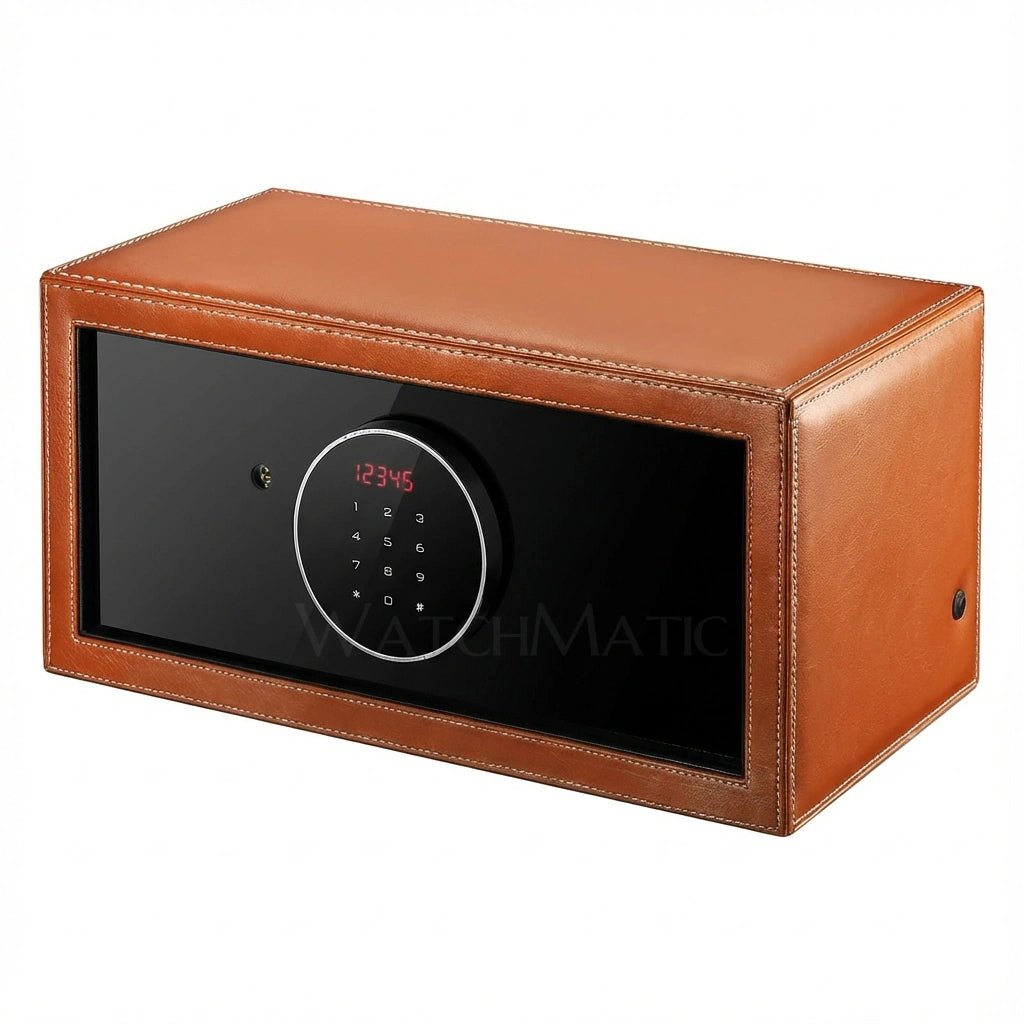
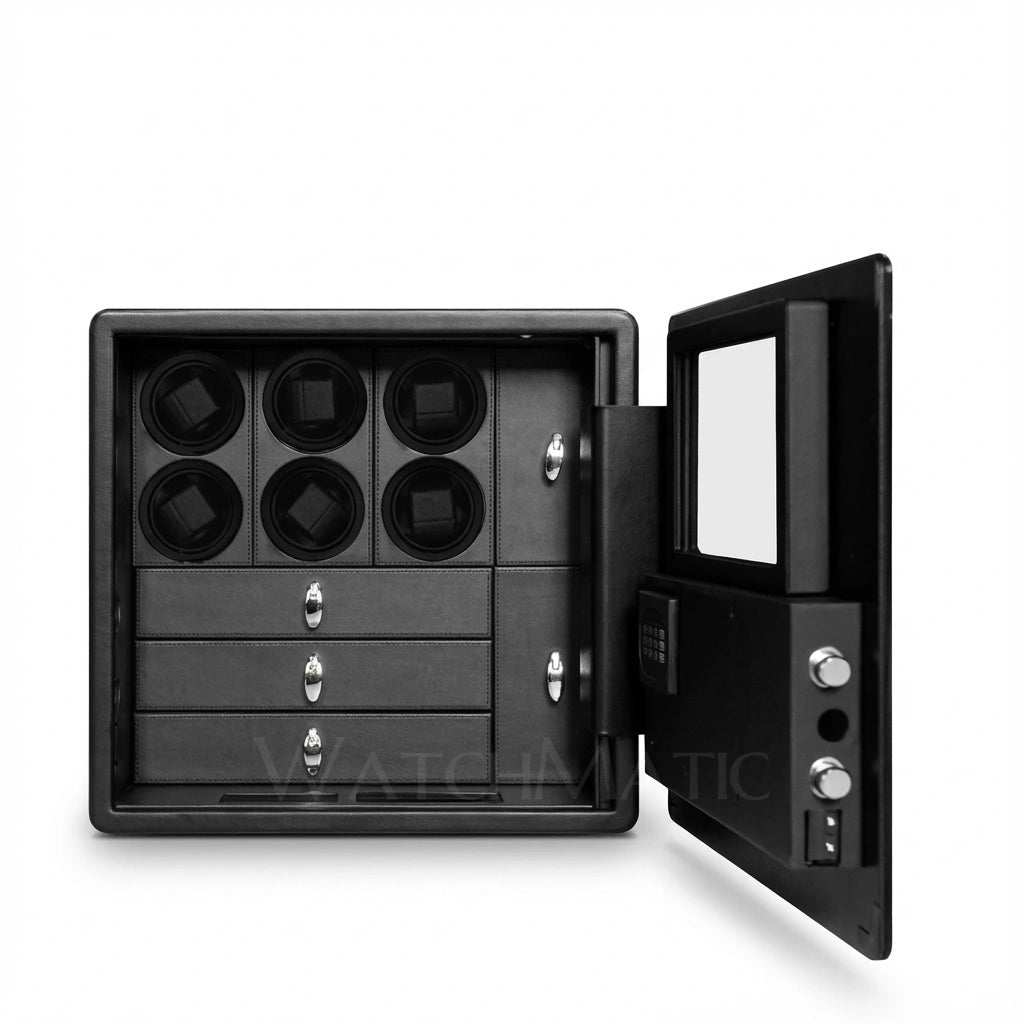
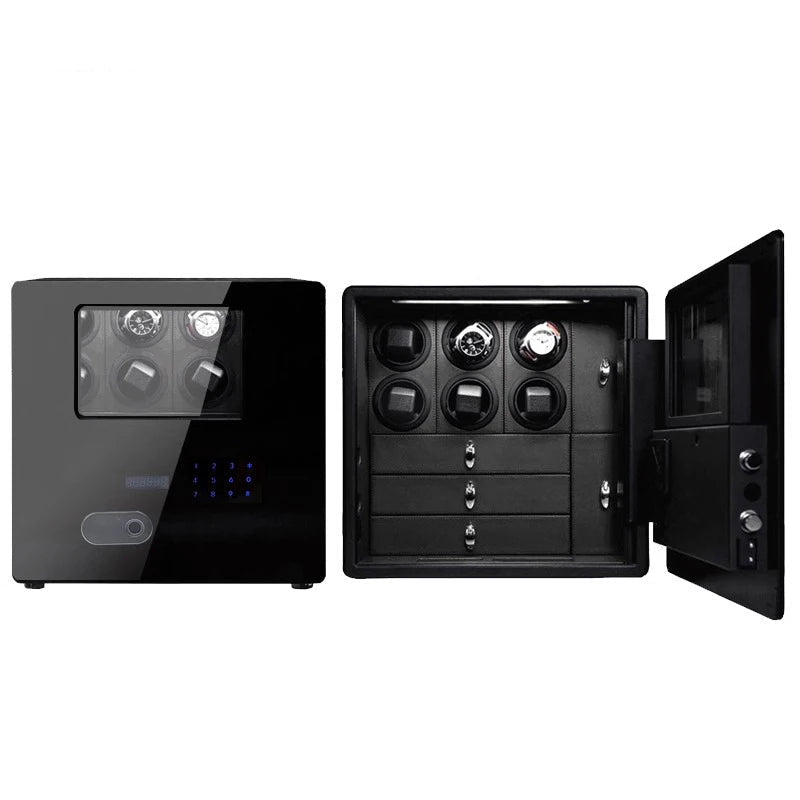
Titan Vault 20 for an H. Moser Collection

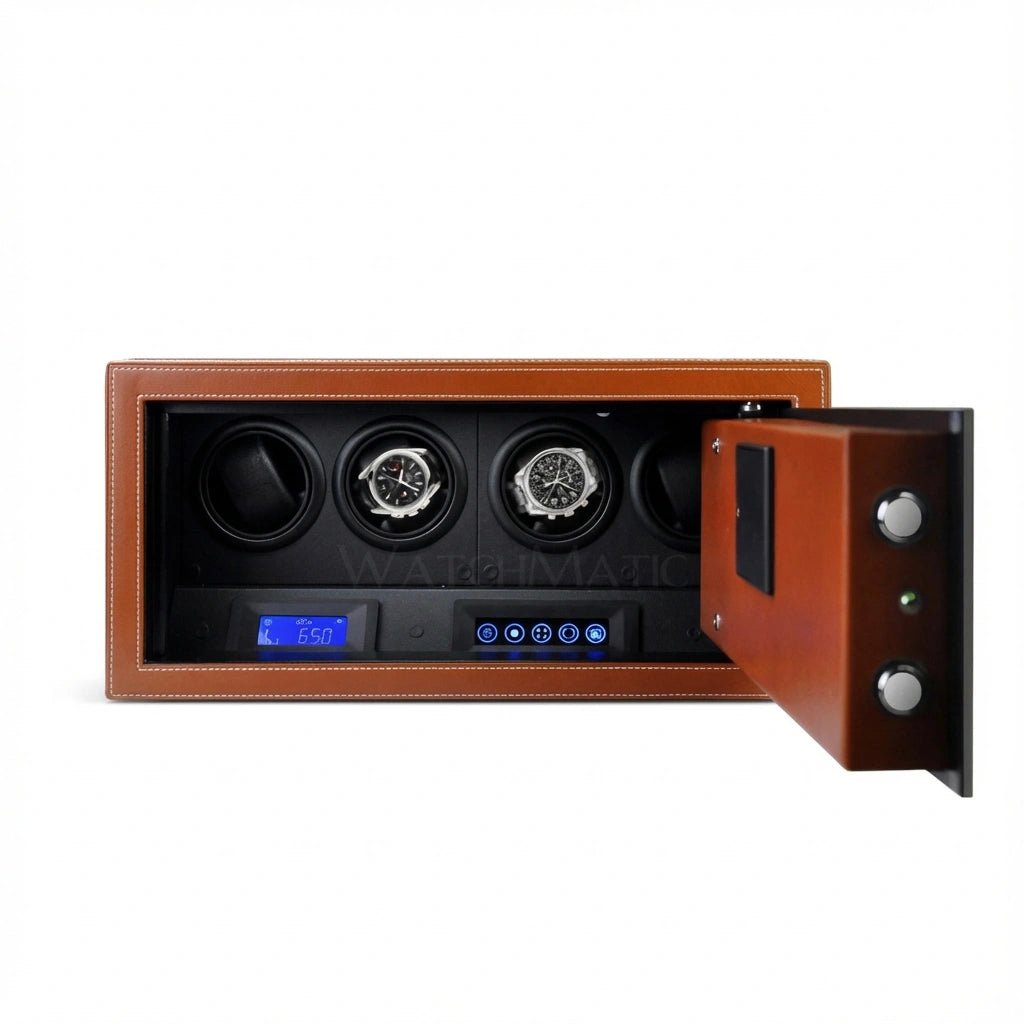
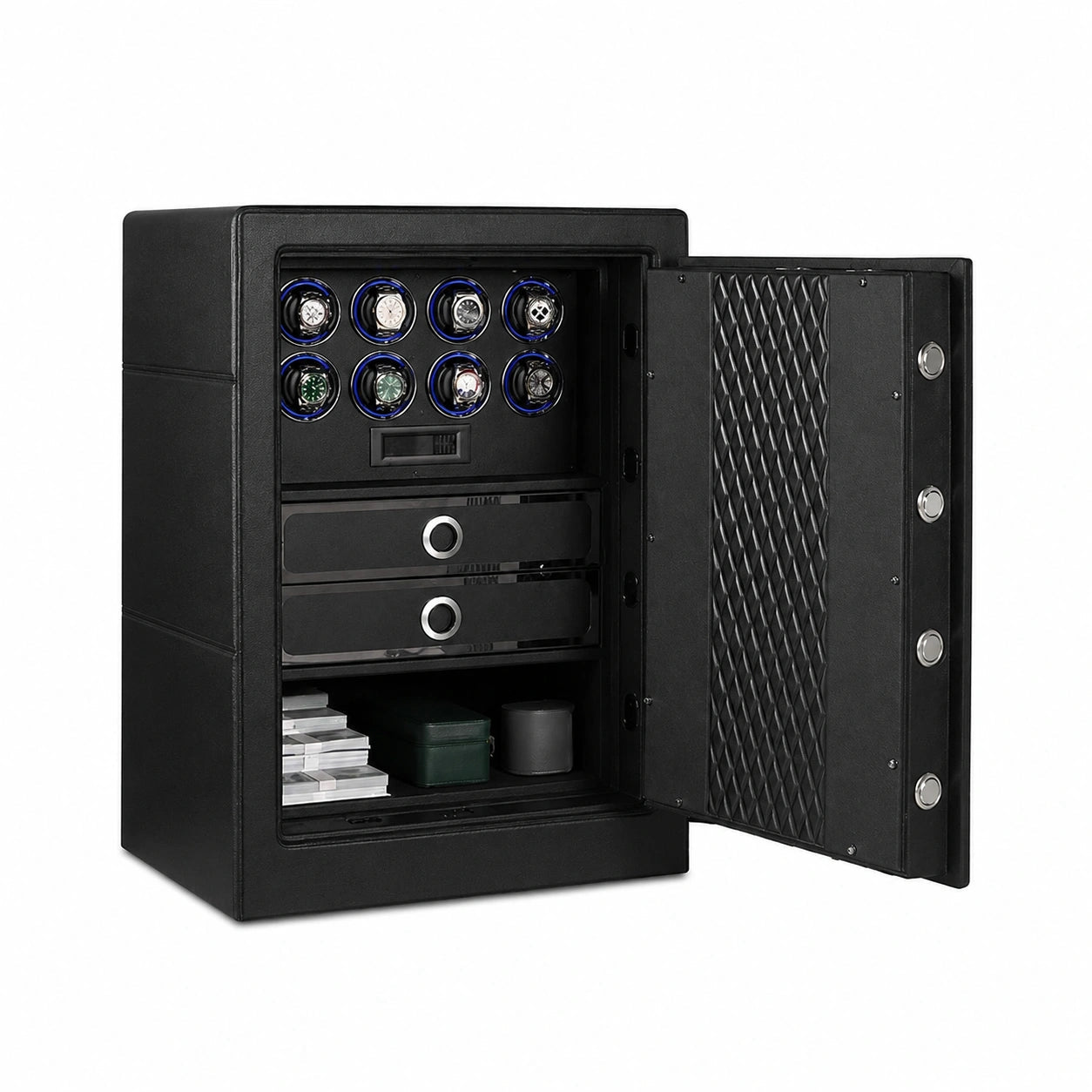
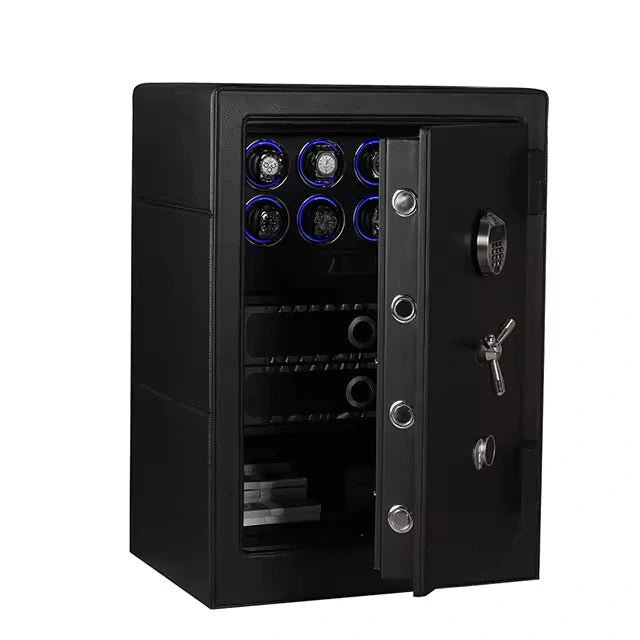
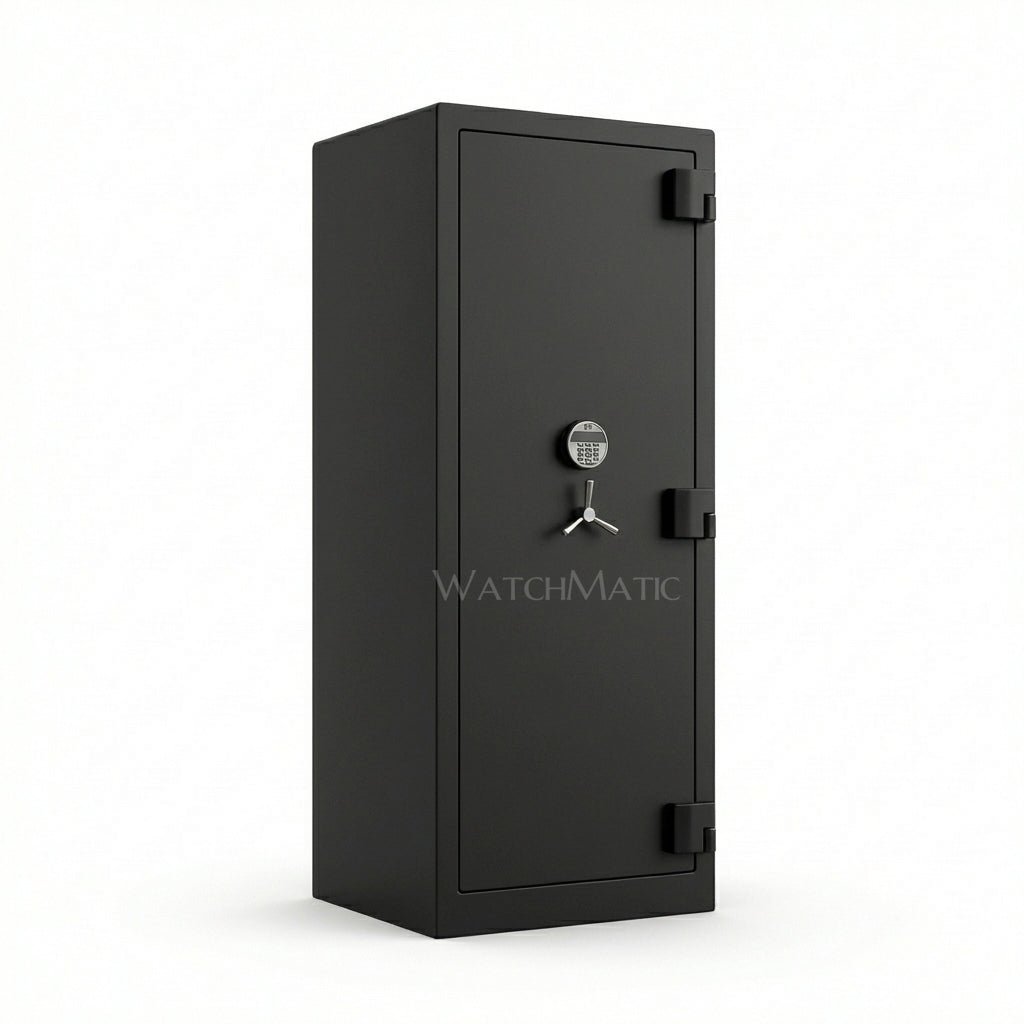
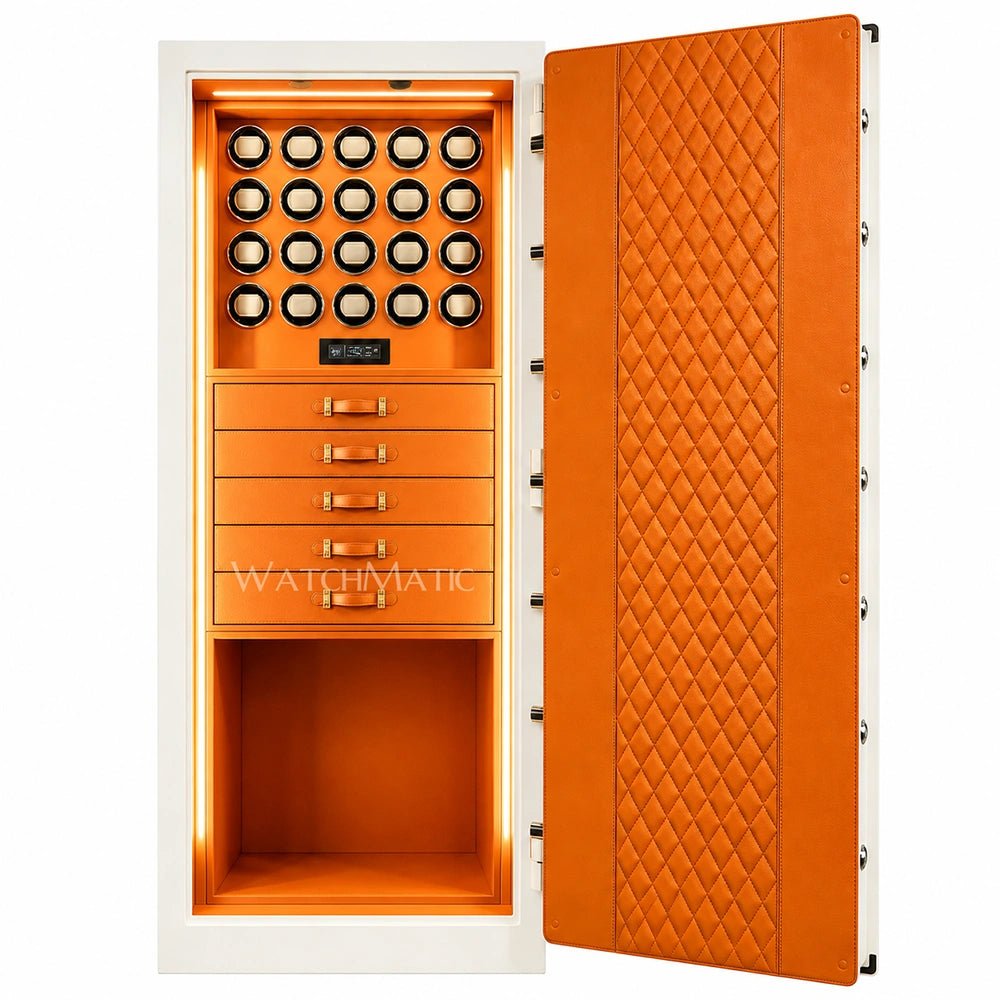
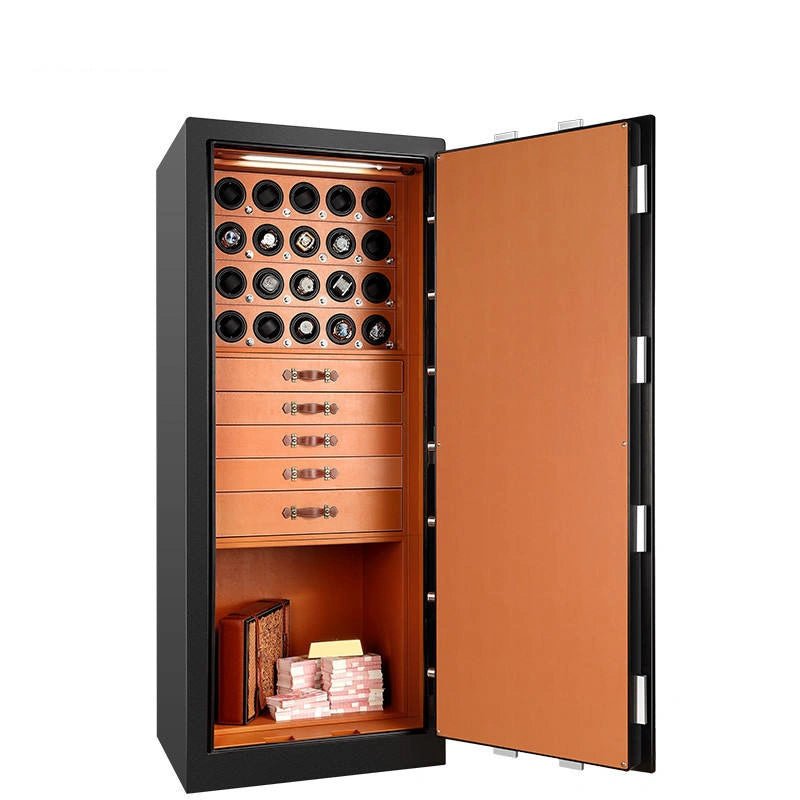
For a larger H. Moser or mixed independent-watch collection, the Titan Vault 20 Watch Winder Safe combines independently controlled winding positions with secure storage architecture.
Available features include:
- Monolithic solid-steel body
- 10-layer reinforced exterior shell
- Biometric fingerprint access
- Digital passcode
- Manual key access
- Floor anchoring
- LCD touchscreen
- Japanese Mabuchi motors
- Independent winding controls
- Adjustable TPD from 650 to 2200
- CW/CCW/bidirectional operation
- Anti-magnetization protection
- Adjustable LED illumination
- Ultra-quiet operation below 10 dB
- 10-year warranty
Higher-level fire and burglary certifications are available upon request rather than being assumed as standard on every configuration.
Why Titan Vault 20 Has Strong Relevance for H. Moser
H. Moser occupies a materially higher security category than many enthusiast-focused automatic brands.
A collection can include:
- Full-gold Streamliner
- Streamliner Tourbillon
- Flyback Chronograph
- Chinese Calendar
- Perpetual Calendar
- Minute Repeater
- Limited-edition Vantablack or gemstone watches
At this point, the storage problem becomes:
winding + stationary storage + physical security
rather than simply:
keeping an automatic movement running.
The Most Valuable Moser May Not Need a Rotor
This is important.
An HMC 909 Minute Repeater Cylindrical Tourbillon can be one of the most technically and financially significant watches in the collection.
Yet:
HMC 909 → manual → no powered rotor needed.
Meanwhile:
HMC 201 Centre Seconds → automatic → rotor useful.
Therefore:
winding importance and security importance are different variables.
Titan Vault 20 Works Best as a Mixed Architecture
A serious Moser collection may logically use:
automatic references → individually programmed powered positions
and:
manual high complications → secure stationary storage.
That is more rational than maximizing motor count.
Perpetual Calendar Strengthens Stationary-Storage Relevance
HMC 800 and HMC 812 watches do not benefit from rotor movement.
But their:
- complication
- value
- precious metals
- rarity
make secure stationary storage highly relevant.
Minute Repeaters Strengthen the Security Case Further
The HMC 904, HMC 905 and HMC 909 are all examples where:
security value is extremely high
while:
rotor value is zero.
When a Stationary Watch Safe Is More Appropriate
A Moser collection dominated by:
- Perpetual Calendars
- Minute Repeaters
- HMC 730
- Streamliner Pump
- other manual historical references
may require more secure stationary capacity than automatic winding positions.
In that scenario, options from the Luxury Watch Safe Collection may be more relevant.
H. Moser in a Mixed Independent Haute Horlogerie Collection
H. Moser & Cie. naturally sits within collections containing modern independent and haute-horlogerie manufacturers.
A mixed collection might include:
H. Moser & Cie. + Czapek + De Bethune + F.P. Journe + Armin Strom + Parmigiani Fleurier
Related WatchMatic guides include:
Best Watch Winder for Czapek Watches
Best Watch Winder for De Bethune Watches
Best Watch Winder for F.P. Journe Watches
Best Watch Winder for Armin Strom Watches
Best Watch Winder for Parmigiani Fleurier Watches
At this level, independent movement programming becomes far more useful than a shared brand-level profile.
H. Moser vs. Czapek
Both brands currently offer:
- Automatic integrated-bracelet watches
- Automatic tourbillons
- manually wound high complications
- manufacture movements
But their exact architectures differ significantly.
An HMC 500 micro-rotor program should not be copied from a Czapek SXH5 simply because both use micro-rotors.
H. Moser vs. De Bethune
Current De Bethune is heavily weighted toward manual winding.
H. Moser has a substantially broader current automatic portfolio.
Therefore, a four-position powered winder is generally easier to justify for a Streamliner-heavy Moser collection.
H. Moser vs. F.P. Journe
Both brands combine manual and automatic haute horlogerie.
F.P. Journe is notable for publishing explicit rotator specifications for certain references.
Moser should still be configured according to its own exact caliber rather than importing another independent manufacturer's settings.
H. Moser vs. Armin Strom
Armin Strom's high complications are particularly manual-heavy.
Moser provides several important automatic counterexamples, including:
- automatic tourbillons
- automatic Chinese Calendar
- automatic flyback chronographs
Complication category therefore cannot be transferred across brands.
How to Choose the Best Watch Winder for Your H. Moser & Cie.
Step 1: Identify the Exact Collection
Determine whether the watch is:
- Streamliner
- Pioneer
- Endeavour
- Heritage
- A collaboration
- A historical reference
Step 2: Identify the Exact Reference
This is particularly important within Streamliner and Endeavour.
The same collection can contain:
- Automatic
- Manual
- Non-conventional energy architecture
Step 3: Identify the Caliber
Important current examples include:
- HMC 103
- HMC 200
- HMC 201
- HMC 210
- HMC 270
- HMC 400
- HMC 410
- HMC 500
- HMC 700
- HMC 730
- HMC 800
- HMC 804
- HMC 805
- HMC 811
- HMC 812
- HMC 814
- HMC 904
- HMC 905
- HMC 907
- HMC 909
- D10
Step 4: Confirm Energy Architecture
Representative examples:
HMC 500 → automatic micro-rotor
HMC 907 → automatic
HMC 804 → automatic
HMC 800 → manual
HMC 812 → manual
HMC 730 → manual
HMC 103 → manually wound through Pump mechanism
D10 → non-conventional technological platform
Step 5: Check Power Reserve
Representative current values include:
60 h → HMC 400 / 410 automatic
72 h → many automatic calibers and some manual calibers
74 h → HMC 500 automatic / HMC 103 manual
90 h → HMC 904 / 909 manual
168 h → HMC 800 / 812 manual
Step 6: Determine Whether TPD Is Relevant
TPD only matters when an automatic winding mass exists.
Do not assign conventional TPD to:
- HMC 103
- HMC 730
- HMC 800
- HMC 812
- HMC 904
- HMC 905
- HMC 909
- D10
Step 7: Determine Winding Direction
Use verified caliber-specific information.
Choose a winder supporting:
- CW
- CCW
- Bidirectional
Step 8: Consider the Complication
Calendar and moon-phase complications can increase the convenience value of staying synchronized.
They do not tell you whether the watch is automatic.
Step 9: Check Physical Fit
Pay particular attention to:
- Integrated Streamliner bracelets
- 28 mm and 34 mm bracelets
- 42.3 mm chronographs
- 42.8 mm Pioneer Cylindrical Tourbillon
- Full-gold watches
- Chronograph pushers
- Repeater slides
Step 10: Match Powered Capacity to Automatic Watches
Do not equate:
total mechanical H. Moser watches
with:
number of powered winding positions required.
For broader resources covering automatic winding, TPD, storage, and collection protection, visit the WatchMatic Guide Hub.
Best Watch Winder for H. Moser & Cie. Watches: Final Thoughts
Choosing the best watch winder for an H. Moser & Cie. requires identifying the exact caliber rather than relying on collection name or complication.
The current automatic portfolio is broad.
The Streamliner Centre Seconds HMC 201 provides approximately 72 hours.
The new Streamliner Small Seconds HMC 500 uses a platinum micro-rotor and provides approximately 74 hours.
The compact HMC 400 and HMC 410 provide at least 60 hours.
The HMC 270 Perpetual Moon, HMC 700 Alpine Drivers, HMC 804/805 Tourbillon, HMC 811 Cylindrical Tourbillon, HMC 814 Tourbillon Skeleton, and HMC 907 Flyback Chronograph sit around 72 hours and are automatic.
The HMC 210 Chinese Calendar is also automatic, making it one of the strongest practical candidates for watch-winder convenience due to the complexity of its synchronized calendar indications.
But several equally important Moser movements are manual.
The HMC 730 Flyback Chronograph Dual Time Date provides approximately 72 hours.
The HMC 905 Streamliner Minute Repeater Tourbillon also provides approximately 72 hours.
The HMC 904 and HMC 909 minute-repeater tourbillons provide approximately 90 hours.
The HMC 800 and HMC 812 perpetual calendars provide approximately 168 hours / seven days.
The 2026 Streamliner Pump HMC 103 provides approximately 74 hours, but its movement receives energy from its dedicated mechanical Pump rather than an automatic rotor.
And the current Off-Grid D10 sits entirely outside conventional rotor-winding logic.
This creates several unusually strong H. Moser comparisons:
HMC 907 Flyback → automatic → 72 h
versus:
HMC 730 Flyback Dual Time Date → manual → 72 h.
HMC 500 Small Seconds → automatic micro-rotor → 74 h
versus:
HMC 103 Pump → manual Pump winding → 74 h.
And:
HMC 270 Perpetual Moon → automatic → 72 h
versus:
HMC 812 Perpetual Calendar → manual → 168 h.
The central H. Moser lesson is therefore:
collection name, complication and power reserve are all insufficient on their own to determine watch-winder compatibility.
For a confirmed automatic H. Moser, prioritize:
- Adjustable TPD
- CW/CCW/bidirectional programming
- Independent controls
- Controlled rest cycles
- Smooth low-vibration motors
- Compressible bracelet cushions
- Adequate case and pusher clearance
- Soft contact surfaces
For manually wound Perpetual Calendar, Minute Repeater, HMC 730 and Streamliner Pump references, prioritize premium stationary storage instead.
The most reliable framework is:
H. Moser Reference → Generation → Caliber → Automatic / Manual / Other → Power Reserve → Complication → Physical Fit → TPD/Direction or Stationary Storage
For additional automatic-winding and secure-storage solutions, explore WatchMatic