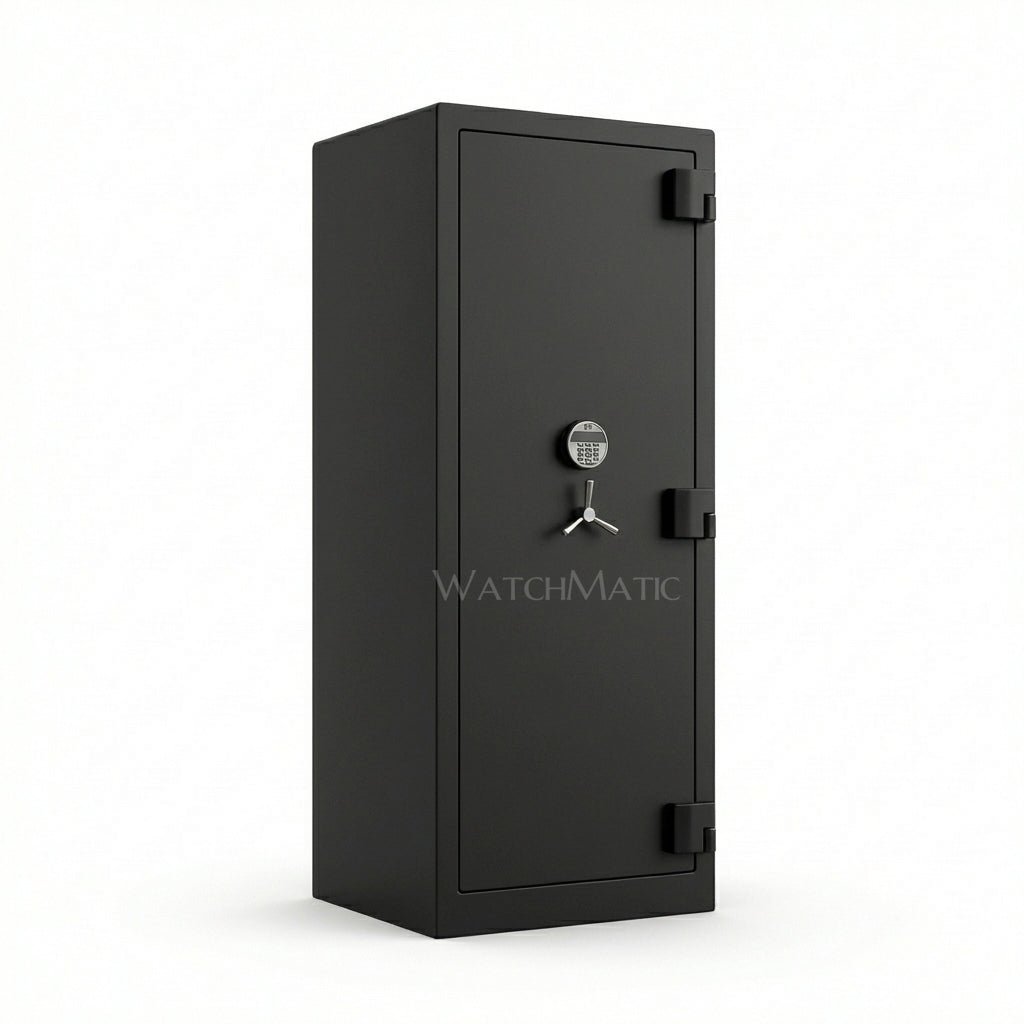
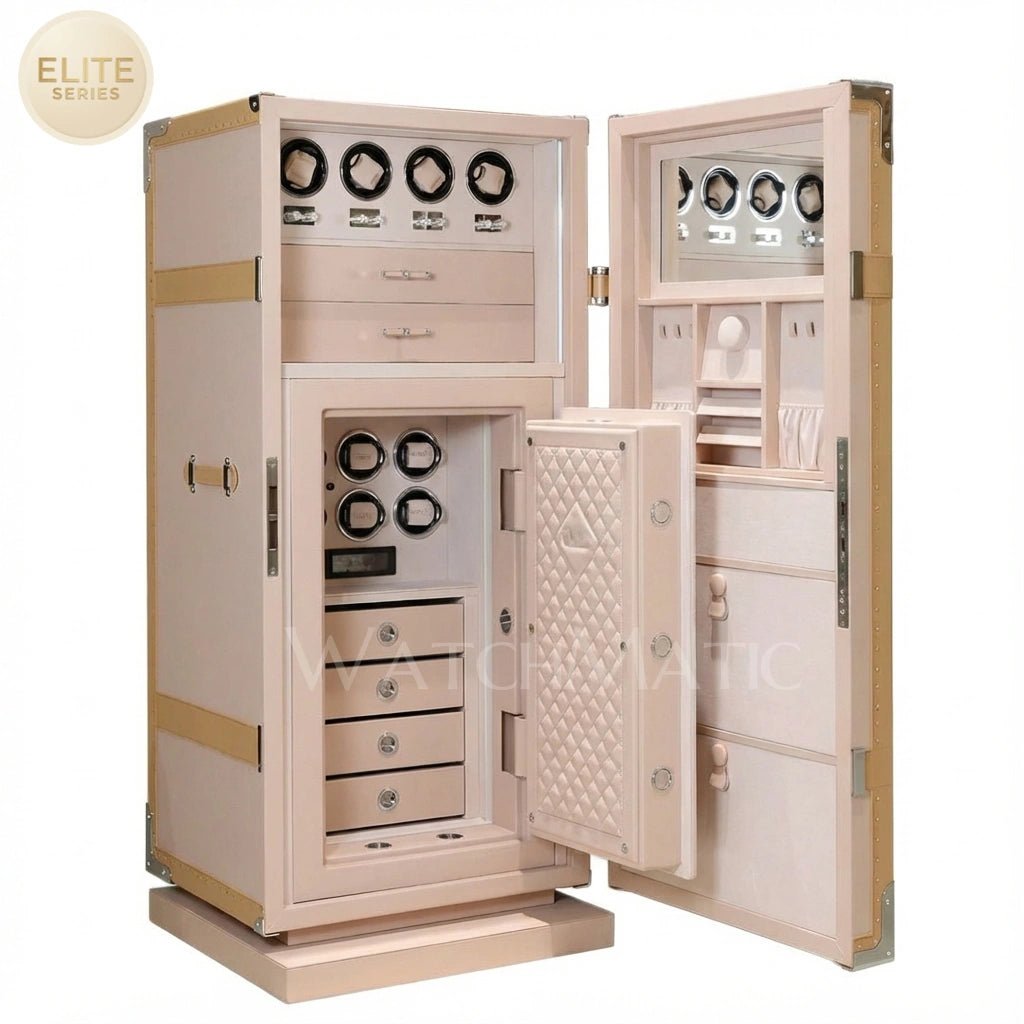
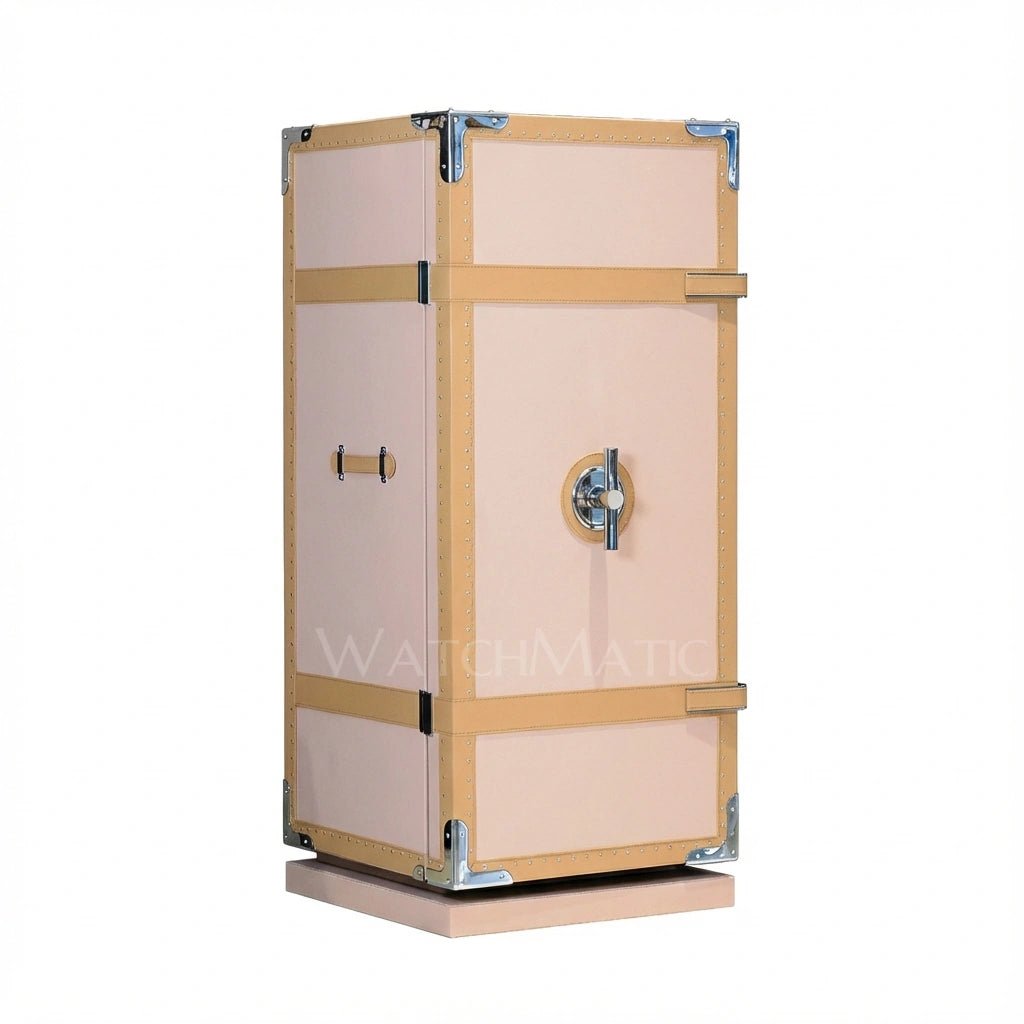
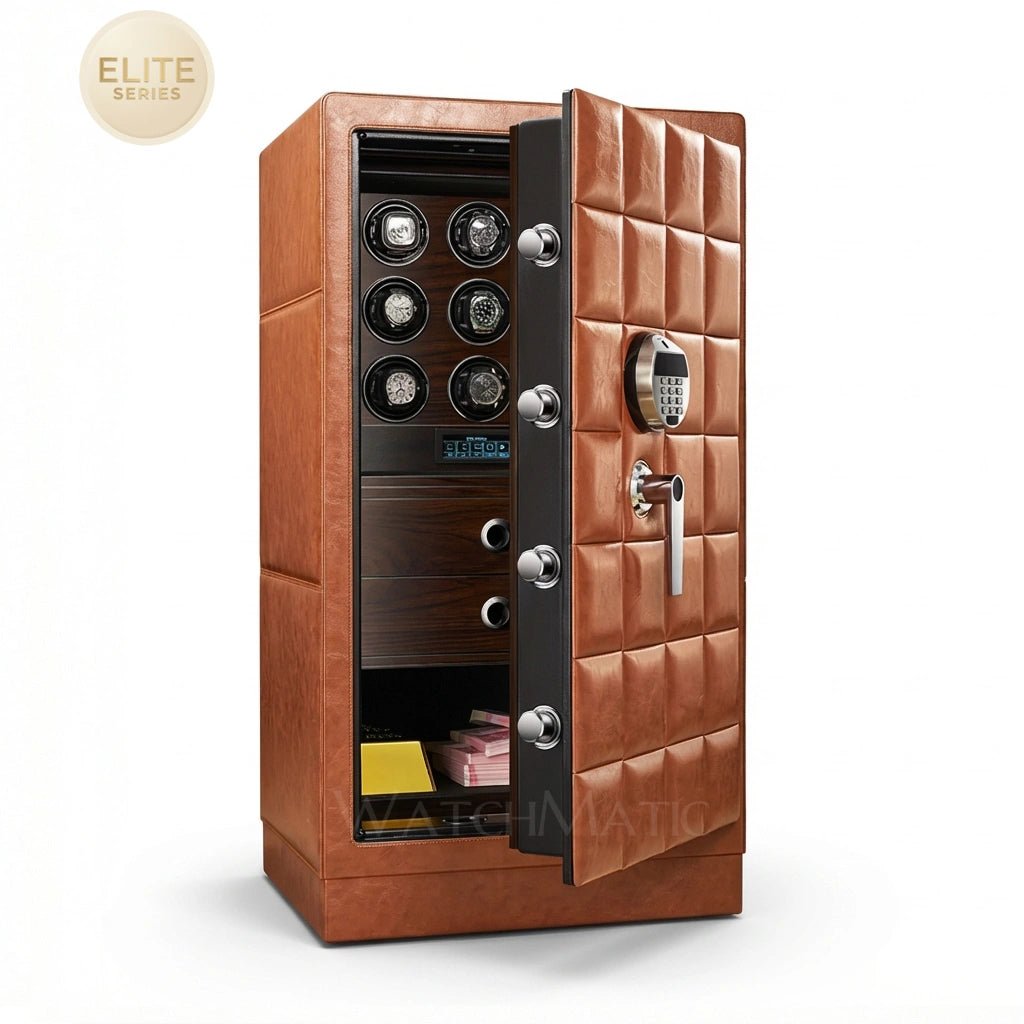
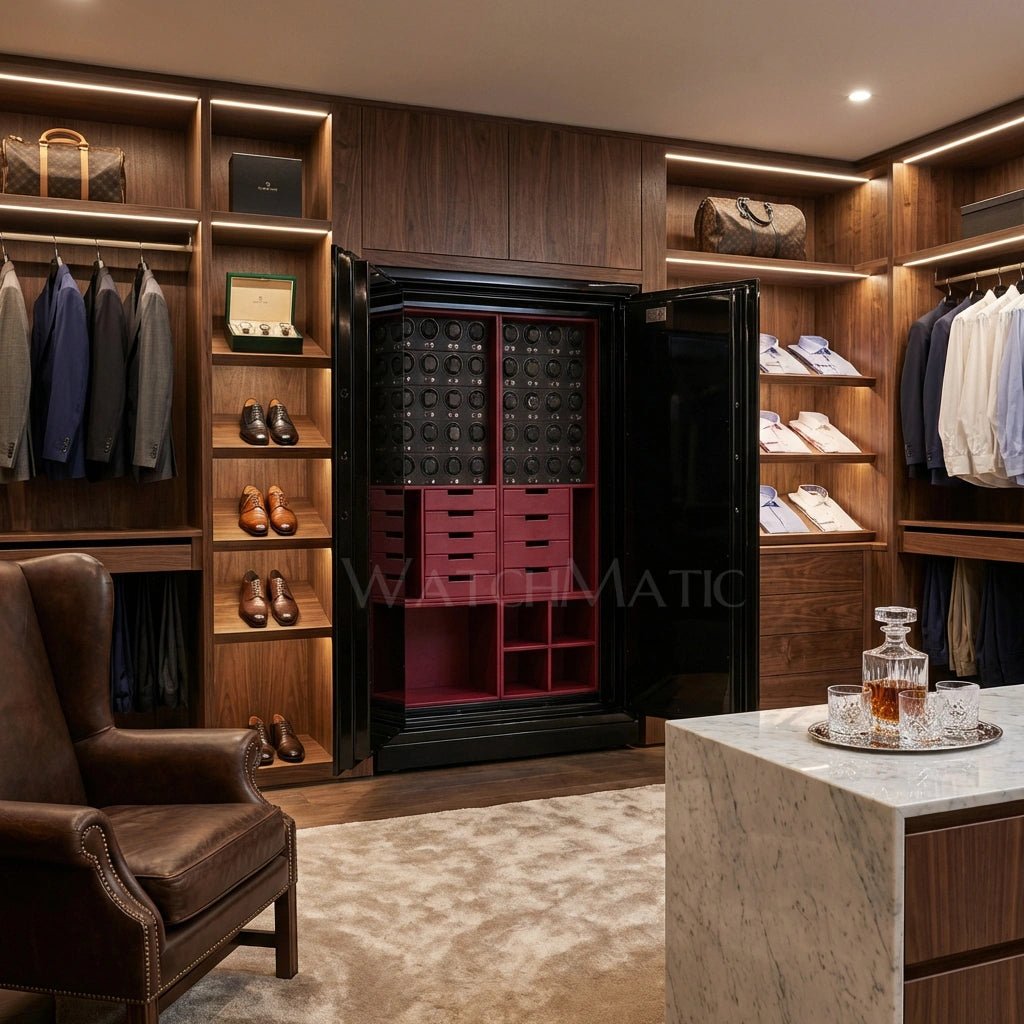
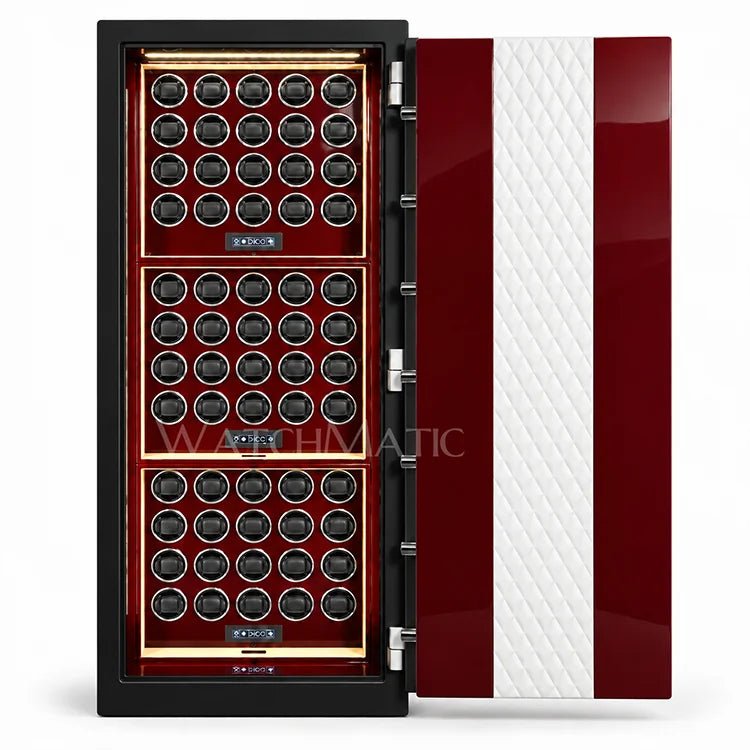
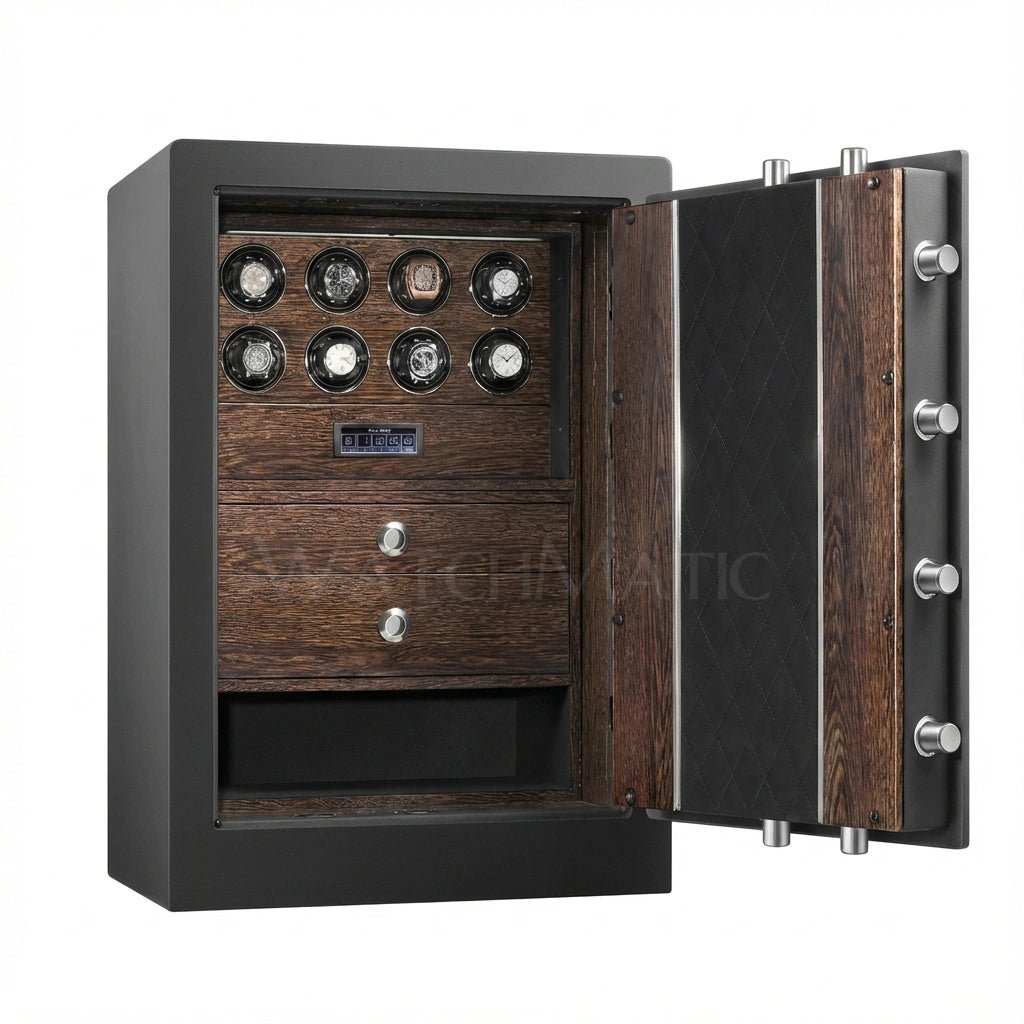
A walk-in closet is often one of the most appealing places to store a luxury watch collection. It brings watches, clothing, jewelry, and accessories into one private space, making it convenient to choose a timepiece while getting dressed.
For collectors who own several automatic watches, installing a watch winder safe inside a walk-in closet can combine that everyday convenience with organized storage and controlled access.
Imagine opening your dressing room in the morning, selecting your outfit, and choosing a Rolex, Patek Philippe, Omega, or Audemars Piguet from a dedicated watch safe. Selected automatic watches can remain on appropriately programmed winders, while other pieces are organized in separate drawers.
The arrangement can be elegant, practical, and discreet.
However, a watch winder safe is not ordinary wardrobe furniture. Depending on its construction and capacity, it may weigh hundreds of kilograms, require professional anchoring, and contain powered winding systems that must be installed according to the manufacturer's specifications.
This raises an important question: Can you place a watch winder safe inside a walk-in closet?
The answer is generally yes, but the installation must be planned around the safe's weight, external dimensions, door movement, electrical requirements, surrounding environment, and the building's structural capacity.
In this guide, we explain the most important considerations for installing a luxury watch winder safe in a walk-in closet, including the differences between freestanding and built-in installations, how to evaluate ventilation and humidity, and when a bespoke design may be more appropriate.
Quick Answer: Can You Install a Watch Winder Safe in a Walk-In Closet?
Yes. A watch winder safe can be installed inside a walk-in closet when the room and building can safely accommodate its weight, dimensions, door clearance, power requirements, and security installation.
A walk-in closet can be a suitable location because it often offers convenient daily access, an organized environment, and a degree of separation from the home's main living areas.
However, the fact that a safe physically fits inside the room does not mean the installation is automatically suitable.
Before ordering, verify these seven factors:
- Floor loading: Can the building structure safely support the safe and its contents?
- Dimensions: Is there sufficient room for the safe itself, the door swing, and interior drawers?
- Delivery access: Can the safe be transported through doorways, stairs, and elevators?
- Electrical supply: Can the winding system receive suitable power without unsafe modifications?
- Ventilation and temperature: Does the installation meet the safe manufacturer's operating requirements?
- Humidity: Is the closet environment suitable for valuable watches and storage materials?
- Security: Can the safe be properly installed and anchored without compromising its protective construction?
If these requirements can be satisfied, a walk-in closet may be an excellent location for a watch winder safe.
1. Why a Walk-In Closet Is an Attractive Location for a Watch Safe
A walk-in closet is designed to make personal belongings accessible and organized.
For many luxury watch collectors, this creates a natural connection between choosing clothing, selecting accessories, and deciding which watch to wear.
Convenient Access During Your Daily Routine
Keeping watches in the dressing room allows you to choose a timepiece without moving between different rooms.
For collectors who regularly coordinate watches with business attire, casual clothing, or formal outfits, this can simplify the morning routine.
Centralized Storage for Watches and Accessories
A dedicated safe can organize watches alongside their related accessories, including spare bracelets, watch straps, and selected jewelry.
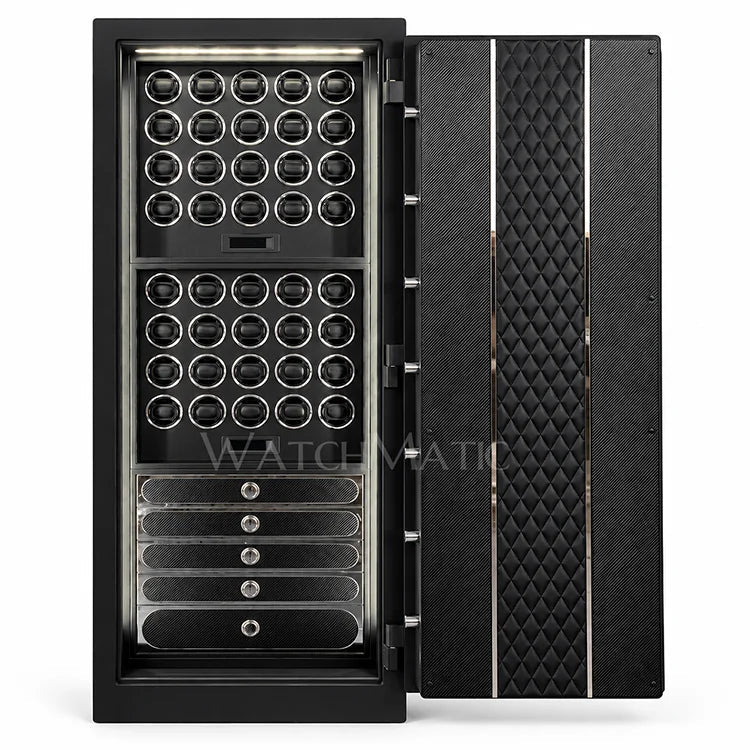
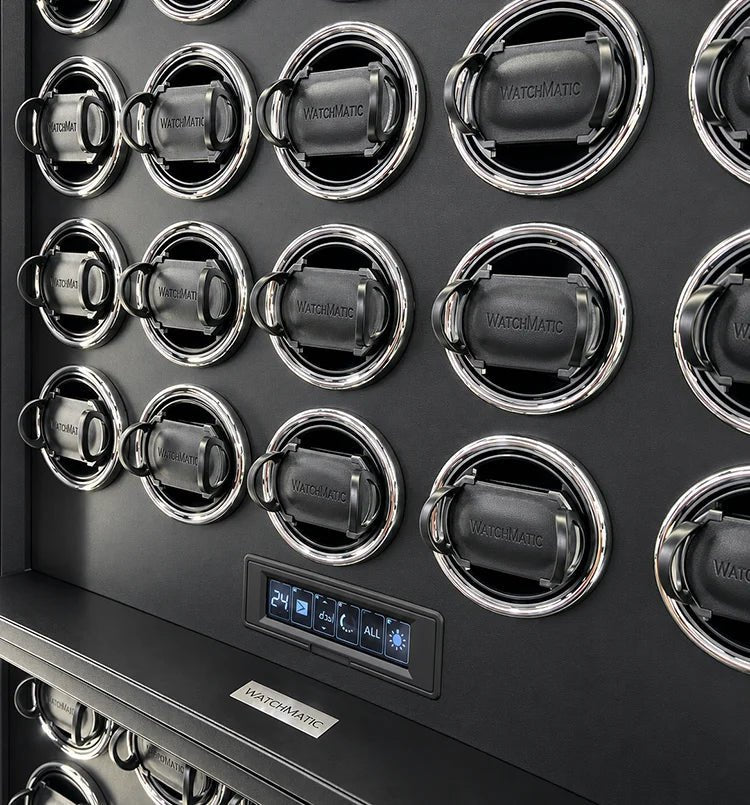
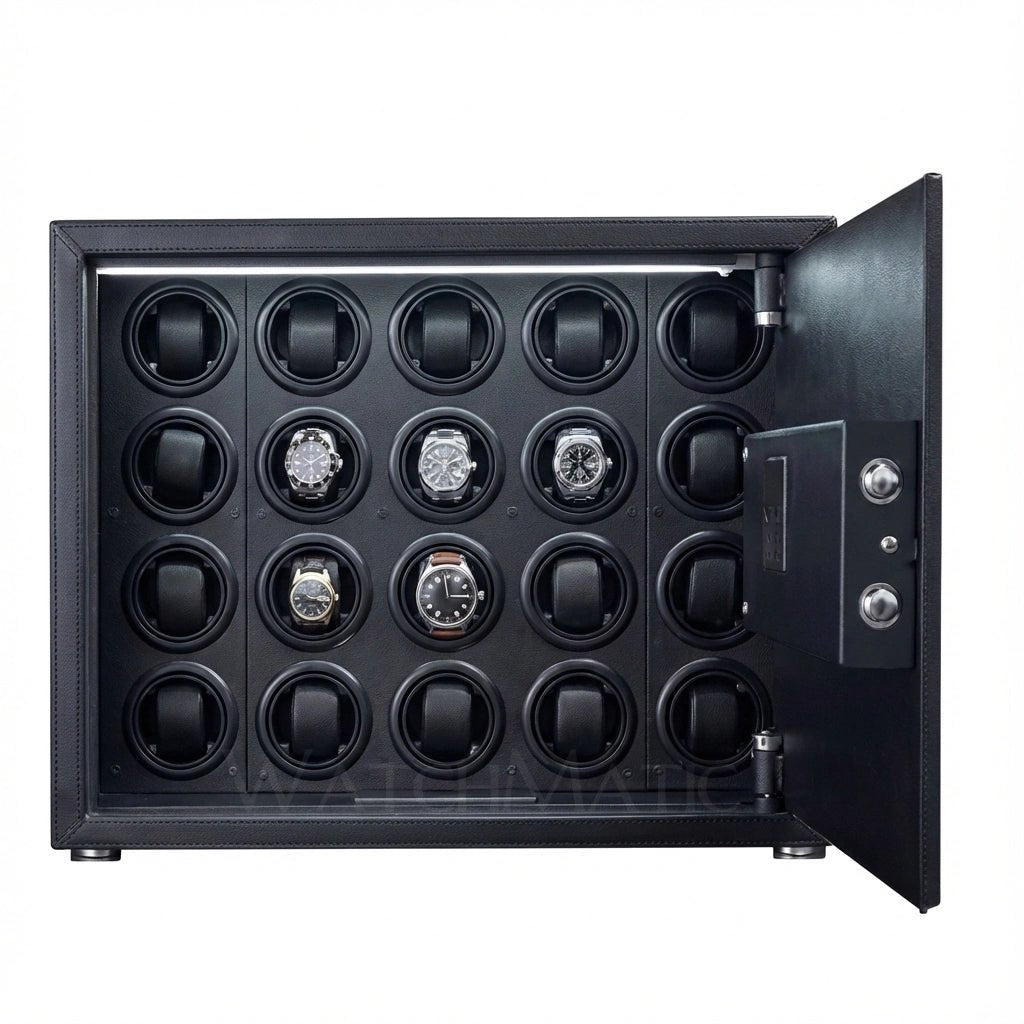
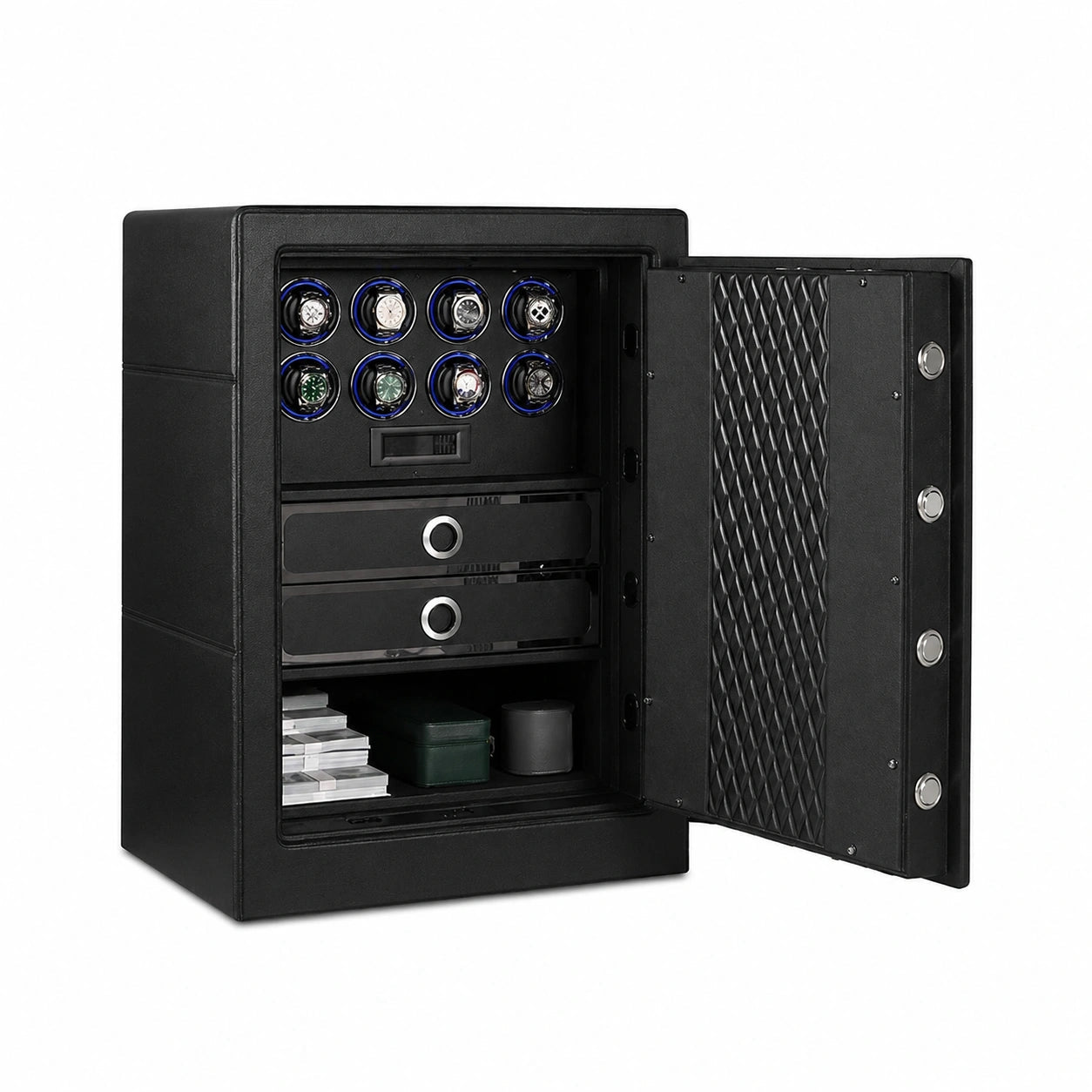
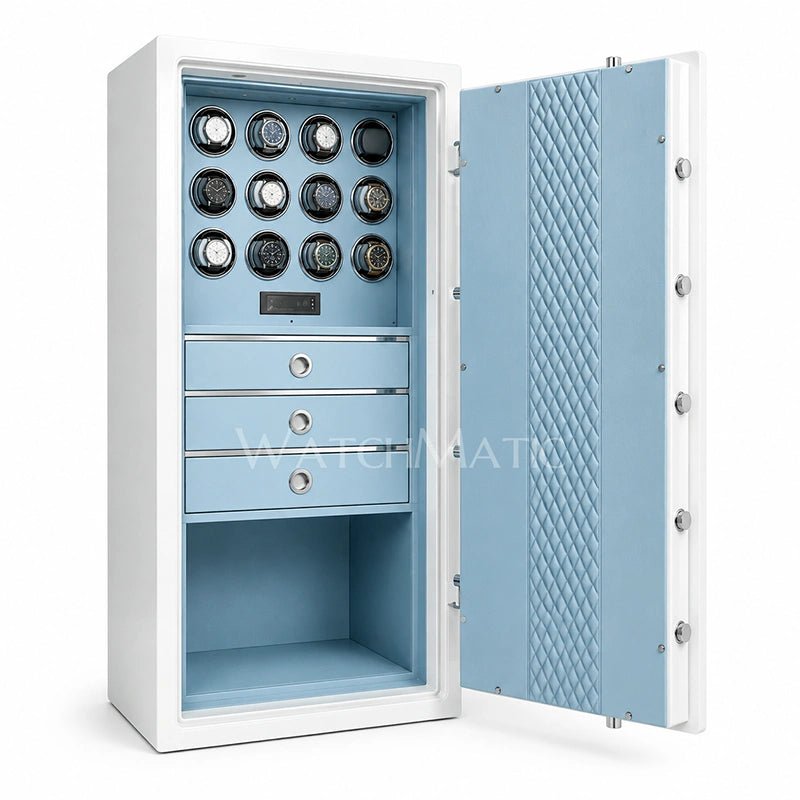
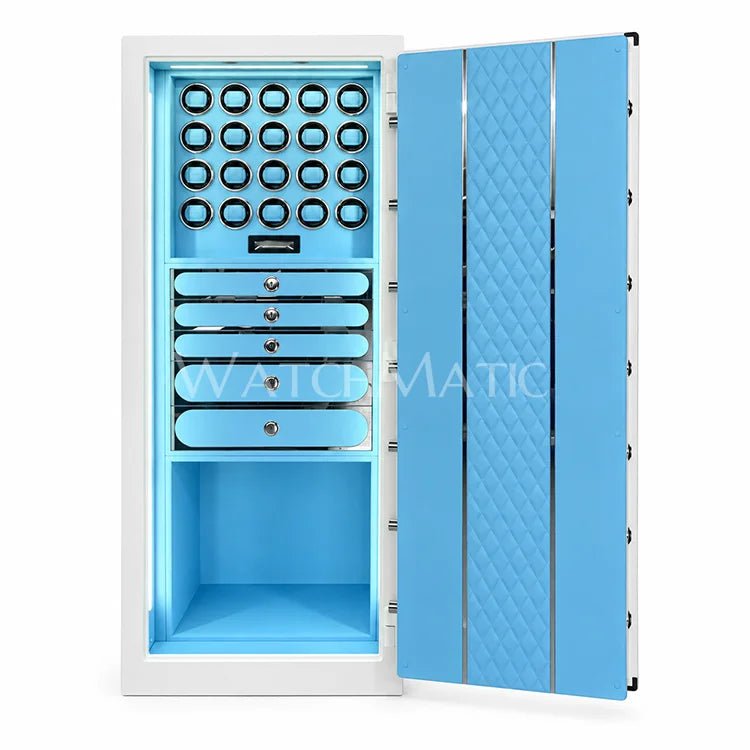
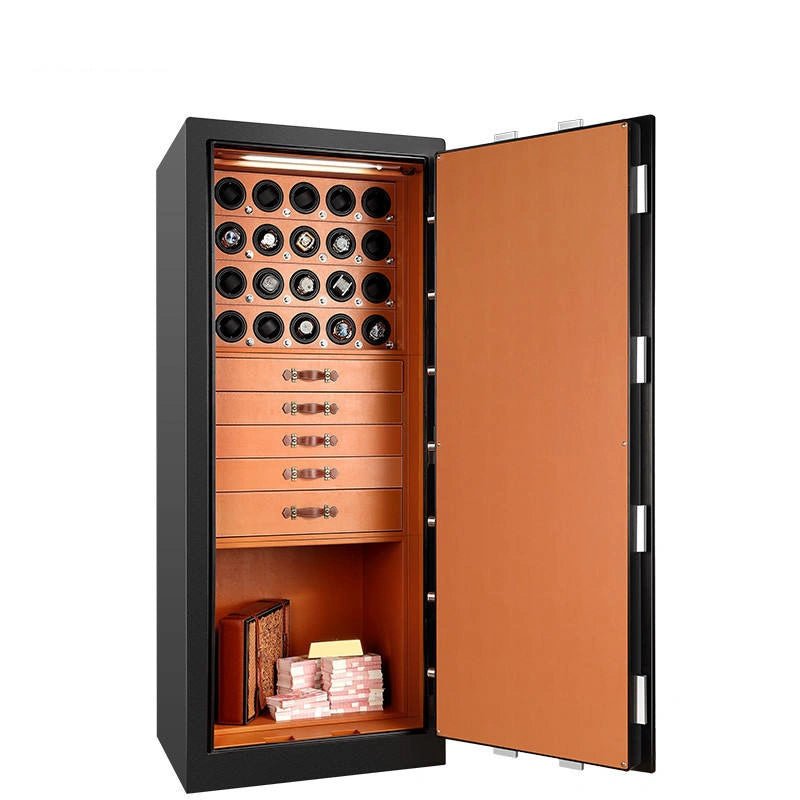
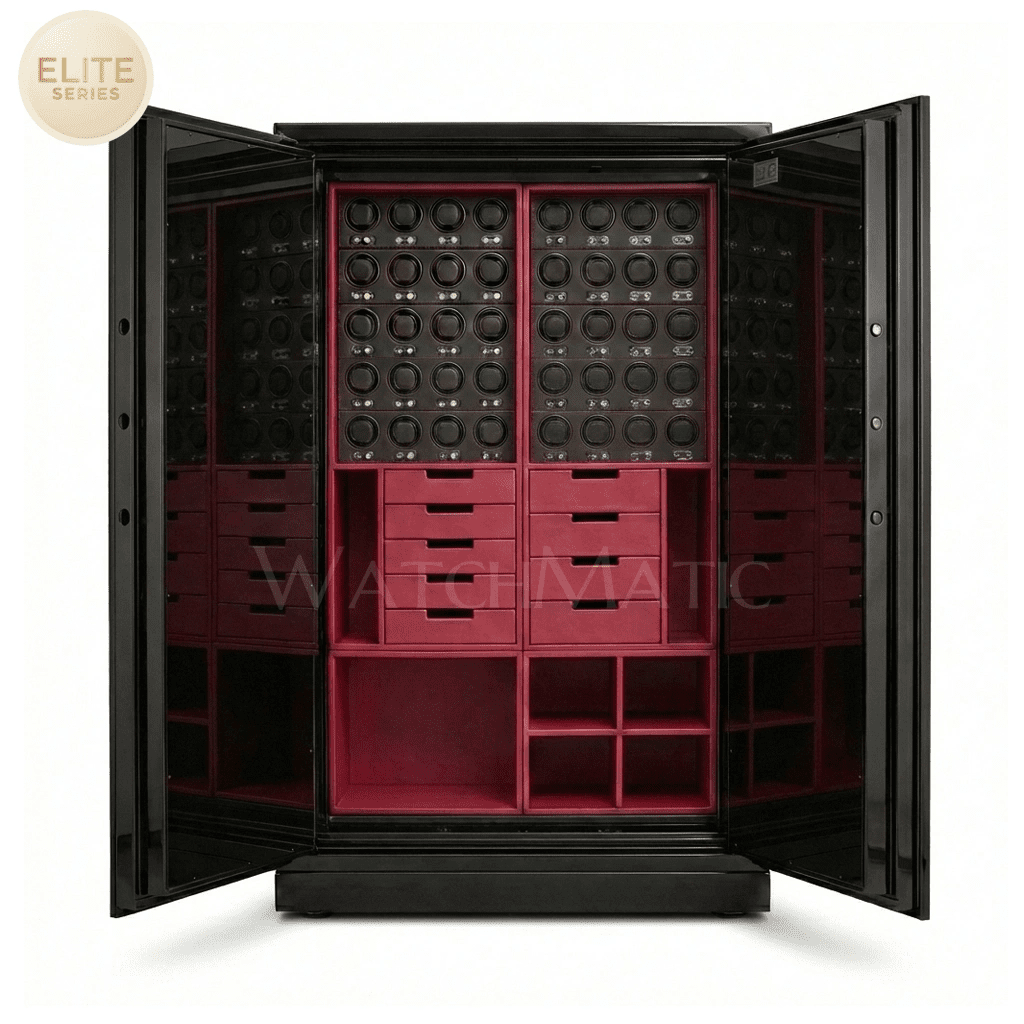
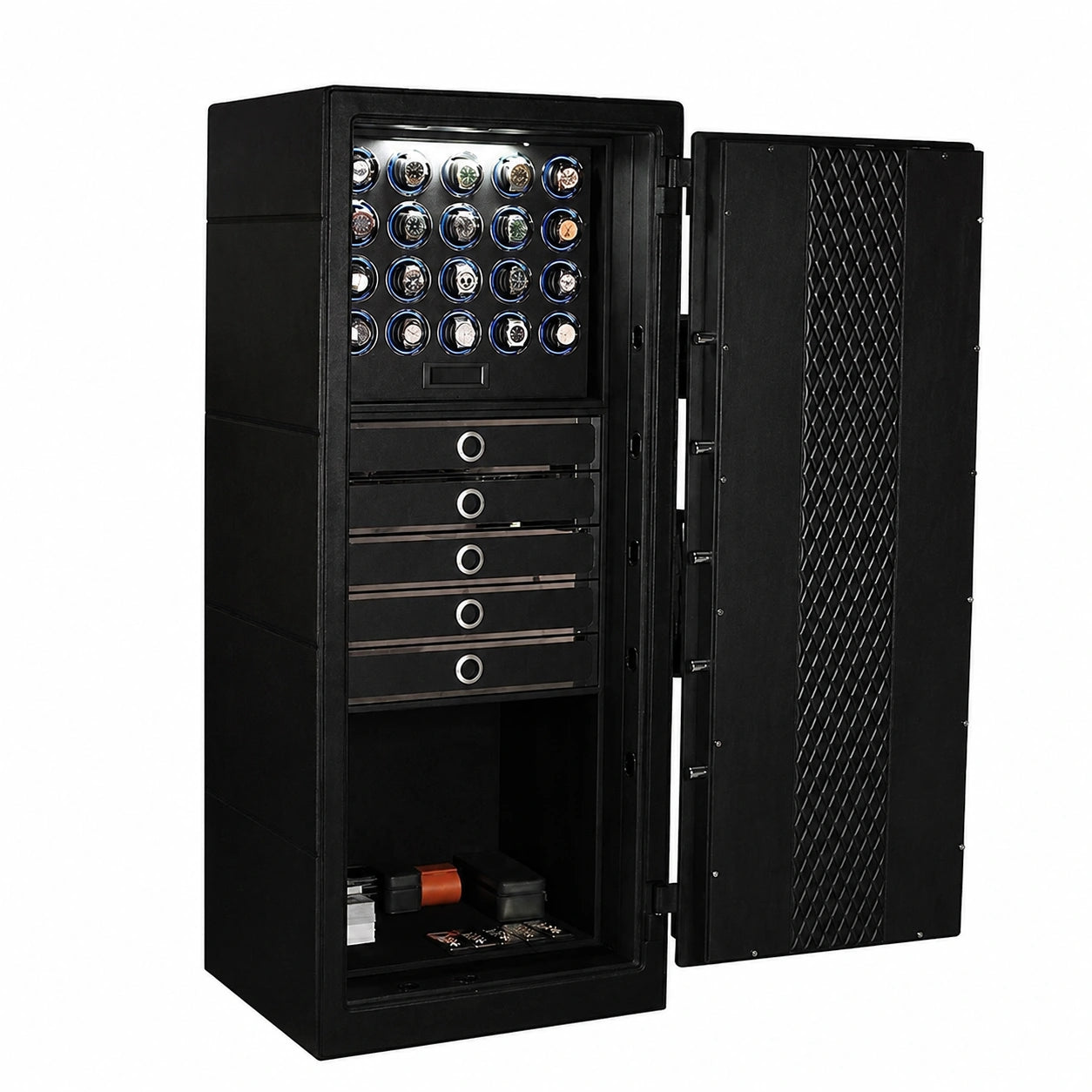
Depending on the model, the interior may include automatic winding positions, stationary watch holders, and additional drawers.
Centralized organization can reduce unnecessary handling and make it easier to return watches to their assigned positions after use.
Integration With Luxury Interior Design
Modern walk-in closets often incorporate custom cabinetry, premium wood finishes, leather-lined drawers, decorative lighting, and carefully planned storage zones.
A luxury watch safe can complement this environment when its dimensions and exterior design are selected appropriately.
Some collectors prefer the safe to be a visible feature of the dressing room. Others want a more discreet installation integrated into surrounding cabinetry.
Greater Privacy Than an Open Living Area
A private dressing room may attract less casual attention than a watch display placed prominently in a living room or office.
However, privacy is not the same as burglary resistance.
The room's location and the actual security specifications of the safe should be evaluated separately.
2. Freestanding, Built-In, or Concealed: Which Installation Is Best?
There are several ways to position a watch winder safe inside a walk-in closet.
The most suitable arrangement depends on the safe's size, structural requirements, surrounding cabinetry, and how frequently the collection will be accessed.
Option A: Freestanding Watch Winder Safe
A freestanding safe is positioned as a separate unit within the dressing room.
It may be placed against a suitable wall or within an appropriately planned area of the closet.
This arrangement can make initial placement and future service access more straightforward than a tightly integrated cabinet installation.
It still requires suitable floor support, operating clearance, and anchoring where specified.
Option B: Watch Safe Integrated Into Cabinetry
A built-in appearance can be achieved by designing cabinetry around a properly installed safe.
The surrounding panels may visually integrate the safe with wardrobes, shelving, and other interior finishes.
However, decorative cabinetry should not be assumed to support the safe's weight or replace its required structural anchoring.
The installation must also preserve the clearances and access needed for the safe to operate and be serviced.
Option C: Watch Safe Concealed Behind Wardrobe Doors
Some collectors prefer a safe positioned behind a separate decorative cabinet door.
This can provide visual discretion, but it introduces additional considerations.
Both the outer wardrobe door and the safe door must open sufficiently, and the enclosed space must meet any applicable electrical and thermal requirements.
The decorative door must not obstruct emergency access, security hardware, or maintenance.
Compare the Three Arrangements
| Installation Type | Main Advantage | Key Consideration |
|---|---|---|
| Freestanding | Straightforward layout and accessibility | Floor load, anchoring, and room clearance |
| Integrated Cabinetry | Coordinated appearance with closet design | Structural independence, service access, and tolerances |
| Behind Wardrobe Doors | Visual discretion | Multiple door clearances, ventilation, and emergency access |
The best installation is not necessarily the most concealed or visually elaborate. It is the arrangement that remains safe, secure, and convenient to use.
3. Measure the Walk-In Closet Before Choosing a Watch Safe
One of the most common planning errors is selecting a safe based only on its advertised exterior dimensions.
To determine whether a safe will work inside a walk-in closet, measure the complete installation area.
Check the Safe's Height, Width, and Depth
Begin with the external dimensions of the exact model under consideration.
Account for surrounding cabinetry, skirting boards, wall projections, flooring details, and any architectural features that reduce usable space.
A safe that fits between two wardrobe panels may still be unsuitable if there is insufficient room for its door or handle.
Examples of WatchMatic Safe Dimensions
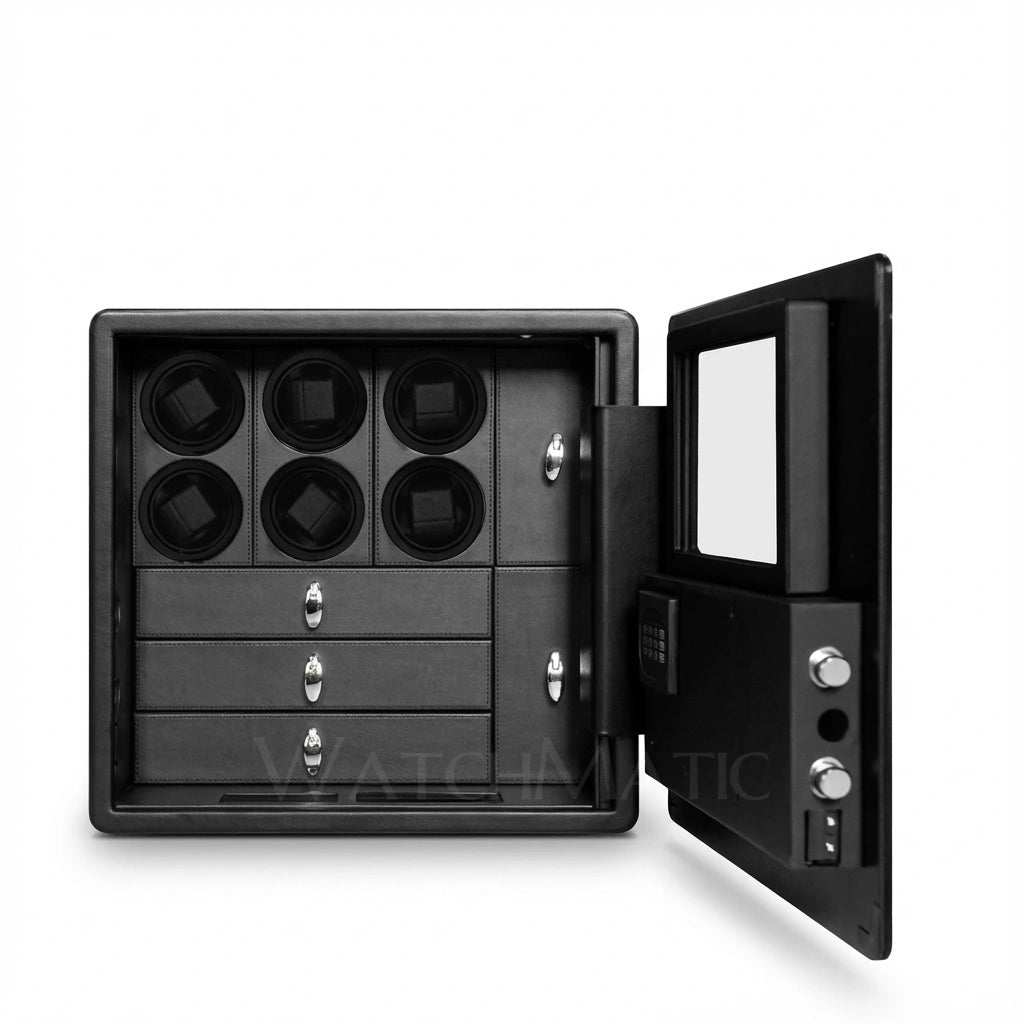
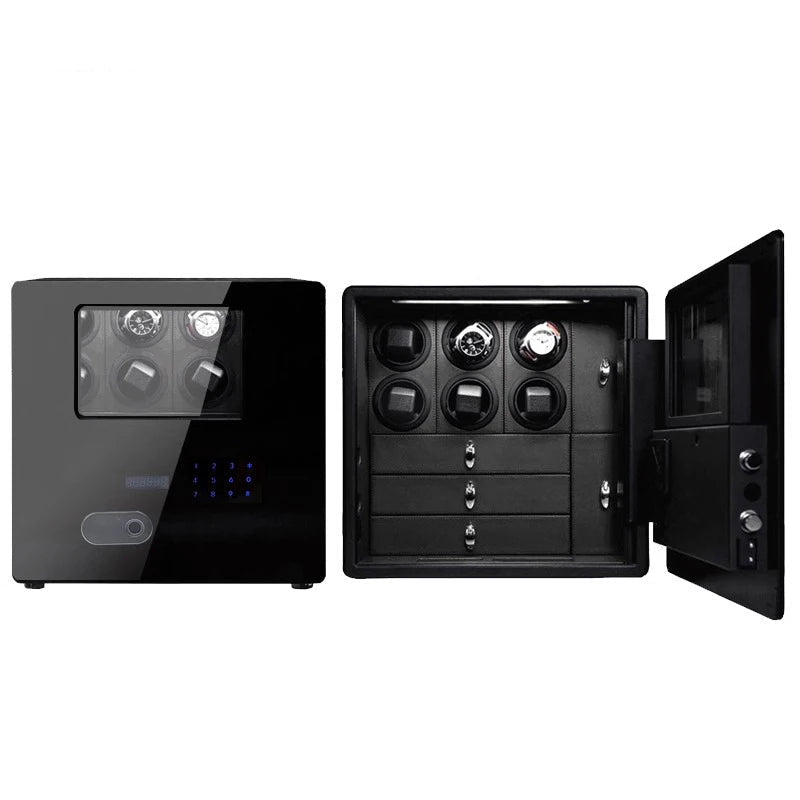
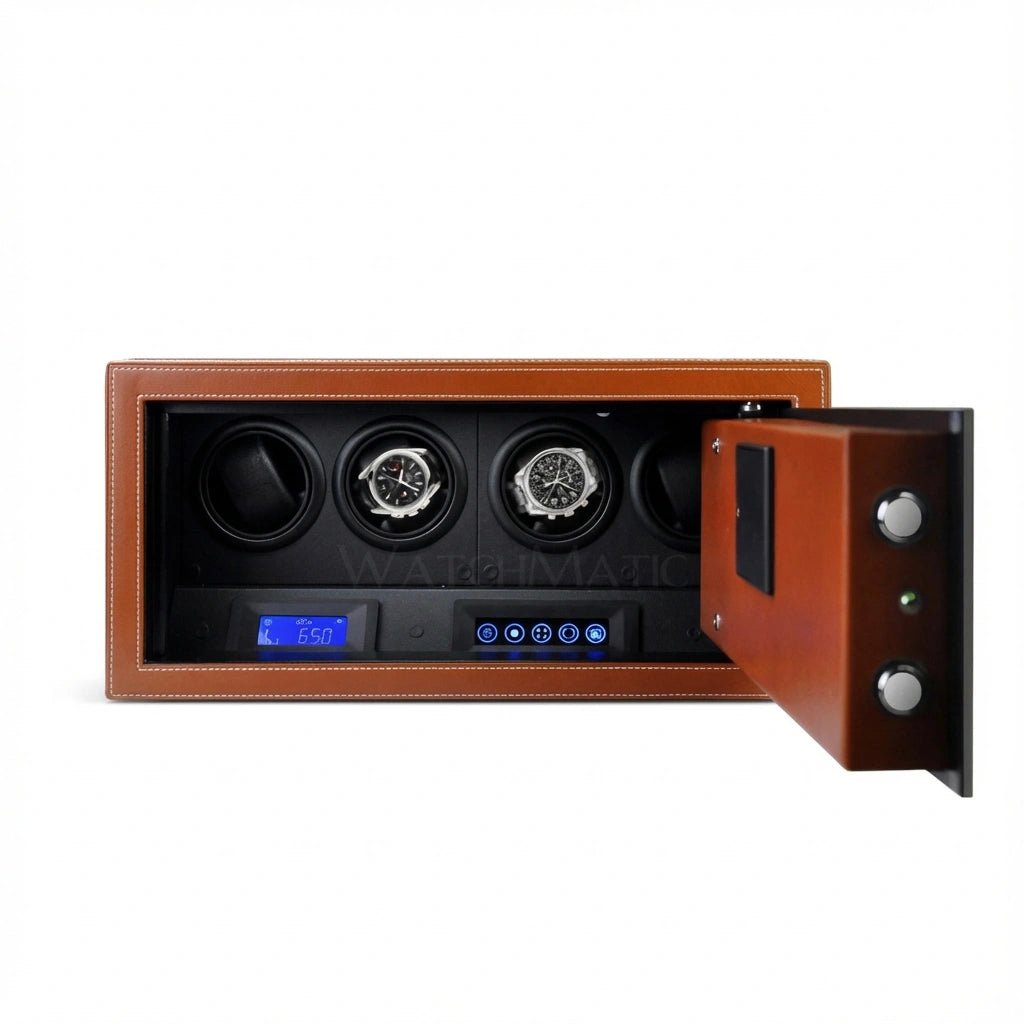
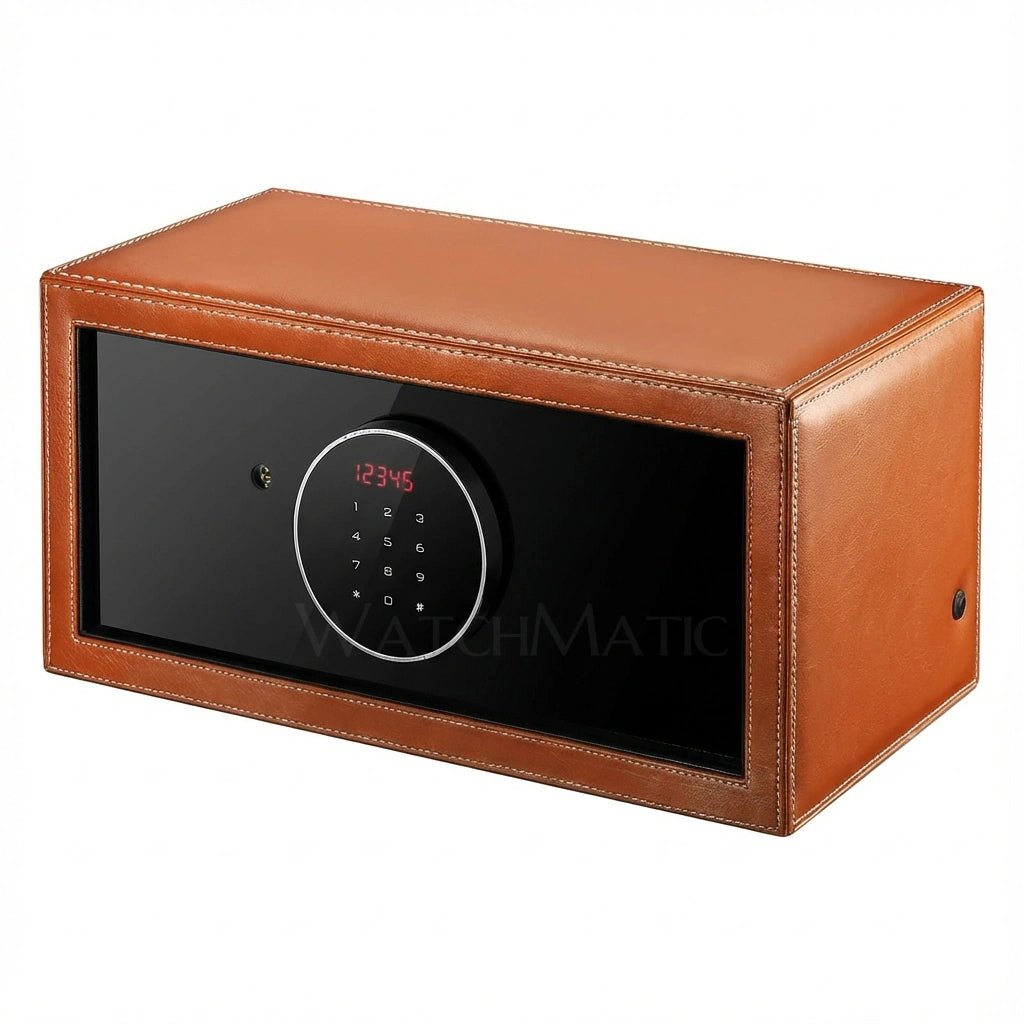
Published specifications for two WatchMatic Titan Vault configurations illustrate how the physical requirements can change with capacity.
| Model | External Dimensions (H × W × D) | Published Weight |
|---|---|---|
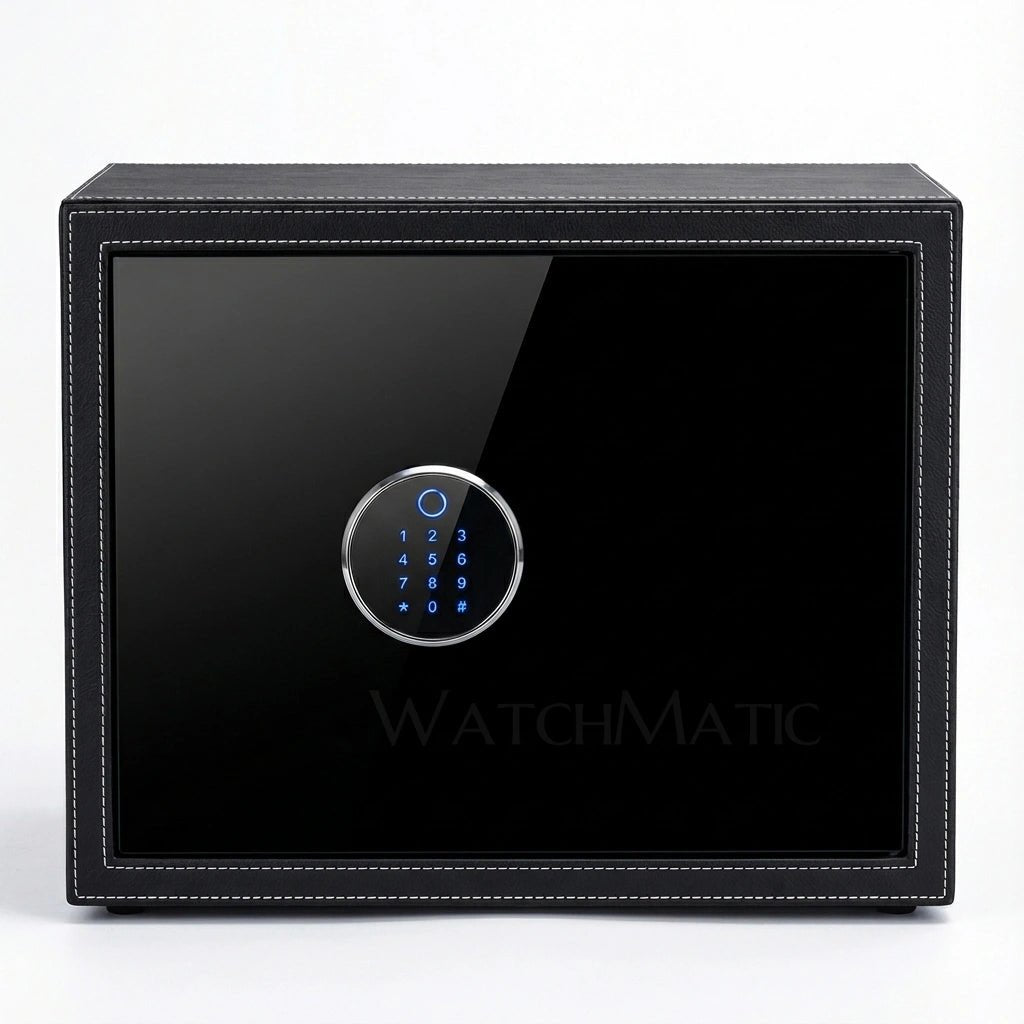
| Titan Vault 8 | 85 × 60 × 45 cm | Approximately 190 kg / 419 lb |
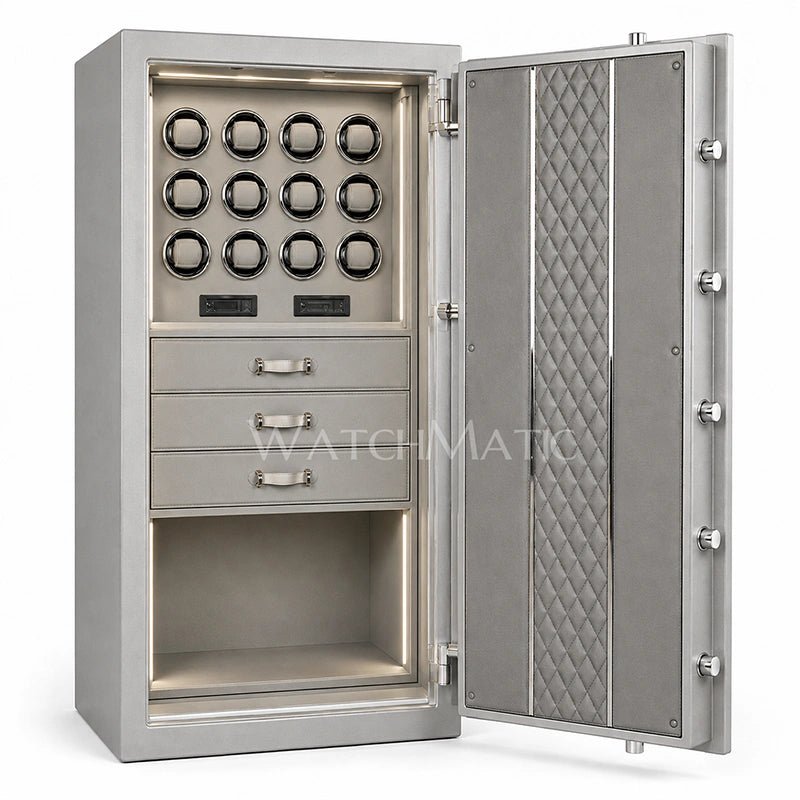
| Titan Vault 40 | 170 × 70 × 60 cm | Approximately 420 kg / 926 lb |
Dimensions and weights refer to published standard configurations. Bespoke changes, security upgrades, and other specifications may affect the final measurements and weight. Confirm the approved technical drawing before arranging installation.
The difference between these models is significant.
The smaller cabinet may fit within a lower storage area, while the full-height model requires considerably more vertical space and presents greater handling and structural considerations.
Neither model should be installed based on room dimensions alone.
4. Allow Enough Room for the Safe Door to Open
The safe door is one of the most important elements of installation planning.
A cabinet may fit perfectly inside a wardrobe recess when closed, yet be difficult or impossible to use once the door is opened.
Consider the Door Swing
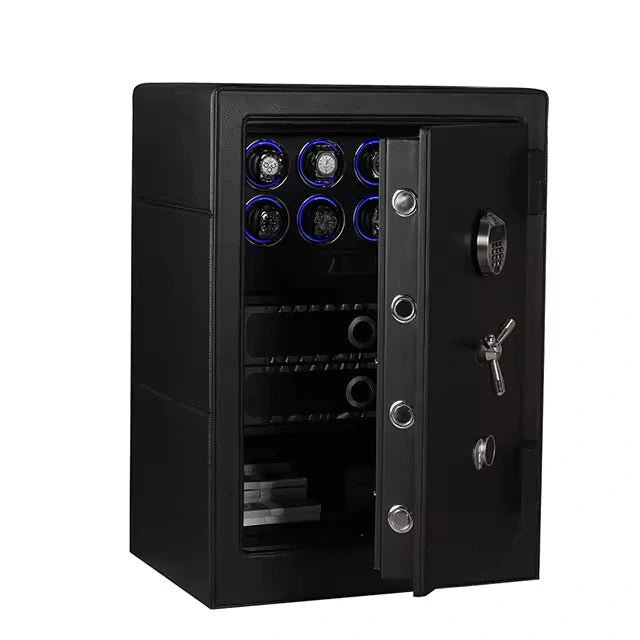
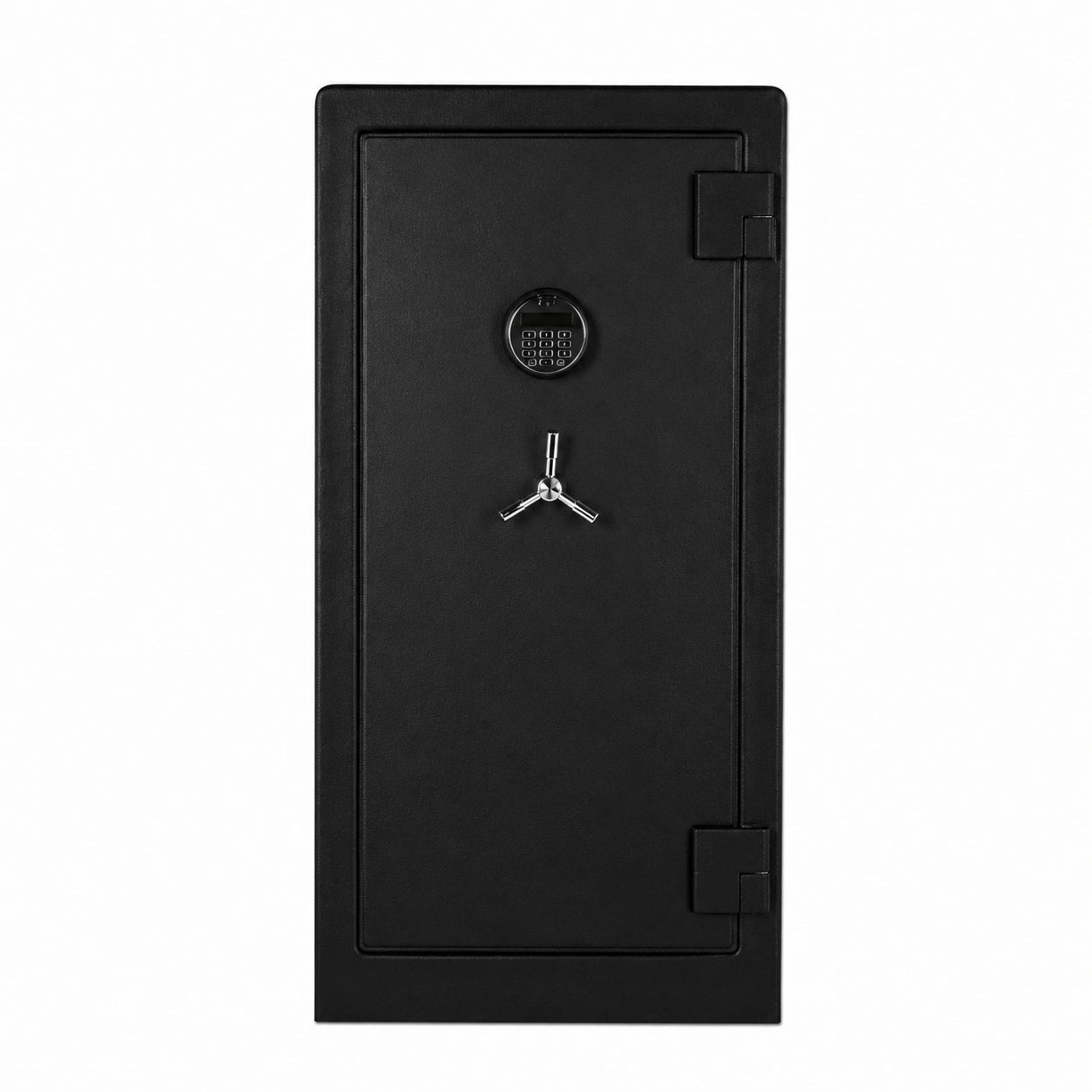
Verify the hinge location, permitted opening angle, door thickness, handle projection, and clearance required by the manufacturer.
A nearby wardrobe panel, wall, or drawer unit may restrict the door's movement.
This becomes particularly important for safes with substantial security doors.
Check the Space in Front of the Safe
You need sufficient room to stand comfortably in front of the open cabinet.
The available space should allow you to remove watches, operate the control panel, and access drawers without awkward handling.
Consider Interior Drawers
Some luxury watch safes include drawers that extend toward the user.
The safe door must open far enough to permit the drawer to travel along its intended path.
Even when the safe door itself clears surrounding furniture, its edge or locking hardware may interfere with the drawer if the opening angle is restricted.
Right-Hinged vs. Left-Hinged Doors
Where the manufacturer offers a choice of hinge orientation, select the arrangement that best suits the closet layout.
For example, a safe installed near the right-hand corner of a wardrobe may need a different door configuration from one positioned near the left-hand corner.
Door orientation should be confirmed before production or purchase, particularly for customized systems.
For more detailed dimension planning, read What Size Watch Safe Do I Need?.
5. Can the Walk-In Closet Floor Support a Heavy Watch Safe?
Floor loading is one of the most important technical considerations, especially for larger watch winder safes.
A full-height luxury safe may weigh several hundred kilograms before the weight of watches, accessories, or additional equipment is included.
This load can be concentrated over a relatively small area.
Do Not Assume All Residential Floors Are Suitable
Floor construction differs between homes, apartments, and multi-story buildings.
A safe installed on a ground-floor concrete slab may present different structural considerations from one installed on an elevated timber floor or an upper-level apartment.
However, being on the ground floor does not automatically guarantee that the installation is suitable.
Safe Weight Is Not the Same as Floor Load Capacity
The safe's published weight is an important starting point, but it is not sufficient to establish whether the floor can support it.
The actual load distribution depends on the safe's base, the contact points, the floor system, and the structural support beneath the intended position.
Simply dividing the safe's weight by its nominal footprint does not provide a complete structural assessment.
Consider the Combined Load
The installation assessment should account for the safe, its contents, relevant installation components, and any other loads that affect the location.
If the safe is being positioned in a cabinet recess, the design must also make clear how its weight is transferred to the building structure.
When Is a Structural Assessment Necessary?
For heavy safes, upper-floor installations, or locations with uncertain floor capacity, consult an appropriately qualified structural professional.
Do not rely on the appearance of the flooring or the fact that the room currently supports ordinary furniture.
A large security cabinet has different loading characteristics from wardrobes or conventional drawers.
6. Check the Delivery Route Before Finalizing the Closet Design
Even if a watch safe fits inside the walk-in closet, it must still be delivered to that position.
This can be particularly challenging in apartments, upper-floor residences, or homes with narrow access routes.
Measure Doorways and Hallways
Identify the narrowest clear opening along the entire route from the delivery entrance to the closet.
Consider door frames, hallway turns, ceiling height, thresholds, and any fixed obstructions.
Verify Elevator Capacity
For apartment installations, review the elevator's rated load capacity and usable internal dimensions.
Measure the clear elevator doorway as well as the space inside the elevator.
The weight of moving equipment and personnel may also need to be included in the transport plan.
Evaluate Stairs and Landings
Staircase access requires careful planning, particularly for heavy safes.
Check the available width, landing dimensions, turns, railings, and vertical clearance.
Professional safe-moving equipment and an experienced installation team may be necessary.
Request Packaged Dimensions
The shipping crate will generally be larger than the safe itself.
Confirm both the packaged and unpackaged dimensions before delivery.
If the safe cannot pass through the final doorway while crated, the moving contractor must assess whether unpacking at an earlier point is safe and practical.
For substantial units, a delivery-route survey can help identify limitations before the product arrives.
7. Do Watch Winder Safes Need Ventilation Inside a Closet?
Ventilation is a common concern when installing powered watch winding equipment inside cabinetry.
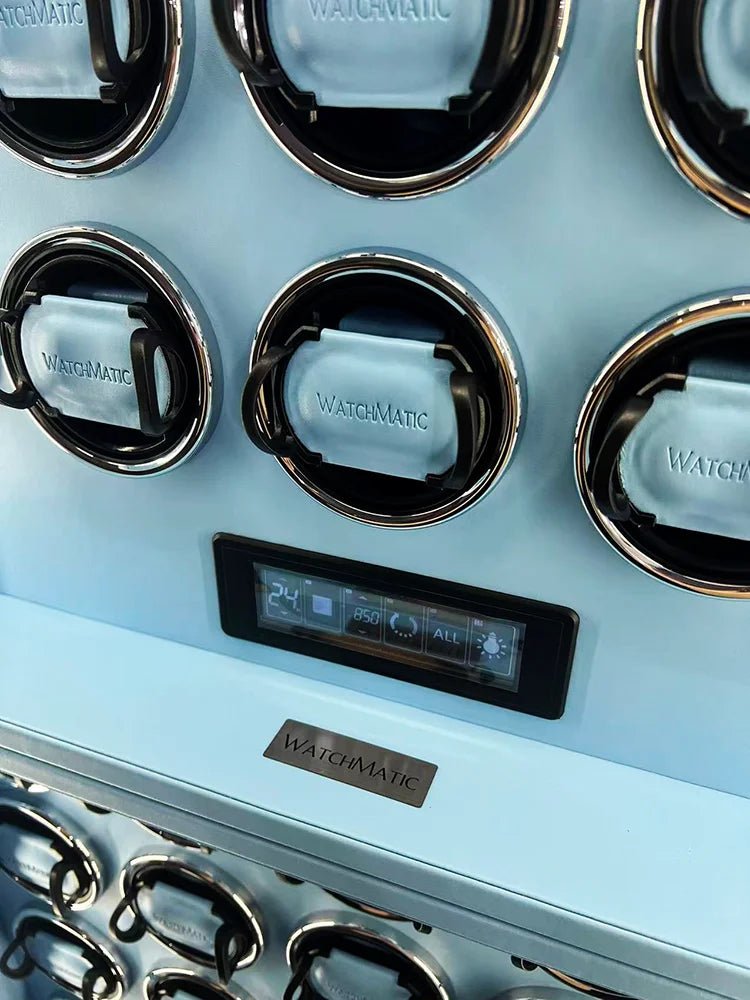
Watch winders contain motors and electronic components, and some luxury watch safes also incorporate control screens, lighting, or other powered features.
These components can generate heat during operation.
However, the appropriate ventilation arrangement depends on the exact product and how it has been engineered.
Does Every Watch Winder Safe Need Ventilation Holes?
No universal rule requires every watch winder safe to have additional ventilation holes.
Some integrated systems are designed to operate with their security doors closed under specified conditions.
Other products may have installation requirements relating to operating temperature, external clearance, or air circulation.
Follow the manufacturer's instructions for the complete system.
Why Fully Enclosed Cabinetry Deserves Attention
If a safe is surrounded by closely fitted wooden panels or concealed inside another closed cabinet, heat may dissipate differently than it would in an open room.
That does not automatically make the installation unsuitable, but it is a reason to verify the manufacturer's installation requirements.
Do not assume that an enclosure is safe simply because the winding motors are relatively small or quiet.
Should You Drill Ventilation Holes Into the Safe?
Do not drill or modify the protective body of a watch safe to create ventilation openings.
Unapproved modifications can compromise the safe's construction, affect its tested performance, and potentially void applicable warranties or certifications.
If airflow or thermal management is required, the design should be addressed through manufacturer-approved construction and installation methods.
What About Integrated Humidity Control?
Some customized watch safes may offer environmental-control equipment.
Its ventilation, electrical, and service requirements must be considered as part of the complete approved system.
An optional humidity-control feature should not be assumed to be standard on every safe.
8. How Should You Supply Power to a Watch Winder Safe?
Integrated watch winding systems require an appropriate electrical supply.
For a walk-in closet installation, power access should ideally be planned before the surrounding cabinetry is completed.
Locate the Electrical Outlet Carefully
Confirm the safe's required voltage, power connection, adapter specifications, and the manufacturer's approved cable route.
Position the outlet so it can be accessed safely and does not interfere with anchoring, door movement, or maintenance.
Avoid Improvised Wiring
Do not route cables through drilled openings in the security enclosure unless the manufacturer specifically approves the arrangement.
Also avoid pinching a power cord between the safe door and body or running it across a walkway where it may be damaged.
For permanent electrical work, use a qualified electrician and follow applicable local electrical requirements.
Consider Power Access Behind Built-In Cabinetry
A tightly fitted wardrobe installation can make a failed adapter or disconnected cable difficult to reach.
Plan appropriate access for service and replacement without requiring unnecessary dismantling of the safe or compromising its security.
What Happens During a Power Outage?
When electrical power is interrupted, the winding system may stop operating until power is restored.
Automatic watches will then continue running using their remaining power reserves.
Whether the lock remains accessible during an outage depends on the exact locking system and its power arrangement.
Some electronic safe locks use their own batteries or have approved emergency-access procedures.
Do not assume that loss of winding power automatically prevents access to the safe, or that every model uses the same backup method.
Confirm the emergency-access procedure before installation and keep any required backup credentials or keys secure.
9. Is Humidity a Problem in a Walk-In Closet?
Humidity is an important consideration for long-term watch storage, particularly in climates where indoor moisture levels vary considerably.
A walk-in closet can provide a suitable environment when the room is properly maintained.
However, not every closet is dry or consistently climate-controlled.
Avoid Damp or Poorly Conditioned Areas
Be cautious about installing a watch safe in areas affected by:
- Water leaks or moisture intrusion.
- Repeated condensation.
- Steam from an adjacent bathroom.
- Damp clothing stored nearby.
- Uncontrolled indoor humidity.
- Strong temperature fluctuations.
These conditions can affect not only watches, but also leather straps, interior linings, wood finishes, and storage accessories.
Walk-In Closets Connected to Bathrooms
Some master bedrooms have a walk-in closet directly connected to an ensuite bathroom.
This layout can be convenient, but it is important to determine whether shower steam or persistent moisture enters the closet.
A dressing room that regularly becomes humid may require environmental improvements before it is suitable for long-term storage of valuable watches.
Does a Safe Automatically Control Humidity?
No.
A closed watch safe does not necessarily maintain a particular humidity level.
Unless the model includes a suitable environmental-control system, the internal conditions can be influenced by the surrounding environment and the safe's construction.
Do not assume that premium upholstery, thick steel walls, or a secure lock automatically provide active humidity regulation.
Check the Environment Before Installation
Where humidity is a concern, monitor the room's conditions and investigate any recurring moisture problem.
Follow the safe and watch manufacturers' recommendations for acceptable storage conditions.
For further guidance, read How Humidity Affects Luxury Watches.
10. Can a Watch Safe Be Installed Inside Wooden Wardrobe Cabinetry?
Yes, an appropriately designed installation can integrate a security safe with wooden wardrobe cabinetry.
However, the cabinetry and the safe perform different functions.
The wardrobe provides visual integration and everyday storage. The safe provides the designated security enclosure.
Do Not Rely on Ordinary Wardrobe Panels to Support a Heavy Safe
Standard wardrobe shelves and cabinet bases may not be designed to carry hundreds of kilograms.
The safe's weight must be supported by a suitable structure or an engineered support arrangement.
Decorative timber panels should not be treated as structural supports unless specifically designed and verified for the load.
Allow Access for Maintenance
Integrated winding systems, electronic controls, and locks may require service during the safe's lifespan.
Surrounding cabinetry should not prevent approved maintenance or access to components that the manufacturer identifies as serviceable.
Protect the Cabinetry During Installation
Heavy safe delivery can place significant demands on nearby finishes.
Door frames, wood panels, flooring, mirrors, and lighting fixtures may need appropriate protection during installation.
For bespoke interiors, it can be useful to coordinate the safe supplier, interior contractor, and professional moving team before final cabinet construction.
Do Not Alter the Safe's Security Construction
A decorative installation should not require cutting away structural sections of the safe or altering its door, hinges, locking mechanism, or approved anchoring arrangement.
Where customization affects the safe itself, obtain confirmation from the manufacturer before proceeding.
11. How Important Is Anchoring a Safe Inside a Walk-In Closet?
Anchoring can be an important part of a watch safe's security installation.
A heavy safe may be difficult to move, but its weight alone should not be treated as a substitute for a properly designed installation.
Use Manufacturer-Approved Anchoring
Where anchoring is required or supported, follow the manufacturer's specifications for the safe and intended building structure.
Anchor selection and installation depend on factors such as the substrate, safe construction, required security performance, and local conditions.
Do Not Anchor Only to Decorative Wardrobe Panels
Wooden cabinet backing, thin panels, and ordinary shelving components are not necessarily suitable structural anchoring points.
A safe should be secured according to the approved installation design, not simply attached to whichever material is easiest to reach.
Check Insurance Requirements
Some insurance arrangements may specify particular safe ratings, anchoring conditions, or other security measures.
These requirements should be clarified before selecting and installing a safe.
Protect the Safe's Tested Performance
If the safe has a particular burglary or fire-resistance certification, the installation must respect any applicable conditions associated with that product.
Unapproved modifications, penetrations, or anchoring arrangements may affect the assumptions under which the product's protection was assessed.
For more information about residential watch security, read How to Keep Your Luxury Watch Collection Safe at Home.
12. Does Putting a Watch Safe Inside a Closet Make It More Secure?
A walk-in closet can offer discretion, but it should not be treated as a security feature by itself.
A wardrobe door may conceal a safe from casual view, yet the actual level of protection still depends on the security enclosure and the broader home security arrangements.
Privacy and Burglary Resistance Are Different
Concealing a safe behind cabinetry may reduce casual visibility.
However, concealment does not establish burglary resistance, fire protection, or insurance eligibility.
Consider Who Can Access the Closet
The appropriate access arrangements depend on how the room is used.
For example, a shared dressing room may require convenient access for multiple household members, while other collectors may prefer restricted access to their watch collection.
Some safe configurations support multiple authorized users, but the available functions depend on the exact locking system.
Verify the Safe's Security Specifications
Not every watch winder safe carries the same burglary or fire-resistance certification.
If a particular certified protection level is required, request documentation covering the exact safe model and approved configuration.
A product described as having reinforced construction or being comparable to a security standard should not automatically be treated as independently certified to that standard.
Keep Access Methods Secure
Follow the manufacturer's instructions for managing access credentials and emergency keys.
Do not store the only emergency access method inside the locked safe itself.
The safe should be part of a broader security strategy appropriate to the value of the collection.
13. Where Should You Position the Safe Within the Closet?
The best position balances convenient access, suitable environmental conditions, available space, and the building's structural requirements.
Against a Suitable Wall
A wall-adjacent position may provide straightforward access and make the safe visually compatible with surrounding wardrobe units.
However, the wall's location alone does not establish adequate floor support or anchoring suitability.
Within a Dedicated Cabinet Recess
A purpose-designed recess can provide a coordinated appearance.
Confirm that the recess accommodates the safe's operating clearances, approved installation method, and access for maintenance.
Near the Dressing Area
Locating the safe near the area where you normally dress can improve convenience.
It should not interfere with the movement of people, wardrobe doors, or drawers.
Avoid Direct Environmental Exposure
Where practical, avoid positioning the safe directly beside strong heat sources, moisture-prone walls, or locations exposed to direct sunlight for extended periods.
Do Not Obstruct the Closet Exit
A large safe should not block the room's entrance, necessary circulation area, or any required escape route.
Consider the space occupied by the safe door when fully opened, not only when closed.
For additional interior design ideas, explore Integrating a Watch Winder Safe Into Your Home Decor.
14. When Is a Bespoke Walk-In Closet Watch Safe Worth Considering?
Standard watch safes can be suitable for many walk-in closets.
However, a bespoke configuration may be useful when the available space, collection size, or interior design requirements are unusually specific.
Custom External Dimensions
A collector may need a particular height or width to fit within an existing wardrobe recess.
Any change to the security enclosure must be assessed as part of the safe's structural and technical design.
Custom Door Orientation
Where available, a particular hinge orientation may improve access in a narrow dressing room.
This should be confirmed before the safe is manufactured.
Customized Winding Capacity
Not every automatic watch in a collection needs a dedicated winding position.
A collector who owns twenty watches may prefer ten active winders and additional stationary compartments rather than twenty winders.
The appropriate arrangement depends on movement types and actual wearing habits.
Additional Watch and Jewelry Drawers
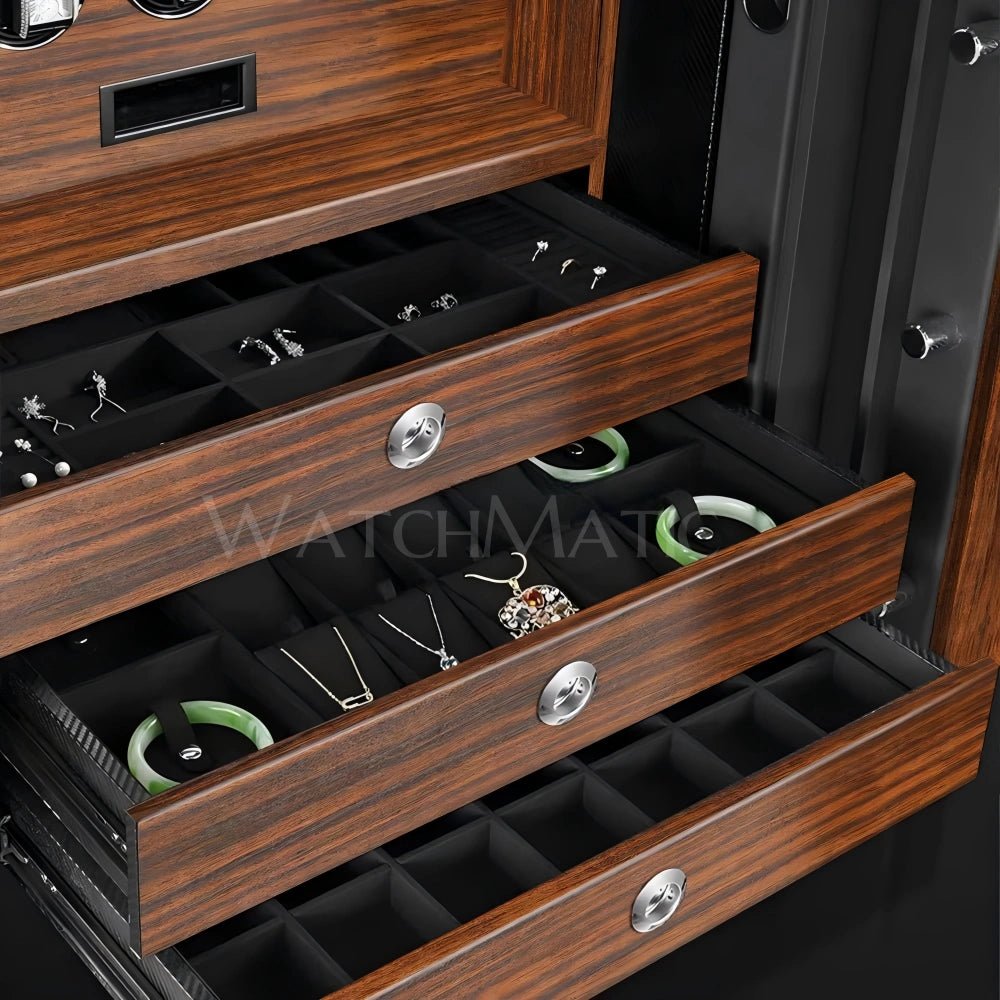
Custom compartments can accommodate watches, jewelry, straps, rings, and other accessories.
Organizing the interior around the collection can reduce the need for multiple separate storage units throughout the dressing room.
Coordinated Interior Finishes
Depending on the design, suitable exterior colors, interior upholstery, wood accents, and drawer materials can be selected to complement the surrounding closet.
Selected Security and Environmental Options
Bespoke projects may also involve requests for specific locking systems, certified protection options, or integrated environmental-control equipment.
Such features must be confirmed for the exact proposed configuration rather than assumed to be included as standard.
Explore WatchMatic Bespoke Luxury Watch Safes for customizable storage layouts and collector-focused design options.
15. Two Practical Walk-In Closet Installation Scenarios
The following examples illustrate how installation requirements can differ according to the size of the safe and the available space.
Scenario A: A Compact Watch Safe in a Residential Dressing Room
Consider a collector who owns eight valuable watches and wants a dedicated safe inside a spacious walk-in closet.
The collector is considering a compact model such as the WatchMatic Titan Vault 8, which has published external dimensions of 85 × 60 × 45 cm and a standard weight of approximately 190 kg.
The key questions are:
- Is the floor suitable for the proposed load?
- Is there enough room for the safe's door and handle?
- Can the safe be appropriately anchored?
- Is the winding system's power connection accessible?
- Can the product be moved through the house safely?
- Does the location meet the manufacturer's environmental requirements?
If these conditions can be satisfied, a compact safe may provide a convenient installation without requiring a full-height cabinet.
However, its relatively modest dimensions do not eliminate structural or delivery considerations.
Scenario B: A Full-Height Watch Winder Safe in a Luxury Walk-In Closet
Now consider a collector with a substantially larger automatic watch collection who wants an integrated floor-standing cabinet.
A standard WatchMatic Titan Vault 40 measures approximately 170 × 70 × 60 cm and weighs around 420 kg, according to published specifications.
This configuration requires a more extensive installation review.
In addition to floor support, the installer must consider:
- The clear delivery route and handling equipment.
- Safe door swing and access to all winding positions.
- The electrical connection and service access.
- Suitability of any surrounding built-in cabinetry.
- Safe anchoring and applicable security requirements.
- The closet's environmental conditions.
In this situation, coordination between the safe supplier, interior designer, structural professional where required, and experienced safe-moving contractor may be appropriate.
The result can be an integrated luxury watch storage system, but the architectural design should follow the safe's verified technical requirements.
16. Common Mistakes When Installing a Watch Safe in a Closet
Buying the Safe Before Measuring the Door Swing
External dimensions alone do not establish whether the cabinet can be used comfortably in its intended location.
Assuming Heavy Wardrobe Shelves Can Support the Safe
Ordinary cabinet components may not be designed for substantial safe loads.
The structural support must be verified independently of the decorative cabinetry.
Ignoring the Delivery Route
A safe that fits inside the closet may still be impossible or unsafe to transport through the building without an appropriate installation plan.
Installing the Safe in a Damp Closet
Persistent humidity or condensation can make a room unsuitable for storing valuable watches and premium interior materials.
Drilling Unapproved Holes for Power or Ventilation
Unauthorized modifications can compromise the safe's construction and may affect its warranty or tested protection.
Blocking Access to Electrical Components
A tightly enclosed installation may complicate future replacement of an adapter, maintenance of electronic controls, or other service requirements.
Assuming Closet Concealment Replaces Security
Privacy can be useful, but the actual protection depends on the safe, its installation, and any additional security arrangements.
Choosing a Full-Height Safe Without Assessing Floor Capacity
A heavy cabinet may require a structural assessment, particularly on upper floors or where the building construction is uncertain.
17. Walk-In Closet Watch Safe Installation Checklist
Before purchasing or commissioning a custom watch safe, review the following installation requirements.
| Installation Area | What to Verify |
|---|---|
| Safe Dimensions | Exact height, width, depth, handle projection, and installation clearances |
| Door Clearance | Hinge orientation, opening angle, and room to extend drawers |
| Floor Loading | Structural suitability for the safe, contents, and concentrated load |
| Delivery Access | Doorways, stairs, elevator capacity, turns, and packaged dimensions |
| Anchoring | Approved structural anchoring and security installation requirements |
| Power Supply | Compatible electrical supply and manufacturer-approved cable access |
| Ventilation | Manufacturer-specified operating temperature and clearances |
| Humidity | Stable indoor conditions without recurring condensation or moisture |
| Cabinetry | Adequate tolerances, structural separation, and service access |
| Security | Required safe rating, lock configuration, anchoring, and insurance conditions |
| Daily Usability | Comfortable access to watches, controls, drawers, and emergency procedures |
The purpose of this checklist is to identify potential problems before the safe arrives.
A well-planned installation should make the watch collection both practical to access and appropriately protected for long-term ownership.
Frequently Asked Questions About Watch Winder Safes in Walk-In Closets
Can you put a watch winder safe inside a walk-in closet?
Yes. A watch winder safe can be installed inside a walk-in closet when the floor structure, available dimensions, door clearance, delivery route, electrical supply, and security installation are suitable. The exact requirements depend on the safe's model, weight, construction, and manufacturer's instructions.
Can a watch safe be built into a wardrobe?
Yes, a watch safe can be integrated into custom wardrobe cabinetry when properly engineered. The surrounding panels should not obstruct the door, power connection, ventilation requirements, or maintenance access. The safe's weight and anchoring must be supported by an appropriate structure rather than ordinary decorative cabinet panels.
Does a watch winder safe need ventilation inside a closet?
Ventilation requirements depend on the product and installation. Powered winding systems and electronics may produce heat, but not every safe requires additional ventilation openings. Follow the manufacturer's specified operating conditions and do not drill unapproved holes in the safe's protective body.
Will a watch winder safe overheat inside a wooden cabinet?
Not necessarily, but tightly enclosed cabinetry can affect heat dissipation. The suitability of the installation depends on the winding system, its electrical equipment, the surrounding environment, and manufacturer-approved clearances. Verify these requirements before enclosing the safe behind decorative panels or wardrobe doors.
Can a heavy watch safe be installed on the second floor?
Potentially, but structural suitability must be assessed for the particular floor and safe. Weight alone does not establish whether an installation is safe. The floor construction, concentrated load, intended position, and delivery route should be evaluated by appropriately qualified professionals where necessary.
Does a 400 kg watch safe need anchoring?
A safe weighing approximately 400 kg should not automatically be considered secure without anchoring. The appropriate installation depends on the manufacturer, building structure, required security level, and any applicable insurance conditions. Use the approved anchoring method rather than relying solely on the safe's weight.
Can I hide a watch safe behind a closet door?
Yes, provided the design preserves access, operating clearance, and applicable electrical and thermal requirements. A decorative wardrobe door can improve visual discretion, but it does not replace the safe's physical security features or approved installation.
Can I use an extension cord for a built-in watch winder safe?
Electrical arrangements should follow the manufacturer's instructions and applicable local electrical requirements. A suitable fixed outlet or approved power arrangement is generally preferable to improvised cables routed through cabinet doors or across walkways. Never modify the safe's security enclosure to route power without manufacturer approval.
Can a watch winder safe be placed near a bathroom?
A walk-in closet adjoining a bathroom may be suitable if it remains dry and its temperature and humidity are properly controlled. Persistent steam, condensation, moisture intrusion, or significant humidity fluctuations should be addressed before storing valuable watches in that location.
Will my automatic watches stop if the closet loses electricity?
If the winding system loses power, its motors may stop, depending on the model and any backup power arrangements. The watches will continue operating using their remaining power reserves until those reserves are exhausted. The electronic safe lock may have a separate power system, so confirm its emergency-access procedure with the manufacturer.
Is a walk-in closet safer than keeping watches in a bedroom?
Not automatically. A walk-in closet may provide more privacy and convenient organization, but the actual level of protection depends on the safe's construction, installation, access control, and broader home security measures. Room location alone does not establish burglary resistance.
Can I customize a watch winder safe to fit my closet?
Yes. Bespoke watch safe projects may accommodate specific dimensions, winding capacities, drawer layouts, door orientations, finishes, and selected security options. The proposed design must still meet applicable engineering, installation, and protection requirements. Customization feasibility should be confirmed before production.
Do I need a full-height watch safe for a walk-in closet?
No. The most appropriate size depends on the number of watches, their value, the required winding capacity, available space, and installation conditions. A compact safe may suit a smaller collection, while a full-height cabinet may be appropriate for a larger collection requiring numerous winding positions and storage drawers.
Final Thoughts: A Walk-In Closet Can Be an Excellent Place for a Watch Winder Safe
A luxury walk-in closet can provide a refined and practical location for a watch winder safe.
It brings valuable watches closer to your daily dressing routine, supports organized collection storage, and allows the safe to become part of the home's interior design.
However, successful installation requires more than choosing a visually attractive cabinet.
The safe must fit the available space, open and operate correctly, receive appropriate electrical power, and be supported by a suitable building structure.
Ventilation, humidity, service access, anchoring, and delivery logistics must also be evaluated according to the exact model and installation conditions.
For some collectors, a compact freestanding safe will provide the right balance of storage and convenience. Others may prefer a larger cabinet integrated into premium wardrobe cabinetry.
When standard dimensions or layouts are unsuitable, a bespoke system can provide additional flexibility, subject to the necessary technical and security requirements.
WatchMatic offers luxury watch winder safes, watch safe cabinets, and bespoke watch storage solutions for private collectors seeking dedicated storage in dressing rooms, residences, and other carefully designed interiors.
The best walk-in closet watch safe is not simply the one that fits your wardrobe. It is the one that fits your collection, your home, and the technical requirements of a secure, practical installation.