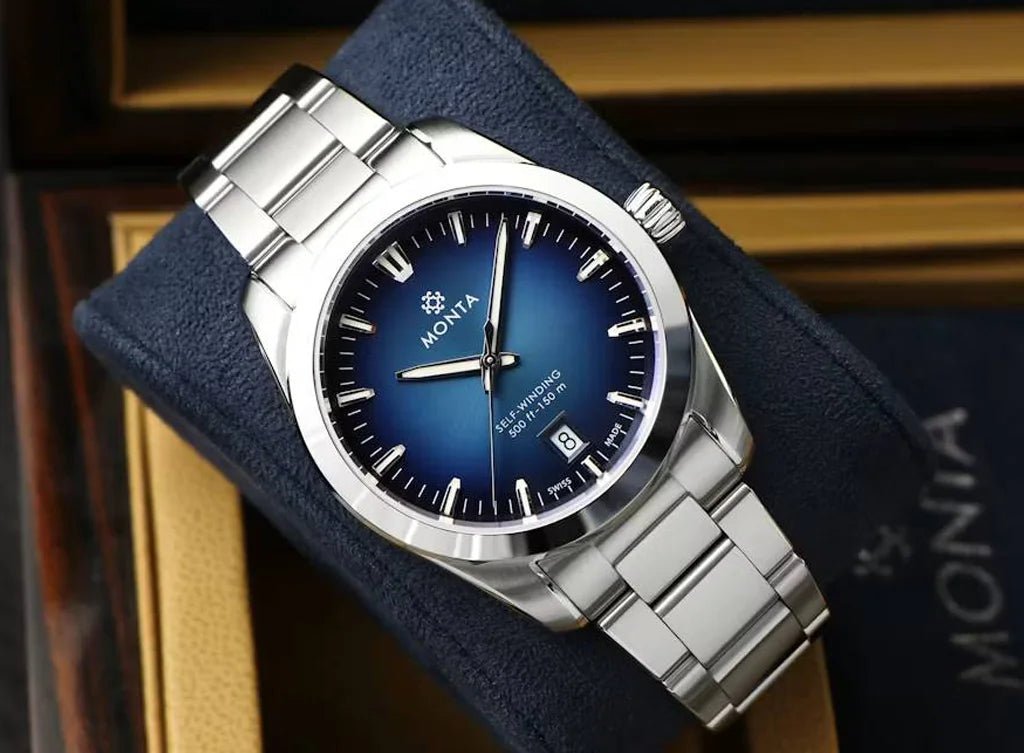
The best watch winder for MONTA watches is a programmable model with adjustable Turns Per Day (TPD), clockwise, counterclockwise and bidirectional rotation options, controlled rest cycles, quiet operation, and secure cushions that accommodate MONTA's highly articulated bracelets.
The current MONTA collection is unusually straightforward from a watch-winder perspective because all current models are self-winding mechanical watches.
Current collections divide primarily into two movement families:
MONTA Caliber M-22
- Noble
- Noble 40
- Triumph
- Oceanking
MONTA Caliber M-23
- Atlas
- Noble Voyager
- Skyquest
Both current movement families provide approximately:
56 hours of power reserve
and MONTA describes both as using:
bidirectional automatic winding.
This means every current MONTA can potentially benefit from a properly configured conventional watch winder.
However, one universal TPD number should still not be treated as a factory specification unless verified for the exact movement.
The correct decision process is:
MONTA Reference → Generation → M-22 or M-23 → Winding Requirement → Physical Fit → TPD and Rotation Program
Does a MONTA Watch Need a Watch Winder?
No MONTA automatic mechanically requires a watch winder.
A self-winding movement uses an oscillating rotor to convert motion into mainspring energy while the watch is worn.
If the watch remains stationary longer than its available power reserve, it eventually stops.
That is normal.
A watch winder is mainly useful for:
- Keeping a MONTA running between wears
- Maintaining the time
- Maintaining the date
- Keeping a 24-hour indication synchronized
- Reducing repeated restarting
- Managing several automatic MONTA watches
- Keeping a larger automatic-watch collection ready to wear
A stopped automatic watch is not automatically a problem.
A watch winder should therefore be regarded as a convenience and collection-management device, not as a substitute for servicing or as a requirement for mechanical longevity.
For a broader explanation, see the Watch Winder Guide.
Are All Current MONTA Watches Automatic?
Yes.
Current MONTA care guidance states that MONTA watches use self-winding mechanisms, and the current catalog confirms automatic movements throughout the principal collections.
The current lineup includes:
- Atlas
- Noble
- Noble 40
- Noble Voyager
- Oceanking
- Skyquest
- Triumph
This makes MONTA considerably simpler than brands that combine:
- Automatic
- Manual
- Quartz
- Solar
watches under one catalog.
For the current MONTA lineup:
mechanical MONTA = automatic MONTA.
Current MONTA Movement Overview
| MONTA model | Caliber | Functions | Approx. reserve | Automatic? |
|---|---|---|---|---|
| Noble | M-22 | Time + Date | 56 h | Yes |
| Noble 40 | M-22 | Time + Date | 56 h | Yes |
| Triumph | M-22 | Time + Date | 56 h | Yes |
| Oceanking | M-22 | Time + Date | 56 h | Yes |
| Atlas | M-23 | 24-Hour + Date | 56 h | Yes |
| Noble Voyager | M-23 | 24-Hour + Date | 56 h | Yes |
| Skyquest | M-23 | 24-Hour + Date | 56 h | Yes |
The current range is therefore organized around two main movement families rather than seven unrelated automatic calibers.
Why Exact Caliber Still Matters
Because the catalog is mechanically coherent, it would be easy to conclude:
“Every MONTA is the same inside.”
That is not correct.
The main current distinction is:
M-22
Time and date.
M-23
Time, date and an additional 24-hour indication.
Both are automatic.
Both provide approximately 56 hours.
Both use bidirectional automatic winding.
But they are still different caliber applications.
Therefore:
same power reserve + same brand + same winding type ≠ automatically identical programming requirement.
MONTA M-22 Movement
The current M-22 is the principal time-and-date caliber used across much of the MONTA collection.
Current M-22 watches include:
- Noble
- Noble 40
- Triumph
- Oceanking
MONTA identifies the current M-22 in Noble 40 and Triumph documentation as being based on the Swiss-made Sellita SW300 architecture.
Representative characteristics include:
- Self-winding mechanical movement
- Bidirectional rotor
- Approximately 56 hours of power reserve
- Time
- Central seconds
- Date
- Manual-winding capability through the crown
Which MONTA Watches Use M-22?
Noble
Refined everyday sports watch.
Noble 40
Larger contemporary Noble variant.
Triumph
Field-inspired everyday watch.
Oceanking
300-meter dive watch.
The same broad movement platform therefore appears across watches with very different purposes.
Dive Watch, Field Watch and Dressier Sports Watch Can Share the Same Movement Logic
This is an important MONTA-specific point.
The:
- Oceanking
- Triumph
- Noble
look and function very differently.
Yet their current movement architecture is closely related through M-22.
Therefore, external design should not be used to infer TPD.
Best Watch Winder for MONTA Noble
The current Noble uses:
MONTA Caliber M-22
with approximately:
56 hours of power reserve.
Representative dimensions are:
- 38.5 mm diameter
- 9.7 mm thickness
- 47 mm lug-to-lug
- 20 mm lug width
- 150 m water resistance
For a Noble, prioritize:
- Adjustable TPD
- Multiple rotation modes
- Controlled rest cycles
- Quiet motor operation
- Smooth starts and stops
- Compressible bracelet cushion
Noble Is Physically Easy to Accommodate
At only 38.5 mm and under 10 mm thick, the Noble should fit comfortably in most properly designed watch winders.
The more important issue is often:
bracelet circumference
rather than:
case clearance.
Noble Bracelet Fit
MONTA's articulating bracelet is designed to wrap closely around the wrist.
This is excellent for wearability.
However, a bracelet sized for a relatively small wrist may not naturally close around an oversized rigid watch-winder cushion.
Use a holder that:
- Compresses sufficiently
- Allows the clasp to close naturally
- Avoids excessive link tension
- Keeps the watch centered
Noble Case Size Does Not Determine TPD
A 38.5 mm Noble does not need fewer daily turns simply because it is smaller.
Case dimensions affect physical fit.
The movement determines winding requirements.
Best Watch Winder for MONTA Noble 40
The newer Noble 40 also uses:
M-22
with approximately:
56 hours of reserve.
Representative dimensions are:
- 40 mm diameter
- 10.5 mm thickness
- 47.8 mm lug-to-lug
- 200 m water resistance
Movement-wise, its watch-winder logic is closely related to other current M-22 references.
Noble 38.5 vs. Noble 40
| Feature | Noble | Noble 40 |
|---|---|---|
| Movement | M-22 | M-22 |
| Winding | Automatic | Automatic |
| Reserve | 56 h | 56 h |
| Diameter | 38.5 mm | 40 mm |
| Water resistance | 150 m | 200 m |
The additional case size and water resistance do not create additional winding demand.
200m Water Resistance Does Not Mean More TPD
Water resistance depends on:
- Case construction
- Crown
- gaskets
- crystal
- caseback
It does not determine:
- Rotor direction
- TPD
- daily winding cycles
Therefore:
200 m Noble 40 ≠ stronger winder program than 150 m Noble.
Current Noble Generation Matters
Current Noble references provide approximately 56 hours.
Collectors buying an older MONTA should still identify the production generation.
Movement specifications can evolve even when the collection name remains unchanged.
Therefore:
current Noble specification should not automatically be applied to every historical Noble.
MONTA Triumph
The current Triumph uses:
M-22
with approximately:
56 hours of power reserve.
Representative dimensions are:
- 40 mm diameter
- 10.5 mm thickness
- 47.8 mm lug-to-lug
- 200 m water resistance
The current watch combines:
- Field-watch styling
- Screw-down crown
- Automatic movement
- Sapphire display back
- Articulating bracelet
Best Watch Winder for MONTA Triumph
For the Triumph, prioritize:
- Adjustable TPD
- Bidirectional capability
- Controlled rest periods
- Quiet motor
- Smooth rotation
- Bracelet or leather-strap compatibility
Its relatively modest case dimensions make physical compatibility straightforward.
Field Watch Does Not Mean Different Winding Requirement
The Triumph is designed around a field-watch aesthetic.
That does not create:
- Additional rotor demand
- Higher TPD
- A special direction setting
The M-22 remains the relevant factor.
Tool-Watch Durability Does Not Mean Aggressive Winding
A watch can be designed for active wear and still benefit from gentle storage.
There is no reason to use:
- Maximum rotation
- Continuous spinning
- Abrupt motor starts
simply because the Triumph is a robust sports watch.
MONTA Oceanking
The current Oceanking uses:
M-22
with approximately:
56 hours of power reserve.
MONTA explicitly describes its automatic rotor as:
bidirectional.
Representative current dimensions are:
- 40.5 mm diameter
- 12 mm thickness
- 48 mm lug-to-lug
- 300 m water resistance
Best Watch Winder for MONTA Oceanking
For an Oceanking, prioritize:
- Adjustable TPD
- CW/CCW/bidirectional programming
- Controlled rest cycles
- Bracelet compatibility
- Secure cushion retention
- Smooth motor movement
- Crown-guard clearance
300m Water Resistance Does Not Affect TPD
The Oceanking's 300-meter rating reflects dive-watch case engineering.
It does not change the automatic movement's winding requirement.
Therefore:
300 m diver ≠ more TPD.
Ceramic vs. Aluminum Bezel Does Not Affect Winding
Current Oceanking references are available with different bezel materials.
These change:
- Appearance
- scratch behavior
- visual character
They do not alter:
- M-22
- power reserve
- rotor direction
- daily turns
Bright Dial Colors Do Not Change Winder Settings
Current Oceanking references include distinctive colors such as:
- Black
- Blue
- Orange
- Yellow
Dial color has no relationship with automatic-winding requirements.
Oceanking Bracelet Has More Micro-Adjustment Range
Current Oceanking bracelet designs can offer a larger quick-adjust range than other MONTA models.
That can make fitting the watch around a winder cushion somewhat easier.
However, the bracelet should still close naturally rather than being stretched around an oversized holder.
M-22: One Caliber, Multiple Use Cases
The current M-22 platform spans:
refined everyday sports watch → field-style watch → dive watch.
This is a useful illustration of why a watch-winder setting should follow:
movement
rather than:
watch category.
MONTA M-23 Movement
The current M-23 powers MONTA's 24-hour/date watches.
Current applications include:
- Atlas
- Noble Voyager
- Skyquest
Representative movement characteristics include:
- Self-winding mechanical architecture
- Bidirectional rotor
- Approximately 56 hours of power reserve
- Central 24-hour indication
- Date
- Manual winding through the crown
M-22 vs. M-23
| Feature | M-22 | M-23 |
|---|---|---|
| Automatic | Yes | Yes |
| Bidirectional rotor | Yes | Yes |
| Reserve | ~56 h | ~56 h |
| Date | Yes | Yes |
| 24-hour indication | No | Yes |
| Current applications | Noble, Noble 40, Triumph, Oceanking | Atlas, Noble Voyager, Skyquest |
This is the central movement distinction in the current MONTA catalog.
Same 56-Hour Reserve Does Not Make M-22 and M-23 Identical
Both movements provide similar autonomy.
But M-23 drives an additional 24-hour display.
Therefore, it should still be treated as a separate caliber rather than simply:
“M-22 with another hand.”
Best Watch Winder for MONTA Atlas
The current Atlas uses:
M-23
with approximately:
56 hours of reserve.
Representative dimensions include:
- 38.5 mm diameter
- 10.7 mm thickness
- 47 mm lug-to-lug
- 150 m water resistance
It adds a central 24-hour hand without an external rotating GMT bezel.
Why Atlas Has a Stronger Convenience Case Than Noble
If a Noble stops, the owner typically restores:
- Time
- Date
If an Atlas stops, the owner also needs to restore:
- 24-hour reference indication
The extra setup is not difficult.
But it gives the Atlas slightly more convenience value from remaining running.
24-Hour Hand Does Not Mean Higher TPD
The additional hand is driven by the movement's gear train.
It does not automatically increase the required external rotational winding.
Therefore:
extra hand ≠ extra TPD.
Fixed Bezel Does Not Affect Winder Settings
The Atlas does not need a rotating 24-hour bezel to provide its additional time-zone display.
Bezel architecture is irrelevant to rotor winding.
Atlas and Noble Share Similar Physical Dimensions
Both are approximately:
- 38.5 mm diameter
- 47 mm lug-to-lug
The Atlas is slightly thicker due to its movement/function architecture.
Both remain physically easy to accommodate in a quality winder.
MONTA Noble Voyager
The Noble Voyager uses the same current:
M-23
with approximately:
56 hours of reserve.
It combines the more refined Noble case language with a 24-hour hand.
Representative dimensions are:
- 38.5 mm diameter
- 10.7 mm thickness
- 47 mm lug-to-lug
- 150 m water resistance
Best Watch Winder for Noble Voyager
Prioritize:
- Adjustable TPD
- CW/CCW/bidirectional modes
- Controlled rest cycles
- Compressible bracelet holder
- Quiet motor
- Smooth operation
The movement requirements should follow M-23 rather than simply borrowing settings from the M-22 Noble.
Noble vs. Noble Voyager
This is a particularly clean comparison.
Noble
M-22
Time + Date
56 h
Automatic
Noble Voyager
M-23
24-Hour + Date
56 h
Automatic
They share:
- Case diameter
- overall design language
- bracelet architecture
- power reserve
but use different movements.
Same Case, Same Reserve, Different Caliber
This is probably the strongest MONTA-specific demonstration of why exact reference identification still matters despite the mechanically coherent catalog.
A user searching:
“MONTA Noble watch winder settings”
should determine whether the watch is:
- Noble
- Noble Voyager
before treating the recommendation as movement-specific.
MONTA Skyquest
The current Skyquest also uses:
M-23
with approximately:
56 hours of power reserve.
MONTA describes the movement as self-winding with a bidirectional rotor.
Representative dimensions are:
- 40.7 mm diameter
- 11.8 mm thickness
- 47.4 mm lug-to-lug
- 300 m water resistance
Best Watch Winder for MONTA Skyquest
The Skyquest is one of the strongest current MONTA candidates for watch-winder convenience because it combines:
- Date
- 24-hour hand
- Rotating 24-hour bezel
- Automatic M-23 movement
For a Skyquest, prioritize:
- Adjustable TPD
- Multiple direction modes
- Controlled rest cycles
- Secure bracelet fit
- Crown-guard clearance
- Smooth low-vibration motor operation
Skyquest 24-Hour Bezel Does Not Change TPD
The external bezel allows additional time-zone interpretation.
It is a manually operated component.
It does not influence:
- Rotor winding direction
- TPD
- Power reserve
Therefore:
GMT bezel ≠ special winding program.
300m Water Resistance Still Does Not Affect TPD
Skyquest offers substantially more water resistance than Atlas or Noble Voyager.
All three still use M-23.
The 300-meter Skyquest does not need more daily rotations simply because its case is more robust.
Atlas vs. Noble Voyager vs. Skyquest
| Feature | Atlas | Noble Voyager | Skyquest |
|---|---|---|---|
| Movement | M-23 | M-23 | M-23 |
| Reserve | 56 h | 56 h | 56 h |
| 24-hour hand | Yes | Yes | Yes |
| Rotating 24h bezel | No | No | Yes |
| Water resistance | 150 m | 150 m | 300 m |
| Diameter | 38.5 mm | 38.5 mm | 40.7 mm |
Movement-wise, the three watches are closely related.
Their differences are mainly:
- Case design
- bezel architecture
- water resistance
- aesthetics
One M-23 Program May Be Relevant — but Verify the Exact Reference
Because Atlas, Noble Voyager and Skyquest share M-23, their winding requirements may be closely related.
That still does not justify inventing a MONTA factory TPD number if the manufacturer has not published one.
The safest hierarchy remains:
exact reference → M-23 → verified winding specification.
What Does Bidirectional Rotor Mean for MONTA?
MONTA describes both current M-22 and M-23 applications as using bidirectional automatic winding.
That means the movement is designed to convert rotor motion from both directions into winding energy.
This is useful for watch-winder compatibility.
Bidirectional Rotor Does Not Mean TPD Does Not Matter
A movement can wind in both directions and still need an appropriate amount of total daily activity.
These are separate variables.
Direction
Which rotational directions contribute to winding?
TPD
How much total rotation is delivered?
Therefore:
bidirectional ≠ unlimited TPD.
Bidirectional Internal Winding vs. Winder Mode
A programmable winder may offer:
- CW
- CCW
- Bi
Because MONTA describes current M-22 and M-23 movements as bidirectional, alternating direction can be a logical programming option.
However, the exact TPD should still be selected according to verified movement requirements rather than assuming that any number works.
Do Not Confuse Bidirectional Rotor With Bidirectional Bezel
Skyquest provides a useful example.
A watch can have:
- An automatic rotor that winds bidirectionally
- A rotating external 24-hour bezel
These are completely separate mechanisms.
The bezel has no role in winding the mainspring.
What TPD Should You Use for a MONTA Watch?
TPD means Turns Per Day—the approximate number of complete rotations a watch winder delivers over a programmed day.
MONTA's current public product documentation clearly specifies:
- M-22 or M-23
- Automatic winding
- Bidirectional rotor
- 56-hour reserve
But it does not present one universal consumer TPD figure across the entire catalog.
Therefore, avoid presenting:
“MONTA officially requires X TPD”
unless that number is confirmed for the exact caliber.
For a deeper explanation of daily turns, see the Watch TPD Guide.
Practical MONTA Winder Setup
The most reliable approach is:
- Identify M-22 or M-23.
- Verify the caliber-specific winding requirement.
- Use a programmable winder.
- Start with an appropriate moderate program.
- Use a compatible direction mode.
- Observe whether the watch maintains reserve.
- Increase only if necessary.
This is preferable to immediately selecting maximum TPD.
Why the Lowest Effective Program Is Usually Better
The goal of a watch winder is not to rotate the watch as much as possible.
The objective is:
maintain sufficient reserve for readiness.
Once the watch remains adequately powered, additional rotation may offer no practical advantage.
High TPD Is Not Automatically Better
Higher TPD does not automatically:
- Improve accuracy
- Increase MONTA's 56-hour reserve
- Improve lubrication
- Increase water resistance
- Protect a GMT indication
- Extend service intervals
- Make the rotor more efficient
Use:
appropriate winding
rather than:
maximum winding.
Does a 56-Hour MONTA Need to Run Continuously?
No.
Current MONTA watches provide approximately 56 hours of reserve.
That is more than two days.
For many owners, this is already sufficient.
Example: Frequent Wearer
Wear Noble Monday.
Different watch Tuesday.
Return to Noble Wednesday.
The movement may still be running depending on its starting reserve.
A winder may add little benefit.
Example: Larger Collector
Wear Skyquest on Monday.
Do not return to it until the following weekend.
The watch will have stopped.
A winder becomes more convenient.
56 Hours Is a Useful Middle Ground
Current MONTA movements sit between:
- traditional shorter 38–42-hour movements
- modern long-reserve 70–80-hour movements
This means watch-winder usefulness depends strongly on collection size and rotation frequency.
Which Current MONTA Benefits Most From a Watch Winder?
Mechanically, all current references are compatible with automatic winding.
From a convenience perspective, some have a stronger case than others.
Stronger convenience case
- Skyquest
- Noble Voyager
- Atlas
because their additional 24-hour indication increases the amount of information that may need resetting.
Moderate convenience case
- Oceanking
- Noble
- Noble 40
- Triumph
because time-and-date watches are relatively straightforward to restart.
This Does Not Mean M-23 Requires More TPD
M-23 watches may provide more convenience value from staying synchronized.
That does not mean the movement necessarily needs more daily turns than M-22.
The concepts are different.
Convenience Value vs. Winding Requirement
This distinction is central.
Convenience value asks:
How annoying is it when the watch stops?
Winding requirement asks:
How much movement does the automatic mechanism need?
A watch can score higher on the first without requiring more on the second.
Should You Restart a Stopped MONTA Before Putting It on a Winder?
Yes, this is generally the better approach.
MONTA's care guidance instructs owners of a stopped watch to manually wind it before setting the time and date.
A conventional watch winder is best understood as a:
maintenance-winding device
rather than the fastest way to recover a fully depleted movement.
A sensible sequence is:
manually restart → set time/date/24-hour indication → establish initial reserve → place on winder → maintain
rather than:
stopped watch → maximum TPD.
Manual Winding and Automatic Winding Are Complementary
Current MONTA watches are automatic but can also be manually wound through the crown.
That does not make them manual-wind watches.
It simply means the automatic movement can also receive mainspring energy directly through crown winding.
Screw-Down Crown Procedure Matters
Current MONTA sports watches use screw-down crowns.
After manually winding or setting the watch:
secure the crown correctly
to maintain the intended water-resistance architecture.
A watch winder does not affect crown sealing.
A Watch Winder Does Not Replace Crown Discipline
Even if a MONTA remains continuously powered on a winder, the owner still needs to ensure that the crown is properly secured after:
- Manual winding
- Time adjustment
- Date adjustment
MONTA Generation Matters
Current MONTA watches commonly use the newer 56-hour specifications.
Older references may belong to different movement generations.
This matters particularly on the secondary market.
Do Not Assume Every Historical MONTA Has 56 Hours
A current product page showing:
56-hour reserve
does not prove every earlier version of that collection has the same reserve.
Always check:
- Reference
- Production generation
- Movement
- Owner documentation
Updated Noble Is a Good Example
MONTA has specifically discussed updating the Noble's movement together with other case and bracelet changes.
That demonstrates why:
collection name alone is not enough for historical watches.
Current-Generation Content Should Be Labeled Current
For SEO accuracy, statements such as:
“MONTA Noble has a 56-hour power reserve”
are best understood as referring to the current-generation Noble.
That avoids turning a current specification into an unsupported historical claim.
MONTA Case Sizes and Winder Fit
Current MONTA watches remain relatively moderate in size.
Representative dimensions include:
- Noble — 38.5 × 9.7 mm
- Atlas — 38.5 × 10.7 mm
- Noble Voyager — 38.5 × 10.7 mm
- Noble 40 — 40 × 10.5 mm
- Triumph — 40 × 10.5 mm
- Oceanking — 40.5 × 12 mm
- Skyquest — 40.7 × 11.8 mm
None is unusually large by modern sports-watch standards.
Physical Compatibility Is Generally Straightforward
Unlike MB&F, Christophe Claret or some haute-horlogerie brands, MONTA does not present major three-dimensional chamber problems.
The most important physical question is usually:
bracelet-to-cushion fit.
MONTA Articulating Bracelet and Watch Winders
MONTA's articulating bracelet uses highly flexible links designed to conform closely to the wrist.
This can be beneficial in a winder because the bracelet can wrap naturally around a suitable cushion.
However, cushion size still matters.
Smaller Wrists Need Compressible Cushions
A bracelet sized for a smaller wrist may have limited circumference.
An oversized rigid cushion can create:
- Excessive bracelet tension
- Difficulty closing the clasp
- Unnecessary stress on the first links
Use a compressible holder.
Half Links and Quick Adjustment Can Help
MONTA bracelets include fine-adjustment features that can make fitting easier.
But an owner should not repeatedly alter the bracelet solely to compensate for a poorly sized winder cushion.
The better solution is:
use the correct cushion size.
Oceanking Six-Slot Adjustment
Current Oceanking bracelet configurations provide particularly broad clasp adjustment.
That can be useful when switching between:
- Wrist wear
- Winder storage
However, correct physical support remains more important than maximizing expansion.
Steel Bracelet Weight Does Not Affect TPD
A bracelet-equipped Oceanking is heavier than a Noble on leather.
That does not mean its movement needs more daily turns.
Weight affects:
- Motor load
- cushion retention
not the movement's required winding program.
Leather Strap vs. Bracelet Does Not Change Movement Settings
MONTA also offers curved-end leather straps.
Changing from steel bracelet to leather changes:
- Fit
- cushion geometry
- overall weight
It does not change:
- M-22 or M-23
- power reserve
- rotor architecture
Water Resistance Across MONTA
Current references range approximately from:
150 m → 200 m → 300 m.
Water resistance should not be used to infer TPD.
150m Atlas vs. 300m Skyquest
Both use:
M-23
with approximately:
56 hours.
The Skyquest's stronger water resistance does not create a different movement simply because the case is more robust.
200m Triumph vs. 300m Oceanking
Both current watches use:
M-22.
Again, tool-watch capability and winding architecture are separate variables.
Bezel Type Does Not Determine Winder Settings
MONTA currently uses:
- Fixed bezels
- 60-minute dive bezels
- 24-hour bezels
- Ceramic inserts
- Aluminum inserts
None of these determines:
- TPD
- rotor direction
- power reserve
Date Complication and Winder Convenience
Every current core MONTA model includes a date.
That means allowing the watch to stop generally requires at least:
- Time reset
- Date reset
A winder therefore provides somewhat more convenience than it would with a no-date three-hand watch.
24-Hour Models Add Another Layer
Atlas, Noble Voyager and Skyquest also include a 24-hour indication.
This increases the amount of synchronized information maintained when the watch continues running.
What to Look for in a MONTA Watch Winder
Adjustable TPD
Even with only two current movement families, programmability is preferable to a fixed-output motor.
CW, CCW and Bidirectional Modes
Current M-22 and M-23 movements are described as using bidirectional automatic winding.
A flexible winder makes it easy to match the final verified program.
Controlled Rest Cycles
The watch does not need uninterrupted spinning.
A good winder should alternate:
- Rotation
- Rest
throughout the day.
Quiet Motors
A MONTA winder may sit in:
- Bedroom
- Office
- Dressing room
- Living space
Low noise is useful.
Smooth Starts and Stops
The purpose is to simulate ordinary wrist movement, not create abrupt mechanical motion.
Independent Controls
This is particularly useful if MONTA watches share one winder with:
- Rolex
- Omega
- Tudor
- Grand Seiko
- other movement families
Compressible Cushions
This is arguably the most important physical feature for MONTA.
The bracelet is highly articulating and often fitted closely to the wrist.
Secure Watch-Head Positioning
The watch should remain centered throughout rotation.
Crown Clearance
Current MONTA cases are not unusually wide, but crowns and guards should never contact the enclosure.
Best Watch Winder for One MONTA
For one current MONTA, a compact programmable watch winder is sufficient.
Prioritize:
- Adjustable TPD
- CW/CCW/Bi
- Controlled rest cycles
- Quiet operation
- Smooth rotation
- Compressible bracelet cushion
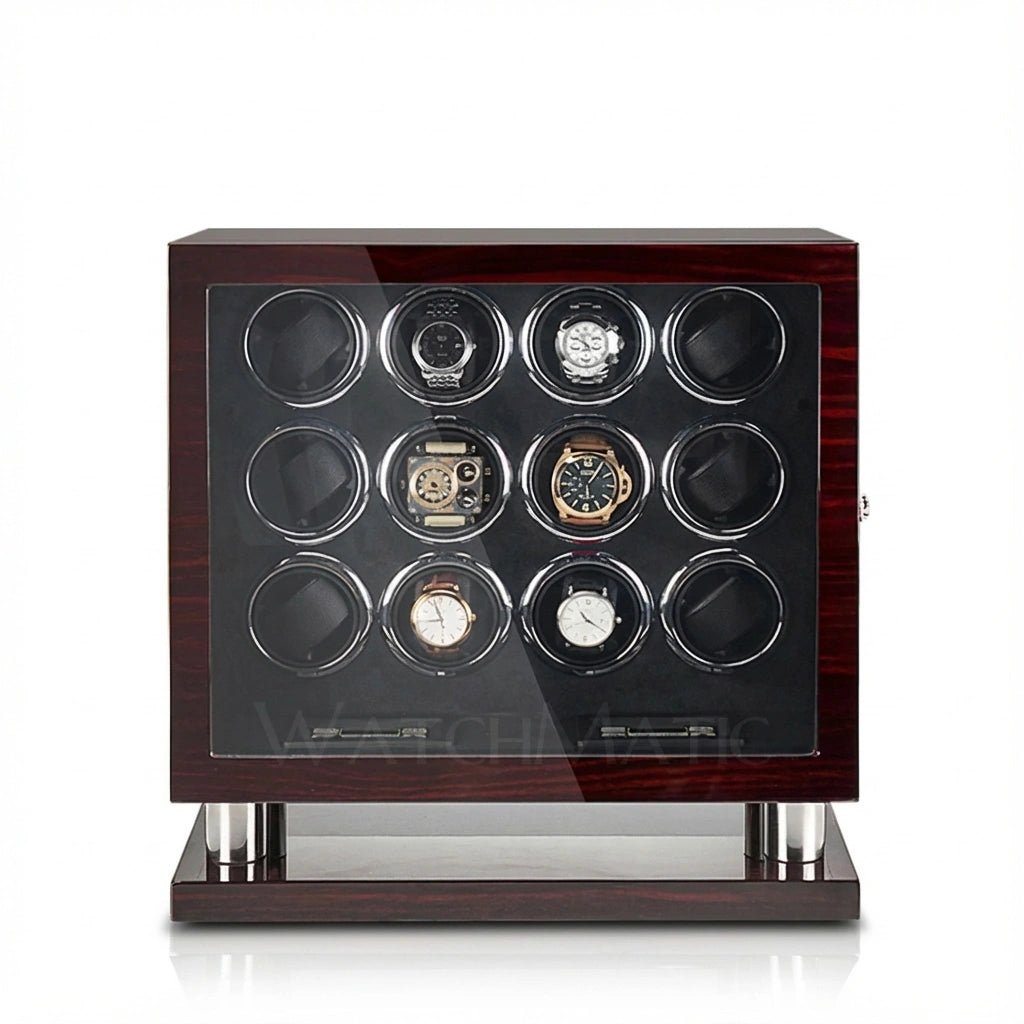
Suitable configurations can be explored in the WatchMatic Watch Winder Collection.
Best Watch Winder for Multiple MONTA Watches
MONTA is particularly well suited to a multi-position winder because the current catalog is entirely automatic.
Consider a four-watch collection:
- Noble
- Oceanking
- Atlas
- Skyquest
All four can genuinely use powered positions.
That is different from brands where half the collection may be manually wound.
Four MONTA Watches Can Use Four Powered Positions Efficiently
For example:
Noble → M-22
Oceanking → M-22
Atlas → M-23
Skyquest → M-23
Every position serves an automatic watch.
Vento Watch Winder for MONTA Watches

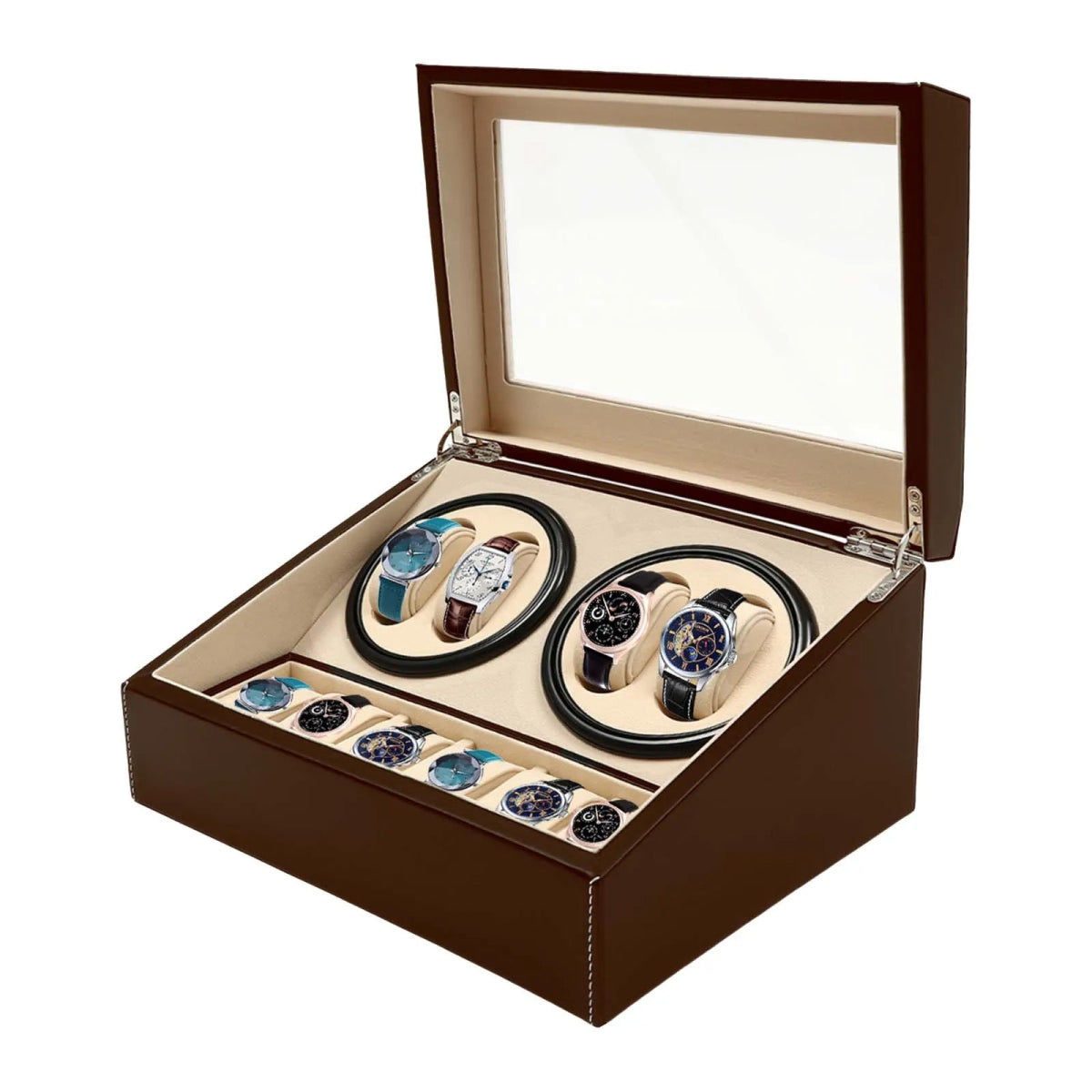
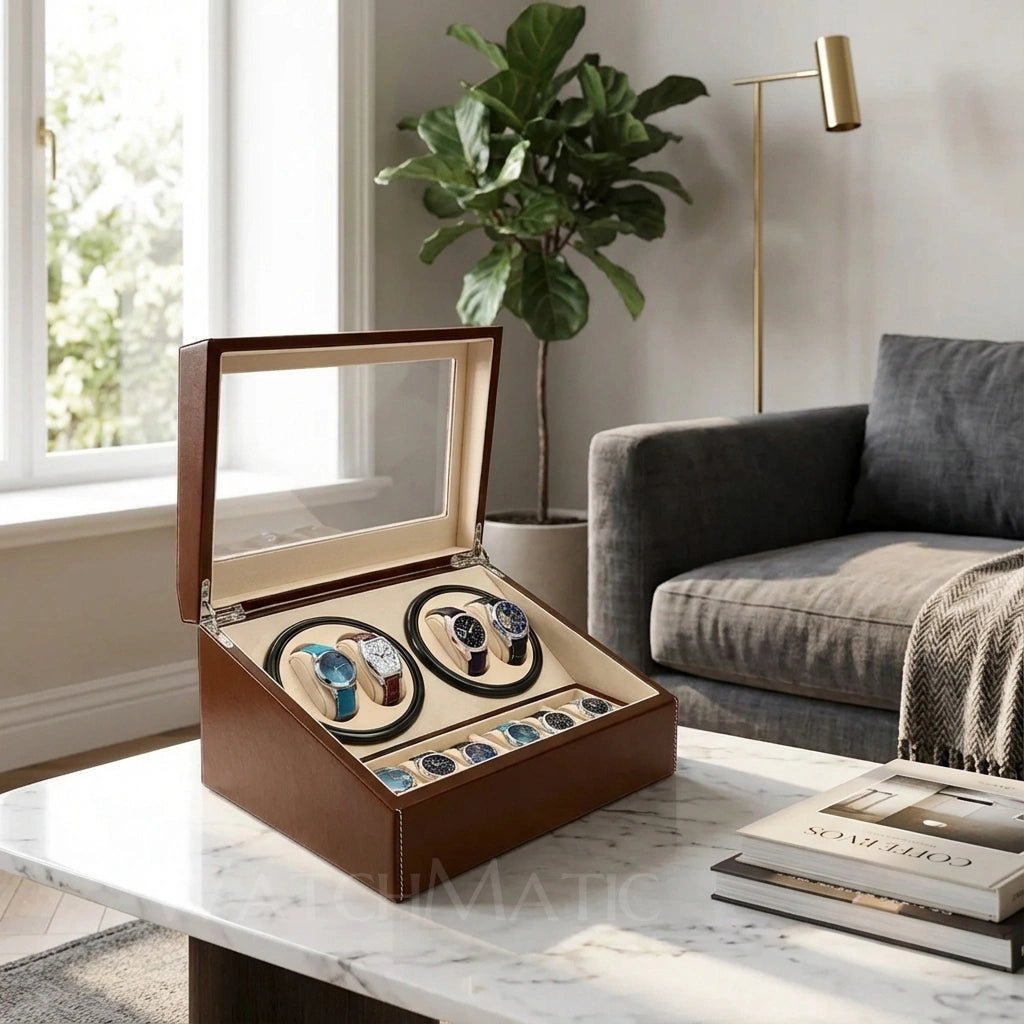
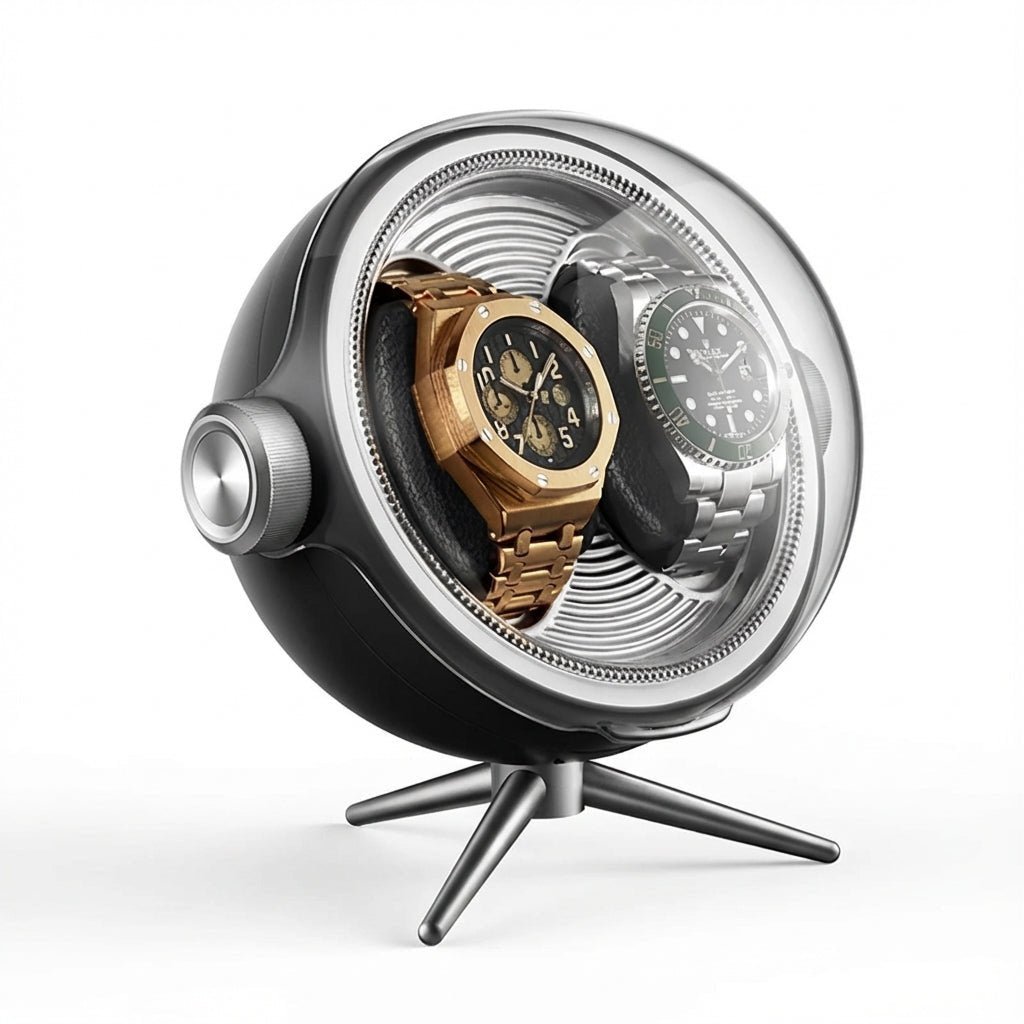
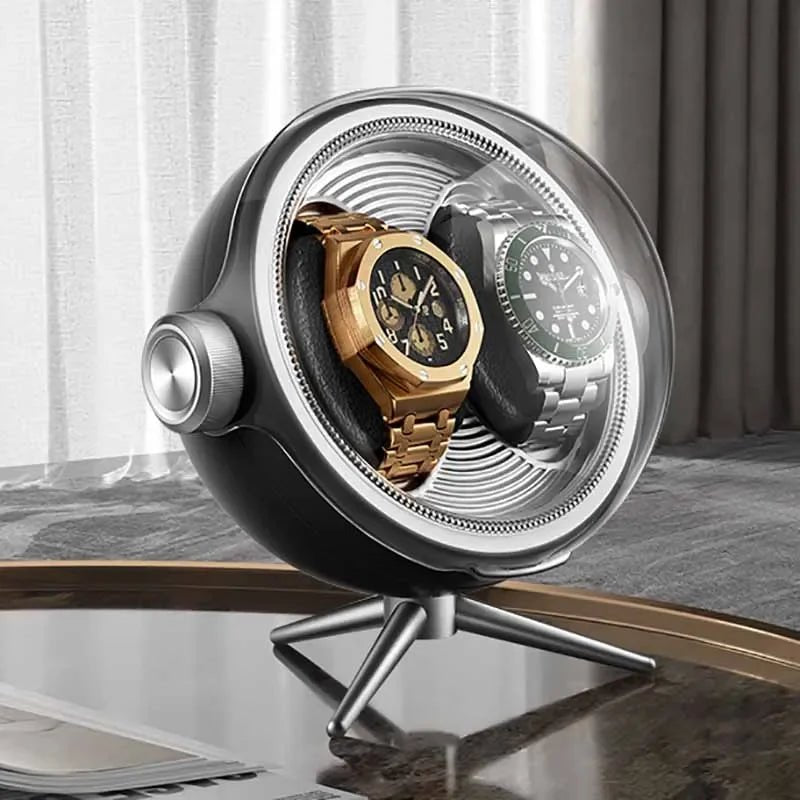
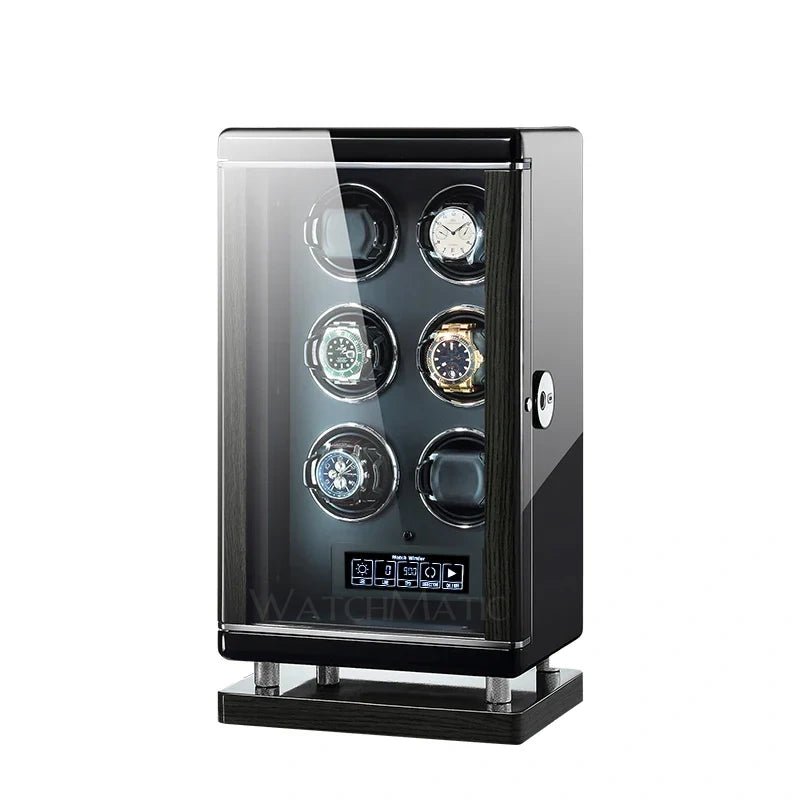
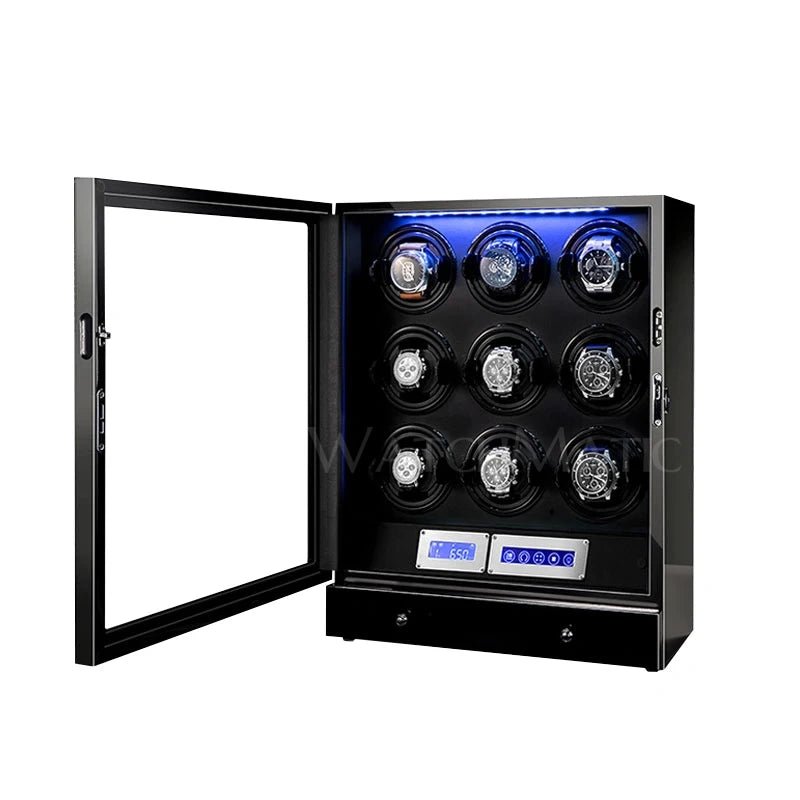
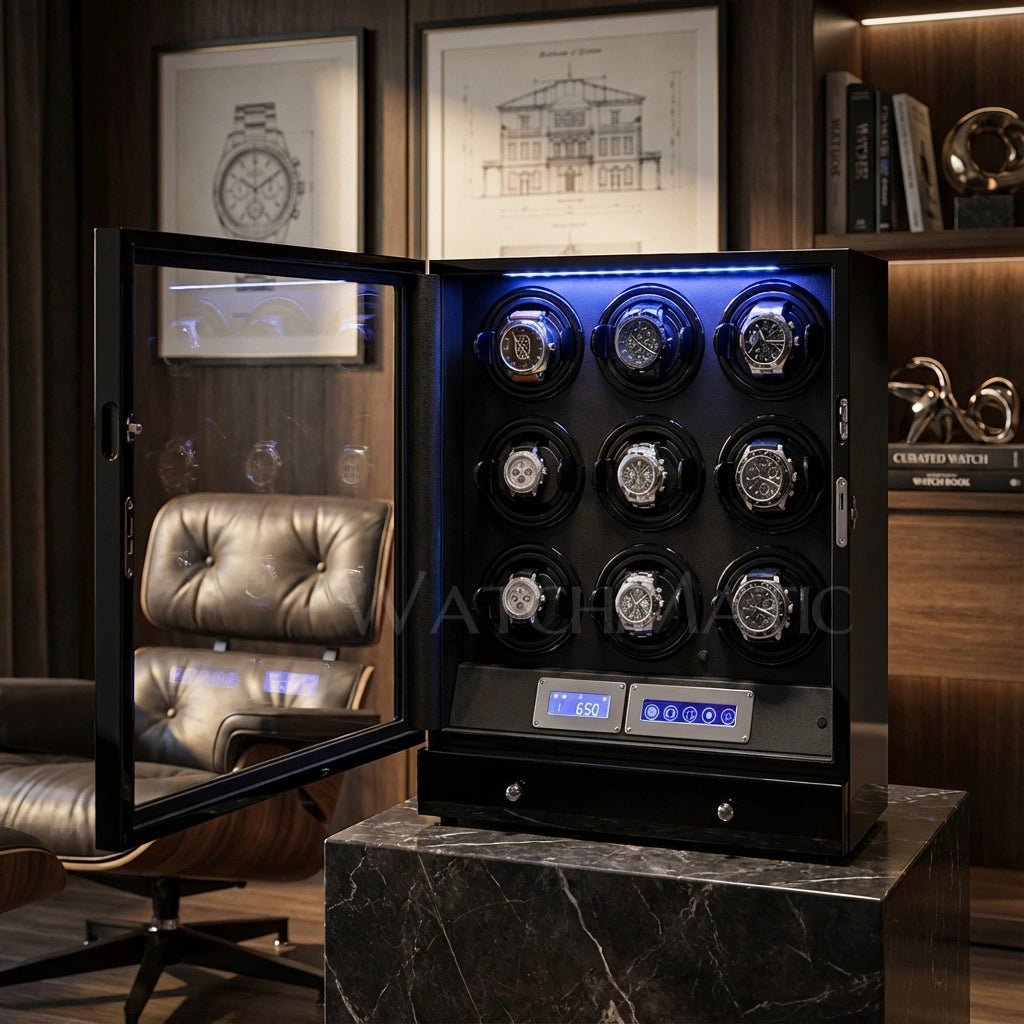
The Vento Luxury Quad Watch Winder is particularly well suited to a compact MONTA collection because it provides four independently controlled winding positions.
Each position can be configured separately for:
- TPD
- Rotation direction
- Winding mode
A practical setup could contain:
- Noble M-22
- Oceanking M-22
- Atlas M-23
- Skyquest M-23
This allows M-22 and M-23 references to be managed independently rather than forcing the entire collection onto one fixed program.
Why Vento Is a Strong Commercial Match for MONTA
MONTA is one of the more natural brands for a four-position watch winder.
The reasons are straightforward:
- Current lineup is fully automatic
- Current watches are moderate in size
- Bracelets are highly flexible
- Most owners are enthusiast collectors
- Multiple MONTA models can realistically coexist in one collection
Vento is therefore a more proportionate first recommendation than a large watch safe for most MONTA-only collectors.
Independent Controls Still Matter With Only Two Calibers
A collector may wonder why independent control matters if the collection contains only M-22 and M-23.
There are two reasons.
First, the movements should still be configurable separately.
Second, many MONTA owners also collect other brands.
A four-position winder may eventually hold:
- MONTA
- Tudor
- Omega
- Grand Seiko
rather than four MONTA watches forever.
One Shared Setting Is Less Flexible Long Term
Independent modules future-proof the winder for collection growth.
That is more useful than a system where all four rotors must run:
- Same TPD
- Same direction
- Same cycle
MONTA's Bracelet Design Works Well With the Right Cushion
The bracelet's articulation means it can conform closely around a compressible holder.
Avoid overly rigid cylindrical pillows that require the bracelet to remain under constant tension.
Is It Safe to Keep a MONTA on a Watch Winder?
A properly configured quality winder can be used with a current MONTA automatic.
Important considerations include:
- Identifying M-22 or M-23
- Selecting suitable TPD
- Using an appropriate direction mode
- Allowing rest periods
- Supporting the bracelet correctly
- Keeping the crown clear
- Using smooth low-vibration motors
A Watch Winder Does Not Service a MONTA
A winder does not:
- Replace movement servicing
- Improve regulation
- Restore water resistance
- Replace gaskets
- Repair a rotor
- Maintain bezel mechanisms
- Extend the movement's 56-hour rated reserve
- Replace proper crown operation
Its role is simply to maintain energy in the automatic movement.
If a MONTA Loses Reserve Abnormally
If the watch stops unusually quickly despite:
- Adequate manual winding
- Correct winder operation
- Appropriate program
do not simply continue increasing TPD indefinitely.
Unexpectedly poor reserve may indicate that the watch should be inspected.
Watch Winder vs. Watch Safe for MONTA Collectors
For most MONTA-only collections, a standalone winder is usually the more proportionate solution.
| Feature | Standalone Winder | Watch Winder Safe |
|---|---|---|
| Automatic winding | Yes | Yes |
| Independent programming | Available | Available |
| Physical security | Limited | High |
| Controlled access | Limited | High |
| 1–4 MONTA watches | Highly suitable | Usually excessive |
| Large mixed luxury collection | Moderate | More relevant |
| High total collection value | Limited protection | Stronger |
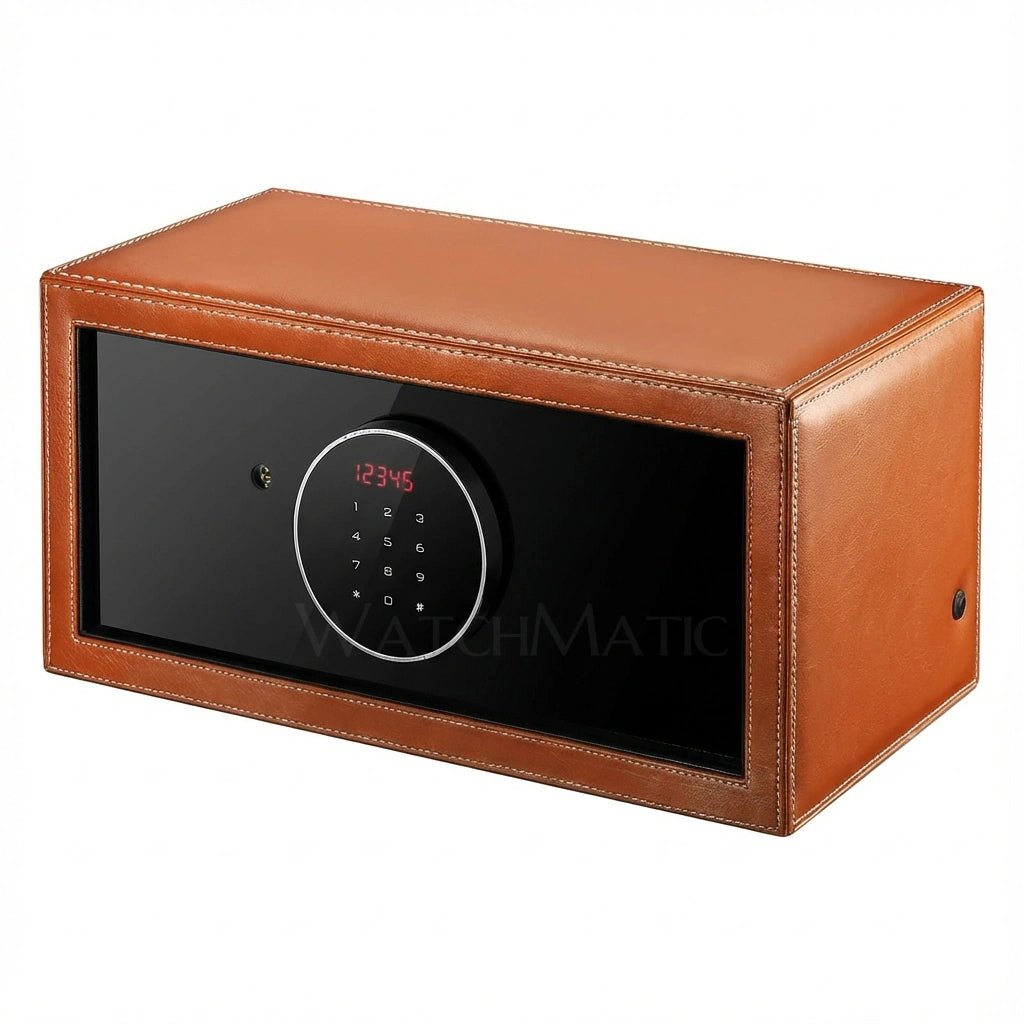
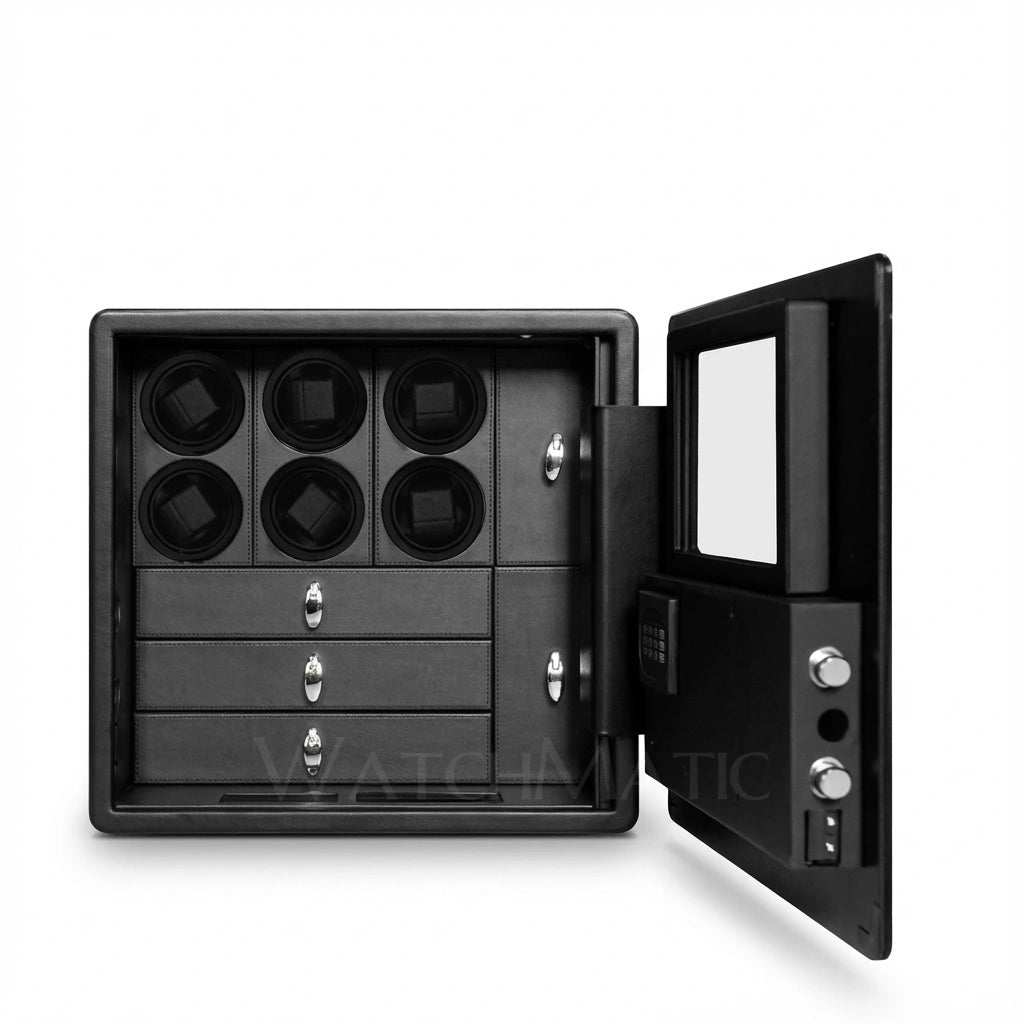
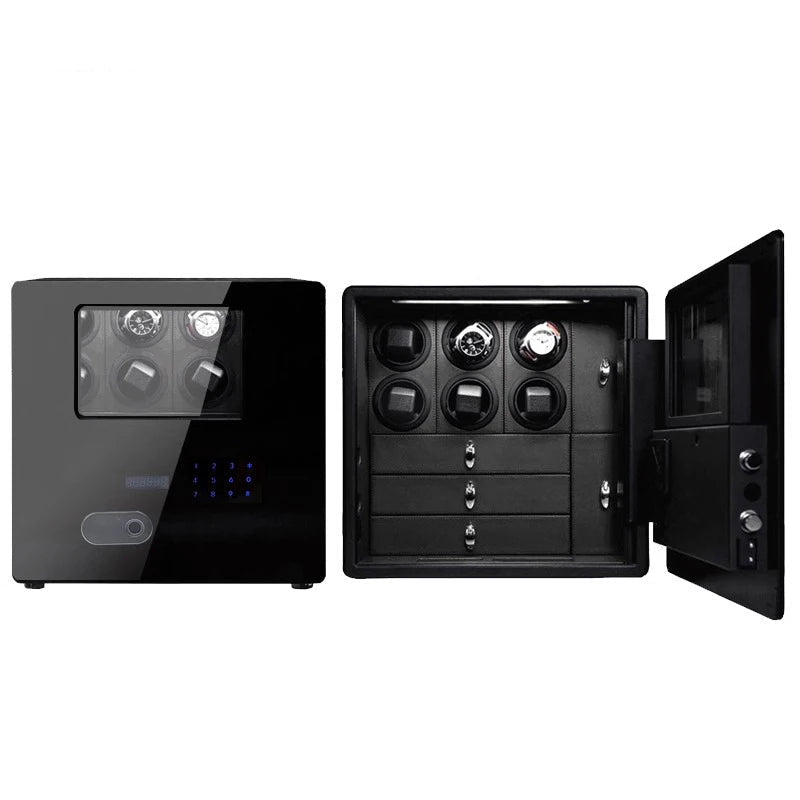
Collectors requiring integrated security and winding can explore the Watch Winder Safe Collection.
Titan Vault 20 for a Larger Mixed Collection

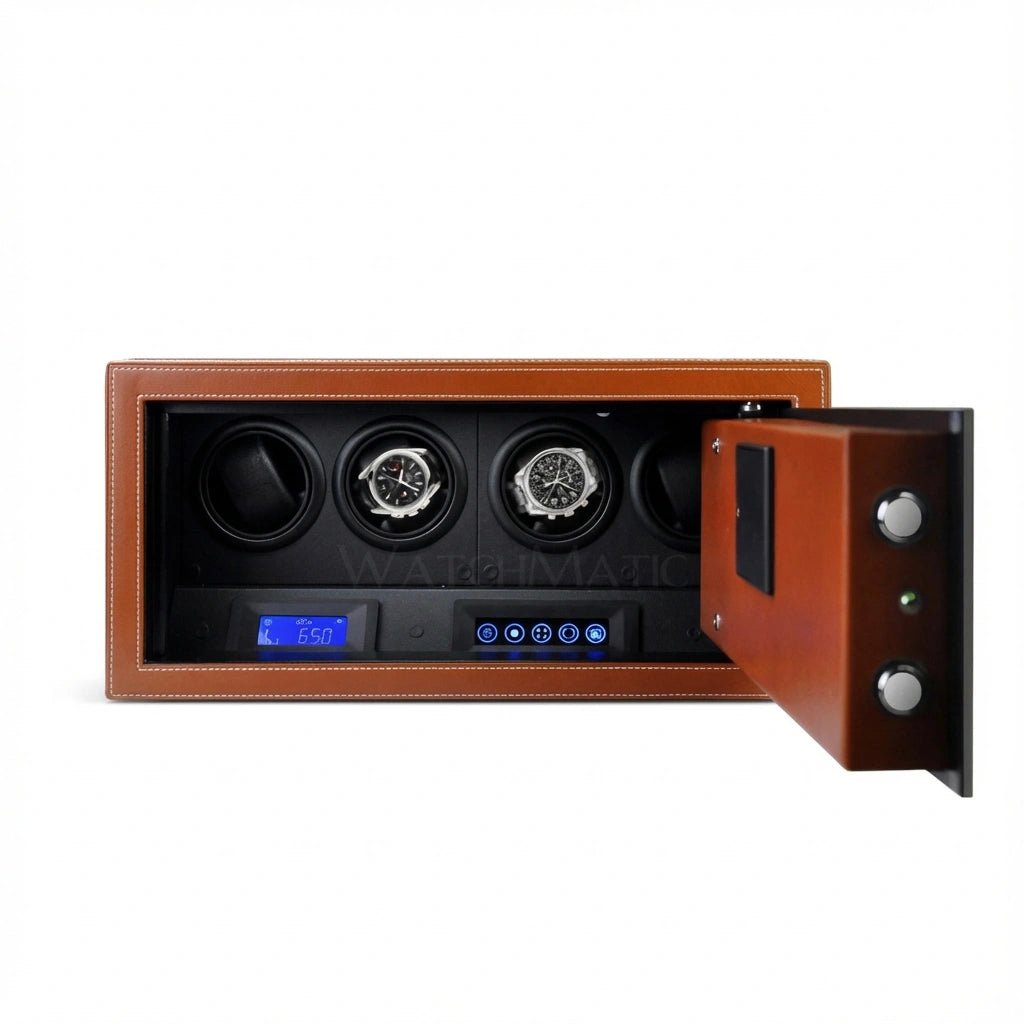
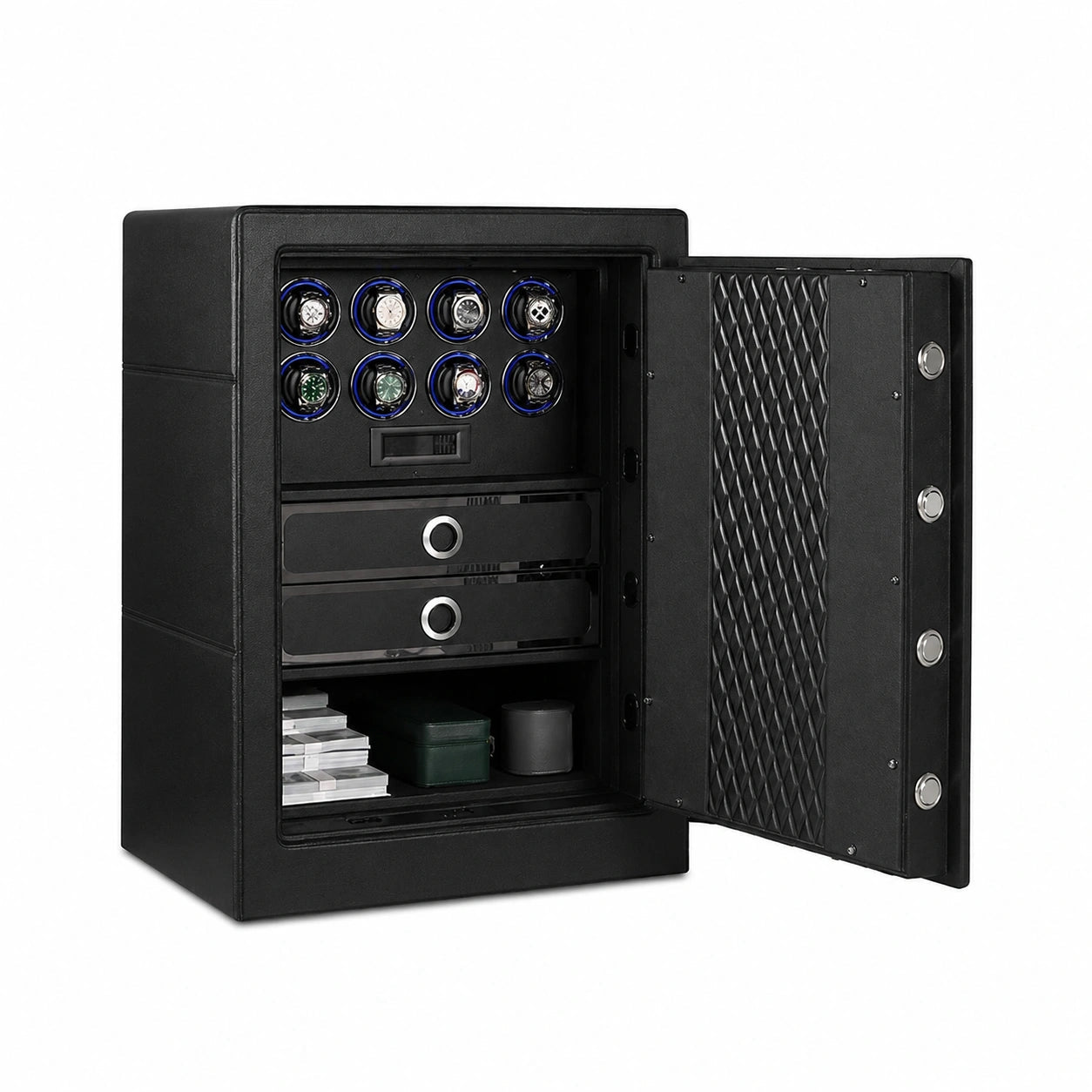
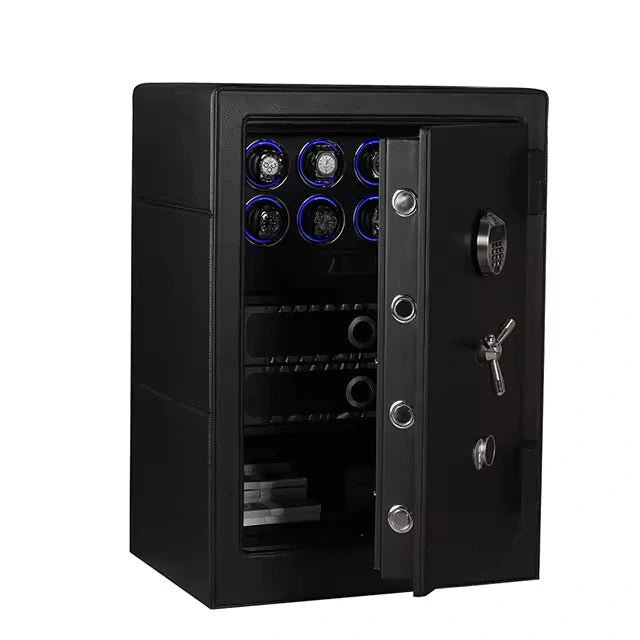
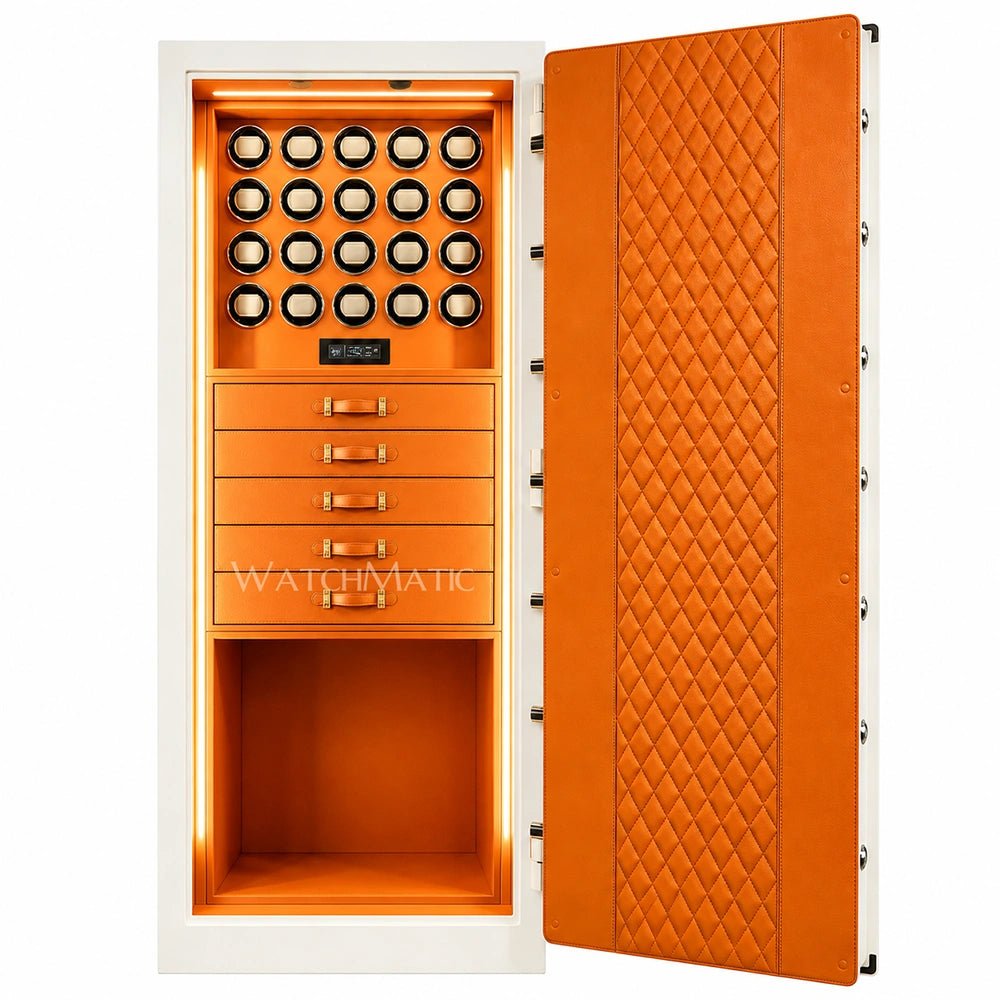
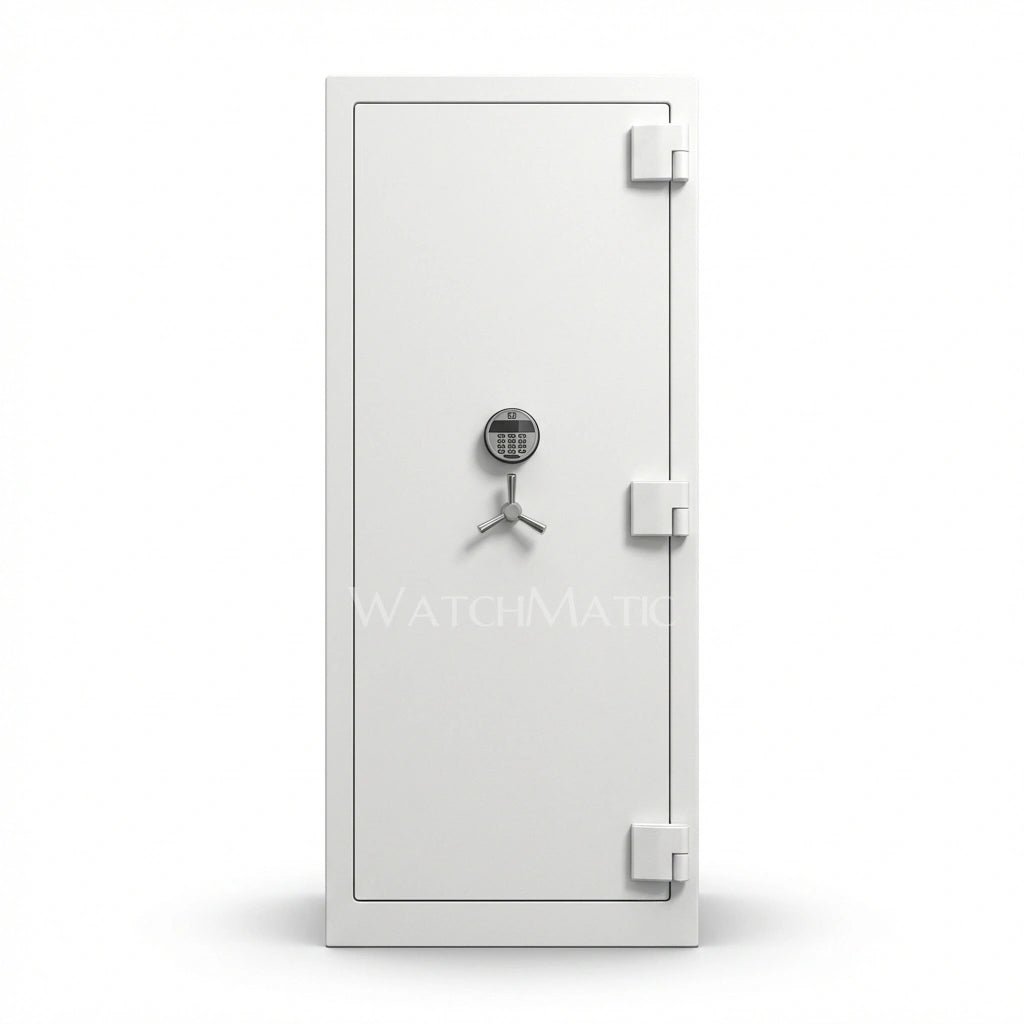
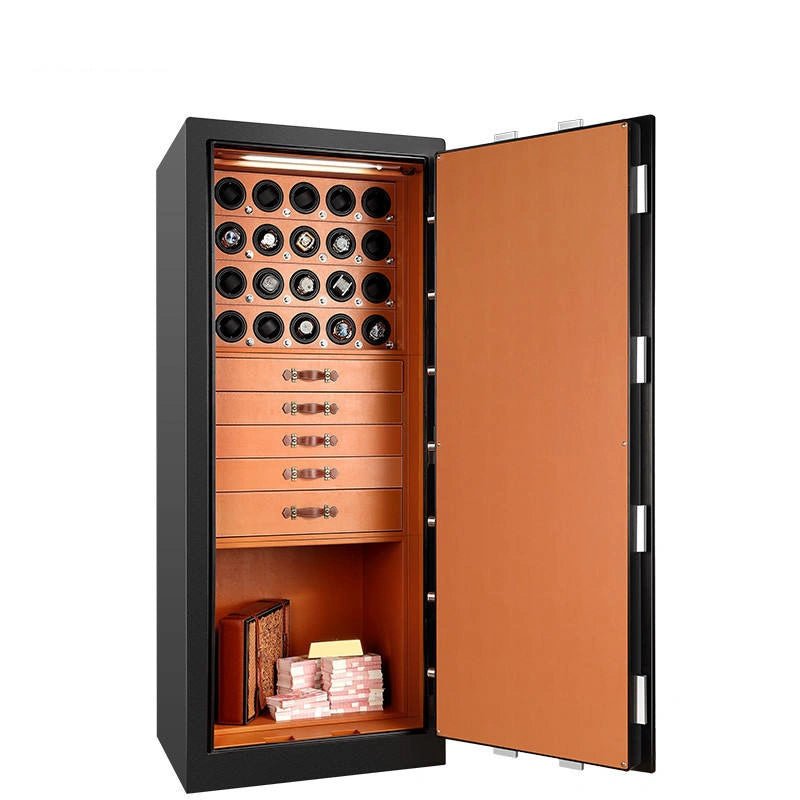
For MONTA watches within a larger luxury-watch collection, the Titan Vault 20 Watch Winder Safe combines 20 independently controlled winding positions with secure storage architecture.
Available features include:
- Monolithic solid-steel body
- 10-layer reinforced exterior shell
- Biometric fingerprint access
- Digital passcode
- Manual key access
- Floor anchoring
- LCD touchscreen
- Japanese Mabuchi motors
- Independent winding controls
- Adjustable TPD from 650 to 2200
- CW/CCW/bidirectional rotation
- Anti-magnetization protection
- Adjustable LED illumination
- Ultra-quiet operation below 10 dB
- 10-year warranty
EN 15659 LFS 60 P fire certification and UL TL-30 / EN 1143-1 Grade III security certification are available upon request, rather than being standard on every configuration.
Titan Vault 20 Is Not the Default Recommendation for One MONTA
A large high-security watch safe should not be positioned as necessary simply because someone owns:
- One Noble
- One Triumph
- One Skyquest
That would be disproportionate.
When Titan Vault 20 Makes More Sense
The use case becomes stronger when a MONTA is part of a collection containing watches such as:
- Rolex
- Omega
- Tudor
- Grand Seiko
- Cartier
- Breitling
- Independent luxury brands
At that point, the owner is solving:
automatic winding + access control + theft protection + collection organization
rather than simply keeping one M-22 running.
MONTA Is Easy to Integrate Into a Mixed Winder Safe
Because current M-22 and M-23 movements are automatic, MONTA watches can use powered positions rather than stationary compartments.
Each can receive its own program independently.
Security Value and Watch Price Are Different Questions
A MONTA-only collection may not justify the same safe architecture as a six-figure haute-horlogerie collection.
However, security needs depend on:
- Total collection value
- Number of watches
- Home environment
- Theft exposure
- Insurance expectations
not simply the price of one individual MONTA.
When Stationary Safe Storage Makes Sense
An owner may decide that secure storage matters more than keeping every watch running.
An automatic MONTA can simply be allowed to stop.
In that case, options from the Luxury Watch Safe Collection can be considered without requiring motorized positions.
MONTA in a Mixed Enthusiast Collection
MONTA frequently fits naturally alongside enthusiast-oriented Swiss watch brands.
A mixed collection might include:
MONTA + Formex + Christopher Ward + Farer + Sinn + Longines
Related WatchMatic guides include:
Best Watch Winder for Formex Watches
Best Watch Winder for Christopher Ward Watches
Best Watch Winder for Farer Watches
Best Watch Winder for Sinn Watches
Best Watch Winder for Longines Watches
Even where multiple watches use Swiss automatic base architecture, exact caliber identification remains preferable to one generic setting.
MONTA vs. Formex
Current Formex uses a wide range of automatic calibers:
- FX01
- SW200-2 Power+
- SW300-1
- SW330-2
- Soprod
- ETA-based architecture
MONTA's current movement structure is considerably simpler:
- M-22
- M-23
This makes MONTA easier to manage in a multi-watch winder.
MONTA vs. Farer
Farer mixes:
- Automatic movements
- Manual chronographs
- Manual moon phases
- Manual dress watches
Current MONTA does not have the same automatic/manual split.
A MONTA-only collection can therefore make more efficient use of every powered rotor position.
MONTA vs. Christopher Ward
Both brands appeal strongly to enthusiast collectors and use proven Swiss movement architecture.
However, Christopher Ward's movement portfolio spans many more calibers and complications.
Current MONTA remains comparatively focused.
MONTA vs. Sinn
Both brands produce robust tool watches.
Tool-watch construction does not determine winding requirements.
Exact movements still matter.
Current MONTA Is One of the Simplest Brands in This Series for Winder Compatibility
This is worth emphasizing.
Many brands require the owner to first ask:
“Is this watch automatic?”
With current MONTA, that question is largely resolved.
The more useful question becomes:
“Is this M-22 or M-23, and what is the appropriate program?”
All-automatic Does Not Mean One-setting
That distinction prevents the article from becoming overly simplistic.
Current MONTA is mechanically coherent.
It is not mechanically identical.
How to Choose the Best Watch Winder for Your MONTA
Step 1: Identify the Exact Model
Determine whether the watch is:
- Noble
- Noble 40
- Triumph
- Oceanking
- Atlas
- Noble Voyager
- Skyquest
Step 2: Identify the Generation
This matters for older secondary-market watches.
Do not assume every historical MONTA has the current 56-hour specification.
Step 3: Identify M-22 or M-23
Current:
M-22
- Noble
- Noble 40
- Triumph
- Oceanking
M-23
- Atlas
- Noble Voyager
- Skyquest
Step 4: Confirm the Current Reserve
For current references:
approximately 56 hours.
Step 5: Note the Automatic Winding Architecture
Current M-22 and M-23 references are self-winding and described by MONTA as using bidirectional rotors.
Step 6: Verify TPD
Do not infer TPD solely from:
- 56-hour reserve
- watch diameter
- water resistance
- model price
Use caliber-specific guidance.
Step 7: Select Rotation Direction
Choose a winder capable of:
- CW
- CCW
- Bidirectional
Bidirectional-capable programming provides flexibility with current MONTA movements.
Step 8: Consider Convenience
M-23 references have:
- Date
- 24-hour indication
and therefore slightly more synchronized information to restore after stopping.
Step 9: Check Bracelet Fit
The MONTA bracelet is highly articulated.
Use a compressible cushion that matches the actual wrist sizing.
Step 10: Match Rotor Capacity to Collection Size
Because all current MONTA watches are automatic, powered positions can be used efficiently in a MONTA-only collection.
For broader automatic-winding, TPD, storage, and protection resources, visit the WatchMatic Guide Hub.
Best Watch Winder for MONTA Watches: Final Thoughts
Choosing the best watch winder for a current MONTA is considerably simpler than for many mechanical-watch brands.
The present collection is entirely self-winding.
The main distinction is between two movement families.
The current M-22 powers:
- Noble
- Noble 40
- Triumph
- Oceanking
The current M-23 powers:
- Atlas
- Noble Voyager
- Skyquest
Both movement families provide approximately:
56 hours of power reserve
and current MONTA documentation describes their automatic winding systems as:
bidirectional.
This means every current MONTA can potentially benefit from a properly configured conventional watch winder.
However, this does not mean:
every MONTA should automatically be given one universal TPD program.
The best process remains:
MONTA Reference → Generation → M-22 or M-23 → Verified Winding Requirement → Physical Fit → TPD/Direction
Several comparisons summarize the current catalog particularly well.
Noble M-22 → 56 h → automatic
versus:
Noble Voyager M-23 → 56 h → automatic + 24-hour indication.
They share nearly identical dimensions and reserve but use different movements.
Likewise:
Oceanking M-22 → 300 m diver
and:
Triumph M-22 → 200 m field-style watch
share the same current movement family despite very different tool-watch identities.
And:
Atlas M-23 → 150 m
versus:
Skyquest M-23 → 300 m
shows that water resistance and bezel architecture do not determine automatic-winding requirements.
The most useful MONTA-specific lessons are therefore:
Current MONTA is all automatic.
M-22 and M-23 are the main current caliber distinction.
Both current families provide approximately 56 hours and use bidirectional automatic winding.
Water resistance, bezel type, dial color and case size do not determine TPD.
Older MONTA generations should still be checked separately rather than receiving current 56-hour assumptions automatically.
For a current MONTA, prioritize:
- Adjustable TPD
- CW/CCW/bidirectional programming
- Controlled rest cycles
- Independent controls
- Quiet motors
- Smooth rotation
- Compressible bracelet cushions
- Adequate crown clearance
The most reliable framework is:
MONTA Reference → Generation → Caliber → Power Reserve → Winding Architecture → Physical Fit → TPD and Direction
For additional automatic-winding and secure-storage solutions, explore WatchMatic.