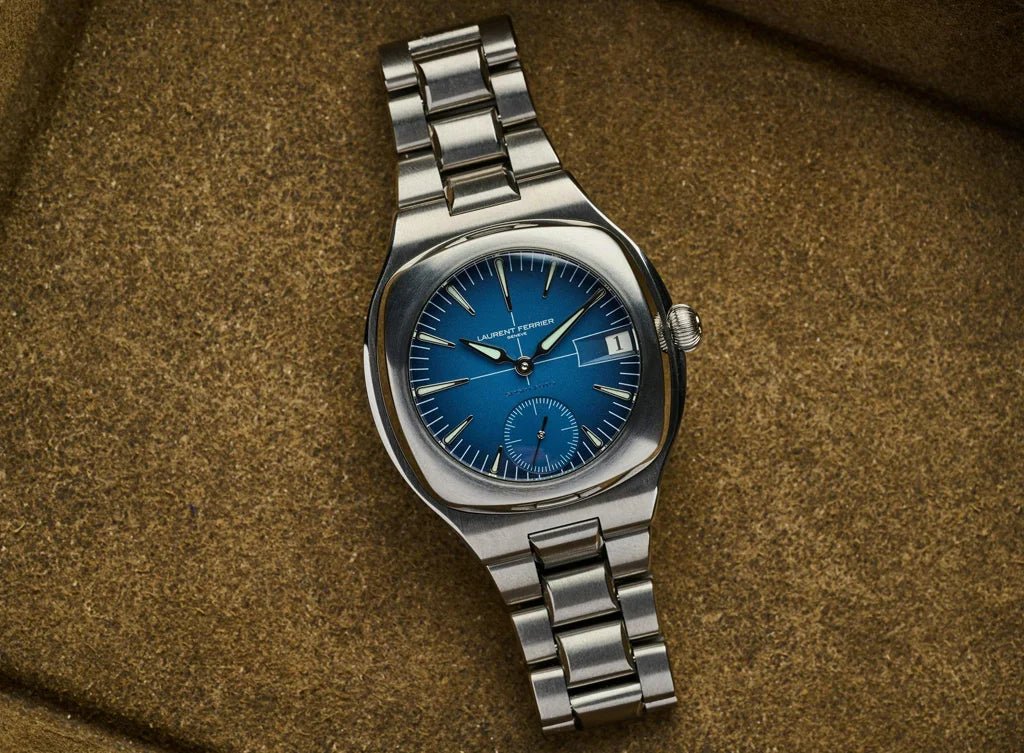
The best watch winder for Laurent Ferrier watches is a premium programmable model with adjustable Turns Per Day (TPD), clockwise and counterclockwise rotation modes, controlled rest cycles, independent winding controls, smooth low-vibration operation, and secure support for leather straps, micro-rotor watches, integrated bracelets, and precious-metal cases.
However, exact movement identification is essential.
Laurent Ferrier currently produces both automatic and manually wound watches.
Important automatic examples include:
- Classic Micro-Rotor — FBN229.01
- Square Micro-Rotor — FBN229.01
- Classic Auto — LF270.01
- Sport Auto — LF270.01
- Classic Traveller — LF230.02
- Sport Traveller — LF275.01
Important manually wound examples include:
- Classic Origin — LF116.01
- Classic Moon — LF126.02
- École Annual Calendar — LF126.01
- Classic Tourbillon — LF619.01
- Grand Sport Tourbillon — LF619.01
This creates the central rule:
Automatic Laurent Ferrier → a properly configured conventional watch winder can be useful
Manual Laurent Ferrier → a conventional rotating watch winder provides no winding benefit
The correct decision process is:
Exact Reference → Caliber → Automatic or Manual → Micro-Rotor Architecture → Power Reserve → Complication → Physical Fit → TPD/Direction or Stationary Storage
Does a Laurent Ferrier Watch Need a Watch Winder?
No automatic Laurent Ferrier mechanically requires a watch winder.
A self-winding mechanical movement uses an oscillating weight to convert movement into energy stored in the mainspring.
If the watch remains unworn for longer than its available power reserve, it eventually stops.
That is normal.
A watch winder is primarily useful for:
- Keeping an automatic Laurent Ferrier ready to wear
- Maintaining time and date indications
- Keeping a Traveller synchronized
- Reducing repeated restarting
- Maintaining several micro-rotor watches in rotation
- Managing a larger haute-horlogerie collection
Allowing an automatic Laurent Ferrier to stop is not inherently harmful.
A watch winder should therefore be viewed as a convenience and collection-management device rather than as a substitute for professional servicing.
For broader automatic-winding principles, see the Watch Winder Guide.
Which Laurent Ferrier Watches Can Use a Watch Winder?
Representative current and important references include:
| Laurent Ferrier watch | Caliber | Winding type | Approx. power reserve | Conventional winder? |
|---|---|---|---|---|
| Classic Micro-Rotor | FBN229.01 | Automatic micro-rotor | 72 h | Yes |
| Square Micro-Rotor | FBN229.01 | Automatic micro-rotor | 72 h | Yes |
| Classic Auto | LF270.01 | Automatic micro-rotor | 72 h | Yes |
| Sport Auto | LF270.01 | Automatic micro-rotor | 72 h | Yes |
| Classic Traveller | LF230.02 | Automatic micro-rotor | 72 h | Yes |
| Sport Traveller | LF275.01 | Automatic micro-rotor | 72 h | Yes |
| Classic Origin | LF116.01 | Manual | 80 h | No |
| Classic Moon | LF126.02 | Manual | 80 h | No |
| École Annual Calendar | LF126.01 | Manual | 80 h | No |
| Classic Tourbillon | LF619.01 | Manual | 80 h | No |
| Grand Sport Tourbillon | LF619.01 | Manual | 80 h | No |
The most important Laurent Ferrier lesson is immediately visible:
72-hour movements are predominantly automatic in the current micro-rotor families, while several 80-hour movements are manual.
Power reserve therefore cannot determine watch-winder compatibility.
Why Laurent Ferrier Requires Exact Caliber Identification
Laurent Ferrier has a relatively coherent visual language.
Many watches share:
- Assegai-shaped hands
- Drop-shaped indexes
- Ball-shaped crowns
- Smooth pebble-like cases
- Classical proportions
- Haute-horlogerie finishing
That visual consistency can conceal very different movement architecture.
A Classic Micro-Rotor and a Classic Origin can look closely related externally.
One is automatic.
The other is manually wound.
Therefore:
visual similarity ≠ movement similarity.
Collection Name Is Not Enough
The word Classic appears across:
- Classic Micro-Rotor
- Classic Auto
- Classic Traveller
- Classic Origin
- Classic Moon
- Classic Tourbillon
Yet those references include both:
automatic
and:
manual
movements.
The collection prefix alone cannot determine whether a watch belongs on a powered rotor.
Laurent Ferrier FBN229.01 Micro-Rotor
The FBN229.01 is one of Laurent Ferrier's defining automatic calibers.
It powers watches including:
- Classic Micro-Rotor
- Square Micro-Rotor
Representative technical features include:
- Automatic winding
- Off-centred micro-rotor
- Pawl-fitted winding system
- Unidirectional automatic winding architecture
- Natural escapement
- Double direct impulse on the balance
- Silicon pallet lever
- Silent-block micro-rotor shock protection
- Approximately 72 hours of power reserve
- 21,600 vibrations per hour
It is clearly compatible with conventional automatic winding.
Best Watch Winder for Laurent Ferrier Classic Micro-Rotor
For a Classic Micro-Rotor, prioritize:
- Adjustable TPD
- CW/CCW/bidirectional capability
- Controlled rest cycles
- Smooth motor transitions
- Low vibration
- Soft leather-strap support
- Independent programming
Representative Classic Micro-Rotor cases measure approximately:
40 mm
with thickness around:
11.1 mm.
These dimensions are relatively easy to accommodate.
Micro-Rotor Does Not Mean Higher TPD
The FBN229.01 uses a smaller off-centred rotor rather than a large central oscillating weight.
That does not mean:
smaller rotor = more daily turns.
The movement is specifically engineered around the micro-rotor.
Its winding system, escapement efficiency, gearing, and mainspring capacity function as a complete architecture.
The correct approach is:
caliber-specific setting
rather than:
maximum TPD to compensate for rotor size.
Unidirectional Internal Winding Does Not Automatically Tell You External CW or CCW
The FBN229.01 uses a unidirectional automatic winding architecture.
This is useful technical information.
However, the statement:
“unidirectional winding”
does not by itself tell the owner which external watch-winder direction should be selected without knowing the movement's actual rotor-to-winder relationship.
Therefore, do not simply infer:
unidirectional = CW
or:
unidirectional = CCW.
Use verified movement-specific winding-direction information.
Natural Escapement Does Not Determine TPD
The FBN229.01 uses Laurent Ferrier's natural escapement with double direct impulse.
This affects:
- Energy transmission
- Escapement efficiency
- Movement architecture
It does not directly specify:
- Turns Per Day
- External winding direction
- Daily winder cycle
Therefore:
natural escapement ≠ special generic TPD.
Silent-Block Rotor Protection Does Not Mean Aggressive Rotation Is Appropriate
The FBN229.01 includes shock protection for its micro-rotor.
That improves movement robustness.
It is not a reason to use:
- Continuous spinning
- Abrupt starts
- Maximum TPD
- Excessively fast rotation
A quality winder should still provide smooth, controlled motion.
72 Hours Reduces Dependence on a Winder
The Classic Micro-Rotor can run for roughly three days when sufficiently wound.
That means:
Frequent wearer
Wears the watch every second or third day.
A winder may add little practical benefit.
Larger collector
Returns to the watch after a week or more.
The watch will normally have stopped.
A winder becomes more convenient.
Therefore:
longer reserve reduces dependence on a winder.
Best Watch Winder for Square Micro-Rotor
The Square Micro-Rotor uses the same FBN229.01 automatic architecture.
Representative dimensions are approximately:
- 41 mm case width
- 11.1 mm thickness
Despite the different case shape, its winding logic remains based on the same automatic micro-rotor caliber.
Square Case Does Not Change TPD
Case geometry affects:
- Physical clearance
- Cushion positioning
- strap angle
It does not directly change:
- Rotor winding direction
- Power reserve
- TPD
Therefore:
square case ≠ different movement requirement.
Square Micro-Rotor vs. Classic Micro-Rotor
| Feature | Classic Micro-Rotor | Square Micro-Rotor |
|---|---|---|
| Caliber | FBN229.01 | FBN229.01 |
| Winding | Automatic micro-rotor | Automatic micro-rotor |
| Reserve | 72 h | 72 h |
| Main difference | Round Classic case | Cushion/Square case |
| Winder compatible | Yes | Yes |
This is an example where visually different watches can genuinely share similar movement logic.
Leather-Strap Fit Still Matters
Most Classic and Square Micro-Rotor references use high-quality leather straps.
Avoid forcing them around oversized rigid cushions.
The holder should allow:
- Natural curvature
- Moderate buckle tension
- Stable case position
Classic Micro-Rotor vs. Classic Origin
This is one of the strongest Laurent Ferrier comparisons.
Classic Micro-Rotor
FBN229.01
Automatic
72 h
Conventional winder compatible
Classic Origin
LF116.01
Manual
80 h
No conventional winding benefit
Both share:
- Classical case language
- Similar dial proportions
- Small seconds
- Laurent Ferrier finishing philosophy
Yet their winding architecture is completely different.
Laurent Ferrier Classic Origin LF116.01
The Classic Origin uses the manually wound:
LF116.01
with approximately:
80 hours of power reserve.
Representative specifications include:
- Manual winding
- Swiss lever escapement
- Free-sprung balance
- Breguet overcoil
- Long-blade ratchet pawl
- 21,600 vibrations per hour
- 80-hour reserve
Does the Classic Origin Need a Watch Winder?
No.
The LF116.01 contains no automatic rotor.
A conventional rotating watch winder therefore provides no winding energy.
The movement must be wound through the crown.
80 Hours Does Not Mean More Winder Use
The Classic Origin actually provides a longer published reserve than the FBN229.01 Micro-Rotor.
Compare:
Classic Origin → 80 h → manual
with:
Classic Micro-Rotor → 72 h → automatic.
The watch with the longer reserve is the one that does not benefit from rotational winding.
Manual Winding Is Part of the Classic Origin Experience
The LF116.01 incorporates Laurent Ferrier's distinctive long-blade ratchet system.
The tactile and acoustic experience of crown winding is intentionally part of the movement design.
A rotating box cannot reproduce this interaction.
Long-Blade Ratchet Does Not Mean Automatic Ratchet Winding
The word:
ratchet
may appear in both manual and automatic movement descriptions.
That does not mean the movements use the same winding architecture.
In the Classic Origin, mainspring energy is supplied manually through the crown.
Breguet Overcoil Does Not Affect Winder Compatibility
The Breguet overcoil relates to hairspring geometry and rate stability.
It has no relationship with automatic rotor winding.
Therefore:
Breguet overcoil ≠ TPD requirement.
Best Storage for Classic Origin
Prioritize:
- Secure stationary cushion
- Soft leather-contact surfaces
- Easy crown access
- Correct strap curvature
- Appropriate security for precious-metal versions
A powered rotor is unnecessary for winding.
Laurent Ferrier Classic Auto LF270.01
The Classic Auto uses:
LF270.01
with approximately:
72 hours of power reserve.
It is automatic.
The movement uses:
- Off-centred micro-rotor
- 950 platinum oscillating mass
- Swiss lever escapement
- Ball-bearing automatic winding system
- Approximately 72-hour reserve
- 28,800 vibrations per hour
Classic Auto Is Mechanically Closer to Sport Auto Than Classic Micro-Rotor
This is an important distinction.
Visually:
Classic Auto
belongs naturally to the Classic case family.
Mechanically:
it shares LF270.01 with the Sport Auto.
Therefore:
case family and movement family are not always the same classification.
Best Watch Winder for Classic Auto
For a Classic Auto, prioritize:
- Adjustable TPD
- Multiple direction modes
- Controlled rest cycles
- Smooth low-vibration motor
- Soft leather-strap support
- Independent control
Representative dimensions are:
- 40 mm diameter
- Approximately 11.94 mm thickness
Platinum Micro-Rotor Does Not Need Higher TPD
LF270.01 uses a dense platinum micro-rotor to improve winding power.
That is a movement-engineering solution.
It does not mean the owner should increase external rotations beyond the proper movement requirement.
Classic Auto vs. Classic Micro-Rotor
Both are automatic and both provide approximately:
72 hours.
But:
Classic Micro-Rotor
FBN229.01
Natural escapement
Pawl-fitted micro-rotor
3 Hz
Classic Auto
LF270.01
Swiss lever escapement
Ball-bearing micro-rotor architecture
4 Hz
Therefore:
same case family + same reserve + both micro-rotor ≠ same movement.
Same 72 Hours Does Not Mean Same Program
Power reserve is only one technical specification.
FBN229.01 and LF270.01 differ in:
- Escapement
- Frequency
- Rotor support architecture
- Movement construction
Do not automatically assign them one setting solely because both provide 72 hours.
Laurent Ferrier Sport Auto
The Sport Auto uses the same broad LF270.01 automatic platform.
Current references include configurations in:
- Grade 5 titanium
- Precious metals
- Integrated bracelets
Representative case dimensions are approximately:
41.5 mm
with:
12.7 mm thickness.
Best Watch Winder for Laurent Ferrier Sport Auto
For a Sport Auto, prioritize:
- Adjustable TPD
- CW/CCW/bidirectional operation
- Controlled rest cycles
- Compressible bracelet holder
- Smooth motor transitions
- Stable support for heavier precious-metal versions
Integrated Bracelet Fit Matters
The Sport Auto's bracelet is a major physical consideration.
A bracelet sized closely to the wrist should not be forced around an oversized rigid cushion.
Look for:
- Compressibility
- Natural clasp closure
- Stable watch-head positioning
- Minimal bracelet tension
Full-Gold Sport Auto Requires Stronger Physical Support
A precious-metal integrated bracelet can add substantial weight.
That does not change the LF270.01 winding requirement.
It does make:
- Cushion grip
- Rotor stability
- Smooth acceleration
more important.
Gold Does Not Mean More TPD
Case and bracelet material affect:
- Weight
- value
- physical security
not:
- Daily turns
- Winding direction
- Movement power reserve
Sport Auto vs. Grand Sport Tourbillon
This is the second major Laurent Ferrier comparison.
Sport Auto
LF270.01
Automatic micro-rotor
72 h
Conventional winder compatible
Grand Sport Tourbillon
LF619.01
Manual
80 h
No conventional winding benefit
Both use Laurent Ferrier's sport-oriented integrated-bracelet language.
Only one needs powered rotation.
Laurent Ferrier Grand Sport Tourbillon
The Grand Sport Tourbillon uses:
LF619.01
with approximately:
80 hours of power reserve.
It is:
manually wound.
The movement includes:
- Tourbillon
- Double hairspring
- Swiss lever escapement
- 21,600 vibrations per hour
- 80-hour reserve
Does Grand Sport Tourbillon Need a Watch Winder?
No.
The LF619.01 contains no automatic rotor.
The integrated bracelet and sporty appearance do not change that.
A conventional watch winder provides no useful winding energy.
Sport Watch Does Not Mean Automatic
This is a particularly useful distinction.
Many modern sports watches are automatic.
Laurent Ferrier's Grand Sport Tourbillon is not.
Therefore:
sport case ≠ automatic movement.
Integrated Bracelet Does Not Mean Self-Winding
The watch physically resembles the type of product often placed on a winder.
Movement architecture still takes priority.
Tourbillon Does Not Mean Automatic
The tourbillon regulates the movement.
It does not create winding energy.
LF619.01 remains manual.
Double Hairspring Does Not Determine TPD
The double-hairspring architecture helps improve balance behavior.
It has no relevance to external rotational winding because the movement itself is manual.
Sport Auto vs. Grand Sport Tourbillon Power Reserve
Compare:
Sport Auto → 72 h → automatic
with:
Grand Sport Tourbillon → 80 h → manual.
Again:
longer reserve ≠ stronger need for a watch winder.
Laurent Ferrier Classic Tourbillon
The Classic Tourbillon also uses:
LF619.01
with approximately:
80 hours of power reserve.
It is manually wound.
Current references can feature:
- Grand Feu enamel
- Onyx
- Precious-metal cases
- Guilloché
None of those artistic treatments changes the movement architecture.
Classic Tourbillon and Grand Sport Tourbillon Share the Same Fundamental Winding Logic
Despite dramatically different case designs:
Classic Tourbillon → manual
Grand Sport Tourbillon → manual.
Neither receives useful mainspring energy from conventional watch-winder rotation.
Enamel Does Not Affect Winding
Grand Feu enamel changes:
- Craftsmanship
- production difficulty
- collector value
not:
- TPD
- winding direction
- power reserve
Onyx Does Not Affect TPD
The same applies to hard-stone dials.
Dial material and movement winding are separate subjects.
Laurent Ferrier Classic Traveller
The Classic Traveller uses:
LF230.02
with approximately:
72 hours of power reserve.
It is automatic.
Its movement combines:
- Micro-rotor automatic winding
- Pawl-fitted unidirectional winding
- Natural escapement
- Dual time
- Date
- Push-button local-hour adjustment
Best Watch Winder for Classic Traveller
The Classic Traveller has a stronger convenience case than a simple time-only automatic.
If it stops, the owner may need to restore:
- Local time
- Home/reference time
- Date
- Day/night relationship
A watch winder can reduce repeated setup.
Traveller Complication Does Not Mean Higher TPD
The dual-time mechanism uses movement energy during normal operation.
That does not create a simple rule:
Traveller = higher TPD.
Use the winding requirement of LF230.02.
Traveller Pushers Do Not Affect Rotor Settings
The push-buttons at the side of the case adjust local time.
They do not control the automatic winding system.
They matter physically because they need enclosure clearance.
Classic Traveller Physical Fit
Representative dimensions are approximately:
- 41 mm diameter
- 12.64 mm thickness
Check that:
- Both pushers clear the chamber
- The crown does not touch the enclosure
- Strap curvature remains natural
Laurent Ferrier Sport Traveller: New-Generation Travel Architecture
The Sport Traveller uses the newer:
LF275.01
with approximately:
72 hours of power reserve.
It is automatic and uses:
- Off-centred micro-rotor
- Platinum oscillating mass
- Ball-bearing automatic winding architecture
- Swiss lever escapement
- Dual-time functionality
- Date
- 28,800 vibrations per hour
Classic Traveller vs. Sport Traveller
This is one of the strongest current technical distinctions.
| Feature | Classic Traveller | Sport Traveller |
|---|---|---|
| Caliber | LF230.02 | LF275.01 |
| Winding | Automatic micro-rotor | Automatic micro-rotor |
| Reserve | 72 h | 72 h |
| Escapement | Natural escapement | Swiss lever |
| Micro-rotor architecture | Pawl-fitted | Ball-bearing |
| Frequency | 3 Hz | 4 Hz |
| Winder compatible | Yes | Yes |
They share:
- Traveller functionality
- Automatic winding
- 72-hour reserve
but are not the same movement.
Do Not Copy Classic Traveller Settings to Sport Traveller Automatically
This is exactly the kind of mistake generic articles can make.
A search for:
“Laurent Ferrier Traveller watch winder setting”
may return data for LF230.02.
The owner of the newer Sport Traveller should identify:
LF275.01
before programming the winder.
Same 72-Hour Reserve Hides Major Architectural Differences
LF230.02 and LF275.01 differ in:
- Escapement
- Frequency
- Micro-rotor support
- Sporting intent
- shock-resistance strategy
The identical published reserve does not make them interchangeable.
Best Watch Winder for Sport Traveller
Prioritize:
- Independent TPD control
- Multiple direction modes
- Controlled rest cycles
- Smooth low-vibration movement
- Compressible integrated-bracelet cushion
- Pusher clearance
- Stable titanium-watch support
Representative dimensions are:
- 42 mm diameter
- 13.3 mm thickness
Titanium Does Not Reduce TPD
Sport Traveller uses a Grade 5 titanium case and bracelet.
That reduces total weight.
It does not change:
- Movement requirement
- Power reserve
- Rotor architecture
Therefore:
lighter case ≠ lower TPD.
GMT and Travel Watches Have a Stronger Convenience Case
Among Laurent Ferrier automatics, Traveller watches have a particularly clear practical reason to remain running.
A simple three-hand watch is easy to reset.
A travel watch contains more synchronized information.
This strengthens the case for a watch winder without making continuous operation mechanically necessary.
Laurent Ferrier Classic Moon
The Classic Moon uses:
LF126.02
with approximately:
80 hours of power reserve.
It is:
manually wound.
Its complications include:
- Annual calendar
- Day
- Date
- Month
- Moon phase
- Power reserve indication on the movement side
Does Laurent Ferrier Classic Moon Need a Watch Winder?
No.
The LF126.02 is hand-wound.
Rotating the complete watch does not replenish its mainspring.
Classic Moon Is Exactly the Kind of Watch You Might Want to Keep Running
This creates a useful distinction.
An annual-calendar moon-phase watch contains several indications that are more inconvenient to reset than a time-only watch.
From a convenience perspective:
keeping it running would be useful.
Mechanically:
a conventional watch winder cannot do it.
Therefore:
convenience value ≠ winder compatibility.
Annual Calendar Does Not Mean Automatic
An annual calendar adjusts automatically between 30- and 31-day months.
That describes the calendar mechanism.
It does not describe how the movement is wound.
Moon Phase Does Not Mean Winder Compatible
The lunar display is driven by the manually wound LF126.02 movement.
A watch winder cannot maintain it once the mainspring is depleted.
80-Hour Reserve Helps
Fortunately, Classic Moon offers approximately:
80 hours
of reserve.
That gives the owner more than three days between full windings.
This reduces the practical burden of manual winding.
Long-Blade Ratchet Again Signals the Manual Experience
LF126.02 uses Laurent Ferrier's manually wound long-blade ratchet architecture.
This makes crown winding part of the intended interaction with the watch.
Classic Moon vs. Classic Traveller
Compare:
Classic Traveller
Automatic
72 h
Multiple time-zone indications
Winder compatible
Classic Moon
Manual
80 h
Annual calendar + moon phase
No conventional winding benefit
The more calendar-intensive watch has the longer reserve but cannot use a conventional winder.
Laurent Ferrier École Annual Calendar
The École Annual Calendar uses:
LF126.01
with approximately:
80 hours of power reserve.
It is manually wound.
While some references are now limited, sold out, or encountered through collectors and the secondary market, the movement remains relevant to Laurent Ferrier ownership.
Does École Annual Calendar Need a Watch Winder?
No.
LF126.01 is manual.
A conventional rotating winder supplies no mainspring energy.
Annual Calendar and Winder Convenience
Like Classic Moon, the École Annual Calendar contains indications that an owner may prefer to keep synchronized.
That preference does not overcome the manual architecture.
LF126.01 vs. LF126.02
These related manual calibers are used in:
- École Annual Calendar
- Classic Moon
Both are manually wound.
The later LF126.02 adds the moon-phase architecture.
Neither requires conventional TPD.
Laurent Ferrier Power Reserve Comparison
| Caliber | Representative watch | Type | Approx. reserve |
|---|---|---|---|
| FBN229.01 | Classic/Square Micro-Rotor | Automatic | 72 h |
| LF230.02 | Classic Traveller | Automatic | 72 h |
| LF270.01 | Classic Auto / Sport Auto | Automatic | 72 h |
| LF275.01 | Sport Traveller | Automatic | 72 h |
| LF116.01 | Classic Origin | Manual | 80 h |
| LF126.01 | École Annual Calendar | Manual | 80 h |
| LF126.02 | Classic Moon | Manual | 80 h |
| LF619.01 | Classic / Grand Sport Tourbillon | Manual | 80 h |
This is an unusually clean brand-level pattern.
72 Hours Mostly Means Automatic — But Do Not Turn That Into a Rule
Current major Laurent Ferrier 72-hour movements happen to include several automatics.
That does not mean:
72 h = automatic.
Power reserve is not a winding classification.
80 Hours Mostly Means Manual — But Again, Do Not Infer From the Number
Similarly, several important 80-hour Laurent Ferrier calibers are manual.
That does not mean another future 80-hour Laurent Ferrier movement must also be manual.
Always identify the movement.
Automatic vs. Manual Is More Important Than 72 vs. 80 Hours
The practical hierarchy is:
winding architecture first
then:
power reserve.
An 80-hour manual movement gets no rotational winding benefit.
A 72-hour automatic can.
Laurent Ferrier Watch Winder TPD Settings
TPD means Turns Per Day—the approximate number of rotations delivered by a watch winder during a daily program.
There should not be one blanket recommendation such as:
“Laurent Ferrier = 650 TPD.”
The current automatic portfolio includes:
- FBN229.01
- LF230.02
- LF270.01
- LF275.01
These movements all use micro-rotor automatic winding but differ significantly in architecture.
The correct process is:
- Identify the exact Laurent Ferrier reference.
- Identify the caliber.
- Confirm that it is automatic.
- Identify the micro-rotor architecture.
- Verify the movement's winding requirement.
- Select suitable TPD.
- Select suitable rotation direction.
- Confirm that the movement maintains adequate reserve.
For a deeper explanation, see the Watch TPD Guide.
Do Not Assume All Laurent Ferrier Micro-Rotors Use the Same Setting
This point matters.
Laurent Ferrier currently uses more than one micro-rotor architecture.
FBN229.01
Natural escapement
Pawl-fitted micro-rotor
LF230.02
Traveller complication
Natural escapement
Pawl-fitted micro-rotor
LF270.01
Swiss lever escapement
Ball-bearing micro-rotor architecture
LF275.01
Traveller complication
Swiss lever escapement
Ball-bearing micro-rotor architecture
Therefore:
micro-rotor ≠ one universal Laurent Ferrier TPD.
What Rotation Direction Should You Use?
A premium programmable winder should ideally offer:
CW — Clockwise
CCW — Counterclockwise
Bi — Bidirectional
Laurent Ferrier publishes detailed information about its internal automatic winding architecture.
However, the words:
unidirectional winding
should not be translated into an external CW or CCW setting without verified movement-specific direction information.
Use:
exact caliber → verified winding direction
rather than:
brand-level assumption.
Internal Unidirectional Winding and External Winder Direction Are Different Concepts
This distinction deserves emphasis.
A micro-rotor movement can be engineered internally to wind mainspring energy from one rotor direction.
A watch winder rotates the entire watch in an external direction.
The relationship between the two depends on movement orientation and gearing.
Therefore:
internal unidirectional ≠ automatically CW external
and:
internal unidirectional ≠ automatically CCW external.
Do Manual Laurent Ferrier Watches Need TPD?
No.
TPD has no useful conventional winding role for:
- LF116.01
- LF126.01
- LF126.02
- LF619.01
These movements receive energy through crown winding.
There is no conventional daily-turn target to calculate.
Natural Escapement vs. Swiss Lever Does Not Determine Whether a Winder Works
Laurent Ferrier uses both.
Some automatic movements use the natural escapement.
Some newer automatics use Swiss lever architecture.
Manual movements also use Swiss lever architecture.
Therefore:
escapement type ≠ automatic/manual classification.
3 Hz vs. 4 Hz Does Not Determine TPD
Current Laurent Ferrier movements operate at different frequencies.
Examples include:
FBN229.01 → 3 Hz
LF230.02 → 3 Hz
LF270.01 → 4 Hz
LF275.01 → 4 Hz
Frequency describes the oscillator.
TPD describes external winding rotations.
There is no simple equation:
4 Hz = more TPD than 3 Hz.
Micro-Rotor Weight Does Not Determine TPD Alone
Laurent Ferrier uses:
- Gold micro-rotors
- Platinum micro-rotors
depending on movement.
A denser winding mass can improve rotor behavior.
It does not create a universal external daily-turn number.
Gold Rotor vs. Platinum Rotor
Broadly:
FBN229.01 / LF230.02
Can use gold micro-rotor architecture.
LF270.01 / LF275.01
Use platinum micro-rotor architecture.
The heavier material forms part of the movement design.
It should not be treated as a simple TPD multiplier.
High TPD Is Not Automatically Better
Selecting the highest available TPD does not provide better care.
Once adequate reserve is being maintained, additional rotations may provide no practical advantage.
Higher TPD does not automatically:
- Improve accuracy
- Improve lubrication
- Extend service intervals
- Improve a natural escapement
- Maintain a tourbillon
- Increase moon-phase accuracy
- Increase the stated power reserve
The objective is:
appropriate maintenance winding
rather than:
maximum rotation.
Does an Automatic Laurent Ferrier Need to Run Continuously?
No.
An automatic Laurent Ferrier can stop normally.
A winder becomes useful according to:
power reserve + wearing frequency + complication + collection size.
Which Laurent Ferrier Watches Gain the Most Convenience From a Winder?
Stronger convenience case
- Classic Traveller
- Sport Traveller
- Date-equipped Classic Auto
- Sport Auto in a larger rotation
Moderate convenience case
- Classic Micro-Rotor
- Square Micro-Rotor
No conventional winding benefit
- Classic Origin
- Classic Moon
- École Annual Calendar
- Classic Tourbillon
- Grand Sport Tourbillon
This is not a ranking of quality or value.
It only describes conventional watch-winder usefulness.
Traveller Watches Have the Strongest Automatic Convenience Case
Classic Traveller and Sport Traveller contain:
- Local time
- Home/reference time
- Date
That makes repeated resetting more involved than on a simple Micro-Rotor watch.
A properly configured winder can therefore offer meaningful daily convenience.
Classic Moon Has Strong Convenience Value but Zero Winder Compatibility
Classic Moon represents the opposite situation.
Its:
- Annual calendar
- Date
- Day
- Month
- Moon phase
make continuous synchronization desirable.
But LF126.02 is manual.
A conventional winder cannot maintain its energy.
Should You Restart a Stopped Laurent Ferrier Before Using a Winder?
A winder is best understood as a:
maintenance-winding device.
If an automatic Laurent Ferrier has completely stopped:
restart according to its instructions → establish initial reserve → set the indications → place on programmed winder → maintain
rather than:
stopped watch → maximum TPD.
Manual Crown Winding and Automatic Maintenance Are Different
Automatic Laurent Ferrier movements can be brought to an appropriate starting condition before being placed on the winder.
The winder can then maintain reserve.
It should not be expected to rapidly recover a fully depleted movement solely through aggressive rotation.
What to Look for in a Laurent Ferrier Watch Winder
Adjustable TPD
Essential because multiple automatic micro-rotor architectures exist.
CW, CCW and Bidirectional Modes
A flexible system allows caliber-specific programming.
Independent Controls
Particularly useful for a collection containing:
- FBN229.01
- LF230.02
- LF270.01
- LF275.01
Controlled Rest Cycles
Continuous uninterrupted rotation is unnecessary.
Smooth Motor Operation
A refined micro-rotor movement should receive controlled movement rather than abrupt starts and stops.
Low Vibration
The objective is normal automatic-winding motion.
Quiet Motors
Relevant for:
- Bedroom
- Dressing room
- Private office
- Collector room
Compressible Cushions
Especially important for integrated Sport bracelets and closely fitted leather straps.
Soft Contact Surfaces
Laurent Ferrier watches commonly use:
- Precious metals
- Highly polished cases
- Titanium
- Fine leather
- Integrated gold bracelets
Adequate Pusher Clearance
Particularly relevant to:
- Classic Traveller
- Sport Traveller
Integrated-Bracelet Support
Especially relevant to:
- Sport Auto
- Sport Traveller
- Grand Sport Tourbillon in stationary storage
Laurent Ferrier Ball-Shaped Crowns Need Clearance
The Maison's signature rounded crown contributes to its design language.
Although not extreme in size, the crown should not contact:
- Chamber wall
- Door
- adjacent rotor hardware
during rotation.
Traveller Pushers Need Extra Side Clearance
Both Classic Traveller and Sport Traveller use lateral correctors/pushers.
Their physical position should be considered independently from movement programming.
Classic Leather Straps Need Natural Curvature
Laurent Ferrier's leather straps are part of the refined character of the watch.
Avoid:
- Excessive bending
- Oversized rigid cushions
- Continuous buckle tension
Sport Bracelets Need Compressible Support
Integrated bracelets should be allowed to close naturally.
This is particularly important for collectors with smaller wrist sizes.
Best Watch Winder for One Laurent Ferrier Automatic
For one confirmed automatic Laurent Ferrier, choose a premium programmable system with:
- Adjustable TPD
- CW/CCW/bidirectional modes
- Controlled rest cycles
- Smooth low-vibration motor operation
- Flexible cushion
- Appropriate strap or bracelet support
- Adequate crown and pusher clearance
Suitable configurations can be explored in the WatchMatic Watch Winder Collection.
Best Watch Winder for Multiple Laurent Ferrier Watches
Consider a collection containing:
- Classic Micro-Rotor
- Classic Traveller
- Sport Auto
- Sport Traveller
- Classic Moon
- Grand Sport Tourbillon
There are six mechanical watches.
Only four benefit from conventional automatic winding.
A more rational setup is:
Classic Micro-Rotor + Classic Traveller + Sport Auto + Sport Traveller → independently programmed winding positions
Classic Moon + Grand Sport Tourbillon → secure stationary storage
Mechanical Watch Count Should Not Equal Rotor Count
This matters for Laurent Ferrier collectors.
A collection can contain:
- Several micro-rotor automatics
- Manual Origins
- Manual annual calendars
- Manual tourbillons
The number of powered positions should follow:
automatic movement count
rather than:
total collection size.
Vento Watch Winder for Laurent Ferrier Automatics

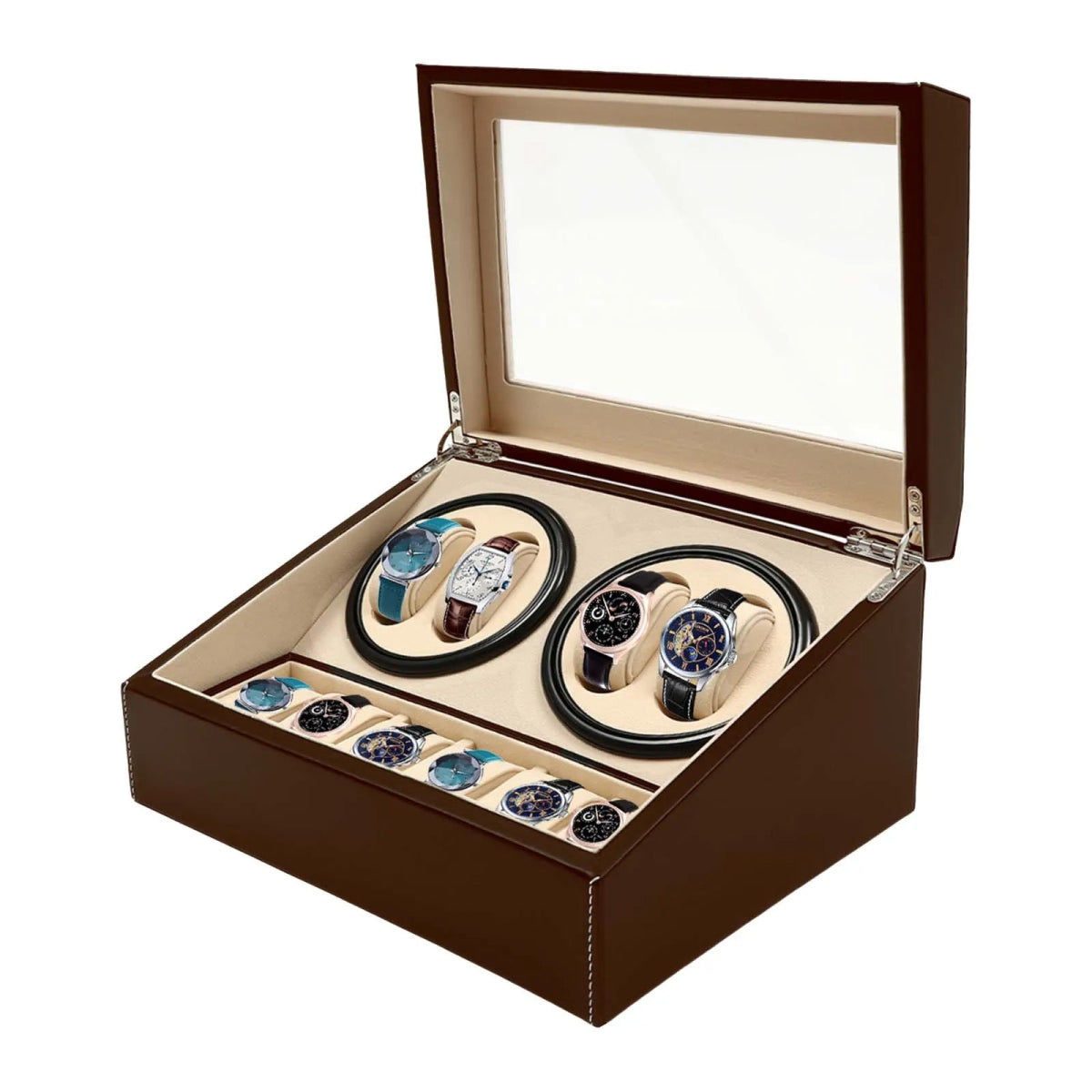
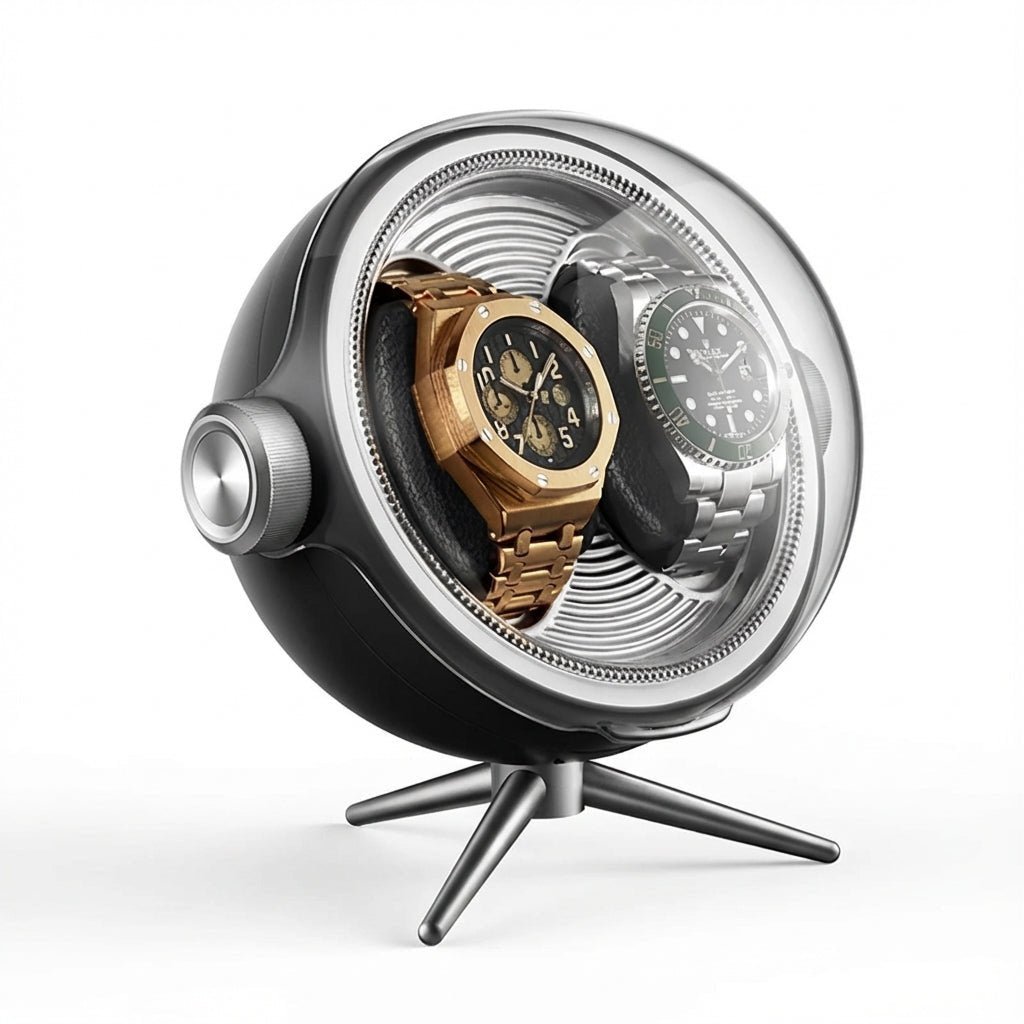
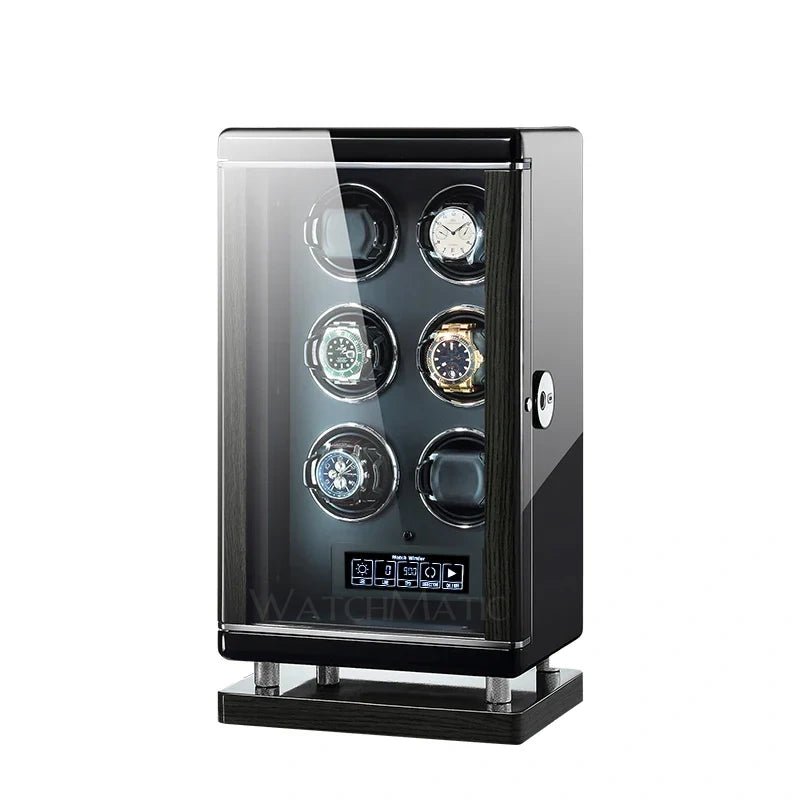
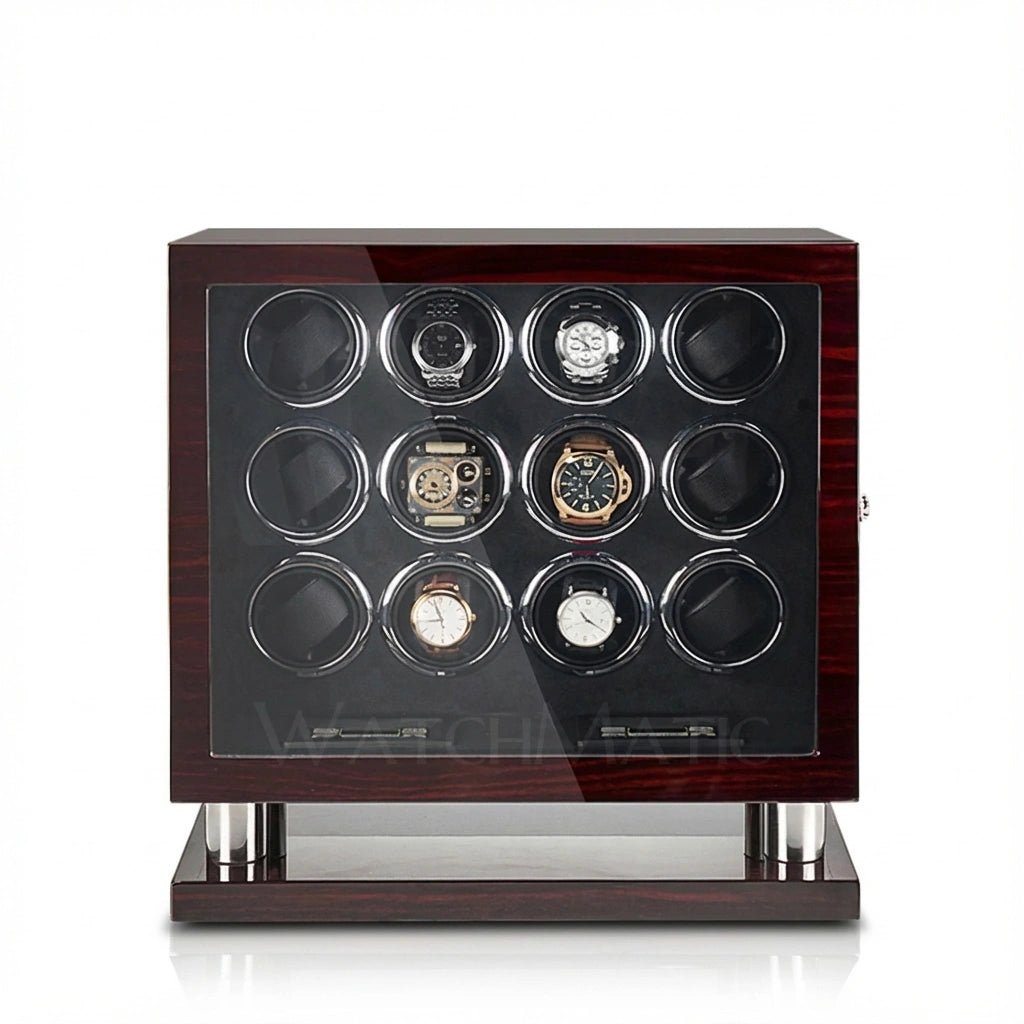
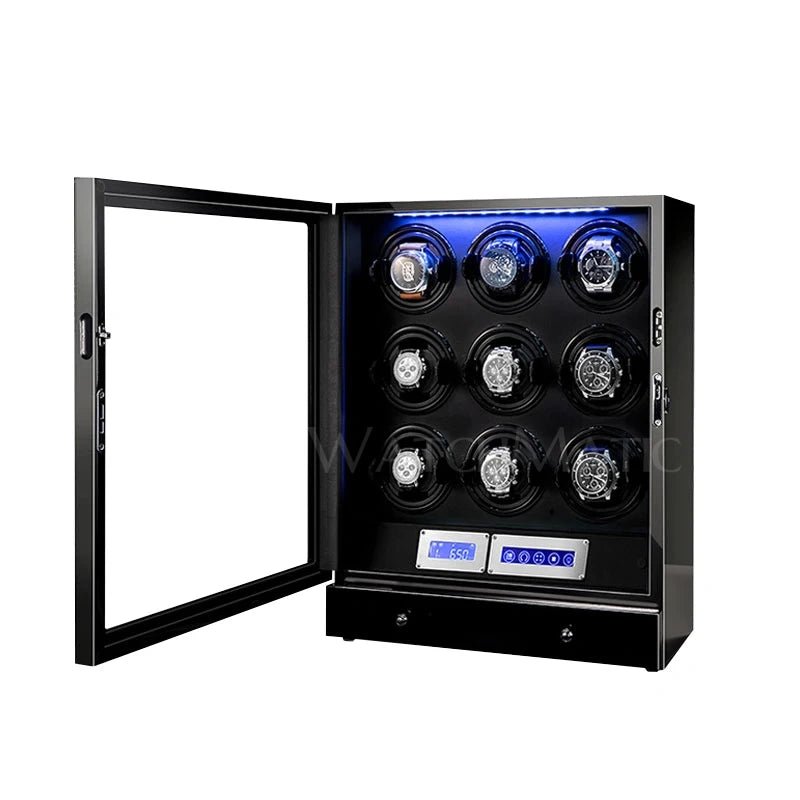
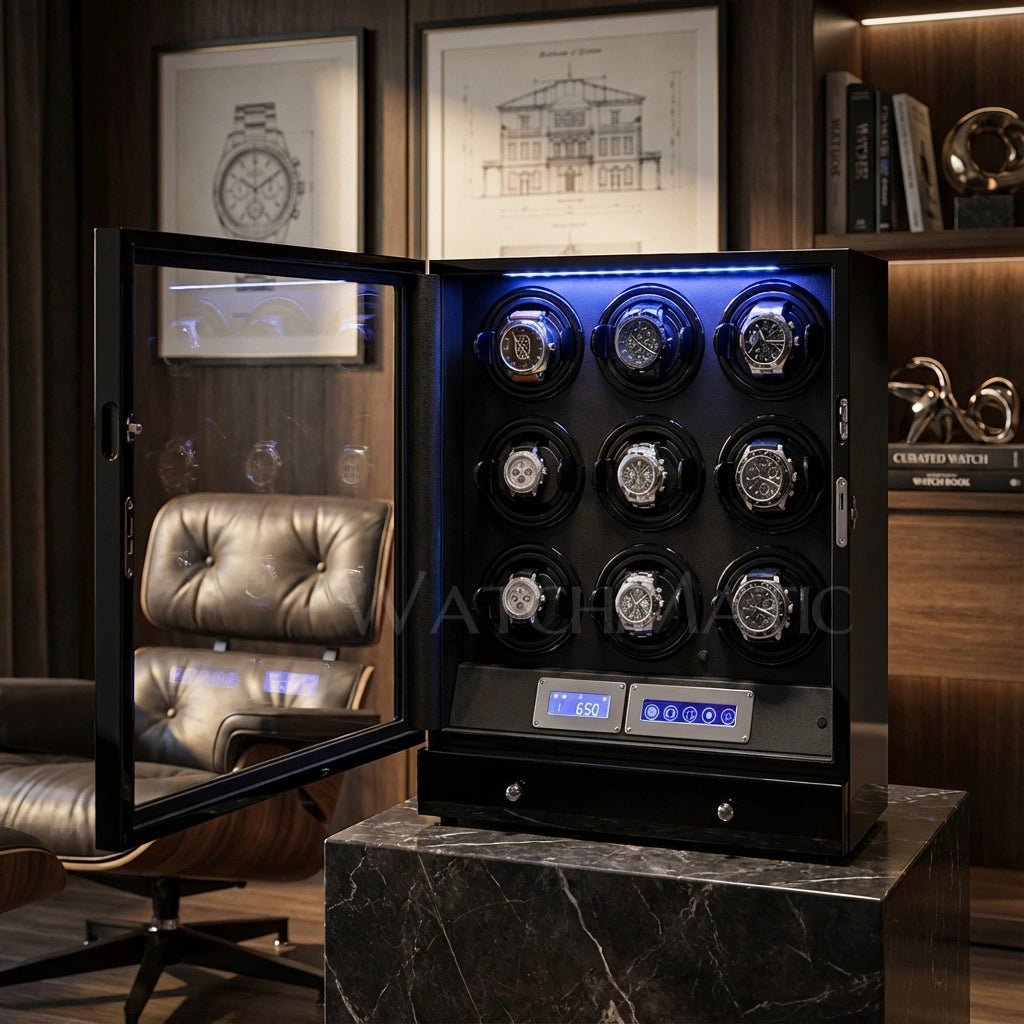
The Vento Luxury Quad Watch Winder is a logical option for a compact Laurent Ferrier automatic collection because it provides four independently controlled winding positions.
A four-watch setup could contain:
- Classic Micro-Rotor — FBN229.01
- Classic Traveller — LF230.02
- Sport Auto — LF270.01
- Sport Traveller — LF275.01
This is an especially relevant example because all four watches are:
- Automatic
- Micro-rotor based
- Approximately 72 hours
yet use four different or distinct caliber applications and architectures.
Independent control therefore makes more sense than a single shared program.
Why Vento Is a Strong Technical Match
Laurent Ferrier provides an unusually elegant use case for four independent rotors.
A collector could own four automatic micro-rotor watches from one manufacture without the movements actually being identical.
That makes independent control meaningful rather than cosmetic.
Same 72 Hours Does Not Eliminate the Need for Independent Control
A Classic Micro-Rotor and a Sport Traveller both provide approximately:
72 hours.
But:
FBN229.01 ≠ LF275.01.
The shared reserve does not create one universal winder profile.
Check Sport Bracelet Fit Before Long-Term Rotation
For Sport Auto and Sport Traveller, confirm that the cushion:
- Compresses sufficiently
- Allows the bracelet to close naturally
- Keeps the case centered
- Avoids excessive first-link tension
Do Not Put Classic Origin on a Rotor Just to Fill a Position
A manual Laurent Ferrier can physically sit on a rotating watch cushion.
That does not make the rotation useful.
Powered positions should ideally be reserved for confirmed automatics.
Is It Safe to Keep an Automatic Laurent Ferrier on a Watch Winder?
A properly configured premium winder can be used with a confirmed automatic Laurent Ferrier.
Important considerations include:
- Exact reference identification
- Exact caliber identification
- Appropriate TPD
- Appropriate rotation direction
- Controlled rest cycles
- Stable physical support
- Low-vibration operation
- Adequate enclosure clearance
If an automatic Laurent Ferrier shows unexpectedly short reserve despite suitable winding, professional inspection is more appropriate than continually increasing TPD.
A Watch Winder Does Not Service a Laurent Ferrier
A watch winder does not:
- Replace lubricants
- Regulate accuracy
- Maintain a natural escapement
- Service a micro-rotor
- Service a tourbillon
- Maintain an annual calendar
- Preserve a moon phase mechanically
- Extend service intervals
- Replace professional maintenance
Its mechanical function is limited to supplying motion to a compatible automatic winding system.
Watch Winder vs. Watch Safe for Laurent Ferrier Collectors
Laurent Ferrier is particularly well suited to a mixed winding-and-secure-storage strategy.
| Feature | Standalone Winder | Watch Winder Safe |
|---|---|---|
| Automatic winding | Yes | Yes |
| Independent programming | Available | Available |
| Manual-watch storage | Possible | Yes |
| Physical security | Limited | High |
| Controlled access | Limited | High |
| Precious-metal storage | Limited | High |
| Automatic micro-rotor collection | Strong | Strong |
| Manual tourbillons/calendars | Stationary only | Highly suitable |
| Larger LF collection | Moderate | High |
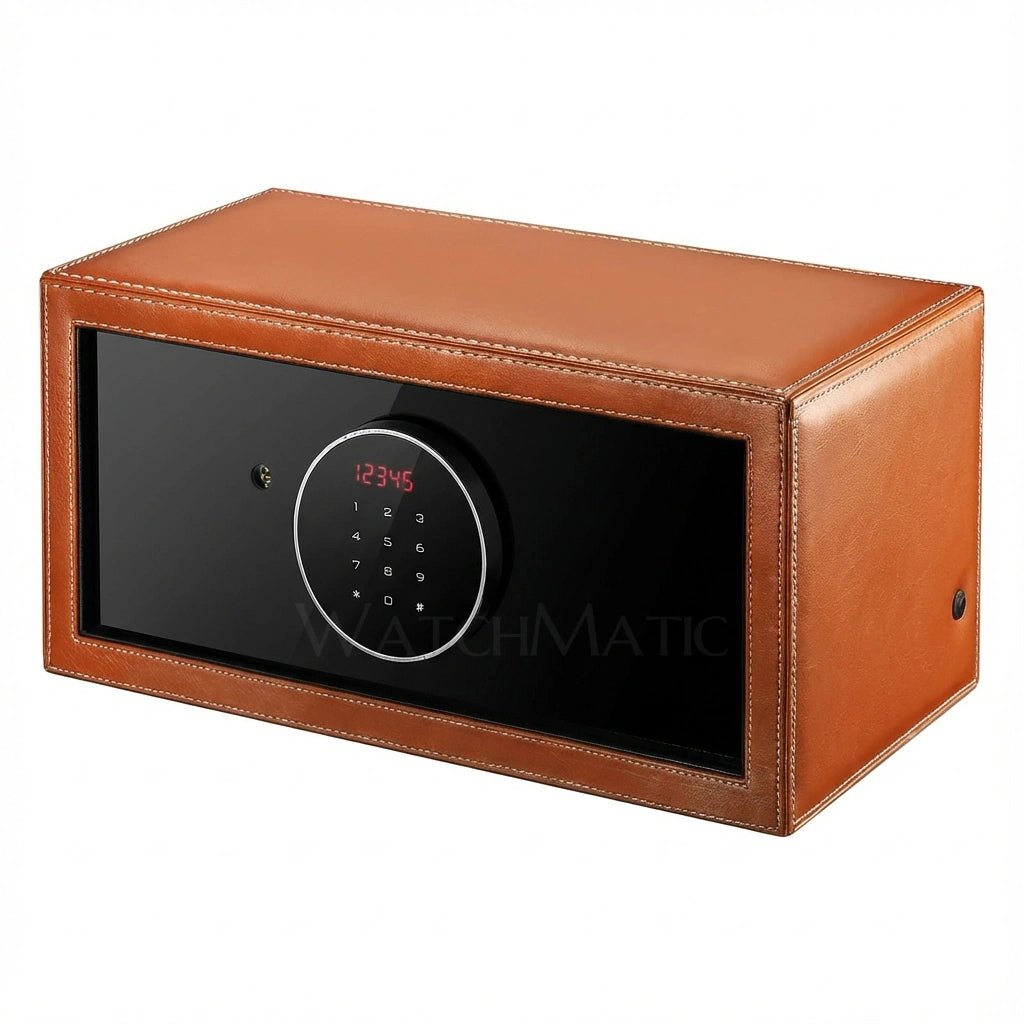
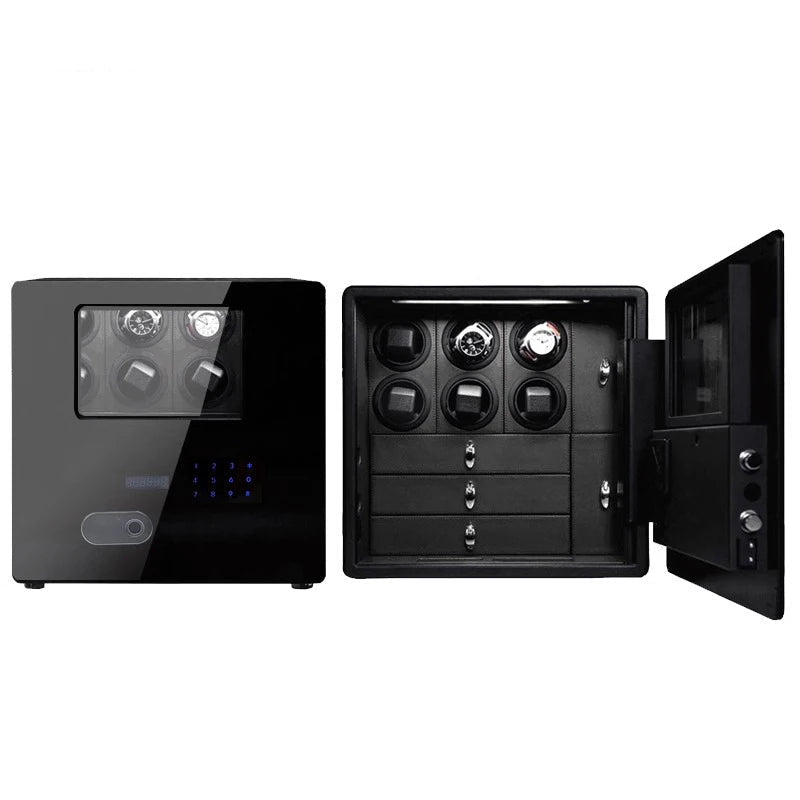
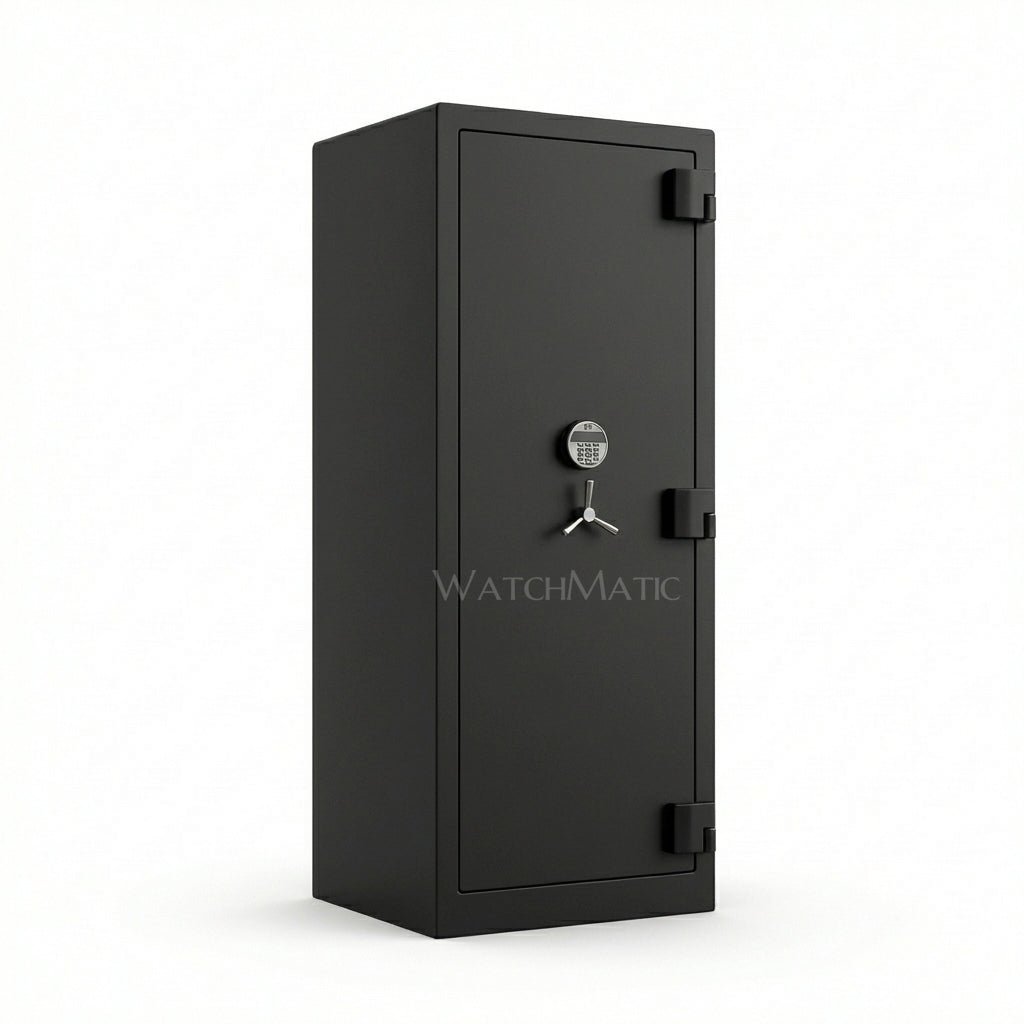
Collectors requiring integrated winding and secure storage can explore the Watch Winder Safe Collection.
Titan Vault 20 for a Laurent Ferrier Collection

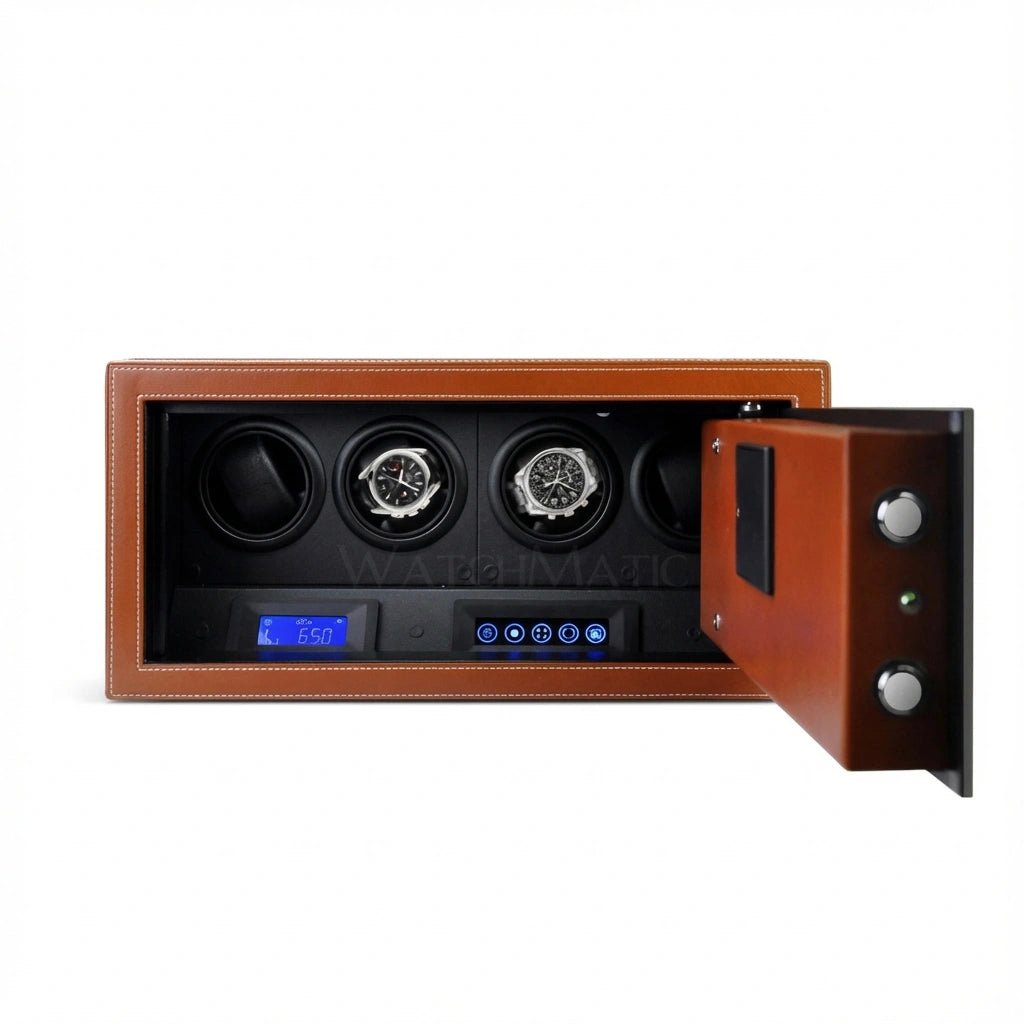
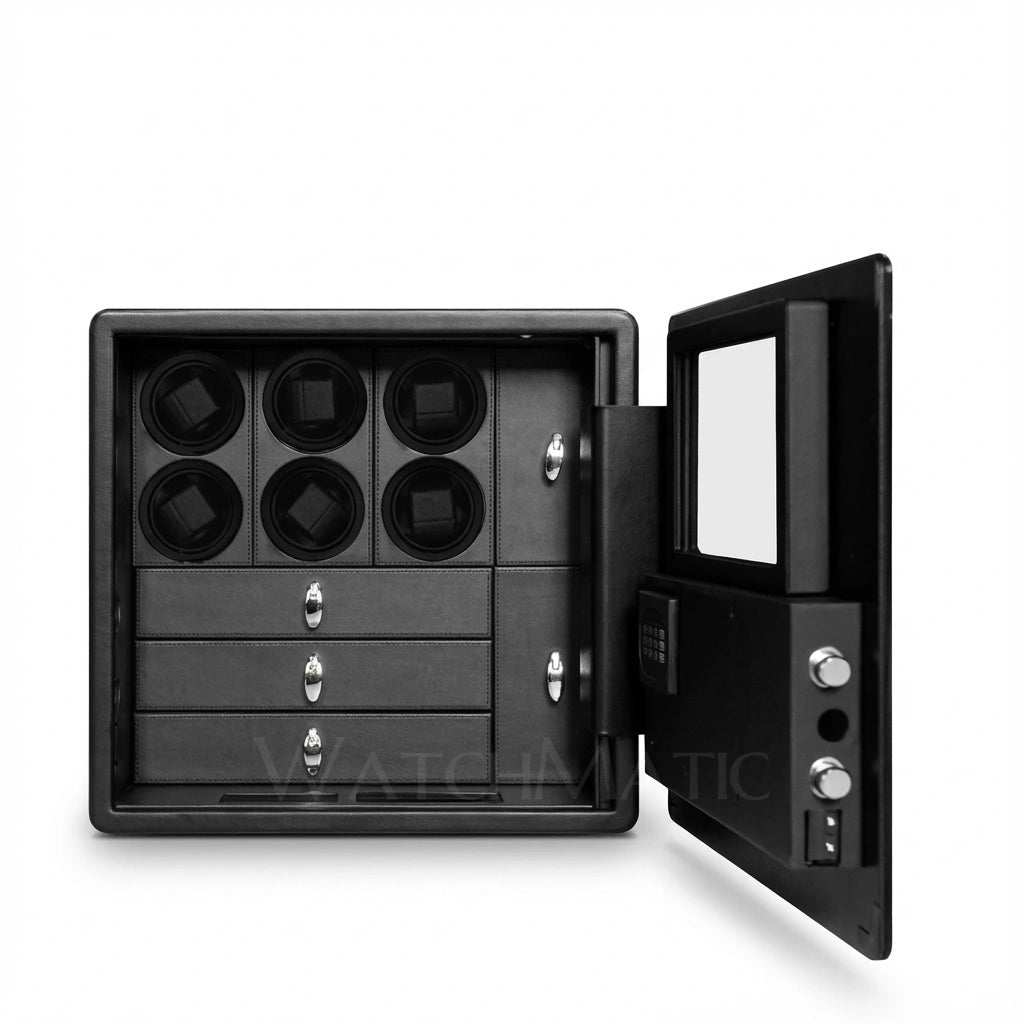
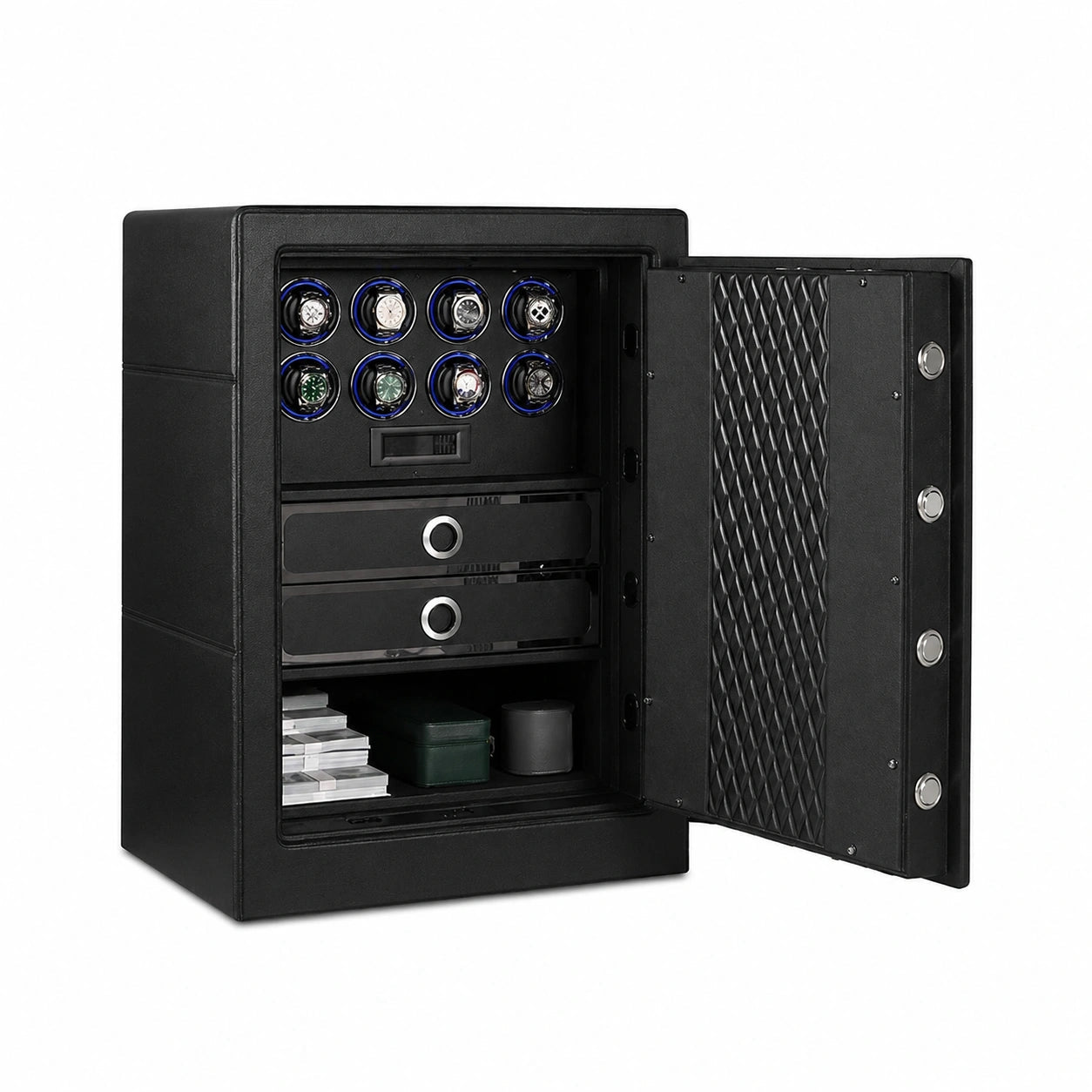
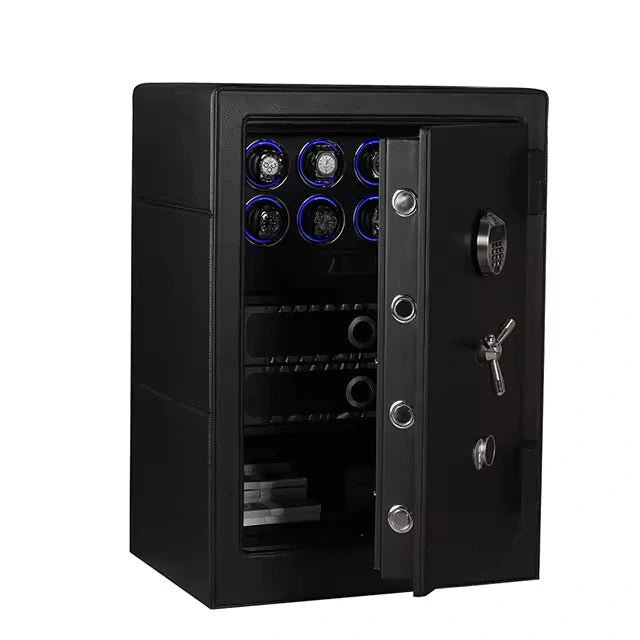
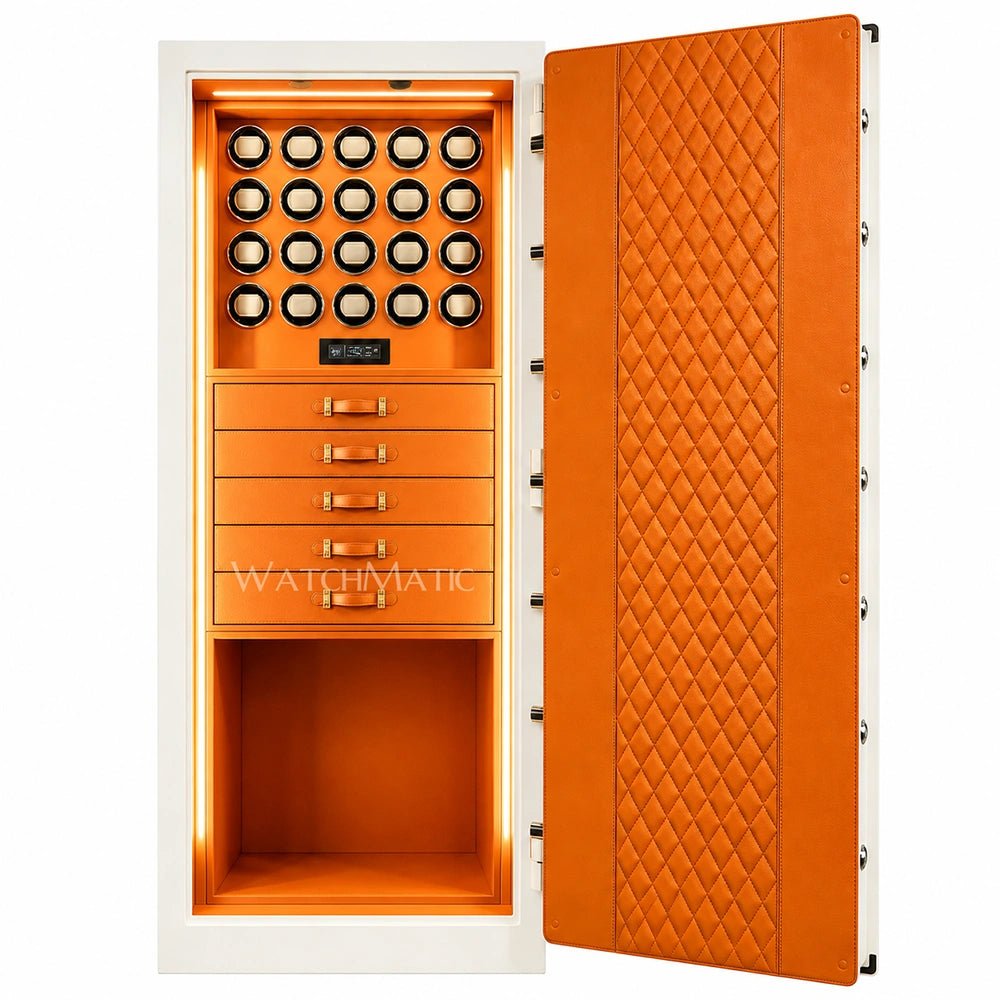
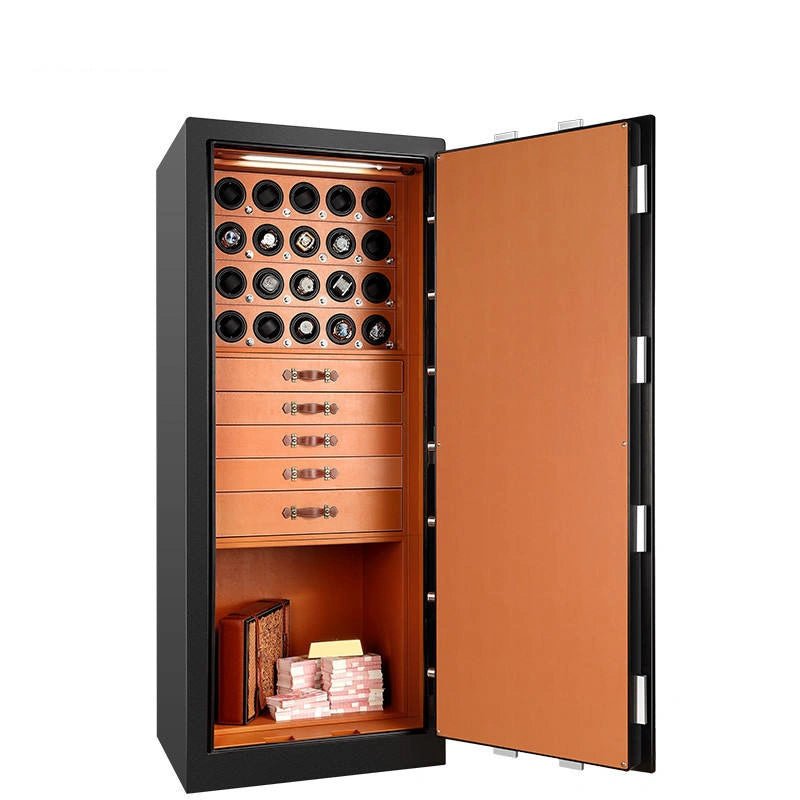
For a larger Laurent Ferrier or mixed haute-horlogerie collection, the Titan Vault 20 Watch Winder Safe combines independently controlled winding positions with secure storage architecture.
Available features include:
- Monolithic solid-steel body
- 10-layer reinforced exterior shell
- Biometric fingerprint access
- Digital passcode
- Manual key access
- Floor anchoring
- LCD touchscreen
- Japanese Mabuchi motors
- Independent winding controls
- Adjustable TPD from 650 to 2200
- CW/CCW/bidirectional operation
- Anti-magnetization protection
- Adjustable LED illumination
- Ultra-quiet operation below 10 dB
- 10-year warranty
Higher-level fire and burglary certification configurations are available upon request rather than assumed as standard on every unit.
Why Titan Vault 20 Has Strong Relevance for Laurent Ferrier
Laurent Ferrier sits firmly in the high-value independent haute-horlogerie category.
A collection may include:
- Classic Micro-Rotor
- Classic Traveller
- Full-gold Sport Auto
- Classic Moon
- Classic Tourbillon
- Grand Sport Tourbillon
At that level, the storage problem becomes broader than automatic winding.
It includes:
- Theft protection
- Controlled access
- Precious-metal storage
- Manual high-complication storage
- Collection organization
The Most Valuable Laurent Ferrier May Not Need a Rotor
A Classic Tourbillon or Grand Sport Tourbillon can be among the most valuable watches in the collection.
Yet:
LF619.01 → manual → powered rotation unnecessary.
A comparatively simpler Classic Auto:
LF270.01 → automatic → rotor useful.
Therefore:
winding relevance ≠ financial value.
Classic Moon Strengthens the Stationary Secure-Storage Case
The Classic Moon contains:
- Annual calendar
- Moon phase
- Precious-metal options
- High hand-finishing
It does not need powered rotation because LF126.02 is manual.
It may still strongly justify secure storage.
Titan Vault 20 Works Best as a Mixed Architecture
A Laurent Ferrier-focused setup could assign:
FBN229.01 / LF230.02 / LF270.01 / LF275.01 automatics → individually programmed winding positions
while:
LF116.01 / LF126.01 / LF126.02 / LF619.01 manuals → secure stationary storage.
This is more logical than attempting to rotate every watch.
Security and Winding Should Be Evaluated Separately
Ask two different questions:
Can the movement receive energy from rotation?
and:
Does the watch justify secure physical storage?
The answers can be completely different.
When a Stationary Watch Safe Is More Appropriate
A collection dominated by:
- Classic Origin
- Classic Moon
- École Annual Calendar
- Classic Tourbillon
- Grand Sport Tourbillon
may contain extremely valuable watches while needing very few powered positions.
In that case, the Luxury Watch Safe Collection may be more relevant than maximizing rotor capacity.
Laurent Ferrier in a Mixed Independent Haute Horlogerie Collection
Laurent Ferrier naturally appears alongside independent manufacturers known for traditional finishing, micro-rotors, and restrained haute horlogerie.
A mixed collection might include:
Laurent Ferrier + F.P. Journe + Czapek + Parmigiani Fleurier + H. Moser & Cie. + De Bethune
Related WatchMatic guides include:
Best Watch Winder for F.P. Journe Watches
Best Watch Winder for Czapek Watches
Best Watch Winder for Parmigiani Fleurier Watches
Best Watch Winder for H. Moser & Cie. Watches
Best Watch Winder for De Bethune Watches
At this level, caliber-specific programming is substantially more useful than one shared “independent watch” setting.
Laurent Ferrier vs. F.P. Journe
Both manufacturers combine:
- Automatic haute horlogerie
- Manual haute horlogerie
- Strong collector demand
- Movement-specific winding architecture
A Laurent Ferrier micro-rotor should not inherit an F.P. Journe rotator setting simply because both brands occupy similar collector territory.
Laurent Ferrier vs. Czapek
Both brands use important micro-rotor automatic movements.
However:
Laurent Ferrier FBN229.01 / LF270.01
and:
Czapek SXH5
are completely different calibers.
Micro-rotor is an architectural category, not a shared TPD specification.
Laurent Ferrier vs. Parmigiani Fleurier
Parmigiani Fleurier also uses micro-rotors extensively.
Again:
micro-rotor ≠ universal winding setting.
Exact caliber remains decisive.
Laurent Ferrier vs. H. Moser & Cie.
H. Moser currently combines:
- Conventional automatic rotors
- Micro-rotors
- Manual perpetual calendars
- Manual repeaters
Laurent Ferrier has a narrower but equally important split between automatic micro-rotor families and manually wound Origin/Moon/Tourbillon calibers.
Laurent Ferrier vs. De Bethune
Current De Bethune is strongly manual-heavy.
Laurent Ferrier has a more balanced automatic/manual portfolio, with multiple important automatic micro-rotor movements.
This means a Laurent Ferrier collector is more likely to make practical use of several powered positions.
How to Choose the Best Watch Winder for Your Laurent Ferrier
Step 1: Identify the Exact Collection
Determine whether the watch is:
- Classic Micro-Rotor
- Square Micro-Rotor
- Classic Auto
- Sport Auto
- Classic Traveller
- Sport Traveller
- Classic Origin
- Classic Moon
- École Annual Calendar
- Classic Tourbillon
- Grand Sport Tourbillon
Step 2: Identify the Exact Reference
This matters especially for:
- Traveller generations
- Sport models
- historical vs. current releases
- Série Atelier watches
Step 3: Identify the Caliber
Important examples include:
- FBN229.01
- LF230.02
- LF270.01
- LF275.01
- LF116.01
- LF126.01
- LF126.02
- LF619.01
Step 4: Confirm Automatic or Manual
Representative examples:
FBN229.01 → automatic
LF230.02 → automatic
LF270.01 → automatic
LF275.01 → automatic
LF116.01 → manual
LF126.01 → manual
LF126.02 → manual
LF619.01 → manual
Step 5: Identify the Automatic Architecture
For an automatic reference, determine whether it uses:
- Pawl-fitted micro-rotor
- Ball-bearing micro-rotor
- Natural escapement
- Swiss lever escapement
These distinctions may matter when researching exact winding specifications.
Step 6: Check Power Reserve
Representative current figures include:
72 h → major automatic micro-rotor calibers
80 h → major manual calibers
Do not infer winding type from the number alone.
Step 7: Determine Whether TPD Is Relevant
TPD only matters when an automatic winding mass is present.
Do not assign conventional TPD to:
- LF116.01
- LF126.01
- LF126.02
- LF619.01
Step 8: Determine Rotation Direction
Use verified caliber-specific information.
Choose a winder capable of:
- CW
- CCW
- Bidirectional
Do not confuse internal unidirectional micro-rotor winding with an assumed external winder direction.
Step 9: Consider the Complication
Traveller and date watches have stronger convenience reasons to stay synchronized.
Annual calendars and moon phases also have high convenience value, but Laurent Ferrier's current versions are manual and therefore cannot be maintained through conventional rotation.
Step 10: Check Physical Fit
Pay particular attention to:
- Sport integrated bracelets
- Traveller pushers
- Full-gold bracelets
- Leather-strap curvature
- 44 mm Grand Sport cases in stationary storage
For broader winding, TPD, storage, and collection-protection resources, visit the WatchMatic Guide Hub.
Best Watch Winder for Laurent Ferrier Watches: Final Thoughts
Choosing the best watch winder for a Laurent Ferrier begins with exact caliber identification.
The current automatic portfolio is strongly built around micro-rotor architecture.
The Classic and Square Micro-Rotor use FBN229.01, an automatic natural-escapement movement with approximately 72 hours of power reserve.
The Classic Auto and Sport Auto use LF270.01, an automatic platinum micro-rotor movement with Swiss lever escapement and approximately 72 hours.
The Classic Traveller uses LF230.02, an automatic micro-rotor dual-time movement with natural escapement and approximately 72 hours.
The newer Sport Traveller uses LF275.01, another automatic 72-hour dual-time micro-rotor movement, but with a Swiss lever escapement and different ball-bearing winding architecture.
All of these can benefit from a properly configured conventional watch winder.
However, several equally important Laurent Ferrier calibers are manually wound.
The Classic Origin LF116.01 provides approximately 80 hours.
The École Annual Calendar LF126.01 provides approximately 80 hours.
The Classic Moon LF126.02 also provides approximately 80 hours.
The Classic and Grand Sport Tourbillon LF619.01 provide approximately 80 hours.
None of these manual movements receives useful mainspring energy from conventional rotation.
This creates three particularly useful Laurent Ferrier comparisons:
Classic Micro-Rotor FBN229.01 → automatic → 72 h
versus:
Classic Origin LF116.01 → manual → 80 h.
Sport Auto LF270.01 → automatic → 72 h
versus:
Grand Sport Tourbillon LF619.01 → manual → 80 h.
And:
Classic Traveller LF230.02 → automatic micro-rotor → 72 h
versus:
Sport Traveller LF275.01 → automatic micro-rotor → 72 h
but with different escapements and different micro-rotor architectures.
The central Laurent Ferrier lesson is therefore:
collection name, micro-rotor label, complication and power reserve are all insufficient on their own to determine the correct watch-winder program.
For a confirmed automatic Laurent Ferrier, prioritize:
- Adjustable TPD
- CW/CCW/bidirectional programming
- Independent rotor controls
- Controlled rest cycles
- Smooth low-vibration operation
- Flexible leather and bracelet cushions
- Traveller-pusher clearance
- Stable support for precious-metal watches
For Classic Origin, Classic Moon, École Annual Calendar and Tourbillon references, prioritize premium stationary storage instead.
The most reliable framework is:
Laurent Ferrier Reference → Caliber → Automatic or Manual → Micro-Rotor Architecture → Power Reserve → Complication → Physical Fit → TPD/Direction or Stationary Storage
For additional automatic-winding and secure-storage solutions, explore WatchMatic.